
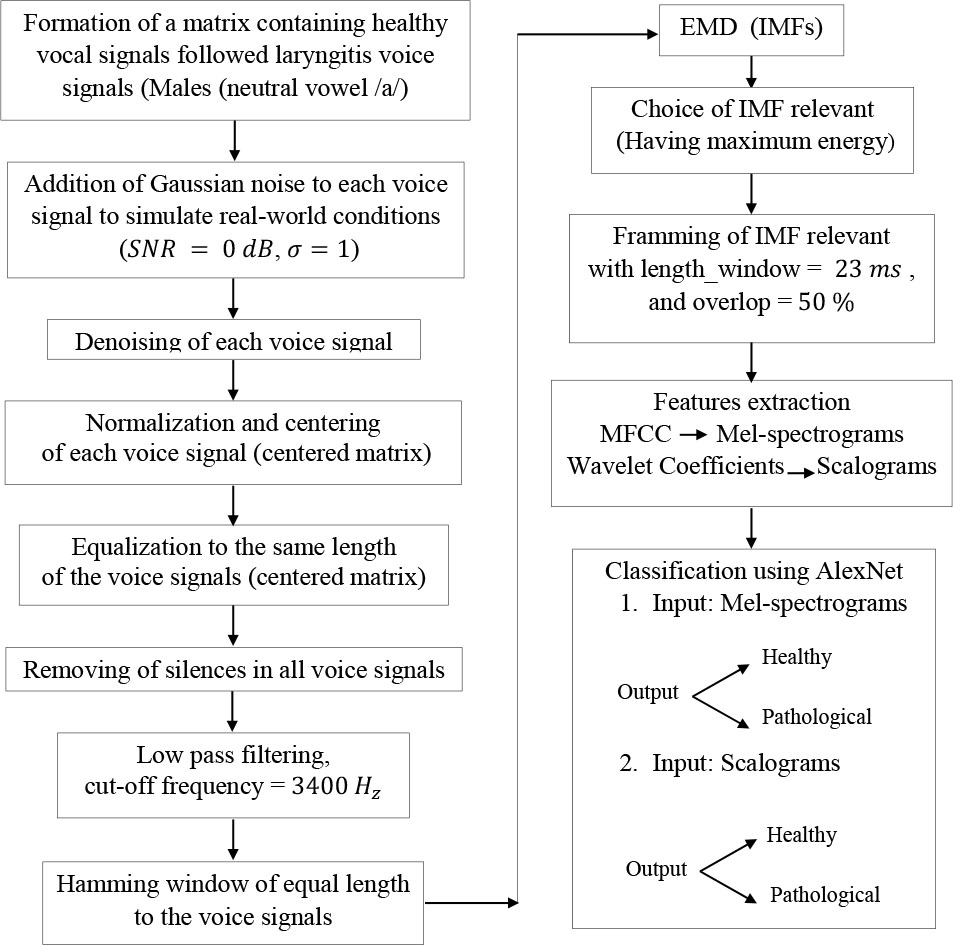
Fig. 1.
Synoptic representation of the proposed method: voice signals first undergo signal processing, followed by EMD to extract IMFs. The most energetic IMF is selected to compute Mel-spectrograms and scalograms, which are then fed into a pretrained AlexNet-CNN model for voice pathology classification.
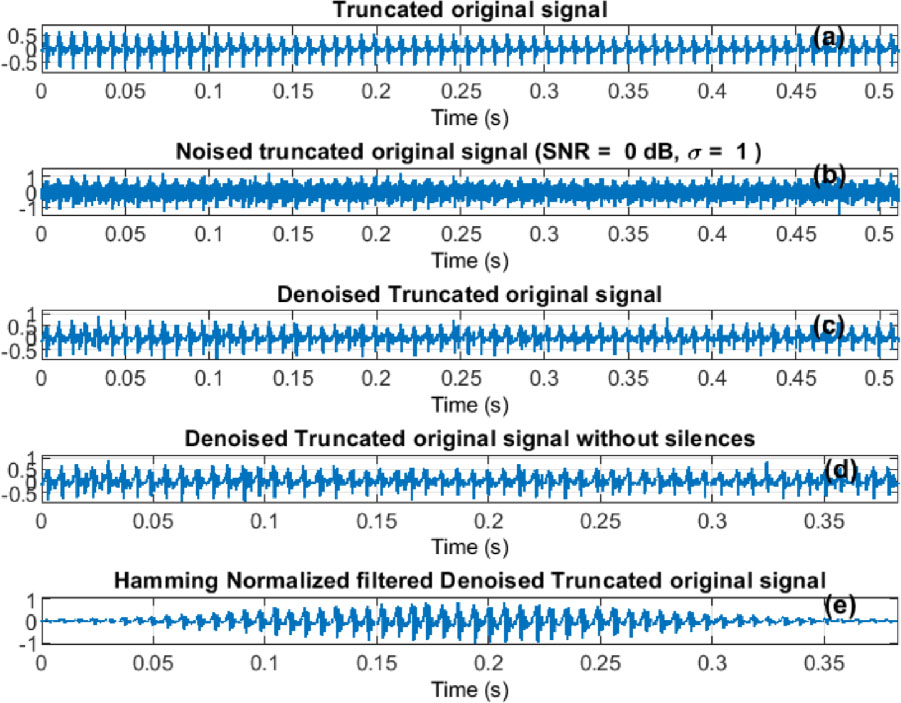
Fig. 2.
Voice signals after pre-processing, including noise filtering, amplitude normalization, and segmentation into fixed-length frames. These enhanced signals serve as input for subsequent EMD-based decomposition and feature extraction (e.g., MFCCs and scalograms) to distinguish pathological from healthy voice patterns.
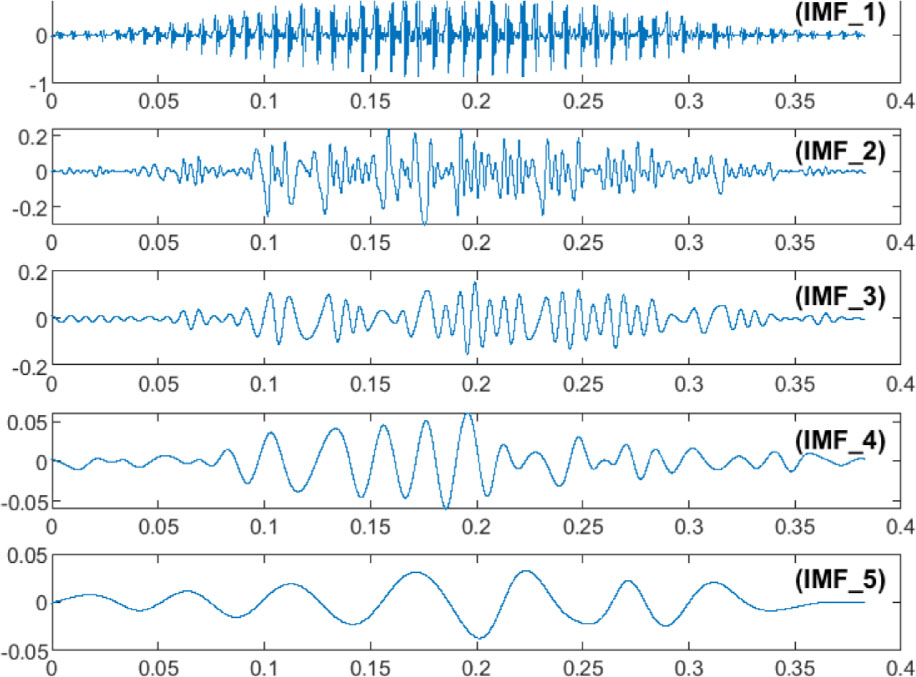
Fig. 3.
The voice signal is decomposed into IMFs using EMD. Each IMF represents a distinct oscillatory mode, ordered from high to low frequency content, capturing features relevant to voice characteristics. The most energetic IMF (highlighted) is selected for further analysis, including MFCC-based and scalogram image generation, to support the classification between pathological and healthy voice signals.
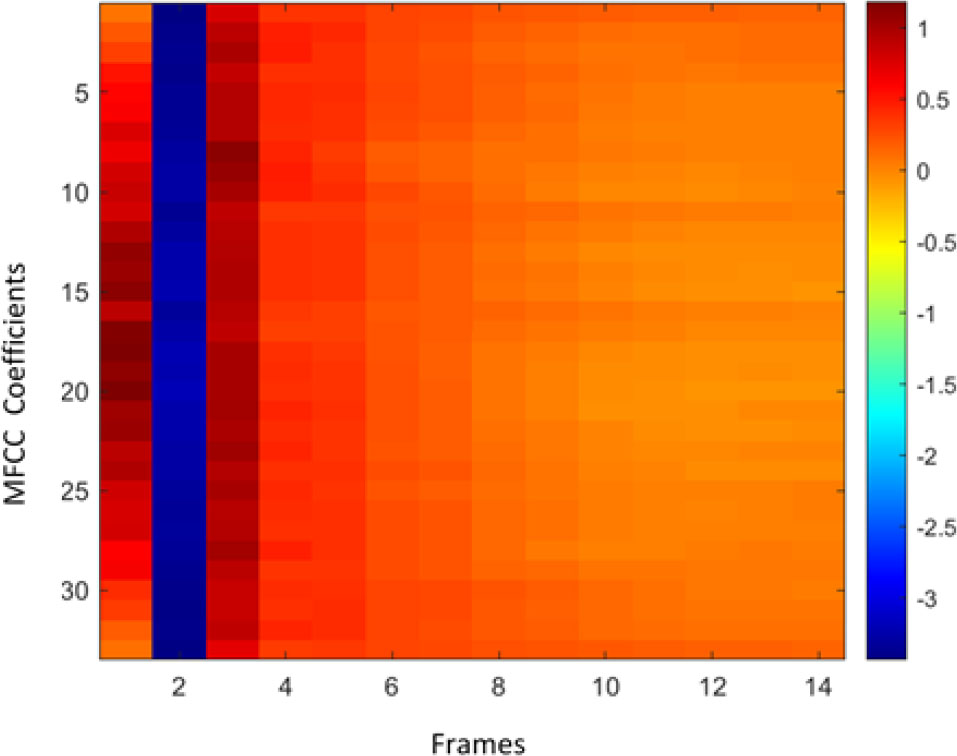
Fig. 4.
Example of a Mel spectrogram generated from the most energetic IMF of a pre-processed voice signal. The representation emphasizes perceptually meaningful spectral patterns used to discriminate between healthy and pathological voices in classification tasks.
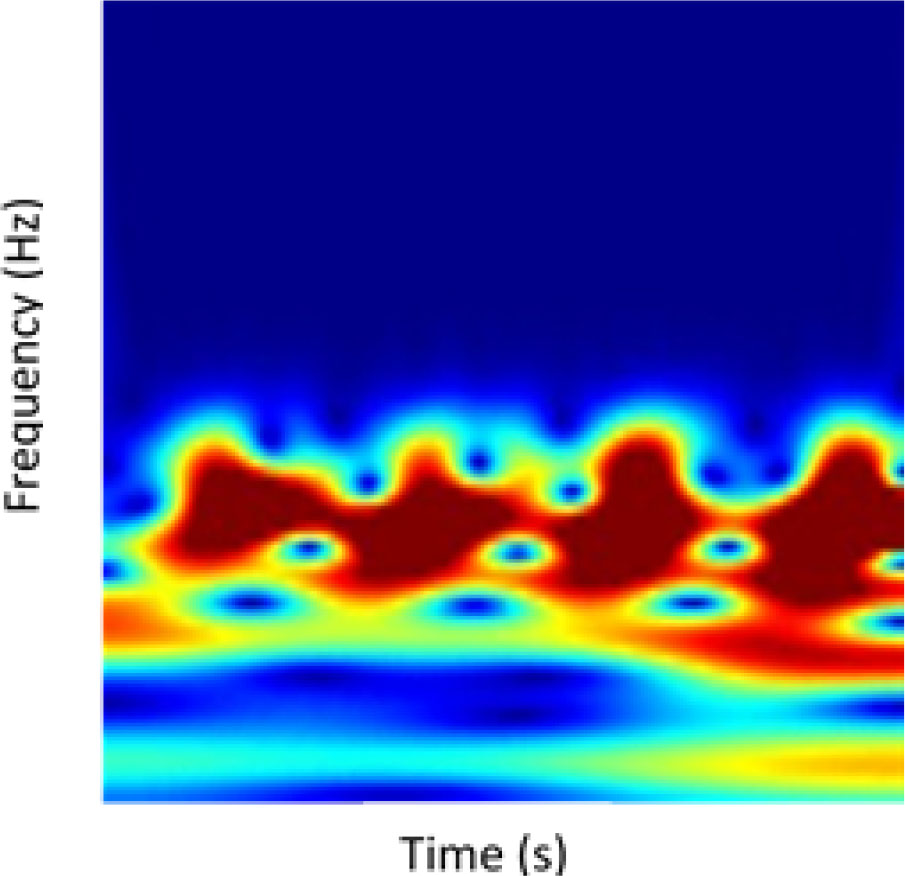
Fig. 5.
Scalogram example derived from the most energetic IMF of a pre-processed voice signal using CWT. The representation highlights relevant time-frequency patterns for the subsequent classification of healthy and pathological voices.
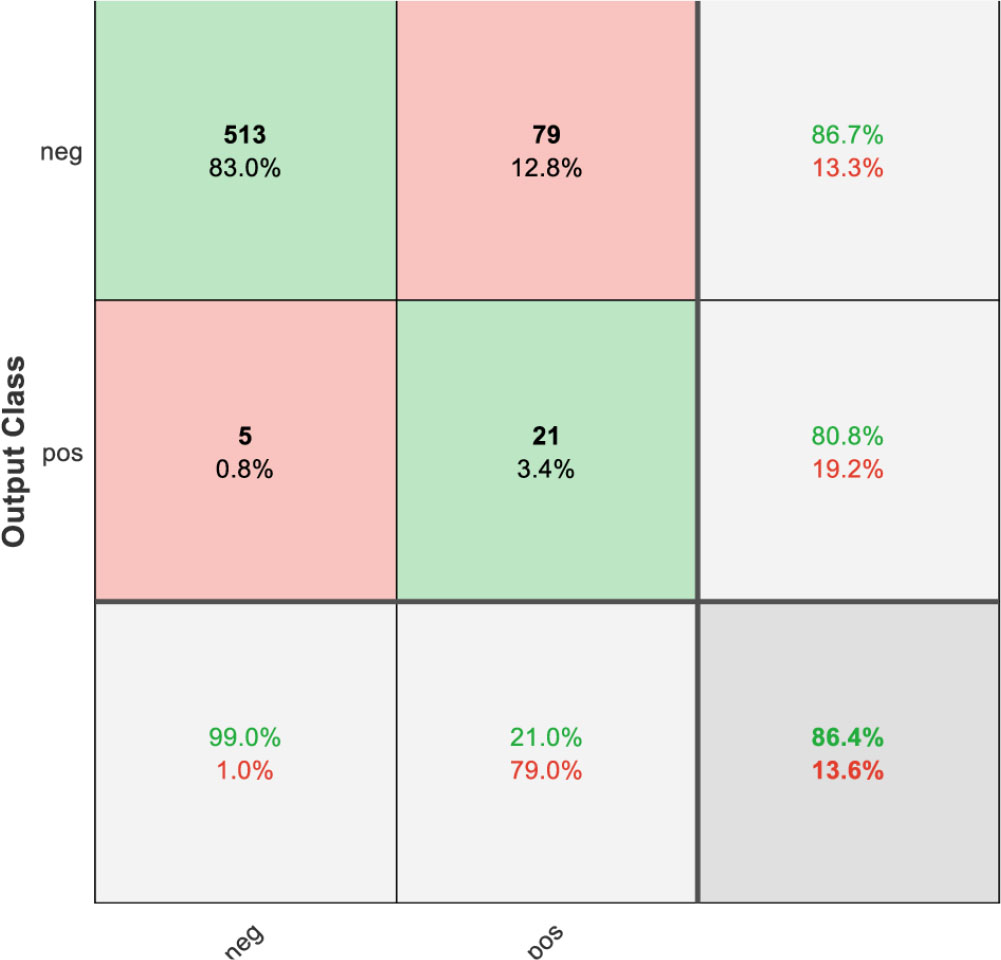
Fig. 6.
Confusion matrix showing the performance of AlexNet-CNN on scalograms of the most energetic IMFs obtained with EMD and CWT.
Table 1.
Comparison of our method with recent studies on pathological voice detection.
| Study | Dataset | Features and model | Accuracy [%] |
|---|---|---|---|
| [29] | SVD | Multipeak, Gaussian mixture model (GMM) | 91.83 |
| [30] | SVD + HUPA | MFCCs, SVM | 71.45–76.19 |
| [31] | MEEI voice disorders | MFCC (500 ms frames, 5 ms shift), SVM | 66.4–75.1 |
| [32] | SVD + HUPA | wav2vec, SVM | 68.55–83.11 |
| [33] | SVD + HUPA | Mel-spectrogram, SVM | 69.45–75 |
| [34] | VOICED | wav2vec 2.0, SVM / KNN | 98 |
| [35] | UA-speech + TORGO | MFCCs, SVM | 63.13–89.22 |
| This work | SVD | EMD-IMF, Mel-spectrogram + scalogram, AlexNet-CNN | 85.66 / 86.4 |