
1. Introduction
Cast aluminium–silicon alloys are widely used in automotive, aerospace, and mechanical engineering. Davis [1] described the relationships between composition, processing, and properties of aluminium alloys, while Kaufman and Rooy [2] discussed the technological advantages of aluminium castings for complex components. Totten and MacKenzie [3] reviewed aluminium physical metallurgy and processing, and Polmear et al. [4] summarised the performance of light alloys. For Al–Si systems, Wang et al. [5] demonstrated the influence of Si content on microstructure and mechanical properties. Mohamed et al. [6] showed that eutectic morphology affects tensile behaviour, whereas Ceschini et al. [7] linked the solidification microstructure of a cast aluminium alloy with its tensile strength. These findings explain why the coarse eutectic silicon and intermetallic constituents of near-eutectic AlSi11 limit ductility and complicate conventional cold forming.
Severe plastic deformation (SPD) has therefore been investigated as a route for modifying cast Al–Si alloys. Ma et al. [8] reported changes in the tensile response of cast Al–11 mass% Si after SPD. Jarco and Pezda [9] demonstrated that heat-treatment parameters modify the AlSi11(Fe) microstructure and properties. Noga et al. [10] examined AlSi11 after chip recycling, co-extrusion, and welding, while Maziarz et al. [11] studied SPD-induced changes in AlSi11-based composites. The broader principles and capabilities of bulk SPD processing were established by Valiev et al. [12].
KOBO extrusion imposes cyclic strain-path changes through an oscillatory die. Korbel and Bochniak [13] introduced the structure-based concept underlying such forming operations. Its feasibility was shown for CuZn39Pb2 by Bochniak and Korbel [14] and under complex forging conditions by Bochniak et al. [15]. Bochniak et al. [16] later demonstrated the potential of KOBO extrusion for both solid non-ferrous feedstock and chips. Korbel et al. [17] analysed viscoplastic metal flow under a complex strain scheme. Low-temperature KOBO extrusion of AA6013 was linked to specific structural phenomena by Korbel et al. [18], while Balawender et al. [19] quantified its mechanical characteristics and Bochniak et al. [20] reported nanostructured products obtained under KOBO conditions.
The response to KOBO processing depends on the feedstock and alloy. Ostachowski et al. [21] analysed highly deformed zinc, and Długosz et al. [22] compared conventional and KOBO extrusion of AZ91. The review by Leśniak et al. [23] places these results within recent developments in light-metal extrusion. For recycling applications, Altharan et al. [24] reviewed solid-state routes for aluminium machining chips, Kołodziejczyk et al. [25] discussed the potential of KOBO extrusion for industrial metallic waste, and Gronostajski et al. [26] described foundational chip-recycling methods.
For Al–Si alloys, deformation-driven changes are expressed particularly clearly in the brittle constituents. Noga et al. [27] described the microstructure of rapidly solidified and extruded Al–Si alloys. Snopiński et al. [28] investigated the mechanism of grain-structure change in SPD-processed AlSi10Mg, and a later study related the grain structure to the properties of a KOBO-extruded Al–Si alloy [29]. Muñoz et al. [30] demonstrated density and strength–ductility changes in a 3D-printed Al–Si alloy processed by high-pressure torsion. Snopiński et al. [31] examined KOBO post-processing of PBF-LB/M AlSi10Mg. Collectively, these studies support detailed analysis of eutectic-silicon fragmentation and redistribution, but they do not justify assuming grain refinement in the present material without quantitative grain-size measurements.
Optical microscopy was used in the present study to assess material-flow patterns and constituent morphology, while scanning electron microscopy (SEM) and energy-dispersive X-ray spectroscopy (EDS) provided higher-resolution observations of eutectic silicon and intermetallic particles. Ali et al. [32] summarised the principal capabilities of SEM, Dash and Chen [33] reviewed processing–microstructure–property relationships in Al–Si alloys, and Choudhary et al. [34] demonstrated the importance of eutectic-silicon morphology to tensile behaviour. Detailed instrumental information is provided in the Section 3.
Although KOBO extrusion can be conducted without external billet heating, plastic work, friction and localised shearing can raise the temperature in the deformation zone. The coupled thermomechanical analysis of Wójcik and Skrzat [35] predicts temperature increases caused by plastic work and friction during KOBO extrusion. Consequently, the reduction in extrusion force observed in the present study cannot be attributed exclusively to cyclic strain-path changes; deformation-induced heating may also contribute. Because temperature was not measured here, this contribution is discussed qualitatively.
The extrusion ratio (λ), defined as the initial billet cross-sectional area divided by the final rod cross-sectional area, controls the imposed geometrical reduction. Increasing λ can intensify the fragmentation and redistribution of eutectic silicon and intermetallic particles. Under KOBO conditions, its influence on extrusion force can differ from conventional extrusion because the oscillatory die modifies the strain path and local deformation conditions [13,17].
Die oscillation frequency controls the number of strain-path reversals per unit time. Previous KOBO studies associate oscillatory deformation with reduced plastic-flow resistance and modified material flow [16,18]. Experimental force measurements further confirm that frequency affects the mechanical response of the process [19]. The present work therefore examines frequency together with λ rather than treating either parameter in isolation.
Despite the growing number of studies devoted to SPD and KOBO extrusion, relatively limited information is available on the combined influence of die oscillation frequency and extrusion ratio on the extrusion behaviour and microstructural evolution of cast AlSi11 processed at room temperature. In particular, the relationship between process parameters, maximum extrusion force, fragmentation of eutectic silicon and structural homogenisation has not yet been fully clarified.
Therefore, the aim of the present study is to determine the influence of die oscillation frequency and extrusion ratio on the maximum extrusion force and the microstructural evolution of cast AlSi11 processed by the KOBO method at room temperature. Particular attention is paid to material-flow patterns, changes in the morphology of the α-Al regions, and the fragmentation and redistribution of eutectic silicon and intermetallic particles. Optical microscopy, SEM, and EDS were used to characterise the observed transformations.
2. Experimental work
The KOBO extrusion process (Figure 1) of the AlSi11 aluminium alloy was conducted under controlled technological conditions, enabling the analysis of the influence of process parameters on deformation behaviour and structural evolution of the material. Based on literature data and the results of preliminary (pilot) research work, the selection of KOBO extrusion process parameters was carried out [1,2,3].
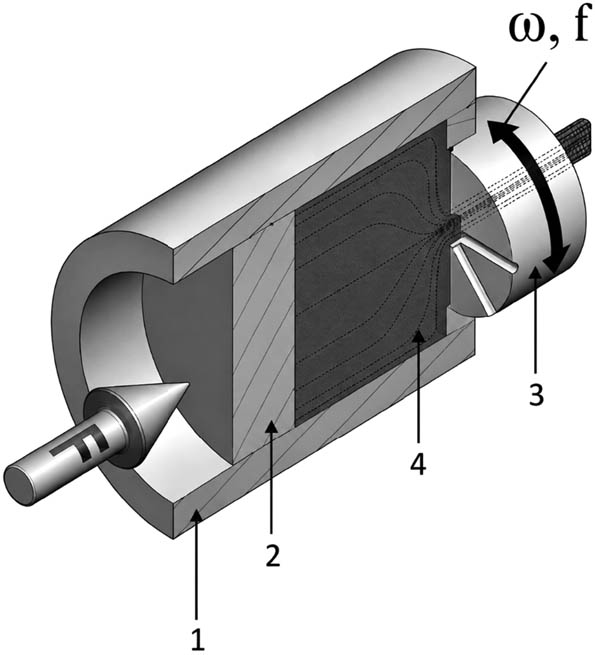
Figure 1
Visualisation of the KOBO extrusion configuration illustrating key tooling components. (1) container sleeve, (2) dummy block, (3) die, (4) billet, ω – oscillation angle of the die, and f – frequency of the die.
The extrusion speed was set at 0.1 mm/s to ensure stable process conditions and the precise recording of the extrusion force as a function of punch displacement. The oscillatory motion (f) of the die was applied at three frequencies: 3, 5, and 7 Hz. This allowed for the assessment of how the intensity of strain path variation affects plastic flow resistance and microstructural transformations. The oscillation angle (ω) was maintained at a constant level of ±8°, ensuring comparable deformation conditions. The process was investigated at three different extrusion ratios (λ) of 36, 60, and 100, enabling an analysis of the effect of strain level on microstructural evolution and the modification of silicon particle morphology. The selected range of parameters allowed for a detailed analysis of how oscillation frequency and extrusion ratio influence the extrusion force behaviour and the micro- and macrostructural changes in the AlSi11 alloy during the KOBO process
3. Materials and methods
The AlSi11 cast aluminium alloy, belonging to the Al–Si group, was used in this study (Table 1). It is characterised by an intricate, multiphase microstructure and limited ductility. The alloy’s microstructure consists of an α-Al matrix with irregularly shaped silicon particles and various intermetallic phases (Fe, Mn, Cu, Ni), which contribute to structural heterogeneity and promote stress concentration.
The investigated AlSi11 alloy was used directly in the as-cast condition, without prior homogenisation or any other heat treatment. The cylindrical billets used in the experiments were prepared directly from the cast material and had an initial diameter of 60 mm and a length of approximately 90 mm. The billet diameter corresponded to the internal diameter of the KOBO press container. During extrusion, the recorded punch displacement was approximately 80 mm, while an approximately 10 mm thick butt remained in the container. The initial mechanical properties of the as-cast alloy, including hardness and tensile properties, were not determined as part of the present study.
Selected longitudinal and transverse specimens were examined by SEM using compositional contrast. EDS point analyses and elemental maps were used to characterise silicon-rich and Al–Fe–Mn–Si particles.
The microstructural observations were carried out using a Hitachi S-3400N SEM operated at an accelerating voltage of 25 kV and a working distance of 10 mm. Backscattered electron (BSE) images were acquired, and the chemical composition of the observed phases was analysed using a Thermo Noran System Six EDS system supplied by Thermo Fisher Scientific.
Table 1
Chemical composition of the investigated AlSi11 alloy (wt%) [36].
| Si | Fe | Cu | Mn | Mg | Ti | Zn | Other | Al |
|---|---|---|---|---|---|---|---|---|
| 10.0–11.8% | Max 0.19% | Max 0.05% | Max 0.10% | Max 0.45% | Max 0.15% | Max 0.07% | Max 0.03% | Remainder |
The KOBO extrusion process was performed using a hydraulic press with a maximum load of 2.5 MN, equipped with an oscillatory die motion system. The die performed a controlled oscillatory movement at a specified angle and frequency, enabling the generation of a non-stationary strain state and the intensification of plastic deformation. During the process, the billet was forced through the die by a punch while the die executed an oscillatory rotational motion, resulting in a non-linear strain state and effective microstructural fragmentation. To obtain different levels of deformation, three dies with diameters of 10, 7.75, and 6 mm were used, corresponding to extrusion ratios λ = 36, 60, and 100, respectively (Figure 2).
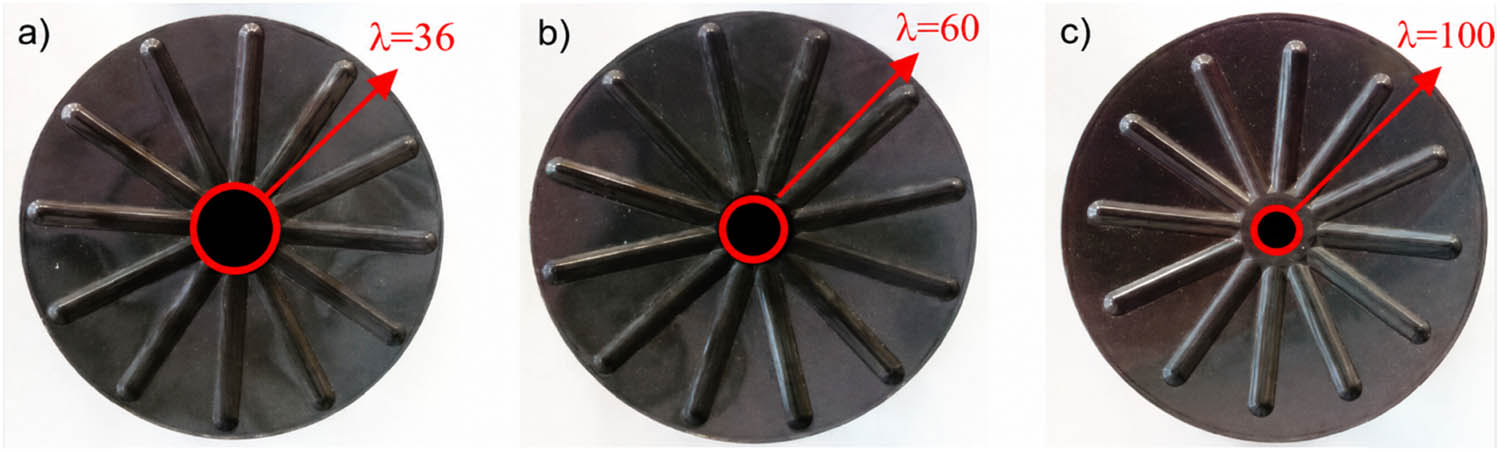
Figure 2
KOBO process dies featuring radial grooves and respective die diameters of: (a) 10 mm, (b) 7.75 mm, and (c) 6 mm.
The dies were equipped with radial grooves to transmit the oscillatory motion to the material and force internal shearing, which facilitates a liquid-like plastic flow in the deformation zone. Regarding tool configuration, the number and depth of radial grooves significantly impact the extrusion process. These geometric parameters define the shear intensity and flow behaviour, ultimately governing the efficiency of strain path modification within the deformation zone.
3.1. Extrusion process
The KOBO extrusion process was carried out to obtain a rod under stable process parameters, which enabled the evaluation of the process course as well as the structural homogeneity of the product along its entire length (Figure 3).
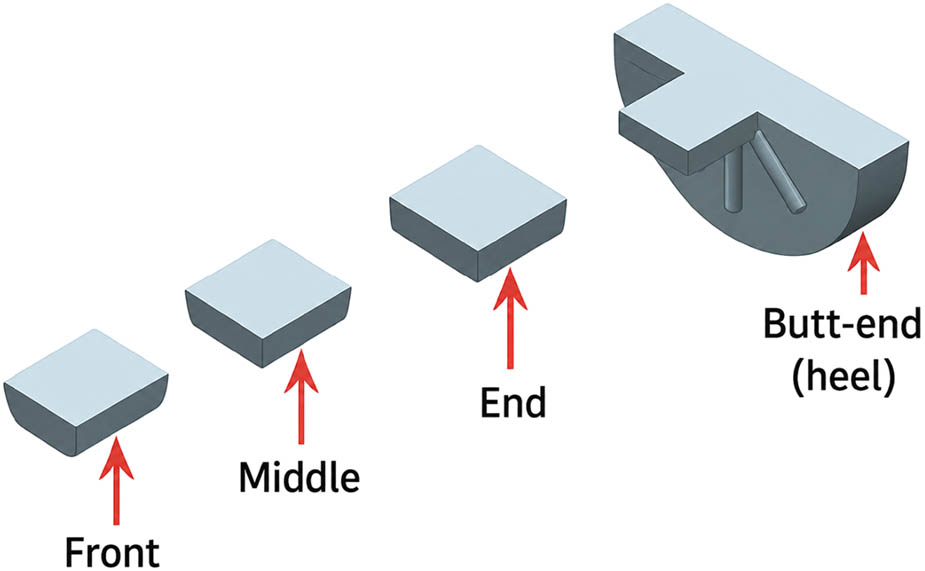
Figure 3
Schematic of sampling locations for micro- and macrostructural analysis along the length of the extruded rod: front, middle, end, and butt-end (heel).
Because the total rod length varied with the extrusion ratio and final rod diameter, the sampling locations were defined relative to the usable rod length rather than by fixed absolute distances. The initial transient section of each rod was removed to exclude material extruded before stabilisation of the process parameters. The middle location was established at the geometrical midpoint of the usable rod, whereas the front and end samples were taken symmetrically from the corresponding regions on either side of the midpoint.
During extrusion, the AlSi11 billet was subjected to the action of an oscillating die, resulting in a cyclic change in the strain path and intensification of plastic deformation. The complex nature of metal flow (axial and circumferential components) led to the formation of characteristic deformation patterns observed along the entire length of the rod and at the butt-end (Figure 4), confirming the effective influence of the oscillatory motion.
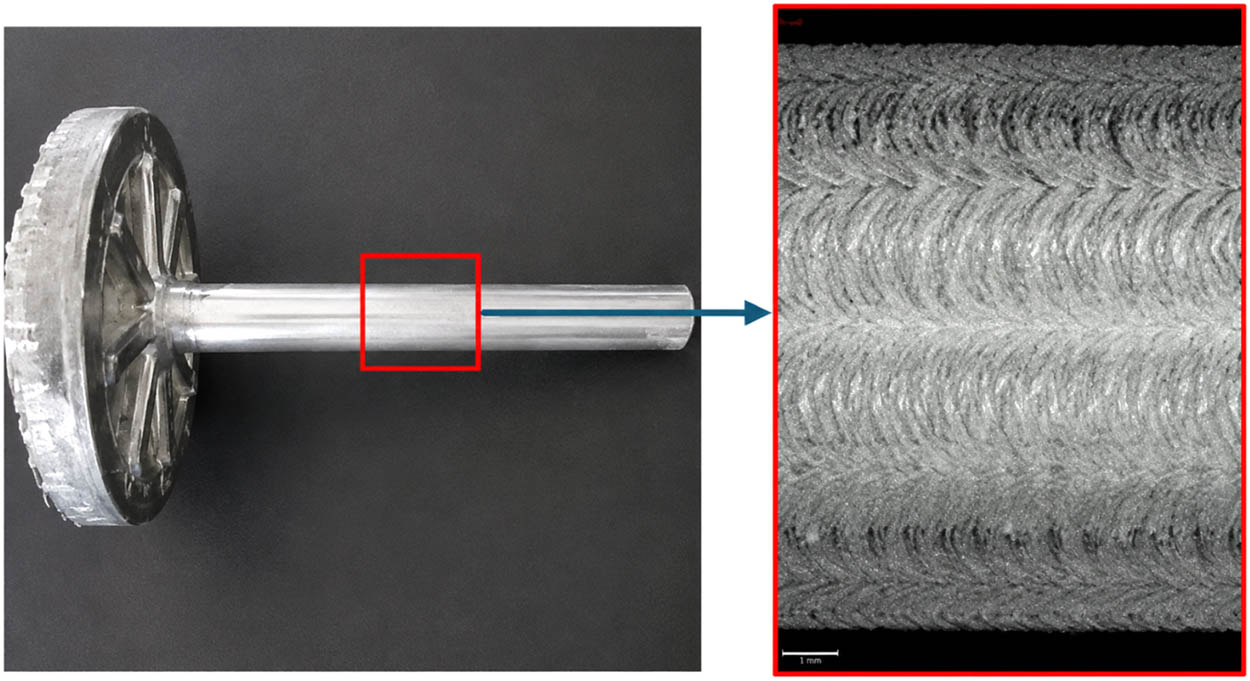
Figure 4
View of the butt-end of the AlSi11 rod obtained by KOBO extrusion f 7 Hz; λ 36, showing the characteristically deformed heel and oscillatory material-flow traces in the die–material contact zone.
Specimen preparation followed standard metallographic procedures, including grinding, polishing, and etching. The prepared material was then subjected to macro- and microstructural analysis to evaluate the effect of the KOBO process on the structural evolution of the AlSi11 alloy. Structural analysis of microstructure of AlSi11 aluminium alloy rods extruded by the KOBO method revealed a pronounced influence of process parameters, in particular die oscillation frequency and extrusion ratio λ, on the nature of microstructural transformations.
3.2. Effect of die oscillation frequency
The microstructure of the AlSi11 alloy after the KOBO process undergoes significant reconstruction compared to the as-cast state (Figure 5). A key effect of increasing die oscillation frequency is the intensification of cyclic strain path changes, leading to more effective accumulation of plastic deformation and enhanced activation of relaxation mechanisms.
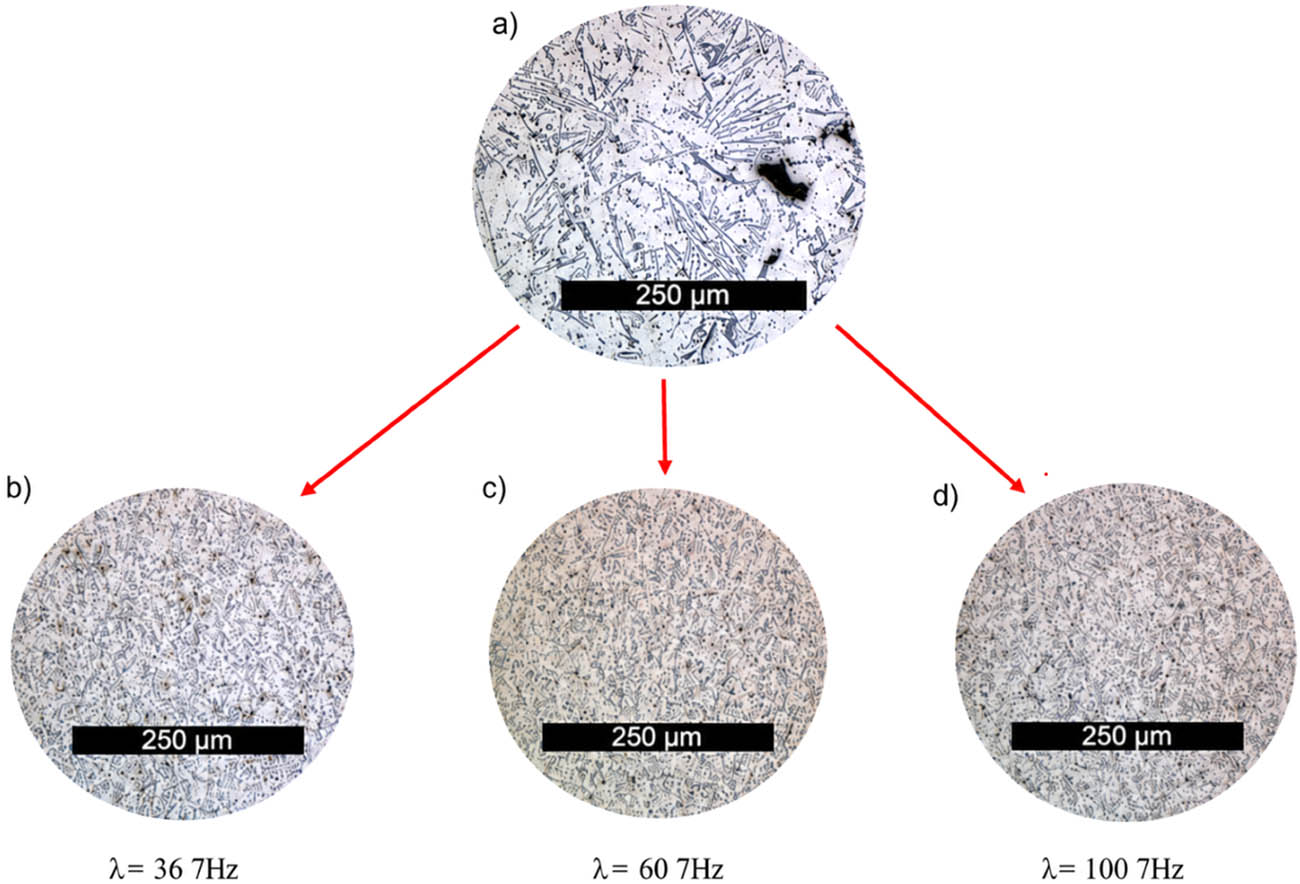
Figure 5
Microstructural changes of the alloy as a function of extrusion ratio λ during the KOBO process (f = 7 Hz): initial microstructure of the billet and microstructure after extrusion at different extrusion ratios: (a) as-cast billet, (b) λ = 36, (c) λ = 60, and (d) λ = 100.
At a frequency of 3 Hz, the microstructure still exhibits heterogeneity characteristic of the as-cast material. Local banding and elongated silicon particles aligned with the material flow direction are observed. This indicates that the intensity of shear deformation is insufficient for complete fragmentation of secondary phases and structural homogenisation (Figure 6).
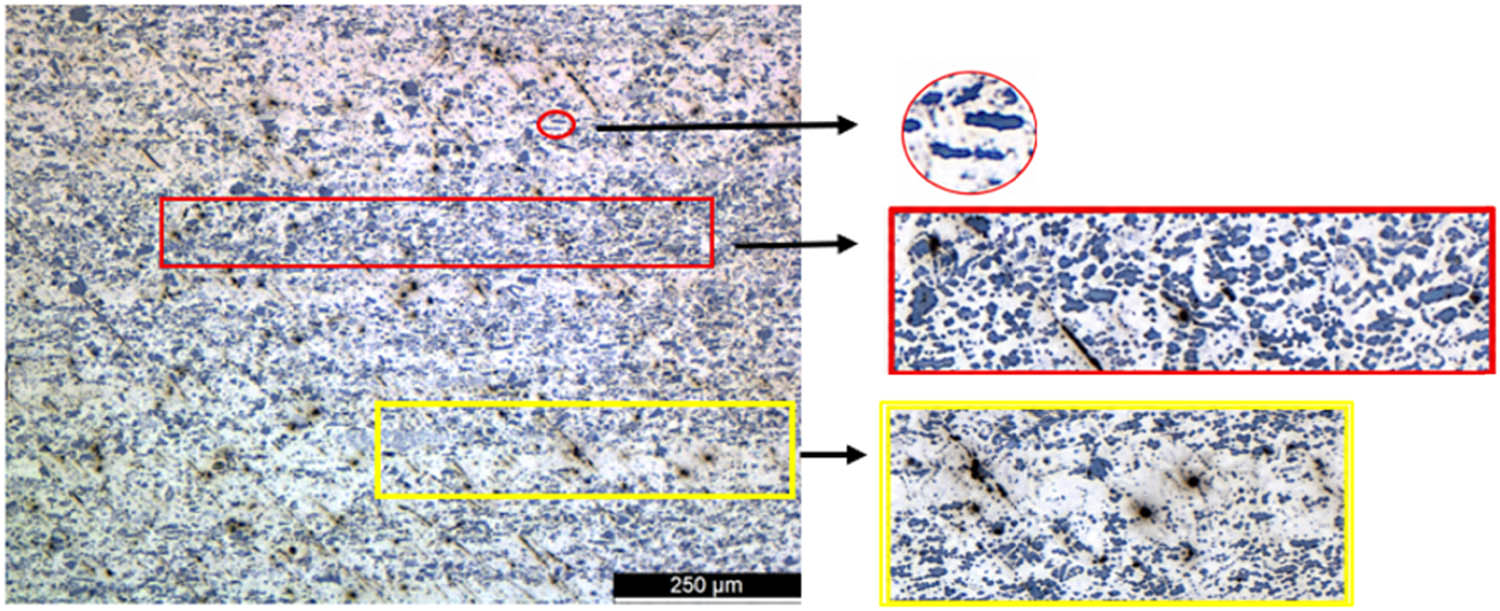
Figure 6
Microstructure of the AlSi11 aluminium alloy after KOBO extrusion, longitudinal section, middle part of the rod (middle), λ = 100, f = 3 Hz. Magnification ×250.
Increasing the frequency to 5 Hz results in a pronounced intensification of plastic deformation, leading to fragmentation of silicon particles and their more uniform distribution within the α-Al matrix. The structure acquires a transitional character, with partial disappearance of banding and a reduction in local variations in the concentration of secondary phases (Figure 7).
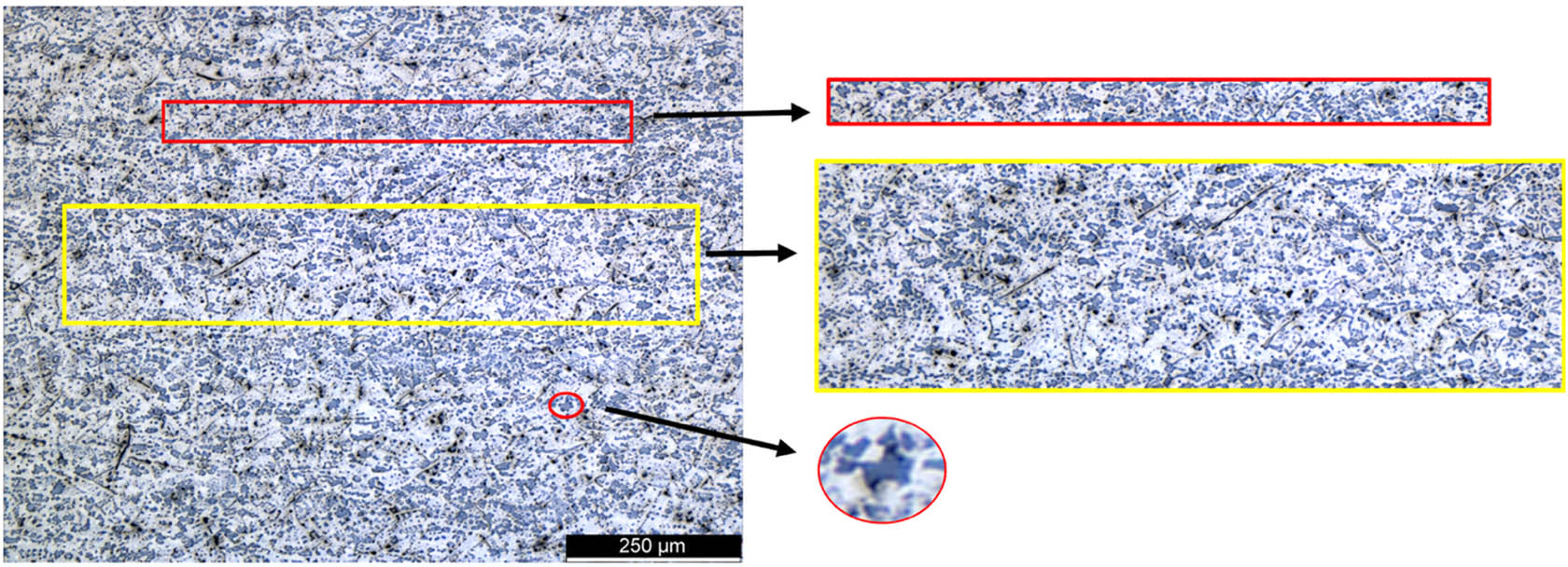
Figure 7
Microstructure of the AlSi11 aluminium alloy after KOBO extrusion, longitudinal section, middle part of the rod (middle), λ = 100, f = 5 Hz. Magnification ×250.
The most advanced microstructural reconstruction was obtained at a frequency of 7 Hz. Under these conditions, the microstructure exhibits a fine and homogeneous character, with silicon particles predominantly present as finely fragmented and uniformly distributed particles. The absence of distinct deformation bands indicates effective fragmentation of secondary phases and advanced structural homogenisation. These observations suggest that increasing the die oscillation frequency enhances the intensity of microstructural transformations occurring during the KOBO extrusion process (Figure 8).
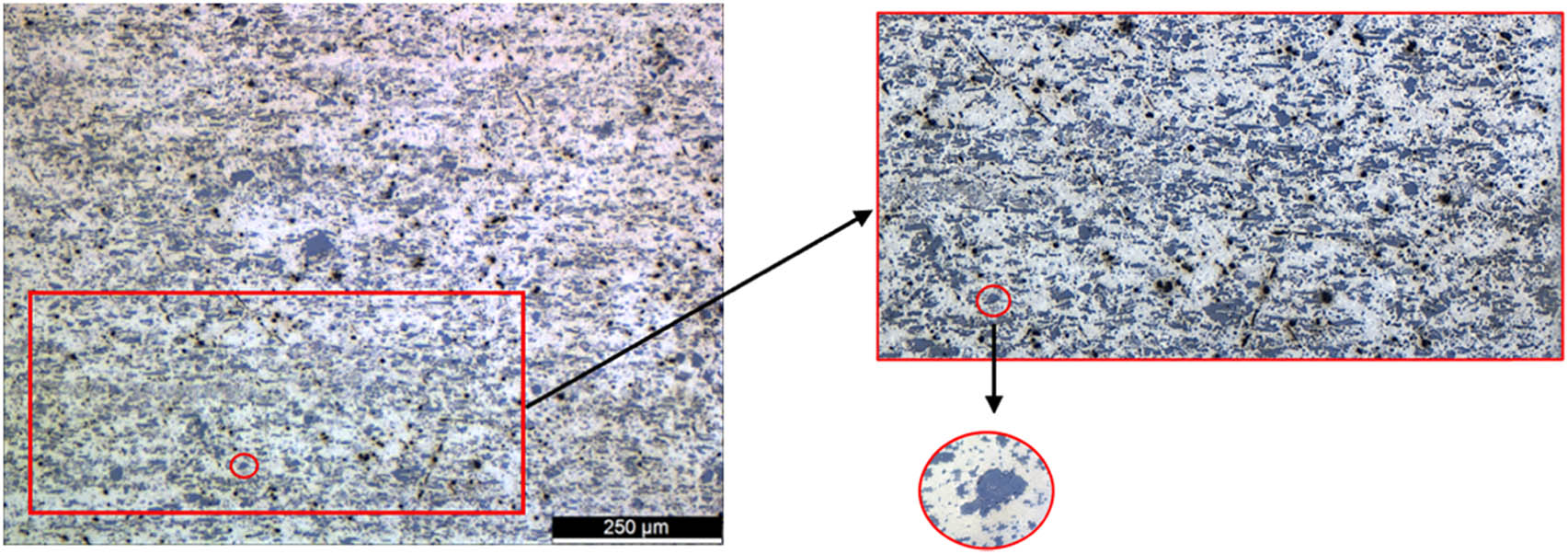
Figure 8
Microstructure of the AlSi11 aluminium alloy after KOBO extrusion, longitudinal section, middle part of the rod (middle), λ = 100, f = 7 Hz. Magnification ×250.
Analogous trends are observed in cross-sections, where increasing the oscillation frequency leads to a reduction in structural heterogeneity and the development of a more isotropic microstructure (Figure 9).
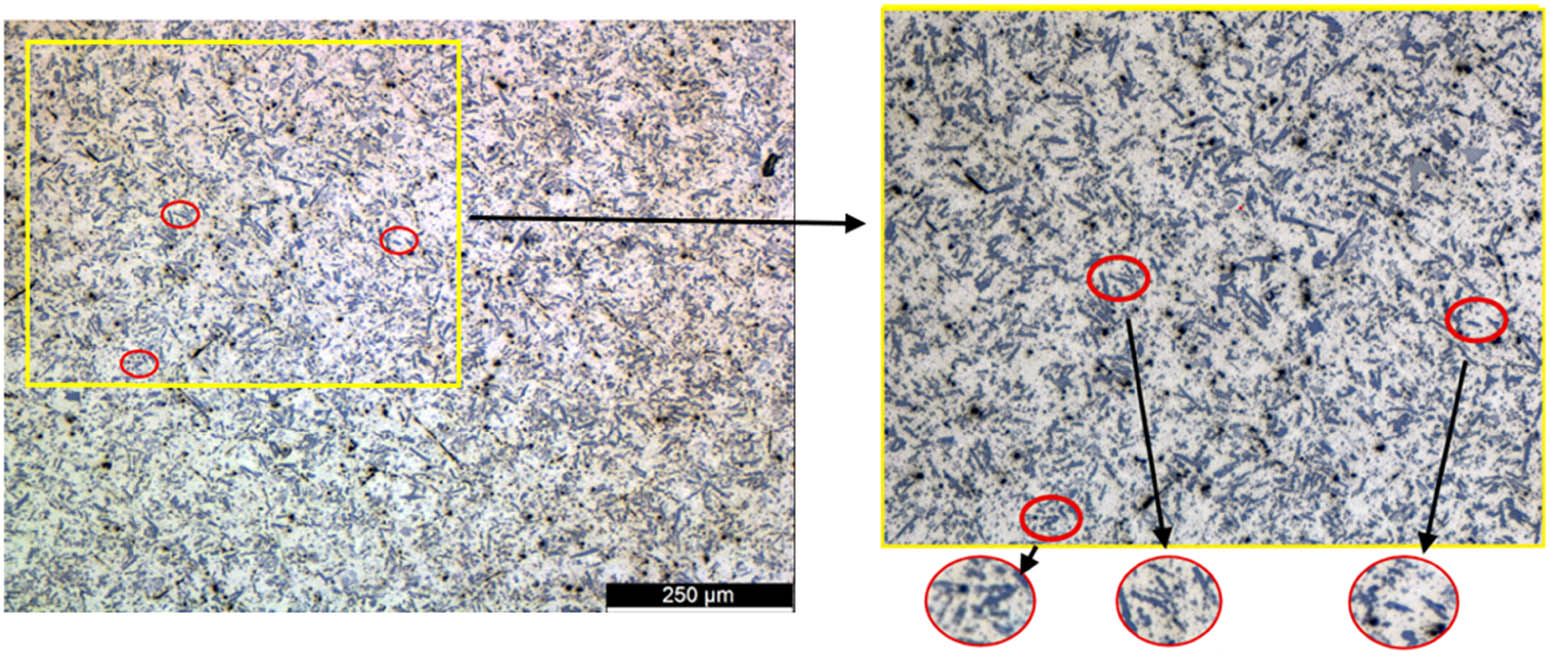
Figure 9
Microstructure of the AlSi11 alloy after KOBO extrusion (λ = 100, f = 7 Hz), cross-section – sample taken from the middle part of the rod (middle). A homogeneous structural region (yellow dashed line) with a uniform distribution of highly fragmented silicon particles in the α-Al matrix is visible. Magnification ×250.
3.3. Effect of extrusion ratio λ
The extrusion ratio λ is one of the key parameters determining the intensity of structural transformations in the AlSi11 alloy. With the increase in λ, the total plastic strain increases, leading to intensified fragmentation of secondary phases and reorganisation of the matrix structure. For λ = 36, the microstructure retains features similar to the as-cast state. Larger, irregular silicon particles and local heterogeneities in the distribution of secondary phases are still observed, indicating that the accumulated strain is insufficient for complete structural reconstruction (Figure 10).
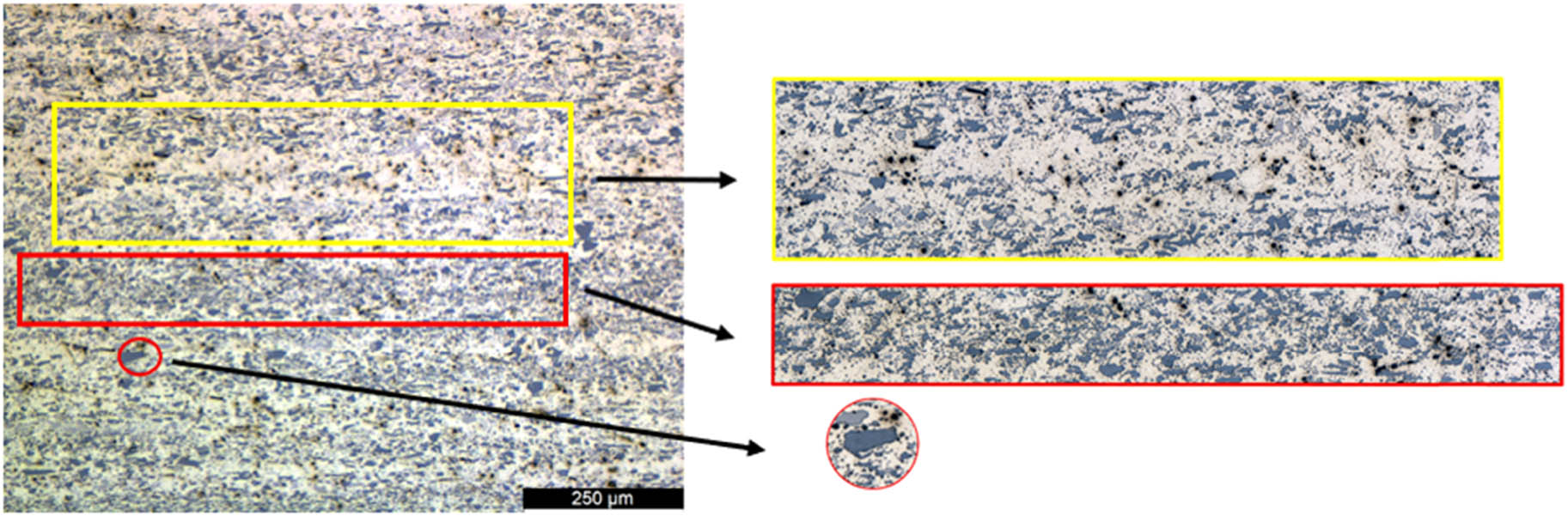
Figure 10
Microstructure of the AlSi11 aluminium alloy after KOBO extrusion at f = 7 Hz, longitudinal section, middle part of the rod (middle), λ = 36. Magnification ×250.
Increasing the extrusion ratio to λ = 60 leads to pronounced fragmentation of silicon particles and their more uniform distribution. The microstructure exhibits a transitional character between a heterogeneous and a homogenised state. The observed changes indicate the intensification of substructure reorganisation processes within the material (Figure 11).
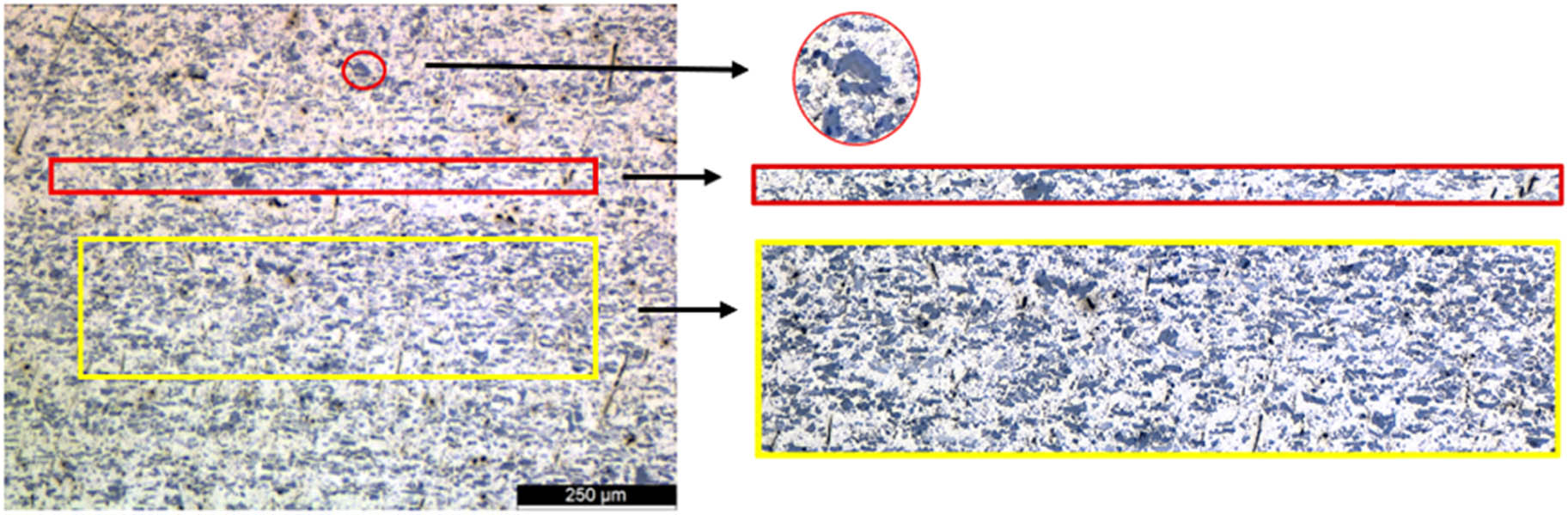
Figure 11
Microstructure of the AlSi11 alloy after KOBO extrusion at f = 7 Hz and an extrusion ratio λ = 60 (longitudinal section, sample taken from the middle part of the rod). Magnification ×250.
The most homogeneous distribution of the observed constituents was obtained for λ = 100. Silicon particles were highly fragmented and more uniformly distributed within the α-Al matrix. The reduced continuity of coarse eutectic regions and the lower level of local heterogeneity indicate advanced microstructural reconstruction; no quantitative conclusion concerning α-Al grain size is made (Figure 12).
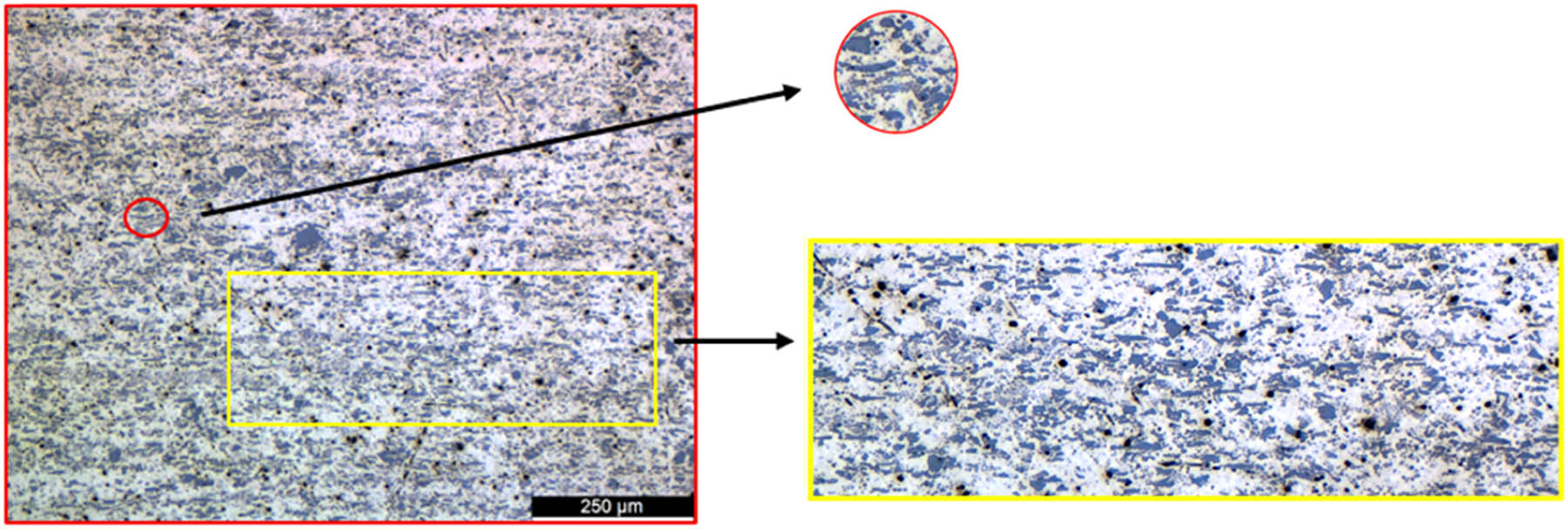
Figure 12
Microstructure of the AlSi11 aluminium alloy after KOBO extrusion at f = 7 Hz, longitudinal section, middle part of the rod (middle), λ = 100. Magnification ×250.
Similar trends are observed in cross-sections, where the increase in λ leads to the elimination of local concentrations of secondary phases and the development of a more isotropic microstructure (Figure 13).
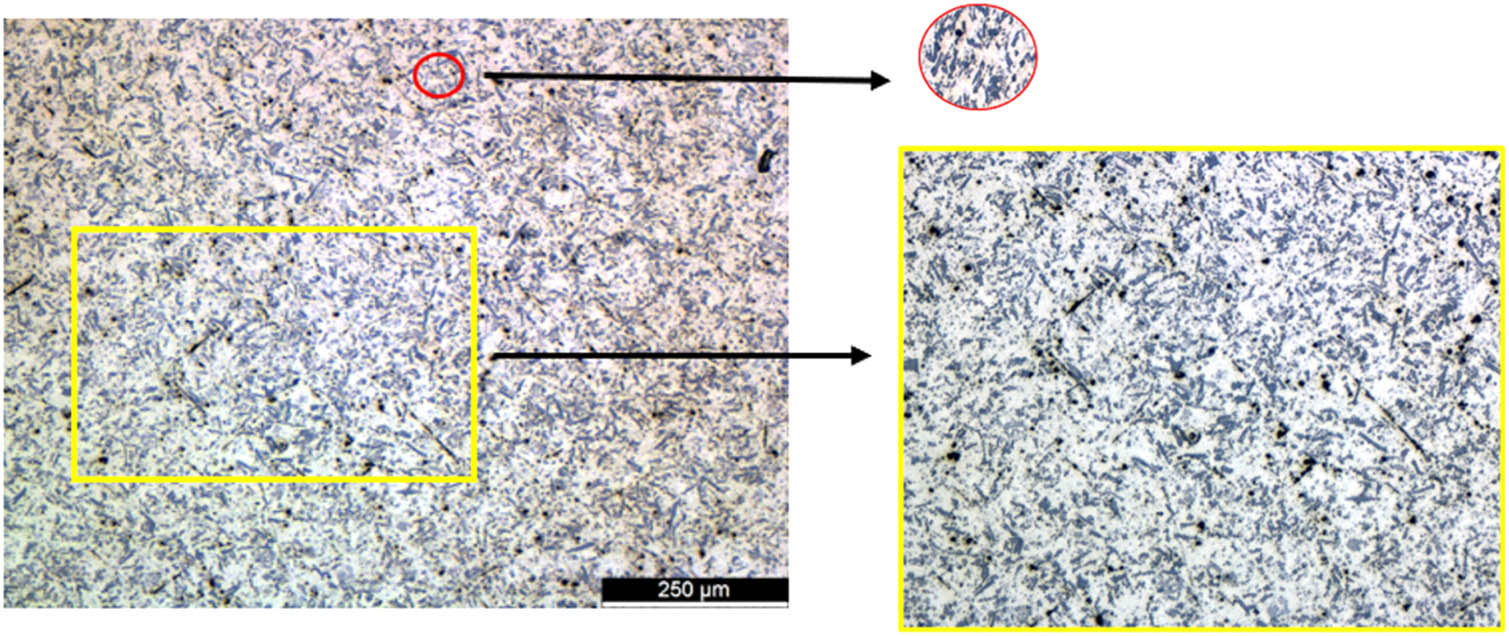
Figure 13
Microstructure of the AlSi11 alloy after KOBO extrusion (cross-section), f = 7 Hz, λ = 100, sample taken from the middle part of the rod (middle). Magnification ×250.
The KOBO extrusion process leads to extensive microstructural reconstruction, expressed by the fragmentation and more homogeneous distribution of eutectic silicon and hard intermetallic particles within the α-Al matrix. In the analysed AlSi11 specimens, bands in the longitudinal sections primarily correspond to material-flow lines formed by the preferential alignment of fragmented silicon and Fe- and Mn-containing intermetallic particles. The banded arrangement is visible in specimens processed at 7 Hz with Φ10 mm (λ = 36) and Φ6 mm (λ = 100). In the transverse sections, the same constituents appear more homogeneous and less directionally oriented because the deformation bands are intersected perpendicular to the extrusion direction (Figures 14 and 15).
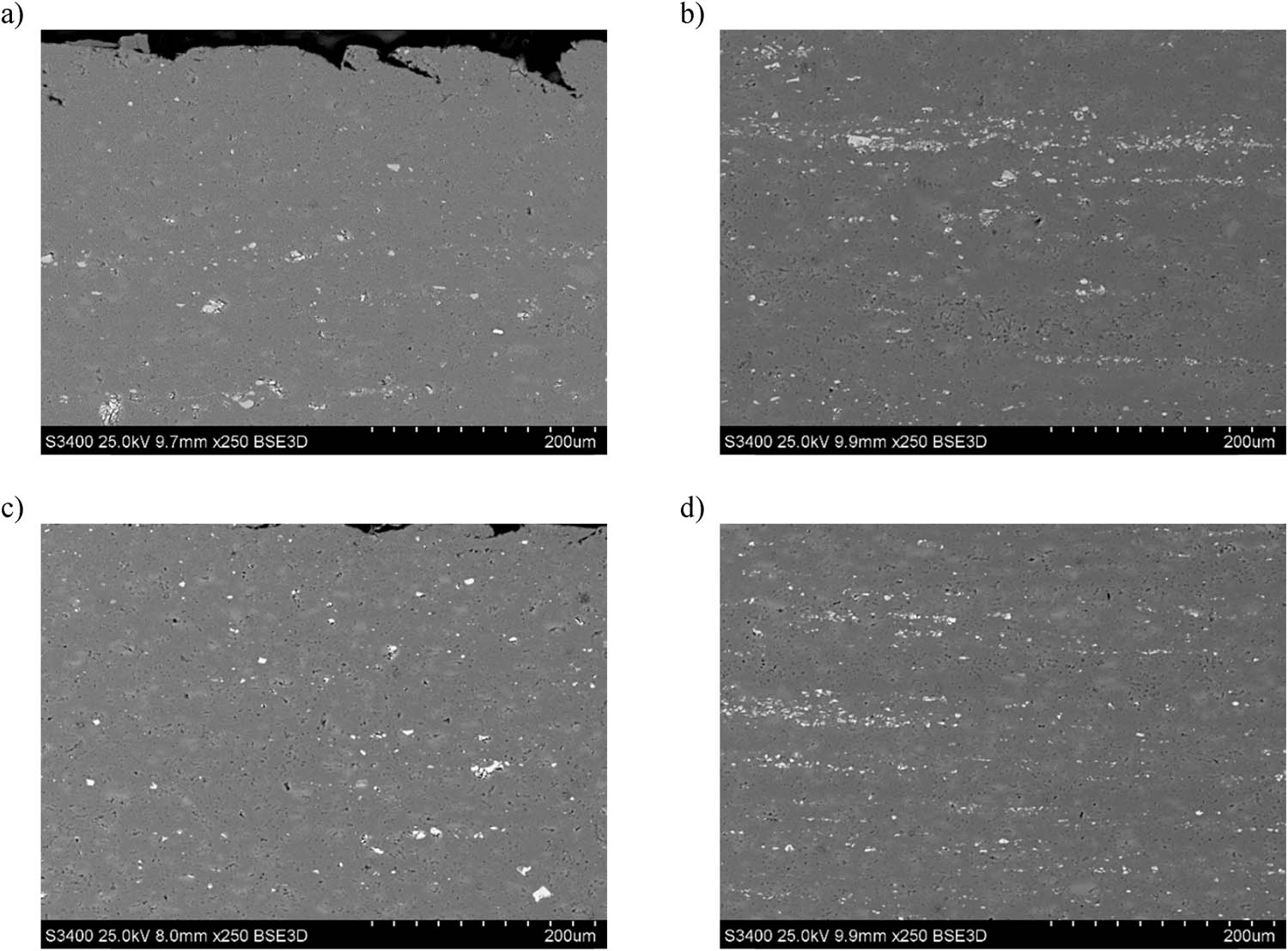
Figure 14
Microstructure showing the longitudinal microstructure of the AlSi11 alloy after KOBO extrusion. Specimen processed at 7 Hz, Φ10 mm (λ = 36): (a) upper surface and (b) centre of the specimen; specimen processed at 7 Hz, Φ6 mm (λ = 100): (c) upper surface and (d) centre of the specimen.
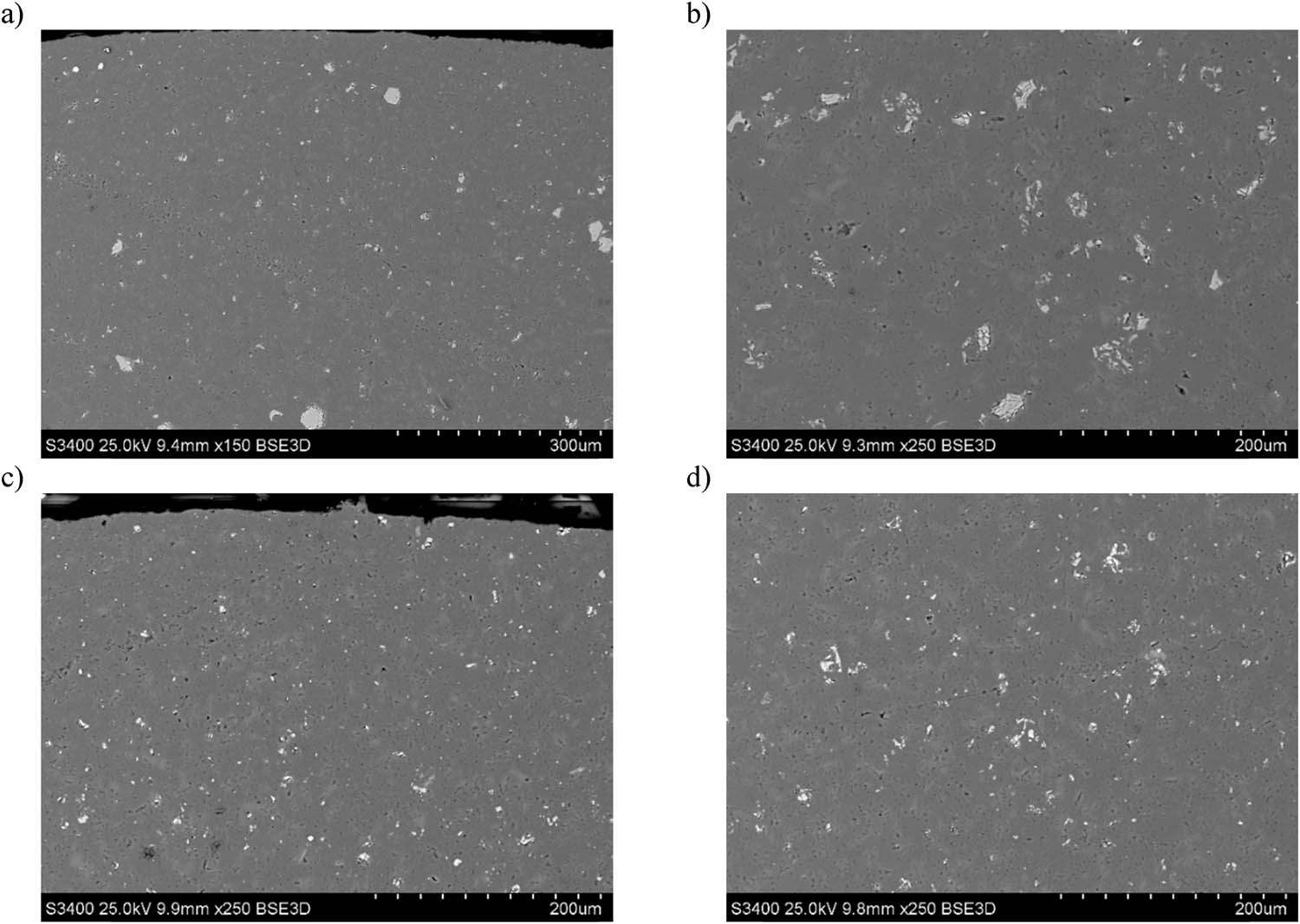
Figure 15
Microstructure showing the transverse microstructure of the AlSi11 alloy after KOBO extrusion. Specimen processed at 7 Hz, Φ10 mm (λ = 36): (a) upper surface and (b) centre of the specimen; specimen processed at 7 Hz, Φ6 mm (λ = 100): (c) upper surface and (d) centre of the specimen.
In the longitudinal sections of both specimens, a distinct banded distribution of silicon particles and intermetallic phases was observed. The banded structure was present throughout the entire cross-section of the material but was most pronounced in the central region of the specimens, where the secondary phases formed more continuous bands aligned parallel to the extrusion direction. In the near-surface regions, the constituent phases were generally finer and more uniformly distributed, which may be attributed to the greater contribution of shear deformation and the more intensive fragmentation of the constituent phases during the KOBO extrusion process.
In the transverse sections, the banded structure was considerably less pronounced because the material flow lines were intersected perpendicular to the extrusion direction. Consequently, the constituent phases exhibited a more homogeneous and apparently random distribution, without the distinct directional alignment observed in the longitudinal sections.
The differences observed between the longitudinal and transverse sections confirm the three-dimensional orientation of the constituent phases induced by the KOBO extrusion process. These differences do not indicate the presence of fundamentally different microstructures; rather, the same microstructural constituents are observed in different sectioning planes.
The darker constituents observed in the optical micrographs correspond predominantly to eutectic silicon particles, whereas the brighter particles in the BSE images represent Fe- and Mn-rich intermetallic phases. Both types of constituents are arranged in bands parallel to the extrusion direction. The KOBO process promotes intensive fragmentation of the brittle silicon particles and the Al–Fe–Mn–Si intermetallic phases. The fragmented particles are subsequently transported by the plastically deforming aluminium matrix and become aligned along the material flow direction, forming characteristic deformation bands (Figure 16).
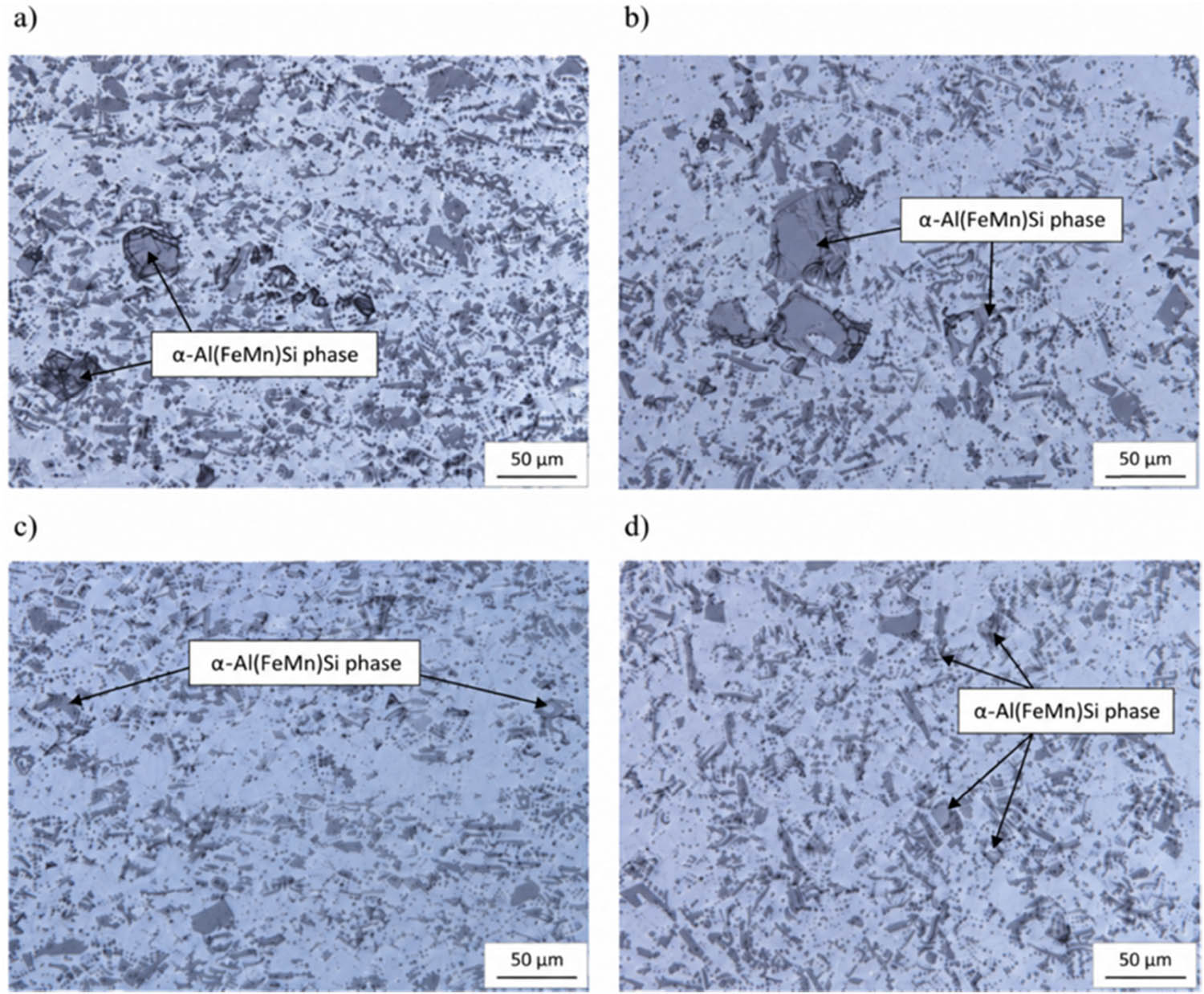
Figure 16
Light microscopy (LM) images showing the longitudinal and transverse microstructures of the AlSi11 alloy after KOBO extrusion. Specimen processed at 7 Hz, Φ10 mm (λ = 36): (a) longitudinal section and (b) transverse section perpendicular to the extrusion direction; specimen processed at 7 Hz, Φ6 mm (λ = 100): (c) longitudinal section and (d) transverse section perpendicular to the extrusion direction.
SEM/EDS observations and analyses performed on both the longitudinal and transverse sections confirmed the presence of silicon-rich particles and Al–Fe–Mn–Si intermetallic phases in the AlSi11 alloy after KOBO extrusion. Analysis points containing approximately 47–94 wt% Si were identified as silicon particles, whereas the detected aluminium content is attributed primarily to the electron interaction volume, which includes the surrounding α-Al matrix. The EDS analyses also revealed the presence of numerous Al–Fe–Mn–Si intermetallic particles, most likely belonging to the α-Al–Fe–Mn–Si phase family.
In several analysis points, Mg, Si, Cu, and Al were detected simultaneously, suggesting the presence of the Q-AlMgSiCu phase. In addition, particles containing Mg, Cu, Fe, and Ni were locally observed. These particles may correspond to the Al9(FeNiCu) intermetallic phase or to multiphase agglomerates formed as a result of the mechanical fragmentation, transport, and intimate mixing of different constituent phases during the SPD imposed by the KOBO extrusion process (Figure 17).
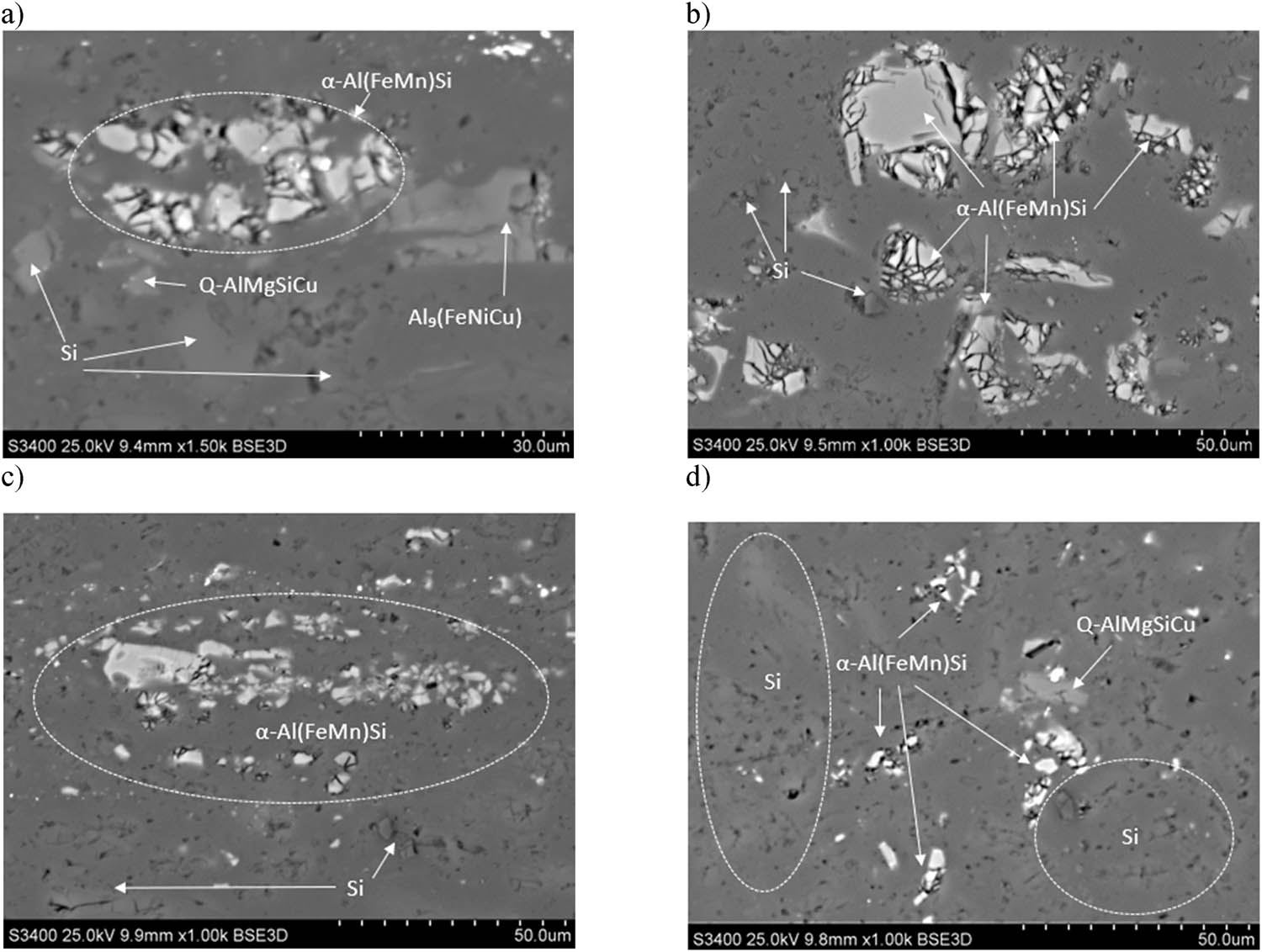
Figure 17
SEM microstructure of the AlSi11 alloy after KOBO extrusion. Specimen processed at 7 Hz, Φ10 mm (λ = 36): (a) longitudinal section and (b) transverse section perpendicular to the extrusion direction; specimen processed at 7 Hz, Φ6 mm (λ = 100): (c) longitudinal section and (d) transverse section perpendicular to the extrusion direction.
Elemental mapping confirmed the heterogeneous distribution of alloying elements in the AlSi11 alloy after KOBO extrusion. Aluminium was uniformly distributed throughout the matrix, whereas silicon was concentrated within the eutectic silicon particles. The Mn and Fe maps revealed that both elements were co-localised in the same elongated intermetallic particles, indicating the presence of Fe–Mn-rich intermetallic phases aligned along the extrusion direction. The elemental distribution reflects the deformation-induced alignment of the microstructure during the KOBO process (Figure 18).
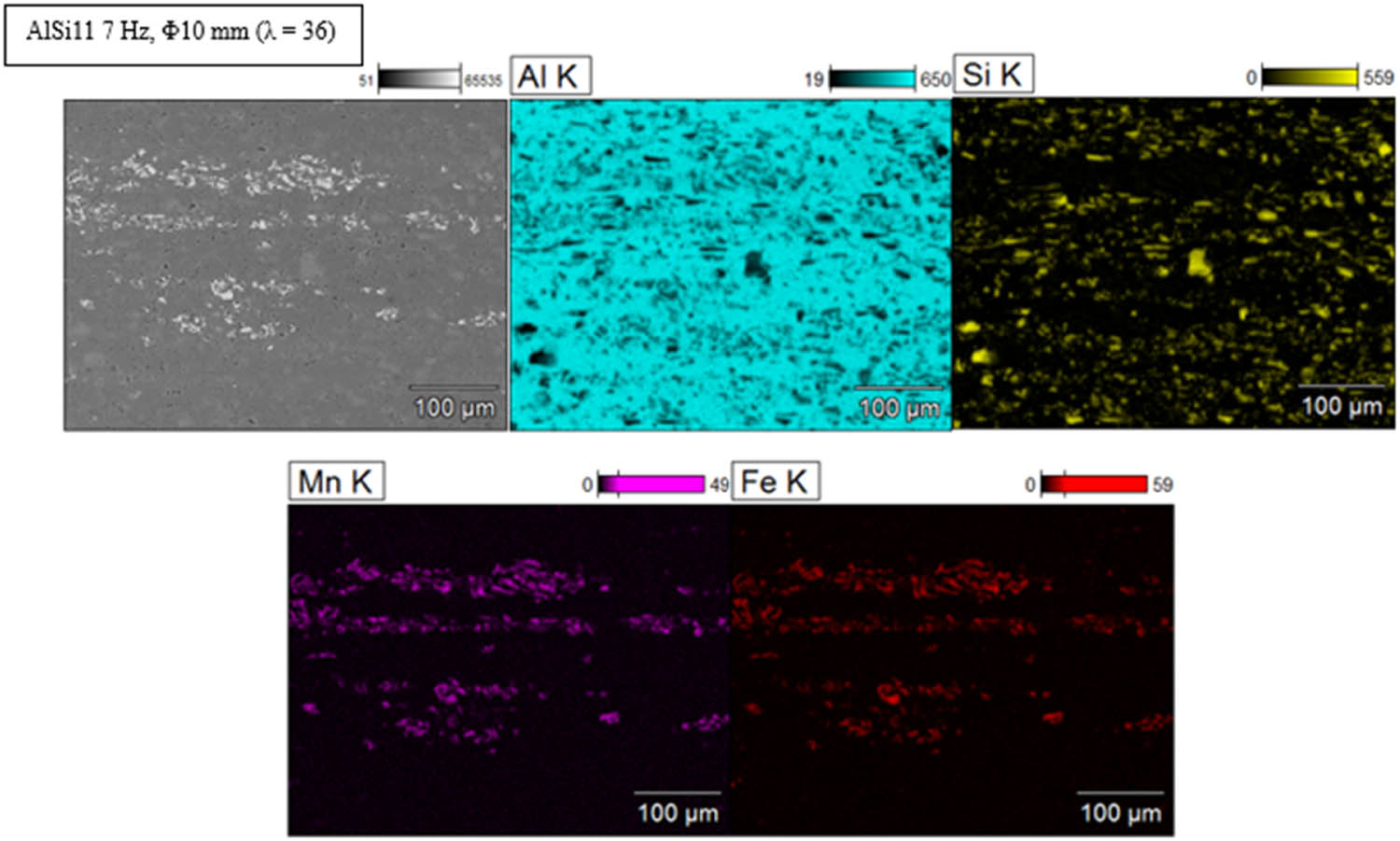
Figure 18
EDS elemental maps of the AlSi11 alloy after KOBO extrusion (7 Hz, Φ10 mm, λ = 36), showing the distribution of Al, Si, Mn, and Fe in the section parallel to the extrusion direction.
The representative EDS spectrum acquired at analysis point 6, indicated in Figure 19, confirmed the presence of an intermetallic phase containing Al, Fe, Mn, and Si. The dominant aluminium peak results from the relatively large interaction volume of the electron beam, which includes both the analysed particle and the surrounding aluminium matrix. The distinct Fe and Mn peaks indicate the presence of Fe–Mn-rich intermetallic phases, while the Si peak confirms the participation of silicon in the analysed particle. These results are consistent with the EDS elemental maps and SEM observations, confirming the occurrence of Al–Fe–Mn–Si intermetallic phases in the AlSi11 alloy after KOBO extrusion (Figure 19).
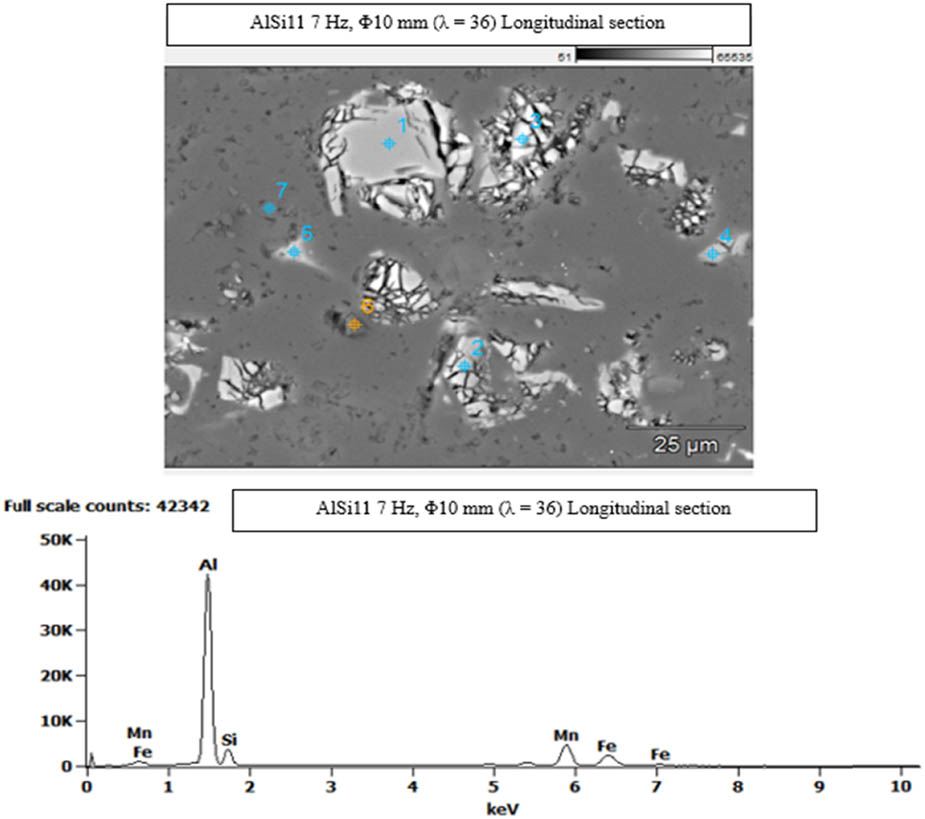
Figure 19
SEM micrograph of the AlSi11 alloy after KOBO extrusion (7 Hz, Φ10 mm, λ = 36) showing the locations of the EDS point analyses in the section parallel to the extrusion direction together with a representative EDS spectrum.
The representative EDS spectrum acquired at analysis point 3, indicated in Figure 20, confirmed the presence of an intermetallic phase containing Al, Fe, Mn, and Si. The dominant aluminium peak results from the interaction volume of the electron beam, which includes both the analysed particle and the surrounding aluminium matrix. The distinct Fe and Mn peaks indicate the presence of Fe–Mn-rich intermetallic phases, while the Si peak confirms the presence of silicon within the analysed particle. The EDS results are consistent with the SEM observations and confirm the occurrence of Al–Fe–Mn–Si intermetallic phases in the cross section of the AlSi11 alloy after KOBO extrusion (Figure 20).
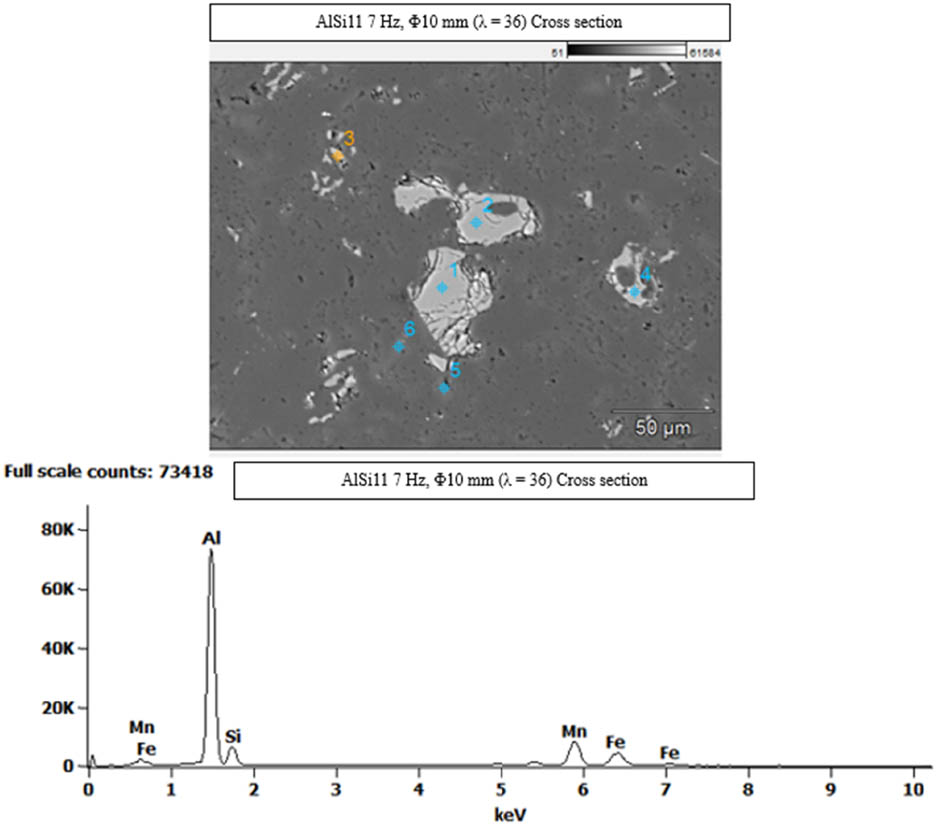
Figure 20
SEM micrograph of the cross-section of the AlSi11 alloy after KOBO extrusion (7 Hz, Φ10 mm, λ = 36), showing the locations of the EDS point analyses and a representative EDS spectrum of an intermetallic phase.
3.4. Effect of KOBO process parameters on the maximum extrusion force
The study evaluated the effect of die oscillation frequency and extrusion ratio λ on the maximum extrusion force for AlSi11. Figure 21 presents Fmax as a function of frequency at λ = 100. Increasing the frequency from 3 to 7 Hz reduced the maximum force from 2,067 to 1,471 kN, i.e. by approximately 29%. This trend is consistent with an increasing contribution of cyclic strain-path changes and localised shearing. Frictional and deformation-induced heating may also reduce plastic-flow resistance; because temperature was not recorded, the relative contribution of these effects cannot be quantified.
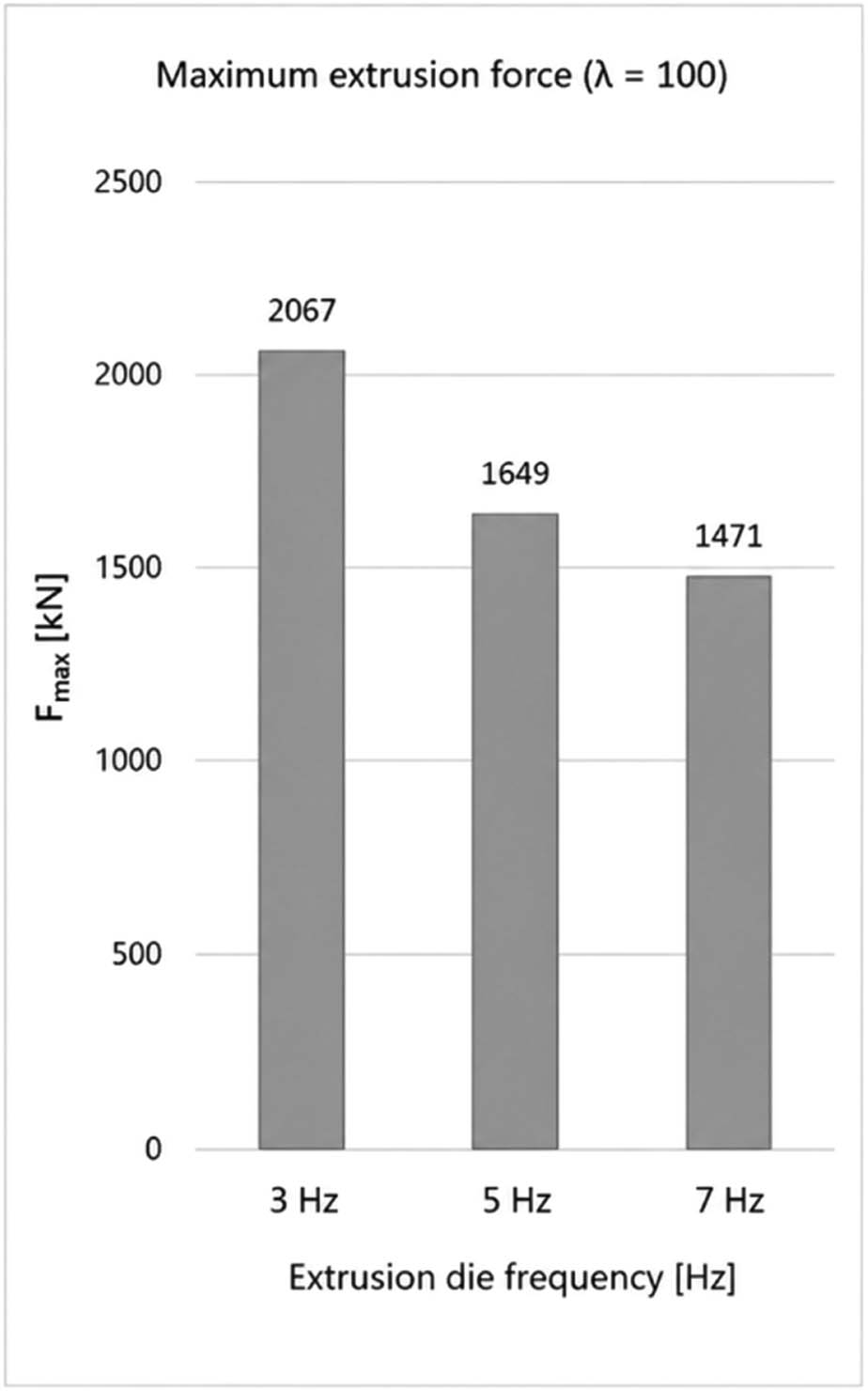
Figure 21
Dependence of the maximum extrusion force Fmax on die oscillation frequency in the KOBO process for the AlSi11 alloy at a constant extrusion ratio λ = 100.
This effect is particularly significant for the AlSi11 alloy, whose heterogeneous microstructure (silicon precipitates and intermetallic phases) hinders plastic flow under conventional conditions. The greatest reduction in force is observed in the range of 3–5 Hz, while further increase in frequency leads to a gradual saturation effect, indicating stabilisation of deformation conditions. Figure 22 presents the effect of extrusion ratio λ on Fmax at a constant frequency of 7 Hz. With the increase in λ from 36 to 100, a decrease in the maximum extrusion force of approximately 24% is observed. With the increase in frequency from 3 to 7 Hz, a clear reduction in extrusion force is observed, indicating a decrease in plastic flow resistance. Microstructural analysis of AlSi11 rods extruded by the KOBO method revealed changes in the morphology and distribution of eutectic silicon and intermetallic particles with increasing extrusion ratio.
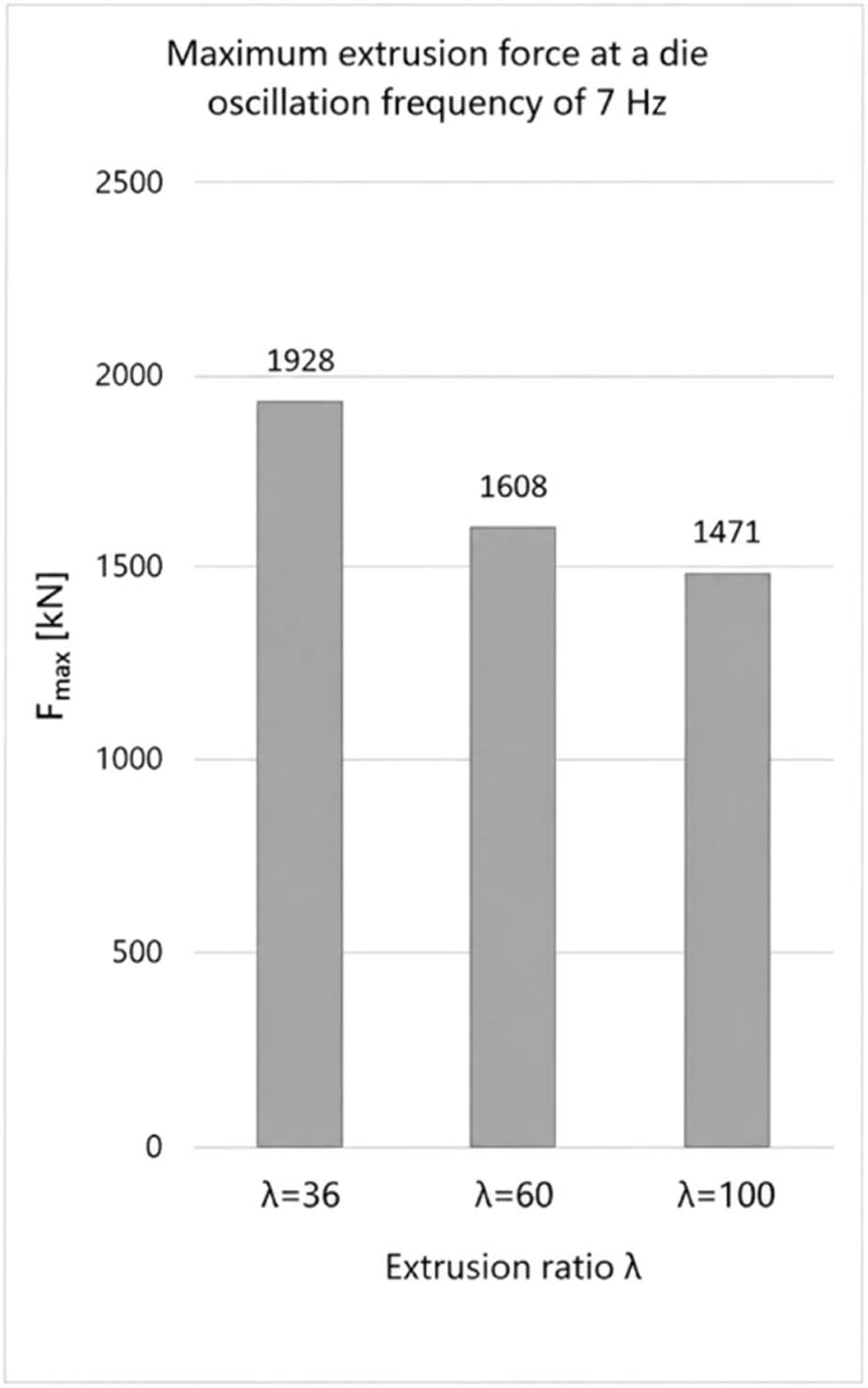
Figure 22
Effect of extrusion ratio λ on the maximum extrusion force Fmax of the AlSi11 alloy during KOBO extrusion at a constant die oscillation frequency of 7 Hz.
At λ = 36, the process required the highest maximum force. Increasing λ was accompanied by more pronounced fragmentation and redistribution of eutectic silicon and intermetallic particles and by a lower maximum extrusion force. At 7 Hz and λ = 100, the observed constituents showed the most uniform distribution among the examined variants. The force decrease should be interpreted as the combined effect of cyclic strain-path changes, localised shearing, friction, and possible deformation-induced heating, rather than as evidence for a single mechanism.
No temperature measurement was performed in the deformation zone; therefore, a quantitative correlation between temperature rise and maximum extrusion force cannot be established from the present data. Future work should combine force recording with thermocouples or infrared thermography [35].
It should be emphasised that this behaviour is opposite to that observed in conventional extrusion processes, where an increase in the extrusion ratio (λ) typically results in higher extrusion force. In contrast, under KOBO conditions, increase in λ leads to a reduction in the extrusion force. This behaviour is associated with the cyclic change in the strain path induced by the oscillatory motion of the die, which facilitates material flow and promotes more effective plastic deformation. Consequently, the plastic flow resistance decreases despite the higher degree of deformation (Figure 23) [12,18,25].
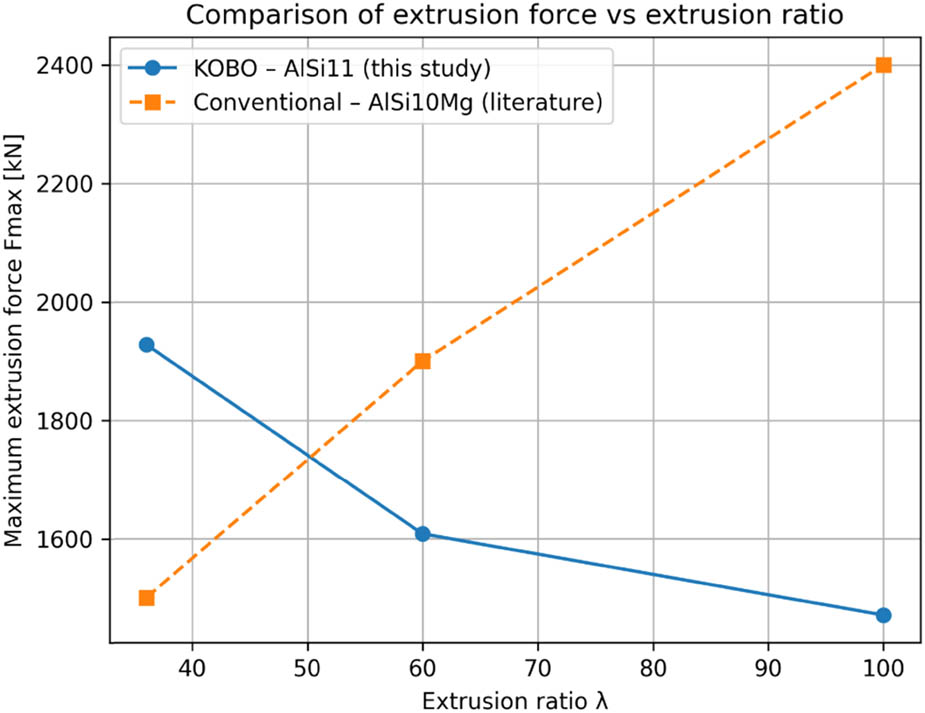
Figure 23
Comparison of the effect of extrusion ratio λ on the maximum extrusion force Fmax for the KOBO process (AlSi11 alloy, present study) and conventional extrusion (AlSi10Mg alloy, based on literature data [12,18,25]).
4. Conclusion
The present study demonstrated that the KOBO extrusion process provides an effective method for the plastic deformation of the cast AlSi11 aluminium alloy under room-temperature conditions, without the need for prior billet heating. This is of particular importance because conventional cold extrusion of near-eutectic Al–Si casting alloys is generally difficult or even impossible due to the presence of coarse eutectic silicon particles, brittle intermetallic phases and the inherently heterogeneous cast microstructure. The obtained results confirm that the cyclic oscillatory motion of the die significantly modifies the deformation conditions, enabling stable material flow and effective plastic processing of the AlSi11 alloy.
Both die oscillation frequency and extrusion ratio controlled the measured KOBO extrusion response. Increasing frequency from 3 to 7 Hz and λ from 36 to 100 systematically reduced the maximum extrusion force. The trend is consistent with reduced effective plastic-flow resistance under cyclic strain-path changes, although the unmeasured temperature increase in the deformation zone may also have contributed. The lowest maximum force was recorded at the highest frequency and extrusion ratio examined.
Optical microscopy revealed substantial reconstruction of the cast microstructure. Increase in the frequency and λ promoted fragmentation of eutectic silicon and reduced local heterogeneity in the distribution of second-phase particles. The most homogeneous distribution was observed at 7 Hz and λ = 100. Because no quantitative grain-size analysis was performed, these observations are not interpreted as proof of α-Al grain refinement.
The SEM investigations provided a more detailed understanding of the microstructural transformations occurring during KOBO extrusion. Longitudinal sections revealed characteristic deformation bands consisting of fragmented eutectic silicon particles and Fe–Mn-rich intermetallic phases aligned parallel to the extrusion direction. The central region of the extruded rods exhibited the most pronounced banded morphology, whereas the near-surface regions were characterised by finer and more uniformly distributed structural constituents. In contrast, the transverse sections showed a significantly more homogeneous and less directionally oriented arrangement of the second-phase particles, confirming that the observed differences result primarily from the orientation of the deformation bands relative to the observation plane rather than from differences in the microstructure itself.
The SEM/EDS analyses confirmed the presence of silicon-rich particles together with Fe–Mn-rich intermetallic phases after KOBO extrusion. Elemental mapping demonstrated a uniform distribution of aluminium within the matrix, whereas silicon remained concentrated in fragmented eutectic particles and iron and manganese were predominantly associated with intermetallic phases. Similar spatial distribution of Fe and Mn indicates their coexistence within common Al–Fe–Mn–Si intermetallic compounds. The obtained results confirm that KOBO extrusion promotes fragmentation and redistribution of these particles without changing their chemical character, thereby improving the structural uniformity of the alloy.
The observed structural evolution indicates that repeated strain-path changes promote fragmentation and redistribution of eutectic silicon and intermetallic particles, thereby reducing the size and continuity of brittle eutectic regions and increasing microstructural homogeneity. These conclusions refer to constituent morphology and distribution; changes in the α-Al grain structure require confirmation by EBSD or TEM.
A quantitative assessment of α-Al grain size was outside the scope of this study. EBSD and/or TEM is required to determine whether the KOBO conditions used here produced grain refinement.
Overall, the results obtained in this study demonstrate that the KOBO process is an effective solid-state processing technique for the plastic deformation of the AlSi11 casting alloy. Appropriate selection of the die oscillation frequency and extrusion ratio enables effective control of the extrusion process, reduction in the extrusion force, and tailoring of the final microstructure. The study provides new experimental evidence that the KOBO method can successfully overcome the limited formability of conventionally difficult-to-deform cast Al–Si alloys processed at room temperature. Consequently, the process represents a promising alternative to conventional extrusion methods and offers considerable potential for the manufacture of high-quality semi-finished products from cast aluminium alloys. Furthermore, the results constitute a valuable basis for future investigations aimed at correlating KOBO processing parameters with the mechanical, tribological, and fatigue properties of extruded AlSi11 products.
Funding information
This research was financed by the Minister of Science and Higher Education of the Republic of Poland under the Regional Excellence Initiative programme.
Author contributions
Aleksandra Anna Wędrychowicz: Investigation, formal analysis, visualisation, writing – original draft. Romana Ewa Śliwa: Conceptualisation, methodology, supervision, writing – review and editing. Marek Zwolak: Methodology, investigation, writing – review and editing. Grażyna Mrówka-Nowotnik: Investigation, microstructural data analysis, writing – review and editing. All authors read and approved the final manuscript.
Conflict of interest statement
Authors state no conflict of interest.