
1. Introduction
Corrosion can adversely affect economic development, incur additional costs, and even lead to catastrophic accidents [1]. Biofouling accelerates the corrosion of materials and reduces their service life [2]. In marine environments, the attachment of microorganisms significantly increases the resistance of ships during navigation and fuel consumption, and may lead to biological invasion through species transfer, posing a serious threat to marine engineering and ecological security [3,4,5,6].
Epoxy resin is a thermosetting polymer renowned for its exceptional properties, including high adhesive strength, excellent corrosion resistance, outstanding electrical insulation capability, and superior mechanical strength. It has long been employed as the primary base material for anticorrosive coatings. However, the corrosion resistance of pigment-free coatings deteriorates rapidly [7,8]. In order to improve the performance of epoxy resin coatings, some researchers have added various additives to enhance the performance of the coatings, such as nano-ZnO, nano-Al, nano-TiO2, N-alkylation of sulfosalicylic acid-doped polyaniline, etc. [9].
Graphene is made up of carbon atoms that are covalently bonded in a one-atom-thick sheet, forming a honeycomb crystal lattice which possesses excellent properties such as excellent electron conductivity and mechanical strength [10]. Hu et al. discovered that graphene oxide could damage the cell membrane of Escherichia coli and had little cytotoxicity to mammalian cells [11]. Gu et al. incorporated Cu2O nanoparticles into the interlayer of GO nanosheets to create RGO@Cu2O nanocomposites, which were then used in acrylic resin to develop a novel marine self-polishing antifouling coating [12]. Soleimani et al. utilized Avicennia marina and silver nitrate to reduce graphene oxide, creating silver-supported redox-graphene, achieving a static and dynamic antifouling effect [13]. Yang et al. functionalized graphene with 3,4,9,10-perylene tetraformic acid (PTCA), the impedance value of the epoxy coating containing PTCA-G was nearly 19 times higher than that of the pure epoxy coating [14].
Graphene has a very high specific surface area and is prone to agglomeration. Some researchers have modified graphene with various organic substances in order to enhance its dispersibility in epoxy resin. Ramezanzadeh et al. utilized p-phenylenediamine (PPDA) to functionalize GO, thereby improving its compatibility and dispersion in the epoxy resin matrix, slowing down the penetration of corrosive electrolyte into the steel substrate [15]. Ding et al. developed a hydroxyl epoxyphosphate monomer (PGHEP) that efficiently dispersed graphene in waterborne epoxy resin through the mechanism of π–π interaction, achieving outstanding anticorrosion performance [16]. However, these modifications require the use of toxic substances or organic compounds with complex synthesis processes.
Surface modification of graphene by coupling agents is an economical and efficient surface treatment method, which can improve the dispersion performance of graphene. The graphene surfaces are chemically modified via coupling, where ionic or covalent bonds between the coupled functional groups are formed. A silane coupling agent is an organosilicon compound featuring terminal amino groups, employed to modify the surface of inorganic fillers and thereby improve their dispersion within a polymer matrix [17]. Research on silane-modified graphene in epoxy resins for nanocomposite coatings is limited, with few studies meanwhile examining their corrosion resistance and antibacterial properties. The main idea of this work is to modify graphene with a silane coupling agent, making modified graphene/epoxy coatings. The anticorrosion and antibacterial capabilities of the target product are examined to explore their potential applications. A potential mechanism for the corrosion protection and antibacterial action of steel, when coated with modified graphene/epoxy composites, is suggested.
2. Experiment
2.1. Materials
Reduced graphene oxide (RGO) was procured from Chinese Academy of Sciences Chengdu Organic Chemistry Co., Ltd. Silane coupling agent (KH602) was sourced from Zhejiang Feidian Chemical Co., Ltd. Epoxy resin (E44) was acquired from Nantong Xingchen Synthetic Material Co., Ltd. Polyamide curing agent was procured from Fine Chemical Research Institute of Bluestar Chemical Wuxi Resin Factory. Xylene, n-butanol, ethanol, and NaCl were purchased from Tianjin Kewei Chemical Reagent Co. HNO3 and H2SO4 were obtained from Tianjin Jiangtian Chemical Technology Co., Ltd. Beef extract and peptone were procured from Beijing Aoboxing Biology Technology Co., Ltd. Agar was sourced from Beijing Dingguochangsheng Biotechnology Co., Ltd. GO was prepared in the laboratory.
2.2. Preparation of KH602 modified-GO
The coupling agent was difficult to be directly connected to the surface of RGO, so RGO was oxidized by an oxidant such as concentrated acid to introduce functional groups such as –OH and –COOH, so that the coupling agent could be connected to the surface of the graphene. The detailed procedures for preparing the modified-GO are illustrated in Figure 1. 150 mL H2SO4 and 450 mL HNO3 were mixed thoroughly, and then 1 g graphene was added to the solution and dispersed by ultrasonication at room temperature for 30 min. Subsequently, heated and stirred the mixture in a water bath at 60℃ for 6–8 h. The graphene was filtered off, washed with distilled water until neutral pH was achieved, dried in an oven at 60℃, and ground to obtain GO.
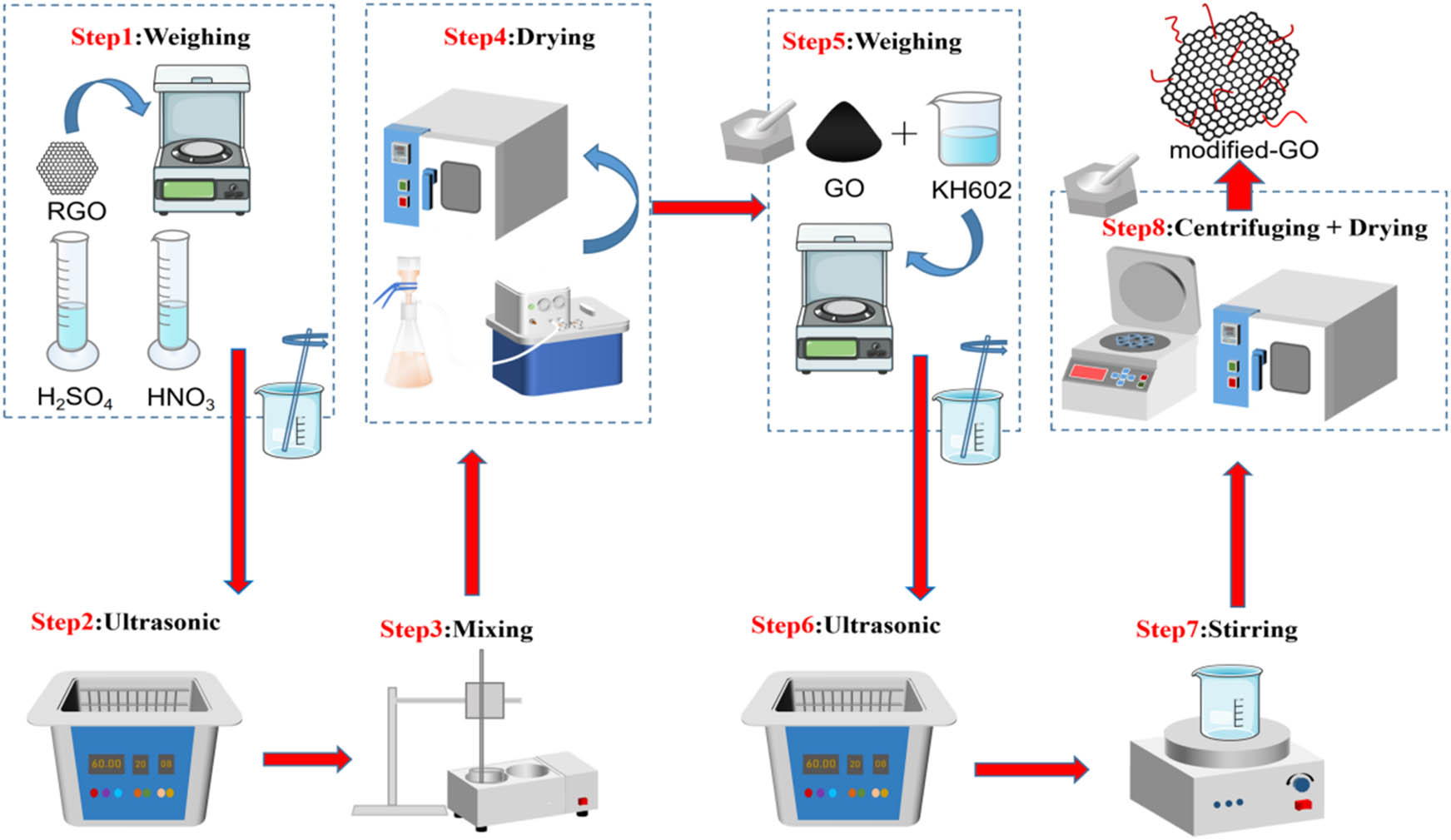
Figure 1
Preparation of modified-GO.
3-(2-Aminoethylamino)propyl-dimethoxymethylsilane (KH602) was used as surface modifier. The GO and KH602 were thoroughly mixed in a 1:5 mass ratio, and a small amount of deionized water was added. The mixture was ultrasonically dispersed at room temperature for 30 min. It was then placed on a magnetic stirrer and heated and stirred at 60–80℃ for 8–10 h to ensure complete reaction of the silane coupling agent with the GO surface, thereby attaching the coupling agent groups onto the GO surface. The modified-GO was separated with a centrifuge, washed three times with distilled water and twice with ethanol, dried in an oven at 60℃, and ground.
2.3. Preparation of coating
The composition of the coating is presented in Table 1. The epoxy value and epoxide equivalent of the resin were 0.44, 210–244 g/eq, respectively. Modified-GO was added to a mixture of xylene and n-butanol and sonicated for 10 min to prepare a slurry. The slurry was added to E-44 epoxy resin and stirred until a uniform dispersion was obtained. After that, the polyamide curing agent was added and stirred until the mixture was uniform. The coating was allowed to cure for 30–40 min. Coatings with unmodified graphene were prepared in the same way.
A two-layer epoxy coating was applied to Q235 steel: a 200-μm primer followed by a 100-μm topcoat. A neat epoxy coating was also applied for comparison.
2.4. Test methods of graphene
A small amount of RGO, modified-GO, and KH602 was separately loaded into sample tubes. FTIR spectra were acquired using a Bruker TENSOR 27 spectrometer (4000−1–600 cm−1).
Trace amounts of RGO and modified-GO were separately dispersed in ethanol by sonication for 15–20 min. A copper grid was then dipped into each suspension, carefully withdrawn, and placed on a clean watch glass. Excess liquid was blotted with filter paper to dry the sample. Sample morphology was examined using TEM.
2.5. Test methods of coating
Electrochemical Corrosion Tests: A VersaSTAT4 electrochemical workstation and three-electrode system were used for EIS. The working electrode, consisting of the coated sample, was positioned at the base of the electrochemical cell. A saturated calomel electrode and a ruthenium electrode served as the reference and counter electrodes, respectively. The testing electrolyte was a 3.5 wt% NaCl solution. EIS Measurements were conducted using a VersaSTAT4 workstation with the following settings: disturbance voltage, 20 mV; start frequency, 100,000 Hz; cutoff frequency, 0.01 Hz. The data of 24, 72, and 144 h were taken, respectively. The fitting analysis was carried out by ZSimpWin3.50.
Antibacterial properties test: An eluent solution containing 3.5% NaCl was prepared. Additionally, a nutrient broth (NB) liquid medium was formulated using 1000 mL of distilled water, supplemented with 5 g NaCl, 5 g beef extract, and 10 g peptone. For solid culture, nutrient agar (NA) was made by adding 15 g agar to 1,000 mL of NB. The pH of all media was adjusted to a range of 7.0–7.2. All materials, such as the eluent, NB, NA, test tubes, pipette tips, glass Petri dishes, and centrifuge tubes, were sterilized via autoclaving at 121°C for 20 min. Staphylococcus aureus was first streaked onto NA plates within a laminar flow hood and incubated at 37°C for 24 h. Subsequently, an isolated colony was inoculated into 5 mL of fresh NB and cultured at 37°C with shaking at 220 rpm for another 24-h period. Prior to bacterial inoculation, the surface of each sample was disinfected by wiping with 75% ethanol in an ultra-clean bench, followed by rinsing with sterile distilled water and exposure to UV light for 30 min. The resulting bacterial suspension underwent four consecutive 10-fold serial dilutions. A 100-µL aliquot of an appropriately diluted sample was then evenly spread across the prepared surface. To ensure consistent and full contact, the inoculated area was covered with a sterile polyethylene (PE) film. The samples were incubated under the same conditions at 37°C for 24 h. Following incubation, the PE film and the sample surface were thoroughly rinsed with 8 mL of the sterile eluent. A 200-µL aliquot was taken from this eluate and spread onto NA plates using a sterile glass spreader. The plates were incubated at 37°C for 24 h to allow colony formation. The number of viable colonies was determined using the standard plate count method. All tests for each sample were performed in triplicate. The antibacterial efficacy of the coating was evaluated using the following formula: , where R is the percentage reduction ratio, A is the number of bacterial colonies from varnish, and B is the number of bacterial colonies from coatings.
3. Results and discussion
3.1. The characterization of graphene
Figure 2 is the chemical structure of KH602, which has N and O elements. The FTIR results of KH602 and the graphene before and after modification are shown in Figure 3. The silanol groups of KH602 could react with hydroxy groups of GO to form Si–O–C structures (1,068 cm⁻1). Moreover, C–H stretching vibration peaks of methylene and methyl structures on KH602 appear at 2,925 and 2,864 cm⁻1, indicating that a reaction has occurred between KH602 and hydroxyl groups of GO. The vibrations peak of Si–CH3 (1,253 cm⁻1) and –NH₂ (785 cm⁻1) of KH602 are distinctly visible. The FTIR analysis indicates the successful grafting of KH602 onto the GO surface.
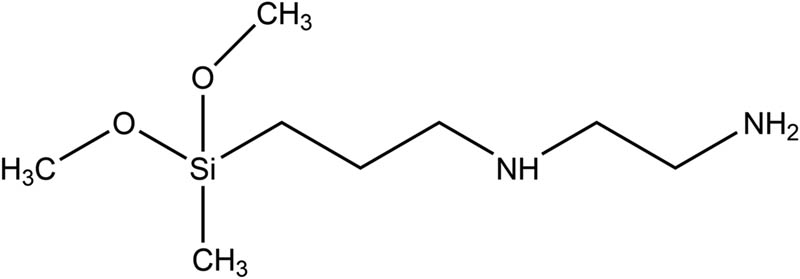
Figure 2
Schematic illustration of the chemical structure of KH602.
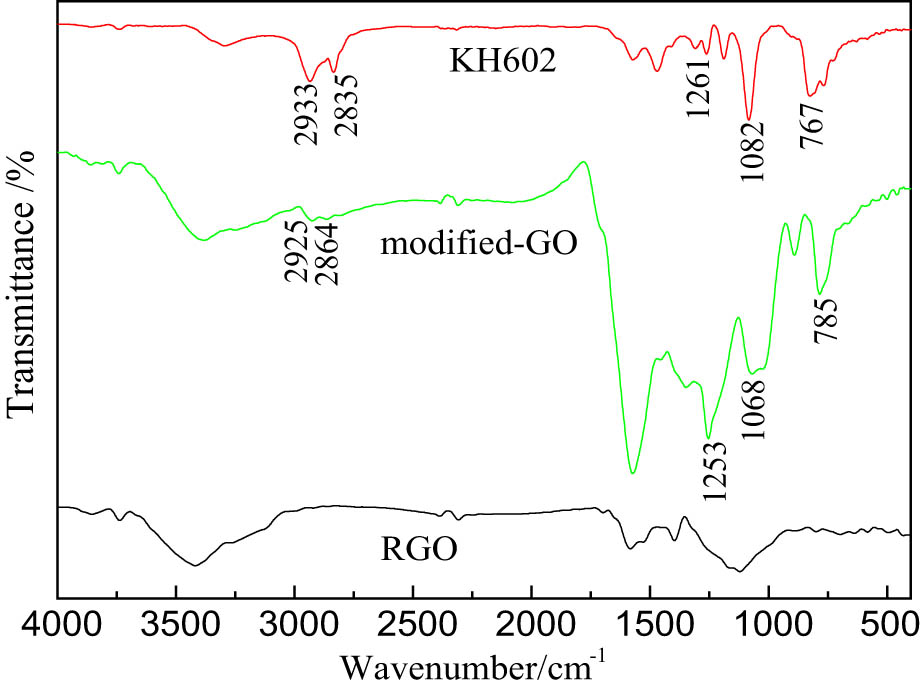
Figure 3
FTIR spectra of KH602, RGO, and modified-GO.
Figure 4 shows the TEM morphologies of graphene before and after its modification. The unmodified graphene exhibits severe agglomeration, and the color darkens as the graphene layers overlap. In contrast, the modified graphene appears transparent and highly permeable, indicating that no significant agglomeration has occurred. Thus, it reveals that the dispersion of graphene has been significantly improved after modification.
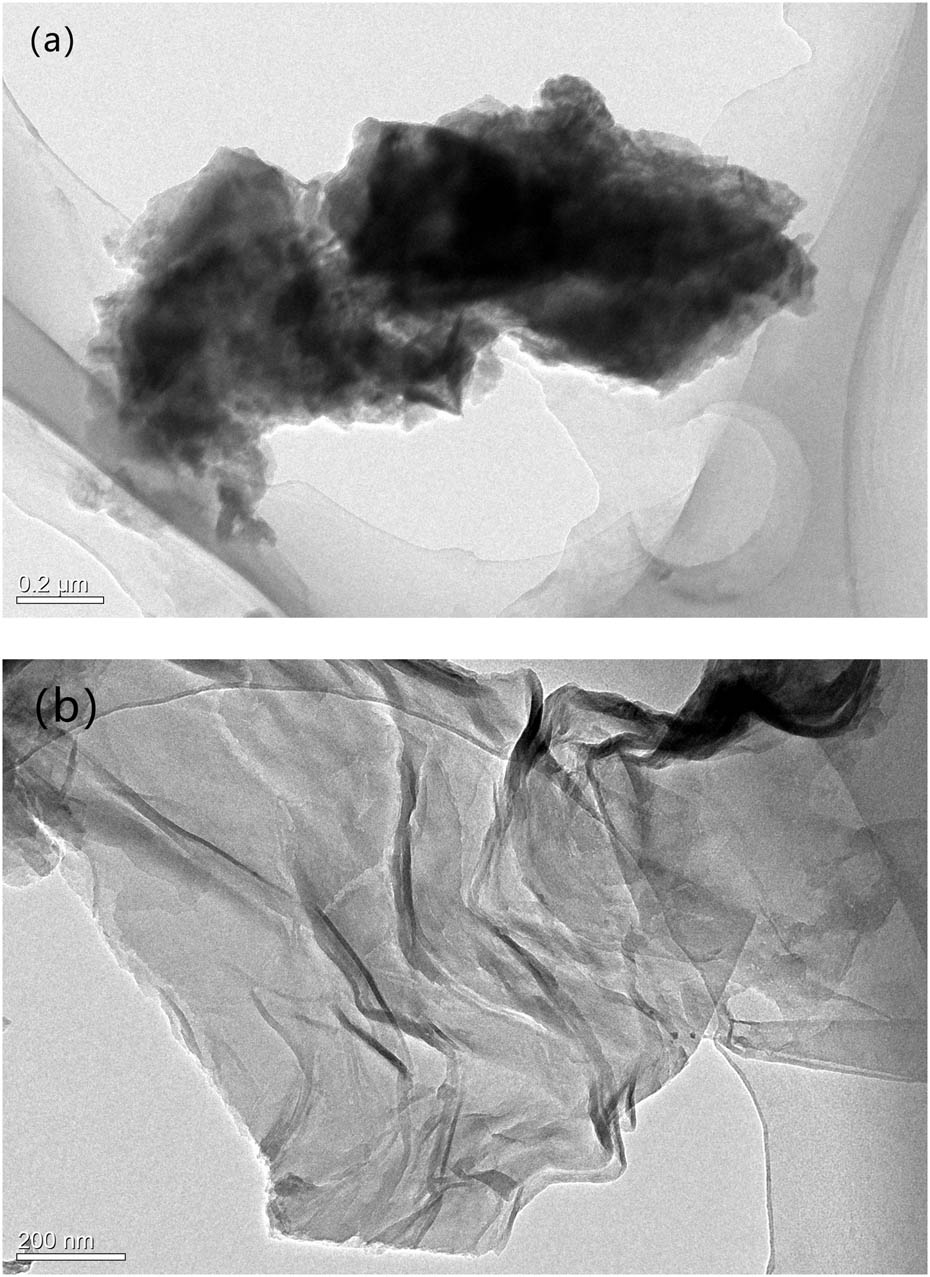
Figure 4
TEM Diagram of (a) RGO and (b) modified-GO.
The scheme of the KH602-modified GO in Figure 5. The active silanol (–Si–OH) generated by the hydrolysis of the silane coupling agent reacts with the hydroxyl and carboxyl groups on the graphene surface, forming stable Si–O–C covalent bonds and firmly anchoring the organic long chain on the graphene surface. The spatial steric hindrance effect from long-chain molecules or the electrostatic repulsive force from ionizing groups effectively prevented the agglomeration of graphene. The surface properties of the modified graphene are more similar to those of the organic matrix, reducing the interfacial tension between the inorganic fillers and the organic matrix, thereby making it easier for the graphene to be uniformly dispersed in the composite material.
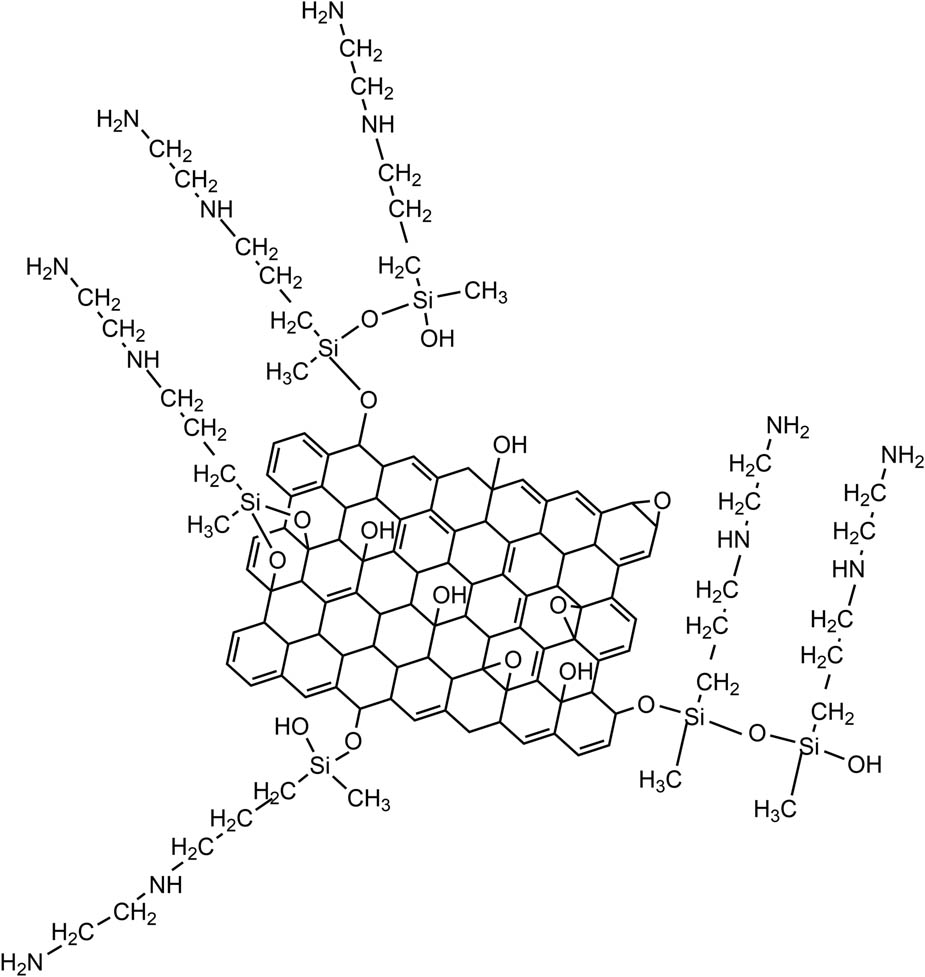
Figure 5
Scheme of the KH602-modified GO.
3.2. EIS studies
Figure 6 shows three distinct equivalent circuit models (ECM) employed at different immersion times to analyze the EIS plots and understand the corrosion behavior. The parameters introduced here are R s, R c, R ct, Q, O, and W, which represent the electrolyte resistance, the coating resistance, the charge transfer resistance, the constant phase element of the coating capacitor, finite-length Warburg impedance, and Warburg impedance, respectively. Figure 6(a) and (b) are used to fit the electrochemical behavior for varnish at 24 h and 72 h, varnish at 144 h, respectively. Figure 6(c) is used to fit the electrochemistry behavior for epoxy/RGO and epoxy/modified-GO.
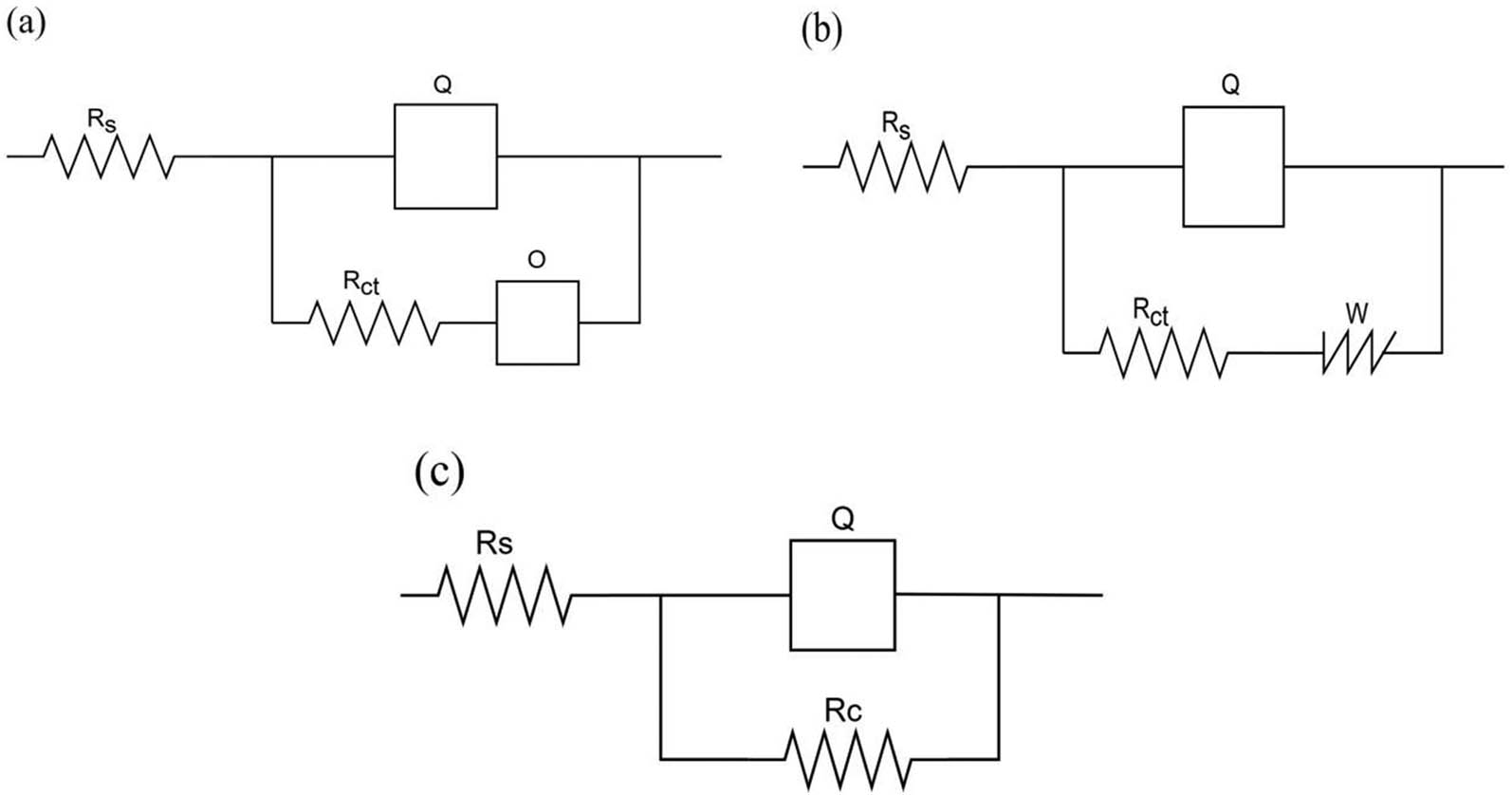
Figure 6
Equivalent circuits for different coatings exposed to 3.5 wt% NaCl solution, (a) varnish at 24 h and 72 h, (b) varnish at 144 h, (c) epoxy/RGO and epoxy/modified-GO.
As shown in Figure 6(a), (b), Warburg impedance appears in varnish at low frequency. This probably occurred because corrosive species might have diffused. R ct appears in varnish after 24 h, indicating the corrosion process takes place at the interface of the coating/steel. In contrast, the epoxy resin with graphene still maintains an arc until 144 h and do not have R ct, indicating that graphene can improve the corrosion resistance of epoxy resin.
Figure 7 is the fitting Nyquist and Bode diagram of the coating after immersion in 3.5% NaCl solution for different intervals of time, including 24, 72, and 144 h. The |Z|0.01Hz value, which is shown by Bode plots at low frequencies, is determined to define cossosion-resisitance of the coatings [18,19]. After immersion for 144 h,|Z|0.01Hz values of epoxy/modified-GO (0.1 wt%) in Bode spectra are about 1.3 × 10⁸ Ω cm2, showing the high corrosion protection efficiency compared to varnish and epoxy/RGO (0.1 wt%).
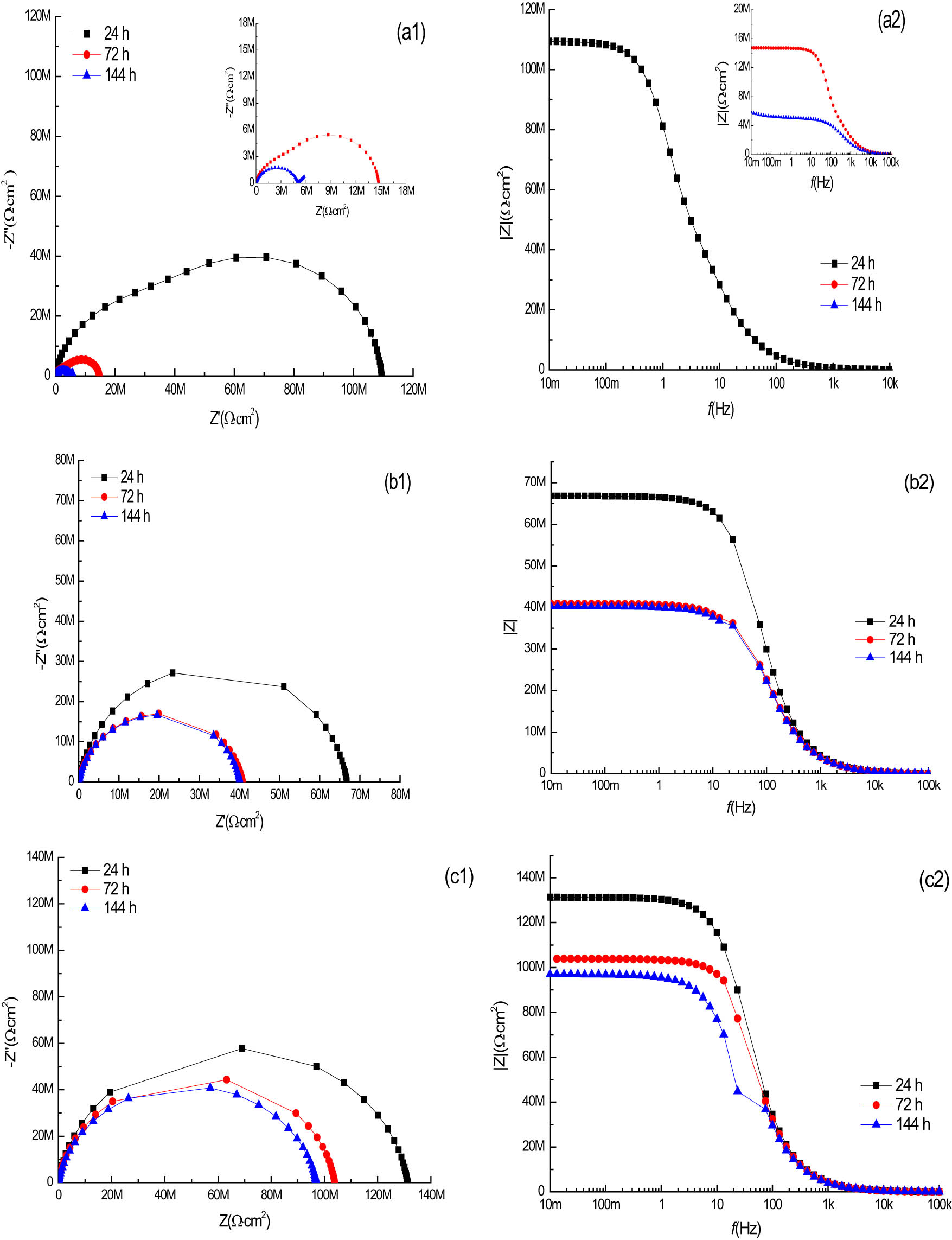
Figure 7
(a1) Nyquist and (a2) bode plots for varnish; (b1) Nyquist and (b2) bode plots for epoxy/RGO (0.1 wt%); (c1) Nyquist and (c2) bode plots for epoxy/modified-GO (0.1 wt%) in the duration of the EIS tests.
The evaluation parameters which are extracted by equivalent circuits are listed in Tables 2–4 for different coatings. The epoxy/modified-GO (0.1 wt%) has extremely high R c (9.696 × 10⁷ Ω cm2) values compared to epoxy/RGO after 144 h, showing the high corrosion protection efficiency. The main reason is that the modified graphene can be evenly distributed in the epoxy resin, which can fill the gap of the coating and prevent the corrosion medium from penetrating into the Q235 steel.
Table 2
Fit parameters of varnish immersion in 3.5% NaCl solution during different times
| Time (h) | Q (S sec n /cm2) | n | R ct (Ω cm2) | Chisq |
|---|---|---|---|---|
| 24 | 7.560 × 10⁻¹¹ | 0.9059 | 4.755 × 10⁷ | 1.6 × 10⁻³ |
| 72 | 1.483 × 10⁻¹⁰ | 0.8768 | 4.952 × 10⁶ | 1.8 × 10⁻³ |
| 144 | 6.373 × 10⁻¹⁰ | 0.7726 | 5.043 × 10⁶ | 6.28 × 10⁻³ |
Table 3
Fit parameters of epoxy/RGO (0.1 wt%) immersion in 3.5% NaCl solution during different times
| Time (h) | R C (Ω cm2) | Q (S·sec n /cm2) | n | Chisq |
|---|---|---|---|---|
| 24 | 6.68 × 10⁷ | 8.231 × 10⁻¹¹ | 0.9032 | 8.186 × 10⁻³ |
| 72 | 4.09 × 10⁷ | 1.098 × 10⁻¹⁰ | 0.8828 | 7.14 × 10⁻³ |
| 144 | 4.021 × 10⁷ | 1.136 × 10⁻¹⁰ | 0.8811 | 6.49 × 10⁻³ |
Table 4
Fit parameters of epoxy/modified-GO (0.1 wt%) immersion in 3.5% NaCl solution during different time
| Time (h) | R C (Ω cm2) | Q (S·sec n /cm2) | n | Chisq |
|---|---|---|---|---|
| 24 | 1.313 × 10⁸ | 7.199 × 10⁻¹¹ | 0.9199 | 6.34 × 10⁻³ |
| 72 | 1.039 × 10⁸ | 7.621 × 10⁻¹¹ | 0.9170 | 5.602 × 10⁻³ |
| 144 | 9.696 × 10⁷ | 9.17 × 10⁻¹¹ | 0.9022 | 6.88 × 10⁻³ |
The capacitance of the coating provides an appropriate measure for evaluating the extent to which electrolyte penetrates the coating’s internal structure. The dielectric properties of the coating, represented by a constant-phase element Q, can be affected by the diffusion of electrolyte. As shown in Tables 2–4, the Q values obtained for the epoxy/modified-GO (0.1 wt%) are lower than those for other coatings. This indicates that the diffusion process is difficult to carry out, and thus the protective capability of the coating would be maintained. In principle, epoxy/modified-GO (0.1 wt%) exhibits superior corrosion resistance compared to the other coatings. A possible reason for this observation could be attributed to the uniform dispersion of modified-GO in the coating.
3.3. Antibacterial properties of coating
The antibacterial efficacy of the coatings was quantified via the standard plate count method. The growth of Staphylococcus aureus after 24 h of cultivation on control and coated samples is presented in Figure 8. Figure 9 presents the average antibacterial efficacy and its associated standard deviation. The antibacterial rates against Staphylococcus aureus for epoxy/RGO (0.1 wt%), epoxy/modified-GO (0.1 wt%) are 81 and 87%, respectively. It can be seen that the antibacterial performance of the coating with graphene is higher.
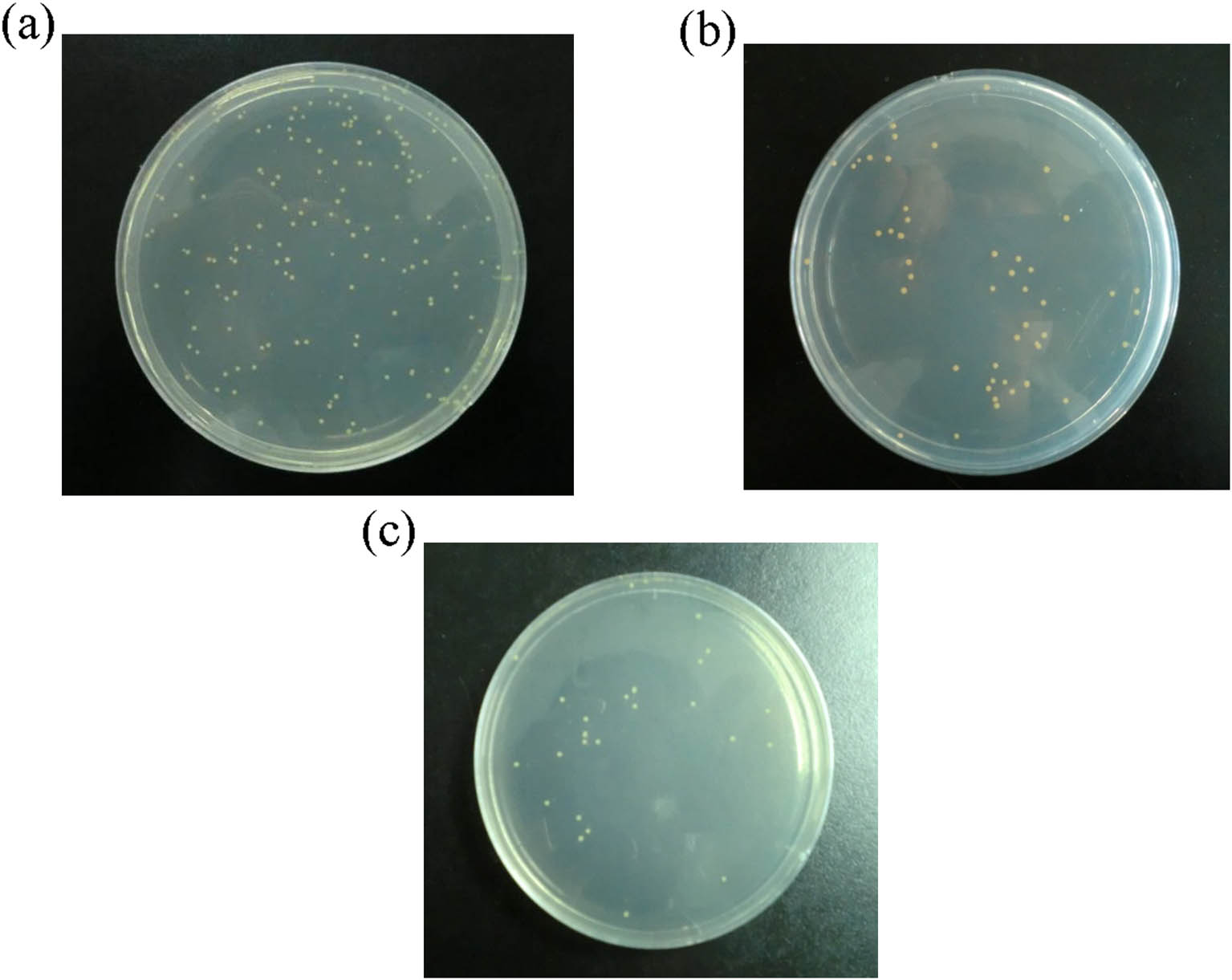
Figure 8
The number of S. aureus colonies for different coatings. (a) Varnish, (b) epoxy/RGO (0.1 wt%), and (c) epoxy/modified-GO (0.1 wt%).
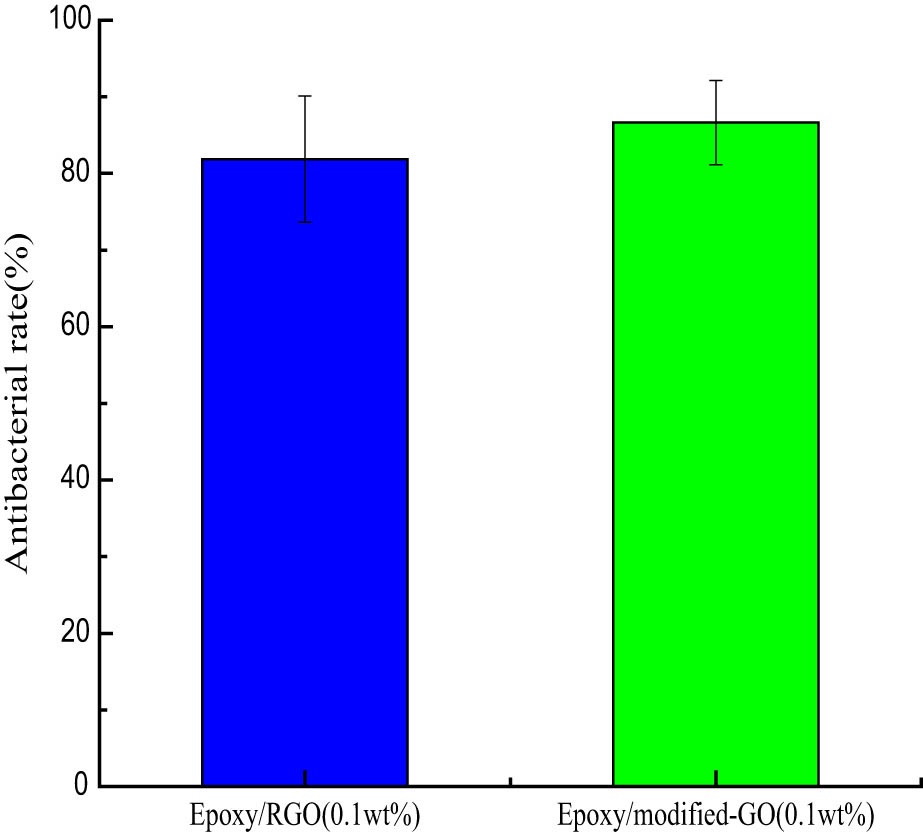
Figure 9
Antibacterial rate of coating.
The presence of graphene significantly influences the antibacterial properties of the coatings. According to reports, the three main mechanisms are nanoknives from sharp edges, oxidative stress, and the wrapping or trapping of bacterial membranes by flexible GO thin films [20]. The cutting action of GO nanosheet edges on cell membranes leads to bacterial breakdown [20,21]. The formation of reactive oxygen species (ROS) by GO could weaken the cell membrane and lead to the disintegration of bacteria [20,22]. Encasing or capturing bacterial membranes using the flexible thin film structure of graphene creates a distinctive barrier that isolates bacteria from their environment [20]. The antibacterial rates against Staphylococcus aureus for epoxy/modified-GO is higher than those for epoxy/RGO. This may indicate that the antibacterial rate of the coating is related to the dispersibility of graphene.
4. Conclusion
Graphene can improve the anticorrosion and antibacterial properties of the coating, but the agglomeration will affect the performance of graphene. In this study, the silane coupling agent was used to modify the GO surface to improve dispersion. RGO or modified-GO was added into the epoxy matrix to prepare epoxy/RGO coating or epoxy/modified-GO coating. EIS tests reveal that when the modified-GO is added into the epoxy resin, epoxy/modified-GO (0.1 wt%) coating has higher resistance corrosive media than varnish and epoxy/graphene (0.1 wt%) coating. The antibacterial property of the coatings was investigated; the epoxy/modified-GO (0.1 wt%) coating showed the highest antibacterial behavior. In conclusion, all results reflect that epoxy coating with the silane coupling agent-modified GO has excellent corrosion resistance and antibacterial efficacy.
Funding information
The authors have no financial or proprietary interests in any material discussed in this article.
Author contributions
Conceptualization: Xin Yue; methodology: Xin Yue; formal analysis: Xin Yue; investigation: Xin Yue; resources: Jihui Wang; data curation: Xin Yue; visualization: Xin Yue; writing-original draft preparation: Xin Yue; writing-review and editing: Xin Yue; Supervision: Jihui Wang.
Conflict of interest statement
All Authors declared that they have no conflict of interest.
Informed consent
Informed consent was obtained from all individual participants included in the study.
Ethics approval
This article does not contain any studies with human participants or animals performed by any of the authors.