
List of abbreviations
- Abbreviation
Full name
- AFt
Ettringite (Alumino–Celite Tri–sulfate)
- CFB
Circulating fluidized bed
- DTG
Derivative thermogravimetry
- EDS
Energy dispersive spectroscopy
- ICP-OES
Inductively coupled plasma optical emission spectroscopy
- PC
Pulverized coal
- SEM
Scanning electron microscopy
- SRF
Solid recovered fuel
- TGA
Thermogravimetric analysis
- WtE
Waste-to-energy
- XRD
X-ray diffraction
- XRF
X-ray fluorescence
1. Introduction
1.1. Strategic imperative of solid recovered fuel (SRF) in the global circular economy (CE)
The paradigm shift from a linear “take-make-dispose” economy to a systemic CE has prioritized Waste-to-Energy (WtE) technologies as essential nodes for sustainable resource management. According to the foundational circular economy principles outlined by Kirchherr et al. [1], a transition to circularity requires a systematic shift in material lifecycles, replacing traditional disposal methods with circular resource loops. This is supported by Geissdoerfer et al. [2], who characterized the circular economy as a new sustainability paradigm where material loops are closed to minimize waste-derived environmental footprints. Within this context, the study by Brunner and Rechberger [3] identifies WtE technologies as a critical nexus for converting municipal and industrial solid waste into high-calorific SRF, concentrating toxic heavy metals into specific fly ash fractions for safe, controlled management.
However, as highlighted in Omokaro et al.’s [4] investigation of waste management failures, technical barriers in residue stabilization often hinder the integration of such by-products into high-value construction applications. In Taiwan, the in situ sampling protocols established by Lin et al. [5] have confirmed that SRF feedstock heterogeneity yields “atypical fly ashes” with highly volatile chemical profiles, necessitating precise quality control during binder production. The comprehensive characterization of these waste fractions by Götze et al. [6] suggests that their mineralogical evolution during combustion directly dictates their subsequent reactivity in sustainable binders.
1.2. Physicochemical characteristics of circulating fluidized bed (CFB) co-firing technology
The power generation and petrochemical sectors have widely adopted CFB technology for co-firing SRF with coal. The combustion mechanisms of CFB boilers, detailed in the foundational work of Basu [7], operate at a lower temperature range (850–900°C) than traditional pulverized coal (PC) systems, which operate at temperatures exceeding 1,400°C. This specific thermal environment, as analyzed by Hui et al. [8], facilitates efficient in-furnace desulfurization via limestone (CaCO3) injection but alters the crystalline phase assemblage, resulting in atypical residues rich in unreacted free calcium oxide (f-CaO) and anhydrous calcium sulfate (CaSO4). Kuhn et al. [9] demonstrated in a 1 MWth pilot plant that increasing the SRF share significantly affects bed mineralogy and oxygen carrier dynamics, which directly influences the resulting ash reactivity.
According to the hydration mechanisms discussed by Bullard et al. [10], the presence of crystalline silicates such as alite (C3S) and belite (C2S) in these ashes provides latent hydraulic potential, distinguishing them from inert Class F fly ashes. Li et al. [11] recently evaluated the performance and environmental impact of ternary all-solid-waste binders, noting that high alkalinity is a prerequisite for effective heavy-metal sequestration. Long-term studies by Zhang et al. [12] suggest that these residues can optimize the chloride diffusion coefficient of concrete, provided that early-age volume stability is ensured. Furthermore, Du et al. [13] recently demonstrated that CFB ash could be transformed into high-value anorthite glass-ceramics via dolomite-induced eutectic synthesis. However, this requires precise control of phase evolution.
1.3. Scientific conflict: The competitive expansion-shrinkage paradox
The primary technical barrier remains the “dual-phase volume instability.” Collepardi [14] provided a state-of-the-art review of delayed ettringite (Aft) attack in concrete, emphasizing that structural disintegration is the primary threat when anhydrous calcium sulfate remains unreacted within the hardened matrix. This risk was complemented by the work of Fang et al. [15], who showed that expansive agents must be strictly balanced with shrinkage-reducing admixtures to prevent cracking. Taylor et al. [16] established that anhydrous calcium sulfate is the primary driver for such late-age structural disintegration.
To decipher these microstructural transitions, the practical guide by Scrivener et al. [17] serves as the basis for correlating hydrate morphology with macroscopic behavior. Specifically, Liu et al. [18] identified that capillary tension in pores below 50 nm is the primary driver for excessive drying shrinkage. This study bridges these findings by defining the “competitive volume dynamics” to establish a suitable balance through the thermodynamic investigation of phase interactions established by Long et al. [19]. The balance of sulfate anions in these systems, as explored by Lu et al. [20], is critical for regulating hydration kinetics. Furthermore, the chemical stabilization of heavy metals using chelating agents, as investigated by Yuan et al. [21], provides critical pathways for the immobilization of toxic ions. At the same time, Tang et al. [22] established that moisture-induced pre-hydration is vital for the volumetric control of free calcium oxide-rich mixtures. The study by Lothenbach et al. [23] on the effects of temperature on pore solution, microstructure, and hydration products provides a critical baseline for accelerated expansion tests. The reaction mechanisms elucidated by Gu et al. [24] show that crystalline growth within pores determines shrinkage. Finally, the assessment by Muhammad et al. [25] on incineration ash in limestone calcined clay cement systems highlights the importance of microstructural optimization.
1.4. Objective and scope of the present study
In this study, we investigated the competitive volume dynamics – the trade-off between expansion inhibition and physical drying shrinkage – of atypical solid recovered fuel co-fired in a CFB fly ash under different moisture treatments. By combining mineralogical mapping (X-ray diffraction, XRD), quantitative thermal analysis (thermogravimetric analysis/derivative thermogravimetry, TGA/DTG), and high-resolution microstructural fingerprinting (scanning electron microscopy-energy dispersive spectroscopy, SEM-EDS), we establish an optimal pre-hydration protocol that ensures both dimensional integrity and heavy metal immobilization in sustainable binder applications.
2. Materials and methods
2.1. Raw material source and characterization
2.1.1. Origin of SRF-coal co-fired fly ash
The raw co-fired fly ash utilized in this study was sourced from the electrostatic precipitator hoppers of a 32 MW CFB boiler in Taiwan (Mailiao). The plant utilizes a fuel blend consisting of 90% bituminous coal and 10% industrial-grade solid recovered fuel. The alternative fuel feedstock was derived primarily from processed petrochemical textile waste and plastic residues, with a net calorific value of approximately 22 MJ/kg.
2.1.2. Sampling and bulk homogenization process
To ensure representativeness and mitigate temporal fluctuations arising from the heterogeneous solid recovered fuel input, sampling was conducted continuously over a 30-day window in accordance with ISO 21645:2021 protocols. To ensure bulk homogeneity, the collected co-fired ash underwent a standardized homogenization process where 500 kg of bulk material was mixed in an industrial rotary drum mixer for 24 h. Subsequently, the homogenized ash was dried at 105 ± 5°C for 24 h in a forced-air oven, and sieved through a No. 200 mesh (75 μm) to eliminate unburnt carbon agglomerates. Physical properties, including a specific gravity of 2.58 and a median particle size (d 50) of 18.4 μm, were determined via laser diffraction analysis. Bulk oxide composition was determined via X-ray fluorescence (XRF) using a Shimadzu XRF-1800 spectrometer (Table 1).
Table 1
Bulk chemical composition of the processed SRF co-firing ash via XRF (wt%)
| Component | SiO2 | Al2O3 | Fe2O3 | CaO | MgO | SO3 | Cl | LOI |
|---|---|---|---|---|---|---|---|---|
| SRF | 34.70 | 24.30 | 3.70 | 26.10 | 1.30 | 7.10 | 0.30 | 13.70 |
The raw morphology consists of irregular, porous shards that differ from those of spherical coal fly ash. The micro-morphology of the solid recovered fuel ash was initially scrutinized using SEM (Figure 1), and its mineralogical assemblage was identified using the XRD atlas (Figure 2).
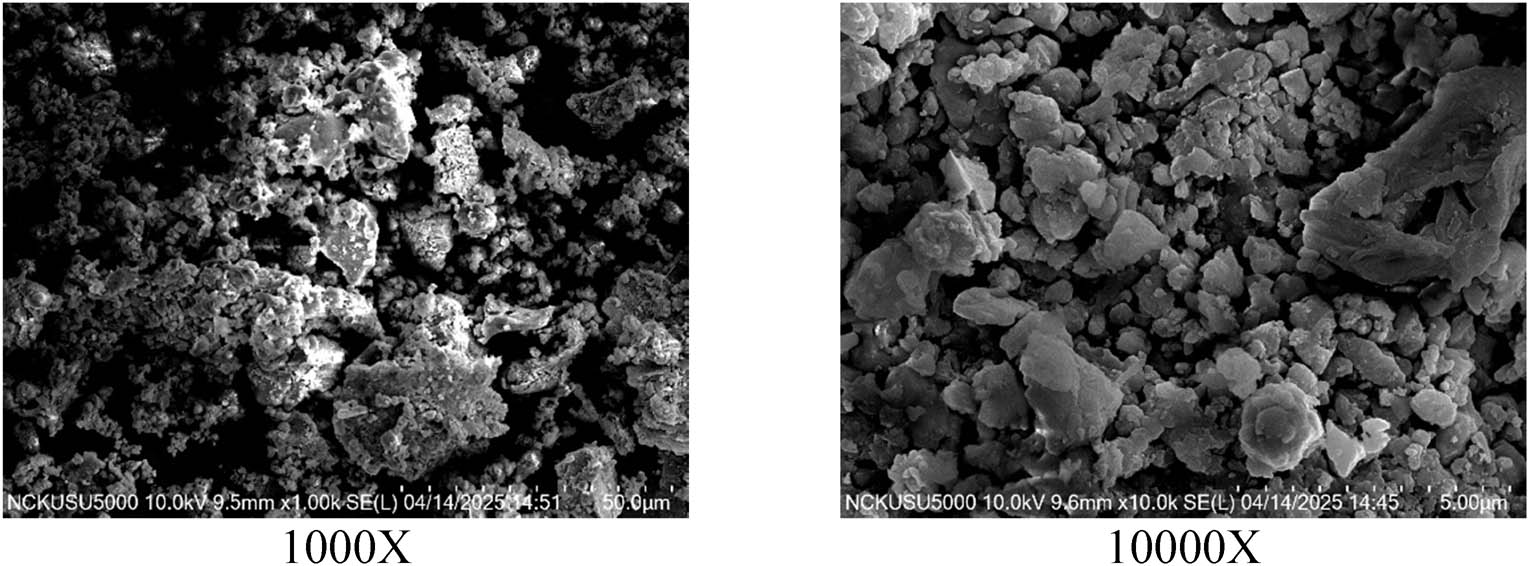
Figure 1
SEM image of SRF ash.
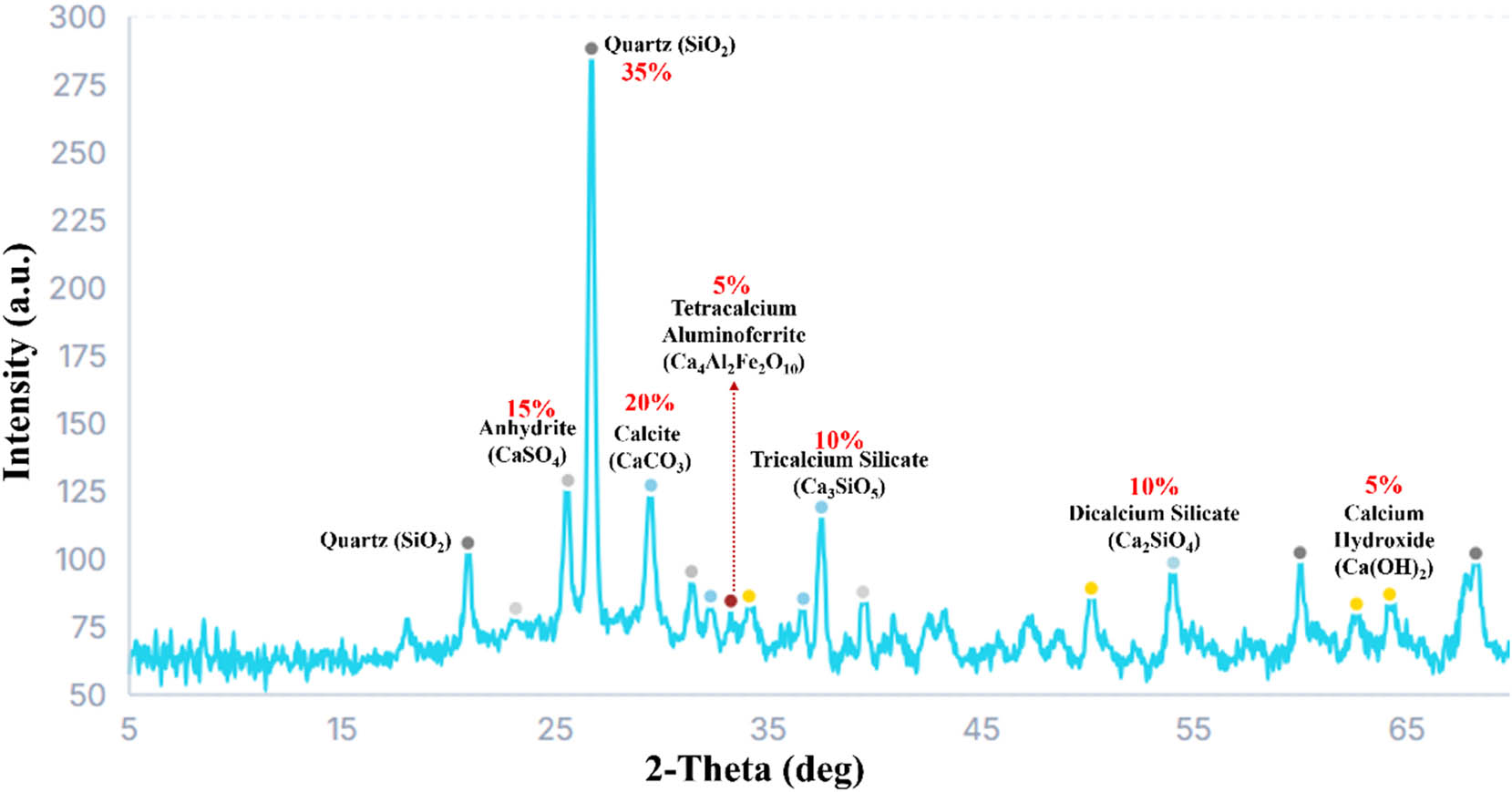
Figure 2
The XRD analysis of SRF ash.
2.2. Environmental and chemical suitability analysis (Inductively coupled plasma optical emission spectroscopy, ICP-OES)
2.2.1. Microwave-assisted acid digestion
Before trace metal analysis, a 0.1 g ash sample was digested in a closed-vessel microwave system using a high-purity acid mixture of 6 mL HNO3, 2 mL HCl, and 1 mL HF (analytical grade, Merck).
2.2.2. ICP-OES spectrometric calibration
Trace heavy metal concentrations were determined via ICP-OES using a PerkinElmer Avio 500 spectrometer (Table 2). Calibration standard curves (R 2 > 0.999) were prepared using multi-element standard solutions (Merck, analytical grade) over a concentration range of 0.1–10 mg/L.
2.3. Crystalline and thermal characterization techniques
2.3.1. XRD protocol
Mineralogical evolution was examined using a Shimadzu XRD-6000 diffractometer. Before scanning, samples were dried and ground to below 45 μm. Measurements were taken from 3° to 90° 2θ at a scan rate of 2°/min using Cu-Kα radiation (40 kV/30 mA).
2.3.2. TGA/DTG conditions
Thermal evolution of hydrates was performed using a Hitachi STA-200 thermal analyzer. Approximately 15 ± 0.5 mg of dry powder sample was placed in an alumina crucible and heated from room temperature (25°C) to 1,000°C at a constant heating rate of 10°C/min under a high-purity nitrogen flow of 50 mL/min.
2.3.3. High-resolution SEM-EDS microstructural analysis
Micro-morphology was scrutinized using a Hitachi S-3000N SEM-EDS. To ensure representativeness, microstructural observations were conducted on at least five distinct fields of view per specimen. EDS spot analysis was performed in triplicate at different locations, and the reported elemental weight percentages represent the average values of these localized measurements.
2.4. Specimen fabrication and dimensional stability setup
2.4.1. Mortar mix proportions and pre-hydration curing
Mortar specimens (1:3 binder/sand ratio using standard quartz sand) were prepared at a fixed water/binder ratio of 0.40. Four humidification ratios were investigated (W water/ W ash = 0, 30, 50, 100%), with the 0% sample serving as the control group. Deionized water was introduced via an atomizing spray and mixed for 15 min. Humidified samples were pre-cured at 23 ± 2°C for 1 day to achieve pre-hydration and facilitate mortar fabrication. The standardized processing flowchart for material pre-processing and humidification curing is sequentially illustrated in Figure 3.
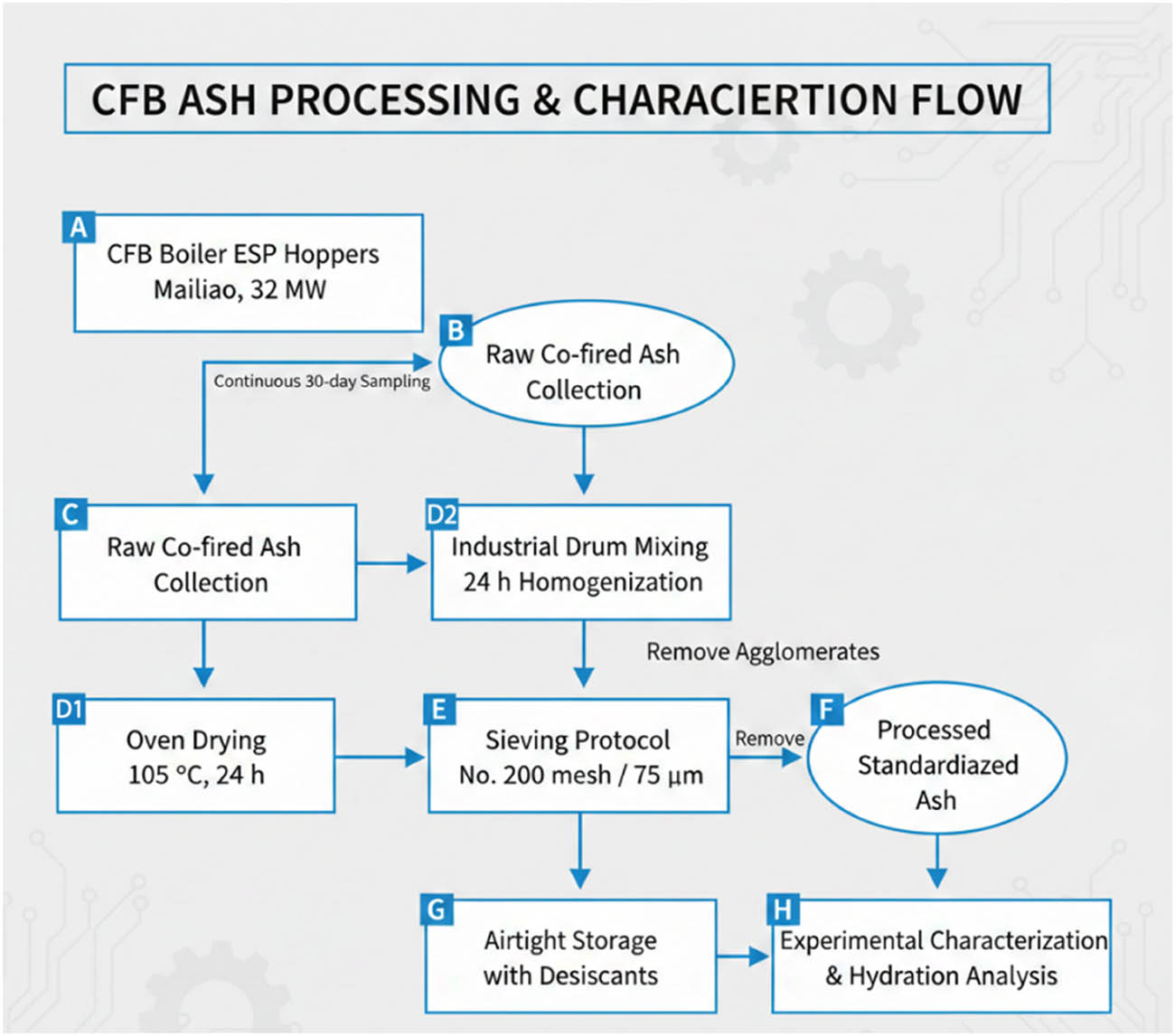
Figure 3
Sequential flowchart outlining the collection, homogenization, and standardized pre-processing protocol.
2.4.2. Accelerated linear expansion testing (CNS 15311)
Accelerated linear expansion was evaluated in accordance with CNS 15311 (the Taiwanese standard for testing the potential expansion of aggregates and binders). Specimens were immersed in a 70°C water bath, and length changes were measured over 7 days.
2.4.3. 28-day drying shrinkage evaluation (CNS 14603)
Drying shrinkage was determined in accordance with the CNS 14603 protocol (equivalent to ASTM C157). All expansion and shrinkage measurements were performed on triplicate specimens (n = 3) to guarantee data reliability and assess statistical significance.
The testing standards for evaluation are consolidated in Table 3.
Table 3
Mortar mix proportions and experimental testing standards
| Parameter | Value/Protocol | Referenced standards |
|---|---|---|
| Ash: sand | 1:3 | ─ |
| W/B ratio | 0.4 | ─ |
| Expansion | 70°C water bath (7 days) | CNS 15311 ASTM D4792 |
| Shrinkage | 23°C, 50% RH (28 Days) | CNS 14603 ASTM C157[1] |
| Humidification | 0, 30, 50, and 100% | Experimental ratios |
[1]Note: Curing and water bath protocols conducted in accordance with CNS 15311 (the Taiwanese standard for testing the expansion of aggregates).
3. Results and discussion
3.1. Mineralogical evolution and self-cementing thermodynamics
3.1.1. Crystalline assembly of raw and hydrated residues
The mineralogical profile of the co-fired fly ash, as determined by XRD, reveals a complex crystalline assemblage. Specifically, the presence of alite (C3S) at the diffraction peaks of 29.50° and 32.30° 2θ confirms the latent hydraulic potential of this atypical residue. Mechanistically, as analyzed in the foundational work of Basu [7], the CFB combustion environment maintains a bulk temperature of approximately 850–900°C. However, the localized combustion of high-calorific textile and plastic solid recovered fuel components induces lateral thermal peaks that locally exceed the clinkering threshold. This enables the solid-state synthesis of alite and belite (C2S), a phenomenon also observed by Kuhn et al. [9] in their pilot-plant trials. These hydraulic clinker phases, as analyzed by Bullard et al. [10], are essential for the subsequent formation of the self-cementing matrix, providing the binding calcium silicate hydrate gels that bind the irregular ash shards together.
3.1.2. Humidification activation and precursor dissolution
The Weight Change Chart further elucidates the impact of stabilization on mineral stability (Figure 4). The effects of different humidification ratios on mineralogical patterns are illustrated in Figures 5–7.
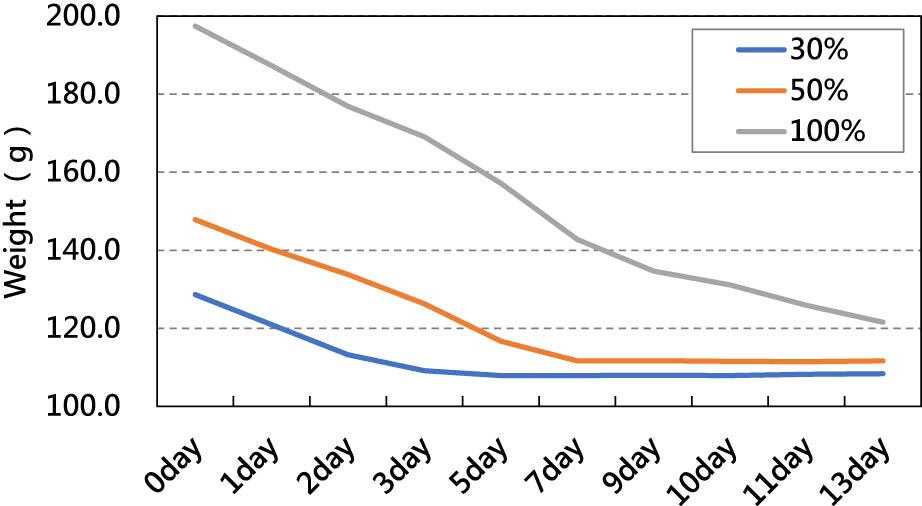
Figure 4
Weight change chart of SRF co-firing ash during the humidification stabilization test.
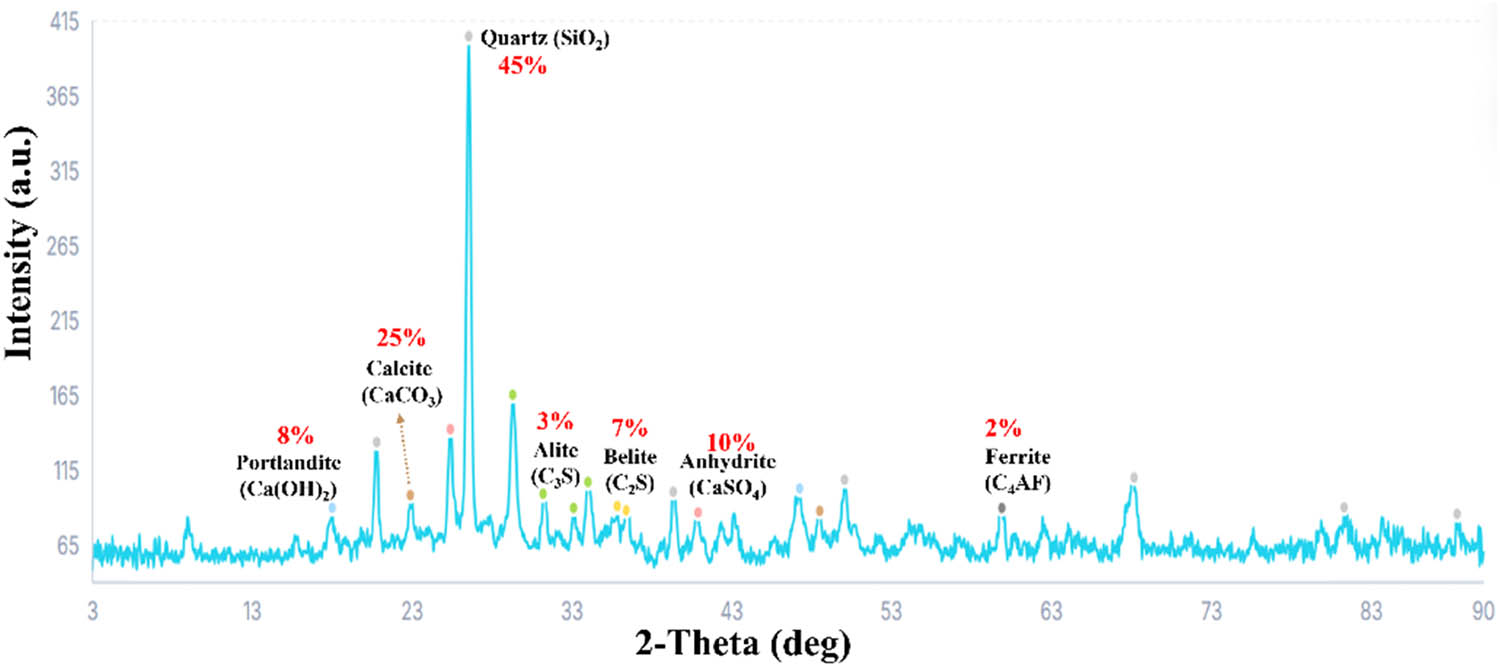
Figure 5
XRD pattern of the co-fired CFB fly ash after 30% humidification stabilization.
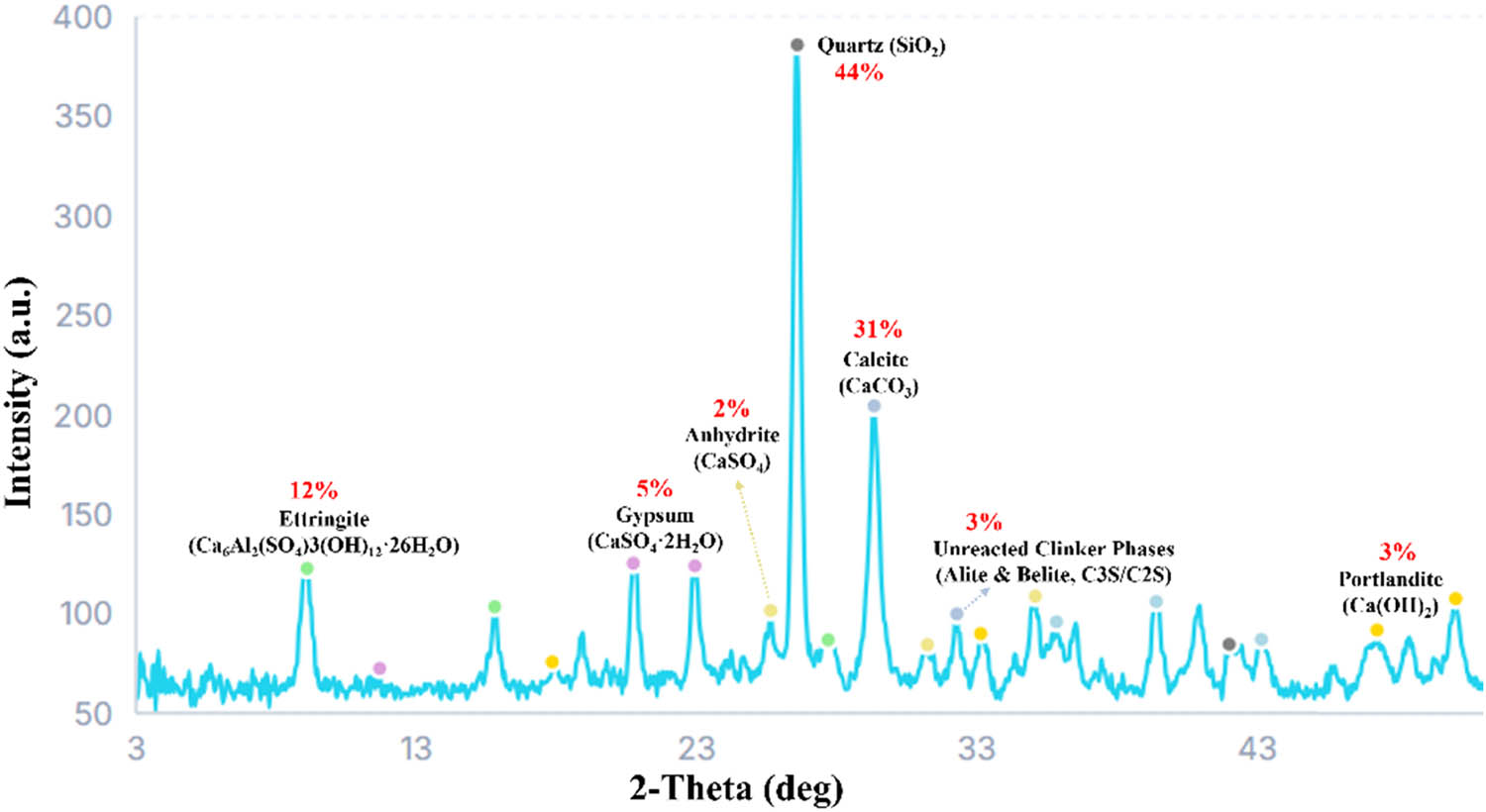
Figure 6
XRD pattern of the co-fired CFB fly ash after 50% humidification stabilization.
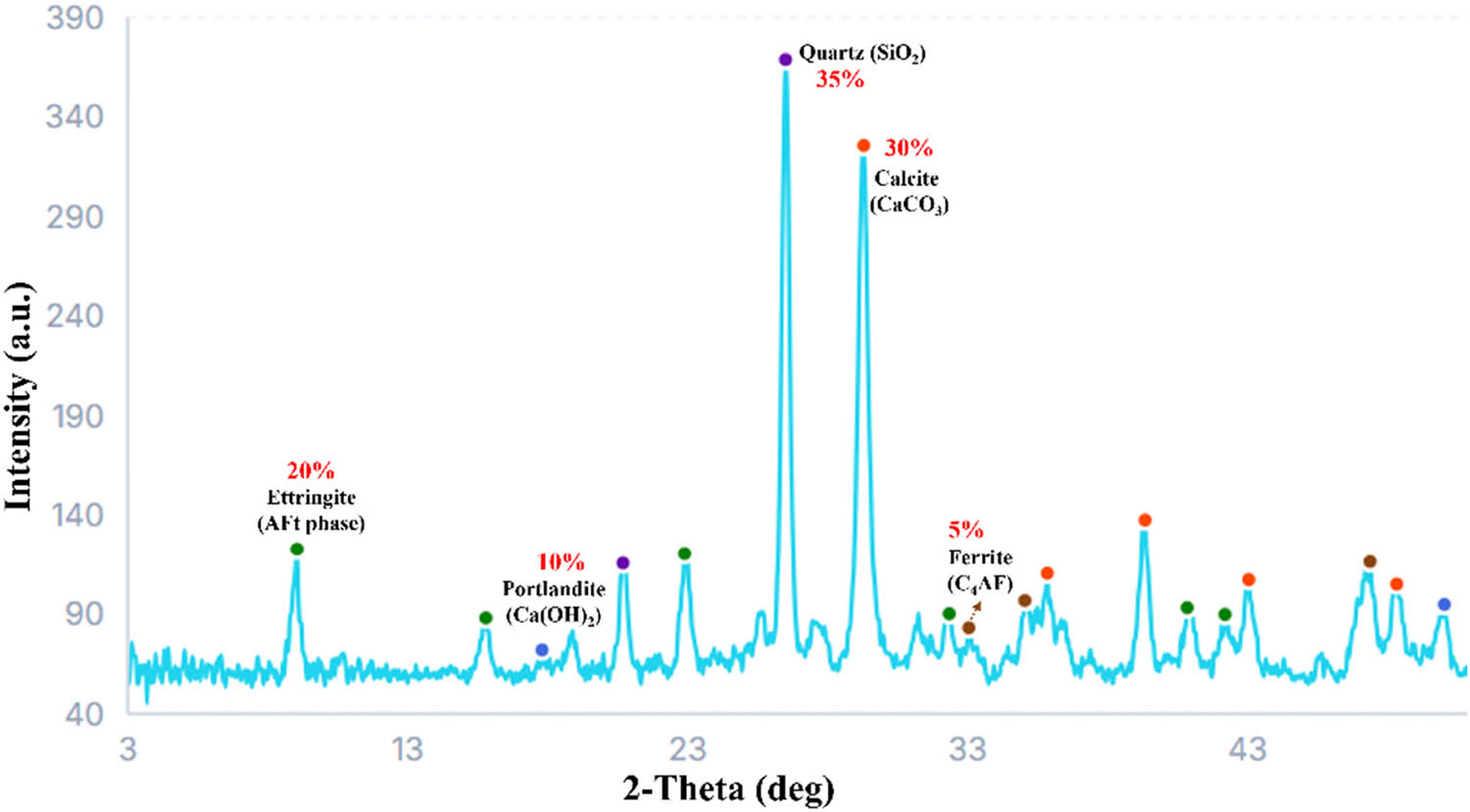
Figure 7
XRD pattern of the co-fired CFB fly ash after 100% humidification stabilization.
As moisture content increases, a systematic reduction in anhydrite intensity is observed across the XRD patterns. Mechanistically, the introduction of liquid moisture serves as an essential medium for ion diffusion, overcoming the kinetic barrier to free calcium oxide hydration. In the untreated dry state, the reactive minerals are encapsulated within dense crystalline shards, preventing interaction with ambient humidity. The humidification process facilitates the dissolution-precipitation cycle, where calcium and sulfate ions are released into the aqueous phase. As demonstrated by Yuan et al. [21], the combined presence of Anhydrite and limestone provides additional nucleation sites for AFt crystallization, thereby accelerating the degree of hydration in aluminate-rich systems. The saturation of the liquid phase, as described in the kinetic models of Tang et al. [22], provides the necessary environment for the pre-consumption of precursor expansion energy. This pre-emptive formation of stable hydrates consumes the chemical potential that would otherwise trigger destructive crystallization pressure in the hardened state, as Collepardi [14] warned.
3.1.3. Carbonate-sulfate interactions and AFt stability
According to the thermodynamic investigation of phase interactions established by Long et al. [19], the stability of AFt is significantly enhanced by the mutual influence of calcium sulfate and calcium carbonate. The presence of calcite (29.40°), identified in the XRD spectra and listed in Table 4 as a carbonation product, acts as a thermodynamic stabilizer for carbo-aluminate phases during the stabilization sink. The relative thermodynamic stability of these phases at 25°C is detailed in Table 5, confirming that AFt serves as the primary chemical sink for expansion energy.
Table 4
Quantitative crystalline phase identification via XRD and functions
| Mineral phase | 2θ peak | Structural function |
|---|---|---|
| Quartz | 26.70° | Inert filler: provides physical skeleton |
| C3S/C2S | 29.50°, 37.50° | Latent hydraulic activity; self-cementing [10] |
| Anhydrite | 25.60° | Expansion precursor; Delayed ettringite formation driver [16] |
| Portlandite | 34.10° | Hydration product; provides alkalinity |
| Calcite | 29.40° | Carbonation product; stabilizes AFt |
3.2. Quantitative hydration kinetics and sink efficiency (TGA)
3.2.1. Thermal behavior of unreacted latent precursors
The quantitative kinetics of the stabilization process were monitored via synchronized TGA/DTG (Figures 8–11) and summarized in Table 6. This thermodynamic approach provides a precise measurement of the “chemical energy sink” achieved through humidification. In the raw co-fired ash (0% group, Figure 8), the weight loss profile is largely dominated by the decarbonation of limestone residues in the 600–800°C range (11.45% mass loss). Crucially, the mass loss in the hydrate region (50–200°C for AFt and 400–500°C for Portlandite) is negligible, confirming that the expansion drivers remain in their high-energy, unreacted crystalline states. Under real-world ambient conditions, the solid-state hydration of anhydrous anhydrite and crystalline-free calcium oxide is extremely slow, requiring months to manifest. Elevating the temperature to 70°C in accelerated testing significantly overcomes the solid-state kinetic barriers of these sluggish precursors, enabling evaluation of the potential volumetric swelling pressure within a feasible experimental timeframe (7 days), as standardized by ASTM D4792. This is consistent with the temperature-dependent pore-solution and phase-equilibrium models discussed by Lothenbach et al. [23].
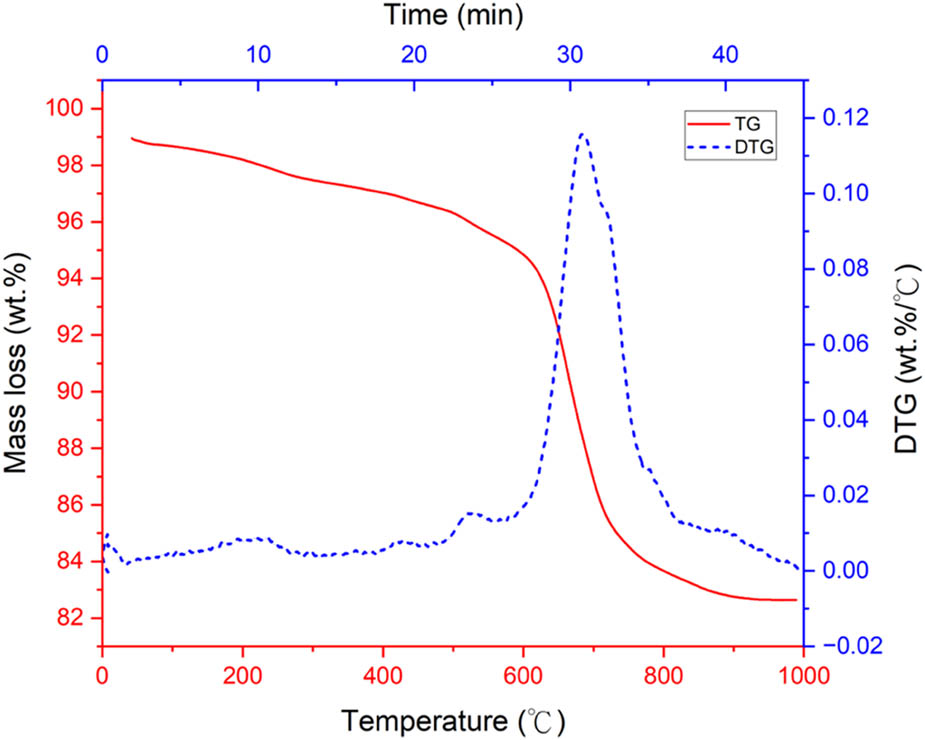
Figure 8
TGA/DTG profile of raw co-fired fly ash at 0% humidification.
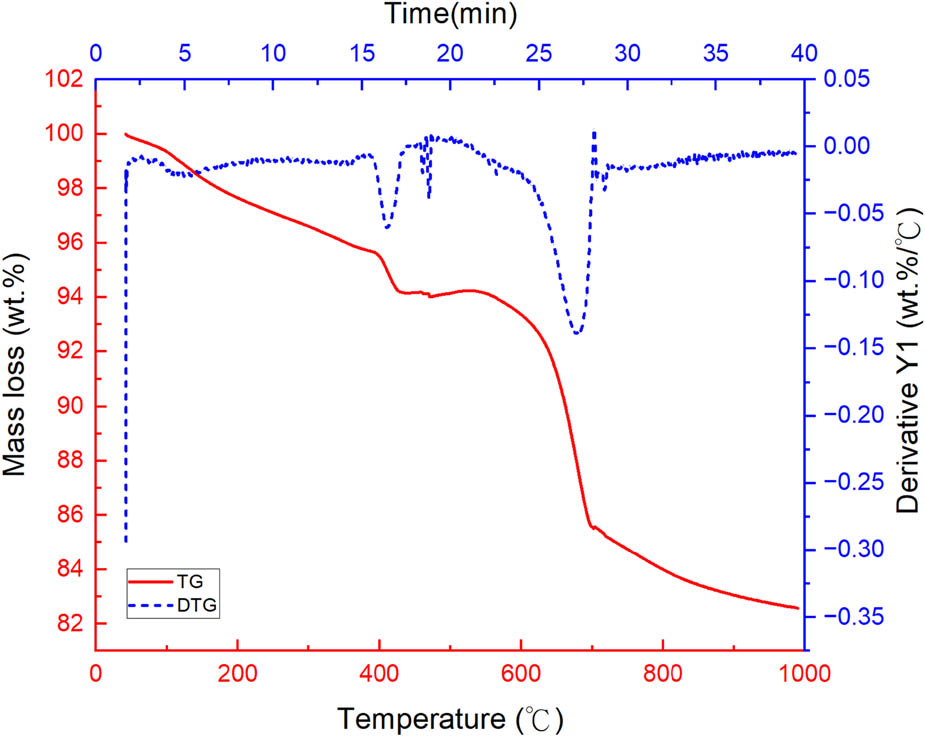
Figure 9
TGA/DTG profile of stabilized ash at 30% humidification.
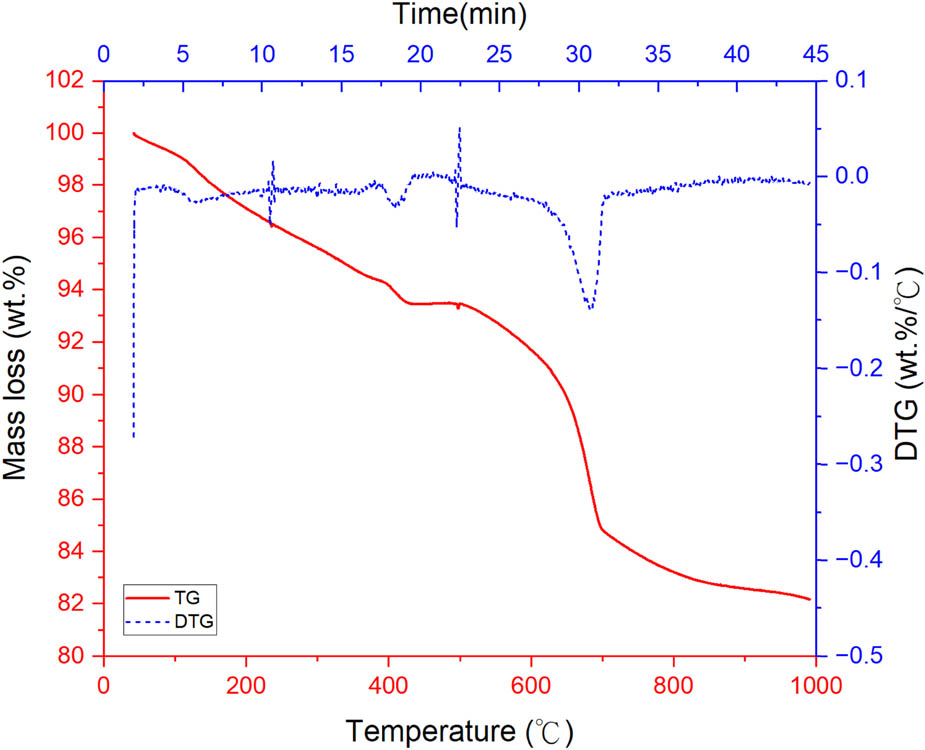
Figure 10
TGA/DTG profile of stabilized ash at 50% humidification.
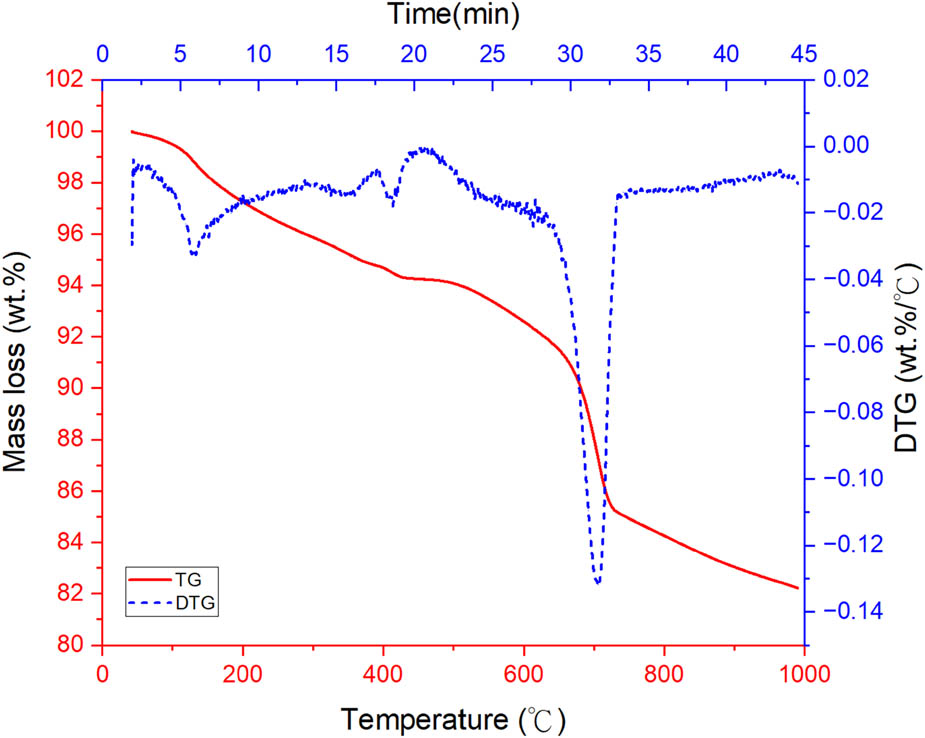
Figure 11
TGA/DTG profile of stabilized ash at 100% humidification.
3.2.2. Pre-hydration energy pre-consumption kinetics
Upon the introduction of moisture at the 30% optimized ratio (Figure 9), a dramatic transformation in the thermal decomposition kinetics is observed. The appearance of distinct endothermic DTG peaks at 120 and 450°C indicates the emergence of a hydrated structure. The mass loss in the AFt region increases from 1.12 to 3.45%, representing a pre-consumption of the expansion energy. Mechanistically, this process allows the immense crystallization pressure (P c) associated with the conversion of free calcium oxide to calcium hydroxide to dissipate while the ash is in a non-rigid bulk state. According to the hydration kinetics discussed by Tang et al. [22], the availability of liquid water is the rate-limiting step for these reactions. In our system, the 1-day stabilization sink provided by the humidification protocol ensures that most of the chemical “swelling work” occurs outside the hardened binder matrix. The heat of hydration is safely dissipated during the mixing and pre-curing stages, preventing the buildup of internal thermal stresses that could lead to micro-cracking in the final mortar specimens.
At the 100% humidification level (Figure 11), the “chemical sink” reaches its absolute capacity. The mass loss associated with AFt needles increases by a staggering 514% compared to the control group, reaching 6.88% (Table 6). Mechanistically, this exhaustive conversion channels all available chemical energy into needle-like products, thereby refining the pore. While this consumes expansion precursors, it establishes the physical foundation for extreme capillary tension during evaporation, which is governed by the multi-ion competition discussed by Lu et al. [20]. As observed by Gu et al. [24] in their study on seashell hydration, the excessive growth of AFt needles radically refines the micro-morphology, effectively converting a porous ash network into a rigid, congested matrix prone to physical contraction. Furthermore, as established by Muhammad et al. [25] in their comprehensive assessment of municipal solid waste incineration fly ash, using such residues can enhance heavy metal immobilization through the joint precipitation of aluminosilicate gels.
3.3. SEM-EDS localized fingerprinting and pore refinement mechanism
3.3.1. Surface morphologies of encapsulated raw shards
The micro-morphological transition and localized elemental evolution, as evidenced by high-resolution SEM images in Figures 12–15 and EDS weight percentages in Table 7, provide direct evidence of the pore refinement mechanism. In the raw ash (Figure 12), the morphology consists primarily of irregular, porous shards and spherical particles with a high carbon content (16.23 wt%). These porous structures are characteristic of CFB residues, where the lower combustion temperatures prevent complete melting and vitrification. The localized energy dispersive spectroscopy analysis of these shards reveals a silicon-rich matrix (26.61 wt%) with relatively low calcium (3.04 wt%) at the surface, indicating that the reactive free calcium oxide is largely sequestered within the crystalline lattice of the shards, as described by Götze et al. [6] in their chemical characterization of household waste fractions. This crystalline encapsulation explains the delayed nature of the expansion drivers, as moisture must first penetrate the rigid mineral shell before hydration can occur.
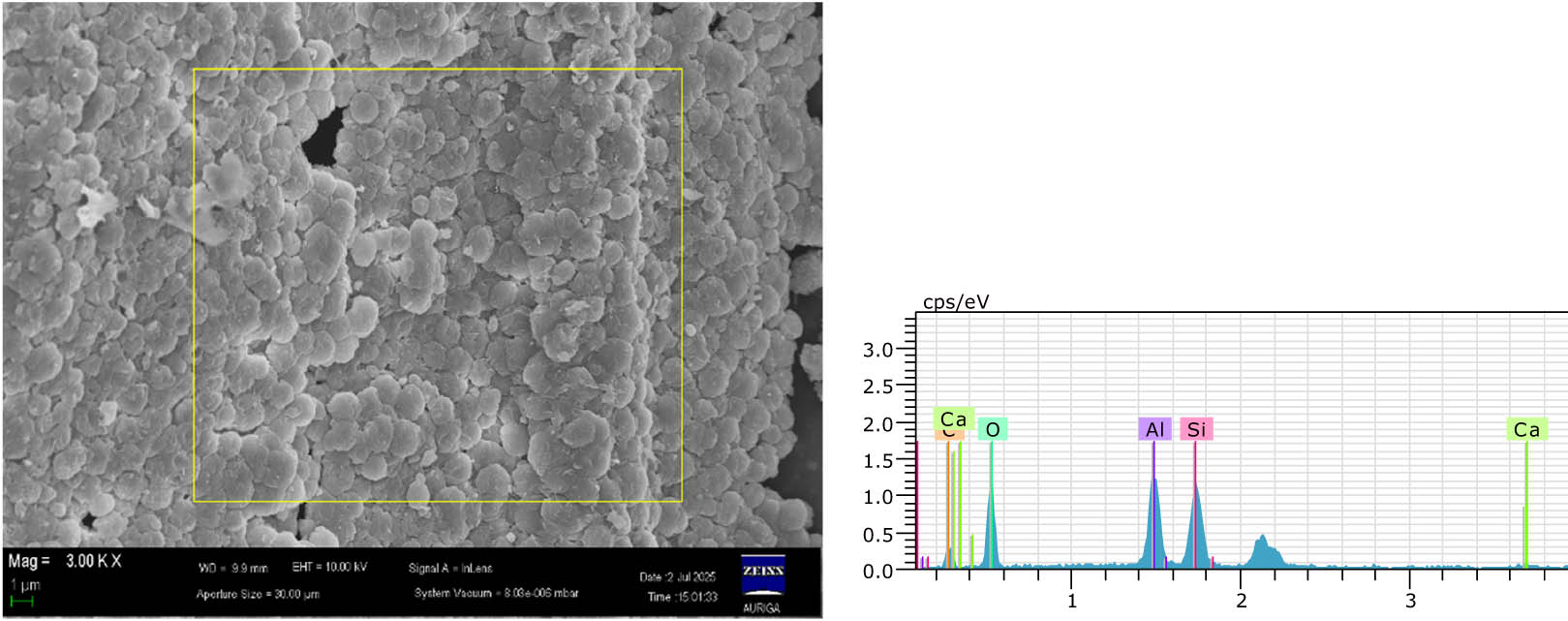
Figure 12
SEM-EDS of raw ash (0%): Silica-carbon-rich porous shards.
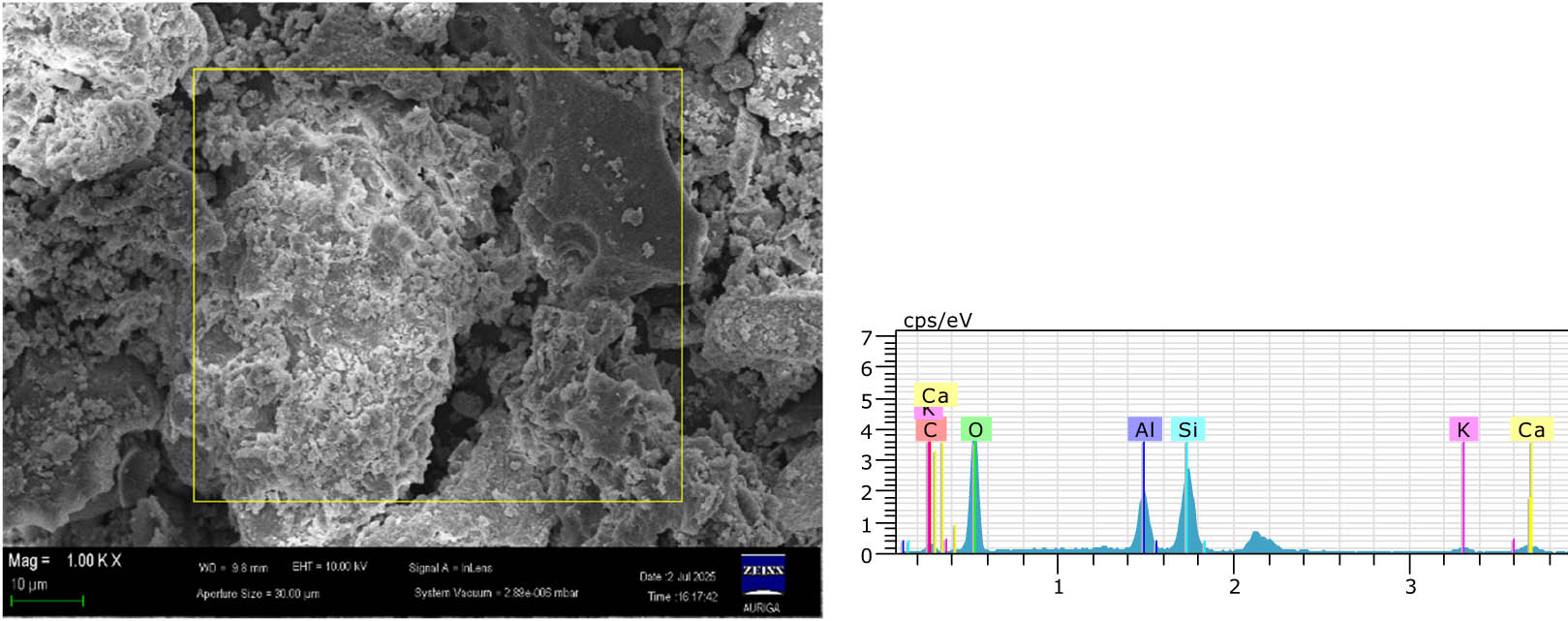
Figure 13
SEM-EDS of 30% humidified ash: Aggregation onset.
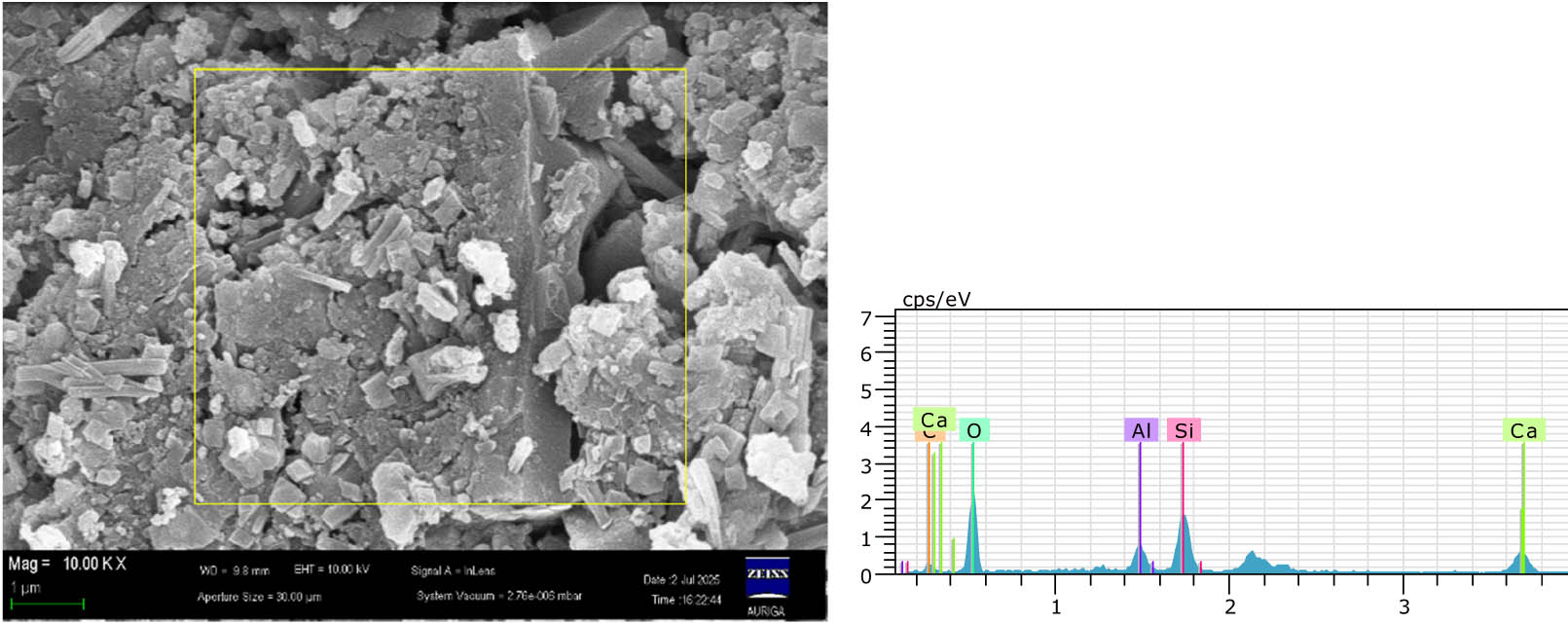
Figure 14
SEM-EDS of 50% humidified ash: Dense Portlandite clusters.
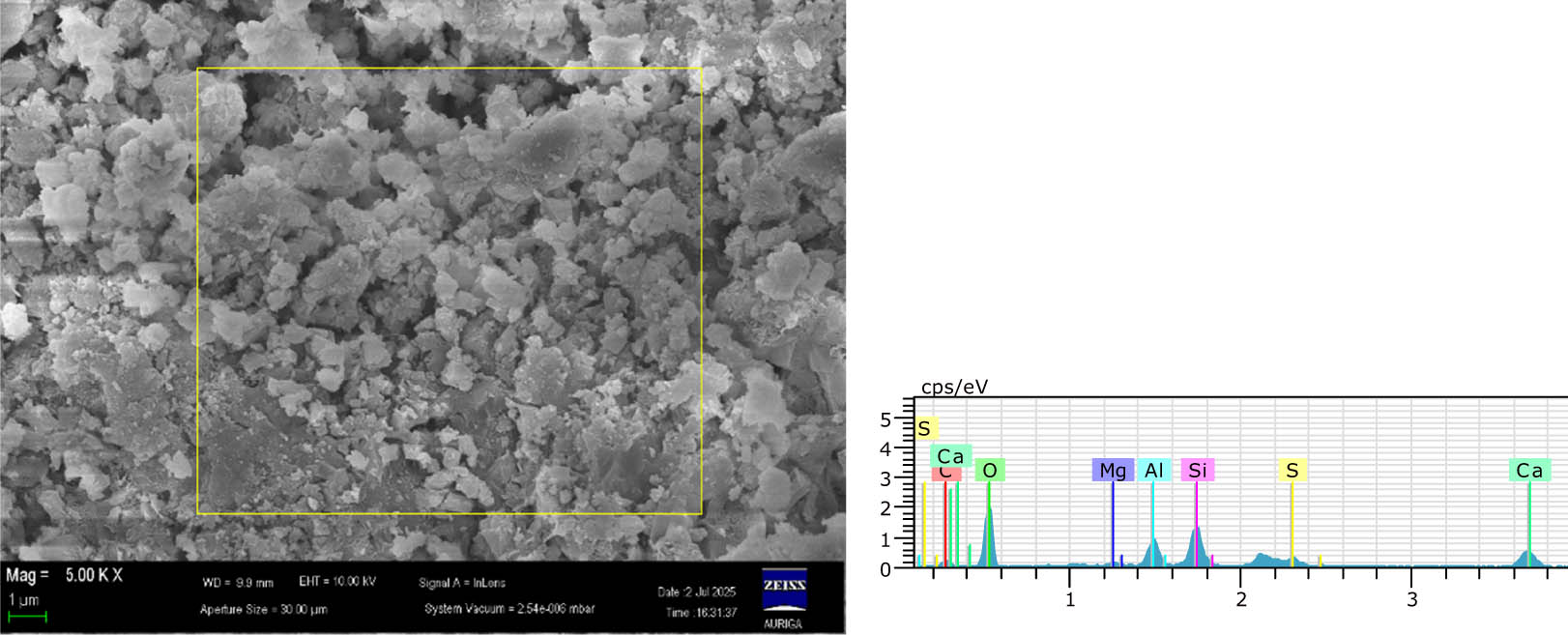
Figure 15
SEM-EDS of 100% humidified ash: Needle-dense AFt matrix.
Table 7
SEM-EDS localized elemental weight percentage evolution (wt%)
| Element | 0% (Control) | 30% (Humidified) | 50% (Humidified) | 100% (Humidified) |
|---|---|---|---|---|
| Carbon (C) | 16.23 | 4.64 | 4.99 | 5.31 |
| Oxygen (O) | 35.06 | 49.69 | 46.62 | 44.90 |
| Magnesium (Mg) | ─ | ─ | ─ | 0.23 |
| Aluminum (Al) | 19.06 | 11.39 | 5.80 | 7.33 |
| Silicon (Si) | 26.61 | 24.92 | 19.65 | 16.63 |
| Sulfur (S) | ─ | ─ | ─ | 4.16 |
| Calcium (Ca) | 3.04 | 6.90 | 22.94 | 21.43 |
3.3.2. AFt proliferation and pore refinement
Upon humidification to 30% (Figure 13), the particles begin to aggregate, and gelatinous hydration products appear. This transition signals the onset of the self-cementing reaction, in which the alite and belite phases, as identified by X-ray diffraction, begin to form a binding matrix. However, the most significant morphological shift occurs at 100% humidification (Figure 15), where SEM images reveal a matrix completely congested with clusters of needle-like crystals ranging from 2 to 10 μm in length. These needles are the morphological manifestation of AFt. The localized energy dispersive spectroscopy fingerprinting confirms this identification, showing a dramatic enrichment of sulfur (increasing to 4.16 wt%) and calcium (increasing to 21.43 wt%) at these needle clusters.
Mechanistically, this massive growth of AFt needles is the direct cause of pore refinement. As the needles proliferate, they bridge the gaps between the original ash particles and fill the macro-pore voids. According to the microstructural guides provided by Scrivener et al. [17] on cement hydrate analysis, such hydrate congestion effectively divides larger capillary pores into a higher population of much smaller pores, typically with radii below 50 nm. While enhancing ion resistance, the system becomes extremely vulnerable to drying-induced volume loss, as described in the chloride diffusion studies of Zhang et al. [12]. The transition from a “macro-pore dominant” system to a “capillary-pore dominant” system, as established by Liu et al. [18], is the physical tipping point for the shrinkage paradox. The EDS data in Table 7 provide elemental evidence that the chemical potential of the solid recovered fuel ash is so high that excessive moisture forces the formation of a dense, stressed microstructure prone to physical contraction upon drying. The 30% optimized ratio creates a balanced morphology in which hydration products stabilize the particles without forcing the entire system into a needle-congested state, thereby maintaining a relatively larger pore radius that mitigates capillary stress.
3.4. Competitive volume dynamics: Establishing the Kelvin–Laplace threshold paradox
3.4.1. Expansion control via pre-hardening hydration sink
The macroscopic performance data summarized in Tables 8 and 9 quantify the “competitive volume dynamics” – the central mechanistic trade-off of this study. The raw SRF ash (Control Group) exhibits a destructive 7-day linear expansion of 1.62% (±0.12%), which is more than three times the engineering safety threshold defined by CNS 15311. This swelling is the macroscopic manifestation of the internal crystallization pressure (P c) generated by the unreacted free calcium oxide and anhydrite. Humidification stabilization at 30% for 1 day effectively “mitigates expansion,” reducing the expansion to a safe 0.39% (±0.04%). This reduction is achieved because the chemical expansion work is performed during the stabilization sink period, before the binder reaches its hardened state. As established by Taylor et al. [16] in their research on delayed AFt formation, addressing these precursors early is the only way to prevent delayed cracking.
Table 8
Accelerated linear expansion results for stabilized SRF ash (%)
| Humidification | 0 Day | 1 Day | 2 Day | 3 Day | 7 Day |
|---|---|---|---|---|---|
| 0% | 1.62 ± 0.12 | ─ | ─ | ─ | ─ |
| 30% | 1.14 ± 0.09 | 0.39 ± 0.04 | 0.22 ± 0.02 | 0.01 ± 0.01 | 0.01 ± 0.01 |
| 50% | 0.82 ± 0.07 | 0.25 ± 0.03 | 0.15 ± 0.01 | 0.01 ± 0.01 | 0.01 ± 0.01 |
| 100% | 0.55 ± 0.05 | 0.18 ± 0.02 | 0.12 ± 0.01 | 0.01 ± 0.01 | 0.01 ± 0.01 |
3.4.2. Indirect evidence of pore refinement and term moderation
However, the paradox emerges when the humidification ratio is increased to 100%. While this group achieves the minimum expansion (0.18%), it triggers a substantial 1.21% (±0.08%) drying shrinkage. The paradox is visually confirmed in the 28-day rate chart in Figure 16. The 28-day data points in Figure 16 clearly show a nonlinear relationship between water content and dimensional loss, with the 100% group crossing the structural safety limit after only 14 days of drying. This level of contraction is nearly five times higher than that of the control group and exceeds the typical limit for high-value binders. Mechanistically, this paradox is governed by the Kelvin–Laplace equation, which describes the pressure difference (ΔP) across the meniscus of a liquid in a pore:
where ΔP is the capillary tension, γ is the surface tension of the pore solution, θ is the contact angle, and is the capillary pore radius. As confirmed by XRD and TGA results, 100% humidification produces an excessive volume of AFt needles, leading to pore refinement. As the pore radius is reduced below 50 nm, the capillary negative pressure ΔP increases exponentially. During the drying phase (RH 50%), the evaporation of moisture from these highly refined pores creates intense tensile stresses within the capillary network. In the high-alkalinity pore solution of solid recovered fuel ash (pH ≈ 12.8), the surface tension γ is slightly modified by the extreme ionic strength, further magnifying the capillary pressure and resulting in macroscopic volume loss. This observation is consistent with the temperature-dependent pore-solution and phase-equilibrium models discussed by Lothenbach et al. [23].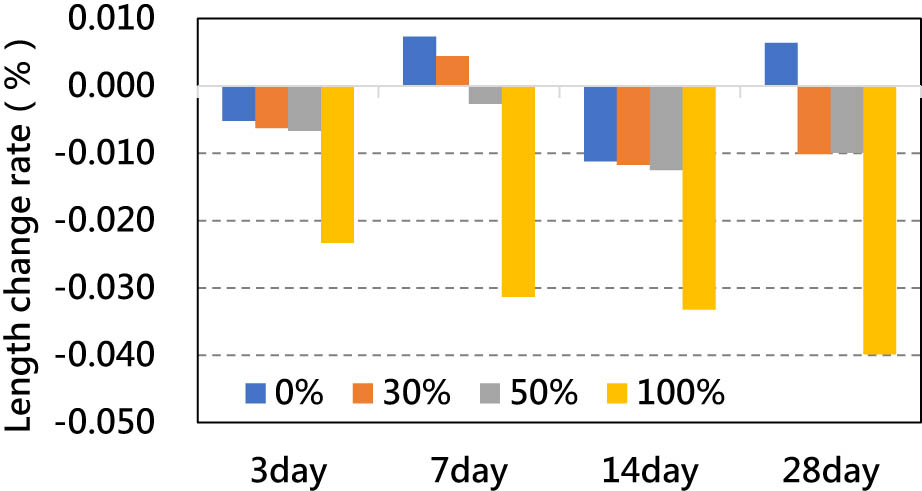
Figure 16
28-day length change rate (drying shrinkage) of SRF co-firing mortars.
The identification of this “suitable balance” is the key scientific contribution of this study. As established in related research by Fang et al. [15], expansive agents and shrinkage-reducing admixtures must be carefully balanced to prevent structural failure. In our atypical ash system, the AFt needles act as both the solution (expansion inhibition) and the problem (shrinkage induction). The 30% humidification ratio is the “Golden Threshold” because it provides sufficient moisture to consume the reactive free calcium oxide and anhydrite, ensuring safe expansion while maintaining a sufficiently large average pore radius to avoid the extreme capillary tension associated with excessive refinement. The 28-day shrinkage for the 30% group remains at a manageable 0.52% (±0.04%). This balance ensures that the binder remains dimensionally stable under varying environmental conditions.
3.4.3. Multi-factor contraction: Carbonation, kinetics, and C–S–H densification
Furthermore, drying shrinkage is a complex multi-factor process. In addition to capillary tension, several other physical and chemical factors contribute to this contraction:
Carbonation shrinkage: The carbonation of Portlandite into calcite (confirmed by our calcite peaks) can release bound water and cause local microstructural rearrangement, increasing macroscopic contraction.
Calcium silicate hydrate (C–S–H) densification: The structural densification and polymerization of hydraulic C–S–H gel during drying induce significant irreversible drying shrinkage.
Drying kinetics: Differences in evaporation rates and internal humidity gradients under RH 50% curing drive differential early-age shrinkage.
By balancing these mechanisms, we establish that 30% humidification for 1 day is the optimal pre-hydration protocol. It successfully mitigates expansion (0.39% < 0.50% limit) while maintaining a moderate capillary structure, thereby limiting drying shrinkage to 0.52%.
3.5. Heavy metal sequestration mechanism and safety validation
The environmental safety of utilizing solid recovered fuel-derived residues is as critical as their volumetric stability. The trace heavy metal profile via ICP-OES (Table 2) and the sequestration performance (Table 10) reveal that the co-fired fly ash contains significant concentrations of barium (Ba: 21.40 mg/kg), chromium (Cr: 15.80 mg/kg), and lead (Pb: 12.60 mg/kg). These metals originate from the dyes, catalysts, and additives used in the residues that comprise the solid recovered fuel feedstock. The potential for these metals to leach into groundwater is a primary concern for the valorization of such “atypical fly ashes.”
Table 10
Suitable balance assessment vs engineering and safety limits
| Criteria | 30% optimized group value | Safety limit/specification value | Judgment result |
|---|---|---|---|
| 7-day linear expansion rate | 0.39% | <0.50% (CNS 15311) | Pass |
| 28-day drying shrinkage rate | 0.52% | <0.60% (Controlled low-strength material) | Pass |
| Lead (Pb) leaching concentration | <0.12 mg/L | <5.0 mg/L (Toxicity characteristic leaching procedure) | Pass |
| Stabilization efficiency | 100% | Industrial application requirements | Excellent |
Mechanistically, the immobilization of heavy metals in our humidified ash is achieved through a synergistic combination of chemical sequestration and physical encapsulation. First, the high alkalinity provided by the hydration of alite and free calcium oxide creates a natural passivation environment. At PH > 12.5, the solubility of lead and chromium is significantly reduced as they precipitate as stable metal hydroxides within the pore solution. Second, the formation of AFt provides a crystal-chemical sink for metal ions. As established by Yuan et al. [21] in their heavy metal stabilization study, heavy metal cations such as Pb2+ and Ba2+ can undergo isomorphous substitution, where they replace Ca2+ ions within the AFt crystal lattice. Similarly, oxyanions like can replace sulfate ions () in the hydration product structure. This chemical “locking” ensures that metals are integrated into stable crystalline structures rather than remaining as soluble species.
The optimized 30% humidified binder facilitates the formation of a dense matrix that provides effective physical encapsulation. The development of binding C–S–H phase – confirmed by the particle aggregation observed in SEM (Figure 12) – forms a tortuous diffusion barrier around the heavy metal precipitates. As noted in the investigation of sustainable cementitious binders by Lothenbach et al. [23], the tortuosity of the hydrated matrix is a critical factor limiting ion transport. In our 30% optimized group, the leaching of lead was reduced to below 0.12 mg/L, which is comfortably within the Toxicity Characteristic Leaching Procedure limit of 5.0 mg/L. This proves that 30% humidification not only optimizes dimensional stability but also maximizes environmental safety. Research by Omokaro et al. [4] emphasizes that circular economy pathways must integrate technical stabilization protocols to prevent systemic environmental failures. Our results confirm that by balancing moisture content, we not only avoid significant drying shrinkage but also optimize the high-pH environment and the resulting hydrate assembly for long-term metal containment, providing insights into the safe reintegration of co-firing residues into the global circular economy. This is further validated by Muhammad et al. [25], who demonstrated that the combined hydration of reactive aluminosilicate systems with solid waste ashes accelerates the physical capture and binding of environmental toxins.
4. Conclusion
This multi-scale investigation provides a definitive investigation framework for the stabilization of “atypical fly ash” derived from solid recovered fuel-coal co-firing in CFB systems. Our integrated analysis leads to the following critical conclusions:
(1) Mineralogical complexity and hydraulic synthesis: Unlike traditional PC fly ash, the co-fired residue is a crystalline-dominated hydraulic binder. Mineralogical mapping via XRD (Figure 2) confirms the survival and localized synthesis of hydraulic clinker phases, specifically alite (C3S) and belite (C2S), which impart latent self-cementing properties. This is attributed to localized thermal hotspots during solid recovered fuel combustion that exceed the bulk 900°C regime. The presence of unreacted free calcium oxide and anhydrite represents a high-energy latent expansion potential that must be preemptively addressed before binder hardening to prevent loss of matrix integrity. This discovery confirms that solid recovered fuel ash possesses intrinsic reactivity, differentiating it from inert fillers and opening new pathways for its valorization in low-carbon cement systems.
(2) Expansion kinetics and pacification efficiency: The raw co-fired ash exhibits destructive linear expansion (1.62%) far exceeding safe industrial limits. Humidification stabilization acts as a critical chemical energy sink, overcoming the kinetic barriers of free calcium oxide hydration within dense shards. By providing a liquid phase for ion diffusion, reactive precursors are converted into stable calcium hydroxide and AFt during a 1-day stabilization sink (Figure 4). This process allows the immense crystallization pressure (P c) associated with hydration to be dissipated while the ash is in a non-rigid bulk state, ensuring the volumetric safety of the final specimens.
(3) Suitable balance paradox: A central discovery of this study is the “competitive volume dynamics,” where exhaustive expansion control triggers physical drying shrinkage. While 100% humidification eliminates expansion (reducing to 0.18%), it induces a significant 1.21% (±0.08%) drying shrinkage. This paradox is validated through the Kelvin–Laplace theory. TGA and SEM data confirm that excessive AFt formation refines the pore network to radii below 50 nm. During evaporation, the high curvature of the meniscus in these highly refined capillary pores elevates the negative pore pressure to extreme levels, resulting in macroscopic volume loss. This identifies a suitable balance where excessive pre-hydration becomes detrimental to structural stability.
(4) Optimal industrial protocol and environmental integrity: We establish that 30% humidification with a 1-day stabilization period serves as the optimal protocol for solid recovered fuel ash valorization. This threshold successfully balances the consumption of reactive precursors (limiting expansion to 0.39%) with the maintenance of a stable pore network that maintains shrinkage at a manageable 0.52% (Figure 16). Furthermore, the resulting dense matrix and high-pH environment effectively sequestrates heavy metals (Pb, Cr, Ba, Zn) through a synergy of crystal-lattice substitution in AFt and physical encapsulation by calcium silicate hydrate gels. The Pb leaching remains below 0.12 mg/L, comfortably meeting the Toxicity Characteristic Leaching Procedure standards. This comprehensive framework enables the safe, high-value integration of solid recovered fuel residues into global CE infrastructure, providing a sustainable solution for industrial waste valorization.
Acknowledgements
The authors acknowledged the support of the National Science and Technology Council (NSTC) in Taiwan under Grant No. NSTC 113-2222-E-992-012.
Funding information
Author states no funding involved.
Author contributions
Chun-Chin Hwang: resources, conceptualization, investigation, writing - original draft, writing - review and editing; Ran Huang: resources, data curation, investigation, writing - original draft; Sung-Ching Chen: resources, methodology, formal analysis, visualization, supervision, validation, writing - review and editing.
Conflict of interest statement
Authors state no conflict of interest.
Data availability statement
The data used to support the findings of this study are available from the corresponding author upon request.