
1. Introduction
There is ongoing research interest in materials exhibiting giant dielectric constants (GDCs) for energy-storage, capacitor, and sensor applications because they can deliver very large room-temperature dielectric constants (ε′ ≳ 10³–10⁵) [1,2,3]. The archetypal example is CaCu₃Ti₄O₁₂ (CCTO), which exhibits a colossal, frequency-stable ε′ that motivated broad studies into the structural, defect, and microstructural origins of giant dielectric behavior [4,5,6,7,8,9,10,11,12,13,14,15,16,17,18,19]. For example, Dev et al. explored the effects of lattice site modifications by incorporating Sr, Zn, and Sn in Ca1−x Sr x Cu3−x Zn x Ti4−x Sn x O12 (x = 0.00, 0.075, and 0.10) ceramics on the structure and giant dielectric properties [4]. Xiao et al. prepared CCTO ceramics with different oxygen concentrations and studied the influence of oxygen defects on electrical transport properties by cycling voltammetry conditioning, where the number of cycles had a noticeable effect on the sample’s resistance [5]. Non-stoichiometry in CaCu x Ti y O12 ceramics, where 2.7 ≤ x ≤ 3 and 3.25 ≤ y ≤ 4, has been investigated by Petinardi et al. [6]. It is found that stoichiometry variations in CuO and TiO2 content affected the grain growth, phase content, and the dielectric properties of the ceramics [6]. Haque and Jose investigated the effects of co-doping with Nd3+ and V5+ on the microstructure and dielectric response of Ca1−x Nd x Cu3Ti4−y V y O12 ceramics [7]. While doping controls the grain size and morphology, as well as the dielectric behavior of the ceramics, the energy barrier at grain boundaries is found to be sensitive to the doping content [7]. Similar studies on the effects of W doping in CCTO: x% W [8], Ba-doped Ca1−x Ba x Cu3Ti4O12 [9], (Ni,Sn) co-doped CaCu2.95Ni0.05Ti4−x Sn x O12 [10], Ho3+-doped Ca1−x Ho x Cu3Ti4O12 [11], La3+-doped Ca1−x La x Cu3Ti4O12 [12], and (La,Nd) co-doped Ca0.9(La1−y Nd y )0.066Cu3Ti4O12 [13] on the structure, microstructure, and dielectric performance have been reported. Moreover, composite ceramics of CCTO:LaNiO3 [14], CCTO:NiO [15], CCTO:Cu2O, and BCTO:MnO2 [16] have been investigated. The dominant explanation for the giant dielectric response is an internal barrier layer capacitor (IBLC) microstructure: semiconducting grains separated by insulating grain boundaries produce Maxwell–Wagner type interfacial polarization and very large apparent permittivity at low frequency [18]. Therefore, heterogeneous electrical microstructure is central to the observed colossal ε′ in these materials.
Beyond CCTO, compositionally modified systems such as Ln2/3Cu3Ti4O12 and Na0.5Ln0.5Cu₃Ti₄O₁₂ (NLnCTO) have emerged as promising materials that retain GDC properties with potentially different loss and thermal-stability characteristics [20,21,22,23,24,25]. Several synthesis routes, including co-precipitation, molten-salt flux, glycine-nitrate combustion, and conventional solid-state reaction, have been used to prepare NLnCTO powders and ceramics; with reported room-temperature dielectric constants typically falling in the 10³–10⁴ range, with values sensitive to synthesis route, stoichiometry, sintering temperature, and microstructure [20,21,22,23,24,25]. For example, Na0.5Y0.5Cu3Ti4O12 ceramics prepared by the sol–gel technique and conventionally sintered at 1,050°C for 9 and 15 h exhibit high ε′ values of 1.37 × 10⁴ and 1.99 × 10⁴, respectively, with tan δ values of 0.032–0.035 [20]. For Na0.5Ln0.5Cu3Ti4O12 (Ln = Sm, Eu) ceramics prepared by solid state reaction and conventional sintering at 950–1,000°C for 10 h, high dielectric constant values of 1.06 × 10⁴–3.17 × 10⁴ were obtained [21]. However, the dielectric loss tangent is found to be strongly dependent on the sintering temperature, with the minimum values of 0.055 and 0.066, respectively, for Na0.5Sm0.5Cu3Ti4O12 (NSmCTO) and Na0.5Eu0.5Cu3Ti4O12 (NEuCTO) ceramics sintered at 1,000°C for 10 h [21]. Similarly, NSmCTO [22,23], Na0.5Nd0.5Cu3Ti4O12 [24], and La2/3Cu3Ti4O12 [25] ceramics were conventionally sintered at 1,000–1,100°C. Dielectric constant values ranging from 1 × 10³ to 8 × 10³ were obtained, which depend on the synthesis technique and sintering conditions [22,23,24,25].
Since powder processing is crucial, high-energy ball milling produces highly reactive nanopowders (often < 50 nm), promotes low-temperature phase formation, and can reduce diffusion distances for densification, making it an attractive route for CCTO-family materials [26,27,28,29,30,31]. However, when such nanopowders are consolidated by conventional long-dwell, high-temperature sintering, rapid grain growth often occurs, leading to loss of the fine starting particle size, and the final ceramics typically display micrometer-scale grains. Because electrical and dielectric properties are strongly grain-size dependent, retaining a fine-grain microstructure is essential for studying size-dependent dielectric mechanisms and for engineering improved device performance.
Spark plasma sintering (SPS) provides a route to densify ceramics with minimal grain coarsening by using high heating rates, short dwell times, and lower effective sintering temperatures. SPS has been successfully applied to CCTO-family and other GDC materials to produce dense ceramics with smaller grain sizes than those obtained by conventional sintering [26,31,32,33,34,35,36]. Kotb et al. synthesized fine-grained Na0.5La0.5Cu3Ti4O12 ceramics by mechanosynthesis and SPS at 850, 900, and 925°C [26]. The ceramics have a grain size of 175–300 nm, and exhibit giant ε′ values > 103 and a minimum tan δ of 0.39 [26]. CCTO fine-grained ceramics were also obtained by SPS, and their dielectric performance was investigated in detail, revealing three contributions: grains, domain boundaries, and grain boundaries [31,32]. Similarly, Ahmad and co-workers studied the giant dielectric performance of spark plasma sintered Na0.5Y0.5Cu3Ti4O12 and Al-doped CaCu3Ti4−x Al x O12 fine-grained ceramics [33,34]. In these studies, it is found that the blocking effects of grain boundaries are much lower than in conventionally sintered ceramics. Therefore, SPS can be used to tune the ceramics’ morphology and the grain-boundary characteristics that govern the IBLC behavior [26,31,32,33,34,35,36]. Therefore, exploring the giant dielectric response in fine-grained ceramics is scientifically important but still comparatively rare in the literature. Some systematic grain-size investigations on CCTO reported increasing ε′ with increasing grain size [18], but there are also reports of high ε′ values for sub-micron grains [31,32]. These mixed results emphasize that both intrinsic defects (stoichiometry, dopants, vacancies) and extrinsic microstructural features (grain size, boundary resistivity, secondary phases) interplay to determine the observed dielectric response.
In this work, we report the synthesis of Na0.5Bi0.5Cu3Ti₄O₁₂ (NBCTO) ceramics by combining mechanochemical milling to produce ultrafine powders with SPS at 800–900°C for 10 min. This approach enables the fabrication of dense ceramics with grain sizes in the 300–400 nm range, which are significantly smaller than those obtained by conventional methods. By systematically investigating their structural and dielectric properties, we aim to elucidate the influence of fine grains on the giant dielectric response and to expand the understanding of grain-size engineering in NBCTO and related perovskite systems.
2. Experimental method
NBCTO was synthesized by mechanosynthesis at room temperature (RT) using stoichiometric proportions of Na2CO3, Bi2O3, CuO, and TiO2. The milling process was carried out in a Fritsch P-7 planetary mill with tungsten carbide pots and balls at a ball-to-powder mass ratio of 8:1. The milling process was performed for 30 h in air at a rotation speed of 450 rpm, and a cooling period of 10 min was allowed after every hour of mechanical milling. The as-milled powders were consolidated into ceramics by spark plasma sintering (SPS) at 800, 850, and 900°C using an SPS 4–10 system (Thermal Technology LLC). The experiments were conducted in a vacuum of 10−3 Torr using a 20 mm graphite die under 60 MPa pressure, with a heating rate of 150 °C/min, a 10 min dwell time, followed by rapid cooling. Phase identification was carried out by X-ray diffraction (XRD) on a Bruker D8 diffractometer. Microstructural analysis and elemental mapping were performed using a JEOL SM7600F field-emission scanning electron microscope (FE-SEM) equipped with an energy-dispersive X-ray spectroscopy (EDX) system. Dielectric and impedance spectroscopy measurements were conducted over the frequency range 1 Hz–10 MHz and in the temperature range of 120–480 K using a Novocontrol Concept 50 system.
3. Results and discussion
XRD patterns of SPS-NBCTO ceramics are shown in Figure 1. The diffraction peaks match those of the standard reference card (JCPDS file no. 75-2188) with a cubic structure (space group Im−3). The lattice constants of the samples were estimated from Rietveld analysis of the XRD data. Rietveld refinement yielded lattice constants of 7.4046, 7.4061, and 7.4034 Å for SPS-800, SPS-850, and SPS-900 ceramics, respectively, in good agreement with previous studies [37,38,39,40,41,42,43,44]. In addition, minor secondary peaks were detected at ∼36.5° in the SPS-800 and SPS-850 samples, corresponding to the (111) reflection of Cu2O phase (JSPDS: 05-0667) [32,45]. The formation of Cu2O results from the partial reduction of Cu2+ to Cu+ under the low oxygen partial pressure inherent to the SPS process. Such reduction is accompanied by oxygen loss and the formation of oxygen vacancy, with the released electrons contributing to the stabilization of Cu+ species. The content percentages of the NBCT and Cu2O phases in the SPS-800 sample were estimated from the relative areas of the strongest peaks, yielding 92.37% and 7.63%, respectively. By increasing the sintering temperature to 900°C, phase-pure NBCTO ceramics were obtained. The experimental density of the ceramics was estimated from the weight and dimensions of the samples, with values of 5.416, 5.482, and 5.522 g/cm3 for SPS-800, SPS-850, and SPS-900 ceramics, respectively. Using an average XRD theoretical density of 5.64 g/cm3, the ceramics will have relative densities of 96.0, 97.2, and 97.9%, respectively.
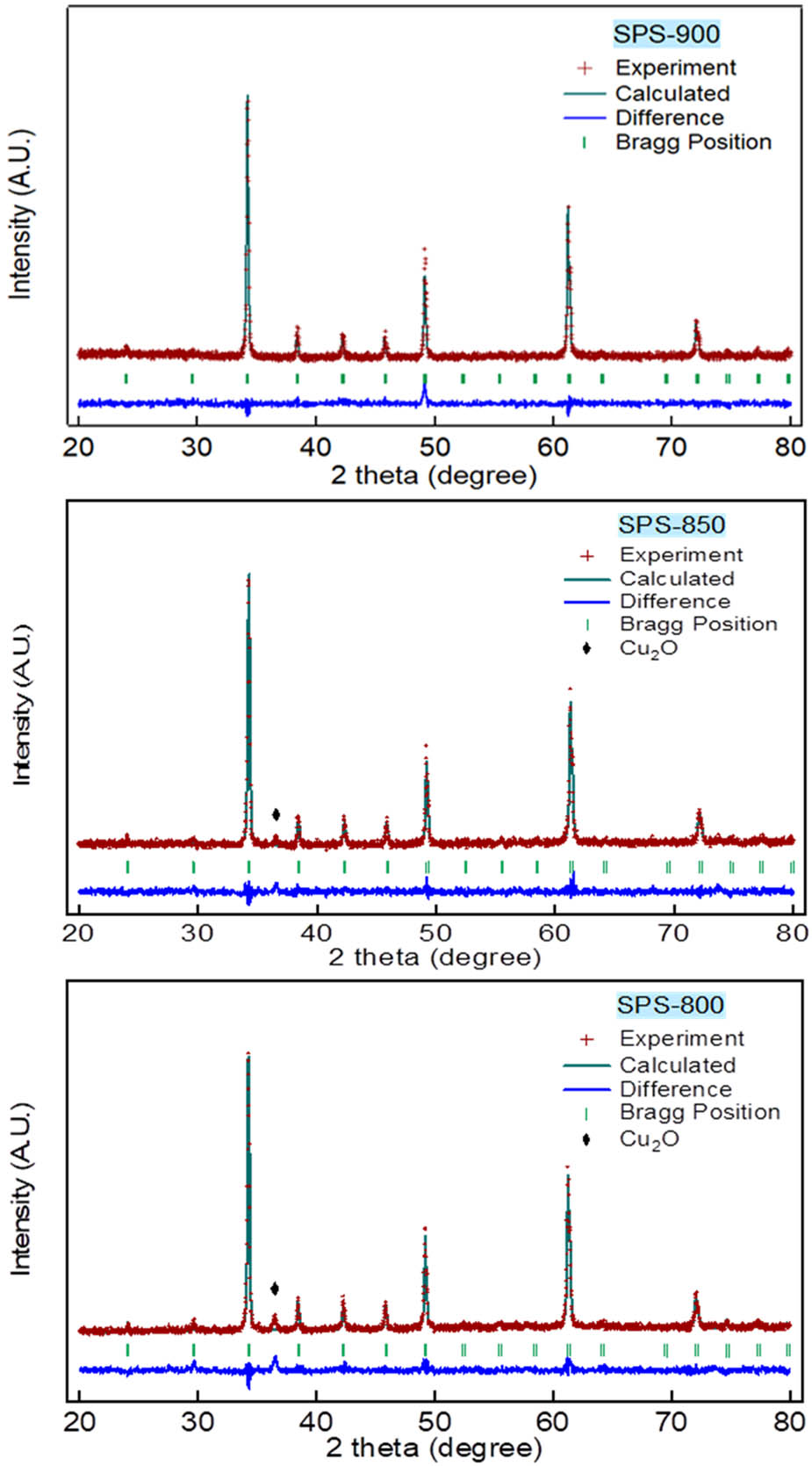
Figure 1
XRD patterns and the Rietveld refinement of SPS-NBCTO ceramics sintered at various temperatures.
SEM and EDX spectroscopy were used to investigate the microstructure and elemental composition of the ceramics. An SEM image of the prepared NBCTO powder is shown in Figure 2. The image clearly reveals nanoparticles and larger agglomerates. SEM micrographs of SPS-NBCTO ceramics are shown in Figure 3, revealing well-defined, fine-grained ceramics. The grain size distributions of NBCTO powder and ceramics are presented in Figure 4. NBCTO nanopowder exhibits an average grain size of 68 nm, whereas the sintered ceramics have average grain sizes of 309, 374, and 393 nm for SPS-800, SPS-850, and SPS-900, respectively, which indicates limited grain growth as the SPS temperature increases from 800 to 900°C. These results show that fine-grained NBCTO ceramics below 400 nm grain size could be obtained by spark plasma sintering compared to coarse-grained ceramics with ∼2–11 μm that are usually produced by conventional sintering [38,39,40,41,42,43,44]. The percentages of the constituent elements are estimated from EDX spectroscopy measurements. The EDX spectra of SPS-NBCTO ceramics are presented in Figure 3, and the elemental contents are summarized in Table 1. EDX analysis confirmed the existence of all expected elements, and their percentages are close to the nominal stoichiometry of the studied materials.
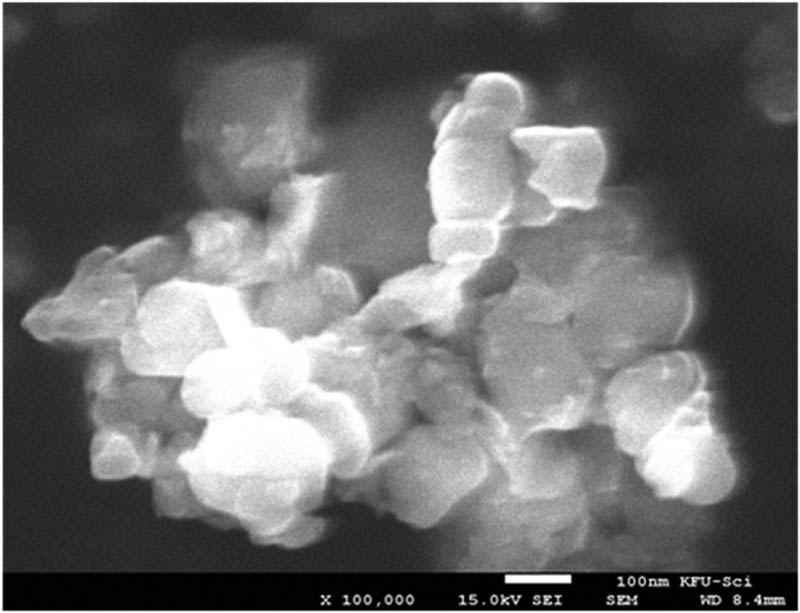
Figure 2
SEM micrograph of NBCT nanopowder.
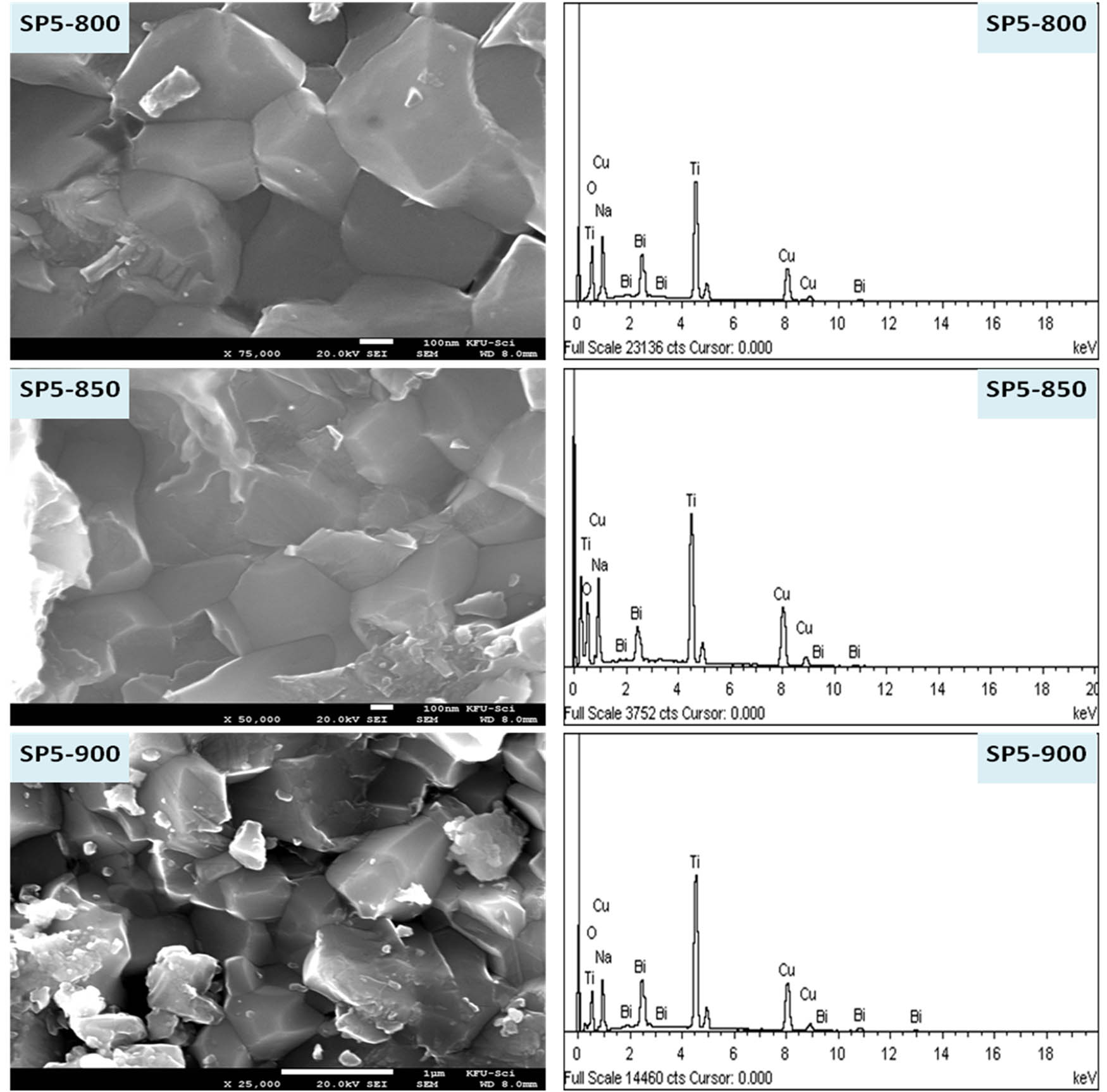
Figure 3
SEM images and the EDX spectra of SPS-NBCTO ceramics.
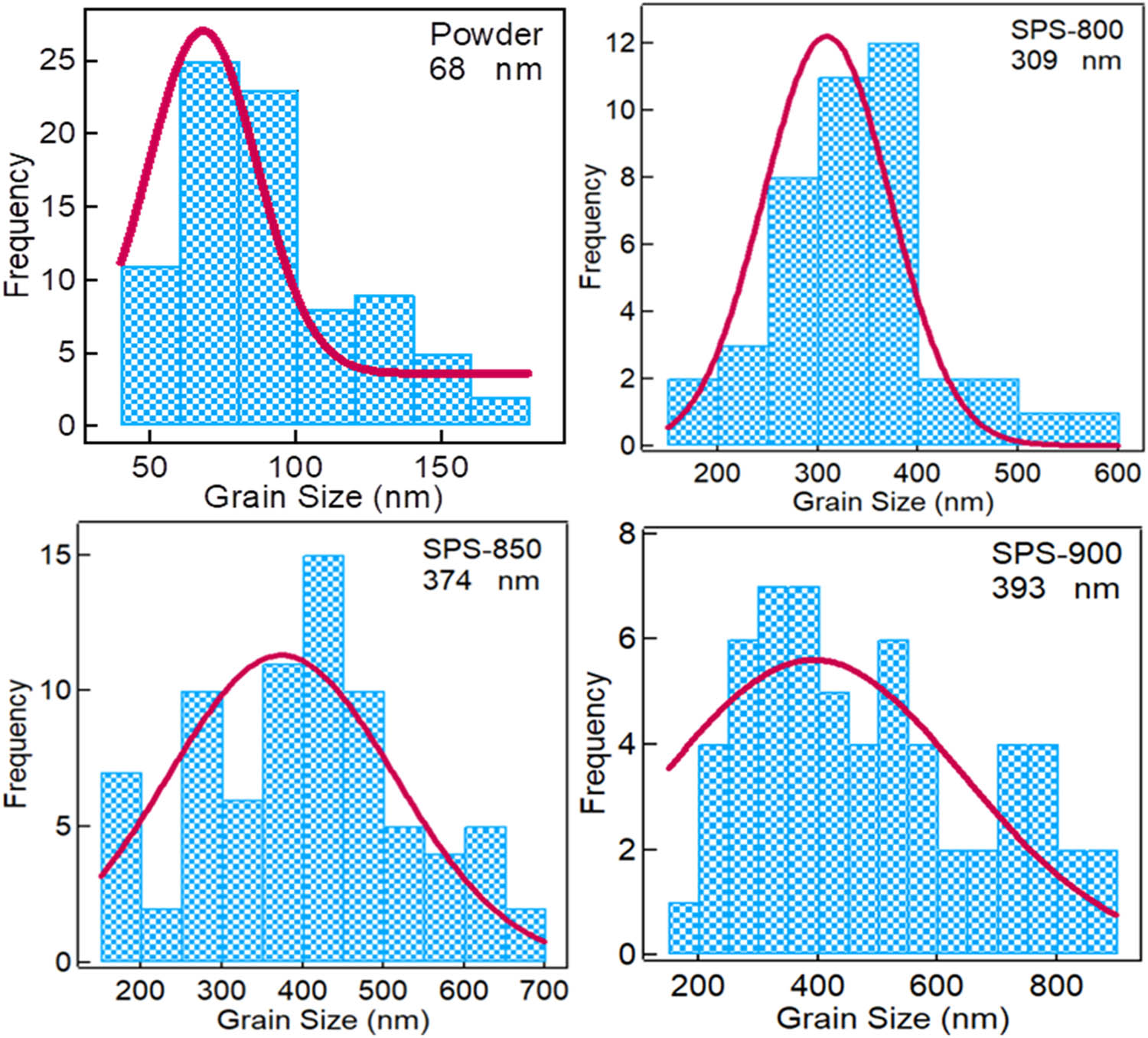
Figure 4
Grain size distributions for NBCTO nanopowder and SPS-NBCTO ceramics sintered at different temperatures.
Table 1
Elements composition of SPS-NBCTO ceramics.
| Element | SPS-800 | SPS-850 | SPS-900 | |||
|---|---|---|---|---|---|---|
| Weight (%) | Atomic (%) | Weight (%) | Atomic (%) | Weight (%) | Atomic (%) | |
| O K | 33.61 | 66.97 | 30.09 | 61.59 | 23.93 | 55.49 |
| Na K | 1.00 | 1.39 | 1.92 | 2.74 | 0.84 | 1.36 |
| Ti K | 26.24 | 17.46 | 24.59 | 16.81 | 29.17 | 22.59 |
| Cu K | 23.52 | 11.80 | 33.64 | 17.34 | 30.47 | 17.79 |
| Bi M | 15.63 | 2.38 | 9.76 | 1.53 | 15.59 | 2.77 |
| Total | 100 | 100 | 100 | 100 | 100 | 100 |
Figure 5(a–c) shows the variation in the dielectric constant, ε′, vs frequency at selected temperatures of SPS-NBCTO ceramics. It is observed in the figure that, regardless of the SPS temperature, all samples exhibit colossal ε′ values above 104 over large frequency and temperature ranges. At RT and 1 kHz, the values of ε′ are 2.77 × 10⁴, 3.96 × 10⁴, and 3.32 × 10⁴ for SPS-800, SPS-850, and SPS-900 ceramics, respectively (Table 2), which are much higher than NBCTO ceramics prepared by conventional sintering [37,38,39,40,41,42,43,44]. The giant dielectric response covers the low and intermediate frequencies, whereas ε′ drops drastically at high frequencies due to the expected relaxation process. This behavior represents the Maxwell–Wagner polarization, observed in electrically heterogeneous materials. A direct comparison of ε′ at 1 kHz and RT (Figure 5d) shows that all three samples have nearly identical dielectric behavior.
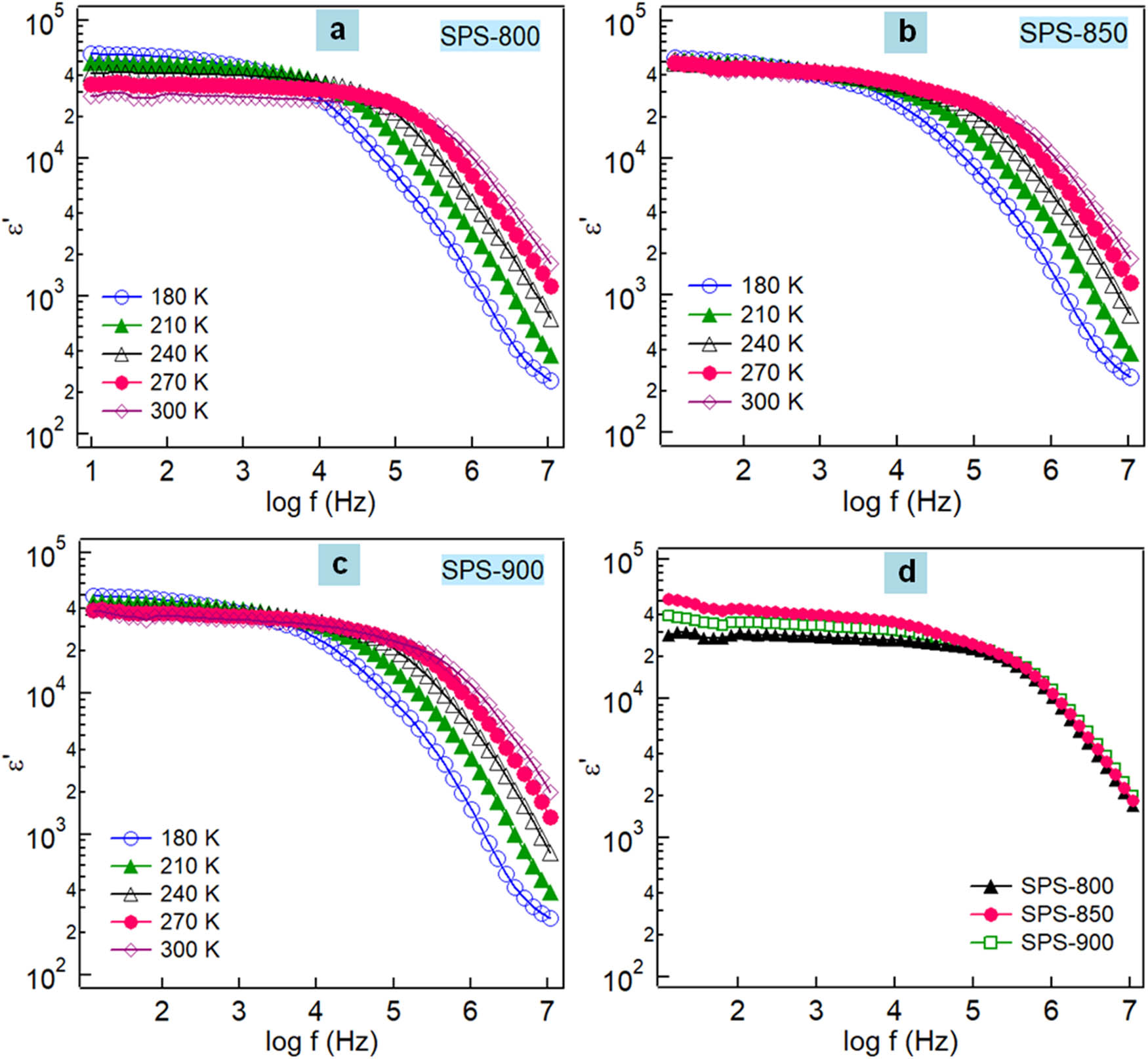
Figure 5
(a–c) The frequency dependence of ε′ for SPS-NBCTO ceramics sintered at different temperatures and (d) comparison of ε′ for the three samples at RT.
Table 2
Values of ε′, σ g, and σ gb at RT in addition to the activation energy for the electrical conduction and the modulus relaxation processes in SPS-NBCTO ceramics.
| ε′ @ 1 kHz | σ g (S/cm) | σ gb (S/cm) | E g (eV) | E gb (eV) | E m−g (eV) | E m−gb (eV) | |
|---|---|---|---|---|---|---|---|
| SPS-800 | 2.77 × 10⁴ | 3.01 × 10⁻² | 3.47 × 10⁻³ | 0.090 | 0.211 | 0.082 | 0.145 |
| SPS-850 | 3.96 × 10⁴ | 2.85 × 10⁻² | 2.65 × 10⁻³ | 0.096 | 0.202 | 0.082 | 0.145 |
| SPS-900 | 3.32 × 10⁴ | 3.06 × 10⁻² | 2.51 × 10⁻³ | 0.089 | 0.192 | 0.081 | 0.144 |
The observed giant dielectric response in SPS-NBCTO ceramics can be understood in terms of the IBLC model, which arises from the presence of semiconducting grains separated by less conductive grain boundary layers [30,31,32]. In order to verify this interpretation, electrical impedance data are presented in Figure 6. The Nyquist plots at selected temperatures of SPS-900 ceramics (taken as a representative example) are presented in Figure 6. Large semicircular arcs appear at low frequencies (Figure 6a), corresponding to the electrical response of the grain boundary. Upon magnifying the high-frequency region of the impedance, additional semicircles are observed (Figure 6b), which are attributed to the grain response. The intercept of the semicircles with the real Z'-axis provides the DC resistivity.
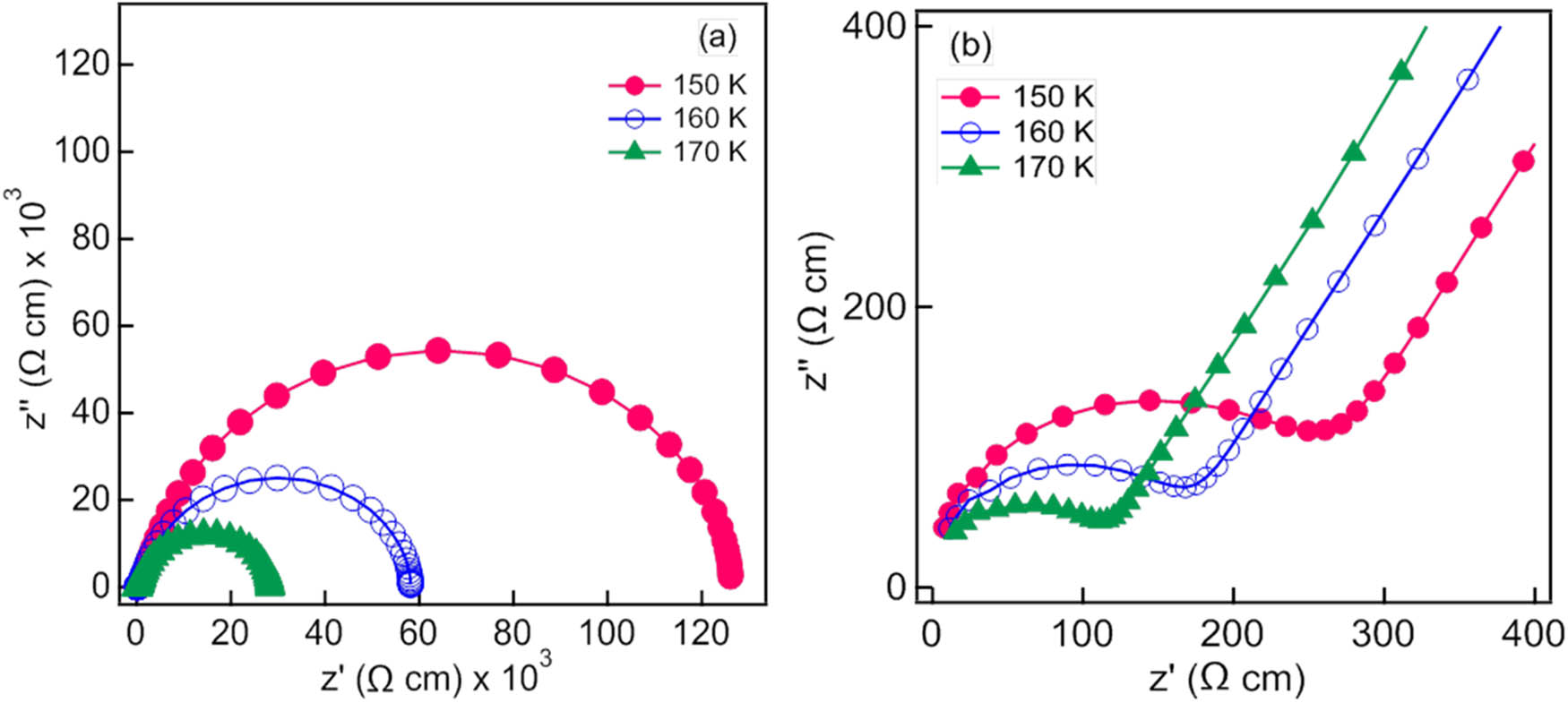
Figure 6
Nyquist plots at low (a) and high (b) frequency ranges of SPS-900 ceramics.
The DC conductivities of the grains, σ g, and grain boundaries, σ gb, were calculated by , where l and A are the sample’s thickness and surface area, respectively, and R is the resistance. The Arrhenius relations of the conductivity are shown in Figure 7. The DC conductivity could be described by the following relation:
where E is the activation energy and k is the Boltzmann constant. From this relation, the activation energy was estimated. The conductivity values of the grains and grain boundaries at RT, together with their activation energies, are summarized in Table 2. We notice that σ g ranges from 2.85 × 10⁻² to 3.06 × 10⁻² S/cm, and its activation energy (E g) value lies between 0.089 and 0.096 eV, consistent with values reported for other CCTO-based materials [20,21,22,23,24,25,26]. Interestingly, the grain boundary conductivity is found to be exceptionally high. At RT, σ gb values are 3.47 × 10⁻³, 2.65 × 10⁻³, and 2.51 × 10⁻³ S/cm for SPS-800, SPS-850, and SPS-900 ceramics, respectively. These values are three to six orders of magnitude higher than those of conventionally sintered NBCTO and other CCTO-based ceramics [20,21,22,23,24,25,26,27,28,29,30,31]. Although the grain boundaries exhibit relatively higher conductivity than conventionally sintered ceramics, they remain more resistive, by more than one to two orders of magnitude, than the grain interiors. Thus, they preserve the essential electrical contrast required for the IBLC model. The activation energy of the grain boundary conduction (E gb) is between 0.192 and 0.211 eV, which agrees well with E gb values obtained in Na0.5La0.5Cu3Ti4O12 fine-grained ceramics prepared by mechanosynthesis and SPS [26]. However, the current E gb values are significantly lower than the typical 0.5–0.8 eV range reported for conventionally sintered CCTO-based materials [20,21,22,23,24,25]. For example, Na0.5Y0.5Cu3Ti4O12 ceramics prepared by the sol–gel technique and conventionally sintered at 1,050°C for 9 h and 15 h exhibit low grain-boundary conductivity. Their values range from 5.65 × 10⁻⁷ to 3.01 × 10⁻⁶ S/cm at RT, with activation energies of 0.674–0.717 eV [20]. For Na0.5Ln0.5Cu3Ti4O12 (Ln = Sm, Eu) ceramics prepared by solid state reaction and conventional sintering at 950–1,000°C for 10 h, the E gb values are 0.480–0.783 eV [21]. Similarly, Na0.5Sm0.5Cu3Ti4O12 [22,23], Na0.5Nd0.5Cu3Ti4O12 [24], and La2/3Cu3Ti4O12 [25] ceramics, conventionally sintered at 1,000–1,100°C, exhibit low grain boundary conductivity ranging from 1.2 × 10⁻⁴ to 4.6 × 10⁻⁷ S/cm. Their activation energy values range from 0.56 to 0.77 eV [22,23,24,25]. For NBCTO ceramics sintered conventionally at 1,050°C for 6 h [37] and at 980°C for 12 h [40], the activation energy for grain boundary conduction is in the range of 0.485–0.550 eV. These data show that SPS makes grain boundary layers more conductive and lowers the energy barrier to charge-carrier transport compared to conventional sintering. Additionally, Figure 7 shows that the conductivity values of all SPS-NBCTO ceramics are nearly identical, with minimal dependence on sintering temperature. This trend is consistent with the dielectric spectra shown in Figure 5d. Together, these results suggest that SPS at 800°C for 10 min is sufficient to produce almost fully dense, fine-grained ceramics. Any further increase in sintering temperature does not significantly alter the ceramics’ physical properties.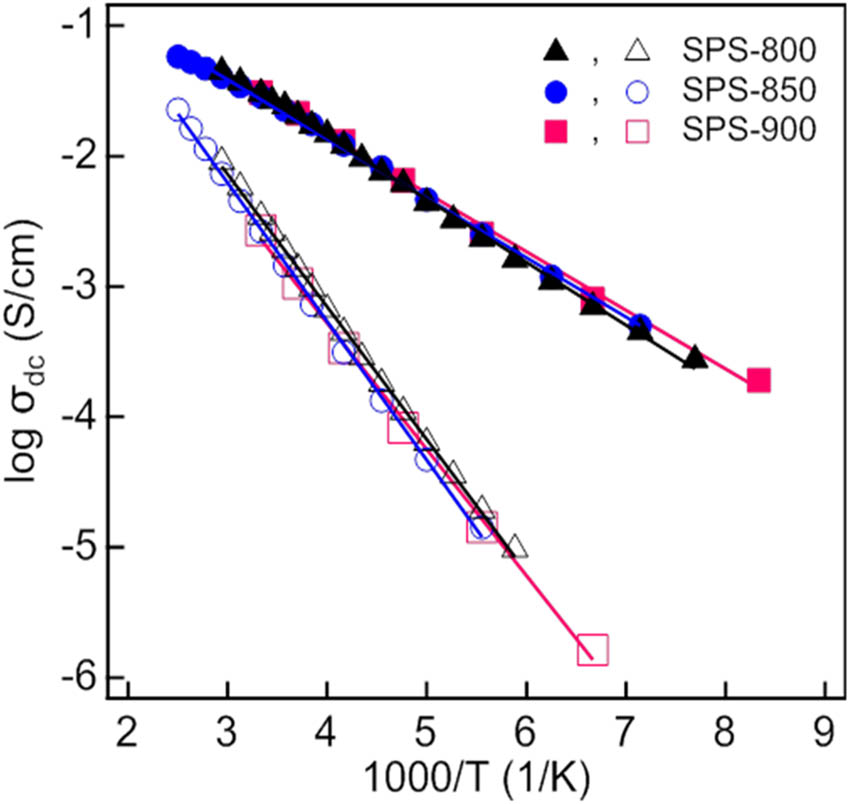
Figure 7
Arrhenius plots of σ g (solid symbols) and σ gb (open symbols) for NBCTO ceramics.
In electrically heterogeneous ceramics, and with applying the brick-layer model, the effective dielectric constant can be estimated from the following relation [31,32]:
where t g and t gb are the thickness of the grains and grain boundary layer and ε′g is the intrinsic dielectric constant of the grains. Based on equation (2), ε′ is expected to be dependent on the grain size of the ceramics. For SPS-NBCTO ceramics, taking ε′g of ∼200 (the value of ε′ at 120 K in the high frequency plateau region), t g ∼350 nm and t gb ∼1–3 nm [32,46], the value of ε′eff would be 2.33 × 10⁴–7.0 × 10⁴, which agree well with the experimental results in this work.The variation in the dissipation factor (tan δ) vs frequency at low temperatures is shown in Figure 8 for SPS-900, as a representative example. The tan δ spectra exhibit common features that are usually observed in CCTO-based ceramics, with a relaxation peak that shifts to higher frequencies as the temperature increases, representing a dielectric relaxation process. At low temperatures, tan δ is minimal, with the minimum value of ∼0.28 around 100 Hz. However, as the temperature rises, tan δ increases abnormally, reaching ∼100 (not shown). This high value of tan δ is attributed to the very high grain boundary conductivity in SPS-NBCTO ceramics, where tan δ is directly proportional to the conductivity as follows [32]:
where ω is the angular frequency and ε 0 is the permittivity of free space. σ dc in equation (3) represents the total conductivity of the material, which is dominated by the grain boundary contribution. In conventionally sintered CCTO-based ceramics, σ gb is very low, typically in the 10−6–10−9 S/cm range, leading to low tan δ values [9,10,11,12,13,14,15,16,17,18,19,20]. In contrast, the exceptionally high σ gb in SPS-NBCTO ceramics results in high total conductivity and, consequently, very large dielectric losses, most likely linked to oxygen-vacancy-related conduction.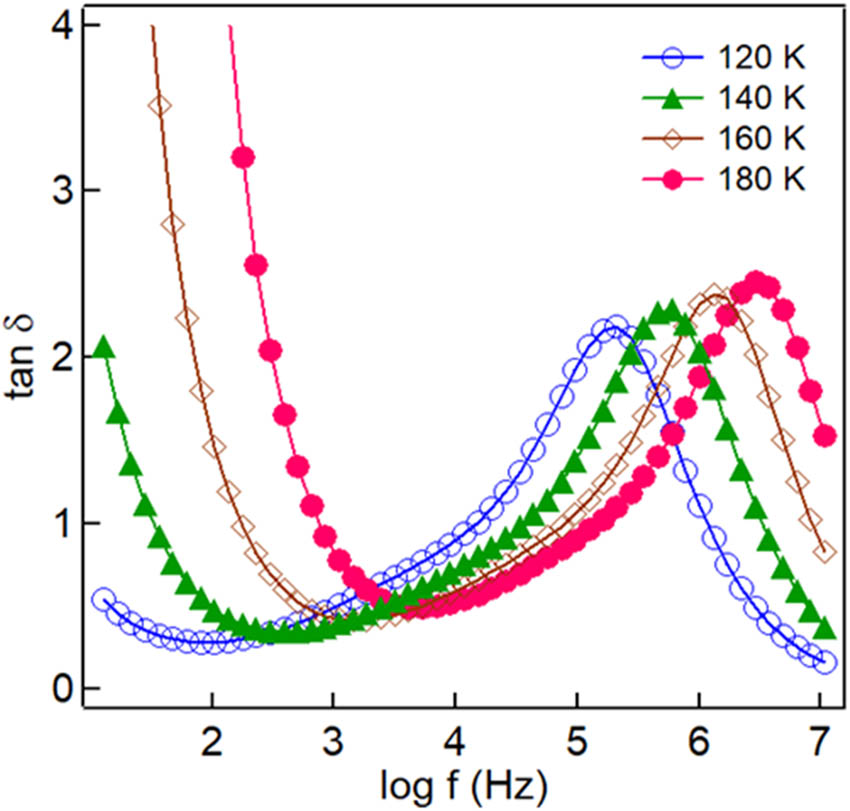
Figure 8
The variation in tan δ vs frequency at different temperatures for SPS-900 sample.
The relaxation behavior of SPS-NBCTO ceramics was further studied by the electric modulus formalism. Figure 9 shows the frequency dependence of the imaginary part of the modulus, M″, for SPS-900. Two relaxation peaks are observed, both shifting towards higher frequencies with increase in the temperature, indicating thermally relaxation processes. The high-frequency peaks are ascribed to the grain relaxation, whereas the low-frequency peaks correspond to the grain boundary relaxation. Similar behavior was observed for SPS-800 and SPS-850 ceramics. The relaxation time τ m at different temperatures was estimated from the peak frequencies according to τ m = 1/2πf max. The Arrhenius plots of the relaxation time are shown in Figure 10 for all SPS-NBCTO ceramics and the corresponding activation energies are summarized in Table 2. The values of the activation energies of the grain and grain boundary relaxation processes are consistent with those of σ g and σ gb. Moreover, τ m values for all SPS-NBCTO ceramics are nearly identical, paralleling the similarity observed in their dielectric and conductivity behavior.
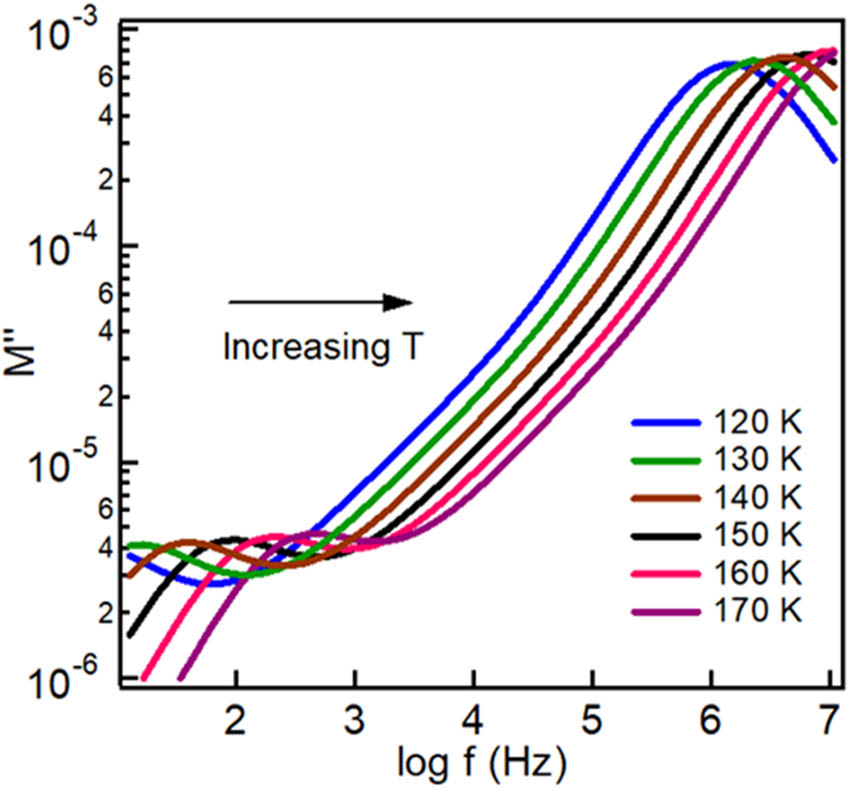
Figure 9
Modulus spectra of SPS-900 ceramics at selected temperatures.
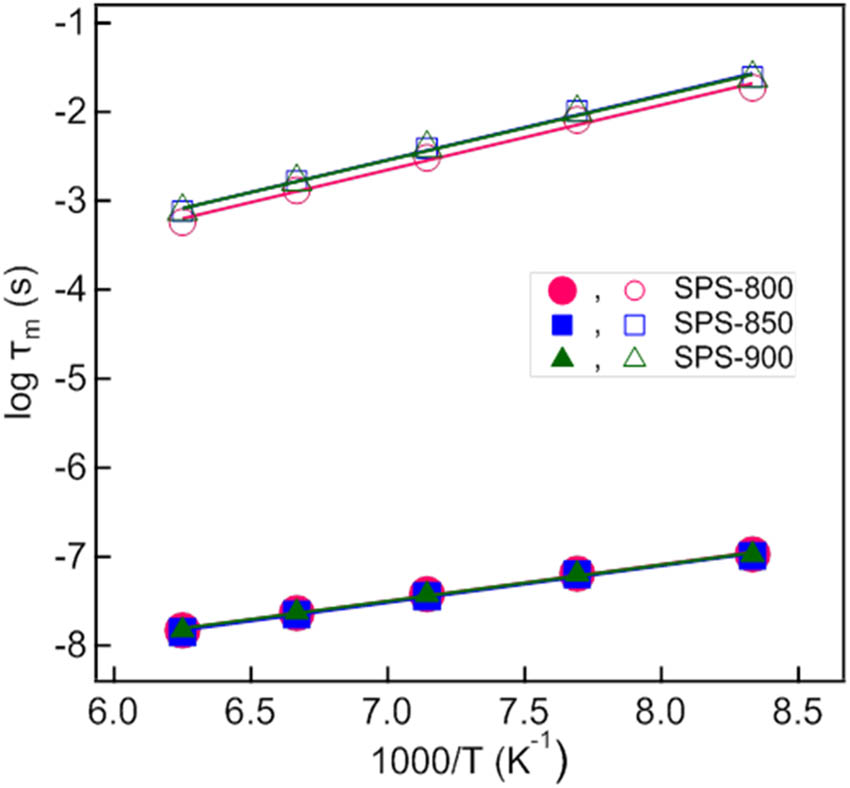
Figure 10
The temperature dependence of τ m of grains (open symbols) and grain boundary (closed symbols) of SPS-NBCTO ceramics.
4. Conclusion
NBCTO fine-grained ceramics were synthesized by mechanochemical milling followed by spark plasma sintering at 800, 850, and 900°C for 10 min, avoiding any heat treatment processes. The SPS process produced dense ceramics with fine grains (<400 nm) and phase-pure NBCTO at 900°C. All SPS samples showed colossal dielectric permittivity (ε′ ∼2.77 × 10⁴–3.96 × 10⁴) across broad frequency and temperature ranges, with only minor dependence on sintering temperature. Impedance analysis confirmed an internal barrier layer capacitance mechanism, arising from semiconducting grains and more resistive grain boundaries. Grain conductivity and activation energies were comparable to those of CCTO-based systems, while grain boundary conductivity reached exceptionally large values, three to six orders of magnitude higher than in conventionally sintered NBCTO ceramics, accompanied by unusually low activation energies of 0.192–0.211 eV. This enhanced conduction, likely linked to oxygen vacancies, resulted in high dielectric losses. The findings demonstrate that SPS is an efficient route to dense, fine-grained NBCTO ceramics with colossal dielectric constants, though strategies to suppress grain boundary conduction are essential for improving dielectric performance in practical applications.
Funding information
This work was supported by the Deanship of Scientific Research, Vice Presidency for Graduate Studies and Scientific Research, King Faisal University, Saudi Arabia (Grant No. KFU260665).
Author contributions
Conceptualization, M. M. A.; methodology, M. M. A., A. A., M. A. A., and H. M. K.; formal analysis, M. M. A., Y. Y., and H. M. K.; investigation, M. M. A., Y. Y., A. A., M. A. A., and N. M. S.; resources, M. M. A. and Y. Y.; data curation, N. M. S. and H. M. K.; writing – original draft preparation, M. M. A.; writing – review and editing, M. M. A., Y. Y., and H. M. K.; project administration, M. M. A.; and funding acquisition, M. M. A.
Conflict of interest statement
The authors declare no financial or non-financial competing interest.