
1. Introduction
The world has experienced significant population growth in recent years, which has increased the use of water for activities such as industry, agriculture, medicine, and basic human needs [1]. UNESCO predicts that the population will face water scarcity, estimating that from 930 million people in 2016, it will increase by an average of 1,700 and 2,400 million people in 2050 [2]. Due to this alarming situation, several materials have been and are being developed to help solve this situation [3]. The goal is to reuse contaminated water for non-consumable daily tasks. Oil is one of the most common contaminants [4]. Methods for oil–water remediation include gravity filtration, electrochemical, adsorption, membrane filtration, and centrifugation [5]. Filtration membranes have the following advantages over the other methods mentioned above: they can be reused, are easy to install and operate, and consume less energy compared to thermal methods [6]. The development of environmentally friendly and sustainable materials has gained global importance due to the increasing need for green technologies and the minimization of plastic waste. The incorporation of natural textiles, fibers, and biofillers (e.g., cotton, jute, sisal, and Luffa acutangula) into composite materials is a promising approach to address these environmental challenges. The incorporation of natural fibers improves the mechanical performance of composites, making them a viable alternative to synthetic fibers due to their cost-effectiveness and environmental benefits [7]. Among these, cotton has emerged as a promising candidate for the development of water–oil separation membranes due to its ease of manipulation and adaptability. Its properties can be further enhanced by the addition of chemical treatments [8]. Hydrophobicity is one of the most important properties for their development, which originated from the observation of the droplets suspended on the surface of the leaves of the lotus flower, which allowed them not to get wet. This effect was called “lotus flower” and was discovered by Neinhuis and Barthlott in 1977 [9]. The first superhydrophobic material was created using fractals and an alkyl dimer, obtaining a water contact angle of 174°; Shibuichi et al., in their study, imitated the hierarchical structures of nature and integrated them into the material [10]. Hydrophobicity can be achieved by developing materials with micro- and nanostructures that contribute to the roughness of the material in combination with low-energy materials such as polydimethylsiloxane (PDMS). This polymer is a good candidate because it is non-toxic, chemically inert, easy to handle, and inexpensive [11]. These polymeric membranes, in combination with substrates such as sponges, textiles, and copper mesh, have a very special performance because of their ease of processing and low cost [12]. Most of these membranes are made in combination with transition metals; gold, silver, copper, and zinc are widely used because they provide hydrophobicity and can be incorporated as particles or nanoparticles into the membranes; their high surface area helps to improve the adsorption of oil and water, and they are resistant to abrasion [13].
The textile was prepared by immersing in a solution of different concentrations of PDMS and n-hexane, after which the sample was heated in an oven at 120°C for 10 h. A hydrophobic material was obtained that even showed ice-phobic properties; its contact angle was 150°; this textile can be used for the separation of water and oil [14]. The properties of PDMS are used to increase its degree of hydrophobicity. Zheng et al. used tannic acid, PTA, and chitosan on the surface of a cotton textile and obtained a contact angle of 139°; however, to further increase its value, they added PDMS and obtained a contact angle of 153° [15]. One of the most used methods is the sol–gel; TEOS and PDMS were used by Abu Bakar et al. They coated cotton and polyester textiles and obtained contact angles of 131.49° and 130.5°, respectively. It is noteworthy that textiles coated only with SiO2 (particles derived from the hydrolysis of TEOS) recorded an angle of 116.88°. The authors mentioned that improvements in durability during washing cycles are still needed [16].
Recently, copper sulfide has been included in this line of research, with different ways of synthesizing copper sulfide; for example, copper sulfide was synthesized by the solvothermal method and used in a cotton textile and obtained a contact angle of 157°, which were used in different applications [17]. A cotton textile was impregnated with stearic acid and copper sulfide to obtain a good filtration efficiency [18]. Not only have cotton membranes been studied, but there are also studies on copper meshes, where using a hydrothermal treatment, copper sulfide microparticles were grown on the mesh, which can be recycled [19].
Within the family of polymers is poly(methylhydrogen)siloxane; this polymer was modified in the chains, causing a very low surface energy and thus obtaining a contact angle of 141.7° [20].
Another example of using copper sulfide is by using a low-temperature reaction, but with a considerable number of reagents, copper sulfide (CuS) was obtained, which was placed on a cotton textile; this membrane had oil wetting [21]. Zhao and coworkers functionalized a textile by a simple reduction of in situ to roughen the fiber, which proved to be good for water and oil separation [22]. Recently, a cotton@PTA@CuS@PDMS membrane was developed, which retained the CuS and PDMS more firmly on the textile fibers. It proved to be good in the separation of water and oil and its only drawback is the time and reagents to carry it out [23].
Copper sulfide nanostructures have attracted attention due to their properties for various applications. It is important to mention the differences that exist between hierarchical structures and nanostructures: their performance, cost, and cytotoxicity. In terms of performance, hierarchical structures can be processed to different sizes, but this limits their surface area, unlike nanostructures that have a larger surface area and, therefore, can penetrate smaller pores. In terms of filtration, for the separation of contaminated water, this efficiency is usually better compared to what can occur with structures [24,25]. The key to this efficiency is morphology. Nanostructures could be more expensive as they require more complex and advanced processes and specialized equipment [26,27]. Copper compounds in both micro- and nano-sizes exhibit cytotoxic effects, but their effects vary significantly with particle size [28]. Nano-sized copper particles exhibit higher cytotoxicity than their micro-sized counterparts due to their increased surface area, greater reactivity, and enhanced cellular uptake. This leads to increased oxidative stress, DNA damage, and apoptotic cell death [29]. Hierarchical structures have lower reactivity, which may result in lower cytotoxicity. However, their limitation is their size, which limits their interactions with cells and tissues in textile applications. However, the decrease in size of nanostructures can result in high reactivity, which facilitates interactions with cells and tissues, thereby increasing their cytotoxicity [30,31].
Micro-sized particles, while toxic, tend to induce less severe biological responses, primarily due to their lower bioavailability and reduced penetration at the cellular level. The enhanced reactivity of nano-copper can lead to increased production of reactive oxygen species, resulting in inflammation and cytotoxic effects in various cell types. The findings highlight the need for careful evaluation of nano-copper applications in biomedical and industrial settings to mitigate potential health risks [32].
This research aims to compare copper sulfide-based membranes with hierarchical structures to those with nanostructured morphologies, using a cost-effective synthesis approach with minimal by-products and a simple PDMS immersion method to determine which offers superior water and oil filtration efficiency.
2. Experimental
2.1. Materials
The water and oil remediation membranes were prepared from 9 cm diameter cotton fabric with 21 weft and 16 warp threads with an area of 1 cm2 and a weight of 160 g cm−2. Copper sulfate pentahydrate (Kopper blu, USA), steam distilled purified water (Tippies brand), acetone (FCETQ-82-05 REV.1, Specialty Chemicals Development), acetic acid, sublimed sulfur (lot number W01C031), PDMS (Sylgard 184 Silicone Elastomer Base, USA), and isopropyl alcohol (VWR BDH CHEMICALS, USA, lot: 0000260262) were used.
2.2. Copper synthesis
Copper was synthesized by reduction–oxidation reaction (REDOX). About 700 ml of purified water and 3.5 g of copper sulfate pentahydrate were mixed in a flask, and an iron electrode with dimensions of 5 cm × 2 cm was introduced, with a reaction time of 24 h. After this time, the copper obtained was cleaned with 15 ml of acetone and 20 ml of acetic acid to remove the impurities, and finally, it was dried on a plate.
2.3. Synthesis of hierarchical structures of copper sulfide
The hierarchical structures of copper sulfide were synthesized by the solid vapor method. One gram of copper (previously obtained) was dispersed in a container, and two beakers containing 80 ml of purified water each and a beaker with 6 g of sublimated sulfur, covered with aluminum and sealed with aluminum tape, were placed in an oven at 110°C for 24 h. After the duration, the hierarchical structures of copper sulfide were obtained [27].
2.4. Synthesis of copper sulfide nanostructures
The previously synthesized hierarchical structures were subjected to high-energy mechanical milling to obtain copper sulfide nanostructures. One gram of copper sulfide hierarchical structures was processed in a high-energy milling mixer/mill (SPEX Sample Prep 8000 M, New Jersey, USA) using a ceramic vial with zirconium balls. Milling was performed in two cycles of 15 min each, with two pauses of equal duration to prevent excessive heat buildup in the milling chamber.
2.5. Synthesis of membrane solution
For the precursor solution of the treatment, 0.5 ml of PDMS and 11.75 ml of isopropyl alcohol were mixed in an ultrasonic bath (Ultrasonic 8893) for 15 min at a frequency of 50 kHz and a power of 130 W. Then, different concentrations were used for each membrane.
2.6. Immersion
A 9 cm diameter fabric disk was immersed in the previously prepared solution to form the sample, which was named cotton@PDMS. To this base solution, 1% (w/w, 0.12 g), 2% (0.25 g), and 4% (0.5 g) of copper sulfide was added to create an additional membrane, labeled H 1%, H 2%, and H 4%, corresponding to copper sulfide microstructures, and N 1%, N 2%, and N 4% corresponding to copper sulfide nanostructures. The copper sulfide was attached to the fabric surface via the PDMS matrix, which acts as a binder to disperse and immobilize the particles on the fabric surface. For the curing process, the immersed membranes were first placed on a plate at 80°C for 5 min to allow initial setting, followed by drying in an oven (Model 20AF Lab Oven) at 160°C for 1 h to promote strong adhesion and structural stability of the coating.
2.7. Characterizations
The morphological characterization of the copper powder, copper sulfide, and membranes (cotton@PDMS, hierarchical structures, and nanostructures) was performed using a scanning electron microscope (SU5000, Hitachi, Tokyo, Japan). The crystal structures of the phases present in the copper powder and copper sulfide were analyzed using a Panalytical X-ray diffraction (XRD) (model X’pert Powder diffractometer) with radiation from a copper filament with k-α of 1.5406 Ǻ. The analysis was performed in 0.016 steps with a time per step of 30 s. The functional groups present in the copper sulfide, cotton@PDMS, and membranes were determined using a Nicolet 6700 Fourier transform infrared (FTIR) spectrometer. The analysis was performed with 64 scans in the range of 600–4,000 cm−1. The degree of hydrophobicity of the cotton@PDMS and membranes was studied using a goniometer (KRUSS, DSA 30).
2.8. Effect of pH on the contact angle
The average contact angle of each membrane was measured using a goniometer (KRÜSS, DSA 30) after exposure to droplets with different pH values – pH 4 (acidic), pH 7 (neutral), and pH 10 (alkaline) – to determine the chemical stability of the membranes.
2.9. Water and oil filtration
Water and oil were used in a 1:1 ratio for water and oil filtration. The water was dyed with red vegetable dye to create a contrast in the mixture, and a test tube with each membrane was placed in it and held on top. Filtration was done by gravity, and ten filtration cycles were performed for each.
3. Results and discussion
3.1. Scanning electron microscopy
The hierarchical structures of copper sulfide were synthesized by a REDOX method, followed by a solid vapor reaction, and characterized by scanning electron microscopy (SEM) to determine their morphology. Figure 1a shows the copper obtained by the redox reaction, where dendritic structures can be observed with thickened, filled arms, giving them a morphology reminiscent of soft cotton-like formations. After passing through the sulfidation process, a dendritic growth of hierarchical copper sulfide structures occurs, as shown in Figure 1b. These structures exhibit a dendritic morphology with open arms resulting from the reaction and growth mechanism of the sulfides. At its boiling point, water reacts with gases of the sulfur compound to produce sulfur ions (S2−), which are deposited on the copper powder. The copper ions (Cu⁺) then react with these sulfur ions to form copper sulfide compounds. This process drives the dendritic growth of the hierarchical structures as copper continues to react with the atmosphere of the system [27]. In Figure 1c, the exfoliation of these dendritic structures into flakes is observed. The flake formation results from the repeated collisions of zirconia spheres with the copper sulfide hierarchical structures during milling, fragmenting the material and producing the morphology shown in the micrograph.
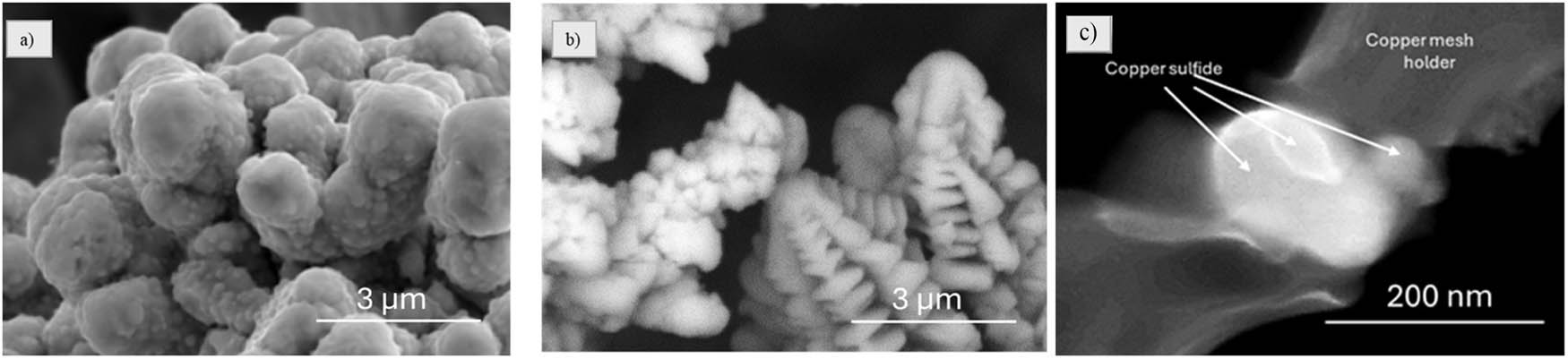
Figure 1
SEM images of copper (a), copper sulfide hierarchical structures (b), and copper sulfide nanostructures (c).
Figure 2 shows the visual appearance of the membranes. SEM images of the membranes synthesized by the dip-coating method at different copper sulfide concentrations are shown in Figure 3. The uncoated textile (cotton) was first characterized by SEM to observe its morphology, as shown in Figure 3a. This micrograph shows that the textile fibers are smooth and uniform in thickness, providing a baseline for comparison with the coated membranes (cotton: cotton@PDMS) and those with copper sulfide structures. The cotton@PDMS membrane was dip-coated with 4% PDMS. As shown in Figure 3b, the textile fibers absorbed the PDMS, resulting in a more solid and cohesive appearance compared to the uncoated textile.
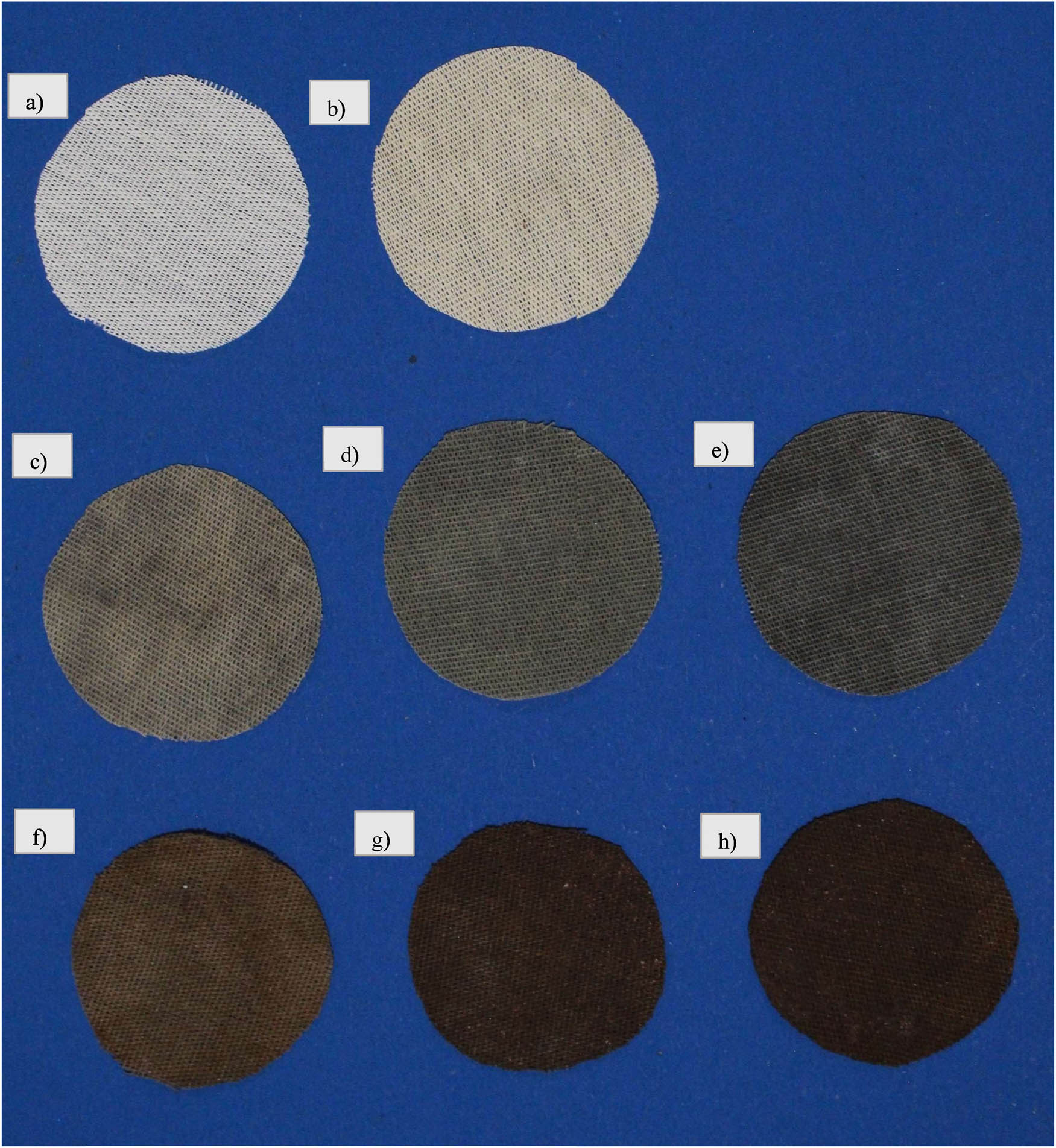
Figure 2
Photograph of membranes: (a) cotton, (b) cotton@PDMS, (c) hierarchical 1%, (d) hierarchical 2%, (e) hierarchical 4%, (f) nanostructures 1%, (g) nanostructures 2%, and (h) nanostructures 4%.
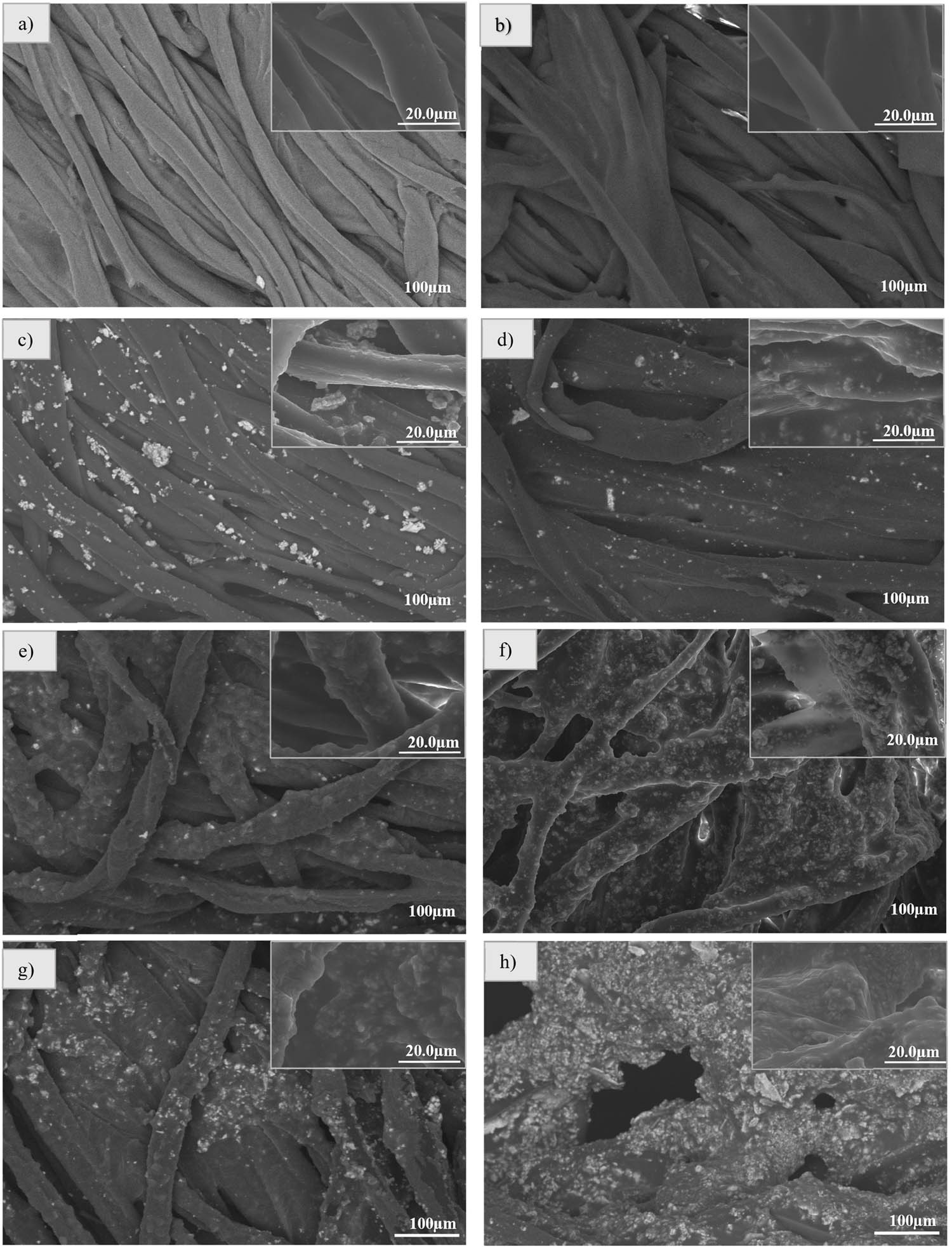
Figure 3
SEM images of membranes: (a) cotton, (b) cotton@PDMS, (c) hierarchical 1%, (d) nanostructures 1%, (e) hierarchical 2%, (f) nanostructures 2%, (g) hierarchical 4%, and (h) nanostructures 4%.
Each membrane was then dip-coated with a fixed amount of PDMS along with hierarchical or nanostructured copper sulfide at concentrations of 1, 2, and 4%, respectively. The membranes were labeled based on copper sulfide concentration and structure type: hierarchical structures are labeled H1, H2, and H4, while nanostructures are labeled N1, N2, and N4. Differences in copper sulfide distribution can be seen in the H1 membrane (Figure 3c) and the N1 membrane (Figure 3d). The hierarchical structures in H1 appear to be more abundant than the nanostructures in N1; however, at higher magnification, the copper sulfide is more evenly distributed throughout the fibers in N1. This difference in dispersion and adhesion of copper sulfide is primarily due to the different morphological characteristics of hierarchical structures versus nanostructures. Nanostructured copper sulfide tends to be more uniformly distributed across fiber surfaces due to its significantly smaller particle size and high surface area-to-volume ratio. This high surface area is a key nanoscale property that allows nanostructures to make more contact with textile fibers, increasing the likelihood of uniform adhesion and reducing particle clumping. In addition, the nanoscale size allows these particles to more effectively embed themselves into the micro-level pores and crevices of the fiber surface, forming a dense, stable coating. In the H2 and N2 membranes (Figure 3e and f), the copper sulfide coverage becomes more pronounced, and the fibers show increased thickness due to greater copper sulfide impregnation. Finally, in the H4 and N4 membranes, the copper sulfide adhesion is even more extensive, with N4 showing superior copper sulfide distribution over the fiber surfaces compared to H4. This suggests that nanostructured copper sulfide has a more uniform coverage potential at higher concentrations than hierarchical copper sulfide due to its finer morphology.
The different concentrations of hierarchical and nanostructured copper sulfide significantly affect the adhesion and distribution of copper sulfide particles on the textile fibers. The copper sulfide particles embed within and between the PDMS-coated layers, creating micro-scale roughness on the membrane surface. This surface roughness increases with higher copper sulfide concentrations, potentially enhancing the membrane properties for specific applications by increasing the surface area and texture.
3.2. FTIR spectroscopy
FTIR spectroscopy was used to characterize cotton, cotton@PDMS, and membranes with hierarchical structures and copper sulfide nanostructures (Figure 4). For cotton, bands at 1,030 and 1,058 cm−1 were identified that belong to primary and secondary alcohols with stretching vibrations in the C–O bonds, and a band at 1,162 cm−1 corresponding to a glycosidic bond with asymmetric stretching in the C–O–C bonds; these bands are representative of cellulose, the material of which the cotton fiber is composed, thus identifying the polymeric structure of cellulose. For the bands belonging to PDMS, there are Si–O–Si functional groups (siloxane group) corresponding to 1,000 and 1,060 cm−1 of asymmetric stretching; for the methyl group (Si–CH3) the band at 1,258 cm−1 corresponds to Si–C stretching, the band at 790 cm−1 corresponds to the Si–CH3 bending vibrations, and finally, the band at 2,950 cm−1 corresponds to an asymmetric C–H stretching. These bands were identified in the cotton@PDMS and the membranes with hierarchical structures and copper sulfide nanostructures. In the membranes with hierarchical structures and copper sulfide nanostructures, the band at 690 cm−1 is due to the bond between sulfur and copper. No significant differences were found between the membranes with nano- and hierarchical structures.
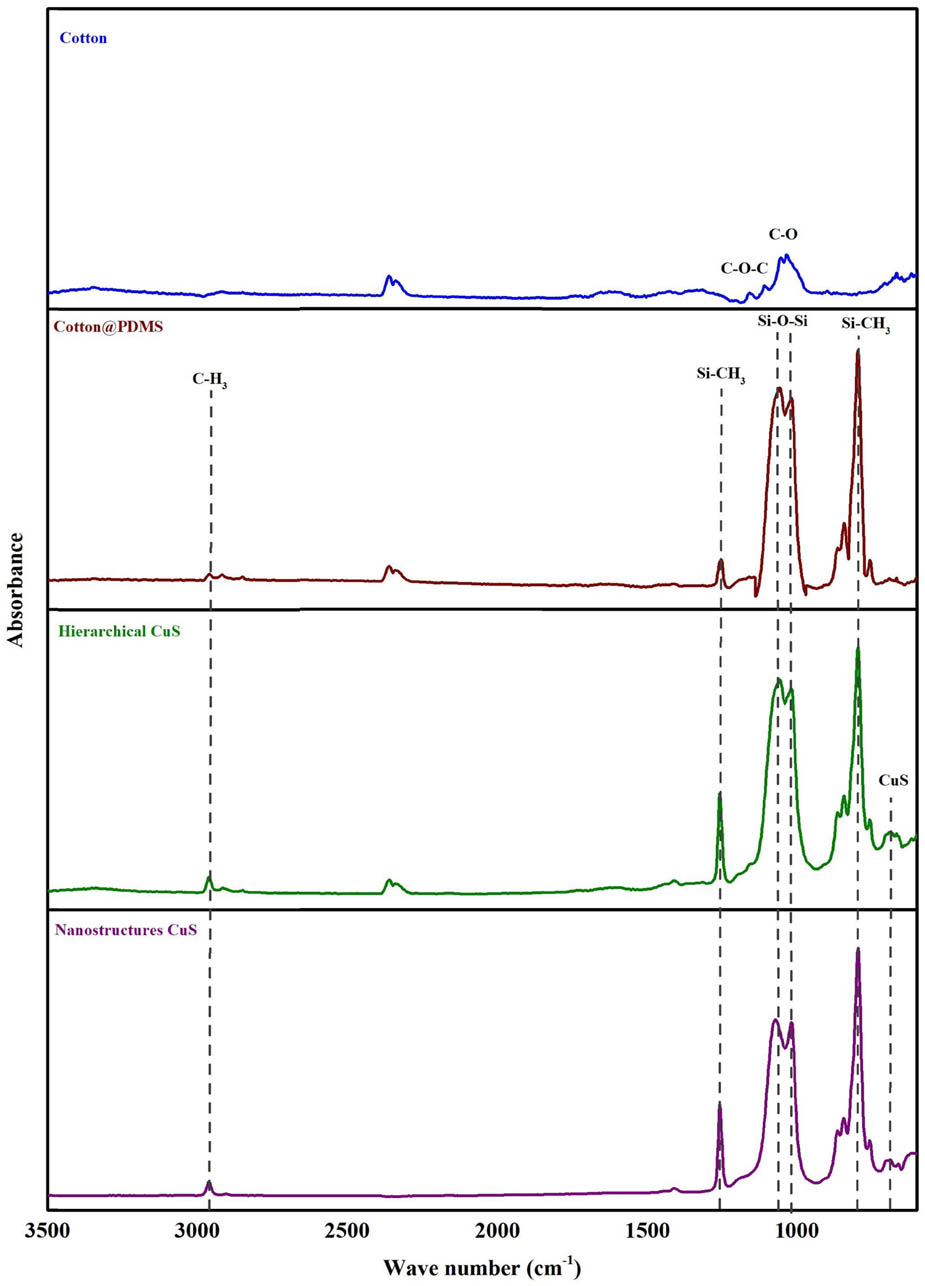
Figure 4
FTIR spectra of cotton, PDMS@Cotton, and PDMS@Cotton@Cu.
3.3. XRD
Figure 5 shows the diffraction patterns (XRD) of a) copper powder, b) copper sulfide structures, and c) copper sulfide nanostructures. Figure 5a shows three peaks in the characteristic diffraction pattern of copper at 43.317°, 50.449°, and 74.126°, corresponding to the (111), (200), and (220) crystalline planes, respectively. This indicates the presence of copper particles with a face-centered cubic structure (cubic system, space group: Fm-3m; a, b, and c = 3.6150 Å; α, β, and γ = 90°). The original diffraction patterns were obtained from the database corresponding to the reference pattern #01-085-1326. Figure 5b shows the XRD pattern of copper sulfide powder before grinding, which was identified using the reference pattern of the anilite phase (Cu₇S₄), #01072-0617. This phase is in equilibrium and belongs to the orthorhombic crystallographic system, space group Pnma (# 62), with lattice parameters a = 7.89 Å, b = 7.84 Å, and c = 11.01 Å, and angles α, β, and γ = 90°. The observed diffraction peaks correspond to the following planes: (210), (113), (004), (203), (123), (311), (132), (105), (313), (400), (224), (215), (142), (143), (306), (611), (062), and (407). The corresponding 2Ө values are 25.252°, 29.113°, 32.503°, 33.318°, 35.353°, 36.933°, 39.824°, 42.592°, 45.974°, 46.379°, 48.724°, 50.738°, 54.274°, 61.576°, 73.463°, 74.587°, and 77.567°, respectively. Figure 5c shows the diffraction pattern of the copper sulfide nanostructures. The pattern is the same as that observed before milling, except that the bands in the nanostructures are broader. Peak broadening is the characteristic of nanoscale materials and occurs due to the reduced crystallite size of the particles after high-energy milling. When particles reach the nanometer scale, their smaller crystal domains cause an increase in the peak width in XRD patterns. This broadening is due to the Scherrer effect, where diffraction peaks broaden inversely with crystal size. In addition, nanostructures often contain a higher concentration of surface atoms and lattice imperfections that contribute to peak broadening by introducing slight distortions in the crystal lattice. Together, these factors – reduced crystallite size and increased lattice strain – confirm the presence of nanostructures and distinguish them from larger, bulk hierarchical structures [33].
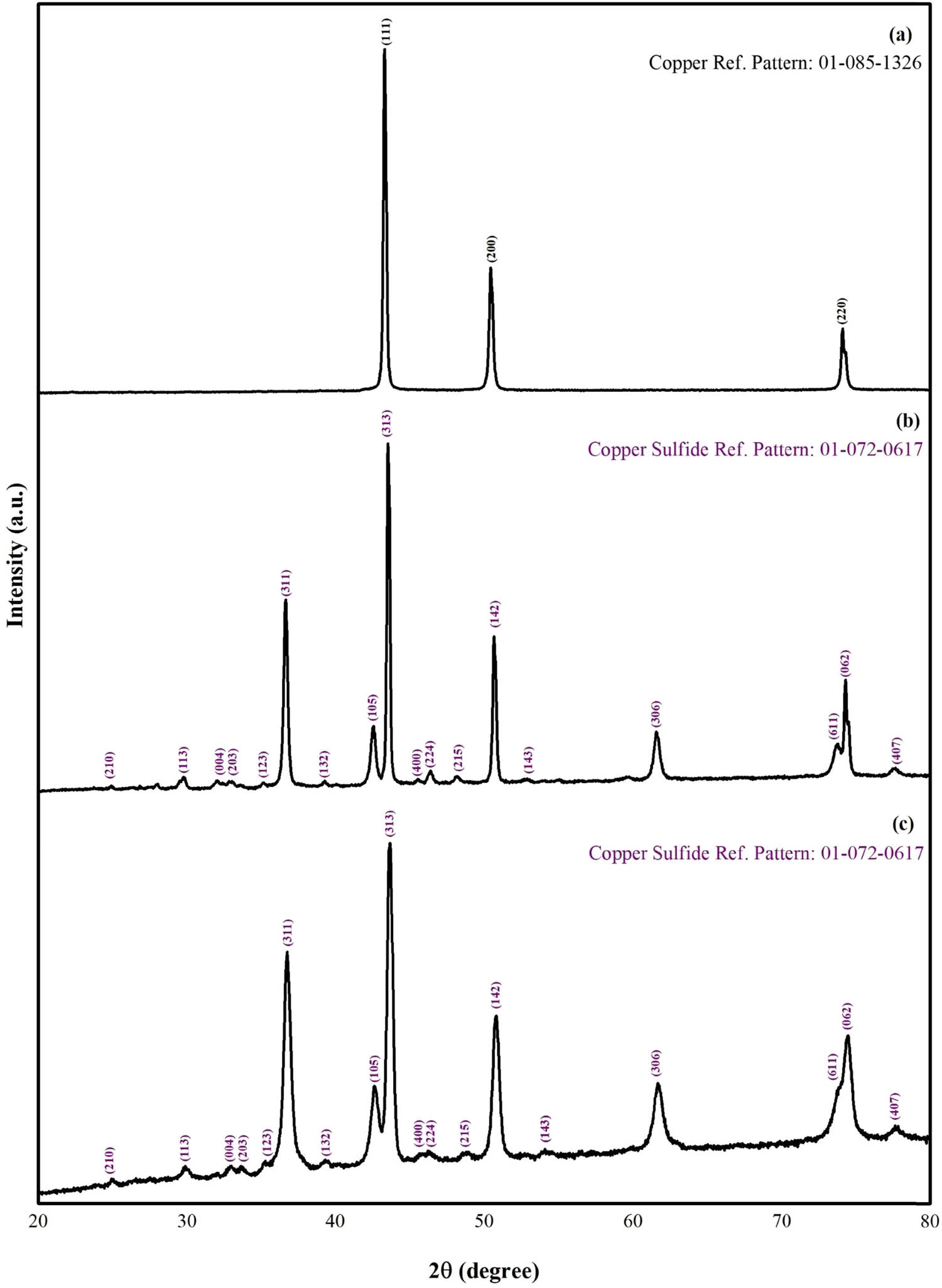
Figure 5
XRD characterization of (a) copper, (b) hierarchical CuS, and (c) CuS nanostructures.
3.4. Contact angle
The aim of the membranes developed in this work is to obtain hydrophobic materials, which depend on very important variables such as contact angle with water, surface energy, roughness of the material, chemical composition, and surface tension of the liquid to which the material is exposed. The membranes were synthesized using PDMS polymer, which has methyl groups (CH3), making it an apolar material. This provides a certain degree of repulsion to water due to its low interaction with water molecules. Another property of PDMS is that its surface energy is low, making it a good candidate for the development of hydrophobic materials. To compare cotton, cotton@PDMS, and hierarchical and nanostructured membranes, the contact angle was measured for 300 s at 30 s intervals.
Cotton is a hydrophilic material. The value at the beginning of the exposure of the textile to the water drop was 0°, and after 240 s, it became a superhydrophilic material with complete absorption of water; the same was taken to water filtration with oil, and the contact angle was measured again where its value was 0°, as predicted.
The PDMS incorporated in the membranes (cotton@PDMS) increased the value of the contact angle with the textile; it increased by 40° compared to the cotton, and after 300 s, its hydrophobicity decreased by 10%. Again, the contact angle was measured, and it decreased by 34.6, as shown in Figure 6(a). The membranes with a concentration of 1% were analyzed, as shown in Figure 6(b), where the membranes have a superhydrophobic value.
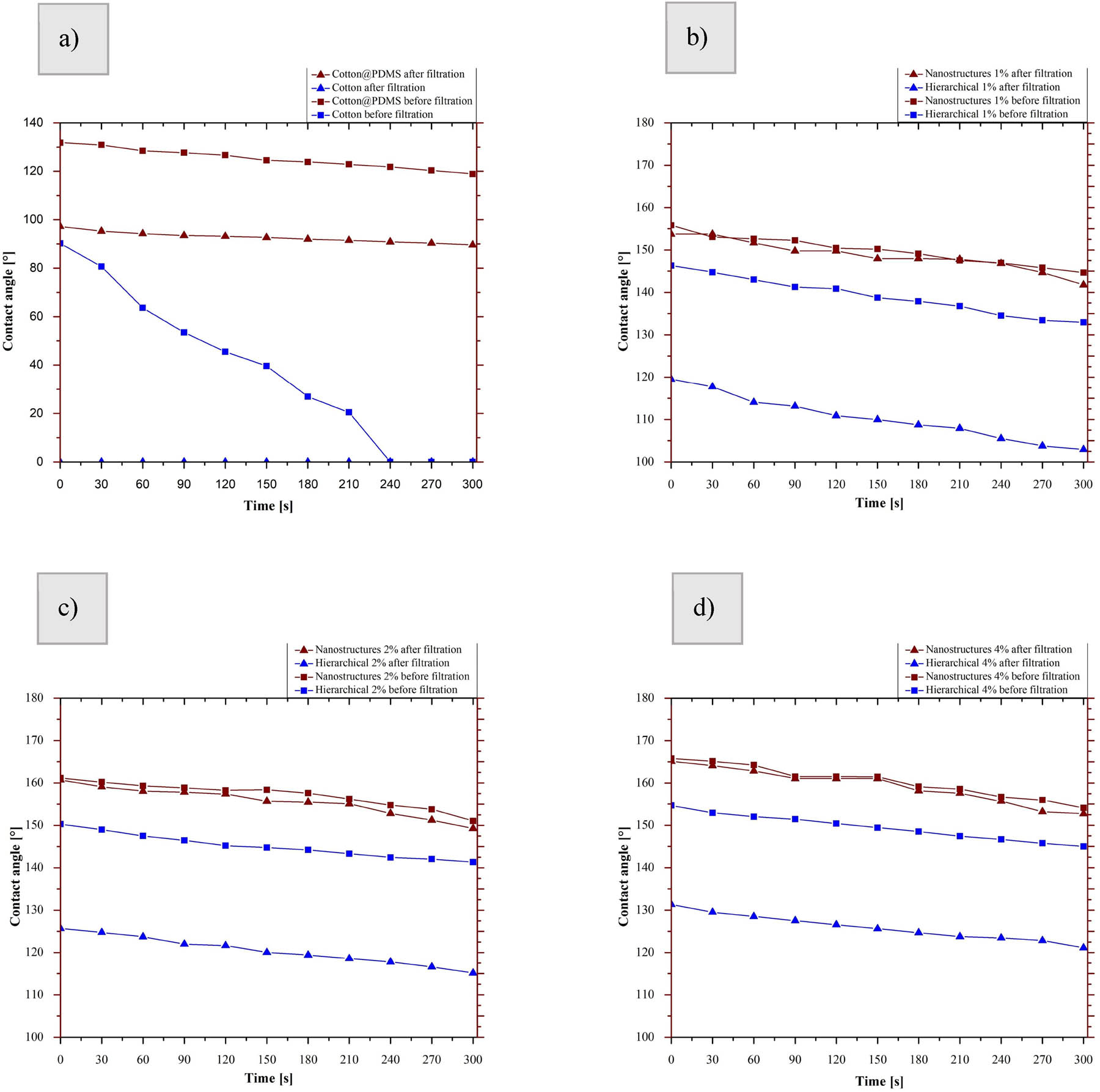
Figure 6
Comparison of the contact angle before and after filtration: (a) cotton and cotton@PDMS, (b) hierarchical membranes and nanostructures 1, (c) hierarchical membranes and nanostructures 2, and (d) hierarchical membranes and nanostructures 4.
The membranes with hierarchical structures reached a value of 146.3°, and there was only a decrease of 9.15% at the end of 300 s. After the sixth filtration, it decreased by 26.7°; this decrease in its water contact angle is less than that of the cotton@PDMS. The membranes with nanostructures at this concentration showed a value of 155.8° before filtration, and after its tenth filtration, its value was 153.7°, and the filtration cycles had no significant effect on its contact angle. Figure 6(c) shows the membranes at a concentration of 2%, and for the membranes with hierarchical structures, their values decreased by 16.16% after ten filtrations, while the membranes with nanostructures maintained their superhydrophobic values. After the tenth filtration, it decreased only by 0.94°, and the same membrane reported a degree of hydrophobicity of 149.2°. Membranes with 4% (Figure 6(d)) presented a better degree of hydrophobicity, and those with hierarchical structures have a value very similar to the membranes with nanostructures of 1% concentration, which presented a value of 154.6°, but these decreased to 131.3° after their ten filtration cycles. However, the membranes with nanostructures with 4% concentration reached a value of 165.8°, and after their ten filtration cycles, they maintained their contact angle, reporting a contact angle of 165.1°. The difference between the membranes is that those containing nanostructures retain more of their degree of hydrophobicity after their filtration cycles, promising to be good candidates for membranes that separate water and oil. All these values are within the range reported in similar studies [17,18,19,20,21,22].
The membranes with copper sulfide nanostructures have a higher degree of hydrophobicity because the nanostructures impart greater roughness to the membrane. When the dip coating method is used, a surface modification of the material occurs. PDMS, as already mentioned, provides the hydrophobicity of the material, which creates a copper layer on the cotton textile, but the roughness is due to the presence of hierarchical structures of copper sulfide. These structures, by their morphology, create certain bulges, and the nanostructures provide even more hydrophobicity because apart from the bulges, they are arranged on top of each other, creating as if there were some peaks on themselves, something similar to the effect present in lotus flowers, as shown in Figure 7. The images of water droplets and membranes are shown in Table 1.
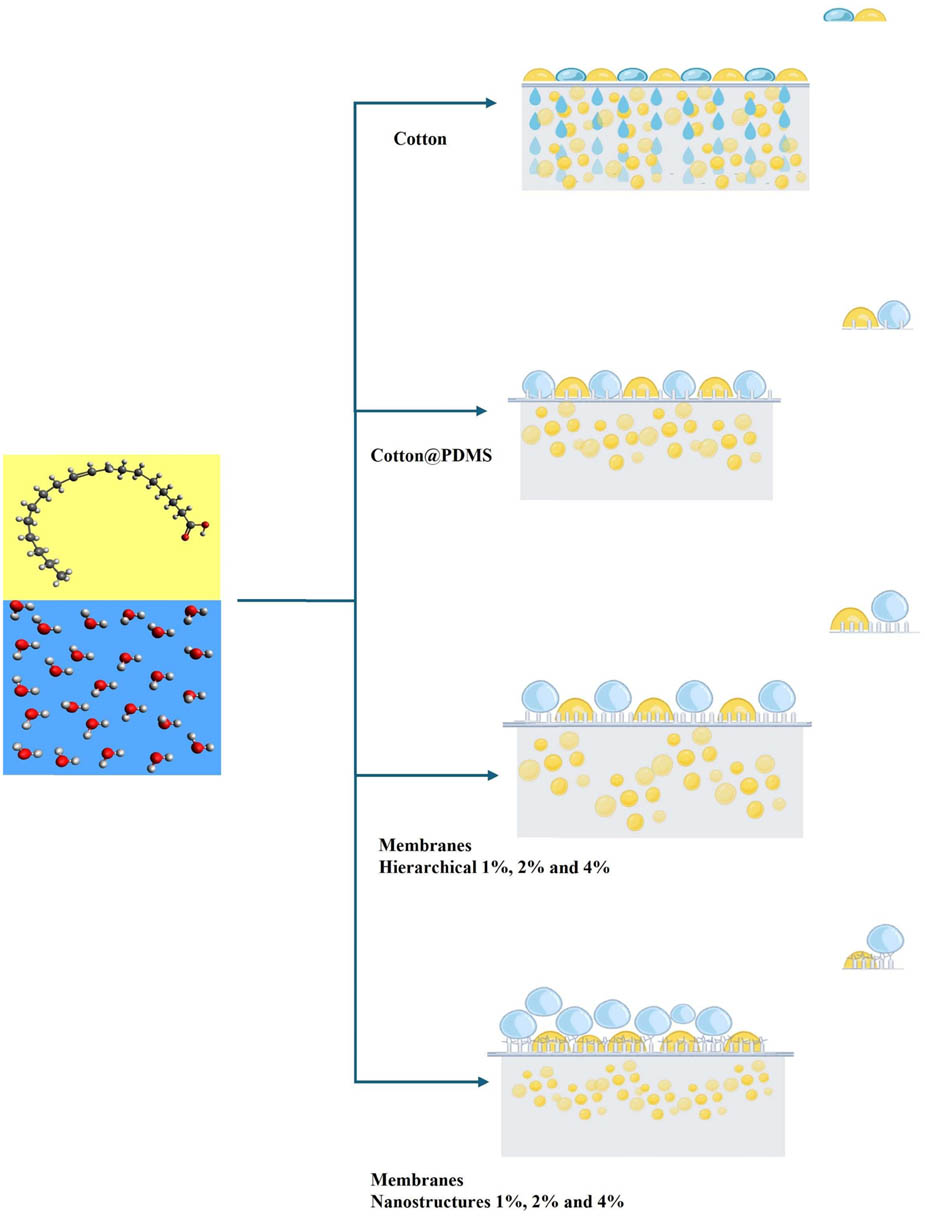
Figure 7
Schematic diagram of water and oil filtration behavior, cotton, cotton@PDMS, hierarchical membranes, and membrane nanostructures.


3.5. Effect of pH on the contact angle
As shown in Figure 8, the average contact angles of the membranes at different concentrations were similar at neutral pH, indicating that the membranes remained stable over a range of pH values. This is consistent with previous reports [34] showing that the membranes have a high degree of chemical stability, which contributes to their durability even when exposed to varying pH conditions.
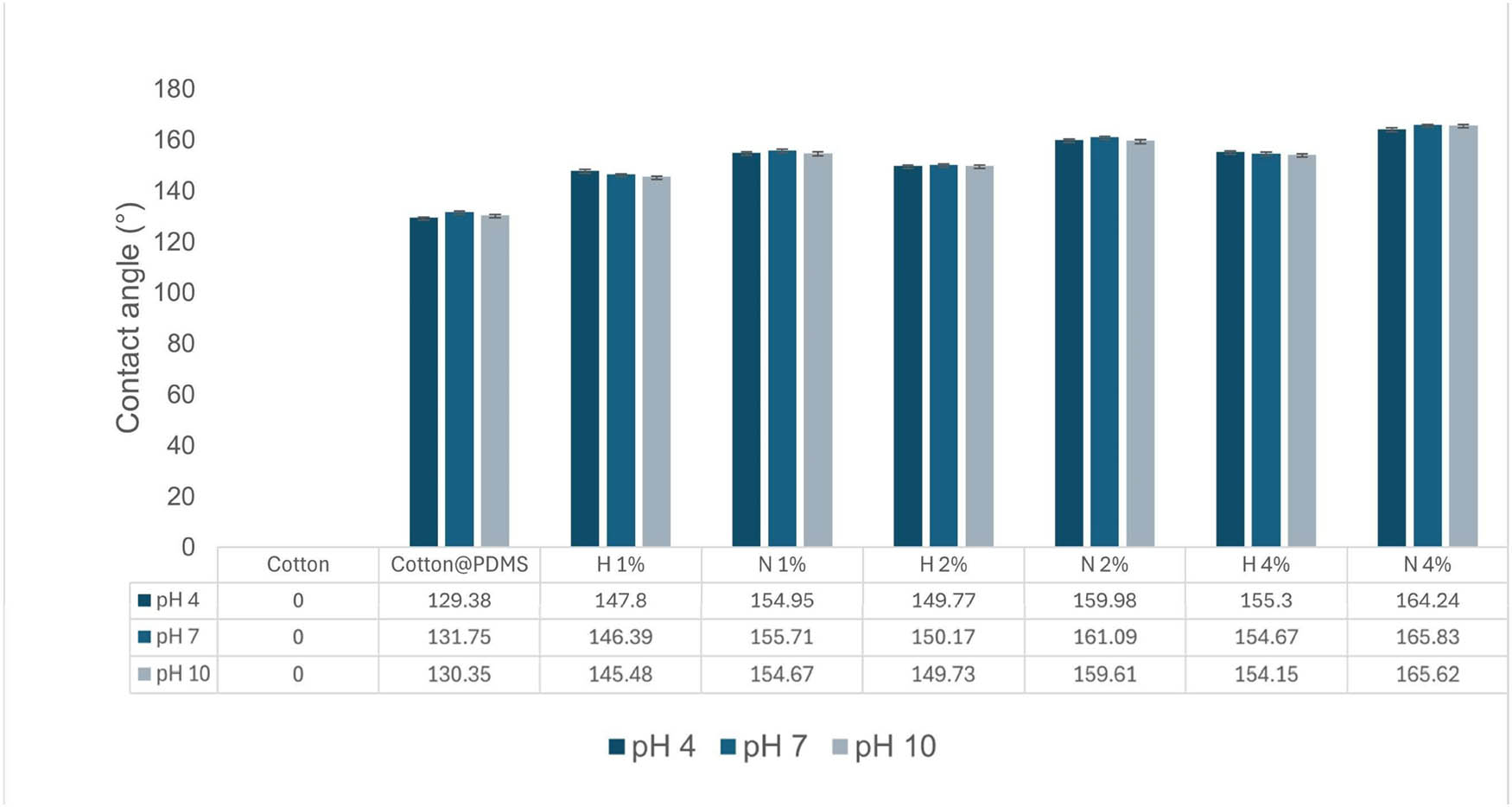
Figure 8
Contact angle measurements of membranes at varying pH and copper sulfide concentrations.
3.6. Water and oil filtration
The cotton membrane did not filter either water or oil, and they passed through without resistance, demonstrating that cotton alone does not have hydrophobic properties. The cotton@PDMS membrane achieved a filtration efficiency of 98.56% up to the fourth filtration cycle.
Membranes with hierarchical structures showed better separation efficiency compared to the cotton@PDMS membrane but performed less effectively than membranes with copper sulfide nanostructures. Membrane H 0.12 showed fouling and only reached the sixth cycle with a filtration efficiency of 93.44%. Meanwhile, membranes H 0.25 and H 0.5 achieved filtration efficiencies of 86.73 and 90.69%, respectively.
In contrast, membranes containing copper sulfide nanostructures showed consistently high filtration efficiencies, with values of 97.46, 98.05, and 97.47% for N 0.12, N 0.25, and N 0.5, respectively, as shown in Figure 9.
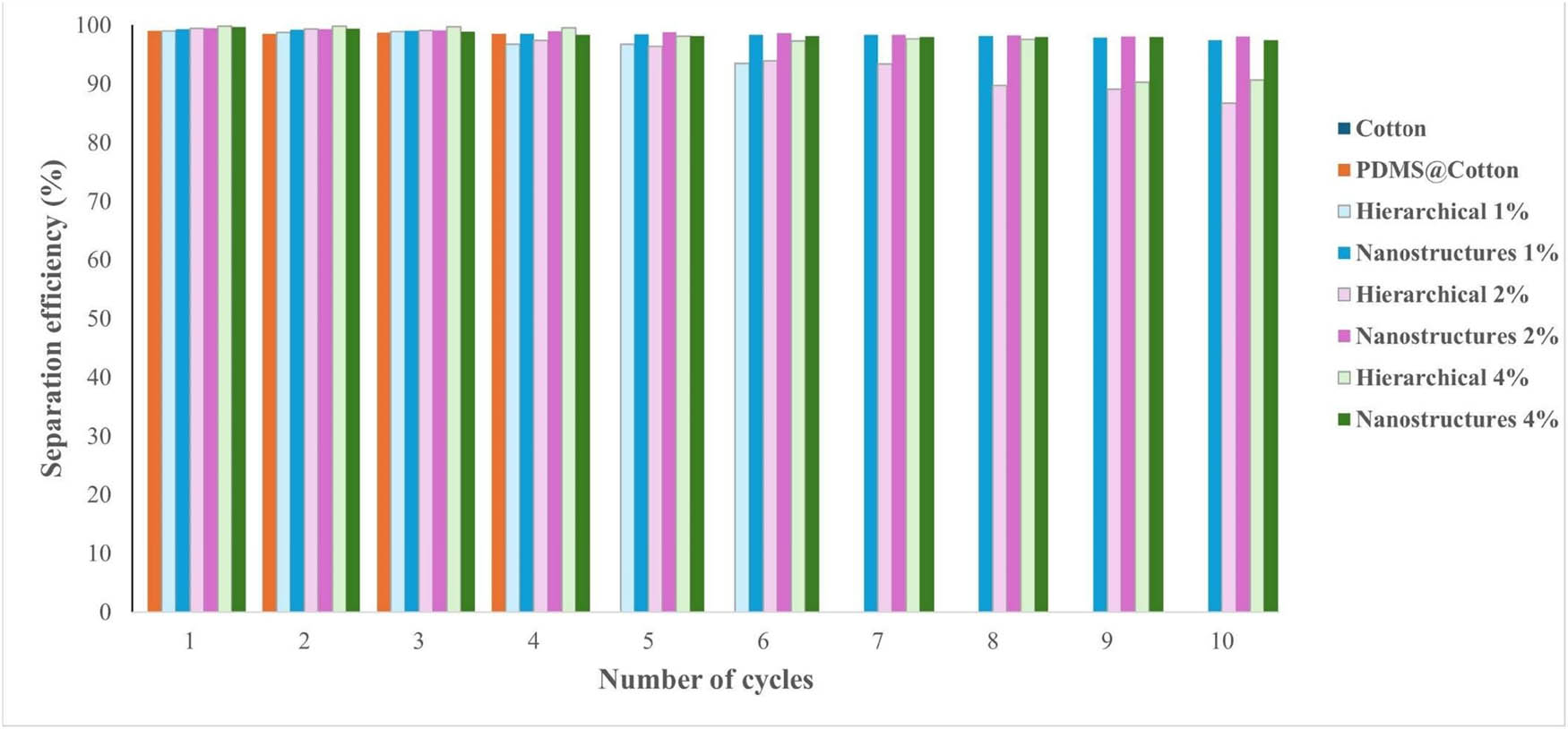
Figure 9
Separation efficiency.
It is important to note that some losses occurred during the process. These included oil adhering to the walls of the test tubes and water and oil residues on the walls of the flasks containing the mixture. Although all efforts were made to weigh all components accurately, such losses are unavoidable. Filtration efficiencies were calculated based on the difference between the initial weights of the water–oil mixture and the amounts of filtered oil and collected water. Despite these losses, the separation efficiencies achieved by the membranes are very promising.
3.7. Water-blocking efficiency
The water-blocking efficiency of the membranes is also recorded in Table 2. In this case, it was evaluated at the moment when water was filtered using the membranes; as already mentioned, the cotton membrane had no efficiency because the whole mixture was filtered. In the membrane with PDMS, it stopped filtering only oil and water was filtered after the fifth filtration. In the membranes with hierarchical structures, water was filtered after the sixth filtration, and the remaining membrane of 0.5 of hierarchical structures and the three membranes of nanostructures did not allow the passage of water. These values of water blocking efficiency are also related to the surface energy of the material; in this case, PDMS has a value of 21 mN m−1 [35], oil a value of 30 mN m−1, and water 72 mN m−1 on average [36]. The materials with lower surface energy tend to have less interaction with those with higher surface energy. As PDMS has lower energy than water, it does not allow water to pass through it, but the oil has a lower surface energy, so there is an affinity between them; hence, oil passes through the system.
3.8. Oil absorption on the membrane
During filtration, the membrane can become impregnated with oil. Several factors influence the uptake of the membranes: pore size, surface chemistry, surface structure, and operating conditions [37]. The membranes with each of the corresponding concentrations (1, 2, and 4% copper sulfide for the hierarchical and nanostructures) were weighed before and after each filtration to measure the oil absorption. Cotton, as shown in Table 2, had an absorption of 1.1764 g of oil after the first filtration, at which point it failed. In contrast, cotton@PDMS had an absorption of 2.0002 g and maintained efficiency over six filtration cycles. For the 1% copper sulfide concentration, the nanostructured membrane had a lower oil absorption, with a difference of 0.4186 g. For the 2% copper sulfide concentration, the difference was only 0.0197 g, indicating very similar absorption. For the 4% copper sulfide concentration, the difference was 0.7611 g of oil, as shown in Table 3. Membranes with nanostructures, owing to their more homogeneous distribution in the fibers, do not obstruct the membrane pores, allowing better flow through them. In contrast, membranes with copper sulfide nanostructures tend to have small deposits on the fibers, resulting in greater oil accumulation on the membrane due to the small spaces where the oil is trapped.
4. Conclusions
A comparison was made between membranes with hierarchical structures and those with copper sulfide nanostructures for the successful separation of water and oil. SEM revealed that the membranes treated with the PDMS solution and copper sulfide nanostructures had a more uniform coating than those treated with the PDMS solution and hierarchical structures. This difference occurs because the morphology of the nanostructures promotes better adhesion and uniform distribution across and between the cotton textile fibers, resulting in a more uniform surface. In contrast, the dendritic growth of the hierarchical structures resulted in localized, uneven distribution, which may affect the overall uniformity and performance of the membranes.
Contact angle measurements showed that membranes coated with nanostructures achieved higher hydrophobicity, with superhydrophobic angles ranging from 155° to 165°, depending on the copper sulfide concentration. In comparison, membranes treated with hierarchical structures exhibited slightly lower hydrophobicity, with contact angles ranging from 146° to 154°. This difference suggests that copper sulfide nanostructures provide a more hydrophobic surface, which improves separation performance.
In gravity-driven filtration tests, membranes treated with both types of structures initially showed high separation efficiencies of about 99%. However, after ten filtration cycles, the efficiency dropped to 96% for the nanostructured membranes and 87% for the hierarchical membranes. This decrease indicates that while both membranes are effective, the nanostructured membranes maintain their performance better over multiple uses due to their more stable and uniform coating. While the nanostructured membranes showed superior performance in terms of hydrophobicity and durability, the hierarchical method remains promising due to its simplicity and scalability. Its straightforward fabrication process makes it a viable approach for producing hydrophobic membranes, especially for applications where cost and ease of production are key factors. The methods used in this study are environmentally benign, with moderated byproducts of low toxicity, but still require proper disposal.
Acknowledgements
The authors gratefully acknowledge the support of CONACYT through the CF-2023-I-2737 grant and the CVU 1072110 scholarship.
Funding information
The authors gratefully acknowledge the support of CONACYT through the CF-2023-I-2737 grant and the CVU 1072110 scholarship.
Author contributions
Cynthia Almeda Torres: Conceptualization, Investigation, Methodology, Data Curation, Writing – Original Draft. Hortensia Reyes Blas: Methodology, Investigation, Writing – Review & Editing. Juan Francisco Hernandez Paz: Methodology, Formal Analysis, Writing – Review & Editing. Alfredo Villanueva Montellano: Resources, Investigation, Writing – Review & Editing. Imelda Olivas Armendariz: Supervision, Writing – Review & Editing. Claudia Alejandra Rodriguez Gonzalez: Supervision, Funding Acquisition, Project Administration, Writing – Review & Editing.
Conflict of interest statement
Authors state no conflict of interest.
Data availability statement
All data supporting the findings of this study are available within the article.