
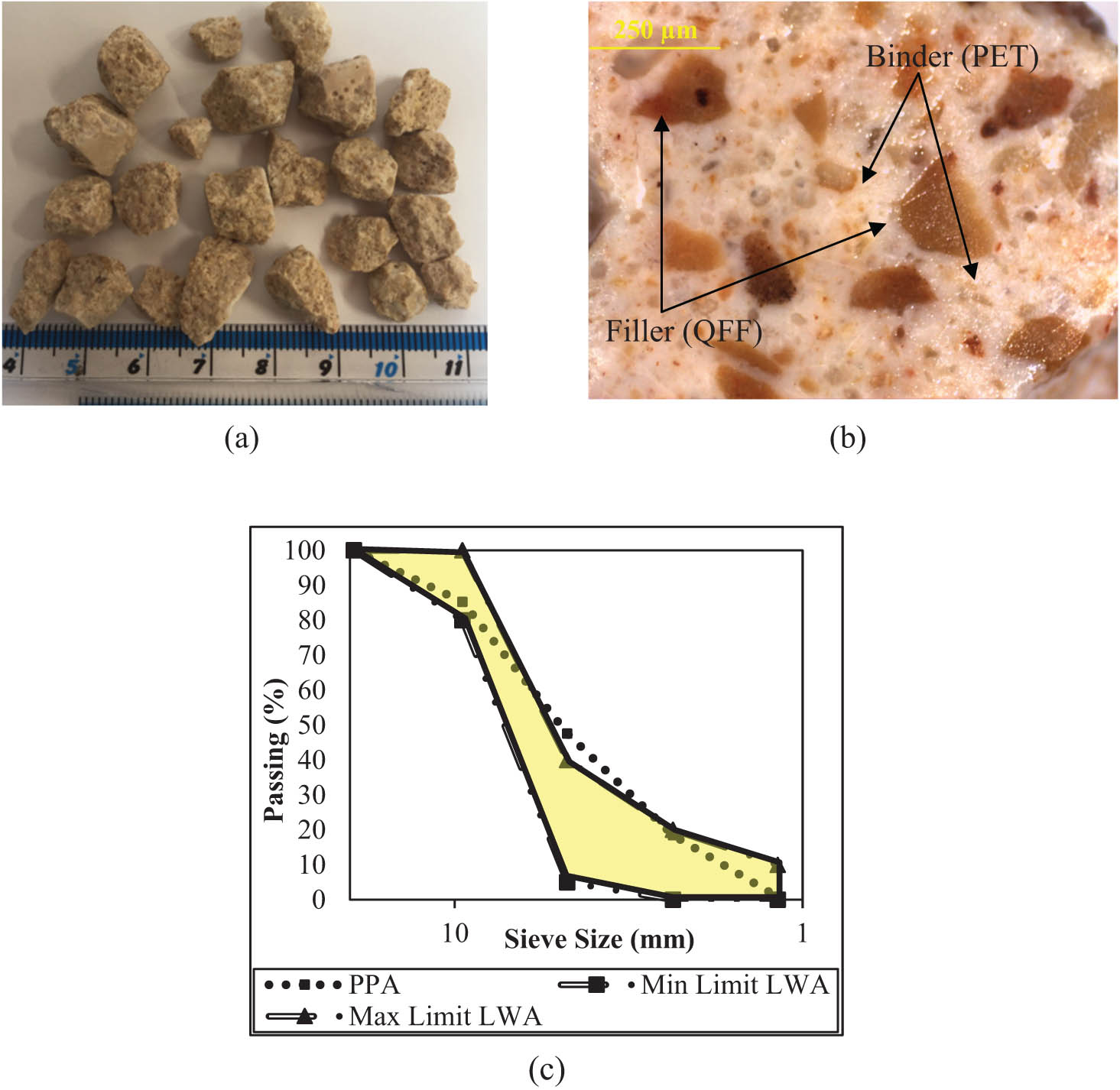
Figure 1
PPAs used in this study: (a) texture and physical appearance, (b) optical microscopic image, and (c) grading curve in comparison with the ASTM maximum and minimum limits of LWA [26].
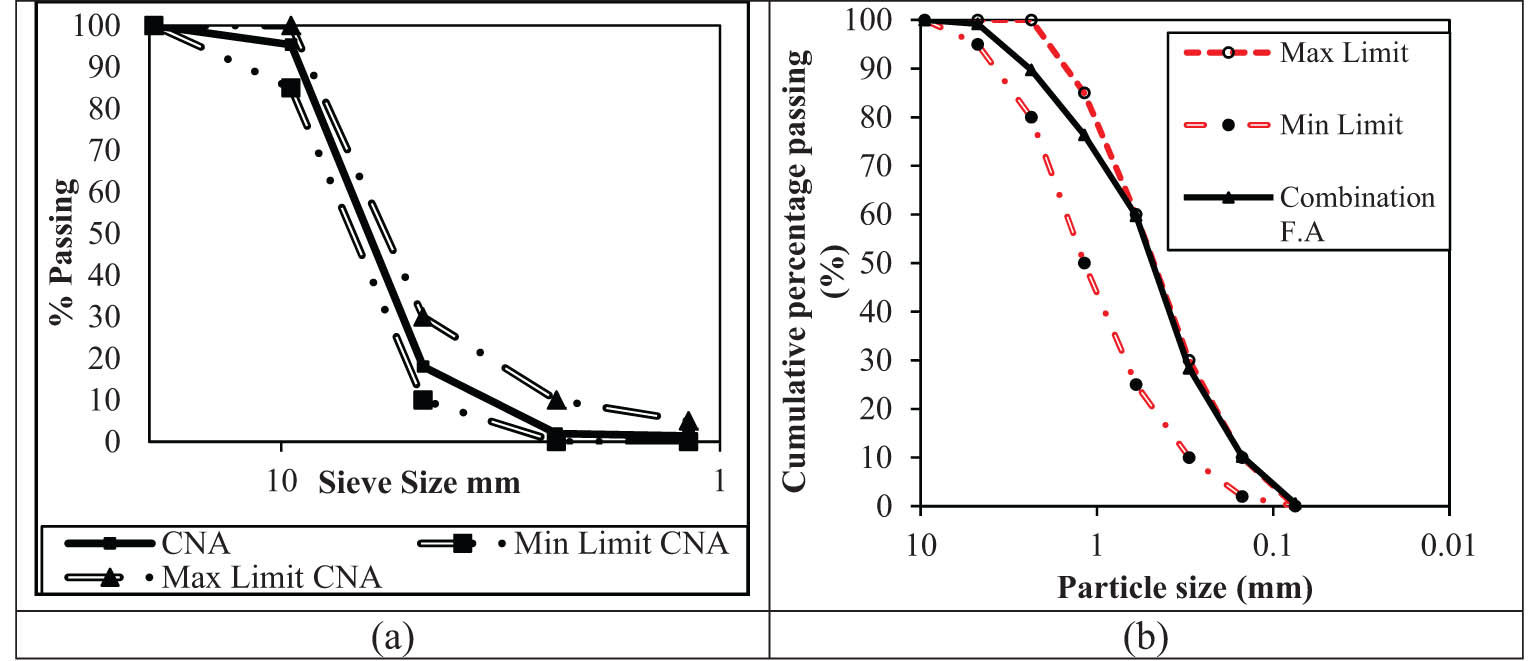
Figure 2
Grading curve of the (a) natural coarse and (b) fine aggregates in comparison with the ASTM limits [26].
Table 2
Mix proportions for concrete mixes used in the current study.
| Concrete series | W/C | Total water | Free water | Cement | Fine aggregate | Coarse aggregate | |
|---|---|---|---|---|---|---|---|
| PPA | CNA | ||||||
| kg/m3 | |||||||
| CN | 0.50 | 240.3 | 225 | 450 | 880 | — | 688 |
| PPAC25 | 239 | 847 | 141 | 516 | |||
| PPAC50 | 237.6 | 815 | 282 | 344 | |||
| PPAC75 | 236.2 | 782 | 423 | 172 | |||
| PPAC100 | 234.8 | 750 | 565 | — | |||
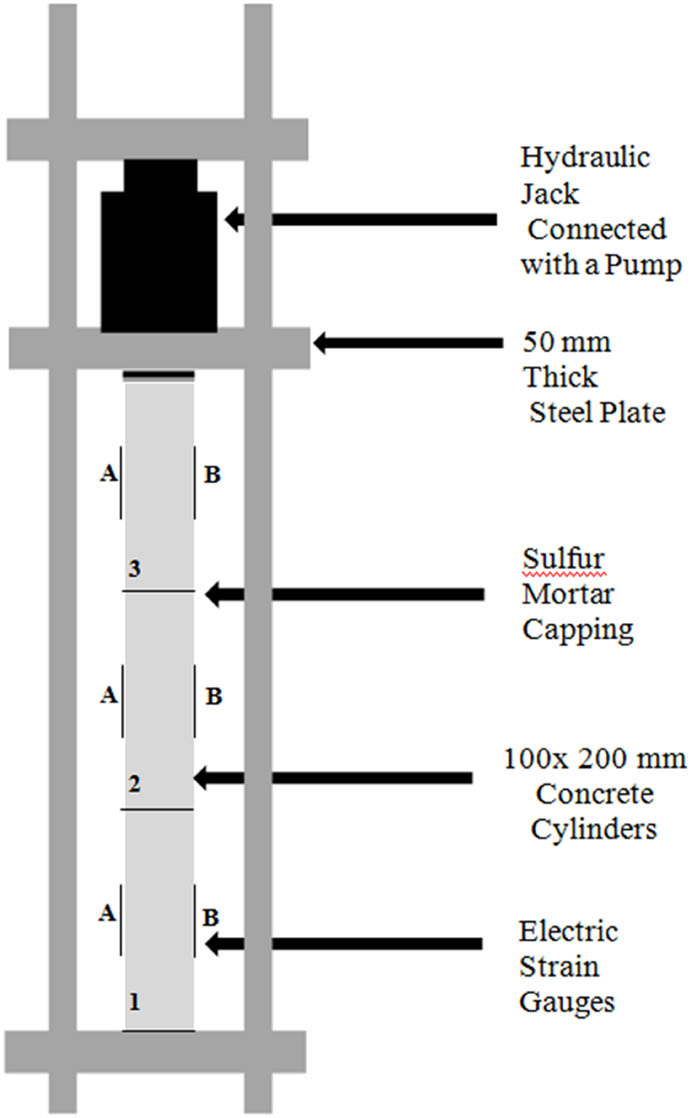
Figure 3
Creep test setup.
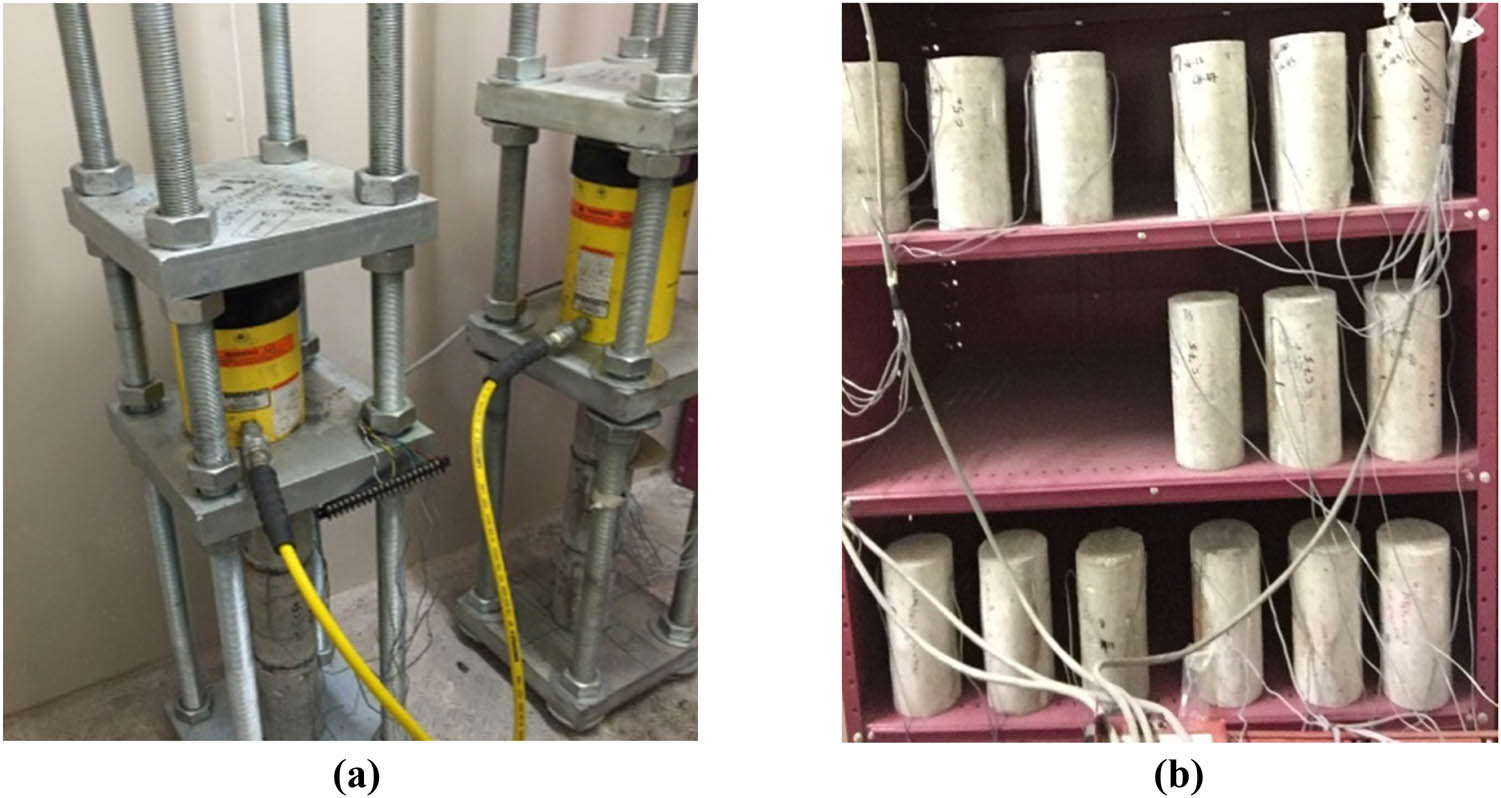
Figure 4
Creep setup with (a) loaded sample and (b) unloaded samples.
Table 3
Major mechanical properties for all the concrete series
| Sample | Dry density (kg/m3) | Compressive strength (MPa) | Tensile strength (MPa) | Flexural strength (MPa) | Modulus of elasticity (GPa) | Poisson ratio | Abrasion-weight loss (g) |
|---|---|---|---|---|---|---|---|
| CN | 2,183 | 41.8 | 3.58 | 5.42 | 27.82 | 0.25 | 0.40 |
| PPAC25 | 2,086 | 35.3 | 3.32 | 5.24 | 20.58 | 0.28 | 0.60 |
| PPAC50 | 1,995 | 31.7 | 2.42 | 5.04 | 15.06 | 0.38 | 0.61 |
| PPAC75 | 1,896 | 30.4 | 2.36 | 4.47 | 10.66 | 0.39 | 0.63 |
| PPAC100 | 1,777 | 30.2 | 2.25 | 3.99 | 10.14 | 0.39 | 0.66 |
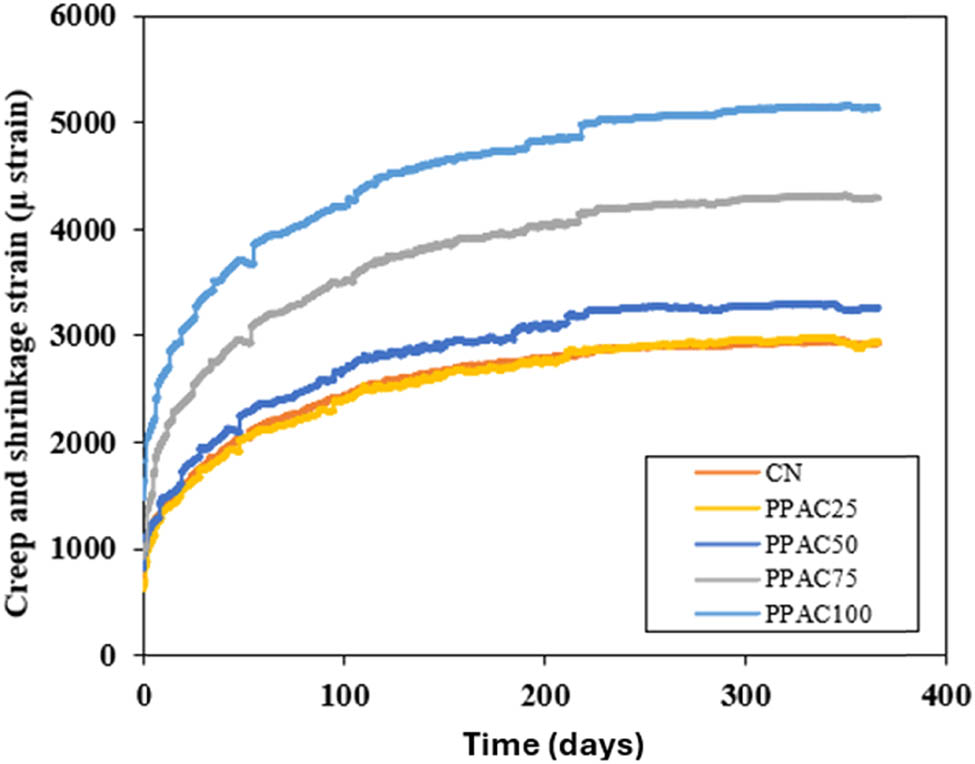
Figure 5
Results of time-dependent strain for loaded specimens of PPACs and CN.
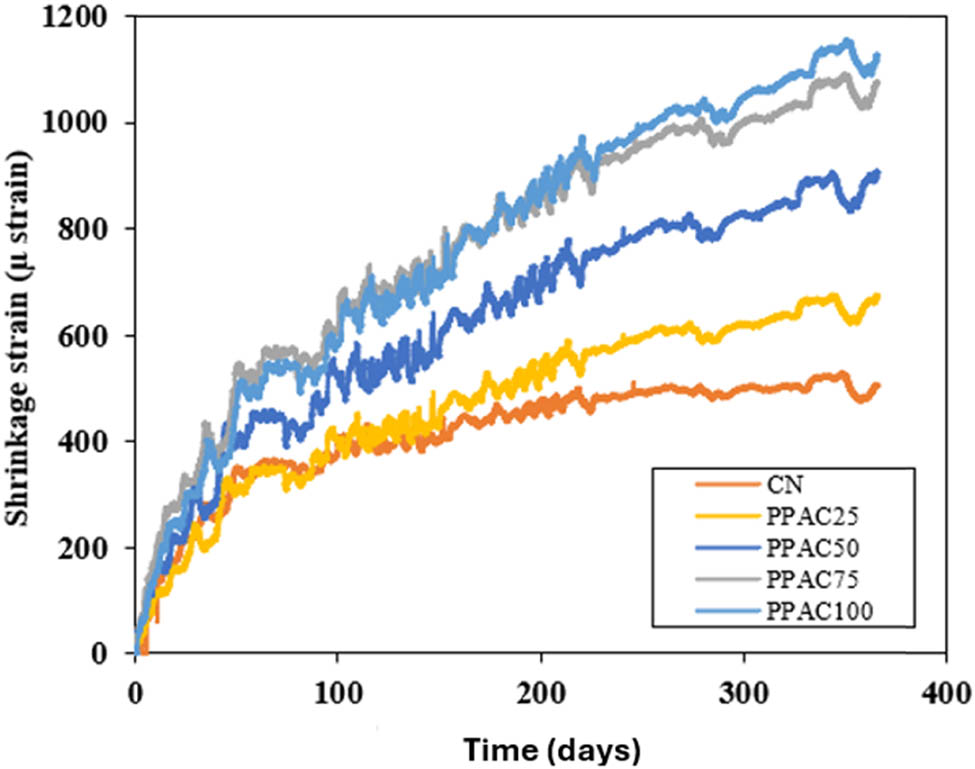
Figure 6
Results of shrinkage strain for unloaded specimens of PPACs and CN.
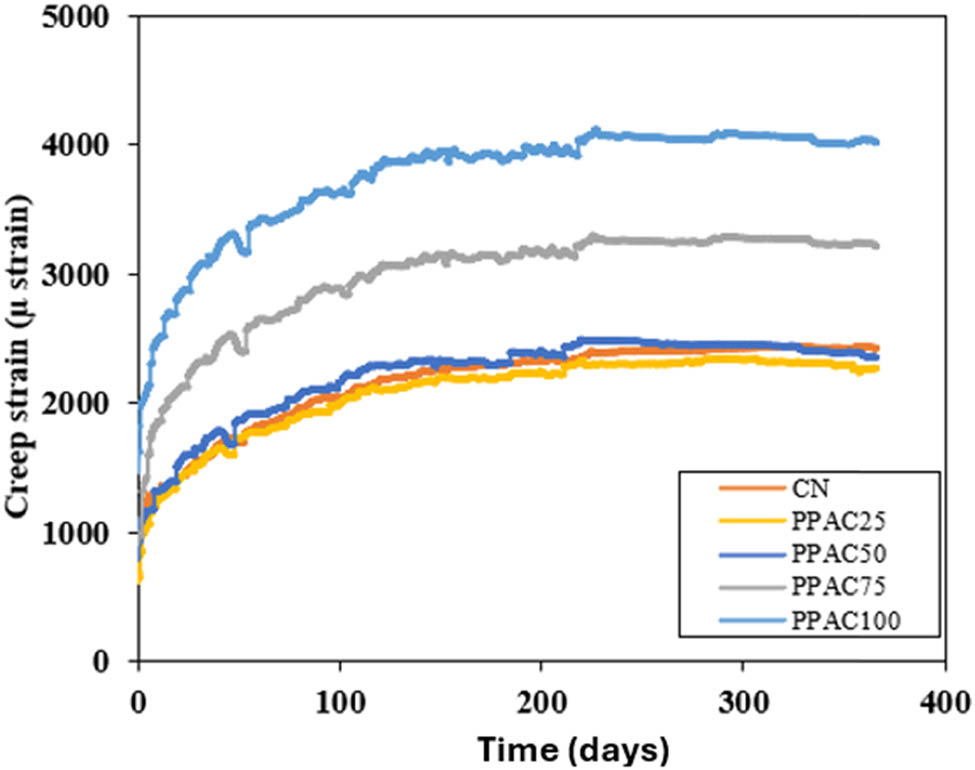
Figure 7
Results of creep strain of PPACs and CN.
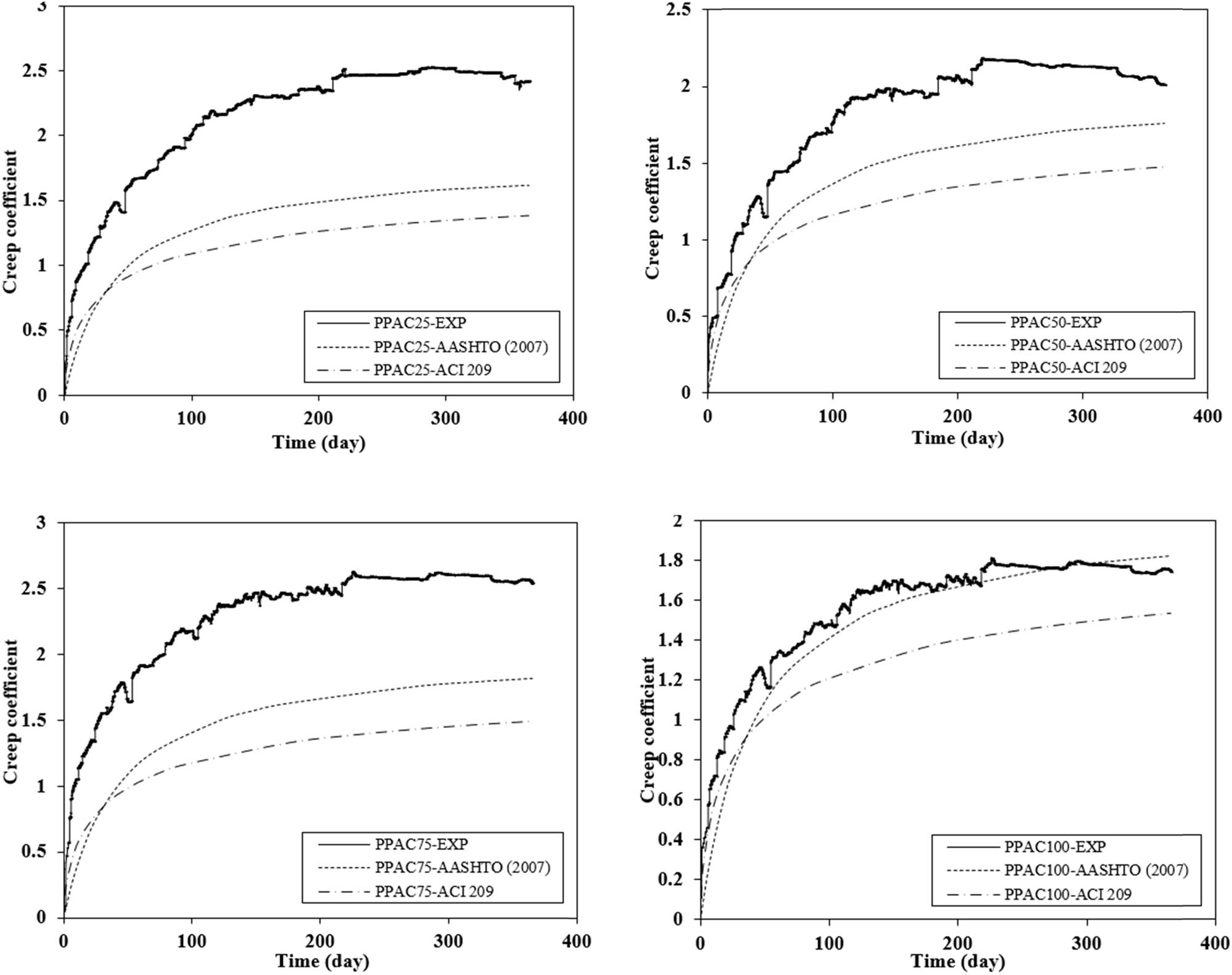
Figure 8
Comparison between the experimental results and the predictions of the analytical models related to the creep coefficient of PPAC mixes.
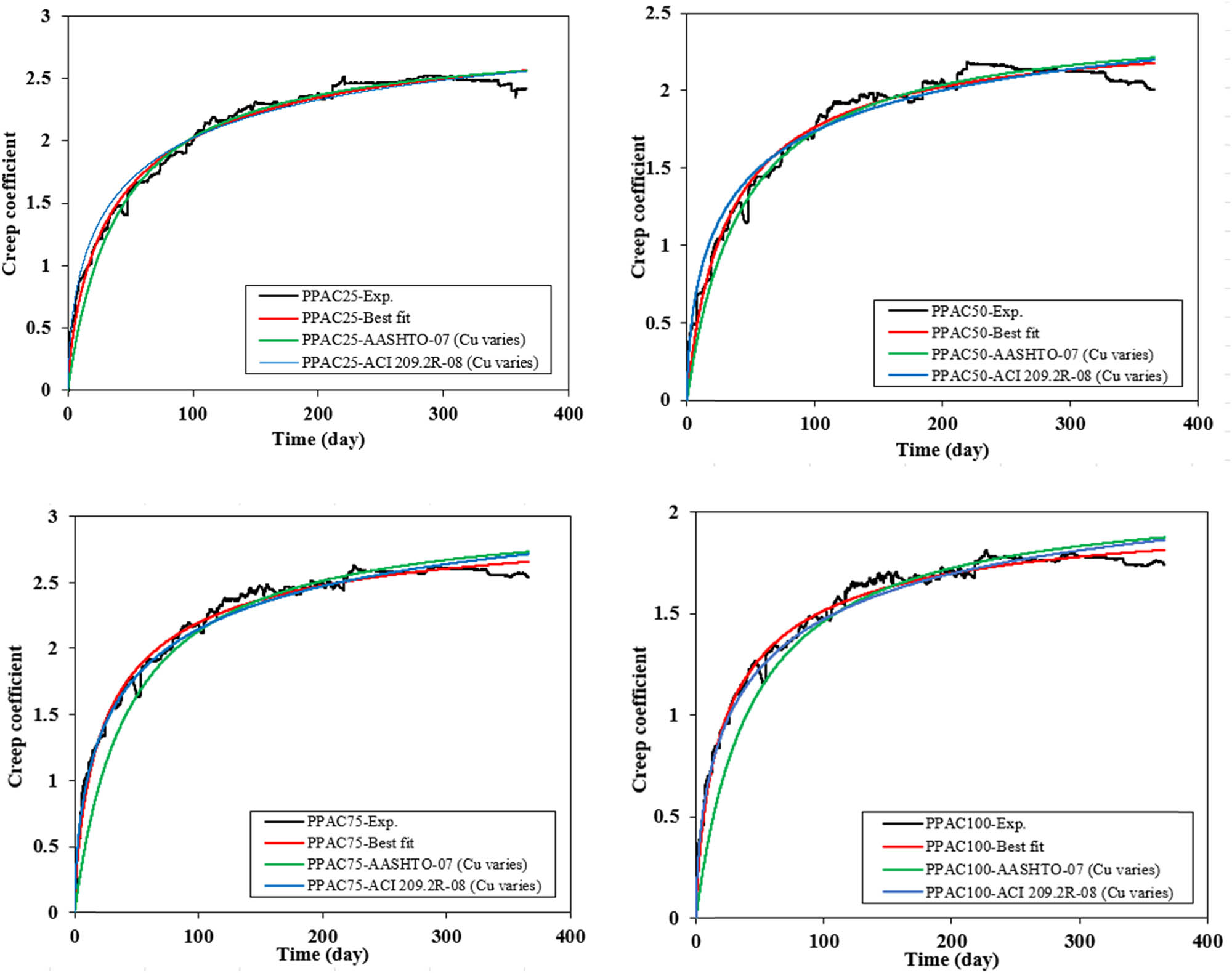
Figure 9
Regression and experimental curves for creep coefficients of PPAC mixes.
Table 5
Regression analysis results of the PPAC mixes.
| Model type | Parameter | Concrete type | |||
|---|---|---|---|---|---|
| PPAC25 | PPAC50 | PPAC75 | PPAC100 | ||
| Best fit | B | 17.72 | 26.45 | 12.71 | 12.46 |
| D | 0.77 | 0.92 | 0.76 | 0.77 | |
| C u | 3.04 | 2.42 | 3.03 | 2.05 | |
| R 2 | 0.98 | 0.96 | 0.98 | 0.98 | |
| AASHTO (2007) | B | 40.52 | 42.60 | 43.36 | 43.47 |
| D | 1 | ||||
| C u | 2.84 | 2.47 | 3.06 | 2.09 | |
| R 2 | 0.97 | 0.96 | 0.93 | 0.92 | |
| ACI 209.2R-08 | B | 10 | |||
| D | 0.6 | ||||
| C u | 3.30 | 2.83 | 3.50 | 2.40 | |
| R 2 | 0.97 | 0.94 | 0.96 | 0.96 | |
Table 6
Calculations for calibrating the ACI models for PPAC mixes.
| Model type | Parameter | Concrete type | |||
|---|---|---|---|---|---|
| PPAC25 | PPAC50 | PPAC75 | PPAC100 | ||
| ACI 209.2R-08 | 0.844 | 0.844 | 0.844 | 0.844 | |
| 1.015 | 1.015 | 1.015 | 1.015 | ||
| 1.158 | 1.158 | 1.158 | 1.158 | ||
| 1.189 | 1.268 | 1.282 | 1.321 | ||
| 0.88 | 0.88 | 0.88 | 0.88 | ||
| 0.73 | 0.73 | 0.73 | 0.73 | ||
| 0.759 | 0.810 | 0.819 | 0.844 | ||
| 3.30 | 2.83 | 3.50 | 2.40 | ||
| 4.35 | 3.49 | 4.27 | 2.84 | ||
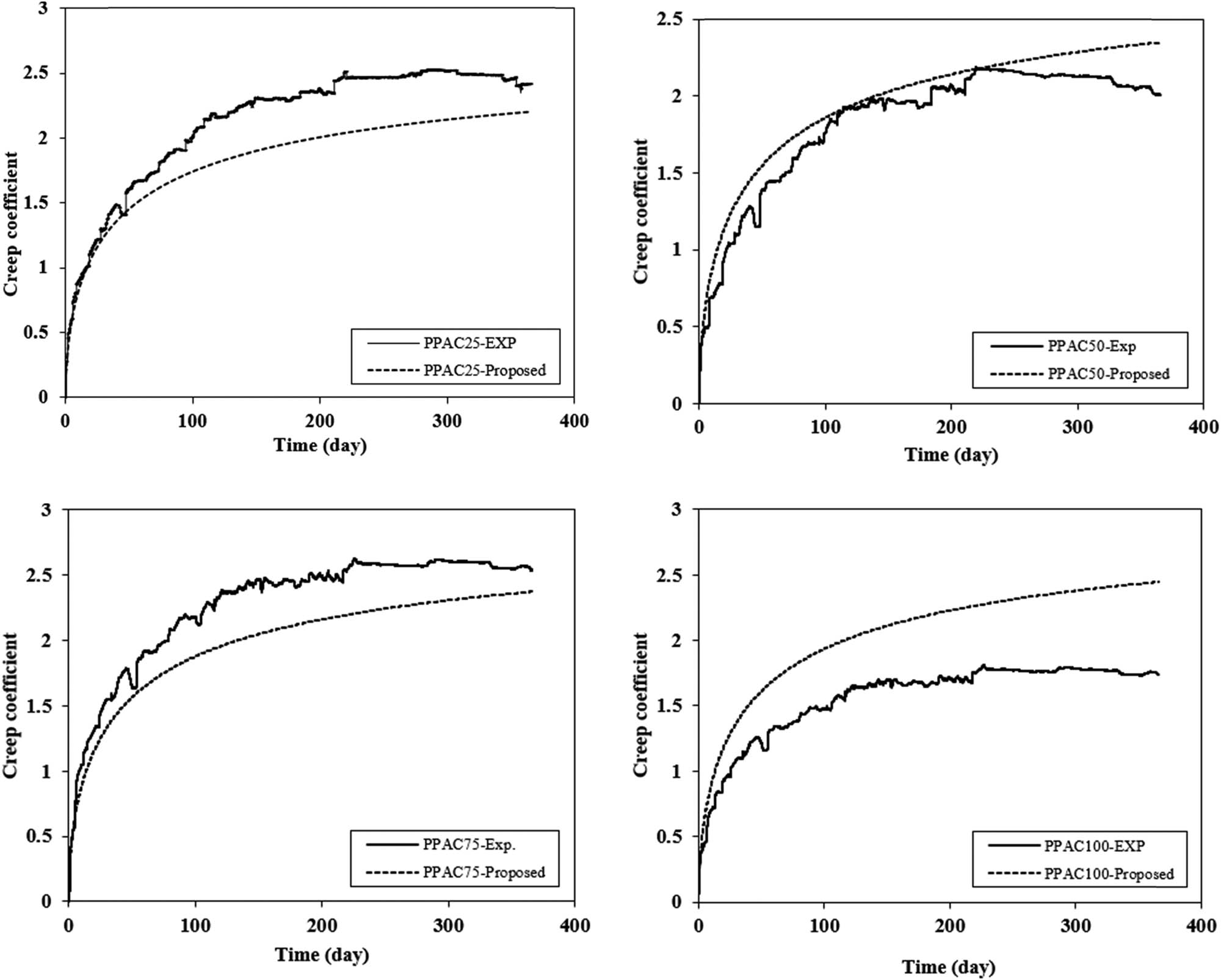
Figure 10
Comparison between the proposed model and the experimental results for the creep coefficient of PPAC mixes.
Table 7
Coefficient of correlation of the proposed model for the creep coefficient of PPAC mixes.
| Concrete type | Coefficient of correlation (equation (2)) |
|---|---|
| PPAC25 | 0.98 |
| PPAC50 | 0.96 |
| PPAC75 | 0.97 |
| PPAC100 | 0.97 |
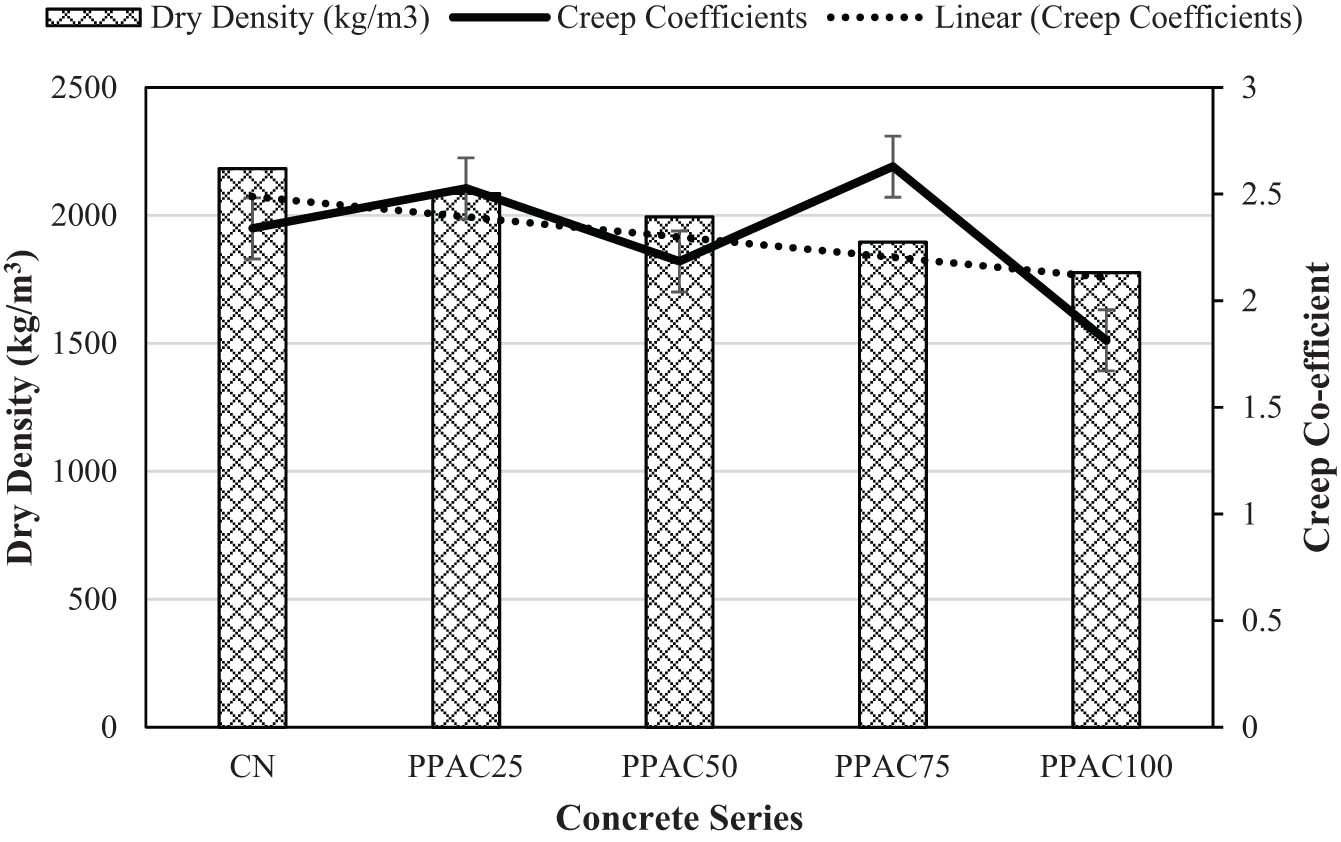
Figure 11
Relationship between the dry density and creep coefficient for all the concrete series.
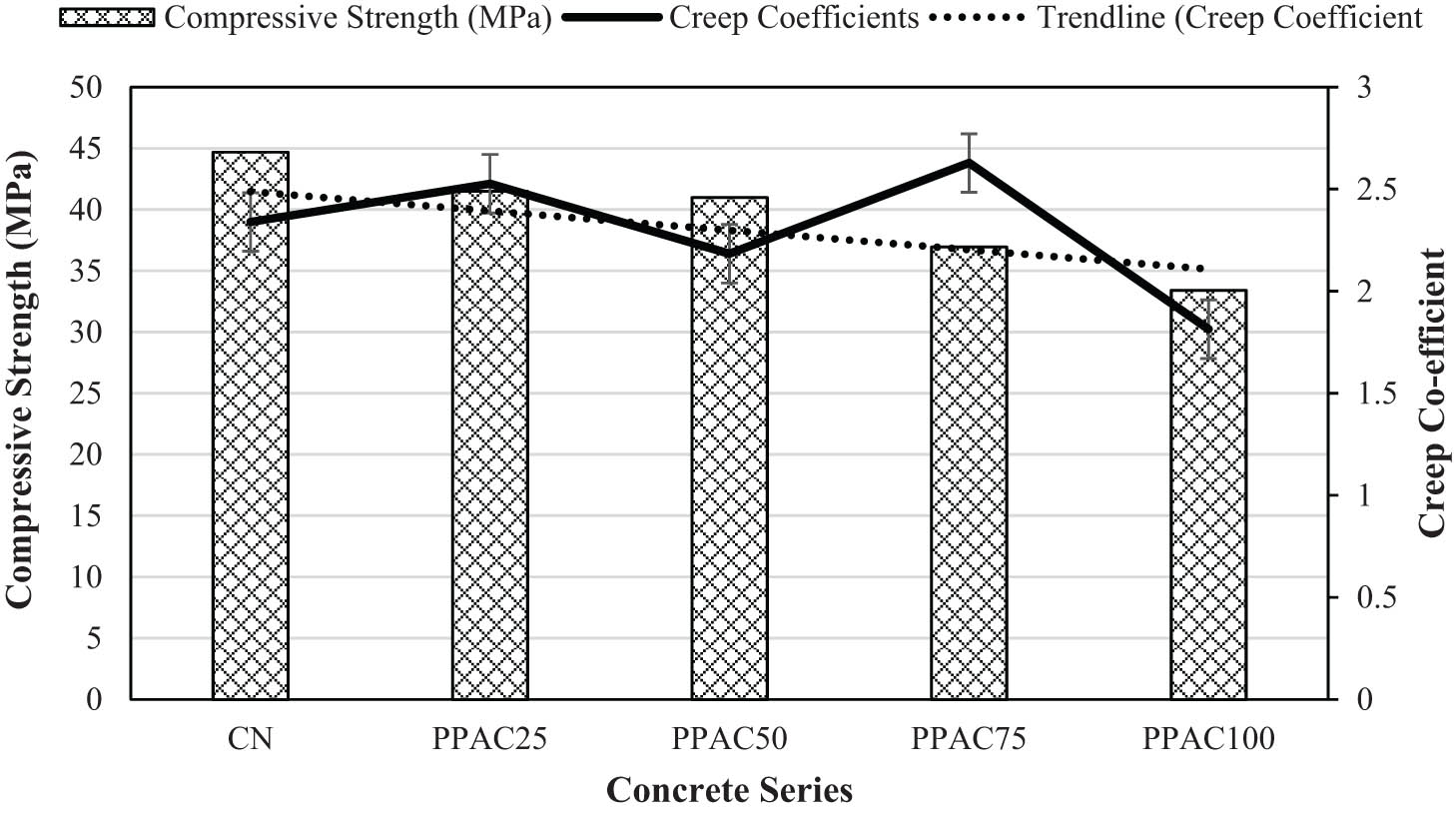
Figure 12
Relationship between the compressive strength (28 days) and creep coefficient for all the concrete series.
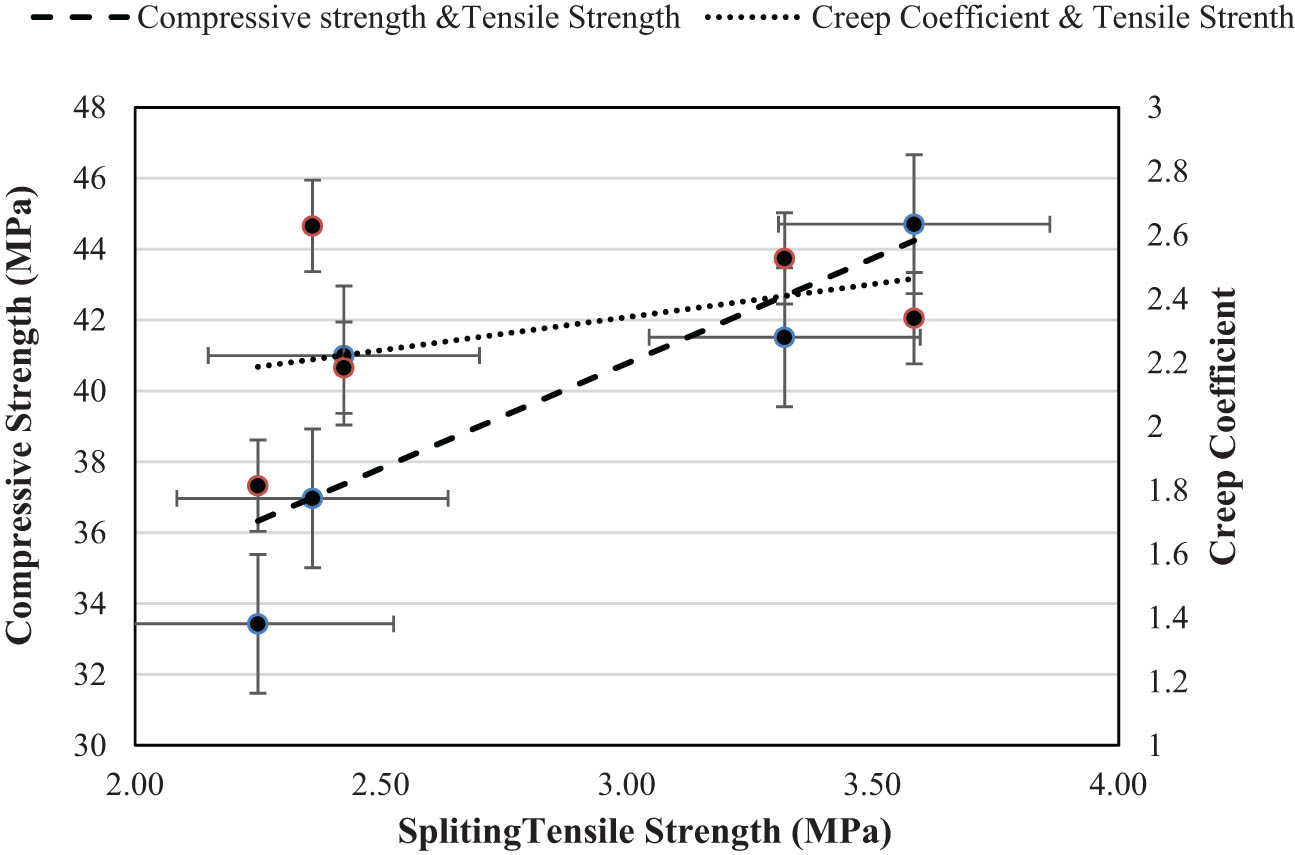
Figure 13
Relationship among the compressive strength, splitting tensile strength, and creep coefficient for all the concrete series.
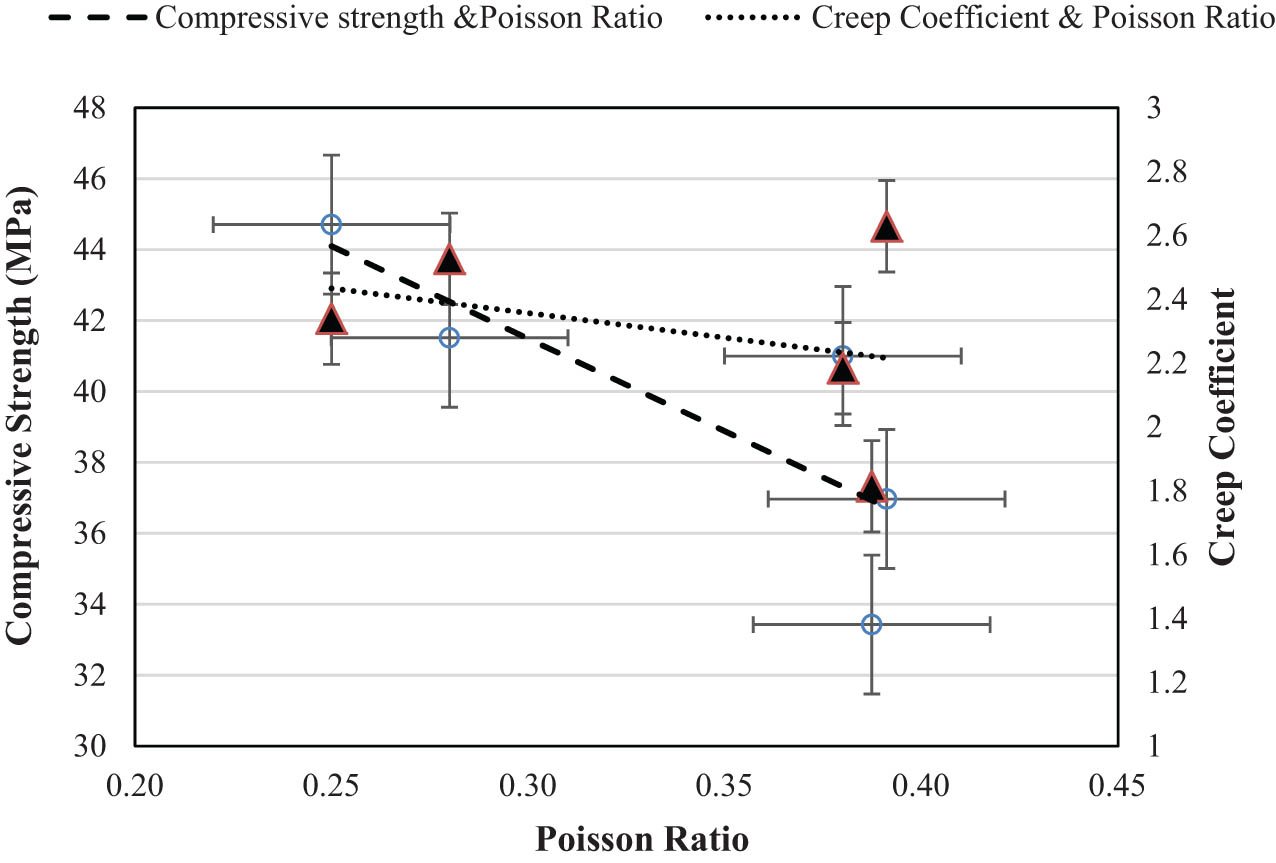
Figure 14
Relationship among the Poisson ratio, compressive strength, and creep coefficient for all the concrete series.