
1. Introduction
The family of concretes has been regularly improved in recent years, with concretes having new performances, such as high-performance concretes, self-compacting concretes, and ultrahigh-performance fiber-reinforced concrete (UHPFRC) [1]. UHPFRC is a type of concrete that has a compressive strength of more than 130 MPa. It also has tensile ductility due to its resistance to tension after cracking and non-fragility, which allows the design and construction of structures and elements without the need for reinforced concrete reinforcements [2]. UHPFRC is increasingly being adopted by many countries worldwide, including China, Australia, the United States, Canada, France, Germany, Japan, Italy, Malaysia, New Zealand, South Korea, Slovenia, and Switzerland [3]. UHPFRC mix design aims to optimize porosity to reduce permeability, refine microstructure to increase performance, improve uniformity to guarantee quality, and increase strength to improve durability [4].
The notable disadvantage of UHPFRC is the requirement for the use of exclusive components in considerable quantities, such as cement, silica fume (SF), quartz powder, superplasticizers, and metallic microfibers with high strength. This results in an increase in the carbon footprint and overall cost of this type of concrete.
These disadvantages in terms of costs and durability have restricted the application possibilities of these advanced concretes, thus slowing down their introduction into new markets, particularly in developing countries with significant infrastructure construction needs [5].
Attempts have been made to reduce costs, increase durability, and expand the areas of application by using waste as raw materials and/or locally available industrial by-products [6]. In the context of sustainable development, the search for waste recycling and reuse solutions, particularly in the construction industry, has become essential due to the increasing demand for material resources and the growing importance of environmental preservation. Although Portland cement remains the dominant construction material, it is imperative to apply resource conservation principles, environmental protection, and efficient use of energy, with a focus on the use of waste and by-products in cement and concrete production [7].
Research studies have been conducted with the aim of substituting certain elements, such as cement or ultrafine, with other natural or recycled materials, such as Blast furnace slag, natural pozzolana, calcined clay, and glass powder.
The obtained results worldwide demonstrated that the partial replacement of cement and SF with ground granulated Blast furnace slag (GGBFS) allows for properties comparable to those of conventional SF-based UHPFRC. The mixture with GGBFS increases compressive strength after 28 days, while presenting an ultra-dense microstructure and reduced porosity. From an environmental standpoint, partially replacing cement with GGBFS reduces carbon footprint, although high rates may lead to increased production costs [8]. UHPFRC produced using Portland cement and natural pozzolana has significant advantages in terms of mechanical strength, economy, ecology, and durability [9]. The substitution of SF with calcined clay in UHPFRC mixes has been studied by Huang et al. [10]. The impact of calcined clay on hydration and microstructural development of UHPFRC matrices has been investigated, demonstrating that replacing SF with calcined clay results in comparable compressive strengths. The results obtained have highlighted the possibility of obtaining equivalent mixes by replacing SF with calcined clay in volume. According to Dias et al. [11], ultra-high performance cement composites, with or without glass powder incorporation, exhibited high compressive strength, low water absorption, high resistance to chloride penetration and diffusion, and high modulus of elasticity. Glass powder can be used to partially replace Portland cement, but this can alter the properties of the cement composite after 28 days. Glass powder is a viable substitute for Portland cement in terms of chloride penetration durability. Furthermore, the use of glass powder is recommended compared to other studied composites, as it significantly reduces the amount of Portland cement in the cement composite and has superior economic and environmental characteristics.
Previous research studies have shown that incorporating recycled waste, either as fines or as fillers partially substituting for cement and SF in UHPFRC, guaranteed an improvement in the material’s performance and durability and has the potential to enhance the mechanical and durability properties of this type of concrete while reducing its carbon footprint and environmental impacts.
All previous work has focused on the use of pozzolan, slag, glass powder, and calcined clay as substitutes for cement or SF in the formulation of UHPC based on specific materials, and the majority of this work has been limited to studies of fresh properties and mechanical strengths. The novelty of this research is to develop a specific formulation and introduce recycled fillers into the mass of an UHPFRC based on local materials that is found in Algeria by studying the properties in the fresh and hardened state as well as the parameters of durability, resistance to chemical attack, and microstructure and to generalize this formulation universally while keeping the same characteristics.
In Algeria, there is not yet a commercially available UHPFRC mix design; thus, researchers in the field are currently working on creating and developing an Algerian mix design adapted to local needs. This initiative will optimize the performance of structures built in Algeria. It is therefore essential to support this approach to create and develop this UHPFRC mix design to ensure a sustainable and resilient future for buildings and infrastructure in Algeria.
The focus of the present study is the development of a UHPFRC mix design using locally available Algerian materials. This approach aims to exploit locally available resources that are suitable for the environmental conditions of the region, thus offering innovative and effective solutions to specific problems. The main objective is to use the knowledge and experiences accumulated by researchers to create a unique mix design that meets local needs. To carry out this work, we have experimentally established a specific formula based on local materials, which is to introduce into the mass of this formulation additions from recycling, such as ceramic waste fillers and granulated Blast furnace slag, which are abundant in Algeria. The aim is to improve the performance of UHPFRC and reduce the overall cost of this material; then, study the modifications made by these additions on the fresh state properties and hardened state mechanical performance as well as durability parameters and microstructural scanning electron microscopy (SEM) and X-ray diffraction.
2. Materials methods
Siliceous dune sand DS with class 0/1 from Oued Zhour, East Algeria. This clean sand (equal to 83% sand) has a fineness modulus of 1.82, an absolute density of about 2.670 g/cm3, and a good particle size distribution.
The fibers (FPP) used are FIBERTEK PP 12 mm long with an absolute density of 0.9 g/cm3. Being monofilament, they disperse easily in the matrix in all directions, resulting in a homogeneous distribution in the paste and a reinforced matrix that controls its plastic shrinkage.
Superplasticizer SP of the Master Glenium SKY 3080 type (BASF), a high-water reducer conforming to the NF EN 934 standard, is chlorine-free and ready to use, based on modified polycarboxylates. It is a light brown liquid with a density of 1.07 ± 0.02 and a pH below 5.
The cement used in this study for all compositions is a Portland cement of type CEM II, class 52.5, in accordance with Algerian standard NA 442, from the Lafarge M’sila cement plant (Algeria).
The SF used is of the Siltek powder type from the brand TEKNACHEM Algeria.
Two types of recycled fillers have been used.
– Blast furnace slag fillers (BFs) are a by-product of the metallurgical industry with hydraulic properties, originating from the El-Hadjar-Annaba plant. The slag is ground in a standardized ball mill with a capacity of 10 kg to achieve the desired fineness.
– Ceramic caste fillers (CFs) are obtained by grinding ceramic waste, mainly from ceramic production plants due to their fragmentation during the production or shipping process, and from home renovation work. The waste is ground to achieve the desired fineness. Figure 1 shows the waste and recycled fillers.
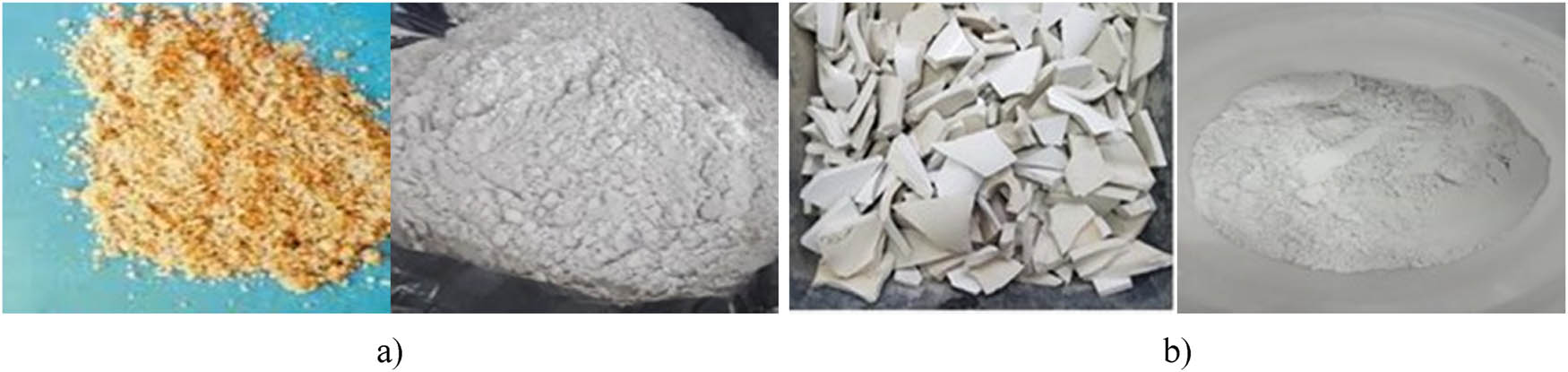
Figure 1
Recycled fillers: (a) BFs and (b) CFs.
The physical and chemical properties of cement, SF, and recycled fillers are given in Table 1.
Table 1
Characteristics of cement, SF, and recycled fillers.
| Designations | CEM II 52.5 | SF | BF | CF |
|---|---|---|---|---|
| Absolute density (g/cm3) | 3.10 | 2.24 | 2.88 | 2.92 |
| Specific surface (cm2/g) | 3,800 | 220,000 | 3,300 | 5,177 |
| CaO (%) | 61.69 | 0.5 | 43.30 | 1.52 |
| Al2O3 (%) | 5.37 | 0.5 | 7.19 | 21.90 |
| Fe2O3 (%) | 3.00 | 1 | 1.69 | 0.6 |
| SiO2 (%) | 19.34 | 95 | 38.14 | 76.86 |
| MgO (%) | 1.80 | 1 | 5.25 | 0.28 |
| Na2O (%) | 0.14 | 0.60 | 0.20 | 1.11 |
| K2O (%) | 0.76 | — | 0.65 | — |
| Cl− (%) | 0.027 | — | — | — |
| SO3 (%) | 2.20 | — | 0.34 | |
| Free CaO (%) | 0.97 | — | — | — |
| C3S (%) | 58.3 | — | ||
| C2S (%) | 14.6 | — | ||
| C3A (%) | 8.7 | — | ||
| C4AF (%) | 11.26 | — |
The characterization test results are as follows:
– The density and fineness of recycled ceramic fillers are slightly higher than that of slag fillers.
– BFs are mainly composed of CaO (43.30), which provides good short-term cohesion to the cement matrix [8].
– Recycled ceramic fillers have a very high silica content than BF; the presence of silica in large quantities promotes long-term hydration [8].
– The alumina content is 21.90% in recycled ceramic fillers and 7.21% in BF; this element increases hardening on the first day but negatively affects chemical resistance [8].
Other elements such as iron oxide, alkalis, and SO3 and MgO are present in small quantities.
3. Experimental program and testing methodology
3.1. Mix design
UHPFRC mix design is not based on a known mix design method like ordinary concrete; it is based on experimentation and compliance with the recommended principles of AFGC [12]. The objective of this work is to search for a new mix design of UHPFRC based on local aggregates and improve it by adding recycled fillers, especially BFs and CFs.
To fix the mix design for this type of concrete, we relied on several previous works [13,14] and preliminary tests carried out at the GENIGEOT laboratory in Algeria.
The development of this UHPFRC mix design consists of determining the quantity of each ingredient in order to meet the three essential principles: reducing porosity with the incorporation of ultrafine, optimizing the granular skeleton, and reducing the W/C ratio. The fixed parameters are the W/C ratio of 0.25, 2% admixture dosage, continuous granular skeleton, fiber dosage, and SF dosage. The other mix designs are obtained by introducing a quantity of recycled fillers while keeping the same volume as the reference mix design. Three mix designs were selected: a control mix design (UHPFRC-CC), a mix design based on ceramic fillers (UHPFRC-CCF), and a mix design based on recycled blast furnace slag fillers (UHPFRC-CBF). These mix designs are given in Table 2.
3.2. Mixing
The mixing was done in a vertical axis mixer, with a pre-mixing of the dry materials for 1 min; then the addition of the water and superplasticizer mixture and wet mixing for 5 min at high speed (4.17 round/s), introduction of fibers, and then mixing for 5 min. The total mixing time obtained with this mixer is approximately 11 min.
3.3. Test method
The tests performed on the different fresh concrete mix designs are measurement of flow test using the Abrams cone, according to standard NF EN 12350-8, measurement of content air using a concrete air meter conforming to standard NF EN 12350-7, and measurement of density according to the requirements of standard NF EN 12350-6.
Figure 2 shows the different tests in the fresh and hardened state.
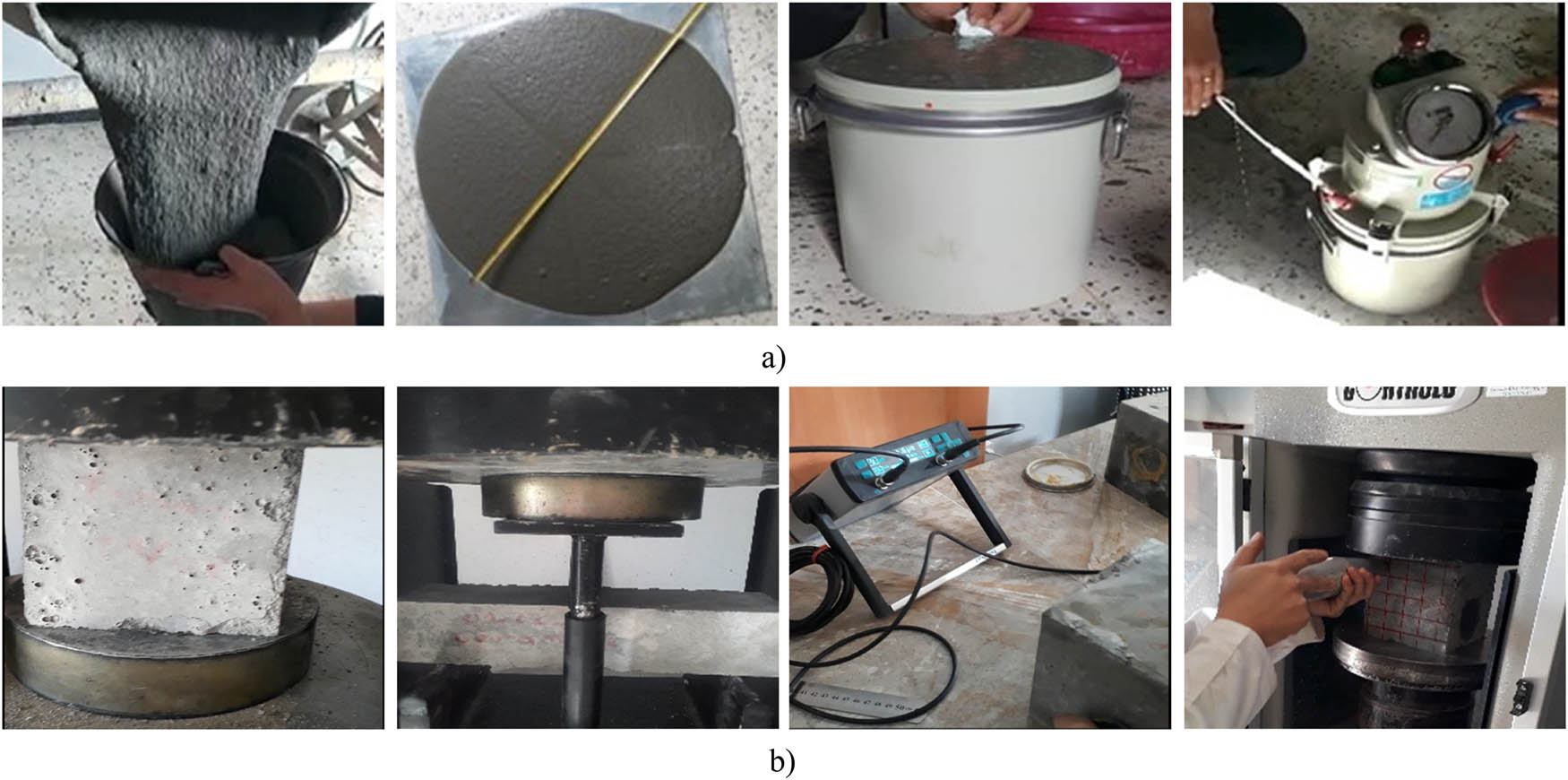
Figure 2
Different tests in the (a) fresh and (b) hardened state.
The tests performed on the different hardened concrete mix designs are as follows.
Compressive strength was measured after 3, 7, 28, and 90 days for three specimens of each age, with dimensions of 10 × 10 × 10 cm3. The samples were stored in water until the day of testing, according to standard NF EN 12390-3.
Flexural tensile strength on three-point bending after 3, 7, 28, and 90 days was tested on three specimens at each age, with dimensions of 7 × 7 × 28 cm3, stored in water until the day of testing, according to standard NF EN 12390-5.
Sclerometer and ultrasonic tests were carried out in accordance with standards EN 12504-2 and EN-12504-4, respectively, on three samples with dimensions of 15 × 15 × 15 cm3 stored in water for 28 days.
The modulus of elasticity of the concrete was evaluated after 28 days using the following equation [15]:
where Ed is the dynamic modulus of elasticity (GPa), ρ is the density of the hardened concrete (kg/m3), V is the velocity of ultrasound (km/s), and ν is Poisson’s ratio.Water absorption by immersion after 28 days according to standard NF P 18-555 on three specimens with dimensions of 15 × 15 × 15 cm3.
Water permeable porosity after 90 days was measured in accordance with the requirements of standard NF P 18-459 on.
Three specimens with dimensions of 7 × 7 × 28 cm3 were tested for water absorption by capillarity and sorptivity after 28 days, according to standard NF EN 1925:1999.
Three specimens with dimensions of 7 × 7 × 7 cm3 were stored in water for 28 days and then in a 5% NaCl solution, treated with silver nitrate, according to standard UNI 7928 and JIS A 1171 for chloride penetration tests after 90 days.
Three specimens with dimensions of 7 × 7 × 7 cm3 were held in water for 28 days and then in solutions of 5% H2SO4, HCl, CH3OOH, and NaOH for 90 days according to standard ASTM C267-01(2006).
Microstructure: SEM analysis of samples is carried out using a Quanta 650-FEI, USA, apparatus, which is assisted by energy-dispersive X-ray spectroscopy (EDAX).
4. Results and discussions
4.1. Effect of recycled fillers on properties in the fresh state
Adding recycled ceramic fillers (Figure 3a) to the UHPFRC mix design increases its workability. This can be explained by the high fineness of the recycled ceramic fillers. However, the addition of BF negatively affects the consistency of the mixture.
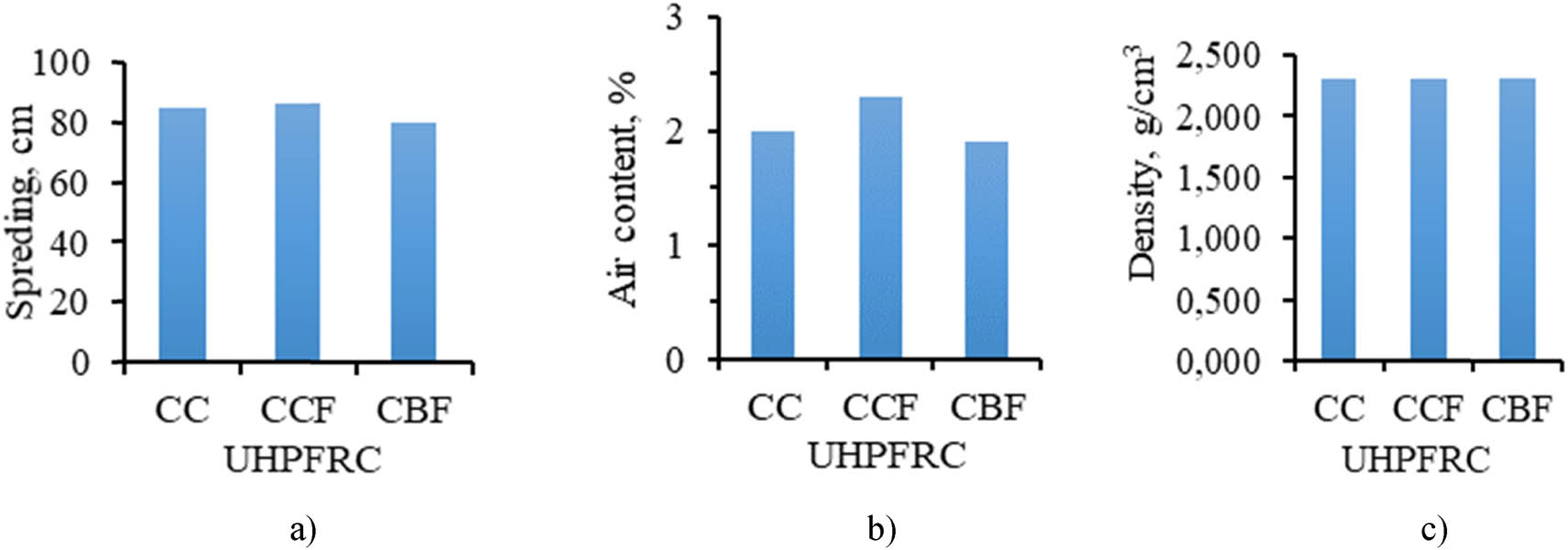
Figure 3
Effect of recycled additives on fresh state properties: (a) workability, (b) air content, and (c) density.
In general, the use of BF in concrete reduces workability compared to concrete containing natural aggregates, even with the same water/cement ratio [16]. Finely ground slag has a much higher absorption, resulting in an increased demand for additional water [17]. The workability of the concrete remains acceptable regardless of the type of fillers.
The introduction of recycled fillers (Figure 3b), ceramic, and blast furnace slag causes a slight increase in the density of UHPFRC. This increase is caused by the high density of the recycled ceramic and BF.
The introduction of BF (Figure 3c) results in a slight reduction in the amount of entrapped air compared to the control concrete. Conversely, a slight increase in air content is observed when ceramic recycled fillers are added. The trend of these results corresponds to the results of the workability tests. This increase remains acceptable and is caused by the paste's increased fluidity, which is partly due to its high consistency. In fact, a more liquid cement paste has an increased capacity to incorporate air during the mixing process. As the consistency increases, the cement paste becomes more fluid, thus promoting greater air entrainment [18].
4.2. Effect of recycled additives on hardened state properties
4.2.1. Compressive strength
The introduction of CFs and BFs increases both short-term and long-term compressive strength compared to the control concrete (Figure 4).
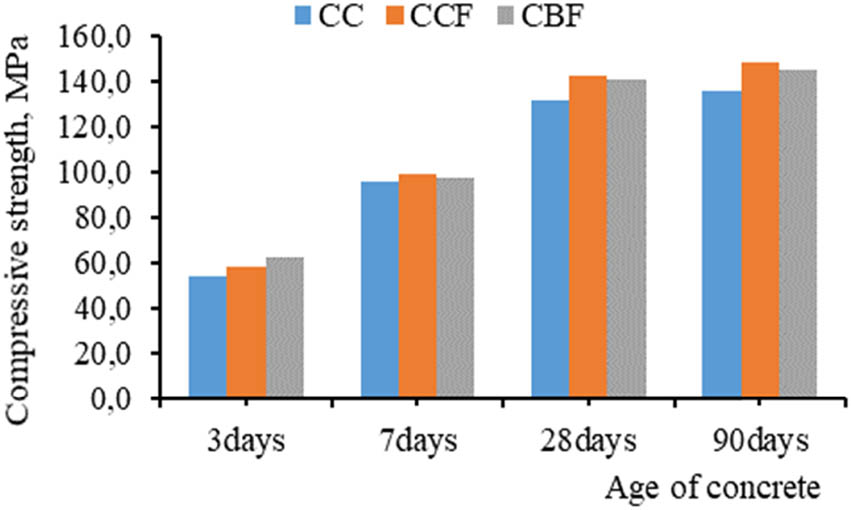
Figure 4
Variation of compressive strength.
After 3 days, the highest compressive strength is achieved by the concrete with BF. It is interesting to note that when the water/cement ratio (W/C) is constant and the BFs are not saturated at the time of mix design, their higher absorption may reduce the effective W/C ratio. Therefore, this improves the mechanical properties of the manufactured concrete [16,17,18,19].
Beyond 3 days, the increase in UHPFRC strength with CFs is attributed to the increased presence of calcite and aluminum oxide in the mixture composition. These components increase granulation and improve the quality of the formed hydrates [20].
Additionally, when aluminum-rich additives are used, the structure of hydrated calcium silicates becomes more pronounced, resulting in increased strengths [21]. The strength of concrete containing BFs is higher than the reference concrete in the medium and long term, mainly due to the presence of highly large hydrated chemicals [22].
After 28 days, the addition of CFs caused a pozzolanic reaction, resulting in a significant increase in strength over time [20]. In the long term, concrete containing recycled ceramic fillers has the highest strength compared to concrete with recycled BFs, thanks to the high fineness of the ceramic fillers, which promotes hydration reaction and makes the concrete more resistant.
4.2.2. Flexural tensile strength
In general, the incorporation of recycled CFs and BFs makes the concrete more resistant to flexural tensile strength (Figure 5). After 3 days of curing, the UHPFRC with BFs shows the highest strength, and the presence of CaO in these fillers increases cohesion at this age [23].
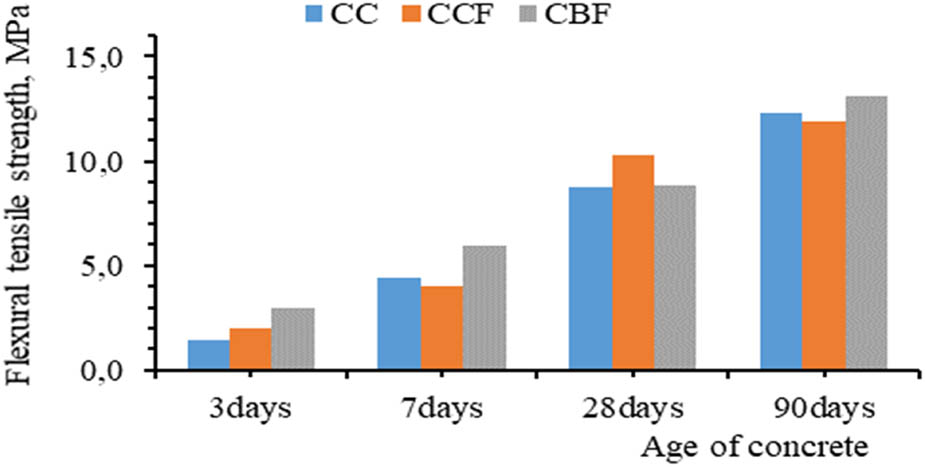
Figure 5
Variation of flexural tensile strength.
In the long term, concrete with BFs shows the highest flexural tensile strength, which can be explained by the activation of El Hadjar slag, characterized by a very slow hydration reaction [24].
4.2.3. Rebound number and ultrasonic pulse velocity
Figure 6 shows that the addition of CFs and BFs increases the sclerometer index, which implies that the presence of these additions in the concrete mix increases surface hardness.
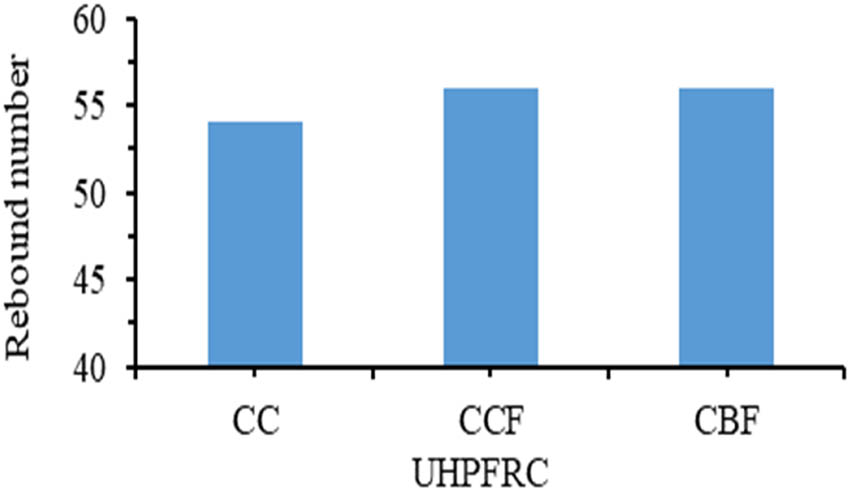
Figure 6
Variation of rebound number.
Based on Figure 7, it can be affirmed that the studied concretes belong to a higher class in terms of quality due to their high compactness and absence of cracks. Furthermore, measurements taken at different points reveal a good distribution of aggregates.
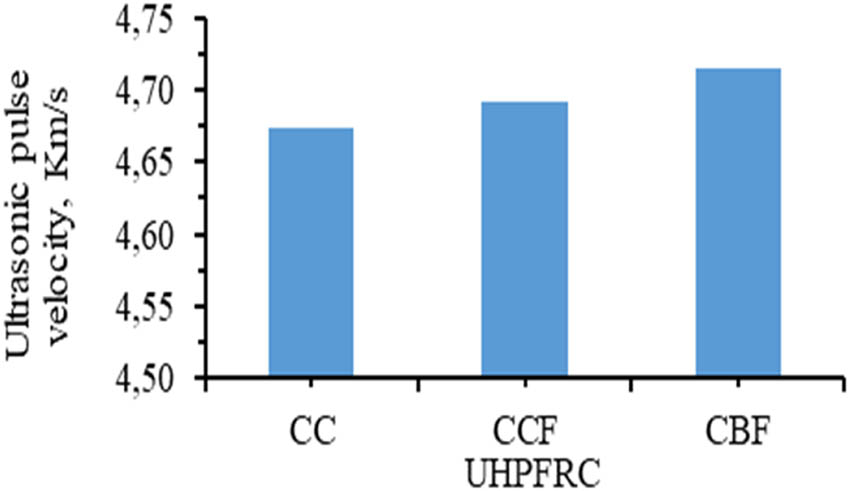
Figure 7
Variation of ultrasonic pulse velocity.
As mentioned in the study of Chaïd et al. [22], the incorporation of finely ground blast furnace slag also induces a granular effect related to the modifications induced on the compactness of the granular skeleton. This effect acts during the curing of the concrete and influences the extent of modifications made to the porosity of the cement matrix. This explains the relatively high wave propagation velocities measured on the blast furnace slag concrete specimens compared to the control concrete and the concrete with CFs [22].
4.2.4. Dynamic modulus of elasticity
According to the results presented in Figure 8, the estimation of the modulus of elasticity by ultrasound velocity shows that the highest modulus of elasticity is for the blast furnace slag UHPFRC, which has the lowest porosity (1.82%) and maximum ultrasound propagation velocity, and also due to its high density.
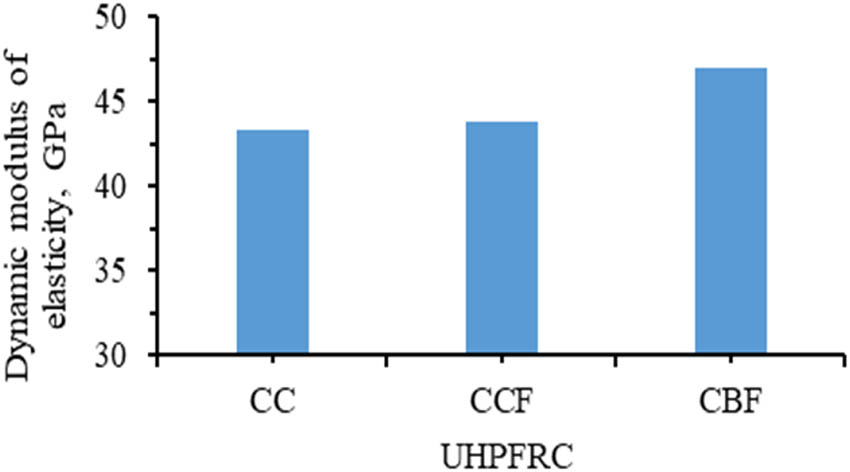
Figure 8
Variation of modulus of elasticity according to ultrasound velocity.
Conversely, the control UHPFRC has the lowest value of modulus of elasticity, which corresponds to the high porosity values (2.41%) and minimum ultrasound propagation velocity.
4.2.5. Water permeable porosity
It can be clearly observed that the porosity of the concrete decreases with the use of CFs and BFs (Figure 9), and the introduction of BFs gives the lowest porosities compared to the UHPFRC with CFs, with a decrease of about 24%.
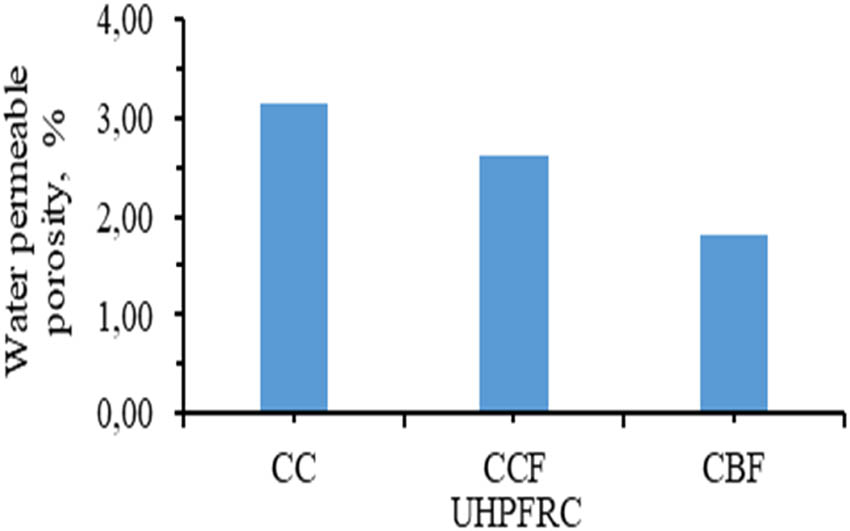
Figure 9
Variation of water permeable porosity.
This is attributed to the filling effect and the formation of secondary CSH obtained through the pozzolanic reactivity of these fillers, which improve compactness [25].
4.2.6. Water absorption by immersion
Water absorption by immersion (Figure 10) is reduced by the introduction of recycled BFs and CFs, with a decrease of about 18.56 and 42.62%, respectively, compared to the control UHPFRC. The maximum absorption is given by the control UHPFRC. These results are similar to those of water-permeable porosity.
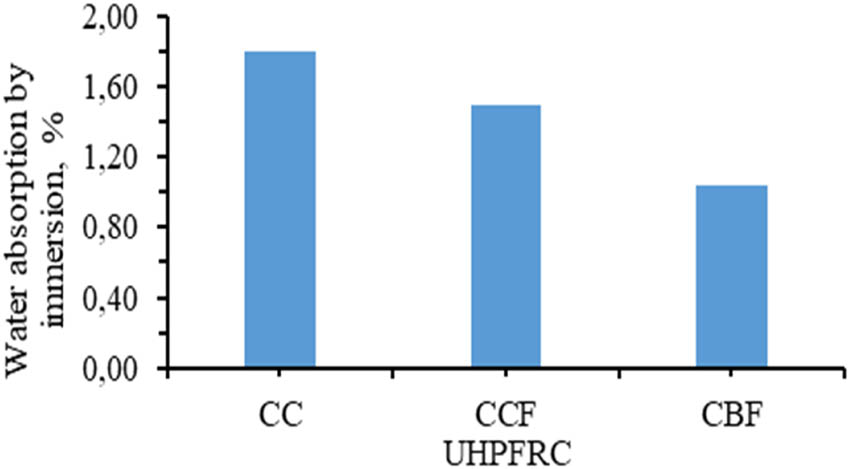
Figure 10
Variation of absorption by immersion.
The addition of recycled fillers results in an arrangement in the cement matrix and makes the concrete more compact compared to the control, which explains the decrease in absorption in the UHPFRC with recycled fillers.
The UHPFRC containing recycled BFs has a lower absorption by immersion than the UHPFRC with recycled ceramic fillers. This is due to the possibility of gas release resulting from a reaction between alumina and Ca (OH)2 formed during hydration [26]. This gas leads to voids that make the structure more porous than the UHPFRC containing recycled BFs [26].
4.2.7. Water absorption by capillarity and sorptivity
Water absorption by capillarity increases with immersion time (Figure 11), and the curves are very close before (327 min), after which the variation in absorption by capillarity is remarkable from one type of concrete to another.
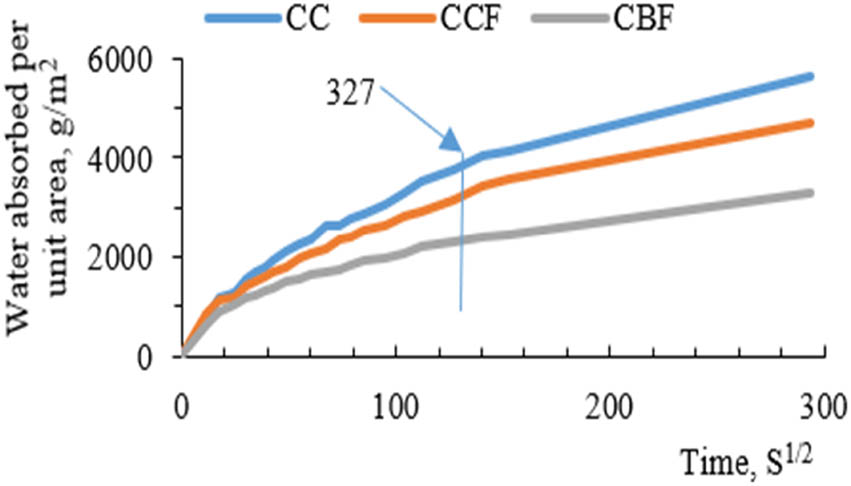
Figure 11
Variation of absorption by capillarity over time.
The introduction of recycled fillers in the mix design of UHPFRC leads to a decrease in absorption, and UHPFRC based on recycled fillers from BFs gives the lowest capillary absorption compared to UHPFRC based on ceramic fillers and reference, respectively. This could be attributed to the pozzolanic reaction, which generates new products, thus making the capillary network structure more complex, resulting in a reduction in the speed and ease of water penetration [25], and the formation of pores in the mix design based on ceramic fillers, which is a consequence of a reaction between alumina and portlandite [26].
It can be observed that the slope (Figure 12) of the absorption curve of UHPFRC with BFs and UHPFRC with ceramic waste filler is lower than that of the control concrete. This difference is due to the low water-accessible porosity.
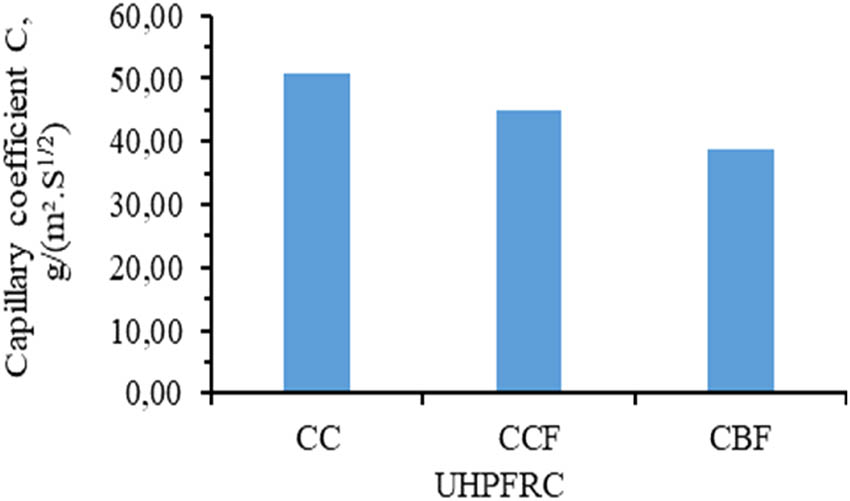
Figure 12
Variation of the capillary coefficient C.
4.2.8. Chloride penetration
The depth of chloride penetration decreases with the introduction of recycled ceramic and BFs, respectively (Figure 13).
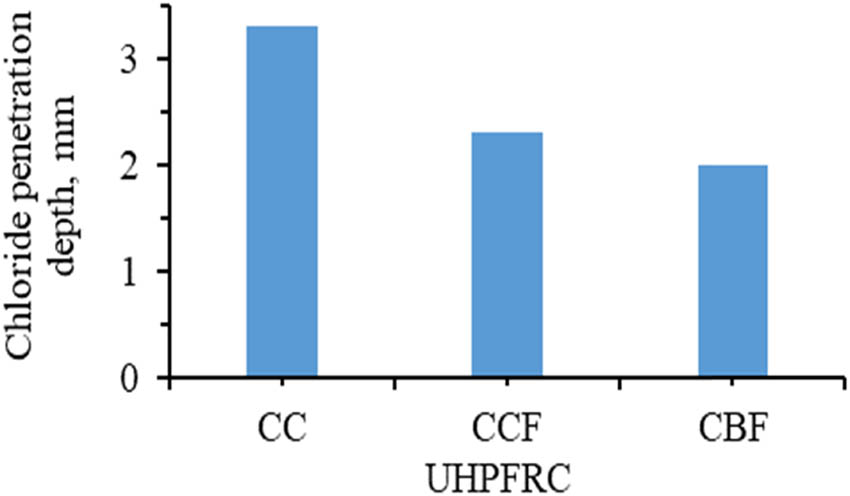
Figure 13
Variation of chloride penetration depth as a function of UHPFRC type.
This decrease is about 30.30% in UHPFRC based on CFs and 39.39% in UHPFRC based on BFs. These results follow the same trend as the water-accessible porosity, as chloride ion penetration increases with water-accessible porosity [27].
The results show that the depth of chloride penetration of our UHPC is at low values. They are explained by the dense matrix formed by the low E/C ratio, which results in a poorly connected porous network that limits and restricts the chloride ion penetration [28]. The use of PPF improves concrete compactness and reduces micropore size, which helps to decrease chloride ion migration [29].
4.2.9. Chemical resistance in aggressive environments
4.2.9.1. Chemical attack by strong acids (HCl and H 2 SO 4 )
The incorporation of recycled BFs and CFs increases control concrete’s resistance to HCl solution (Figure 14). This resistance decreases with age. The mass loss curves follow the same trend, and the variation of these losses is very significant between the concrete based on ceramic fillers and BFs compared to the mass losses between the concrete based on blast furnace slag and control.
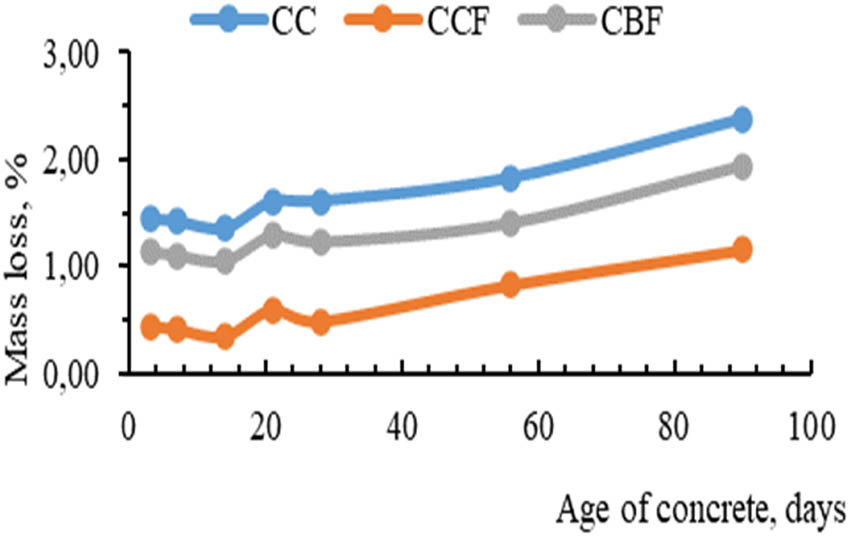
Figure 14
Mass loss as a function of immersion period in 5% HCl.
In comparison to UHPFRC based on recycled fillers, UHPFRC based on CFs is more resistant to the HCl environment than UHPFRC based on BFs, which is explained by the formation of a hydrated calcium chloride (CaCl24H2O) caused by the HCl solution, which is very soluble [30].
After 90 days of immersion in the H 2 SO 4 solution (Figure 15), all the concretes experience mass losses with low variation kinetics in the first 14 days; however, after this period of time, the variation becomes more pronounced to reach maximum values after 90 days of age, and the curves are very close. The concrete based on recycled CFs shows the maximum loss, which is about 21.92%, while the minimum loss is given by the concrete containing recycled BFs, which explains the beneficial combined effect of BFs in densifying the porous structure of the mixture and in the evolution of hydration and pozzolanic reactions [31].
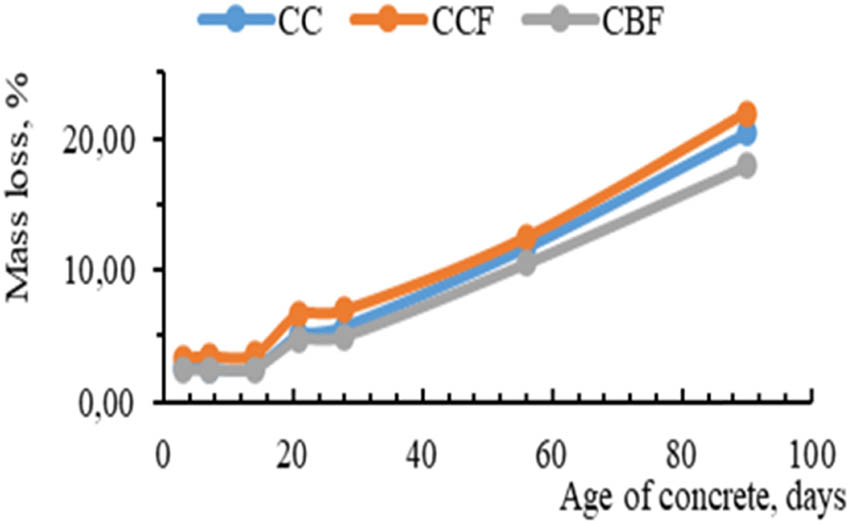
Figure 15
Mass loss as a function of immersion period in 5% H2SO4.
These findings highlighted a greater aggressiveness of sulfuric acid compared to HCl. This observation can be attributed to the fact that, during the attack by H 2 SO 4 , in addition to leaching, expansive ettringite is formed in the pores of the concrete, causing the appearance of cracks [25].
The mechanism of attack occurs as follows: the acid reacts with Ca(OH)2 (portlandite), thus forming calcium sulfate (equation (2)). Then, gypsum, which is hydrated calcium sulfate, reacts with unhydrated tricalcium aluminate (C3A), creating ettringite (equation (3)) [32]
According to Bederina et al. [31], this mass loss is due to a leaching phenomenon that increases over time.Indeed, the mass loss is low at young ages in immersion compared to older ages. For example, we obtain for the control UHPFRC after 28 days of immersion in a 5% sulfuric acid solution, a mass loss of about 5.6% that increases to about 20.44% after 90 days of immersion [33].
4.2.9.2. Chemical attack by acetic acid (CH3COOH) and alkaline solution (sodium hydroxide (NaOH))
UHPFRC based on recycled fillers show lower mass losses in CH3COOH solution than the control UHPFRC (Figure 16). UHPFRC based on BF is more resistant in CH3COOH medium than UHPFRC based on ceramic waste, which is explained by the densification of the matrix resulting from the evolution of the pozzolanic reaction. The maximum loss is about 3.37% given by the control concrete after 90 days of age.
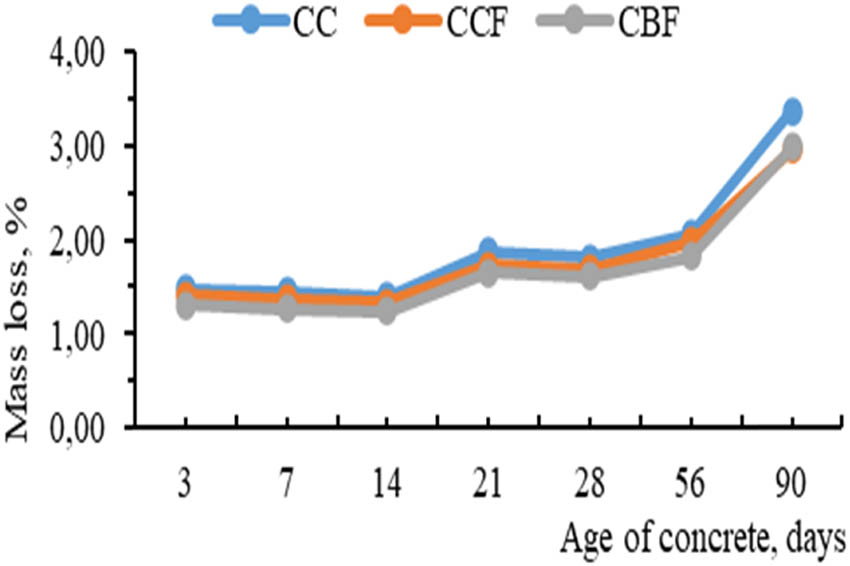
Figure 16
Mass loss as a function of immersion period in 5% CH3COOH.
In the NaOH medium (Figure 17), it can be observed that the mass loss decreases over time. At the age of 7 days, a mass gain is noticed which progresses over time. For UHPFRC based on CFs, it reaches a swelling of 0.24% after 90 days, but for the other UHPFRCs, if they are left in the solution for a few more days, they may also reach a swelling.
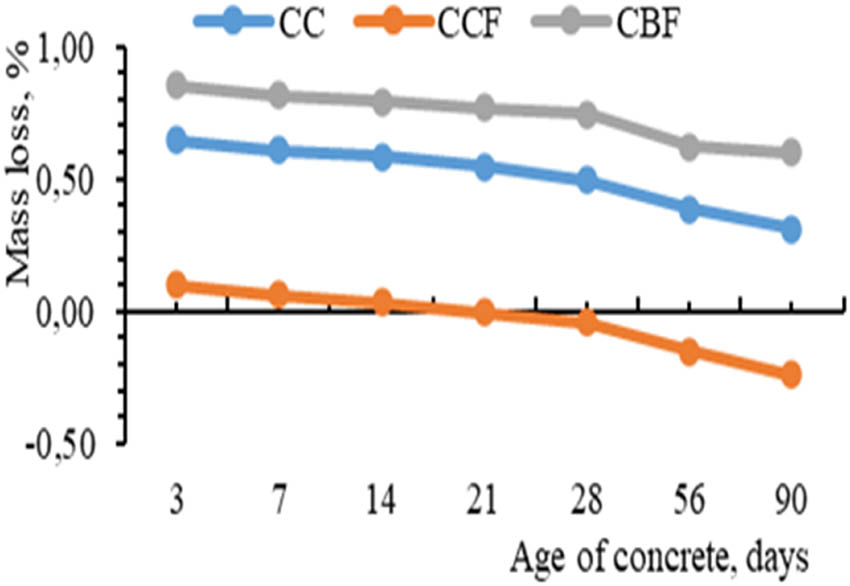
Figure 17
Mass loss as a function of immersion period in 5% NaOH.
5. Microstructure
Figure 18 provides an overview of the photographs captured during SEM observation. Anhydrous cement grains are visible as grains of a very light white or gray shade. The gray areas indicate the presence of hydrates, which can be portlandite or C–S–H. In addition, the very dark grains are SF grains. As for the Black areas, they correspond to air bubbles [32].
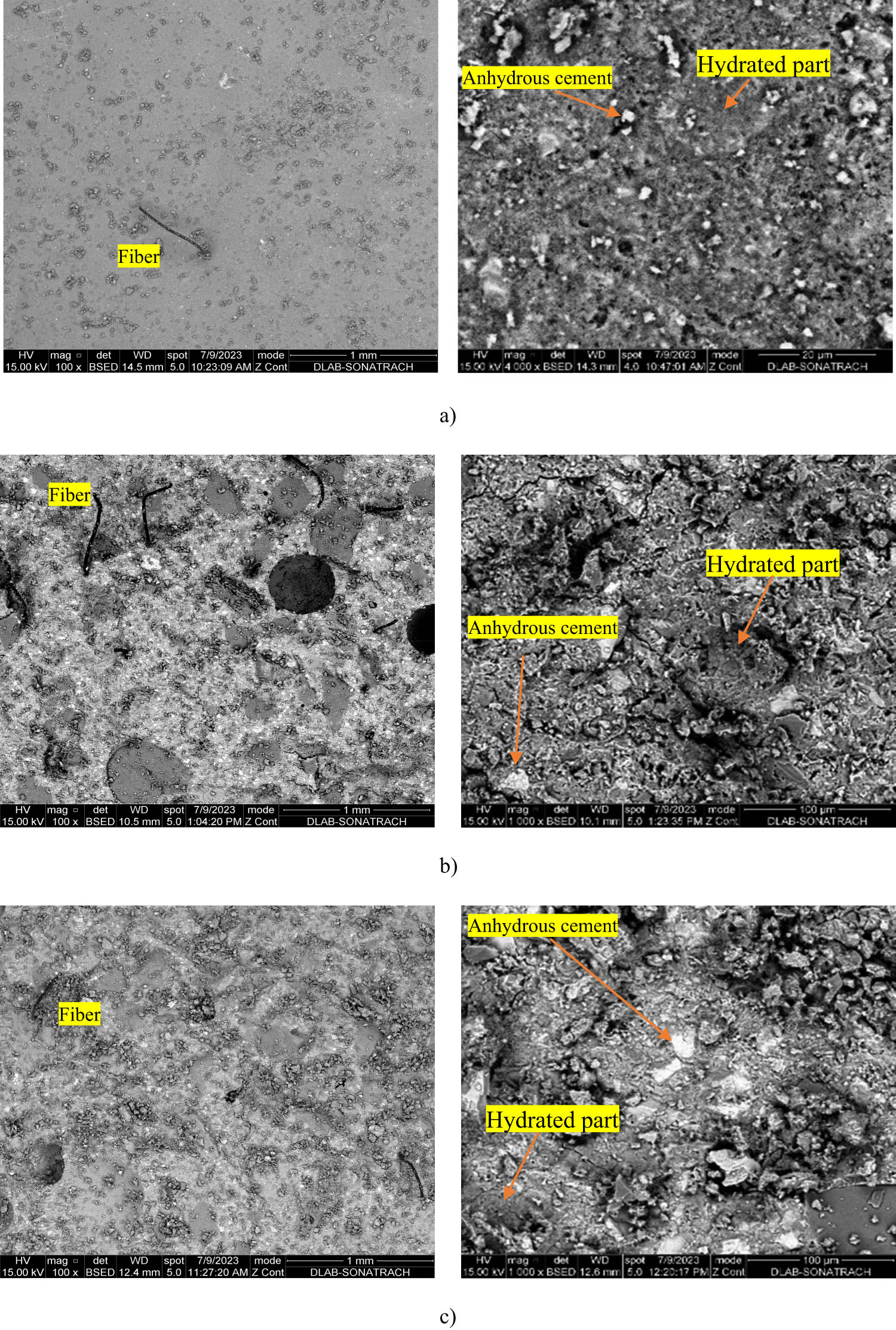
Figure 18
SEM images of (a) UHPFRC CC, (b) CCF, and (c) CBF.
The SEM-EDAX analysis technique (Figures 19–21) allows the observation of the surface structure and chemical composition of materials at high magnifications. This combination of techniques allows for a detailed study of individual particles and surface characteristics of the material, with a resolution of up to 1 nm.
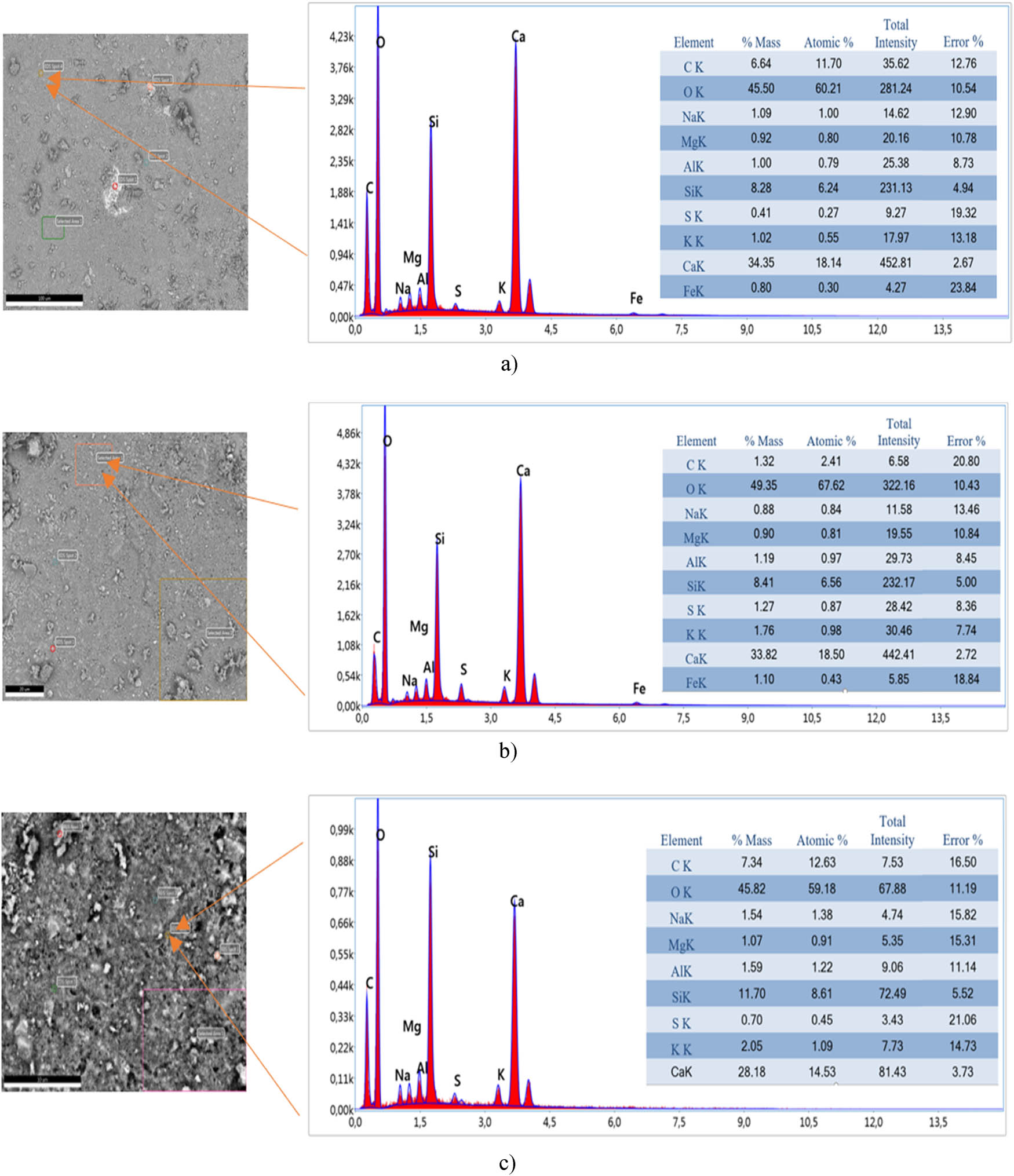
Figure 19
SEM micrographs and EDAX spectra of CC. (a–c) SEM/EDAX UHPFRC CC.
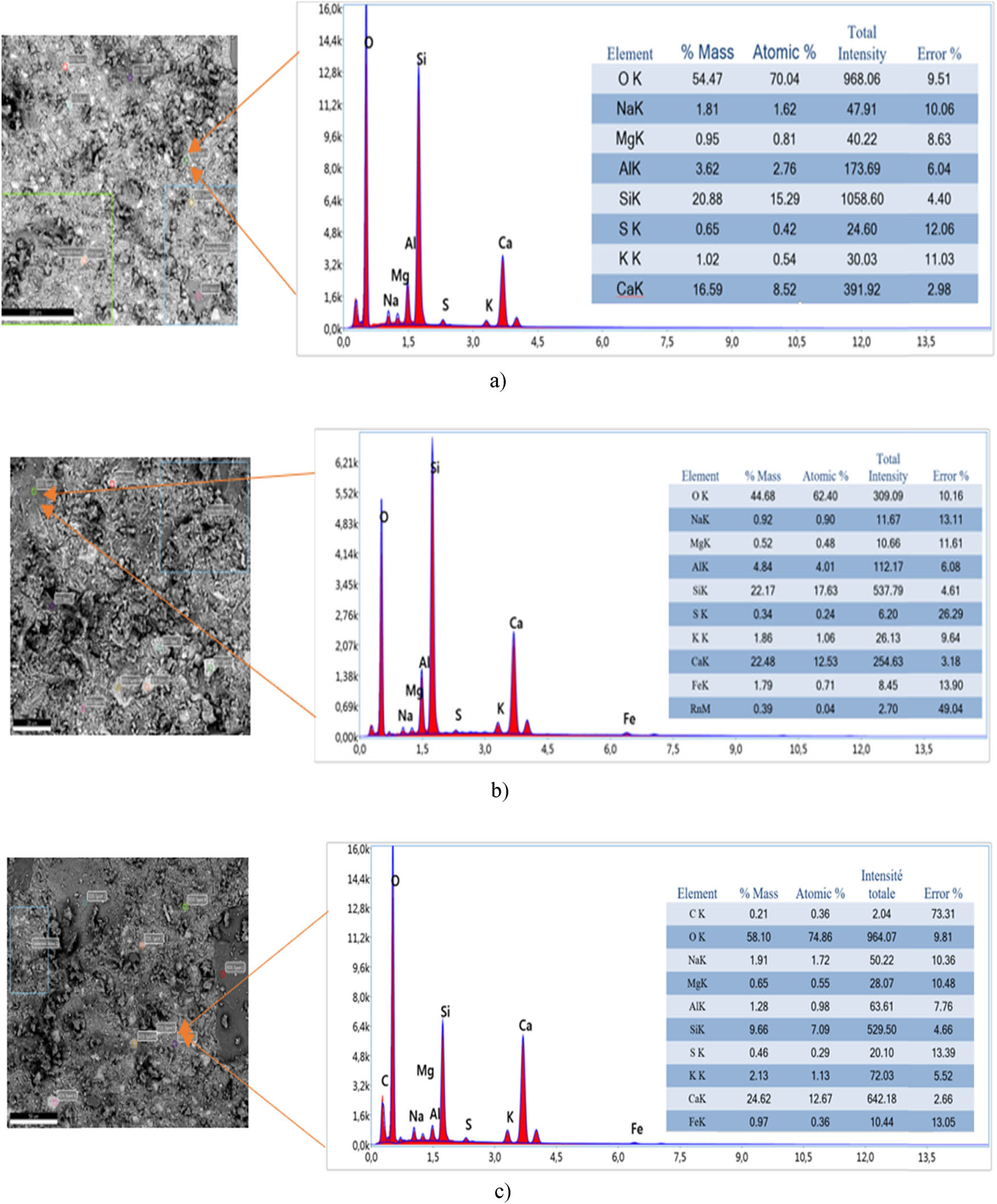
Figure 20
SEM micrographs and EDAX spectra of CCF. (a–c) SEM/EDAX UHPFRC CCF.
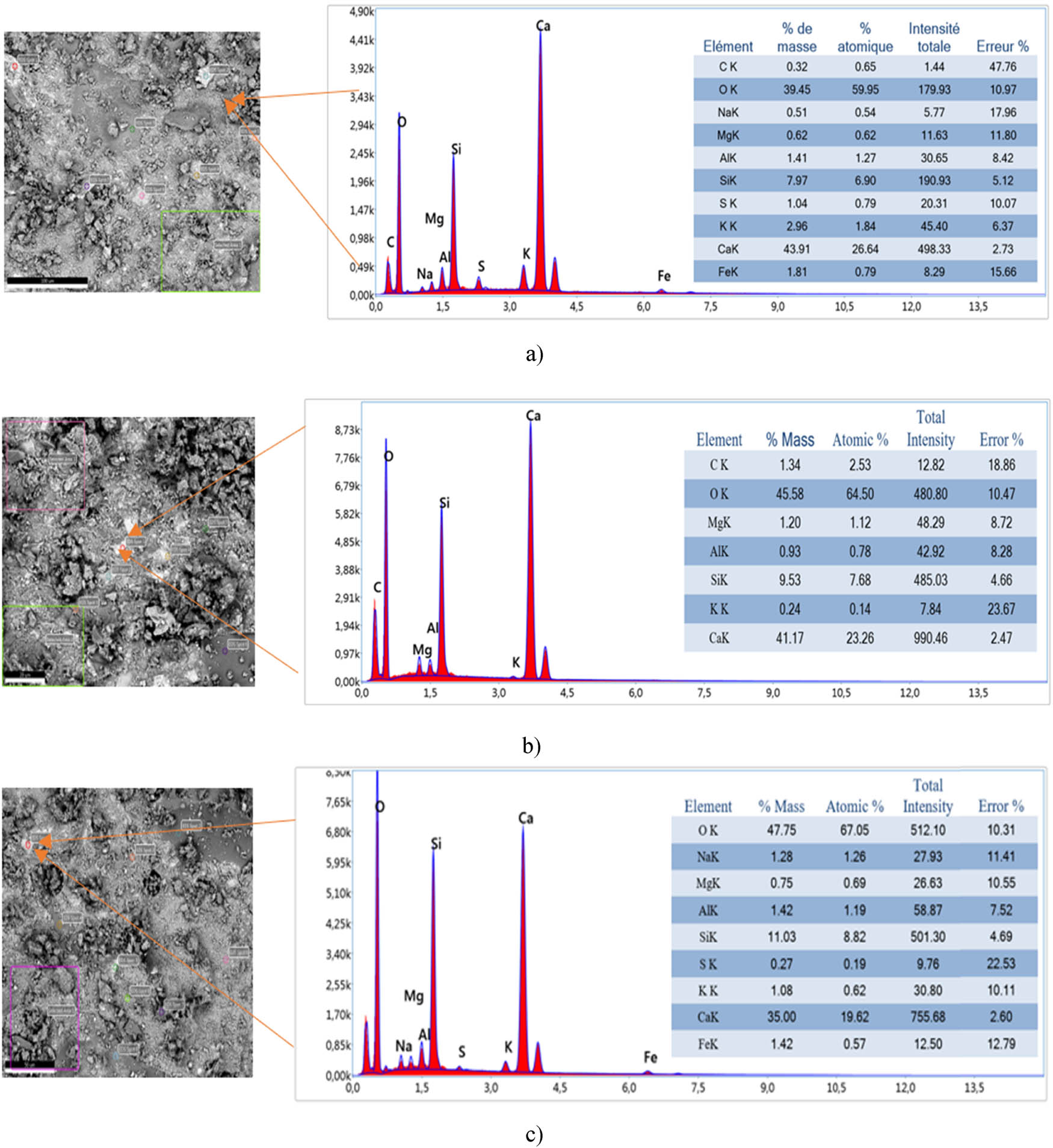
Figure 21
SEM micrographs and EDAX spectra of CBF. (a–c) SEM/EDAX UHPFRC CBF.
An EDAX analysis of UHPFRC showed the presence of oxygen (O), carbon ©, silica (Si), and calcium (Ca), predominantly, with varying amounts from one area to another and from one UHPFRC to another, in a manner consistent with the initial composition of the components, as well as traces of sodium (Na), magnesium (Mg), sulfur (S), potassium (K), alumina (Al), and iron (Fe), in minimal quantities.
UHPFRC CCF is characterized by a lower C/S ratio (0.6 ≤ C/S ≤ 1.8) than UHPFRC CC (1.7 ≤ C/S ≤ 2.9) (which probably corresponds to sub-micron mixed C–S–H with portlandite) [32]. The C–S–H in the CCF UHPFRC paste is therefore enriched in silica, whereas in the BL UHPFRC, a higher C/S ratio (2.2 ≤ C/S ≤ 3.9) is observed than the two UHPFRC, which is probably due to the richness of the blast furnace slag with CaO.
The analyses performed on the CCF UHPFRC are more dispersed. It has higher Si/Ca and Al/Ca ratios than the two UHPFRCs (Figure 22), resulting from their increased silica and alumina content.
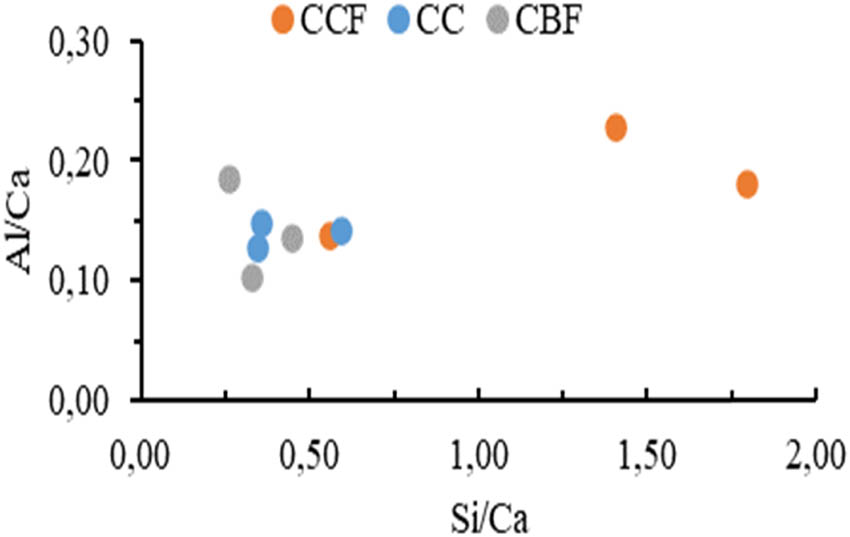
Figure 22
Representation of Si/Ca and Al/Ca.
6. Conclusion
The present study proposed a new and objective formulation of the UHPFRC. According to the obtained results, the following conclusions can be drawn:
– Recycled fillers increase concrete density. CFs enhance workability, while BFs slightly reduce it but remain acceptable, with a slight decrease in entrained air content.
– Recycled fillers improve compressive and flexural tensile strength, with CFs yielding the highest compressive values. Surface hardness, homogeneity, and ultrasonic wave propagation velocity are also enhanced.
– Concrete with recycled fillers shows lower water absorption and porosity, with CFs absorbing more water than BFs.
– Recycled fillers reduce chloride ion penetration, with the lowest penetration seen in blast furnace slag filler-based UHPFRC.
– Recycled fillers enhance resistance to chemical attack from hydrochloric and acetic acid, though CFs negatively impact resistance to sulfuric acid. Maximum swelling occurs in blast furnace slag filler-based concrete in an alkaline solution.
– SEM-EDAX analyses reveal a denser, more compact microstructure in UHPFRC with recycled fillers due to their pozzolanic effect, promoting CSH development and reducing portlandite and ettringite phases.
Overall, this work demonstrates a viable mix design of UHPFRC using locally available aggregates in Algeria, with recycled CFs and BFs showing positive effects, encouraging further research in this area.
Author contributions
Houria Hebhoub: Conceptualization, methodology, writing up, revision and edits, analysis, supervision. Mohamed Tahar Lekoui: Writing up, review and edit, analysis, investigation, visualization, validation. Chiraz Kechkar: Writing up, review and edit, analysis, investigation, visualization. Karima Messaoudi: Writing up, review and edit, analysis, investigation, visualization, validation. Hamid Alsayadi: Writing up, review and edit, analysis, investigation, visualization, validation. Mohammed Ichem Benhalilou: Writing up, review and edit, analysis, investigation, visualization, validation.
Conflict of interest statement
Authors state no conflicts of interest.