
1. Introduction
Dental pulp regeneration has emerged as a promising area of research in dentistry, aiming to restore damaged or diseased dental pulp, which is crucial for maintaining tooth vitality and function [1]. Traditional treatment methods for dental pulp-related conditions, such as irreversible pulpitis or pulp necrosis, often involve root canal therapy or tooth extraction [2]. However, these approaches have limitations, including the loss of tooth structure and reduced mechanical strength. Consequently, there is growing interest in alternative strategies that can stimulate the regeneration of dental pulp tissue [3].
One such approach involves the utilization of dental pulp stem cells (DPSCs), which possess an extraordinary ability to differentiate into various cell types, including odontoblasts, endothelial cells, and fibroblasts [4]. DPSCs offer significant potential for dental pulp regeneration due to their capacity to initiate and support tissue repair processes. However, directly transplanting DPSCs into the injured site faces challenges concerning their survival and retention within the complex microenvironment of the pulp [5]. In an initial clinical investigation conducted by Nakashima and colleagues, patients with irreversible pulpitis received a transplantation of autologous mobilized dental pulp stem cells (MDPSCs) alongside granulocyte colony-stimulating factor (G-CSF) into pulpectomized teeth. The outcomes revealed the absence of adverse effects or toxicity associated with MDPSC transplantation, evidenced by positive responses in electric pulp tests after four weeks, indicating functional pulp restoration [6].
To overcome these challenges, researchers have explored the use of conditioned media derived from DPSCs. Conditioned media refers to a collection of secreted factors, such as growth factors, cytokines, and extracellular vesicles, produced by DPSCs [7]. These bioactive components have the ability to modulate the cellular microenvironment and promote tissue repair processes, including angiogenesis, immunomodulation, and extracellular matrix remodeling. Preclinical studies investigating the application of DPSC-conditioned media have demonstrated promising results, showcasing enhanced dental pulp regeneration and improved clinical outcomes [8].
In addition to utilizing conditioned media, researchers have investigated incorporating therapeutic agents into delivery systems to enhance the regenerative potential. One such agent is curcumin, a natural polyphenol derived from Curcuma longa, which is renowned for its anti-inflammatory and antioxidant properties [9]. Curcumin has displayed promising effects in promoting tissue regeneration and inhibiting inflammatory responses in various biomedical applications. Curcumin-incorporated liposomal formulations have been suggested as a delivery method aimed at reinstating the balance of dental pulp cells and fostering pulp regeneration [10]. However, its clinical applicability is limited due to challenges such as low solubility, poor stability, and rapid degradation [11]. To address these challenges, researchers have explored the use of chitosan nanoparticles as carriers for delivering curcumin. Chitosan, a biocompatible and biodegradable polysaccharide derived from chitin, possesses unique properties such as muco-adhesion and controlled release [12]. Encapsulating curcumin within chitosan nanoparticles can improve its stability, solubility, and bioavailability [13]. Furthermore, incorporating these curcumin-loaded chitosan nanoparticles into an alginate hydrogel can provide a three-dimensional scaffold, facilitating cell attachment, proliferation, and differentiation, thus further enhancing the regenerative potential.
The current research aims to investigate the therapeutic potential of a nanocomposite hydrogel composed of calcium alginate loaded with DPSCs-derived conditioned media and curcumin/chitosan nanoparticles in a rat model of dental pulp injury. This study seeks to evaluate the healing capacity of this novel approach and its effectiveness in promoting dental pulp regeneration. By combining the regenerative properties of DPSCs, the paracrine effects of conditioned media, and the therapeutic benefits of curcumin-loaded chitosan nanoparticles, this research holds promise for advancing the field of dental pulp regeneration.
2. Methods and materials
2.1. Preparation of curcumin-loaded chitosan nanoparticles (CURCNPs) and encapsulation efficacy measurement
To begin, chitosan (low molecular weight) with a deacetylation degree exceeding 85%, sourced from Sigma Aldrich in the USA, was meticulously dissolved in a 1% acetic acid solution (with a pH below 4) at a concentration of 0.75 wt% over a duration of 12 hours. Following this, the solution underwent filtration. Subsequently, curcumin powder, also obtained from Sigma Aldrich in the USA, was introduced to the chitosan solution at a weight ratio of 4% and stirred continuously for a period of 6 hours.
In parallel, tripolyphosphate (TPP), also procured from Sigma Aldrich in the USA, was dissolved in distilled water at a concentration of 0.25 wt.% over 6 hours, followed by filtration. The TPP solution was then cautiously added dropwise into the curcumin/chitosan solution at a volume ratio of 30% under vigorous stirring.
To conclude, the resulting solution was subjected to centrifugation at 15,000 rpm for 1 hour. Then, the amount of curcumin in the supernatant was measured using UV-visible spectroscopy at 425 nm and used for the calculation of encapsulation efficacy. The pellet was freeze-dried for 48 hours. The resulting powder was stored at 4 °C until needed for further use.
2.2. Preparation of calcium alginate hydrogel loaded with DPSCs conditioned media and CURCNPs
Sodium alginate (medium viscosity, Sigma Aldrich) was dissolved in the conditioned media of passage 4 DPSCs (Human, ATCC) at a final concentration of 1 wt.% for 6 hours at 4°C. Then, sterile calcium chloride solution (2 wt.%, Merk) was mixed with the sodium alginate solution at a 1:4 volume ratio and mixed thoroughly. Finally, freeze-dried CURCNPs were added to the calcium alginate solution at 10 v/v% and mixed for 2 hours. The developed hydrogel system was named CALDPSC-CURCNPs.
2.3. Cell viability assay
The viability of DPSCs cultured on CALDPSC-CURCNPs hydrogel was studied using Alamar blue assay (Invitrogen, USA). Briefly, DPSCs were seeded onto the hydrogels in a 96-well plate at the density of 10000 cells per well and cultured for 7 days. On days 3, 5, and 7, the media in each well was discarded and replaced with 10 v/v% Alamar blue dye in DMEM-F12 media containing 10% FBS and 1% antibiotics (All from Sigma Aldrich). The cells were incubated with 200 μl Alamar blue solution for 3 hours, and then the absorbance of different samples was read at 570 nm.
2.4. Cell viability assay under oxidative stress conditions
The protective function of CALDPSC-CURCNPs hydrogels against oxidative stress was studied with DPSCs. Briefly, cells were seeded onto the hydrogels in a 48-well plate at a density of 20,000 cells and cultured for 48 hours. Then, each well was supplemented with 1% v/v H2O2 solution, and cells were incubated for 1 hour. Then, cell viability was assessed using the Alamar blue assay as described above.
2.5. Swelling assay
Swelling of freeze-dried CALDPSC-CURCNPs hydrogels was examined by submerging them in 10 milliliters of PBS for a duration of 20 hours. At specific intervals, the structures were taken out and promptly assessed in terms of weight. The subsequent formula was applied for determining the expansion ratio: Percent expansion (%) = (W1-W0)/W0 × 100 Here, W1 signifies the moist weight of structures, and W0 denotes their dehydrated weight.
2.6. Release assay
The release of curcumin from CALDPSC-CURCNPs hydrogels was assessed using UV-Visible spectroscopy. Briefly, the standard of curcumin was plotted in PBS at λ max 425 nm. Then, 250 mg of CALDPSC-CURCNPs hydrogels was immersed in 15 ml PBS and kept for 10 days. On different time points, 0.5 ml of the CALDPSC-CURCNPs hydrogels-loaded PBS solution was taken, and its absorbance was read at 425 nm, and the acquired OD value was fitted into the standard curve of curcumin. Then, cumulative drug release was calculated.
2.7. DPPH assay
The potential of CALDPSC-CURCNPs and hydrogels lacking CURCNPs to scavenge radicals radically was assessed through the utilization of the DPPH (2,2-diphenyl-1-picrylhydrazyl) assay. The hydrogel specimens underwent freeze-drying, followed by grinding into fine powders, and subsequent dissolution in an appropriate solvent to achieve the desired testing concentration. To create a 0.1 mM solution, DPPH was introduced into ethanol. A control specimen was formulated by introducing only the solvent (ethanol) to the DPPH solution, excluding the hydrogel sample. The hydrogel solutions in varying concentrations (1 mL each) were combined with 3 mL of the DPPH solution in distinct test tubes. Subsequently, the mixtures were thoroughly blended for a duration of 2 minutes. The interaction between the samples and the DPPH free radicals persisted for 30 minutes. After this interval, the spectrophotometer measured the absorbance of the samples at a wavelength of 517 nm. The recorded values were juxtaposed with the initial DPPH solution values to ascertain the reduction in absorbance attributed to the presence of hydrogel molecules. The percentage of DPPH radical scavenging was then computed using the following formula:
2.8. Anti-inflammatory assay
The impact of CALDPSC-CURCNPs and hydrogels without CURCNPs on the liberation of prominent inflammatory cytokines, such as IL6, IL-1β, and TNF-a, was investigated. In brief, 100 mg of each hydrogel was immersed in 10 mL DMEM culture media and kept for 7 days. Then, the media was harvested and filtered. Then, this media was used to culture J774A1 cells (Pasture Institute, Tehran, Iran) for a duration of 24 hours. Subsequently, macrophage cells were activated by introducing 1 μg/ml LPS for a period of 12 hours. Ultimately, the concentration of cytokines was gauged using an ELISA kit (Abcam, USA).
2.9. Scanning electron microscopy assay
The microarchitecture of the scaffolds was examined through SEM imaging, with the scaffolds coated in gold for a duration of 250 seconds at a high voltage of 25 kV.
2.10. In vivo study
This experiment was approved by the Ethics Committee of Xiamen University Laboratory Animal Center. (No. XMULAC20230221). In the experiments, a total of 12 male Sprague-Dawley rats with weights ranging from 200 to 250 grams were employed. The rats were distributed randomly into four categories. Negative control group (n=3): Rats in this category underwent a surgical procedure but were not subjected to any form of treatment. CALDPSC-CURCNPs group (n=3): Rats in this category were administered calcium alginate hydrogels containing CURCNPs and DPSCs-derived conditioned media. CALDPSCs hydrogel group (n=3): Rats in this group were treated with calcium alginate hydrogels loaded with DPSCs-derived conditioned media. CALALG-CURCNPs group (n=3): Rats in this category were solely treated with calcium alginate hydrogels loaded with CURCNPs. To induce damage to the dental pulp, each rat was anesthetized through an intraperitoneal injection of ketamine and Xylazine (100 mg/kg and 10 mg/kg, respectively). A dental bur with an approximate diameter of 1 mm was employed to create a standardized cavity in the maxillary incisor tooth. The bur was utilized at the lowest rotational speed, accompanied by continuous water irrigation to prevent heat-induced harm. Subsequently, the bur was inserted approximately 1–2 mm deep into the pulp tissue. Following the injury induction, 50–100 μl of hydrogels were injected at the injury site using a fine-gauge needle. The dental cavity was then covered with mineral trioxide aggregate (MTA). The animals were housed in suitable conditions with access to food and water throughout the duration of the study. Postoperative attention, such as vigilant monitoring for indications of infection or discomfort, was administered to ensure the animals’ well-being. The animals were kept for a duration of 8 weeks and were subsequently sacrificed for histopathological assessments. The treated teeth were carefully removed, and the dental pulp tissue was collected. Specimens were fixed in formalin, processed, sectioned, and stained with Hematoxylin and Eosin (H&E) as well as Masson’s trichrome. An impartial pathologist, unaware of the study details, observed and interpreted the tissue slides.
2.11. Histomorphometry analysis
Cell counting was carried out manually at high magnification using H&E staining images. The number of cells in each population was then standardized based on the total area of the pulp sample. Subsequently, ImageJ v1.49 Software was employed to analyze each image derived from the histology slides.
2.12. ELISA assay results
After the animals’ sacrifice, the dental pulp tissues were harvested and stored at −80°C. Then, the tissue concentration levels of TGF-β, VEGF, TNF-α, and IL-6 were evaluated using ELISA assay (Abcam, USA).
2.13. Statistical analysis
The data underwent analysis using GraphPad Prism version 5 through the application of student’s t-test and one-way ANOVA methods.
3. Results
3.1. Cell viability assay results
Results (Figure 1A) showed that CALDPSC-CURCNPs hydrogels and hydrogels without CURCNPs were not toxic against DPSCs at any of the studied time points. Differences between CALDPSC-CURCNPs hydrogels and hydrogels without CURCNPs were not significant. Under oxidative stress conditions, DPSCs cultured on CALDPSC-CURCNPs hydrogels had significantly higher viability than hydrogels without CURCNPs and the control group. Differences between the later groups were not significant (Figure 1B).
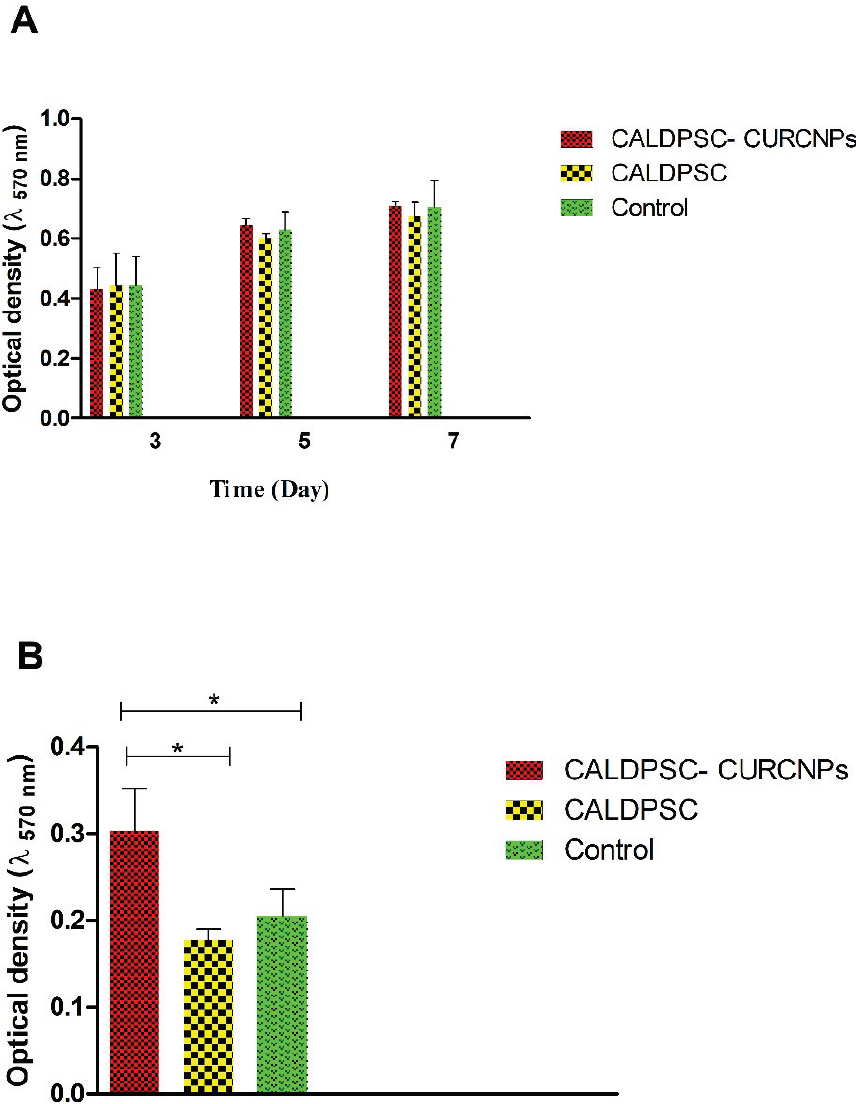
Fig. 1.
Viability of DPSCs cultured on CALDPSC-CURCNPs and CALDPSC hydrogels under (A) normal and (B) oxidative stress conditions, * shows p-value < 0.05
3.2. Swelling assay
Results (Figure 2A) showed that the CALDPSC-CURCNPs and CALDPSC hydrogels exhibited similar patterns of swelling over the course of 20 hours. At the initial hours of immersion, both hydrogels underwent instant swelling, and then the swelling percentage started to level off gradually to reach its minimum levels at the end of the 20th hour.
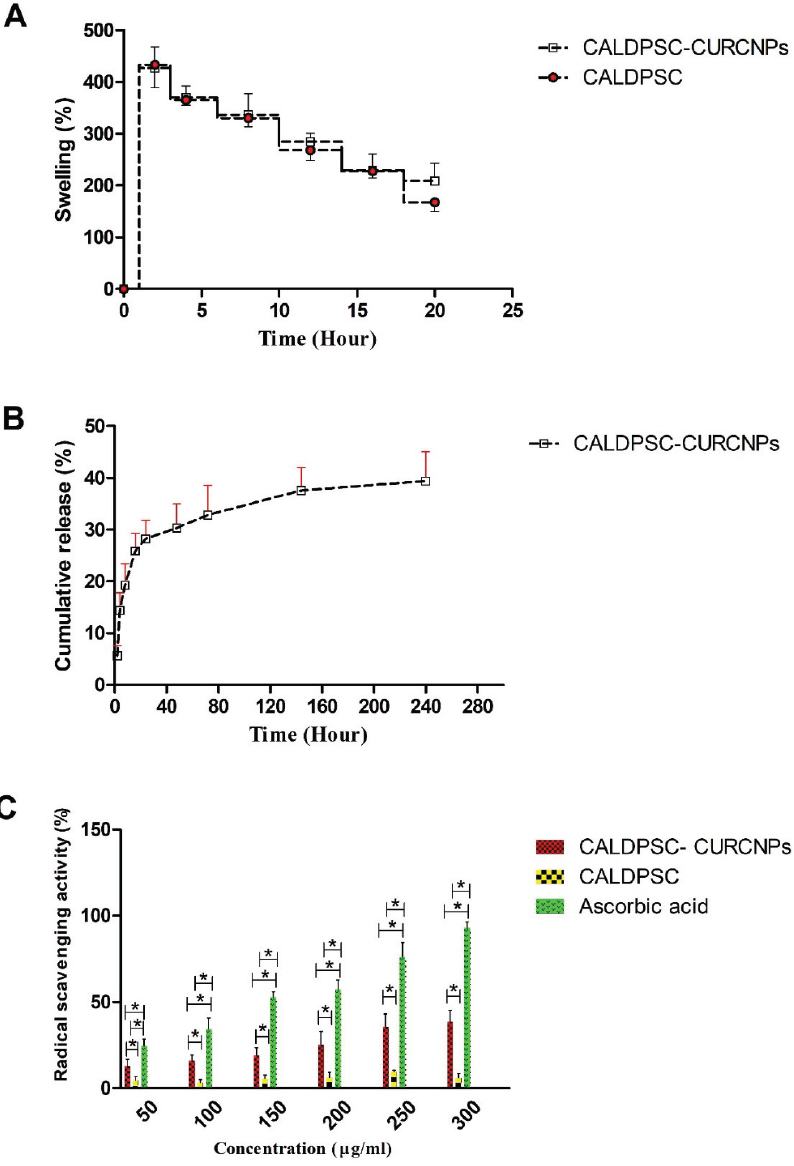
Fig. 2.
Graphs showing (A) swelling behavior of CALDPSC-CURCNPs and CALDPSC hydrogels, (B) release of curcumin from CALDPSC-CURCNPs hydrogels, and (C) radical scavenging activity of CALDPSC-CURCNPs and CALDPSC hydrogels compared with ascorbic acid. * shows p-value < 0.05
3.3. Release assay results
Results (Figure 2B) showed that curcumin was released from the matrix of CALDPSC-CURCNPs hydrogels in a sustained manner. At the initial hours, the rate of drug release was relatively faster leading to a burst release behavior. As time passed by, the cumulative release reached to a plateau and gradually increased. At the end of 10th day, the cumulative drug release had reached to 39.39 ± 5.69%.
3.4. DPPH assay results
Results (Figure 2C) showed that at all concentrations, CALDPSC-CURCNPs group had significantly higher radical scavenging activity than CALDPSC group. In addition, ascorbic acid had the highest percentage of radical scavenging than other groups.
3.5. Anti-inflammatory assay results
Results (Figure 3A) showed that J774A1 cells cultured on CALDPSC-CURCNPs hydrogels released significantly lower amounts of Il-6, IL-1β, and TNF-α than the cells cultured on CALDPSC and tissue culture plate. Differences between control and CALDPSC groups were not significant.
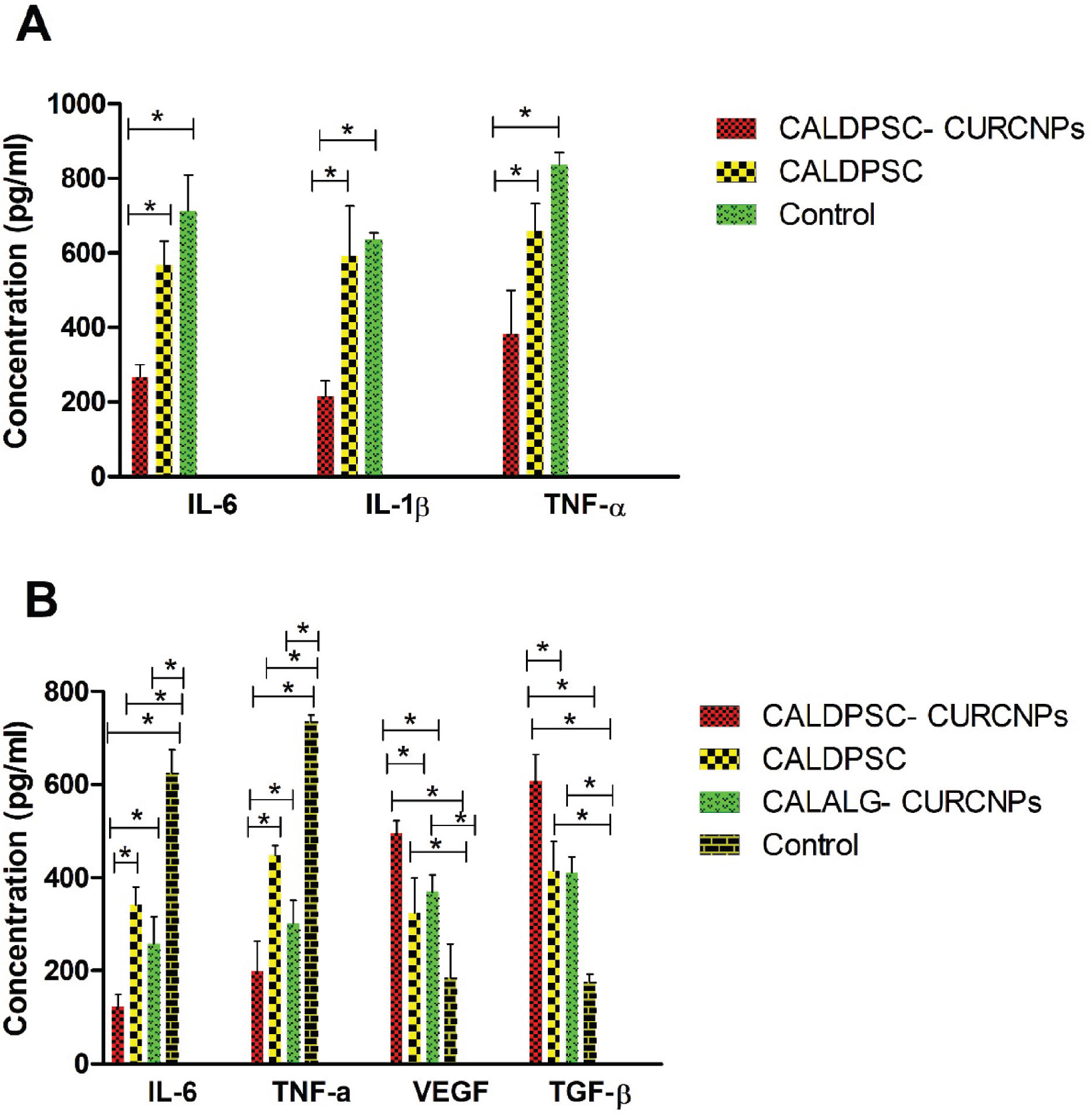
Fig. 3.
Histograms comparing (A) in vitro anti-inflammatory assay with J774A1 cells cultured on different hydrogel systems and (B) ELISA assay results in dental pulp tissues treated with nanocomposite hydrogels in a rat model, * shows p-value < 0.05
3.6. Scanning electron microscopy study results
Results (Figure 4) showed that CURCNPs and curcumin-free nanoparticles had round and smooth particles with a wide size distribution. The average size of the CURCNPs and curcumin-free nanoparticles was measured to be 288.55 ± 57.04 nm and 310.001 ± 125.56 nm, respectively.
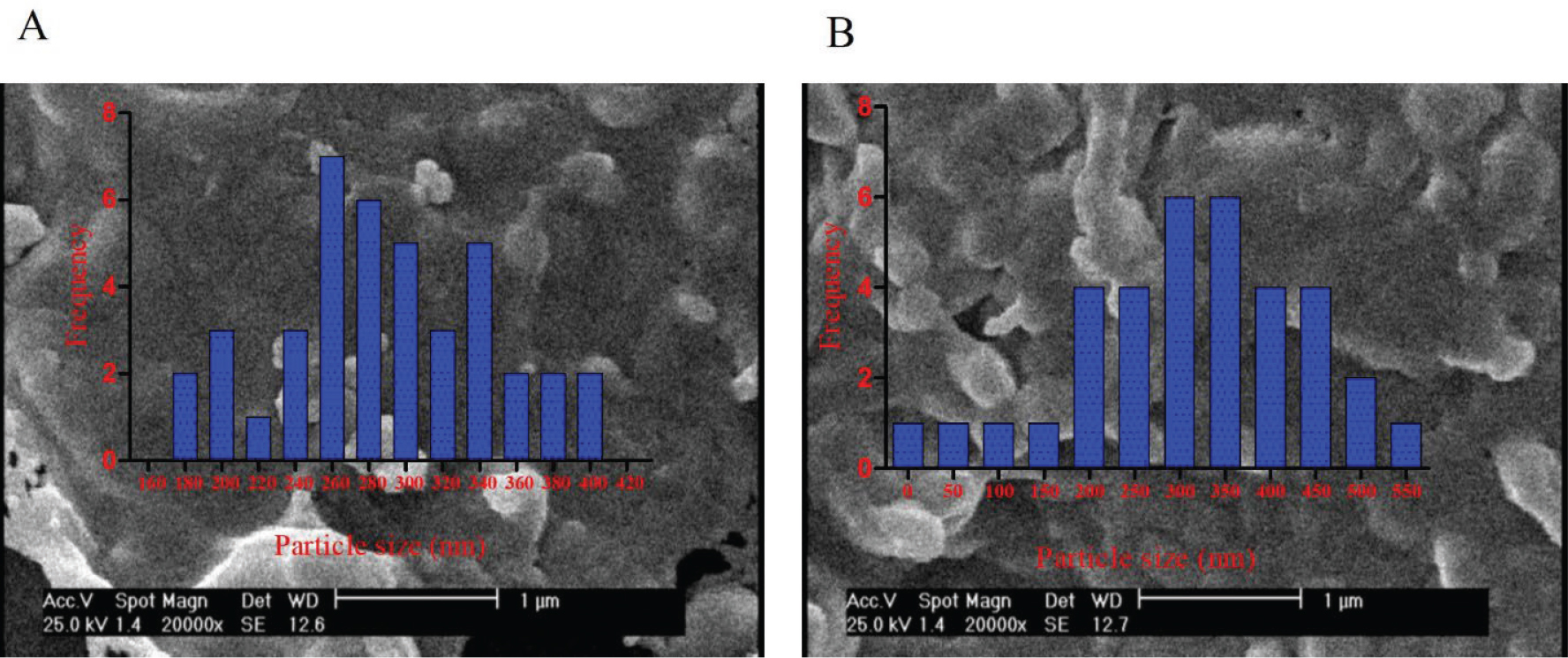
Fig. 4.
Representative scanning electron microscopy images of (A) CURCNPs and (B) curcumin-free nanoparticles
Microstructure studies of the hydrogel systems showed that CALDPSC-CURCNPs and CALDPSC hydrogels had a porous and fibrous architecture with a large pore size.
3.7. Histopathological examinations results
Histopathological images display that the negative control group manifested indications of inadequately healed tissue in the dental pulp. The H&E staining (Figure 6) exhibits a disarrayed tissue structure with disrupted pulp chambers and blood vessels. The pulp exhibits a densely populated cellular composition, featuring an abundance of fibroblasts, inflammatory cells, and an irregular network of collagen fibers. Evident inflammatory cell infiltration and tissue damage imply an insufficient healing response. Masson’s trichrome staining (Figure 7) reveals the presence of collagen fibers, but their distribution within the dental pulp appears disorderly and irregular, signifying a lack of proper tissue remodeling.
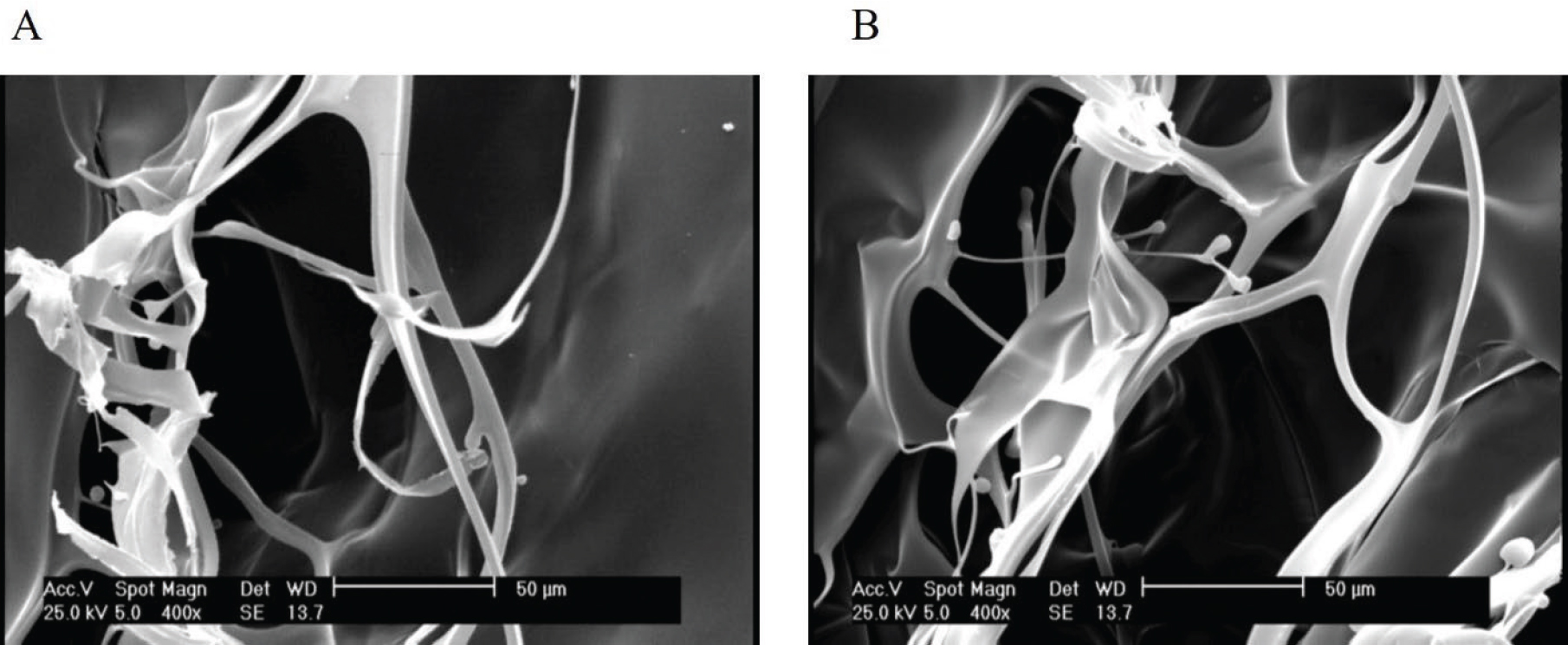
Fig. 5.
Representative scanning electron microscopy images of (A) CALDPSC-CURCNPs and (B) CALDPSC hydrogels
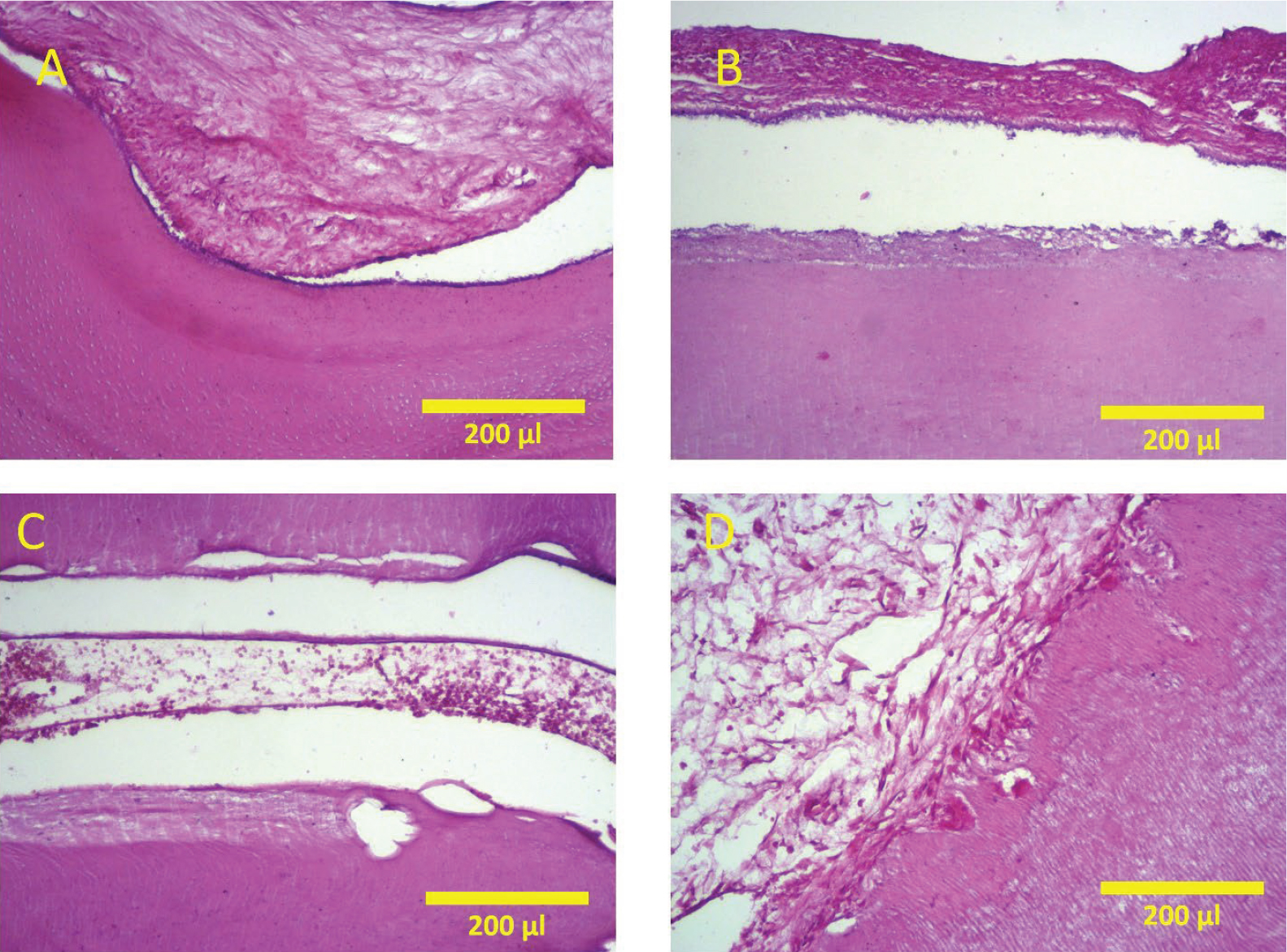
Fig. 6.
Representative H&E staining images of dental pulp tissues treated with (A) CALDPSC-CURCNPs, (B) CALDPSC, (C) CALALG-CURCNPs, and (D) control group
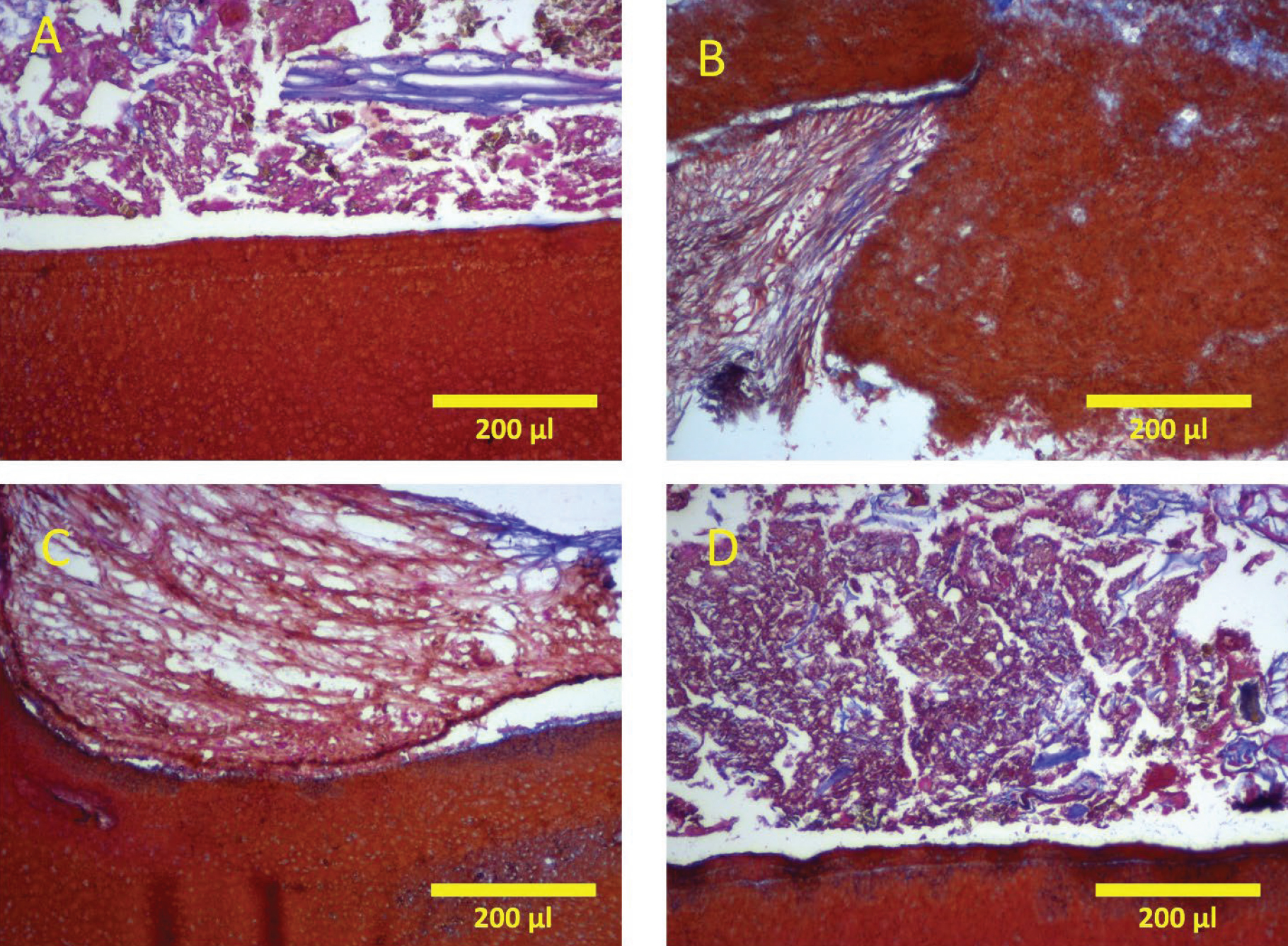
Fig. 7.
Representative Masson’s trichrome staining images of dental pulp tissues treated with (A) CALDPSC-CURCNPs, (B) CALDPSC, (C) CALALG-CURCNPs, and (D) control group
Histological assessment reveals notable alterations in the CALDPSC-CURCNPs group. H&E staining indicates an increased number of cells within the pulp, suggesting enhanced cellular proliferation. Additionally, the size of the pulp chambers is reduced due to the ingrowth of newly formed tissue. Masson’s trichrome staining displays the deposition of collagen fibers, indicating the promotion of tissue remodeling and repair.
Examining H&E-stained sections of pulp tissues treated with CALDPSC hydrogel, there is a moderate rise in cellular density within the pulp, suggesting a potential tissue response to the hydrogel treatment. However, the overall structure of the dental pulp remains inadequately restored. Masson’s trichrome staining indicates the presence of collagen fibers, although their distribution appears slightly altered compared to the control group.
In the CALALG-CURCNPs group, H&E and Masson’s trichrome staining of dental pulp tissues reveals a comparable cellular density and organization as observed in the CALDPSC hydrogel group, indicating a moderate increase in cellular density within the pulp.
3.8. Histomorphometry analysis results
Histomorphometry analysis (Figure 8) showed that cellular density in the pulp tissues treated with CALDPSC-CURCNPs hydrogels was significantly higher than in other groups. The CALDPSC and CALALG-CURCNPs groups had significantly higher cell density than the negative control group.
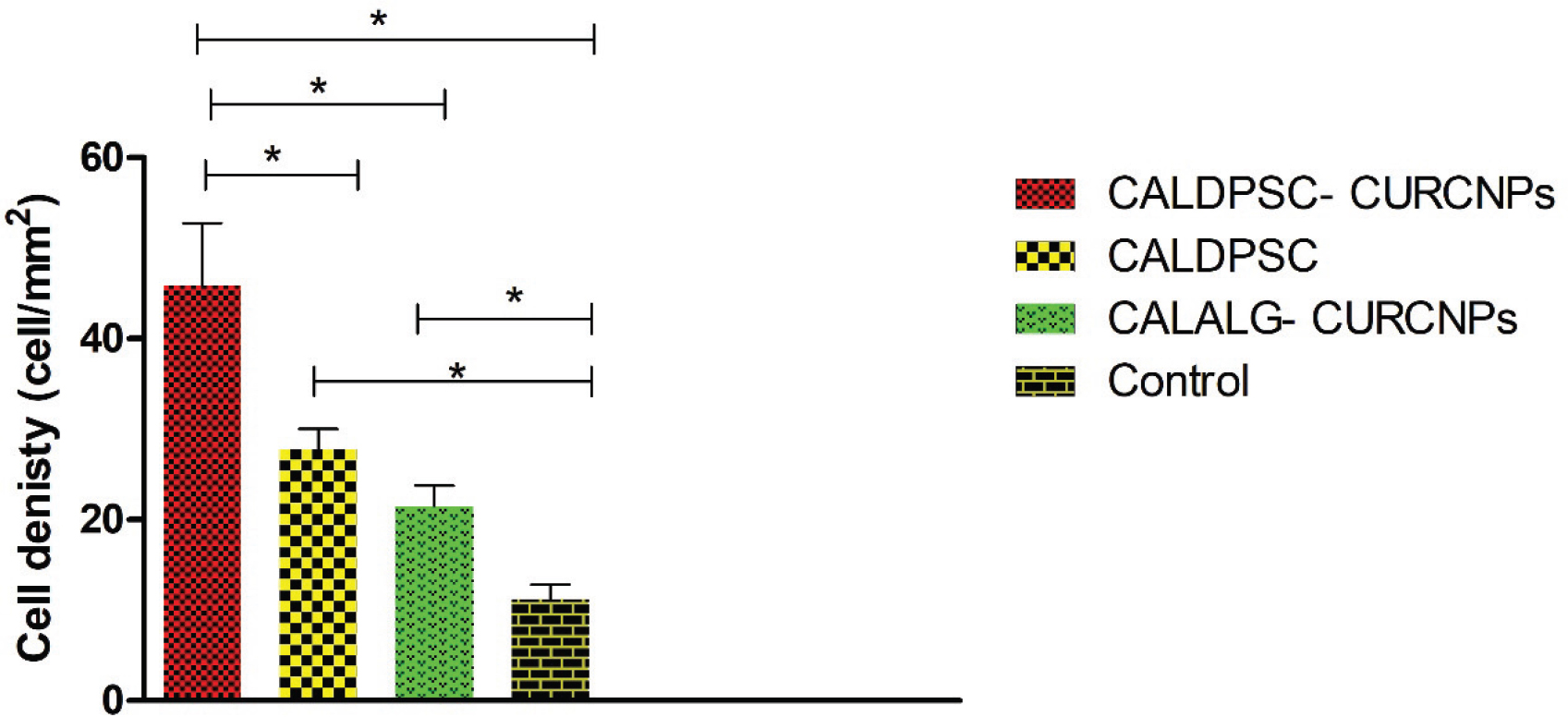
Fig. 8.
Histomorphometry analysis results in pulp tissues treated with different hydrogels. * Shows p-value < 0.05
3.9. ELISA assay results
Results (3B) showed that tissue concentrations of TGF-β and VEGF were significantly upregulated in pulp tissues treated with CALDPSC-CURCNPs hydrogels compared with other groups. In addition, tissue concentrations of IL-6 and TNF-α were significantly lower in this group than in other groups. The levels of TGF-β, VEGF, IL-6, and TNF-α were significantly different in the negative control group than in other groups. Statistically, no significant difference was found between CALDPSC and CALALG-CURCNPs groups.
4. Discussion
Dental pulp tissue engineering, utilizing drugdelivering nanocomposite hydrogels, represents a cutting-edge approach. These materials enhance tissue regeneration within the dental pulp, offering improved mechanical properties and controlled drug release [14]. The integration of nanocomposites creates a conducive environment for cell growth and differentiation, promising transformative advancements in regenerative dentistry. In the current research, a calcium alginate hydrogel was loaded with DPSCs conditioned media and CURCNPs in order to develop a potential treatment for dental pulp injury. The hydrogel system was biocompatible and protected DPSCs against oxidative stress. It could be that the protective role of DPSCs secretome or active compounds in curcumin has protected cells against the determinantal effects of oxidative stress. In this context, exosomes derived from DPSCs have anti-apoptotic effects and protect cells against damage [15]. It could also be that the radical scavenging activity of CURCNPs has quenched H2O2 free radicals and improved cell viability under oxidative stress [16]. In dental pulp tissue engineering, the swelling behavior of hydrogels is pivotal for creating a scaffold that mimics natural tissue hydration, promoting cell viability and tissue regeneration. The observed swelling behavior in our experiment could be due to reaching the swelling equilibrium at the maximum point of the swelling curve [17]. In addition, the reduction in swelling percentage could be due to the gradual biodegradation of samples. The sustained release of curcumin from the CALDPSC-CURCNPs hydrogels can be explained by diffusion, swelling, and erosion mechanisms [18]. By the way, the combination of these three mechanisms is also possible. The higher radical scavenging function of CALDPSC-CURCNPs over other scaffolds can be explained by the presence of curcumin. Indeed, it has been shown that curcumin scavenges radicals through hydrogen atom donation and electron transfer, utilizing its phenolic groups and conjugated double bonds. It also chelates metal ions, hindering radical formation [19]. The anti-inflammatory activity of CALDPSC-CURCNPs hydrogels can be explained by both DPSCs conditioned media and curcumin. DPSCs conditioned media contains various extracellular vesicles, and their immunomodulatory activities have been well-documented in previous research [20]. DPSCs alleviate inflammation and expedite wound healing in intestinal epithelial cells through the modulation of AKT, NF-κB, and ERK1/2 signaling pathways [21]. Curcumin’s anti-inflammatory mechanism involves the modulation of key signaling pathways, such as NF-κB, MAPK, and JAK/STAT [22, 23]. It inhibits proinflammatory gene expression, reducing inflammation and associated damage [23]. In terms of microstructure, the condensation of chitosan’s amine groups with TPP may have caused the small size of the CURCNPs [24]. Our in vivo study showed that the overall healing efficacy of CALDPSC-CURCNPs hydrogels was superior to other groups. This result could be due to the following reasons. Firstly, the upregulation of prohealing genes and downregulation of inflammation may be postulated. As shown in our ELISA assay results, IL-6 and TNF-α (pro-inflammatory cytokines) were downregulated, and VEGF (angiogenic protein) [25] and TGF-β [26] (involved in cell proliferation and tissue healing) were upregulated in dental pulp tissues treated with CALDPSC-CURCNPs hydrogels. Secondly, the radical scavenging activity of CALDPSC-CURCNPs hydrogels may have quenched excessive free radical species and promoted tissue healing. Finally, the synergistic healing efficacy of curcumin and DPSCs-derived conditioned media may have activated healing pathways in pulp tissues, which were elucidated in this research.
5. Conclusion
In conclusion, the development of a delivery system for DPSC-conditioned media and CURCNPs represents a significant advancement in dental pulp tissue engineering. The nanocomposite hydrogel, comprising a calcium alginate matrix loaded with DPSC-conditioned media and CURCNPs, demonstrated biocompatibility, protection against oxidative stress, and a unique swelling behavior conducive to tissue regeneration. The combination of DPSC-conditioned media and CURCNPs showcased remarkable anti-inflammatory properties, attributed to the immunomodulatory effects of DPSCs extracellular vesicles and curcumin’s inhibition of key inflammatory signaling pathways. The in vivo study further validated the superior healing efficacy of the CALDPSC-CURCNPs hydrogels over other groups. Upregulation of pro-healing genes, downregulation of proinflammatory cytokines, and enhanced expression of angiogenic proteins in dental pulp tissues treated with CALDPSC-CURCNPs hydrogels highlighted the potential of this approach for promoting tissue healing. In summary, this research opens avenues for transformative advancements in dental pulp tissue engineering, emphasizing the potential of the developed hydrogel system as a viable and effective treatment for dental pulp injuries. The integration of nanocomposites, DPSCs, and curcumin holds great promise for future applications in regenerative dentistry. In our study, several drawbacks warrant consideration. Firstly, our focus primarily lies on animal models, lacking extensive human clinical trials to validate the system’s efficacy and safety in real-world dental scenarios. Additionally, the long-term effects and potential adverse reactions of the nanocomposite hydrogel on dental pulp and surrounding tissues remain uncertain. Further, elucidating the precise mechanisms underlying the observed outcomes, particularly the interactions between DPSC-conditioned media, CURCNPs, and host tissues, is imperative for refining therapeutic strategies. Addressing these limitations is crucial for translating our findings into practical and sustainable treatments for dental pulp injuries.