
Table 1
Nomenclature of the produced cementitious plate samples
| Plate designation | Replacement ratio of EVA (by volume) | Coating GFRP |
|---|---|---|
| PC | 0 | – |
| L18 | 18 | – |
| L32 | 32 | – |
| L45 | 45 | – |
| L56 | 56 | – |
| CPC | 0 | Coated |
| CL18 | 18 | Coated |
| CL32 | 32 | Coated |
| CL45 | 45 | Coated |
| CL56 | 56 | Coated |
[i] EVA, ethylene vinyl acetate; GFRP, glass fiber woven fabric
Table 2
Properties of the materials that make up cementitious plates
| Materials | Properties | Type |
|---|---|---|
| Cement | Density: 3.15 (g/cm3) | Type I blane fineness: 3,250 (kg/m2) |
| Aggregates | Density: 2.6 (g/cm3) | Sand 4 mm |
| EVA | Density: 0.55 (g/cm3) | 2–4 mm |
| Water | Potable | |
| Superplasticizer | Specific gravity (20°C): 1.069–1.109 (kg/l) | Polycarboxylic ether based |
[i] EVA, ethylene vinyl acetate
Table 3
Properties of glass fiber woven fabric
| Fiber type | Woven fabric (g/m2) |
|---|---|
| Areal weight | 600 g (±5%) |
| Style/Pattern | Biax 0–90 – stitch |
| Tensile strength | 3,500 (MPa) |
| Tensile modulus | 72 (GPa) |
Table 4
Properties of resin epoxy and resin hardener
| L160 | H160 | |
|---|---|---|
| Density (g/cm3) | 1.13–1.17 | 0.96–1.00 |
| Viscosity (MPa) | 700–900 | 10–50 |
| Epoxy equivalent (g/equivalent) | 166–182 | |
| Epoxy value (value/100 g) | 0.55–0.60 | |
| Refractor index | 1.5480–1.5530 | 1.5200–1.5210 |
| Measurement conditions | 25°C | 25°C |
| Flexural strength (MPa) | 110–140 | |
| Modulus of elasticity (GPa) | 3.2–3.5 | |
| Tensile strength (MPa) | 70–80 | |
| Elongation at break (%) | 5.0–6.5 |
Table 5
Concrete mix design
| Sample | Weight cement (kg) | Weight water (kg) | Weight plasticizer (kg) | Weight aggregate (kg) | Weight EVA (kg) |
|---|---|---|---|---|---|
| PC | 507.28 | 253.64 | 2.54 | 1,521.83 | 0 |
| L18 | 507.28 | 253.64 | 2.54 | 1,369.65 | 61.46 |
| L32 | 507.28 | 253.64 | 2.54 | 1,217.47 | 122.92 |
| L45 | 507.28 | 253.64 | 2.54 | 1,065.28 | 184.38 |
| L56 | 507.28 | 253.64 | 2.54 | 913.10 | 245.83 |
[i] EVA, ethylene vinyl acetate
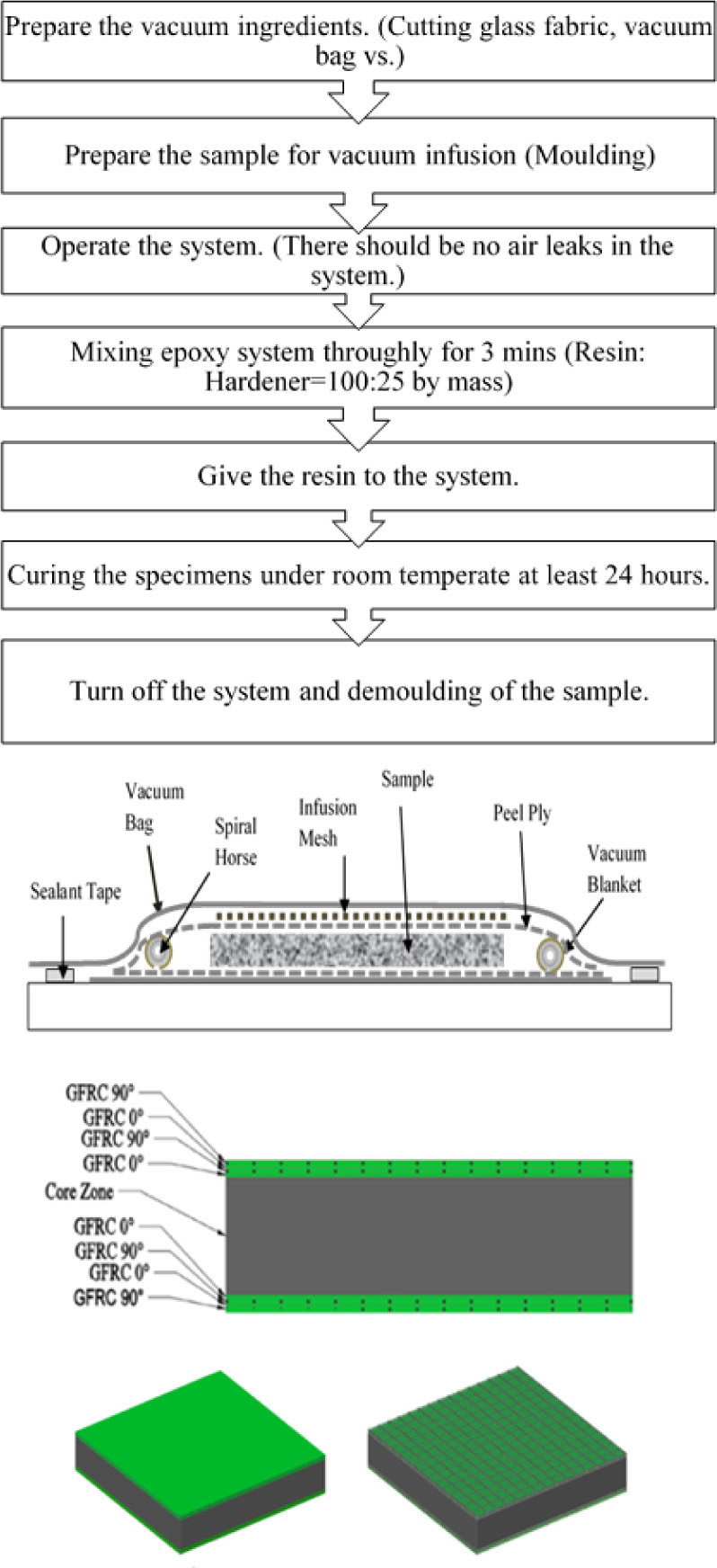
Fig. 1
Processes of vacuum infusion
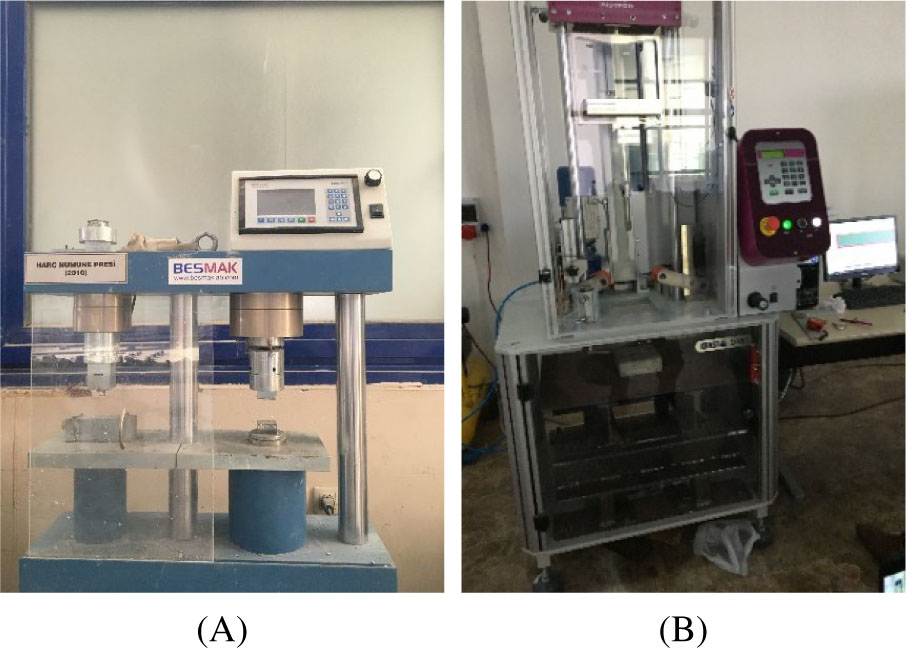
Fig. 2
Test machine (A) compressive strength (B) low-velocity impact
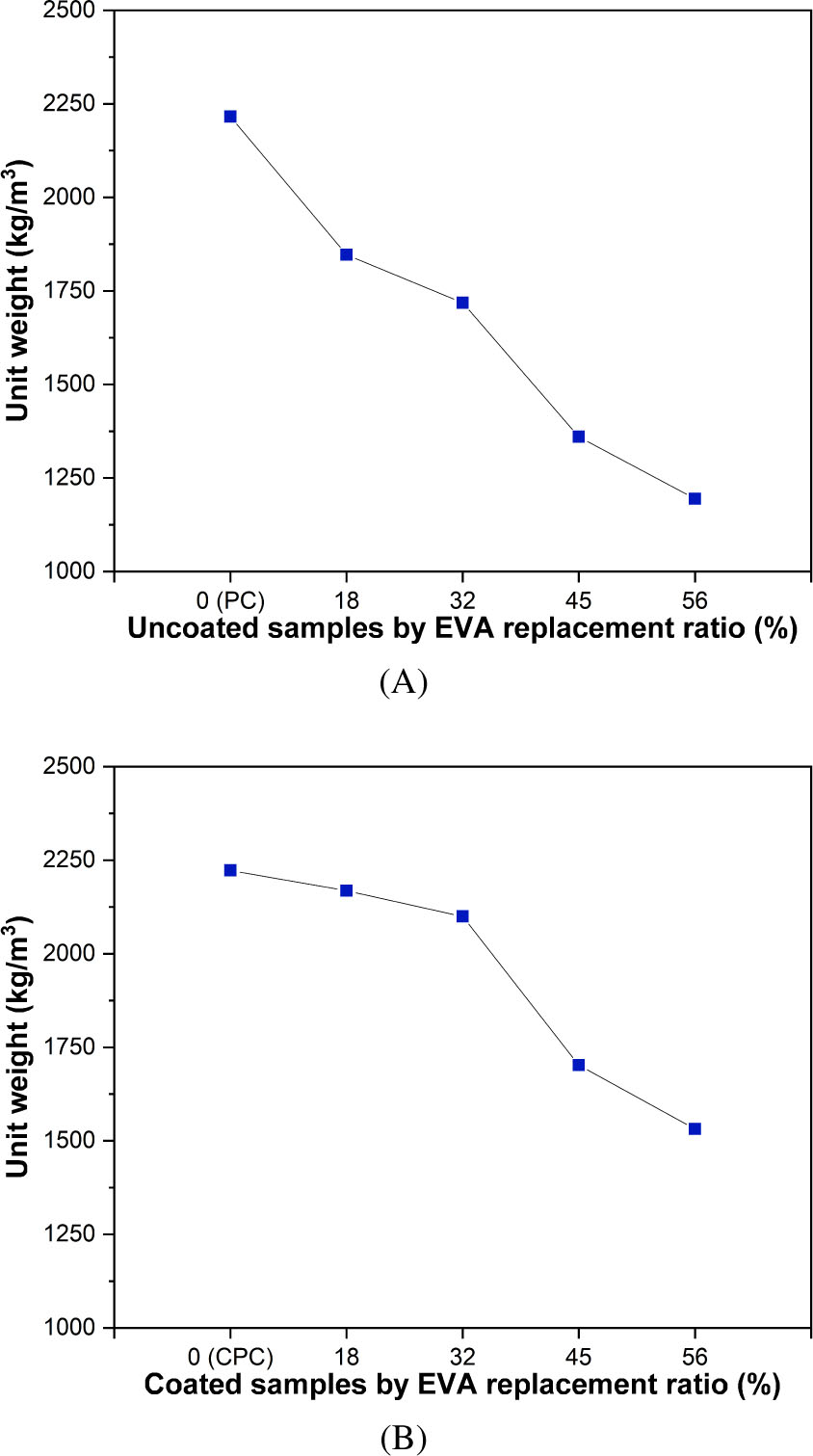
Fig. 3
Unit weight changes of cementitious samples depending on (A) EVA replacement ratio by volume (B) EVA replacement ratio by volume and GFRP coating process. EVA, ethylene vinyl acetate; GFRP, glass fiber woven fabric
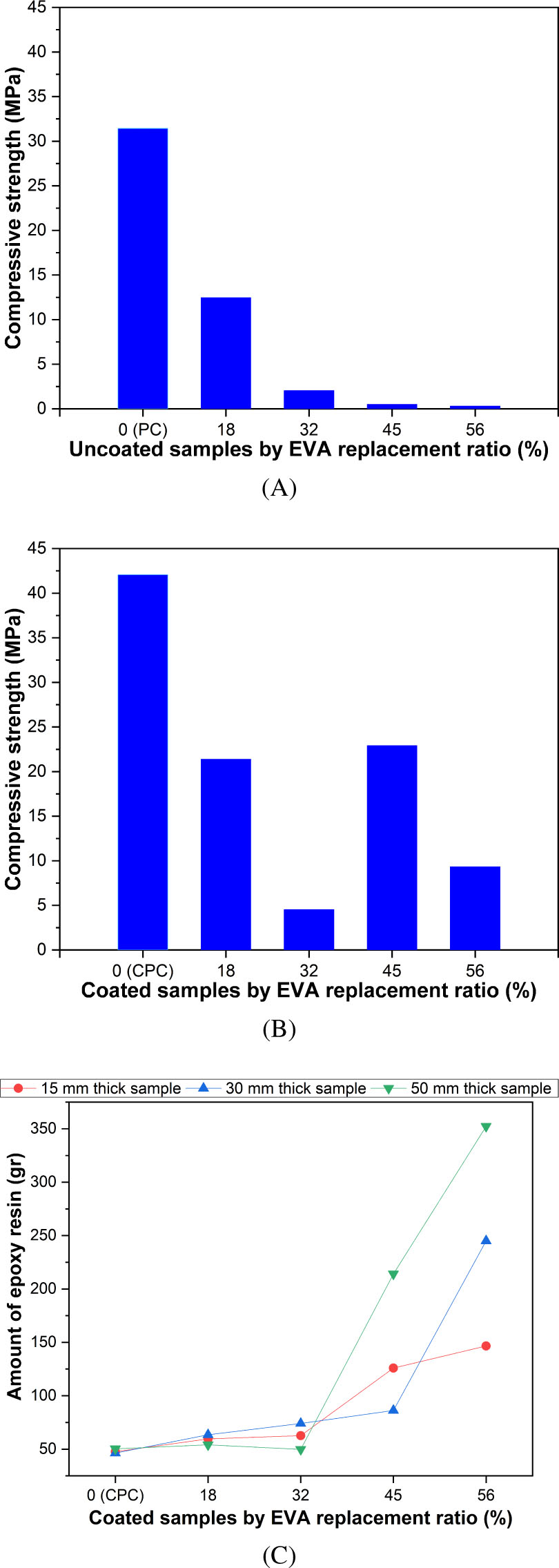
Fig. 4
Average maximum compressive stress (A) un-coated samples (B) coated samples (C) amount of resin epoxy for samples with various thicknesses. EVA, ethylene vinyl acetate
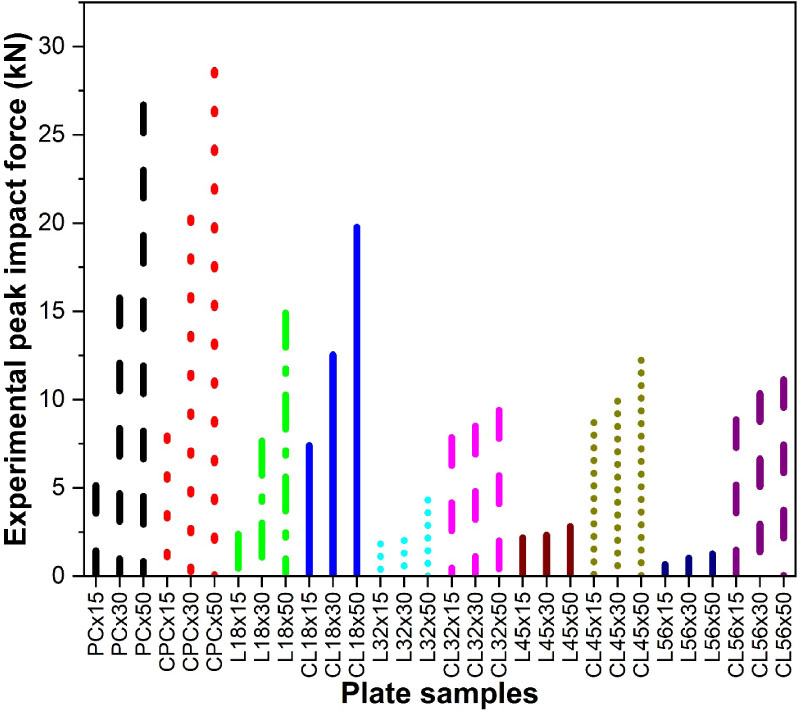
Fig. 5
Dynamic test results: maximum load for un-coated and coated plate samples
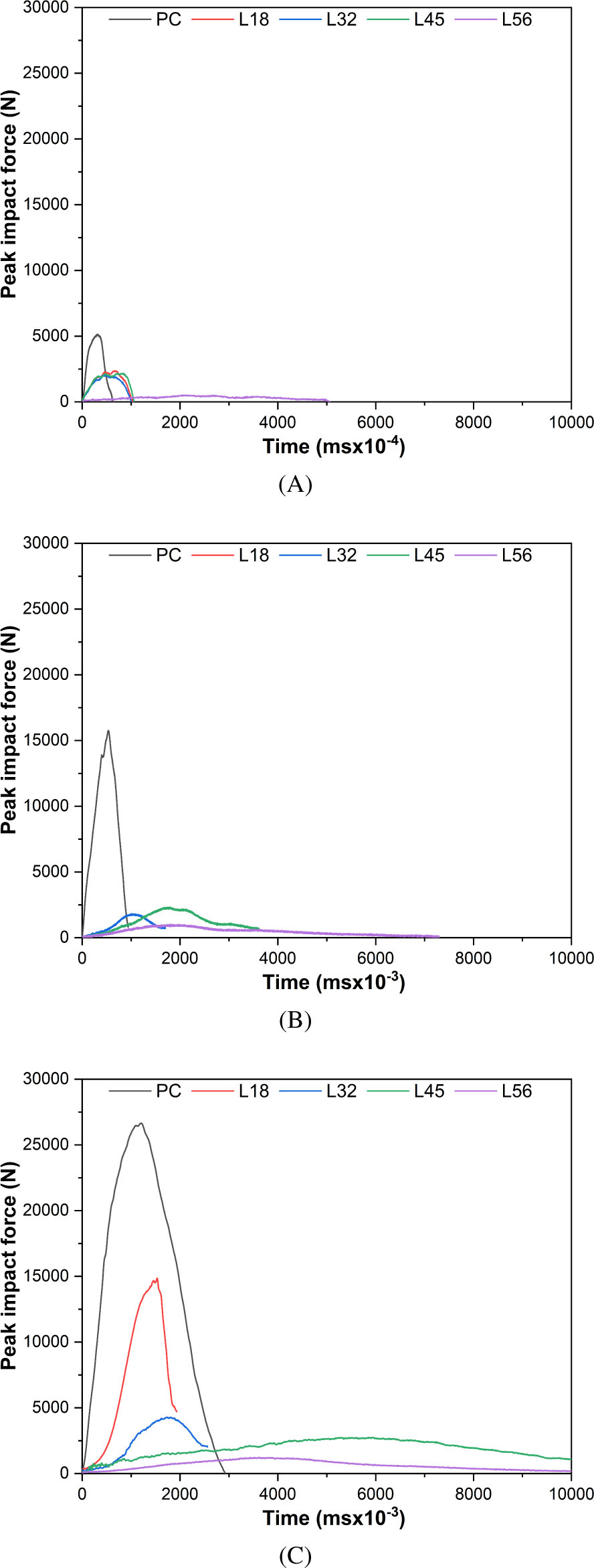
Fig. 6
Force-time curves for PC, L18, L32, L45, and L56 samples (A) 15 mm (B) 30 mm (C) 50 mm thickness
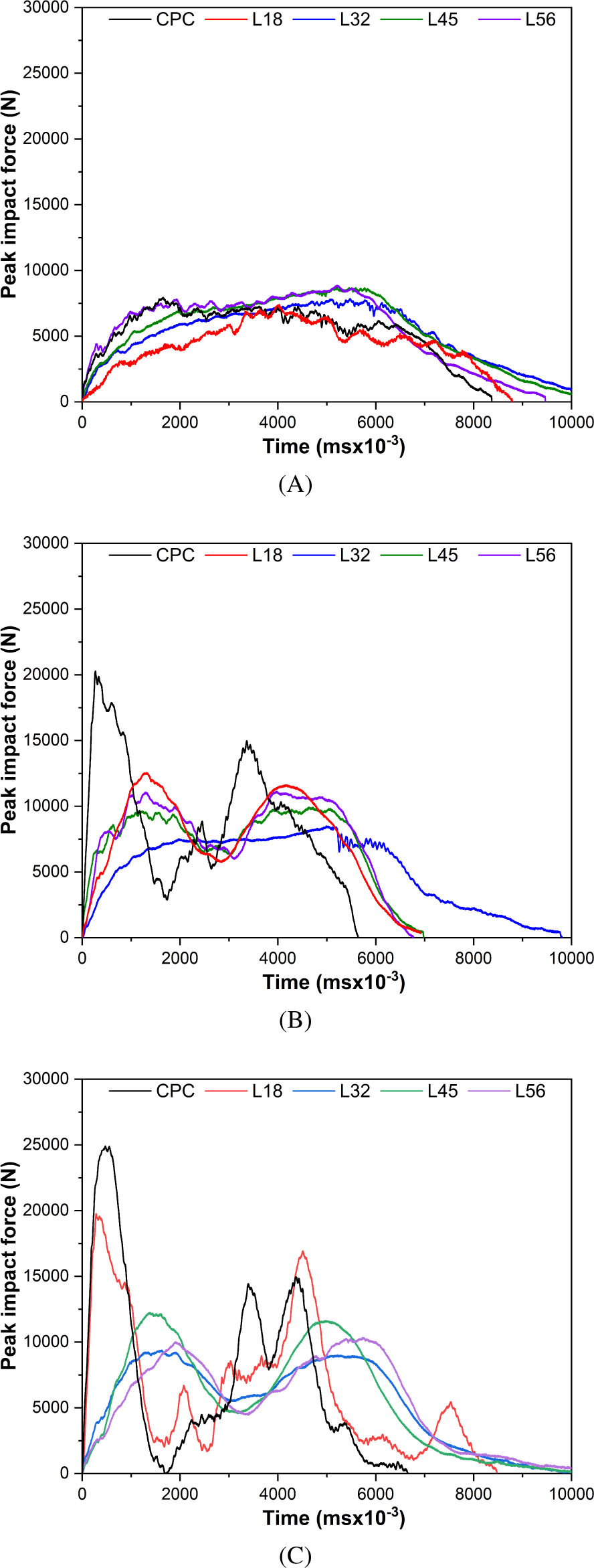
Fig. 7
Force-time curves for CPC, CL18, CL32, CL45, and CL56 samples (A) 15 mm (B) 30 mm (C) 50 mm thickness
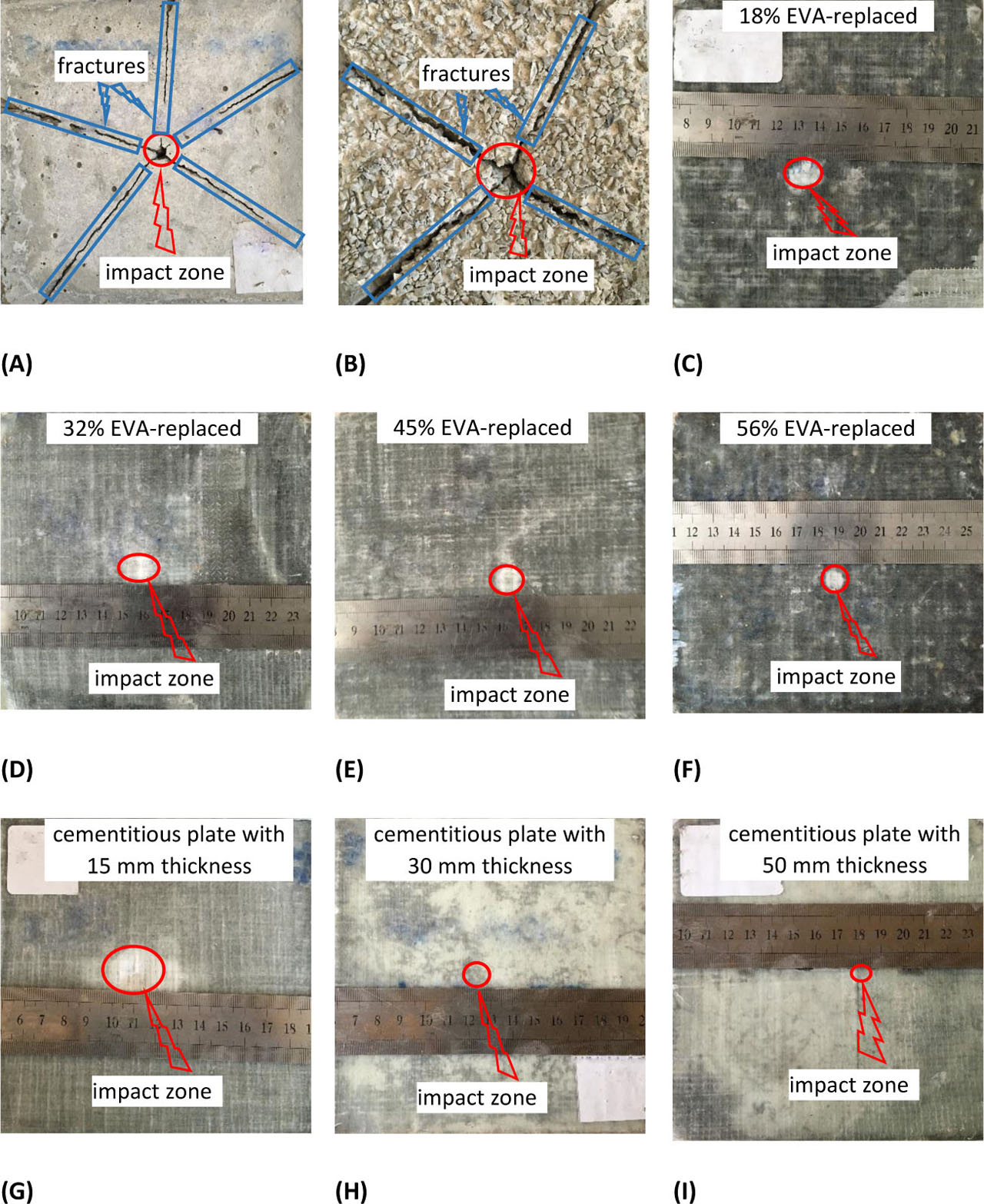
Fig. 8
Cementitious samples after impact test; (A) uncoated cementitious control plate (B) uncoated cementitious plate with EVA-replaced samples (C) coated sample 18% EVA-replaced (D) coated sample 32% EVA-replaced (E) coated sample 45% EVA-replaced (F) coated sample 56% EVA-replaced (G) coated control plate with 15 mm thickness (H) coated control plate with 30 mm thickness (I) coated control plate with 50 mm thickness. EVA, ethylene vinyl acetate
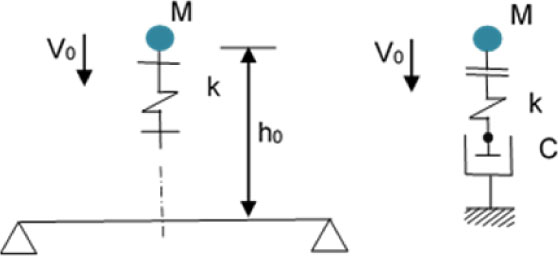
Fig. 9
Mass-plate impact sketch and equivalent system [30]
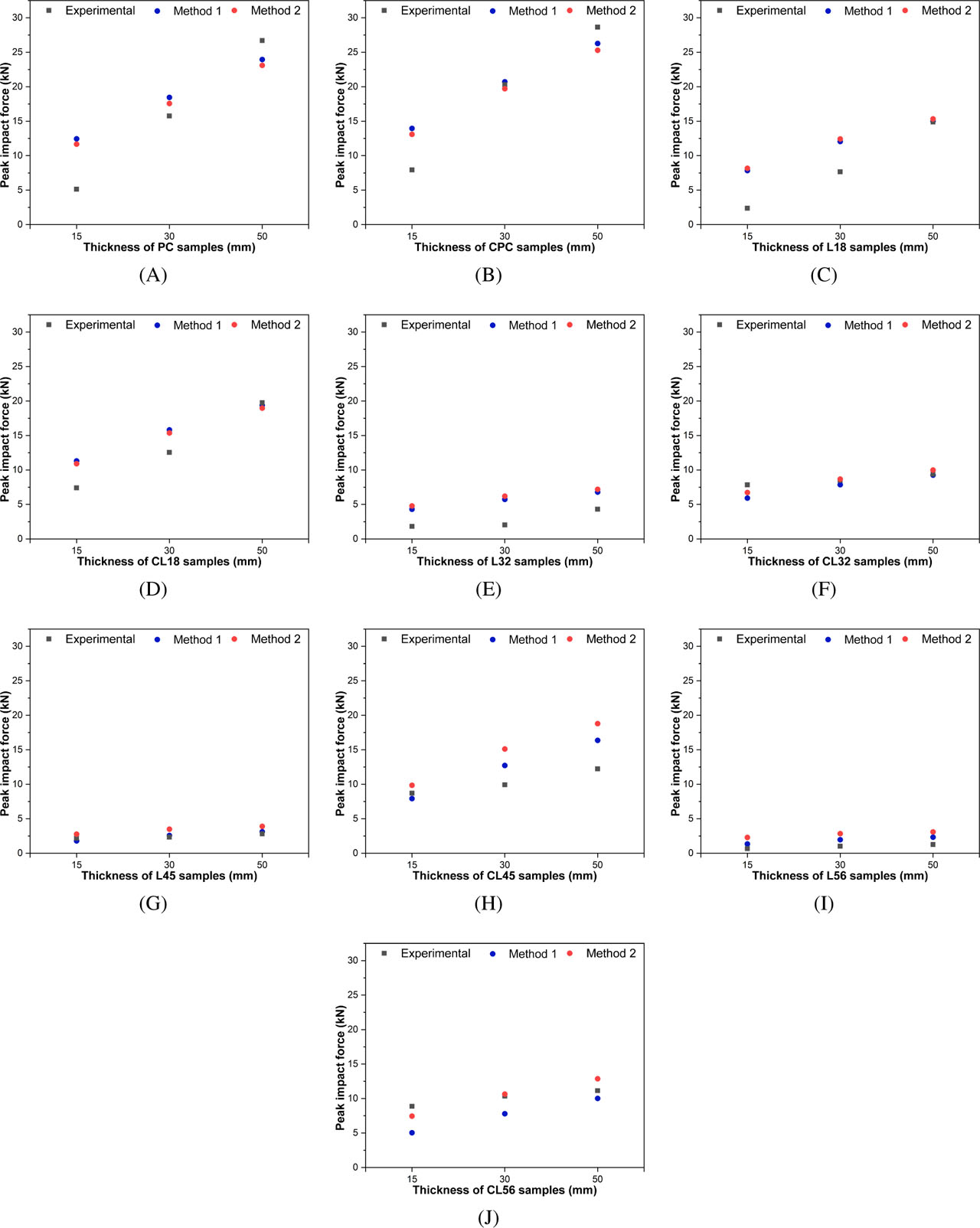
Fig. 10
Graphical representation of experimental and theoretical results for uncoated samples (A, C, E, G, I) and coated samples (B, D, F, H, J)