
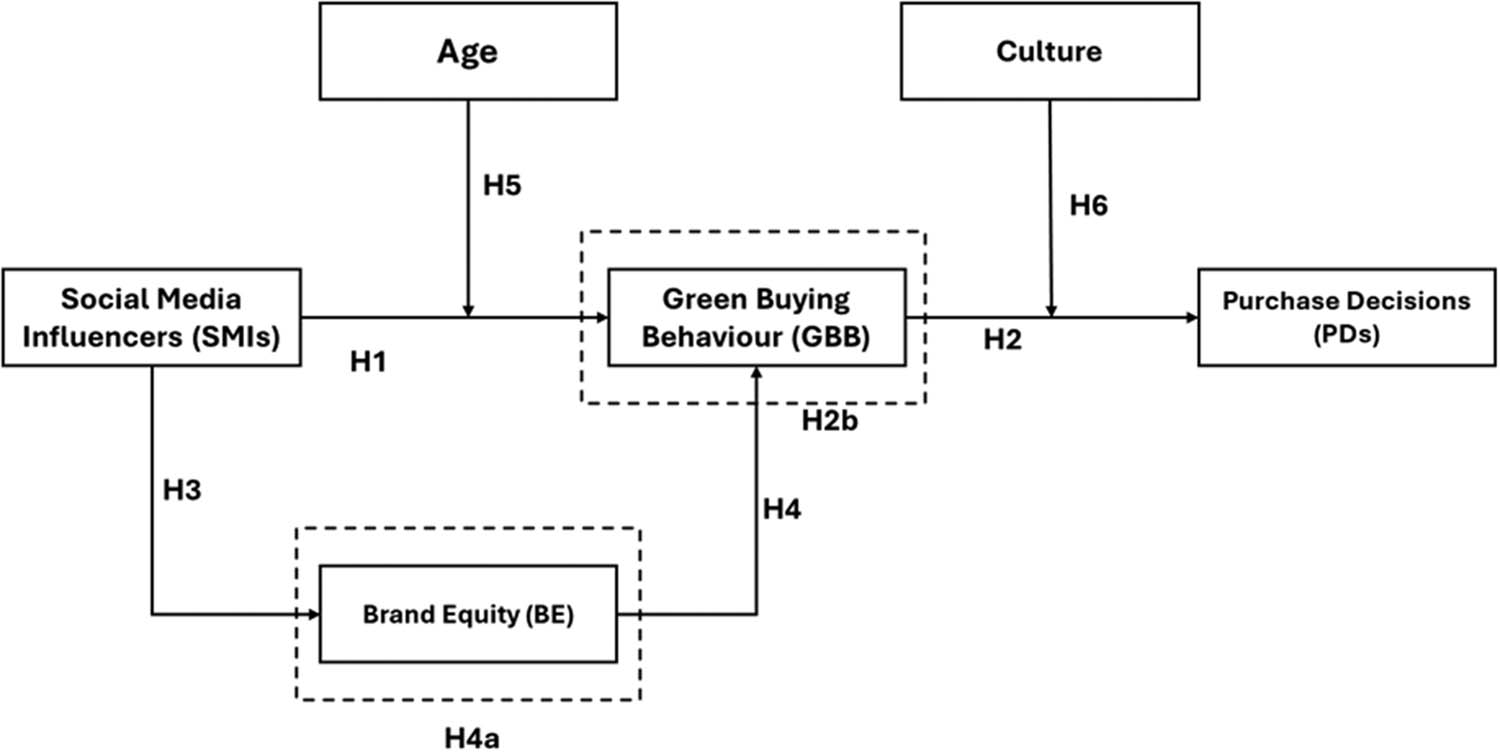
Figure 1
Conceptual framework.
Source: Author’s compilation from SmartPLS4
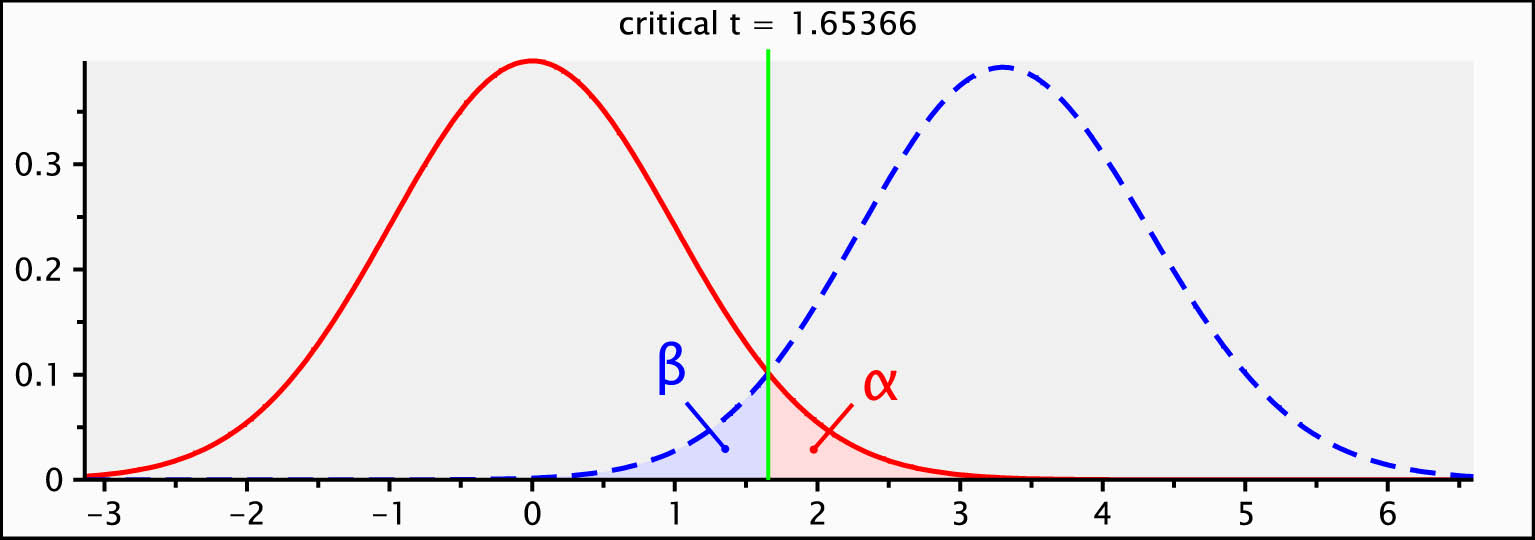
Figure 2
G-power sample size.
Source: Author’s compilation from SmartPLS4
Table 1
Construct definition.
| Construct | Definition | References |
|---|---|---|
| SMIs | Individuals who have built a reputation on social media platforms for their knowledge, authenticity, and content creation, influencing followers’ attitudes and behaviors | Lou & Yuan (2019); Belanche et al. (2021) |
| GBB | Consumption behavior that reflects concern for the environment, leading to the purchase of environmentally friendly products | Peattie (2010); Joshi & Rahman (2015) |
| PDs | The outcome of consumer evaluation reflecting the final act of selecting and buying a product, especially in response to environmental values and motivations. | Yadav & Pathak (2017) |
| BE | The value and strength of a brand as perceived by consumers, including brand awareness, associations, perceived quality, and loyalty. | Aaker (1991); Kim & Hyun (2011) |
| Age | A demographic variable representing the respondent’s age is often used to assess generational differences in consumer attitudes and behaviors. | Djafarova & Rushworth (2017) |
| CU | The shared values, beliefs, and norms of a group that influence consumption behavior are often differentiated by collectivist vs individualist tendencies. | Hofstede (2001); Sharma (2014) |
Source: Author’s compilation from SmartPLS4
Table 2
Participants information.
| Series | Constructs | Frequency | Percentage |
|---|---|---|---|
| Gender | Male | 211 | 36.6 |
| Female | 365 | 63.4 | |
| Age | 20–25 | 126 | 21.9 |
| 26–30 | 219 | 38.0 | |
| 31–35 | 148 | 25.6 | |
| 36–40 | 83 | 14.4 | |
| Education | Diploma/Higher national diploma | 106 | 18.4 |
| Bachelor/Undergraduate | 263 | 45.7 | |
| Master/Graduate | 139 | 24.1 | |
| Ph.D. | 68 | 11.8 | |
| Faculty | Business administration | 127 | 22.0 |
| Health and allied science | 96 | 16.7 | |
| Education | 189 | 32.8 | |
| Engineering | 73 | 12.7 | |
| Law | 91 | 16.0 | |
| University type | Public | 6 | |
| Private | 4 |
Source: Author’s compilation
Table 3
Reliability and validity synopsis.
| Series | Proxy | Outer loadings | Cronbach’s alpha | Rho_a | Composite reliability | AVE | VIF |
|---|---|---|---|---|---|---|---|
| SMIs | 0.833 | 0.836 | 0.889 | 0.667 | |||
| SMIs 1 | 0.846 | 2.626 | |||||
| SMIs 2 | 0.855 | 2.826 | |||||
| SMIs 3 | 0.794 | 1.877 | |||||
| SMIs 4 | 0.767 | 1.656 | |||||
| GBB | 0.935 | 0.935 | 0.954 | 0.837 | |||
| GBB1 | 0.877 | 2.693 | |||||
| GBB2 | 0.933 | 4.494 | |||||
| GBB3 | 0.927 | 4.474 | |||||
| GBB4 | 0.921 | 3.914 | |||||
| BE | 0.866 | 0.870 | 0.909 | 0.713 | |||
| BE1 | 0.843 | 2.093 | |||||
| BE2 | 0.854 | 2.231 | |||||
| BE3 | 0.835 | 2.327 | |||||
| BE4 | 0.846 | 2.315 | |||||
| CU | 0.870 | 0.879 | 0.912 | 0.722 | |||
| CU1 | 0.848 | 2.297 | |||||
| CU2 | 0.919 | 3.269 | |||||
| CU3 | 0.841 | 2.138 | |||||
| CU4 | 0.785 | 1.724 | |||||
| PD | 0.920 | 0.924 | 0.943 | 0.805 | |||
| PDs1 | 0.878 | 2.992 | |||||
| PDs2 | 0.919 | 4.080 | |||||
| PDs3 | 0.895 | 3.314 | |||||
| PDs4 | 0.897 | 2.846 |
Note: VIF - Variance inflation factor, AVE - Average variance extract.
Source: Author’s compilation from SmartPLS4
Table 4
Fornell Larcker.
| BE | CU | GBB | PDs | SMIs | |
|---|---|---|---|---|---|
| BE | 0.845 | ||||
| CU | 0.803 | 0.849 | |||
| GBB | 0.541 | 0.638 | 0.915 | ||
| PDs | 0.535 | 0.634 | 0.888 | 0.897 | |
| SMIs | 0.653 | 0.689 | 0.813 | 0.749 | 0.817 |
BE – brand equity, Cu – culture, GBB – green buying behavior, SMIs – social media influencers, PDs – purchase decisions.
Source: Author’s compilation from SmartPLS4
Table 5
HTMT.
| Series | BE | CU | GBB | PDs | SMIs |
|---|---|---|---|---|---|
| BE | |||||
| CU | 0.825 | ||||
| GBB | 0.595 | 0.716 | |||
| PDs | 0.575 | 0.706 | 0.853 | ||
| SMIs | 0.768 | 0.810 | 0.816 | 0.851 |
BE – brand equity, Cu – culture, GBB – green buying behavior, SMIs – social media influencers, PDs – purchase decisions.
Source: Author’s compilation from SmartPLS4
Table 6
Hypothesis.
| Series | Beta | Standard dev | T – value | Prob | Decision |
|---|---|---|---|---|---|
| Direct | |||||
| H1: SMIs → GBB | 0.802 | 0.024 | 24.583 | 0.000 | Yes |
| H2: GBB → PDs | 0.813 | 0.026 | 31.783 | 0.000 | Yes |
| H3: SMIs → BE | 0.653 | 0.031 | 20.850 | 0.000 | Yes |
| H4: BE → GBB | 0.017 | 0.036 | 0.477 | 0.634 | No |
| Mediating | |||||
| SMIs → GBB → PDs | 0.652 | 0.035 | 18.657 | 0.000 | Yes |
| SMIs → BE → GBB | 0.011 | 0.023 | 0.476 | 0.634 | No |
| Moderating | |||||
| Age*SMIs → GBB | -0.001 | 0.045 | 0.013 | 0.990 | No |
| CU*GBB → PDs | -0.044 | 0.018 | 2.399 | 0.016 | Yes |
BE – brand equity, Cu – culture, GBB – green buying behavior, SMIs – social media influencers, PDs – purchase decisions.
Source: Author’s compilation from SmartPLS4
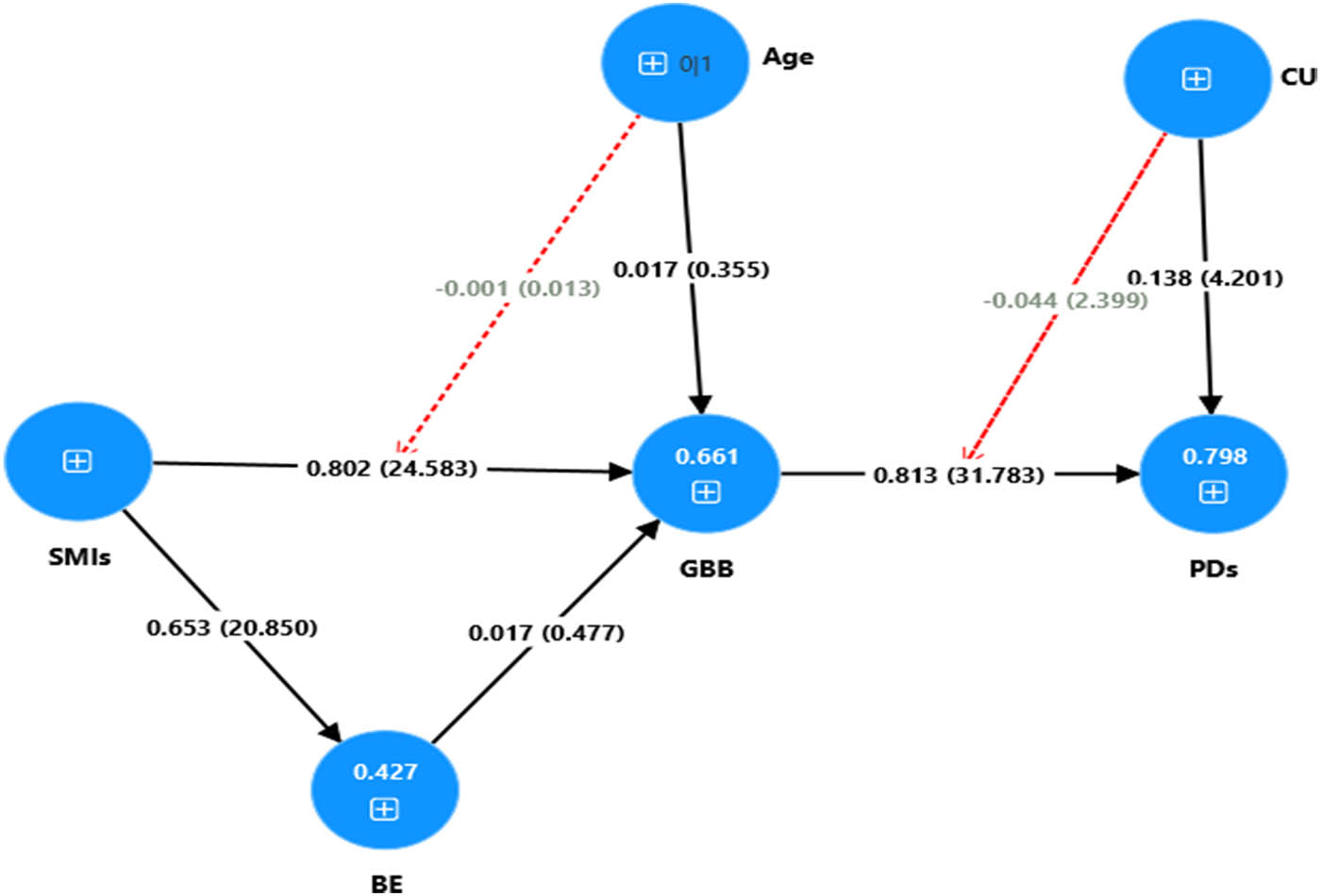
Figure 3
Structural model output.
Source: Author’s compilation from SmartPLS4
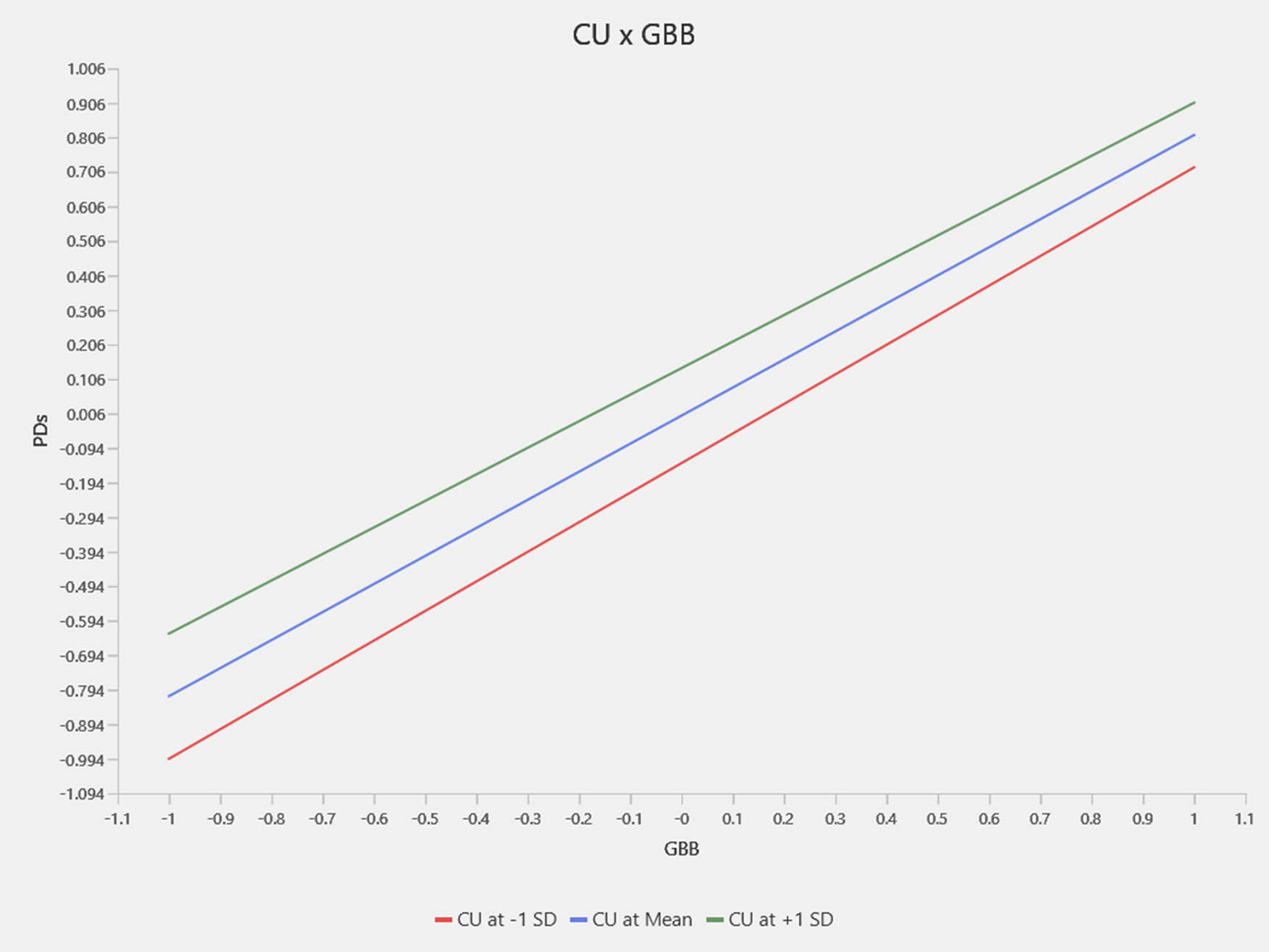
Figure 4
Slope analysis of CU*GBB → PDs.
Source: Author’s compilation from SmartPLS4
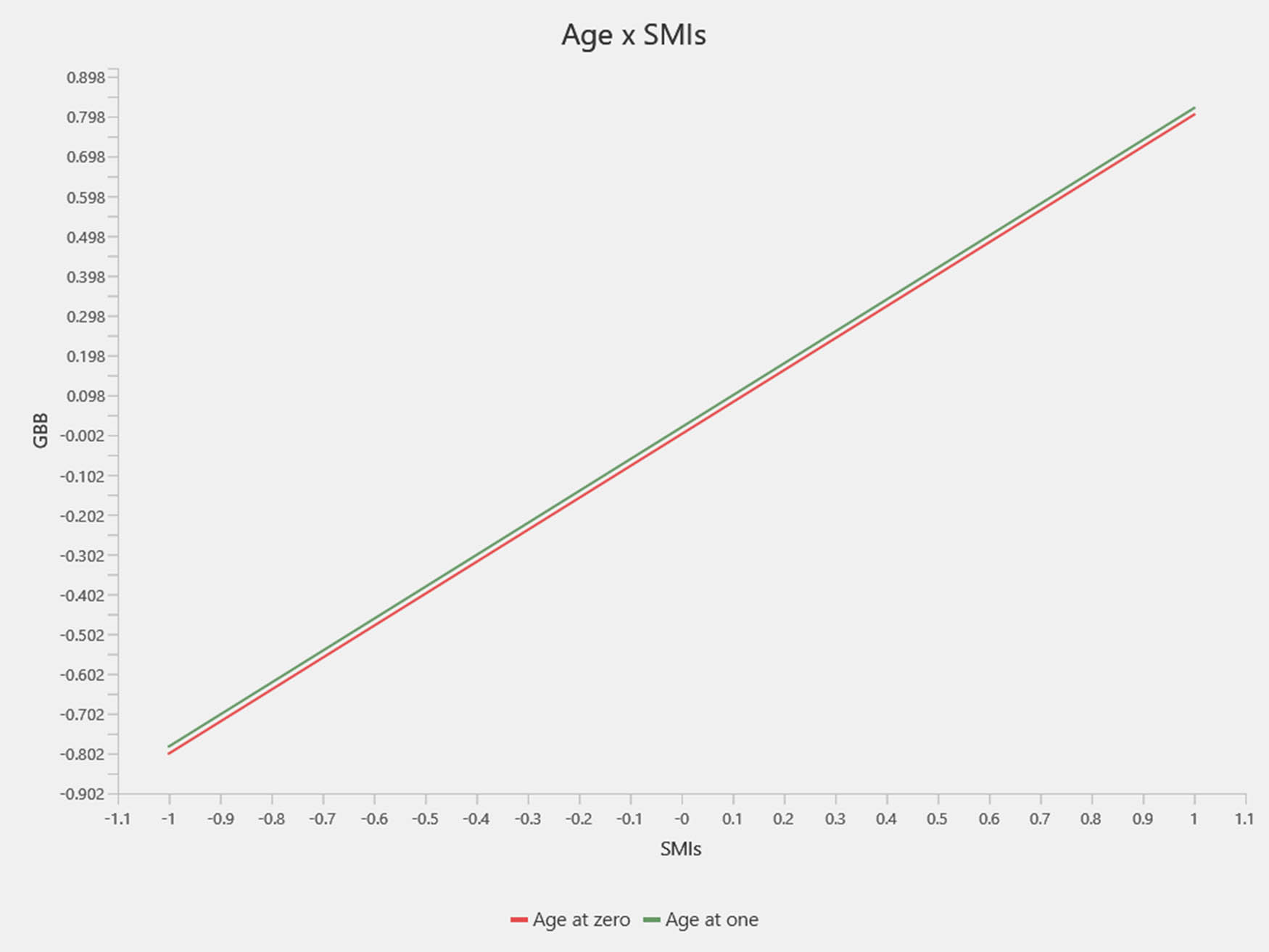
Figure 5
Slope analysis of Age*SMIs → GBB.
Source: Author’s compilation from SmartPLS4
Appendix A1
Measurement of constructs.
| Construct | Measurement items | Supporting references |
|---|---|---|
| SMIs | SMI1: I follow SMIs who promote eco-friendly products. | Lou & Yuan (2019); Belanche et al. (2021) |
| SMI2: I trust the product recommendations of eco-conscious influencers. SMI3: Influencers shape my opinions about sustainable brands. SMI4: I am more likely to buy a product if pro | ||
| GBB | GBB1: I prefer buying environmentally friendly products. | Peattie (2010); Joshi & Rahman (2015); Yadav & Pathak (2017) |
| GBB2: I consider the environmental impact before purchasing. GBB3: I support brands that are known for their green practices. GBB4: I avoid products that harm the environment. | ||
| PDs | PD1: I often buy eco-friendly products. PD2: I am willing to pay more for green products. PD3: I frequently choose sustainable brands over conventional ones. PD4: My purchasing behavior is influenced by my concern for the environment. | Yadav & Pathak (2017); Paul et al. (2016) |
| BE | BE1: I trust the quality of brands endorsed by eco-conscious influencers. BE2: I have a positive perception of sustainable brands. BE3: I feel loyal to brands that support environmental causes. BE4: Eco-friendly brands are more reputable, in my opinion. | Aaker (1991); Kim & Hyun (2011); Chen & Chang (2012) |
| Age | Age will be collected as a demographic variable (e.g., 18–24, 25–30, etc.) and used for moderation analysis. | Djafarova & Rushworth (2017); Statista (2024) |
| CU | CU1: I make green purchases to conform to my cultural values. CU2: My CU encourages environmental responsibility. CU3: People in my cultural group support sustainable consumption. CU4: I buy green products because they are socially accepted in my CU. | Hofstede (2001); Sharma (2014); Nguyen et al. (2017) |
Source: Author’s compilation from SmartPLS4