
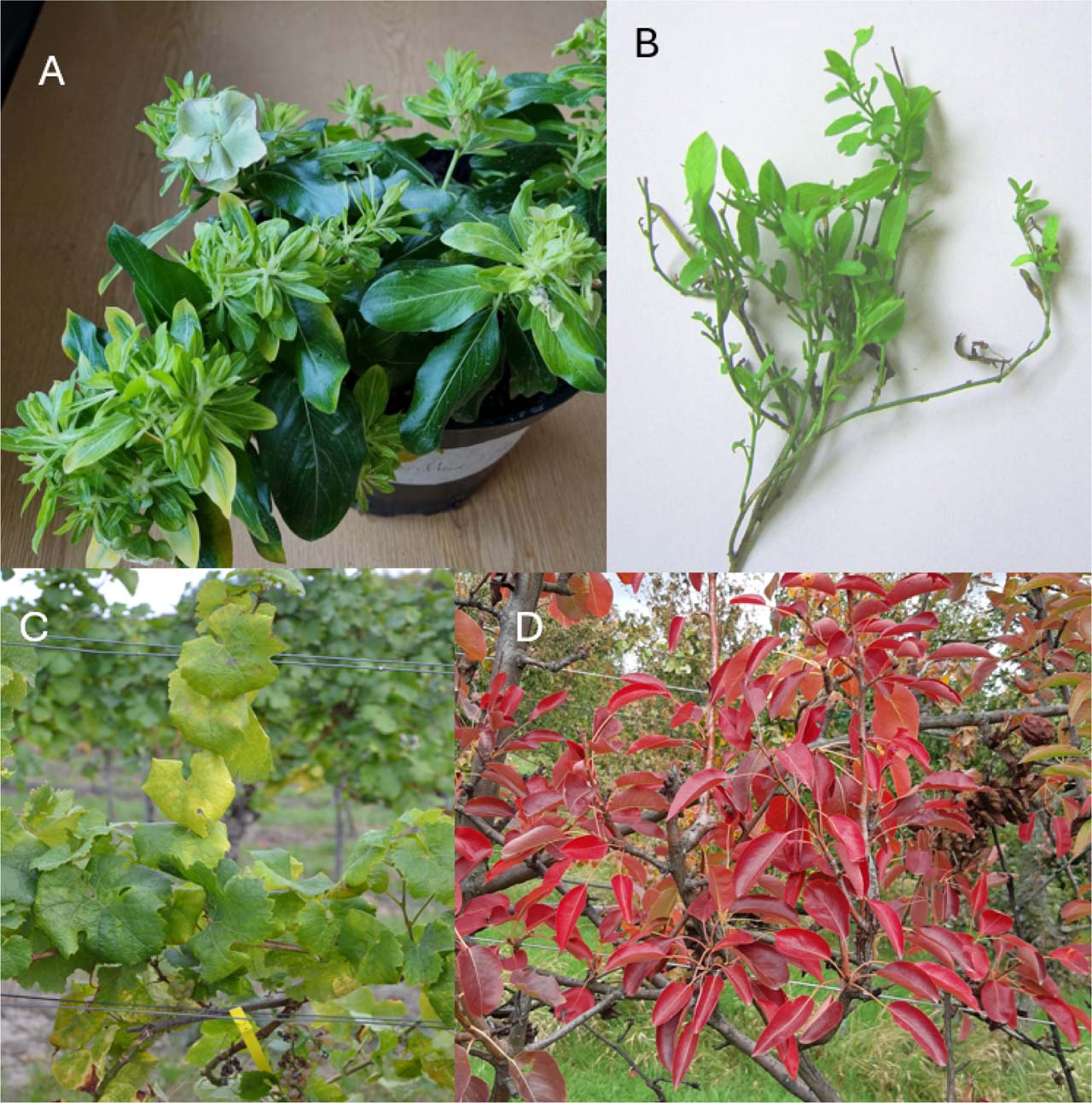
Fig. 1:
Typical symptoms of phytoplasma infections in plants: A: Phyllody (production of leaf like structures instead of flowers) and virescence (greening of flowers) in Catharanthus roseus (frequently used species for phytoplasma experiments); B: Witches broom, stunting and reduced leaf size of a Convolvulus arvensis plant, infected with ‘Candidatus Phytoplasma solani’; C: Yellowing and leaf rolling of a grapevine, infected with ‘Candidatus Phytoplasma solani’; D: Reddening of pear trees infected with ‘Candidatus Phytoplasma pyri’.
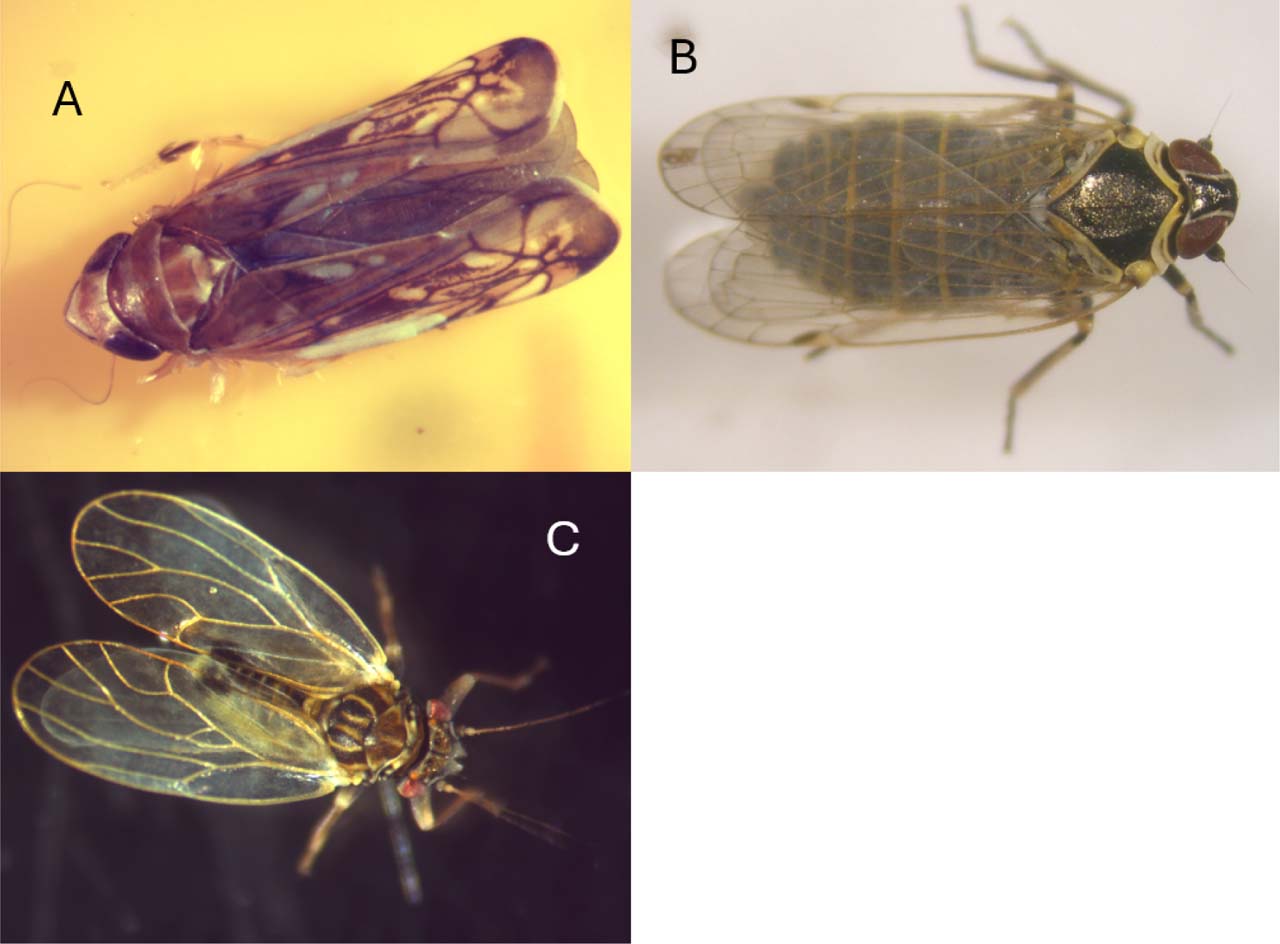
Fig. 2:
Insect vectors of phytoplasmas are found in the insect order Hemiptera, suborders Auchenorryncha and Sternorrhyncha. A: Scaphoideus titanus (Auchenorryncha, Cicadellidae, Deltocephalinae), vector of Flavescence dorée phytoplasma; B: Hyalesthes obsoletus (Auchenorryncha, Cixiidae), vector of ‚ ‘Candidatus Phytoplasma solani‘; C: Cacopsylla pyri (Sternorrhyncha, Psyllidae) vector of ‘Ca. P. pyri‘.