
Introduction
Apricot (Prunus armeniaca L.) gives high-quality fruit that can be consumed in a wide variety of ways, which makes it a favorite among cool-temperate fruit species (Mratinić et al., 2012). However, most apricot cultivars are highly selective for their environmental needs and often produce low yields when grown in different regions (Julian et al., 2007). Apricot is a fruit with tendency to irregular fruit set which has been primarily related with exterior factors such as frosts and high pre-blossom temperatures during the flowering period. The most important external factor limiting apricot production is 'late spring frosts' (LSF). Due to the facts that it is one of the earliest flowering species among temperate climate fruits, it is in danger of frost damage. Especially very early flowering apricot genotypes are often affected by low temperatures. (Julian et al., 2010; Kaya et al., 2020). Also, irregularity of temperature caused by global climate change may affect the flowering phenology of deciduous fruit species. In this case, the risk of frost damage can be a serious concern for growers (Dirlewanger et al., 2012). The major danger in cool-temperate climates is late spring frosts (Kaya et al., 2021; Viti et al., 2010) which can cause damage to flowers and small fruits and lead to significant yield losses. Besides LSF in early spring, temperature irregularity in late winter can also cause apricot flower buds to soften, thereby negatively affecting yield (Balta et al., 2007). In 2014, LSF damage reduced apricot production in Turkey by 65% (Turkish Statistical Institute, 2014) which is the leading producer and exporter of both fresh and dried apricots to world markets. Similarly, LSF damage occurred in Romania in 2007, leading to apricot yield losses of between 60%-92% overnight (Iordănesca and Micu, 2010). Worldwide, all apricot cultivation areas are currently at a high risk of exposure to LSF, which continues to cause significant economic damage despite the many frost-protection measures recommended by researchers to date. With respect to LSF resistance, simple practices can have a great impact on fruit production, particularly in terms of controlling apricot blooming time (Rodrigo, 2000; Anderson and Seeley, 1993; Moghadam and Mokhtarian, 2006).
Prunus flower buds go through four stages in the spring-adaptation process: A dormant stage, transition stage, tolerant stage, and frost-sensitive stage (Rodrigo, 2000). Apricot is a kind of fruit that is very sensitive to spring cold due to its flowering character, flower structure and early blooming in spring (Kaya et al., 2020). Apricot blooming characteristics and timing are affected by the genetic traits of cultivars (Dirlewanger et al., 2012) as well as endogenous bud hormone levels (Ruiz et al., 2005), exogenous application of plant growth regulators (Moghadam and Mokhtarian, 2006), bud type, dormancy requirements, changes in environmental temperatures (Campoy et al., 2011) and fluctuations within the flower bud (Rodrigo and Herrero, 2002).
As apricot flower buds open earlier than those of most deciduous fruit species and spring leafing begins later than flowering, apricot flowers are susceptible to damage from LSF. During blooming, starch accumulation decreases significantly and sensitivity to cold stress increases significantly (Rodrigo et al., 2000). As a result, short-term exposure to frost during this period can cause serious levels of damage. In addition, when apricots start to bloom, they become completely deacclimated and sensitive to low temperatures. Frosts (late spring frost) could be extremely harmful with up to 90% yield loss (Moustafa and Cross, 2019). Flower frost hardiness is affected by numerous factors including genotype, phenology, physiological characteristics. Most of the research aimed at reducing apricot yield losses has focused on topics such as internal frost tolerance and cold-damage mechanisms, cultural practices and blooming delay (Anderson and Seeley, 1993; Rodrigo, 2000; Fletcher et al., 2001; Aslantaş et al., 2010; Kaya et al. 2018). Since closed buds are less vulnerable to frost damage, delaying apricot blooming is known to be the most effective method for preventing frost damage and yield losses (Iordănesca and Micu, 2010; Balta et al., 2002). As an alternative future effort in apricot production, planting in the colder northern regions, which are getting warmer under global warming, may be important for late flowering. Unc et al. (2021) reported that because of the rapid warming of the northern regions, temperate crops are expected to shift further north.
The present study evaluated the use of shading net applications to delay blooming of apricot flower buds under the ecological conditions of Iğdır province where the cool-temperate climatic conditions prevailed. The practice of shading cultivated plants were used to achieve a few different goals. Although Syvertsen et al. (2003) reported canopy shading had no effects on canopy volume, yield or fruit size of Spring navel orange trees, most studies have reported shading to have significant effects on cultivated plants. These effects include reductions in water consumption in young lemon trees (Alarcón et al., 2006), limitations of flower-bud formation in kiwi cultivars (Tiyayon and Strik, 2004), as well as increases in fruit drop and decreases in oil yields of olives (Cherbiy-Hoffmann et al., 2015). In addition, shading has been reported to influence blooming time of strawberry (Takeda et al., 2010), pineapple (Lin et al., 2015), Plukenetia volubilis (Cai, 2011), and some annual ornamental plants (Baloch et al., 2009). But studies on the effects of shading on apricot trees are very limited. Nicolás et al. (2005) reported that the use of shading nets decreases water consumption of apricot trees, Campoy et al. (2010) found that shading during the endo-dormancy period affects blooming, pistil abortion, fruit set and thinning, Ruiz et al. (2005) and Nageib et al. (2012) showed canopy shading to reduce flower-bud abscission and increase yields. Previous studies investigating the effects of shading on blooming characteristics of different plant species have reported that shading influences blooming, pistil abortion, fruit set and thinning (Takeda et al., 2010; Baloch et al., 2009; Campoy et al., 2010). However, the use of shading to delay apricot blooming has not been thoroughly investigated. This study was focused to use shading nets to delay flowering on apricot trees and ensuring flower and fruit survival at a level that maintains optimal fruit production.
Materials and methods
Research area
Located in the Aras Valley in the Eastern Anatolia Region of Turkey, Iğdır is one of the main apricot production areas (Guleryuz et al., 1997; Muradoğlu et al., 2011). Iğdır province is located at 39°55’ N latitude and 44°02’ E longitude at an altitude of 850 meters. The province is surrounded by high mountains, including Mount Ararat, and has a generally dry climate, with an annual precipitation of 256 mm year-1 which is relatively low for agricultural practices. The area has an annual average temperature of 12 °C, an annual average relative humidity of 55%, and a high evaporation rate (1116 mm year-1). In general, soils of the region have alluvial characteristics, with a high water table and high salinity levels due to the high evaporation rates (Karaoğlu, 2012). While increase in temperatures cause bud burst of apricot at the beginning of March in the apricot production areas, this coincides with periods of frost. Thus, studies have reported that apricot production areas in Turkey affected by LSF, experienced zero yields in some years (Kaya et al., 2021).
Plant material and shading system
Shalak (Prunus armeniaca L.) apricot trees grafted on seedling rootstocks were used as the plant material. Shalak is an apricot cultivar with large, superior-quality fruits (about 60 g) and large, prolate trees. It is the most important table apricot cultivar which accounts for about 95% of apricot trees grown in the Aras Valley (Muradoğlu et al., 2011; Kaya et al., 2013). The shading system designed to prevent canopy from direct sun rays is a construction consisting of a frame and shading nets. Dark green UV reinforced High Density Polyethylene (HDPE) nets (N1: 95% Shade, N2: 70% Shade, N3: 35% Shade) were applied at shading rates of 35% (35 g m2), 70% (70 g m2) and 95% (140 g m2). A simple frame consisting of galvanized metal pipes and steel ropes was constructed to hold the shading nets. The north-facing sides of the trees were opened to avoid the "sail effect" damage in windy weather and to enable pollinator activity.
Shading time and temperature records
The present study was conducted in Iğdır province during 2013 and 2014. Our aim is to compare the progress of the flower buds that are shaded by the HDPE nets with the ones outside. In both experimental years, shading nets were applied on February 20 and removed on April 1, based on temperature data (Fig. 1). February 20 was considered as the zero point - the flowering delay was determined according to this date. Temperatures for 2013 and 2014 for outside of shading net were recorded at 30-minute intervals using data loggers (Hobo® brand) and processed using the software HOBOware®Lite (Version 3.3.1).
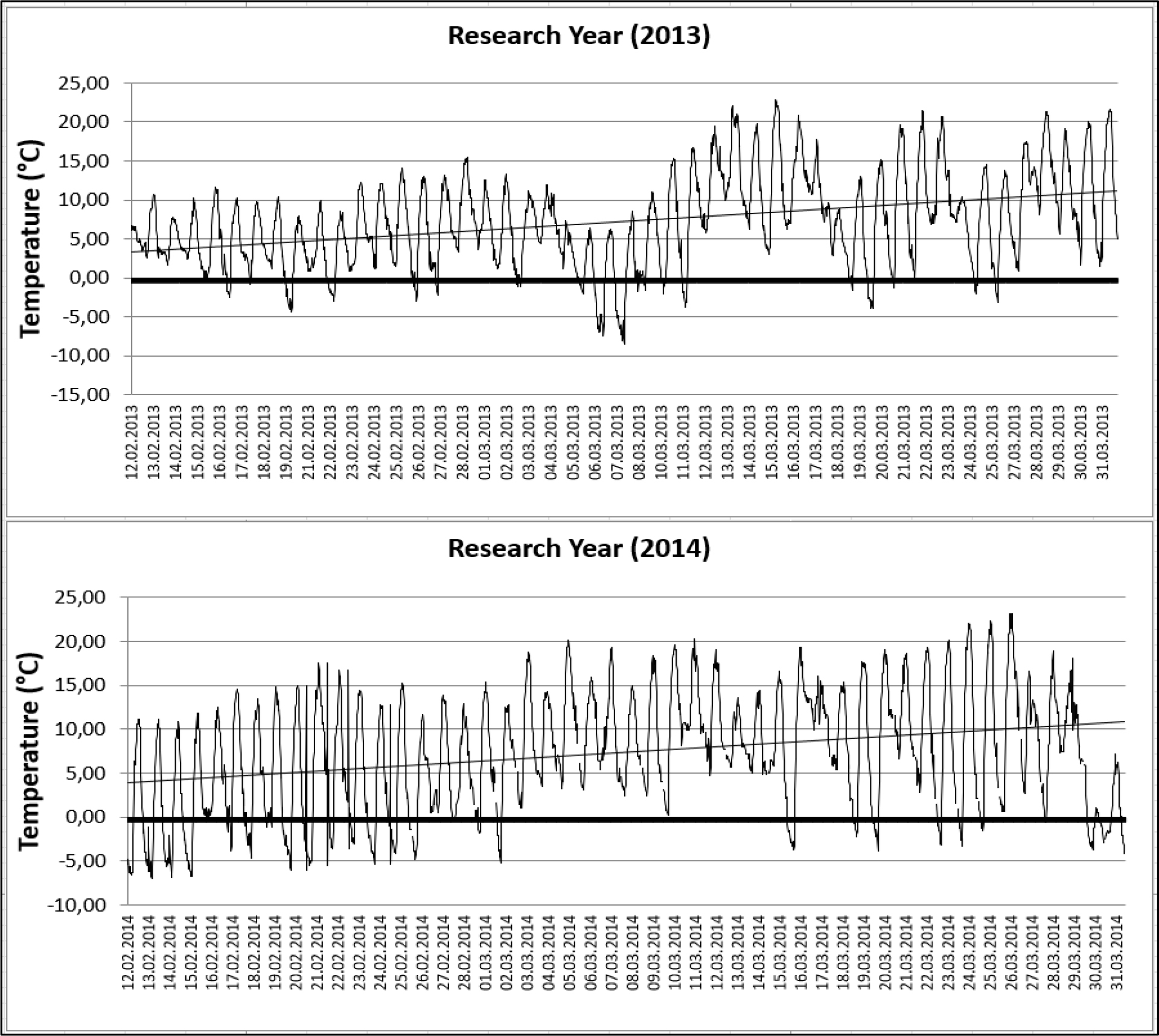
Fig. 1:
Study area temperature records during shading applications.
Phenological observations
The same dates in both experimental years, phenological stages were observed on 10 different dates (D1: February 28, D2: March 04, D3: March 08, D4: March 13, D5: March 17, D6: March 20, D7: March 23, D8: March 25, D9: March 28, D10: March 30). Eight phenological stages (S1: Closed, S2: First Swelling, S3: Red Calyx, S4: Pink Balloon, S5: First White, S6: First Bloom, S7: Full Bloom, S8: Last Bloom) were considered in the counting of flower buds. At each observation date, the total 600 flower buds were classified and counted according to phenological stage for two treatment years separately. Two years of data were pooled as the mean percentage value for statistical analysis.
Statistical analysis
The experimental design was completely randomized blocks with six replications (from three trees, totally six branches were used as replicates). Shading nets (N1, N2, N3) were applied to 3 individual tree canopies. A total of 9 trees were shaded with shading nets and 3 trees were not shaded as a control. Two different branches were selected from different sides of the tree and a hundred flower buds were marked in these branches separately. In total, six hundred flower buds were observed in each treatment (N1: 95% Shade, N2: 70% Shade, N3: 35% Shade, CON: Unshaded Control). For stages as dependent variables, means were tested for statistical differences among shading net as an independent variable by One-Way ANNOVA using the JMP 5.1 software program (JMP, A Business Unit of SAS, Cary, NC,2003), followed by least significant difference (LSD) test.
Results and discussion
According to our findings, all shading treatments caused statistically significant changes in delaying blooming when compared to unshaded control treatment at the same observation dates (Tab. 1). Our flower bud observations indicated that all shading treatments delayed ‘closed stage’ (S1) by different time periods and percentages. The most important delay rate of ‘closed’ stage was observed in the shading application of 95% (N1). On February 28 (D1-shading day 8), percentage of the ‘closed’(S1) in the 95% (N1) shading treatment were 95%, while percentage of the unshaded control treatment (CON) were 24% (Tab. 1; Fig. 2). These results indicate that apricot buds remained in the closed position for longer time when shading was applied, and a greater number of flower buds were able to maintain closed compared to unshaded trees (Fig. 4).
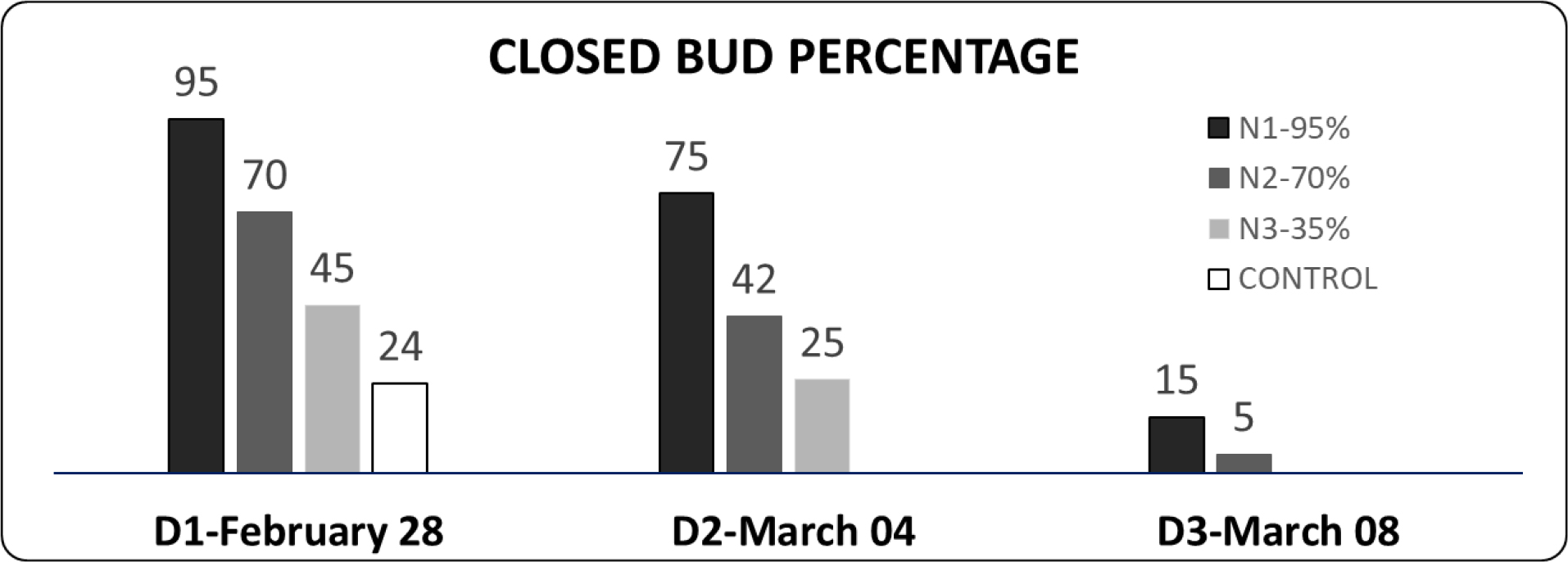
Fig. 2:
Delaying effects of shading applications on closed buds (from Tab. 1).
Tab. 1:
Delaying effects of different shading nets on phenological stages of flower buds
| αNet | D1 | D2 | D3 | Net | D4 | D5 | D6 | D7 | D8 | ||||
|---|---|---|---|---|---|---|---|---|---|---|---|---|---|
| S1-Closed | 95% | β95 a | 75 a | 15 a | S5-First White | 95% | NR | NR | 22 d | 60 a | 30 a | ||
| 70% | 70 b | 42 b | 5 b | 70% | NR | 12 c | 37 c | 45 b | 18 b | ||||
| 35% | 45 c | 25 c | NR | 35% | 6 b | 28 b | 65 b | 28 c | NR | ||||
| CON | 24 d | NR | NR | CON | 9 a | 55 a | 80 a | 8 d | NR | ||||
| F value | 308.5 *** | 814.6 *** | 562.3 *** | F value | 206.3 *** | 1035.1 *** | 524.8 *** | 513.1 *** | 333.9 *** | ||||
| Net | D1 | D2 | D3 | D4 | D5 | Net | D6 | D7 | D8 | D9 | |||
| S2-First Swel. | 95% | 5 d | 25 d | 73 a | 23 a | 15 a | S6-First Bloom | 95% | NR | 4 d | 56 a | 32 a | |
| 70% | 29 c | 43 c | 50 b | 12 b | 6 b | 70% | NR | 39 c | 50 b | 20 b | |||
| 35% | 55 b | 52 b | 35 c | NR | NR | 35% | 10 b | 60 b | 35 c | NR | |||
| CON | 76 a | 55 a | 8 d | NR | NR | CON | 20 a | 72 a | 21 d | NR | |||
| F value | 1964.9 *** | 184.2 *** | 758.8 *** | 1326.1 *** | 133.4 *** | F value | 1623.5 *** | 686.9 *** | 179.8 *** | 813.9 *** | |||
| Net | D2 | D3 | D4 | D5 | D6 | Net | D7 | D8 | D9 | D10 | |||
| S3-Red Calyx | 95% | NR | 11 d | 67 a | 52 a | 7 a | S7-Full Bloom | 95% | NR | 14 d | 60 c | 63 a | |
| 70% | 15 c | 37 c | 42 b | 27 b | 5 b | 70% | NR | 32 c | 70 b | 50 b | |||
| 35% | 23 b | 55 b | 20 c | 12 c | NR | 35% | 12 b | 61 b | 84 a | 24 c | |||
| CON | 45 a | 72 a | 10 d | NR | NR | CON | 20 a | 70 a | 35 d | NR | |||
| F value | 632.5 *** | 451.8 *** | 991.8 *** | 408.5 *** | 184.6 *** | F value | 130.2 *** | 345.9 *** | 159.0 *** | 680.7 *** | |||
| Net | D3 | D4 | D5 | D6 | D7 | Net | D8 | D9 | D10 | ||||
| S4-Pink Ballon | 95% | NR | 10 d | 33 d | 71 a | 36 a | S8-Last Bloom | 95% | NR | 8 c | 33 c | ||
| 70% | 8 b | 46 c | 55 b | 58 b | 16 b | 70% | NR | 10 c | 42 b | ||||
| 35% | 10 b | 74 b | 60 a | 25 c | NR | 35% | 4 b | 16 b | 64 a | ||||
| CON | 20 a | 81 a | 45 c | NR | NR | CON | 9 a | 65 a | 67 a | ||||
| F value | 131.6 *** | 831.6 *** | 97.4 *** | 853.6 *** | 1250.8 *** | F value | 155.6 *** | 511.1 *** | 212.4 *** |
1*** Mean values followed by a different letter witdin tde same column are significantly different at P≤0.001 according to LSD test.
1α |: Dark green UV reinforced High Density Polyetdylene (HDPE) Nets (N1: 95% Shade, N2: 70% Shade, N3: 35% Shade).
1β |: (for example) Percentage of flower buds in S1 (Closed) stage under 95% (N1) shading Net at D1 (February 28).
1 | NR: No Record. Tdere are no flower buds at tdis stage. | S1: Closed, S2: First Swelling, S3: Red Calyx, S4: Pink Balloon, S5: First White, S6: First Bloom, S7: Full Bloom, S8: Last Bloom | D1: February 28, D2: March 04, D3: March 08, D4: March 13, D5: March 17, D6: March 20, D7: March 23, D8: March 25, D9: March 28, D10: March 30.
The period when flower buds with the lowest vulnerability against spring frost damage is known as 'closed' stage. In the 95% (N1) shading application, closed buds started to go to first swelling 21 days after zero point (February 20), whereas in the control trees without shading, flower buds started the first swelling stage after 12 days. In other words, 95% (N1) shaded flower buds maintained closed for an extra nine days compared to unshaded flower buds (Fig. 3 and 4). Also, in the other two treatments (70%-N2 and 35%-N3 shade), the flower buds have remained closed stage longer compared to buds of unshaded control treatment (Fig. 5 and 6). In addition, the percentage of closed buds in all shaded trees, at the highest level in 95% (N1) treatment, was higher percentage than unshaded trees (Tab. 1; Fig. 3, 4, 5 and 6). These results showed that all shading treatments significantly (P≤0.001) delayed flowering in this study. It has reported that late blooming preventing LSF damage has a significant effect on sustainable apricot cultivation (Viti et al., 2010; Anderson and Seeley, 1993; Moghadam and Mokhtarian, 2006). Iordănesca and Micu (2010) stated that delaying bud activity for 15 days preserved trees from the negative effects of late spring frosts in Romania in 2009 and there is a most important relationship between the preventing of frost damage and delayed flowering in early blooming species for example apricot.
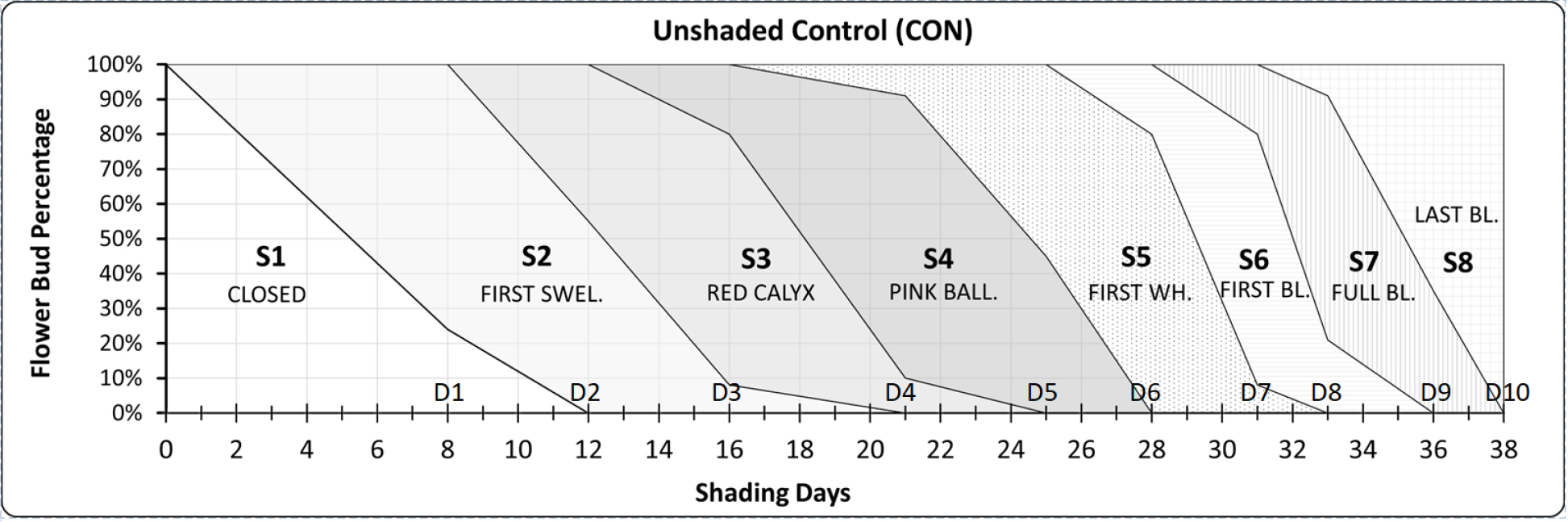
Fig. 3:
Phenological stages of unshaded trees.
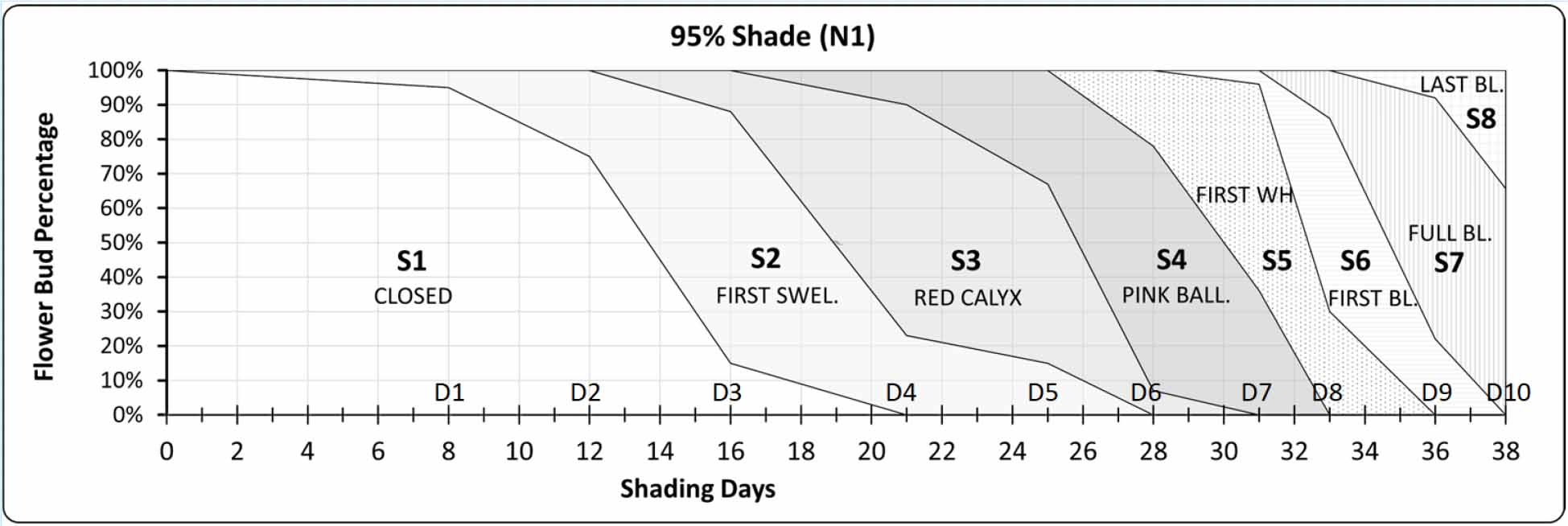
Fig. 4:
Phenological stages of 95% shading trees.
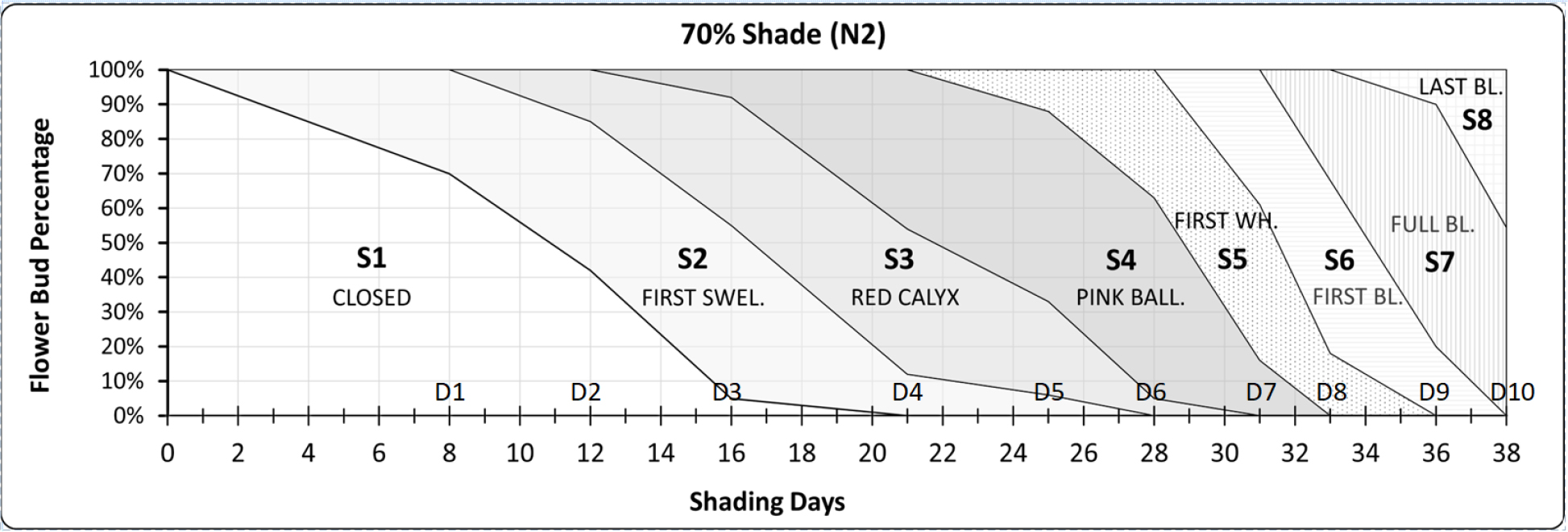
Fig. 5:
Phenological stages of 70% shading trees.
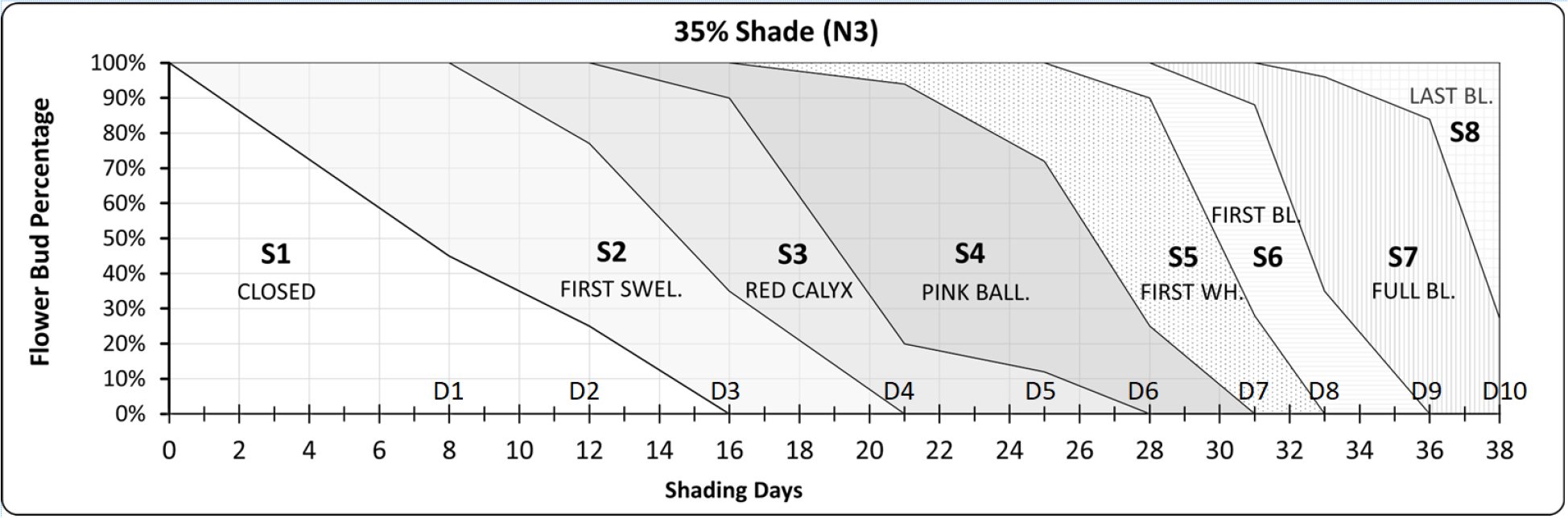
Fig. 6:
Phenological stages of 35% shading trees.
First swelling, which is after developmental stage “closed”, is the beginning of a transition from a dormant stage. This means that the buds in the first swelling stage are still not opened. At this stage buds are known to be tolerant of low temperatures, damage mostly occurs after bud burst and during the initial period of fruit development (Rodrigo et al., 2006; Küden et al., 1998). In the present study, flower buds at ‘First Swelling’ (S2) had reached 76% in unshaded control (CON) and 5% in N1 (95%) shade treatment by February 28. This result showed that shading treatment N1 caused a significant delay of first swelling stage. A delay of S2 stage was also monitored from 70% (N2) shading and 35% (N3) shading compared to unshaded control trees (Tab. 1; Fig. 3, 4, 5 and 6). Late blooming is well known to be effective in preventing cold damage and reducing yield losses (Iordănesca and Micu, 2010; Anderson and Seeley, 1993; Balta et al., 2002). In the study area, late spring frost causes flower damage mostly in March and April, critically the first half of March. In our study area, temperatures falling below zero were observed in March 2013 and 2014 (Fig. 1) but did not cause frost damage in our trial area. However, the frost that occurred at the end of March and the beginning of April in 2014 (Fig. 1) damaged the flowers and small fruits of our apricot trees. By this time our trial had ended, our shading nets had been removed, and all the flowers in our study area had entered the frost-sensitive stage. This showed once again that delaying flowering is very important and valuable for frost damage protection. According to our results, while the closed stage ended on the twelfth day in unshaded trees, it ended on the twenty-first day in 95% (N1) shading trees. The first swelling stage (S2) ended on the twenty-first shading day in the unshaded control (CON) trees, but flower bud percentage of S2 stage had remained lower than 10% on the sixteenth shading day (Fig. 3). The first swelling stage was completed on the twenty-eighth day in the treatment of 95% (N1) shading (Fig. 4). According to S2 stage, a delaying of 7-12 days in N1 treatment compared the CON treatment was observed. This delay provided by shading was very valuable for growers.
Delaying of red calyx stage can help to prevent cold damage in apricot buds, since buds in this stage are relatively closed and thus more resistant to cold damage than open buds (Rodrigo et al., 2006). In this research, the flower buds in N1 and N2 shade treatments reached the red calyx stage later than buds in N3 shade and CON unshaded treatment. According to our findings, red calyx stage (S3) was also delayed six days in N1 and N2 shade treatments and three days N3 shade treatment compared to unshaded CON (Fig. 3–6). Moreover, Tab. 1 shows that all shading treatments significantly delayed the 'Red Calyx' stage compared to the control trees.
According to Rodrigo and Herrero (2002), an increase in temperature within the flower bud compared to the surrounding air accelerates bud development and reduces the length of time that buds remain open. Anderson and Seeley (1993) suggested that commonly used techniques for evaporation and light-reflection could delay blooming by controlling plant temperatures. In this experiment, the flowering delay caused by shading nets may be related to the protection of flower buds from direct sunlight. Indeed, buds protected from the heating effect of sunlight can keep their internal temperature at low levels for longer. In apricot trees the pink balloon stage is relatively tolerant to frost. In the present study, buds in the 95% (N1) shade treatment reached the pink balloon stage approximately 4-7 days later than unshaded control buds (Fig. 3 and 4). The pink balloon stage (S4) marks the beginning of the frost-sensitive period for apricot flowers. This stage is relatively frost-sensitive, but later stages (S5-S6-S7-S8) are very sensitive to late spring frosts. Therefore, delaying and prolonging the pink balloon stage will increase the survival possibilities of the flower buds. The results from our study on the extension of the pink balloon stage are promising. In the next 4 stages (S5-S6-S7-S8), the shading nets applications (N1-N2-N3) provided varying percentages of delay compared to the unshaded control treatment (CON) (Fig. 3–6; Tab. 1).
The most important factor determining the ability of flower buds to withstand frost is the bud development stage. Especially, apricots are most sensitive to frost during the period from dormancy until fruit set. Flower buds, blooms and small fruits exhibiting a gradual increase in frost sensitivity during this period. The present study found that shading had a more distinctive effect in terms of delaying bud development through the ‘First White’ (S5) stage, after which the effect of shading in delaying development was less pronounced and buds blossomed and developed more rapidly. So, it was observed that the delaying effect of shading nets was more effective until the First White stage(S5), but its effect decreased in the later stages. No frost damage was encountered during the shading time for two experimental years, but, among the shading treatments, the net that intercepted 95% of sunlight produced the most effective results in delaying flowering. In addition, the 35% shading net was found nearer the unshaded control treatment. Therefore, our results suggest the new approach to solving the LSF challenge for researchers and apricot producers.
Conclusion
This study is based on canopy shading strategy to minimize the LFS effect in apricot cultivation. In this way, it is aimed to overcome the LSF damage, which coincides with the flowering period in most years, by delaying flowering. Although the use of shading nets in fruit production processes is widespread, they have not been used to break the destructive effect of late spring frosts. Both Turkey, the world capital of apricot cultivation, and other major producing countries are making long and costly investments to solve the LSF problem. Nevertheless, there is still no effective solution for frost damage. The results of this study were obtained from shading nets applied during the spring period, which includes the ecodormancy and flowering time, compared with the same apricot cultivar without shading. The results showed that nets - depending on shading rates - altered the spring activity of flower buds. The canopy shading nets that provides a higher level of shading has the greatest ability to delay the bursting and opening of the buds. In particular, the N1 treatment provided the most effective delaying outcomes. At the end of the study, it was observed that N1, N2, and N3 treatments provided different time delay. Flower buds shaded by 95% (N1) were burst 8-12 days later than those without shading. This delay can be very critical because even one day is very important during this period.
As they promote to delay blooming, shading nets can be used against LSF damage. Additional advantages of shading systems are also very important, such as no environmental damage, relatively low cost, long service life, and no interference with pollination. Future studies should focus on other cover materials and shading systems that are planned to serve the same purpose. Other cultural practices that can be adapted to shading systems should also be examined.
Acknowledgments
This work was supported by Scientific Research Projects of Iğdır University (Project No. 2012-FBE-B19). We also thank the researchers who supported the project.