Have a personal or library account? Click to login
MinPlotX: A powerful tool for formula recalculation, visualization, and comparison of large mineral compositional datasets Cover

MinPlotX: A powerful tool for formula recalculation, visualization, and comparison of large mineral compositional datasets

Open Access
|Feb 2025

Figures & Tables

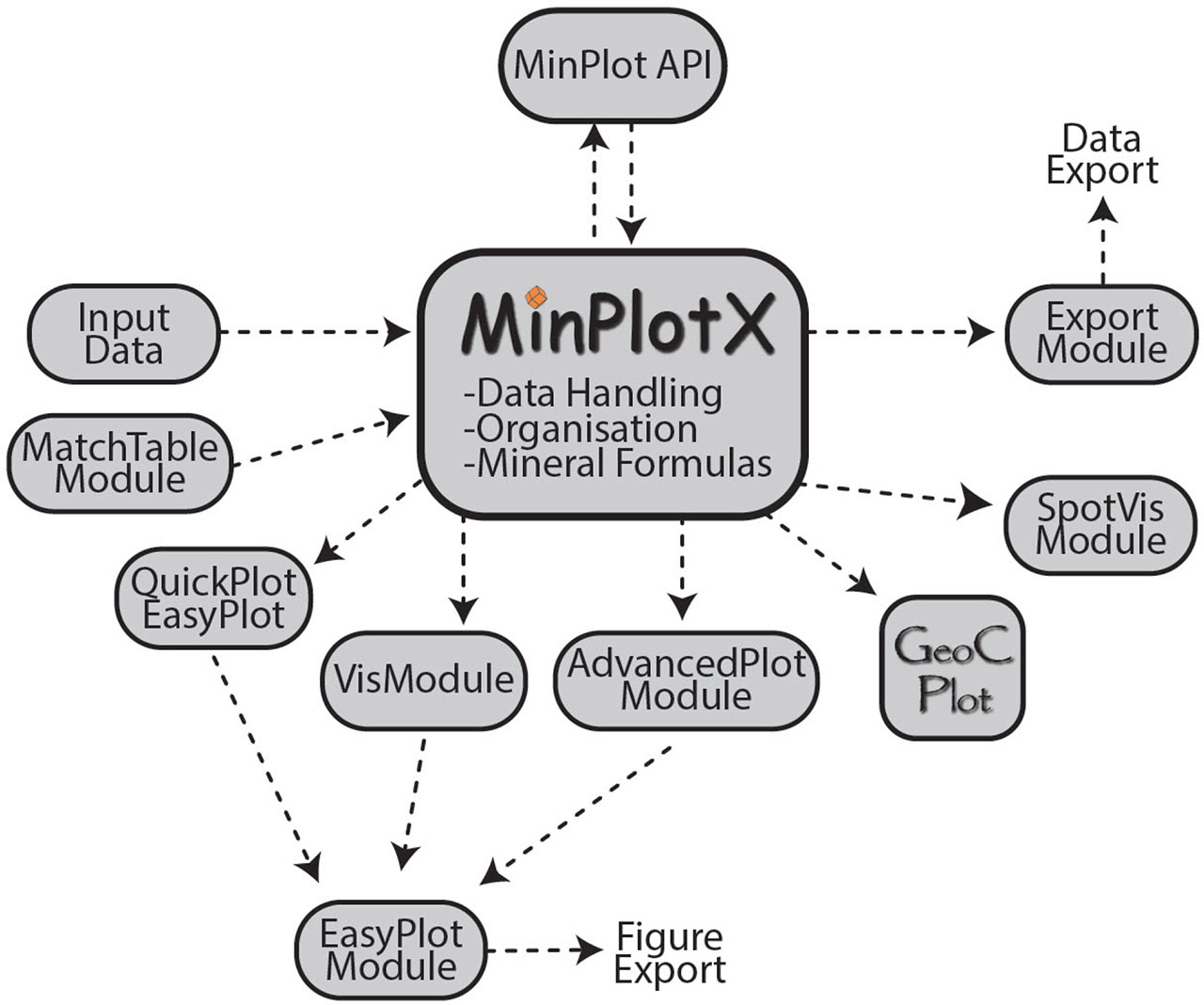
Figure 1.

The program structure of MinPlotX, including main user interface, as well as the QuickPlot, EasyPlot, VisModule, AdvancedPlot Module, GeoCPlot, and SpotVis modules.
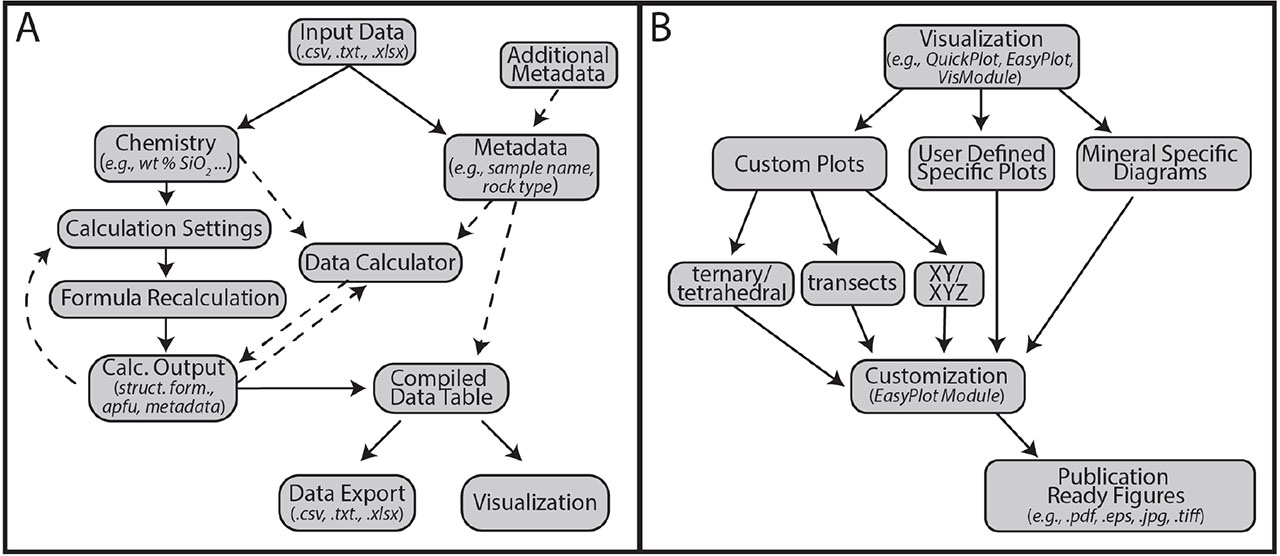

Figure 2.

Typical workflow of data import, organization calculation and export (a) and different visualization options to generate publication ready figures (b).
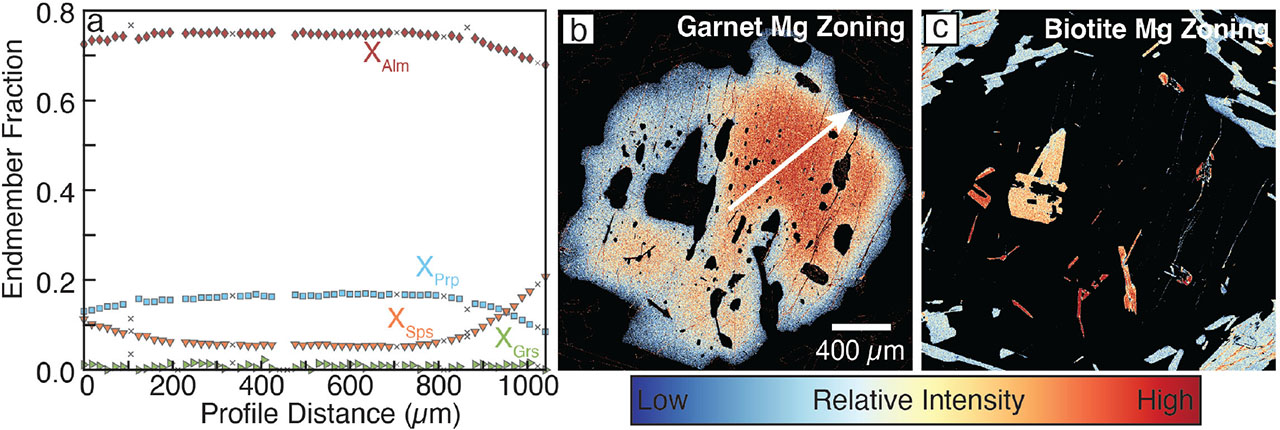

Figure 3.

(a) A Garnet transect with the fractions of almandine (XAlm), grossular (XGrs), pyrope (XPrp), and spessartine (XSps) endmembers. Data are filtered for analyses impacted by inclusions (grey X's). (b) EPMA X-ray intensity map showing the distribution of Mg in garnet. (c) X-ray intensity map illustrating higher Mg contents (red) of biotite inclusions in garnet compared to low Mg (blue) matrix biotite. Matrix biotite grains are observed to have homogenous compositions. Data are from Walters et al. (2022).
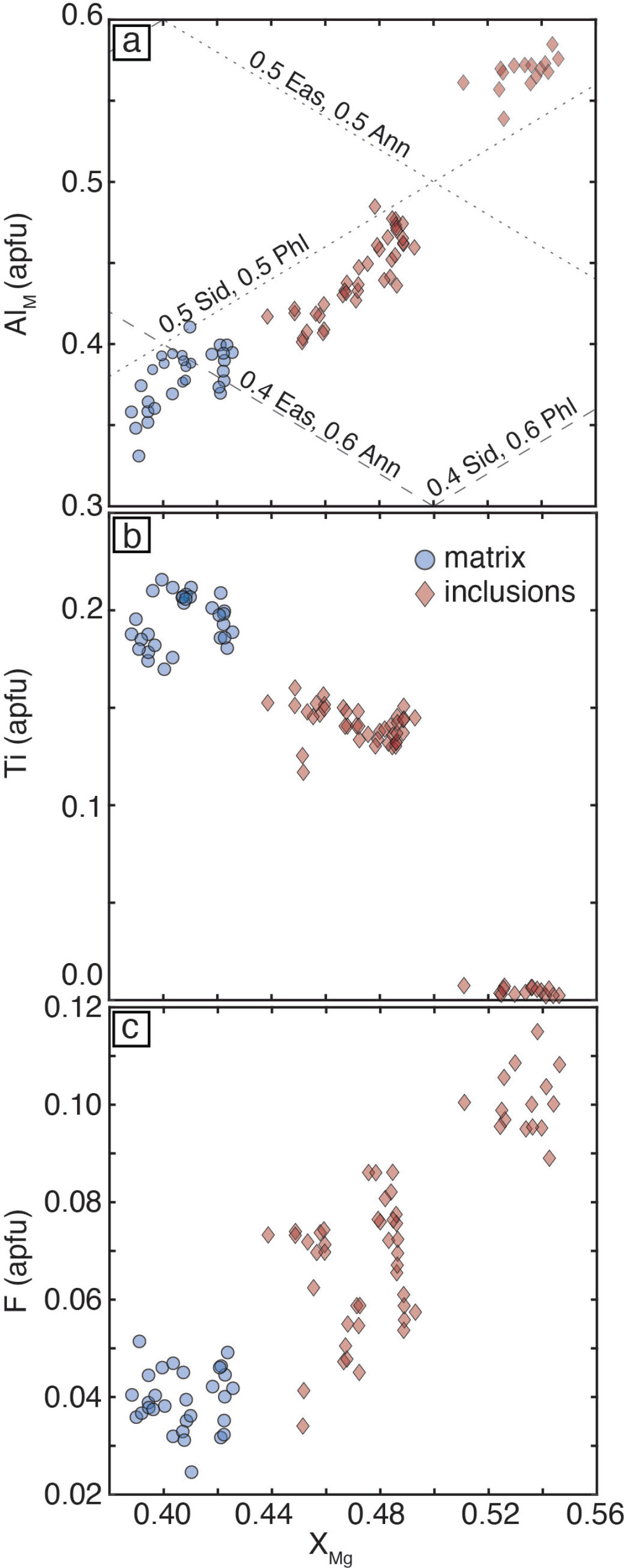

Figure 4.

Plots of (a) AlM (apfu), (b) Ti (apfu), and (c) F (apfu) vs XMg for biotite. Data are subdivided between analyses of inclusion (red diamonds) and matrix biotite (blue circles). Isolines of eastonite (Eas), annite (Ann), siderite (Sid), and phlogopite (Phl) endmember proportions are also plotted in (a). Data are from Walters et al. (2022).
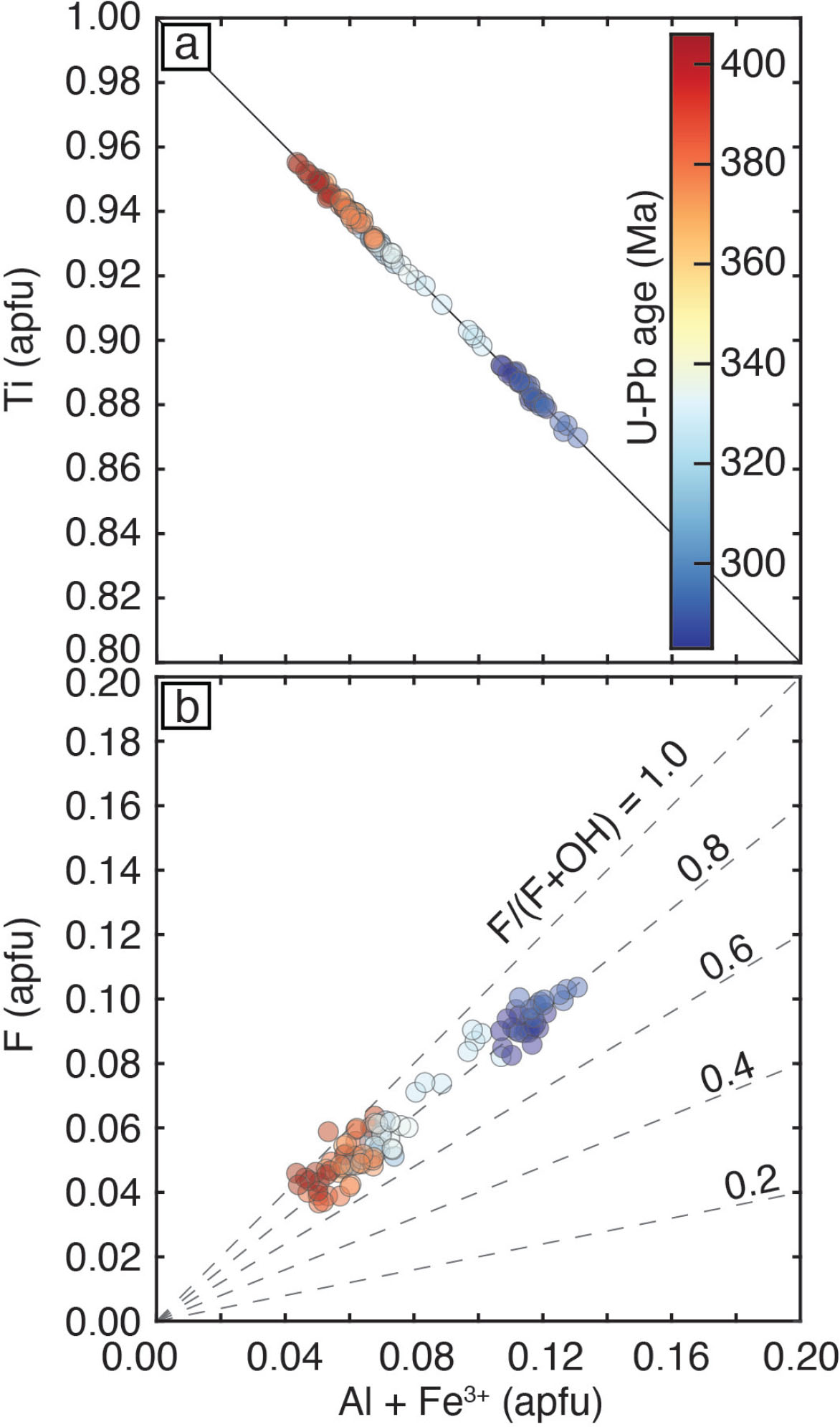

Figure 5.

Plots of (a) Ti (apfu) and (b) F (apfu) vs Al + Fe3+ (apfu) plotted for titanite. Data are color contoured based on their associated single spot U-Pb age (for details see Walters et al. 2022). In (b), isolines of F/(F + OH) are also shown.
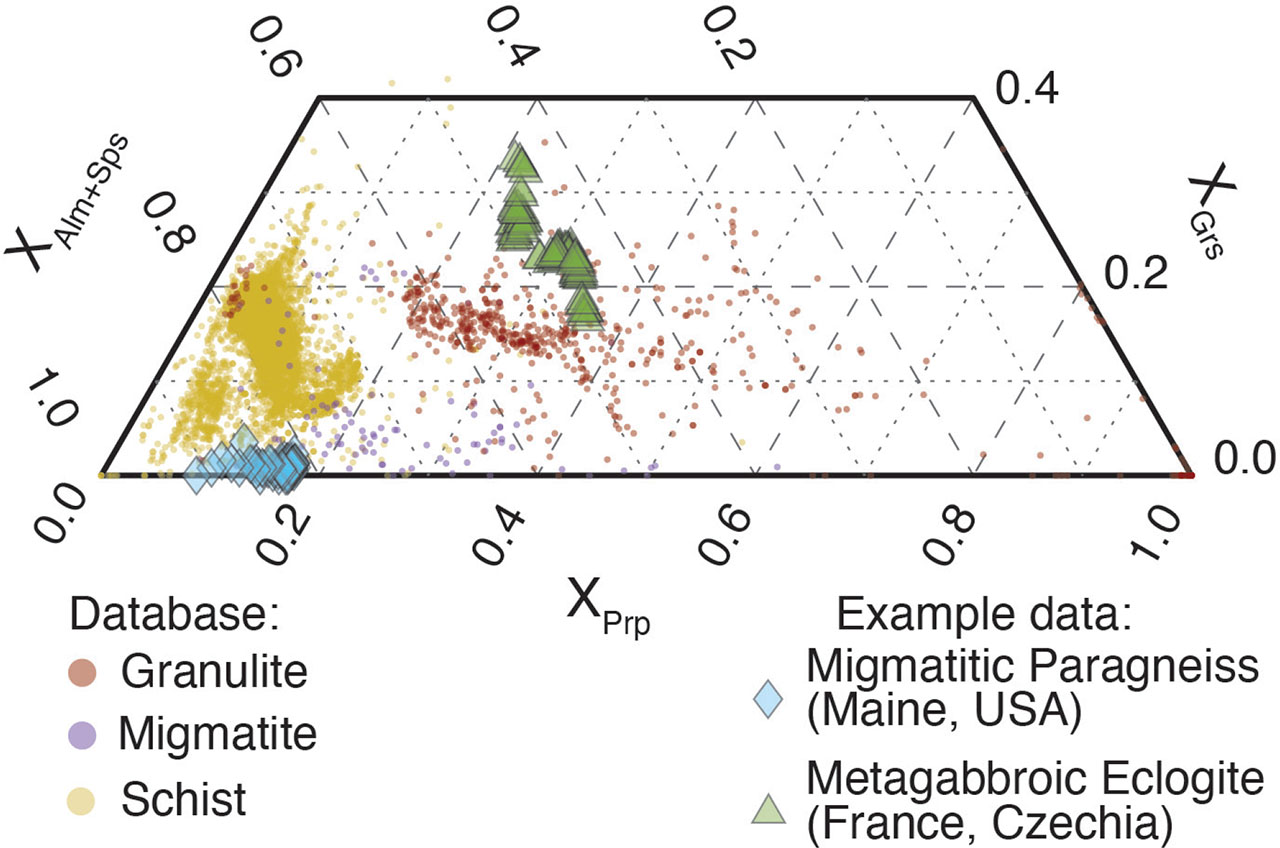

Figure 6.

The lower half of the XAlm+Sps, XGrs, and XPrp ternary for garnet is shown. Filtered data from Chiama et al. (2023) are given for schist (yellow circles), migmatite (purple circles), and granulite (red circles) are displayed. Garnet data for the migmatitic paragneiss displayed in Fig. 3a (blue diamonds) and metagabbroic eclogites (green triangles) are given. Example data are from Walters et al. (2019; 2021; 2022).
DOI: https://doi.org/10.2478/mipo-2025-0003 | Journal eISSN: 1899-8526 | Journal ISSN: 1899-8291
Language: English
Page range: 13 - 22
Submitted on: Oct 28, 2024
Accepted on: Jan 23, 2025
Published on: Feb 21, 2025
Published by: Mineralogical Society of Poland
In partnership with: Paradigm Publishing Services
Publication frequency: 1 issue per year

© 2025 Jesse B. Walters, Nils B. Gies, published by Mineralogical Society of Poland
This work is licensed under the Creative Commons Attribution-NonCommercial-NoDerivatives 4.0 License.