
Introduction
Preventing anthropogenic climate threats requires increased collaboration in the dissemination of innovative actions to support landscape resilience (Cronan et al. 2022). Social models of relationships are constructed in various spheres of life (Bourdieu 2007; Bourdieu 2023; Sztompka 2016), including education (Dewey 2005; Piaget 2023; Freire 2016). School-based, academic or open and permanent education that immerses itself in the landscape and social life is fundamental for the reproduction of socially and environmentally engaged and responsible behaviours. It supports social understanding and contributes to the improvement in collaboration between people (ed. Jakubowski 2012; Shilling 2020; Oswald et al. 2023; Crespo Castellanos et al. 2023).
The importance of design research in change studies is currently increasing (Irwin, Tonkinwise & Kossoff 2020). Architecture or landscape architecture design based on the Research Through Design method provides scenarios with which to test the future (Li Huang, Cronan & Kliskey 2024). Project designs can present potential spatial solutions to stakeholders, which can promote dialogue and social trust. Design should represent a deep understanding of ecological and social interactions within the landscape (Cortesão & Lenzholzer 2022). Therefore, it requires stakeholders' knowledge and participation (Lenzholzer, Brink & Duchhart 2017; Buchanan 1992; Bullinger et al. 2010). It is difficult to practice these assumptions within the walls of the academy. However, education arenas closer to the living environment offer some support. Such education arenas may include architecture summer schools (Szkoły Letnie Architektury – SLAs). These comprise voluntary, residential and boarding courses during which participants develop their perceptual abilities, cognitive competencies, design and social skills while co-operating on-site to solve local problems.
The society-wide benefits of summer schools have been acknowledged by the ENHANCE Alliance, an organization founded in 2019. The ENHANCE Alliance currently brings together 10 European universities of technology, including the Gdańsk University of Technology (GUT). ENHANCE strives to overcome the cultural and territorial barriers faced by the scientific community to support the implementation of sustainable development goals.
Despite the long-standing presence of SLAs within the academic landscape, no attempts have yet been made to characterize this phenomenon. A preliminary study was undertaken to broaden our knowledge of it. In this study, we aimed to identify the potential of SLAs to provide benefits or identify threats to be eliminated. To achieve this, students' expectations of SLAs were compared with experiences gained by SLAs participants and residents.
Materials and methods
SLAs visibility was determined in the initial research stage. In 2019–2023, home pages of ENHANCE universities and their architecture departments were browsed using the keywords: ‘summer schools’, ‘summer courses’ and ‘summer activities’. The SLA description categories were then identified by drawing on SLAs organized since 2016 by the Faculty of Architecture of the Gdańsk University of Technology (FAGUT). These enabled the development of research questionnaires addressed to FAGUT students, SLAs participants and collaborating residents.
Website review
At FAGUT, course information was presented succinctly on the faculty's home page. The announcement was included under the ‘News’ tab. Among the SLAs, recurrent courses were available with the same organizer and/or venue, and there were also occasional domestic and international courses. A distinction could also be made between summer schools designed exclusively for FAGUT students and those recruiting participants outside GUT (Table 1) as well. Those recruiting participants outside GUT included courses co-organized by FAGUT and those not co-organized but affiliated with universities or partner institutions, both domestic and international. During the study period from 2019 to 2023, 12 SLAs were advertised on the FAGUT website. None were announced from 2019 to 2020. Following the COVID-19 pandemic, three, five and four schools were announced in 2021, 2022 and 2023, respectively.
Table 1.
SLAs offered at FAGUT
| FAGUT students | FAGUT+ students | |||
|---|---|---|---|---|
| Domestic | International | Domestic | International | |
| Recurring | 3 | - | 2 | 6 |
| Occasional | - | 1 | - | - |
Websites of other ENHANCE universities and their departments with architecture majors were also browsed. Two faculties had purpose-made pages dedicated to SLAs. Recruitment to seven international SLAs was announced by two universities during the study period. 2 SLAs affiliated with ENHANCE and two recurrent schools were identified. Courses lasted 5–30 d and between 20 and 50 students were recruited. However, information on fees and student credits from the European Credit Transfer System (ECTS) were incomplete.
SLAs case studies
Between 2016 and 2023, FAGUT organized six SLAs in Pomeranian towns and villages. The three most recent courses were held in the small village of Piotrowo. All the SLAs lasted 3–6 d. The individual editions were attended by 8 to 15 FAGUT students and international students studying either architecture or spatial management. This group included a total of over 70 people and occasionally, students of humanities or local volunteers joined. The SLAs were held on various holiday dates in May or July. The first three schools were funded by local governments and the following two were financially supported by an NGO in cooperation with FAGUT where the students themselves subsidized a small fee. The 2023 summer school was subsidized by funds of GUT and by the municipality, state institutions and an individual entrepreneur. Students received ECTS credits for attending the two SLAs. The leading themes of the subsequent SLAs depended on local circumstances. The most recent SLA was concluded with the creation of a small garden square. These SLAs were followed by on and off-campus exhibitions in which students' works were presented, and by local debates based on student papers, elective classes, departmental student competitions and an open competition for implementation projects.
FAGUT students participated in three externally inspired summer schools with similar objectives. Two week-long summer schools were conducted by the Pomeranian Academy of Public Space Planning (PAPSP). They were established as one of the instruments for the implementation of the voivodeship's spatial development plan and held in September 2019 and 2023. Each of the summer schools was attended by a group of around 30 students from the three Gdańsk public universities. The topics were continued during the semester while the projects were presented to the residents. The students received a scholarship and additional ECTS credits. In 2022, on the initiative of a visiting professor, a group of 15 students travelled to Italy at their own expense. Participation in this school exempted the students from the compulsory ruralist internship.
Based on these courses, the formal features of the SLAs were defined. These include duration, term, fee, organizing institution, participants, instructor, venue, programme and correlation with university teaching. Typical forms of teaching include the project assignment, the implementation of which is supported by word-based methods, such as lectures and discussions, and activities, such as field studies and practical activities. Field observations result in the documentation or measurement of phenomena relevant to the project goal and assume the observer's distance. A field trip and participation in a local event provide opportunities for participatory observation. A laboratory exercise provides training and an illustrative explanation of the task. A course in design workshop software is a positive example of this type of exercise. The practical task involves making a small object of architecture or art. The educational goals pursued at SLAs include strengthening aspiration and motivation in achieving goals; communication skills, including providing design presentations, negotiation and teamwork; design skills, that is, the ability to create new spatial solutions; analytical skills such as organizing and interpreting data; the ability to use digital tools in the design process; practical-technical skills; and knowledge.
Questionnaire research
Based on a review of the websites and SLAs case studies, research categories were identified, and a survey was designed (Table 2). The survey included a non-representative group of respondents and was conducted as pilot research with a lower level of reliability (Babbie 2024). Its role was to initially describe and illustrate a phenomenon. The respondents included students, both potential applicants and summer school participants, and residents of the local area where the SLA was operating. They completed questionnaires Q1, Q2 and Q3, respectively. Different types of questions were asked, such as closed single-choice and multiple-choice questions, or open-ended questions with a Likert rating scale being used. The results were described statistically and inferences were made based on the results.
Results
Three surveys were conducted between December 2023 and March 2024. They included FAGUT students and residents of Piotrowo, where the FAGUT summer school was held in 2023 (Table 3). Students of the third and fifth semesters of engineering were asked to complete Q1 paper questionnaires. Participating students from the last four SLAs organized by FAGUT and PAPSP completed Q2 questionnaires, and 14 of them did so remotely. The group included engineering and master's students majoring in architecture, and engineering students majoring in spatial management. Residents were asked to complete the questionnaires on paper. The surveyed residents predominantly comprised members of the working-age population (86.5%).
The survey result description was structured per the order of issues shown in Table 2.
Opinions on interest in SLAs and information sources on SLAs (1), (2)
Most of the students interviewed had never attended SLAs before and had never actively sought information about them (Figure 1). Among the participants, five had been to the FAGUT summer school twice. All the students considered the faculty website to have been the best source of information. Students' opinions regarding the use of other sources, such as social media, teacher or colleague recommendations, differed significantly. Potential participants rated their importance in recruitment significantly higher than alumni. A few students indicated student mail as an additional source of information. All the residents surveyed knew about the planned SLA, mostly from neighbours, and a few found the information on the local association's website. Most observed the projects and the work performed by the students, but far fewer interacted.
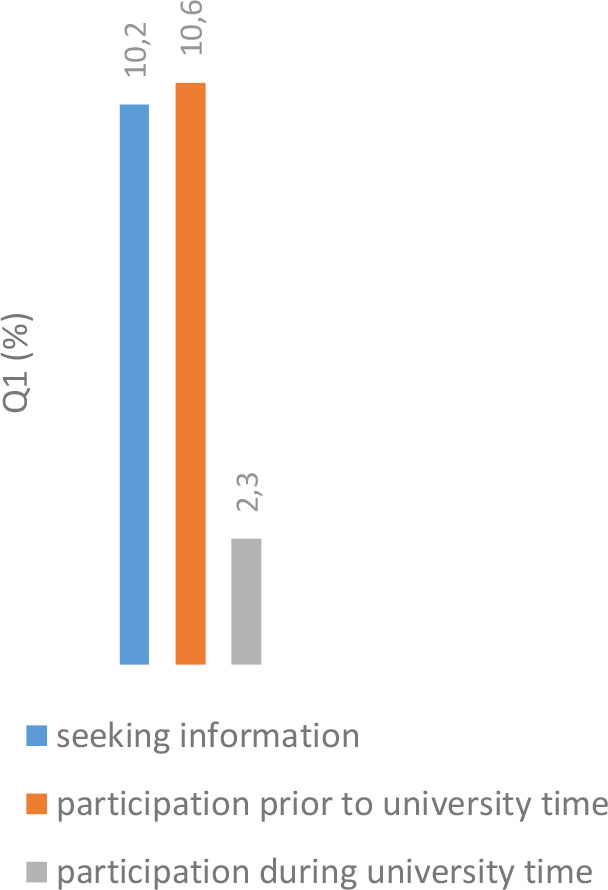
Figure 1.
The students' interest in summer schools
Source: own elaboration
Opinions on the formal features of SLAs (3)
Apart from the similarly high ranking of the SLA programme, the views of participants and potential candidates regarding the impact of other features of the school on recruitment varied (Figure 2). A lower number of potential candidates considered the organizer and other participants to be an important feature of the SLA. The fee and the duration of the course were defined as ‘definitely important’ and ‘rather important’ to the largest number of participants. The smallest number of participants rated the importance of additional ECTS credits in recruitment as significant.
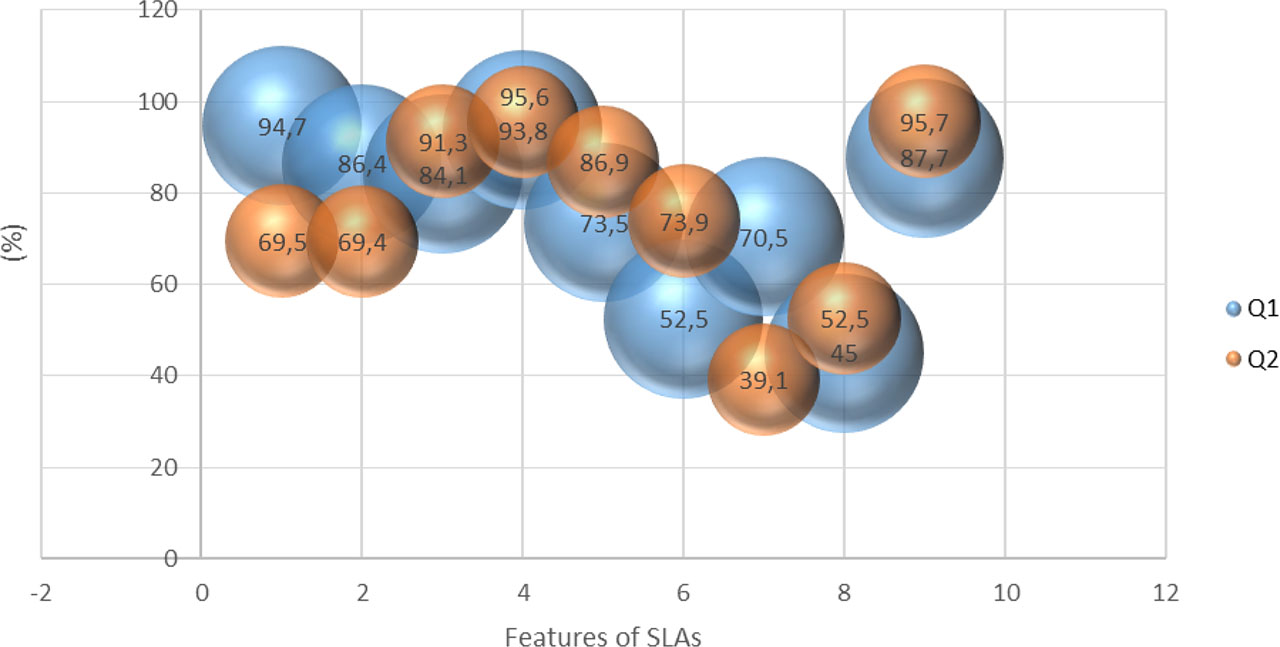
Figure 2.
Features of SLAs defined as ‘definitely important’ and ‘rather important’ to the respondents: 1 = place, 2 = date, 3 = duration, 4 = programme, 5 = the person conducting, 6 = participants, 7 = ECTS credits, 8 = organizer, 9 = fee
Source: own elaboration
Respondents to the Q1 questionnaire were asked about their preferred course length and the month in which it was held. A week or a few days and July were indicated by the largest number of students (62.9% and 36.4% respectively). This may be related to the importance placed on the continuity of holidays.
Potential applicants were also given the question of where candidates should be recruited from. The responses suggest a conservative attitude or concern on the part of respondents towards the participation of candidates representing disciplines other than architecture (Figure 3).
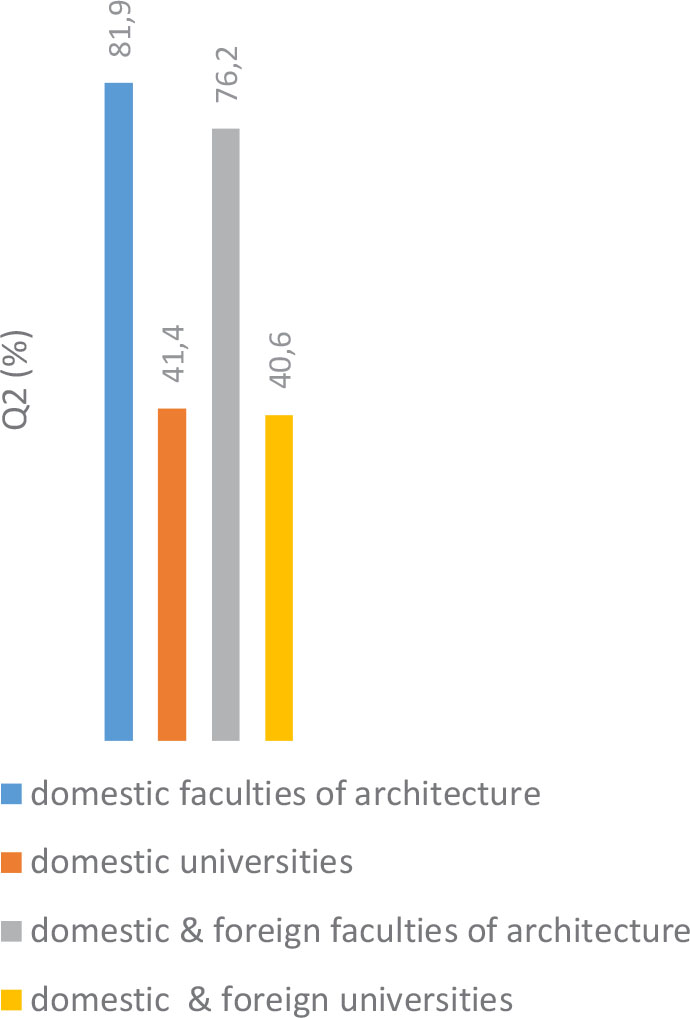
Figure 3.
‘Definitely expected’ participants and ‘rather expected’ participants in SLAs. Source: own elaboration..
Opinions on SLAs forms of teaching (4)
The project tasks, practical tasks, field observation, a field trip and participation in a local event were given similarly positive feedback from both groups of students (Figure 4). On average, 15.8% of SLA participants rated all forms of activities, except lab-based exercises, higher than students who had not taken part in an SLA before. The variation in opinions concerning discussion may indicate a positive effect of an SLA on confidence levels. In both groups, the least significant number of respondents deemed the lecture and lab-based exercise as either ‘definitely interesting’ or ‘rather interesting’. The results may prove that students prefer field-based forms of activities provided at SLAs, which are rarely available at the university.
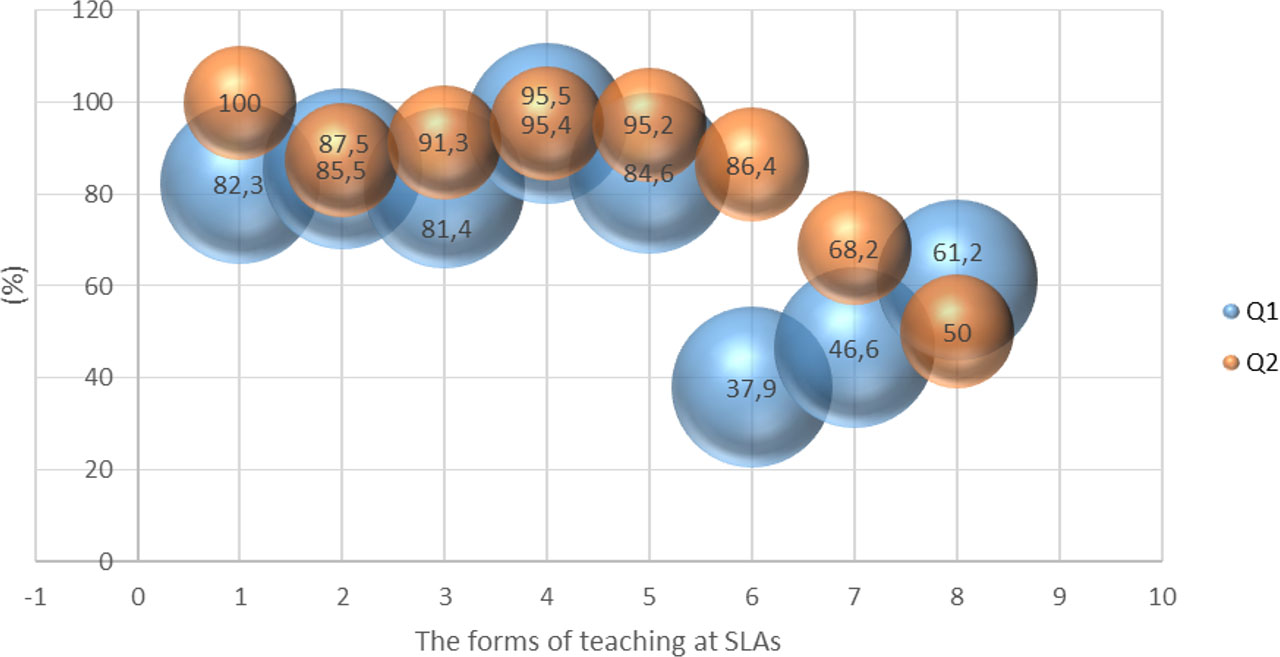
Figure 4.
‘Definitely positive’ and ‘rather positive’ feedback on the forms of teaching at SLAs: 1 = project tasks, 2 = practical tasks, 3 = field observation, 4 = field trip, 5 = local event, 6 = discussion, 7 = lecture, 8 = lab-based exercises
Source: own elaboration
Residents valued student projects and studies documenting old buildings the highest (Figure 5). This may indicate that they hope to be given guidelines on how to build. They are less interested in students' practical activities and rather uninterested in training.
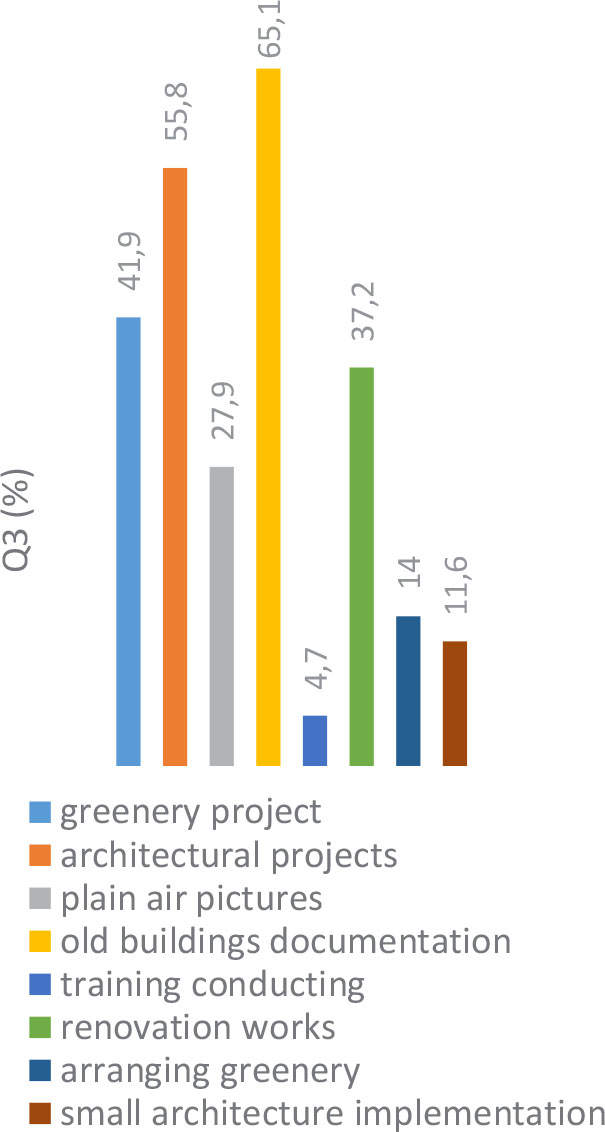
Figure 5.
Residence preferences for SLAs student tasks
Source: own elaboration
Feedback on expectations of the SLAs offering (5)
Most potential candidates strongly declare and rather declare an expectation towards the opportunity to combine studying and resting, to acquire design skills and to learn about design tools (Figure 6). In the ranking of opinions, the least importance is assigned to the continuation of the SLA topic in the semester classes. This may confirm the level to which classes at SLA differ from the academy-based ones. Positive feedback on the potential to combine learning and leisure is consistent with feedback on the field classes. However, the high expectations of potential participants for the opportunity to learn about design tools stand in contrast to the much less significant interest in lab-based exercises (Figure 4).
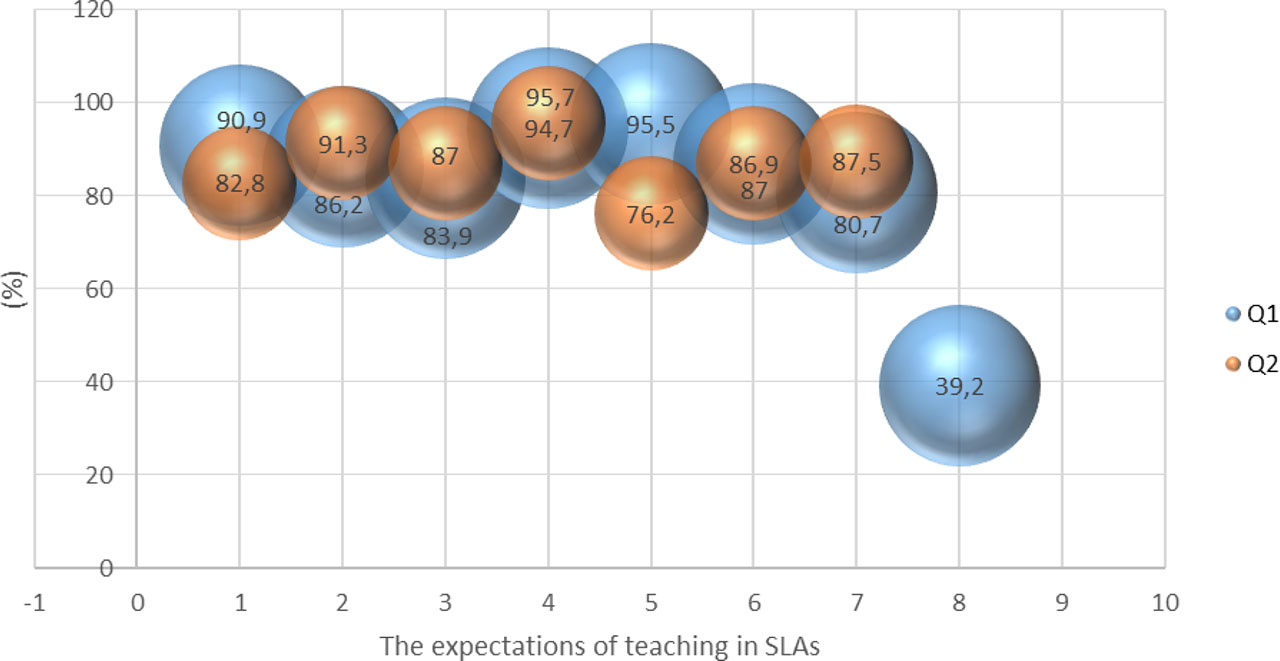
Figure 6.
‘Definitely important’ and ‘rather important’ expectations or ‘fulfilled expectations’ of teaching in SLAs: 1 = studying and resting, 2 = analytical skills, 3 = communication competences, 4 = project skills, 5 = design tools, 6 = knowledge, 7 = practical skills, 8 = the SLAs topic during semester
Source: own elaboration
Most participants felt that SLAs met or rather met their expectations in all the educational categories indicated. Lower satisfaction levels were recorded with regard to the opportunity to learn about design tools. This outcome should be linked to the fact that only a few participants had taken a specialized software course. Meanwhile, the remaining students learned by working with people with higher digital competencies. Most participants appreciated the opportunity to develop their design skills. Most residents expect more SLAs to be organized (83.7%), and far fewer would like to participate in the school's activities (41.95%) or would like to influence its programme (30.2%). For almost half of the residents, the SLA is an expected way to promote their village.
Opinions on the effects of SLAs (6)
SLAs participants noticed an improvement in their competencies (Figure 7). All the surveyed participants stated that participation in SLAs encouraged them to apply again and to develop new skills. A desire to deepen their knowledge of the topic undertaken was declared by 82.6% of the respondents. This may indicate a strengthening of educational motivation.
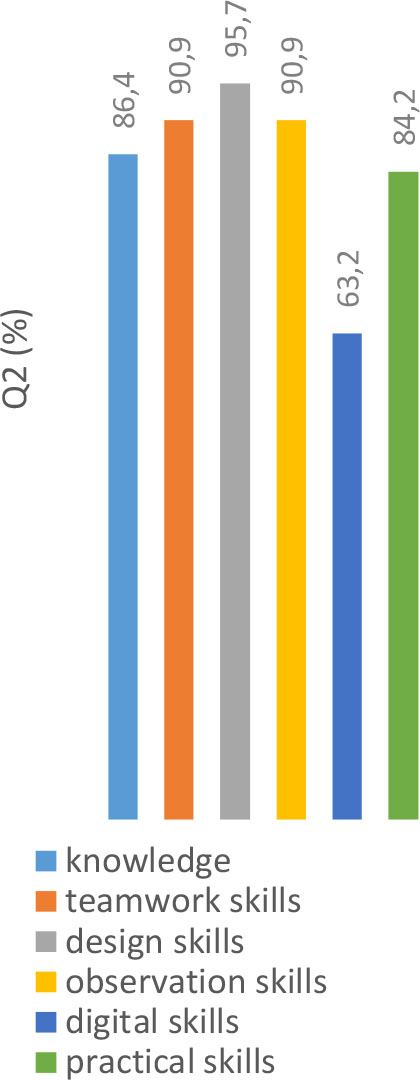
Figure 7.
Definite and slight perceived improvement in competencies because of participation in an SLA
Source: own elaboration
The residents surveyed gave positive feedback to the SLA and the students' work. They acknowledged that it had influenced them but rarely specified the type of influence. In individual comments, they appreciated the students' contribution to building the image of the village and initiating cooperation among residents.
Discussion
The described SLAs are not the only additional courses operating under the name of summer schools in architecture didactics. In contrast, SLAs have no monopoly on immersive teaching. Summer schools are referred to as online and on-site courses that are conducted within or outside the university walls. They can be itinerant or sedentary, commercial and non-commercial. The summer school under the project implemented by the National Institute of Architecture and Urbanism, Poland, from 2023 onwards may be seen as evidence of differentiation. It constitutes a type of structured scientific volunteering during which students document small-town landscapes. Meanwhile, the Rural Studio design and construction course at Auburn University, USA, provides an example of unprecedented academic engagement. Here, students design and build low-cost homes in co-operation with users under the guidance of experts. The added values that Rural Studio offers its participants include the students' empathy and responsibility and a genuine improvement in the residents' quality of life.
Despite the general social values offered by SLAs, they remain a niche form of architectural education and are barely visible. It was found that the offer of SLAs at ENHANCE universities was difficult to access. Only a few FAGUT students were interested in them, as potential participants were afraid of the SLAs multidisciplinarity and internationalization. An improved information flow and closer cooperation between associated universities could overcome these limitations and lead to an increased participation of students.
Under the Polish conditions, the uncertainty of funding constitutes a fundamental obstacle. Commercialization of courses is problematic due to their social mission and the intangible nature of their effects. Furthermore, any fee to be covered by participation in an SLA is likely to become a considerable barrier for students. Therefore, partners and sponsors need to be sought. Public and public-private partnerships, as well as domestic and international networking, may offer an opportunity to increase funding stability (Nowakowska 2015). Funds from the Erasmus + programme offer great support. Numerous summer schools have obtained such funding thanks to their affiliation with ENHANCE, 10 of which are at GUT. However, it is difficult for occasional and itinerant SLAs to use such funding.
Establishing SLAs for a longer period in a village, municipality or protected area is a strategic way to minimize organizational constraints and maximize social impact. Such a solution could align with integrating SLAs into the tasks of local governmental bodies (Blomkamp 2018) and would facilitate co-financing from EU funds.
Based on the review and survey results, barriers to the social impact of SLAs were identified. The level of residents' participation is currently limited to issuing opinions (Arnstein, 2019). The social impact of SLAs could be enhanced by integrating the co-design process more closely into the university course in its successive phases, that is, discovery and insight, prototyping, evaluating and scaling (Evans, Terrey 2016). However, it is important to acknowledge the injective role of autonomous SLAs, as, according to one review, such initiatives ‘engage residents in collaborative activities’.
The study has contributed to the discussion on the role of architectural education in achieving the 2030 Sustainable Development Goals (Górka 2016; Wantuch-Matla & Martyka 2020). The initiated testing proved the positive influence exerted by education in SLAs on the participants' social and professional competencies. Therefore, although the elitism and dispersion of SLAs provide a limitation, SLAs should be developed.
Conclusions
The teaching and collaborative potentials of SLAs have been confirmed in the questionnaire survey. All the students positively assessed SLAs as an education platform open to the living environment. The participating students appreciated the forms of SLAs actions, teaching methods and their effects. The assessment of the availability of SLAs was substantially less positive. Despite limited involvement, the residents were satisfied with the incentive to cooperate, which was given to them by the school operating in their town. The collected opinions of all respondents and experiences under FAGUT prove the validity of popularizing SLAs and implanting their environmental method into the architectural academic programme. Both recommendations require the expansion of the network of public and public–private cooperation and the improvement concerning the use of dedicated EU funds.