
Introduction
Seasons are periods with certain climatic conditions that prevail. They result from the Earth’s orbit and axial tilt relative to the ecliptic plane. Changes in the intensity of sunlight that reaches the Earth’s surface occur annually in temperate and polar regions. Thus, each year, climate changes are manifested as seasons. In mid-latitude regions, especially in temperate climates where the study area is located, four seasons are traditionally distinguished: spring, summer, autumn, and winter. Many studies also determined transitional seasons, for example: Wiszniewski (1960) proposed a division into eight seasons including transitional periods such as early spring, early summer, late summer, and pre-winter, while Merecki (1914) suggested a six-season model, adding early spring (spring grey) and late autumn (autumn grey). However, the authors kept to the primary division into four seasons for this paper.
Depending on the criteria adopted, seasons can be distinguished as astronomical, calendar, meteorological, climatological (including thermal, circulation, synoptic, etc.), or phenological. Meteorological/climatological research often uses a subdivision into four three-month periods: winter (December, January, and February – the coldest); summer (June, July, and August – the warmest; and spring (March, April, and May) and autumn (September, October, and November) – the transition seasons (Trenberth 1983). This breakdown is essentially one of the conveniences for compiling statistics over a larger area.
In the astronomical division, the cut-off dates of the seasons were determined by the position of Earth on the ecliptic. The four cardinal points are the start and end dates of the individual seasons. The traditional division into calendar seasons is based on the astronomical division. In this division, the key dates of the individual seasons are defined precisely. They may sometimes differ in that they give or take a day in relation to the astronomical season. For the northern hemisphere, the start of the calendar seasons are (starting from spring): March 21, June 22, September 23, and December 22. It can be assumed that the astronomical and calendar categories are the same for climatological studies. The calendar classification is the most traditional, and at the same time deeply rooted in social consciousness. It refers to the annual life cycle of nature, which also seems to be the most intuitive. However, this categorisation seems to be overlooked entirely in climate literature.
Phenological seasons are determined by observing the development phases of plants and (sometimes) animals, reflecting the annual life cycle of nature. Such a division is very similar to the climatological one because plants and animals react directly to seasonal changes in all weather conditions. This division also seems to be the most neutral, because man has no direct influence on the world’s reactions to living organisms (in conditions not controlled by technology). Despite limited data from phenological observation posts, this approach is gaining importance and complements climate studies by highlighting seasonal variability (Sparks & Menzel 2002).
Thermal seasons are often discussed in climatological studies but should not be conflated with climatological seasons. Thermal seasons are based solely on temperature, unlike climatological seasons, which consider multiple meteorological parameters. According to Woś (1999), the climatic seasons of the year can be distinguished only based on criteria that allow a relatively complete picture of the weather conditions prevailing in separate periods (seasons). However, the thermal criterion is often used because, as various researchers emphasise, temperature is one of the main meteorological elements, determining the nature of other elements and significantly affecting human life and economic activity. Using temperature alone may be insufficient, however, especially in regions with diverse climatic regimes, such as the Mediterranean basin, where multiple climatological parameters – oceanic, semi-arid, desert, mountain climate, etc. – coexist to define seasons (e.g., Kotsias et al. 2021).
In a country with high climatic diversity/variability (e.g., the USA), the 25th and 75th percentiles of daily mean temperature (using the entire period of record or for each year) were used to define seasons based on temperature. In this approach, the 25th and 75th percentiles represent the coldest and warmest seasons (winter and summer, respectively). During transitional seasons, temperatures never exceed these specific thresholds. The transition day between seasons was determined by a 10-day moving average (Allen & Sheridan 2015). Often, the boundaries of the thermal seasons are understood as the dates when the average daily air temperature values cross specific fixed thermal thresholds. The adopted temperature thresholds for each season vary depending on the climatic zone. In Europe alone, the threshold for summer can vary by several degrees (Ruosteenoja et al. 2020). Romer (1904) and Merecki (1914) pioneered this approach for the Polish territory. Most often, the thresholds (for Poland) are: below 5°C for winter, above 5°C for spring and autumn, and above 15°C for summer. Unfortunately, this definition is imprecise, and researchers determine the border dates of the seasons differently.
Several issues cause the ambiguity in the thermal definition. Firstly, the mean daily temperature can cross the threshold levels, which are specific for the individual thermal season, more than once in a season. For example, during an exceptionally warm winter, there may be days in January with temperatures above 5°C. Does that mean spring has come? The answer is no. We are dealing with “spring conditions” in winter. Such situations have become common in recent years. Even astronomically, it remains winter. Secondly, it raises the question of how long certain thermal conditions must prevail to be able to declare that the next season has arrived. It certainly cannot be a one-day increase in temperature to the next threshold. Should it be a certain number of days or a continuous period with the temperature above the threshold – or perhaps something else?
The literature provides many ways of determining the cut-off dates between the thermal seasons. These dates are determined using both average monthly values and daily values. Romer (1938) proposed a graphic method. He plotted values of average monthly temperatures and connected them with broken lines on a chart, then read the dates of crossing certain temperature thresholds, marking the beginning of the following seasons. Later, other authors modified this method, using daily temperature values and plotting annual temperature curves (e.g., Szyga-Pluta 2011). Szwed and Graczyk (2006) calculated the border day between two thermal seasons as the day falling in the middle between the last day of the preceding thermal season and the first day of the following one. For precise determination of the date of the thermal season onset, many authors propose additional criteria (beyond just the crossing of the threshold). For instance, Szyga-Pluta (2011) states that for a thermally heterogeneous period, the average temperature value for the entire period determines the appropriate season. Kosiba (1958) recommended deeming the first day of the thermal season as the day from which specific conditions for this thermal season dominate. Makowiec (1983) additionally proposed analysing the cumulative deviation sequence of the mean daily temperature from the threshold level. More complicated and multi-stage methods of determining the duration of thermal seasons, such as Kitowski et al. (2019), also exist. The examples above highlight the complexity of the problem.
This research examines the spatial variability of average temperature and precipitation across each season in Poland. Additionally, this study analyses the long-term variability of these parameters. Depending on the adopted definition, different time frames of the seasons result in varying values and patterns of basic meteorological characteristics. This article aims to illustrate the ambiguity in meteorological and climatological terminology. Its goal is not to rank different divisions as better or worse, but to demonstrate how varying definitions of seasons affect the interpretation of key climatic characteristics of a typical season. Are the differences in average temperature and precipitation values limited to specific seasons in particular years, or do they manifest in long-term trends? This article tries to answer these questions.
Data and Methods
Time series of average daily air temperature and daily precipitation sums from 1951 to 2020 for 29 meteorological stations (Fig. 1) were used for this research, employing the public database of the Institute of Meteorology and Water Management - National Research Institute.
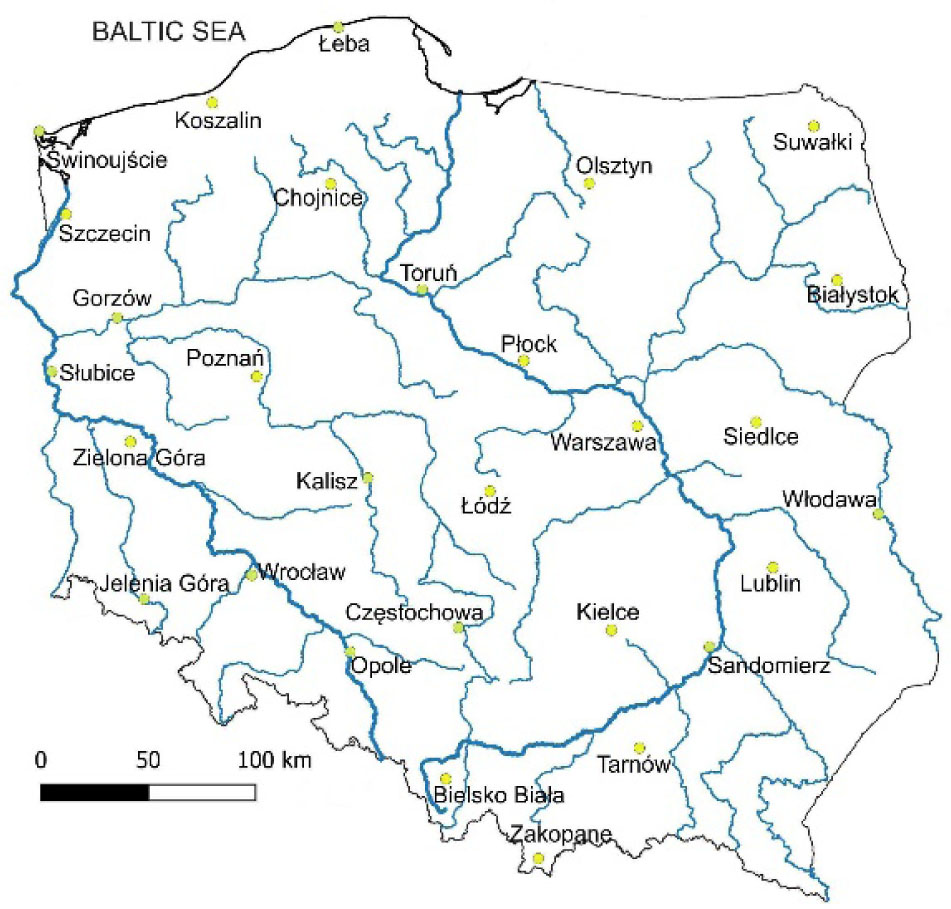
Figure 1.
Location of the analysed meteorological stations.
The research considered the meteorological, calendar, and thermal seasons. The authors adhered to the basic/traditional division into four seasons. Thus, the basic unit of time in this work was the season of the year. Annual or monthly characteristics were not specified.
The division into meteorological and calendar seasons does not require additional explanations. For the northern hemisphere (including Poland), it is consistent with the one given in the introduction to this paper. The division into thermal seasons is more problematic. For the purposes of this study, apart from the temperature threshold, the time criterion of the beginning of the season was arbitrarily adopted when distinguishing the thermal seasons of the year. Thus:
(i) spring lasts when the average daily air temperature exceeds the threshold of 5 °C, but not earlier than on March 1;
(ii) summer, when the average temperature is equal to or greater than 15 °C, but not earlier than on June 1;
(iii) autumn, when the air temperature falls below 15 °C, but not earlier than on September 1, and finally,
(iv) winter when it falls below 5 °C, but not earlier than on December 1.
This time limit ensures that the “typical/average season” pattern remains unaffected by exceptional weather situations, commonly called “outliers”.
For each type of season, i.e., for meteorological, calendar, and thermal seasons, basic meteorological characteristics were calculated for subsequent years. For temperature, its average values were calculated, and for precipitation, seasonal sums. Trend detection by the Mann-Kendall test (Mann 1945; Kendall 1975) was also carried out on the time series of seasonal temperature and precipitation values using the Hydrospect software (Radziejewski & Kundzewicz 2004). The results obtained for the various types of seasons were interpreted. The authors also aimed to determine which of the calculated variables – temperature or precipitation – is more “sensitive” to the type of season division. They investigated whether the differences in average values are limited to specific seasons in particular years, or if they also manifest in long-term values.
Results
General information about the thermal seasons
The beginning and end dates of thermal seasons vary each year depending on thermal conditions. Consequently, the duration of these seasons also fluctuates annually. Table 1 shows the coincidence of the beginnings of the thermal and meteorological seasons. The highest consistency between these dates occurs in winter, while the lowest is in spring. The variability of the date of the spring’s first day has an impact on the high variability of the length of thermal spring from year to year, while the date of the last spring day is more stable.
Table 1.
The coincidence of the beginning of the meteorological and thermal seasons, with up to five days’ variation (the number of occurrences between 1951 and 2020)
| station | spring | summer | autumn | winter | station | spring | summer | autumn | winter |
|---|---|---|---|---|---|---|---|---|---|
| BIAŁYSTOK | 12 | 53 | 60 | 68 | POZNAŃ | 27 | 57 | 51 | 68 |
| BIELSKO-BIAŁA | 33 | 52 | 51 | 65 | SANDOMIERZ | 25 | 57 | 46 | 69 |
| CHOJNICE | 15 | 53 | 63 | 68 | SIEDLCE | 18 | 58 | 55 | 68 |
| CZĘSTOCHOWA | 28 | 56 | 51 | 68 | SŁUBICE | 37 | 56 | 51 | 63 |
| GORZÓW | 30 | 58 | 48 | 68 | SUWAŁKI | 6 | 54 | 61 | 68 |
| JELENIA GÓRA | 27 | 45 | 66 | 68 | ŚWINOUJŚCIE | 29 | 47 | 45 | 63 |
| KALISZ | 25 | 56 | 46 | 68 | SZCZECIN | 32 | 55 | 49 | 65 |
| KIELCE | 23 | 53 | 53 | 68 | TARNÓW | 32 | 56 | 45 | 66 |
| KOSZALIN | 25 | 49 | 56 | 66 | TORUŃ | 25 | 57 | 52 | 68 |
| LUBLIN | 19 | 53 | 56 | 69 | WARSZAWA | 25 | 57 | 49 | 68 |
| ŁEBA | 12 | 40 | 55 | 67 | WŁODAWA | 18 | 59 | 52 | 69 |
| ŁÓDŹ | 21 | 56 | 52 | 68 | WROCŁAW | 33 | 57 | 45 | 67 |
| OLSZTYN | 17 | 53 | 55 | 68 | ZAKOPANE | 13 | 29 | 69 | 69 |
| OPOLE | 34 | 59 | 46 | 68 | ZIELONA GÓRA | 32 | 56 | 55 | 66 |
| PŁOCK | 23 | 55 | 47 | 68 | |||||
On average, between 1951 and 2020 in Poland, the longest thermal season was winter, lasting from 98 days in the west (Słubice) to 108 days in the east (Białystok). The longest recorded thermal winter was in 1969/1970, lasting 137 days in Chojnice, Koszalin, and Świnoujście. Conversely, the shortest thermal season of the year is thermal spring, lasting on average from 77 days in the east in Białystok to 86 days in the west in Słubice. An exceptionally short spring of only 47 days was recorded in 1958 at seven meteorological stations to the east of Poland. Greater long-term variability in the duration of thermal winter and spring is recorded in eastern Poland (Fig. 2). Summer and autumn are less diverse in an average year, with differences of only a few days across Poland. Average summer and autumn last respectively from 90 to 94 days (except in mountainous areas, where summer is a few days shorter) and 87 to 90 days (with autumn lasting a few days longer in mountainous regions).
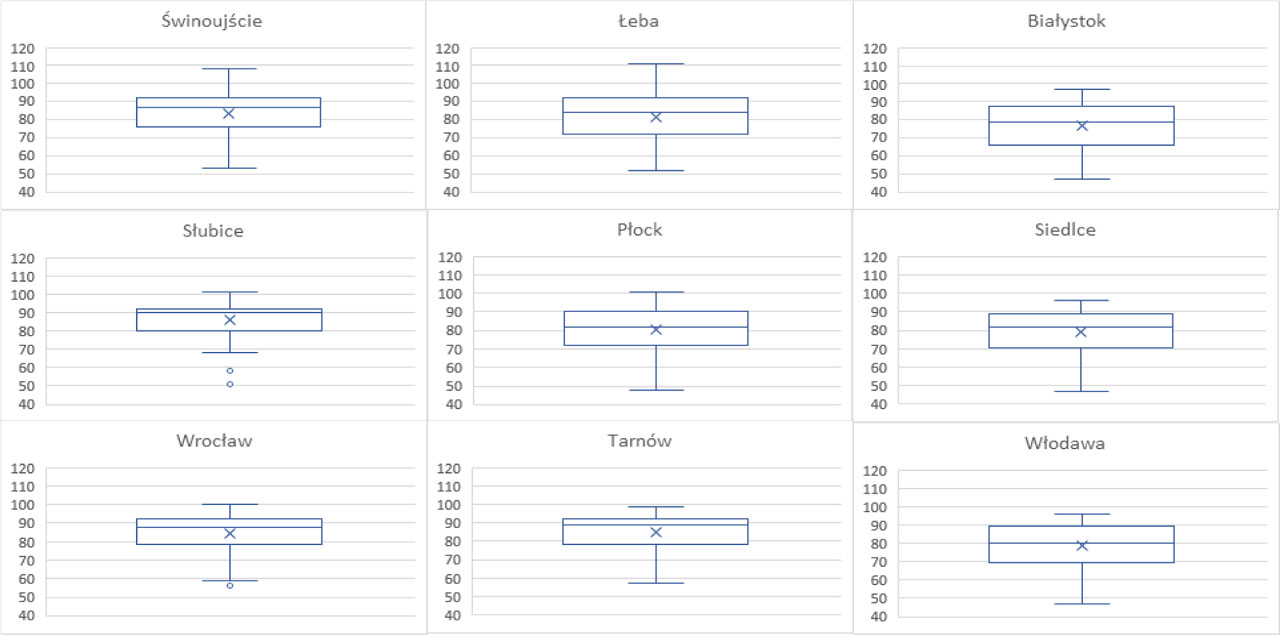
Figure 2.
Duration of thermal spring for nine selected stations [days]
Source: own study
Average temperature
The average temperature of meteorological winter in Poland during the period 1952–2020 ranged from −3.51 °C in Suwałki to +0.73 °C in Świnoujście. Positive values were characteristic of coastal stations, with the average temperature generally decreasing from west to east. Spring temperatures (except in mountainous areas) varied from 6.13°C in Suwałki to 8.66 °C in Opole. Meteorological summer featured mean daily temperatures from 16.01 °C in Jelenia Góra to 18.13 °C in Opole, while autumn temperatures ranged from 7.33 °C in Suwałki to 9.52 °C in Świnoujście. In Zakopane (a mountain station), the temperature in autumn was 6.13 °C (Fig. 3).
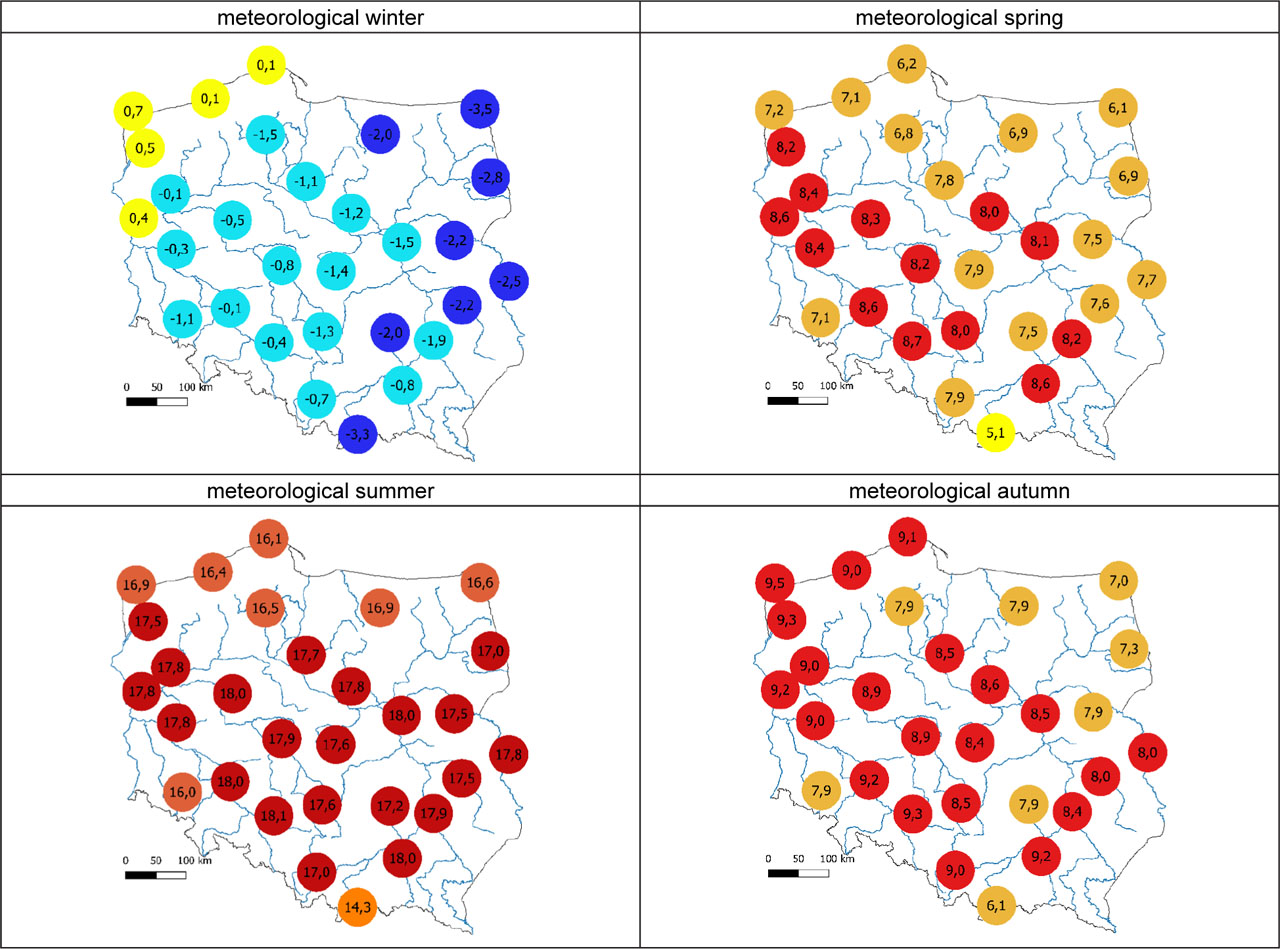
Figure 3.
The mean values of seasonal air temperatures in 1951–2020 [°C]
Source: own study
If the seasons are described by thermal and calendar divisions, a slightly different description expressed in average values will be obtained. Table 2 shows differences (in °C) between the temperatures of meteorological seasons and those of thermal and calendar seasons. The sign indicates the direction of changes (plus–the season has a higher temperature than the meteorological season, minus–the opposite). The most significant differences between average temperatures for seasons defined differently, were recorded for spring. Differences between the temperatures of meteorological and thermal springs in the analysed period (average values for 70 years) ranged from about 1°C in the west to over 2°C in the east. The average differences between the temperatures of meteorological and calendar springs are even higher. The calendar spring’s temperature is higher by about 3–3.5 degrees across the country (Fig. 4).
Table 2.
The average differences between the temperatures of meteorological seasons and those of thermal and calendar seasons in 1951–2020 [°C]
| meteorological season | vs. thermal | vs. calendar |
|---|---|---|
| winter | +0.1 (West) to +0.4 (East) | +0.3 whole area |
| spring | +1.0 (West) to +2.5 (East) | +3–3.5 whole area |
| summer | +0.2 whole area | −0.5 whole area |
| autumn | −0.2 to −0.4 depending on the region | −3.0 whole area |
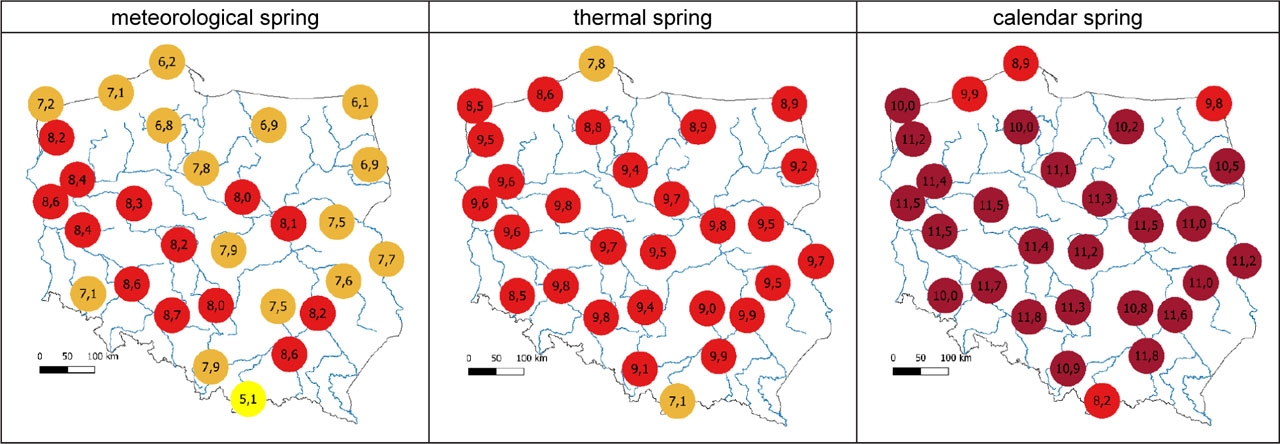
Figure 4.
The mean values of spring air temperatures in 1951–2020 [°C]
Source: own study
The higher average temperatures during the calendar seasons, compared to the meteorological ones, are mainly due to a three-week shift in the duration of the calendar season. For example, calendar autumn does not include more than 20 days of September, which, according to this research, are characterised by “summer temperatures”. As a result, calendar autumn is colder (Fig. 5).
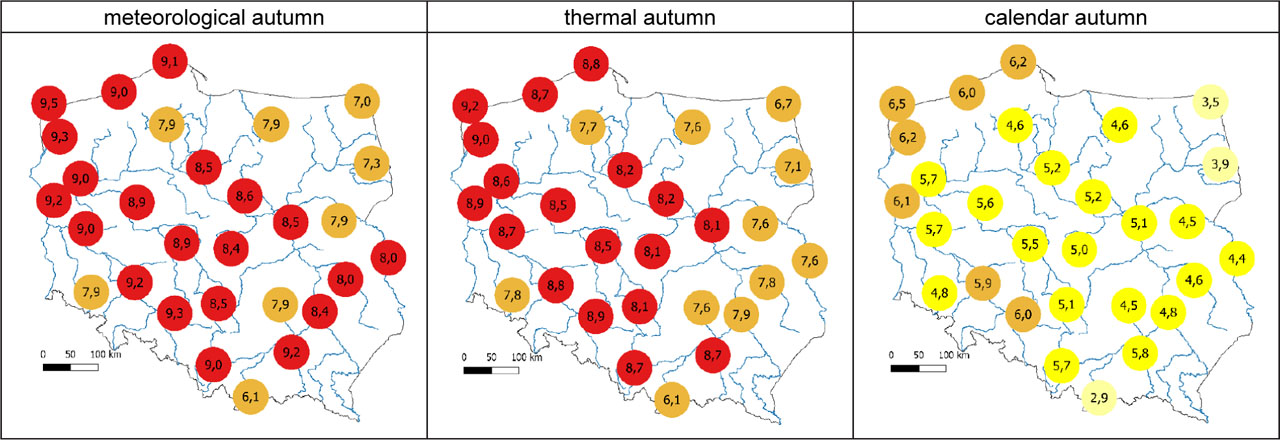
Figure 5.
The mean values of autumn air temperatures in 1951–2020 [°C]
Source: own study
Seasonal sum of precipitation
The distribution of precipitation throughout the year in Poland is uneven, leading to seasonal variations in precipitation totals. The lowest rainfall occurs in winter, while the highest is in summer. The average precipitation during meteorological winter in Poland from 1951 to 2020 ranged from 81.8 mm in Sandomierz to 145.9 mm in Zakopane. During meteorological spring, precipitation totals in the lowlands ranged from 107.5 mm in Kalisz to 129.1 mm in Białystok. It increases towards the south and with altitude, reaching over 200 mm in the foothills (e.g., Bielsko at 243.7 mm) and almost 300 mm in the mountains (Zakopane at 266.9 mm). The spatial variation of precipitation during the meteorological summer ranged from 179.3 mm in Świnoujście (the lowlands) to 280.8 mm in Tarnów (the highlands). It was higher in the foothills and mountains (e.g., Bielsko: 389.4 mm; Zakopane: 483.4 mm). In autumn, the lowest precipitation sums were recorded in the central zone (e.g., Poznań with 112.9 mm), increasing towards the north and south (e.g., Łeba with 207.1 mm and Tarnów with 148.3 mm). Seasonal precipitation in the foothills and mountains exceeded 200 mm (Fig. 6).
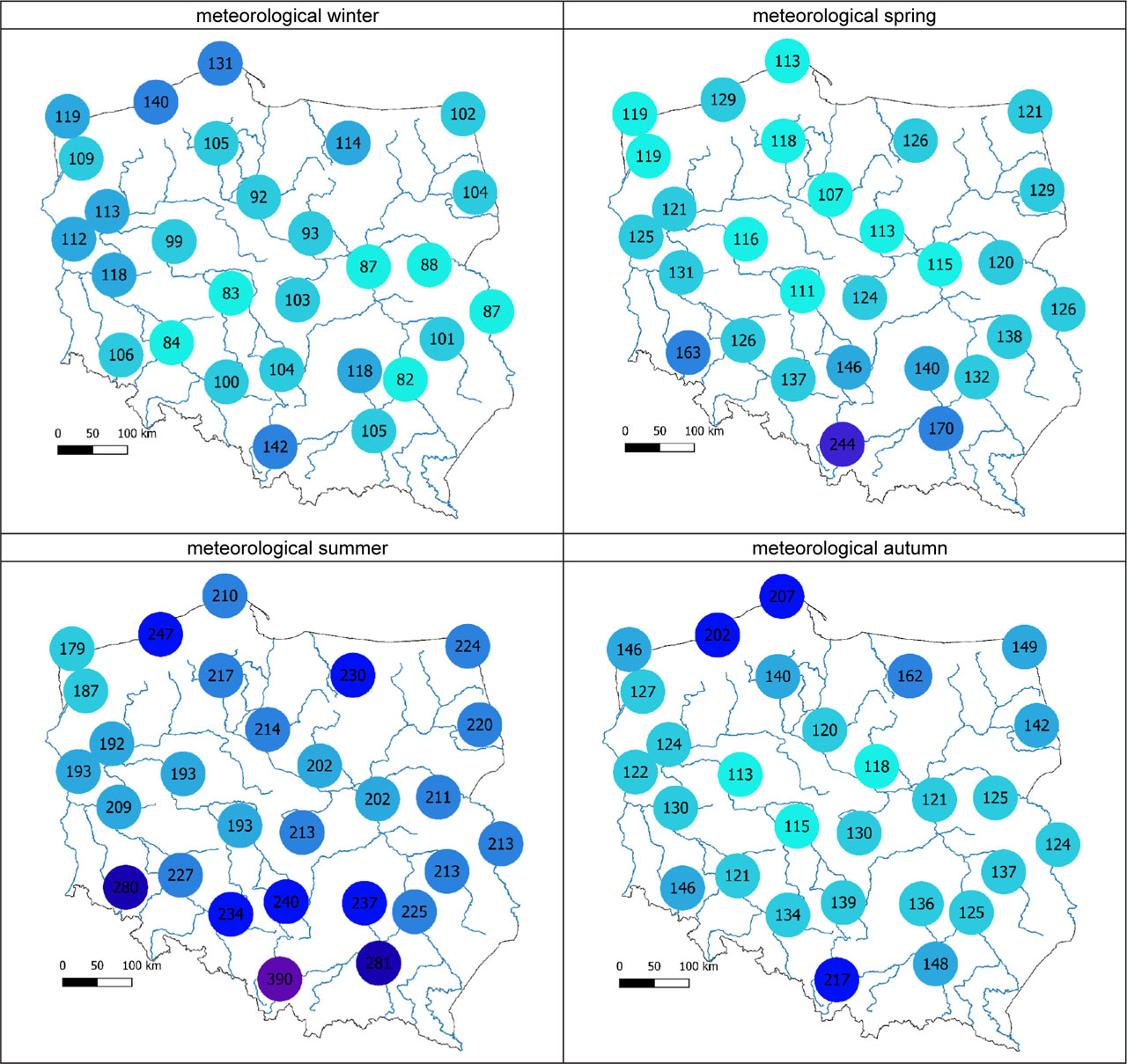
Figure 6.
The seasonal sum of precipitation for 1952–2020 [mm] Source: own study
Differences in the seasonal sum of precipitation for differently defined seasons are unpredictable/chaotic. Table 3 lists the average (for the 70 years) differences (in mm) in seasonal precipitation between the thermal and calendar seasons compared to the meteorological ones. As shown in Figures 7 and 8, the meteorological season can either be the wettest or, on the contrary, the driest (compared to other types). It all depends on the amount of precipitation that falls during the period, which may belong, depending on the division, to different seasons, e.g., the first three weeks of March, which are considered meteorological spring or the calendar winter.
Table 3.
The average differences between the seasonal precipitation for meteorological seasons and those of thermal and calendar seasons in 1951–2020 [mm]
| meteorological season | vs. thermal | vs. calendar |
|---|---|---|
| winter | +10 | −10 |
| spring | − 5 | + a dozen to several dozen |
| summer | − 1 to −5 | - several to − 20-odd |
| autumn | − 4 | - a dozen to − 20 |
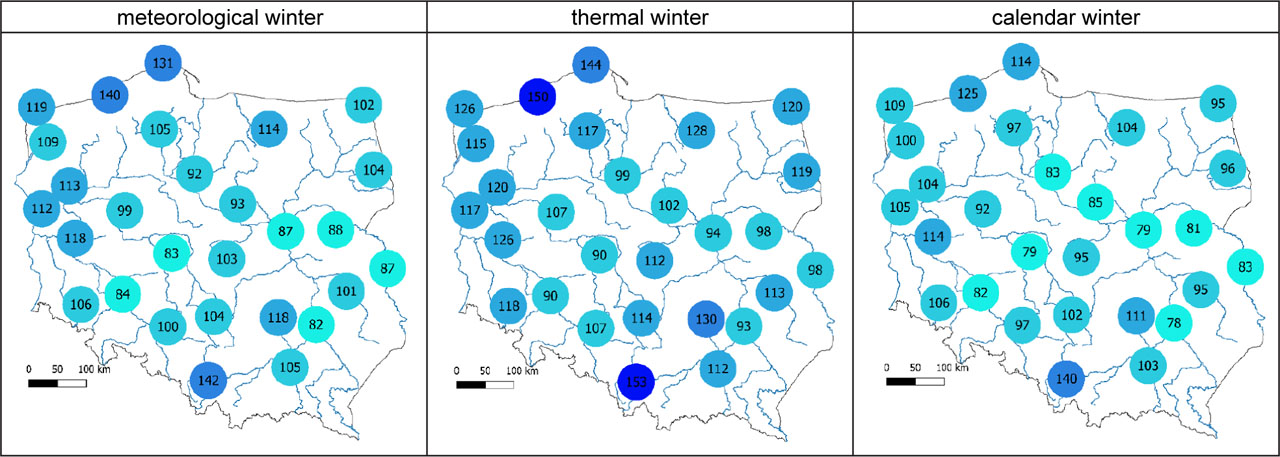
Figure 7.
The seasonal sum of winter precipitation in 1952–2020 [mm]
Source: own study
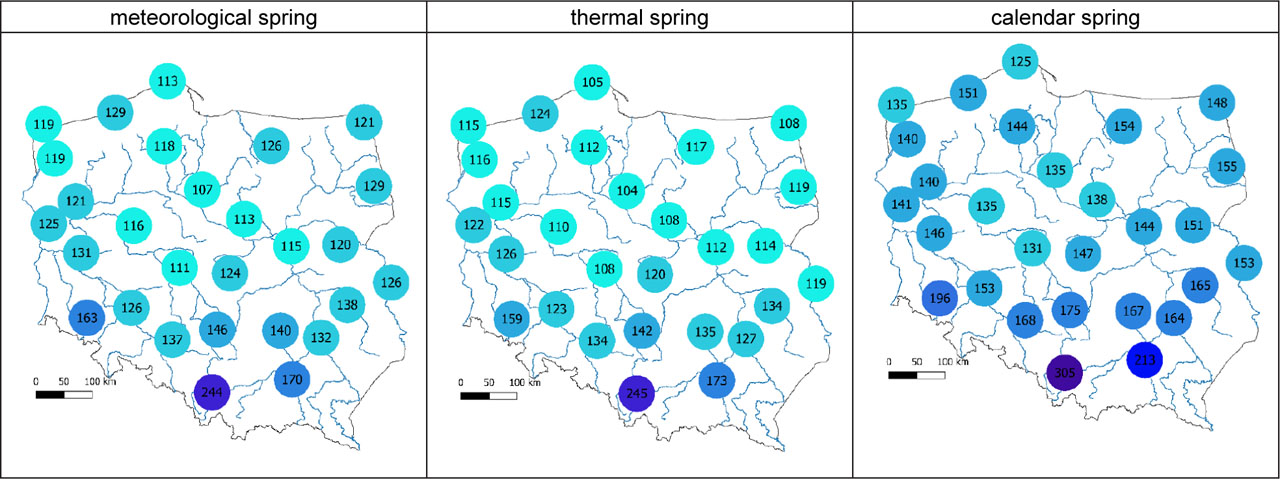
Figure 8.
The seasonal sum of spring precipitation in 1951–2020 [mm]
Source: own study
Long-term variability
This section focuses on variations in multi-year temperature and precipitation trends across different seasonal classifications.
Temperature
Figure 9a illustrates the long-term course of average winter air temperature for the three analysed types of seasons in Sandomierz. The general direction of the curve in the presented chart is representative of most of the analysed stations, primarily with regard to long-term variability rather than specific recorded values. The average seasonal temperature curves for the considered types of seasons are nearly synchronous, all demonstrating a gradual increase over time. Across all analysed stations (regardless of season type), the winter temperature increase is statistically significant at a 0.99 level. It is changing by approximately 0.30–0.45°C per decade for the meteorological division of the seasons. This increase is even faster for calendar winter, amounting to 0.39 – 0.52°C per decade, while for thermal winter, it is slightly lower, i.e. 0.27 – 0.42°C per decade.
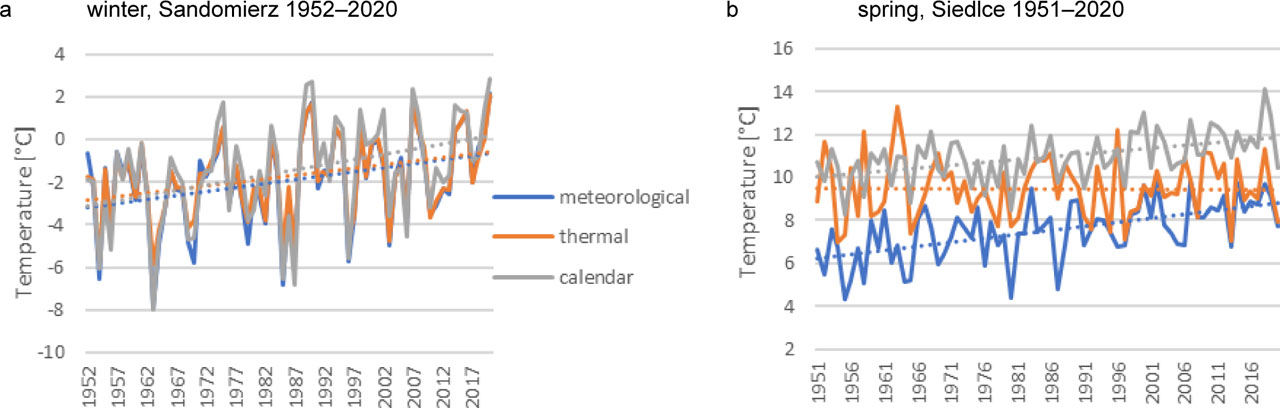
Figure 9.
(a) Mean winter temperature in Sandomierz and (b) mean spring temperature in Siedlce. Dotted lines – linear regression-
Source: own study
The temperature course for spring demonstrates significant synchronisation between meteorological and calendar spring curves, while the thermal spring curve differs from the others (example in Fig. 9b).
The spatial distribution of the increasing temperature trends in meteorological and calendar spring is similar, although changes occur faster during meteorological spring. They range from 0.30–0.43°C per decade and 0.20 to 0.34°C per decade, respectively, and are statistically significant for all stations at the 0.99 level. For thermal spring, temperature trends are entirely different. In the west, positive temperature trends of at least 0.95 are evident. However, in eastern Poland, there are minimal changes in seasonal temperature (Fig. 10).
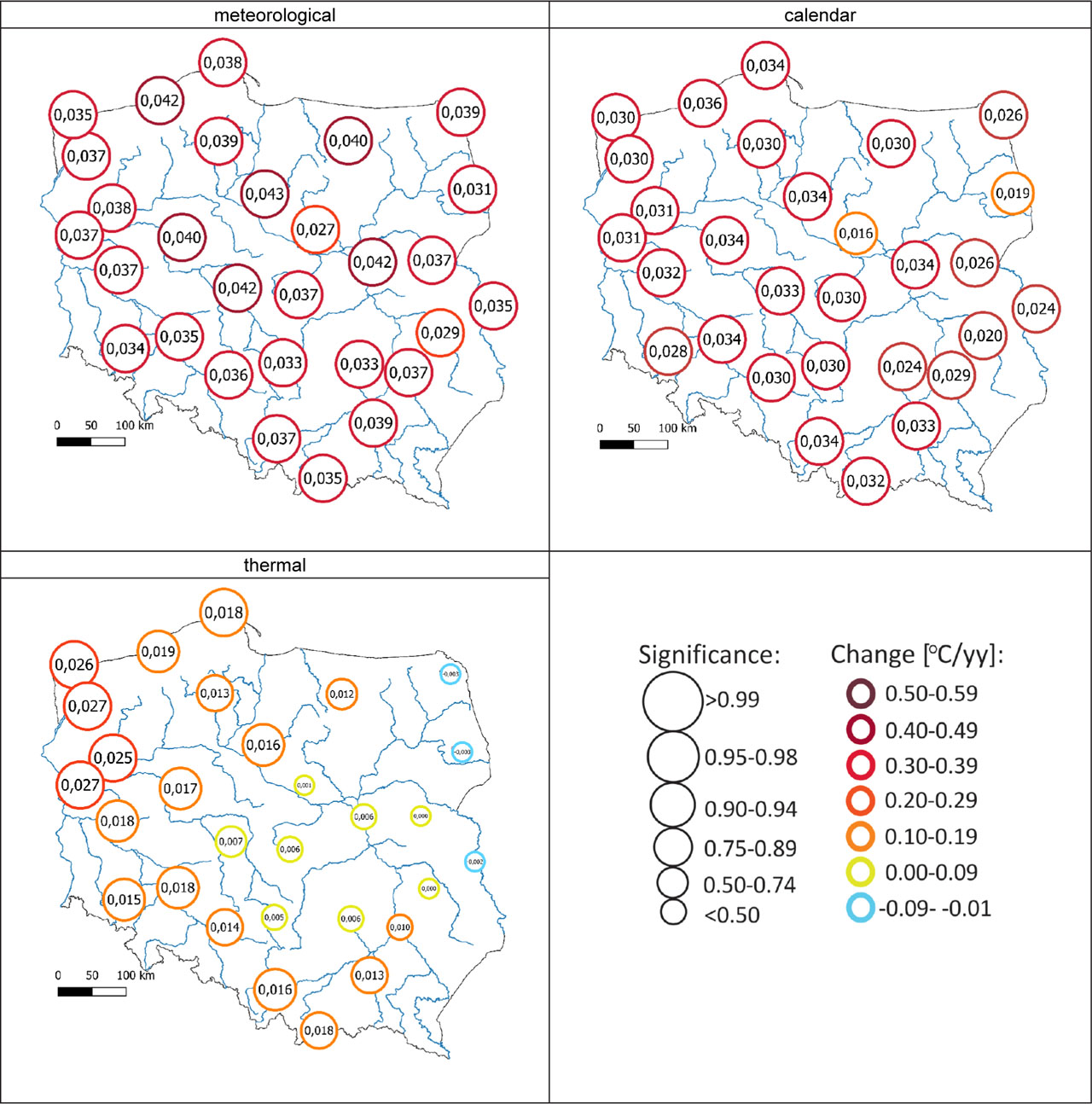
Figure 10.
Temperature change in spring (1951–2020)
Source: own study
Figure 11 shows the long-term patterns of average temperature in summer and autumn for two randomly selected stations. Analysing trends over many years yields similar results for each season type. An increasing temperature trend was observed for most stations, with significance at the 0.99 level. The average summer temperature rises around 0.18 to 0.36°C per decade. The long-term patterns of autumn temperature curves are synchronised for all autumn types until the early years of the 21st century. The thermal curve has grown slower than the meteorological and calendar curves in recent years. Autumn temperature is the most stable over time. Its increase, although statistically significant, is 0.15–0.25°C per decade.
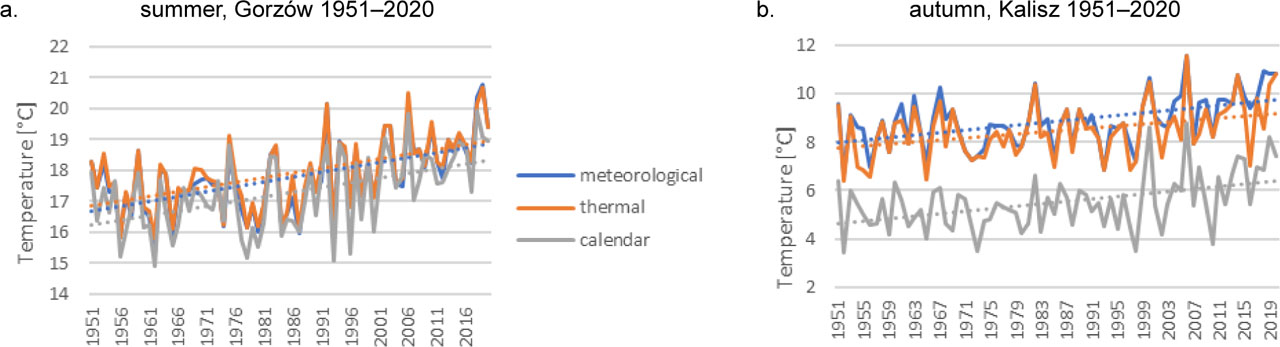
Figure 11.
Mean seasonal temperature (1951–2020): (a) summer in Gorzów and (b) autumn in Kalisz. Dotted lines – linear regression
Source: own study
Precipitation
Precipitation is a discontinuous phenomenon, varying both in time and in space, from local to regional. Therefore, it resists simple patterns.
Figure 12 presents the results of trend detection for winter defined in different ways. The country’s latitudinal division is visible. An increasing trend of winter precipitation is detected in the northern part, amounting to a few millimetres per decade. In the south, in the case of meteorological and calendar divisions, there are no changes in the amount of precipitation over the study period, while in the case of thermal winter, a decrease in the amount of precipitation is recorded.
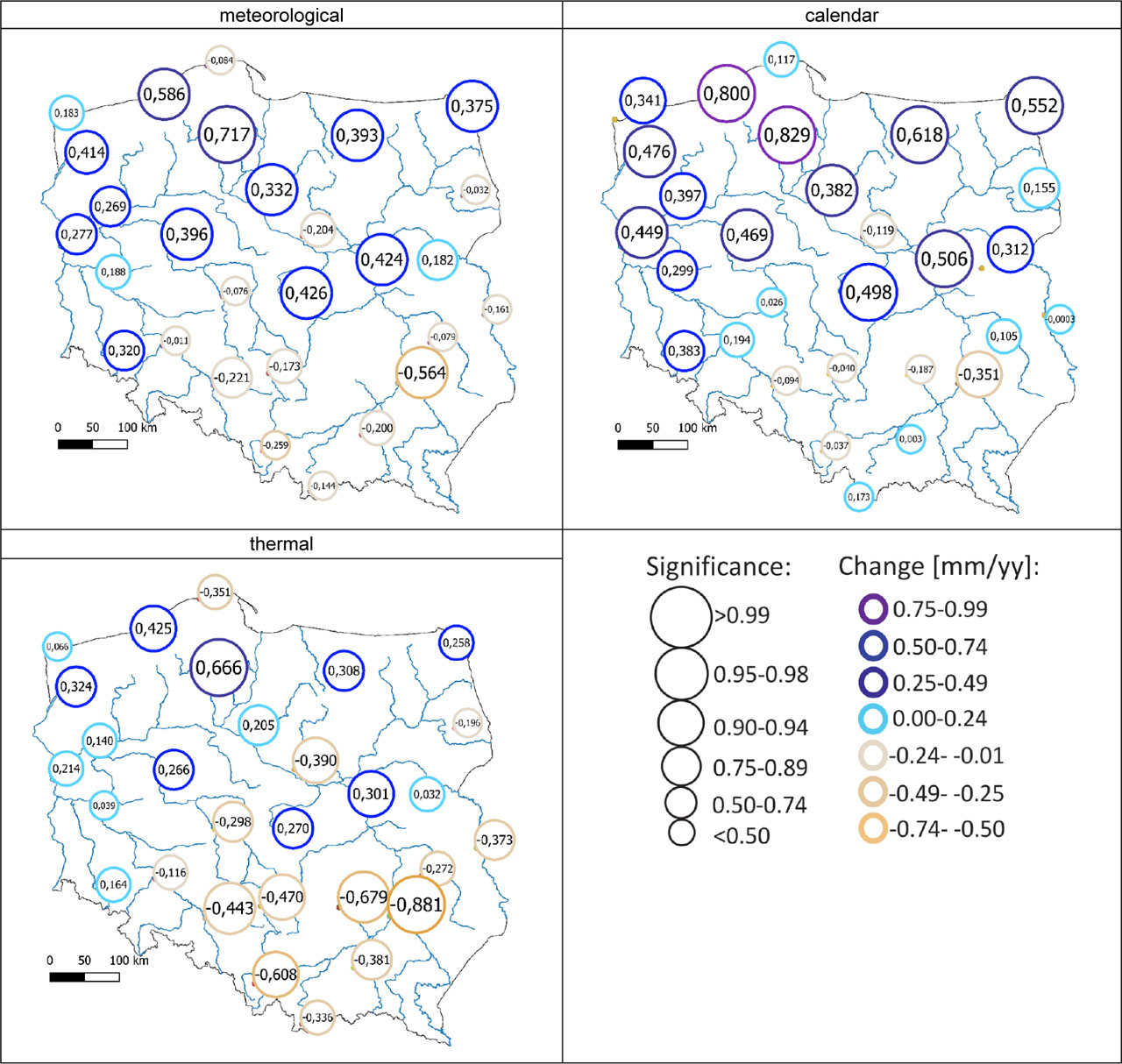
Figure 12.
Precipitation change in winter (1952–2020)
Source: own study
Increasing or decreasing trends in seasonal precipitation totals were recorded in spring, depending on the area. However, these are tendencies rather than statistically significant trends. Regarding the meteorological and thermal divisions, an upward trend in spring precipitation can be observed in eastern Poland. In contrast, spring precipitation seems to be decreasing in the western regions. Analyses of calendar spring do not show any changes in precipitation amounts (Fig. 13).
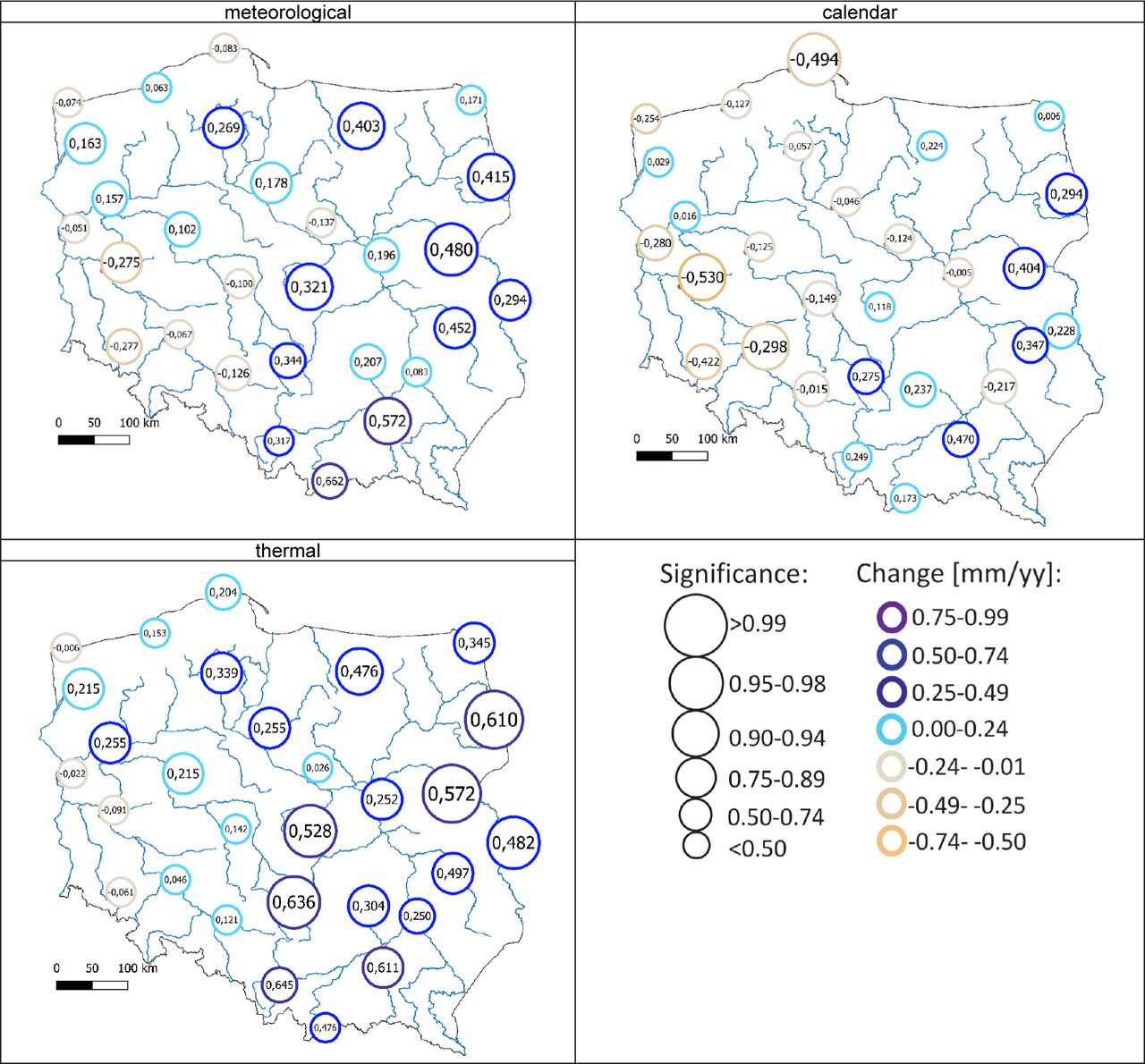
Figure 13.
Precipitation change in spring (1951–2020)
Source: own study
Summer and autumn are characterised by the greatest stability in precipitation sums over multiple years. Regardless of the adopted division, there were no statistically significant trends in the seasonal total of precipitation in these seasons.
Summary and Conclusions
The research presents the spatial variability of average temperature and precipitation across individual seasons in Poland (1951–2020) based on meteorological, thermal, and calendar classifications of seasons. The long-term variability of these parameters was also analysed. The spatial variability of temperature in Poland, observed in all four seasons, is primarily caused by the clash of oceanic air masses from the west and continental air masses from the east. This reflects the increasing severity of thermal conditions in Poland from west to east. The moderating effect of the Baltic Sea in the north further influences this pattern. On the other hand, the spatial distribution of precipitation strongly depends on the relief and altitude above sea level. A latitudinal pattern of seasonal precipitation is noticeable. Thus, throughout the year, the driest area is the central part of Poland with the lowlands, while the wettest areas are the mountainous regions in the south. The precipitation distribution exhibits clear seasonality, with the lowest precipitation occurring in winter and the highest in summer.
The course of the seasons, including their parameters, changes along with the tendency towards global warming. The seasons are generally becoming warmer. However, average temperatures rise over time at different rates and levels of significance. Autumn temperature is the most stable over time. The greatest temperature increases are recorded in winter and spring, ranging from approximately 0.3 to 0.45 °C per decade. As shown in many studies, the progressive warming is most noticeable in the cold season, which is manifested by the shortening of the thermal winter period (Czarnecka & Niezgórska-Lencewicz 2017, Czernecki & Miętus 2015). However, the results are incomparable in many cases due to the different study periods and methodologies adopted. In the last three decades, there has also been an acceleration in the increase in summer temperatures. For the entire analysis period from 1951 to 2020, the increase rate for summer temperatures averages from 0.17 to 0.36 °C per decade. The results of this study are consistent with other studies from Poland, such as Ustrnul et al. 2021, Kejna & Rudzki 2021, Owczarek & Filipiak 2016, Wójcik & Miętus 2014 and Michalska 2011, among others.
Detection of precipitation trends is problematic due to its great variability, an inherent feature of this element. In this study, no statistically significant tendencies in the sums of seasonal precipitation in summer and autumn were found. For winter, the country showed a latitudinal division into two parts. In the northern part, there was a significant increase in precipitation at the level of 0.9 or more. In spring, precipitation seems to increase in the eastern part of the country, although these increases are usually statistically insignificant. Tomczyk & Szyga-Pluta (2019) also stated that precipitation conditions did not change much over time; however, their study involved a shorter study period. They also stated that precipitation totals are characterised by high temporal and spatial variability. The temporal course of precipitation is rather dominated by short-term tendencies and/or fluctuations (Łupikasza & Małarzewski 2021).
As to the divisions into seasons, the meteorological division, which can be seen as a broad approximation or generalisation, effectively reflects the specificity of the seasons in Poland’s climatic conditions. The close alignment of the starting dates of meteorological and thermal seasons is evidence of this. Even though the division into calendar seasons is based on fixed astronomical criteria, regardless of any climatic fluctuations, the temperature and precipitation values describing the calendar seasons differ significantly from those of the other seasons. The decisive factor remains the three-week shift in calendar seasons compared to meteorological ones. In turn, the most significant impact on the differences in values between the meteorological and thermal seasons is the varying duration of the thermal seasons from year to year, notably the large variability in the start date of the thermal spring. Consequently, spring is the most diverse thermal season year by year. The longest thermal seasons are winter and summer, as also reported by Czernecki & Miętus (2015) and Kejna & Pospieszyńska (2023). Thermal autumn is the most stable.
From 1951 to 2020, the differences in average seasonal temperatures between seasons defined differently are more significant than in the seasonal precipitation totals. Numerical values of precipitation differences may seem almost negligible compared to the seasonal totals; they constitute only a few percent of individual seasons. However, they can vary by as much as 100% or more in specific seasons. The multitude of definitions of seasons and various methods for determining thermal seasons may lead to inaccuracies in interpreting the results. The combination of approaches to the topic may invalidate comparisons between different studies.