
Introduction
Gastronomic tourism, also known as food tourism or culinary tourism, is a growing form of niche tourism that focuses upon food as an attraction for exploring and experiencing unique culinary practices, traditions, products, and flavours of a destination (Dixit 2021; Long 2013). This type of tourism involves experiencing local cuisines for leisure purposes, and it encompasses a wide range of activities, including visiting primary and secondary food producers, attending gastronomic festivals, visiting local food fairs/markets, participating in events, exploring farmers’ markets, engaging in cooking classes/shows and demonstrations, and indulging in tastings of high-quality food products, or any other tourism activities associated with food (Hall & Sharples 2003).
Gastronomic tourism is considered one of the most dynamic activities, showing competitive advantages in the tourism marketplace, and enabling tourists to immerse themselves in a different destination and culture, where the consumption of local food and beverages plays a significant role in providing enjoyable experiences during trips (Testa et al. 2019). In addition, gastronomic tourism is highly relevant due to its influence on culture, economy, society, the environment, sustainable development, and identity reinforcement at particular destinations (Kim et al. 2013).
Over the last few decades, a growing interest among tourists in consuming food products and specialities (i.e. unique dishes) – locally produced and commonly defined as traditional food – has been observed in countless destinations (Cucculelli & Goffi 2016). Thus, food production activities and the subsequent purchase of traditional local food by tourists benefit the preservation and conservation of an intangible cultural heritage (Soare et al. 2023), essentially transmitted orally from one generation to another (Heldak et al. 2020; Kalenjuk Pivarski et al. 2023). In this context, the interplay among factors such as tourists’ behaviour, motivations, and quantifiable and subjective local food attributes have been extensively assessed due to their variable effect on travel planning, food choice at gastronomic destinations, demand for local products, and economic implications for local tourism industry businesses, chiefly in developed nations that are highly recognised for their distinctive culinary heritage (Kim et al. 2013; López-Guzmán et al. 2017; Madaleno et al. 2018; Martínez-Ruiz & Gómez-Cantó 2016; Fountain 2022).
Despite the significant progress made in comprehending food tourists’ behaviour in recent years, an in-depth understanding of gastronomic tourists’ motivations to consume traditional local food and beverages is still critical, mainly in destinations located in economically developing countries, particularly those countries possessing exceptionally wealthy natural and cultural heritage (Rojas 2021), such as some Caribbean and Latin American nations. Among these, Ecuador, in particular, stands out as having numerous cities that have been internationally recognised and have received awards for their diverse array of natural and non-natural attractions, including tourism-related services, infrastructure, cultural richness, and gastronomy (WTA 2020; UNWTO 2023). However, although Ecuador has a certain notoriety in tourism markets, in particular, gastronomic tourism is still an unexploited segment, and its potential long-term sustainable development has been largely overlooked by various stakeholders, including governmental authorities, service providers, and academics. These tourism actors have not efficiently addressed specific knowledge gaps or conducted empirical research initiatives aimed at unravelling the complexities of gastronomic tourism in Ecuador. This applies particularly to destinations located in Central Ecuador, including cities such as Latacunga, Ambato, Baños de Agua Santa, and Riobamba, which are top-ranking destinations nationally (i.e. during peak tourist season) (Guamán et al. 2023; Paredes et al. 2021).
Unlike other top-ranking Ecuadorean destinations such as Quito, Guayaquil, Cuenca, and the Galapagos Islands, the cities of the Central Ecuador region have been relatively excluded from potential benefits generated by intensive international tourism promotion, national tourism programmes, marketing strategies, and tourism research, particularly in gastronomic tourism. Accordingly, given that more empirically based research linked to national gastronomic tourism is still scarce, the present study addresses this lack of empirical evidence by determining the key motivational factors driving the consumption of traditional local food and beverages in Latacunga. This city is noteworthy due to how it has preserved its cultural-historic heritage and offers cultural tourism (e.g. artistic, religious, and historical aspects), gastronomy-related activities, and natural tourism, contributing significantly to the local economy, particularly during peak season. This period provides a unique opportunity to collect data that reflects the actual dynamics of a destination, providing an accurate representation of tourist behaviour and experiences.
Consequently, findings from the present study may provide critical information to enhance local and regional gastronomic tourism services, facilities, and competitiveness levels, ultimately helping generate memorable food tourism experiences in places in which local communities possess a strong and distinct cultural identity – a characteristic observed in Ecuador (Armijos et al. 2022; López-Guzmán et al. 2017) and other destinations worldwide (Hillel et al. 2013; Madaleno et al. 2018; Soare et al. 2023).
Literature review
Travel motivations and consumption of traditional local food
Motivation, in tourist behaviour studies, refers to all types of stimuli capable of generating a specific behaviour – namely, engaging or not in a particular tourism activity. These stimuli are linked to push and pull factors, which have been identified as behavioural drivers directly related to intrinsic/socio-psychological motivations and extrinsic motivations/destination attributes, respectively (Seyanont 2017). As seen in all tourism segments, including gastronomic tourism, the combination of push and pull factors is used to predict tourists’ behavioural responses (Cerasoli et al. 2014). Thus, several motivational factors leading to the consumption of food and beverages in a specific destination have been identified and widely used in food tourism research to promote local gastronomy as one of the crucial elements for understanding the intangible heritage or culture of particular destinations (Björk & Kauppinen-Räisänen 2016). For instance, prestige, togetherness, status, cultural experience, interpersonal relationships, excitement, escape from routine, food-related personality traits, health concerns, physical environment, physiological need, and sensory appeal are indicated relatively frequently in tourism surveys (Castillo-Canalejo et al. 2020; Kim et al. 2013; López-Guzmán et al. 2017; Madaleno et al. 2018). These and other factors have helped understand tourists’ attitudes and perceptions and how they influence both the image of gastronomic destinations (Mukharomah et al. 2021; Testa et al. 2019) and consumers’ decisions to purchase and consume, or not, a specific type and amount of traditional local food (Kalenjuk Pivarski et al. 2023).
Traditional food attributes associated with memorable gastronomic tourism experiences
Traditional gastronomy is an intangible element that is intrinsic to the cultural heritage of destinations. Accordingly, gastronomy can also be used to create unforgettable, authentic, and marketable tourism experiences, mainly through pivotal assets that add value and allow destinations to differentiate from other touristic places. One of the key factors contributing to the appeal of food tourism is the unique and traditional attributes of local cuisine, which may enhance the attractiveness of a destination to both consumers and tourists (Soare et al. 2023). These attributes, including price, health and wellness benefits, taste, safety, flavour, smell, appearance, social impact, quality, and authenticity, can positively or negatively affect tourism travel motives and food choice behaviour, while interacting with other external factors such as sociocultural, sociodemographic, socioeconomic and religious aspects, travel behaviour (number of previous visits, length of stay, and travel company), and knowledge of local food products (e.g. past experience) (Badu-Baiden et al. 2022; Bessiere & Tibere 2013; Madaleno et al. 2018; Martínez-Ruiz & Gómez-Cantó 2016; Soare et al. 2023; Soonsan et al. 2023). Consequently, tourists may gain or miss out on memorable food experiences that reflect the local culture and culinary traditions of the destination (Badu-Baiden et al. 2022; Madaleno et al. 2018; Soonsan et al. 2023). As discussed previously by other authors, in the context of food consumption, memorable experiences can be described as the result of pleasant tourist experiences that lead to peak experiences that become the primary motivation for tourism. This type of consumer experience lies in opposition to supporting experiences that help satisfy only the basic needs of a trip, without differing much from daily experiences (Quan & Wang 2004).
Furthermore, food attributes play a remarkable role not only in the consumers’ product choice process, due to their informative, communicative, and symbolic features (Martínez-Ruiz & Gómez-Cantó 2016; McCrickerd & Forde 2016), but also in the potential to influence consumers’ willingness to increase expenditure on local food, particularly among gastronomic tourists who are likely to become regular consumers of the food specialities tasted at a specific destination visited in the past (Di-Clemente et al. 2020). Thus, these regular consumers can be categorised as a highly experienced group, characterised by their repeated visits to the same destination to consume traditional local food. This behaviour lies in contrast with a less experienced group that may not be intensely interested in food tourism or are visiting a destination for the first time, without prior exposure to the local culture and food (Seo et al. 2013). For both groups of tourists, the creation of unforgettable and authentic experiences can foster loyalty and advocacy as they share their positive experiences with other travellers. This fact underscores the role of traditional gastronomy as a potent strategy for disseminating and promoting underexplored and less crowded destinations, particularly those in developing countries, which are regularly overlooked.
More research is required to determine which food attributes, including sensory attributes, can significantly influence customer satisfaction and create memorable food experiences; consequently, they can be used in marketing strategies (Silaban et al. 2023). Notably, outcomes from new tourism research can help local gastronomic tourism providers and other stakeholders to use specific traditional food attributes as good indicators of acceptability levels of local food products (McCrickerd & Forde 2016), ultimately determining future behavioural patterns, including the intention to revisit a specific cultural destination where food was consumed.
Case study of Latacunga: From a cultural, natural, and gastronomic tourism perspective
Latacunga is one of the most important cities of the central zone of Ecuador. This geographical area is considered one of the country’s financial, commercial, and economic centres, known for manufacturing, construction, agriculture, the agro-industrial sector, and commerce (e.g. tourism industry) (Romero et al. 2021). Furthermore, given the fact that this city still preserves a rich cultural-historic heritage (i.e. pre-colonial, colonial, and post-colonial legacy), specifically in its historic centre, Latacunga was the first city in Ecuador to be declared by the National Institute of Heritage and Culture (INPC) as the Nation’s Cultural Heritage (Escobar & Pachuco 2016). Subsequently, the city was declared the sixth Magical Town of Ecuador (Ministerio de Turismo 2023).
Regarding sociodemographic features, Latacunga is the capital of the Cotopaxi Province, which is the third province of the Ecuadorean highlands with the largest indigenous population. This fact implies that the local traditions, customs, and cultural manifestations are still in force, mainly by means of gastronomy, festivities, clothing, and language (IWGIA 2022).
From an economic perspective, cultural tourism (e.g. artistic, religious, and historical aspects), gastronomy-related activities, and natural tourism still generate incomes and employment opportunities, contributing significantly to the local economy. This is particularly evident during the high season in tourism, namely from September to February each year. In addition, the territory of Latacunga embraces the Cotopaxi National Park, which features the Cotopaxi volcano (5,897 meters above sea level) – the second-highest volcano in the country and one of the most active in the world. This natural wonder is a major attraction for tourists, further boosting the city’s tourism sector (Ministerio de Turismo 2019).
Concerning tourism activities, the ‘Mama Negra’ festival in Latacunga attracts 300,000 to 500,000 visitors and tourists, particularly in short periods of three- or four-day holidays (La Gaceta 2023). This number of people is highly significant compared with the 120,000 travellers attending ‘the Festival of Flowers and Fruits’ in Ambato City, which is another top-ranking city for holidaymakers.
On the other hand, by comparing the number of tourist attractions among the three top-ranking cities from Central Ecuador; Baños possesses 43 natural attractions, followed by Latacunga with 41, and Ambato with 28. However, as for cultural attractions (i.e. museums, churches, festivals, gastronomy), Latacunga has 106 attractions registered by the Ecuadorean Ministry of Tourism (Barrera & Espín 2023), followed by Ambato with 28, and Baños with only six cultural attractions (Guamán 2021). Regarding gastronomy, Latacunga is a culinary paradise with a gastronomic inventory of 14 traditional dishes and beverages (Guerrero 2022). This inventory is more extensive compared with other cities in the Central Ecuador area, and showcases the city’s rich culinary heritage. Notably, eight of these dishes and beverages have been declared ‘Gastronomic Heritage’, using ingredients that date back to ancient times, such as melloco, potato, barley, corn, and quinoa. With the arrival of the Spanish, beef, pork, and poultry were added to the local population’s menu, creating a unique fusion of flavours. Surprisingly, Llapingacho, one of the eight emblematic ‘Gastronomic Heritage’ dishes that are prepared and highly consumed in Central Ecuador, has been internationally awarded second place by the Taste Atlas audience and placed among the 100 best international dishes made with potatoes (Tasteatlas 2023).
This simply shows that the gastronomic richness found in Latacunga plays a fundamental role in cultural and tourist activities, mainly influenced by multiple factors such as multiculturalism, a diverse climate, a variety of spices, and natural products grown nationwide. Additionally, the syncretism between indigenous and European cultural heritage has allowed gastronomic elements such as seasoning and creativity to permanently evolve through new generations of cooks and diners (Ministerio de Turismo 2022).
Materials and methods
Study area
The present empirical research was conducted in Latacunga city, a top-ranking holiday destination located in Central Ecuador. The region is the largest in the country, covering an area of 44,899 km2, which represents 18% of the Ecuadorean territory. Here, climatic conditions and the short growing season are adequate for cultivating a wide variety of fruits and vegetables, which are the main ingredients for the traditional dishes regularly consumed in this Andean area during local festivities (Cando 2022). These climatic features also stimulate cultural and gastronomic tourism activities throughout the year and boost socioeconomic development (Guamán et al. 2023). Specifically, in Latacunga, all special events, festivals, or cultural celebrations are mainly carried out in the historic centre and surroundings (Tinajero 2023), which covers most areas where the present study was conducted (Fig. 1).
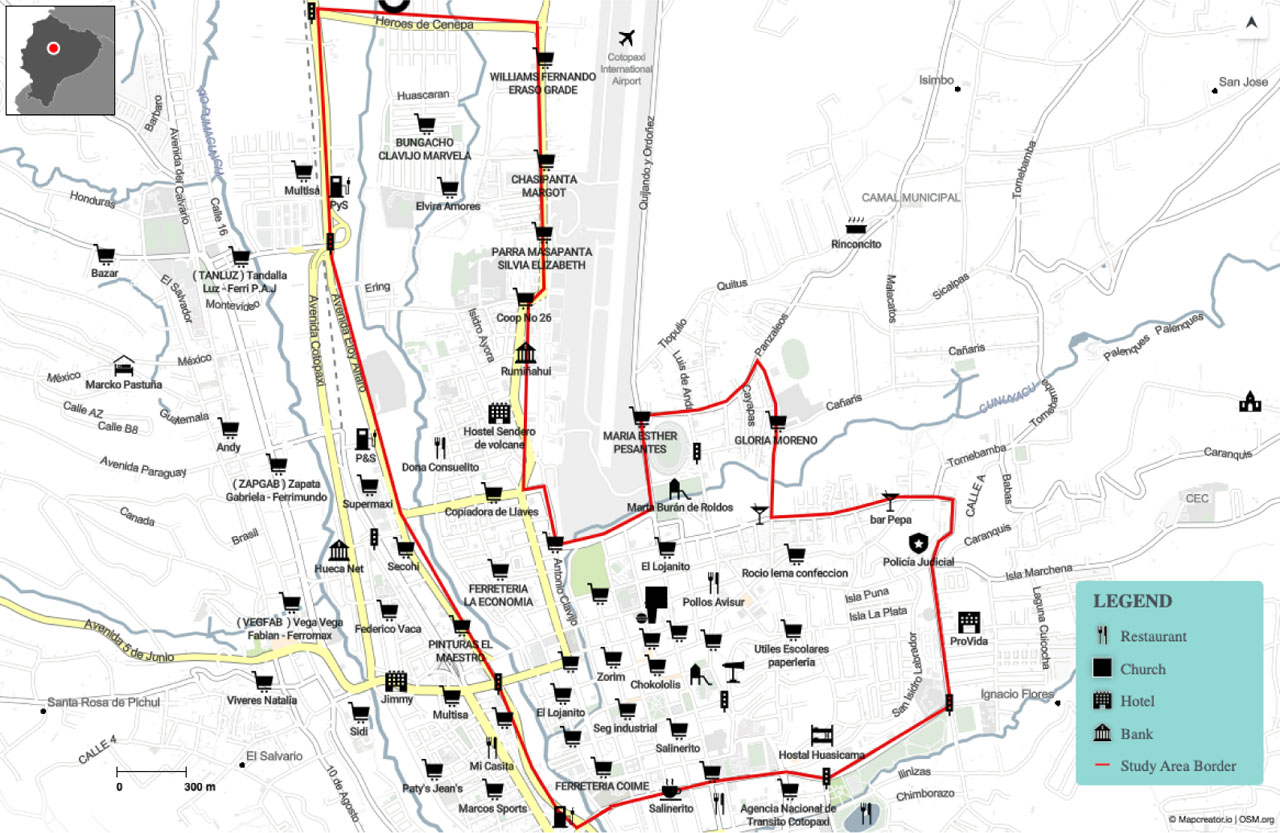
Figure 1.
Study area
Source: own elaboration
Survey and questionnaire
An on-site survey was conducted between September 2021 and February 2022, during which 445 valid questionnaires were collected from national (provinces or cities far away from Latacunga), regional (provinces or cities near Latacunga – Central Ecuador), and international tourists visiting Latacunga; the questionnaires were semi-structured and completed online. This survey was conducted by intercepting tourists (non-local persons over 18 years old) before they left the locations where any of the eight iconic local foods and beverages was served or purchased (Table 1), including markets, street festivals, outdoor events, the sports coliseum, and traditional restaurants.
Table 1.
Emblematic dishes and beverages of Latacunga local cuisine – declared National Gastronomic Heritage – and their respective origins, ingredients, and nutritional information
| Traditional dish | International name | Origin | Description and ingredients | Nutritional facts based on a serving of 100 g |
|---|---|---|---|---|
| Llapingacho | Fried mashed potato patties | Andean (pre-Hispanic and post-colonial) | Fried mashed potato patties, cheese, fried chorizo and egg, avocado, beetroot, and peanut sauce on the side | Protein (12.68 g), fats (12.10 g), calcium (56.20 mg), iron (2.20 mg), vitamin A (0.36 mg), vitamin C (6 mg) |
| Papas con cuy | Guinea pig with potatoes | Andean (pre-Hispanic and post-colonial) | Roasted guinea pig, boiled potatoes, spicy peanut sauce | Protein (17.50 g), fats (16.50 g), calcium (9.00 mg), iron (1.80 mg), vitamin A (0.36 mg), vitamin C (6mg) |
| Tortillas de maíz | Corn tortillas | Andean (post-colonial) | Maize-based tortilla | Energy (270 kcal), protein (5.60 g), fats (1.60 g), sugar (58.30 g), fibre (1.40 g), calcium (14 mg), iron (0.70 mg) |
| Gallinas Asada | Roasted hens | Andean (post-colonial) | Hen baked in a wood-fired brick oven, served with spicy peanut sauce and boiled potatoes | Protein, vitamins B, B6, B9, B3, phosphorus, potassium, magnesium, iron, and fats |
| Yaguarlocro | Potato broth with cow blood | Andean (colonial) | Potato broth served with cow blood, boiled potatoes, and other beef offal | Energy (63 kcal), protein (3.20 g), fats (1.60 g), sugars (9 g), fibre (0.30 g), calcium (19 mg), iron (4.60 mg), vitamin A (0.36 mg), vitamin C (6.00 mg) |
| Caldo de Ville | Veal stock | Andean (colonial) | Broth served with tender pieces of veal, vegetables (carrots, corn, green beans) and coriander | Protein (5 g), fats (1.4 g), carbohydrates (6 g), sodium (871 mg), calories (240 kcal per standard serving) |
| Chugchucara | Chugchucara | Andean (pre-Hispanic and post-colonial) | Deep fried pork, boiled hominy (mote), potatoes, fried plantains, empanadas and pork rinds | Protein (36 g), carbohydrates 162 g, sugar (24.58 g), fats (63.45 g), sodium (780.3 mg), fibre (14.53 g), calories (1330.27 kcal per standard serving) |
| Chaguarmishqui | Chaguarmishqui | Andean (pre-Hispanic and post-colonial) | A thick, fermented corn beverage, prepared by the Kichwa indigenous communities in the Andes mountains of Ecuador | Protein (1–2 g), fats (<0.50 mg), vitamins A, B, minerals, calories (150–200 kcal per standard serving) |
The sampling method that was applied to recruit the participants was in accordance with the criteria of previous studies conducted in other cities located in Central Ecuador and relatively near Latacunga (e.g. Guamán-Guevara et al. 2017; Guamán et al. 2023; Paredes et al. 2021) and international studies (e.g. Soonsan et al. 2023).
The survey questionnaire had three sections. The first section was designed to collect sociodemographic information: age, gender, living area, monthly income, education level; there were more questions related to travel behaviour: trip purpose (primary motivation), previous visits, frequency of trips to Latacunga within the last 12 months, stay duration, tourism activities carried out in this city, and food expenditure. The second section covered respondents’ general knowledge/perception of local food and beverage attributes, including freshness, price/quality, taste and other organoleptic properties (texture, smell, appearance), authenticity, food plating, nutritional value, complexity of food preparation, and availability of ingredients used. Responses were collected using a Likert-type scale suggested by prior food studies (Madaleno et al. 2018). Mainly, for this section, the scale ranged from 1 (poor) to 5 (excellent). The third section was devised to collect vital information on tourists’ motivations in selecting Latacunga as a gastronomic destination. Thus, a set of 21 items was divided into four dimensions: (1) health and safety concerns; (2) food-related satisfaction; (3) cultural experience; and (4) sensory appeal; these helped determine the impact of relevant factors on the consumption of traditional food and beverages by tourists. Accordingly, the questionnaire was constructed based on a combination of preexisting items used in relevant studies (Madaleno et al. 2018; Tsai 2016); and on other items reflecting local cultural conditions (Guamán et al. 2023; Guamán-Guevara et al. 2017; Paredes et al. 2021). Responses were collected using a 5-point Likert-type scale, ranging from 1 (strongly disagree) to 5 (strongly agree).
Statistical analysis
Data collected were quantitatively analysed using the Statistical Package for the Social Sciences (SPSS) software, version 25. Cronbach’s alpha test was performed to evaluate the reliability of the items, and associated dimensions showed an overall score of 0.88, demonstrating a high consistency among questionnaire items and associated dimensions (Hair et al. 2014), including the socioeconomic variables, tourist behaviour, attributes of local cuisine and motivational factors (independent variables). Subsequently, datasets were used for further analysis using a model-based approach via the binary logistic regression method to determine factors influencing tourists’ decisions on the consumption of traditional food and beverages. This analysis is consistent with previous relevant studies (e.g. Madaleno et al. 2018). Thus, the proposed model estimates the probability of consumption of local food by tourists as a primary travel motivation (dependent variable). Hence, the null hypothesis assumed that there are no significant differences among all evaluated motivational factors influencing the consumption of traditional food by tourists visiting Latacunga.
Results
Tourists’ sociodemographic features and travel behaviour
The majority of the survey participants were females (64%), followed by males (36%). Most participants were aged between 18 and 34 (74%), held a higher education degree (93%), and indicated a monthly income higher than 400 USD. Furthermore, based on the residence question, most tourists attending food-related activities were national (53%), followed by regional (32%), and international (15%). Notably, the presence of people with disabilities (PWDs) accounted for nearly 4% (n=18) of total participants; they showed a mobility limitation and needed at least one travel companion to reach places where traditional food and beverages were consumed (Table 2).
Table 2.
Tourists’ sociodemographic characteristics and travel behaviour. SD = standard deviation
| Sociodemographic profile | Frequency | % | Mean | SD |
|---|---|---|---|---|
| Age | ||||
| 18–34 | 328 | 73.7 | ||
| 35–50 | 92 | 20.7 | ||
| Over 50 | 25 | 5.6 | ||
| Gender | ||||
| Female | 285 | 64.0 | ||
| Male | 160 | 36.0 | ||
| Disability | ||||
| No | 427 | 96.0 | ||
| Yes | 18 | 4.0 | ||
| Residence | ||||
| Regional (from provinces or cities near Latacunga or Central Ecuador) | 237 | 53.3 | ||
| National (from provinces or cities far away from Latacunga) | 141 | 31.7 | ||
| International | 67 | 15.0 | ||
| Monthly income | ||||
| >1000 USD | 124 | 28.2 | ||
| 400–1000 USD | 225 | 51.0 | ||
| <400 USD | 96 | 21.8 | ||
| Education level | ||||
| Higher education | 412 | 92.6 | ||
| Less than higher education | 33 | 7.4 | ||
| Primary journey purpose | ||||
| Cultural historic visit (religious and historic events, festival, parades, etc.) | 23 | 5.2 | ||
| Gastronomic visit (food festivals, traditional restaurants, local food, markets) | 392 | 88.1 | ||
| Visiting friends | 20 | 4.5 | ||
| Visiting family | 10 | 2.2 | ||
| Behaviour | ||||
| Had previously visited Latacunga | 351 | 78.9 | ||
| Number of previous visits to Latacunga (within the last 12 months) | 4.7 | 3.1 | ||
| Number of persons currently travelling with interviewed visitor | 2.1 | 1.2 | ||
| Length of stay (in nights) | 1.8 | 0.8 | ||
| Number of cultural attractions attended during the visit, including historic, religious, art, festivals, parades, sports and social events | 1.2 | 0.4 | ||
| Number of gastronomic attractions attended during the visit, including street food festivals and traditional restaurants | 3.3 | 0.5 | ||
| Amount of money spent per day on food and beverages? | ||||
| >50 USD | 221 | 49.7 | ||
| 20–50 USD | 172 | 38.7 | ||
| <20 USD | 52 | 11.6 |
Concerning tourists’ travel behaviour, almost 88% of all respondents indicated that their underlying purpose for visiting Latacunga was mainly related to gastronomic tourism, followed by cultural tourism (5%), visiting friends (5%) and visiting family (2%). In addition, 79% of respondents mentioned previous visits to Latacunga – on average, about five times within the last 12 months. Participants also indicated they were travelling with two other people, on average, and expected to stay in Latacunga for at least two days, visiting at least one cultural and three gastronomic attractions. Concerning the amount of money spent individually on food and beverages during their stay in Latacunga, 50% of tourists indicated a consumption higher than 50 USD, including local food (Table 2).
Attributes of local cuisine
Results indicated that participants perceived positively all emblematic local food and beverages consumed. Notably, all nine attributes presented to tourists regarding local cuisine obtained an average of 4.1 points out of 5 on a Likert scale, representing an excellent evaluation and a great acceptance level for the traditional dishes consumed. However, food plating or presentation showed the lowest overall rate (3.9/5 points) compared with the remaining attributes. This may be indicative of a need to improve this specific attribute (Table 3).
Table 3.
Overall perception of the attributes of local traditional foods and beverages recently consumed by tourists in the city of Latacunga
| Factors | Likert scale: 1 [poor] to 5 [excellent] | ||||||
|---|---|---|---|---|---|---|---|
| 1 | 2 | 3 | 4 | 5 | Mean | SD | |
| Attributes | 4.1 | 0.9 | |||||
| Freshness | 0.0 | 1.0 | 13.4 | 40.3 | 45.3 | 4.3 | 0.7 |
| Price-quality relationship | 1.0 | 3.8 | 23.0 | 34.5 | 37.6 | 4.0 | 0.9 |
| Taste | 1.0 | 2.9 | 11.5 | 39.3 | 45.3 | 4.3 | 0.8 |
| Texture, smell, appearance | 1.0 | 3.8 | 17.3 | 36.5 | 41.5 | 4.1 | 0.9 |
| Authenticity | 1.0 | 1.0 | 17.3 | 38.4 | 42.4 | 4.2 | 0.8 |
| Food plating/presentation | 2.8 | 5.6 | 23.5 | 36.7 | 31.3 | 3.9 | 1.0 |
| Nutritious | 0.0 | 5.0 | 20.9 | 38.9 | 35.2 | 4.0 | 0.9 |
| Easy preparation without the use of sophisticated tools or ingredients | 2.3 | 2.3 | 13.9 | 48.7 | 32.8 | 4.1 | 0.9 |
| All ingredients used are easily found in local or national markets | 1.2 | 0.0 | 10.4 | 42.9 | 45.5 | 4.3 | 0.8 |
Impact of critical motivational factors on the decision to consume traditional food
The results revealed that the age of the surveyed tourists was the most significant sociodemographic variable in influencing the decision to consume traditional food (β=1.761; p=0.038). The remaining sociodemographic factors, including gender, residence, monthly income, and education level, showed diverse responses (i.e. positive and negative relationships), but these are not statistically significant (p>0.05) (Table 4).
On the other hand, taste was the most significant variable among other attributes of local food, positively impacting the decision to consume local food (β=1.281; p=0.007). The total amount of money spent on food or expenditure during the trip had a negative impact on the travel behaviour variables assessed (β=–0.901; p=0.040). Among all motivational factors evaluated, health and safety concerns (β=1.534; p=0.000) and cultural experience (β=0.507; p=0.048) had greater significance with positive impacts on the tourists’ decision to consume local food, as shown in Table 4.
Table 4.
Determinants of tourists’ decisions to consume local food, assessed by binary logistic regression analysis
| Independent variables | β | S.E. | Wald | p | Exp(β) |
|---|---|---|---|---|---|
| Constant | 2.443 | 2.375 | 1.058 | 0.304 | 11.512 |
| Sociodemographic factors | |||||
| Age | 1.761 | 0.849 | 4.301 | 0.038 | 5.816 |
| Gender | 2.231 | 1.279 | 3.044 | 0.081 | 0.107 |
| Residence | 0.759 | 0.437 | 3.016 | 0.082 | 2.135 |
| Monthly income | 0.867 | 0.473 | 3.363 | 0.067 | 2.379 |
| Education level | –2.813 | 1.640 | 2.942 | 0.086 | 0.060 |
| Local food attributes | |||||
| Taste | 1.281 | 0.473 | 7.339 | 0.007 | 3.601 |
| Plating | –0.800 | 0.438 | 3.337 | 0.068 | 0.449 |
| Ingredients easily purchased | –0.805 | 0.458 | 3.084 | 0.079 | 0.447 |
| Travel behaviour | |||||
| Expenditure | –0.901 | 0.438 | 4.228 | 0.040 | 0.406 |
| Length of stay | –0.594 | 0.320 | 3.440 | 0.064 | 0.552 |
| Previous visit | 0.169 | 0.086 | 3.851 | 0.058 | 1.185 |
| Motivational factors | |||||
| Health and safety concerns | 1.534 | 0.235 | 42.575 | 0.000 | 4.636 |
| Cultural experience | 0.507 | 0.257 | 3.899 | 0.048 | 1.660 |
Discussion
This study provides new insights into the final stage of the tourists’ behaviour model, specifically the post-consumption of traditional food and drinks, which are crucial traditional lifestyle elements that continue to build social relationships and preserve intangible cultural heritage in each country (Kalenjuk Pivarski et al. 2023). Thus, findings from this study confirm the significant role played by gastronomy during peak season as a primary travel motivation, mainly for domestic tourists visiting Latacunga (85% of all participants). From this domestic group, the subgroup of regional tourists and visitors belonging to provinces or cities near Latacunga (~54% of all participants) have become the mainstay of the local economy via the consumption of traditional food and participation in massive cultural events – a phenomenon also observed in Ambato, another top-ranking city near Latacunga, in Central Ecuador (Guamán-Guevara et al. 2017). These findings are corroborated by previous work conducted in Latacunga during peak tourism season, specifically in November during the ‘Mama Negra’ festival (Ponce 2024). Regarding food attributes, findings showed high satisfaction levels – with traditional products consumed, including food and beverages. This implies a direct tourist response to current food satisfaction levels, which, combined with earlier memorable travel experiences of gastronomic tourism that generated considerable emotional value, ultimately fosters their intention to revisit, increases their levels of loyalty, and improves the gastronomic image of the local destination. Furthermore, findings revealed that the evaluated tourists, particularly regional tourists – due to their proximity to the target destination – visited Latacunga five times or more within the last 12 months, confirming a strong acceptance of local food and drink. Therefore, due to their high experiential familiarity with local food (e.g. earlier food experiences and repeat visits) (Seo et al. 2013), this segment can be identified as experienced because they view food as a pivotal aspect and primary motivation when deciding on destinations (Björk & Kauppinen-Räisänen 2016) and are likely to have a stronger connection and positive experience with the destination compared with those who visit a destination only once. This type of tourist has also been reported on in other geographical locations, such Asia and Europe (Seo et al. 2013; Björk & Kauppinen-Räisänen 2016).
Concerning all attributes evaluated in all eight emblematic traditional foods and beverages, taste was the most significant perceived value, positively influencing food consumption experiences (β=1.281; p=0.038). This effect is also corroborated by previous evidence explaining the crucial role of taste in consumers’ food choices and their subsequent satisfaction levels (Martínez-Ruiz & Gómez-Cantó 2016; Guamán-Guevara et al. 2017). However, the positive influence of taste on food consumption found in this study differs from previous studies. For instance, Madaleno et al. (2018) suggested that having a certain level of familiarity with local food product attributes, including taste, may decrease tourists’ interest in purchasing and consuming those products. Additionally, Silaban et al. (2023) confirmed that taste and other sensory attributes, such as visual and auditory aspects, were not significant factors in customer satisfaction, in contrast with olfaction and haptics, which were found to be crucial in creating memorable dining experiences and influencing customer satisfaction in traditional restaurants.
Compared with other sociodemographic variables also assessed in this study, age emerged as the most influential variable in predicting traditional food consumption. This result suggests that as individuals age, their likelihood of consuming traditional food changes, along with preferences for specific places where traditional local food is consumed. In this context, Guamán-Guevara et al. (2017) indicated, for another city in Central Ecuador, that tourists between 36 and 50 preferred consuming local food at traditional restaurants, speculating that younger tourists may attend street food festivals or outdoor events, mainly during peak tourism season. Accordingly, findings from another study carried out in Latacunga corroborated this assumption (Ponce 2024), where women between 18 and 34 displayed a greater preference for local food, especially those offered in street food festivals, markets, and a range of outdoor events. However, the present study’s findings may help infer similar tourists’ behaviour and patterns, particularly for the age group between 18 and 34 years old (74% of participants), as most events in Latacunga during the survey period (peak season) were mainly outdoor events.
Contrary to expectations, the amount of money spent by tourists on food and beverages during their trip negatively impacted the decision to consume traditional food. This occurred even though previous studies have highlighted a positive relationship between the consumption of local food and expenditure levels, which may exceed 30% of the total amount allocated for gastronomic activities (Kim et al. 2013). This negative relationship may be explained by the fact that, during peak season, tourists may perceive traditional local food prices as more expensive due to intensified tourism activity rather than other food-related characteristics, including preparation and authenticity, which commonly affect the price of traditional food significantly (Kalenjuk Pivarski et al. 2023). As a result, this price perception may cause tourists to hesitate in allocating a significant portion of their food budget to traditional cuisine. Instead, they may be more interested in spending more money on other meals available at lower prices. The relationship between perceived higher prices and higher levels of tourists’ relative deprivation and subsequent reduced purchase intention in certain tourism activities has been previously studied (Xu et al. 2024). However, this issue has yet to be explored in the context of gastronomic tourism; hence, further surveys should focus on how perceived prices of traditional local cuisine may affect purchase intention and consumption levels.
Among all motivational factors assessed, only health and safety concerns and cultural experiences exerted significantly positive impacts on tourists’ decisions to consume traditional local food. These results are consistent with earlier studies where perceptions of healthy eating are constant concerns for people when purchasing or consuming food products at a specific destination (Testa et al. 2019). Regarding the cultural experiences factor, findings are similar to those of previous studies, indicating that tourists are regularly raising awareness about the importance of preserving and safeguarding food traditions, and conserving such intangible heritage by consuming local food, especially dishes prepared based on ancient recipes (Björk & Kauppinen-Räisänen 2016; Heldak et al. 2020; Soare et al. 2023), as can be found in Latacunga and others cities in the Central Ecuador region, where recipes have exceptional pre-Hispanic, colonial, and post-colonial origins. The findings allow us to reject the null hypothesis, indicating that all motivational factors evaluated are equally significant within our model-based approach. Consequently, these findings should encourage more researchers to conduct further empirical studies rather than using a qualitative approach that poorly describes tourists’ responses or tourism services providers’ perspectives, as observed in previous works for the same geographical area (e.g. Torres et al. 2018).
It is worth noting the presence of PWDs who consume traditional local food. Although the main objective of this research was not focused on this specific segment, it is of great importance to mention that the active participation of PWDs and travel companions may contribute significantly to a massive integration of PWDs into responsible tourism, which is still elusive in the tourism industry in many developing countries. Ecuador, in particular, could change this adverse scenario for PWDs by developing and implementing practical and long-term national programmes and by improving all facilities and infrastructure for outdoor and indoor food-based events, so that more motivated PWDs will desire to participate actively and regularly in all tourism activities, chiefly gastronomic tourism (Guamán et al. 2023).
Finally, outcomes from the present study provide predictive responses based on consumption experience, confirming that traditional food can be considered as part of the local culture, a tourist attraction, a tourist product, and a tourist experience, which is similar to other previous works (Chen & Huang 2015). These insights can significantly enhance our understanding of tourists’ behaviour in the context of gastronomic tourism, empowering various tourism-related stakeholders to develop and implement optimal positioning, branding, and marketing strategies associated with sustainable development at destinations, particularly for cities located in Central Ecuador.
Conclusions
This empirical study has confirmed that gastronomic tourism is the primary attraction and motivation for highly educated tourists, particularly domestic tourists who travel regularly to Latacunga to partake in food-related activities. These activities were fundamental components of the most memorable events, festivals, and cultural celebrations in Central Ecuador, specifically during the peak tourism season between September 2021 and February 2022. Accordingly, this tourist segment evaluated the attributes of traditional local food as excellent, demonstrating a high satisfaction and familiarity with the local cuisine, which is strongly associated with previous food experiences and repeat visits.
Furthermore, outcomes from binary logistic regression analysis underscore the crucial role of age, taste, health and safety concerns, cultural experience, and expenditure in shaping the consumption of traditional local food. This valuable information will help better understand gastronomic tourists’ behaviour in order to develop optimal positioning, branding, and marketing strategies, associated with sustainable development at top-ranking destinations, particularly cities in Central Ecuador and other international cities with similar tourism characteristics.
Finally, given that Latacunga City has more attractions than other top-ranking destinations in Central Ecuador (e.g. Ambato and Baños), this feature renders Latacunga a prime candidate for representing the cities of the Central Ecuador region, specifically for future tourism research purposes. This exclusivity further enhances the significance of our findings.
Theoretical and practical implications
The current research study contributes significantly, providing further evidence to bridge some knowledge gaps in the limited literature on gastronomic tourism, mainly in developing countries such as Ecuador. Furthermore, the findings have practical implications for national and international destinations with similar attraction features to those found in the city evaluated. In addition, outcomes can benefit tourism-linked businesses, tourism providers, practitioners, policymakers, and communities, and help conserve and strengthen the current domestic demand (e.g. satisfied visitors near destinations) and, subsequently, attract more international demand (new and returning tourists), as has occurred in other regions (Fountain 2022; Guamán et al. 2023).
It is worth mentioning that this study was conducted in one of the top-ranking cities in Central Ecuador; hence, this study was primarily conceived as a pilot project that will work as the foundation for ongoing gastronomic tourism research projects in Central Ecuador, specifically in the seven cities and associated communities located in the Cotopaxi Province, where multiple agricultural products and the resulting gastronomic dishes have already been inventoried as traditional local food and gastronomic heritage (Armijos et al. 2022). Consequently, this opens up the possibility of exploring new research fields to conserve the customs, preparation techniques, and other traditions linked to gastronomic topics. Thus, future research may provide valuable information in order to determine actions and strategies for the revaluation of the gastronomic culture in Central Ecuador.
Limitations and further research
The results of this study are crucial for the development and implementation of a practical destination-marketing framework for gastronomic tourism that will potentially contribute to the sustainable competitiveness of the tourism industry in Central Ecuador, with direct benefits for local producers and the local economy, and, ultimately, supporting the conservation and preservation of the local intangible heritage directly associated with ancient recipes and food manufacturing processes, as observed in other destinations worldwide (Soare et al. 2023). However, despite the theoretical and practical contributions of this study, the findings are not conclusive and should be interpreted with caution when generalising to other cities in Ecuador or developing countries. This is due to the inherent limitations of cross-sectional research designs, especially studies conducted after the COVID-19 pandemic that lack corresponding pre-pandemic data for comparison. This is particularly relevant for the Central Ecuador region, where high-impact research studies in tourism, specifically gastronomic tourism, are scarce (Guamán et al. 2023). As this study was conducted during the onset of the post-pandemic era, further empirical longitudinal studies across geographic regions within Ecuador and abroad are still required to confirm the outcomes of the current study. A more extended time period would be more suitable to establish whether gastronomic tourists’ motivations have changed, and what has prevailed over time. This would facilitate the quantification of the adverse impacts of the pandemic and its implications for society, the environment, and the economy, particularly for the tourism industry and its diverse segments (e.g. gastronomic tourism), which were widely affected due to a significant decrease in on-site consumer demand (Chiawo et al. 2023; Fountain 2022; Guamán et al. 2023; Milwood & Crick 2021).
Acknowledgements
This study is a contribution to the project named ‘The food and gastronomic heritage in the Cotopaxi Province and its relationship with tourism as an alternative for local development’, supervised by the Research Department at the Technical University of Cotopaxi (UTC), Ecuador. Academic institutions had no role in study design, data collection and analysis, decision to publish, or manuscript preparation.