Have a personal or library account? Click to login
Using GMT for 2D and 3D Modeling of the Ryukyu Trench Topography, Pacific Ocean Cover

Using GMT for 2D and 3D Modeling of the Ryukyu Trench Topography, Pacific Ocean

Open Access
|Sep 2021

Figures & Tables

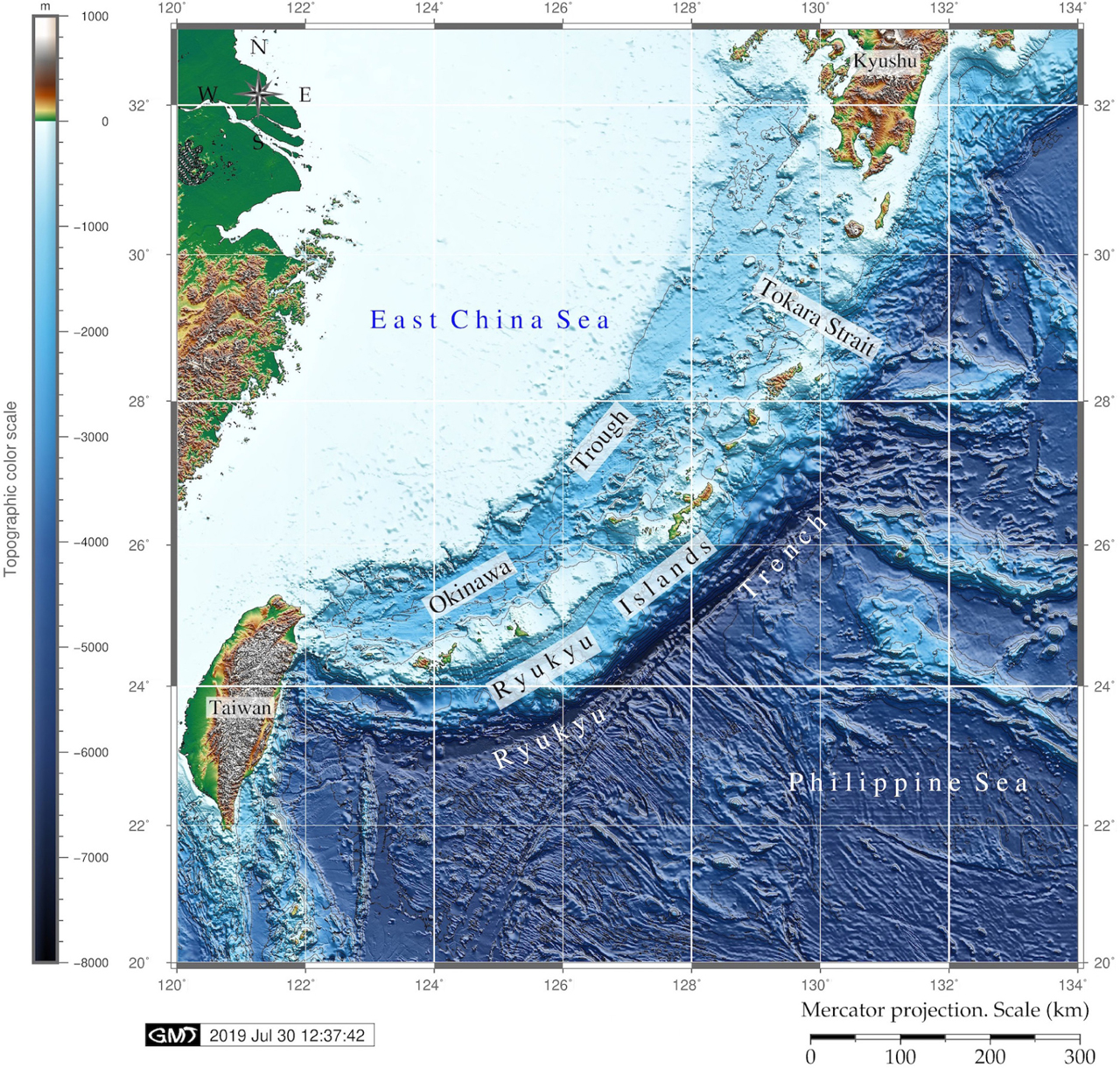
Figure 1

Bathymetric map of the East China Sea, northern Philippine Sea, Ryukyu Arc and Ryukyu Trench. Bathymetry: GEBCO global terrain model, mapped using GMTSource: author

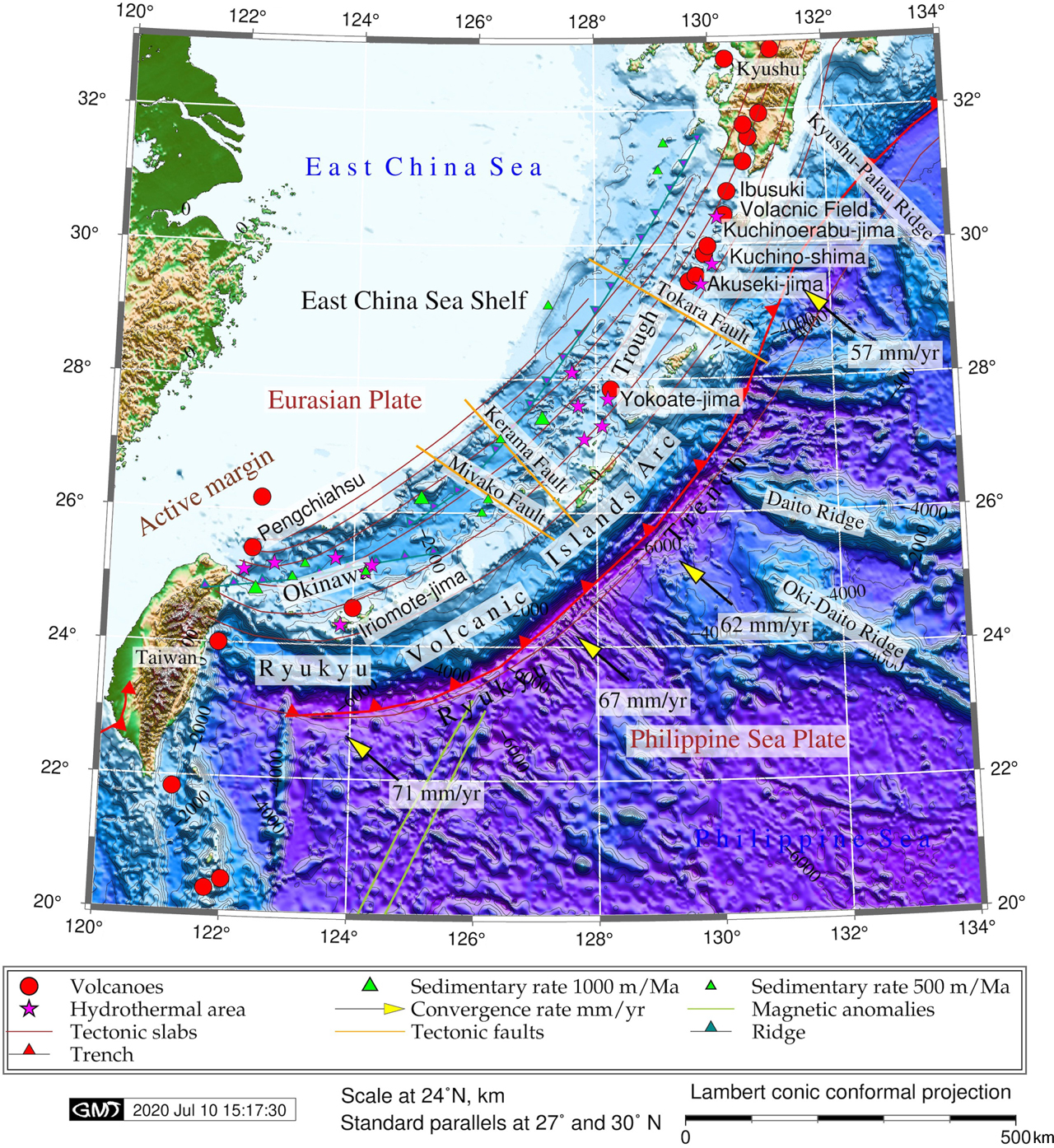
Figure 2

Geologic map of the Ryukyu Trench. Bathymetric base map: ETOPO1 global terrain model, mapped using GMTSource: author

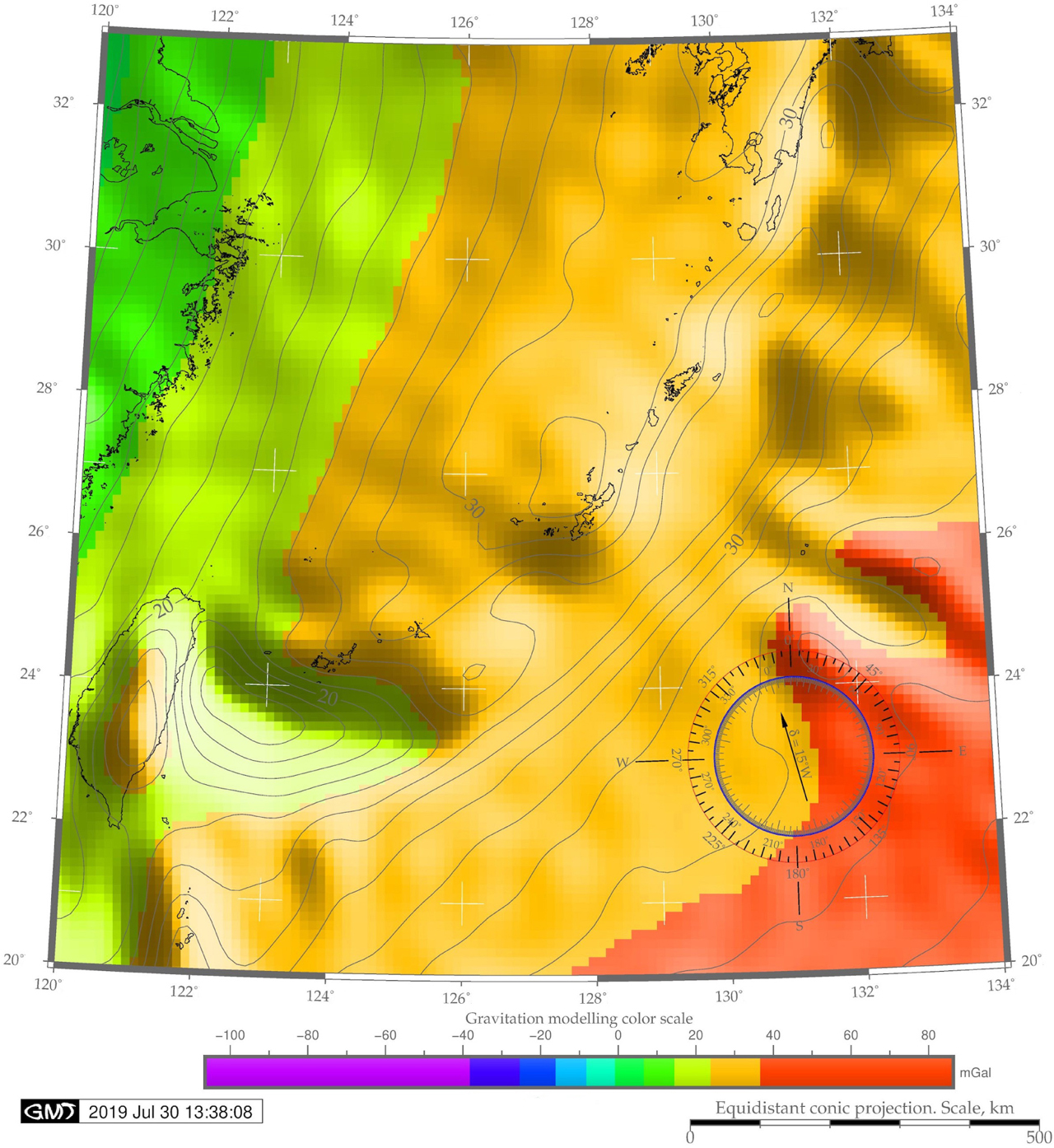
Figure 3

Model of the geoid in the Ryukyu Trench area. Raster data: Earth Gravitational Model EGM96, mapped by GMTSource: author

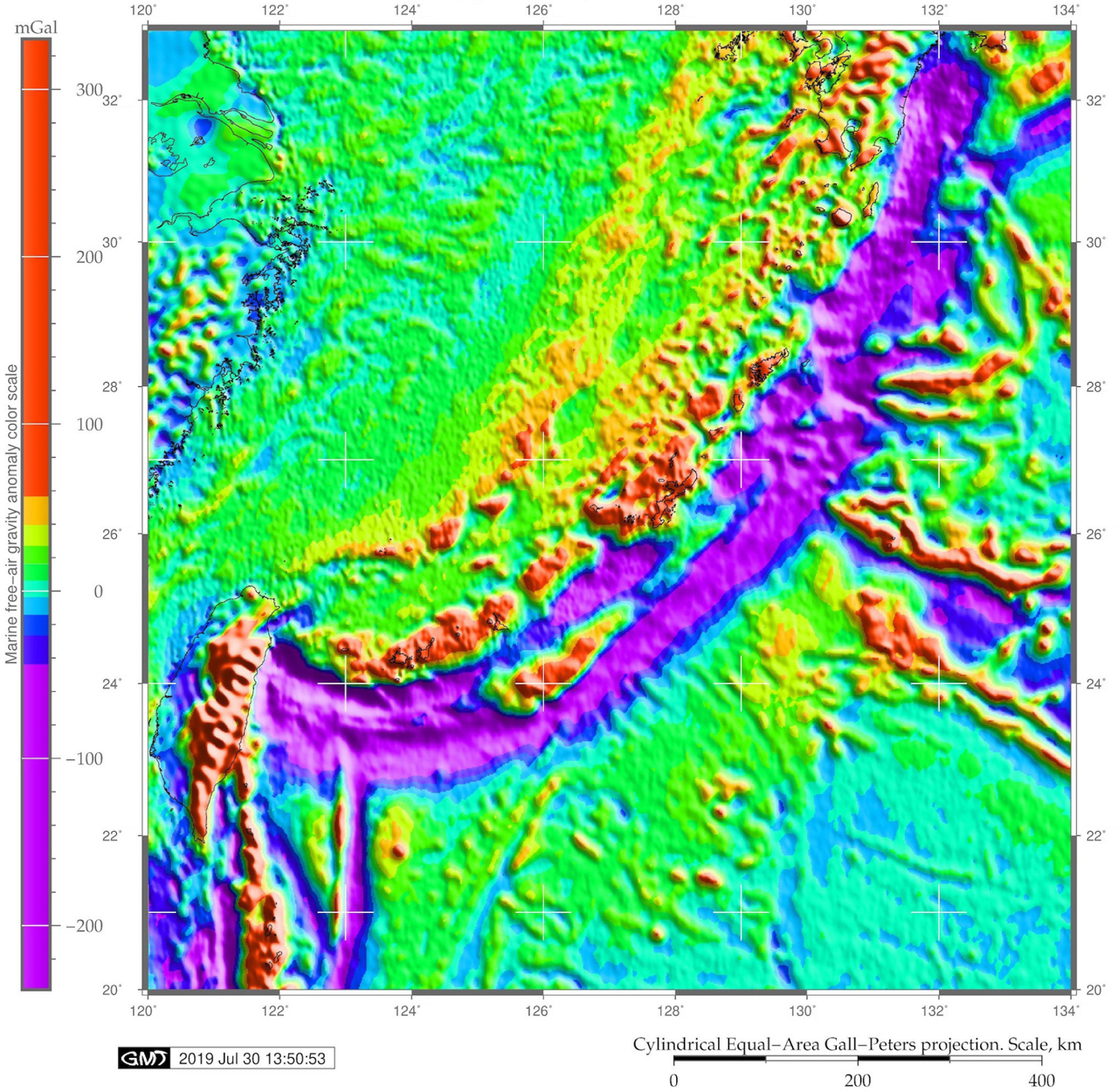
Figure 4

Model of the marine free-air gravity anomaly showing gravitational settings in the Ryukyu trench-arc area. Data: gravity grid, visualized by GMTSource: author

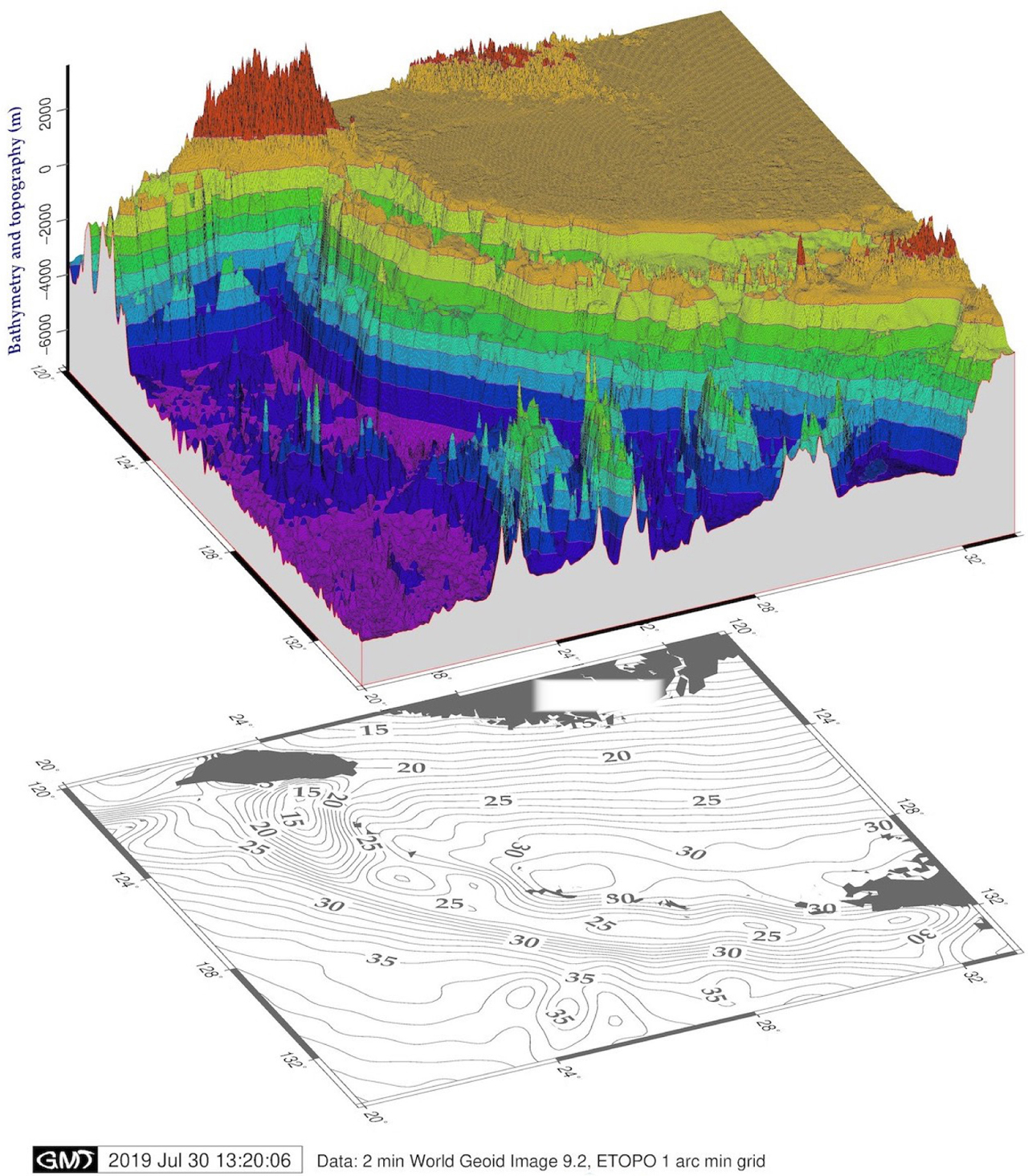
Figure 5

Composite overlay of the 3D topographic mesh model on the 2D geoid contour plot for topographic modelling of the Ryukyu trench-arc areaSource: author

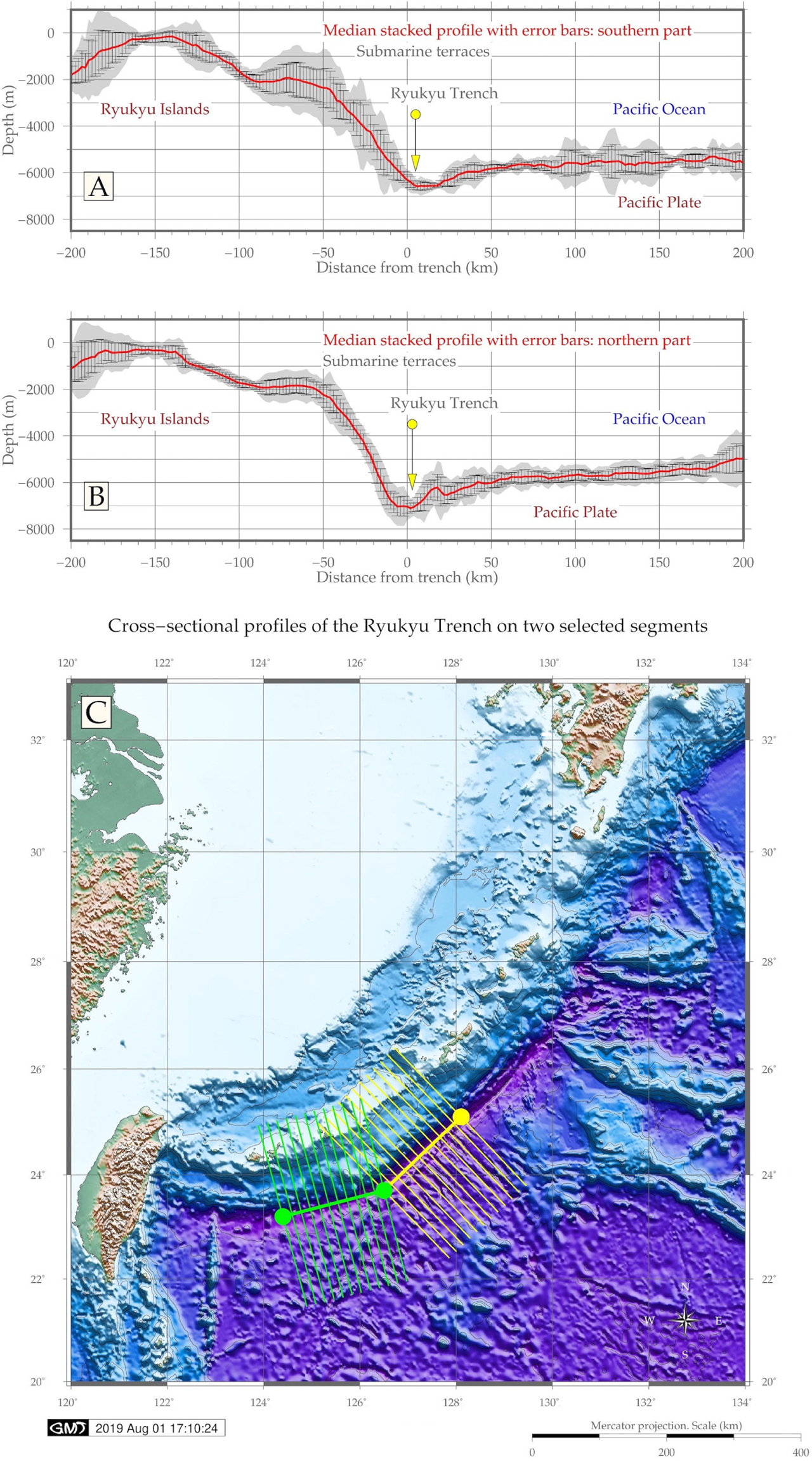
Figure 6

Modelled stacked profiles for the southern (A) and northern (B) segments with the red solid line as a median, and error bars showing weighted standard deviation of the elevations; automatically digitized cross-section profiles in two segments (C), plotted in GMTSource: author

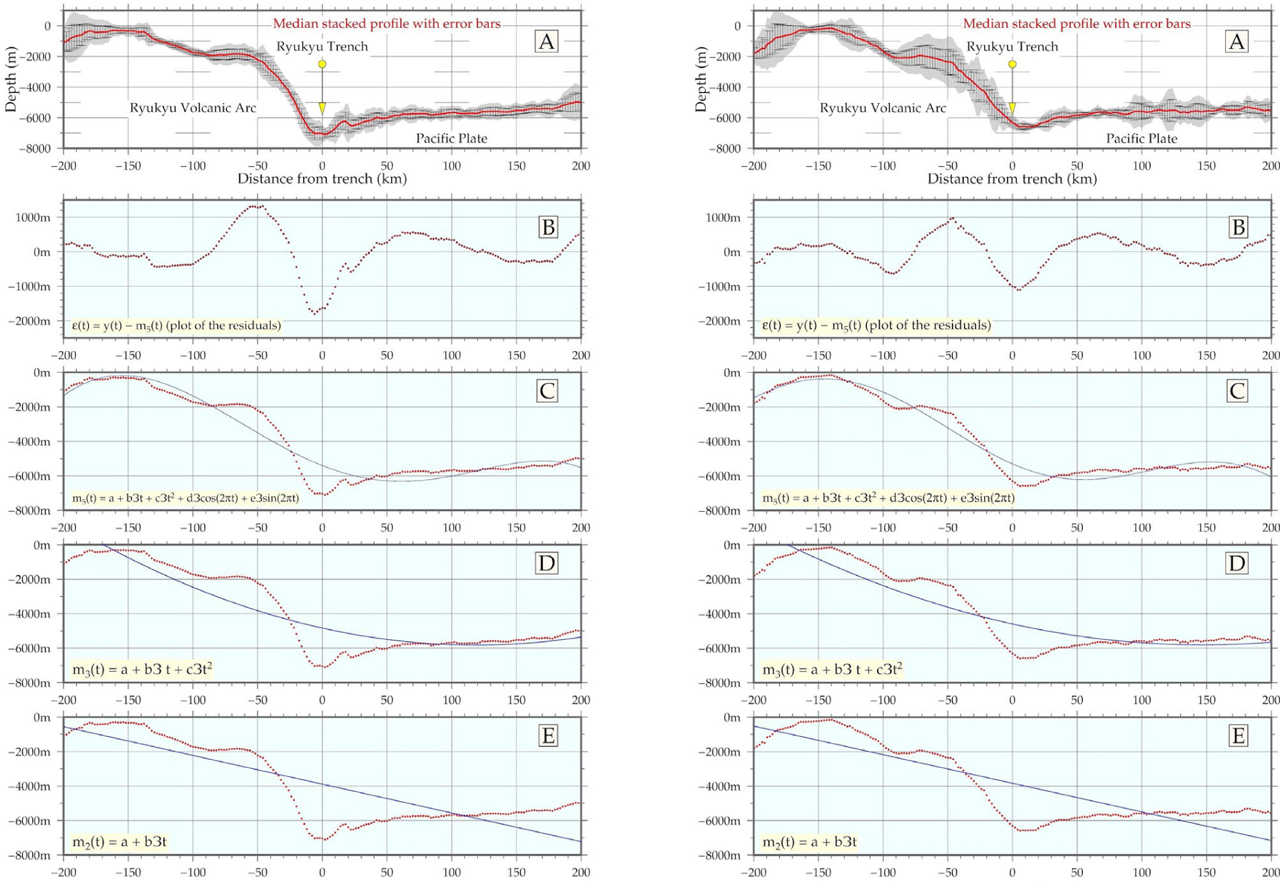
Figure 7

Modelling graphs of the trend curves of general geomorphological transects and slope gradients using various mathematic approximations: fitted regression models y=f(x)+e; Weighted Least Squares, polynomial and Fourier. Plotted by GMTSource: author

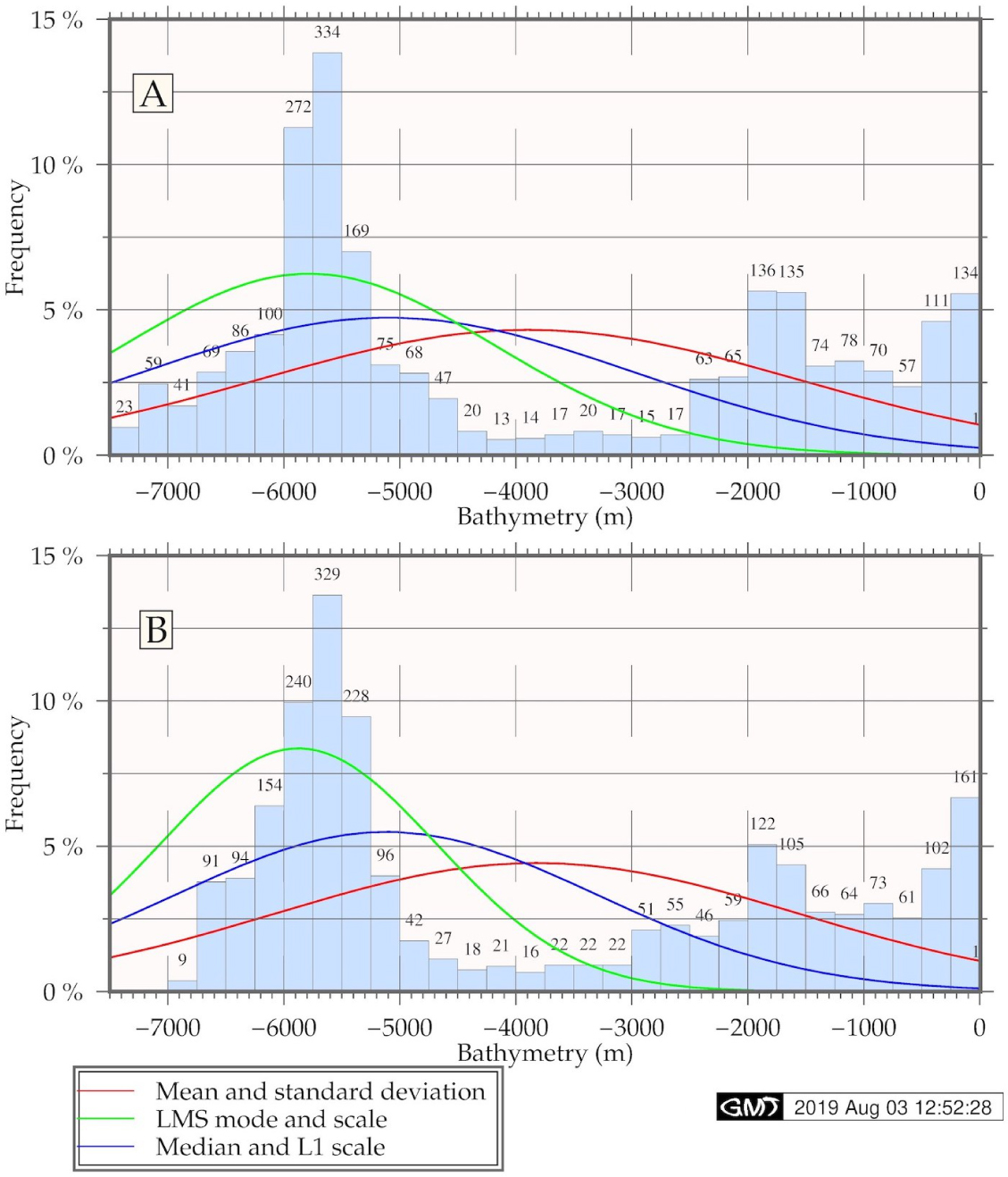
Figure 8

Statistical histograms showing depth frequency in the cross-sections of the Ryukyu Trench, based on the bathymetric data: northern (A) and southern (B) partsSource: author
DOI: https://doi.org/10.2478/mgrsd-2020-0038 | Journal eISSN: 2084-6118 | Journal ISSN: 0867-6046
Language: English
Page range: 213 - 225
Submitted on: Dec 11, 2019
Accepted on: Jun 28, 2020
Published on: Sep 26, 2021
Published by: Faculty of Geography and Regional Studies, University of Warsaw
In partnership with: Paradigm Publishing Services
Publication frequency: 4 issues per year

© 2021 Polina Lemenkova, published by Faculty of Geography and Regional Studies, University of Warsaw
This work is licensed under the Creative Commons Attribution-NonCommercial-NoDerivatives 4.0 License.