
Introduction
The rapid digital transformation of Europe’s economy has intensified the demand for information and communication technology (ICT) professionals across all sectors. In 2022, more than 9 million people were employed in ICT roles in the European Union, representing nearly 5% of the total workforce (Eurostat, 2023a). Despite this strong expansion, demand continues to outpace supply, with estimates suggesting that up to 1.2 million new specialists are required annually to meet the EU’s Digital Decade targets (Anderson, 2022). This imbalance is driven not only by job growth but also by the emergence of new technologies and changing skill requirements, which exacerbate mismatches between labor supply and demand (European Centre for the Development of Vocational Training [CEDEFOP], 2023, 2024).
Beyond its quantitative expansion, the ICT sector occupies a central position within the broader knowledge economy, where value creation increasingly depends on intangible assets such as knowledge, skills, and innovation capabilities. In this context, human capital is not merely a factor of production but a strategic resource that underpins competitiveness, organizational performance, and long-term economic growth (Drucker, 1999; Powell & Snellman, 2004). Knowledge-intensive industries, particularly ICT, rely on highly specialized talent capable of generating, processing, and applying knowledge in dynamic environments. As a result, talent management becomes a critical mechanism through which organizations and economies mobilize and sustain these capabilities (Collings et al., 2019; Tarique & Schuler, 2010).
These dynamics point to systemic inefficiencies in the allocation and development of human capital within the knowledge economy. Women account for just 19% of ICT specialists, reflecting persistent gender disparities that originate in education systems, cultural stereotypes, and workplace environments (European Commission, 2025; Eurostat, 2026). Girls under the age of 15 remain far less likely than boys of the same age to pursue ICT-related studies, perpetuating a cycle of underrepresentation in both education and employment. In addition, while the overall ICT workforce continues to grow, employers consistently report difficulties in recruitment, indicating a misalignment between formal qualifications and the specialized skills demanded in emerging fields such as artificial intelligence and cybersecurity (European Commission, 2023b).
Existing academic literature has extensively examined talent management as a strategic function, emphasizing its role in attracting, developing, and retaining high-value employees (Collings et al., 2019; Sparrow & Makram, 2015). Parallel research in the fields of information systems and labor economics highlights the growing demand for digital skills and the structural nature of ICT workforce shortages (Goos et al., 2009; Nithithanatchinnapat & Joshi, 2019). However, much of this research remains either conceptual or based on limited empirical evidence, often relying on case studies or firm-level analyses. As a result, there is a notable gap in the integration of large-scale labor market data into talent management research, particularly at the European level.
These challenges highlight the urgent need for coordinated approaches to talent management. Addressing skill shortages requires not only expanding training pipelines but also strengthening recruitment, reskilling, and retention strategies to ensure that the workforce remains adaptable in the face of rapid innovation. Importantly, labor market trends vary significantly across Europe, with some member states experiencing acute shortages while others demonstrate relative resilience. Such differences underscore the need for empirical evidence to guide both policy and organizational responses.
Building on this need, addressing the gap between available labor market data and its limited use in empirical talent management research is essential in the context of the knowledge economy, where data-driven decision-making is increasingly required to align workforce strategies with rapidly evolving technological and economic conditions (Marler & Boudreau, 2017; McCartney et al., 2021). While institutions such as Eurostat, CEDEFOP, and the European Commission provide comprehensive and continuously updated datasets, these resources remain underutilized in empirical studies of talent management. Consequently, policymakers and organizations may lack the evidence-based insights necessary to anticipate and respond effectively to emerging skill shortages.
The objective of this article is to investigate Europe’s ICT labor market through a quantitative analysis of secondary data from Eurostat, CEDEFOP, and the European Commission. Specifically, the study examines long-term employment trends, country-level disparities, and the relationship between gender inclusion and skill shortages. By adopting this evidence-based approach, the paper seeks to generate actionable insights that can inform more effective talent management strategies. In doing so, it aims to strengthen the alignment between workforce planning and broader digital policy objectives, thereby supporting Europe’s long-term competitiveness in the global digital economy.
In doing so, it highlights how the effective management of human capital represents a foundational pillar of the knowledge economy, shaping not only organizational outcomes but also the broader trajectory of Europe’s digital transformation.
Literature review
The concept of talent management has evolved in parallel with changing organizational priorities and labor market transformations, yet its definition remains contested. Ansar and Baloch (2018) highlight the ambiguity surrounding the term “talent”, which is variously understood as referring either to an exclusive group of high-potential employees or to the workforce as a whole. This definitional debate has significant implications for practice, as organizations in knowledge-intensive sectors such as information and communication technology (ICT) must decide whether to concentrate resources on a small circle of elite performers or to adopt inclusive approaches that invest broadly in workforce potential. In ICT, where rapid technological change requires both highly specialized expertise and adaptable skills, such definitional clarity is essential to situating talent management within industry-specific contexts.
Recent literature further emphasizes that talent management is increasingly shaped by digitalization and the growing availability of workforce analytics. Organizations are moving toward data-driven approaches that integrate predictive analytics into recruitment, development, and retention processes, enabling more precise alignment between workforce capabilities and strategic objectives (Marler & Boudreau, 2017; McCartney et al., 2021). This shift is particularly relevant in ICT sectors, where rapid technological change requires continuous monitoring of skill demand and workforce adaptability.
To address this conceptual uncertainty, scholars and practitioners have turned to integrative frameworks that link talent management to wider organizational systems. McKinsey’s 7S model remains a particularly influential tool in this regard. The framework emphasizes the alignment of seven interdependent elements: Strategy, Structure, Systems, Shared Values, Skills, Style, and Staff, and argues that organizational effectiveness results not from improvements in isolation but from coherence across all factors (Kenton, 2026). When applied to ICT organizations, the model illustrates how talent acquisition (Staff), technical capability-building (Skills), and organizational culture (Style) must align with strategic goals and systemic processes (Figure 1). Empirical studies demonstrate how misalignment between technological investment and human resource policies can undermine innovation (Higgins, 2005).
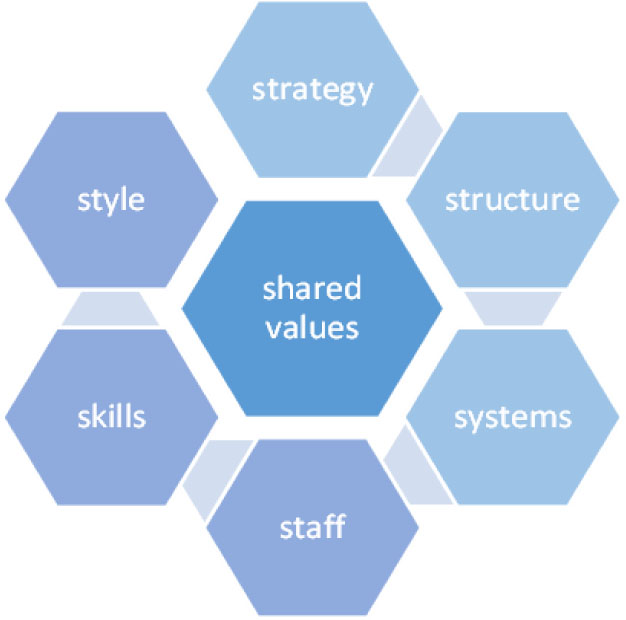
Figure 1.
Visualization of McKinsey 7S model
Source: own processing
As shown in Figure 1, which depicts the McKinsey 7S framework, the model offers a visual representation of the interdependence of organizational factors, making it particularly valuable in guiding ICT firms toward talent strategies that are not merely functional but strategically embedded.
Complementary to the 7S framework, the Talent Management Life Cycle (TMLC) provides a process-oriented perspective. Structured around four stages: identification, attraction, development, and retention — the model illustrates how talent flows through organizations in a linear yet interconnected manner (Musallam & Samara, 2021). For ICT sectors, this means anticipating future needs in areas such as artificial intelligence or cybersecurity during the identification stage, while attraction may involve branding and inclusivity initiatives. Development is addressed through ongoing upskilling and mentoring, and retention requires investment in organizational culture and career progression pathways. The cyclical character of this model underscores that talent management is not a one-off activity, but a continuous cycle aligned to business strategy. Figure 2, which illustrates the TMLC in a circular flow, helps visualize this continuity and the strategic importance of managing each stage holistically.
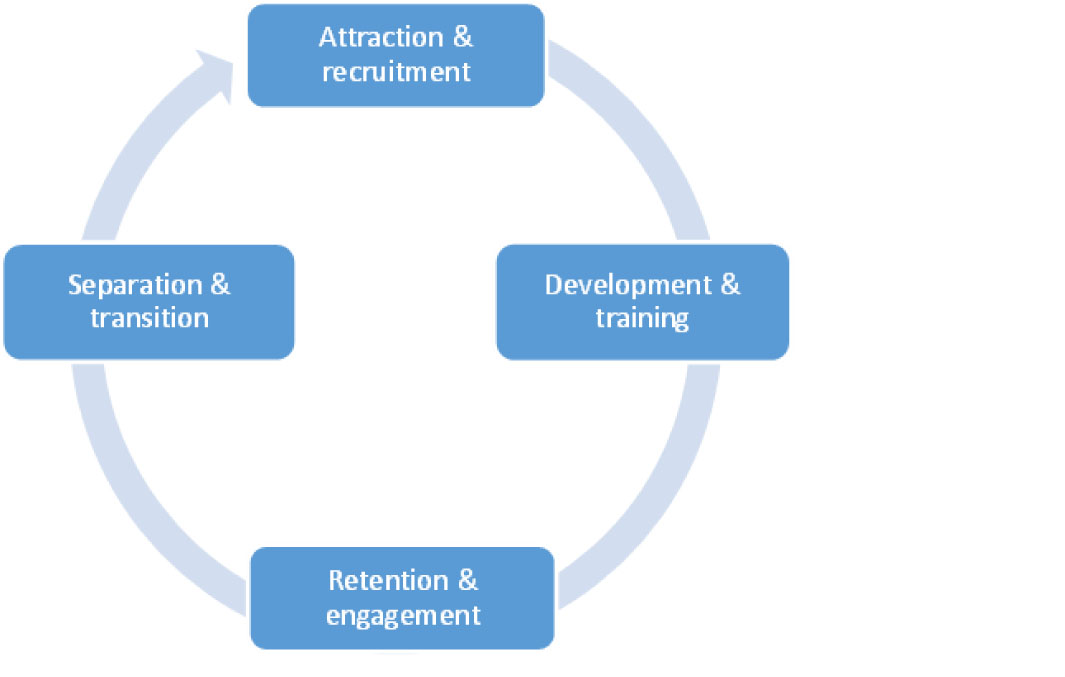
Figure 2.
Visualization of the Talent Management Life Cycle
Source: own processing
In knowledge-intensive sectors such as ICT, recent studies highlight that traditional talent management models must be adapted to account for accelerated skill obsolescence and the increasing importance of continuous learning ecosystems. For instance, research shows that firms operating in digital environments prioritize agile talent strategies, combining internal reskilling with external talent sourcing to remain competitive (Collings & Mellahi, 2009; Vaiman et al., 2017). These approaches reinforce the idea that talent management is not only cyclical but also dynamically responsive to technological disruption.
Literature emphasizes that talent management should not be perceived solely as a human resource function but as a fundamental component of the organizational value chain. Recent perspectives from McKinsey & Company (2023) argue that talent management now encompasses the entire employee journey, from recruitment to succession planning, and should be regarded as a strategic driver of organizational distinctiveness. This transition is especially prominent in ICT, where swift innovation cycles necessitate adaptability and reactivity. Unlike earlier HR models, which emphasized administrative processes, the contemporary view embeds talent management into the strategic fabric of organizations, ensuring not only the filling of current vacancies but also the cultivation of long-term innovation capacity.
At the global level, research consistently documents significant shortages of ICT professionals. Nithithanatchinnapat and Joshi (2019) demonstrate that countries with strong investments in ICT education and expanded access to STEM disciplines are better able to mitigate shortages. Conversely, regions that underinvest in training pipelines face persistent skill gaps. Goupil et al. (2022) highlight the magnitude of the challenge in cybersecurity alone, where a global shortfall of more than 3 million professionals threatens innovation and security. These global findings emphasize the structural characteristic of ICT workforce shortages and the risks they pose to sustainable technological progress. Recent empirical studies further confirm that digital skill shortages are intensifying across advanced economies, particularly in areas such as artificial intelligence, cybersecurity, and data science, where demand consistently outpaces the capacity of education and training systems (CEDEFOP, 2021; van Laar et al., 2019; World Economic Forum, 2023). These findings reinforce the systemic nature of ICT talent gaps and highlight the need for integrated policy and organizational responses.
In Europe, these trends manifest with distinctive regional variations. Early warnings by the European Commission (Leo, 2001) underscored the risks of fragmented approaches to digital skills, a concern that persists today. Organisation for Economic Co-operation and Development (OECD, 2024) data confirm that demand remains concentrated in technical roles requiring advanced cognitive and analytical skills, yet the supply of such competencies is uneven across member states. Northern and Western European countries, such as Finland and the Netherlands, have benefited from robust vocational systems and strong public-private partnerships, while Southern and Eastern states, including Greece and Romania, continue to experience acute shortages exacerbated by brain drain and weaker institutional frameworks (Startup Genome, 2024). Even in advanced economies such as Germany, integration barriers for foreign professionals hinder the development of a balanced ICT workforce. These intra-European differences demonstrate that while the ICT skills gap is continent-wide, its intensity and causes are shaped by local educational, institutional, and demographic contexts.
Within the broader framework of the knowledge economy, human capital is increasingly recognized as the primary driver of productivity and innovation, surpassing traditional physical assets in importance (Becker, 2009; Powell & Snellman, 2004). In this context, the availability and effective management of highly skilled ICT professionals become critical determinants of national and organizational competitiveness.
Despite the richness of conceptual models and regional analyses, much of the literature remains limited by its reliance on theoretical perspectives or small-scale case studies. Collings et al. (2019) note that dominant frameworks, such as the resource-based view and strategic human capital theory, offer valuable explanatory tools but are not systematically tested against real-time labor data. As a result, they risk becoming outdated in a field characterized by rapid technological change. Eurostat, CEDEFOP, and OECD produce comprehensive statistics on employment, skill demand, and demographic patterns, yet these data remain underutilized in empirical research. Recent contributions in the field of human resource analytics also underline this limitation, noting that despite the proliferation of large datasets, their integration into strategic talent management research remains uneven and underdeveloped (Marler & Boudreau, 2017; McCartney et al., 2021). This gap is particularly evident at the macroeconomic level, where cross-country labor market data could provide valuable insights into structural workforce imbalances but are rarely systematically incorporated into empirical models. The consequence is a gap between theory and practice: organizations and policymakers often lack evidence-based insights that could guide interventions in line with emerging labor market realities.
This methodological limitation restricts the capacity of existing research to inform timely and effective strategies. While qualitative studies illuminate cultural and institutional barriers, the absence of integrated quantitative analysis weakens predictive power and policy relevance. Scholars such as Sparrow and Makram (2015) have therefore called for greater methodological diversity, advocating for the systematic incorporation of labor statistics into talent management research. Bridging this gap would not only improve theoretical robustness but also enhance the utility of research for practitioners navigating urgent ICT workforce shortages.
In summary, the literature illustrates both the conceptual richness of talent management theories and the persistent gaps in their empirical application. Frameworks such as McKinsey’s 7S model (Figure 1) and the Talent Management Life Cycle (Figure 2) provide useful lenses for understanding organizational alignment and employee flows, while global and European studies highlight the severity and unevenness of ICT workforce shortages. Yet the lack of integration between conceptual models and real-time statistical evidence limits the field’s capacity to generate actionable insights. This shortcoming represents a central opportunity for further research, particularly in applying labor market data to refine and operationalize talent management strategies in Europe’s ICT sector.
Methodology
This study adopts a quantitative research design based on secondary data analysis, reflecting the complex and data-rich nature of talent management in the ICT sector. Quantitative methods provide a systematic means of capturing labor market dynamics, allowing the identification of measurable relationships between employment growth, gender disparities, and skill shortages.
Three main sources form the empirical basis of the analysis. Eurostat provides longitudinal and country-level statistics on ICT employment and gender participation, enabling multi-year trend analysis. CEDEFOP and the European Foundation for the Improvement of Living and Working Conditions (EUROFOUND) contribute sectoral growth forecasts through their Skills Forecast dataset, projecting occupational demand until 2030 (CEDEFOP & EUROFOUND, 2018). Finally, European Commission policy benchmarks, including the Digital Decade targets for 2030, offer a framework for assessing how current labor market trajectories align with EU-wide objectives.
The analytical process combines three complementary statistical approaches. First, a descriptive trend analysis examines ICT employment between 2012 and 2024, focusing on absolute growth rates, percentage changes, and compound annual growth rates (CAGR) in workforce size, gender composition, and age distribution. This allows the identification of long-term structural dynamics and inflection points in sectoral expansion.
Second, comparative analysis employs cross-sectional country-level comparisons based on standardized Eurostat indicators. Countries are grouped according to reported recruitment difficulties and levels of ICT workforce participation, enabling the identification of structural divergences between high-performing and shortage-affected member states. Differences are interpreted through relative frequency analysis and proportional comparison rather than inferential testing, given the aggregated nature of the dataset.
Third, the correlation analysis investigates the relationship between gender balance and talent shortage using Pearson correlation coefficients calculated across member states. Female ICT employment rates are correlated with the percentage of enterprises reporting recruitment difficulties. This statistical technique enables the assessment of both direction and strength of association, while acknowledging that correlation does not imply causation. The analysis is conducted using aggregated country-level data for the most recent comparable year available (2023–2024).
By triangulating data from multiple authoritative sources, the methodology ensures a robust and multidimensional view of Europe’s ICT labor market. This evidence-based approach enables not only the diagnosis of current gaps but also the evaluation of how existing strategies measure up against future needs, thereby informing both policy design and organizational talent management practices.
Results and discussion
The analysis of longitudinal labor statistics reveals a striking transformation in the European information and communication technology workforce, where between 2012 and 2024 employment nearly doubled, increasing by close to 90 percent. Eurostat data confirm that the number of ICT specialists grew from approximately five million to nearly 9.5 million in a decade, an expansion that far outpaced overall employment growth in the European Union. Figures 3 and 4 illustrate this trajectory, showing both the proportional rise of ICT specialists within the general labor market and the absolute growth across time (Eurostat, 2025a, 2026). The steep curve evident until 2020 reflects the acceleration of digitalization in both private and public sectors, while the slight tapering visible in the most recent years indicates that demand pressures are now colliding with supply constraints.
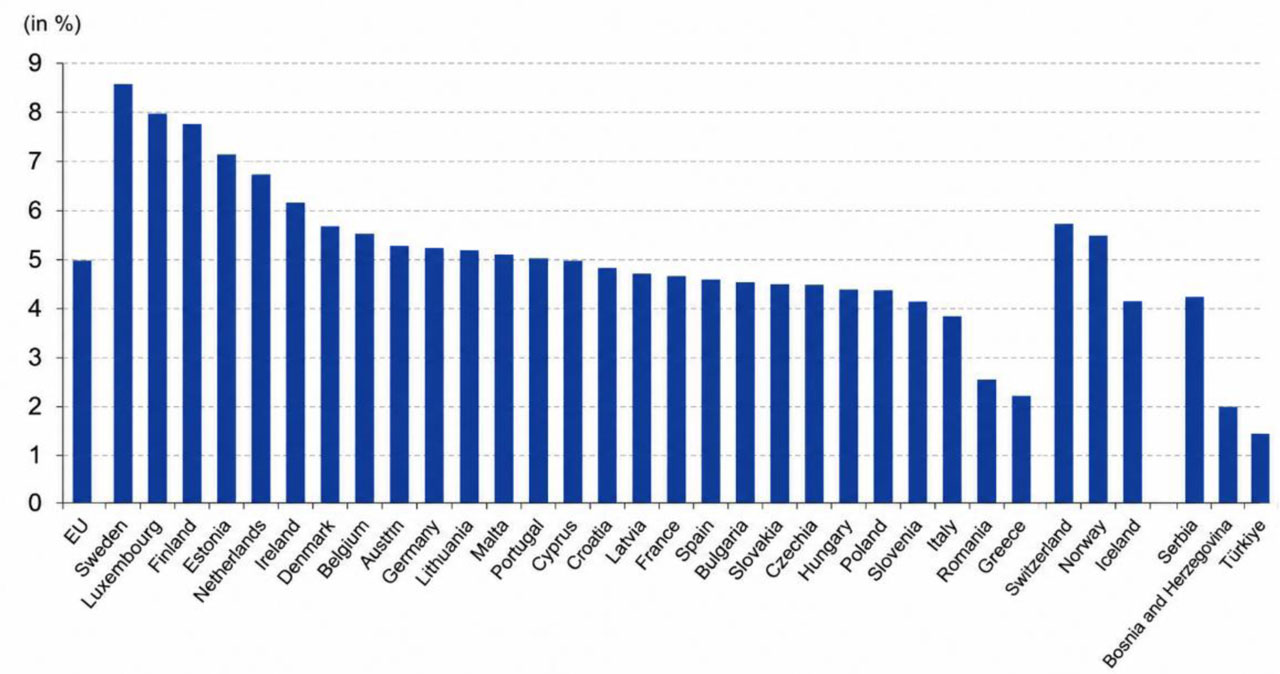
Figure 3.
Proportion of ICT specialists in total employment, 2024
Source: Eurostat (2025a)
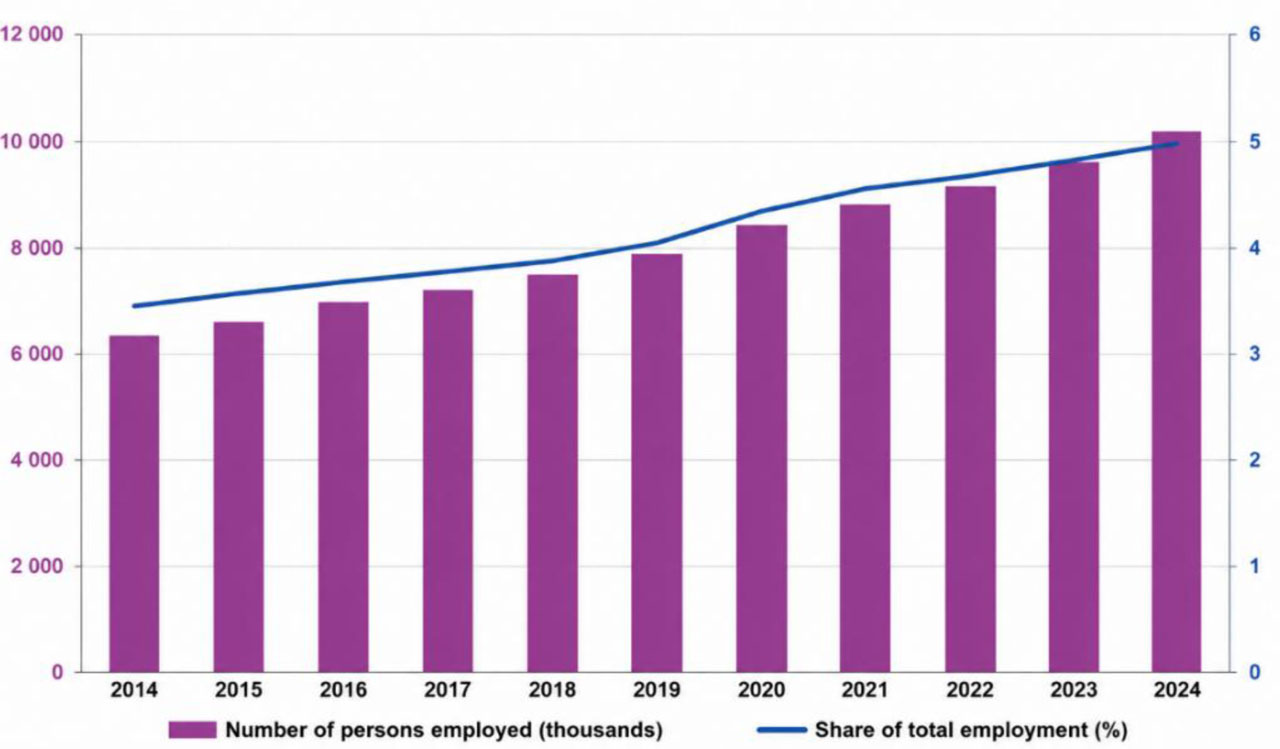
Figure 4.
ICT specialists, EU, 2014–2024
Source: Eurostat (2026)
The academic literature provides interpretive depth to these patterns. Nithithanatchinnapat and Joshi (2019) argue that aggressive digitalization programs are invariably accompanied by surges in ICT job creation, but that such surges encounter ceilings once the available talent pool is depleted. Mitrevski et al. (2013) further underline the dependency of ICT-driven productivity gains on parallel investments in human capital, warning that without sufficient skills, capital deepening alone cannot sustain growth. The observed slowing of employment expansion since 2020 thus corresponds with theoretical predictions, signaling a transition from demand-driven expansion to supply-constrained stagnation. This finding carries significant implications for talent management. Recruitment can no longer be reactive or opportunistic but must be systematically planned, data-driven, and tied to proactive pipeline development. Partnerships with universities, coding academies, and targeted upskilling initiatives represent viable strategies to realign supply with demand.
At the European level, validated labor statistics offer employers the opportunity to anticipate shortages before they manifest, enabling a more strategic deployment of resources across regions and sectors. Without such forward-looking approaches, the ambitious targets of the Digital Decade will remain at risk. In parallel to quantitative shortages, the second major finding highlights a persistent qualitative imbalance within the ICT workforce. Women accounted for only 19.4 percent of ICT specialists in 2023 and 19.5 percent in 2024, a figure that has remained stubbornly stable despite overall employment growth.
Further, Figure 5 documents this asymmetry, showing that the absolute number of women in ICT has grown, yet their relative share has hardly budged. Academic studies provide a rich explanation for this stasis. Trauth (2013) details how early socialization processes, organizational practices, and institutional cultures merge to discourage women from pursuing careers in ICT. Kenny & Donnelly (2020) demonstrate how gendered workplace structures shape women’s experiences of advancement and belonging, while Kurti et al. (2024) point to the crucial role of exposure to role models and inclusive program design in higher education pathways. Together, this body of research suggests that the low participation of women is not a reflection of individual preferences alone but the outcome of systemic barriers at multiple points in the education-to-employment continuum. Policy evidence echoes these academic diagnoses.
The European Commission’s Women in Digital initiative succinctly summarizes the issue with the observation that only one in five ICT specialists is a woman, a ratio largely unchanged since the mid-2010s (European Commission, 2025). CEDEFOP’s work on vocational and educational training underscores the importance of early interventions, since women remain underrepresented in STEM-oriented secondary and tertiary education tracks, thereby narrowing the potential supply of future specialists (CEDEFOP, 2025). From a strategic standpoint, this imbalance represents a considerable opportunity. Unlocking the potential of underrepresented groups would not only advance equity goals but also expand the labor supply precisely where shortages are most acute. Incentives such as scholarships, mentorship, family-friendly workplace policies, and visible role models in ICT leadership could make significant contributions to changing this trajectory (Brussino & McBrien, 2022). Importantly, inclusive re-skilling initiatives that target women and mid-career professionals could expand the talent pipeline and address systemic barriers simultaneously (see Figure 5).
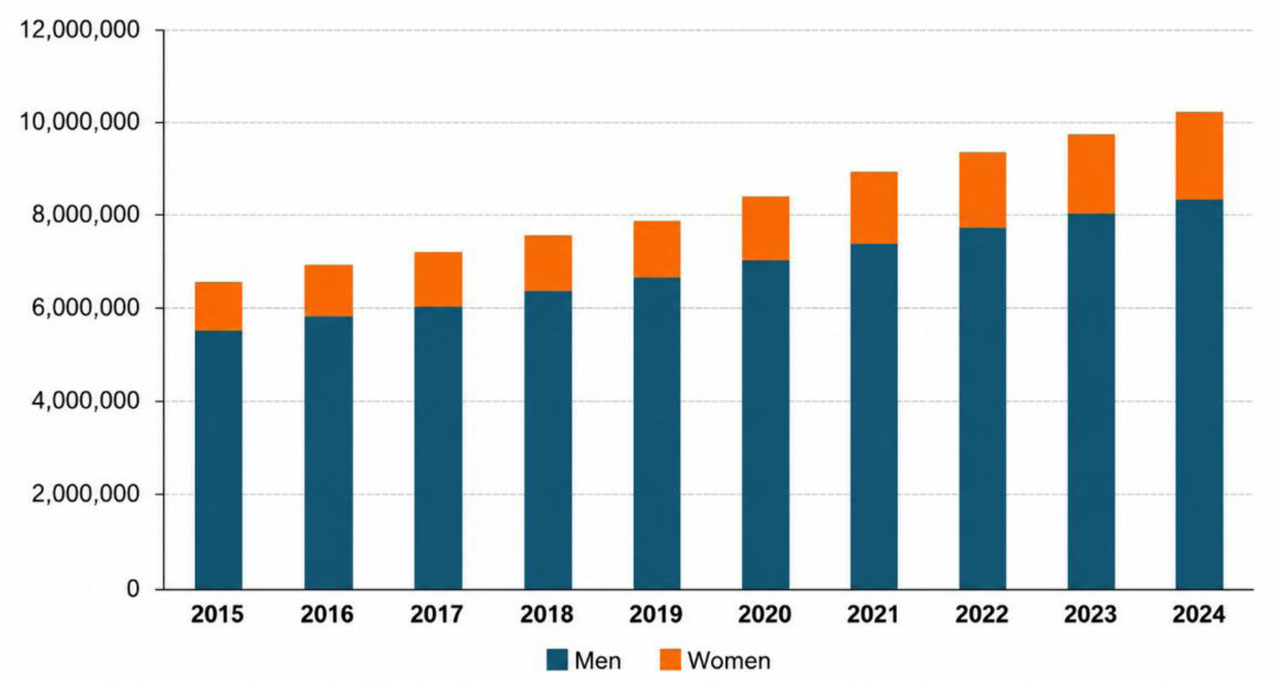
Figure 5.
Employed ICT specialists in the EU, by sex (2015–2024)
Source: European Commission (2025)
Beyond gender dynamics, regional disparities form the third central finding of this study. While the shortage of ICT professionals is a pan-European concern, its severity varies markedly across member states. According to the Digital Economy and Society Index (European Commission, 2024) and complementary Eurostat indicators, over 65 percent of enterprises in Czechia and Malta report difficulties in recruiting ICT specialists, compared with an EU average closer to 55 percent. This pattern, visualized in Figure 6, demonstrates the uneven geography of skills shortages. Smaller economies and those in Central Europe often face “double exposure,” combining brain drain pressures with underdeveloped education and training pipelines. CEDEFOP forecasts confirm that these shortages are compounded by low female participation and slower adaptation of vocational curricula to industry demands. Recent research highlights persistent labor market imbalances and regional disparities in the European digital economy, particularly in the concentration of highly skilled workers within more developed innovation ecosystems (van Laar et al., 2019; Ward-Warmedinger & Macchiarelli, 2014).
These dynamics contribute to uneven access to digital talent and intensify recruitment difficulties across less affluent regions. These dynamics underscore that the shortages observed are not merely numerical but spatially distributed in ways that reflect broader economic inequalities. Addressing such disparities requires interventions beyond the organizational level. Cross-border mobility schemes, harmonized skill recognition frameworks, and reduced administrative barriers could enable the redistribution of talent within the EU. Remote work arrangements also represent an increasingly viable strategy, allowing employers in shortage regions to tap into underutilized talent pools elsewhere in Europe (EUROFOUND, 2022). Yet without policy support to ensure portability of qualifications and alignment of training standards, regional imbalances risk becoming entrenched, thereby weakening the collective digital capacity of the Union (see Figure 6).
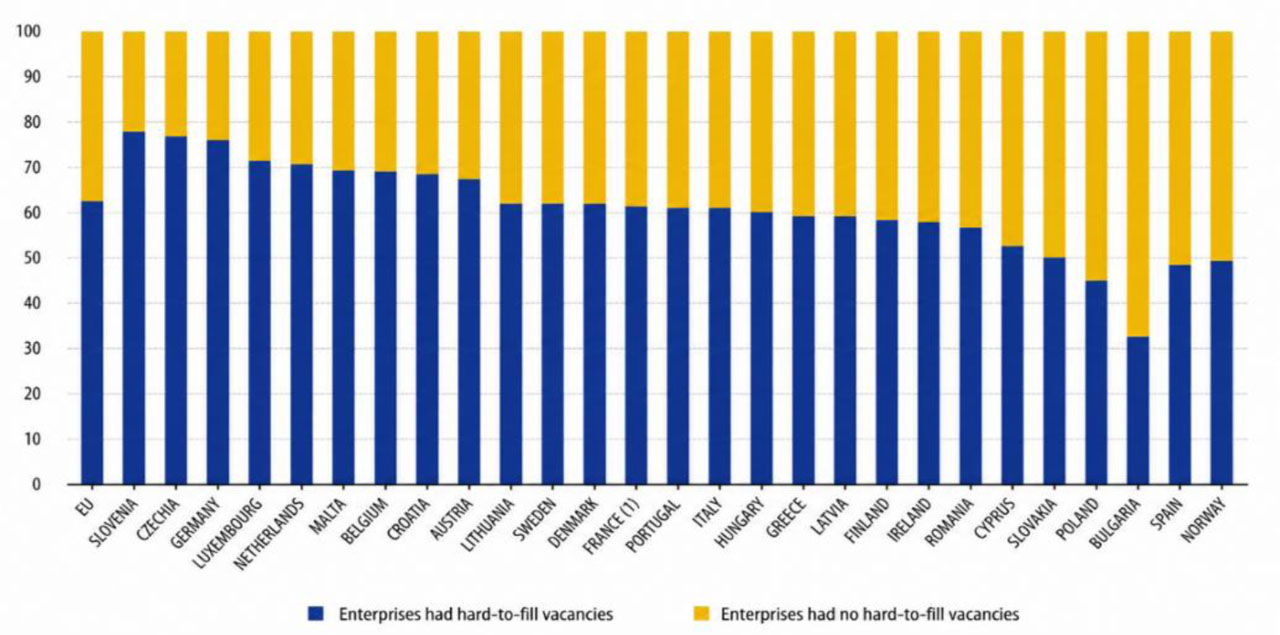
Figure 6.
Enterprises reporting difficulties in recruiting ICT specialists (EU, 2021)
Source: Eurostat (2023b)
Finally, the fourth finding underscores that current challenges represent not only immediate bottlenecks but also looming systemic risks. The European Commission (2023a) has set an ambitious target of reaching 20 million ICT specialists by 2030 under the Digital Decade Policy Programme. However, CEDEFOP forecasts predict a shortfall of up to eight million professionals by that date, one of the largest projected gaps across occupational categories in Europe.
Figure 7 captures the divergence between projected supply and projected demand, showing how the current trajectory falls significantly short of policy ambitions. Academic literature helps explain the structural nature of this gap. Autor (2015) observes that technological innovation, particularly in artificial intelligence, cybersecurity, and cloud computing, creates growing demand for highly skilled professionals, whereas education and labor market adaptation processes evolve more gradually. Goos et al. (2009) describe the polarization effect in labor markets, where demand for high-skilled ICT roles expands while adaptability of the workforce remains insufficient. The consequence is a widening mismatch between technological trajectories and human capital development. If left unaddressed, such shortages will reverberate across sectors, delaying progress in green technology, advanced manufacturing, e-governance, and other strategic initiatives. Moreover, Europe risks deepening its dependence on non-EU talent pools, raising concerns about resilience and digital sovereignty. The implication is clear: talent management must be redefined as a strategic priority, aligning education, training, recruitment, and mobility in a coherent framework that anticipates rather than reacts to shortages.
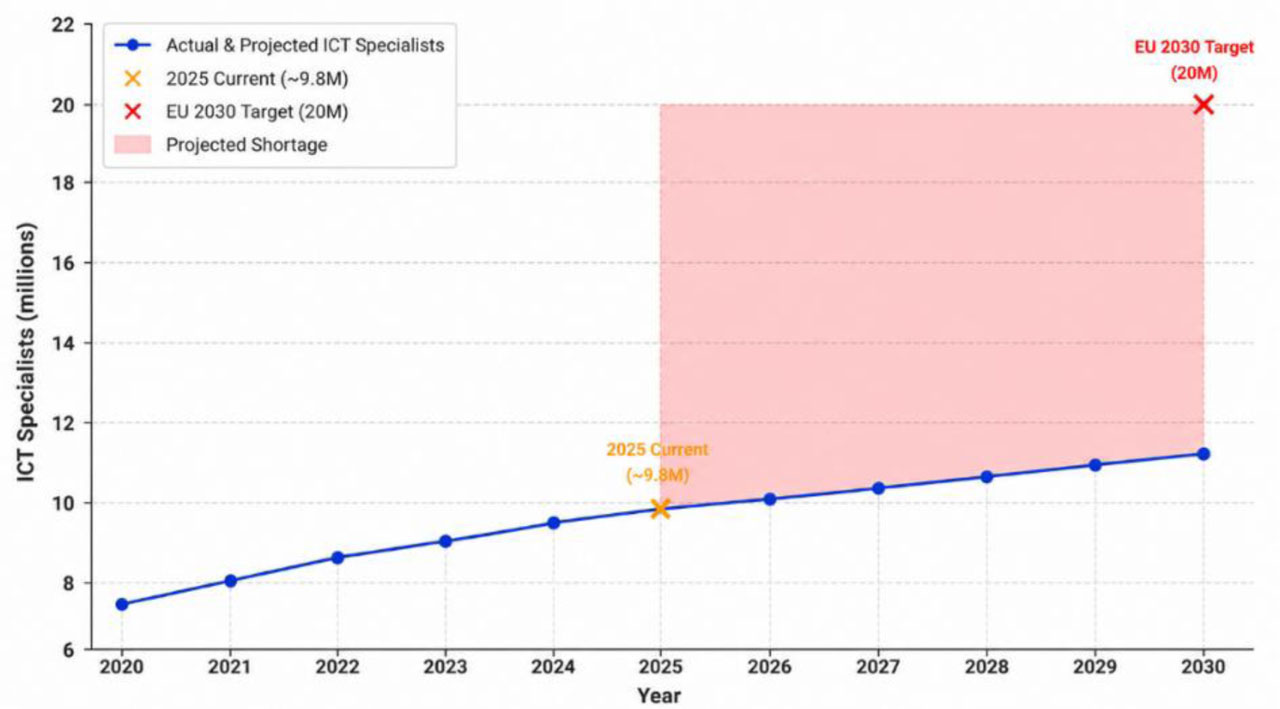
Figure 7.
ICT specialists in EU workforce (2020–2030)
Source: own processing
Taken together, these four findings reveal a labor market that is expanding rapidly but constrained by structural barriers: quantitative shortages, gender imbalances, regional disparities, and long-term systemic gaps. Strategic recommendations flow directly from these dynamics. Building sustainable public–private education pipelines represents a cornerstone for aligning curricula with evolving technological demands while ensuring a steady inflow of qualified graduates. Promoting remote work and relocation schemes can help mitigate regional disparities, allowing firms in shortage regions to access talent across Europe and beyond. Offering targeted incentives to women and underrepresented groups will not only advance equity but also broaden the labor supply at a critical juncture. Finally, embedding real-time labor statistics into workforce planning ensures that organizations and policymakers can anticipate shortages and respond proactively. Only through the integration of these approaches can Europe hope to achieve its 2030 targets and sustain its digital transformation in a competitive global environment.
Conclusions
The European information and communication technology labor market is at a critical juncture, shaped by rapid expansion and equally pressing structural imbalances. Employment in ICT has grown by nearly 90% over the past decade, underscoring its centrality to Europe’s economic transformation. Yet the very momentum of digitalization has revealed vulnerabilities: persistent shortages of skilled professionals, a pronounced gender imbalance with women comprising less than one-fifth of the workforce and marked disparities across member states. Forecasts projecting a shortfall of up to eight million ICT specialists by 2030 make clear that without intervention, Europe’s ambitions under the Digital Decade will be severely undermined (Eurostat, 2025b).
The present study contributes to the literature by synthesizing statistical evidence from Eurostat, CEDEFOP, and the European Commission to trace the evolution of these challenges and situate them within broader debates on talent management. The findings extend existing research by demonstrating that talent shortages are not simply numerical but systemic, arising from misalignments between educational pipelines, organizational practices, and labor market dynamics. By linking quantitative labor market indicators with theoretical insights on talent management, gender inclusion, and cross-border mobility, the study highlights how Europe’s ICT workforce challenges extend beyond employment to questions of competitiveness, resilience, and digital sovereignty.
These findings generate several important implications across theoretical, managerial, and societal dimensions. From a theoretical perspective, the study contributes to talent management and knowledge economy literature by demonstrating the value of integrating large-scale labor market data into traditionally conceptual frameworks. While prior research has emphasized strategic human capital and organizational alignment (Collings et al., 2019; Sparrow & Makram, 2015), the present analysis extends these perspectives by showing how real-time statistical evidence can refine and operationalize talent management strategies in dynamic, technology-driven environments.
From a managerial perspective, the results highlight the need for organizations to transition from reactive recruitment practices towards proactive, data-driven workforce planning. Firms operating in the ICT sector must increasingly rely on labor market intelligence to anticipate skill shortages, invest in continuous reskilling programs, and design inclusive talent pipelines (Marler & Boudreau, 2017). In particular, addressing gender imbalances and leveraging underrepresented talent pools emerges not only as a diversity objective but also as a critical response to labor supply constraints.
From a societal perspective, the findings underscore the broader implications of ICT talent shortages for economic resilience, social inclusion, and regional cohesion within the knowledge economy (Powell & Snellman, 2004). Persistent gender gaps and uneven geographic distribution of skills risk exacerbating existing inequalities within the European Union. Consequently, coordinated interventions in education, vocational training, and labor mobility are essential to ensure that the benefits of digital transformation are distributed more equitably across populations and regions.
These findings resonate with recent studies focusing on the Romanian ICT workforce, which highlight similar structural tensions between rapid sectoral expansion and limited domestic talent supply. Research on Romania consistently documents strong growth in ICT exports and employment concentration in urban hubs such as Bucharest and Cluj-Napoca, accompanied by persistent skill shortages and outward migration of specialists (OECD, 2024; Startup Genome, 2024). Compared to these national-level analyses, the present study situates Romania within a broader European comparative framework, demonstrating that while shortages are particularly visible in emerging economies, they form part of a systemic European pattern rather than an isolated national phenomenon. This comparative positioning reinforces the need for coordinated strategies that combine national reforms with EU-level mobility and education policies.
Ultimately, the findings underscore that Europe’s digital future depends not only on technological innovation but on the ability to cultivate and sustain the human capital required to drive transformation. The implications operate at multiple levels. At the policy level, coordinated investments in STEM education, gender-inclusive training pathways, and accelerated re-skilling programs are essential to narrow projected supply gaps. At the organizational level, firms must transition from reactive recruitment models to anticipatory workforce planning grounded in labor market analytics.
Furthermore, the evidence suggests that gender inclusion should be treated not solely as a social objective but as a structural labor market intervention capable of expanding effective supply. Similarly, reducing regional disparities requires strengthening cross-border recognition of qualifications and supporting remote and hybrid work ecosystems. For countries such as Romania, this implies balancing international talent attraction with retention strategies designed to mitigate brain drain. Addressing the ICT workforce challenge is therefore not merely a human resource issue but a strategic economic imperative. Without integrated, data-informed talent management architectures operating across national and European levels, the gap between digital ambition and workforce capacity will continue to widen.
Despite its contributions, the study is subject to several limitations. First, the analysis relies on secondary data from aggregated sources, which may obscure variations at the firm and individual levels in talent dynamics. Second, the use of country-level indicators limits the ability to capture intra-national disparities and sector-specific nuances. Third, while correlation analysis provides insights into relationships between variables such as gender balance and skill shortages, it does not allow for causal inference. These limitations should be considered when interpreting the findings.
Future research could build on this study by incorporating firm-level data and longitudinal designs to better understand causal relationships in talent management dynamics. In addition, qualitative approaches could complement statistical analysis by exploring organizational practices and cultural factors influencing talent attraction and retention. Further research may also examine the impact of emerging technologies, such as artificial intelligence, on the evolution of skill requirements. Including comparative global perspectives would also enhance the generalizability of findings and contribute to a more comprehensive understanding of talent management in the knowledge economy.