
Introduction
The entrepreneurship landscape has undergone significant transformation in recent years, with the rise of micro, small, and medium enterprises (MSMEs) playing a pivotal role in driving economic growth and development. MSMEs are crucial to global economies, contributing to job creation, fostering innovation, and diversifying economies (Aggarwal & Joshi, 2024; Krishnan et al., 2020). According to the World Bank (2022), MSMEs comprise approximately 90% of global businesses and account for about 50% of global employment. In emerging economies, particularly in Sub-Saharan Africa, MSMEs comprise 95% of formal companies, accounting for 65% of employment and contributing up to 50% of gross domestic product (GDP) (World Bank, 2022; World Trade Organization (WTO), 2020). Despite their agility, innovative approaches, and dynamic nature, MSMEs face several challenges, including intense competition, limited access to financial resources and initial capital, and market reach. Other challenges include stringent regulatory and compliance requirements, economic volatility, lack of access to expertise and skilled personnel, and difficulties in keeping pace with rapidly evolving technologies and market conditions (Hendrawan et al., 2024; Israel & Kazungu, 2019; Mahuwi & Israel, 2023). These obstacles not only hinder the economic and operational performance of MSMEs but also constrain their ability to leverage their capabilities for sustainable and inclusive growth.
Given the crucial roles that MSMEs play in economies and the challenges they face, various initiatives have been implemented across different countries to support the growth of start-up MSMEs. These initiatives involve a combination of regulatory and policy reforms, financial support and access to credit, capacity-building programs, strategic partnerships, and market access facilitation (Metris et al., 2024; Wu et al., 2020). Among these initiatives, the North American Free Trade Agreement (NAFTA), the African Continental Free Trade Area (AfCFTA), and the European Union’s single market provide MSMEs with access to larger markets and more opportunities for cross-border trade by reducing trade barriers and nurturing strategic partnerships among member countries. Similarly, countries like China, Vietnam, Japan, Kenya, Tanzania, Nigeria, and South Africa have established industrial parks and special economic zones, such as export processing zones (EPZs) to enhance MSME operations. These parks offer MSMEs tax incentives, logistical support, market information, networking opportunities, and financial and technical assistance (Kumburu et al., 2021; Wu et al., 2020). Other initiatives include the establishment of small business development agencies such as the Small Industries Development Organization (SIDO) in Tanzania, the Small Business Administration (SBA) in the United States, and the Micro Units Development and Refinance Agency (MUDRA) in India. These agencies are tasked with providing entrepreneurship education, mentorship, and advisory services, and helping MSMEs access financial services (Israel, 2022; Mbowe, 2024; Pearson et al., 2024).
One of the primary objectives of start-up MSMEs, aligned with various support programs and initiatives, is to achieve profitability and ensure long-term growth amidst fierce competition and evolving market changes (Kawira et al., 2019; Sitaniapessy et al., 2022). However, despite these clear objectives and initiatives, the financial performance and sustainability of MSMEs, particularly start-ups, remain far from flawless. Many MSMEs exhibit significant deficiencies related to their operational, economic, and financial sustainability. A survey by the World Bank (2022) reveals that only 40% of start-up MSMEs are financially stable enough to manage and meet their financial liabilities. Consequently, the remaining 60% face financial crises, struggle to meet their financial obligations and often experience a decline within six months of establishment. These shortcomings result in job losses, economic stagnation, and persistent poverty. Given these encounters, it is evident that achieving profitability and long-term growth requires more than just innovative strategies; it also depends on the dynamic capabilities of managers and employees. This underscores the critical need to cultivate and apply dynamic skills that empower entrepreneurs to anticipate and respond effectively to market dynamics, capitalise on emerging opportunities, overcome challenges, and drive the profitability and long-term growth of start-up MSMEs (Agarwal et al., 2023; Herlina, 2024).
Essentially, dynamic skills encompass a broad range of competencies, including adaptability, innovation, problem-solving, strategic agility, and resilience, all of which are essential for navigating the complexities of the modern business environment. Other critical skills include fluency in financial management, negotiation, digital technologies, and cross-cultural communication. While substantial empirical research has explored the firm and industry dynamics necessary for the success of start-up MSMEs (Sreenivasan et al., 2023; Utama et al., 2024), there remains a notable gap in comprehensive systematic literature reviews that synthesise the dynamic skills driving their profitability and long-term sustainability. Most studies provide valuable empirical evidence but tend to focus on individual dynamic skills (Budiarto et al., 2021; Herlina, 2024), often within specific industries or regional contexts. As a result, they lack a broader synthesis of diverse findings across different sectors and geographical regions. This study addresses this gap by systematically reviewing and synthesising existing literature to identify and evaluate the critical dynamic skills influencing both the profitability and long-term sustainability of start-up MSMEs.
By systematically reviewing and synthesising relevant literature, this study contributes to the existing literature by providing insights into the specific skill sets essential for MSME success in an increasingly digital and competitive environment across various sectors and geographical regions. Unlike current empirical literature, this study integrates evidence from multiple studies and highlights broader trends in dynamic skills for the profitability and sustainability of start-up MSMEs, offering a comprehensive synthesis of existing research. More importantly, the study identifies potential areas for future research, encouraging more targeted studies on the relationship between dynamic skills and MSME performance in various global contexts. It informs future studies on how to cultivate and measure diverse dynamic skills within different contexts and industries, offering a clearer understanding of their impact on both short-term profitability and long-term growth. In addition, the study provides practical recommendations for entrepreneurs, policymakers, and support organisations on how start-up MSMEs can leverage their dynamic skills to navigate and thrive in a rapidly evolving business environment.
Literature review
Start-up MSMEs
Start-up MSMEs are newly established businesses that fall within specific thresholds related to their workforce, revenue, or asset base. These thresholds vary depending on the country, region, geographical location, or industry. For example, in the USA, the Small Business Administration (SBA) defines MSMEs as businesses with fewer than 500 employees (Crane, 2020). In India, MSMEs are companies with up to 200 employees, investing in plant and machinery or equipment not exceeding INR 50 crore (approximately $6.75 million), and having an annual turnover of less than INR 250 crore (approximately $33.75 million) (Singh, 2019). In the EU, MSMEs are defined as businesses with less than 250 employees and an annual turnover of no more than €50 million or a balance sheet total of no more than €43 million (Ancarani et al., 2019). In many African countries, particularly in Tanzania, Ghana, and Kenya, MSMEs are defined as businesses with up to 99 employees, with varying annual revenue thresholds depending on the country (Kawira et al., 2019). In South Africa, MSMEs are companies with up to 250 employees and an annual revenue of up to R220 million. In Latin America, particularly in Brazil, MSMEs are defined as businesses with annual revenue between R$4.8 million and R$30 million (approximately $930,000 to $5.8 million) (Flores et al., 2022). These variations in the definitions of MSMEs across countries and regions reflect the different economic conditions and policy objectives of each country.
Key dynamics for profitability and long-term sustainability of start-up MSMEs
Across the globe, MSMEs face various dynamics that either facilitate or impede their economic success and sustainability. Among these dynamic factors, Harvie (2019) and Odhiambo (2013) opine that access to finance and capital, including loans and grants, is essential for start-up MSMEs to invest in growth opportunities, manage cash flow, and scale their operations. Conversely, limited access to finance can constrain a start-up's ability to expand, negatively affecting both profitability and long-term sustainability. Other studies by Taleb et al. (2023) and Ama and Okurut (2017) highlight the critical role of entrepreneurial orientation in terms of proactiveness, competitive aggressiveness, innovativeness, and risk-taking in driving the growth and sustainability of businesses over time. Continuous innovation enables MSMEs to create novel products, services, or processes, allowing them to differentiate themselves in the market, stay ahead of competitors, and meet evolving customer needs (Dwumah et al., 2024; Meekaewkunchorn et al., 2021). These dimensions collectively shape a firm’s entrepreneurial mindset and capabilities, influencing its ability to adapt to dynamic business environments and achieve long-term success.
Furthermore, studies such as those by Ghauri and Elg (2018), Fjeldstad et al. (2012) and Israel (2025) present industry relationships and collaborations as essential drivers for start-up MSMEs' success and sustainability in a competitive business environment.
According to these studies, nurturing strong industry relationships and collaborations provides start-up MSMEs with access to valuable resources, knowledge, and opportunities that are essential for immediate competitiveness, profitability, and future growth. Besides that, Mwenda et al. (2023), Biggeri et al. (2023), and Bello et al. (2024) emphasised the importance of compliance with legal and regulatory requirements, such as taxation, labour laws, industry standards, and environmental practices in supporting the long-term sustainability of start-ups. Compliance with legal, regulatory, and environmental requirements ensures that businesses operate within the legal framework, avoiding penalties and reputational damage. These factors have also been reported in the literature (Gupta & Gupta, 2021; Niño & Gentoral, 2024) as important determinants of business profitability.
Other empirical studies by Zamora (2010) and Abaddi (2024) highlight the importance of leveraging technological advancements, particularly when complemented by cross-cultural communication skills (Abugre, 2018; Harvie, 2019) and customer service skills (Pholphirul et al., 2022; Sheth et al., 2020), in enhancing efficiency, expanding market reach, and improving overall customer interactions. This not only boosts profitability but also positions businesses to remain competitive and sustainable over time. In their empirical studies, Lathabhavan and Kuppusamy (2023) and Kim and Jin (2024) opine that digital fluency, encompassing technical proficiency, information literacy, and data literacy, facilitates the effective use of digital marketing, e-commerce platforms, and social media. This, in turn, enables businesses to reach a broader audience beyond geographical boundaries, creating new growth opportunities. Moreover, the ability to automate and digitalise business operations helps reduce manual errors and increase productivity (Alam et al., 2022; Kim & Jin, 2024). This can help start-up MSMEs stay ahead of the competition, optimise resource utilisation, and foster long-term sustainability. On the other hand, empirical studies by Alshahrani and Salam (2024) and Susanto et al. (2023) reveal that sales and marketing skills, financial management skills, and leadership and problem-solving skills are essential drivers for start-up MSMEs to remain competitive in a dynamic business environment. These factors, as also reported by Pholphirul et al. (2022) and Susan (2020), enable businesses to make bold decisions, invest in uncertain opportunities, assess risks, and venture into new markets despite potential challenges.
Nonetheless, Israel (2022) opined that the profitability and long-term sustainability of start-up MSMEs are heavily influenced by the level of competition in the industry. High competition can drive MSMEs to innovate, improve quality, and reduce prices. However, for start-up MSMEs, intense competition can squeeze profit margins and challenge sustainability, particularly due to their limited resources (Sari & Sari, 2022). Similarly, the ability to reach and serve broader target markets, both locally and internationally, is crucial for the growth of start-up MSMEs (Jeong & Chung, 2023; Kawira et al., 2019). Expanding market access enhances sales and facilitates business expansion. Conversely, limited market access, resulting from geographic diversity, logistical and communication challenges, regulatory barriers, or economic downturns, can restrict growth opportunities and negatively impact long-term sustainability. Importantly, the literature highlights negotiation skills as a significant driver of SME sustainability, as they influence cost management and strategic partnerships (Ortigueira-Sánchez & Stein, 2022; Vizcaíno et al., 2023). By addressing and optimising these dynamic factors, start-up MSMEs can establish a strong foundation for enduring success in a competitive and digitally evolving business environment. Such strategic orientations can help start-ups maintain stable operations, contributing to long-term sustainability and consistent profitability (Das, 2015; Meekaewkunchorn et al., 2021).
Review methodology
This study employed a systematic literature review (SLR) to identify, analyse, and synthesise existing research on the dynamic skills essential for start-up MSMEs' profitability and long-term sustainability. To achieve the objectives of the review, data were collected from peer-reviewed journal articles. The articles selected for review were extracted from online databases, including Scopus, Web of Science, Google Scholar, and Emerald. These databases were chosen because they are highly regarded scientific resources, offering a wide range of peer-reviewed articles (Chhatoi et al., 2021). The review focused on relevant articles published between 2010 and 2023, following pre-determined inclusion and exclusion criteria (see Table 1) to ensure an emphasis on recent developments in digital transformation and the evolving competitive business environment.
Table 1.
Parameters for inclusion and exclusion criteria
| No. | Parameters | Inclusion criteria | Exclusion criteria |
|---|---|---|---|
| 1 | Focus | Articles that focus on skills relevant to MSMEs, their profitability and sustainability | Studies that do not focus on dynamic skills or are unrelated to MSMEs, profitability, and sustainability |
| 2 | Period | Articles must have been published between the year 2010 and 2023 | Articles published before 2010 or after 2023 |
| 3 | Types of articles | Peer-reviewed journal articles, conference papers, review articles, book chapters, reports, and policy briefs | Non-peer-reviewed articles, opinion pieces, editorials, or non-academic publications. |
| 4 | Language | Articles must be available in English | Articles not published in English. |
To ensure comprehensive coverage of relevant articles, the search string was formulated using Boolean operators with combinations of keywords related to dynamic skills, MSMEs, profitability, sustainability, the digital era, and the competitive business landscape. The complete search string used in Scopus, Web of Science, Google Scholar, and Emerald was: ("dynamic skills" OR " dynamic capabilities") AND ("profitability" OR "long-term sustainability" OR "competitive advantage" OR "business growth") AND ("start-up" OR "MSMEs" OR "small and medium enterprises" OR "micro-enterprises") AND ("digital era" OR "digital transformation" OR "technology adoption" AND "competitive business landscape" OR "profitability" OR "sustainability" OR "business growth" OR "competitive advantage" OR "long-term sustainability"). Based on this search, 4,654 articles were identified. Of these, 46 articles met the inclusion criteria and were included in the review.
The selected articles were subsequently analysed using thematic analysis, which involved familiarisation, coding, and categorisation of data into core common themes related to key dynamic skills for MSME success. These themes were synthesised to generate insights into how each dynamic skill contributes to profitability and sustainability. The search was conducted between the 20th and the 25th February, 2024. Figure 1 presents a flow diagram that visualises the process of selecting articles for inclusion in this review.
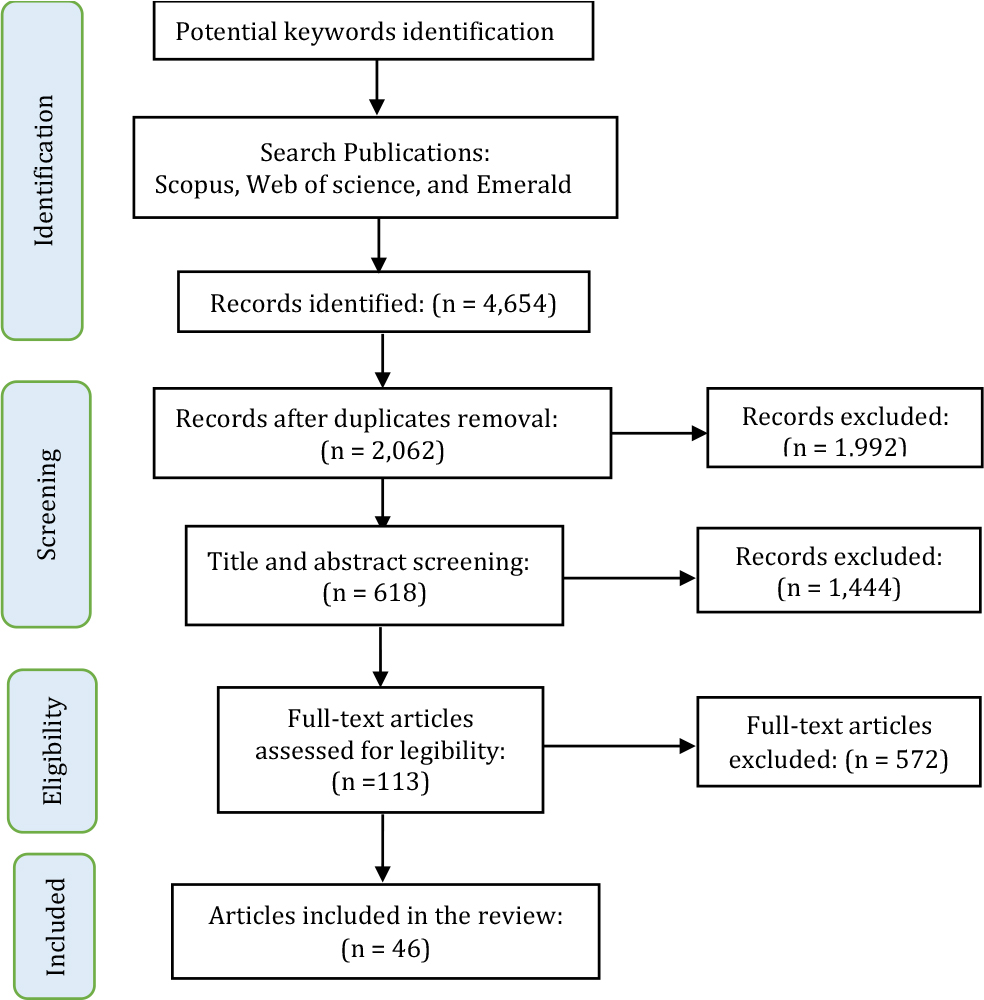
Figure 1.
Review process for survey literature
Source: adapted from Ali et al. (2018)
Results and discussion
Descriptive analysis of reviewed articles
This section provides a summary of the review findings on the dynamic skills essential for the profitability and long-term sustainability of start-up MSMEs. It provides an overview of the distribution of the reviewed journal articles, categorised by journal publishers, yearly publication trends, publication countries, key sectors in which MSMEs operate, and the recurring themes related to dynamic skills that emerged from the reviewed articles.
Journal category
Table 2 enlists the major journals in the field of dynamic skills for MSME profitability and long-term sustainability. The World Journal of Entrepreneurship, Management and Sustainable Development, Benchmarking: An International Journal, Journal of Small Business and Enterprise Development, and Asia Pacific Journal of Marketing and Logistics are highlighted as leading journals in this domain, each featuring four articles.
Table 2.
Distribution of reviewed articles by journal
| Journal name | Frequency |
|---|---|
| International Journal of Commerce and Management | 2 |
| Critical Perspectives on International Business | 3 |
| Journal of Small Business and Enterprise Development, | 4 |
| Management & Sustainability: An Arab Review | 2 |
| Benchmarking: An International Journal | 4 |
| Management Research Review | 2 |
| Journal of Scientometric Research | 3 |
| European Journal of Marketing | 2 |
| World Journal of Entrepreneurship, Management and Sustainable Development | 4 |
| Journal of Business & Industrial Marketing | 3 |
| E-Journal of Humanities, Arts and Social Sciences | 3 |
| Asia Pacific Journal of Marketing and Logistics | 4 |
| IIM Ranchi Journal of Management Studies | 1 |
| Continuity & Resilience Review | 3 |
| Journal of technology management & innovation, | 3 |
| Aslib Journal of Information Management | 2 |
| Journal of Innovation and Knowledge | 1 |
Other journals, such as Critical Perspectives on International Business, Journal of Business & Industrial Marketing, E-Journal of Humanities, Arts and Social Sciences, Continuity & Resilience Review, and Journal of Technology Management & Innovation, also contribute multiple articles on MSME profitability and sustainability. Thus, these journals are regarded as relevant sources of information on the performance and sustainability of start-up MSMEs.
Trends in publication
Figure 2 demonstrates the trend of publications in the sphere of start-up MSMEs' performance and sustainability from 2010 to 2023. The trend reveals a significant increase in publications in 2023, with six articles, followed by 2012, 2014, and 2016, each with four articles. The years 2013, 2017, and 2019 had the least number of articles on start-up MSMEs' profitability and sustainability.
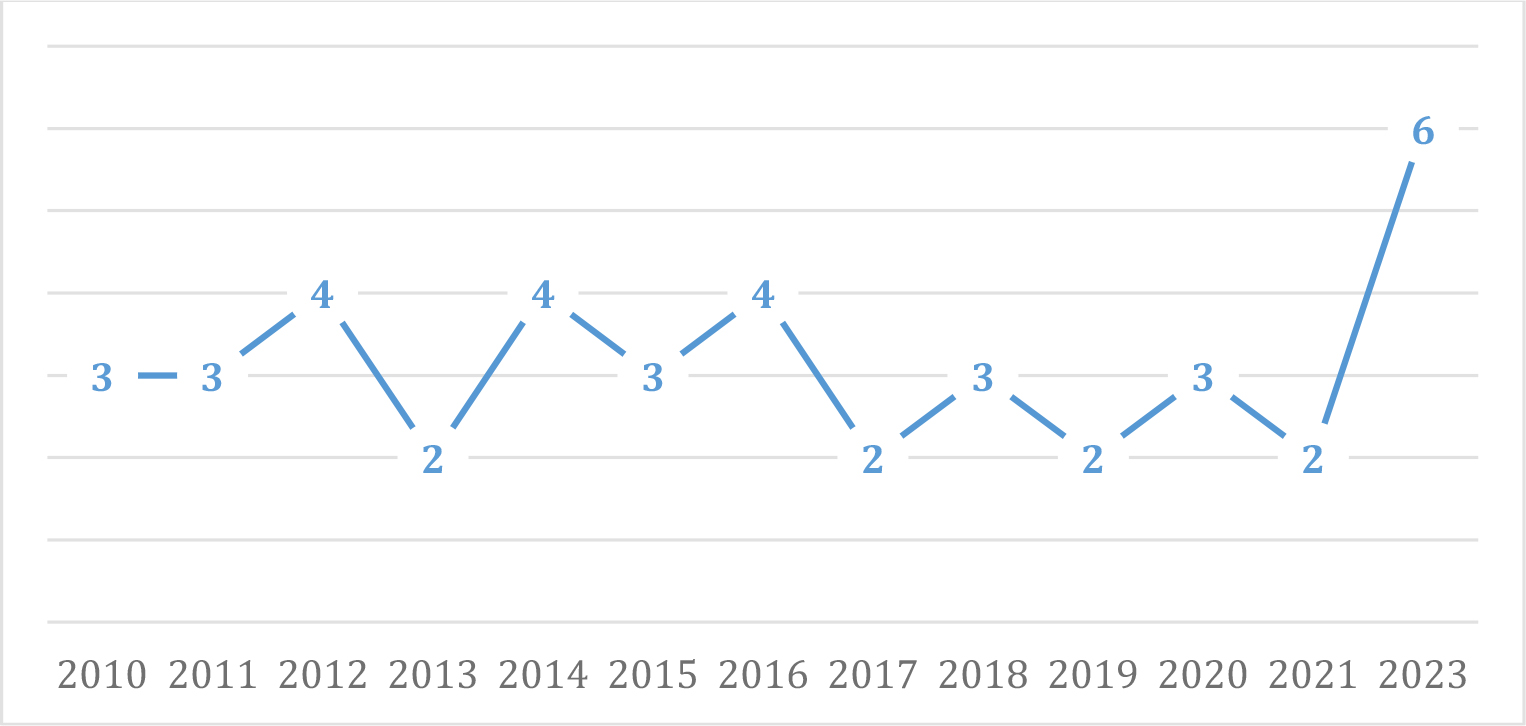
Figure 2.
Year-wise analysis of journal articles
Source: own processing
Publication country
Figure 3 provides an overview of the country-wise distribution of publications on start-up MSMEs' profitability, performance, and long-term sustainability. India stands out with the highest number of studies in this domain, featuring six articles. Additionally, the United States, Kenya, the Philippines, Tanzania, Jordan, Indonesia, and Uganda have also demonstrated a strong research focus on topics related to the performance and long-term sustainability of start-up MSMEs.
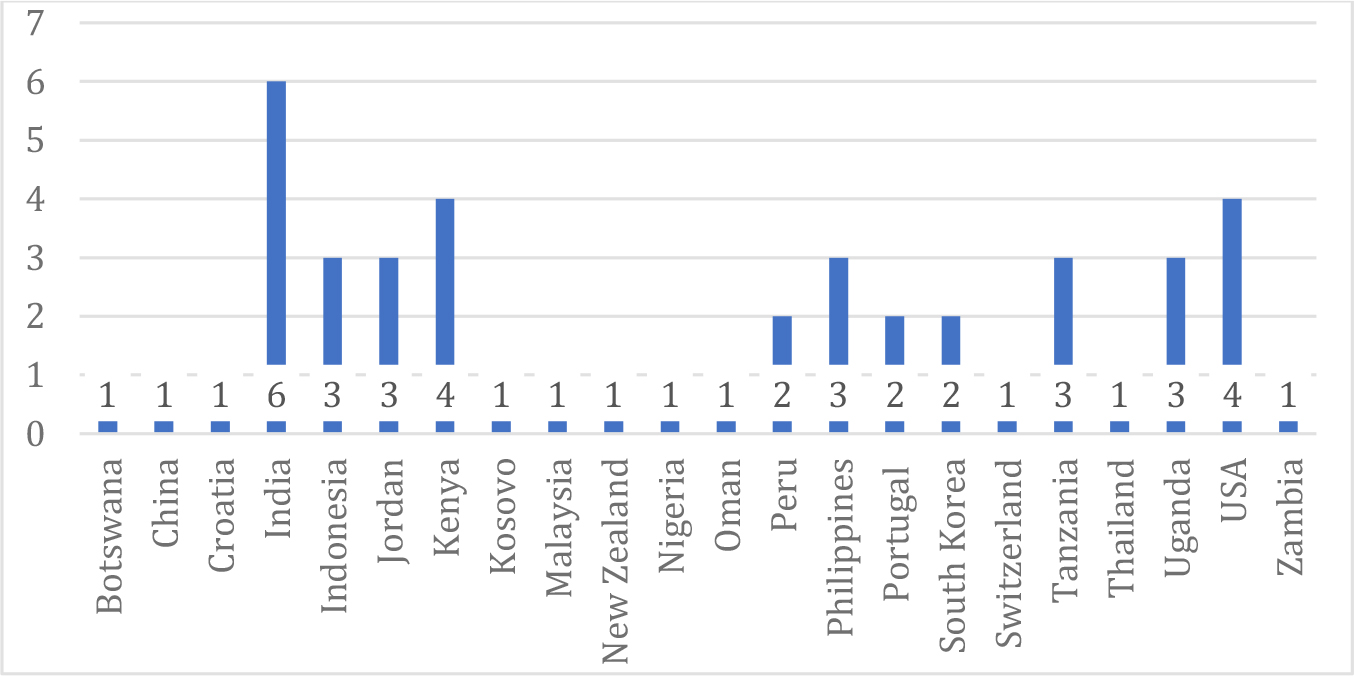
Figure 3.
Country-wise analysis of journal articles
Source: own processing
Recurring dynamic skills for MSMEs' profitability and sustainability
The analysis of the reviewed articles reveals a range of dynamic skills essential for the profitability and long-term sustainability of start-up MSMEs (see Table 3). Entrepreneurial and financial management skills are highlighted as essential for achieving profitability and sustaining long-term success. Furthermore, the studies underscore the significant roles of sales, marketing, and customer service skills, negotiation skills, leadership and problem-solving skills, and digital fluency as key factors for the profitability and long-term sustainability of start-up MSMEs in the digital era and competitive business landscape.
Table 3.
Prominent skills for MSMEs' profitability and sustainability
| Relevant skills | Frequency |
|---|---|
| Sales, marketing and customer service skills | 5 |
| Networking and collaborative relationships | 4 |
| Negotiation skills | 5 |
| Financial management skills | 8 |
| Cross-cultural communication skills | 4 |
| Leadership and problem-solving skills | 5 |
| Digital fluency | 6 |
| Entrepreneurial skills | 9 |
Key operating sectors for start-up MSMEs
Figure 4 presents the results of the analysis conducted to determine the dominant sectors in which MSMEs operate. The manufacturing sector is identified as the most dominant, as reported by 11 of the surveyed articles. This is followed by the retail and wholesale trade sector, with eight articles, and the textiles and apparel sector, with seven articles. Overall, MSMEs operate across various sectors of the economy, extending to agriculture and agribusiness, construction, services, real estate, tourism and travel.
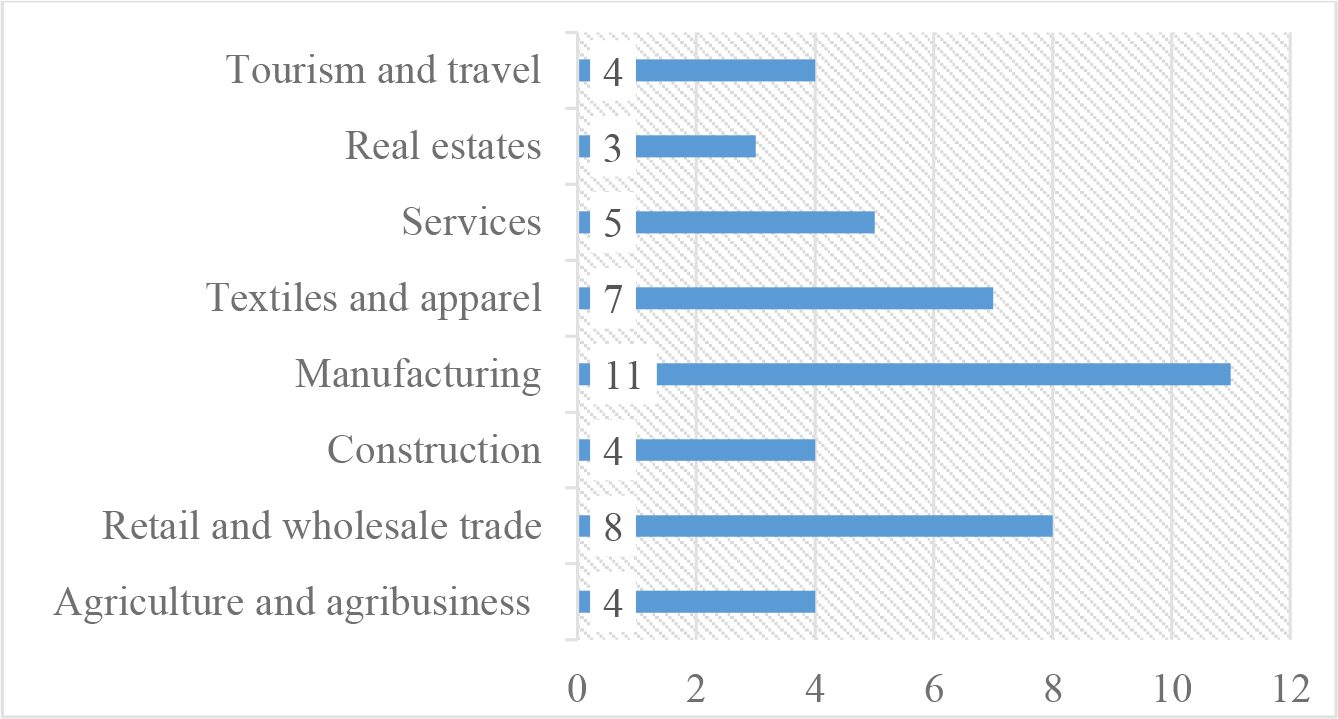
Figure 4.
Sector-wise analysis of operating MSMEs
Source: own processing
Dynamic skills for profitability and long-term sustainability of MSMEs
Based on the literature review, we identified, synthesised, and summarised nine key dynamic skills essential for start-up MSMEs' profitability and long-term sustainability in the digital era and competitive business landscape. Table 5 provides a precise summary of these dynamic skills, which are discussed in detail in this section.
Table 5.
Dynamic skills for profitability and long-term sustainability of MSMEs
| Key skills | Indicators | References |
|---|---|---|
| Sales and marketing skills | Expertise in:
| Adewole (2018); Guedes et al. (2023); Kawira et al (2019) |
| Customer service skills | The capability to:
| Mwaanga (2014); Pholphirul et al. (2022); Sheth et al. (2020) |
| Networking and collaborative relationships | The ability to:
| Kenny and Fahy (2011), Lim (2017), Wang et al. (2014) |
| Negotiation skills | The ability to:
| Fernandez-Malpartida and Dextre-Beteta (2023). |
| Financial management skills | Proficiency in:
| Legaspi (2012); Susan (2020); Talip and Wasiuzzaman (2024) |
| Cross-cultural communication skills | The ability to:
| Abugre (2018); Harvie (2019); Odhiambo (2013) |
| Leadership and problem-solving skills | The ability to:
| Lathabhavan and Kuppusamy (2023); Malewar and Nair (2014); Razzaque et al. (2024) |
| Digital fluency | Proficiency in:
| Lathabhavan and Kuppusamy (2023); Zamora (2010) |
| Entrepreneurial skills | The ability to:
| Al-Mamun et al. (2019); Das (2015); Nehete et al. (2011); Panigrahi (2016) |
Sales and marketing skills
Reviewed studies reveal that in an increasingly competitive business landscape, sales and marketing skills are critical to achieving the profitability and long-term sustainability of business firms, particularly start-up MSMEs (Ehrensperger et al., 2022; Høgevold et al., 2024). Specifically, strong sales skills help in persuading potential customers to purchase products or services and in building and maintaining customer relationships. Effective marketing strategies, on the other hand, help MSMEs build strong brand awareness, understand customer needs, develop persuasive sales pitches, and close deals efficiently. Based on this, it is argued that both sales skills and marketing strategies impact the ability of start-up MSMEs to attract new customers and secure a steady stream of income, which is crucial for growth, profitability, and sustainability (Abu‐ELSamen et al., 2011; Pelham, 2006). Overall, sales and marketing skills enable start-up MSMEs to build a strong customer base, enhance brand reputation, and foster adaptability in a competitive business environment.
Customer service skills
In a crowded market, excellent customer service can differentiate a start-up MSME from its competitors. Customer service skills, assessed in terms of the firm’s ability to effectively handle customer feedback and complaints, build strong relationships with customers, communicate effectively, and provide support, are integral to enhancing the firm’s profitability and sustainability (Pholphirul et al., 2022; Sheth et al., 2020). High-quality customer service ensures that customers are satisfied with their purchases and experiences with the company. Such satisfied customers are more likely to become repeat buyers and recommend the business to others, which, according to Lelo and Israel (2024), is vital for long-term growth and sustainability. Consistently good customer service helps build a strong, positive brand reputation, leading to a competitive advantage and increased market share. Conversely, poor customer service skills can damage a brand’s reputation and lead to lost business (Pholphirul et al., 2022; Sheth et al., 2020). In essence, customer service skills serve as a bedrock for the profitability and long-term sustainability of start-up MSMEs. They help in building a loyal customer base, allowing MSMEs to differentiate themselves from competitors.
Networking and collaborative relationships
Networking and collaborative relationships are essential for gaining a competitive edge, achieving profitability, and ensuring the long-term sustainability of start-up MSMEs. By forming partnerships with other businesses, mentors, or industry experts, start-ups can access valuable knowledge and expertise, helping them make informed decisions and avoid common pitfalls (Archana & Gnanaprakasam, 2016; Eyaa et al., 2010; Palakshappa & Ellen, 2007). It provides opportunities for start-ups to access and share resources such as technology, capital, and human resources, which might otherwise be out of reach, at reduced costs. According to Jeong and Chung (2023) and Ghauri and Elg (2018), sharing resources through collaborative relationships enables MSMEs to achieve economies of scale in areas such as marketing, R&D, and logistics, thereby reducing operational costs and enhancing profitability. Furthermore, partnerships with established firms or networks keep start-ups informed about the latest technological advancements, market trends, and customer preferences, enabling them to quickly adapt to changes in the business environment and secure long-term sustainability. In essence, collaborating and networking open doors to new markets, customer bases, and distribution channels, all of which are crucial for growth, long-term sustainability, and profitability (Israel, 2022; Saleh et al., 2020; Utama et al., 2024).
Negotiation skills
In a competitive business environment, maintaining strong negotiation skills with suppliers, customers, and investors is key to the success and long-term sustainability of business firms (Fernandez-Malpartida & Dextre-Beteta, 2023; Vojvodić et al., 2020). Specifically, effective negotiation with suppliers can lead to better pricing, favourable payment terms, and discounts, directly reducing operational costs, which can translate into higher profit margins. In addition, skilful negotiation with customers can help start-ups secure contracts with advantageous terms, such as higher pricing, recurring orders, or extended service contracts. This contributes to steady revenue streams and improved cash flow, which are vital for the long-term sustainability and growth of start-up MSMEs (Ortigueira-Sánchez & Stein, 2022). Moreover, negotiating terms that allow for sustainable sourcing, production, and distribution can attract environmentally conscious customers and investors. Reviewed literature provides sufficient evidence to argue that negotiation skills are pivotal for MSMEs in navigating the competitive business environment. They influence the profitability and long-term sustainability of start-ups by optimising costs, fostering strategic relationships, and maintaining a steady revenue stream (Fernandez-Malpartida & Dextre-Beteta, 2023; Vojvodić et al., 2020).
Financial management skills
Financial literacy is essential for effectively managing the financial aspects of a business, diversifying income streams, and ensuring that it remains profitable, compliant, and sustainable in the long term (Anshika & Singla, 2022; Susan, 2020). Skills related to budgeting, for instance, enable start-up MSMEs to create accurate budgets and financial forecasts, ensuring that resources are allocated efficiently. This helps avoid over-expenditure and underfunding, which can be detrimental to profitability (Buyondo, 2024). Moreover, the ability to understand and control costs is essential for maintaining proper cash flow, ensuring that start-ups have enough liquidity to meet their short-term obligations, such as paying suppliers, employees, and other operational costs. This is crucial for avoiding financial crises that could jeopardise the long-term sustainability and reputation of the business (Nassuna et al., 2023). In addition, skills in analysing financial data are vital for start-ups to accurately identify the most profitable services and make informed reinvestment decisions, whether through new technologies, marketing, or business diversification. Furthermore, reviewed studies suggest that financial literacy ensures that start-ups comply with tax laws and regulations (Alalawi et al., 2023; Talip & Wasiuzzaman, 2024), thereby helping to avoid legal penalties that could harm profitability and reputation.
Cross-cultural communication skills
Literature provides sufficient evidence of a positive relationship between cross-cultural communication skills, long-term sustainability, and profitability in start-up MSMEs (Charoensukmongkol, 2015; Peng & Zhou, 2021). Based on the reviewed articles, we establish that a culturally sensitive start-up enhances its ability to adapt to and navigate the cultural and communication barriers in different markets, enabling it to thrive over time. Effective cross-cultural communication skills allow start-ups to tailor their products, services, negotiation styles, and marketing strategies to align with diverse cultural markets and preferences (Guedes et al., 2023; Sitaniapessy et al., 2022). This approach can attract a broader customer base, including socially conscious consumers. Moreover, understanding and respecting cultural differences builds a positive brand reputation and fosters strong relationships with international partners, suppliers, and customers. These factors, as opined by Abugre (2018), contribute to increased sales and profitability, leading to the long-term viability of start-ups in diverse global markets. In addition, understanding the cultural differences of international clients, suppliers, or partners during negotiations can result in more favourable deals, cost savings, and higher profit margins, all of which are critical for the profitability and long-term sustainability of start-ups (Charoensukmongkol, 2015; Peng & Zhou, 2021).
Leadership and problem-solving skills
Leadership and problem-solving skills serve as the foundation for steering start-up MSMEs toward profitability and ensuring their long-term sustainability. MSME managers who inspire and encourage a culture of continuous learning, make informed and inclusive decisions, and guide their teams foster a culture of accountability and innovation, essential traits for navigating competitive markets (Razzaque et al., 2024; Subramanian & Suresh, 2024). Such leadership approach creates a positive work environment, which drives employee satisfaction, retention, productivity, and ultimately, profitability and sustainability. Similarly, MSME managers with strong problem-solving skills can quickly identify issues, evaluate alternatives, and implement creative solutions that minimise costs, manage unforeseen risks, and maximise opportunities (Sreen et al., 2024). With effective problem-solving skills, start-ups can identify market inefficiencies and develop innovative products, services, and processes that distinguish them from competitors, thereby driving profitability and sustainability. It ensures that start-ups are adaptable and resilient, enabling them to pivot when necessary to meet changing customer demands or leverage new technologies (Priyaadarshini & Jena, 2024; Razzaque et al., 2024). In essence, leadership and problem-solving skills empower MSMEs to continuously refine their business models and value propositions, ensuring that they remain resilient and competitive.
Digital fluency
Digital fluency is key to enhancing operational efficiency, customer engagement, innovation, cost management, and expanding market access for start-up MSMEs (Albannai et al., 2024; Rutainurwa et al., 2024). Proficiency in digital marketing, for example, enables MSMEs to promote their products or services and collaborate with both internal and international partners. This allows start-up MSMEs to engage with customers and suppliers through various platforms, such as social media and email marketing, reaching a broader market and accessing resources more efficiently and cost-effectively than through traditional marketing and sourcing methods. Digital fluency enables MSMEs to sell products and services globally through online platforms, expanding their market reach and boosting revenue potential, which contributes to their growth and long-term sustainability (Lathabhavan & Kuppusamy, 2023; Singh, 2019). The resulting cost savings and increased efficiency also allow businesses to allocate resources more effectively. Furthermore, digital fluency opens up opportunities for start-up MSMEs to explore innovative business models, such as e-commerce, subscription services, or digital products (Faugoo & Onaga, 2022). These models can increase revenue streams, help MSMEs meet emerging customer needs, and maintain competitiveness and sustainability in markets.
Entrepreneurial skills
Empirical studies highlight the crucial role of entrepreneurial skills in building resilient businesses in competitive environments characterised by rapidly changing technology and market demands (Franco et al., 2021; Sari & Sari, 2022). In essence, the innovative posture inherent in entrepreneurial ventures enables start-ups to develop novel products, services, and business models. According to Taleb et al. (2023) and Kyal et al. (2022), this innovative approach allows MSMEs to offer unique value propositions, attract customers, and create new revenue streams, thereby boosting profitability. Besides, MSMEs that are adaptable and proactive in volatile market conditions are better positioned to pivot their strategies, embrace new technologies, and respond to market shifts. Such adaptability is key to remaining relevant and competitive over the long term (Biswas, 2024; Kryeziu et al., 2024). Moreover, entrepreneurs who are skilled at assessing, managing, and mitigating risks, as well as making informed decisions, are more likely to build resilience in competitive and volatile business environments. Drawing on the reviewed literature, it can be argued that entrepreneurial skills serve as a foundation that empowers start-up MSMEs to navigate the complexities of the business environment, capitalise on opportunities, avoid costly mistakes, and ensure long-term sustainability in a competitive and volatile market.
Conclusions and implications
The purpose of this study was to systematically review and synthesise existing literature to identify the dynamic skills influencing both the profitability and long-term sustainability of start-up MSMEs. The results of this review underscore nine critical skills essential for driving the profitability, growth, and resilience of start-up MSMEs in the digital era and an increasingly competitive business landscape. These include sales and marketing skills, cross-cultural communication skills, leadership and problem-solving skills, negotiation skills, and financial management skills. Other essential skills are customer service skills, networking and collaborative relationship-building, digital fluency, and entrepreneurial skills. The findings suggest that start-ups that effectively develop and apply these skills can better navigate market uncertainties, optimise resources, and seize emerging opportunities, leading to improved financial performance and long-term sustainability. These skills enable start-ups to adapt to global markets, leverage technology, retain and satisfy customers, enhance the efficient use and allocation of resources, and foster strategic decision-making, all of which are critical traits for thriving in competitive and volatile markets. Therefore, these skills form the foundation upon which start-up MSMEs can build sustainable and profitable ventures, ensuring their continued success in an ever-evolving global marketplace. As digitalisation continues to reshape industries, the ongoing development and application of diverse dynamic skills will be pivotal in determining the future trajectory of start-up MSMEs.
Based on the review results, this study offers several managerial implications to guide entrepreneurs, policymakers, and support organisations in fostering the growth and success of start-up MSMEs. For start-up MSMEs, the study emphasises the importance of investing in digital tools and platforms that enhance market research, customer engagement, and networking. Entrepreneurs are encouraged to adopt technologies such as customer relationship management (CRM) and supplier relationship management (SRM) systems, electronic data interchange (EDI), and enterprise resource planning (ERP) solutions. In addition, entrepreneurs should actively engage in industry networks, business associations, and digital platforms to connect with potential partners, mentors, and investors. To support this, policymakers are advised to promote public-private partnerships that facilitate MSMEs' integration into larger supply chains, with business incubators and accelerators playing a pivotal role in fostering these connections. For business support organisations, the study recommends developing targeted training programs that equip aspiring entrepreneurs with essential skills such as leadership, problem-solving, digital fluency, financial literacy, negotiation, cross-cultural communication, and entrepreneurship. These skills are crucial for creating flexible business models capable of quickly responding to market changes or disruptions. Lastly, policymakers can further support start-ups by offering subsidies or grants for skills development, enhancing start-ups' ability to maintain profitability and long-term operational resilience.
This study primarily focuses on reviewing and synthesising existing literature from three research databases: Emerald, Scopus, Google Scholar, and Web of Science, specifically examining research journal articles published between 2010 and 2023. Due to selection bias inherent in this publication period, the review process did not fully capture relevant studies from other databases or the dynamic skills influencing the profitability and long-term sustainability of start-up MSMEs before 2010 or after 2023. Therefore, future reviews could extend to other scholarly databases such as ScienceDirect, SpringerLink, and EBSCOhost or synthesise the evolution of these dynamic skills beyond 2023.
Moreover, the findings of the reviewed articles are drawn from various geographical contexts and industries, which limits the generalizability and applicability of these findings to specific sectors or regions. As such, further empirical studies are needed to explore the relevance and effectiveness of dynamic skills for start-ups’ profitability and long-term sustainability within specific sector and geographic contexts. In addition, the reviewed articles primarily focused on the firm’s dynamic skills, with less emphasis on external factors such as economic conditions, regulatory changes, market dynamics, or technological disruptions, which can also significantly impact the profitability and sustainability of start-up MSMEs. Given this, future research could expand its focus to examine how these external factors interact with a firm's dynamic skills to influence the financial success and sustainability of start-up MSMEs. These research directions could help build a more comprehensive understanding of the internal and external dynamics that contribute to the profitability and sustainability of start-up MSMEs in the competitive business environment and digital era.