Have a personal or library account? Click to login
High maternal body condition score in beef cattle: gut microbiota dysbiosis, immune dysregulation and offspring health implications Cover

High maternal body condition score in beef cattle: gut microbiota dysbiosis, immune dysregulation and offspring health implications

Open Access
|Dec 2025

Figures & Tables

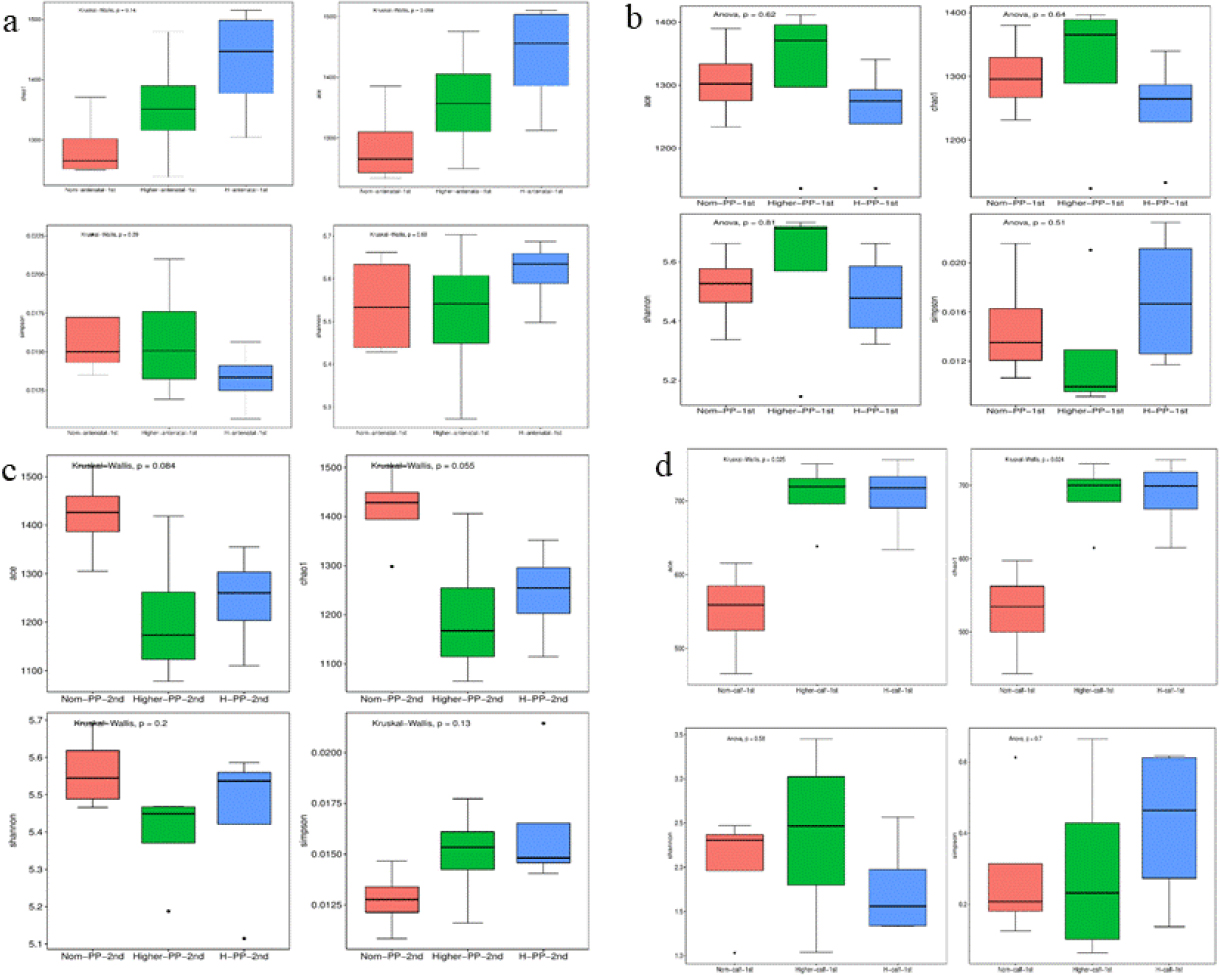
Fig 1.

Changes in gut microbiota α diversity in faecal samples of Chinese Hereford beef dams and calves. a) α diversity (ACE, Chao1, Shannon and Simpson indices) of faecal bacterial communities in preparturient dams (-7d) of different body conditions; b) α diversity of faecal bacterial communities in postparturient dams (+7d) of different body conditions; c) α diversity of faecal bacterial communities in postparturient dams (+14d) of different body conditions; d) α diversity of faecal bacterial communities in calves (+7d). Norm antenatal 1st – samples from dams at –7d of normal body condition; Higher antenatal 1st – samples from dams at –7d of higher body condition; H antenatal 1st – samples from dams at –7d of high body condition; Norm PP 1st – samples from dams at +7d of normal body condition; Higher PP 1st – samples from dams at +7d of higher body condition; H PP 1st – samples from dams at +7d of high body condition; Norm PP 2nd – samples from dams at +14d of normal body condition; Higher PP 2nd – samples from dams at +14d of higher body condition; H PP 2nd – samples from dams at +14d of high body condition; Norm calf 1st – samples from calves at +7d born to dams of normal body condition; Higher calf 1st – samples from calves at +7d born to dams of higher body condition; H calf 1st – samples from calves at +7d born to dams of high body condition. Results are presented as mean ± standard deviation. Different letters indicate statistical significance at P-value < 0.05
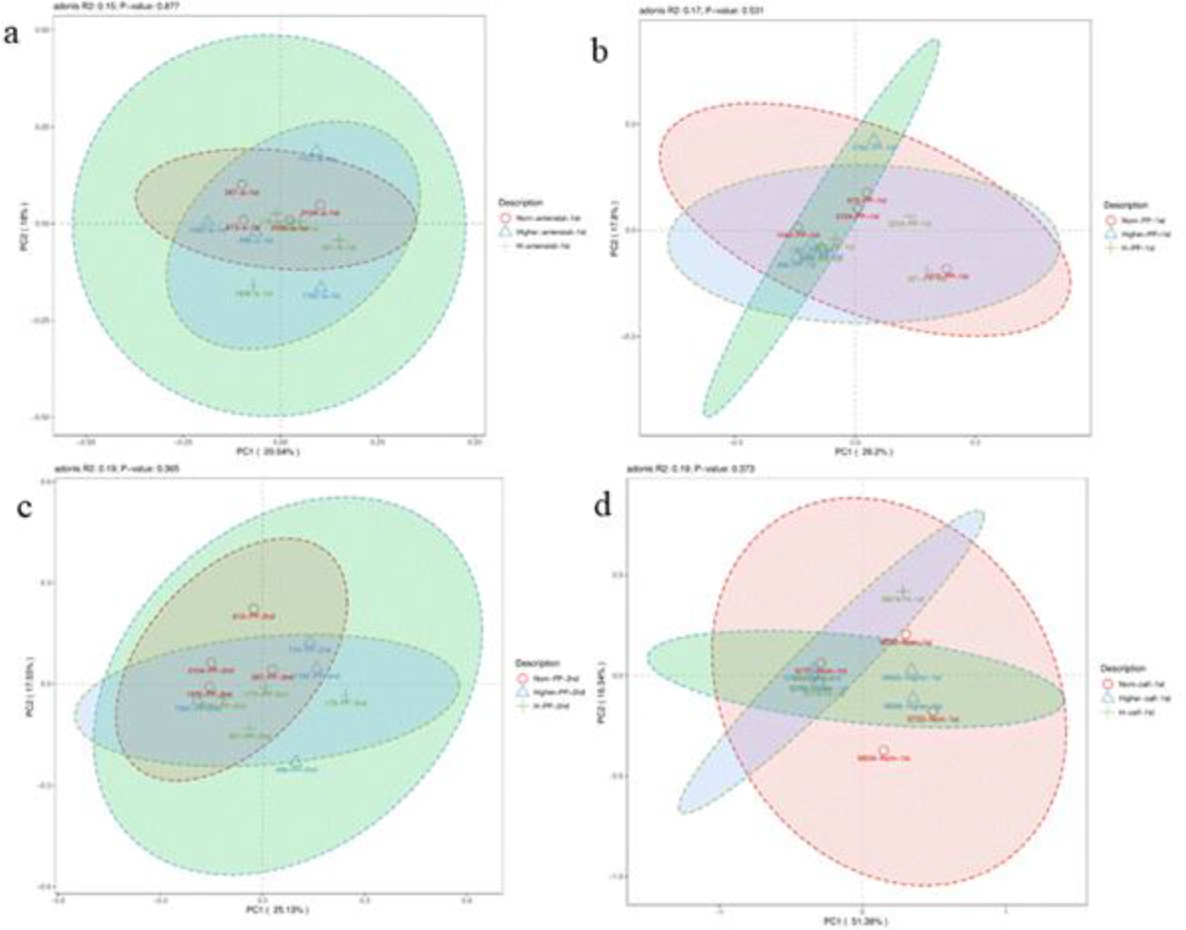

Fig 2.

Principal coordinate analysis (PCoA) of gut microbiota in faecal samples of Chinese Hereford beef dams and calves. a) PCoA of faecal bacterial communities in preparturient dams (-7d) of different body conditions; b) PCoA of faecal bacterial communities in postparturient dams (+7d) of different body conditions; c) PCoA of faecal bacterial communities in postparturient dams (+14d) of different body conditions; d) PCoA of faecal bacterial communities in calves (+7d). Norm antenatal 1st – samples from dams at –7d of normal body condition; Higher antenatal 1st – samples from dams at –7d of higher body condition; H antenatal 1st – samples from dams at –7d of high body condition; Norm PP 1st – samples from dams at +7d of normal body condition; Higher PP 1st – samples from dams at +7d of higher body condition; H PP 1st – samples from dams at +7d of high body condition; Norm PP 2nd – samples from dams at +14d of normal body condition; Higher PP 2nd – samples from dams at +14d of higher body condition; H PP 2nd – samples from dams at +14d of high body condition; Norm calf 1st – samples from calves at +7d born to dams of normal body condition; Higher calf 1st – samples from calves at +7d born to dams of higher body condition; H calf 1st – samples from calves at +7d born to dams of high body condition
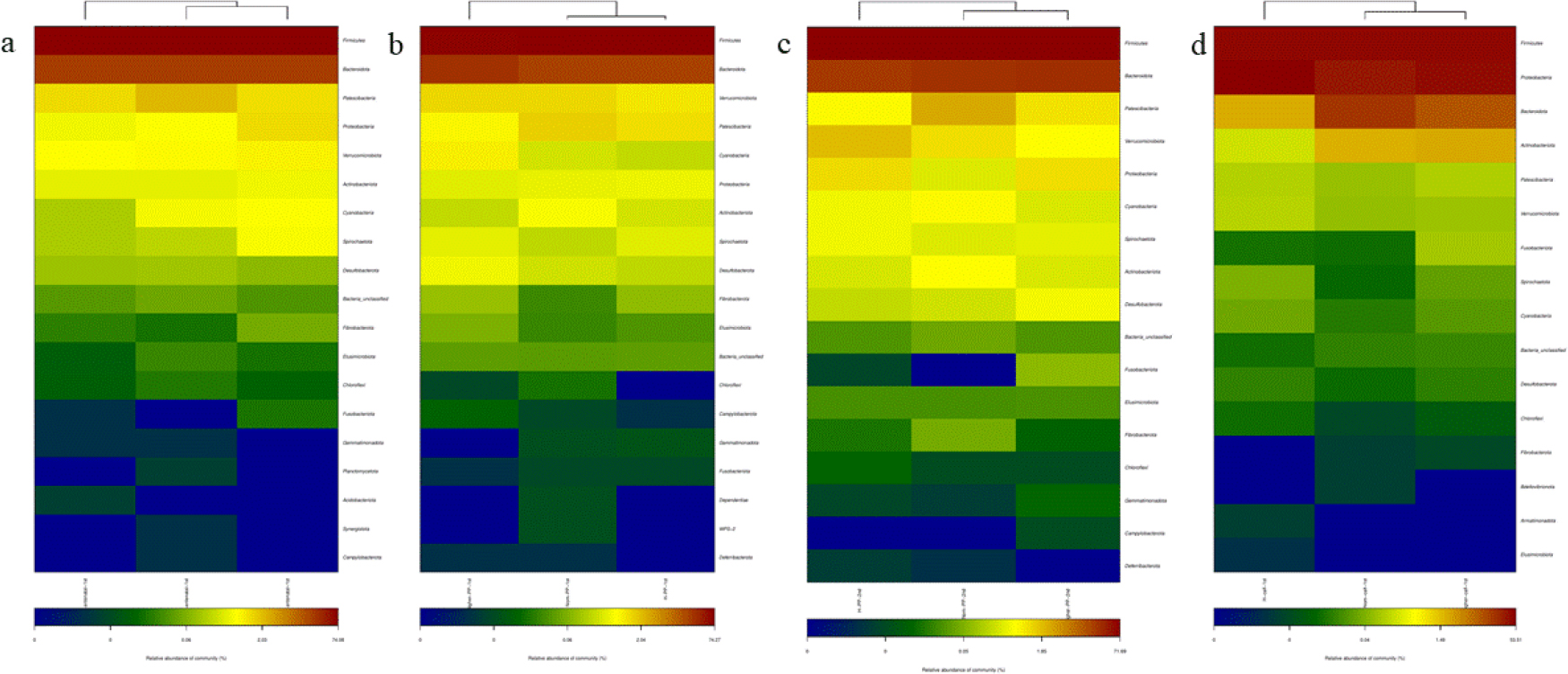
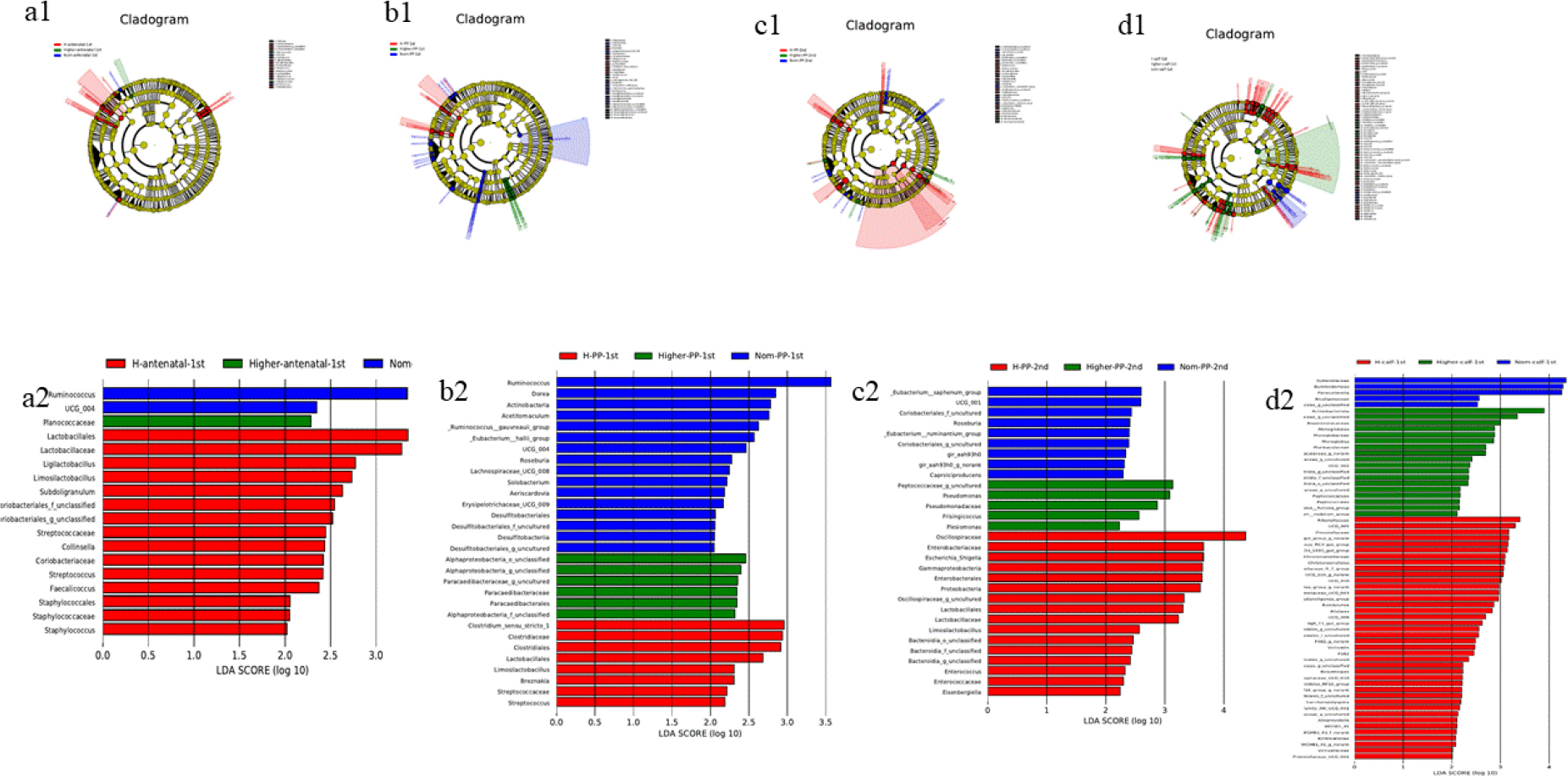
Fig. 3.

Heatmap of gut microbiota relative abundance at the phylum level in faecal samples of Chinese Hereford beef dams and calves. The colour scale represents the relative abundance of operational taxonomic units. a) Heatmap of faecal bacterial community in preparturient dams (-7d) of different body conditions; b) Heatmap of faecal bacterial community in postparturient dams (+7d) of different body conditions; c) Heatmap of faecal bacterial community in postparturient dams (+14d) of different body conditions; d) Heatmap of faecal bacterial community in calves (+7d). Norm antenatal 1st – samples from dams at –7d of normal body condition; Higher antenatal 1st – samples from dams at –7d of higher body condition; H antenatal 1st – samples from dams at –7d of high body condition; Norm PP 1st – samples from dams at +7d of normal body condition; Higher PP 1st – samples from dams at +7d of higher body condition; H PP 1st – samples from dams at +7d of high body condition; Norm PP 2nd – samples from dams at +14d of normal body condition; Higher PP 2nd – samples from dams at +14d of higher body condition; H PP 2nd – samples from dams at +14d of high body condition; Norm calf 1st – samples from calves at +7d born to dams of normal body condition; Higher calf 1st – samples from calves at +7d born to dams of higher body condition; H calf 1st – samples from calves at +7d born to dams of high body condition
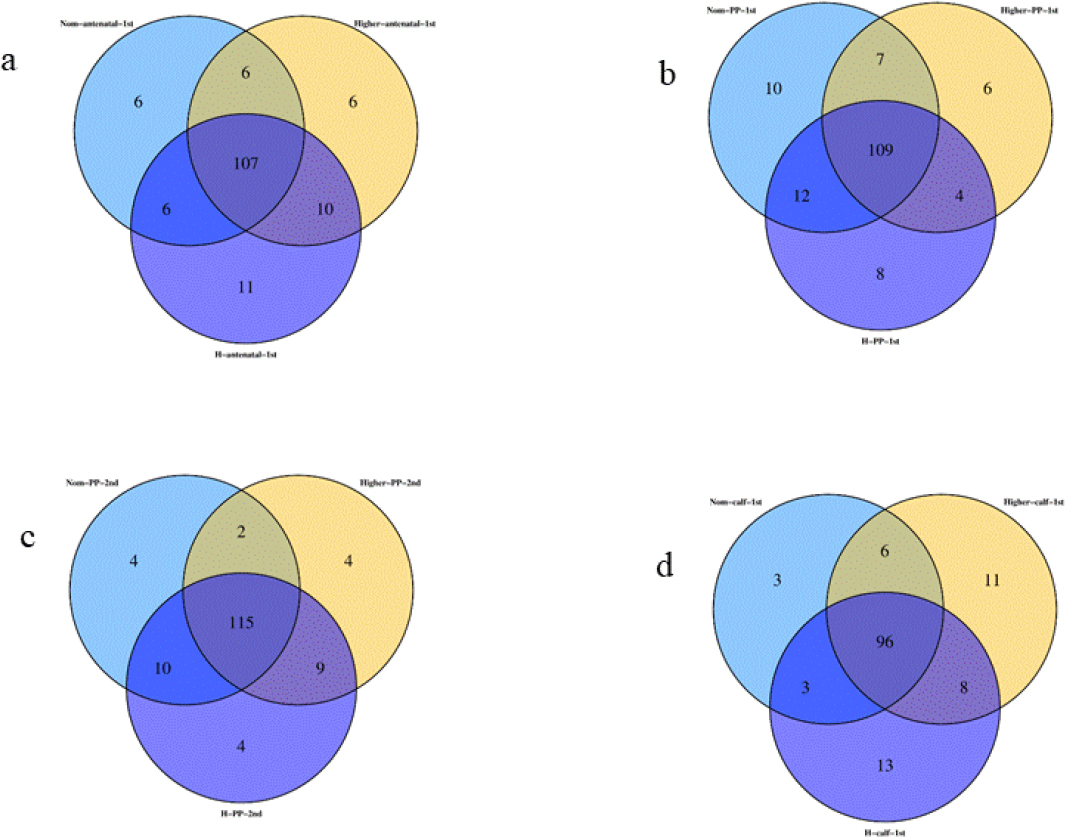
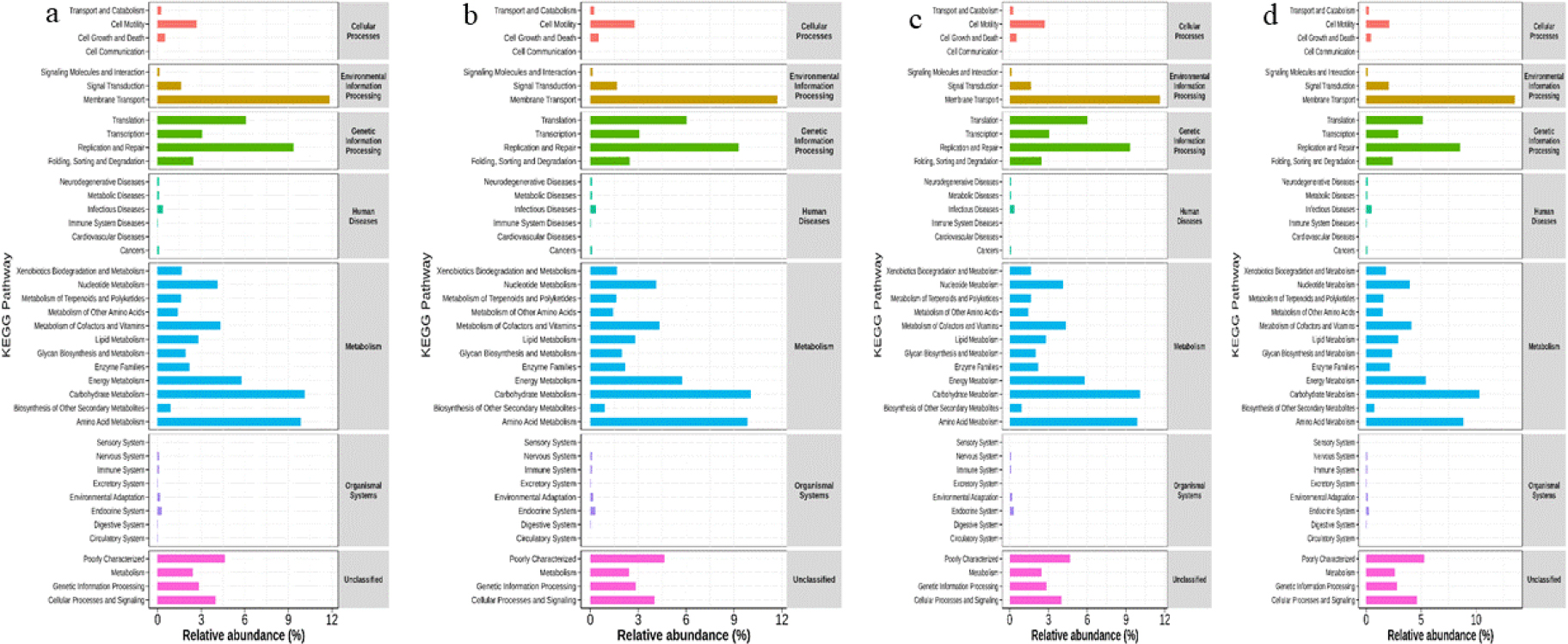
Fig. 4.

Linear discriminant analysis (LDA) effect size of gut microbiota in faecal samples of Chinese Hereford beef dams and calves. Colours indicate microbial groups significantly enriched in the corresponding group and with a significant effect on the different groups. The higher the LDA score, the greater the influence of species abundance on the different effect. a1) Taxonomic tree of faecal bacterial communities in preparturient dams (-7d) of different body conditions; b1) Taxonomic tree of faecal bacterial communities in postparturient dams (+7d) of different body conditions; c1) Taxonomic tree of faecal bacterial communities in postparturient dams (+14d) of different body conditions; d1) Taxonomic tree of faecal bacterial communities in calves (+7d); a2) LDA discrimination results for preparturient dams (-7d) of different body conditions; b2) LDA discrimination results for postparturient dams (+7d) of different body conditions; c2) LDA discrimination results for postparturient dams (+14d) of different body conditions; d2) LDA discrimination results for calves (+7d). Norm antenatal 1st – samples from dams at –7d of normal body condition; Higher antenatal 1st – samples from dams at –7d of higher body condition; H antenatal 1st – samples from dams at –7d of high body condition; Norm PP 1st – samples from dams at +7d of normal body condition; Higher PP 1st – samples from dams at +7d of higher body condition; H PP 1st – samples from dams at +7d of high body condition; Norm PP 2nd – samples from dams at +14d of normal body condition; Higher PP 2nd – samples from dams at +14d of higher body condition; H PP 2nd – samples from dams at +14d of high body condition; Norm calf 1st – samples from calves at +7d born to dams of normal body condition; Higher calf 1st – samples from calves at +7d born to dams of higher body condition; H calf 1st – samples from calves at +7d born to dams of high body condition

Fig. 5.

Venn diagrams of shared and unique operational taxonomic units (OTUs) in gut microbiota in faecal samples of Chinese Hereford beef dams and calves. a) Number of shared and unique OTUs in preparturient dams (-7d) of different body conditions; b) Number of shared and unique OTUs in postparturient dams (+7d) of different body conditions; c) Number of shared and unique OTUs in postparturient dams (+14d) of different body conditions; d) Number of shared and unique OTUs in calves (+7d). Norm antenatal 1st – samples from dams at –7d of normal body condition; Higher antenatal 1st – samples from dams at –7d of higher body condition; H antenatal 1st – samples from dams at –7d of high body condition; Norm PP 1st – samples from dams at +7d of normal body condition; Higher PP 1st – samples from dams at +7d of higher body condition; H PP 1st – samples from dams at +7d of high body condition; Norm PP 2nd – samples from dams at +14d of normal body condition; Higher PP 2nd – samples from dams at +14d of higher body condition; H PP 2nd – samples from dams at+14d of high body condition; Norm calf 1st – samples from calves at +7d born to dams of normal body condition; Higher calf 1st – samples from calves at +7d born to dams of higher body condition; H calf 1st – samples from calves at +7d born to dams of high body condition

Fig. 6.

Single-cell transcriptomics analysis and multimodal profiling analysis of functional differences in gut microbiota in faecal samples of Chinese Hereford beef dams and calves based on the Kyoto Encyclopedia of Genes and Genomes (KEGG) database. a) KEGG pathway enrichment in preparturient dams (–7d) of different body conditions; b) KEGG pathway enrichment in postparturient dams (+7d) of different body conditions; c) KEGG pathway enrichment in postparturient dams (+14d) of different body conditions; d) KEGG pathway enrichment in calves (+7d)
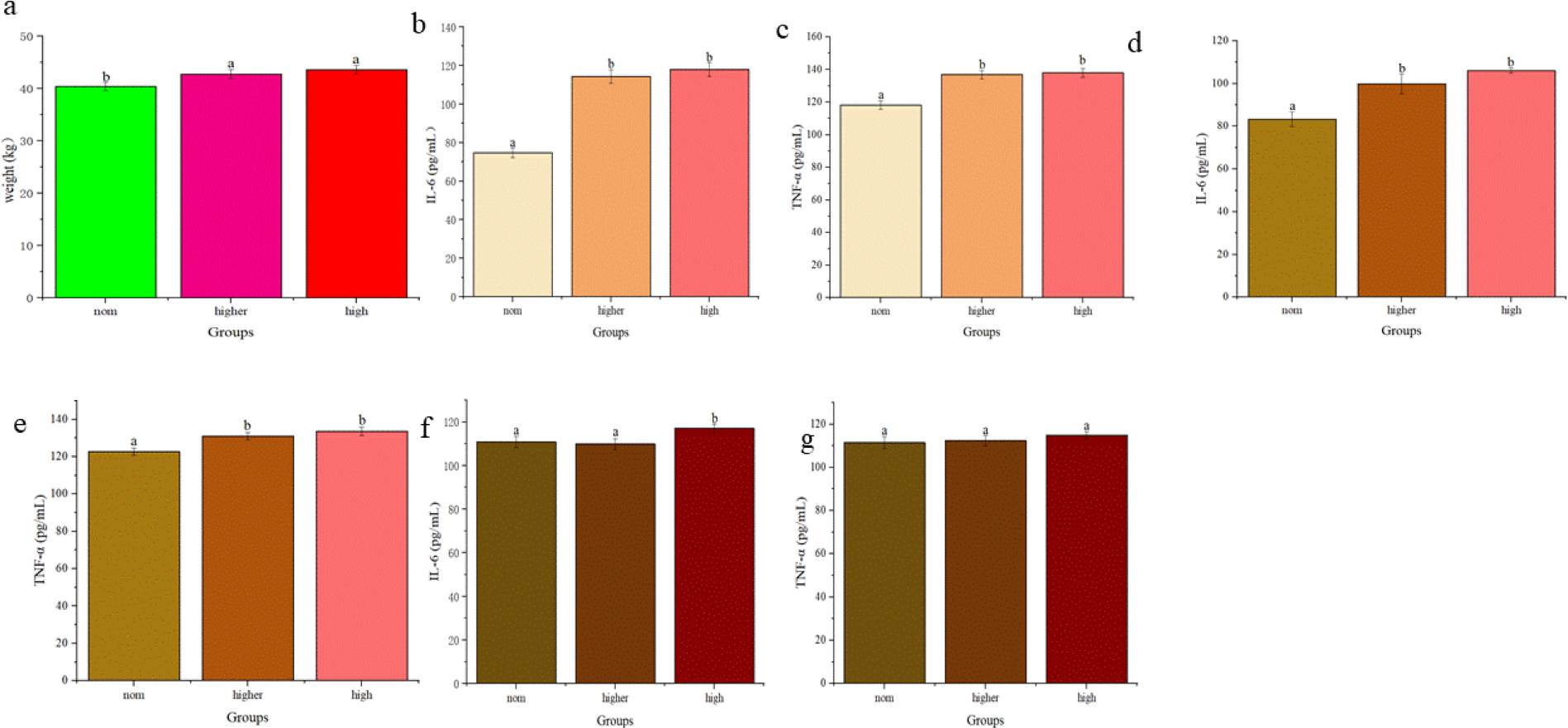

Fig.7.

Impact of different dam body conditions on calf birth weight and dam and calf serum levels of interleukin 6 (IL-6) and tumour necrosis factor α (TNF-α) immune factor in blood samples of Chinese Hereford beef stock. a) Birth weight of calves from dams of different body conditions; b) Serum IL-6 level in preparturient dams (–7d) of different body conditions; c) Serum TNF-α level in preparturient dams (–7d) of different body conditions; d) Serum IL-6 level in postparturient dams (+7d) of different body conditions; e) Serum TNF-α level in postparturient dams (+7d) of different body conditions; f) Serum IL-6 level in calves (+7d); g) Serum TNF-α level in calves (+7d). Different letters indicate statistical significance at P-value < 0.05
Language: English
Submitted on: Apr 18, 2025
Accepted on: Dec 2, 2025
Published on: Dec 10, 2025
Published by: National Veterinary Research Institute in Pulawy
In partnership with: Paradigm Publishing Services
Publication frequency: 4 issues per year

© 2025 Liang Chi, Yukun Yue, Rui Cao, Xinxin Zhang, Sishuang Wang, Jingxian Li, Yuhan Bing, Ruiguo Wang, Huanqi Liu, published by National Veterinary Research Institute in Pulawy
This work is licensed under the Creative Commons Attribution 4.0 License.

AHEAD OF PRINT