
Introduction
Patagonian maras, Dolichotis patagonum (Zimmermann, 1780) are relatively large rodents of the Caviidae family. They are endemic to South America, mainly Argentina, and distributed from 28°S to 50°S (3). They are kept as exotic mammals in zoological parks and gardens around the world, which helps in their conservation. This is desirable because Patagonian maras are considered to be a near-threatened species (17). There are diverse health hazards for these animals (19), and parasitoses are among the most common of them.
Various genera and species of parasites have been found in free or captive Patagonian maras to date. Among them are such nematodes as Graphidioides affinis (Megnin, 1895), Trichostrongylus retortaeformis (Zeder, 1800), Strongyloides sp., Wellcomia dolichotis and Trichuris spp. (2, 8, 14, 22, 23); the protozoa Toxoplasma gondii, Besnoitia sp. and Giardia spp. (7, 16, 23); and the arachnids Otodectes cynotis and Sarcoptes scabiei (4, 12). The aim of this study was to perform morphometric, molecular and phylogenetic characterisation of G. affinis, specimens of which were recently found in Patagonian maras kept at the Sofia Zoo in Bulgaria.
Material and Methods
Sample origin and area of the study
Parasitological monitoring of 18 Patagonian maras kept at the Sofia Zoo was performed with the use of coprological methods in March 2023. The animals shared an enclosure with one kangaroo for more than 10 years. The enclosure consisted of an outdoor part (the larger area, covered by soil and vegetation) and an indoor part (covered by concrete).
Coprological study
Pooled faecal samples (1–2 g from each faecal pile) collected from the ground of the enclosure were processed using diagnostic techniques (9). Those were a common flotation technique with the use of sodium chloride as a flotation solution; a sedimentation technique to detect heavy eggs of flukes, including Fasciola hepatica; and the Baermann technique to detect lungworm larvae. After the samples were analysed, the animals were dewormed once orally with a 10% suspension of albendazole (Vermitan; Ceva Santé Animale, Libourne, France) at a dose of 8 mg/kg body weight. The medicine was mixed with a small amount of food after a 16-h fast. Dead adult nematode parasites were detected in the faeces of dewormed individuals. The specimens were collected in saline, washed in it for 30–60 min and then stored in 70% ethanol for further morphological and molecular analyses.
Morphological and morphometric study
Seven males and seven females of the species were cleared in lactophenol. Each of the cleared worms was placed in a drop of lactophenol between a microscope slide and coverslip and subjected to morphometric processing. The morphological structures of the helminths were measured after taking their microphotographs with a Motic Images Plus 3.0 camera (Motic, Xiamen, China) connected to an Amplival microscope (Carl Zeiss AG, Oberkochen, Germany), and subsequently analysed with the use of the camera’s associated software. The morphometric data were processed using Excel (Microsoft, Redmond, WA, USA). The species determination was based on the morphometry of such features as the spicules, the rays of copulatory bursa, the ovijector and the vulva, as recommended previously (20). Some specimens, stored in 70% ethanol or embedded in glycerin-gelatin as permanent microscopic preparations, were deposited in the Institute of Experimental Morphology, Pathology and Anthropology with Museum comprising part of the Bulgarian Academy of Sciences in Sofia, Bulgaria.
DNA extraction and PCR amplification
Genomic DNA was extracted individually from four ethanol-preserved nematode specimens with the use of a NucleoSpin Tissue DNA extraction kit (Macherey-Nagel, Düren, Germany) according to the manufacturer’s protocol. The complete sequence of the internal transcribed spacer 2 (ITS2) and a partial region of the large subunit ribosomal DNA (LSU) were amplified by PCR using the following set of primers: forward-ITS2F (5′-ACG TCT GGT TCA GGG TTG TT-3′) and reverse-BD3R (5′-TAT GCT TAA GTT CAG CGG GT-3′) (15). Additionally, a set of primers was designed for the purpose of this study to amplify a partial region of the small subunit ribosomal rDNA (SSU): forward-SSU_07 (5′-AAA GAT TAA GCC ATG CAT G-3′) and reverse-N1070R (5′-TTG CAA CCA TAC TAC CCC AGG AAC CGA A-3′). The PCR was performed in a T100 thermal cycler (Bio-Rad, Hercules, CA, USA) in a volume of 50 μL. Each 50 μL PCR reaction mix contained 20 μL of Molecular Biology Reagent Water (Sigma-Aldrich, St. Louis, MO, USA), 25 μL of AccuStart II PCR ToughMix (×2 concentration) (Quantabio, Beverly, MA, USA), 1 μL of GelTrack Loading Dye (×50 concentration) (Quantabio), 1 μL of forward primer (20 mM), 1 μL of reverse primer (20 mM) and 2 μL of template DNA. The conditions for PCR were as follows: 94°C for 2 min to denature the DNA; 35 cycles at 94°C for 30 s, 62°C for 45 s (for ITS2) or 55°C for 90 s (for SSU), and 72°C for 30 s (for ITS2) or for 2 min (for SSU); and a final extension at 72°C for 5 min (for ITS2) or 10 min (for SSU) to ensure complete amplification. The PCR products were purified with the use of the NucleoSpin Gel and PCR Clean-up kit (Macherey-Nagel), eluted with 30 μL of Molecular Biology Reagent Water (Sigma-Aldrich) and sequenced in both directions by Genomed S.A. (Warsaw, Poland) using the primers used for amplification (5 mM). The sequences were then assembled into contigs using CodonCode Aligner version 8.0 (CodonCode Corporation, Centerville, MA, USA). Obtained nucleotide sequences were compared to the NCBI database of sequences using the basic local alignment search tool (BLAST) (1).
Phylogenetic analyses
Phylogenetic analysis was performed based on partial nucleotide sequences of the SSU and ITS2 genes using the newly generated sequences and matching sequences available in GenBank (Tables 1 and 2). Forward and reverse sequences were assembled using CodonCode Aligner version 8.0 software. Contiguous sequences were submitted to GenBank, those of the SSU gaining accession nos OR611714.1 and OR611716.1 and the ITS2 sequence being logged as OR353426.1. Both sets of sequences were aligned using AlignX implemented in Vector NTI Advance 11 (Invitrogen/ Life Technologies, Carlsbad, CA, USA). The alignment was trimmed to the length of the shortest sequence. Phylogenetic trees were constructed using Bayesian inference as implemented in MrBayes version 3.2.0 software (18). The general time-reversible model with estimates of invariant sites and gamma-distributed among-site variation for SSU and gamma distributed among-site variation for ITS2 was chosen as the best-fitting nucleotide substitution model for the dataset. Model selection was made with JModelTest version 2.1.4 software (5, 11). In the SSU analysis the sequence of Caenorhabditis elegans (GenBank accession no. AY268117.1) was used as the outgroup. The Bayesian inference analysis was performed as follows: a Monte Carlo Markov chain was run for 2,000,000 generations, log-likelihood scores were plotted and the final 75% of trees were used to produce the consensus tree.
Table 1.
List of taxa included in the molecular analysis of Graphidioides affinis using sequence data of the SSU rDNA
| GenBank accession no. | Species | Host | Location |
|---|---|---|---|
| AY268117.1 | Caenorhabditis elegans | Not applicable | USA |
| AJ920341.1 | Chabertia ovina | Ovis aries | Canada |
| AJ920350.1 | Trichostrongylus colubriformis | Ovis aries | Canada |
| AJ920359.1 | Tetrabothriostrongylus mackerrasae | Antechinus stuartii | Canada |
| EU086374.1 | Haemonchus contortus | Giraffa camelopardalis | USA/Lion Country Safari/region of origin: Africa |
| L04152.1 | H. similis | Not provided | USA |
| OP288108.1 | Globocephalus urosubulatus | Sus scrofa | Brazil |
| AY295811.1 | Necator americanus | Homo sapiens | Guatemala |
| DQ094176.1 | Strongylus equinus | Not provided | Great Britan |
| AJ920342.1 | Cylicocyclus insignis | Equus caballus | Canada |
| LC415112.1 | Oesophagostomum muntiacum | Muntiacus reevesi | Japan |
| AJ920340.1 | Cyclodontostomum purvisi | Rattus sordidus | Canada |
| OP288110.1 | Stephanurus dentatus | Sus scrofa | Brazil |
| MN218457.1 | Uncinaria stenocephala | Canis latrans | Canada |
| AJ920351.1 | Ostertagia leptospicularis | Bos taurus | Canada |
| AJ920352.1 | Ostertagia ostertagi | Bos taurus | Canada |
| AY295820.1 | Troglostrongylus wilsoni | Lynx rufus | USA |
| KC771250.1 | Dictyocaulus viviparus bisontis | Bison bonasus | Poland |
| KM374671.1 | Dictyocaulus cervi | Cervus elaphus | Poland |
| MH756629.1 | Dictyocaulus skrjabini | Cervus elaphus | Poland |
| MH688454.1 | Lamanema chavezi | Lama lama | Germany/region of origin: South America |
| JX877671.1 | Travassostrongylus orloffi | Didelphis marsupialis | Mexico |
| JX877677.1 | Travassostrongylus callis | Didelphis marsupialis | Panama |
| AJ920355.1 | Heligmosomoides polygyrus | Mus musculus | Canada |
| JX877678.1 | Carolinensis perezponcedeleoni | Nyctomys sumichrasti | USA |
| JX877672.1 | Vexillata convoluta | Cratogeomys merriami | Mexico |
| AJ920360.1 | Nematodirus battus | Ovis aries | Canada |
| OR611714.1 | Graphidioides affinis | Dolichotis patagonum | Bulgaria/Sofia Zoo/region of origin: South America |
| OR611716.1 | Graphidioides affinis | Dolichotis patagonum | Bulgaria/Sofia Zoo/region of origin: south America |
Table 2.
List of taxa included in the molecular analysis of Graphidioides affinis using sequence data of ITS2 rDNA
| GenBank accession no. | Species | Host | Location |
|---|---|---|---|
| KF765464.1 | Heligmosomoides polygyrus | Apodemus sylvaticus | Norway |
| MH688454.1 | Lamanema chavezi | Lama lama | Germany/region of origin: South America |
| Y10789.1 | Chabertia ovina | Ovis aries | Australia |
| LC415112.1 | Oesophagostomum muntiacum | Muntiacus reevesi | Japan |
| OQ773550.1 | Uncinaria stenocephala | Ursus arctos | Turkey |
| OR353426.1 | Graphidioides affinis | Dolichotis patagonum | Bulgaria/Sofia Zoo/region of origin: South America |
| AF194138.1 | Nematodirus battus | Not provided | UK |
| KX358861.1 | Cooperia oncophora | Bison bonasus caucasicus | Sweden/Avesta Visentpark |
| KX358862.1 | Ostertagia ostertagi | Bison bonasus caucasicus | Sweden/Avesta Visentpark |
| X86025.1 | O. leptospicularis | Bos taurus | |
| KX358860.1 | Haemonchus contortus | Bison bonasus caucasicus | Sweden/Avesta Visentpark |
| AJ577460.1 | Spiculopteragia boehmi | Not provided | France |
Results
Coprological findings
Examination of the fresh faeces of D. patagonum by the direct flotation technique revealed large nematode eggs. They were oval, symmetrical and double-shelled, containing numerous small, hard-to-distinguish blastomeres which were 127–140 μm long and 68–75 μm wide (Fig. 1). Neither eggs nor larvae were found with the sedimentation or Baermann techniques.
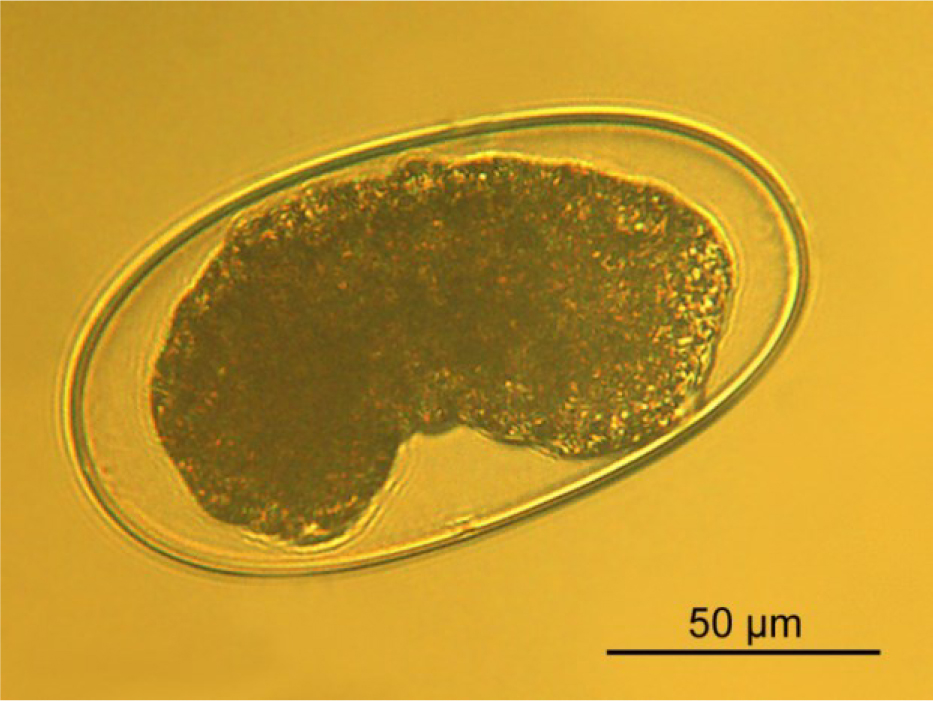
Fig. 1.
An egg of Graphidioides affinis found in the faeces of Dolichotis patagonum from the Sofia Zoo, Bulgaria
Additionally, 20 small, thin, red nematodes, which were dead, were found in the faeces of the animals on the second and third day after deworming.
Morphometric characterisation
Spindle-shaped nematodes were observed, with a cylindrical anterior end and barely perceptible papillae around the oral opening (Fig. 2a). The nematodes’ bodies were covered with transverse and longitudinal cuticular striations (Fig. 2b). The oesophagi were seen to be cylindrical, with a bulbous dilated distal part (Fig. 2c). Male specimens. Male G. affinis nematodes had bodies 1–2 cm long, 130–155 μm wide at the end of the oesophagus, and maximally 250–340 μm wide. The length of their oesophagi was 505–558 μm, and the maximum width of them was 82–95 μm. The copulatory bursae were well developed and cup-shaped, with one dorsal lobe and two symmetrical left and right lobes (Fig. 3a). A pair of weakly pronounced pre-bursal papillae was present (Fig. 3b). The anteroventral rays of the bursae were short, thin and directed forward, and the posteroventral rays were long, massive and directed backwards (Fig. 3b). The lateral rays were equally wide, the medio- and posterolateral rays extended to the bursal edge, but the anterolateral rays terminated a short distance before it. The exterodorsal rays did not reach the edge of the bursae (Fig. 3c). The dorsal rays were distally cleft, with each of the two branches slightly apically cleft (Fig. 3d). The spicules were equal in size, 1,930–2,700 μm long and filiform, with a tubular structure, pointed distal ends and minimal wings extending distally, through which they touched each other (Fig. 4). The gubernacula were 159–172 μm long and broad based, with raised lateral parts directed anteriorly which gave them a shape like an anchor (Fig. 3c). Female specimens. Female G. affinis nematodes had bodies 1.4–2.4 cm long, 185–244 μm wide at the end of the oesophagus, and maximally 260–440 μm wide. The length of their oesophagi was 609–714 μm, and the maximum width of them was 97–124 μm. The ovijectors’ total length was 1,110–1,448 μm, and their anterior part was several times longer than the posterior part (Fig. 5a). The vulvae were transverse slits located 4.8–6.0 mm from the tail tip (Fig. 5b and c). The tips of the tails were rounded, and at a point 321–442 from them were the anuses, after which the bodies sharply narrowed (Fig. 5d). Eggs in the uteri were 107–171 μm long and 60–94 μm wide. In all cases and for male and female specimens alike, the morphometry of the worms corresponded to G. affinis.
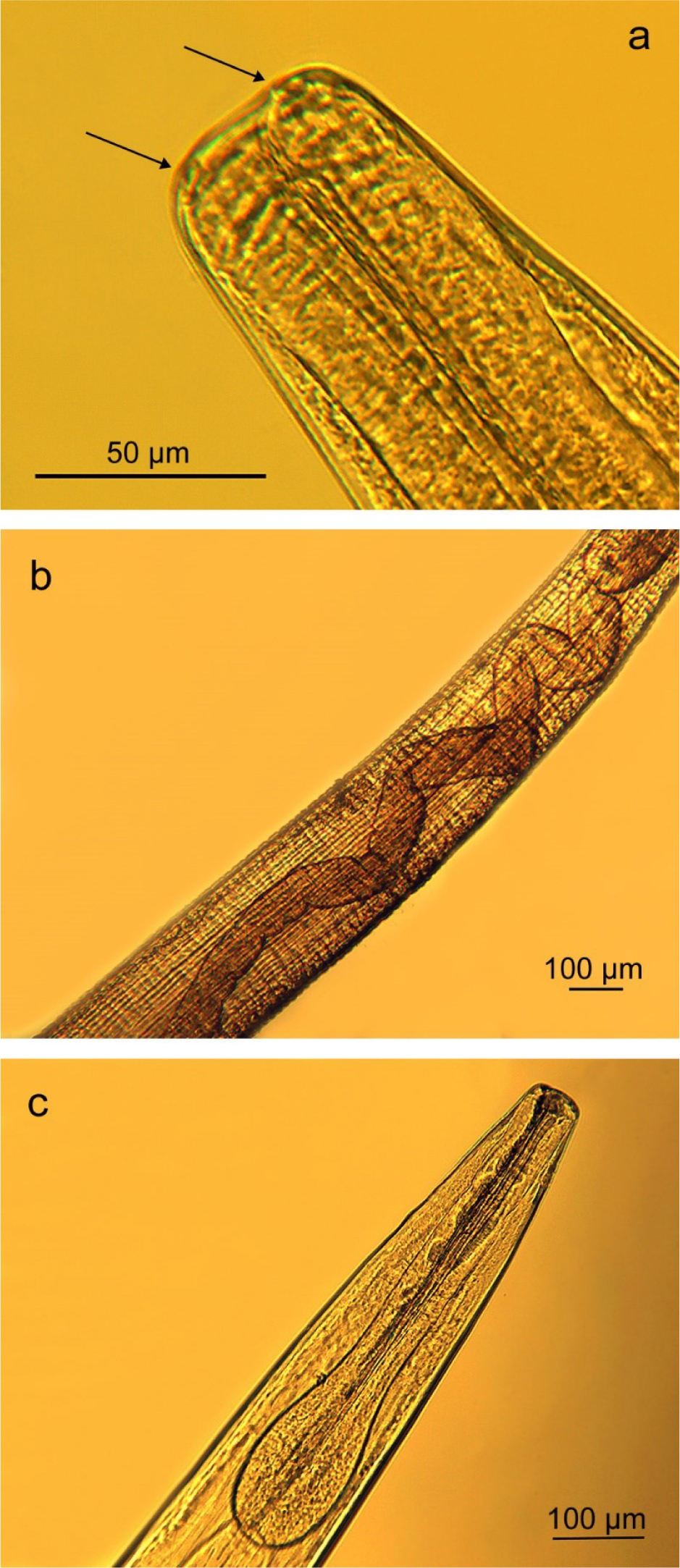
Fig. 2.
Graphidioides affinis adult worm found in the faeces of Dolichotis patagonum from the Sofia Zoo, Bulgaria; a – anterior end, papillae around the oral opening (arrows); b – cuticular striations on the body; c – oesophagus
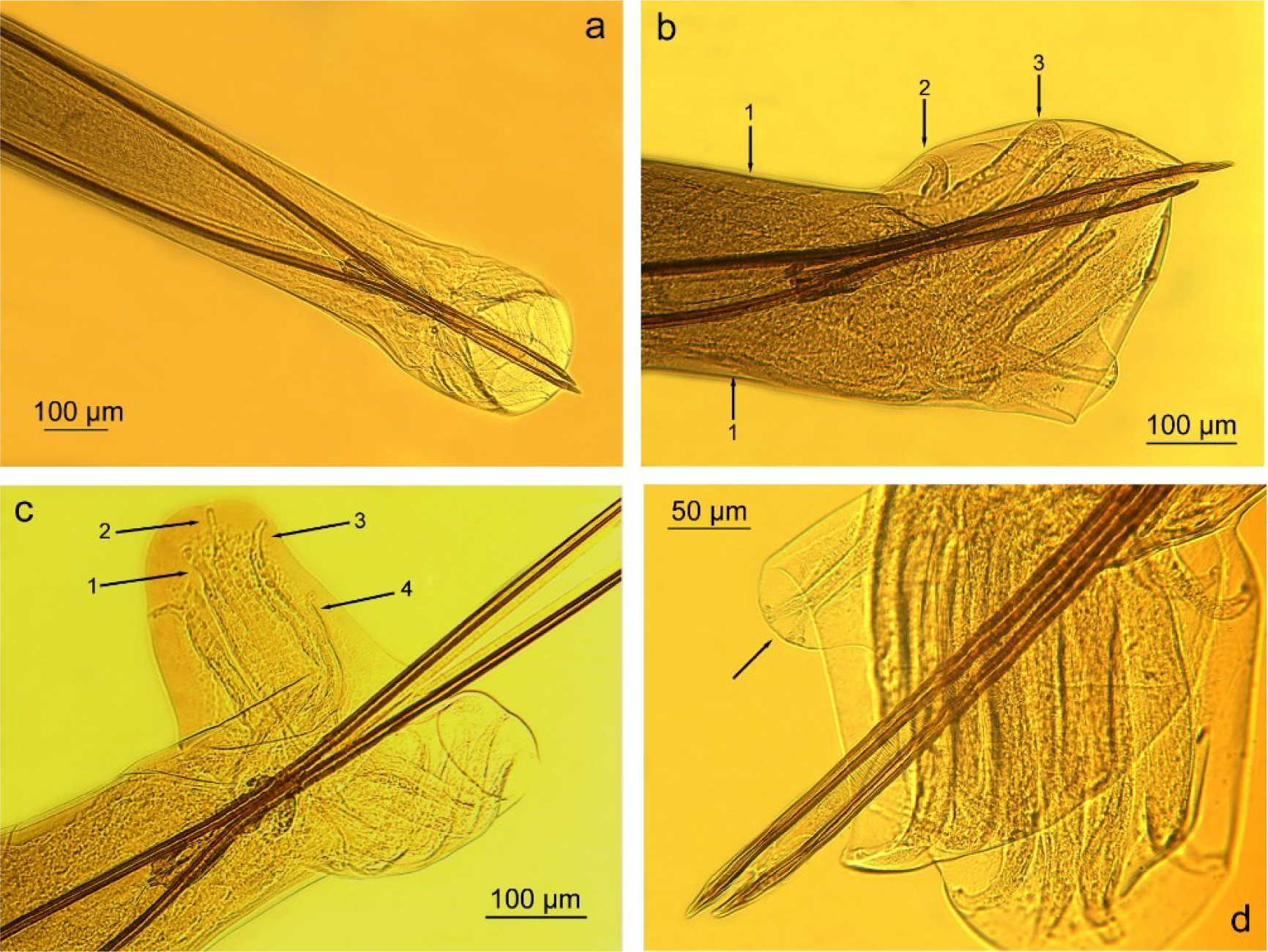
Fig. 3.
Posterior body end of male Graphidioides affinis found in the faeces of Dolichotis patagonum from the Sofia Zoo, Bulgaria; a – common view; b – 1- pre-bursal papillae, 2 - anteroventral ray of copulatory bursa, 3 - posteroventral ray of copulatory bursa; c – copulatory bursa, 1 – anterolateral ray, 2 – mediolateral ray, 3 – posterolateral ray, 4 – exterodorsal ray; d – dorsal ray of copulatory bursa (arrow)
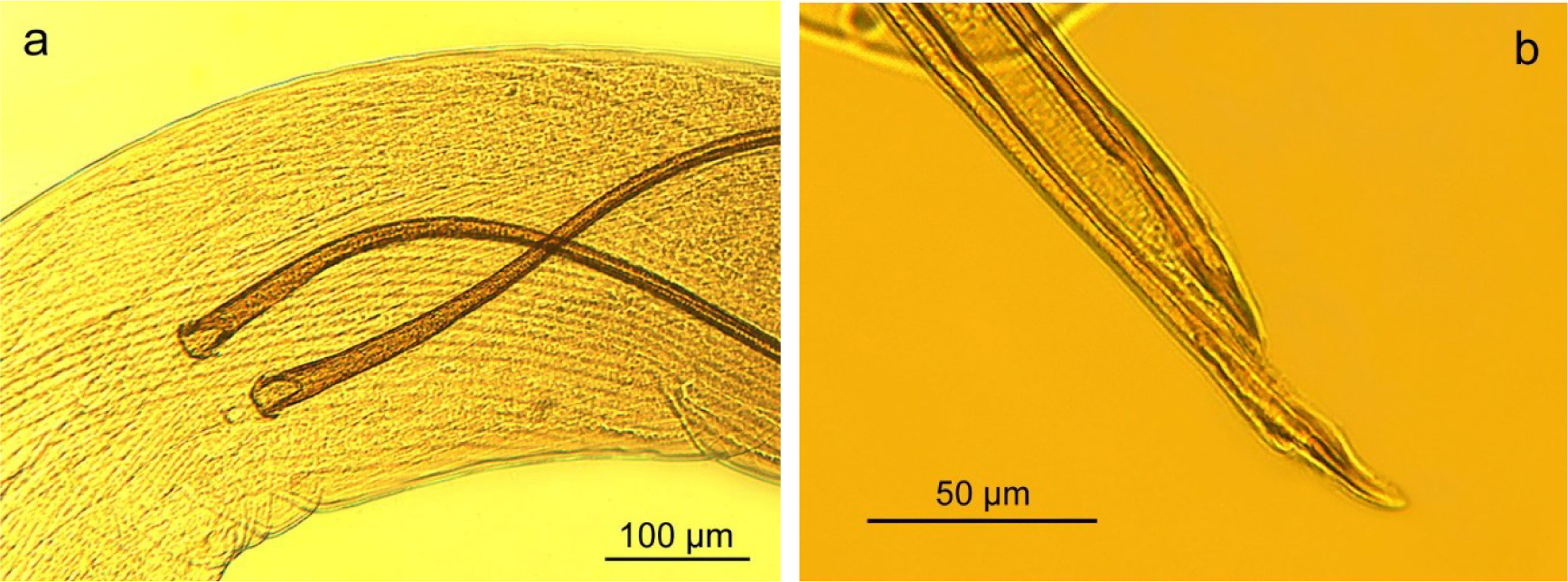
Fig. 4.
Spicules of Graphidioides affinis found in the faeces of Dolichotis patagonum from the Sofia Zoo, Bulgaria; a – proximal parts; b – distal parts
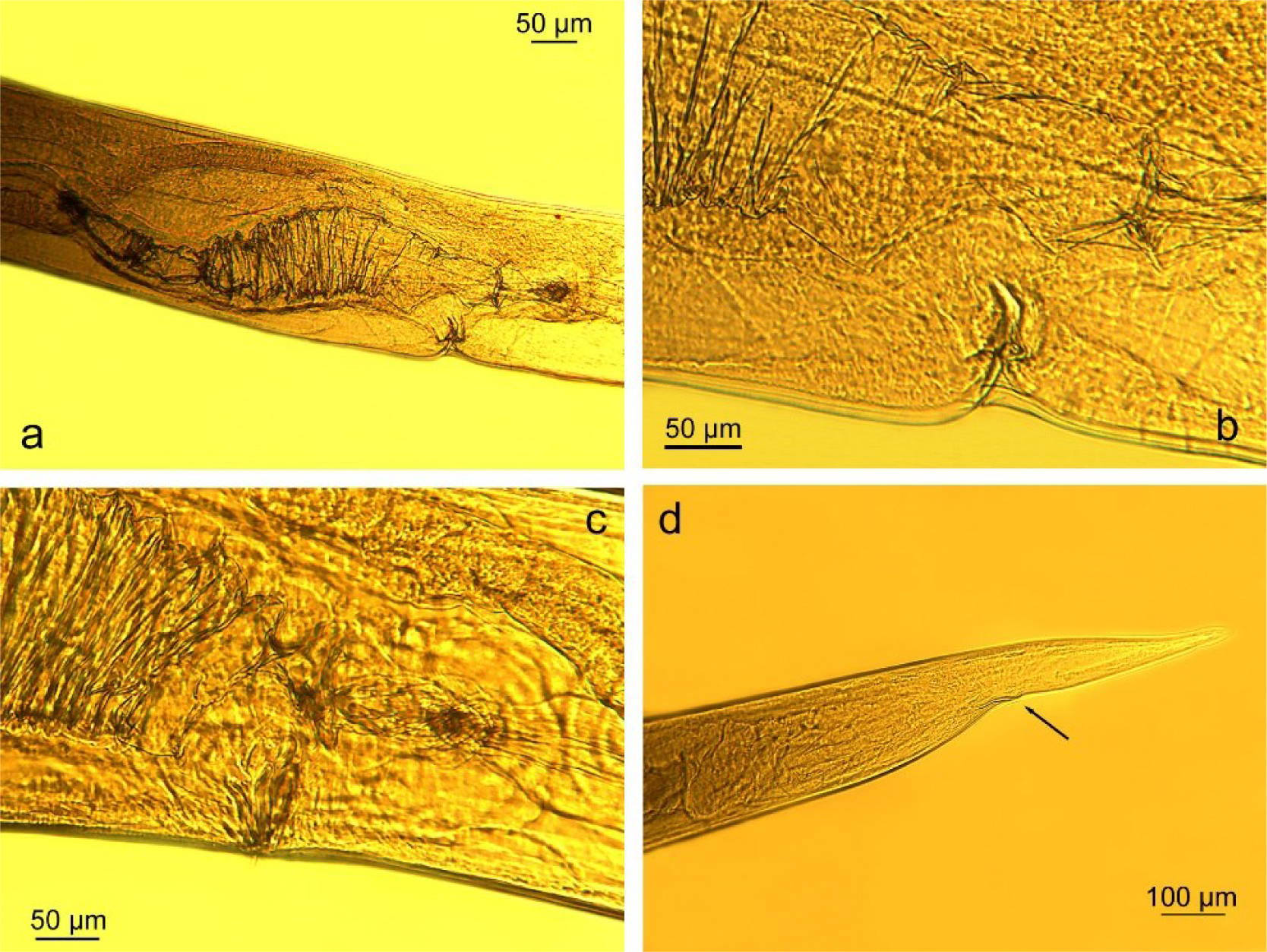
Fig. 5.
Female Graphidioides affinis found in the faeces of Dolichotis patagonum from the Sofia Zoo, Bulgaria; a – ovijector; b and c – vulva; d – posterior end; anus (arrow)
DNA sequences
Products of the PCR which were partial SSU, ITS2 and LSU sequences were obtained from all four ethanol-preserved worm specimens. In all cases the presence of the DNA of G. affinis was detected. The nucleotide sequence of the partial SSU was 871 bp in length for the first isolate of the species (GenBank accession no. OR611714.1), whereas three other isolates were 100% homologous sequences of 945 bp in length (GenBank accession no. OR611716.1). Four obtained partial nucleotide sequences of the ITS2 and the partial LSU of 269 bp in length were 100% homologous and were submitted to the NCBI as a single sequence (GenBank accession no. OR353426.1).
Phylogenetic analysis
Bayesian analysis of the SSU sequence data with Caenorhabditis elegans (GenBank accession no. AY268117.1) as an outgroup revealed nine strongly supported clades (Fig. 6). Four individual clades of Trichostrongylus colubriformis, Tetrabothriostrongylus mackerrasae, Nematodirus battus and C. elegans were created.
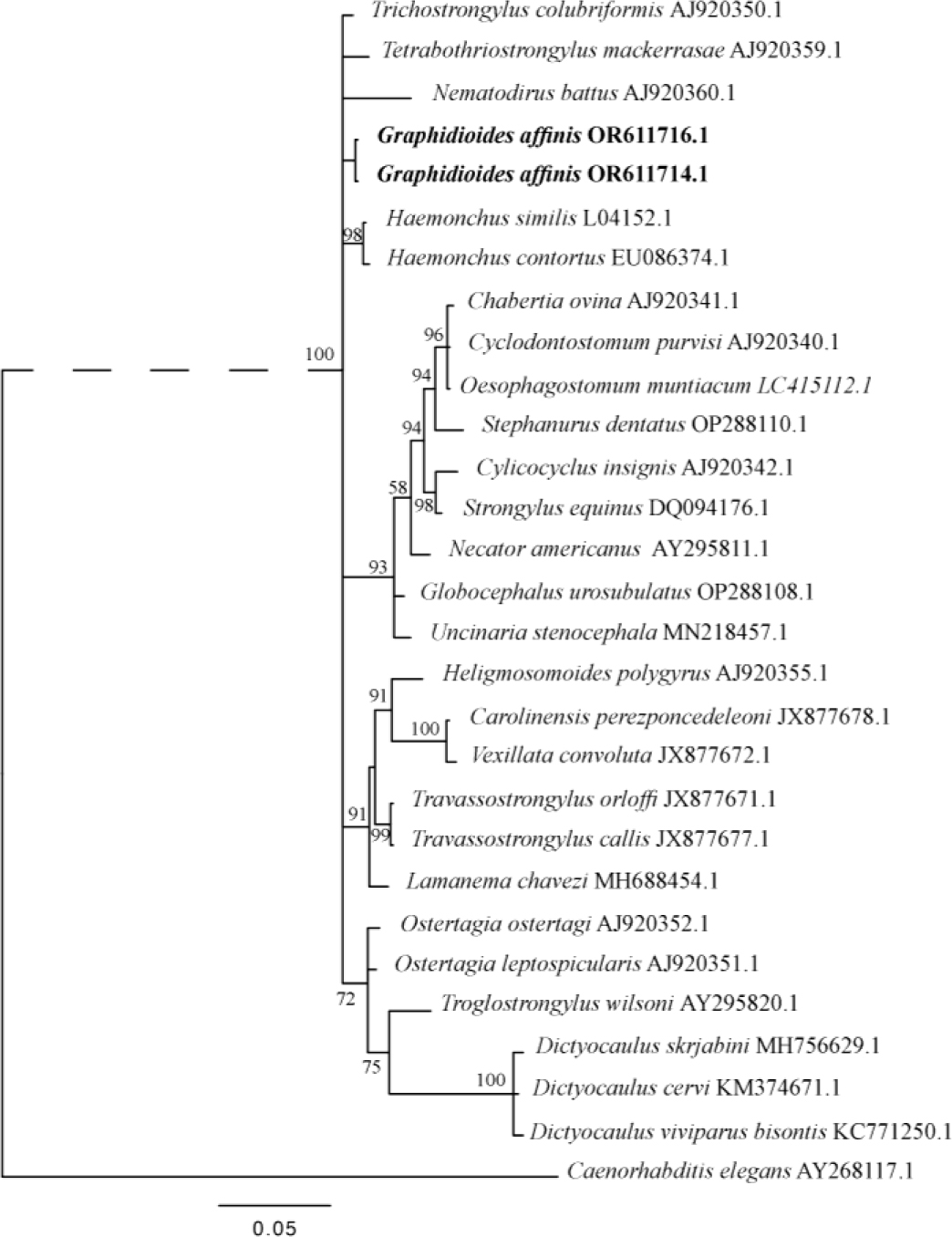
Fig. 6.
Phylogenetic tree of parasitic nematodes based on SSU rDNA partial sequences, constructed with the use of Bayesian inference analysis using MrBayes version 3.2.0. The general time-reversible model with estimates of invariant sites and gamma-distributed among-site variation model was chosen based on jModelTest version 2.1.4 using the Akaike information criterion. The analysis was run for 2,000,000 generations
The taxons of G. affinis (GenBank accession nos: OR611714.1 and OR611716.1) obtained in this study were placed in separate clades, as were Haemonchus similis and H. contortus. Another cluster comprised six subclades: one including taxa of Chabertia ovina, Cyclodontostomum purvisi and Oesophagostomum muntiacum with Stephanurus dentatus as a sister taxon; another with Cylicocyclus insignis and Strongylus equinus with Necator americanus as a sister taxon; and one with Globocephalus urosubulatus and Uncinaria stenocephala as the sister taxa of those mentioned above. Another cluster comprised four subclades: one including Carolinensis perezponcedeleoni and Vexillata convolute with Heligmosomoides polygyrus as their sister taxon; and another including Travassostrongylus orloffi and T. callis with Lamanema chavezi placed as a sister taxon to the whole group. The last cluster comprised Ostertagia ostertagi and O. leptospicularis with a subclade including Troglostrongylus wilsoni and Dictyocaulus skrjabini, D. cervi and D. viviparus subs. bisontis as sister taxa.
Bayesian inference analysis of the ITS2 sequence data revealed seven strongly supported clades (Fig. 7). The taxon of G. affinis (GenBank accession no. OR353426.1) obtained in this study created an individual clade, as were formed by Spiculopteragia boehmi, H. polygyrus, L. chavezi and N. battus. Other clades comprised H. contortus with Cooperia oncophora and O. ostertagi with O. leptospicularis as sister taxa. Another clade comprised U. stenocephala and a subclade including Ch. ovina and Oe. muntiacum.
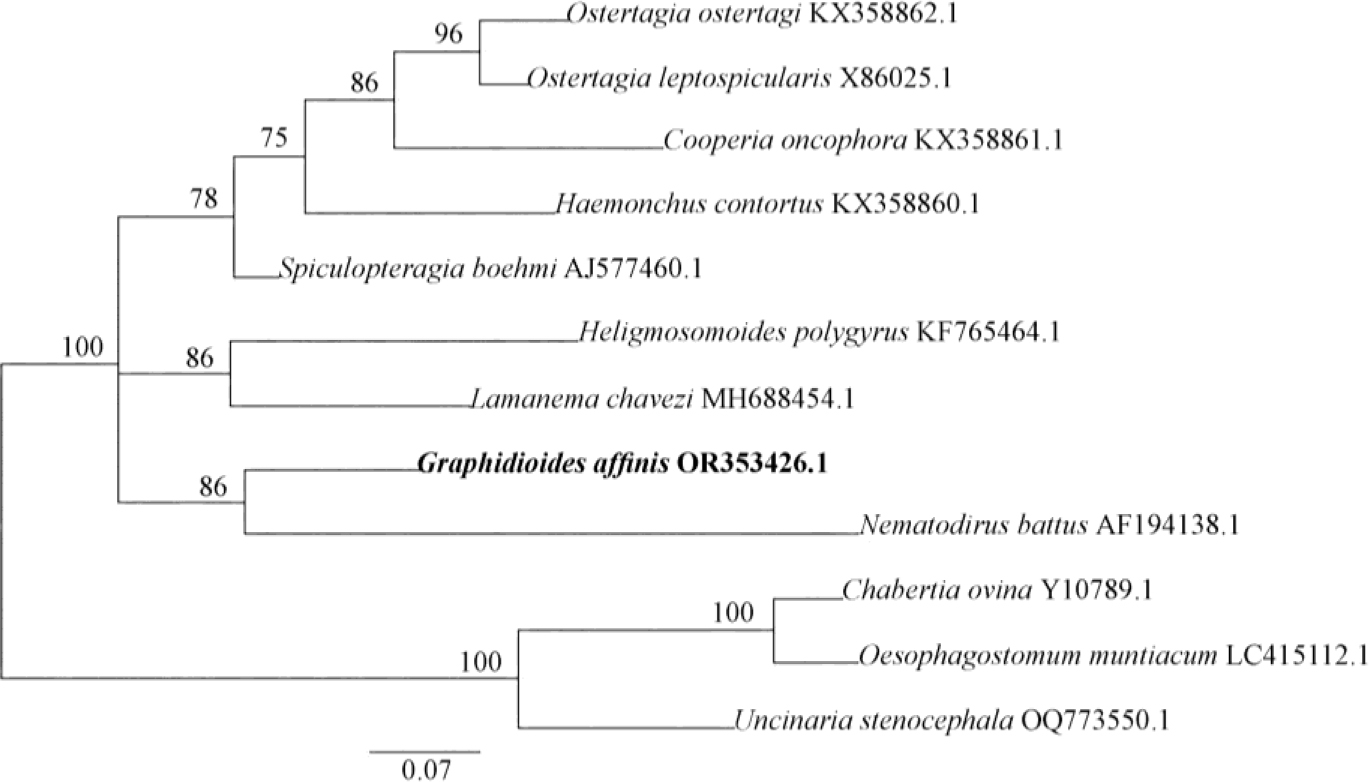
Fig. 7.
Phylogenetic tree of parasitic nematodes based on ITS2 partial sequences, constructed with the use of Bayesian inference analysis using MrBayes version 3.2.0. The gamma-distributed among-site variation model was chosen based on jModelTest version 2.1.4 using the Akaike information criterion. The analysis was run for 2,000,000 generations. Bold indicates isolates examined in the present investigation
Discussion
According to the obtained morphometric data, the nematodes detected in the faeces of Patagonian maras were identified as G. affinis. The species was originally described in Patagonian maras from South America (2). To the best of our knowledge, since then, there have only been two studies providing data on the morphometry of G. affinis (6, 8). The morphometric data presented in this study are consistent with those of the previous ones (Table 3).
Table 3.
Comparative morphometry of Graphidioides affinis nematodes in materials from Patagonian maras (Dolichotis patagonum) investigated in different studies
| Origin / References | ||||||
|---|---|---|---|---|---|---|
| Parameter | Sofia Zoo, Bulgaria (Present data) | Argentina (1) | London Zoo, UK (7) | Barcelona Zoo Spain (5) | ||
| Range | Mean ± SD | |||||
| Adult male nematodes (n = 7) | Body length (cm) | 1–2 | 1.5 ± 0.35 | 0.9–1.7 | 1.1 | 1.1–1.3 |
| Body width at the end of the oesophagus (μm) | 130–155 | 144 ± 8.97 | - | - | - | |
| Maximum body width (μm) | 250–340 | 291.67 ± 32.5 | 300 | 350 | 350 | |
| Oesophagus length (μm) | 505–558 | 537.6 ± 21.18 | - | 650 | - | |
| Maximum oesophagus width (μm) | 82–95 | 89 ± 5.79 | - | - | - | |
| Spicule length (μm) | 1,930–2,700 | 2365 ± 266.08 | 2,800 | 3,400 | 2,400–2,700 | |
| Gubernaculum length (μm) | 159–172 | 167.29 ± 4.61 | 150 | 120 | 60 | |
| Gubernaculum width (μm) | 48–57 | 52.29 ± 3.86 | 80 | 75 | 68 | |
| Adult female nematodes (n = 7) | Body length (cm) | 1.4–2.4 | 1.7 ± 0.33 | 1.6–2.1 | 2.1 | 2–2.5 |
| Body width at the end of the oesophagus (μm) | 185–244 | 207 ± 19.86 | - | - | - | |
| Maximum body width (μm) | 260–440 | 360 ± 72.34 | 500 | 700 | 750 | |
| Oesophagus length | 609–714 | 642 ± 37.22 | - | 650 | - | |
| Maximum oesophagus width (μm) | 97–124 | 114 ± 10.46 | - | - | - | |
| Ovijector total length (μm) | 1110–1448 | 1,230 ± 117.41 | 1,200 | 1,525 | - | |
| Vulva-tail tip distance (mm) | 4.8–6.0 | 5 ± 0.48 | 6 | 5.5 | - | |
| Anus-tail tip distance (μm) | 321–442 | 355 ± 40.54 | 500 | - | - | |
| Length of eggs in the uterus (μm) | 107–171 | 133 ± 26.02 | 140 | 135 | - | |
| Width of eggs in the uterus (μm) | 60–94 | 75 ± 11.25 | 75 | 75 | - | |
Dolichotis patagonum, the host of G. affinis, is a rodent of the Caviomorpha parvorder and Caviidae family. According to a previous study, six out of eight species of Graphidioides are parasites of Caviomorpha families, i.e. the Caviidae, Chinchillidae, Octodontidae and Myocastoridae (13), and the distribution of these trichostrongyloid nematodes is closely related to the distribution of their host families (21). Therefore, it is not surprising that G. affinis was found in D. patagonum, although the particular animals investigated did not originate from their natural habitat in South America, and lived in captivity in a zoo in Europe. In fact, this finding is not exceptional, as Graphidioides affinis was previously recorded in captive Patagonian maras in London Zoo (8) and Barcelona Zoo (6), as well as in a free-ranging population in the Whipsnade Wild Animal Park in the UK (14). Besides infecting D. patagonum, the nematode was also found in Lagostomus maximus (Desmarest, 1817), a host in the Chinchillidae family (10). These data lead us to hypothesise that a parasite–host specificity has arisen between G. affinis and D. patagonum over the course of their long co-evolution and that G. affinis is a highly host-specific parasite. In support of this theory is the failure to find any G. affinis infestation in the kangaroo that lived for years with this group of Patagonian maras.
Conclusion
The study acquired the first nucleotide sequences of G. affinis which were included in the performed phylogenetic analyses. In both analyses the species emphasised its distinctiveness in comparison to other gastrointestinal nematodes, as it was grouped separately.
Notes
[4] Conflicts of interest Conflict of Interests Statement: The authors declare that there is no conflict of interests regarding the publication of this article.
[5] Financial disclosure Financial Disclosure Statement: The study was financed by the Institute of Veterinary Medicine of the Warsaw University of Life Sciences.
[6] Animal Rights Statement: None required.
Acknowledgements
The researchers are grateful to all who brought about and sustain the Agreement for Collaboration between the Institute of Experimental Morphology, Pathology and Anthropology with Museum of the Bulgarian Academy of Sciences and the Sofia Zoo. The publication was co-financed by Science development fund of the Warsaw University of Life Sciences.