Have a personal or library account? Click to login
Small Samples, Big Problems, Statistical Tests in Nematology Research Need Power Cover

Small Samples, Big Problems, Statistical Tests in Nematology Research Need Power

By: Itsuhiro Ko and  David Rice  
Open Access
|Feb 2026

Figures & Tables

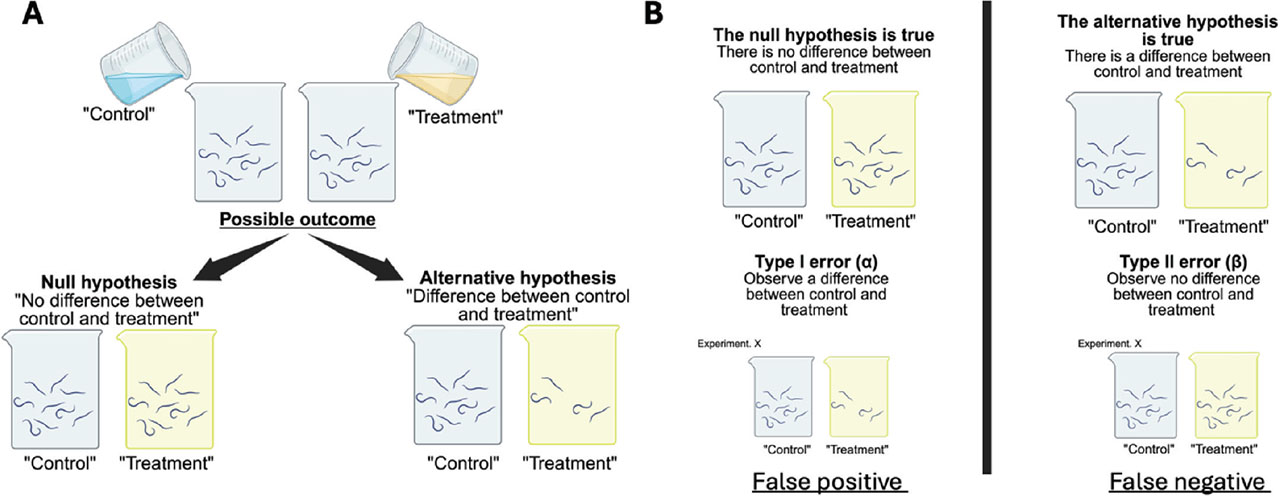
Figure 1:

Illustration of hypothesis testing the effect of a treatment on nematode survival rate (A) and two types of errors that could occur (B). Figure created with Biorender.com.
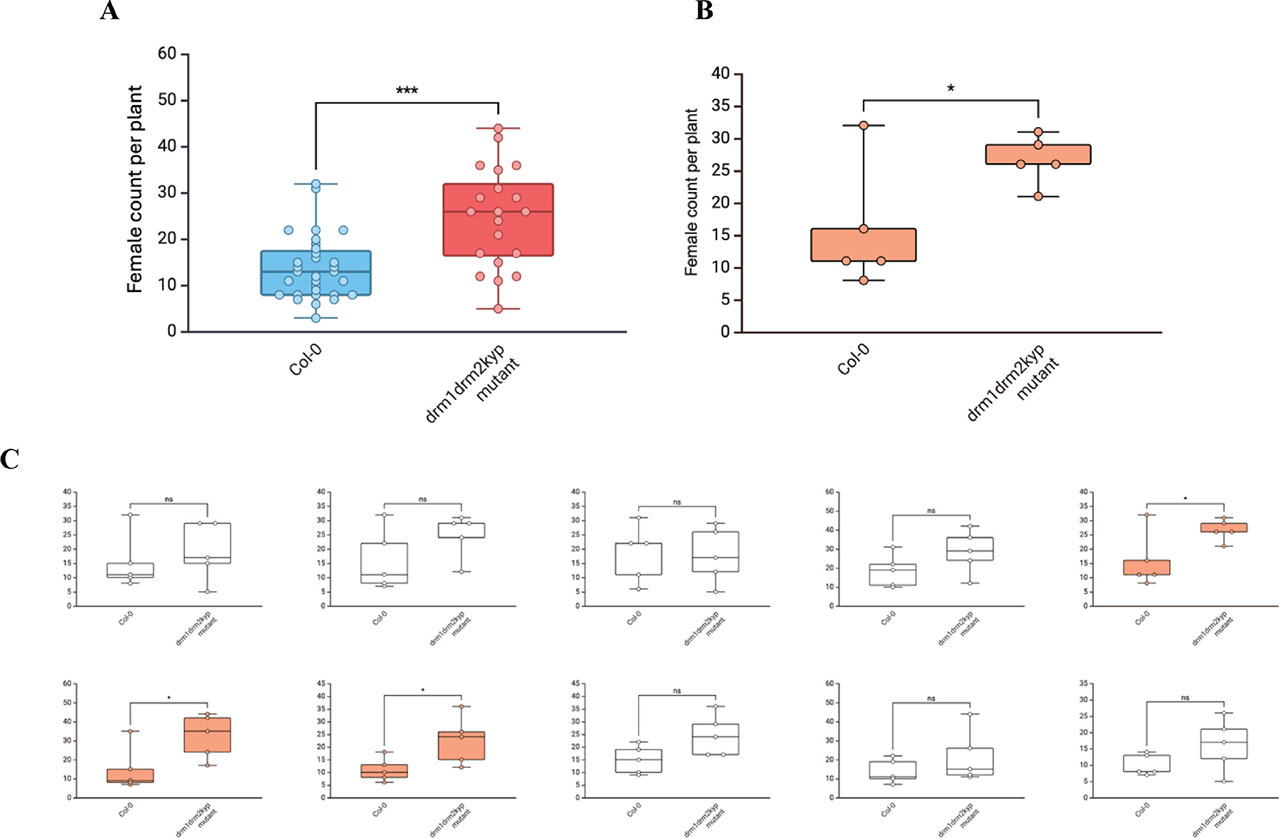

Figure 2:

(A) Comparison of H. schachtii female counts per plant on wild-type (Col-0) and a DNA methylation-deficient triple mutant (drm1 drm2 kyp) A. thaliana (Ko et al., 2024) (Col-0: n = 31; drm1 drm2 kyp: n = 19). The group differences were assessed with a two-sided Wilcoxon rank-sum test. The effect size (Hedges’ g corrected) is 1.23. (B) Demo dataset created by randomly selecting five observations per group (n = 5) from Figure 2A. Two-tails Student t-test indicated a significant difference between two groups. (C) Ten simulated experiments, each with n = 5 per group, subsampled from the (Fig. 2A) dataset. Using a two-tailed Student’s t-test, statistically significant differences were observed in around 31% of simulations (orange panels). Open circles denote individual plants. The box-and-whisker plots show the median and interquartile range; whiskers indicate the full data range (min–max). Each point denotes one infected plant. Asterisks denote the group differences (*P < 0.05, ***P < 0.001).
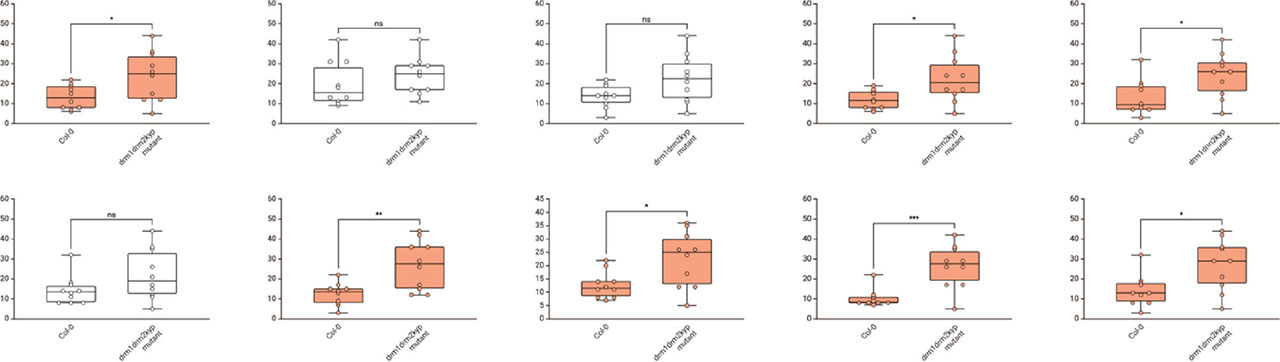

Figure 3:

Ten simulated experiments, each with n = 10 per group, subsampled from the (Fig. 2) dataset. Open circles denote individual plants. Using a two-tailed Student’s t-test, statistically significant differences (marked with asterisks) were observed in around 70% of simulations (orange panels; *P < 0.05, **P < 0.01, ***P < 0.001).
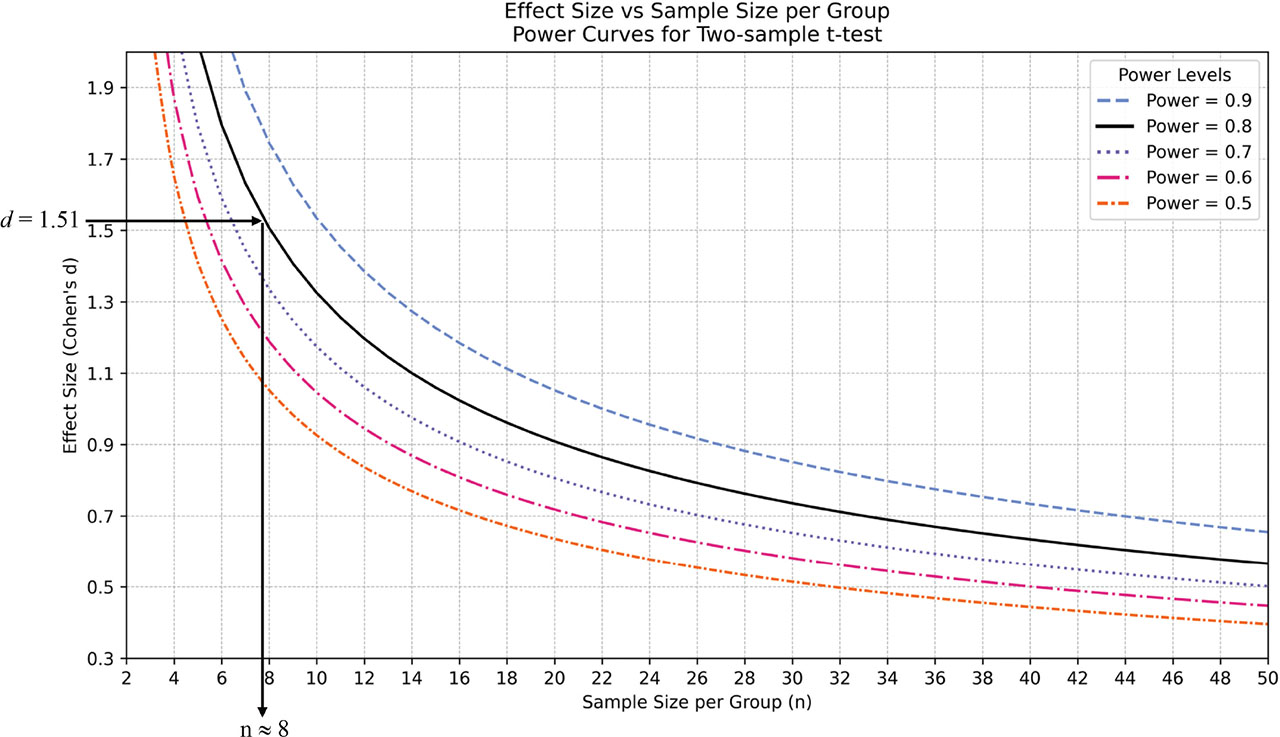

Figure 4:

Nomogram for Cohen’s d effect size and power for comparing two groups of equal size using a two-sample t-test. Normal distributions and equal variance are assumed. Each curve represents a specific power at a significance value of α = 0.05 with a sample size on the x-axis and Cohen’s d effect size on the y-axis. In the example shown in Figure 3, for an experiment that has an effect size of 1.51 with a desire power of 0.8, the suggested sample size is about eight per group.
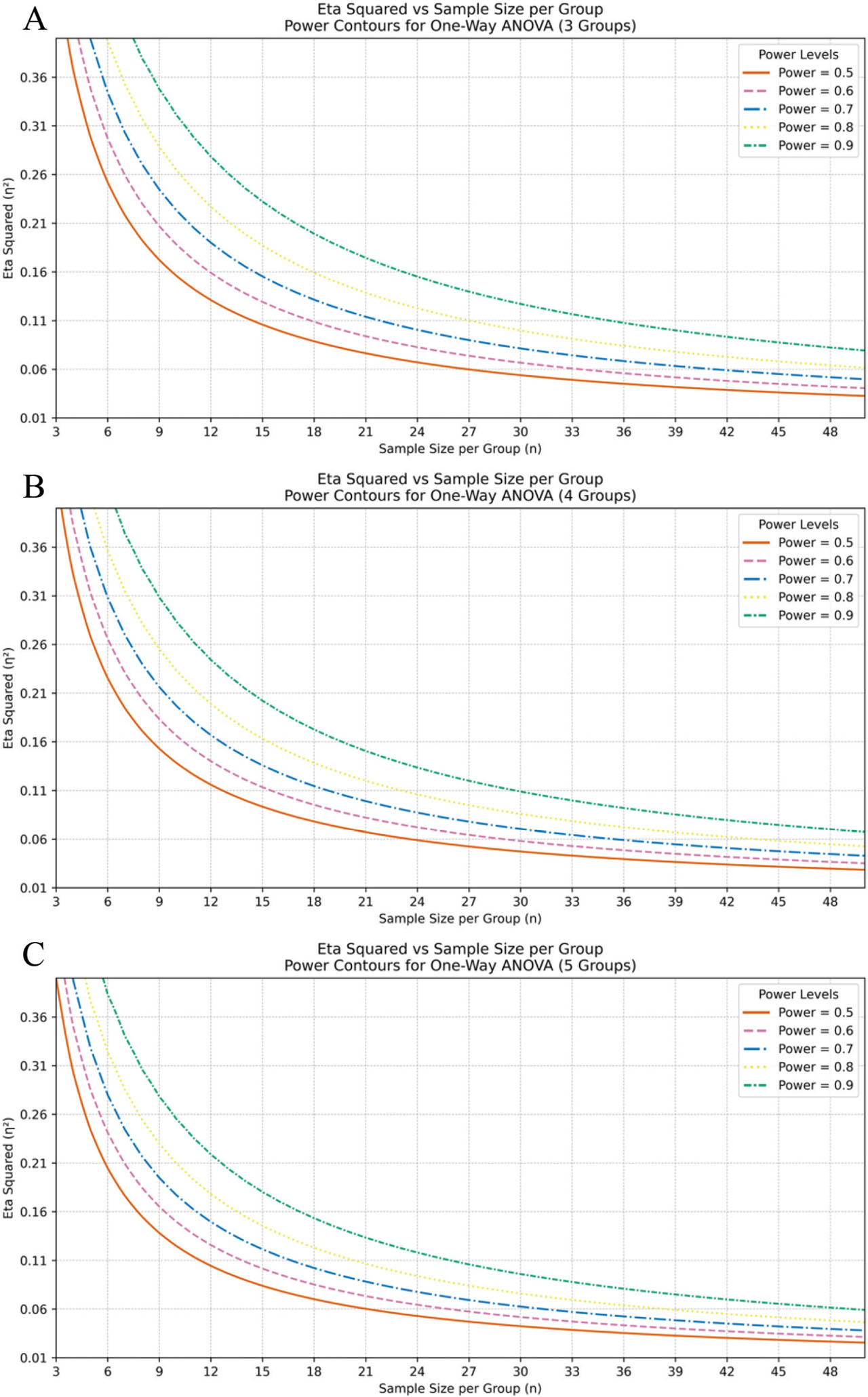

Figure S1:

Nomogram for η2 (Eta square) effect size and power for comparing: (A) three groups, (B) four groups, and (C) five groups of equal size using one-way ANOVA test. Normal distributions and equal variance are assumed. Each curve represents a specific power at a significance value of α = 0.05 with a sample size on the x-axis and η2 effect size on the y-axis. ANOVA, analysis of variance.
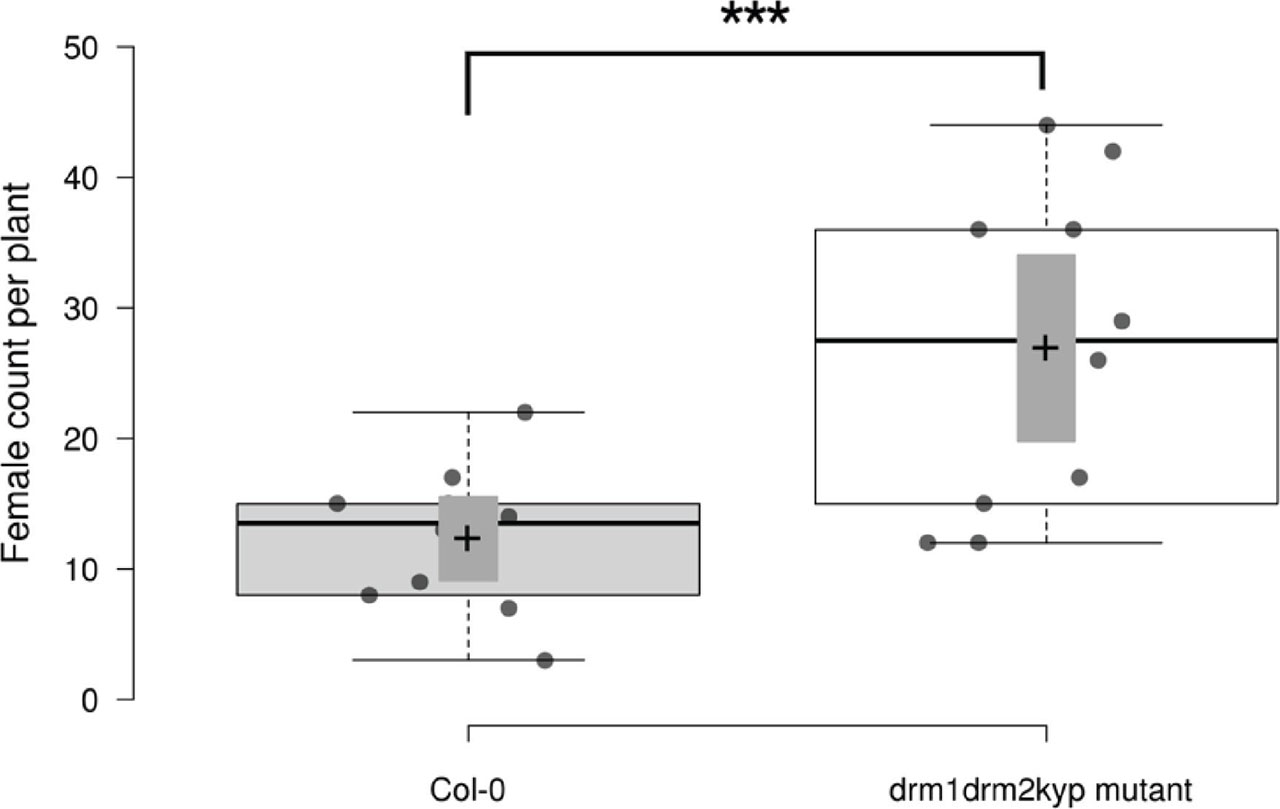

Figure S2:

Comparison of H. schachtii female counts per plant on wild-type A. thaliana (Col-0) and a DNA methylation-deficient triple mutant (drm1 drm2 kyp). Center lines show the medians; box limits indicate the 25th and 75th percentiles; whiskers extend 1.5 times the interquartile range from the 25th and 75th percentiles; crosses represent sample means; bars indicate 90% confidence intervals of the means; data points are plotted as open circles. n = 10 sample points. Asterisks denote the group differences assessed with a two-tailed Student’s t-test (***P < 0.001). The standardized effect size (Cohen’s d) is 1.52. Figure made with http://shiny.chemgrid.org/boxplotr/ (Spitzer et al., 2014).

Figure S3:

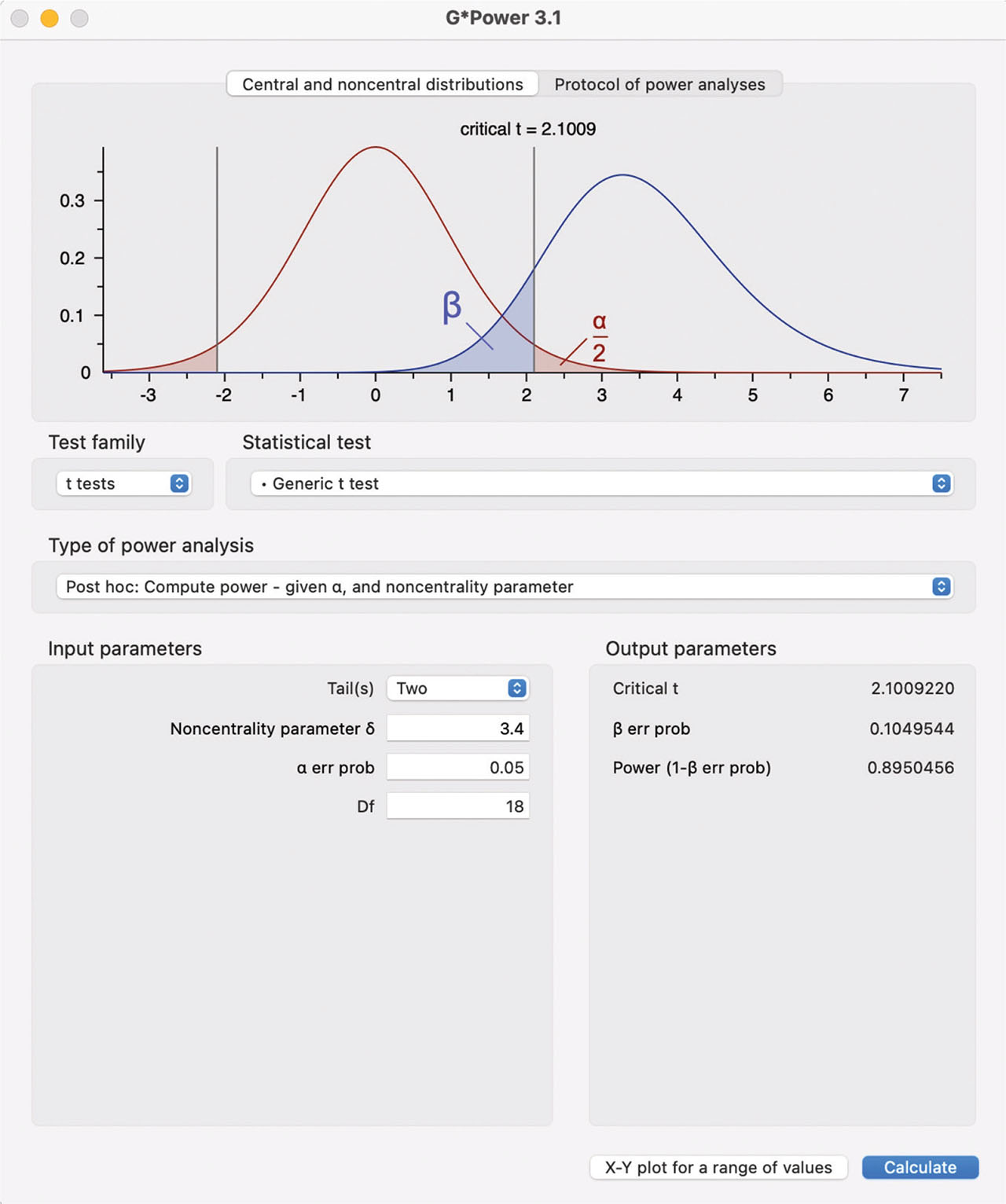
User interface of G*Power while conducting the power analysis of demo data.

Descriptive statistics shown in Figure S2 in Supplementary Material

Sample size (N)Mean (X)SD
Col-0 wild type (w)1012.35.56
Drm1drm2kyp mutant (m)1026.912.36
DOI: https://doi.org/10.2478/jofnem-2025-0062 | Journal eISSN: 2640-396X | Journal ISSN: 0022-300X
Language: English
Submitted on: Sep 16, 2025
|
Published on: Feb 2, 2026
In partnership with: Paradigm Publishing Services
Publication frequency: 1 issue per year

© 2026 Itsuhiro Ko, David Rice, published by Society of Nematologists, Inc.
This work is licensed under the Creative Commons Attribution 4.0 License.