Have a personal or library account? Click to login
Morphological and Molecular Characterization of Punctodera stonei Brzeski, 1998 (Nematoda: Heteroderidae) from Virginia, USA Cover

Morphological and Molecular Characterization of Punctodera stonei Brzeski, 1998 (Nematoda: Heteroderidae) from Virginia, USA

Open Access
|Apr 2022

Figures & Tables

Figure 1

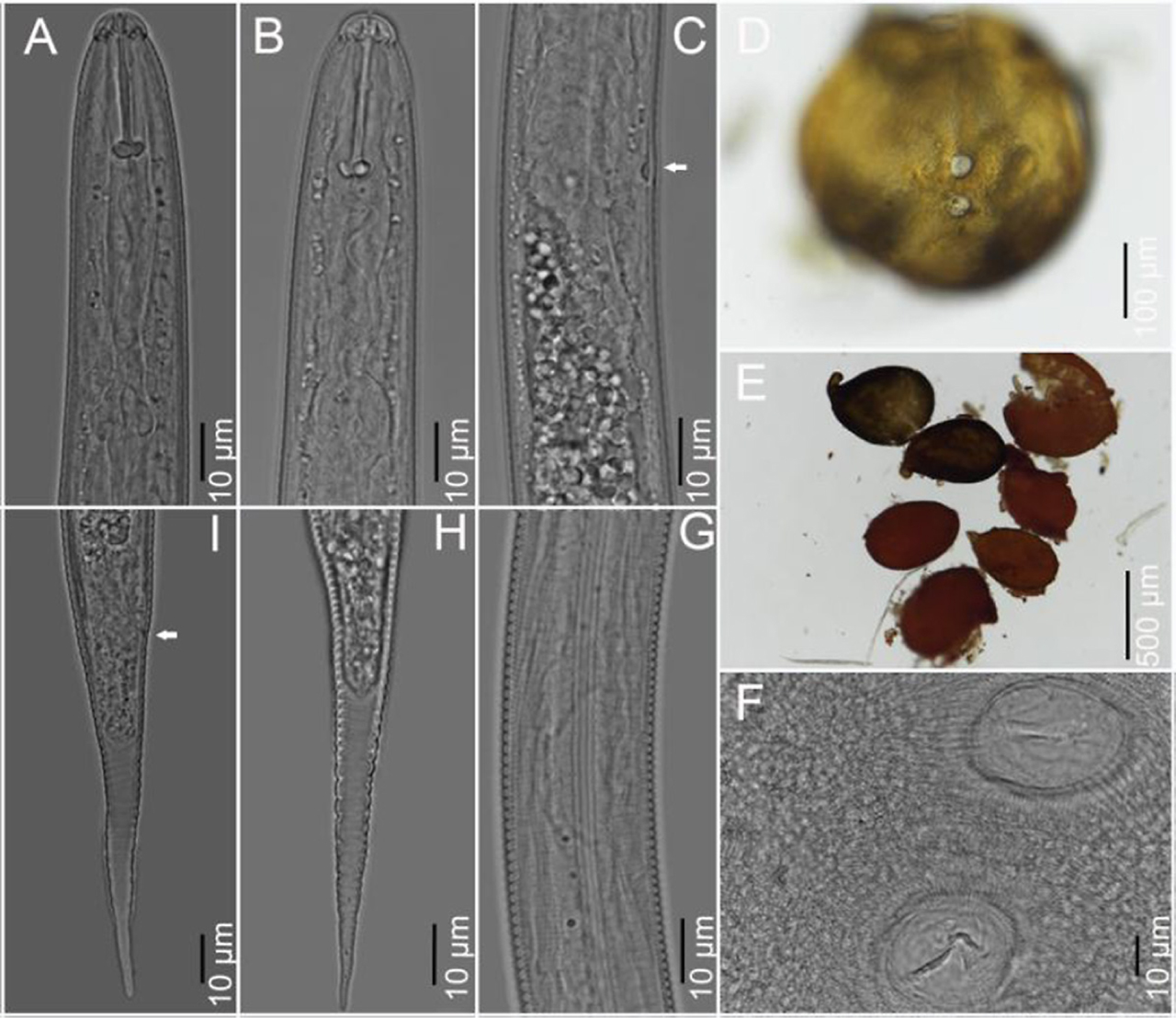
Photomicrographs of cysts, vulval cones, and J2 of P. stonei from Virginia. A, B: Anterior ends of J2s; C: Excretory pore and hemizonid with arrow pointing toward hemizonid; D, E: Entire cysts with D showing both fenestra in the middle; F: Cyst posterior part showing vulval and anal fenestrae; G: Lateral field with four incisures for J2; H, I: Tails of J2s with arrow pointing toward the anal area in I.J2, second-stage juveniles.
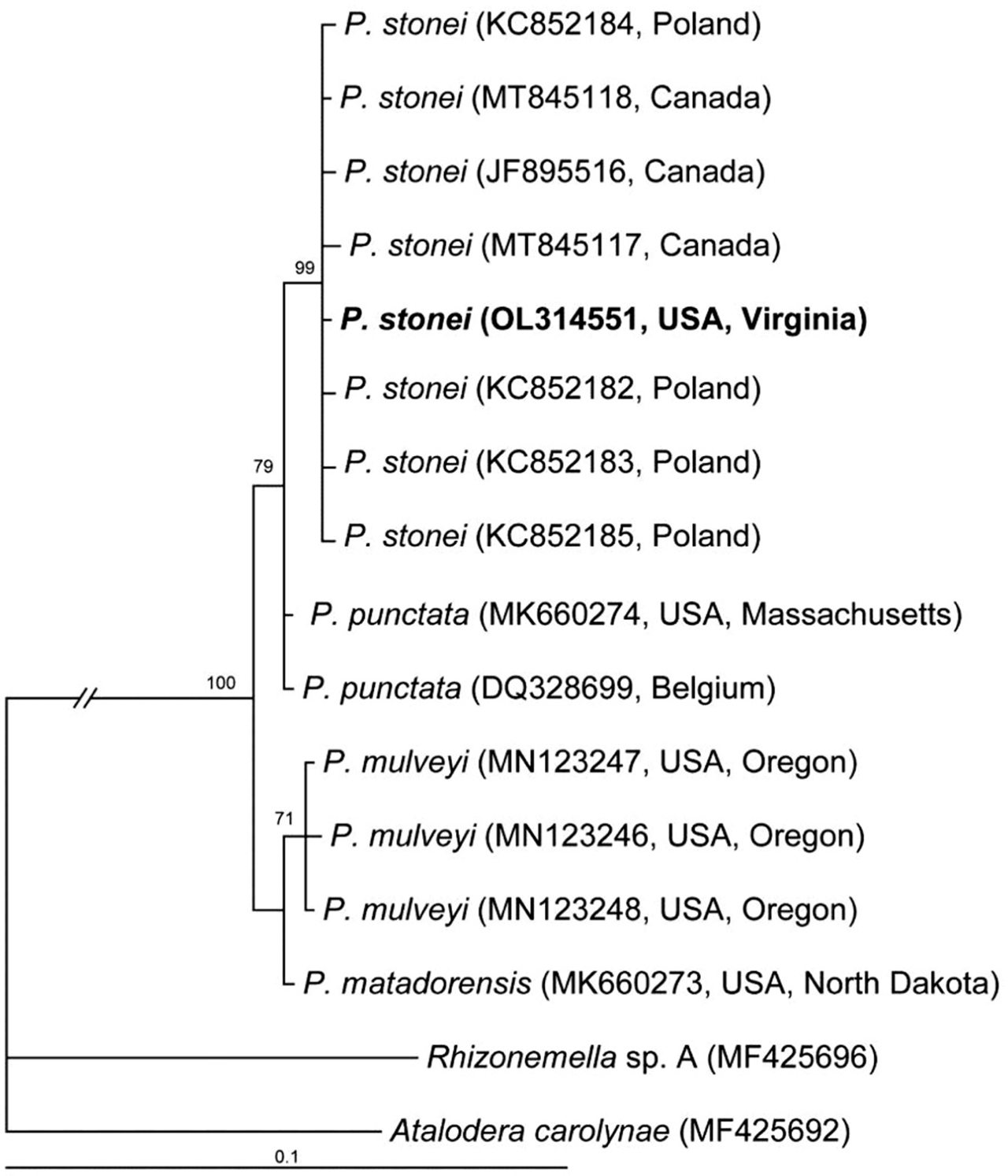

Figure 2

Phylogenetic relationships within the genus Punctodera: Bayesian 50% majority rule consensus tree from two runs, as inferred from analysis of the D2–D3 of 28S rRNA gene sequence alignment under the GTR + I + G model. Posterior probabilities and bootstrap values ≥70% are given for appropriate clades. New sequences are indicated by bold font.
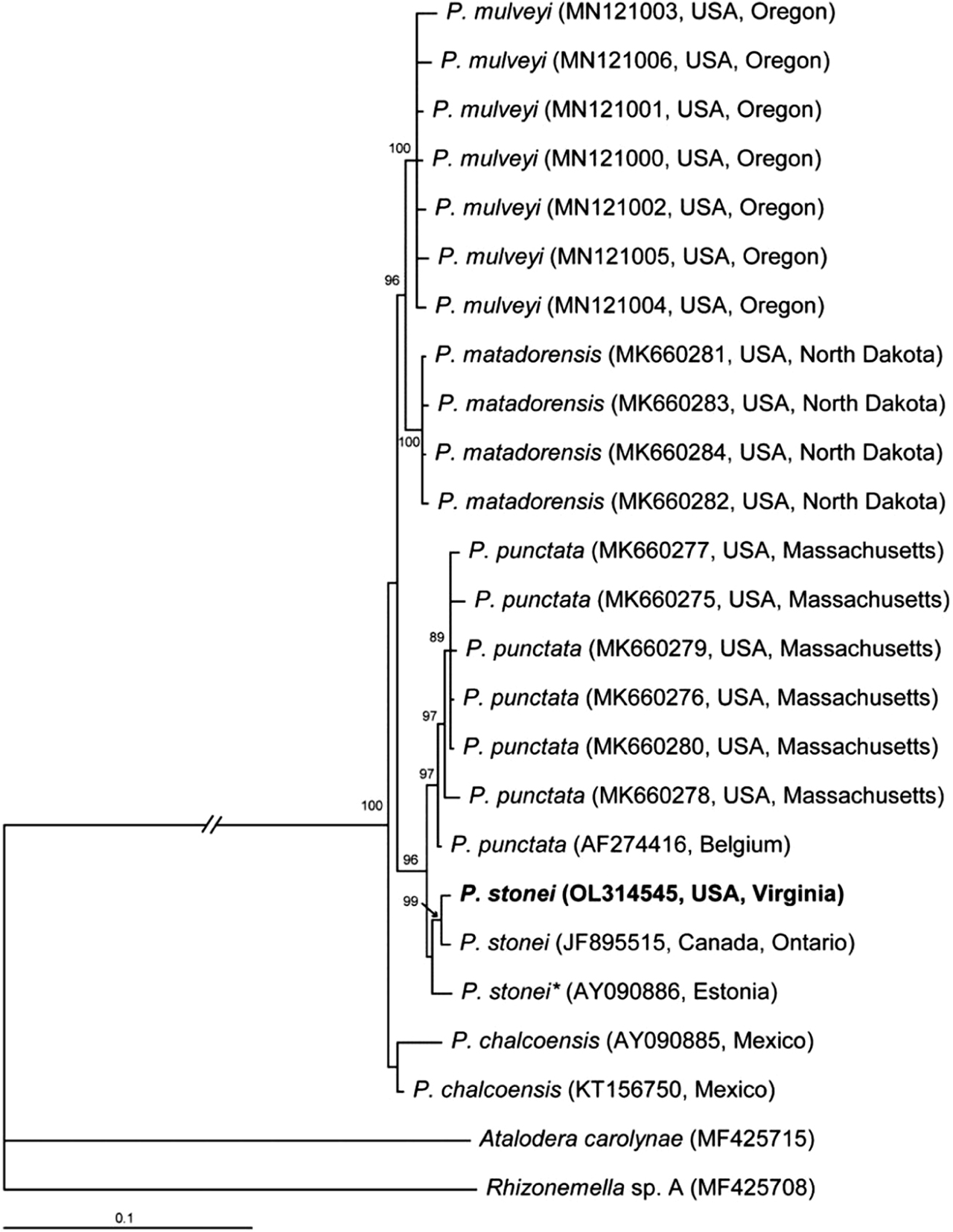

Figure 3

Phylogenetic relationships within the genus Punctodera: Bayesian 50% majority rule consensus tree from two runs, as inferred from analysis of the ITS rRNA gene sequence alignment under the GTR + I + G model. Posterior probabilities and bootstrap values ≥70% are given for appropriate clades. New sequences are indicated by bold font. *Identified as P. punctata in the GenBank and by Sabo et al. (2002).
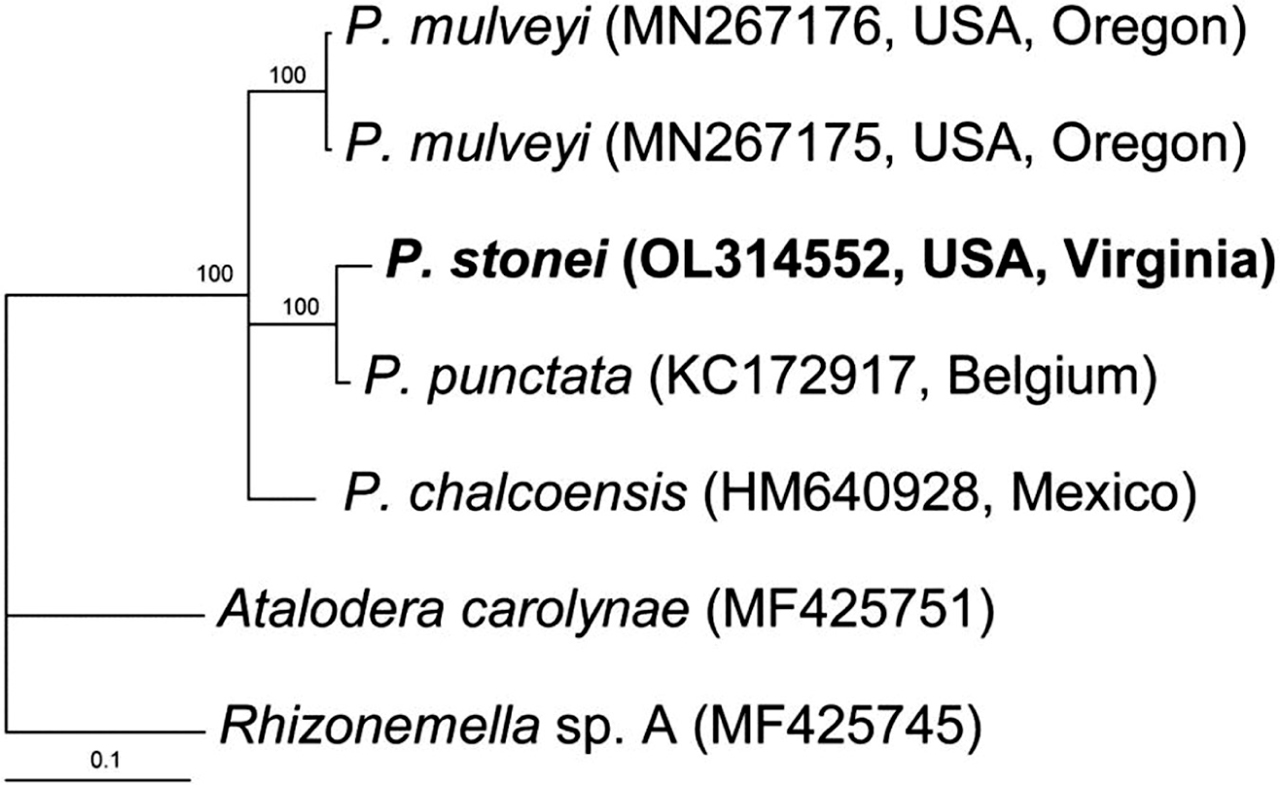

Figure 4

Phylogenetic relationships within the genus Punctodera: Bayesian 50% majority rule consensus tree from two runs, as inferred from analysis of the COI gene sequence alignment under the GTR + I + G model. Posterior probabilities and bootstrap values ≥70% are given for appropriate clades. New sequences are indicated by bold font.
DOI: https://doi.org/10.2478/jofnem-2022-0008 | Journal eISSN: 2640-396X | Journal ISSN: 0022-300X
Language: English
Submitted on: Dec 20, 2021
Published on: Apr 16, 2022
Published by: Society of Nematologists, Inc.
In partnership with: Paradigm Publishing Services
Publication frequency: 1 issue per year

© 2022 Mihail R. Kantor, Sergei A. Subbotin, Gregory Huse, Zafar A. Handoo, published by Society of Nematologists, Inc.
This work is licensed under the Creative Commons Attribution 4.0 License.