
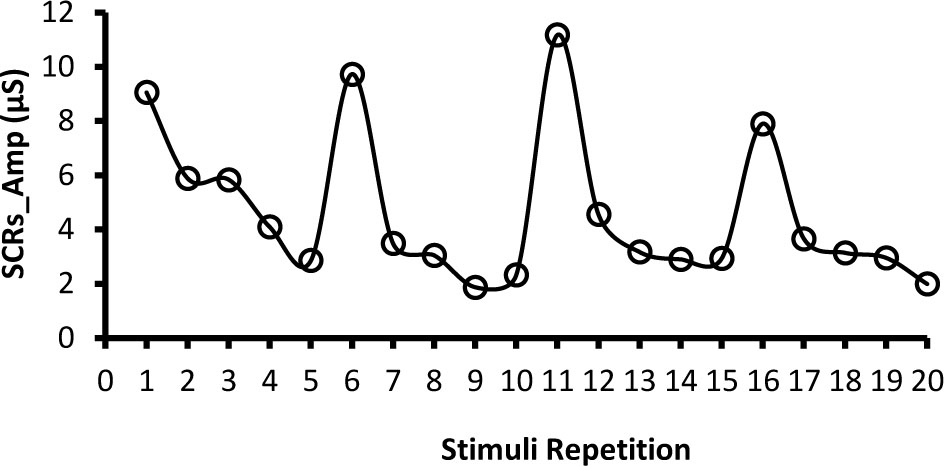
Fig. 1:
Shows potential habituation patterns in SCRs_Amp following sound (1–5), image (6–10), taste (11–15), and smell (15–20) stimuli across five repetitions. Each dot (data point) represents the average of SCRs_Amp computed from 60 subjects for a single repetition.
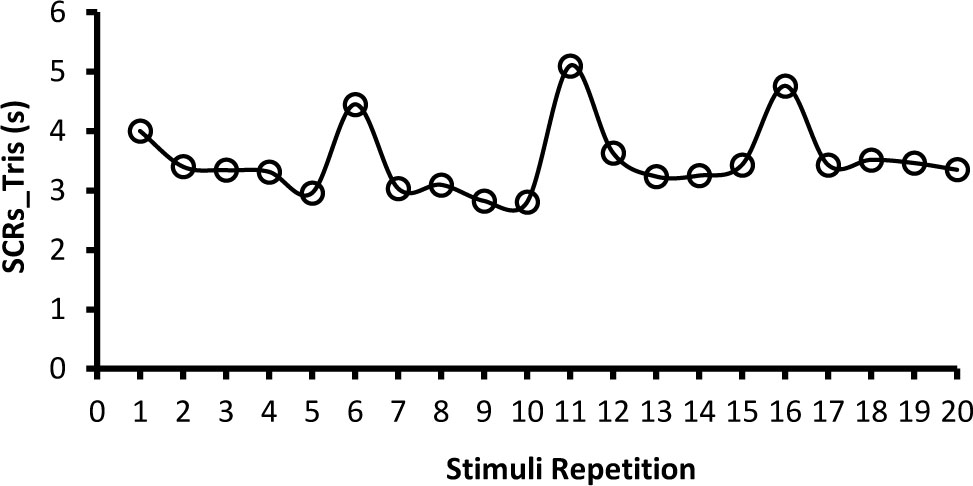
Fig. 2:
Shows potential habituation patterns in SCRs_Tris following sound (1–5), image (6–10), taste (11–15), and smell (15–20) stimuli across five repetitions. Each dot represents the average of SCRs_Tris computed from 60 subjects for a single repetition.
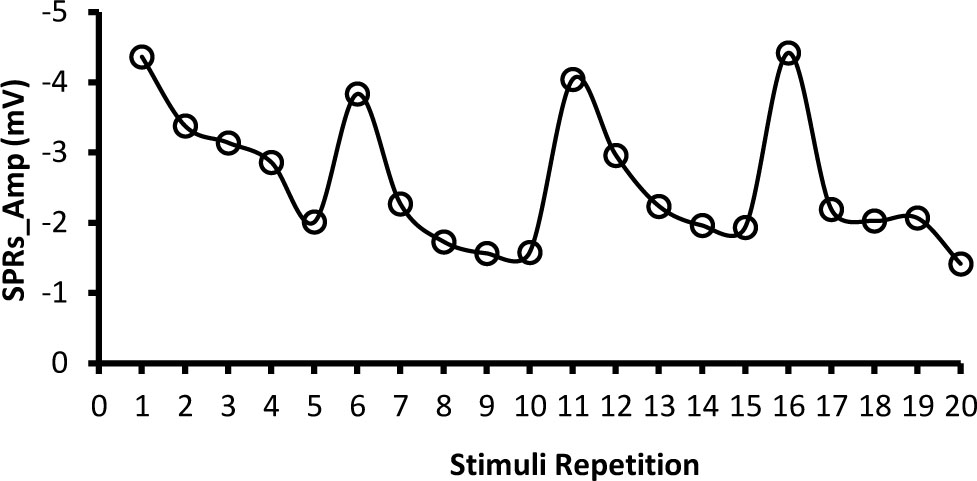
Fig. 3:
Shows potential habituation patterns in SPRs_Amp following sound (1–5), image (6–10), taste (11–15), and smell (15–20) stimuli across five repetitions. Each dot represents the average of SPRs_Amp computed from 60 subjects for a single repetition.
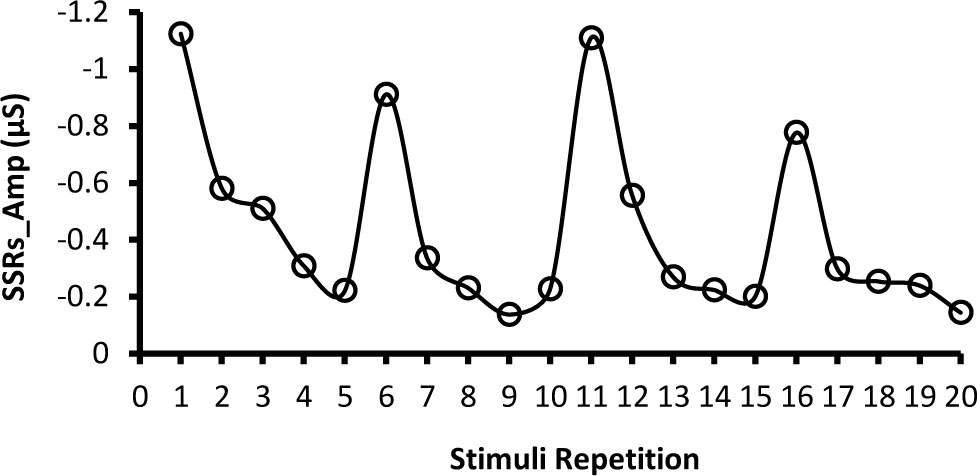
Fig. 4:
Shows potential habituation patterns in SSRs_Amp following sound (1–5), image (6–10), taste (11–15), and smell (15–20) stimuli across five repetitions. Each dot represents the average of SSRs_Amp computed from 60 subjects for a single repetition.