
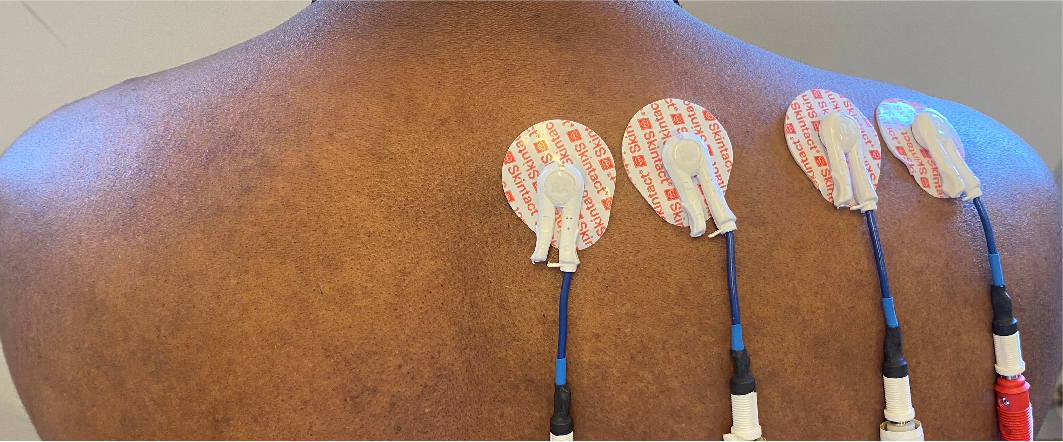
Figure 1:
The electrode placement during the measurements.
Table 1:
Protocol of body orientation, shoulder joint and shoulder arch movement for bioimpedance measurement.
| Number | Body orientation, shoulder joint and shoulder arch movement |
|---|---|
| 1 | Standing straight up position |
| 2 | Supine position |
| 3 | Sitting and arms straight down and relaxed - starting position (arms straight down) |
| 4 | Arms straight forward (90° shoulder flexion) |
| 5 | Starting position (arms straight down) |
| 6 | Arms behind the back (slight extension in shoulder joints) |
| 7 | Starting position (arms straight down) |
| 8 | Arms straight out to the side (90° abduction in the shoulder joint) |
| 9 | Starting position (arms straight down) |
| 10 | Arms straight back (full extension in shoulder joint, retraction in shoulder arch) |
| 11 | Starting position (arms straight down) |
| 12 | Arms straight up (180° shoulder flexion) |
| 13 | Starting position (arms straight down) |
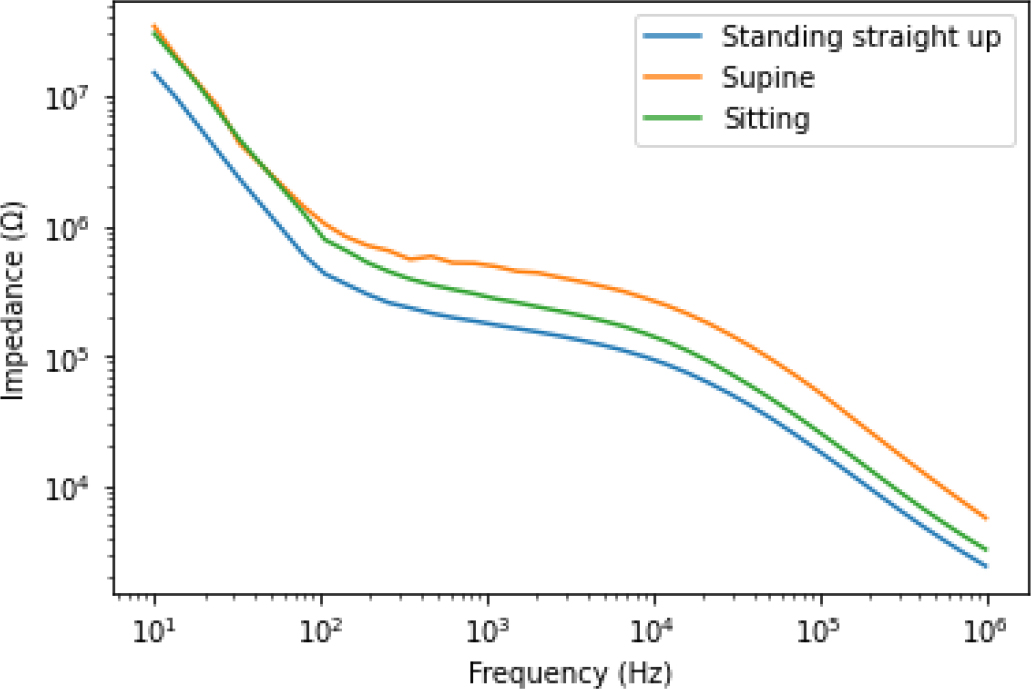
Figure 2:
The mean of the bioimpedance measurement results of all volunteers for the first three body postures, i.e., standing straight up, lying down in supine position, and sitting with arm down and relaxed.
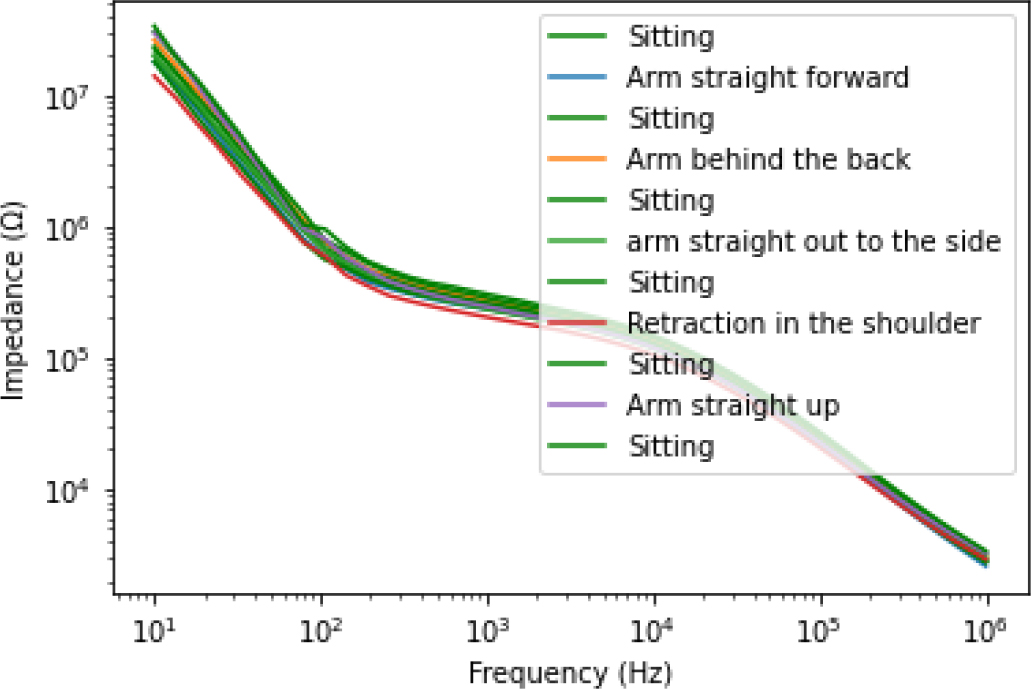
Figure 3:
The mean of the bioimpedance measurement results of all subjects for each body posture. The 6 green legends “Sitting” refers to the measurement made after each movement (shoulder joint and shoulder arch movements), the subjects were asked to return to the starting position (Sitting and arms straight down and relaxed).
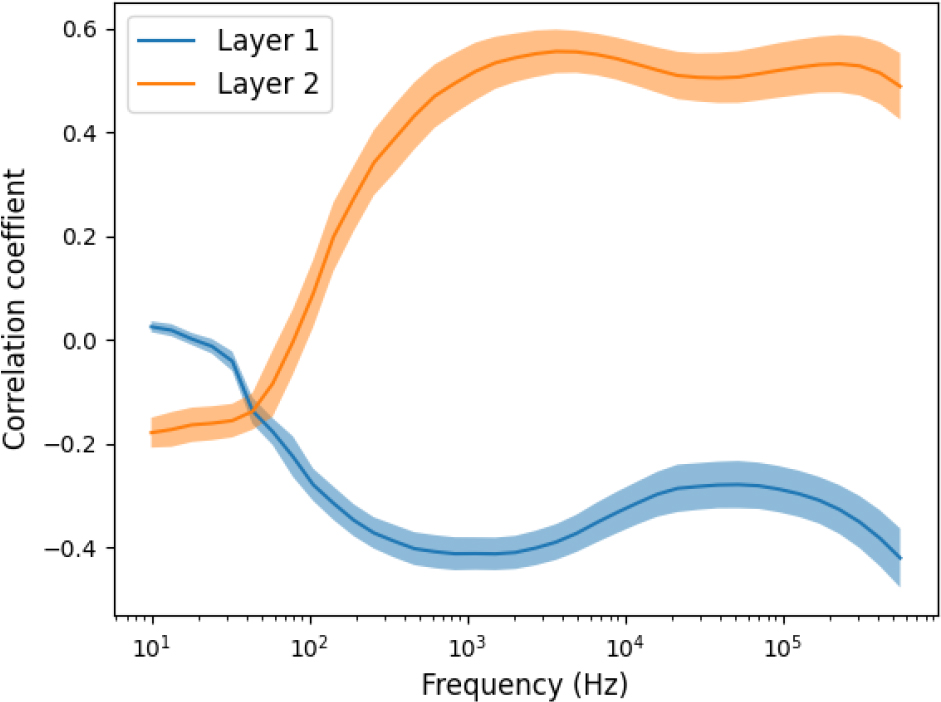
Figure 4:
The correlation coefficient between the impedance measurement result and the two skin layer thickness. Pearson correlation was performed between 8 different joint angles and shoulder arch positions and the two skin layer thicknesses.
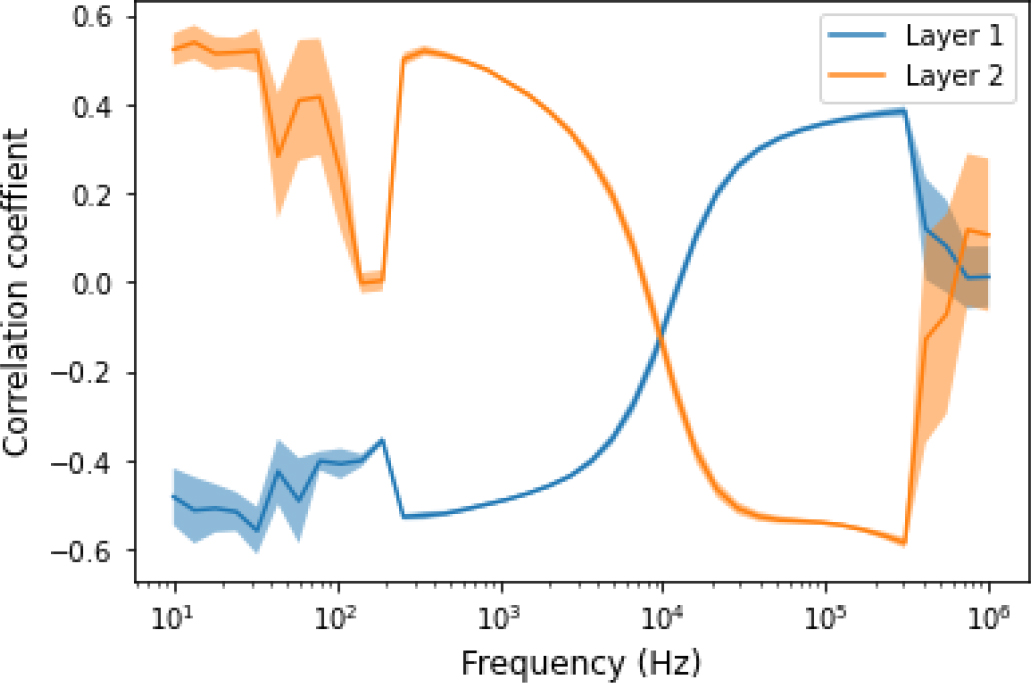
Figure 5:
The correlation coefficient between the phase angle measurement result and the two skin layer thickness. Pearson correlation was performed between 8 different joint angles and shoulder arch positions and the two skin layer thicknesses.
Table 2:
Thickness of the two distinguished layers of skin on the right shoulder tissue which were examined using the ultrasound machine for the 10 volunteers. Layer 1 is epidermis and dermis and layer 2 is hypodermics/subcutaneous tissue.
| Participant | 1 | 2 | 3 | 4 | 5 | 6 | 7 | 8 | 9 | 10 |
|---|---|---|---|---|---|---|---|---|---|---|
| Layer 1 (cm) | 0.20 | 0.25 | 0.25 | 0.15 | 0.15 | 0.15 | 0.20 | 0.10 | 0.20 | 0.25 |
| Layer 2 (cm) | 0.15 | 0.27 | 0.15 | 0.50 | 0.35 | 0.70 | 0.75 | 0.40 | 0.15 | 0.25 |
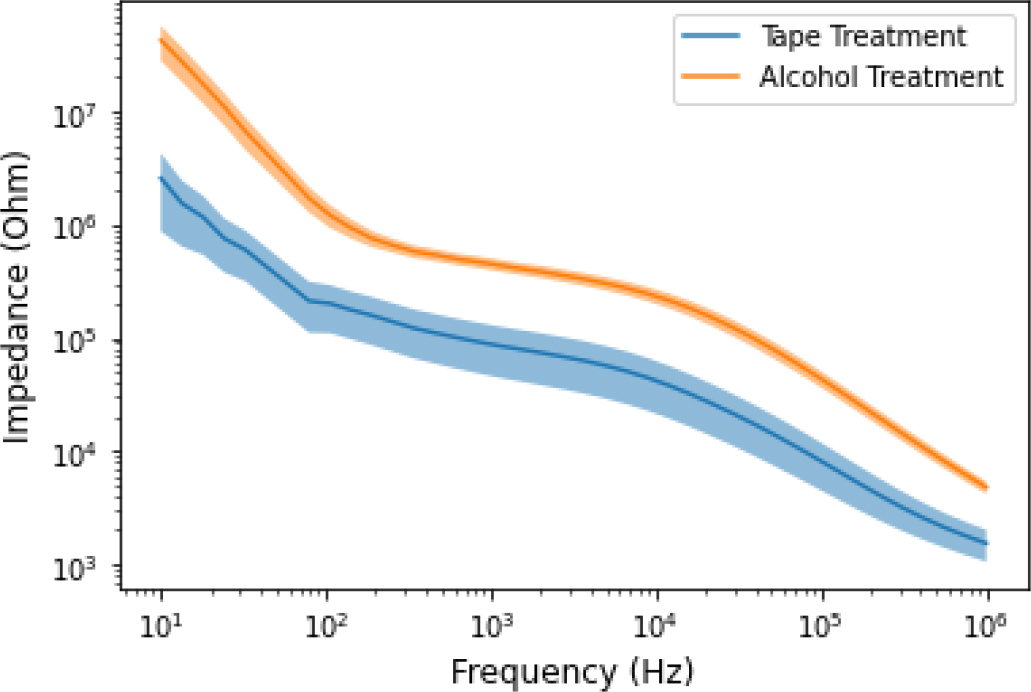
Figure 6:
The comparison between the impedance measurements of the two skin treatments. The shaded area is the 95% confidence interval, the solid line in the middle represents the mean value of each group.
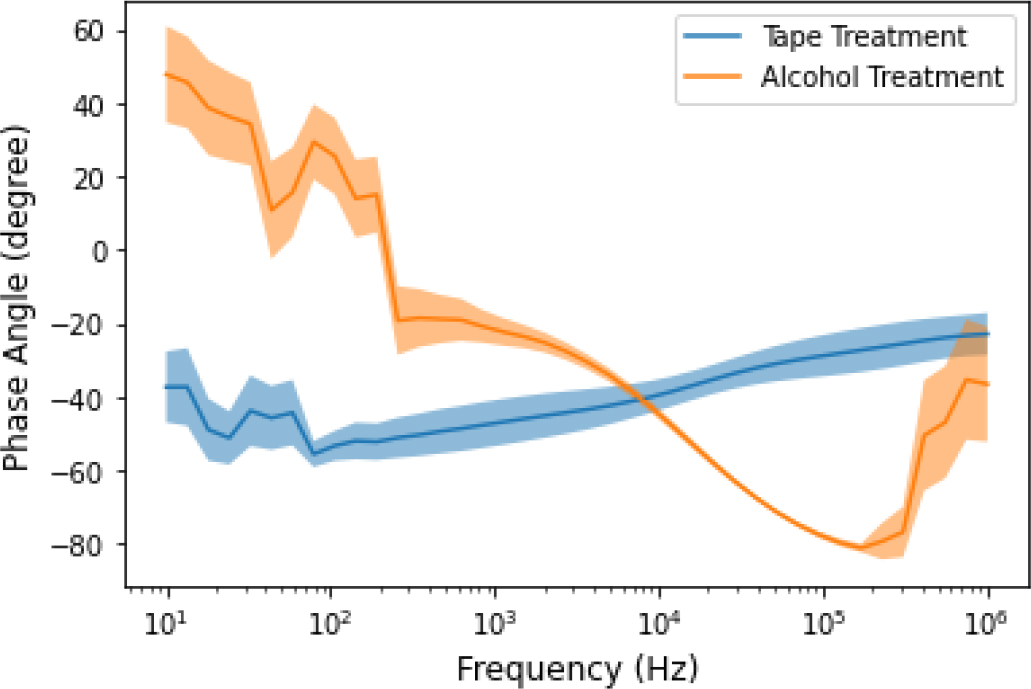
Figure 7:
The comparison between the phase angle measurements of the two skin treatments. The shaded area is the 95% confidence interval, the solid line in the middle represents the mean value of each group.
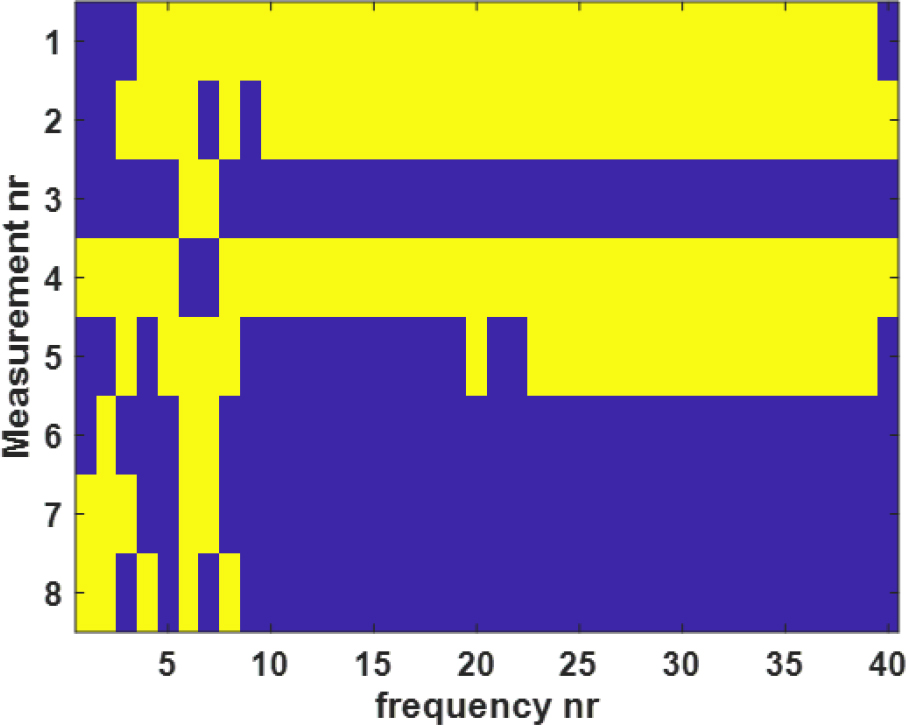
Figure 8:
The comparison between the impedance measurements of the two skin treatments. The Wilcoxon rank sum test was performed between 8 different joint angles and shoulder arch positions of the two skin treatments before the attachment of the electrode.
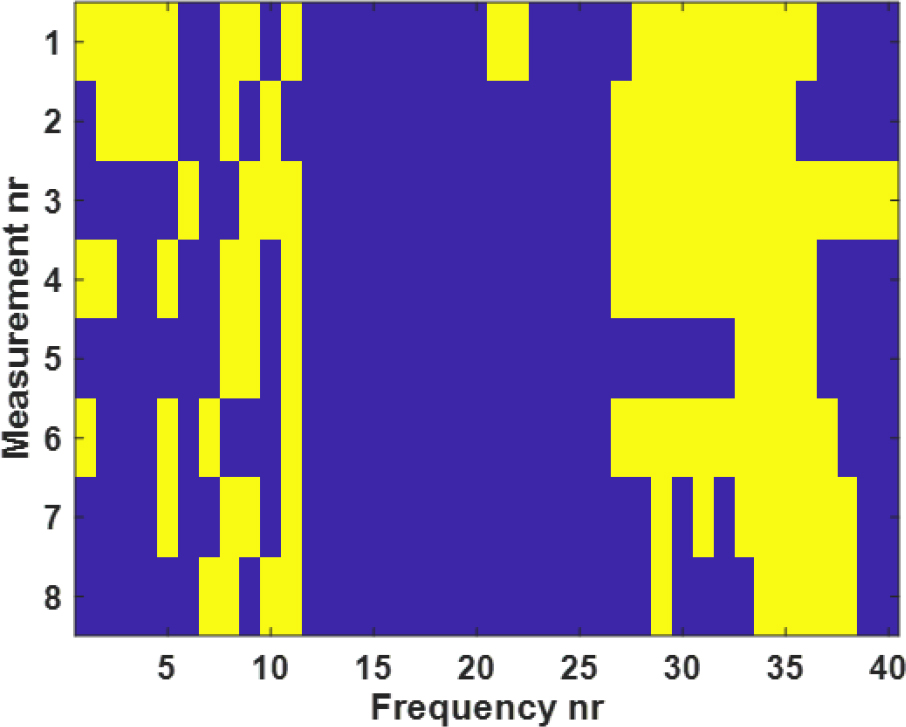
Figure 9:
The comparison between the phase angle measurement of the two skin treatments. The Wilcoxon rank sum test was performed between 8 different body positions, joint angles, and shoulder arch positions of the two skin treatments before the attachment of the electrode. In the y-axis, the number represents: 1-Standing straight up; 2-supine; 3-sitting; 4-Arms straight forward; 5-Arms behind the back; 6-Arms straight out to the side; 7-Arms straight back; 8-Arms straight up.