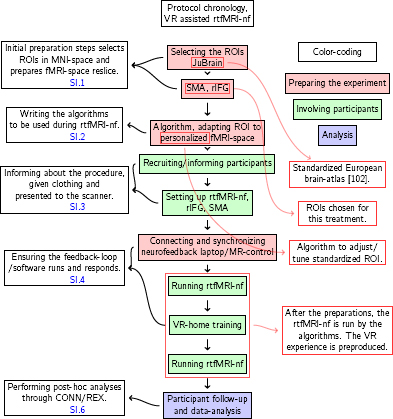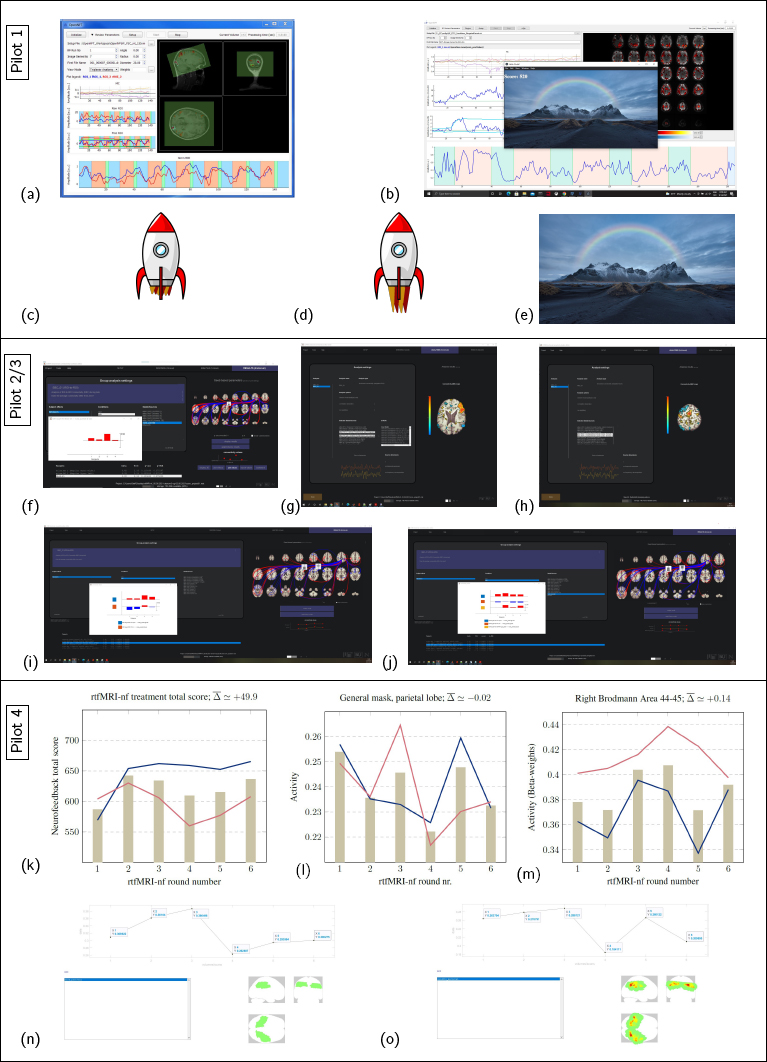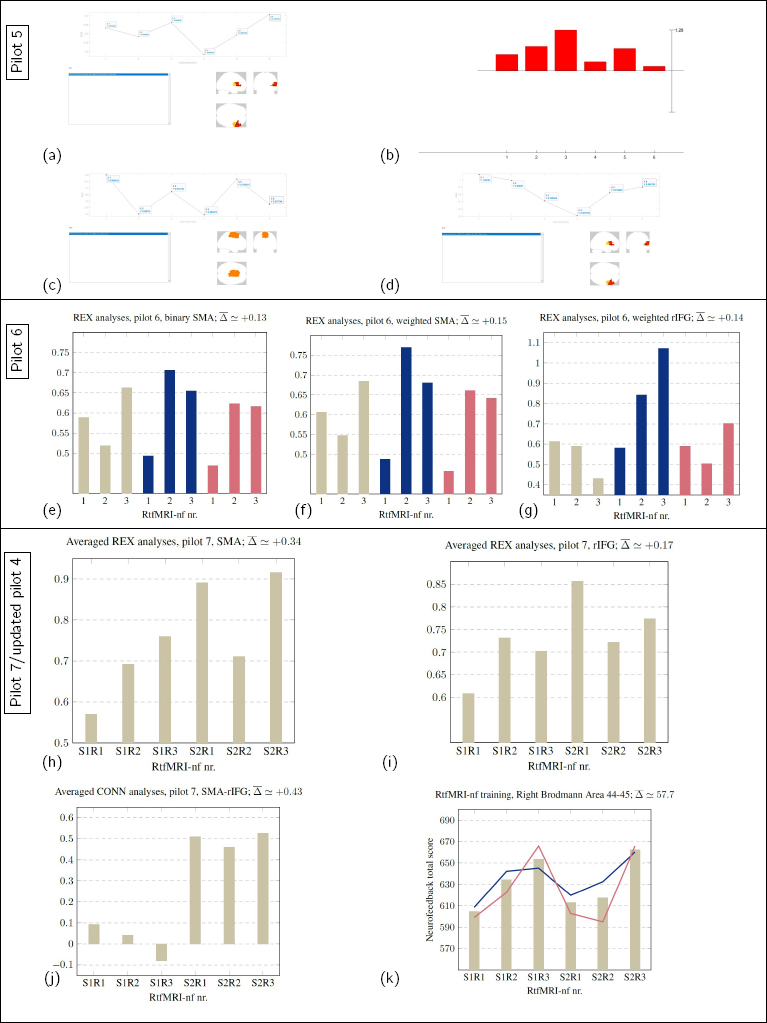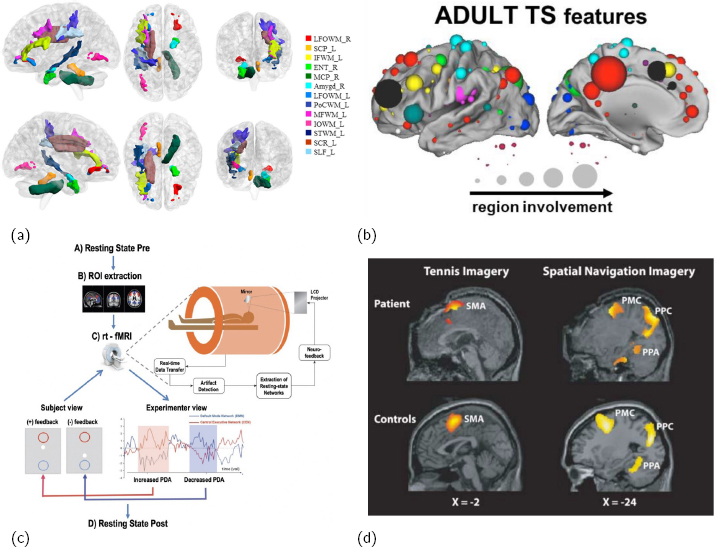
Figure 1:
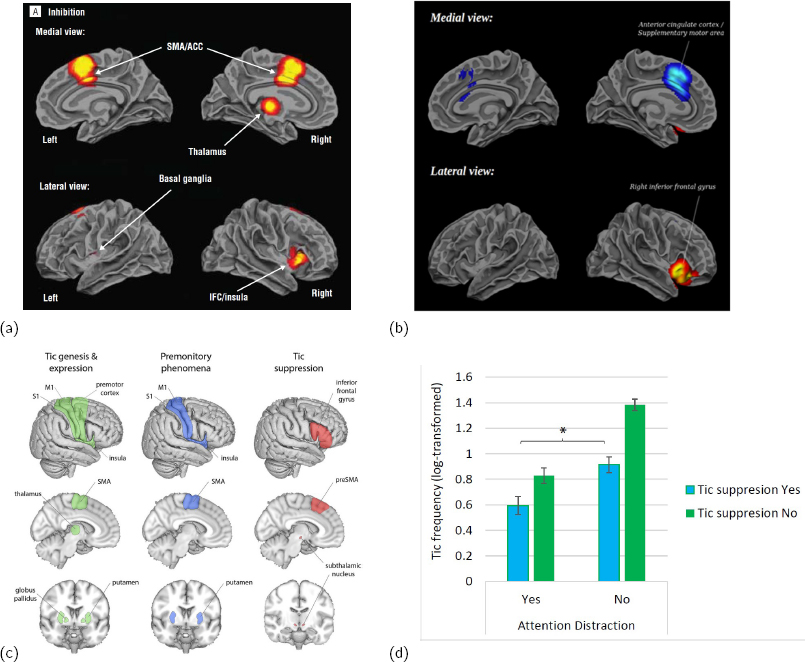
![Discovered deviations in the brain of patients with TS mapped through (a) diffusion tensor imaging (DTI) and (b) connectivity; (c) a schematic of the setup of rtfMRI-nf, showing an overview of the required instruments and sequence of events; (d) when comparing the strategic thinking of assumed vegetative patients with that of healthy controls, it was discovered that these patients were, in fact, not vegetative. Figures (a,b,c,d) from ([1],[2],[3],[4]), respectively.](https://sciendo-parsed.s3.eu-central-1.amazonaws.com/65b92df1b81b0e1a1e5d179a/j_joeb-2024-0006_fig_001.jpg?X-Amz-Algorithm=AWS4-HMAC-SHA256&X-Amz-Content-Sha256=UNSIGNED-PAYLOAD&X-Amz-Credential=AKIA6AP2G7AKOUXAVR44%2F20251208%2Feu-central-1%2Fs3%2Faws4_request&X-Amz-Date=20251208T104839Z&X-Amz-Expires=3600&X-Amz-Signature=98c7686c045ad7faddce4f19eb42db2d815e72ff4c2b4988400c816f60e1d82e&X-Amz-SignedHeaders=host&x-amz-checksum-mode=ENABLED&x-id=GetObject)
Figure 2:
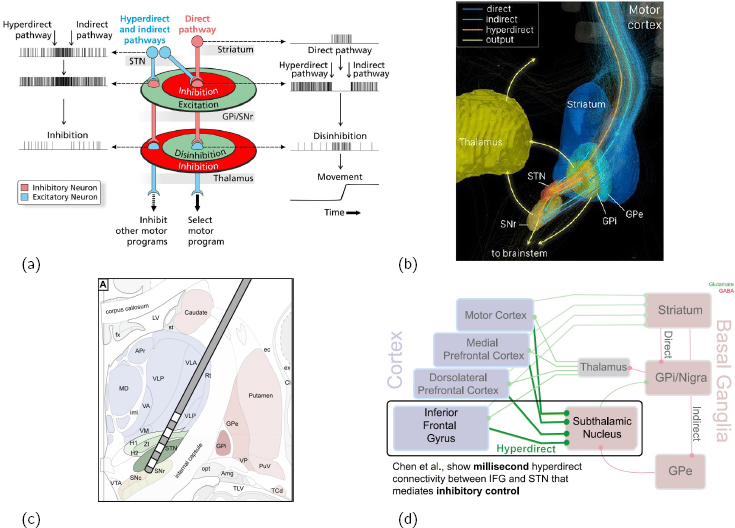
![(a) regions exhibiting decreased activity in the brain during inhibition in patients with ADHD includes SMA and rIFG; (b) methylphenidate - a common drug to treat ADHD - stimulates rIFG and decreases activity in SMA; (c) a mapping of regions with deviations correlating with TS symptoms includes SMA and rIFG; (d) conscious tic control and attention may sum to decrease tics in adult TS patients, the two potentially controlled by SMA and rIFG, respectively. Figures (a,b,c,d) from ([53],[54],[55],[56]), respectively.](https://sciendo-parsed.s3.eu-central-1.amazonaws.com/65b92df1b81b0e1a1e5d179a/j_joeb-2024-0006_fig_002.jpg?X-Amz-Algorithm=AWS4-HMAC-SHA256&X-Amz-Content-Sha256=UNSIGNED-PAYLOAD&X-Amz-Credential=AKIA6AP2G7AKOUXAVR44%2F20251208%2Feu-central-1%2Fs3%2Faws4_request&X-Amz-Date=20251208T104839Z&X-Amz-Expires=3600&X-Amz-Signature=94860a70055f8b45f4efb9797ed6c281099b4cb99403c9e2dc3ae18c73807ecd&X-Amz-SignedHeaders=host&x-amz-checksum-mode=ENABLED&x-id=GetObject)
Figure 3:
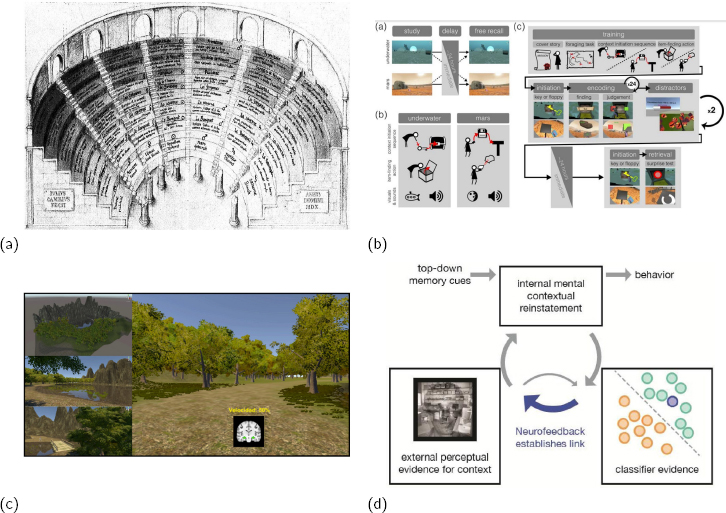
![(a) motor control through the tripartite model; (b) how the hyperdirect pathway bypasses the striatum wrt motor inhibition; (c) a common subthalamic nucleus placement of the DBS electrode in Parkinsons Disease patients, stimulating the hyperdirect pathway ; (d) an update of the tripartite model. Figures (a,b,c,d) from ([69],[69],[70],[71]), respectively.](https://sciendo-parsed.s3.eu-central-1.amazonaws.com/65b92df1b81b0e1a1e5d179a/j_joeb-2024-0006_fig_003.jpg?X-Amz-Algorithm=AWS4-HMAC-SHA256&X-Amz-Content-Sha256=UNSIGNED-PAYLOAD&X-Amz-Credential=AKIA6AP2G7AKOUXAVR44%2F20251208%2Feu-central-1%2Fs3%2Faws4_request&X-Amz-Date=20251208T104839Z&X-Amz-Expires=3600&X-Amz-Signature=2fcb667cefea5cf8496ae5a9bf7ea3ad0bda1828124513fd24eb52a59ad19578&X-Amz-SignedHeaders=host&x-amz-checksum-mode=ENABLED&x-id=GetObject)
Figure 4:
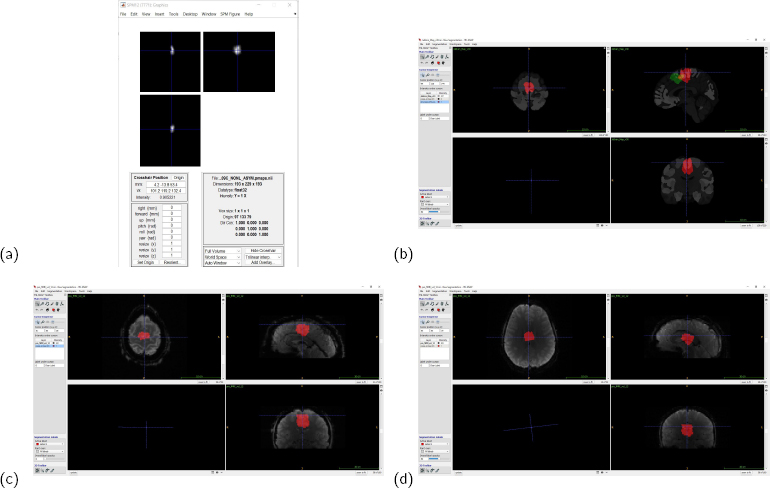
![(a) a memory palace used in 1511 AD, providing a virtual context to what was to be remembered; (b) how context in VR was used in deceived participants, indicating how context may aid memory; (c) a VR game used during an rtfMRI-nf run to assess susceptibility for developing Alzheimer’s disease; (d) a hypothesized model for how context reinstatement may aid memory. Figures (a,b,c,d) from ([77],[78],[79],[80]), respectively.](https://sciendo-parsed.s3.eu-central-1.amazonaws.com/65b92df1b81b0e1a1e5d179a/j_joeb-2024-0006_fig_004.jpg?X-Amz-Algorithm=AWS4-HMAC-SHA256&X-Amz-Content-Sha256=UNSIGNED-PAYLOAD&X-Amz-Credential=AKIA6AP2G7AKOUXAVR44%2F20251208%2Feu-central-1%2Fs3%2Faws4_request&X-Amz-Date=20251208T104839Z&X-Amz-Expires=3600&X-Amz-Signature=8d6e0d8ab312e8aa9a30180202b265ad3beda3a97581fb6d08060bdbb591ffdf&X-Amz-SignedHeaders=host&x-amz-checksum-mode=ENABLED&x-id=GetObject)
Figure 5:

Figure 6:

Figure 7:

Figure 8:

![Discovered deviations in the brain of patients with TS mapped through (a) diffusion tensor imaging (DTI) and (b) connectivity; (c) a schematic of the setup of rtfMRI-nf, showing an overview of the required instruments and sequence of events; (d) when comparing the strategic thinking of assumed vegetative patients with that of healthy controls, it was discovered that these patients were, in fact, not vegetative. Figures (a,b,c,d) from ([1],[2],[3],[4]), respectively.](https://sciendo-parsed.s3.eu-central-1.amazonaws.com/65b92df1b81b0e1a1e5d179a/j_joeb-2024-0006_fig_001.jpg?X-Amz-Algorithm=AWS4-HMAC-SHA256&X-Amz-Content-Sha256=UNSIGNED-PAYLOAD&X-Amz-Credential=AKIA6AP2G7AKOUXAVR44%2F20251208%2Feu-central-1%2Fs3%2Faws4_request&X-Amz-Date=20251208T104839Z&X-Amz-Expires=3600&X-Amz-Signature=98c7686c045ad7faddce4f19eb42db2d815e72ff4c2b4988400c816f60e1d82e&X-Amz-SignedHeaders=host&x-amz-checksum-mode=ENABLED&x-id=GetObject)
![(a) regions exhibiting decreased activity in the brain during inhibition in patients with ADHD includes SMA and rIFG; (b) methylphenidate - a common drug to treat ADHD - stimulates rIFG and decreases activity in SMA; (c) a mapping of regions with deviations correlating with TS symptoms includes SMA and rIFG; (d) conscious tic control and attention may sum to decrease tics in adult TS patients, the two potentially controlled by SMA and rIFG, respectively. Figures (a,b,c,d) from ([53],[54],[55],[56]), respectively.](https://sciendo-parsed.s3.eu-central-1.amazonaws.com/65b92df1b81b0e1a1e5d179a/j_joeb-2024-0006_fig_002.jpg?X-Amz-Algorithm=AWS4-HMAC-SHA256&X-Amz-Content-Sha256=UNSIGNED-PAYLOAD&X-Amz-Credential=AKIA6AP2G7AKOUXAVR44%2F20251208%2Feu-central-1%2Fs3%2Faws4_request&X-Amz-Date=20251208T104839Z&X-Amz-Expires=3600&X-Amz-Signature=94860a70055f8b45f4efb9797ed6c281099b4cb99403c9e2dc3ae18c73807ecd&X-Amz-SignedHeaders=host&x-amz-checksum-mode=ENABLED&x-id=GetObject)
![(a) motor control through the tripartite model; (b) how the hyperdirect pathway bypasses the striatum wrt motor inhibition; (c) a common subthalamic nucleus placement of the DBS electrode in Parkinsons Disease patients, stimulating the hyperdirect pathway ; (d) an update of the tripartite model. Figures (a,b,c,d) from ([69],[69],[70],[71]), respectively.](https://sciendo-parsed.s3.eu-central-1.amazonaws.com/65b92df1b81b0e1a1e5d179a/j_joeb-2024-0006_fig_003.jpg?X-Amz-Algorithm=AWS4-HMAC-SHA256&X-Amz-Content-Sha256=UNSIGNED-PAYLOAD&X-Amz-Credential=AKIA6AP2G7AKOUXAVR44%2F20251208%2Feu-central-1%2Fs3%2Faws4_request&X-Amz-Date=20251208T104839Z&X-Amz-Expires=3600&X-Amz-Signature=2fcb667cefea5cf8496ae5a9bf7ea3ad0bda1828124513fd24eb52a59ad19578&X-Amz-SignedHeaders=host&x-amz-checksum-mode=ENABLED&x-id=GetObject)
![(a) a memory palace used in 1511 AD, providing a virtual context to what was to be remembered; (b) how context in VR was used in deceived participants, indicating how context may aid memory; (c) a VR game used during an rtfMRI-nf run to assess susceptibility for developing Alzheimer’s disease; (d) a hypothesized model for how context reinstatement may aid memory. Figures (a,b,c,d) from ([77],[78],[79],[80]), respectively.](https://sciendo-parsed.s3.eu-central-1.amazonaws.com/65b92df1b81b0e1a1e5d179a/j_joeb-2024-0006_fig_004.jpg?X-Amz-Algorithm=AWS4-HMAC-SHA256&X-Amz-Content-Sha256=UNSIGNED-PAYLOAD&X-Amz-Credential=AKIA6AP2G7AKOUXAVR44%2F20251208%2Feu-central-1%2Fs3%2Faws4_request&X-Amz-Date=20251208T104839Z&X-Amz-Expires=3600&X-Amz-Signature=8d6e0d8ab312e8aa9a30180202b265ad3beda3a97581fb6d08060bdbb591ffdf&X-Amz-SignedHeaders=host&x-amz-checksum-mode=ENABLED&x-id=GetObject)


© 2024 Steffen Maude Fagerland, Henrik Røsholm Berntsen, Mats Fredriksen, Tor Endestad, Stavros Skouras, Mona Elisabeth Rootwelt-Revheim, Ragnhild Marie Undseth, published by University of Oslo
This work is licensed under the Creative Commons Attribution 4.0 License.