

Table 1:
% in the country who have an unfavorable view of the PRC.
| 2015 | 2016 | 2017 | 2018 | 2019 | 2020 | |
|---|---|---|---|---|---|---|
| USA | 55% | 47% | 47% | 60% | 66% | 76% |
| France | -- | 49% | 61% | 52% | 54% | 70% |
| Germany | 50% | 60% | 53% | 54% | 56% | 71% |
| Italy | 57% | 61% | 59% | 60% | 57% | 62% |
| Spain | 50% | 56% | 43% | 48% | 53% | 63% |
| Poland | -- | 42% | 29% | 37% | 34% | --- |
| Hungary | -- | 44% | 45% | 47% | 37% | --- |
| Greece | -- | 37% | 40% | 48% | 32% | --- |
| Sweden | -- | 59% | 49% | 53% | 70% | 85% |
| Netherlands | -- | 43% | 42% | 45% | 58% | 73% |
Table 2:
Fox and Godeman’s classification of the EU member states’ attitudes toward the PRC in 2008.
| Economics\Politics | Politically critical | Politically supportive |
|---|---|---|
| Economically liberal | Group 1 Ideological free traders | Group 3 Accommodating Mercantilists |
| Economically protectionist | Group 2 Assertive industrialists | Group 4 European Followers |
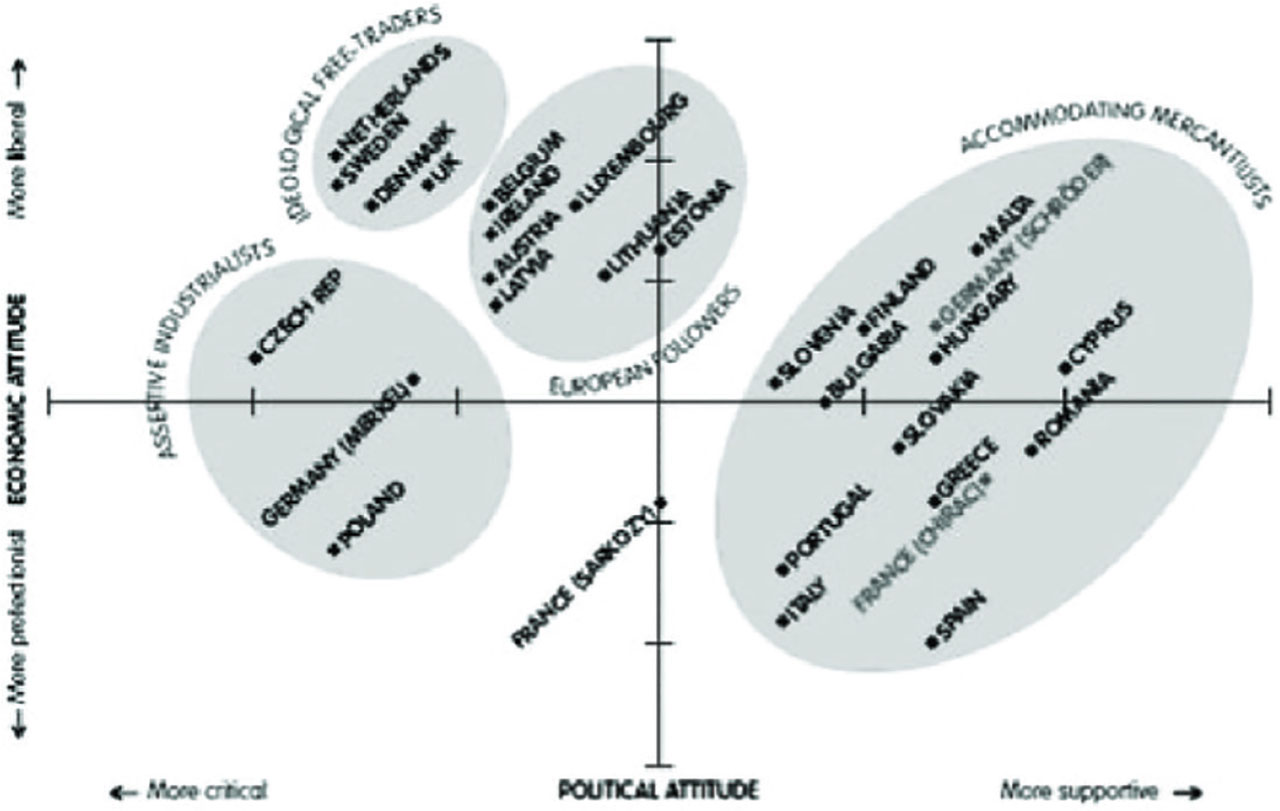
Figure 1:
Matrix by Fox and Godement 2008.
Source: Screenshot from Fox and Godement, op. cit., p. 4.
Table 3:
EU member states’ positions in domestic politics and external relations.
| External \ domestic | The Right | The Left |
|---|---|---|
| Transatlantic relationship as priority | Atlanticism | Progress movement |
| European integration as priority | European Sovereigntism | European socialism |

Figure 2:
Front page headlines in the People’s Daily of 2007 and 2017.
Source: Screenshot of ET Today of 23 October 2007 and 26 October 2017.