
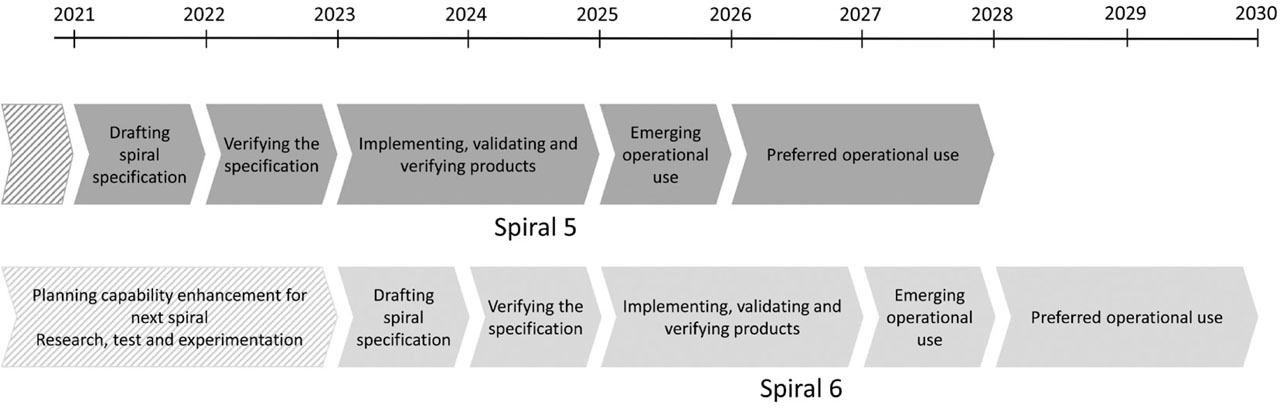
Fig. 1
FMN spirals. FMN, Federated Mission Networking.
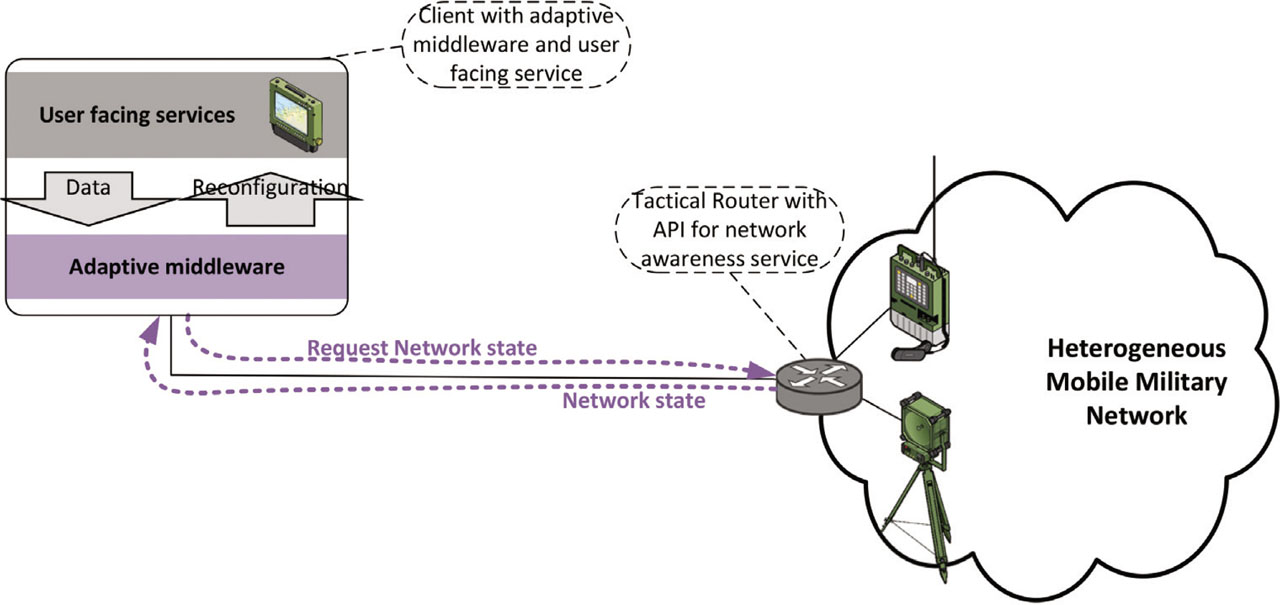
Fig. 2
Information flow overview between user-facing services (applications), adaptive middleware, network awareness service and tactical router.
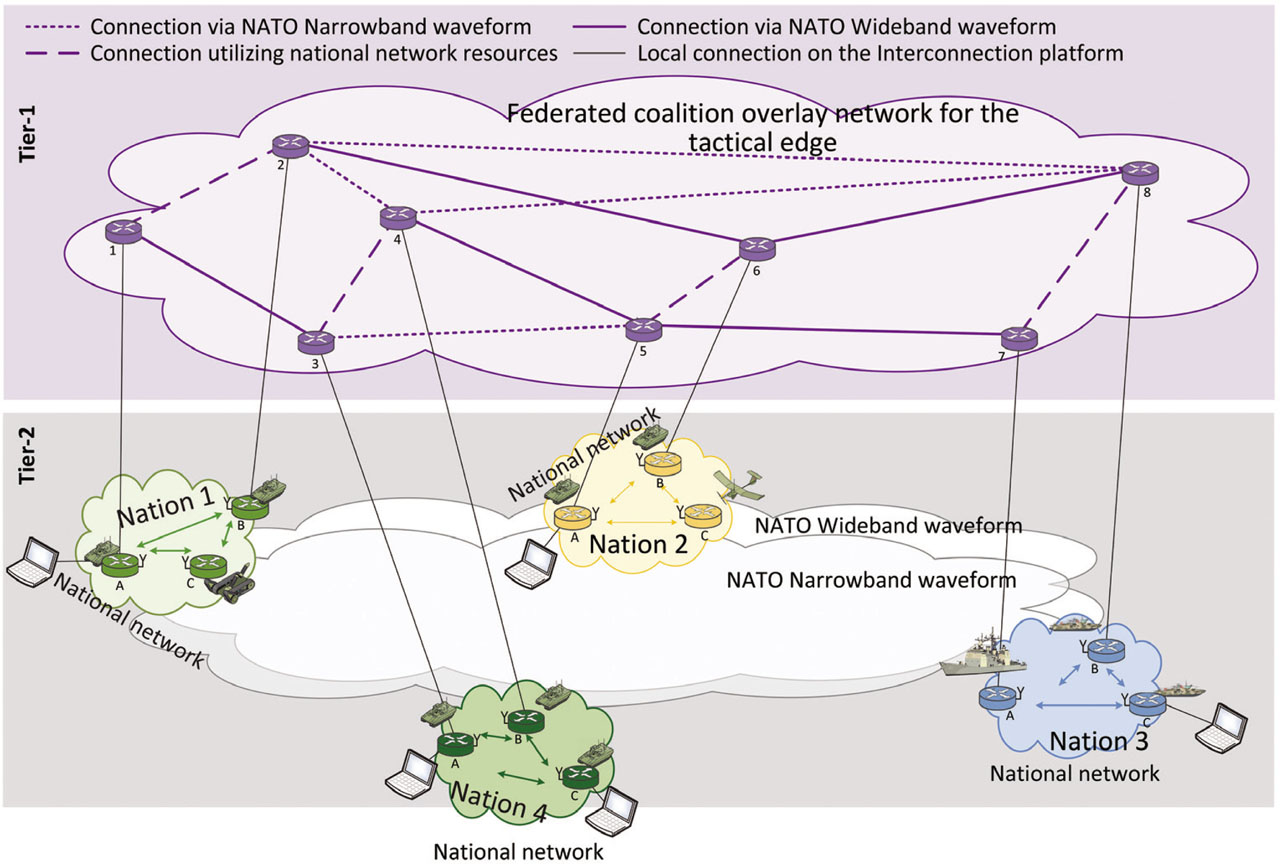
Fig. 3
The Interconnect-overlay architecture with six different tier-2 routing domains and the tier-1 overlay inter-network routing domain. Platform A and B of each nation serve as interconnection platforms and participate in the overlay routing domain of tier-1.
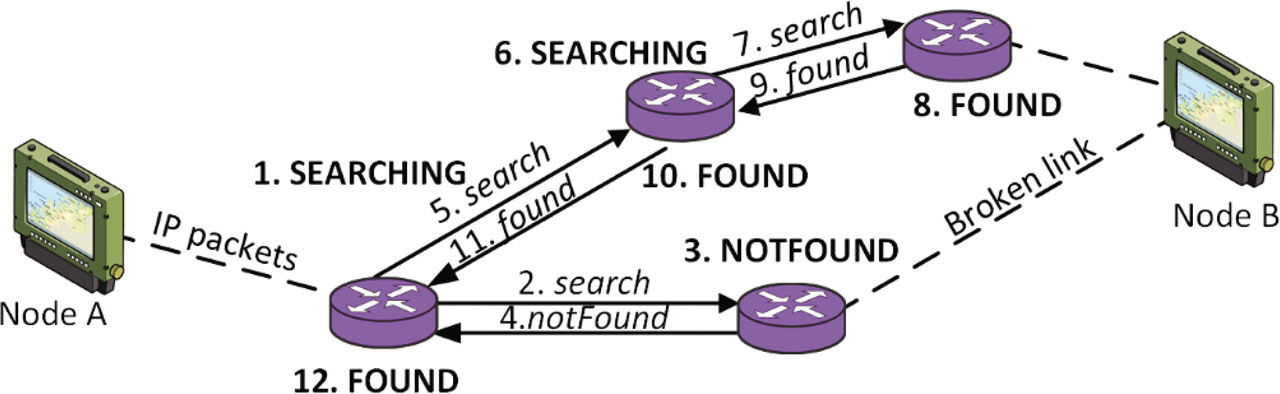
Fig. 4
DFS routing protocol's signalling to search for the route from source node (A) to destination node (B). DFS, depth first search.
Tab. 1
Traffic classes and routing policy rules
| Traffic class with some example service types | Policy |
|---|---|
| High priority traffic that does not consume much data: Examples include BFT and chat without attachments, possibly also (low resolution) pictures associated with important alerts. | Rule 1 |
| High data rate traffic: Examples include streaming video with good resolution, high-resolution pictures and chat with attachments. | Rule 2 |
| Best effort traffic | Rule 3 |
[i] BFT, blue force tracking.
Tab. 2
Allow/deny policies for the defined rules on each interface
| Interface | Rule 1 | Rule 2 | Rule 3 |
|---|---|---|---|
| The narrowband waveform interface | Allow | Deny | Deny |
| The wideband waveform interface | Allow | Allow | Allow |
| The interface towards the shared national resources (e.g., a tunnel) | Allow | Allow | Deny* |
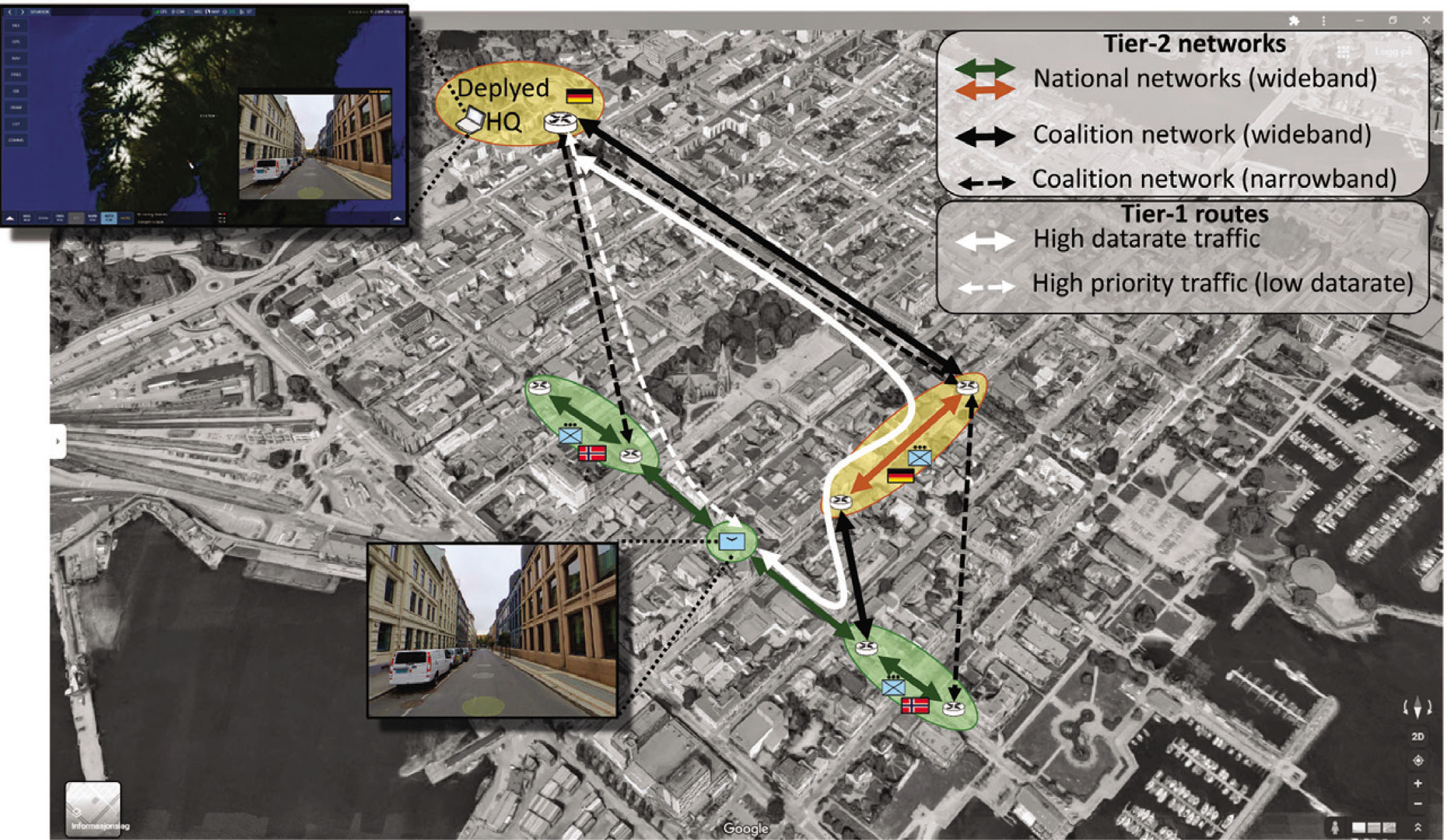
Fig. 5
The federated coalition network available to troops patrolling the Wellport city of the Anglova scenario. One of the platoons that carry a UAV that can provide a video footage of the area is shown.
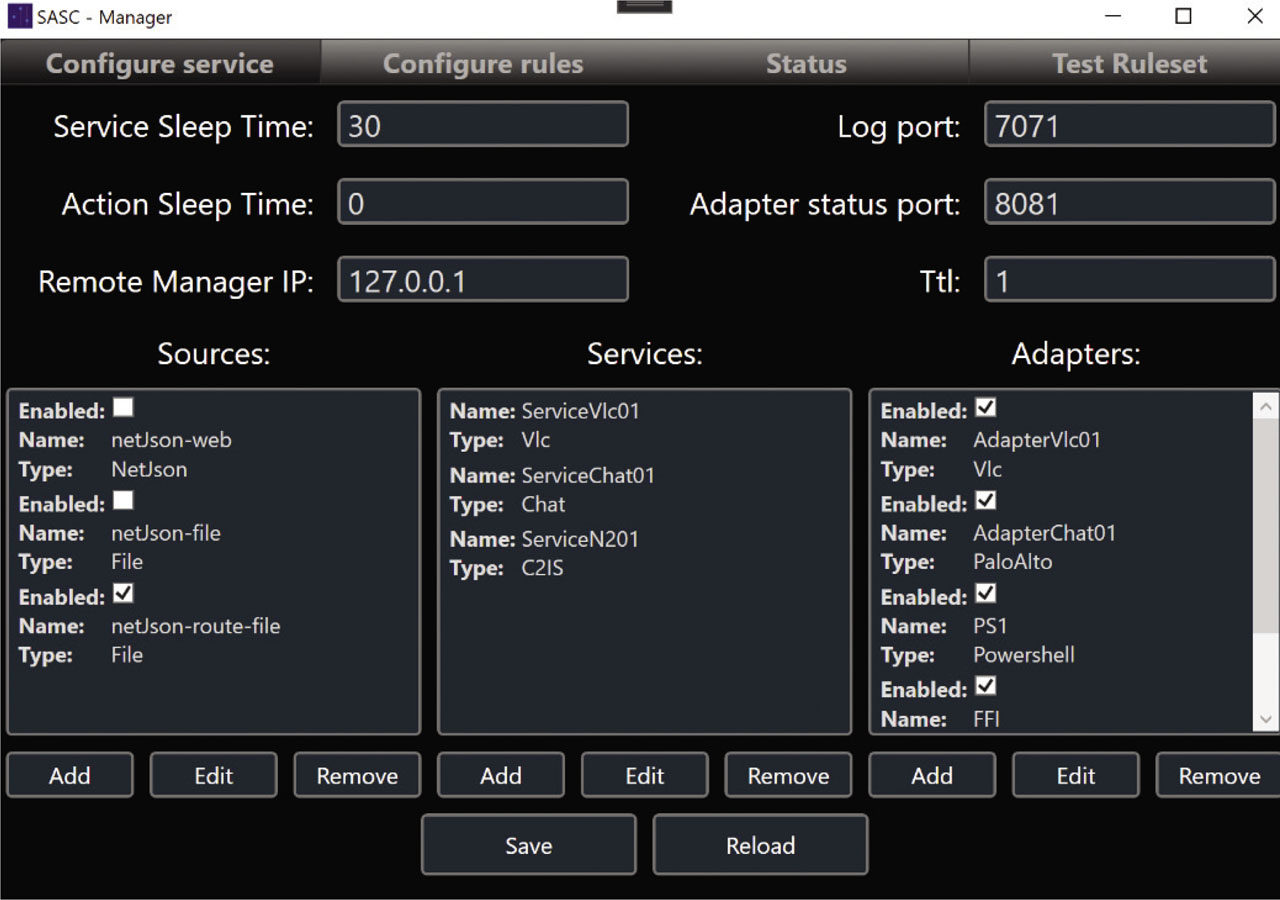
Fig. 6
SASC.Manager sources, services and adapters configuration. SASC, sysint adaptive service control.
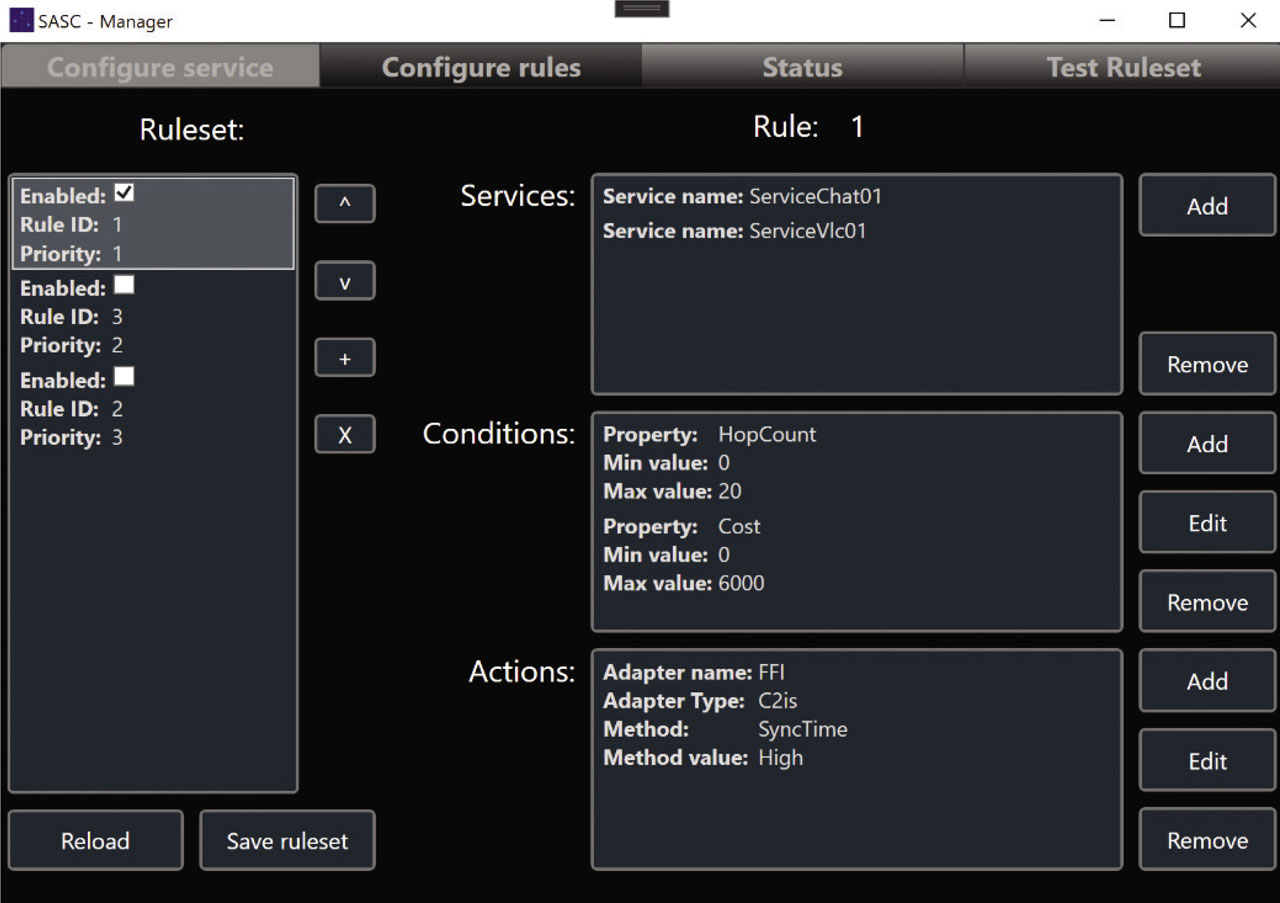
Fig. 7
SASC.Manager rules configuration. SASC, sysint adaptive service control.
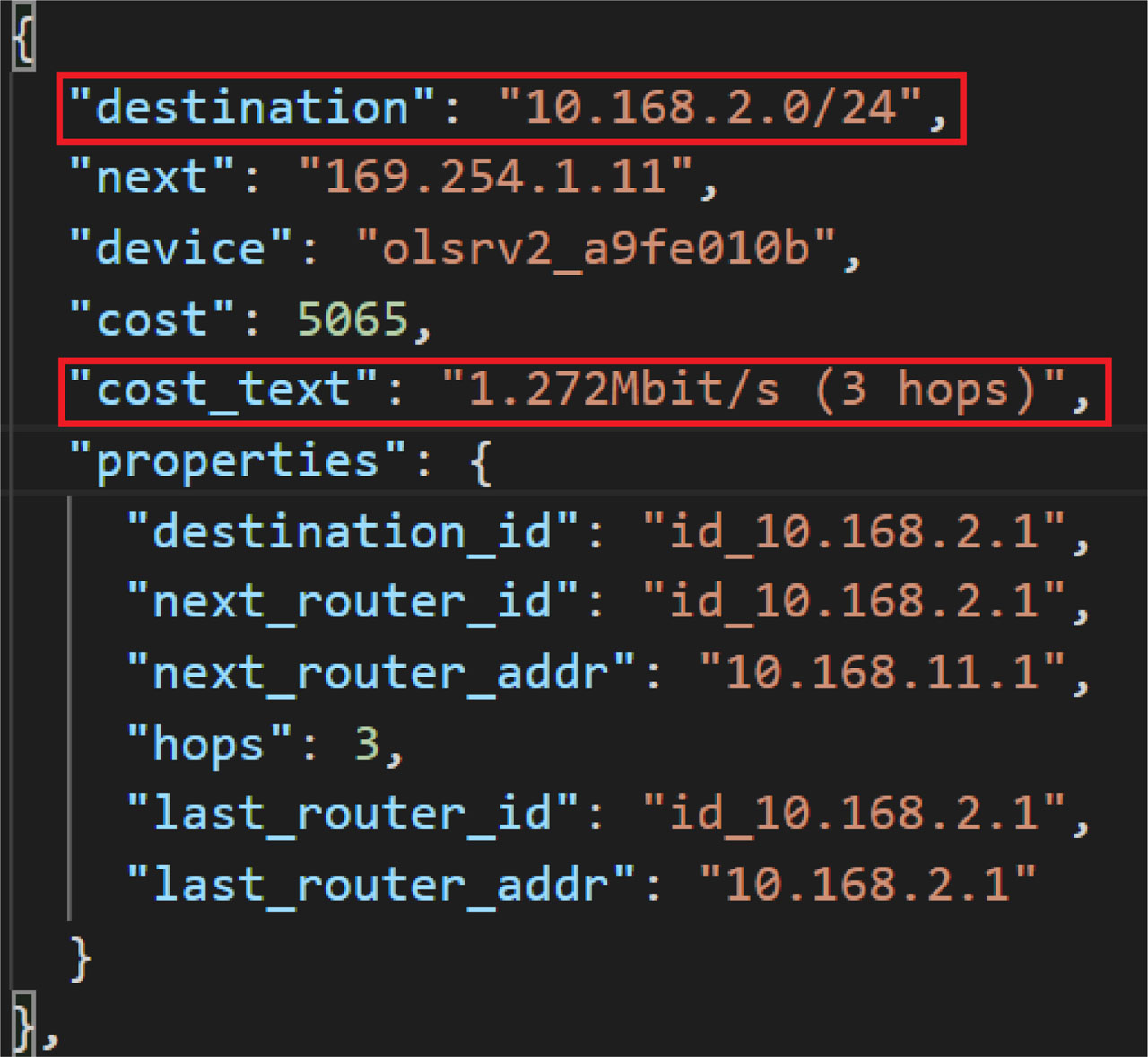
Fig. 8
NetJSON excerpt showing a single route.