
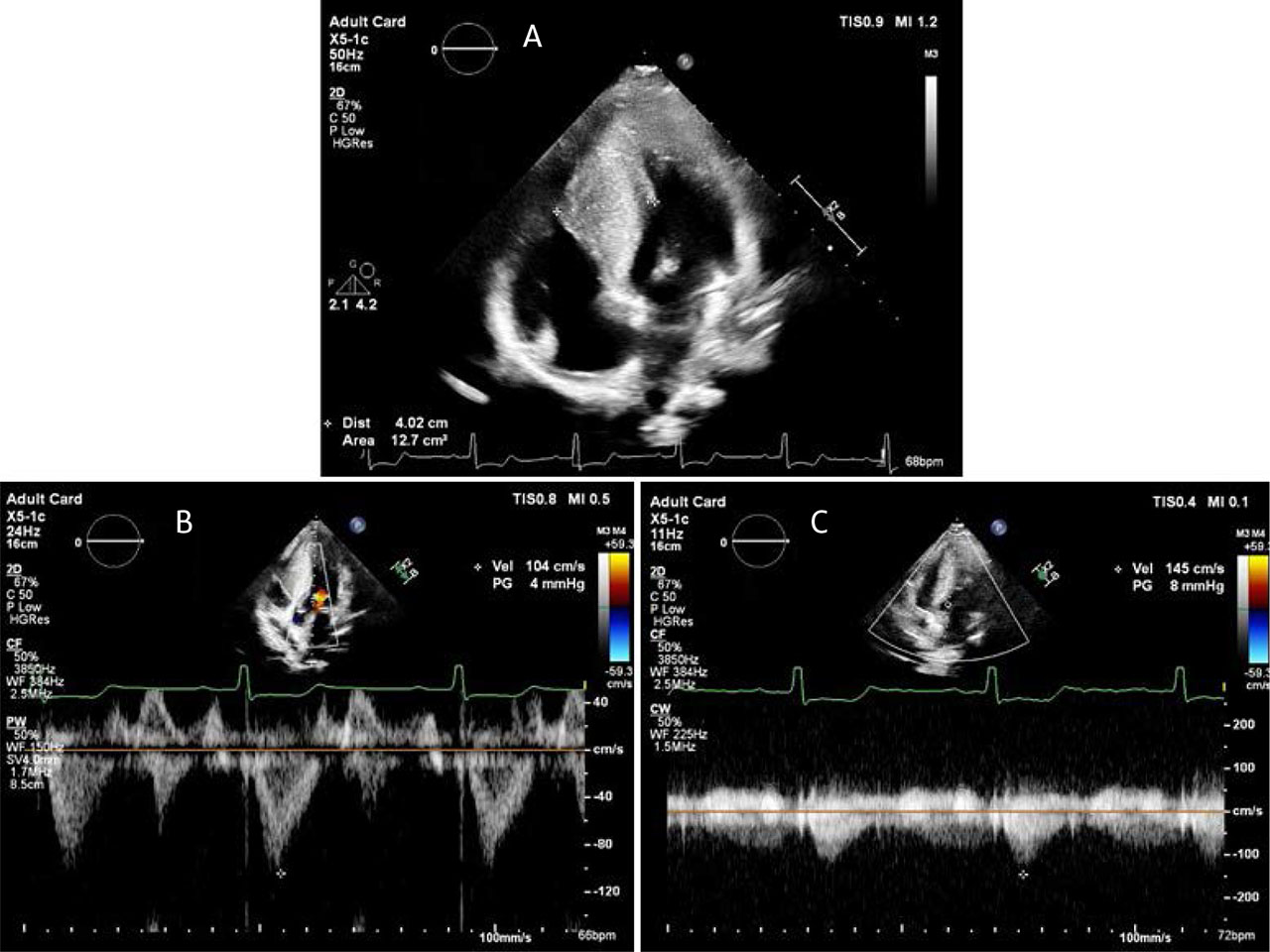
FIGURE 1.
Two-dimensional echocardiography. A. Parasternal four-chamber view showing septal hypertrophy (septal thickness 4.0 cm). B. Parasternal five-chamber view showing the LVOT without obstruction (LVOT gradient 4 mmHg). C. Parasternal five-chamber view during the Valsalva maneuver (LVOT gradient 8 mmHg, no obstruction).
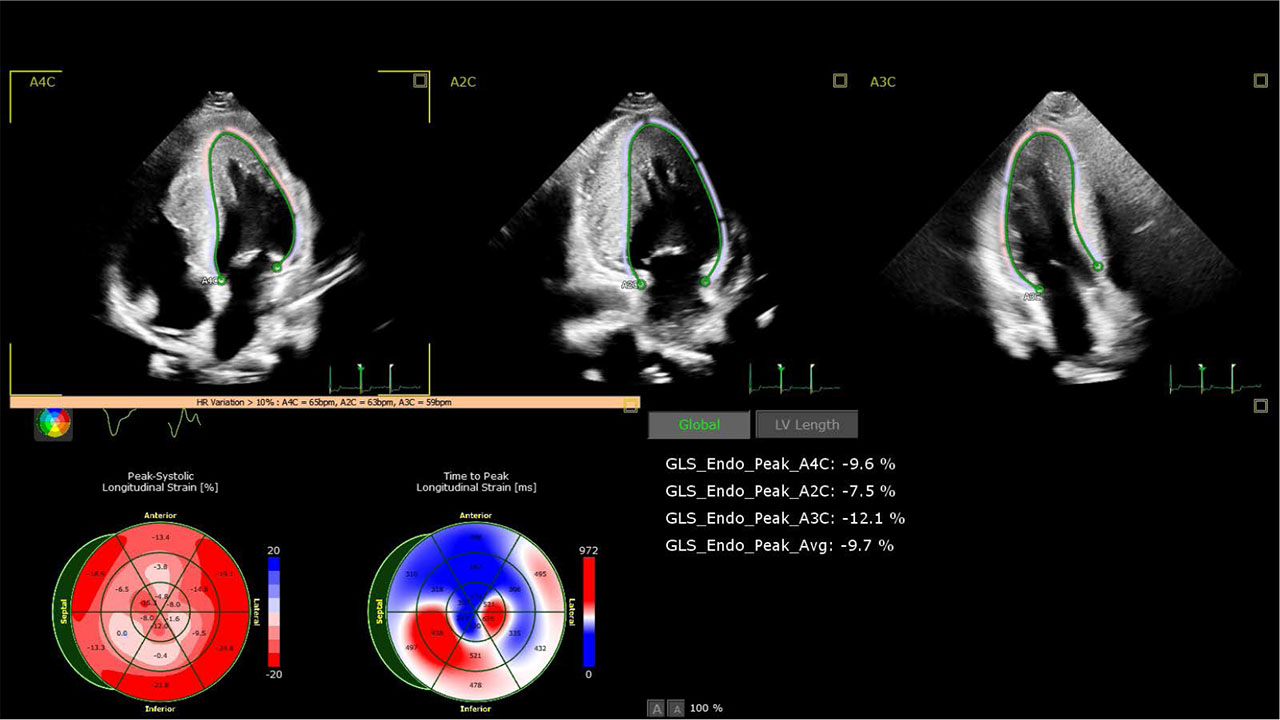
FIGURE 2.
Pre-ICD implantation speckle-tracking analysis. LV longitudinal strain from apical two-, three-, and four-chamber views, showing reduced global strain consistent with myocardial dysfunction. The final bull’s eye plot highlights low global longitudinal strain in the septum, especially in the inferior septal region.
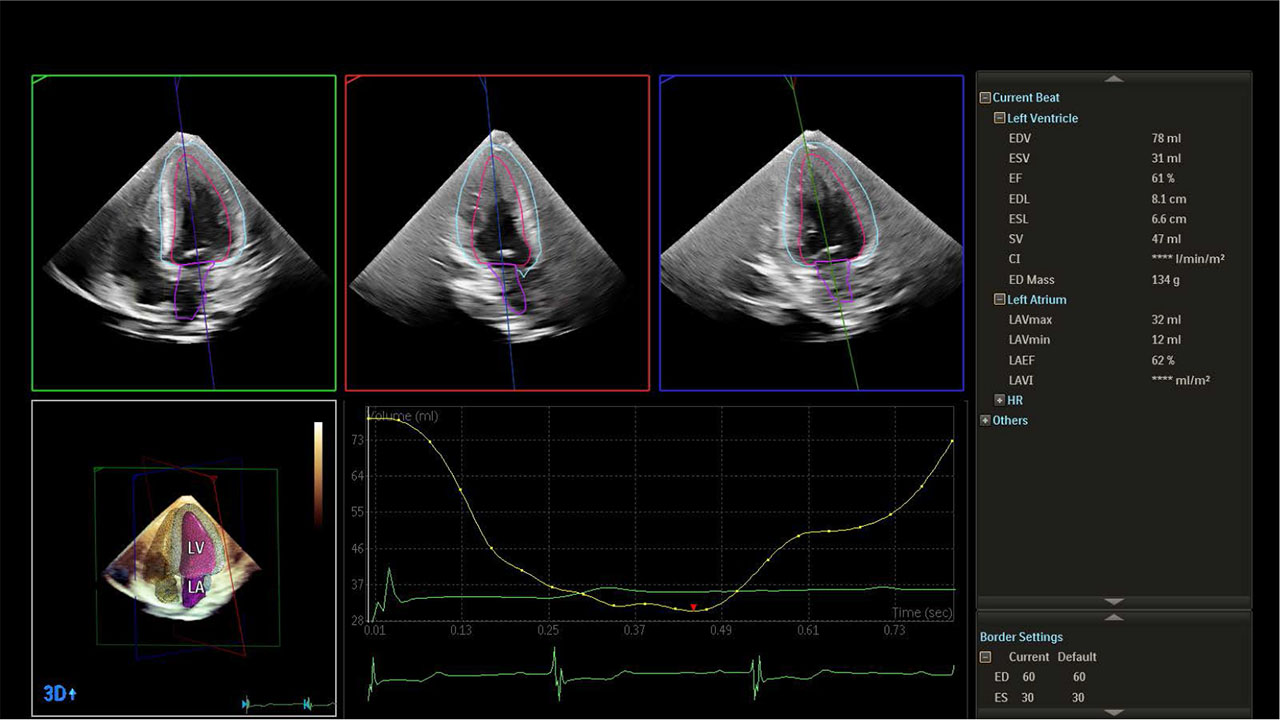
FIGURE 3.
Three-dimensional echocardiography assessing LV ejection fraction and volumes, showing preserved systolic function (LV ejection fraction 61%).
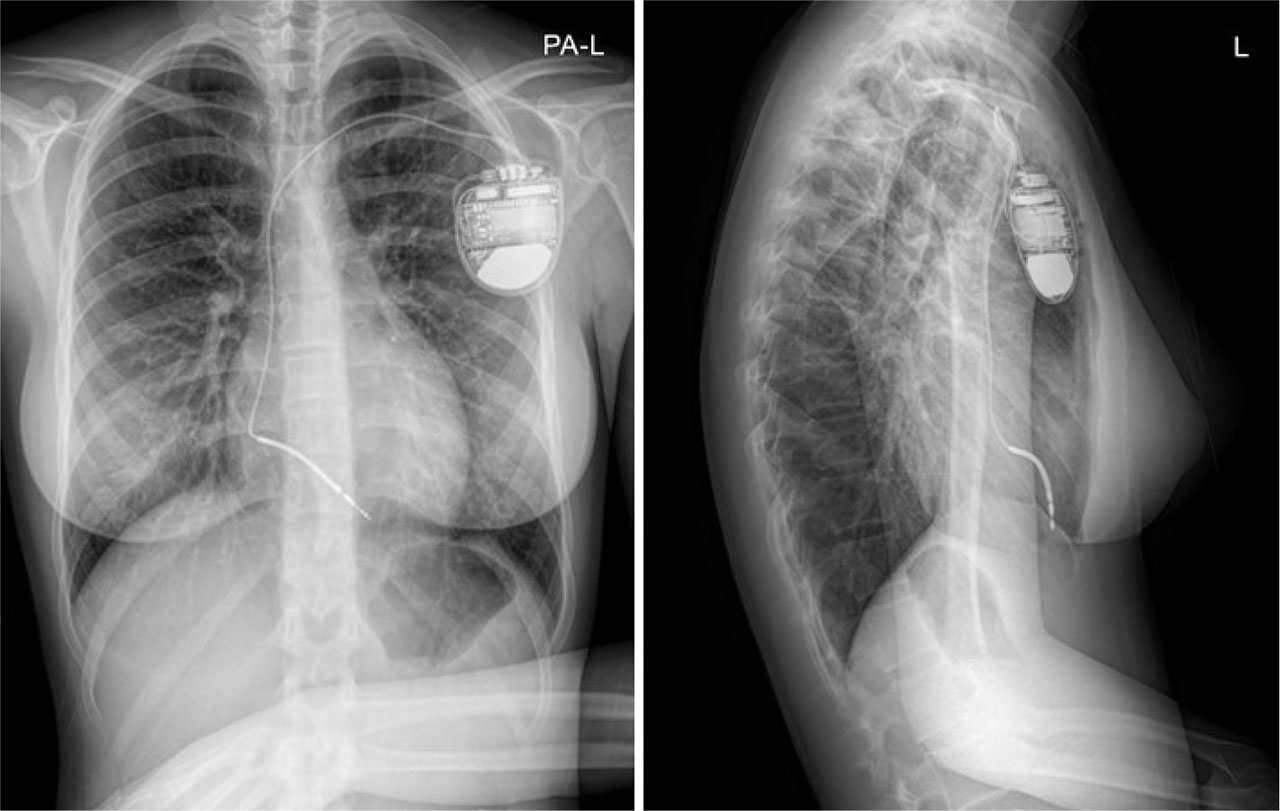
FIGURE 4.
Posteroanterior and lateral chest radiographs showing the implanted ICD and right ventricular lead position.