
INTRODUCTION
Hypertrophic cardiomyopathy (HCM) is an inherited condition of the heart muscle characterized by myocardial hypertrophy without abnormal loading conditions, typically associated with a non-dilated left ventricle and a normal or elevated ejection fraction.1 The usual alterations include increased left ventricular wall thickness (hypertrophy), dynamic obstruction of the left ventricular outflow tract (LVOT), diastolic dysfunction, mitral insufficiency, myocardial ischemia, and arrhythmias.2
More than half of HCM cases are associated with pathogenic mutations in sarcomere-related genes. For this reason, obtaining a correct and detailed family history is essential for effective risk stratification. Established risk factors linked to sudden cardiac death (SCD) include: 1) previous ventricular fibrillation, sustained ventricular tachycardia (VT), or SCD episodes, often requiring implantable cardioverter-defibrillator (ICD) therapy; 2) family history of SCD, potentially also treated with ICD therapy; 3) unexplained syncope; 4) documented non-sustained VT; and 5) marked left ventricular (LV) hypertrophy, defined as wall thickness ≥ 30 mm. The presence of any of these risk factors warrants consideration for ICD implantation.3 The genes most frequently implicated are MYH7 (β-myosin heavy chain 7) and MYBPC3 (myosin-binding protein C3), together accounting for about three-quarters of all genetic-test-positive cases. Less common variants involve genes encoding minor filament-associated proteins, such as troponin T and I, actin, and myosin light chains.3 To date, more than 1,500 separate variants have been identified. However, a definitive link between prognosis and particular genetic mutations has not been established yet.1
Clinically, HCM may present with dyspnea, chest pain, syncope, and, in severe cases, SCD. A systolic murmur that intensifies with the Valsalva maneuver is characteristic of the obstructive phenotype.4 A thorough medical history and detailed physical examination are essential for identifying patients at risk of serious arrhythmias. This case report describes the management of a 15-year-old female patient with HCM and highlights the current challenges of diagnosing HCM in children in our country.
CASE PRESENTATION
We present the case of a 15-year, 11-month-old female patient who first developed symptoms in September 2023, reporting reduced tolerance to moderate exertion and precordial pain. These complaints were initially attributed to anxiety by her family physician, and she was prescribed anxiolytic therapy, but the symptoms persisted.
It is essential to highlight that the patient’s family history is notable for HCM. Her maternal grandfather died suddenly at the age of 29. Her mother was diagnosed with non-obstructive HCM in 2023 during a routine chest X-ray performed by an occupational medicine physician, which incidentally revealed cardiomegaly. At the time of diagnosis, she was asymptomatic and is currently on chronic beta-blocker therapy with bisoprolol. Additionally, the patient’s 12-year-old sister was diagnosed with non-obstructive HCM in 2023, although currently she does not require treatment.
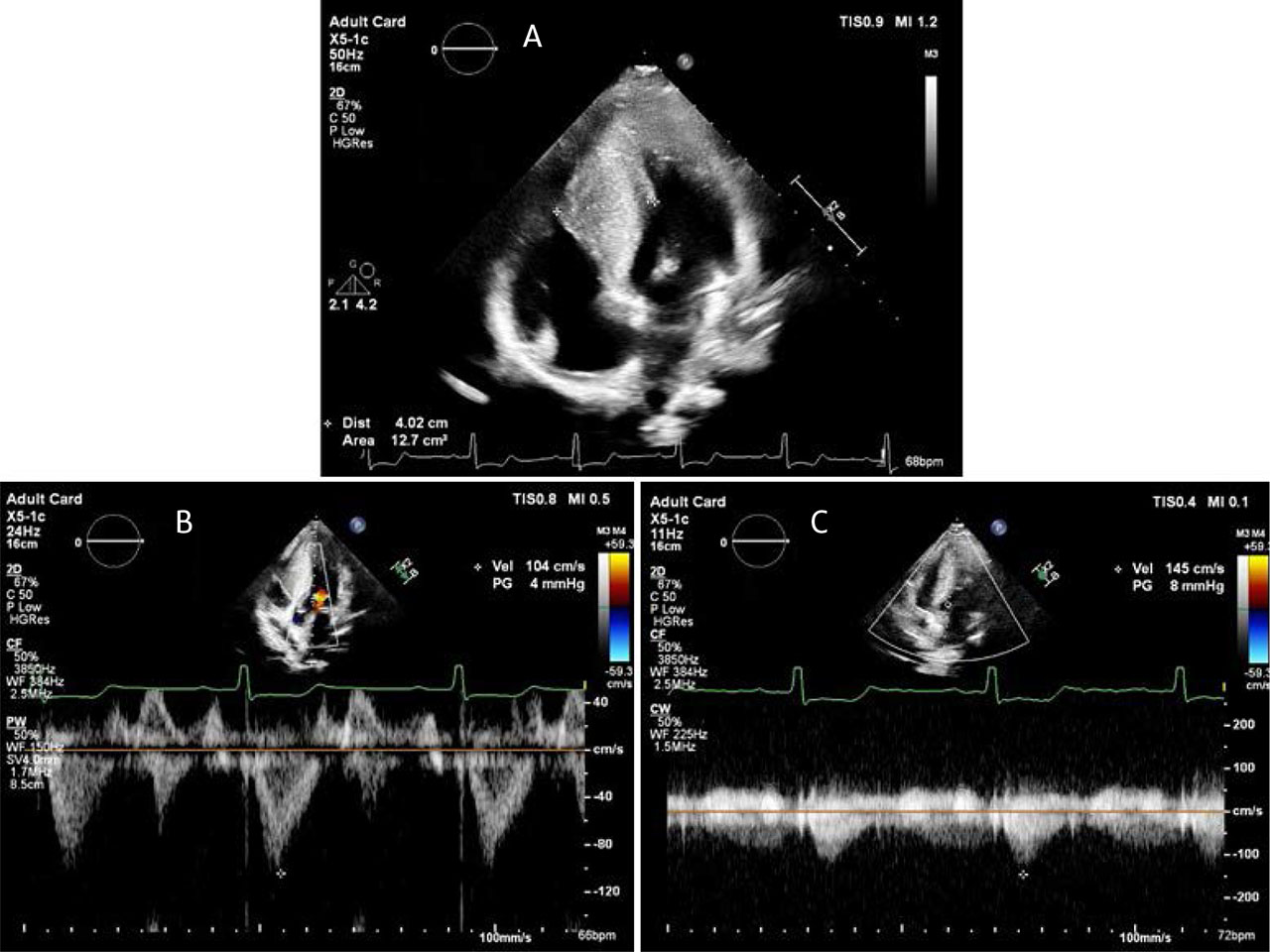
FIGURE 1.
Two-dimensional echocardiography. A. Parasternal four-chamber view showing septal hypertrophy (septal thickness 4.0 cm). B. Parasternal five-chamber view showing the LVOT without obstruction (LVOT gradient 4 mmHg). C. Parasternal five-chamber view during the Valsalva maneuver (LVOT gradient 8 mmHg, no obstruction).
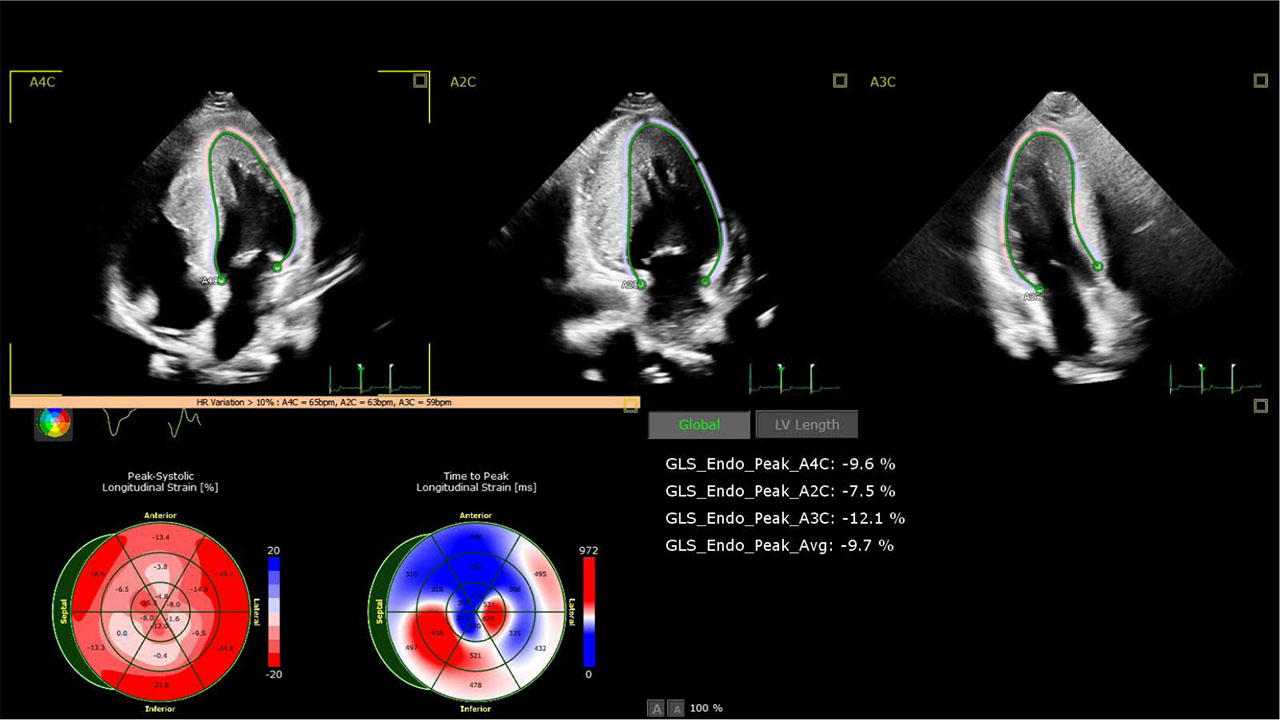
FIGURE 2.
Pre-ICD implantation speckle-tracking analysis. LV longitudinal strain from apical two-, three-, and four-chamber views, showing reduced global strain consistent with myocardial dysfunction. The final bull’s eye plot highlights low global longitudinal strain in the septum, especially in the inferior septal region.
In January 2024, the patient experienced an episode of high-intensity chest pain at rest while at school. As the pain persisted, she was transported to the emergency department for evaluation. Laboratory testing revealed elevated NT-proBNP (2,036 pg/ml, rising to 3,200 pg/ml; normal <125 pg/ml), high-sensitivity troponin I (70.1 pg/ml; normal <10 pg/ml) and troponin T (63.52 pg/ml; normal <14 pg/ml). Electrocardiography (ECG) demonstrated left ventricular hypertrophy. Echocardiography confirmed severe asymmetric HCM involving the interventricular septum, LV apex, and right ventricle (RV), with severe restrictive diastolic dysfunction. The HCM-Risk Kids score was calculated at 8.79. The patient was subsequently referred to a regional hospital for admission to the Cardiology Department. Holter ECG monitoring revealed premature ventricular contractions (28 extrasystoles, including two couplets; arrhythmic load <0.1%), premature atrial contractions (12 extrasystoles; arrhythmic load <0.1%), no ventricular tachycardia, ST-segment elevations exceeding 2 mm in precordial leads V3–V5, and eight pauses > 1.5 s. Based on these findings, the patient was initiated on propranolol therapy (20 mg three times daily).
In February 2024, cardiac magnetic resonance imaging confirmed septal-type HCM, with an indexed LV mass of 125 g/m2 body surface area. The LV had preserved dimensions but showed a septal thickness of 34 mm at the junction of the mid-cardiac and apical segments, with mild hypokinesis in the hypertrophic region. Flow acceleration was observed in the LVOT. Systolic function was preserved (LV ejection fraction 63.9%). There was no systolic anterior motion of the mitral valve. The indexed RV volume was within normal limits (47.7 ml/m2), with normal systolic function (RV ejection fraction 64.5%).
In May 2024, echocardiography continued to show severe asymmetric non-obstructive HCM involving the interventricular septum, LV apex, and RV. Strain assessment revealed reduced global longitudinal strain on the septum, especially on the inferior septal region. Risk scores were recalculated: HCM-Risk Kids = 8.79, Primacy Risk Score = 11.65, ECG-QRS limb score = 90 mm, ECG score = 7, and combined HCM-Risk Kids + ECG score = 15.79, indicating a high risk of SCD. Because of poor tolerance to beta-blocker therapy (symptomatic hypotension and dizziness), the patient was transitioned to verapamil (120 mg/day). Genetic testing confirmed the presence of a pathogenic MYH7 gene mutation.
In June 2024, the patient was hospitalized in the Pediatric Cardiology Department of the Emergency Institute for Cardiovascular Diseases and Transplantation of Târgu Mureș for persistent exertional intolerance, precordial pain, and palpitations. Echocardiography confirmed septal hypertrophy, with the interventricular septum measuring 4 cm in the apical four-chamber view (midventricular diameter; z-score Detroit = +8.17), and 3.83 cm in the parasternal short-axis view. The posterior wall of the LV was within the normal range at 0.75 cm (Z-score Detroit = +0.84), whereas the LV diameter was reduced at 3.26 cm in the parasternal long-axis view (z-score Detroit = −2.96). No LVOT obstruction was observed, with a maximum gradient of 4 mmHg, increasing to 8 mmHg during the Valsalva maneuver. No turbulent flow was seen at the midventricular level. Mild mitral regurgitation was present, without evidence of systolic anterior motion. LV diastolic function was normal, with an E/A ratio of 1.4 (E wave 0.54 m/s, A wave 0.38 m/s). Systolic function was preserved, with a lateral TDI S-wave of 8.49 cm/s and a LV ejection fraction of 79.8%. However, average global longitudinal strain was reduced (−9.7) indicating myocardial dysfunction.
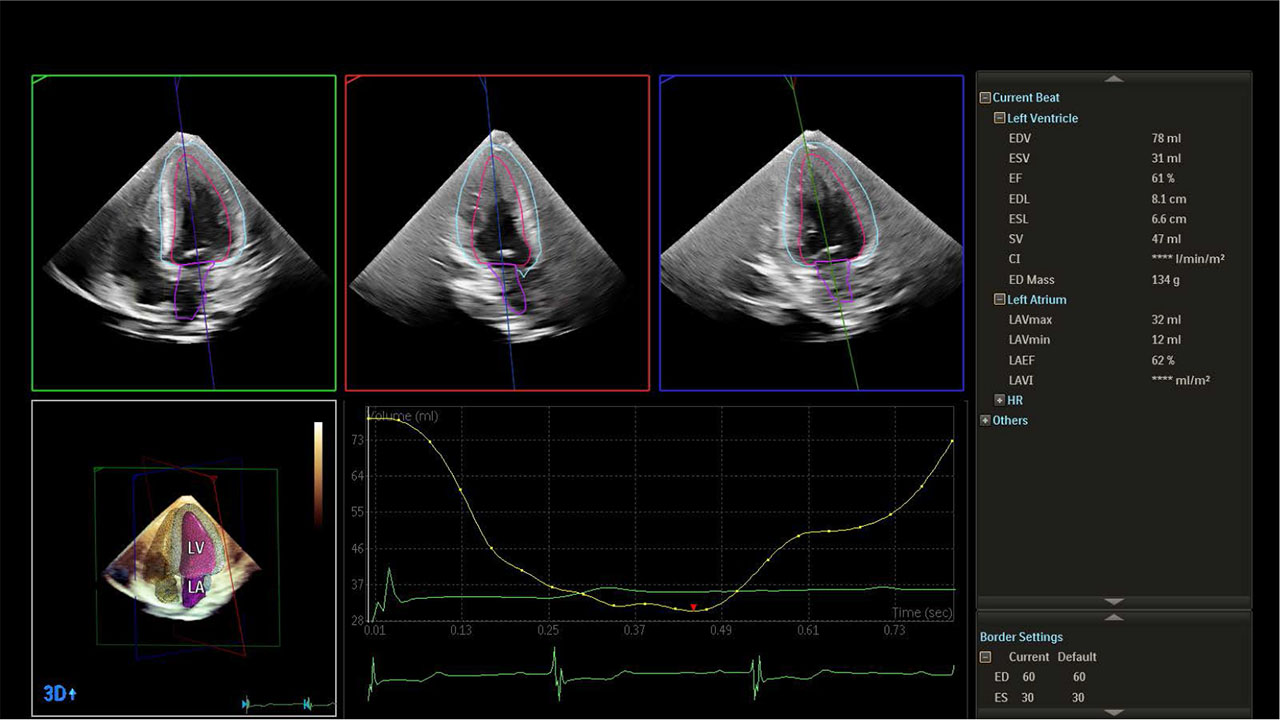
FIGURE 3.
Three-dimensional echocardiography assessing LV ejection fraction and volumes, showing preserved systolic function (LV ejection fraction 61%).
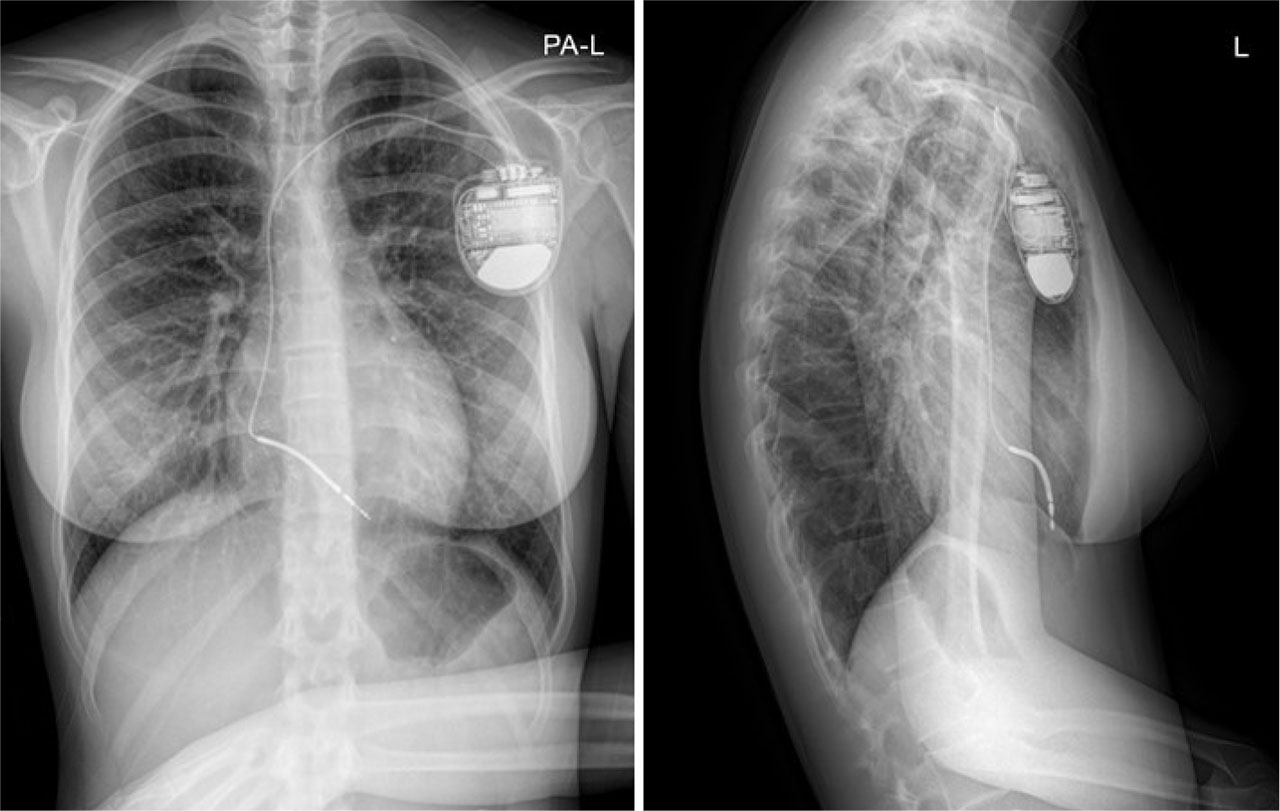
FIGURE 4.
Posteroanterior and lateral chest radiographs showing the implanted ICD and right ventricular lead position.
Given the elevated HCM risk scores (HCM-Risk Kids = 8.6%, Primacy Risk Score = 13.09), the patient was considered at high risk for SCD, and ICD implantation was recommended for primary prophylaxis by the electrophysiologist.
On July 22, 2024, a single-chamber Medtronic ICD was implanted with a St. Jude Medical lead. Post-procedural echocardiography showed a minimal pericardial effusion (5 mm) at the LV apex and anterior to the right ventricle, with preserved global contractility and normal flow in the great vessels. The ICD lead position was confirmed in the right ventricle. ECG findings were unchanged from preoperative recordings.
At the 1-month follow-up, the patient reported episodic precordial pain with an angina-like pattern and brief palpitations occurring several times per week. Echocardiography confirmed septal hypertrophy with a midventricular diameter of 3.74 cm (z-score +7.86) and no LVOT obstruction (maximum gradient 6 mmHg, increasing to 7 mmHg with Valsalva maneuver). The pericardial effusion remained minimal (5 mm), and systolic function was preserved. ICD interrogation revealed one episode of non-sustained ventricular tachycardia (<1 s, atrioventricular rate 220/min), which did not trigger device therapy. Laboratory tests showed persistently elevated NT-proBNP (1,598 pg/ml), latent iron deficiency (serum iron 58 μg/dl), and latent hypocalcemia, requiring continued supplementation. The patient remains under close clinical and electrophysiological monitoring.
DISCUSSION
The management of non-obstructive HCM is challenging and refers to cases in which LV hypertrophy is present without significant LVOT obstruction (gradient <30 mmHg at rest or with Valsalva maneuver). Even in the absence of obstruction, patients may develop symptoms such as angina, dyspnea, palpitations, and exercise intolerance, which can be attributed to diastolic dysfunction, myocardial ischemia, and microvascular dysfunction.3
Beta-blockers are the first-line therapy for symptomatic patients. By reducing heart rate and myocardial oxygen consumption, they improve diastolic filling and decrease ischemia. They have also been shown to reduce NT-proBNP levels. However, their use may be limited in patients with hypotension or bradycardia. Non-dihydropyridine calcium channel blockers (e.g., verapamil, diltiazem) provide an alternative for patients who do not tolerate beta-blockers. They work by reducing myocardial contractility and improving diastolic relaxation, thereby decreasing ischemia and anginal symptoms.3,5,6
Although the role of invasive procedures in non-obstructive HCM is limited, some patients may benefit from structured exercise prescriptions to optimize cardiovascular fitness without worsening symptoms. Moderate aerobic exercise has been suggested to improve functional capacity, whereas participation in competitive sports should be avoided due to the risk of arrhythmic events.7,8
Future therapeutic directions include clinical trials investigating novel myosin inhibitors, such as mavacamten, which has shown promise in obstructive HCM and may also improve diastolic function and symptoms in non-obstructive cases.9 However, its safety and effectiveness in patients under 18 years remain unestablished, and no pediatric data are currently available.
International cardiology societies, including the American College of Cardiology (ACC), American Heart Association (AHA), and European Society of Cardiology (ESC), recommend systematic evaluation of first-degree relatives (parents, siblings, and children) of individuals with HCM. Family screening can be performed through clinical evaluation or genetic testing.
Clinical screening of first-degree relatives is recommended regardless of genetic status, as not all HCM cases are of genetic origin. This includes echocardiography, ECG, and cardiac magnetic resonance to assess left ventricular hypertrophy, outflow obstruction, and arrhythmias. Unfortunately, in our case, screening of first-degree relatives was inadequate, and the diagnosis of HCM in our teenager was made incidentally in the context of cardiac symptoms. This remains a common situation in our country.
Given the hereditary nature of MYH7-related HCM, genetic counseling is recommended to help the patient and her family understand the diagnosis, the mode of inheritance, and the implications for first-degree relatives. The counseling should also address potential emotional and psychosocial concerns, particularly in the context of a new diagnosis during adolescence, and provide age-appropriate education about the condition and its management. Following confirmation of the pathogenic MYH7 mutation, cascade genetic testing should be recommended for parents and siblings. The primary goals of cascade testing are:
Early identification of at-risk relatives who may carry the same pathogenic variant and are therefore susceptible to developing HCM.
Implementation of surveillance strategies (e.g., periodic echocardiography and ECG) in genotype-positive individuals, even if asymptomatic, to detect early phenotypic expression.
Clinical reassurance and discharge from follow-up for genotype-negative family members, reducing unnecessary anxiety and medical interventions.
Support for family planning in the future, as the patient approaches reproductive age, including discussion of options such as preimplantation genetic diagnosis where appropriate.
Family members who test negative for the pathogenic variant may be reassured and excluded from routine cardiac surveillance. However, if a mutation is not identified in the proband or if genetic testing cannot be performed, first-degree relatives should undergo periodic clinical evaluations, including ECG and echocardiography, given the variability in age of onset and disease expression.8,9
In children and adolescents, screening typically begins at ages 10–12, with earlier initiation recommended in the presence of a family history of SCD or participation in competitive athletics.6,10,11
There are also some challenges and ethical considerations when recommending genetic testing:
Psychosocial impact. The primary ethical principle guiding pediatric genetic testing is acting in the best interest of the child. Testing should provide direct medical benefit (e.g., early surveillance or intervention) or meaningful information that influences management or quality of life. Because children cannot fully exercise informed consent, decisions are made by parents or legal guardians. A positive genetic result may cause anxiety, altered self-image, or stigmatization, particularly in adolescents. Counseling is therefore essential to help families interpret and cope with results appropriately. Genetic testing in children, especially for conditions such as HCM, which has variable expressivity and age-dependent penetrance, requires a multidisciplinary approach involving pediatricians, genetic counselors, cardiologists, and ethicists.
Cost and accessibility. Genetic testing may not be universally available, and access is often limited by financial and resource restraints.11,12 At our center, free genetic testing for patients with HCM is currently not available, and testing is typically performed only if the patient’s parents opt to cover the associated costs.
The well-being and daily functioning of individuals living with an ICD should not be overlooked, particularly in adolescents. Given that our patient is a teenager, it is important to address the emotional and psychological challenges associated with ICD implantation. Although ICDs significantly reduce mortality, they can also negatively affect psychological well-being and overall quality of life. Adolescents with ICDs often experience anxiety and depression due to fear of shocks, and those who receive multiple shocks are at a greater risk of developing symptoms similar to post-traumatic stress disorder. In addition, lifestyle restrictions and the ongoing concern of living with a chronic cardiac condition can further impact mental health. To optimize both psychological well-being and treatment outcomes, a multidisciplinary approach that includes psychological support, counseling, and patient education is essential.13,14
CONCLUSION
This case report presents the diagnosis and management of a 15-year-old female patient with non-obstructive HCM, confirmed by genetic testing, who underwent ICD implantation for primary prophylaxis against SCD. The patient’s family history revealed additional cases of HCM, yet cascade genetic testing was not performed for all relatives, highlighting a crucial gap in family screening. This case underscores the importance of a comprehensive clinical approach that includes detailed family history assessment, genetic testing for at-risk relatives, early diagnosis, risk stratification, and a multidisciplinary management strategy for pediatric and adolescent HCM patients. More importantly, it calls attention to the imperative need to implement rigorous family screening of first-degree relatives (echocardiography and ECG) in current practice. Future research should focus on optimizing genetic screening protocols and improving quality-of-life interventions for young patients with HCM and ICDs.
Notes
[2] CONSENT TO PARTICIPATE
The patient provided written informed consent for the publication of this case report, including the accompanying images.
[3] FUNDING
This work was supported by the George Emil Palade University of Medicine, Pharmacy, Science and Technology of Târgu Mureș (research grant no. 511/5/17.01.2022).
[4] Contributed by AUTHOR CONTRIBUTIONS
V.P. conceptualized the study, collected and analyzed data. D.-R.I. drafted the manuscript. I.M. provided critical feedback on the manuscript, managed the case and secured funding, I.S. created figures. L.G. supervised the writing process and provided editorial support. B.-J.H. reviewed and edited the manuscript. All authors have read and approved the final version of the manuscript before publication.