
INTRODUCTION
Acute coronary syndrome (ACS) includes several heart conditions such as ST-elevation myocardial infarction (STEMI), non-ST elevation myocardial infarction (NSTEMI), and unstable angina (UA). The importance of this condition lies in the fact that ACS remains a major cause of death, responsible for one-third of all deaths among young adults.1 Significant global disparities in ACS are evident, with variations in the prevalence of risk factors, incidence rates, availability of treatment, correct identification of risk factors, and long-term outcomes.2 The primary cause of ACS is rupture of atherosclerotic plaques and subsequent thrombus formation.3 Inflammation, as a systemic and dynamic pathological process, contributes to the progression and destabilization of coronary plaques, leading to ACS through various maladaptive ways, such as promoting atherogenesis, plaque development, thrombogenesis, and myocardial damage and repair.4
Globally, overall exposure to risk factors remained relatively stable between 2010 and 2019. However, there was a significant increase in conditions such as hyperlipidemia, hyperglycemia, high body mass index (BMI), hypertension, and exposure to air pollution during this period.2 Current evidence suggests that periodontal disease (PD) is a risk factor for low-grade inflammation-dependent cardiovascular disease.5 Although stronger and more suggestive data now point to a causal relationship between the two conditions, the evidence remains insufficient to classify PD as a casual risk factor.6
PD is defined as a chronic, multifactorial inflammatory condition caused by an imbalance in the normal oral microbiota. It is characterized by damage to the soft and hard tissues supporting the teeth due to repeated bacterial infections, which lead to gradual tissue destruction and alveolar bone loss.7,8,9 PD is highly prevalent in the general population, affecting 45–50%. In its severe form, it is the sixth most common condition globally, impacting 10–11% of young adults.8,10 PD begins with the ecological succession of dental plaque, which activates the host’s immune and inflammatory responses, leading to bacteriemia and endotoxemia.11
The relationship between PD, periostin (PN), and cardiovascular disease is not yet fully understood. Both conditions are multifactorial and share several common risk factors, such as smoking, diabetes mellitus (DM), age, and obesity, with inflammation being a key factor in their development.12 Previous research indicates that chronic inflammation caused by a high load of periodontal microorganisms, combined with vascular injury and inflammatory responses, may account for the association between PD and ACS.12 Evidence also shows that PD can have direct effects, such as promoting platelet aggregation and causing endothelial damage through autoimmune responses. Pro-inflammatory mediators also affect vascular tissues.11 Additionally, studies suggest that patients with PD often exhibit a more atherogenic lipid profile, characterized by elevated levels of low-density lipoprotein (LDL) and triglycerides (TG), along with reduced levels of high-density lipoproteins (HDL). Higher levels of oxidized LDL in PD have also been linked to increased atheroma development.8,12
Recent studies have investigated various potential biomarkers for detecting cardiac ischemia, including N-terminal pro-BNP, unesterified free fatty acids, low-density lipoprotein (lipoprotein A, apolipoprotein B), myeloperoxidase, and PN.8 PN is a cell-associated protein synthesized by fibroblasts, which plays a role in determining cell fate, promoting cell proliferation, contributing to tumorigenesis, and mediating inflammatory responses.9,13 It is also recognized for its significance in cardiac development, and its potential role as a regulator and indicator of cardiovascular pathologies is an emerging focus of research. There is substantial evidence highlighting the prominent involvement of PN in coronary disease, hypertension, valvular diseases, or cardiac fibrosis.13 In the adult heart, PN levels are generally low but increase in response to acute events and fibrotic remodeling. Consequently, elevated PN levels have been observed after ACS, correlating with reduced cardiac function and worse long-term outcomes. Moreover, higher PN levels have also been reported in atheromatous plaques.11
PN has also been identified as a crucial regulator of bone formation. It plays a role in tooth development, supports the adhesion and migration of various cell types, and contributes to the formation of mineralized tissues in both the tooth and periodontium.9 In PD, PN expression is downregulated, suggesting that inflammation associated with bacterial biofilm may contribute to this process.14,15
Diagnosing individuals with chest pain or symptoms suggestive of ACS is often complex and costly. This underscores the urgent need to identify new cardiac markers that could improve not cardiovascular risk stratification and enable earlier diagnosis of coronary disease. Despite progress, there remains a significant gap in understanding how the combined effects of PD and inflammation affect patients with ACS, and in identifying which individuals would benefit most from proactive anti-inflammatory or statin therapy.4 Therefore, the significance of PN in both PD and ACS, as well the feasibility of the proposed biological interactions, should be thoroughly investigated. The aim of the present study was to investigate the association between PN serum levels and traditional cardiovascular risk factors in patients with ACS and PD.
MATERIAL AND METHODS
STUDY POPULATION
This case–control observational study was conducted at the Cardiology Department of the County Emergency Clinical Hospital, Târgu Mureș, Romania, between January and December 2023. A total of 92 patients diagnosed with both ACS and PD were enrolled. Personal data, family history, demographic information (sex, age, weight, height, BMI, smoking status) and associated comorbidities were recorded for each participant. All data were stored anonymously.
The exclusion criteria were: refusal to participate, intolerance to the iodinated contrast, active malignancy or comorbidities with a life expectancy of less than 1 year, pregnancy, acute renal failure or dialysis, drug-induced gingival hyperplasia, and treatment with antibiotics or statins in the past 6 months.
DENTAL EXAMINATION
A comprehensive oral examination was performed by an experienced periodontist to assess periodontal status before enrollment. The diagnosis was based on clinical markers indicating the severity of PD, as well as the patient’s history of PD or ongoing specific medical or surgical treatment.
STUDY GROUPS
The study population consisted of 92 patients with ACS and concomitant PD. Blood samples were collected to quantify serum PN levels. Based on the median PN concentration (30.63 ng/ml), patients were divided into two groups: group 1, comprising 46 patients with low PN levels (LP group), and group 2, comprising 46 patients with high PN levels (HP group).
STATISTICAL ANALYSIS
Statistical analysis was performed using Graph Pad InStat 3.10 software (GraphPad Software). Normality tests were conducted on all data prior to statistical analysis. Results are reported as absolute numbers and percentages for categorical variables, and as mean ± s.d. for numeric variables. Between-group comparisons were made using the Mann–Whitney test for non-normally distributed variables, Student’s t-test for normally distributed variables, and Fisher’s test for categorical variables. The predictive capacity of biomarkers was assessed using receiver operating characteristic (ROC) curve analysis. A p value of < 0.05 was considered statistically significant.
ETHICAL CONSIDERATIONS
This study was conducted as part of the ATHERODENT study (NCT03395041) and received ethical approval from the Ethics Committee of the George Emil Palade University of Medicine, Pharmacy, Science and Technology of Târgu Mureș (approval no. 351/12.12.2017). Written informed consent was obtained from all participants prior to any procedures. All study data, along with diagnostic and therapeutic protocols, complied with patients’ rights to confidentiality and were stored anonymously.
RESULTS
BASIC CHARACTERISTICS OF THE STUDY POPULATION
A total of 92 patients with ACS were analyzed, with a mean age of 61.34 ± 10.29 years. The majority of participants were male (73%). The mean BMI of the cohort was 28.02 ± 6.92 kg/m2, with no significant differences observed between the two study groups (p = 0.75).
A notable finding was the association between the type of myocardial infarction and PN levels. Specifically, patients in group 2 exhibited a higher prevalence of STEMI compared with NSTEMI, and this difference was statistically significant (p < 0.05). In contrast, PN levels did not differ significantly in relation to traditional cardiovascular risk factors, including recurrent ACS, smoking status, diabetes mellitus, kidney disease, or hypertension (all p> 0.05). A more detailed characterization of the study population has been reported previously by the research team.16
CORRELATION BETWEEN PN SERUM LEVELS AND LIPID PROFILE
With respect to lipid profile, patients in the LP group exhibited significantly higher levels of total cholesterol, HDL cholesterol, and TG, and significant lower values of LDL cholesterol (Figure 1).
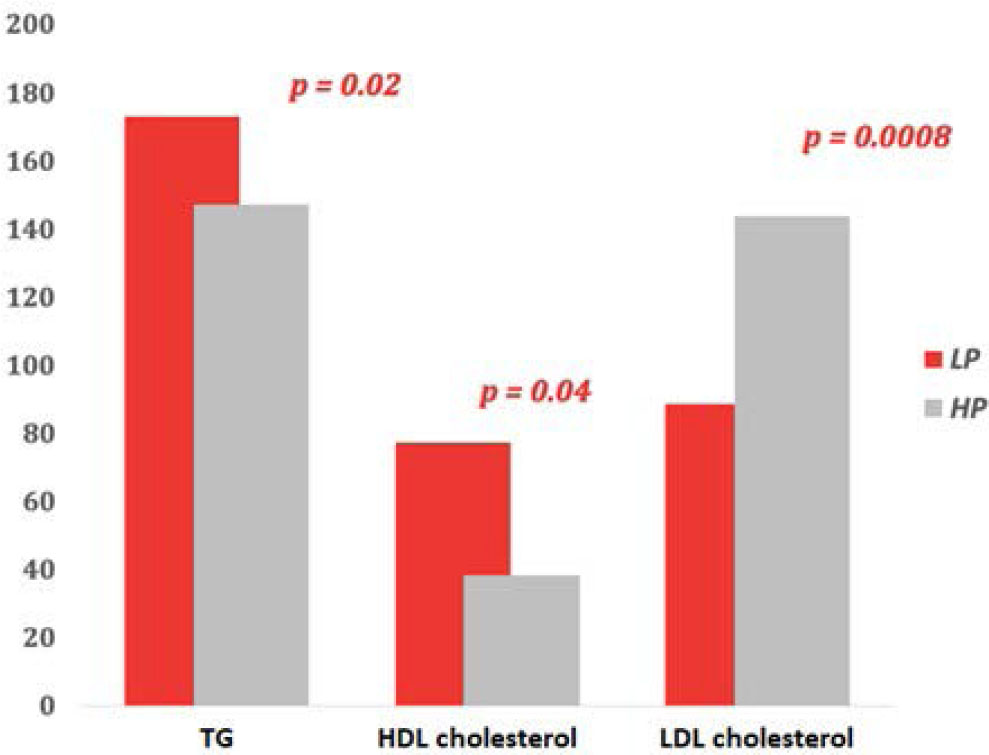
FIGURE 1.
Lipid profile in patients with low vs. high PN levels
Linear regression analysis revealed a positive correlation between serum PN levels and LDL cholesterol, suggesting that higher PN concentrations are associated with increased LDL cholesterol (Figure 2A). Conversely, a negative correlation was observed between PN levels and HDL cholesterol, indicating that elevated PN levels correspond to reduced HDL cholesterol (Figure 2B).
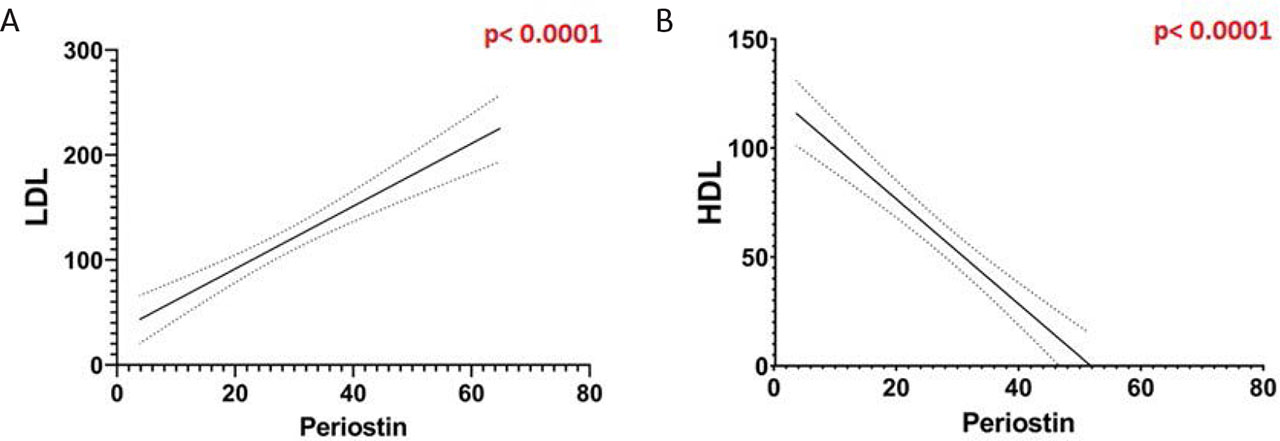
FIGURE 2.
Linear regression analysis of the association between PN and LDL cholesterol (A) and HDL cholesterol (B)
CORRELATION BETWEEN PN SERUM LEVELS AND TOTAL CARDIOVASCULAR RISK
Apolipoprotein B levels were evaluated in both groups to explore a potential association with PN. No statistically significant differences were observed, and apoB levels did not appear to be influenced by PN concentrations (1.11 ± 0.35 g/L vs. 1.10 ± 0.39 g/L; p = 0.98; Figure 3).
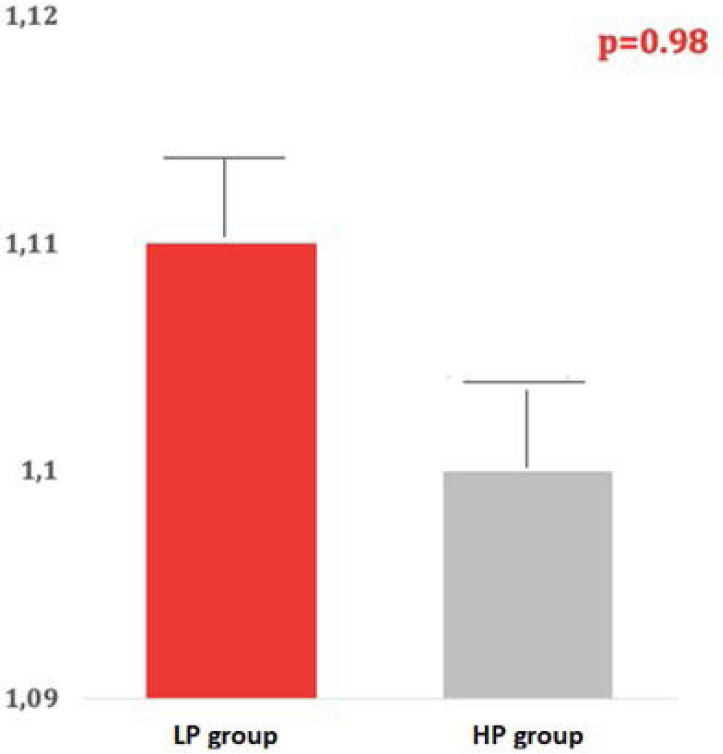
FIGURE 3.
Serum apolipoprotein B levels in patients with low vs. high PN
To assess overall cardiovascular risk, we compared serum uric acid levels between the two groups. No significant differences were found (7.89 ± 1.29 mg/dl vs. 7.13 ± 0.99 mg/dl). Although serum creatinine levels tended to be higher in the LP group, this difference did not reach statistical significance (2.69 ± 1.89 mg/dl vs. 0.90 ± 0.39 mg/dl). Similarly, baseline blood glucose levels did not differ significantly between the groups (136.00 ± 52.54 mg/dl vs. 137.7 ± 49.52 mg/dl). All p values were > 0.05 (Figure 4).
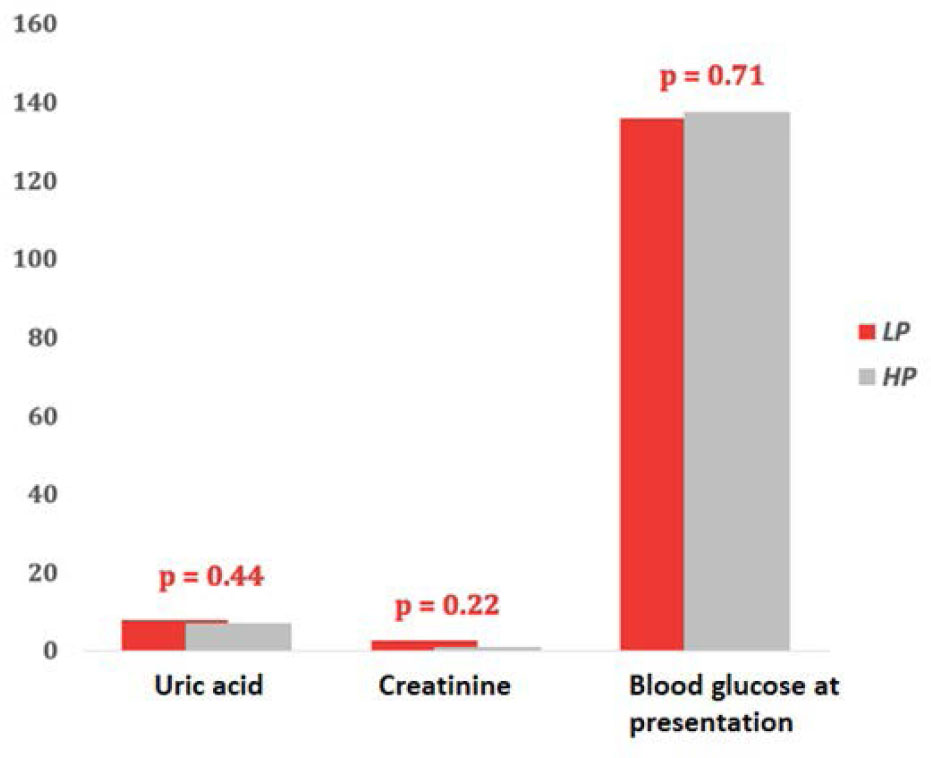
FIGURE 4.
Comparison of serum uric acid, creatinine, and blood glucose levels at presentation in patients with low versus high PN
DISCUSSION
Although PN is recognized as a pivotal biomarker in cardiac repair mechanism, its relationship with overall cardiovascular risk in patients with concomitant PD remains insufficiently understood. Evidence has demonstrated that PN is implicated in fibroproliferative diseases of the myocardium, with increased expression observed following ACS in both preclinical and clinical studies.17
Given that age is a well-established determinant in the onset of ACS, the results of this study suggest that serum PN levels do not correlate with patient age, with most events occurring at a median age of 61 years. Similar findings have been reported in patients with cardiovascular comorbidities such as heart failure and concomitant coronary artery disease, where serum PN levels were shown to increase with age compared with the healthy population (mean age 63 years).18 In contrast, a study conducted in a pediatric cohort found that age was the most powerful predictor of serum PN levels.19,20,21 However, the findings of Molina et al., who examined the association between PN, PD, and atherosclerotic coronary artery disease, revealed no significant correlation between age and PN serum levels.11
In healthy individuals, circulating PN levels remain stable between the ages of 32 and 70. Serum PN levels in this population do not require adjustment for age or sex; however, lower levels have been observed in current smokers, and sex-based differences have not been identified.18 In our study, patients with low PN and concomitant PD were more frequently male and overweight, with a higher incidence of STEMI. Similar findings were reported by Tin et al.,22 who noted that male patients and those with higher BMI may be more susceptible to inflammatory conditions, including PD, which in turn can influence PN levels and cardiovascular risk.23 Such variations may reflect changes in population demographics or study recruitment protocols, and further studies are needed to explore the mechanisms underlying these associations and their clinical implications.
According to our results, no significant correlations were found between PN levels and creatinine, glycemic profile, or uric acid levels, although slightly higher values of these parameters were observed in the LP group. Likewise, no statistically significant differences were observed between the two groups with respect to cardiovascular risk factors or comorbidities. These findings suggest that although metabolic and clinical factors may influence overall health outcomes, they do not appear to have a direct impact on serum PN levels.
In contrast, existing evidence supports the hypothesis that uric acid plays a pivotal role in the pathogenesis of several cardiovascular diseases (CVD), including hypertension. Additionally, serum PN has been shown to correlate with uric acid levels, suggesting a potential link between these factors in CVD.21
Regarding the link between PN and lipid profile in patients with ACS and concomitant PD, a direct proportional relationship was observed between serum PN and LDL cholesterol, the main cardiovascular risk factor for atherosclerotic disease. Conversely, serum TG levels exhibited a negative correlation with PN. Although apoB is a recognized cardiovascular risk factor,24 no significant correlation with PN was identified, suggesting that additional factors may mediate the relationship between PN and lipid metabolism.
The existing literature provides no clear consensus on the association between PN and lipid profile. In patients with ACS, cholesterol and LDL levels are generally higher compared with healthy populations, whereas TG and HDL levels are lower during acute events.21,23 Other studies have reported significant correlations between PN levels and TG metabolism, obesity, and inflammation.25,26 By contrast, animal studies have shown inconsistent findings: one experimental study reported no significant association between PN and lipid profile, and lipid components were lower in the experimental group than in controls.27,28 These discrepancies suggest that while human studies show varying associations, animal models may reveal different patterns, potentially due to species-specific differences or experimental conditions.
LIMITATIONS
The discrepancies between our findings and those reported in the literature may be explained by the limited number of studies validating this hypothesis. To our knowledge, this research is the first to comprehensively analyze the association between PN and cardiovascular risk in patients with ACS and concomitant PD. These results not only advance the understanding of PN’s role but also provide a foundation for future investigations, emphasizing its potential as a biomarker in CVD.
The main limitation of this study is the relatively small cohort size, which may affect the robustness and generalizability of the findings. In addition, differences reported in the literature could be attributed to the fact that many studies on PN and CVD have been conducted in experimental models or have focused on conditions other than ACS.
CONCLUSIONS
This study provides novel insights into the potential role of PN as a biomarker linking PD and ACS. Serum PN levels were associated with specific lipid profile alterations, namely higher LDL cholesterol and lower HDL cholesterol, and with myocardial infarction type, particularly STEMI. Although no significant associations were found with traditional cardiovascular risk factors or metabolic parameters, the observed associations with lipid metabolism and inflammatory processes highlight the relevance of PN in cardiovascular disease. These findings underscore PN as a possible indicator of cardiovascular risk in patients with concomitant PD and ACS, warrant validation in larger, multicenter studies to determine its clinical utility in risk stratification and management.
ACKNOWLEDGEMENT
This work was supported by the George Emil Palade University of Medicine, Pharmacy, Science and Technology of Târgu Mureș, Romania (research grant no. 510/15/17.01.2022).
Notes
[2] Contributed by AUTHOR CONTRIBUTIONS
I.P.R., V.B.H., I.B., and T.B. contributed to conceptualization and methodology. I.P.R., A.B., and E.P.V. were responsible for software. V.B.H., E.P.V., A.B., I.P.R., I.B., and T.B. carried out the investigation. I.B. and T.B. provided resources. V.B.H. and T.B. performed data curation. I.P.R. prepared the original draft. I.B., V.B.H., and T.B. contributed to review and editing. V.B.H., E.P.V., A.B., and I.P.R performed visualization. I.B. and T.B. provided supervision. All authors have read and agreed to the published version of the manuscript.