
INTRODUCTION
Renal artery thrombosis (RAT) is a rare but serious condition that usually results in acute kidney injury with significant long-term morbidity if not treated promptly. It is most usually related to underlying systemic conditions such as atherosclerosis, trauma, or thromboembolic phenomena.1 Paradoxical embolism, often facilitated by the presence of a patent foramen ovale (PFO), may be an etiological key in younger patients without traditional cardiovascular risk factors.2,3,4 Paradoxical embolism allows venous thrombi to bypass the pulmonary circulation and enter systemic arterial circulation, causing occlusion in distant organs such as the kidneys.1,5 RAT typically presents nonspecifically, with symptoms ranging from acute flank pain to hematuria or unexplained hypertension, making timely diagnosis challenging.4,6 Early detection through imaging modalities like computed tomography angiography is critical. Treatment options may include anticoagulation, thrombolysis, or interventional thrombectomy, depending on the severity of the occlusion and the patient’s condition.7,8 This case underscores the importance of a multidisciplinary approach to managing thromboembolic events and emphasizes the need for vigilant long-term monitoring to prevent recurrence, particularly in patients with conditions like deep vein thrombosis and PFO.4,7,9
CASE PRESENTATION
The patient was a 32-year-old male individual with no significant history of cardiovascular disease or other chronic conditions. He presented to the emergency department with complaints of sudden-onset severe right lumbar pain, radiating to the abdomen and right thigh, which had progressively worsened over the course of several hours. His pain was described as sharp and intense, with no associated nausea, vomiting, or fever. Upon further questioning, the patient reported that he had experienced a right patellar dislocation approximately 2 weeks prior, which had been treated with immobilization but without anticoagulation therapy.
Upon physical examination, the patient appeared to be in moderate distress due to the pain. His vital signs were as follows: blood pressure 165/90 mmHg, heart rate 79 beats per minute, respiratory rate 18 breaths per minute, and peripheral oxygen saturation 98% on room air. On palpation, tenderness was noted in the right lumbar area, and a positive Giordano sign was observed, raising suspicion for a renal pathology. The rest of the physical examination, including cardiac, pulmonary, and abdominal assessments, was unremarkable.
INITIAL LABORATORY INVESTIGATIONS
The initial blood tests revealed mild renal impairment, with elevated serum creatinine levels (1.21–1.04 mg/dl), indicating possible acute kidney injury. Inflammatory markers were elevated, with C-reactive protein levels greater than 30 mg/l, suggestive of an underlying inflammatory or thromboembolic process. D-dimer levels were significantly raised at 523 µg/l, which further supported the suspicion of a thromboembolic event.
Urine analysis showed no significant findings, with the absence of hematuria, proteinuria, or pyuria, which helped to rule out other renal pathologies such as nephrolithiasis or pyelonephritis. The patient’s electrolyte levels, including sodium, potassium, and calcium, were within normal limits, and there were no signs of electrolyte imbalance or metabolic derangements.
IMAGING STUDIES
In the emergency department, a contrast-enhanced computed tomography (CT) scan of the abdomen and pelvis was performed because of the clinical suspicion of aortic dissection and to evaluate for RAT or other acute vascular events. The scan revealed a total occlusion of the right renal artery, resulting in infarction of approximately two-thirds of the right kidney (Figure 1). Notably, there was no evidence of aortic dissection or other abdominal pathologies such as bowel ischemia. Additionally, the CT angiography revealed pulmonary thromboembolism in the right posterior basal lobar and segmental arteries.
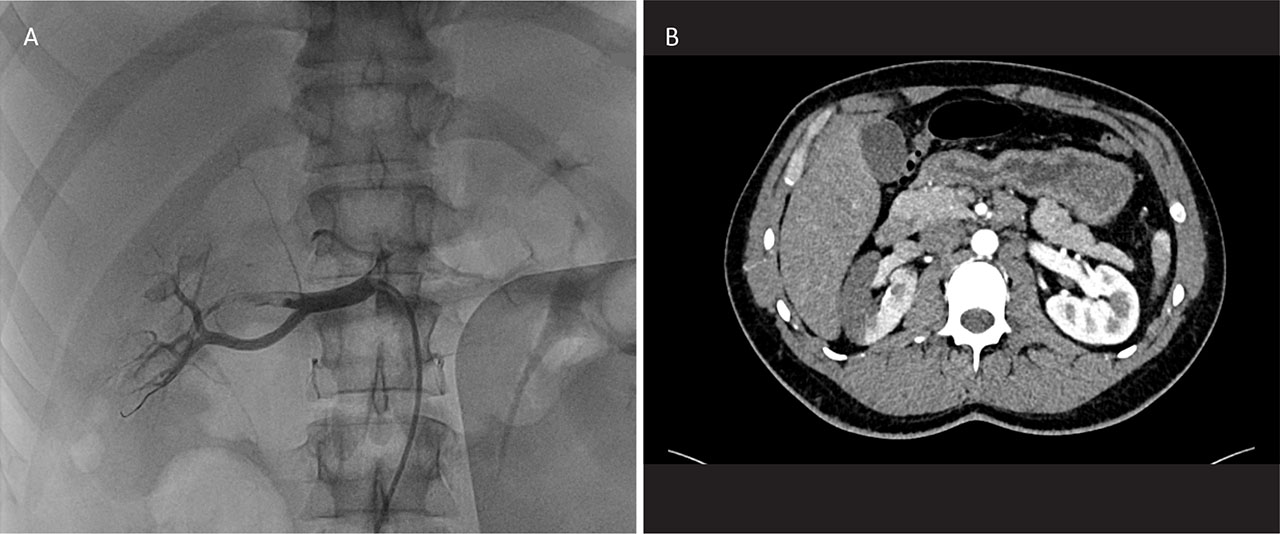
FIGURE 1.
A. Total occlusion of the right renal artery. B. Infarction of the right kidney.
To further evaluate the cause of the RAT, Doppler ultrasound of the lower extremities was performed. This study revealed the presence of a deep vein thrombosis (DVT) in the right popliteal and tibial veins. The presence of a DVT raised concern for a paradoxical embolism.
CARDIAC EVALUATION
Given the suspicion of paradoxical embolism, the patient underwent a transesophageal echocardiogram to assess for the presence of a PFO. The echocardiogram confirmed the diagnosis, revealing a PFO with right-to-left shunting during a Valsalva maneuver, which was consistent with paradoxical embolism as the underlying cause of the RAT (Figure 2).
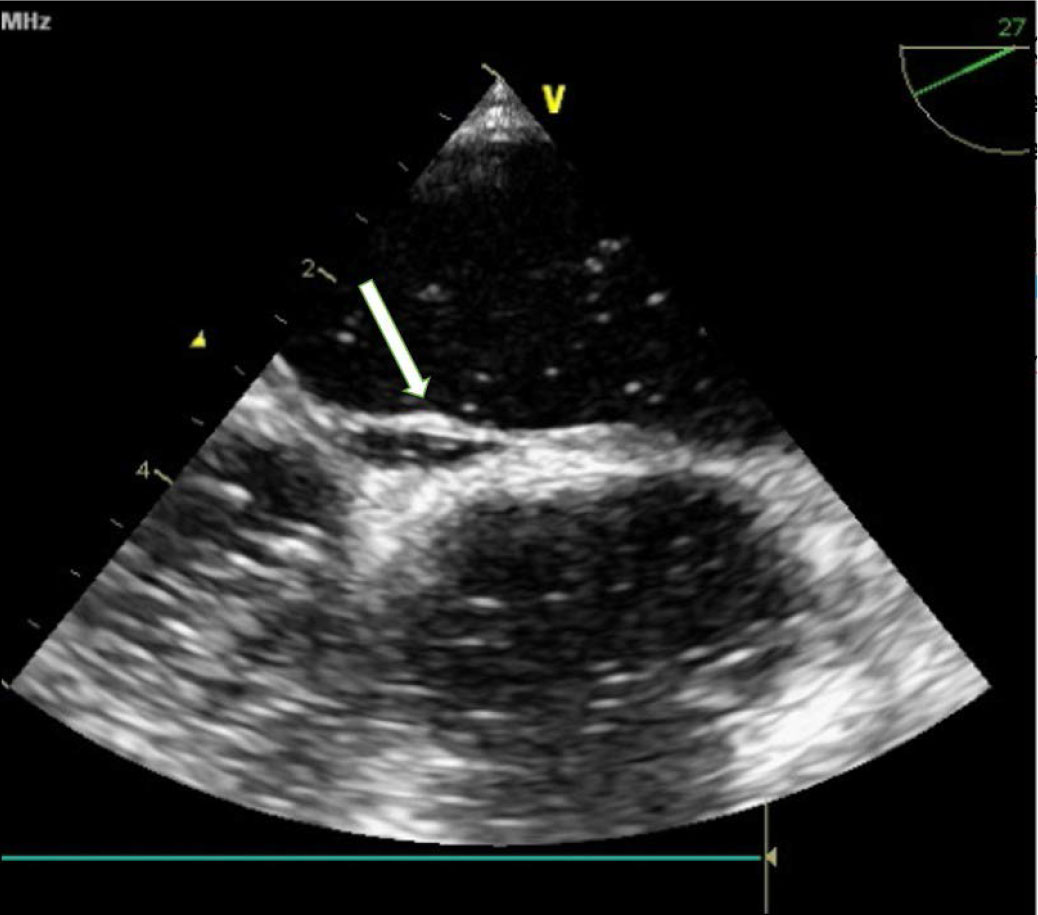
FIGURE 2.
Patent foramen ovale (arrow) with right-to-left shunting during the Valsalva maneuver
No other significant structural abnormalities of the heart were identified, and there was no evidence of valvular disease or significant left ventricular dysfunction. The presence of a PFO, in combination with the patient’s recent DVT, strongly suggested paradoxical embolism as the etiology of the RAT.
DIFFERENTIAL DIAGNOSIS
At this point, the differential diagnosis included various causes of RAT, such as atherosclerosis, vasculitis, trauma, and hypercoagulable states. However, given the patient’s young age, lack of significant cardiovascular risk factors, and the confirmed presence of a PFO with a recent DVT, paradoxical embolism was considered the most likely cause.
INTERVENTION AND TREATMENT
Given the severity of the renal artery occlusion and the extent of renal infarction, an urgent interventional approach was undertaken. The patient was transferred to the catheterization laboratory, where he underwent catheter-directed thrombolysis of the right renal artery. During the procedure, thrombolysis was successful, and flow was restored to renal tissue. Post-procedural angiography confirmed adequate recanalization of the renal artery (Figure 3).
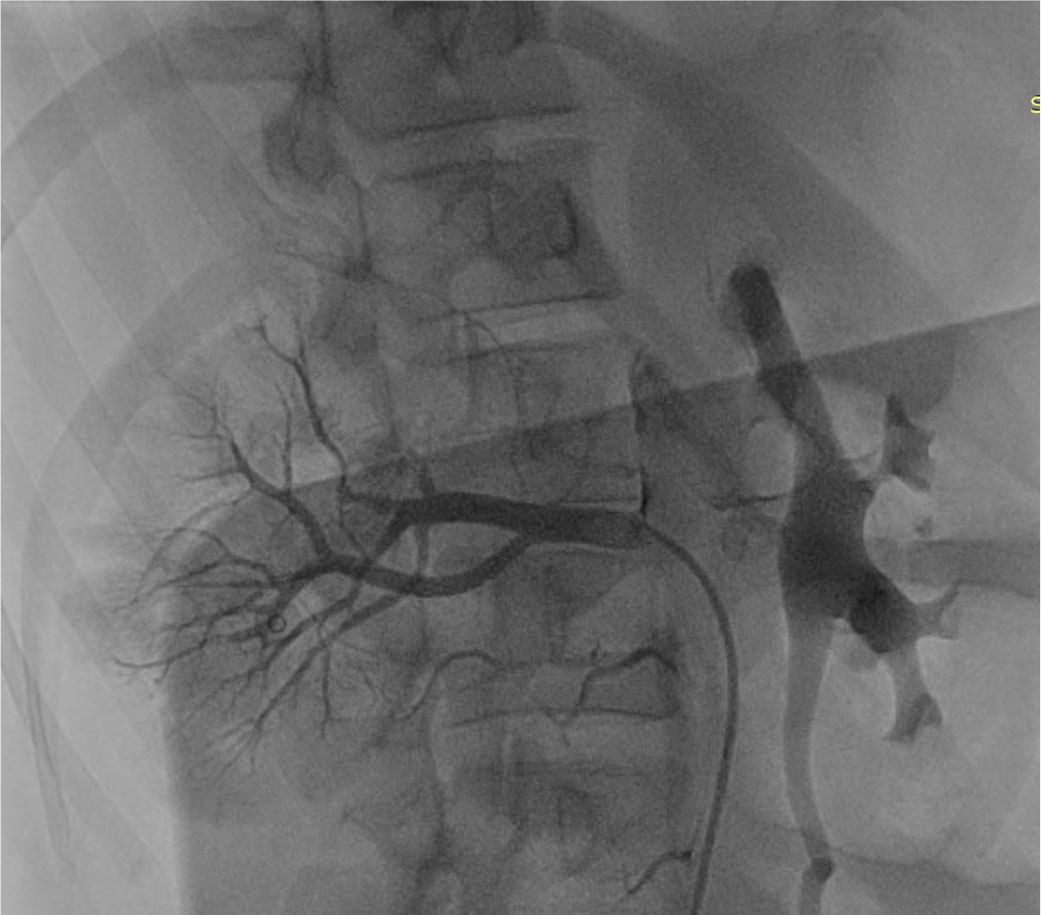
FIGURE 3.
Post-procedural angiography confirming adequate recanalization of the renal artery
Following the procedure, the patient was closely monitored in the intensive care unit. He was started on anti-coagulation therapy with low-molecular-weight heparin (enoxaparin 0.8 ml subcutaneously twice daily), which was followed by oral anticoagulation with warfarin upon discharge. The goal of anticoagulation was to prevent further thromboembolic events, particularly in the context of the paradoxical embolism.
In addition to anticoagulation, the patient was also prescribed micronized purified flavonoid fraction 1,000 mg daily to manage symptoms related to venous insufficiency and promote venous return. Analgesics were administered for pain control, and intravenous fluids were given to maintain adequate hydration and to support renal perfusion.
OUTCOME AND FOLLOW-UP
The patient’s condition improved significantly over the course of his hospital stay. His lumbar pain decreased in intensity, and his renal function stabilized, with creatinine levels returning to near-baseline values. A repeat CT angiography performed 5 days after the procedure confirmed that the renal artery remained patent, with no evidence of recurrent thrombosis.
Given the patient’s history of paradoxical embolism, transcatheter closure of the PFO was recommended to prevent future embolic events. The patient was scheduled for a follow-up consultation with an interventional cardiologist to discuss the timing and risks of the procedure. In the meantime, he was advised to continue long-term anticoagulation with warfarin, with regular monitoring of his international normalized ratio to ensure therapeutic levels.
A review of the patient’s coagulation profile did not reveal any inherited or acquired thrombophilia, such as factor V Leiden mutation, antiphospholipid syndrome, or protein C or S deficiency. This further supported the hypothesis that the RAT was secondary to the paradoxical embolism rather than a primary hypercoagulable disorder.
DISCUSSION
RAT is a rare, yet serious clinical condition that can result in acute kidney injury and significant long-term morbidity if not recognized and treated promptly.5,9 The present case of a 32-year-old male highlights the challenges and complexities of diagnosing and managing RAT, especially when the cause is paradoxical embolism.
The management of RAT is dictated by the severity of the arterial occlusion, the extent of renal damage, and the patient’s overall clinical status. In this case, the patient presented with total occlusion of the right renal artery, leading to infarction of two-thirds of the kidney, necessitating urgent interventional treatment to restore perfusion and prevent further renal injury.9,10,11
Although open surgical revascularization was once the standard treatment for RAT, endovascular approaches, including catheter-directed thrombolysis and thrombectomy, are now preferred because of their minimally invasive nature and efficacy.8,9 The literature shows that early intervention with these methods can salvage renal function, particularly when the thrombus is identified early in its course, and that patients undergoing endovascular treatment for RAT have significantly better outcomes in terms of renal function preservation compared to conservative management or delayed intervention. In this case, catheter-directed thrombolysis and thrombectomy successfully restored perfusion to the affected kidney, preventing further ischemic damage and preserving residual renal function.8,11,12
The coexistence of pulmonary embolism and RAT strongly supports the diagnosis of paradoxical embolism, particularly given the confirmed presence of a PFO with a right-to-left shunt.2,13 This suggests that emboli from the venous system bypassed the pulmonary filter and caused embolic events in both the lungs and the renal artery, needing multidisciplinary management for both acute intervention and the prevention of recurrent embolic episodes.3,14,15
Paradoxical embolism, though uncommon, presents a serious risk for arterial thromboembolic events such as RAT, as well as cerebrovascular accidents.14,16 The presence of a PFO allows thrombi from the venous system to bypass the pulmonary circulation and enter systemic arteries, leading to occlusion in critical organs such as the kidneys.16,17 The current consensus on managing paradoxical embolism involves a combination of anticoagulation and, in select patients, PFO closure. Recent trials, such as the CLOSE and RESPECT trials, have demonstrated that PFO closure in patients with embolic events significantly reduces the risk of recurrent stroke or systemic embolism when compared to medical therapy alone.2,18,19
In the presented case, the combination of thrombolysis and long-term anticoagulation was essential to prevent recurrence, and transcatheter PFO closure was recommended for secondary prevention. The ongoing debate regarding the timing of PFO closure underscores the importance of individualized care, especially in younger patients with high recurrence risk.
FOLLOW-UP AND FUTURE CONSIDERATIONS
The long-term management of RAT secondary to paradoxical embolism requires careful monitoring for recurrence, ongoing anticoagulation, and follow-up imaging. Anticoagulation therapy, particularly using direct oral anticoagulants, is considered a favorable alternative to warfarin, given its lower bleeding risk and ease of use. Current guidelines recommend indefinite anticoagulation in patients with a history of paradoxical embolism and DVT, particularly when there is an ongoing risk of venous thromboembolism. The patient’s follow-up will include serial renal function assessments, repeat imaging to ensure patency of the renal artery, and monitoring of the PFO closure procedure.
Emerging evidence suggests that in patients with a successfully closed PFO and no additional thromboembolic risk factors, anticoagulation may be safely discontinued after a period of 6–12 months. However, in those with persistent DVT or other risk factors for venous thromboembolism, continued anticoagulation is recommended. In this case, long-term anticoagulation was deemed necessary given the patient’s history of DVT and confirmed PFO.
CONCLUSION
The successful management of this case emphasizes the critical role of early diagnosis and timely intervention in RAT, particularly when paradoxical embolism is the underlying cause. The integration of endovascular therapy, anticoagulation, and consideration of PFO closure provides a comprehensive approach to preventing recurrence and ensuring favorable long-term outcomes. As evidenced by recent studies, ongoing advancements in both interventional techniques and anticoagulant therapies will continue to improve the prognosis for patients with similar presentations.
Notes
ACKNOWLEDGEMENT
This work was supported by the “George Emil Palade” University of Medicine, Pharmacy, Science and Technology of Târgu Mureș, Romania, research grant no. 294/2/14.01.2020.