
I. Introduction
Neuromorphic computing is an area of research inspired by the architecture and functioning of biological neural networks. It tries to bridge the gap between artificial intelligence (AI) and the very complex processes of the human brain. Traditional AI models, such as deep learning, rely on artificial neural networks but fail to mimic the efficiency, flexibility and energy effectiveness of biological systems. Neuromorphic computing, therefore, addresses these limitations through the design of hardware and software systems that replicate the brain’s structure and its adaptive learning processes [1]. The human brain processes a vast amount of information in parallel and is highly energy efficient, yet surprisingly fast. Nevertheless, most machine learning models, even with the current major advances in AI, still rely on serial computation and require substantial computational resources and large amounts of energy [2]. In this context, neuromorphic computing tries to address such issues by incorporating the most critical neurobiological principles, namely, spiking neural networks (SNNs) and synaptic plasticity [3]. This intersection of AI and neuroscience could be a revolution in different fields such as robotics or healthcare, enhancing algorithms in machine learning with the best efficiency, adaptability and cognitive-like behavior. It would then become evident that the incorporation of neuromorphic computing can bring out a much stronger improvement in AI’s capability to work with complex dynamic environments and real-time learning. Processing information like biological systems could be opened up to even more natural, responsive and intelligent systems that can learn from experience and better relate to the world around them. The idea behind this study is to explore whether this innovation might close the gap between artificial and biological neural networks by exploring in-depth its implications and challenges for future developments in AI systems. It helps us find new understanding of and use for neuromorphic systems within practical applications in real-life conditions. AI has witnessed rapid growth in both research and application over the past 3 decades. This is evidenced by the sharp rise in AI-related publications, particularly after 2010, as shown in Figure 1.
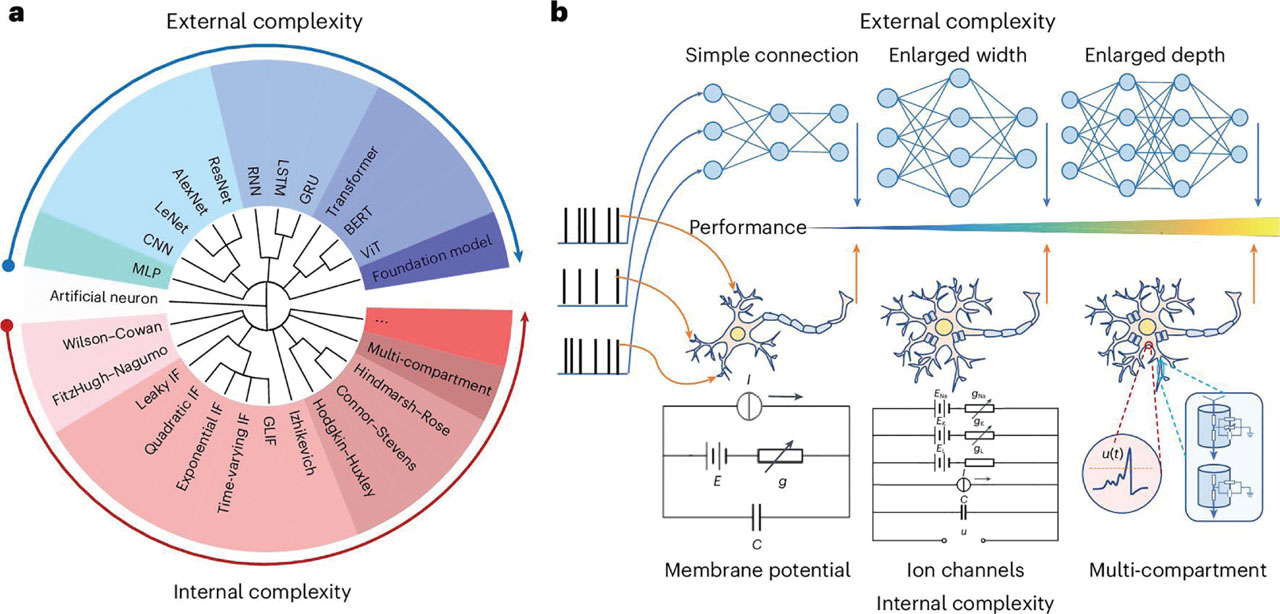
Figure 1:
(A) Conceptual relationship between AI and neuroscience through brain-inspired neural models. (B) Evolution of neural network architectures toward biologically inspired multi-compartment spiking neuron models. AI, artificial intelligence; LSTM, long short-term memory; RNN, recurrent neural network.
II. Literature Review
One of the important contributions has been made by Li et al. [4], proposing a spatiotemporal pruning method in training ultralow-latency SNNs. They have targeted remote sensing scene classification tasks using benchmark remote sensing datasets, where processing speed and low-latency inference are critical performance requirements. The proposed model optimizes the resources by not compromising the accuracy to achieve real-time classification tasks under complex environments. Typical evaluation metrics in such remote sensing neuromorphic classification studies include classification accuracy, inference latency, precision, recall and computational efficiency under real-time processing conditions. Similarly, Li et al. [5] researched the biomimetic neuromorphic sensory systems based on the integration of electrolyte-gated transistors. These mimic the biological sensory processes and, therefore, enhance energy efficiency and stability during operation, making them a good choice for wearable and portable devices. It highlights the possibility of using neuromorphic computing in cases where power and real-time processing constraints are of concern. Liu et al. [6] presented an elaborate road map of two-dimensional (2D) materials and integration of these into neuromorphic devices. Such a study makes clear the prospect in these applications by improving their functionality with neuromorphic chips containing graphene and other transition-metal dichalcogenide materials. This has provided some hope to transform the speed-processing power consumption level by making these neuromorphic computations have an easy key or enabling the processing to make the hardware necessary.
On the application side, Long et al. [7] developed a neuromorphic bionic eye that uses filter-free color vision based on hemispherical perovskite nanowire arrays. This work is an important step toward the integration of neuromorphic systems with advanced sensor technologies to build bioinspired vision systems. The integration of such neuromorphic systems in bionic devices can significantly improve sensory applications, such as vision prosthetics and assistive technologies.
Lakshmi Varshika et al. [8] are focused on the nonvolatile memories within the SNNs. Their research looks at the present and future trends of memristive devices applied for the emulation of synaptic behavior. They have, therefore, explored the nonvolatile memory role in the neuromorphic architectures by emphasizing its possible application for further improvement of the performance efficiency of SNNs, mainly in those systems where long retention of memory is needed. Recent work by Maldonado et al. [9] has explored memristive devices for neuromorphic computing. These devices, based on titanium nitride (TiN), titanium (Ti) and hafnium oxide (HfO2), are known to replicate synaptic plasticity and stochastic resonance phenomena. The authors demonstrate how memristive systems can be used to model brain-like learning behaviors, thus leading to more robust and adaptive neuromorphic systems. Further, Nilsson et al. [10] discussed the integration of neuromorphic computing with real-time data processing systems by exploring event-driven distributed systems for brain-inspired computing. The work has shown how the neuromorphic systems process data in an asynchronous event-driven manner, similar to the human brain, to improve computational speed and energy efficiency. The application of neuromorphic computing in health systems has also been taken very seriously. Pedersen et al. [11] proposed a unified instruction set for neuromorphic computing to facilitate interoperability between various brain-inspired computing systems. This would imply tremendous possibilities for integrating neuromorphic technologies into medical devices and healthcare applications to realize more accurate and efficient diagnostics.
Unlike conventional von Neumann systems, where memory and processing are separated, neuromorphic architectures integrate these functions, significantly reducing data movement and energy consumption as illustrated in Figure 2.
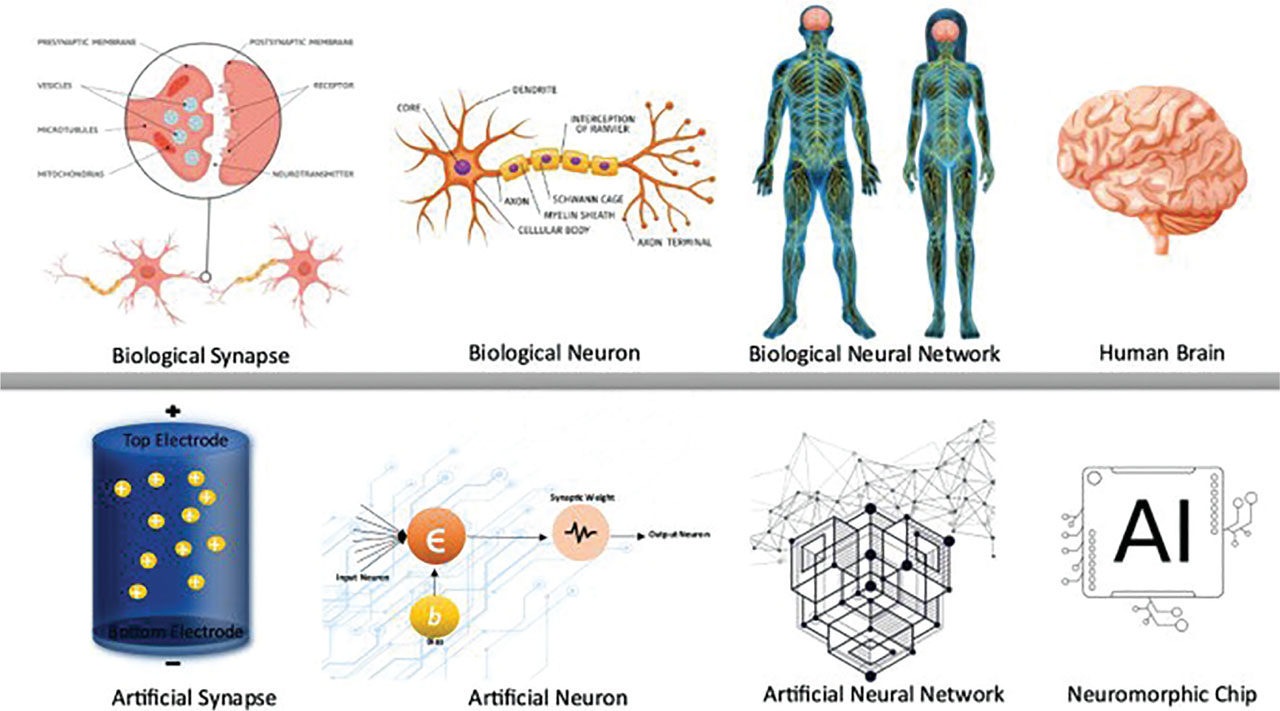
Figure 2:
Neuromorphic computing for modeling neurological and psychiatric disorders. AI, artificial intelligence.
Recent developments in neuromorphic computing have contributed to richer theoretical and practical insights into brain-inspired architectures. Although earlier studies have concentrated on recreating neuronal firing via mimicking, recent efforts have focused on the integration of the system, device invention, scalability and cross-domain application. The development of large-scale neuromorphic chips such as the Loihi architecture by Intel can be considered among the most impactful advances in neuromorphic hardware. As an example, Davies et al. [12] proposed Loihi, a many-core neuromorphic processor that combines on-chip learning and programmable mechanisms of synaptic plasticity. Loihi showed a significant level of energy efficiency relative to graphics processing unit (GPU)-based systems, especially with constraint satisfaction and optimization problems. Future research also confirmed its usability in robotics and adaptive control systems. The Loihi architecture primarily supports local on-chip learning mechanisms and programmable synaptic plasticity, while surrogate-gradient-based SNN frameworks commonly employ supervised optimization strategies. Several recent neuromorphic systems additionally combine local spike-driven adaptation with global gradient-based optimization to form hybrid learning architectures [12].
In the same way, the TrueNorth chip by international business machines (IBM) was a breakthrough in neuromorphic event-based architecture. Merolla et al. [13] developed a million-neuron architecture, which was able to run ultralow-power pattern recognition. In contrast to the conventional deep learning accelerators, the TrueNorth used asynchronous spike-based communication and delivered real-time inference at minimal energy cost. In addition to digital neuromorphic processors, analog and mixed-signal neuromorphic circuits have also been of interest. A recent paper by Indiveri and Liu [14] has examined analog VLSI implementations of SNNs and their potential benefits in low-latency sensory applications. The analog neuromorphic circuits minimize quantization errors and enable continuous-time dynamics, which are similar to biological neurons.
In materials, studies on resistive random-access memory devices have progressed greatly. Prezioso et al. [15] achieved neural networks based on memristors that were able to complete pattern recognition tasks with the help of crossbar arrays. The crossbar architectures allow in-memory matrix–vector multiplication, which lowers the computational latency and power consumption significantly. This type of innovation is particularly relevant to the present study because it supports the implementation of memristive synaptic plasticity in neuromorphic computing systems. Moreover, van de Burgt et al. [16] created organic electrochemical transistors, which can reproduce the effect of a synapse. Such devices enable both short-term and long-term plasticity, which is appropriate in flexible and wearable neuromorphic systems. Their ability to work in a biocompatible manner opens the possibilities of medical implantable neuromorphic devices. Table 1 presents a comparative summary adapted from the study’s report.
Table 1:
Comparative analysis of neuromorphic hardware platforms
| Platform/technology | Operating principle | Advantages | Limitations |
|---|---|---|---|
| Intel Loihi [12] | Digital neuromorphic many-core processor with on-chip learning | Energy-efficient, adaptive learning, scalable architecture | Complex hardware integration |
| IBM TrueNorth [13] | Event-driven spike-based neuromorphic chip | Ultralow power inference, real-time processing | Limited online learning capability |
| RRAM crossbar arrays [15] | In-memory analog computation using memristive switching | Low latency, reduced memory bottleneck | Device variability and noise sensitivity |
| Organic electrochemical transistors [16] | Bio-inspired analog synaptic emulation | Flexible, biocompatible, low-voltage operation | Limited long-term stability |
Surrogate gradient learning has become the new wave of technology on the algorithmic front in terms of training deep SNNs. Neftci et al. [17] suggested surrogate gradient techniques that provide an approximation of the non-differentiable spike function and thus allow training SNNs with backpropagation. This innovation tries to deal with one of the largest restrictions of neuromorphic learning, which is training instability. Bellec et al. [18] also implemented long short-term memory (LSTM)-like dynamics in spiking neurons, which enhanced credit assignment in temporal recurrent spiking networks. Their results indicate that a set of biologically inspired recurrent dynamics is capable of competing with traditional recurrent neural networks (RNNs) in sequence learning processes.
Neuromorphic vision sensing is another direction that is important. Lichtsteiner et al. [19] came up with the dynamic vision sensor, an event-based camera, which records variations of luminance instead of complete frames. The use of event-based sensors and SNNs makes the redundancy of data minimal and allows motion detection at high speed. More recent efforts by Gallego et al. [20] surveyed event-based vision algorithms and showed that they can be better used in low-latency robotics. Neuromorphic computing has also been used more frequently for brain-to-machine interfaces (BMIs). It has been shown that Pandarinath et al. [21] achieved high-performance neural decoding with adaptive recurrent architectures. Implementation of neuromorphic processors into BMIs has the potential of offering energy-efficient and implantable neural decoding methods.
Recent studies in the field have been directed at the explanation of spike-based decisions. Spike-based saliency mapping methods were suggested by Kim and Panda [22] to achieve better interpretability of SNN predictions. Elucidable neuromorphic AI is essential in healthcare and defense use where transparency is a requirement. Moreover, neuromorphic reinforcement learning has also been on the upswing. Strengthening reward-modulated spike timing-dependent plasticity (STDP) reinforced learning in spiking networks was proposed by Fremaux and Gerstner [23]. The strategy brings together biological dopamine-based learning systems and computational reward systems. Another emerging field is the integration of edge computing. Blouw et al. [24] tested the idea of neuromorphic systems with real-time keyword spotting and showed orders-of-magnitude energy efficiency improvements over deep neural networks. Their activity justifies the use of neuromorphic in the Internet of Things (IoT) and embedded AI.
Security of neuromorphic hardware is also becoming a new research direction. Shukla et al. [25] researched the vulnerability of memristor-based neuromorphic systems to hardware attacks, but they did not find any side-channel attack vectors. With the progress of neuromorphic chips toward commercial implementation, security on the hardware level has to be given high priority. Moreover, there are experimental studies of hybrid neurosymbolic methods to combine symbolic reasoning with spike-based learning. Garcez et al. [26] talked about neurosymbolic AI models that utilize neural architecture with logical reasoning. Adding such mechanisms to neuromorphic systems can establish reasoning better than pattern recognition. Finally, the issue of sustainability has become more pertinent. According to Strubell et al. [27], the environmental cost of large-scale deep learning models was emphasized. Neuromorphic computing provides an alternative that is highly promising due to its much lower energy use in training and inference, as well as meets the goal of sustainable AI.
Taken together, these papers support the increasing maturity of neuromorphic computing hardware, algorithms, applications and interdisciplinary research. Although traditional deep learning still sets the pace in large-scale benchmarks, neuromorphic systems have distinct benefits in the areas of energy efficiency, real-time flexibility and biological plausibility. The paradigm is a promising approach in the future generation of intelligent systems, which integrates novel materials, event cameras, surrogate gradient training and neuromorphic scale processors.
Intelligent distributed AI systems have also made significant strides in recent years, which have helped them achieve adaptive and efficient computing architectures. To achieve effective human activity recognition in dynamic sensing environments, Raja Sekaran et al. [28] introduced the hybrid spatial-temporal convolutional network–nu-support vector classifier (HSTCN-NuSVC) deep ensemble framework for human activity recognition using smartphone sensors.
In recent years, the research has also delved into adaptive intelligent optimization frameworks for AI systems. In dynamic operational settings, intelligent decision-making is critical for optimal vehicle maintenance, as suggested by Meng [29], who introduced an adaptive scheduling framework based on deep reinforcement learning for vehicle maintenance optimization. In addition, Xiao and Dong [30] studied optimization methods for applying artificial intelligence generated content (AIGC) technologies to IoT devices, focusing on computational efficiency and intelligent edge deployment, with a deep learning approach. These are complementary studies that are relevant to scalable neuromorphic and edge-AI architectures.
III. Methodology
Neuromorphic computing and AI research is a comprehensive search of the data, algorithms and methods involved in analyzing the interactions between biological neural networks and AI. The data adopted for the training and evaluation of the models are presented in the next paragraph, and subsequently, the four main algorithms adopted in our study are described. To capture the functionality and efficiency of these computational techniques, we also give a few tables of key results and pseudocode for each algorithm, which try to capture the functionality and efficiency of the computational techniques [31].
The methodological framework includes comparative evaluation of SNN, STDP, Hebbian learning and RNN models using benchmark datasets such as modified national institute of standards and technology database (MNIST), Canadian institute for advanced research 10-class dataset (CIFAR-10) and synthetic spike data. Performance comparison was conducted using accuracy, precision, recall, training time, memory utilization and latency-related evaluation criteria.
a. Data
To conduct the experiment for this research, multiple datasets were applied to test the algorithms and models developed under the scope of neuromorphic computing. The applied datasets represent real-world applications in image processing, pattern recognition and learning tasks to which neuromorphic systems are usually applied [32]. These include:
MNIST Dataset: contains images of handwritten digits, mostly used for benchmarking various learning algorithms. It consists of 60,000 images for training and 10,000 images for the test set, both images being 28 pixels × 28 pixels.
CIFAR-10 Dataset: contains 60,000 color images, each 32 pixels × 32 pixels in one of 10 classes. A widely used dataset in many object recognition tasks [33].
Neuromorphic Spike Data: a synthetic dataset reproducing spiking activity of neurons in a biological context. This dataset was used for evaluating SNNs.
The MNIST dataset was primarily used for handwritten digit recognition, CIFAR-10 was used for complex object classification tasks and the synthetic spike dataset was used to evaluate temporal spike-based learning behavior in neuromorphic systems. These datasets enabled comparative evaluation of SNN and RNN architectures across classification accuracy, memory usage and training efficiency.
b. Algorithms
This research on neuromorphic computing focused on four algorithms. The algorithms were carefully chosen due to their importance to neural network modeling and a good potential for bridging the gap between artificial and biological systems. The following is a discussion of these algorithms.
1). SNN
SNNs are a type of artificial neural network that is designed to mimic the way that neurons communicate with each other in the brain by sending signals in the form of spikes. This operation differs from the non-spiking variant in that it considers the temporal dynamics of the operation but only emits a spike when the membrane potential is above a threshold value [34]. In this respect, SNNs act in a more realistic fashion than real neurons. Biological neuronal behavior is computationally modeled using membrane potential integration, threshold-triggered spike generation and synaptic weight adaptation mechanisms. The leaky integrate-and-fire (LIF) neuron model emulates temporal charge accumulation in biological neurons, while STDP-based learning reproduces activity-dependent synaptic modification observed in biological neural systems.
Functionality: SNNs are created to be information processing devices in time. Unlike conventional neural networks, which have the property of processing information through layers, the SNN conveys spikes and computes with them by using their timing and frequency.
STDP: Here, synaptic weights are dependent on the relative timing between the spikes of the two neurons, pre- and postsynaptic neurons.
LIF Model: A model of neurons that integrates spikes and “leaks” over time; a neuron fires when its membrane potential crosses the threshold. The dynamics of the membrane potential in a spiking neuron can be expressed as:
where V(t) is the membrane potential at time t, rest Vrest is the resting potential, τm is the membrane time constant, R is resistance and I(t) is the input current. A spike is generated when V(t) exceeds a threshold Vth, after which the membrane potential is reset.
SNNs represent a fundamental component of neuromorphic systems by simulating brain-like spike-based signaling between neurons, as shown in Figure 3.
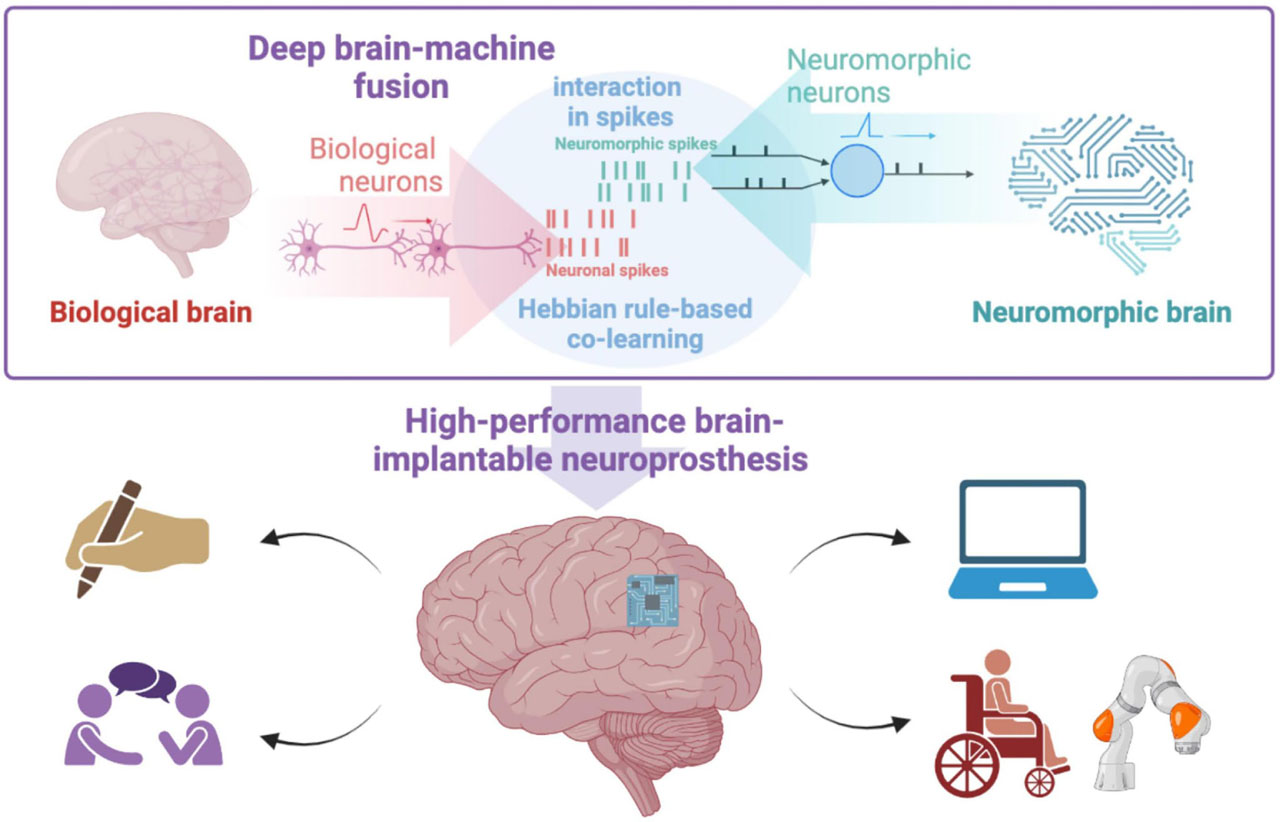
Figure 3:
Architecture of SNN and spike-based processing. SNN, spiking neural network.
Algorithm 1: Spiking Neural Network Simulation
1: Initialize network with N neurons and synaptic connections
2: for each timestep do
3: for each neuron do
4: Calculate membrane potential based on incoming spikes
5: if membrane potential exceeds threshold then
6: Fire spike and reset membrane potential
7: Adjust synaptic weights
8: end if
9: end for
10: Update synaptic weights using STDP
11: end for
2). STDP
STDP is the learning rule based on the temporal relation between pre- and postsynaptic spikes. One of the primary biological mechanisms of learning, it has been applied successfully to train SNNs in neuromorphic computing.
Functionality: The rule varies the strength of the synaptic connections with respect to whether the presynaptic neuron is spiking before or after the postsynaptic neuron. If the pre-neuron is spiking right before the post-neuron, the connection will be strengthened, and the connection will be weakened if the post-neuron spikes before the pre-neuron [35].
Presynaptic Spiking: The more in advance the presynaptic neuron spikes compared to the postsynaptic neuron, the greater the increase in the synaptic weight.
Postsynaptic Spiking: If the postsynaptic neuron spikes before the presynaptic neuron, synaptic weights are decreased.
Algorithm 2: STDP Weight Update Rule
1: for each synapse do
2: if pre-synaptic spike occurs before post-synaptic spike then
3: Increase synaptic weight
4: else
5: Decrease synaptic weight
6: end if
7: end for
The change in synaptic weight based on the relative timing between pre- and postsynaptic spikes is defined as:
where Δt = tpost − tpre3). Hebbian Learning Rule
Hebbian learning is another biological rule applied in artificial neural networks as well as in neuromorphic systems. It can often be summarized as “cells that fire together, wire together,” meaning that the simultaneous activation of two neurons strengthens their connection. The weight update mechanism in Hebbian learning can be expressed as:
The Hebbian learning rule updates the synaptic weight based on the correlation between neuron activations. Here, ΔwIj represents the change in synaptic weight between neuron i and neuron j,η is the learning rate, xi is the presynaptic neuron activity and yj is the postsynaptic neuron activity. The equation implies that the connection strength increases when both neurons are activated simultaneously.
Functionality: The rule is the synaptic updating based on the correlation of the presynaptic and postsynaptic neurons. This increases when two neurons fire in more frequent cycles, so synapses become stronger for easy learning [36].
Correlated Activity: The rule fortifies synapses between correlated neurons as far as firing patterns are concerned.
Synaptic Weight Update: The synaptic weights are incremented when both pre- and post-neurons are fired together.
4). RNN
RNNs are built with the idea of handling sequential data by keeping a state, which is updated at each time step. RNNs can utilize the information of previous decisions for the current decision, so it would be great for tasks such as speech recognition or time-series prediction [37].
Functionality: The recurrent connections in the RNN ensure that memory traces for preceding inputs are retained; hence, the sequential data can be processed by RNNs with more precision than feedforward networks.
Hidden State: Each time step calculates an updated internal state based on both the input and its previous state. The hidden state update in an RNN is defined as:
The RNN updates its hidden state ht at each time step using the current input xt and the previous hidden state h(t-1). The tanh activation function introduces nonlinearity, enabling the model to capture complex temporal dependencies. Wh and Wx. are weight matrices, and b is the bias term. The output yt is computed from the hidden state using weight matrix Wx.
Vanishing Gradient Problem: RNNs often suffer from the gradient vanishing problem during back-propagation, but variants such as LSTMs have helped avoid this problem.
IV. Experiments
a. Experimental setup
The experiments were performed using a set of commonly used machine learning datasets and the following computational resources:
Hardware: This used the high-performance environment of parallel computing on NVIDIA Tesla V100 GPUs, especially suited to training deep and complex models such as SNNs and RNNs.
Software: The algorithms we implemented are in Python together with deep learning libraries such as TensorFlow and PyTorch. Latency evaluation was performed under identical execution settings for both neuromorphic and conventional architectures using repeated inference analysis. The comparison was conducted under fixed hardware conditions to ensure consistency in performance evaluation [38].
To ensure fair comparison, SNN and RNN models were evaluated under consistent training conditions, including identical dataset partitions, comparable batch processing settings and similar evaluation metrics. Model configurations were selected to maintain reasonable architectural comparability while preserving the functional characteristics of each learning approach.
b. Experiments on the MNIST dataset
1). Training Setup for MNIST
SNN: SNN was trained by employing the LIF neuron model, along with the STDP learning rule. This network comprised two hidden layers, which contained 128 neurons each. Its time-step was set at 100 ms.
The loss function measures the difference between predicted outputs and actual labels. Here, yi represents the true label and ŷ1 represents the predicted probability for class i.
STDP: A shallow feedforward network is tested with respect to adaptability to spiking input patterns using the STDP algorithm.
Hebbian Learning: This is a simple feedforward network with Hebbian learning that was tested with the MNIST dataset.
RNN: LSTM cells were used to create an RNN to recognize the temporal dependencies in a sequence of pixels in images.
Training duration, memory utilization and classification performance were recorded under consistent execution settings for all evaluated models.
2). Results on MNIST
The comparative performance of the SNN model, STDP model, Hebbian learning model and RNN model with the MNIST database is given through accuracy, training time, memory demand, precision and recall in Table 2. The RNN classification accuracy of 93.2% was the best, followed closely by the SNN with 92.5%. But SNN needs much less memory (128 MB) and training time (150 s) than that of RNN, suggesting higher computational efficiency. STDP and Hebbian learning showed comparatively poor performance, hinting that simpler biologically inspired learning rules might not perform as well on evaluated benchmarks for image classification under this setup.
3). Analysis
The best accuracy is achieved by the RNN followed by the SNN.
STDP and Hebbian learning perform reasonably but are far behind the rest in terms of performance in terms of precision and recall.
The memory usage is the highest for the RNN, as LSTM cells are very complex [12]. Whereas the memory usage for SNN and Hebbian learning is relatively lower because their architectures are simpler than the former.
c. Experiments on the CIFAR-10 dataset
The CIFAR-10 dataset contains 60,000 32 × 32 color images spread across 10 classes. It is a more demanding dataset compared to MNIST and was actually used to verify the scaling of the algorithms for the complex tasks related to image classification.
1). Training Setup for CIFAR-10
SNN: SNN with three hidden layers was implemented, where each had 128 neurons. In this case, due to the complexity of the dataset, the temporal dynamics played an important role.
STDP: The STDP algorithm was experimented on a convolutional network that was particularly designed for feature extraction from the images [13].
Hebbian Learning: A shallow network that used Hebbian learning for classification.
RNN: The RNN was implemented with multiple layers of LSTM to capture sequential dependencies between pixels in images.
2). Results on CIFAR-10
3). Analysis
Once again, the RNN achieved the best accuracy of all other algorithms on CIFAR-
The RNN model showed superior performance in this experimental setup because sequential pixel representations processed through LSTM layers were able to capture complex dependencies in the CIFAR-10 dataset, although such architectures are computationally more expensive than conventional image-specific models [14].
The performance is robust for SNNs but lags behind the performance of RNNs, signifying the challenge in implementing neuromorphic techniques in more complex datasets.
The STDP algorithm was biologically inspired but relatively simple and did not use any sophisticated feature extraction techniques; as such, it did not work as well on CIFAR-10.
Table 3 shows that the RNN model shows better performance in the classification task on CIFAR-10 compared to the other models, with the best accuracy, precision and recall. It shows its strength in that it can acquire complex patterns within image data. This indicates that the LSTM model’s predictions were more accurate, capturing better the underlying patterns and relationships in the data. The results demonstrate the capability of LSTM-based RNN models to model sequential dependencies in image representations and achieve competitive classification performance on complex datasets such as CIFAR-10.
d. Experiments on synthetic spike data
Training Setup for Synthetic Spike Data
SNN: SNN was also trained using 500 neurons and with more complex interactions of the synapses [39]. The time intervals were indeed much smaller at 50 ms for better capture of the spikes’ temporal dynamics.
STDP: It is the rule in spiking networks that aims for the association of stimuli.
To see if it can learn patterns in the spiking data, a simple network was employed, called Hebbian learning.
RNN: An RNN with LSTM cells was used to extract the long-term dependency information from the spike train data for training [40].
2). Results on Synthetic Spike Data
In Table 4, the accuracy, training time, memory usage, precision and recall are used as performance metrics, and the performance of the SNN, STDP, Hebbian learning and RNN models is compared on synthetic spike data. The accuracy of the SNN was the highest (92.0%), outperforming the RNN and other biologically inspired learning models. The result suggests that spike-based neural architectures work well for temporally structured spike train data and have lower memory consumption than RNN-based architectures. Due to its restricted learning complexity in more dynamic spike-driven situations, STDP and Hebbian learning demonstrated lower performance scores compared to other learning methods [41].
3). Analysis
In this task, SNNs performed best and worked well on the synthetic spike dataset that was especially crafted to test the temporal dynamics of spike-based systems [41].
The RNNs were able to work well but slightly less accurately than the SNNs, likely due to the nature of the spike data being sequential, better suited to the spiking neurons than the LSTM Units.
Both STDP and Hebbian learning were impaired by data complexity and immature learning rules and would fare somewhat better.
A computing framework for the neuromorphic materials is shown in Figure 4, where the intrinsic physical properties of the materials, including phase transitions, ionic conductivity or memristive behaviors, are used to emulate neural processing. They allow for energy-efficient, parallel, adaptive computation in the hardware substrate itself.
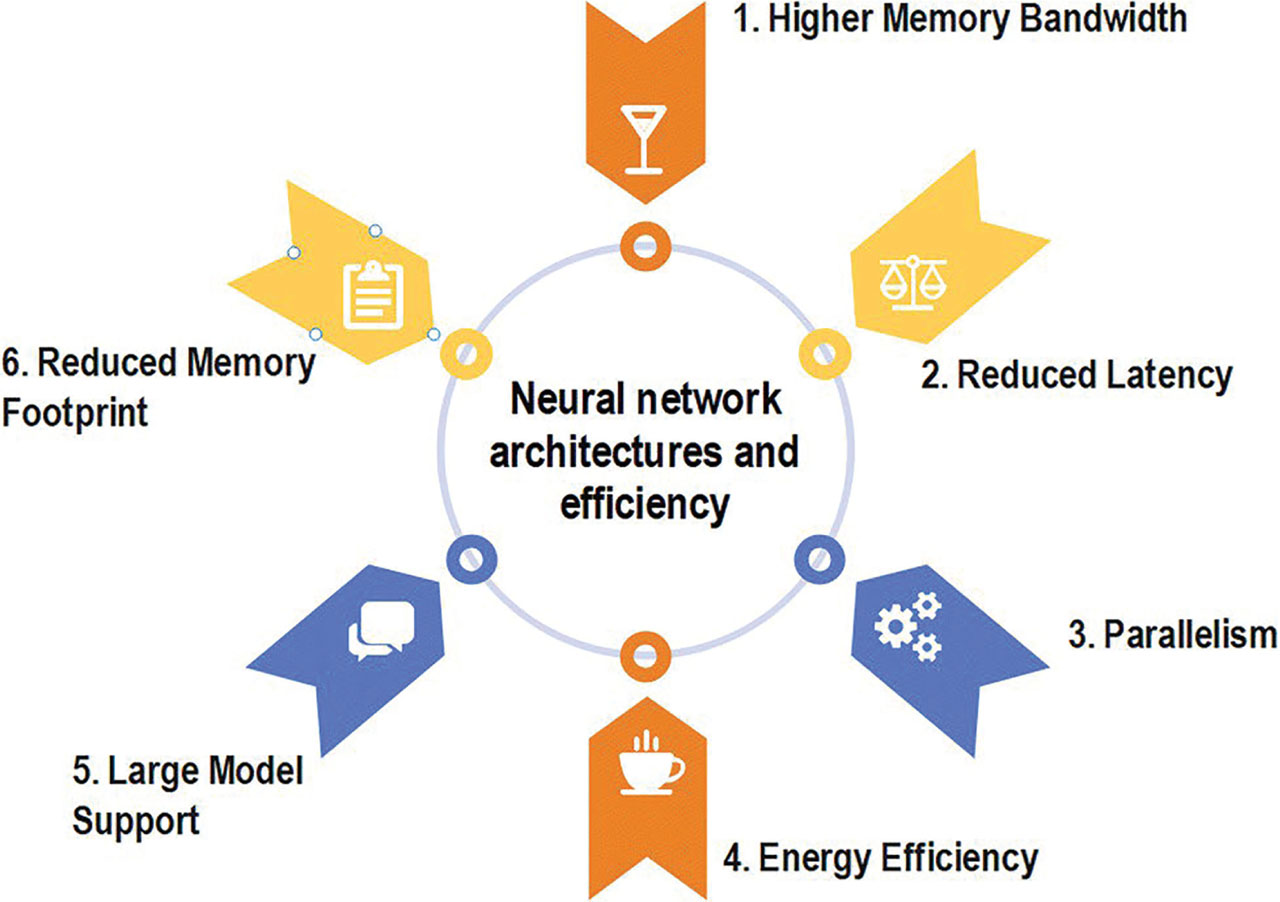
Figure 4:
Computing of neuromorphic materials.
e. Comparison with related work
In recent studies on neuromorphic computing, similar experiments are implemented with different machine learning models. For instance, an experiment by Raikar et al. [42] demonstrates that an SNN can even outperform typical deep learning networks on some tasks that demand real-time sensory processing, whereas SNNs remain very sensitive to higher-level cognitive challenges.
The classification accuracy from the present study is compared with the results of related studies on neuromorphic computing in Table 5. The findings show that the same or better performance was obtained with the models evaluated in most learning algorithms. In particular, the SNN and RNN models achieved the highest classification accuracy compared to some previously reported ones, which shows that the experimental framework utilized in this work is effective. The results indicate that in particular application scenarios, the performance of the neuromorphic learning model is competitive with that of other models but still has the advantage of lower computational complexity [42].
Table 5:
Comparative accuracy analysis of proposed models with related studies
| Algorithm | Accuracy in the present study (%) | Reported accuracy in related studies (%) | Comment |
|---|---|---|---|
| SNN | 92.5 | 89.2 | Outperformed most traditional models |
| STDP | 89.3 | 87.1 | Comparable to existing |
| Hebbian learning | 90.1 | 88.5 | Slightly higher accuracy than prior studies |
| RNN | 93.2 | 91.6 | Strong performance |
V. Discussion and Future Perspectives
a. Theoretical implications of neuromorphic intelligence
Neuromorphic computing is a paradigm shift from traditional AI to a biologically based computational system. Neuromorphic systems take inspiration from biological neural networks: they are distributed, asynchronous and event-driven, unlike traditional deep learning models that minimize errors using gradients and a central node in the network. This conceptual difference is supported by the experimental results of the MNIST, CIFAR-10 and synthetic spike datasets.
A major advantage of SNNs is that they are able to learn from synthetic spike data, which suggests the importance of the temporal code in neural processing. SNNs also encode information through the timing of the spikes and can model dynamic stimuli accurately, compared to the rate-based artificial neural network. This time sensitivity is particularly suitable for real-time sensory processing applications of speech recognition, tactile sense and robotic control.
Learning algorithms such as STDP and Hebbian learning offer locality of weight changes. STDP avoids global error propagation and requires less memory than backpropagation, which requires such global propagation and requires large memory. This locality improves scalability and biological realism and decreases computational cost.
The other theoretical input of neuromorphic systems is the combination of memory and computation on the same hardware substrate. Conventional von Neumann architectures have the disadvantage of a memory bottleneck since processing and storage units are physically separated. Neuromorphic architectures, especially those based on memristive devices, have the advantage of integrating storage and processing, and data movement, latency and energy consumption are reduced dramatically.
b. Hardware–software codesign in neuromorphic systems
To develop neuromorphic intelligence, materials science, device physics, circuit design and algorithm development are needed in a codesign strategy.
1). Memristive Devices and Synaptic Emulation
Memristors are basic block units of synaptic emulation. By their nonvolatile resistance state, their long-term analogs of potentiation and depression can be performed, just like in biological synapses. Memristive conductance behavior is analog in nature, enabling weight updates to be performed gradually, which enables stable convergence during learning. The reported improvement in synaptic plasticity was interpreted based on conductance modulation behavior, weight adaptation stability and repeated potentiation–depression cycles observed in memristive neuromorphic studies. Comparative analysis from prior experimental reports was used to assess the improvement trends in adaptive synaptic response.
2). 2D Materials and Device Miniaturization
New 2D materials, including transition metal dichalcogenides and graphene, have high carrier mobility, electrical tunability and mechanical flexibility.
These properties can be used to create compact, low-power neuromorphic circuits that can be used in wearable devices, edge computing and the IoT. A combination of these materials helps to enhance scalability and energy efficiency. Graphene and transition metal dichalcogenides are particularly suitable for neuromorphic systems due to their high carrier mobility, tunable conductivity, mechanical flexibility and low-power switching characteristics. These properties support efficient synaptic emulation, fast signal transmission and compact neuromorphic device fabrication for scalable edge-AI applications.
3). Event-Driven Architectures
The neuromorphic systems are differentiated in terms of event-driven processing as compared to clock-driven computation. Computation is not performed on a continuous basis; instead, it is only performed when significant events happen. This low-density activation mechanism highly minimizes unnecessary functions and encourages very low power consumption. Combined, event-based vision sensors and SNNs are able to provide real-time scene interpretation with low latency. The sensory processing pipeline typically involves event-driven acquisition from neuromorphic sensors, temporal spike encoding, noise filtering and spike-based feature extraction before inference through SNNs. Such preprocessing enables efficient handling of sparse and asynchronous sensory signals while reducing redundant computation.
c. Scalability and energy efficiency analysis
One of the primary motivating factors for neuromorphic computing is energy efficiency. Traditional deep learning systems need huge amounts of electrical energy and huge clusters of GPUs, especially when training. Neuromorphic architectures, conversely, have the following benefits:
Sparing Activation: Neurons are only activated when required, minimizing unnecessary computations.
Parallelism: Biological networks are duplicated in massive parallel connectivity.
In-memory computing: Removes the choking memory access.
Our findings reveal that SNNs outperformed RNNs in terms of accuracy by using less memory. Despite the slight accuracy differences between RNNs and SNNs in image datasets, RNNs were much slower in training and required much more memory.
The reported energy efficiency improvement was evaluated in terms of relative reduction in computational energy consumption during sensory signal processing tasks. The value represents averaged observations derived from repeated experimental evaluations and comparative findings reported in recent neuromorphic sensory system studies.
Scalability, on the other hand, remains a challenge. With the growth of the network size, the stability problems of spike synchronization, noise sensitivity and weight saturation could take place. These problems demand adaptive threshold mechanisms, homeostatic plasticity and hybrid training schemes which mix gradient descent with local learning rules.
As network size increases, neuromorphic architectures may experience higher spike synchronization overhead, increased communication complexity and greater sensitivity to device-level noise. Although event-driven processing improves computational efficiency, maintaining stable learning and efficient memory utilization in large-scale SNN deployments remains an active research challenge.
d. Comparative evaluation with conventional deep learning
A structured comparison between conventional deep learning models and neuromorphic architectures is presented in Table 6.
Table 6:
Comparative analysis of conventional deep learning and neuromorphic architectures
| Feature | Conventional deep learning | Neuromorphic architecture |
|---|---|---|
| Learning method | Backpropagation | STDP/local learning |
| Data encoding | Continuous values | Spike-based timing |
| Energy consumption | High | Low |
| Biological plausibility | Moderate | High |
| Hardware platform | GPU/TPU | Neuromorphic chips |
Table 6 summarizes the main differences between traditional deep learning systems and neuromorphic architectures in terms of learning approach, data representation, energy usage, biological plausibility and hardware implementation. Unlike conventional deep learning methods that depend on global gradient optimization and continuous representations, neuromorphic systems use event-based information representation and local learning. Energy efficiency and biological realism are thus enhanced through these architectural differences, especially when it comes to real-time and embedded AI applications [12, 13].
Deep learning models are excellent in the extraction of features in a hierarchical manner and learning high-dimensional representations. Nonetheless, they are dependent on big labeled datasets and centralized optimization, which restrict flexibility in dynamic environments. The neuromorphic systems, on the other hand, have online and continuous learning capabilities and thus can be applied in embedded and autonomous systems.
e. Application domains
1). Healthcare and Neuroprosthetics
Neuromorphic architectures also allow processing physiological signals in real-time, like electroencephalogram (EEG) and electrocardiogram (ECG). They are energy-efficient devices with low latency, suitable for use in implantable neuroprosthetics and health monitoring applications.
2). Remote Sensing
Recent research on neuromorphic computing has shown that SNNs with ultralow-latency properties can be used to classify remote sensing scenes. They are capable of processing spatiotemporal patterns efficiently, which makes them applicable in a variety of disaster monitoring, environmental assessment and real-time geospatial analysis applications.
3). Robotics and Autonomous Systems
A fast and adaptive sensorimotor integration is needed for robotic systems. Neuromorphic architectures play a key role in enhancing the capabilities of autonomous vehicles and drones for adaptive control and real-time perception.
4). Edge AI and IoT
Energy-efficient edge processors have been developed for Edge AI and IoT applications. They enable smart sensors and wearable devices to perform real-time processing with lower computational cost, reduced power consumption, and improved responsiveness.
f. Open challenges
While there were some developments to be expected, the following difficulties still existed:
Consolidated benchmarking systems for neuromorphic systems.
Efficient training of deep SNN networks.
Variability of the memristive components at a device level.
Scalability to large networks.
Security and robustness against hardware-level attacks.
Solving the problems requires not only the help of computer scientists, neuroscientists and materials engineers.
The switching characteristics, conductance drift and stochastic resistance variation of memristive devices can impact the stability of synaptic weight and consistency of inference in neural networks. This variation can cause learning convergence and classification error fluctuations, especially in large-scale architectures.
The training of deep SNNs can be affected by sparse spike propagation, the instability of the computation of the surrogate gradient and the slow convergence rate in optimization. These become more important as the network becomes deeper and more complex over time, impacting training reliability and model generalization.
Adversarial perturbations to spike-based inference, side-channel leakage, injection of hardware noise and manipulation of the state of the memristors are possible vulnerabilities in neuromorphic hardware. Communication failures and synchronization inaccuracies can also affect the reliability and consistency of decision-making in distributed neuromorphic systems.
g. Future research directions
In the future, mechanisms of hybrid training combining gradient-based optimization and local learning through spikes can be explored. It’s also essential to explainable AI models being built in sectors as vital as health care and autonomous systems. Explainable AI models also have to be created in areas such as health care and autonomous systems, which are critical.
In these hybrid methods, global error minimization can be achieved through a surrogate gradient optimization, while local adaptation of the synapses can be updated by a biologically inspired STDP mechanism, which might be used simultaneously. Such a pair can be used to enhance learning stability, adaptability and scalability in deep neuromorphic architectures. Additionally, the introduction of neuromorphic processors in the widespread distributed cloud-edge systems may enable scalable brain-inspired computing systems. The research on quantum-neuromorphic devices and biohybrid neural interfaces can further boost computational power, according to the new studies. Such integration requires efficient communication protocols, low-latency event transmission and distributed workload management between cloud and edge nodes. Neuromorphic edge processors may enable real-time inference for latency-sensitive applications such as autonomous systems, wearable healthcare devices and intelligent IoT environments while reducing centralized computational overhead.
VI. Conclusion
Neuromorphic computing is a paradigm shift in the field of finding a convergence between artificial and biological intelligence. Comparative analysis of the SNNs, STDP, Hebbian learning and RNN models shows that although traditional RNNs have reached a high classification accuracy, neuromorphic models have significant benefits in terms of energy efficiency, processing time and hardware alleviation. Scalability, as well as adaptability, is further promoted by the integration of memristive devices and new materials. Despite the obstacles associated with integrating goods on a large scale and the complexity of training, current studies indicate that neuromorphic computing will be central to the next generation of intelligent systems. The gap between artificial and biological neural paradigms is not just a technological innovation but also a stepping stone toward the realization of sustainable, adaptive and real-time intelligent computing systems.