
I. Introduction
India’s agricultural sector contributed 16.73% to the national GDP while employing a majority of the workforce in 2022. Horticulture has emerged as a key driver of this growth, with the potential to help achieve the targeted 4% agricultural growth rate [1]. It not only enhances farmer’s incomes but also supports agriculture-based industries by generating employment and contributing to poverty alleviation and nutritional security.
From 1948 to 1980, agricultural efforts were primarily focused on cereal production [2]. However, between 1980 and 1992, horticultural development gained momentum through structured programs, institutional support, and commodity-specific initiatives targeting high-value crops such as potatoes, coconuts, and spices [3]. Post-1993, this momentum continued with improved planning and the adoption of knowledge-based technologies, leading to a moderate yield increase from 7.5 to 8.4 tons per hectare between 1991–92 and 2004–05 [4]. The launch of the National Horticulture Mission in 2005–06 marked a significant step toward integrated development across production, post-harvest management, processing, and marketing [5]. As a result, fruits and vegetables are now cultivated on 11.72 million hectares, with a total output of 150.73 million tons, making India the world’s second-largest producer. Despite covering only 13.08% of the agricultural land, horticulture contributes nearly 30% of the agricultural GDP, underscoring its growing importance in the national economy [6].
Technological advancements have played a pivotal role in enhancing agricultural productivity. Notably, the implementation of advanced irrigation systems has facilitated crop cultivation even in arid and water-scarce regions.
Furthermore, modern agricultural technologies have enabled the development and widespread adoption of high-yielding, disease-resistant, and insect-resistant crop varieties, significantly contributing to improved food security. The resultant increase in agricultural output has enhanced access to affordable and nutritionally rich food for a larger segment of the population. This productivity growth has also led to increased farm incomes, contributing to improved living standards in rural areas and generating new employment opportunities within the agricultural and allied sectors.
The review paper aims to critically examine the potential of artificial intelligence (AI) and Internet of Things (IoT) in advancing sustainable farming in India. The thematic representation of the article is shown in Figure 1. The paper explores how these emerging technologies can address key challenges faced by farmers to enhance overall agricultural productivity in conjunction with policy initiatives and financial support mechanisms provided by the Indian government. Additionally, the review investigates barriers to large-scale adoption and discusses prospective developments that may shape the future trajectory of sustainable agriculture in the Indian context. This review’s novelty (refer to Table 1) is its thorough and integrated examination of IoT and AI applications, particularly in the Indian agriculture industry. This work methodically investigates the difficulties faced by Indian farmers and assesses the individual and combined roles of IoT and AI in enhancing agricultural productivity, profitability, and sustainability, in contrast to previous research that concentrates on individual technologies or isolated applications. The analysis also identifies research gaps, technology constraints, and future prospects for scalable smart agricultural solutions in India while highlighting the convergence of IoT-enabled sensors and AI-driven analytics for data-driven precision agriculture.
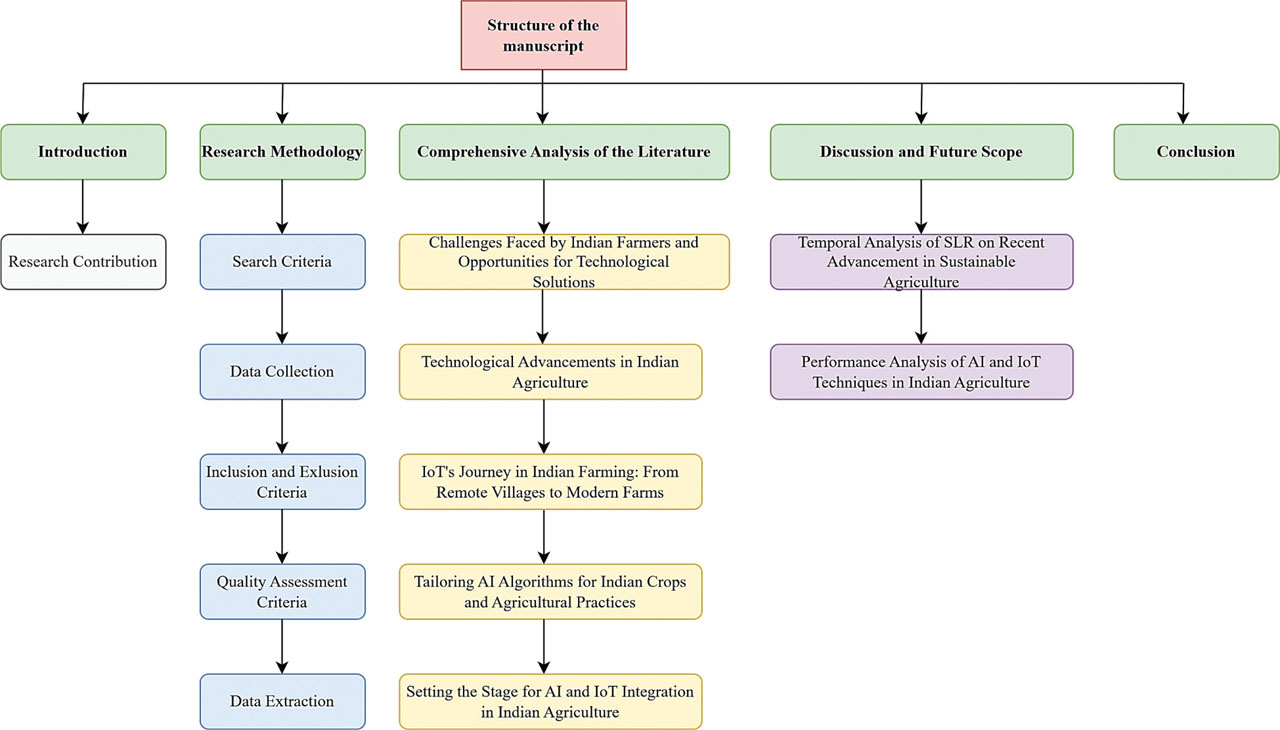
Figure 1:
Thematic Representation of Paper.
Table 1:
A comparative analysis of existing review studies on IoT and AI technologies in agriculture and the present study
| Ref. No. | Primary focus | Core theme | Technology emphasis | Approach type | Methodology | Key contributions | Strength | Limitations | Future scope identified |
|---|---|---|---|---|---|---|---|---|---|
| [7] | Smart waste management using IoT and AI | Sensor-based monitoring & automation | IoT, WSN, Cloud, AI | Technical review | Comparative literature synthesis of IoT frameworks | Highlights real-time monitoring & optimization | Strong technical depth | Limited focus on compost valorization | AI-driven predictive waste management |
| [8] | Organic waste management & composting technologies | Decentralized composting & circular economy | Composting units, bioconversion, anaerobic digestion | Environmental & process-oriented review | Analysis of composting techniques and case studies | Emphasizes nutrient recovery & methane reduction | Strong environmental relevance | Limited digital automation aspects | Smart composting integration C |
| [9] | Sustainable municipal solid waste systems | Policy, sustainability & environmental impact | Waste segregation systems, recycling tech | Policy + sustainability review | Review of global MSW strategies | Focuses on sustainability indicators | Strong sustainability & policy context | Less technological detailing | Circular economy models |
| [10] | Integrated smart city waste frameworks | Smart infrastructure + digital transformation | IoT, data analytics, smart bins, GIS | Integrated systems review | Review of smart city waste models & architecture | Connects smart technologies with urban governance | Holistic integration perspective | Limited experimental validation | Edge computing & AI-enabled automation |
| [11] | IoT-based Smart Irrigation System | Automation in agriculture | NodeMCU ESP8266, Soil moisture sensor, DHT11, Cloud (Blynk) | System implementation & applied review | Hardware-based IoT architecture with threshold-based control | Developed low-cost automated irrigation with cloud monitoring | Practical, affordable, suitable for small farmers | Limited AI integration, basic threshold logic, scalability not discussed | Integration of ML for predictive irrigation; scalability for large farms |
| [12] | Annual Technical Issue—Role of AI & Remote Sensing in Regenerative Farming) | Regenerative farming with AI & Digital tools | Sustainability & soil restoration | AI, ML, Remote sensing, IoT, DSS, GIS | Conceptual + technology synthesis review | Thematic review of digital agriculture technologies | Connects AI, IoT & regenerative agriculture; regional focus (West Bengal) | Strong sustainability perspective; integrates policy + tech | Mostly conceptual; lacks experimental validation |
| [13] | Global research trends in IoT agriculture | Research mapping & knowledge structure | IoT, ML, Blockchain, Robotics | Bibliometric review | Scopus & WoS data analysis using Bibliometrix & VOSviewer | Identifies top countries, themes, research gaps | Comprehensive trend analysis (1979–2025); highlights underexplored areas | No technical implementation details | Focus on data governance, interoperability, digital literacy research |
| [14] | Smart sensing technologies in agriculture | AI-integrated precision sensing | Optical, acoustic, electromagnetic, soil sensors; Edge AI; Blockchain | Systematic review (PRISMA-based) | Structured literature review (2020–2024) | Detailed classification of sensors + AI models (CNN, SVM, RF) | Strong technical depth; covers real-world challenges | High-level overview; cost-effectiveness limited discussion | Edge AI deployment, decentralized data governance, autonomous farming systems |
| Our Study | Application and impact of IoT and AI in Indian agriculture | Digital transformation of agriculture through smart farming, precision agriculture, and data-driven decision-making to improve productivity and profitability | IoT (sensors, smart irrigation, remote monitoring), AI (ML, predictive analytics, decision-support systems), IoT–AI integration for precision agriculture | SLR with analytical synthesis | Comprehensive review of existing research on challenges in Indian agriculture and technological solutions using IoT and AI; comparative analysis of technologies, applications, benefits, and emerging trends | Identifies key agricultural challenges in India and evaluates how IoT and AI technologies address them; explains individual roles of IoT and AI and highlights the benefits of their convergence in enabling smart and precision farming; outlines future research directions | Provides a holistic overview of IoT, AI, and their integration in agriculture; connects technological advancements with real agricultural challenges in India; highlights profitability and sustainability benefits | Limited empirical or field-level validation since the study is based mainly on literature review; technology adoption barriers such as cost, digital literacy, and infrastructure constraints may not be quantitatively analyzed | Development of integrated IoT–AI farming platforms, adoption of predictive analytics for crop management, expansion of smart sensing technologies, improved rural digital infrastructure, and research on scalable precision agriculture solutions |
As a result, this research study provides three significant contributions.
To comprehensively review the relevant literature on technological advancement in Indian agriculture.
To discuss and analyze the previous studies on India’s IoT and AI use cases.
To investigate IoT technologies and AI algorithms for Indian crops and agriculture practices and chart their prospects.
The paper is organized as, Section II describes the research methods utilized to find pertinent literature. A thorough literature review that covers the general overview of IoT and AI in the agriculture industry is included in Section III. It discusses government initiatives in India, AI-based farm management systems and applications, IoT-based agricultural apps, current technology advancements in the Indian agriculture sector, and laying the groundwork for the application of AI and IoT in Indian agriculture. The future potential for combining AI and IoT to create reliable agricultural applications and a comprehensive review is discussed in Section IV, and the article is concluded in Section V.
II. Research Methodology
This section demonstrates the research approach used to find and evaluate pertinent material concerning the study goals. A systematic literature review (SLR) has been conducted using the Kitchenham and Charters guidelines [15, 16]. There are three sections of the guidelines. The first section is a review planning to determine the research objectives of an SLR. The second step is to find clearly defined research questions (RQs) targeting the search terms to make subject analysis easier and identify future research directions, as shown in Table 2. The third section includes the role of reporting the review’s findings in establishing topic-specific inclusion and exclusion selection criteria, quality assessment criteria, and data extraction. These guidelines aid in locating important articles to create AI and IoT-integrated agricultural applications concerning the Indian perspective.
Table 2:
Proposed RQs and its objectives
| Question No. | RQs | Research objective |
|---|---|---|
| RQ1 | What are the major challenges faced by the Indian agricultural sector, and what technological opportunities exist to address them? | To determine and evaluate the main obstacles that Indian agriculture faces, as well as to look at possible technical advancements that could promote efficient and sustainable farming methods. |
| RQ2 | How does the adoption of IoT technologies contribute to improving efficiency, productivity, and profitability in Indian agriculture? | To investigate how IoT-based technology, like sensors, smart irrigation systems, and remote monitoring, might improve agricultural output, profitability, and efficiency. |
| RQ3 | What role does AI play in enhancing decision-making, crop management, and profitability in the Indian agricultural sector? | To assess the ways in which AI-driven methods, such as ML, predictive analytics, and decision-support systems, enhance crop management and agricultural profitability in India. |
| RQ4 | How can the integration of IoT and AI technologies support intelligent, data-driven farming practices in India? | To examine the advantages and uses of combining IoT and AI technologies in order to create precision, data-driven, and intelligent farming systems for the Indian agriculture industry. |
| RQ5 | What are the future prospects, challenges, and research directions for the adoption of IoT and AI in the Indian agricultural sector? | To investigate potential future developments, new trends, and research avenues for IoT and AI technology adoption to promote India’s sustainable agricultural growth. |
a. Search criteria
Academic data sources, including IEEE Xplore, Web of Science, ScienceDirect, and Scopus, are used to retrieve and analyze the pertinent literature studies. The most recent studies being carried out in India’s agriculture sector are better understood thanks to these publications. Using exact search terms and keywords, the writers have carefully examined the relevant research articles to address the developed RQs. The following keywords were used to accomplish the study’s goals: “Internet of Things AND Precision Agriculture,” “Artificial Intelligence AND Precision Agriculture,” “Sustainable Agriculture in India AND Artificial Intelligence,” “Sustainable Agriculture in India AND Internet of Things,” and “Sustainable Agriculture in India AND Artificial Intelligence AND Internet of Things.” The research studies retrieved using the initial search keywords showed significant overlap. Therefore, several criteria are applied in the assessment, including highly cited publications, recent articles, sorting by date, and sorting by relevance.
b. Data collection
Only English-language journal articles, conference proceedings, and early-access articles are included in the original search. The Digital India Mission has created a demand for IoT and AI in Indian agriculture, which is still in its infancy. As a result, early access publications, as well as statistical data and information from government websites, have been incorporated into the evaluation to provide insightful information.
c. Inclusion and exclusion criteria
The next step is to screen the relevant papers after retrieving them from the appropriate databases using search parameters. Titles and abstracts are used to filter the documents, and duplicates or unnecessary copies are eliminated. The references of the documents are reviewed to identify any other important studies. Research studies that are deemed irrelevant or lack peer review are excluded.
Furthermore, research that is not related to the field of Indian agriculture is also excluded. It includes the studies that address the objectives of the research study. Consequently, 78 research studies are chosen for in-depth examination. The inclusion and exclusion criteria are explained in detail with the help of the PRISMA flow diagram in Figure 2.
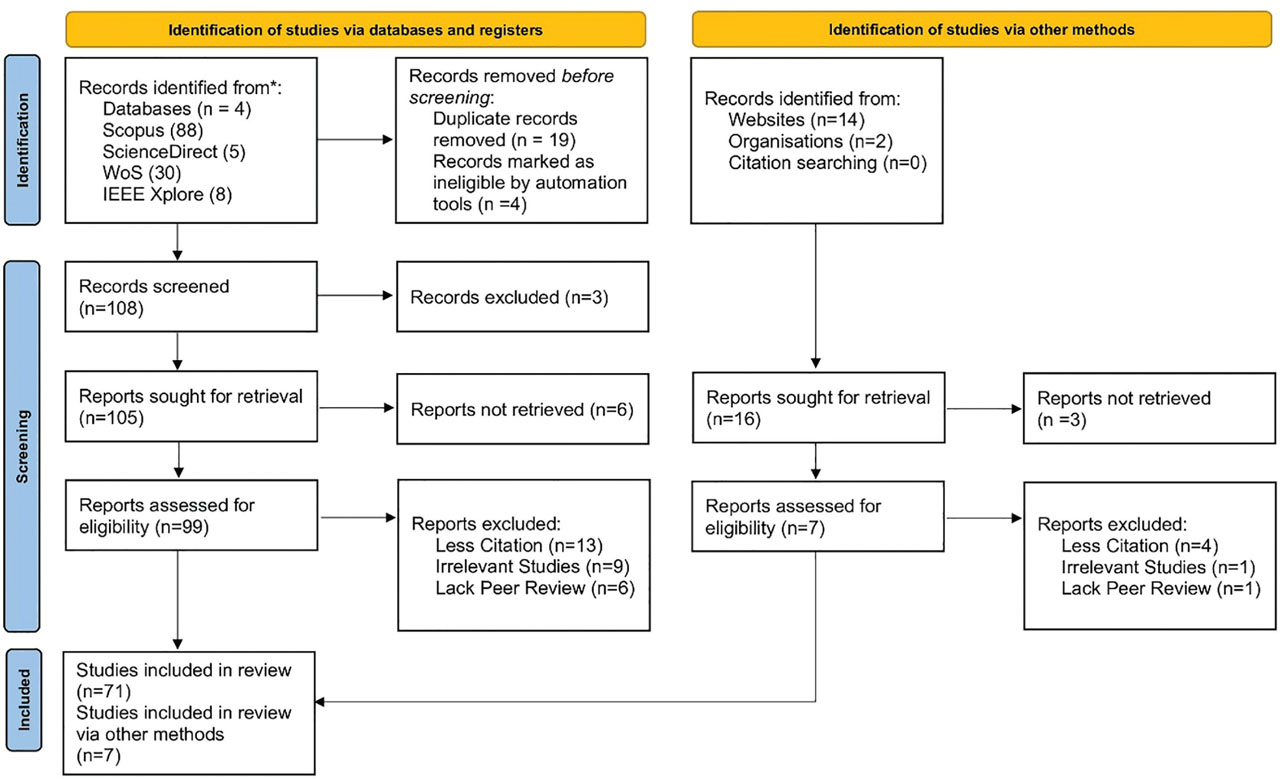
Figure 2:
PRISMA flow diagram for SLR on IoT and AI Technologies in Agriculture. AI, artificial intelligence; IoT, Internet of Things; SLR, systematic literature review.
d. Quality assessment criteria
Table 3 demonstrates that the quality assessment criteria help to answer the crucial RQs that will substantially contribute to the review.
Table 3:
Quality assessment criteria
| No | Criteria | Score |
|---|---|---|
| 1 | The search study must be relevant to address the formulated objectives of the study. | Yes = 1 |
| No = 0 | ||
| 2 | The research study must focus on challenges faced by Indian farmers in adapting AI and IoT technologies. | Yes = 1 |
| No = 0 | ||
| 3 | The research study must discuss existing IoT and AI applicability with respect to Indian agricultural challenges. | Yes = 1 |
| No = 0 | ||
| 4 | The research study must include the design of IoT architecture in agriculture. | Yes = 1 |
| No = 0 | ||
| 5 | The research study must include the design of AI based framework in agriculture. | Yes = 1 |
| No = 0 | ||
| 6 | The research study must include integration of AI and IoT for agriculture domain use. | Yes = 1 |
| No = 0 |
e. Data extraction
Qualitative analysis is conducted using the data from research publications and reports that met the study selection criteria. The content is categorized and analyzed using the thematic map to create the parts and subsections shown in Figure 1.
III. Comprehensive Analysis of the Literature
This section discusses the proposed RQs. It focuses on research that shows AI and IoT are capable of helping the Indian agricultural industry to flourish.
a. RQ1: Challenges faced by Indian farmers and opportunities for technological solutions
Over the past several decades, the share of agriculture and allied sectors, including forestry, logging, and fisheries, in the national GDP has steadily declined, decreasing from over 50% in the 1950s to approximately 14% in recent years [17]. Figure 3 illustrates that the sector’s projected growth rate remains significantly lower than the overall economic growth rate of 6%–7%. If current patterns continue, the agricultural sector’s contribution to GDP will keep on decreasing.
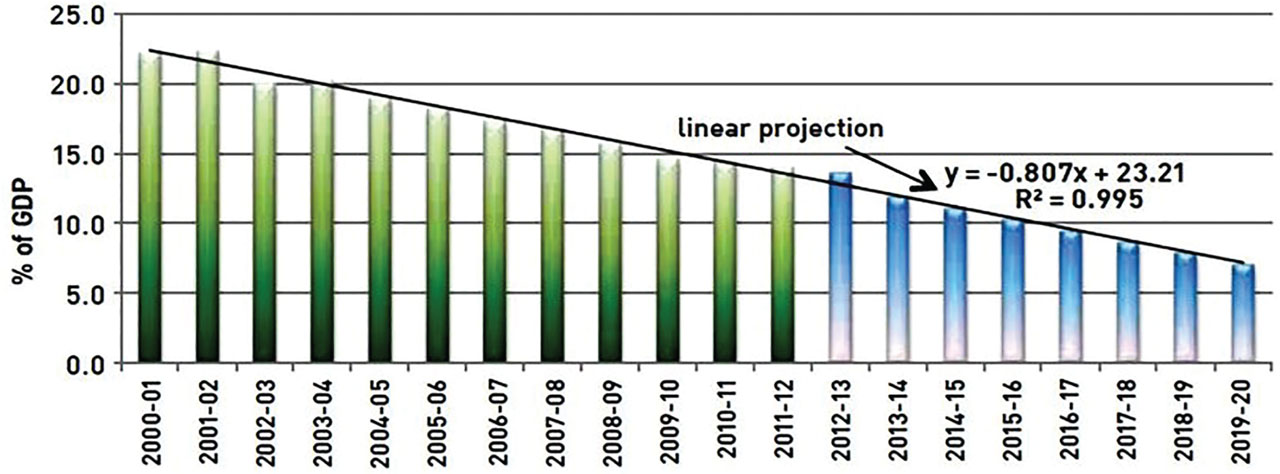
Figure 3:
Agricultural GDP percentage per year. Source: Fourth Semi-Annual Medium-Term Agricultural Outlook Report, September 2015, NCAER.
The following sub-sections outline the major constraints currently limiting agricultural advancement in India.
1. Limited and fragmented land holdings
According to the 2015–16 Agricultural Census, India possesses 146.45 million hectares of owned farmland and 157.82 million hectares of operational area [18]. However, the continued subdivision of holdings has resulted in a sharp decline in average farm size, restricting mechanization potential and economies of scale. As a result, the shift to technology-driven and data-centric farming systems has been hindered by the predominance of small and marginal farmers.
2. Limited access to affordable credit
For smallholders, access to institutional financing continues to be a barrier. Regional differences in agricultural loan distribution and utilization continue despite national efforts to increase agricultural credit through priority lending programs. Farmers’ capacity to invest in cutting-edge machinery, premium inputs, and precision technologies is further constrained by high transaction costs, collateral requirements, and procedural delays [19].
3. Inadequate irrigation infrastructure
About 80% of the freshwater used in India is used for agriculture [20]. Only 18.8% of the 68.38 million hectares of irrigated land are covered by micro-irrigation technologies like drip and sprinkler systems, indicating the sector’s continued reliance on groundwater extraction [21–22]. Resource depletion and regional productivity gaps are nevertheless made worse by this unsustainable pattern of water usage and erratic rainfall.
4. Low level of mechanization
Only about 40%–45% of agricultural activities have been mechanized due to fragmented landholdings and budgetary limitations. The use of contemporary equipment is further restricted by the lack of specialized, small-scale technology appropriate for India’s diverse agro-ecological conditions, which lowers operational efficiency and increases labor dependency during the busiest agricultural seasons.
5. Declining soil fertility and environmental degradation
Nearly half of India’s farmed soil has been damaged due to persistent monocropping, overuse of chemical fertilizers, particularly urea, and insufficient organic amendments [23, 24]. This has led to decreased microbial activity, disturbed nutrient cycles, decreased productivity, and ecological imbalance in a number of areas.
6. Limited coverage and awareness of crop insurance
Insurance penetration is still low despite the introduction of programs like the Pradhan Mantri Fasal Bima Yojana (PMFBY) because of low awareness, insufficient claim settlement procedures, and payout delays. Smallholder farmers continue to see risk and mistrust as a result, which discourages them from using formal risk mitigation frameworks.
7. Intensifying impacts of climate change
Between 2015 and 2022, an estimated 33.9 million hectares of cropland were impacted by the increased frequency of extreme weather events, such as droughts, floods, and unseasonal rainfall [25]. Farming communities are now more vulnerable to shocks caused by climate change as a result of these events, which have led to notable yield fluctuations, a decrease in animal productivity, and a loss of soil fertility.
8. Price volatility and market uncertainty
The stability of small farmers’ incomes is strongly impacted by the considerable temporal and spatial volatility of agricultural commodity prices in India. Farmers’ capacity to make well-informed decisions about production and selling is diminished by fluctuations in input costs, poor connections to organized supply chains, and restricted access to transparent market information.
9. Weak agricultural extension and training systems
The current framework for agricultural extension is not technologically prepared and does not provide consistent coverage. Farmers are unable to embrace best practices, precision agriculture methods, and digital tools that are essential for maximizing resource usage and productivity due to limited access to training programs and consulting services.
10. Insufficient investment in research and development (R&D)
Innovation in crop breeding, pest management, and climate-resilient farming is hampered by public expenditure in agricultural R&D, which is still below the global average. The transfer of new technologies and adaptation techniques to the field level is delayed by the restricted contact between farming communities, private enterprise, and research institutes.
11. Gaps in digital infrastructure
Inadequate internet connectivity and uneven network coverage make it difficult to implement digital agriculture platforms in many rural and isolated places. The distribution of real-time data on weather, soil health, and market trends—essential components for putting AI and IoT-based solutions into practice—is hampered by this digital divide.
12. Inadequate marketing and storage infrastructure
Profitability is still threatened by inadequate post-harvest management techniques. Fruit and vegetable post-harvest losses can reach 16% due to high transportation costs, restricted access to cold storage, and intermediary exploitation [26]. Inefficiencies throughout the agricultural value chain are made worse by the absence of digital marketplaces and coordinated logistics.
13. Framers adaption barrier
Even while digital agriculture technologies like IoT-based sensors, AI-driven decision support systems (DSS), and mobile advisory platforms have enormous potential, Indian farmers are still not fully utilizing them. The prevalence of smallholder farming, low levels of digital literacy, and little exposure to cutting-edge agricultural technologies are the main causes of this [27]. Concerns about system dependability, a lack of technical expertise, insufficient extension support, and the scarcity of user-friendly, region-specific interfaces are among further obstacles. These elements make it difficult to successfully incorporate digital tools into standard farming procedures. Targeted capacity-building projects, technological demonstration programs, and the creation of easily accessible, locally relevant digital platforms are all necessary to address these issues.
14. Data quality issues
The availability of high-quality, consistent datasets is critical to the efficacy of agricultural systems based on AI and IoT. However, due to sensor calibration problems, inadequate datasets, a lack of historical records, and inconsistent data formats, agricultural data in many parts of India is still dispersed and inconsistent [28]. Furthermore, region-specific datasets—which are frequently unavailable—are necessary for a variety of agroclimatic situations. These constraints make predictive models and decision-support systems less accurate, dependable, and scalable, underscoring the necessity of standardized data collecting frameworks, reliable sensor networks, and integrated agricultural data platforms.
All of these issues highlight how urgently revolutionary solutions that go beyond traditional farming methods are needed. Infrastructure, resource efficiency, and information distribution constraints point to a systemic need that can be filled by new digital technologies. By facilitating data-driven decision-making, precise resource management, and real-time field condition monitoring, the convergence of AI and IoT presents a workable method to lessen these limitations. AI-IoT frameworks can increase production, decrease input waste, and improve resilience against climatic unpredictability by combining sensor networks, predictive analytics, and cloud-based advisory systems. As a result, the use of these technologies signifies a strategy change toward sustainable, intelligent, and inclusive agricultural development in India as well as a technological advancement.
b. RQ1: Technological advancements in Indian agriculture
As illustrated in Figure 4, the Indian agriculture industry is undergoing a paradigm change toward Agriculture 4.0, which is defined by the convergence of connectivity-driven systems, automation, and data analytics. Government-led programs like Digital India, Make in India, and Smart Villages, which together seek to digitize rural infrastructure and improve the effectiveness of agricultural production systems, encourage this transition. These initiatives have expedited the uptake of cloud computing, blockchain, IoT, and AI, creating a data-centric ecosystem for sustainable farming.
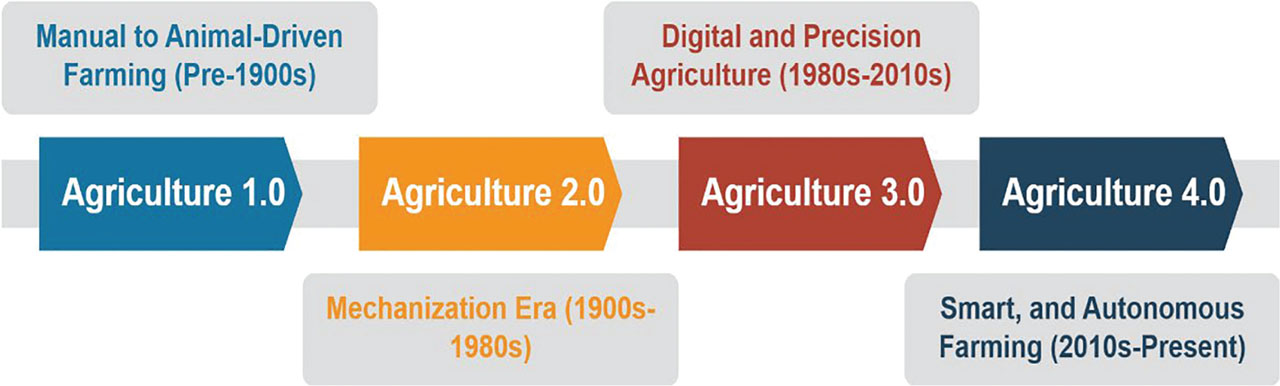
Figure 4:
Indian agricultural paradigm shift from agriculture 1.0 to agriculture 4.0.
Recent reports indicate that in pilot implementations across various agroclimatic zones, digital tools have increased average crop productivity by 10%–15%, showing quantifiable improvements in operational efficiency and revenue stability. Table 4 provides an overview of these applications. One prominent example is the AI-powered sowing application [29] created in collaboration with the International Crops Research Institute for the Semi-Arid Tropics (ICRISAT) and Microsoft. It uses cloud-based predictive analytics to identify the best sowing windows based on temperature profiles, rainfall patterns, and soil moisture. A 20% increase in production consistency and a 30% decrease in crop failure risk were found in field trials in Andhra Pradesh, demonstrating the importance of precise timing in agronomy. Research institutes and startups have become important forces behind the digital transition. Proximal Soilsens Technologies Pvt. Ltd. developed Soilsens [30], an invention funded by the Ministry of Electronics and Information Technology and the Department of Science and Technology. It reduces water waste by about 25% by using real-time soil parameter monitoring to deliver sensor-based irrigation advisories. In a similar vein, Jivabhumi [31] uses blockchain technology to guarantee transparent farm-to-market tracking for organic goods, reducing the abuse of middlemen and guaranteeing fair prices for farmers. A digital agritech platform called Gramophone [32] uses picture recognition algorithms to identify crop stress and suggest the best pest and nutrient management strategies. In the meantime, Gobasco [33] uses big data analytics and AI to optimize supply chains through post-harvest optimization, demand forecasting, and predictive logistics. CropIn [34], which offers farm-level forecasts, disease and pest alerts, and predictive yield analytics, is another example of AI-driven agronomic intelligence. Intello Labs [35] reduces subjective variability and increases agri-supply chain transparency by automating crop quality assessment at the point of aggregation using deep learning (DL) and computer vision. Agri-fintech [36] technologies have revolutionized agricultural financing by combining digital lending, crop insurance, and AI-enabled credit scoring to complement these production-side developments. By providing access to cash for technology adoption, risk mitigation, and long-term precision tool investment, these platforms increase financial inclusion for small and marginal farmers.
Table 4:
Agricultural applications in India
| Agricultural application name | Technology used | Purpose |
|---|---|---|
| AI-powered sowing app [29] | AI and cloud-based predictive analytics | Suggesting farmers when to plant |
| Soilsens [30] | AI, cloud, IoT | Soil surveillance system |
| Jivabhumi [31] | Blockchain | To purchase farm products |
| Gramophone [32] | Agstack Technology | Image recognition tool for soil science |
| Gobasco [33] | AI, Bigdata | Agri rural commerce |
| CropIn [34] | AI | For future farming solutions |
| Intello Lab [35] | DL | For identification of animals faces and plant species |
| Agri-fintech [36] | AI, Bigdata, Blockchain | To provide financial services in Agri sector. |
When taken as a whole, these innovations represent a major step forward for intelligent, resilient, and sustainable agriculture in India. A favorable environment for expanding AI-IoT technologies has been established by the collaboration of academic research, business innovation, and public policy, connecting traditional knowledge with digital intelligence. But for India’s agricultural digital revolution to be successful, systemic issues like digital literacy, affordability, and infrastructure shortages must be addressed.
c. RQ2: IoT’s journey in Indian farming: from remote villages to modern farms
Agriculture 4.0 has been made possible by IoT, which enables multi-layered connectivity between sensing devices, communication networks, and cognitive analytics systems. From a conceptual standpoint, it is a cyber-physical ecosystem made up of perception, network, and application layers that work together to monitor, control, and optimize agricultural processes in real time. It serves as a decision intelligence interface within this ecosystem, connecting digital analytics infrastructures with the physical farm environment to improve resilience, sustainability, and productivity throughout India’s agricultural value chain. Figure 5 displays IoT adaptation figures for India’s agricultural industry.
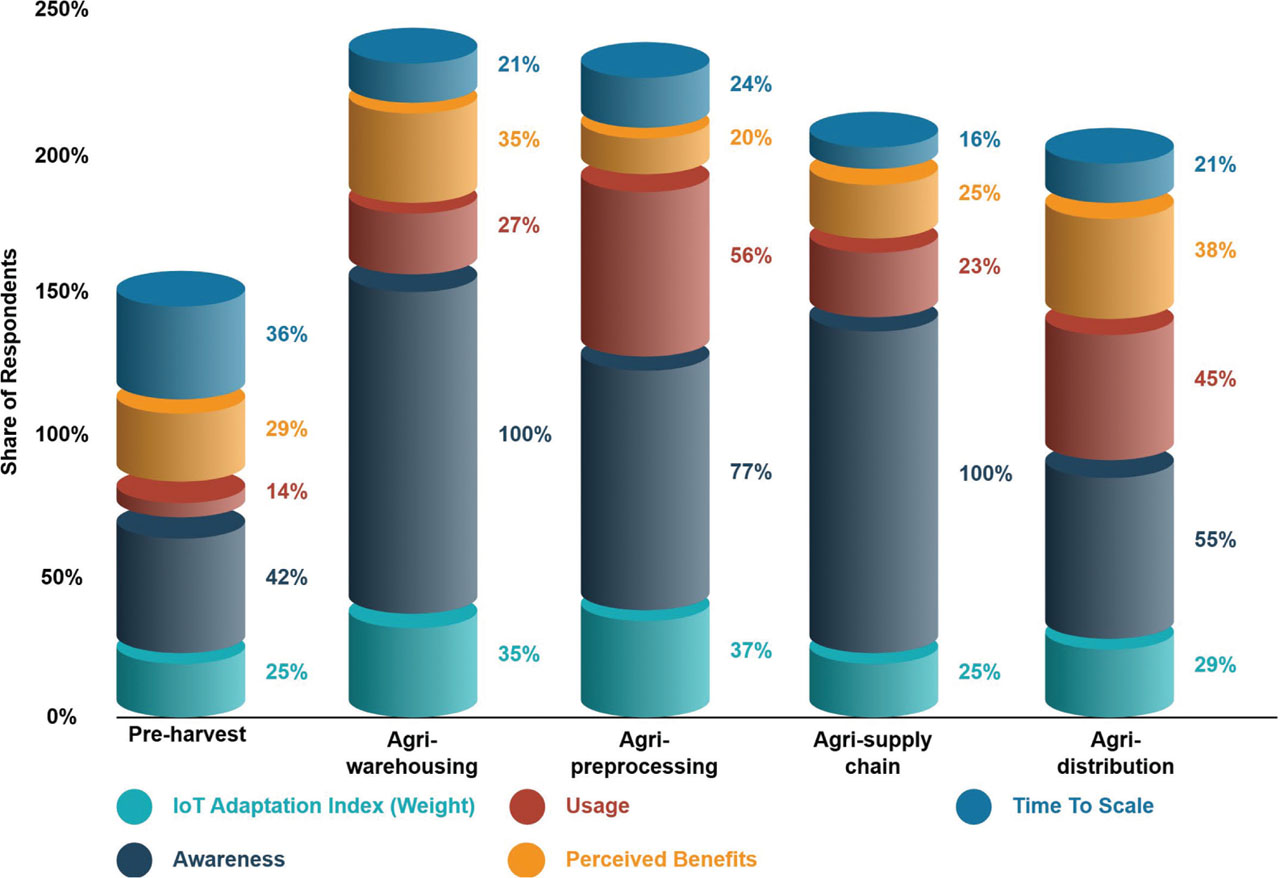
Figure 5:
IoT technology adoption in the agricultural sector in India in 2020. Source: NASSCOM (India). (April 29, 2021). Internet of Things technology adoption in agricultural sector in India in 2020 [Graph]. In Statista. Retrieved February 17, 2025, from https://www-statista-com.elibrary.siu.edu.in/statistics/1234515/india-iot-adoption-in-agricultural-sector/. IoT, Internet of Things.
Indian agriculture has shown quantifiable economic and environmental benefits using IoT-integrated DSS. In order to minimize Phytophthora infestans (late blight) outbreaks, IoT-based DSS that combines real-time weather forecasts with plant pathology models [37] has optimized fungicide scheduling for potato cultivation. These solutions improved the effectiveness of active substances and lessened their environmental impact while saving about US$500 per acre. Large-scale IoT deployments at the state level, such the Andhra Pradesh government’s IoT-enabled agricultural cycle management experiment [38], show scalability. The platform creates adaptive drought and irrigation warnings by combining GIS-based spatial data, soil health metrics, and multivariate climate inputs. The method improves spatiotemporal prediction accuracy and facilitates dynamic crop management by utilizing data assimilation frameworks that combine satellite imagery (NDVI, LST) with in-situ sensor measurements.
Recent advancements demonstrate how IoT and DL architectures are merging to enhance agrometeorological forecasting. To accurately anticipate rainfall and temperature anomalies, for example, gated recurrent units (GRU) have been utilized to process multi-sensor time-series data after missing-value regeneration, z-score normalization, and Fourier-based feature extraction [39]. In plant pathology, adaptive Gaussian filtering and contrast-limited histogram equalization have been used to improve the classification of disease symptoms from IoT-acquired photos using ResNet50 convolutional neural networks [40], which have been refined by transfer learning. The combination of data collection and inferential modeling for real-time agricultural intelligence is demonstrated by these combined IoT-DL frameworks. The integration of automation and renewable energy technology is further demonstrated by the installation of solar-powered IoT irrigation controllers [41]. In experimental projects throughout Maharashtra and Telangana, these systems reduce groundwater withdrawal and energy consumption by 20%–35% by using PID control algorithms and soil moisture-based actuation to deliver exact irrigation quantities. IoT integration and energy efficiency are positively correlated throughout the Yamuna Tributary Commercial Region, according to sustainability studies using directional distance functions and Malmquist-Luenberger productivity indices [42]. Distributed sensing of microclimatic variables with feedback loops for automated fertigation and irrigation is made possible at the operational scale by WSNs integrated with IoT controllers. In order to facilitate low-bandwidth communication, these networks use lightweight communication protocols like MQTT and CoAP and use star or mesh topologies, depending on the limitations of the terrain [43]. IoT-driven hydrological models use soil sensor data and FAO-56 Penman-Monteith formulae to predict crop water requirements (CWR) in arid and semi-arid locations, supporting sustainable irrigation management [44].
IoT is officially acknowledged as a driver of digital supply chain efficiency at the policy level in India’s “Doubling Farmers’ Income” objective [45]. IoT-based traceability solutions that combine blockchain technology, RFID tagging, and spectroscopic imaging enable real-time logistics monitoring and food quality authentication, lowering post-harvest losses, enhancing market transparency, and boosting customer confidence. The government’s focus on AI-IoT interoperability is encouraging the growth of smart agricultural ecosystems, in which mobile platforms function as digital twins of farms, connecting localized, context-aware advice with remote sensing data.
AI is also being used by India to promote agricultural modernization. Through the study of extensive agricultural information, AI-driven solutions provide data-driven suggestions and facilitate the early detection of biotic and abiotic challenges [46]. While AI improves telemetry image processing and precision agriculture by optimizing resource allocation and yield outcomes without replacing conventional practices, mobile-based expert systems help farmers with species recognition, soil diagnostics, and disease detection [47]. By enabling continuous data collection through IoT connectivity, AI further aids robotics and autonomous systems. Predictive decision-making is made possible by data mining, which transforms these datasets into useful insights [48]. To enhance food safety, traceability, and pathogen surveillance, cutting-edge technologies like blockchain and next-generation genomic sequencing are being investigated. Simultaneously, social media analytics are being employed more and more to promote agricultural innovation and comprehend consumer preferences [49].
Despite these developments, there are still several obstacles in the way of fully integrating AI and IoT in Indian agriculture. These consist of:
Providing different farming communities with trustworthy, location-specific advising content.
Making AI tools accessible in local languages and ensuring digital literacy in underprivileged areas.
Using user input and longitudinal analysis to establish impact assessment frameworks for tracking adoption, behavioral change, and system efficacy [45,46,47,48,49].
d. RQ3: Tailoring AI algorithms for Indian crops and agricultural practices
The agricultural sector in India is remarkably diverse, with a wide range of crop systems, farming techniques, and agroclimatic zones. Table 5 shows the AI applications for Indian crops and agricultural practices. To improve production, sustainability, and resource efficiency while concurrently tackling pressing issues like water scarcity, managing pests and diseases, and climate-induced variability, the integration of AI has become increasingly important [50, 51]. However, because of contextual differences in farm size, infrastructure, and environmental variability, the majority of globally developed AI solutions are not immediately applicable to Indian settings. Therefore, Indian agriculture needs to develop localized and adaptive AI frameworks that prioritize crop-specific intelligence models, sustainable practices, and efficient resource management [52,53,54,55]. Representative AI algorithms designed for Indian crops and climate conditions are presented in Table 5. These include self-sufficient irrigation systems that are adjusted to local soil and weather conditions, improving the accuracy of water supply and irrigation scheduling predictions [56–57]. In a nation where more than 60% of agricultural land is still dependent on the monsoon, AI-based hydrological models enable precision water management by combining data from satellite imaging, soil moisture sensors, and weather stations [58–59].
Table 5:
Review of AI for Indian crops and agricultural practices
| S.No. | Agricultural application | AI-based framework or algorithm used |
|---|---|---|
| 1 | Irrigation automation | PLSR and other regression Algorithms [50], |
| Artificial Neural Network-based control system [51], | ||
| Fuzzy logic [52,53,54,55], | ||
| ANN (multilayer neural model), Levenberg Marquardt, Backpropagation [56], | ||
| ANN Feed Forward, Backpropagation [57], Smart Drip Irrigation [58, 59] | ||
| 2 | Crop management | Automatic weed identification using DL models [60,61,62,63], |
| Computer vision-aided system [64], | ||
| Fuzzy logic controller [65], | ||
| Chromatic aberration-based image segmentation [66], | ||
| YOLOv5 and computer vision system [67] | ||
| 3 | Soil health | Moisture analyzers and METTLER TOLEDO [68, 69], DL-based AI framework [70, 71] |
| 4 | Crop yield monitoring system | Hybrid AI [72], |
| ML [73–74] | ||
| 5 | Pest and plant management | AI and ML [75, 76], |
| AI-driven Farm Management System [77–78], | ||
| Deep Convolution Neural Network [79,80,81] | ||
| 6 | Smart greenhouse | CNN [82], ML [83], |
| Fuzzy Logic Controller [84] |
Through customized, real-time advice, AI-driven DSS further empowers small and medium-sized farmers, who are the backbone of Indian agriculture. To maximize fertilizer application, crop selection, and pest control, these systems evaluate multi-modal data sources, such as soil health indicators, nutrient deficits, and monsoon forecasts [60,61,62,63,64,65,66,67]. Strong models for staple crops like rice, wheat, sugarcane, and pulses can be developed using region-specific datasets, guaranteeing agro-ecological compatibility and increased adoption rates [68,69,70]. Additionally, AI is essential for the early diagnosis of crop illnesses and pest infestations. DL models can precisely categorize disease symptoms based on texture, color, and morphological patterns when trained on photos taken by smartphones, drones, and IoT-enabled field cameras [72,73,74,75,76,77,78,79,80,81]. These models’ ability to learn adaptively is improved by the use of farmer-sourced feedback loops and institutional datasets. Additionally, AI-driven smart greenhouse systems optimize temperature, humidity, light intensity, and microclimatic parameters to maintain year-round precision farming and increase production [82,83,84].
Difficulties in applying AI to Indian agriculture are
Data availability: Training scalable AI models for a range of farming situations is hampered by the lack of organized, high-quality, digital agricultural datasets [85].
Integration of local expertise: AI systems must balance modern computational methods with indigenous and traditional farming expertise in order to attain practical relevance and adoption [86].
Cost and accessibility: The high cost of AI-enabled technology prevents small and marginal farmers from adopting them, underscoring the need for affordable, mobile-friendly, and interoperable solutions that provide fair access to digital agriculture.
e. RQ4: Setting the stage for AI and IoT integration in Indian agriculture
The convergence of IoT sensing infrastructures and AI analytics—in which IoT devices gather real-time agricultural data and AI models process it to produce predictive insights and automated decision support—is becoming increasingly important to smart agriculture in India. In order to continuously monitor environmental and operational parameters including soil moisture, temperature, crop health, and irrigation levels, IoT technologies combine information and communication technologies (ICTs), unmanned aerial vehicles (UAVs), and agro-sensors. These sensors enable dependable connectivity across diverse agricultural landscapes in India by transmitting data via wireless communication networks such as 5G, LoRaWAN, NB-IoT, Sigfox, ZigBee, and Wi-Fi [87]. IoT sensors serve as the data acquisition layer in real-world implementations, and cloud or edge-based AI models serve as the analytics layer. Together, these components enable intelligent applications like precision fertilizer management, automated irrigation scheduling, disease diagnosis, and animal monitoring. The sector-wise deployment of IoT technology in Indian agriculture as of 2020 is shown in Figure 6.
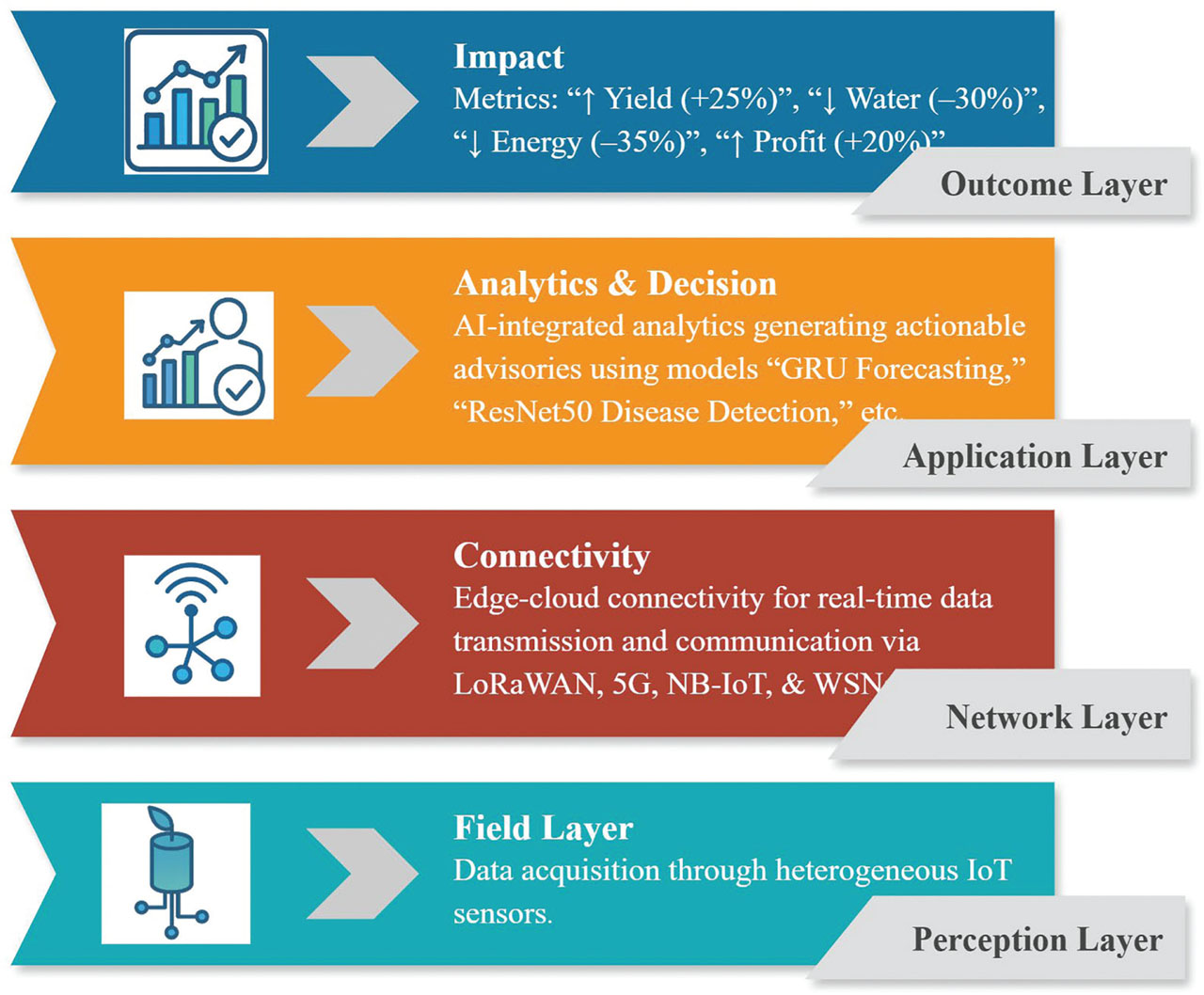
Figure 6:
End to end IoT-AI ecosystem in India. AI, artificial intelligence; IoT, Internet of Things.
Numerous national projects show how IoT and AI technologies work together in actual agricultural ecosystems. To improve price discovery, lessen the role of middlemen, and increase transparency in agricultural commodity trade, the e-National Agriculture Market (eNAM) platform combines IoT-enabled market data gathering with AI-driven analytics [88]. Similar to this, IBM and NITI Aayog’s joint AI-based crop yield prediction system makes use of multi-source datasets collected via digital and remote sensing infrastructures, such as soil health databases, satellite imagery from the Indian Space Research Organization (ISRO), and weather observations from the India Meteorological Department (IMD). Machine learning algorithms are used to analyze these data streams and produce predictive warnings for farmers about the best crops to plant, when to irrigate, and how to reduce the danger of pest or disease outbreaks [89].
Programs for agricultural risk management also demonstrate the integration of AI with IoT-based remote sensing technologies. Agricultural and environmental data are gathered by satellite telemetry, field sensors, and GIS monitoring tools under the PMFBY. AI algorithms are then used to evaluate agricultural damage and expedite insurance claim payouts [90]. Similar to this, the Pradhan Mantri Kisan Samman Nidhi (PM-KISAN) program makes use of extensive digital datasets from government databases and farm records, where AI-based analytical models assess socioeconomic trends and facilitate focused policy interventions for smallholder farmers [91].
The integrated deployment of IoT and AI technologies is further encouraged by government-sponsored innovation hubs. Startups are encouraged to create intelligent agricultural solutions through initiatives like AGRI-UDAAN 3.0, which is funded by the Department of Science and Technology (DST) and uses IoT sensing platforms to feed real-time field data into AI-powered DSS for crop monitoring and resource optimization [92]. Additionally, regional projects show how this convergence is put into practice. For instance, the Karnataka government’s partnership with Microsoft offers farmers AI-enabled advising tools that use cloud-based analytics and IoT-generated field data to provide forecasts on weather and crop health [93]. Similarly, the Maha Agri-Tech project, which was created by the National Remote Sensing Centre (NRSC) and the Maharashtra Remote Sensing Application Centre (MRSAC), combines geospatial datasets, satellite imagery, and ground-based sensing data with AI-driven analytics to generate location-specific agronomic insights that support crop monitoring, land-use assessment, and adaptive farm management techniques [94].
These examples show how IoT-enabled sensing, communication networks, and AI-based analytics combine to create an integrated digital agriculture ecosystem that supports precision farming, risk mitigation, and sustainable agricultural development in India through real-time data acquisition and intelligent processing.
IV. Discussion and Future Scope
The report emphasizes the revolutionary potential in bolstering the agriculture industry while highlighting the extent and difficulties of integrating AI and IoT into India’s agricultural system. In contrast to other research, the systematic study concentrates on the digitization of Indian agriculture. Finding the main challenges farmers encounter and addressing the design constraints of smart agriculture applications are the main goals.
a. Temporal analysis of SLR on recent advancements in sustainable agriculture
The temporal analysis of the 96 evaluated papers provides insightful information about how research has changed between 2005 and 2026, highlighting both recent and historical advances in the field of multidisciplinary sustainable agriculture. The sharp rise in publications starting in 2020, which makes up the bulk of the evaluated literature, is a clear pattern in the data. With 28 publications, 2024 proved to be the most productive year. There are 11 publications in 2023 and 6 in 2022. Publications from early 2025 indicate that the field is still gaining momentum. This increase is indicative of an increasing national and international focus on digital transformation in agriculture, most likely due to:
Advances in AI models tailored for precision farming.
Proliferation of affordable IoT-based sensing systems.
Increased governmental and institutional focus on smart agriculture initiatives in India.
From 2005 to 2015, only nine publications were recorded, suggesting the emergence of foundational technologies but limited application in agriculture. The field gradually grew between 2016 and 2019, with nine papers showing an increasing understanding of the possibilities of digital technologies in agriculture, even though they haven’t been used extensively yet.
Over 80% of the evaluated literature was published after 2020, according to Table 6’s year-by-year publication breakdown, highlighting the study area’s current significance and rapid evolution. It reflects-
A greater understanding of farming that is climate resilient.
Attempts to address food security through data-driven farming methods.
The government’s promotion of “Digital India” initiatives, which promote digital adoption at the local level.
Table 6:
Year-wise publication breakdown
| Year range | Number of articles | Percentage (%) |
|---|---|---|
| 2005–2009 | 3 | 3.1 |
| 2010–2015 | 6 | 6.3 |
| 2016–2019 | 9 | 9.4 |
| 2020–2022 | 23 | 24.0 |
| 2023–2025 | 55 | 57.2 |
Nonetheless, the majority of recent research indicates that the discipline is still in its early stages of growth. Many solutions are conceptual or pilot-scale, necessitating
Large-scale, real-world validation.
Integration with regional farming methods and socioeconomic conditions.
Policy frameworks to encourage smallholder farmers to embrace AI-IoT.
The study’s research gaps and future directions.
Absence of longitudinal studies: The long-term effects of AI-IoT systems in agriculture are rarely examined in publications.
Limited regional focus: A large portion of the literature is either generic or concentrates on isolated case studies, despite the Indian context.
Interdisciplinary integration: Future studies must integrate ecological, sociocultural, and economic factors with technological progress.
b. RQ5: performance analysis of AI and IoT techniques in Indian agriculture
A thorough analysis of recent research (Table 7) shows that although the integration of AI and IoT in Indian agriculture has the potential to be revolutionary, a number of significant constraints still exist across application domains. Models like GRU [39] and ResNet50 [40] show good predictive ability in weather forecasting and disease prediction. However, their deployment is hampered by issues including variable performance across heterogeneous field conditions, limited scalability, and sensor reliability. Furthermore, the absence of farmer-friendly interfaces hinders uptake and lowers accessibility.
Table 7:
Summary of existing AI and IoT techniques with performance analysis
| S.No. | Algorithm name | Performance evaluation | Gap analysis |
|---|---|---|---|
| 1 | GRU for weather forecasting and ResNet50—for crop disease prediction [39] | DL-based system achieved 94% accuracy in weather forecasting and 98% accuracy in crop disease prediction, demonstrating superior performance over traditional methods. | It lacks in sensor reliability, real-time scalability, generalization to new diseases, and user accessibility for farmers. |
| 2 | Fixed-effects panel data regression model [42] | A high model fit (R2 = 0.89, F = 74.6), confirming that fixed-effect panel regression effectively captures the key socio-economic and environmental factors influencing agricultural ecological efficiency in the Ganges Tributary Commercial Zone. | It needs a more comprehensive analysis of low-carbon farming practices across diverse regions. |
| 3 | IoT-based smart agriculture model featuring a wireless sensor network [41] | It reduces manual intervention, enhances real-time monitoring, and improves crop productivity through automated irrigation and environmental sensing. | Lacks integration of AI-driven analytics and scalability assessment, limiting the full potential of IoT-based smart agriculture systems in the long term. |
| 4 | IoT-enabled precision irrigation system [43] | It efficiently addresses water scarcity by producing 1 liter of water per hour, improving water usage, energy efficiency, and crop irrigation sustainability. | It lacks an assessment of long-term scalability, cost-effectiveness, and real-world performance in diverse agricultural environments and regions. |
| 5 | AI and IoT-based automatic irrigation system [51] | It predicts rainfall patterns and adjusts irrigation schedules based on soil moisture conditions, achieving 80% accuracy in a controlled environment. | It lacks an evaluation of the system’s performance under real-world, large-scale conditions and its long-term impact on water conservation and crop yield. |
| 6 | IoT-Based Smart Mushroom Cultivation Control System [55] | It achieved reliable environmental control for outdoor oyster mushroom cultivation, with ANFIS demonstrating superior dynamic performance over FIS and PID controllers in transient time, settling time, overshoot, and peak metrics. | It is for small-scale mushroom cultivation; its scalability and performance for large-scale production remain unexplored. |
| 7 | ANN-Based Smart Irrigation Scheduling System [57] | It achieved a 20.46% water saving and a 23.9% energy saving, with high accuracy validated by ROC analysis at a 95% confidence interval. | Further validation under diverse environmental conditions and larger-scale deployments to confirm its generalizability and robustness. |
| 8 | Deep Transfer Learning and ML-Based Rice Category Identification Model [60] | It achieved outstanding rice category identification performance, with MLP (30, 30) + VGG-19 reaching 99.72% accuracy and consistently high AUC values across models. | A noticeable number of rice images remained unclassified, indicating the need for model refinement and exploration of more robust architectures or ensemble methods. |
| 9 | YOLOv5 for oil palm tree detection YOLOv4 for loose fruitlet detection [61] | It achieved 97.79% mAP for tree detection using YOLOv5, 85.45% mAP for loose fruitlet detection using YOLOv4, and ready-to-harvest classification accuracies of 90.48% and 91.34% at thresholds zero and three, respectively. | It requires retraining for different environments and struggle with detecting small, occluded, or poorly visible loose fruitlets. |
| 10 | DarkNet53 deep learning model [62] | It achieved superior performance in weed identification with over 99% F1 score during validation and 96.6% accuracy in independent testing, outperforming other DL models. | A research gap in real-time deployment and validation of DL-based weed identification systems specifically tailored for sugarcane cropping under diverse field conditions. |
| 11 | AlexNet CNN-Based Model [64] | It achieved a peak accuracy of 99.16% in detecting seven types of paddy crop diseases, outperforming DenseNet and ResNet in polyhouse conditions. | It lacks extensive field validation beyond polyhouse environments and does not address real-time deployment challenges. |
| 12 | Real-Time Variable-Rate Chemical Spraying System for Paddy Disease Control [65] | It achieved a minimum of 33.88% reduction in chemical usage compared to constant-rate application, demonstrating significant efficiency in targeted agrochemical application. | The gap lies in the absence of automation in disease identification and lack of dynamic spray control |
| 13 | YOLOv5m for volunteer cotton detection in corn field [66] | It achieved a mAP of 79% at IoU 50%, classification accuracy of 78%, and an inference speed of 0.4 FPS on Jetson TX2. | Lack of automated, real-time detection and targeted spraying of volunteer cotton in corn fields leads to ineffective boll weevil control. |
| 14 | Extra Trees Regressor [70] | It outperformed all other models with the highest R-squared score of 0.9615 and the lowest MAE and RMSE, demonstrating superior accuracy and consistency in crop yield prediction. | Limited generalizability of existing crop yield prediction models across diverse agro-climatic zones and crop types due to insufficient integration of heterogeneous data sources. |
| 15 | ARIMA-SVM Hybrid Crop Price Prediction Model [72] | It outperformed standalone ARIMA and LSTM models with an average prediction accuracy of 95.65% and superior performance in risk prediction and overall model stability. | Lacks integration of external real-world factors like climate variability, policy changes, and global trade, limiting its robustness in a dynamic climate. |
| 16 | ResNet50, InceptionV2, MobileNetV1, Faster R-CNN, SSD MobileNetV1 [76] | It achieved high performance with map scores ranging from 70% to 99%, demonstrating robust accuracy across different plant parts, especially in focused images with minimal background noise. | Limited early-stage and mixed-symptom data, along with lack of multi-label classification, reduces real-world detection accuracy and applicability. |
| 17 | BR-TomatoCNN Deep Learning Model [80] | It achieved outstanding performance with up to 99.82% accuracy and an F1-Score of 1.00 across multiple experiments, demonstrating high robustness, efficiency, and generalization capability. | Lacks support for multi-label classification and underrepresented disease stages, limiting its applicability to real-world, complex tomato disease scenarios. |
| 18 | Smart Oyster Mushroom Cultivation using Automatic FLC [84] | It reduced actuator response time (0–45 s for temperature, 0–40 s for humidity) compared to traditional On-Off control (up to 1,000 s/1,400 s), enhancing efficiency and system responsiveness. | Lacks integration of advanced predictive models (e.g., neural networks) to further enhance control precision and system adaptability in varying environmental conditions. |
The results of fixed-effects panel data regression models [42] evaluating low-carbon agriculture methods are promising, but they frequently ignore regional variety. IoT-enabled technologies, like wireless sensor networks [41] and precision irrigation frameworks [43, 51], are technically effective but need long-term validation in a variety of agroclimatic zones and seamless integration with AI analytics.
Although DL models like VGG [60], YOLOv5 [61], and DarkNet53 [62] have demonstrated proficiency in crop and disease identification, they struggle to identify small, dimly lit, or early stage symptoms in uncontrolled situations. Conventional models, such as BR-TomatoCNN [80] and MobileNetV1 [79], perform poorly in multi-label classification tasks and are not robust outside of controlled setups. Despite the potential for precision treatment offered by automated spraying systems [64, 65], their limited synergy with real-time disease detection algorithms limits their practical effectiveness.
Due to insufficient integration of varied data types (e.g., soil, weather, socioeconomic inputs), yield prediction models like Extra Trees Regressor [70] perform poorly in a variety of contexts. Similar to this, important real-world factors like policy changes and climate variability are frequently left out of price forecasting models like ARIMA-SVM hybrids [72], which reduces forecasting accuracy. In addition to having trouble with multi-label disease classification, advanced vision models like ResNet50 [76], InceptionV2 [79], and Faster R-CNN [81] also lack extensive symptom datasets. Although they provide environmental management solutions, cultivation control systems employed in mushroom farming [84] are still underappreciated in terms of scalability and predictive control integration.
Although they provide great precision for autonomous systems, emerging technologies like LiDAR [95], electro-optical cameras, and S-DGPS have not yet been successfully incorporated into conventional agricultural gear. Furthermore, as mentioned by Rokade and Singh [83], different technical needs for indoor greenhouses vs outside conditions necessitate focused research.
Bio-inspired algorithms for soil treatment, irrigation, and pesticide spraying have started to be deployed regionally [68], but they haven’t been evaluated in greenhouse settings or underrepresented agroclimatic zones. Additionally, ineffective information transfer and inadequate communication infrastructure restrict the practicality of algorithms. Research on customized communication technologies that are in line with algorithmic and environmental contexts is warranted.
The results of attempts to improve model accuracy with physiological and environmental inputs are inconsistent. To increase the resilience of the model, input parameter standardization is essential. Furthermore, intelligent integrated pest management (IPM) systems present a viable option and merit more research in light of growing chemical resistance [96]. Technological improvement by itself is insufficient to address global food security and climate change, even while the integration of AI with enhanced sensing and GIS technologies is becoming increasingly crucial. To overcome financial and infrastructure obstacles, policy-level initiatives like subsidies, innovation awards, and startup incubators are essential. Notably, smallholders have little use for current AI solutions, which are still biased toward large-scale farming. This gap can be closed and long-term food security enhanced by promoting youth involvement in technology-driven small-scale farming.
The absence of consistent evaluation criteria for evaluating the effectiveness of AI and IoT-based agricultural systems is another significant restriction found in all of the analyzed research. To assess their models, several studies use a variety of criteria, including accuracy, mean average precision (mAP), F1-score, R2 mean absolute error (MAE), root mean square error (RMSE), water or energy savings, and ROC-based validation. Although these indicators show the efficacy of different treatments, direct comparison between studies is difficult due to the variation in evaluation methodologies. For instance, irrigation and resource optimization systems prioritize water-saving percentages or energy efficiency, while DL models for crop disease detection frequently report classification accuracy or F1-scores. Economic forecasting models, on the other hand, rely on statistical indicators like R2 or prediction error metrics. The capacity to methodically evaluate the relative performance, scalability, and practical application of various technological solutions is hampered by the absence of standard evaluation frameworks. Future studies should thus concentrate on creating unified evaluation measures and standardized benchmarking procedures that consider technical accuracy, resource efficiency, scalability, economic viability, and farmer usability. The creation of solid, compatible smart agriculture solutions would be aided by the establishment of such uniform evaluation standards, which would allow for more trustworthy cross-study comparisons.
Scalability, long-term maintenance, and real-world sustainability are still major obstacles to the actual use of AI and IoT systems in agriculture, in addition to algorithmic performance. Although several of the examined systems show excellent accuracy in small pilot deployments or controlled experimental settings, their performance and dependability at large farm scales are still mainly unknown. Complexities such as varied soil conditions, fluctuating weather conditions, network connectivity constraints, and sensor deterioration over time are introduced by large-scale agricultural contexts. For instance, to maintain long-term effectiveness, IoT-based sensor devices need regular maintenance, constant calibration, and a dependable power source, which could raise farmers’ operating expenses. Similarly, the practical reliability of AI models trained on small datasets may be diminished by their inability to generalize across various agroclimatic zones and crop kinds. System sustainability, which includes price, ease of maintenance, and compatibility with current farming practices, is another crucial factor. Many of the solutions available now depend on sophisticated hardware or cloud infrastructure, which may not be financially feasible for small and marginal farmers, especially in developing nations like India. Thus, scalable architectures, low-cost sensor networks, edge-based processing, and reliable models that can adjust to changing field conditions should be given top priority in future research. To guarantee that AI–IoT agricultural technologies go beyond prototype-level implementations into sustainable real-world adoption, long-term field testing, cross-regional validation, and farmer-centric system design will be crucial.
V. Conclusion
Adopting IoT and AI in India’s agriculture industry is a viable way to solve the urgent problems farmers face and achieve sustainable growth. More effective farming methods can result from AI-powered analytics and IoT-based solutions, such as creative irrigation systems, intelligent pest control management systems, smart greenhouses, and assessing soil health and climate conditions. However, there are obstacles in the way of widespread adoption, such as expensive costs, restricted access to technology, and the requirement for farmers to become more digitally literate. To successfully utilize IoT and AI in agriculture, these obstacles must be removed by supporting government regulations, capacity-building initiatives, and reasonably priced technical solutions. With the goal of identifying current research gaps, this thorough analysis methodically investigates the integration of AI and IoT in precision agriculture. A more affluent and sustainable future for Indian agriculture might be achieved by fully utilizing these cutting-edge technologies, which have great potential to improve food security, bolster economic resilience, and promote sustainable environmental practices.
Abbreviations
- ANFIS:
Adaptive Neuro-Fuzzy Inference System;
- ANN:
Artificial Neural Network;
- ARIMA:
Autoregressive Integrated Moving Average;
- ARIMA-SVM:
ARIMA-Support Vector Machine;
- AUC:
Area Under the Curve;
- CNN:
Convolution Neural Networks;
- CoAP:
Constrained Application Protocol;
- FIS:
Fuzzy Inference System;
- FLC:
Fuzzy Logic Controller;
- FPS:
Fuzzy profit-support;
- GDP:
Gross Domestic Product;
- GIS:
Geographic Information System;
- IBM, LiDAR:
Light Detection And Ranging;
- LST:
Land Surface Temperature;
- LSTM:
Long Short-Term Memory;
- ML:
Machine Learning;
- MLP:
Multilayer Perceptron;
- MQTT:
Message Queuing Telemetry Transport;
- NCAER:
National Council of Applied Economic Research;
- NDVI:
Normalized Difference Vegetation Index;
- NITI:
National Institution for Transforming India;
- PID:
Proportional-Integral-Derivative;
- PLSR:
Partial Least Squares Regression;
- PRISMA:
Preferred Reporting Items for Systematic Reviews and Meta-Analyses;
- R-CNN:
Region-based Convolutional Neural Network;
- RF:
Radio Frequency;
- RFID:
Radio Frequency Identification;
- ROC:
Receiver Operating Characteristic;
- S-DGPS:
Satellite-Based Differential Global Positioning System;
- SVM:
Support Vector Machine;
- WoS:
Web of Science;
- WSNs:
Wireless Sensor Netwroks.