
Table 1:
Features and challenges on existing works
| Author & year | Preprocessing method | Feature extraction type | Model type | Accuracy/precision/F1 | Limitations |
|---|---|---|---|---|---|
| Khan et al. [1] | Not specified | Raw ECG images | DNN (SSD MobileNet) | Accuracy: 98% | Low scalability to noisy datasets |
| Fatema et al. [2] | Basic denoising | Deep features (InceptionV3 + ResNet50) | Hybrid DL | Not specified | Dataset imbalance, limited filtering |
| Li et al. [3] | Standard augmentation | Deep features + TL | DeepECG (InceptionV3) | Precision: 98.56% | Limited raw ECG format handling |
| Song et al. [4] | 2D signal representation | Region-based waveform features | Faster R-CNN | Accuracy: 98.94% | Incomplete beat/lead recognition |
| Kilimci et al. [5] | Image resizing | Vision transformer embeddings | Transformer models | High (exact not listed) | Complex, not edge-friendly |
| Sadad et al. [6] | Basic filtering | CNN + attention features | Lightweight CNN + IoT | High (not specified) | Weak segmentation, dataset-dependent |
| Sherly & Mathivanan [7] | DCT + Fourier | Clinical + image features | Hybrid CNN + AOA | Higher accuracy (est.) | Optimization lacks generalization |
| El-Habibi [8] | Not specified | Deep features | CNN | High (train/val accuracy) | Overfitting risk |
| Proposed (This Study) | IMF | LGXP + improved skeleton + ResNet/VGG/inception | Hybrid (SqueezeNet + ICNN) | Accuracy: 95.6% | Superior in preprocessing, hybrid design, and feature fusion |
| Precision: 97.9% | |||||
| FNR: 5.1% |
[i] AOA, arithmetic optimization algorithm; CNN, convolutional neural network; DL, deep learning; DNN, deep neural network; FNR, false negative rate; ICNN, improved convolutional neural network; IMF, improved median filter; IoT, Internet of Things; LGXP, local Gabor XOR pattern; SSD, single shoot detection; TL, transfer learning.
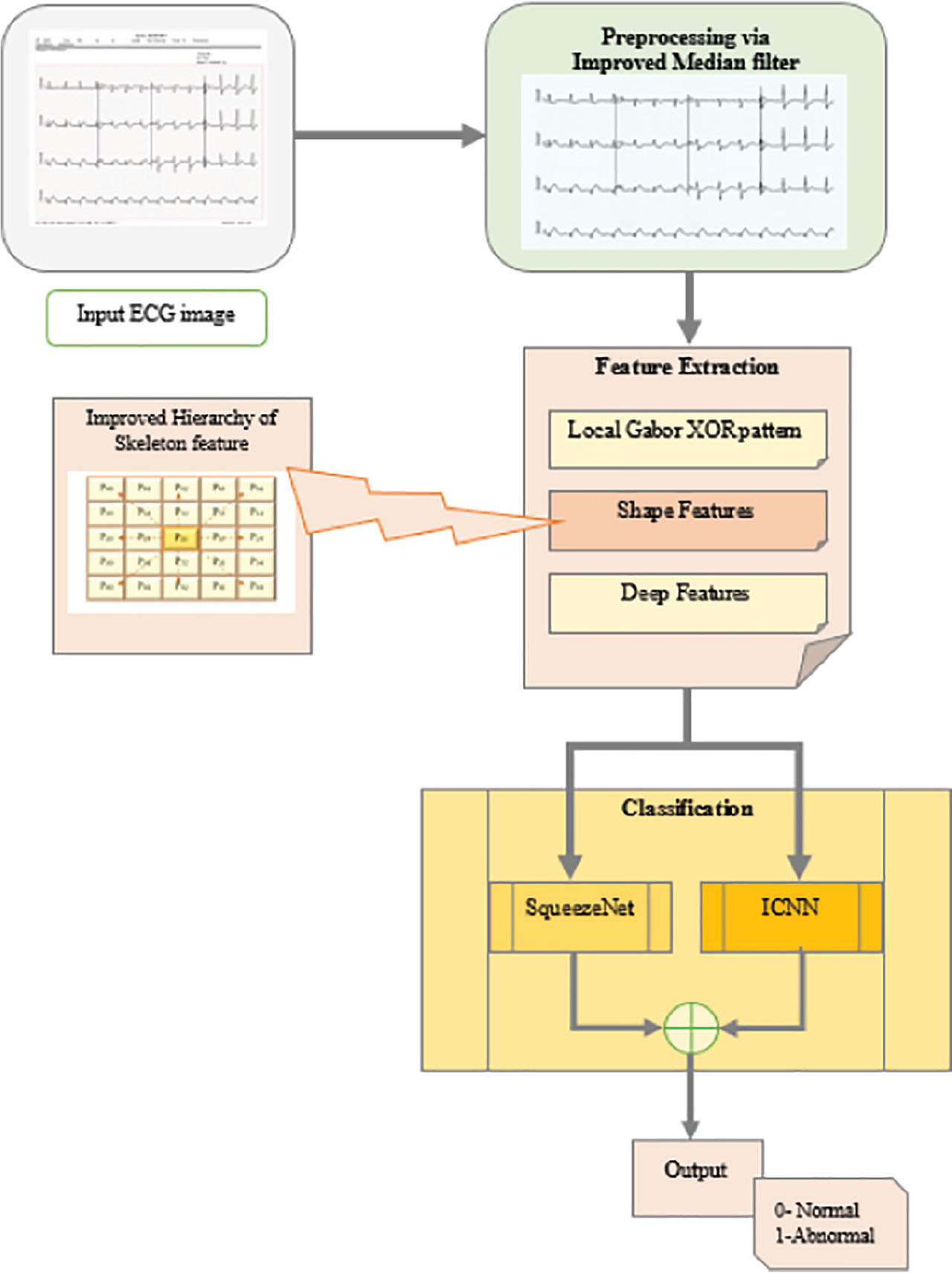
Figure 1:
Basic structure of the suggested mechanism for CVD. CVD, cardiovascular disease; ICNN, improved convolutional neural network.
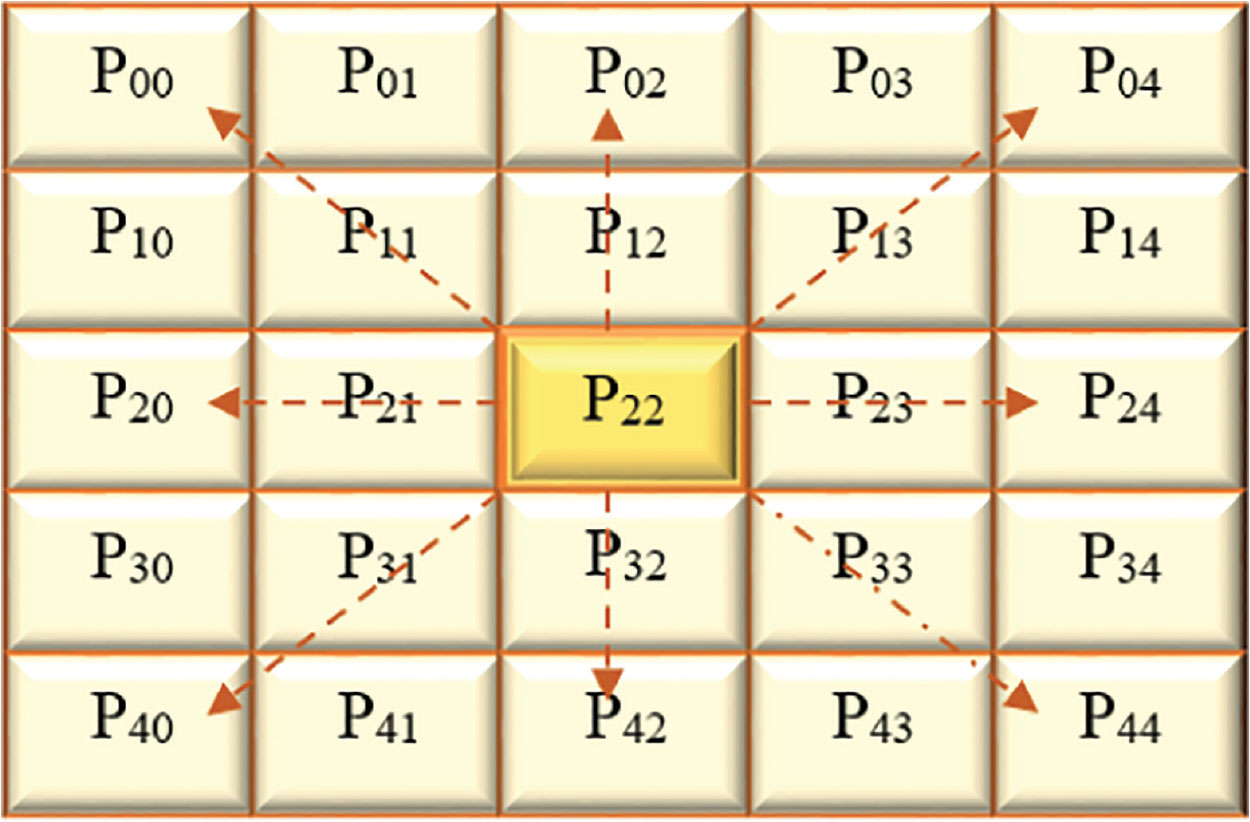
Figure 2:
Neighborhood diagram of improved hierarchy of skeleton feature.
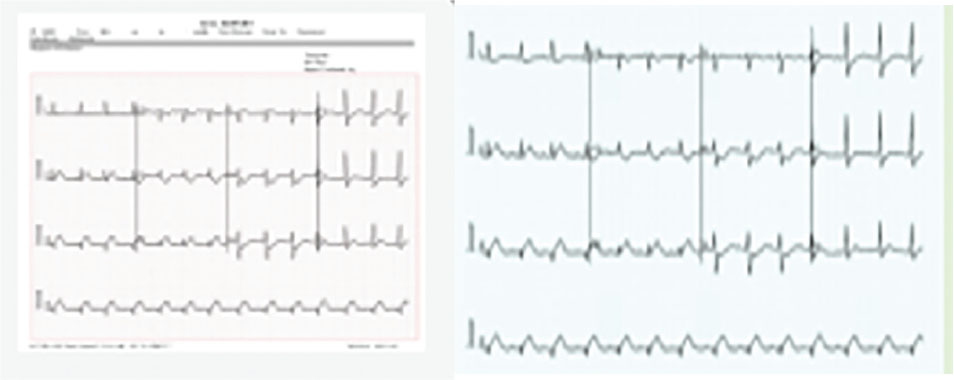
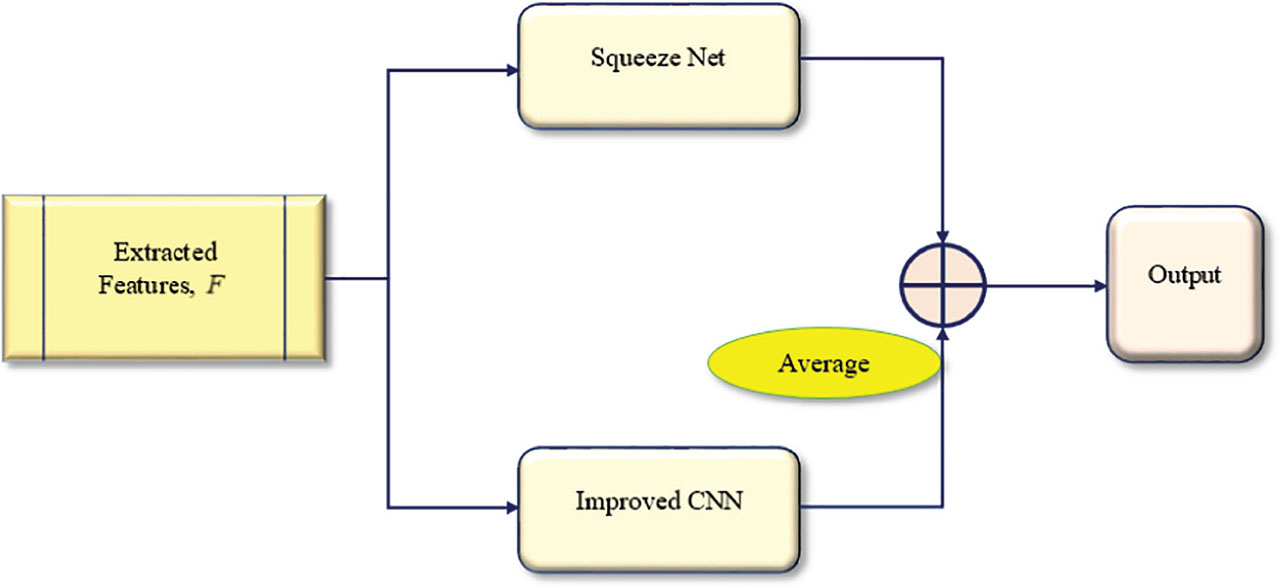
Figure 3:
Architecture of classification process. CNN, convolutional neural network.
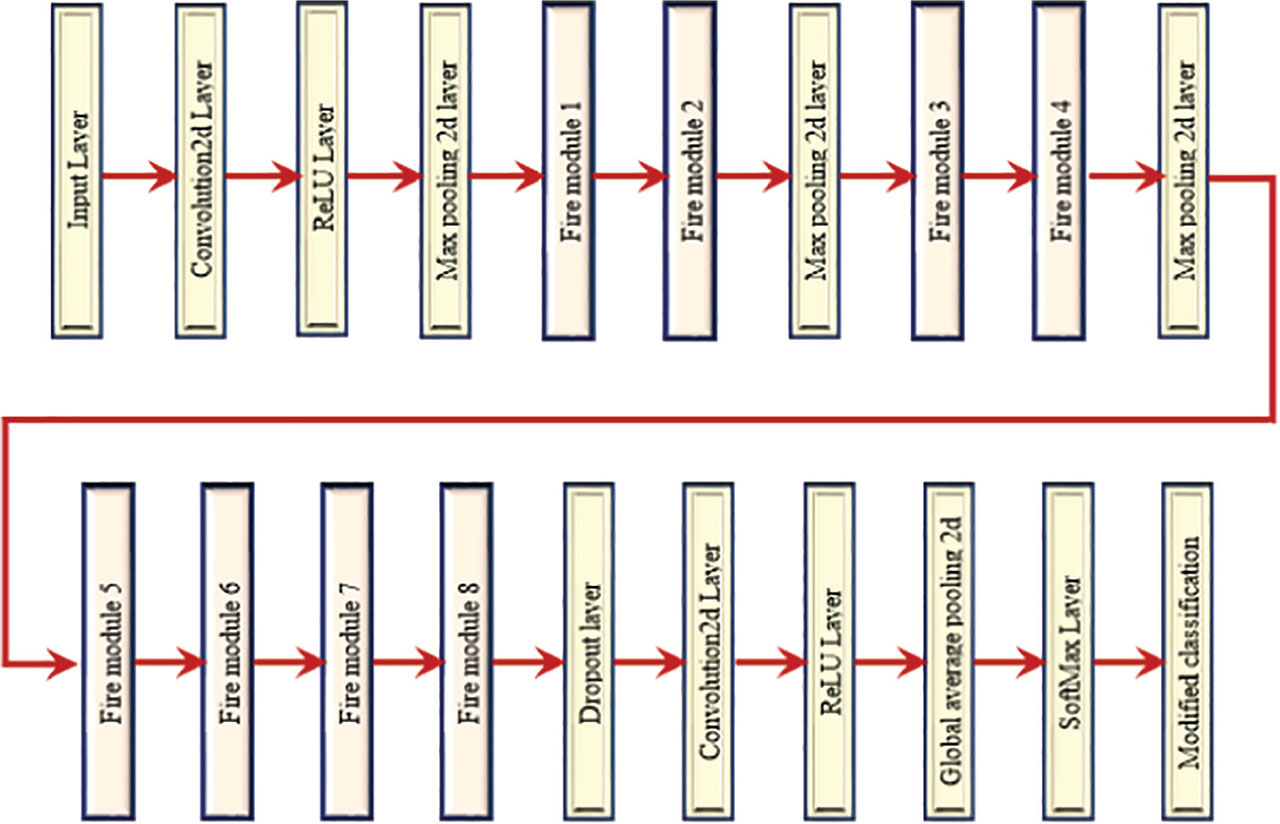
Figure 4:
SqueezeNet model.
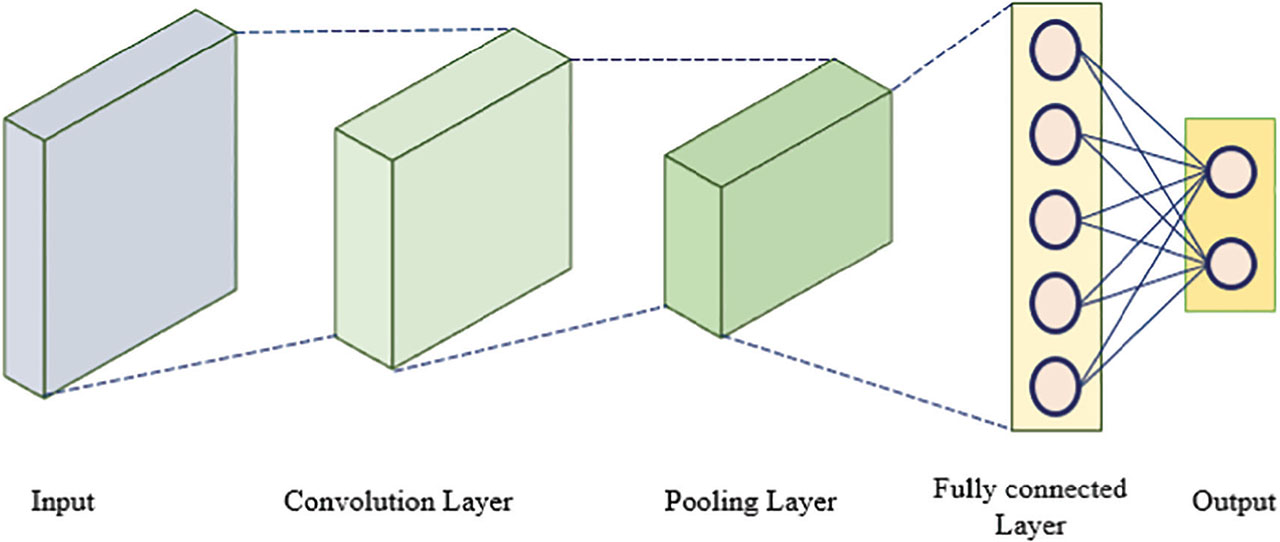
Figure 5:
Conventional CNN model. CNN, convolutional neural network.
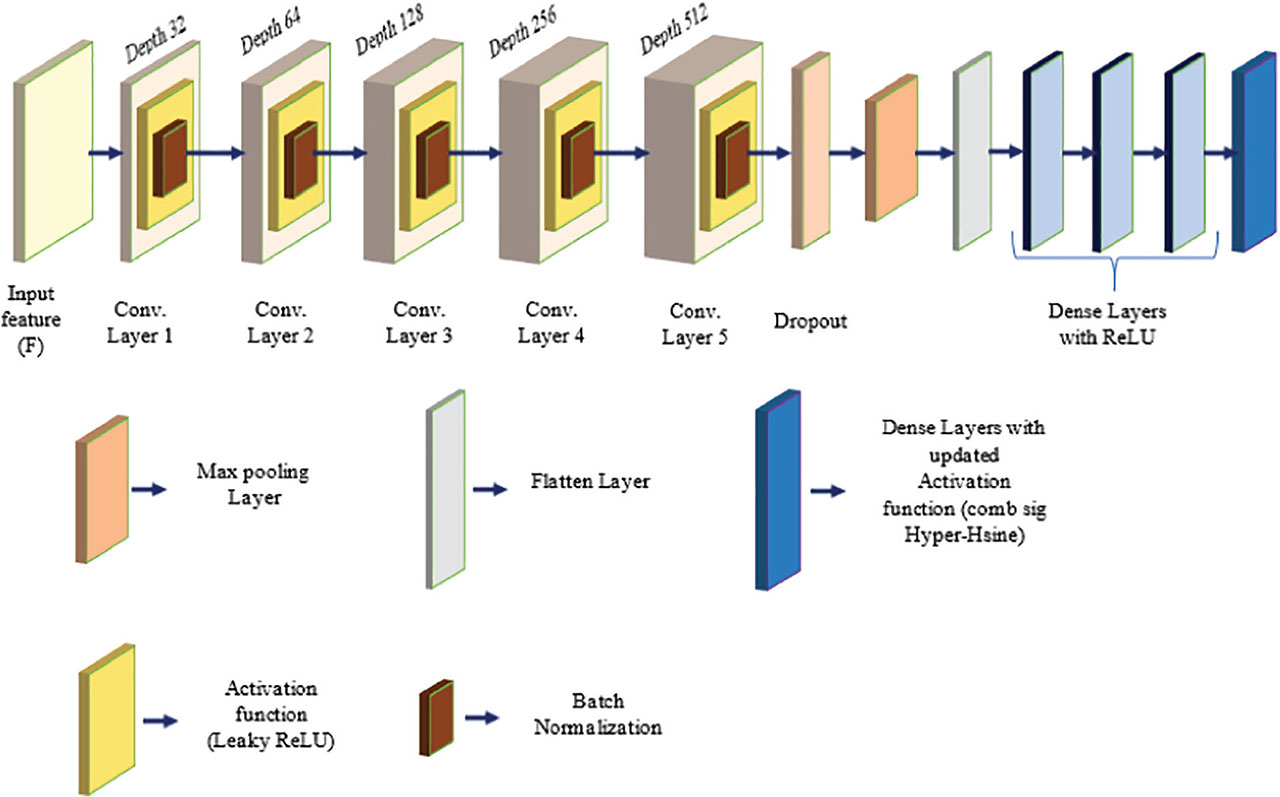
Figure 6:
Architecture of ICNN model. ICNN, improved convolutional neural network.
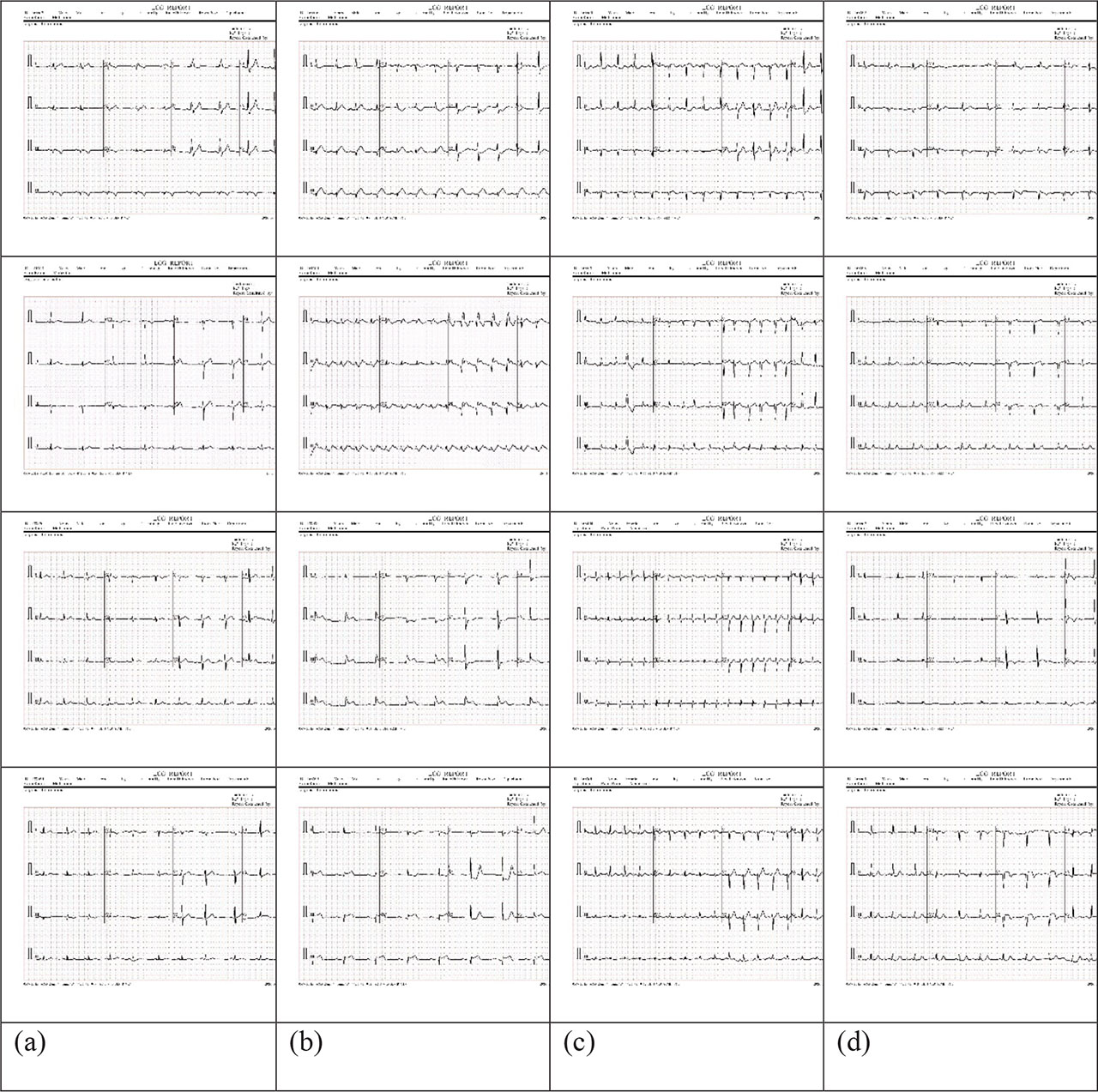
Figure 7:
Sample images (A) Normal person ECG images (B) ECG images of MI patients (C) ECG images of patient that have abnormal heartbeat (D) ECG images of patient that have history of MI. MI, myocardial infarction.
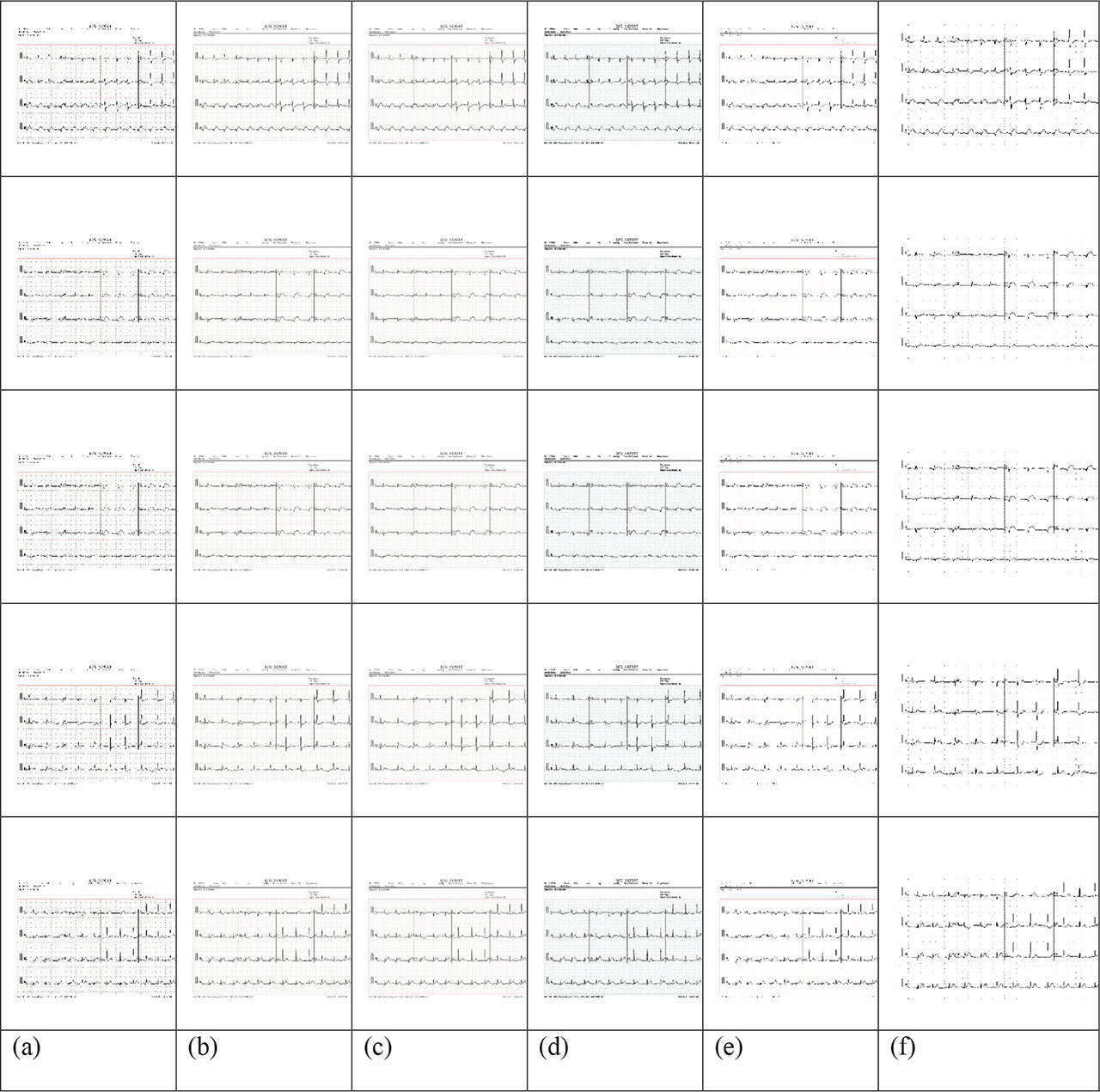
Figure 8:
Images for CVD detection using ECG signal (A) Original images, (B) Gaussian filtering, (C) Mean filtering, (D) Wiener filtering, (E) Conventional median filtering, and (F) Improved median filtering. CVD, cardiovascular disease.
Table 2:
Analysis on PSNR and SSIM
| Methods | PSNR | SSIM |
|---|---|---|
| Mean filter | 23.586 | 0.770 |
| Gaussian filter | 22.136 | 0.707 |
| Weiner filter | 19.997 | 0.696 |
| Conventional median filter | 30.656 | 0.877 |
| IMF | 37.804 | 0.915 |
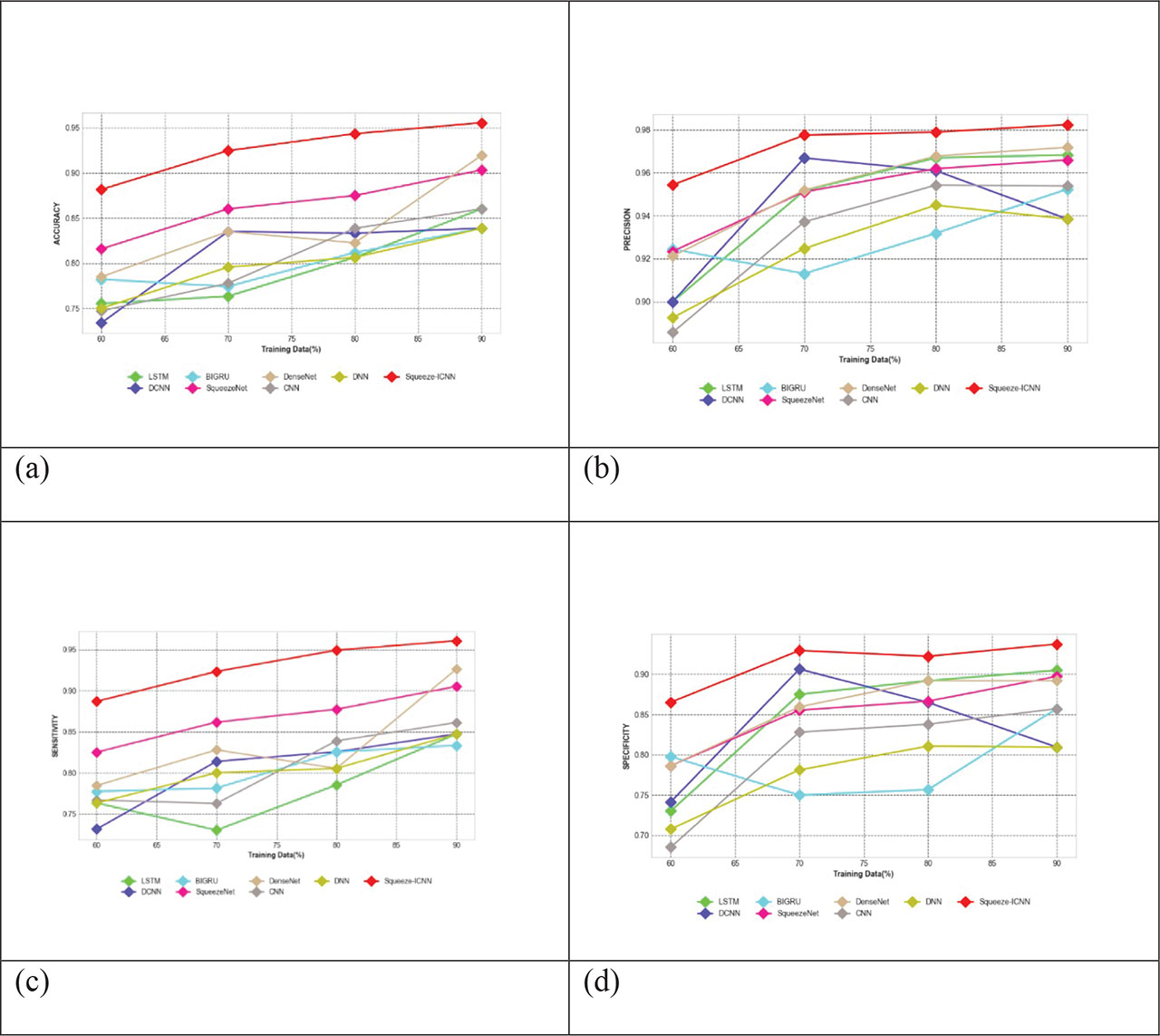
Figure 9:
Comparative analysis on positive metrics for Squeeze-ICNN and traditional schemes. CNN, convolutional neural network; DCNN, deep convolutional neural network; DNN, deep neural network; ICNN, improved convolutional neural network.
Table 3:
Comparative assessment on positive metric
| Model | Accuracy (%) | Precision (%) | Recall/sensitivity (%) | F1-score (%) |
|---|---|---|---|---|
| CNN (baseline) | 88.0 | 86.5 | 84.3 | 85.4 |
| ICNN (proposed) | 91.2 | 92.4 | 90.1 | 91.2 |
| SqueezeNet | 90.6 | 91.1 | 89.3 | 90.2 |
| Squeeze-ICNN | 94.4 | 97.9 | 94.9 | 96.4 |
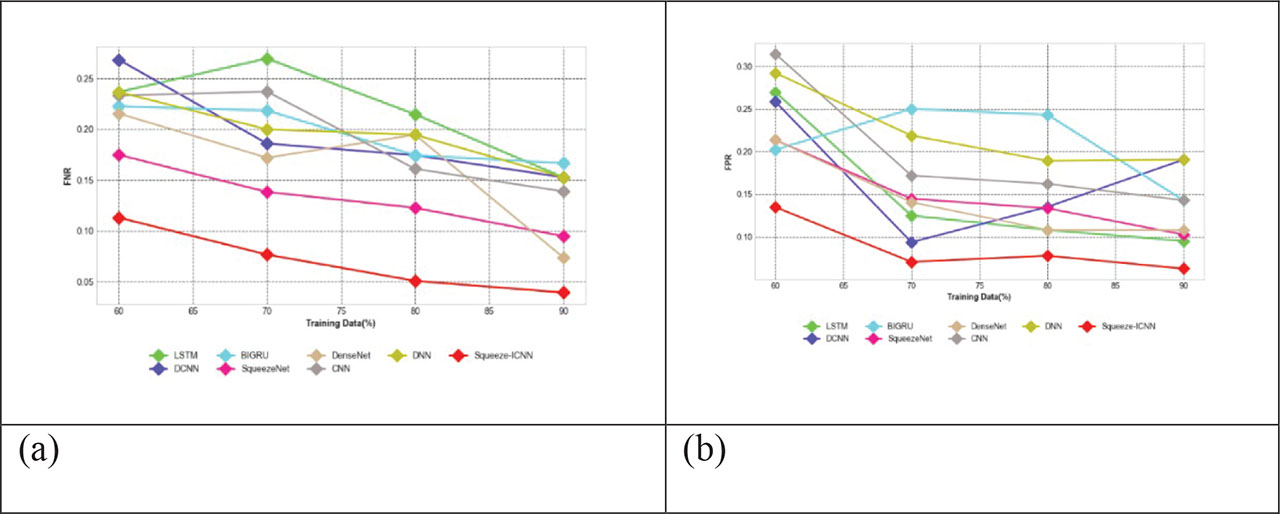
Figure 10:
Comparative analysis on negative metrics for Squeeze-ICNN and traditional schemes. CNN, convolutional neural network; DCNN, deep convolutional neural network; DNN, deep neural network; ICNN, improved convolutional neural network.
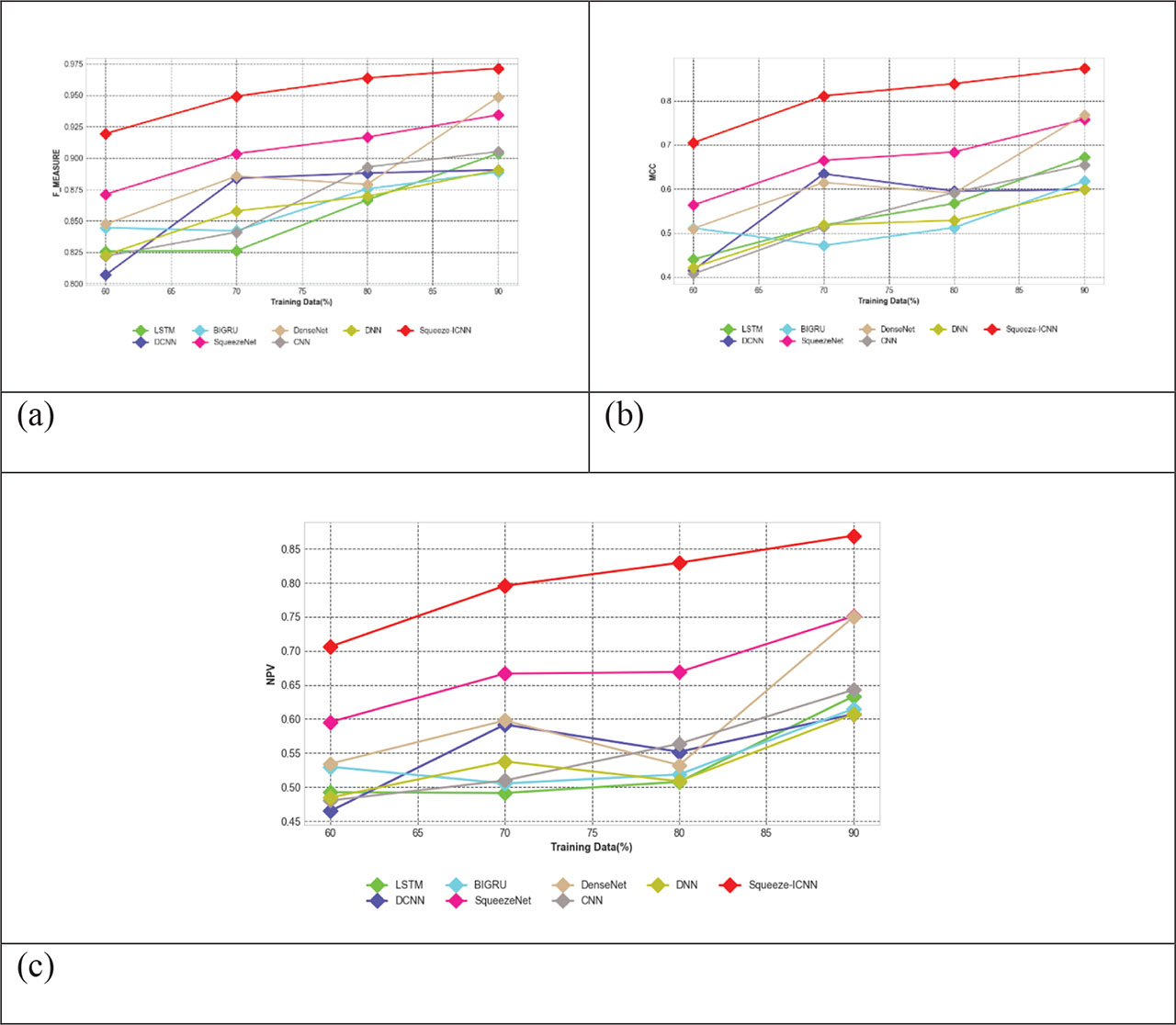
Figure 11:
Comparative analysis on other metrics for Squeeze-ICNN and traditional schemes. CNN, convolutional neural network; DCNN, deep convolutional neural network; DNN, deep neural network; ICNN, improved convolutional neural network.
Table 4:
Ablation assessment on Squeeze-ICNN, model with conventional preprocessing, model with conventional hierarchy of skeleton, and SqueezeNet + Conventional CNN
| Metrics | Model with conventional preprocessing | Squeeze-ICNN | SqueezeNet + conventional CNN | Model with conventional hierarchy of skeleton |
|---|---|---|---|---|
| Sensitivity | 0.785 | 0.949 | 0.836 | 0.788 |
| F-measure | 0.785 | 0.964 | 0.836 | 0.788 |
| Accuracy | 0.851 | 0.944 | 0.908 | 0.852 |
| FPR | 0.127 | 0.078 | 0.068 | 0.126 |
| Specificity | 0.873 | 0.922 | 0.932 | 0.874 |
| FNR | 0.215 | 0.051 | 0.164 | 0.212 |
| NPV | 0.873 | 0.830 | 0.932 | 0.874 |
| Precision | 0.785 | 0.979 | 0.836 | 0.788 |
| MCC | 0.741 | 0.839 | 0.788 | 0.745 |
Table 5:
Statistical assessment on accuracy
| Statistical metrics | LSTM | DCNN | SqueezeNet | CNN [8] | DenseNet | Bi-GRU | DNN [1] | Squeeze-ICNN |
|---|---|---|---|---|---|---|---|---|
| Mean | 0.796 | 0.810 | 0.864 | 0.798 | 0.841 | 0.802 | 0.806 | 0.926 |
| Minimum | 0.755 | 0.734 | 0.816 | 0.750 | 0.785 | 0.774 | 0.747 | 0.882 |
| Standard deviation | 0.042 | 0.044 | 0.032 | 0.032 | 0.049 | 0.026 | 0.045 | 0.028 |
| Median | 0.785 | 0.834 | 0.868 | 0.801 | 0.829 | 0.797 | 0.808 | 0.934 |
| Maximum | 0.860 | 0.839 | 0.903 | 0.839 | 0.919 | 0.839 | 0.860 | 0.956 |
Table 6:
Comparative overview of the proposed method vs existing studies
| Study/year | Preprocessing technique | Feature type | Model used | Accuracy (%) | Key advantages | Limitations |
|---|---|---|---|---|---|---|
| Khan et al. [1] | Not specified | Raw ECG Images | MobileNet-based DNN | 92 | Lightweight architecture | Limited generalization, no hybrid features |
| Fatema et al. [2] | Basic filtering | Deep features (CNN) | InceptionV3 + ResNet50 | ~90 | Combined model improved feature learning | Imbalanced dataset, minimal filtering |
| Li et al. [3] | Data augmentation | TL (inceptionV3) | DeepECG | 91–93 | Pretrained on large ECG datasets | Dataset-specific architecture |
| Sadad et al. [6] | Basic filtering | CNN + attention | Lightweight CNN | 89–91 | IoT compatible, efficient | Lacked multi-feature fusion |
| Proposed (This Study) | IMF | Hybrid: Deep + LGXP + shape | SqueezeNet + ICNN | 95.6 | Low FNR (5.1%), robust features, compact size | Limited dataset, needs cross-validation |
| Abbreviation | Description |
|---|---|
| AC | Accuracy |
| AUC | Area Under the Curve |
| BGRU | Bidirectional Gated Recurrent Unit |
| Bi-GRU | Bidirectional Gated Recurrent Unit |
| CDC | Centers for Disease Control and Prevention |
| CHS | Comb Hyper-Sine |
| CNN | Convolutional Neural Network |
| CVD | Cardiovascular Disease |
| DCNN | Deep Convolutional Neural Network |
| DCT | Discrete Cosine Transform |
| DL | Deep Learning |
| DNN | Deep Neural Network |
| DSR | Dynamic Source Routing |
| ECG | Electrocardiogram |
| EMD | Empirical Mode Decomposition |
| EMG | Electromyography |
| EPS | Episodes per Second |
| ETT | Exercise Tolerance Test |
| FFT | Fast Fourier Transform |
| FN | False Negative |
| FPRs | False Positive Rates |
| ICNN | Improved Convolutional Neural Network |
| IoT | Internet of Things |
| LBP | Local Binary Pattern |
| LGXOR | Local Gabor XOR Pattern |
| LSTM | Long Short-Term Memory |
| LXP | Local XOR Pattern |
| MCC | Matthews Correlation Coefficient |
| NPV | Negative Predictive Value |
| MI | Myocardial Infarction |
| ML | Machine Learning |
| NN | Neural Network |
| PSNR | Peak Signal-to-Noise Ratio |
| QRS | QRS Complex |
| R-CNN | Region-Based Convolutional Neural Network |
| REL | Routing by Energy and Link Quality |
| ReLU | Rectified Linear Unit |
| SSD | Single Shoot Detection |
| SSIM | Structural Similarity Index Measure |
| ST | ST Segment |
| SVM-RFECV | Support Vector Machine with Recursive Feature Elimination and Cross-Validation |
| TL | Transfer Learning |
| VGG | Visual Geometry Group |
| WHO | World Health Organization |
| XOR | Exclusive OR |