
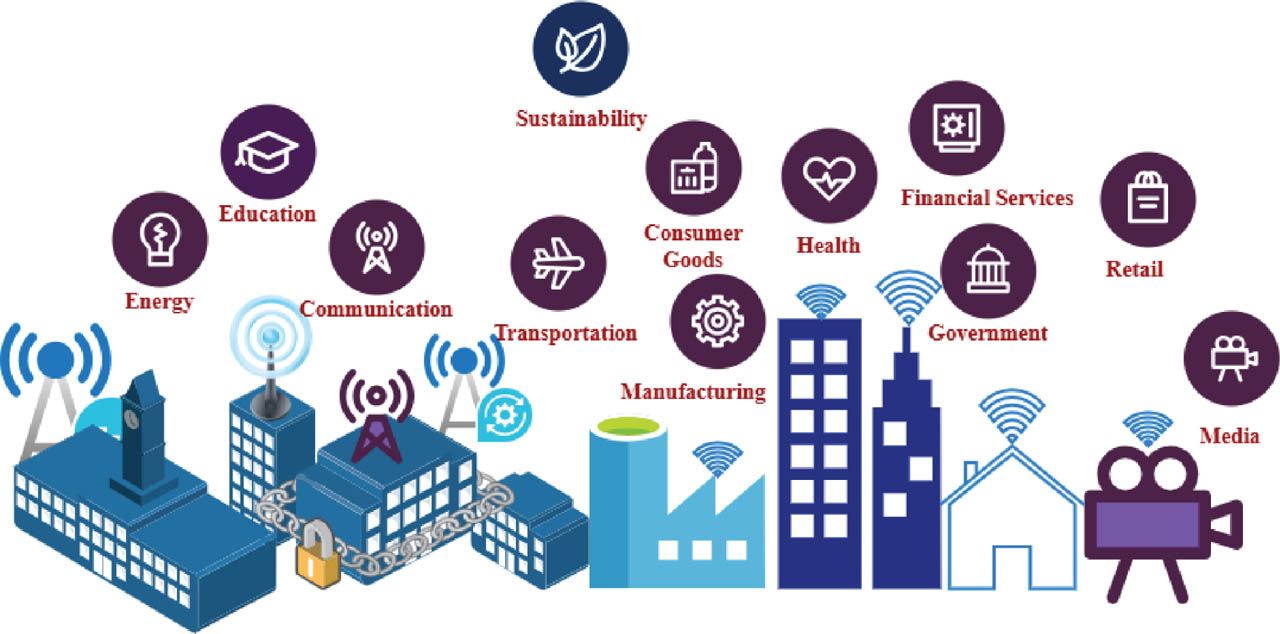
Figure 1:
Smart city development.
Table 1:
A comparative analysis of technologies studied in existing reviews and the present review
| Ref. No. | IoT | BDA | WSN | 5G | AIML | Cloud, edge & fog computing | Blockchain & cyber security | GIS | Smart grid & energy management | AR | Automated systems & robotics | Urban mobility and transportation tech |
|---|---|---|---|---|---|---|---|---|---|---|---|---|
| 11 | √ | √ | ||||||||||
| 16 | √ | |||||||||||
| 19 | √ | √ | √ | |||||||||
| 24 | √ | |||||||||||
| 32 | √ | |||||||||||
| 33 | √ | √ | √ | √ | ||||||||
| 35 | √ | √ | √ | |||||||||
| 37 | √ | |||||||||||
| 41 | √ | √ | √ | √ | √ | |||||||
| 42 | √ | √ | ||||||||||
| 47 | √ | √ | √ | √ | ||||||||
| 52 | √ | |||||||||||
| 54 | √ | √ | √ | |||||||||
| 61 | √ | √ | ||||||||||
| 62 | √ | √ | ||||||||||
| 77 | √ | √ | ||||||||||
| 79 | √ | |||||||||||
| 84 | √ | √ | ||||||||||
| 89 | √ | √ | ||||||||||
| 92 | √ | |||||||||||
| 97 | √ | |||||||||||
| 99 | √ | |||||||||||
| 100 | √ | |||||||||||
| 111 | √ | √ | √ | |||||||||
| 116 | √ | |||||||||||
| 148 | √ | |||||||||||
| 159 | √ | √ | ||||||||||
| 160 | √ | √ | ||||||||||
| 166 | √ | |||||||||||
| Our Study | √ | √ | √ | √ | √ | √ | √ | √ | √ | √ | √ | √ |
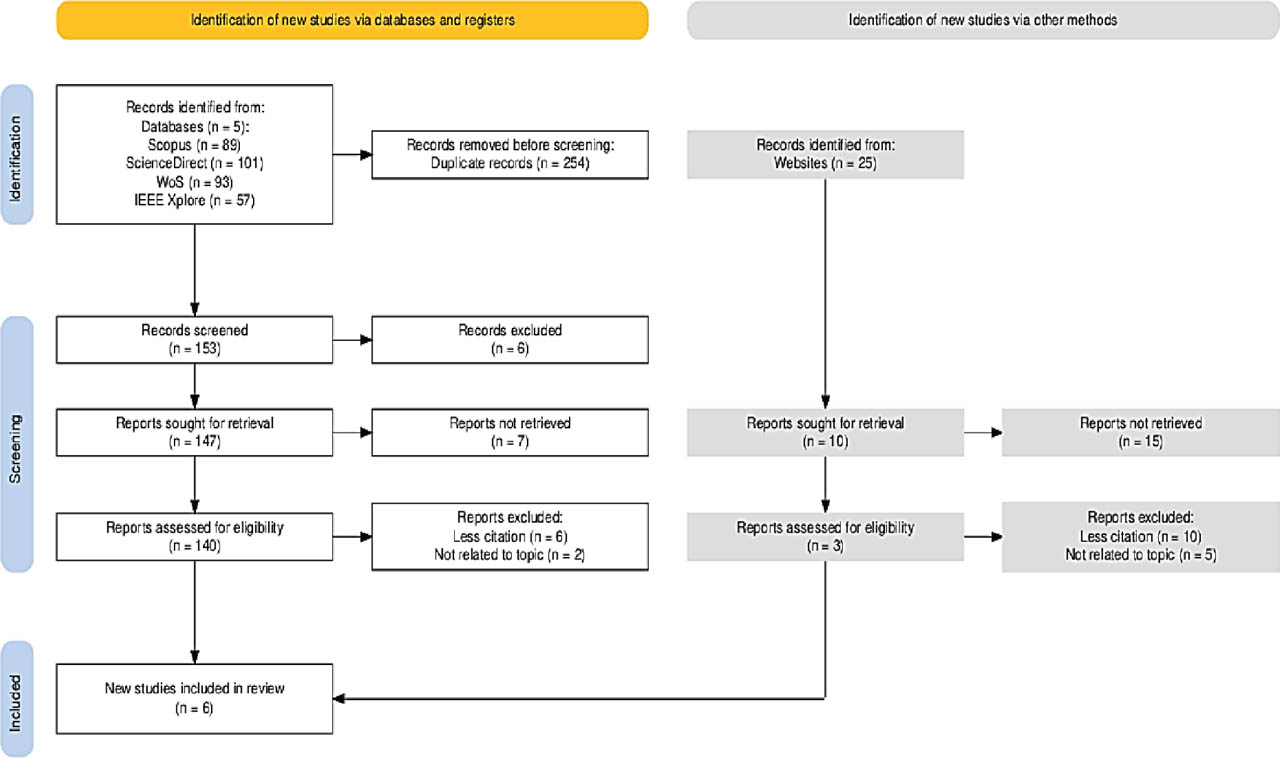
Figure 2:
Thematic structure of the paper.
Table 2:
Proposed research questions and research objectives
| Q. N. | Research question | Research objectives |
|---|---|---|
| RQ1 | How are the cutting-edge technologies responsible for the implementation of smart cities? | To know technological use and advancement in smart cities. |
| RQ2 | What are the difficulties and issues in the realization of smart cities? | To understand the difficulties in building smart cities. |
| RQ3 | What are the prospects for smart city research and projects? | To find scope of other trends, such as nanotechnology and quantum computing in smart city research and projects. |
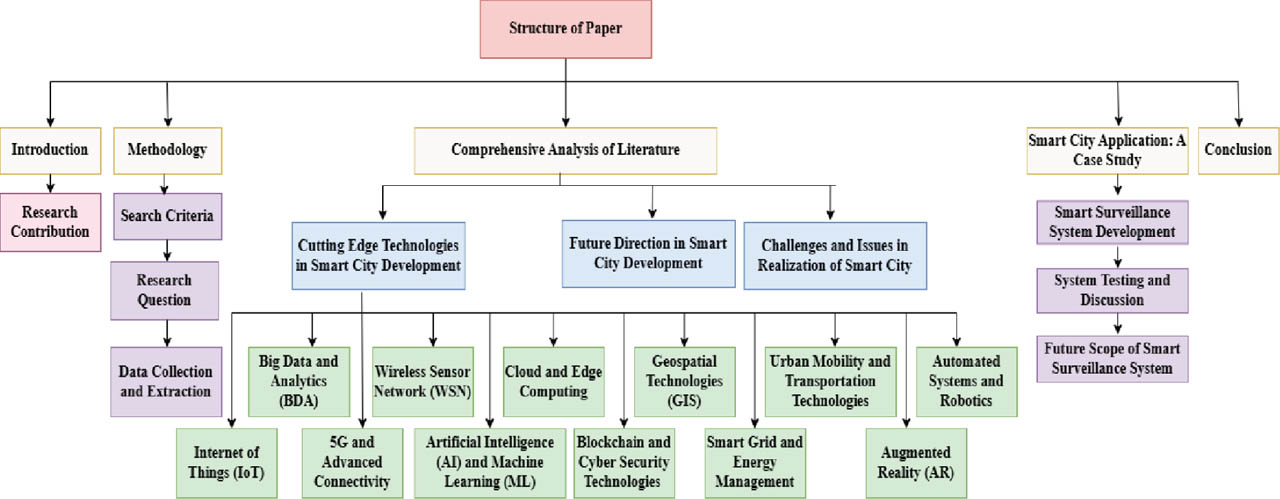
Figure 3:
PRISMA diagram for inclusion/exclusion criteria.
Table 3:
Quality assessment criteria
| No. | Criteria | Score |
|---|---|---|
| 1 | The search study must be related to the declared objectives of the investigation. | Yes = 1 |
| No = 0 | ||
| 2 | The investigation shall concentrate on cutting-edge technology utilized to develop smart cities. | Yes = 1 |
| No = 0 | ||
| 3 | The research study must discuss the applicability of crucial innovations to enhance the implementation of smart cities. | Yes = 1 |
| No = 0 | ||
| 4 | The research study must examine the challenges of adopting technology in smart cities. | Yes = 1 |
| No = 0 | ||
| 5 | The research study should cover future directions for accelerating smart city development. | Yes = 1 |
| No = 0 |
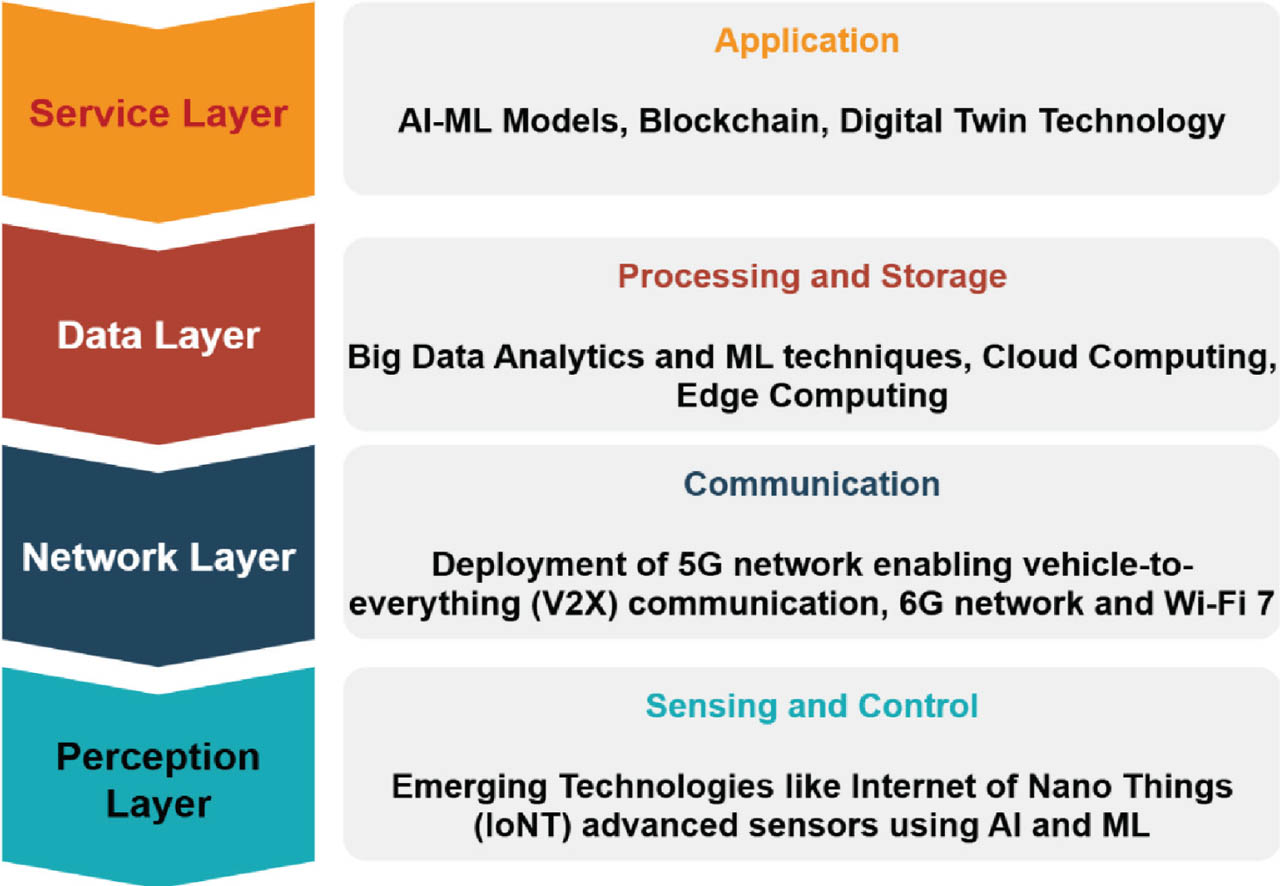
Figure 4:
Layered architecture of integration of technologies for smart city development. AI, artificial intelligence; IoT, Internet of Things; ML, machine learning.
Table 4:
Summarization of relevant studies implementing IoT based smart city applications
| No. | Model/techniques name | Purpose | Limitations |
|---|---|---|---|
| 1. | Fog computing-based IoT architecture for smart cities [9] | Enhances urban coordination and efficiency by enabling scalable, low-latency data processing through a layered fog computing network. | Requires complex infrastructure deployment and integration with existing urban systems. |
| 2. | Analytical framework for data-driven smart sustainable cities [12] | To harness sensor-based big data applications for enhancing urban sustainability through optimized planning, operations, and governance | Lacks empirical validation and may not fully address practical implementation challenges or contextual limitations across diverse urban settings. |
| 3. | fsQCA [13] | To identify and analyze diverse business model configurations in IoT platforms for smart city development. | Limited generalizability due to small sample size and reliance on qualitative project data. |
| 4. | SCADA-based IoT and BDA system [15] | To monitor, analyze, and optimize underwater operation safety and water management in smart cities using real-time sensor data. | High infrastructure and technical resource requirements for data processing, storage, and real-time analysis. |
| 5. | IoT infrastructure for smart cities [16] | To enable smart city applications by leveraging IoT architectures and wireless communication technologies for improved urban living and sustainability. | Faces significant security and privacy challenges due to large-scale device deployment and communication vulnerabilities. |
| 6. | Occupancy-driven ML-based on-street parking pricing scheme [17] | To predict parking lot occupancy and dynamically determine parking prices using ML models for efficient parking management in smart cities. | Real-world effectiveness depends on accurate, real-time data availability and model adaptability to dynamic urban conditions. |
| 7. | IoT-based urban waste management system using cuckoo search-optimized LSTM [18] | To optimize waste collection and routing in smart cities by analyzing waste data using a Cuckoo Search-enhanced LSTM model. | Performance depends heavily on the quality of IoT sensor data and may face scalability and real-time processing challenges in larger urban settings |
| 8. | Edge computing framework [19] | It processes IoT data locally to enable real-time situation awareness in smart cities. | It may face challenges handling extremely large-scale heterogeneous data efficiently. |
| 9. | Integrated optimization-simulation framework for scalable SC and relocation of SAEVs [20] | To optimize the real-time relocation and SC of SAEV fleets based on dynamic electricity prices, aiming to reduce charging costs, carbon emissions, and improve operational efficiency by integrating transport and power grid systems | Assumes unlimited charging station capacity and static transport demand, limiting realism and dynamic pricing integration. |
| 10. | SC Framework for SAEV Fleets. | Optimize charging to reduce energy costs and peak demand by shifting SAEV charging to low-price or renewable energy periods. | Assumes fixed trip patterns and may not fully capture real-time demand fluctuations or infrastructure constraints. |
| 11. | IoT-based real-time smart traffic monitoring system with AR [22] | Enhance traffic management, safe navigation, and pollution control by integrating IoT sensors and AR in smart cities. | Dependent on existing IoT infrastructure and may face challenges in scalability and real-time data processing under heavy traffic conditions |
| 12. | Smart rent portal with recommendation system visualized by AR [23] | To simplify rental property search by combining preference-based recommendation with AR visualization for enhanced user experience. | Limited to memory-based recommendation accuracy and depends on user adoption of AR and blockchain technologies. |
| 13. | Smart street lighting system [24] | To reduce energy costs and enhance public safety through wireless networked LED streetlights with centralized and remote control in smart cities. | Vulnerable to cybersecurity threats due to IoT device integration and wireless mesh network exposure. |
| 14. | MSKU campus AR prototype [25] | To enhance smart campus urbanization by visually presenting campus features and real-time external data using AR and image detection. | Limited to specific campus areas and reliant on external data accuracy and availability for real-time information. |
| 15. | AR-IoT accessibility system for motor disabilities [26] | To empower wheelchair users to interact independently with out-of-reach physical items in smart cities using AR and RFID technologies. | Limited by the availability of RFID-tagged inventory and AR interface usability across diverse user impairments. |
| 16. | Big data and ontology-based energy management system [27] | To reduce energy consumption in smart cities by integrating big data, ontology, and multiagent systems for improved interoperability and intelligent energy management. | Complexity in integrating heterogeneous data sources and scalability challenges in real-time energy management across large urban environments. |
| 17. | Edge computing-based short-term energy prediction system [28] | To provide real-time, accurate short-term energy prediction in smart cities by distributing data acquisition, processing, and prediction across edge and central nodes using IoT and DL. | Challenges in handling heterogeneous IoT data and reliance on the efficiency of distributed edge computing infrastructure. |
| 18. | Intelligent vehicle network system and smart city management using genetic algorithms and image perception [29] | To optimize urban traffic and city management by using genetic algorithms and image perception for efficient data processing and energy-saving traffic signal control. | Depends on the accuracy of image perception and requires high computational resources for distributed and parallel processing. |
Table 5:
Summarization of relevant studies implementing blockchain based smart city applications
| Sr No. | Model/technique name | Purpose | Limitations |
|---|---|---|---|
| 1 | Unified framework for data integrity protection using secret sharing, fog computing, and blockchain [105] | To ensure end-to-end data integrity across the entire data lifecycle in people-centric smart cities, covering data generation to consumption. | Prior work has only handled data integrity in isolated segments; this framework aims to be holistic but may face challenges in scalability, computational efficiency, and real-world deployment due to the resource constraints of IoT devices. |
| 2 | PrivySharing blockchain framework [88] | It enables privacy-preserving and secure IoT data sharing in smart cities using multichannel blockchain and smart contracts | Complexity and overhead in managing multiple channels and ensuring scalability. |
| 3 | Blockchain-based identity and authorization management in FIWARE [92] | It enables decentralized, secure access control across multitenant smart city infrastructures | Complexity in synchronizing diverse security policies and scalability in large federated systems. |
| 4 | Blockchain and IoT-based cognitive edge framework [95] | Enables secure, AI-powered spatio-temporal smart contract services for the sharing economy in smart cities using blockchain and cognitive fog nodes | Complex system integration and scalability challenges in real-world large-scale deployments. |
| 5 | Edge, caching, and blockchain-based communication framework [96] | Enhances bandwidth, reduces delay, and secures IoT communications in smart cities through edge computing, caching, and blockchain; | Scalability and interoperability with existing wireless infrastructure remain challenging. |
| 6 | AdBEV participation scheme [102] | To reduce power fluctuation and charging costs in smart grids by dynamically scheduling EV charging/discharging using the Iceberg order algorithm within a decentralized blockchain platform | Requires balancing on-chain/off-chain complexity and further optimization to maintain blockchain efficiency and scalability. |
| 7 | Blockchain-based privacy-preserving payment mechanism [103] | To enable secure and anonymous payment data sharing in V2G networks while supporting payment auditing. | Relies on privileged user access for auditing, which may introduce trust and governance challenges in fully decentralized systems. |
| 8 | Dynamic group authentication and key exchange scheme based on threshold secret sharing [106] | To enable efficient, secure group authentication and key exchange in large-scale IoT smart metering environments by reducing overhead on group leaders and ensuring secure communication. | Memory and computation overhead on group leaders can still be significant as the number of devices grows, requiring further optimization. |
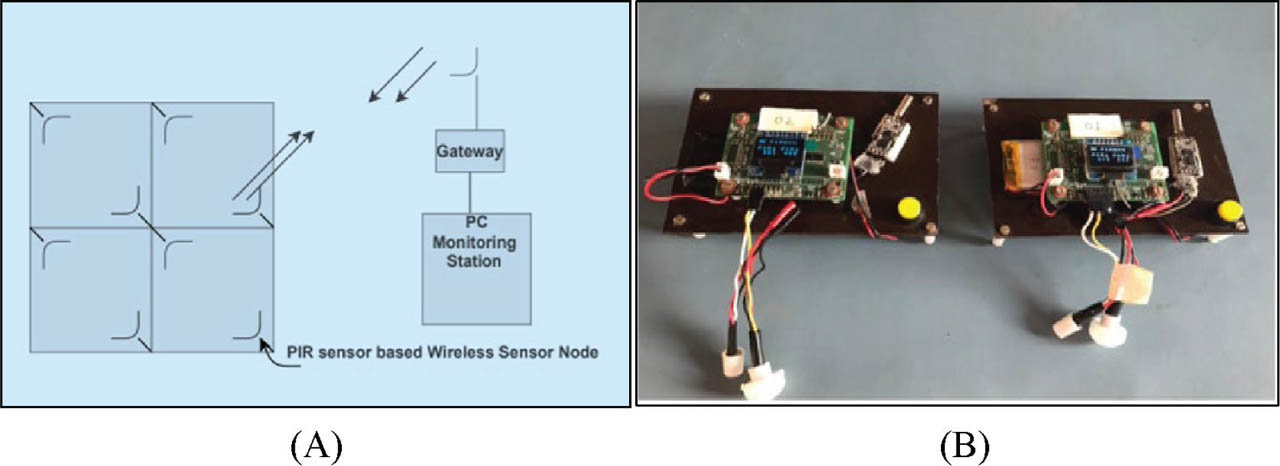
Figure 5:
(A) Communication and network block diagram (B) developed nodes 1 and 2 for ready for real time testing. PIR, passive infrared sensors.
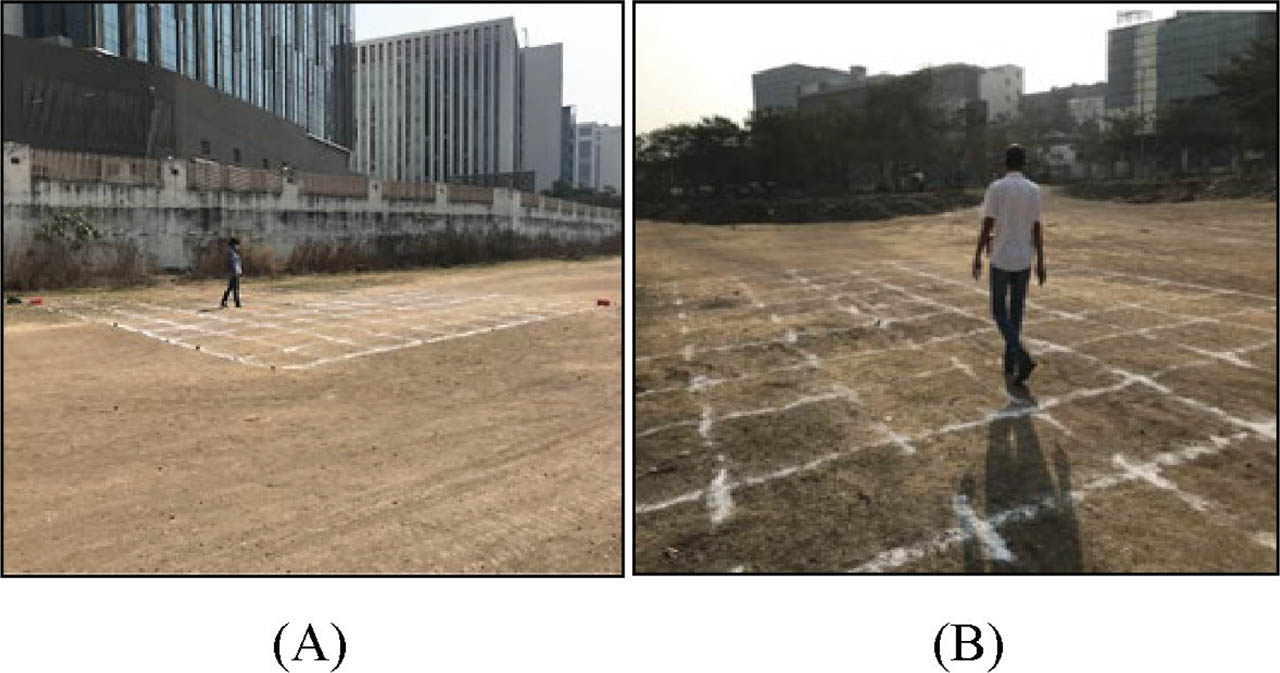
Figure 6:
Test case photographs taken on January 29, 2023. (A) Morning slot; (B) Evening slot.
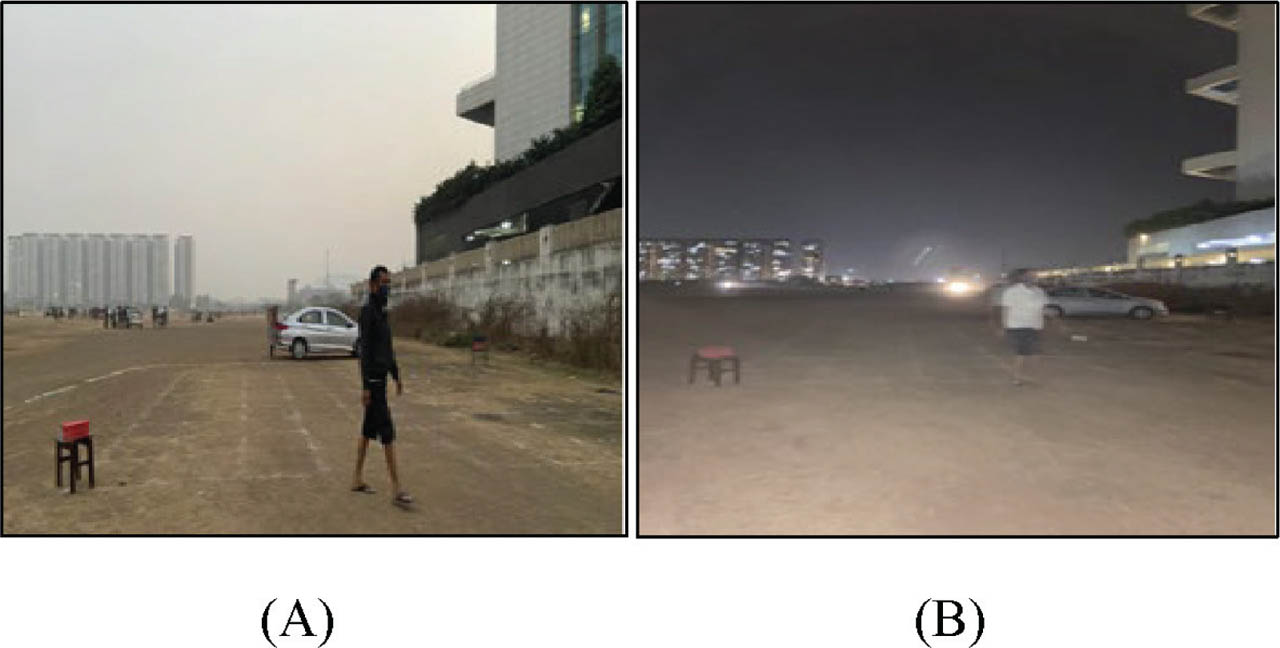
Figure 7:
Test case photographs taken on January 31, 2023. (A) Morning slot; (B) Evening slot.
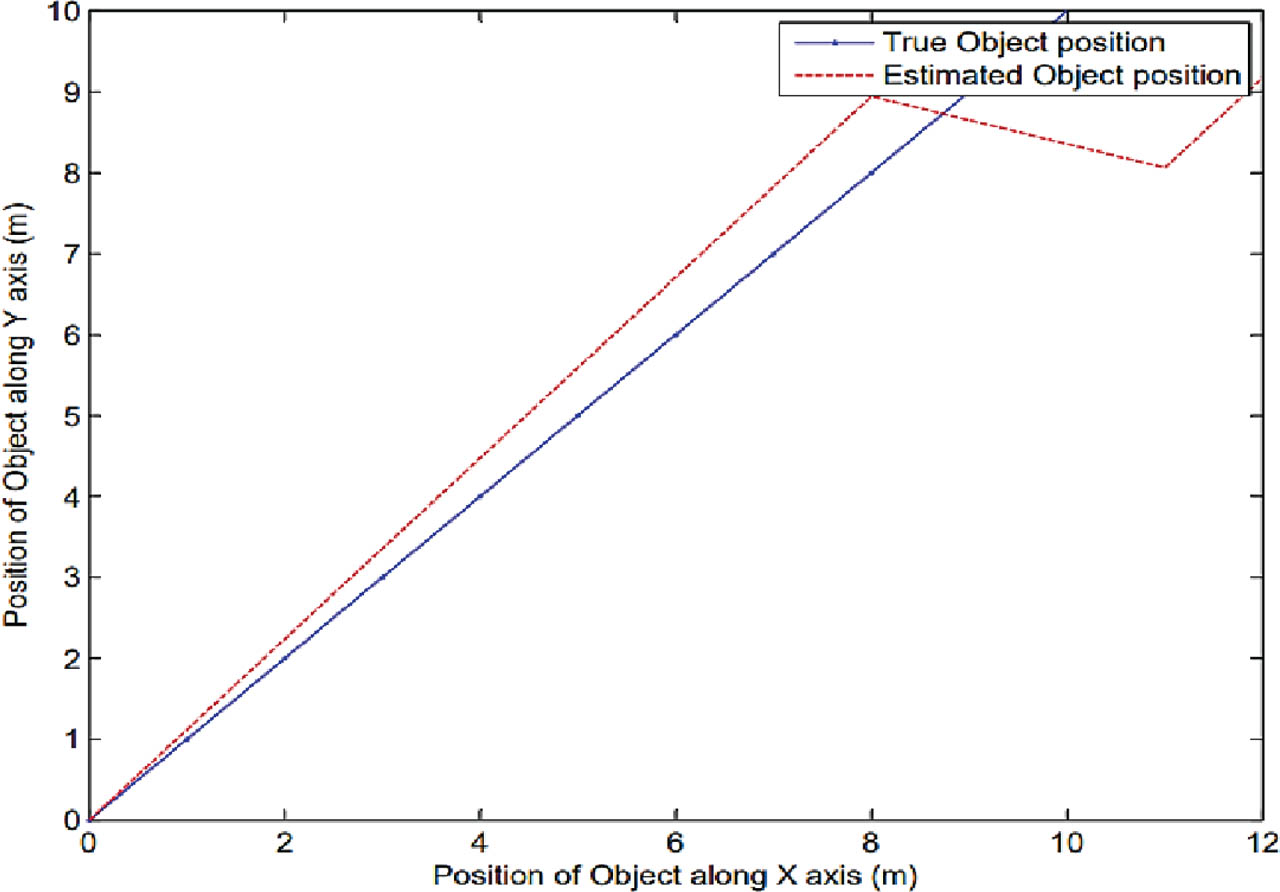
Figure 8:
True and estimated position of target for ULT using real time test 1 results. ULT, ultra-low temperature.
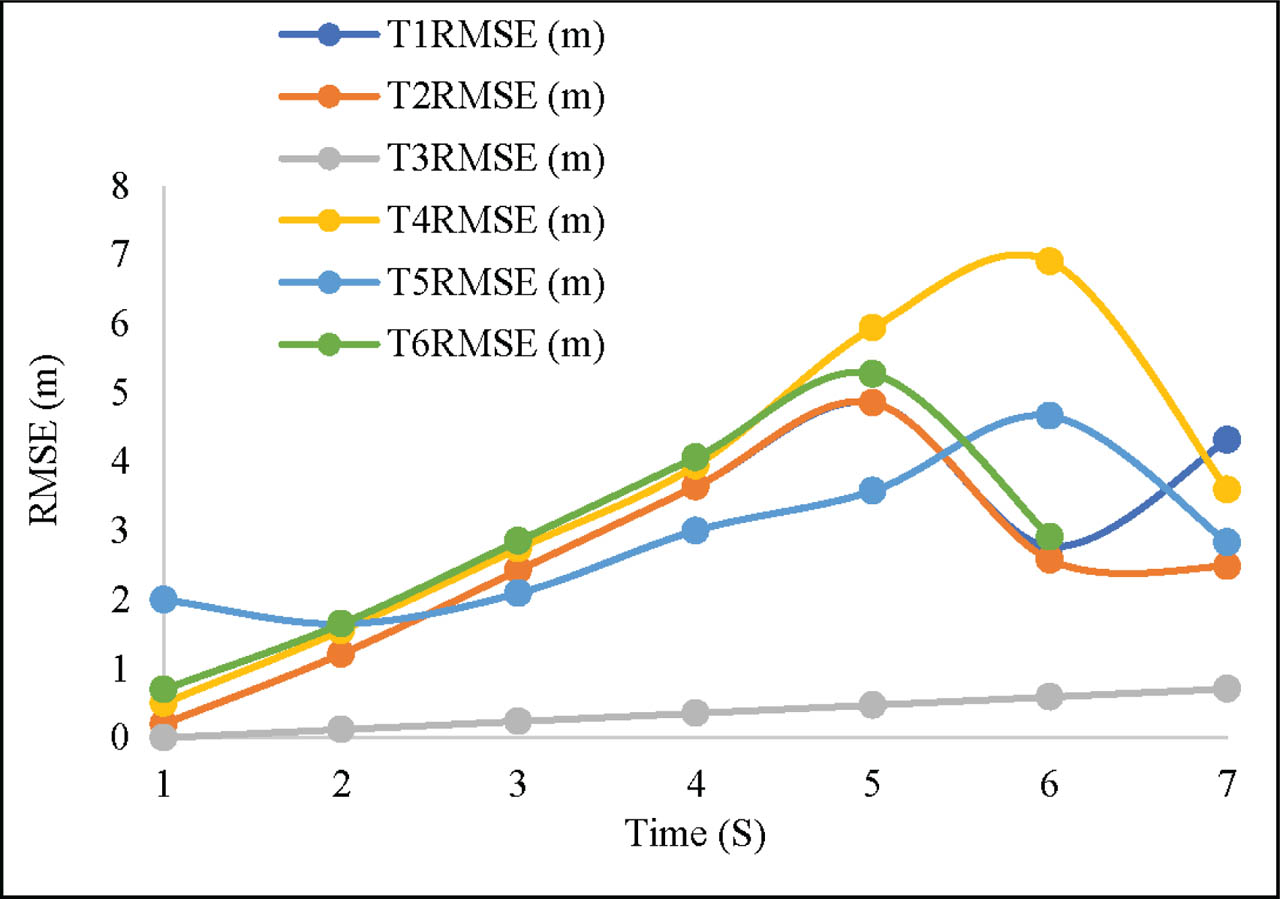
Figure 9:
RMSE between the target actual and estimated position for various tests. RMSE, root mean square error.