
I. Introduction
The world's latest technological innovations have enabled the long-awaited concept of a modern paradise that balances complex technical interventions and conventional systems. Wireless sensor networks (WSNs), big data analytics (BDA), cognitive computing, machine learning (ML), deep learning (DL), artificial intelligence (AI), and Internet of Things (IoT) have all made significant contributions to the attainment of ambition. A smart city is an example of such a promising initiative that has been embraced worldwide to improve the convenience and inclusivity of the lives of individuals. The idea of a smart city is defined as “the use of smart computing technologies to make the critical infrastructure components and services of a city (which include city administration, education, healthcare, public safety, real estate, transportation, and utilities) more intelligent, interconnected, and efficient” [1] as shown in Figure 1. It uses contemporary technologies to change the component of a typical metropolis into an independent entity that runs itself without significant outside assistance. With smart devices, users may access all routine procedures, including administration, guidelines, amenities, and feedback, from anywhere in the world. By employing economical and ecologically beneficial methods, this automation has helped to reduce environmental risks. A “Smart” mechanism is an automated system used to carry out a particular task within a domain. In a smart home, for instance, every device and piece of electric equipment has tiny sensory devices built into it that can sense the environment, gather data, and send that data to processing centers where decisions can be made [2]. Today, almost every country, including India, is interested in the smart city concept. In 2014, the Indian government started the “Smart Cities Mission,” which aims to establish 100 cities with cutting-edge technological facilities by 2022 [3]. The Economic Survey 2020 states that up to 5,151 projects encompassing more than Rs. 2 lakh crore are presently in various stages of deployment, laying the groundwork for India to become a sustainable, technologically advanced, and highly productive country, is spurring economic growth and raising living standards for all [4].
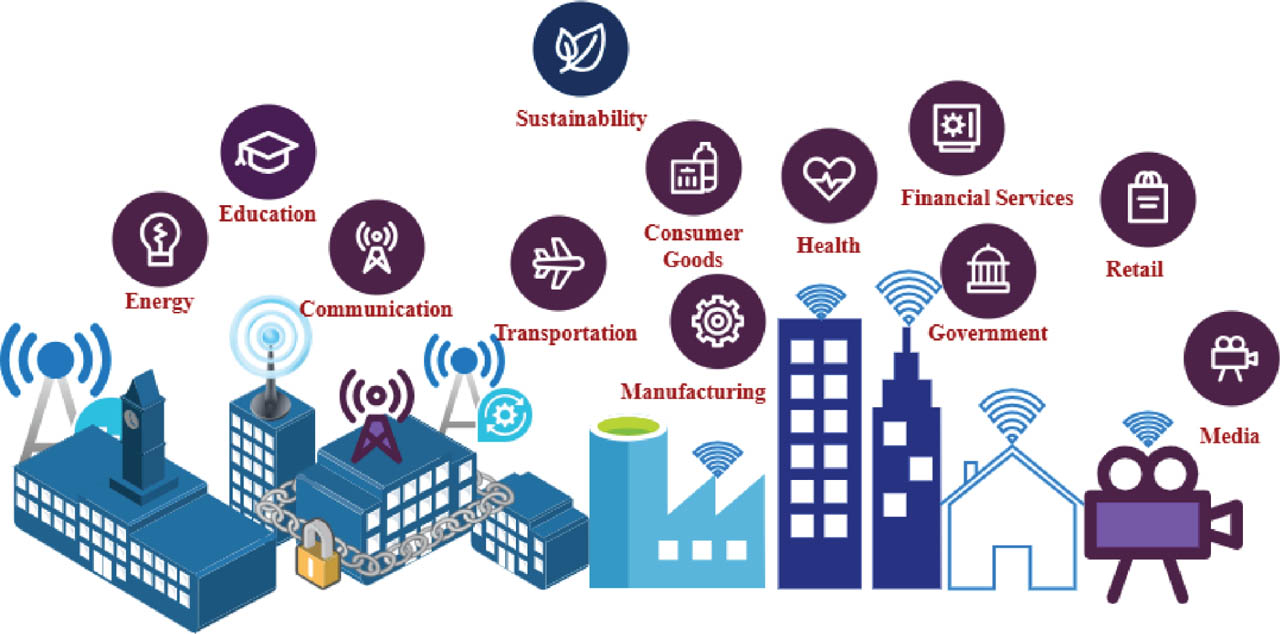
Figure 1:
Smart city development.
This review examines the idea of a smart city from a technical, social, and economic perspective. Numerous published studies and research projects in the field address the concept of a smart city via the prism of multiple technologies, such as blockchain, IoT, Information and Communication Technologies (ICT), etc. The comparative analysis of technologies studied in existing review and our study is presented in Table 1. Our research focuses on contemporary technologies and their contribution to smart cities. It offers a thorough analysis of the most recent studies carried out in the ecosystem of smart cities. It advances the subject by providing a comprehensive analysis of the technical, socioeconomic, demographic, and environmental aspects that constitute significant challenges to the development of smart cities. A thorough road plan for creating a smart city ecosystem that addresses all of its key components and elements was also discussed. It focuses on creating smart cities and prioritizing sustainability for all stakeholders, including residents, businesses, policies, and government. This is in response to the pressing need for sustainability today. It also outlines the best practices that can be used by governments, users, manufacturers, retailers, and designers, among other stakeholders, to carry out smart city projects successfully. It also gives a thorough analysis and recommendations for further research on cutting-edge ideas, such as nanotechnology and quantum computing. It ends with a use case of a smart city application for smart surveillance as a case study with its development and implementation.
Table 1:
A comparative analysis of technologies studied in existing reviews and the present review
| Ref. No. | IoT | BDA | WSN | 5G | AIML | Cloud, edge & fog computing | Blockchain & cyber security | GIS | Smart grid & energy management | AR | Automated systems & robotics | Urban mobility and transportation tech |
|---|---|---|---|---|---|---|---|---|---|---|---|---|
| 11 | √ | √ | ||||||||||
| 16 | √ | |||||||||||
| 19 | √ | √ | √ | |||||||||
| 24 | √ | |||||||||||
| 32 | √ | |||||||||||
| 33 | √ | √ | √ | √ | ||||||||
| 35 | √ | √ | √ | |||||||||
| 37 | √ | |||||||||||
| 41 | √ | √ | √ | √ | √ | |||||||
| 42 | √ | √ | ||||||||||
| 47 | √ | √ | √ | √ | ||||||||
| 52 | √ | |||||||||||
| 54 | √ | √ | √ | |||||||||
| 61 | √ | √ | ||||||||||
| 62 | √ | √ | ||||||||||
| 77 | √ | √ | ||||||||||
| 79 | √ | |||||||||||
| 84 | √ | √ | ||||||||||
| 89 | √ | √ | ||||||||||
| 92 | √ | |||||||||||
| 97 | √ | |||||||||||
| 99 | √ | |||||||||||
| 100 | √ | |||||||||||
| 111 | √ | √ | √ | |||||||||
| 116 | √ | |||||||||||
| 148 | √ | |||||||||||
| 159 | √ | √ | ||||||||||
| 160 | √ | √ | ||||||||||
| 166 | √ | |||||||||||
| Our Study | √ | √ | √ | √ | √ | √ | √ | √ | √ | √ | √ | √ |
Novelty and contribution in the paper: While prior publications have addressed individual aspects of smart city technologies, this manuscript offers a comprehensive, integrated framework that has not been presented before. The novel contributions of this work are:
Systematic Literature Review (SLR) Scope Expansion: Unlike previous studies, this study synthesizes 149 peer-reviewed publications across multiple enabling technologies (IoT, AI, edge computing, blockchain, geospatial systems, smart grids, and 5G) with a focus on sustainability, scalability, and cross-domain integration.
Smart Surveillance System as a Case Study: Demonstration of a pilot deployment of a privacy-conscious, energy-efficient passive infrared sensors (PIR)-based WSN for non-cooperative target tracking in secluded urban areas, validated through real-world field tests.
Strategic Roadmap and Future Directions: This study proposes a practical development roadmap for smart city safety infrastructure, integrating cloud and 5G technologies, and identifies emerging opportunities in nanotechnology and quantum computing.
Compared with the earlier works, this paper combines a broader technical review with a novel experimental implementation and evaluation, creating a unique contribution to the smart city research domain.
The manuscript contains six sections. Figure 2 depicts the thematic structure of the paper. Section II thoroughly explains the reviewing process followed for inclusion and exclusion criteria for choosing articles. Section III investigates the enabling technologies in a smart city ecosystem, highlighting their importance and accompanying issues. Section IV describes a case study of a smart surveillance system as a smart city application, its development, and implementation. Section V concludes the article.
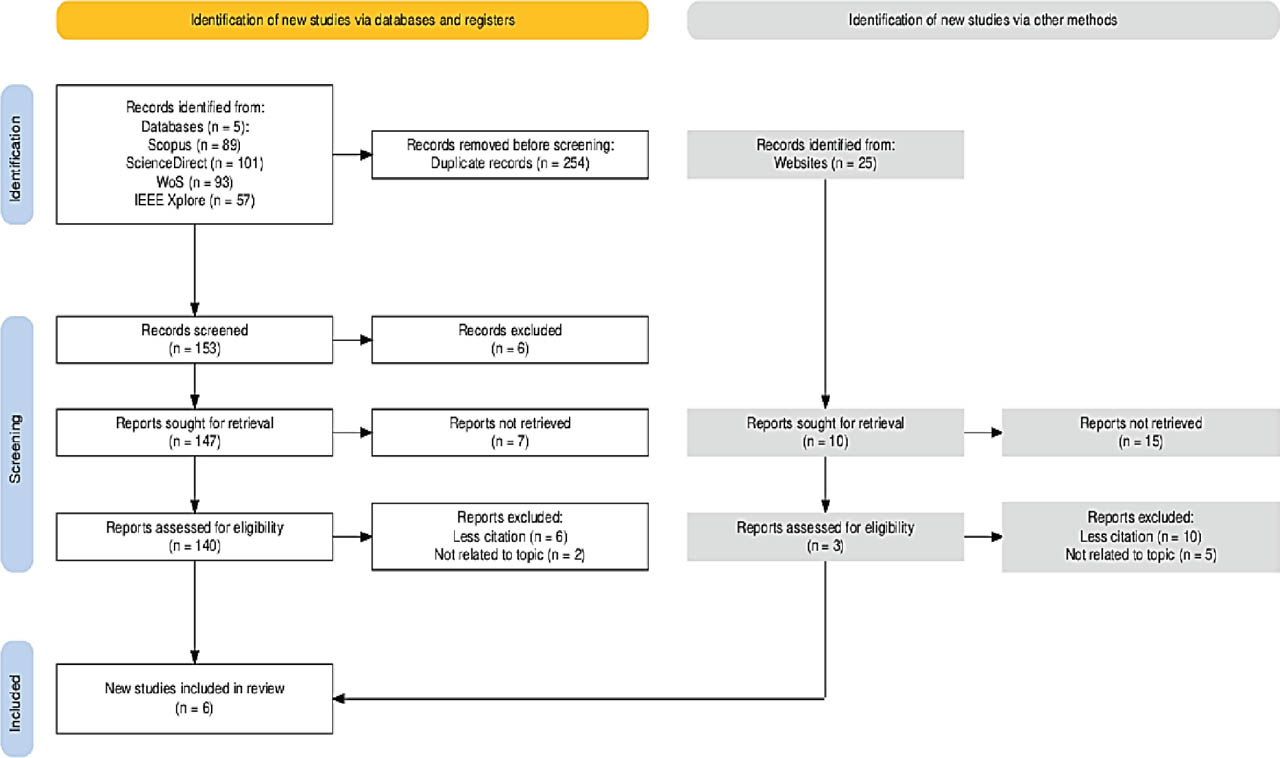
Figure 2:
Thematic structure of the paper.
II. Literature Review
Several frameworks and approaches for creating a thriving smart city have surfaced recently. This section examines the most recent ideas and solutions for the same problem. The Kitchenham and Charter principles have been used for SLR [5, 6]. The guidelines for the review procedure are divided into three sections. The first step is to review planning to ascertain the study goals of an SLR. The second step is identifying future research directions and facilitating subject analysis by identifying well-defined research questions that target the search terms, as shown in Table 2. The third step covers disclosing the review results in formulating topic-specific inclusion and exclusion selection criteria, research goals, and research questions. These guidelines aid in locating important articles to study key enabling technologies and platforms for smart cities in depth.
Table 2:
Proposed research questions and research objectives
| Q. N. | Research question | Research objectives |
|---|---|---|
| RQ1 | How are the cutting-edge technologies responsible for the implementation of smart cities? | To know technological use and advancement in smart cities. |
| RQ2 | What are the difficulties and issues in the realization of smart cities? | To understand the difficulties in building smart cities. |
| RQ3 | What are the prospects for smart city research and projects? | To find scope of other trends, such as nanotechnology and quantum computing in smart city research and projects. |
a. Search criteria
Academic data sources, such as IEEE Xplore, Web of Science, ScienceDirect, ArXiv, and Scopus, were used to retrieve and analyze the pertinent literature for this study. These articles enhance the understanding of the latest research advancements in the field of smart cities. Relevant research publications were carefully examined using precise search terms and keywords to address the defined research questions. Search terms, such as “Smart City,” “Internet of Things AND Smart City,” “Artificial Intelligence AND Smart City,” “Big data analytics AND Smart City,” “Cloud computing AND Smart City,” “Edge Computing AND Smart City,” “Blockchain AND Smart City,” and “Geospatial Technologies AND Smart City,” “Smart Grid AND Energy Management AND Smart City,” “Urban Mobility AND Transportation Technologies AND Smart City,” “Cybersecurity Technologies AND Smart City,” “Augmented Reality AND Smart City,” “Automated Systems AND Robotics AND Smart City,” as well as “5G AND Advanced Connectivity AND Smart City,” have been used to address the article's goals. Significant overlaps were found between the research studies using the first-level search terms. Thus, various factors were included in the evaluation, such as current papers and more referenced publications, sorted by date and according to their importance.
b. Data collection
The initial search was limited to early access articles, conference proceedings, and journal articles published in English. The Smart City Mission has created a demand for all cutting-edge technologies, which are still in their infancy. Consequently, this study has included statistical data, information from government websites, and early access papers to offer valuable insights.
c. Inclusion and exclusion
The SLR primarily draws from IEEE Xplore, Scopus, and ScienceDirect, which account for 95% of the selected references. Once the relevant papers were obtained from the appropriate databases using search parameters, the next step was to screen them as shown in Figure 3. The documents were sorted by abstract and title. Unnecessary and duplicate copies were removed. A total of 254 duplicate references were removed, mainly from ACM and Web of Science, which contributed to their underrepresentation despite a high number of initial search results. To locate any further significant materials, the references of the papers were examined. The research studies deemed unrelated and lacking in peer assessment were eliminated. Studies that addressed the goals of this research study were examined. A total of 149 research studies were selected for further analysis. This database selection may introduce bias, and future reviews should aim for broader inclusion and clearly defined selection and de-duplication criteria.
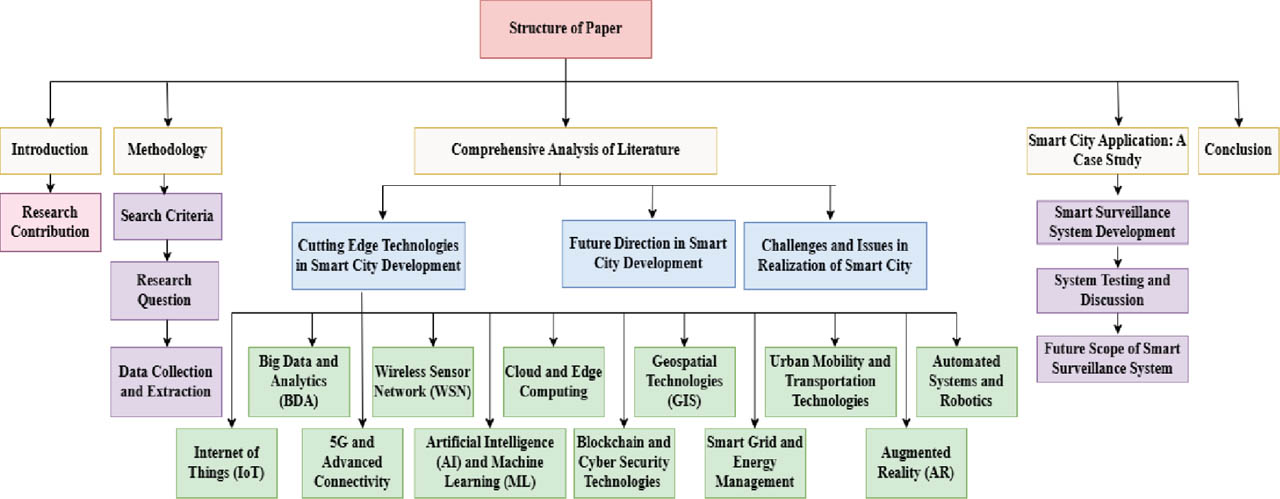
Figure 3:
PRISMA diagram for inclusion/exclusion criteria.
d. Quality assessment criteria
The quality assessment criteria presented in Table 3 help to address important research topics that will significantly enhance the review.
Table 3:
Quality assessment criteria
| No. | Criteria | Score |
|---|---|---|
| 1 | The search study must be related to the declared objectives of the investigation. | Yes = 1 |
| No = 0 | ||
| 2 | The investigation shall concentrate on cutting-edge technology utilized to develop smart cities. | Yes = 1 |
| No = 0 | ||
| 3 | The research study must discuss the applicability of crucial innovations to enhance the implementation of smart cities. | Yes = 1 |
| No = 0 | ||
| 4 | The research study must examine the challenges of adopting technology in smart cities. | Yes = 1 |
| No = 0 | ||
| 5 | The research study should cover future directions for accelerating smart city development. | Yes = 1 |
| No = 0 |
e. Data extraction
Qualitative analysis was conducted on research publications and reports that met the defined study selection criteria. The content was categorized and analyzed using the thematic map shown in Figure 2 to create the parts and subsections discussed below.
III. Comprehensive analysis of the literature
This part investigates the research questions that have been formulated. This section explores research papers that show how cutting-edge technologies can be used to construct smart cities.
a. RQ1: Cutting-edge technologies in smart city development
Humans have long integrated technology into daily tasks for automation and decision-making. With the transition toward Industry 4.0, emerging technologies are enabling smart and sustainable lifestyles [7]. A key step in this direction is the concept of smart cities, realized through technological advancements and their integration. The layered architecture in Figure 4 illustrates how diverse technologies collectively support smart city development.
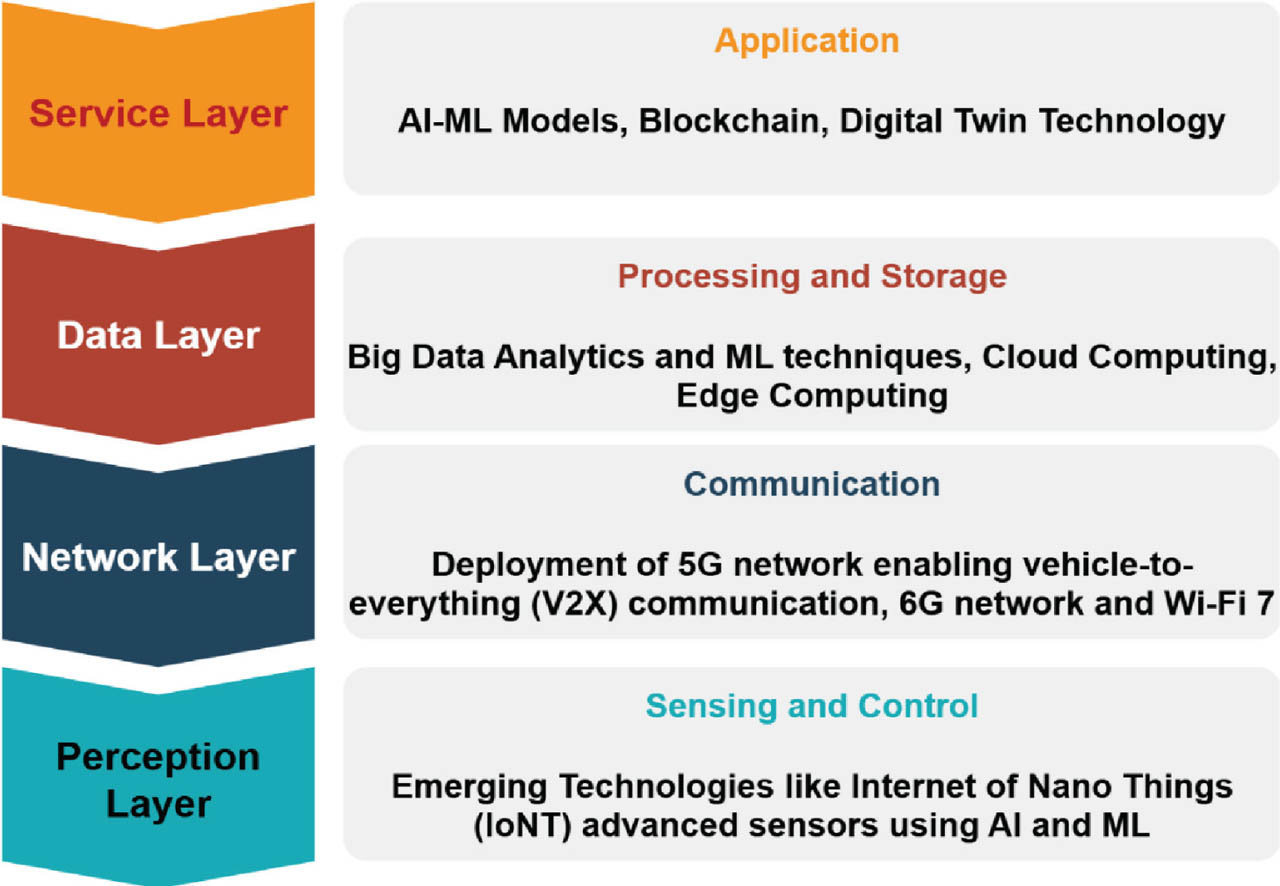
Figure 4:
Layered architecture of integration of technologies for smart city development. AI, artificial intelligence; IoT, Internet of Things; ML, machine learning.
a.i. IoT
A smart city relies on IoT and sensor technologies to monitor environmental conditions and transmit data for processing. By enabling real-time data collection and informed decision-making, these systems foster efficient, sustainable, and responsive urban environments, thereby enhancing quality of life and supporting broader socio-economic growth [8].
Several IoT-driven models and techniques have been proposed to advance smart city development as discussed in Table 4. Fog computing-based architectures [9] enable scalable, low-latency processing but require complex infrastructure [10], while analytical frameworks for data-driven sustainability [11, 12] leverage sensor-based big data yet lack empirical validation. Approaches, such as fuzzy set qualitative comparative analysis (fsQCA), [13] support business model analysis but face limited generalizability, whereas SCADA-based IoT with big data analytics (BDA) [14, 15] enhances water management at the cost of high infrastructure demands. IoT infrastructures [16] improve urban living but remain vulnerable to security and privacy risks. ML-based parking schemes [17] and waste management models using Cuckoo Search-optimized LSTM [18] enhance efficiency, though their effectiveness depends on real-time data quality and scalability. Edge computing frameworks [19, 20] facilitate localized data processing and short-term energy prediction but struggle with heterogeneous large-scale data. Integrated optimization-simulation frameworks [21] and smart charging (SC) systems improve shared autonomous electric vehicle (SAEV) fleet management yet often assume static demand and unlimited infrastructure. Augmented reality (AR)-based solutions, including traffic monitoring [22], rental portals [23], smart campuses [24], and accessibility systems [25], enhance user experience but face adoption, scalability, and accuracy challenges. Similarly, smart street lighting [26] improves energy efficiency and safety but is susceptible to cyberattacks. Finally, big data–ontology energy management systems [27] and genetic algorithm-based vehicle networks [28] optimize energy use and traffic control, though both face interoperability, scalability, and computational limitations.
Table 4:
Summarization of relevant studies implementing IoT based smart city applications
| No. | Model/techniques name | Purpose | Limitations |
|---|---|---|---|
| 1. | Fog computing-based IoT architecture for smart cities [9] | Enhances urban coordination and efficiency by enabling scalable, low-latency data processing through a layered fog computing network. | Requires complex infrastructure deployment and integration with existing urban systems. |
| 2. | Analytical framework for data-driven smart sustainable cities [12] | To harness sensor-based big data applications for enhancing urban sustainability through optimized planning, operations, and governance | Lacks empirical validation and may not fully address practical implementation challenges or contextual limitations across diverse urban settings. |
| 3. | fsQCA [13] | To identify and analyze diverse business model configurations in IoT platforms for smart city development. | Limited generalizability due to small sample size and reliance on qualitative project data. |
| 4. | SCADA-based IoT and BDA system [15] | To monitor, analyze, and optimize underwater operation safety and water management in smart cities using real-time sensor data. | High infrastructure and technical resource requirements for data processing, storage, and real-time analysis. |
| 5. | IoT infrastructure for smart cities [16] | To enable smart city applications by leveraging IoT architectures and wireless communication technologies for improved urban living and sustainability. | Faces significant security and privacy challenges due to large-scale device deployment and communication vulnerabilities. |
| 6. | Occupancy-driven ML-based on-street parking pricing scheme [17] | To predict parking lot occupancy and dynamically determine parking prices using ML models for efficient parking management in smart cities. | Real-world effectiveness depends on accurate, real-time data availability and model adaptability to dynamic urban conditions. |
| 7. | IoT-based urban waste management system using cuckoo search-optimized LSTM [18] | To optimize waste collection and routing in smart cities by analyzing waste data using a Cuckoo Search-enhanced LSTM model. | Performance depends heavily on the quality of IoT sensor data and may face scalability and real-time processing challenges in larger urban settings |
| 8. | Edge computing framework [19] | It processes IoT data locally to enable real-time situation awareness in smart cities. | It may face challenges handling extremely large-scale heterogeneous data efficiently. |
| 9. | Integrated optimization-simulation framework for scalable SC and relocation of SAEVs [20] | To optimize the real-time relocation and SC of SAEV fleets based on dynamic electricity prices, aiming to reduce charging costs, carbon emissions, and improve operational efficiency by integrating transport and power grid systems | Assumes unlimited charging station capacity and static transport demand, limiting realism and dynamic pricing integration. |
| 10. | SC Framework for SAEV Fleets. | Optimize charging to reduce energy costs and peak demand by shifting SAEV charging to low-price or renewable energy periods. | Assumes fixed trip patterns and may not fully capture real-time demand fluctuations or infrastructure constraints. |
| 11. | IoT-based real-time smart traffic monitoring system with AR [22] | Enhance traffic management, safe navigation, and pollution control by integrating IoT sensors and AR in smart cities. | Dependent on existing IoT infrastructure and may face challenges in scalability and real-time data processing under heavy traffic conditions |
| 12. | Smart rent portal with recommendation system visualized by AR [23] | To simplify rental property search by combining preference-based recommendation with AR visualization for enhanced user experience. | Limited to memory-based recommendation accuracy and depends on user adoption of AR and blockchain technologies. |
| 13. | Smart street lighting system [24] | To reduce energy costs and enhance public safety through wireless networked LED streetlights with centralized and remote control in smart cities. | Vulnerable to cybersecurity threats due to IoT device integration and wireless mesh network exposure. |
| 14. | MSKU campus AR prototype [25] | To enhance smart campus urbanization by visually presenting campus features and real-time external data using AR and image detection. | Limited to specific campus areas and reliant on external data accuracy and availability for real-time information. |
| 15. | AR-IoT accessibility system for motor disabilities [26] | To empower wheelchair users to interact independently with out-of-reach physical items in smart cities using AR and RFID technologies. | Limited by the availability of RFID-tagged inventory and AR interface usability across diverse user impairments. |
| 16. | Big data and ontology-based energy management system [27] | To reduce energy consumption in smart cities by integrating big data, ontology, and multiagent systems for improved interoperability and intelligent energy management. | Complexity in integrating heterogeneous data sources and scalability challenges in real-time energy management across large urban environments. |
| 17. | Edge computing-based short-term energy prediction system [28] | To provide real-time, accurate short-term energy prediction in smart cities by distributing data acquisition, processing, and prediction across edge and central nodes using IoT and DL. | Challenges in handling heterogeneous IoT data and reliance on the efficiency of distributed edge computing infrastructure. |
| 18. | Intelligent vehicle network system and smart city management using genetic algorithms and image perception [29] | To optimize urban traffic and city management by using genetic algorithms and image perception for efficient data processing and energy-saving traffic signal control. | Depends on the accuracy of image perception and requires high computational resources for distributed and parallel processing. |
a.ii. Big data and analytics
The rapid growth of heterogeneous data in modern systems has surpassed the capacity of traditional data management approaches, necessitating advanced technologies for efficient handling and organization. BDA enables predictive analytics, maintenance, and real-time decision-making [29,30,31,32], while IoT infrastructures enhance data collection and support informed urban management [33]. The integration of IoT and BDA ensures effective data processing, storage, and insight generation across smart city services [34], leveraging diverse data sources to improve planning, management, and sustainability. Bibri [35] emphasized BDA as a scalable and synergistic asset for empowering smart cities, forming a critical component of next-generation urban intelligence. Furthermore, IoT–BDA integration optimizes resource utilization and monitors device conditions, with applications in healthcare, transportation, and disaster management [36, 37]. Complementing these insights, McAfee et al. [32] positioned big data as a management revolution, Gao et al. [33] developed blockchain-based secure payment mechanisms for vehicle-to-grid systems, Ahmed et al. [34] examined BDA in IoT, and Bibri [35] highlighted its role in sustainability. Practical applications include underwater safety management [36] and disaster resilience [37], though challenges remain in scalability, infrastructure demands, and real-time deployment.
a.iii. WSNs
WSNs are crucial to a smart city framework because they allow for sophisticated sensing, data translation, and transmission. Qureshi et al. [38] proposed a genetic programing–based framework for detecting routing attacks in RPL-enabled industrial IoT, enhancing security in smart city environments but facing scalability and resource limitations. In contrast, Yick et al. [39] provided a seminal survey of WSNs, highlighting key challenges such as energy efficiency, coverage, and data aggregation, though its relevance is limited by the absence of recent IoT and 5G advancements. It plays an essential role in smart city ecosystems as it facilitates resource efficiency and improves the quality of service (QoS) delivered to citizens [40, 41]. Smart urban environments are particularly suited for large-scale monitoring through the integration of mobile ad hoc networks (MANETs) and cost-effective, easily deployable WSNs [42]. Such WSN deployments can support diverse applications, including load balancing, routing, industrial process supervision, energy optimization, and real-time monitoring of environmental and physical conditions [43, 44]. Prior research has also emphasized WSN-based smart city solutions for scheduling and routing, particularly in smart grid applications, with a focus on achieving both energy efficiency and QoS [45].
a.iv. 5G and advanced connectivity
5G networks are central to digital transformation in smart cities, offering adaptability, high bandwidth, low latency, and massive connectivity that enable real-time data sharing, large-scale IoT integration, and enhanced public services [46]. By supporting ubiquitous sensing and data-rich applications, 5G facilitates sustainable urban development across sectors, such as transportation, energy, healthcare, and manufacturing [47,48,49,50]. Unlike 4G, its performance meets the demands of applications requiring ultra-reliable low-latency communication, including autonomous driving and 4K streaming [50]. However, realizing such services depends on uninterrupted IoT connectivity, which remains limited due to incomplete 5G coverage, high deployment costs, and reliance on non-standalone architectures where 4G cores restrict true 5G speeds. Within this context, Skouby and Lynggaard [46] proposed a four-layer architecture combining 5G, IoT, AI, and CoT, while Le-Dang and Le-Ngoc [16] emphasized IoT infrastructures as the backbone of smart cities. Yang et al. [47] systematically mapped 5G applications, noting opportunities in edge computing and public safety but highlighting limited real-world deployments. Advanced approaches such as Mohammed et al.'s [48] UbiPriSEQ, using deep reinforcement learning to balance privacy, security, energy, and QoS, show promise but face computational challenges. Similarly, Gohar and Nencioni [49] and Bagheri et al. [50] demonstrated 5G's potential in intelligent transportation and autonomous driving, while Hashem et al. [51] and Ogbodo et al. [52] provided broader surveys on urban computing and 5G–LPWAN integration. Collectively, these studies highlight both the transformative potential of 5G for smart cities and the persistent gap between theoretical promise and practical deployment.
a.v. AI and ML
AI and ML are central to the development of smart cities, enabling predictive and preventive decision-making by processing and interpreting massive data streams generated through machine-to-machine communication and IoT devices [53, 54]. AI advances urban sustainability and inclusivity by identifying patterns in complex data, supporting real-time decision-making, and aligning with UN Sustainable Development Goals [55, 56]. It is increasingly applied in urban systems, from analyzing sensor and camera data to optimizing infrastructure, transportation, and healthcare services [57,58,59,60]. When combined with other technologies, such as blockchain, cognitive-LPWAN, and fog-to-cloud middleware, AI enhances security, connectivity, and service orchestration while reducing reliance on third parties [61,62,63]. Application-specific studies highlight its versatility: ML and DL improve parking space prediction and dynamic pricing [64], bio-inspired models, such as the Cuckoo Search support smart waste management [65], and AI-driven analytics enhance smart healthcare, and vehicular communications [66, 67]. Despite these advances, significant challenges remain in scalability, privacy, uncertainty management, and real-world validation. Collectively, the literature underscores AI and ML as indispensable enablers of sustainable, data-driven, and inclusive smart cities.
a.vi. Cloud and edge computing
Cloud and edge computing have emerged as foundational enablers of smart city ecosystems, offering scalability, low latency, and resource efficiency. Foundational works by Armbrust et al. [68] and Mell [69] established the principles of cloud computing, while Botta et al. [70] emphasized its integration with IoT to support ubiquitous services. However, cloud-only models face latency, bandwidth, and privacy constraints, motivating edge paradigms such as mobile edge computing (MEC) [71, 72], fog computing [73,74,75], and hybrid cloud–fog architectures [76]. These approaches aim to reduce delay, enhance context-awareness, and support real-time decision-making for applications such as smart transportation [77], industrial IoT [78], and UAV-enabled agriculture [79]. Security and privacy challenges remain critical, as noted by Darwish et al. [80] and Chen et al. [81], particularly in blockchain- and fog-based deployments. While techno-economic analyses [82] and social impact assessments [83] highlight sustainability and cost considerations, systematic surveys underline ongoing gaps in standardization, resource orchestration, and large-scale deployment. Collectively, these studies demonstrate that cloud and edge computing provide the computational backbone for smart cities but require context-specific, secure, and cost-effective implementations. Looking forward, convergence with AI, blockchain, and 6G is expected to drive adaptive, intelligent, and autonomous infrastructures, enabling more resilient, sustainable, and citizen-centric smart urban environments.
a.vii. Blockchain and cybersecurity technologies
Blockchain technology enables shared data management and autonomous peer-to-peer connectivity among IoT devices. Its integration in a smart city context assures that information flows securely, transparently, robustly, immutably, and verified. This technology has enormous potential to be a promising concept for smart city applications [84, 85], as discussed in Table 5. It has become a key component of trust [86, 87] and a creative way to improve the integrity and confidentiality of data in smart cities [88]. It can ease the difficulties in data management and security in smart cities. It is built on a distributed architecture where trusted centralized authority does not oversee transactions; all network members handle them effectively and flexibly [89, 90]. Future smart networks can be framed and upgraded, durability increased, and an expanding number and variety of services can be secured by leveraging blockchain's decentralization, immutability, and accountability [91, 92]. It may offer a practical solution to important security issues and enable the functioning of smart cities [93, 94]. A smart city could be organized into subareas known as smart blocks, which are made up of different IoT devices, such as sensors and cameras, inside a certain area that a block administration monitor. This makes it easier to administer smart city services on a large scale. Rahman et al. [95] discussed a blockchain-enabled sustainable IoT framework for a sharing system defined by the safe sharing of services. Kotobi and Sartipi [96] investigated a blockchain to protect communication among smart city sensors and household appliances to address data security issues with IoT applications in smart cities. According to the research, numerous innovative applications, including smart buildings, smart transportation, and smart healthcare, can be facilitated by blockchain's shared and autonomous design for vulnerability, security, privacy, and fault tolerance [97]. For instance, Buzachis et al. [98] integrated blockchain technology with the Edge of Things, the convergence of edge computing, and IoT to prevent traffic vehicle crashes, especially at junctions. For smart transport, Hirtan et al. [99] proposed a blockchain-based reputation system that safeguards users' privacy, improves commute tracks, and guarantees information security and dependability. A blockchain-based IoT solution was created by Jabbar et al. [100] to enable safe communication in the Internet of Vehicles. According to Nguyen et al. [101], it enables intelligent transport by enabling automobile data sharing. To reduce end-to-end delays, technological advancements can enhance current smart transportation system's QoS by offering a decentralized management platform that allows automobiles and roadside equipment to share and transfer data on a peer-to-peer architecture with no automobile authority. It is presented by Liu et al. [102] as a distributed system to store peer-to-peer transaction data about electric automobiles. The use of blockchain technology for trustworthy power trading authentication and a decentralized energy ledger that does away with the requirement for dependable third parties is also taken into consideration by Gao et al. [103]. In conclusion, blockchain technology and the IoT are anticipated to support novel approaches for the smart city's transport sector. Deploying 5G and a software-defined network (SDN) can enhance the general effect on blockchain technology and the IoT. The SDN method guarantees supply and anonymity while bolstering blockchain security against malevolent actors [104]. The combination of SDN with blockchain offers an effective architecture for sustainable smart cities [105] and enhances cybersecurity in networks of IoT devices [106]. Additionally, it provides several answers to the problems that 5G networks provide. According to Azzaoui et al. [107], the technology is based on AI, and 5G contributes to creating more intelligent, effective, and secure wireless networks.
Table 5:
Summarization of relevant studies implementing blockchain based smart city applications
| Sr No. | Model/technique name | Purpose | Limitations |
|---|---|---|---|
| 1 | Unified framework for data integrity protection using secret sharing, fog computing, and blockchain [105] | To ensure end-to-end data integrity across the entire data lifecycle in people-centric smart cities, covering data generation to consumption. | Prior work has only handled data integrity in isolated segments; this framework aims to be holistic but may face challenges in scalability, computational efficiency, and real-world deployment due to the resource constraints of IoT devices. |
| 2 | PrivySharing blockchain framework [88] | It enables privacy-preserving and secure IoT data sharing in smart cities using multichannel blockchain and smart contracts | Complexity and overhead in managing multiple channels and ensuring scalability. |
| 3 | Blockchain-based identity and authorization management in FIWARE [92] | It enables decentralized, secure access control across multitenant smart city infrastructures | Complexity in synchronizing diverse security policies and scalability in large federated systems. |
| 4 | Blockchain and IoT-based cognitive edge framework [95] | Enables secure, AI-powered spatio-temporal smart contract services for the sharing economy in smart cities using blockchain and cognitive fog nodes | Complex system integration and scalability challenges in real-world large-scale deployments. |
| 5 | Edge, caching, and blockchain-based communication framework [96] | Enhances bandwidth, reduces delay, and secures IoT communications in smart cities through edge computing, caching, and blockchain; | Scalability and interoperability with existing wireless infrastructure remain challenging. |
| 6 | AdBEV participation scheme [102] | To reduce power fluctuation and charging costs in smart grids by dynamically scheduling EV charging/discharging using the Iceberg order algorithm within a decentralized blockchain platform | Requires balancing on-chain/off-chain complexity and further optimization to maintain blockchain efficiency and scalability. |
| 7 | Blockchain-based privacy-preserving payment mechanism [103] | To enable secure and anonymous payment data sharing in V2G networks while supporting payment auditing. | Relies on privileged user access for auditing, which may introduce trust and governance challenges in fully decentralized systems. |
| 8 | Dynamic group authentication and key exchange scheme based on threshold secret sharing [106] | To enable efficient, secure group authentication and key exchange in large-scale IoT smart metering environments by reducing overhead on group leaders and ensuring secure communication. | Memory and computation overhead on group leaders can still be significant as the number of devices grows, requiring further optimization. |
a.viii. Geospatial technologies
GIS enhances urban development in a smart city system. It incorporates numerous major difficulties, including accurately locating the underlying entities and getting geographic data to facilitate real-time decision-making. Technologies, such as LiDAR and satellite photography, web mapping, GPS, and GIS, enable intelligent transportation, intelligent parking systems, effective healthcare services, smart navigational devices, and man-aging extra public assets. Geographic technological advances are critical in building smart urban amenities because they facilitate practical cooperation and coordination among the various operations and facets of smart city systems, such as healthcare, emergency services, transportation, agriculture, waste management, tracking services, and navigation [108, 109].
a.ix. Smart grid and energy management
Smart grids are advanced power networks capable of dynamically adjusting and readjusting to deliver energy at low cost and high quality [110]. Since the energy demand of IoT applications is considerable, smart city solutions need to use energy more efficiently and introduce effective energy prediction systems that reflect the dynamics of the IoT environment [111]. In the face of the many challenges related to energy management in smart cities, smart metering solutions have been widely studied in the literature because they facilitate the calculation of the number of utilities needed and enable consumers to track their energy usage, thereby also contributing to improved energy conservation [112]. As an integral part of an automated metering infrastructure, smart metering provides new tools for increasing data availability [113], monitoring energy consumption, and energy forecasting [114]. Lee and Lee [115] posited that information security is an essential aspect of IoT smart meters that needs to be considered during the development of smart grid applications. As a result, subsequent research must focus on the design, installation, and maintenance difficulties connected with smart meters. Although IoT-cloud networks can help save computing resources and reduce service latency [116], cloud data centers are still complex and not highly scalable. As a result, storage facilities must become more intelligent and capable of acquiring real-time information on power supply, use, and demand. The following study should investigate whether IT facilities use forecasting algorithms and optimization techniques to reduce energy costs.
a.x. Urban mobility and transportation technologies
The comprehensive review of the existing research enables us to choose several options that will help smart cities transition to sustainable modes of transport. Here is a discussion of a few research papers on smart city mobility and transportation. Adrian and Fantana believe the analytic hierarchy process (AHP) approach is crucial for resolving logistics and transportation issues. It is important to remember that the AHP algorithm can be applied to various challenges, including urban sustainability difficulties, and as such, it may be used in future research [117]. According to Popescu [118], the Box-Jenkins approach's appealing qualities and multiplicative ARIMA models' ability to analyze time series of traffic accidents adequately describe the evidence. They are helpful for modeling and predicting traffic injury rates. In the meantime, by implicitly altering usage patterns for transportation and mobility solutions in an equitable and ecologically friendly manner, such data analysis and modeling aid in designing and managing a more sustainable urban transportation system. It would be impossible to continue the conversation about evolving transportation technology without considering concerns, such as new transportation networks and behavioral shifts. DYNAMAP, a European Life project, aims to model the real noise caused by car traffic in urban and suburban areas by developing a dynamic acoustic map based on a few low-cost permanent noise monitoring stations [119]. The authors carried several hypothetical replicas that demonstrated the significance of transportation electrified in mitigating global warming. They concluded that while switching to electrified vehicles under the shared socioeconomic path enables better outcomes in terms of the low-carbon transition, transport electrification alone is not helping to reduce the negative environmental impact. Marvin et al. addressed the same issue in their discussion of the evidence-based strategies created to improve traffic management efficacy by transforming control systems and infrastructure assets [120]. To significantly enhance traffic flow parameters and, as a result, reduce the adverse environmental impact, the research focuses on analyzing challenging road network segments in a medium-sized city. Zhang and Chen [121] highlighted significant distinctions among both urban and rural locations to this degree and highlight some sustainable redevelopment criteria, including the geographical context, regional government assistance, and expenditures. Iacobucci et al. [122] suggested flexible and valuable methods to enhance the performance of SAEVs, such as smart batteries with flexible power prices that are easily integrated into an optimizer. Regarding energy efficiency, gas emissions, and noise levels, inland waterway transportation [123] is thought to be the most resource-intensive of all the modes of transportation in an extensive transport system.
a.xi. AR
AR use in tourism for smart cities has not been thoroughly investigated, hence studies on the subject are unavailable. According to Akdu [124], it can be used in various settings, such as lodging facilities, food and beverage establishments, and museums. When combined with other technologies, such as social networking services (SNSs), virtual reality (VR), beacon technology, geo-tag services, location-based technologies, mobile apps, big data, and cloud computing, AR is giving companies in smart cities new avenues for advertising, creative joint ventures, improved tourism services, and improved methods of managing tourist flows, allowing them to innovate beyond conventional industry boundaries [125]. In the pilot area of Gokova Mugla, Turkey, an AR-based prototype is examined in Demir and Karaarslan [126]. To introduce sightseeing spots, lodging facilities, dining options, tourist attractions, and other significant hubs to domestic and foreign travelers, a mobile application prototype was created utilizing AR in their study. In addition to using location data and image processing techniques to develop AR technology, the mobile application supplied key information about these regions. The use of AR for traffic monitoring in smart cities is examined [32]. The researchers aimed to create a smart traffic control system that can generate route status and traffic information based on automobile strength in smart cities by combining several contemporary technologies, such as AR, cloud computing, ML, and the IoT. Satapathy et al. [127] examined the application of AR visualization for smart rent portals in smart cities. Their research suggests a recommender system controlled and displayed using AR and Vuforia to give users a platform to conduct a cooperative filtering search for rental properties based on preferences. The benefits of a lighting management system with remote control capabilities for smart cities are demonstrated in Jin et al. [128]. These benefits include real-time control and monitoring capabilities, lower energy usage, and operating expenses. Utilizing an AR Interface, Cho et al. [129] shows how this innovative EMS system can allow users to verify operation, energy consumption, renewable energy production, and environmental information of the zone where the systems are situated. Ozcan et al. [130] tried to investigate an AR application for smart campus urbanization utilizing a prototype campus at MuglaSitkiKocman University (MSKU). The application of AR and IoT increases the accessibility of smart city environments for individuals with mobility disabilities [131].
a.xii. Automated systems and robotics
Automated systems and robotics are increasingly central to smart city development, offering transformative applications in governance, social care, and urban monitoring. Drone-based studies, such as those by Choi-Fitzpatrick and Juskauskas [132] and Floreano and Wood [133], demonstrate the potential of autonomous aerial systems for tasks ranging from population estimation to environmental sensing, while raising questions of scalability, safety, and societal acceptance. van Wynsberghe et al. [134] emphasized the ethical and responsible deployment of drones in public service contexts, aligning automation with broader societal needs. In the domain of assistive robotics, Prescott and Caleb-Solly [135] highlighted connected care ecosystems that support independent living, underscoring robotics' role in addressing demographic shifts and social care demands. Parallel to these technological innovations, urban scholarship has examined the implications of automation and digital infrastructures for governance and inclusivity. Barns et al. [136] and Barns [137] explored how data platforms and digital interfaces reconfigure urban governance, while Crampton [138] and Leszczynski with Elwood [139] interrogated the political and participatory dimensions of spatial media. The conceptualization of the “digital skin of cities” by Rabari and Storper [140] frames automated sensing and ubiquitous data collection as central to smart urbanism, though not without tensions of surveillance and equity, further elaborated by Leszczynski's critique of platform urbanism. Collectively, these works situate robotics and automation as both technological drivers and socio-political constructs within smart city ecosystems, highlighting their capacity to enhance efficiency and care, while also necessitating critical governance and ethical oversight.
b. RQ2: Challenges and issues in the realization of smart cities
Despite the literature's general recognition of the IoT's significance in creating sustainable smart cities, several gaps still require attention. Developing and implementing smart city infrastructures to facilitate IoT integration must be prioritized [140]. The participation of people in IoT-enabled smart cities and how technology may support smart citizen's sustainable behavior are two areas of research that merit further examination. This is critical since the shift to sustainable urban systems requires understanding user behavior to enhance resident's general well-being, preserve effective infrastructure systems, save the environment, and accomplish sustainability objectives [141]. Integrating the IoT into smart cities necessitates identifying and reinterpreting key metrics for urban sustainability to evaluate the implementation of the sustainable growth. To move forward in this path, more research is needed to create metrics for evaluating IoT infrastructure [142] and the effects of the technology on various facets of smart cities, such as governance, economics, prosperity, and environmental sustainability [143].
The subject of future research is how urban planners and citizens collaborate to plan and create smart cities to meet resident's expectations [144]. How to involve all stakeholders in a solution-focused and citizen-centric manner when using IoT and AI tools to address urban difficulties is a topic of broader concern [84]. Experimental research is also necessary to understand more about the stakeholder-related components either assist or impede the integration of IoT and AI in smart cities. Additional difficulties that have received little attention up to this point relate to BDA's capacity to better coordinate and integrate the various smart city sectors and enhance their cooperation regarding operations, services, and functions. Using both IoT and BDA at the same time necessitates new roles and abilities for designers. Another unanswered challenge is ensuring that the IoT data utilized for autonomous actuation comes from reliable sources [37]. A few studies have also examined how these two technologies work together in various IoT domains in smart cities [145]. Therefore, investigating how the IoT and BDA work together to address problems with data sharing and knowledge reuse in big data applications is a possible direction for future research [146]. IoT nodes' mobility and diverse network topologies hinder the rigorous adherence to QoS standards in IoT-based smart city applications [147]. Future studies must modify the traditional routing protocols in WSNs to ensure QoS in terms of throughput, scalability, bandwidth usage, latency, and dependability. Scientists also need to investigate how to efficiently link IoT devices and get data from the vast number of decentralized WSNs in smart cities at a reasonable cost [148]. A detailed examination of how IoT dynamic settings impact WSNs and routing techniques will yield valuable information.
An in-depth comprehension of practical 5G network functionality as experienced by apps is essential for projecting its impact on application and service behavior and designing measures to assure proper operation in such settings. The majority of performance evaluations published in the literature use simulation or specialized test-beds. Such assessments and those based on immediate network performance measurement with speed test tools may not provide a good picture of the real-world performance that smart city apps and services are expected to encounter when used across the city. Such assessments and those based on rapid network performance measurement with speed test tools may not accurately reflect the real-world performance that smart city apps and services will likely meet when deployed across the city. Furthermore, it is difficult to determine how independent network performance measurement results compare to application performance. In conclusion, the current research does not provide enough real-world evaluation of existing 5G deployments and their applicability for smart city use cases.
Several challenges could jeopardize the IoT utility in smart cities, including device interoperability, poor topology design, limited network coverage and capacity, security and privacy issues, and legislative ambiguity. There are several opportunities for additional inquiry, and the literature on the possibilities of IoT and the different computing paradigms is generally abundant. For instance, researchers must investigate the real-time application of cloud computing to the vast amounts of data produced by IoT devices in smart cities. In a smart city setting, looking at how the IoT and cloud computing may promote collaboration, creativity, and transparency is recommended. More research and fog computing-based ideas are needed to create smart city applications that guarantee the availability of computational resources across the network infrastructure and make analyzing specific information gathered from IoT gadgets easier. An intriguing direction for future research is creating and evaluating a hierarchical fog computing architecture as a means of smart city monitoring and control to increase further the “smartness” of city structures [149]. Researchers must examine the fundamental contributions of MEC, a development of cloud computing, to integrate IoT devices and enhance user experiences in smart cities. The IoT, blockchain, BDA, AI, and MEC will all benefit from 5G's foundational role in enhancing the gathering, analyzing, and using of smart city data [150], which will lessen the impact of bandwidth constraints on the ecosystem's overall architecture. Since 5G cellular networks are insufficient due to growing difficulties in clouds and platforms' inadequate AI operation, there is a greater interest in examining the unresolved issues of a 5G-enabled IoT for blockchain-based smart city applications as 5G networks become more prevalent [151]. Therefore, it is recommended that future research look at how blockchain can affect important aspects of IoT-based smart city applications. Further studies should suggest blockchain models with specialized and assured safety and privacy features suited for smart city applications.
According to research, smart city systems suffer several significant concerns, including system and application vulnerabilities, privacy invasions, malware injection attacks, denial of service, hostile insider threats, and data leaks. They are enlisted as below:
To ensure all transactions are consistent.
Ensuring the confidentiality of information shared on the network.
Minimize the duration of processing risks.
Official endorsement of foundational theories.
Forming smart contracts for security and risk assessment using the suggested approach.
Expansion of the plan to include additional blockchains.
Web-based semantic searching between blockchains.
Creation of instruments for transforming ideas into intelligent agreements.
An assessment of the suggested system's applicability.
Formulation of decisions and insights with natural language processing methods without knowledge of domain expertise
c. RQ3: Future directions in smart city development
This study set out to explore how IoT and associated technologies are shaping the evolution of smart cities, and where gaps remain. While prior research has made important strides, our bibliometric synthesis reveals several critical shortcomings: (i) fragmented treatment of technologies such as IoT, blockchain, and AI rather than integrated frameworks; (ii) insufficient attention to interoperability, governance, and data privacy in large-scale deployment; and (iii) lack of adaptive sustainability metrics that reflect national capacities rather than imposing universal benchmarks. Addressing these gaps is essential for building resilient, efficient, and equitable smart cities.
Strengthening Interoperability and Data Governance: The findings show that IoT-based smart city systems are expanding, but interoperability across devices and platforms remains limited. Future research must prioritize developing standardized frameworks that integrate IoT with blockchain for secure and transparent data sharing, and with federated AI for privacy-preserving analytics. This integration directly responds to the gap in trustworthy, scalable, and regulation-compliant infrastructures.
Expanding AI Applications beyond Current Use Cases: ANN and cyber-physical systems (CPS) have shown promise in areas such as energy forecasting, traffic optimization, and healthcare monitoring. Yet, their role in addressing cybersecurity vulnerabilities and resilience of critical infrastructure remains underexplored. Future studies should investigate how ANN and CPS can be applied to safeguard urban systems from cyber-attacks, ensure robustness during failures, and enable predictive maintenance at city scale.
Leveraging Advanced AI for Real-Time Decision Making: The emergence of large language models (LLMs) and federated AI represents an untapped opportunity in smart cities. LLMs can interpret unstructured data from diverse sources such as social media, sensors, and citizen feedback to generate actionable insights, while federated AI allows collaborative model training without exposing raw data. Together, these technologies fill the research gap in real-time, adaptive, and privacy-aware decision-making, enabling more responsive urban governance and personalized citizen services.
Exploring Emerging Technologies for Sustainability: Nanotechnology and quantum computing, though still at early stages of adoption, hold transformative potential for sustainable smart city development. Nanomaterials and nanosensors can reduce energy consumption, minimize health risks, and improve resource efficiency, while quantum computing can accelerate urban-scale simulations and optimize energy and traffic systems in real time. Despite their promise, our review indicates a lack of empirical studies connecting these technologies to concrete sustainability outcomes in cities, a critical avenue for future work.
Redefining Sustainability in Context: A major limitation in existing literature is the tendency to apply uniform sustainability criteria across all nations. This ignores disparities in economic, social, and infrastructural capacities. A future research direction focused on developing an adaptive sustainability matrix, incorporating factors such as population dynamics, GDP, literacy, mortality rates, and socio-economic well-being, is proposed. This would allow developed or developing countries to measure progress realistically, while avoiding one-size-fits-all benchmarks that may be unattainable or inequitable.
This analysis synthesizes trends and opportunities in smart city development, emphasizing that enhancing utilities such as energy, buildings, transportation, and healthcare requires integrated hardware–software solutions supported by secure IoT–IoT-blockchain frameworks [152]. ANN and CPS show promise for optimizing energy use [153, 154], traffic management [155], and healthcare monitoring [156] while improving resilience and automation [157, 158]. Expanding IoT crowdsourcing in domains such as safety, flood monitoring, and smart grids [159, 160], together with integrating LLMs and federated AI, can further enable privacy-preserving, real-time decision-making across urban systems. Emerging technologies such as nanotechnology and quantum computing also offer pathways to sustainability through reduced emissions, efficient resource use, and real-time optimization [161]. Finally, sustainability must be evaluated contextually through adaptive matrices that reflect each nation's social, economic, and demographic conditions rather than relying on universal benchmarks.
IV. A Smart Surveillance System: Case Study on Smart City Application
Smart surveillance is one of the important features of smart city missions to achieve safety and security objectives. Security systems are feasible in restricted areas, such as government facilities and transport hubs, extending surveillance to isolated zones, such as forests, underdeveloped city sectors, or abandoned industrial sites. However, it remains challenging. In such environments, tracking cooperative targets (e.g., individuals with GPS-enabled devices) is unreliable due to user dependency. In an urban environment, it poses significant challenges in detecting and monitoring cooperative targets, such as a person carrying a smart device enabled with a location tracking system, which is not always possible in secluded, unguarded areas. This is because of the activation of the device when a person is carrying it in a non-feasible environment. The second challenge is the installation of visual sensors, and the round-the-clock data-capturing process is not always possible due to bandwidth constraints and privacy issues. The third challenge is that detecting and tracking moving uncooperative objects (humans without electronic gadgets) becomes difficult using sensor measurement as multiple, complex, undefined, and unpredictable parameters are involved [162, 163]. In such scenarios, around-the-clock surveillance without violating privacy issues, with energy, cost, and bandwidth budget is needed so that government officials can get timely alerts in case of any untoward incident in the area.
a. System development
A pilot case study has been implemented to test the viability of smart surveillance in the smart city application for secluded, underdeveloped, unguarded areas where installing video sensors is challenging. It aims to track non-cooperative moving targets, such as humans or animals, in an outdoor environment. Figure 5A represents the deterministic network block diagram for smart surveillance. First, the simulation work [164, 165] was carried out where a sensing system was formed with four sensors, and then a hardware prototype with two wireless sensor nodes was developed. Each node consists of two EKMC series digital PIR with range 5m and 10m, MSP430G2553 microcontroller (μc) with HC12 sub gig communication module for long-distance communication as shown in Figure 5B. To address bandwidth and energy budget in WSNs, sensor nodes are deployed with multiple variable range binary passive sensors consisting of L(i) bit quantizer, where L denotes the number of sensors in an node. Observation is compared with a set of quantization levels where 2L(i) is determined based on the non-intersecting intervals covering the whole sensing range.
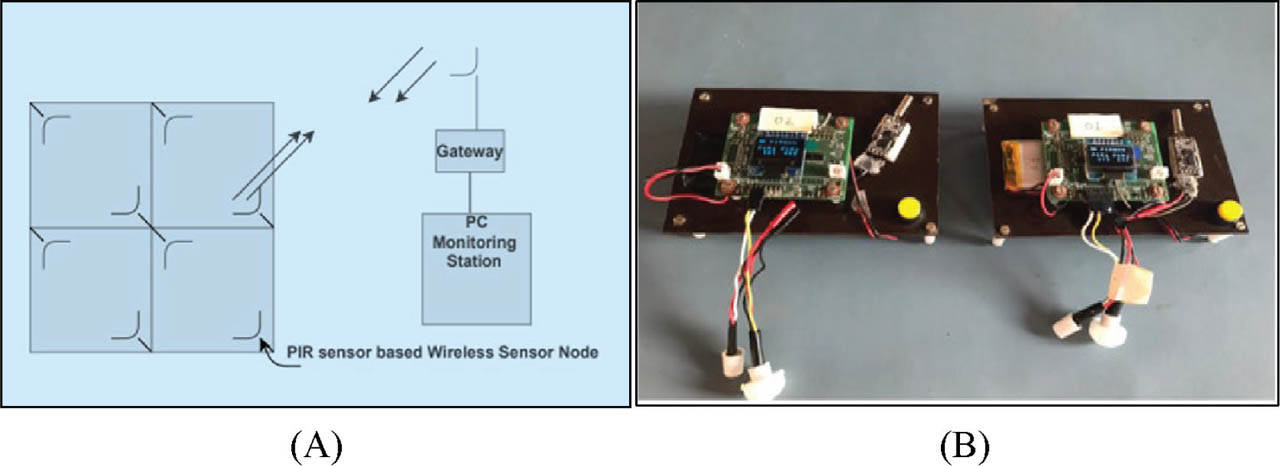
Figure 5:
(A) Communication and network block diagram (B) developed nodes 1 and 2 for ready for real time testing. PIR, passive infrared sensors.
b. System testing and discussion
Patani ground, Airoli, Navi Mumbai, Maharashtra, India, is the location selected for pilot study to test in real time, considering the large open secluded area requirement for testing. To test robustness, the system was evaluated over 112 runs (1,377 readings) across four time slots (morning, afternoon, evening, night) on two different days. This ensured variation in lighting and ambient conditions. Nodes are placed at corners of 10 × 10 m2 area with a 1 m × 1 m grid per the deterministic deployment scenario, as shown in Figure 5A. Nodes are placed at a height of 43 cm from the ground. Testing is based on single-target tracking with no obstacles in the monitoring area. It is done during 4 time slots in 2 days. The afternoon time duration (12–1.25 P.M.) and evening time duration (5–6.30 P.M.) on January 29, 2021 are shown in Figure 6. Night time duration (7–8.30 P.M.) and morning time duration (6–7.30 A.M.) on January 31, 2021 are shown in Figure 7. The total test runs conducted were 28 × 4 = 112 with 1,377 readings. When the node is tested, it sometimes gives false readings. It is observed that, on average, 17.86% of the readings are false, and 80.82% of the readings are correct. While the results confirm the feasibility and reliability of the approach in challenging environments, larger-scale, and multilocation studies are necessary to validate and generalize performance across entire city.
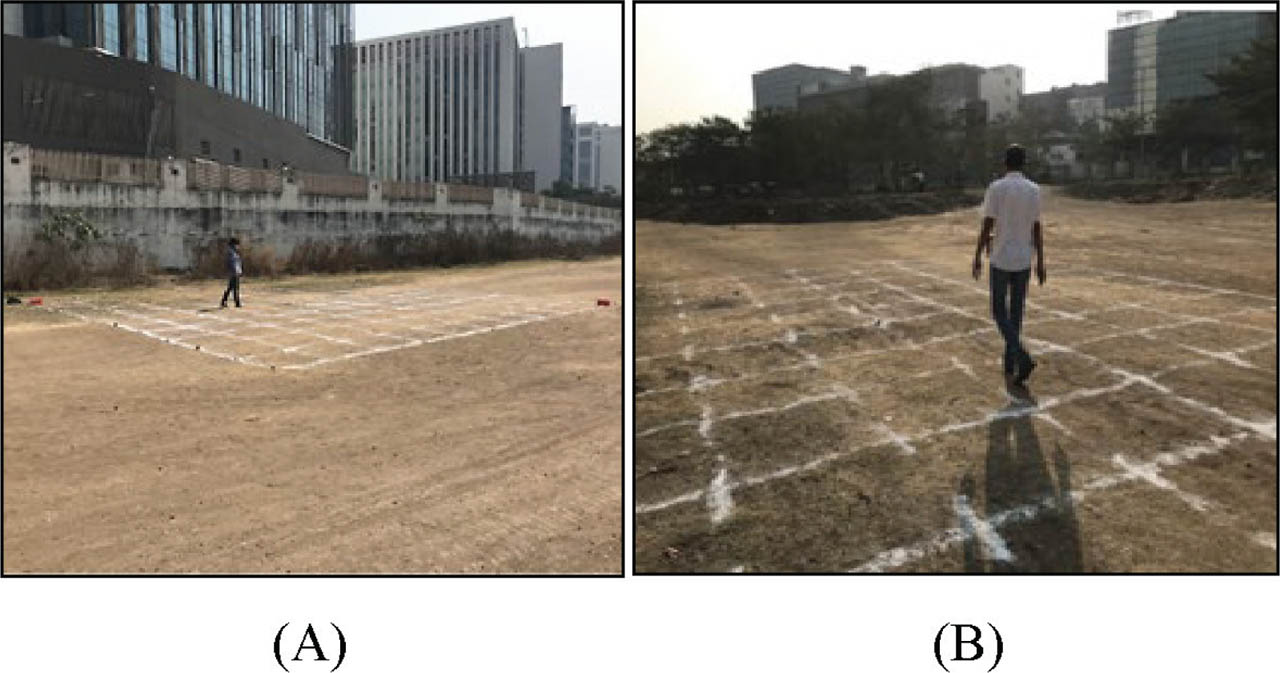
Figure 6:
Test case photographs taken on January 29, 2023. (A) Morning slot; (B) Evening slot.
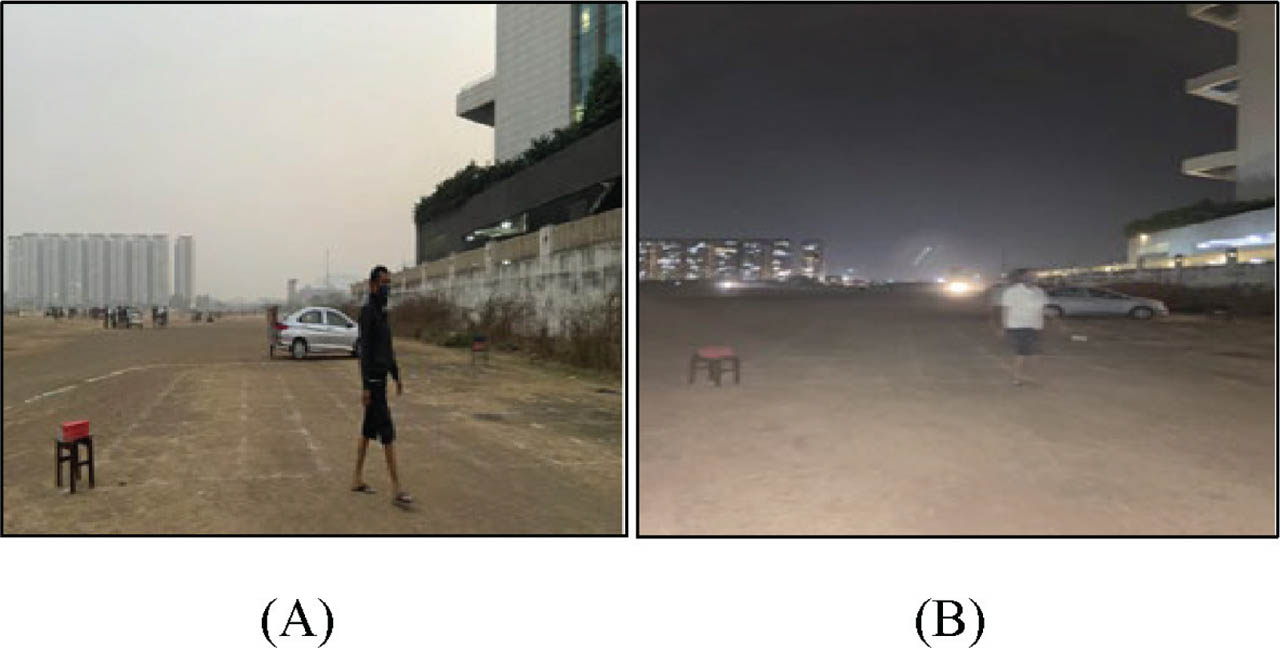
Figure 7:
Test case photographs taken on January 31, 2023. (A) Morning slot; (B) Evening slot.
A deterministic directional topology is employed to construct the network and design nodes using standard off-the-shelf hardware components. The proposed system is evaluated using the ultra-low temperature (ULT) motion model, with results illustrated in Figure 8. Addressing various challenges and limitations, the study presents a practical solution. The sensing power consumption is measured at 0.532 mJ in the absence of motion, while node power consumption increases to 9.8 mJ upon event detection. Communication power consumption is recorded at 73.5 mJ. Six test cases were conducted, and their root mean square error (RMSE) values are presented in Figure 9, with an overall RMSE of 0.88 for ULT motion detection in the field. Target estimation error can be further minimized by reducing sector size, thereby increasing the number of sectors for more precise detection. This approach can support government and private sector efforts in smart city initiatives by integrating cloud computing and 5G technologies for enhanced urban safety and security. Future developments may include solar-powered miniature nodes to enable long-term, low-maintenance surveillance systems.
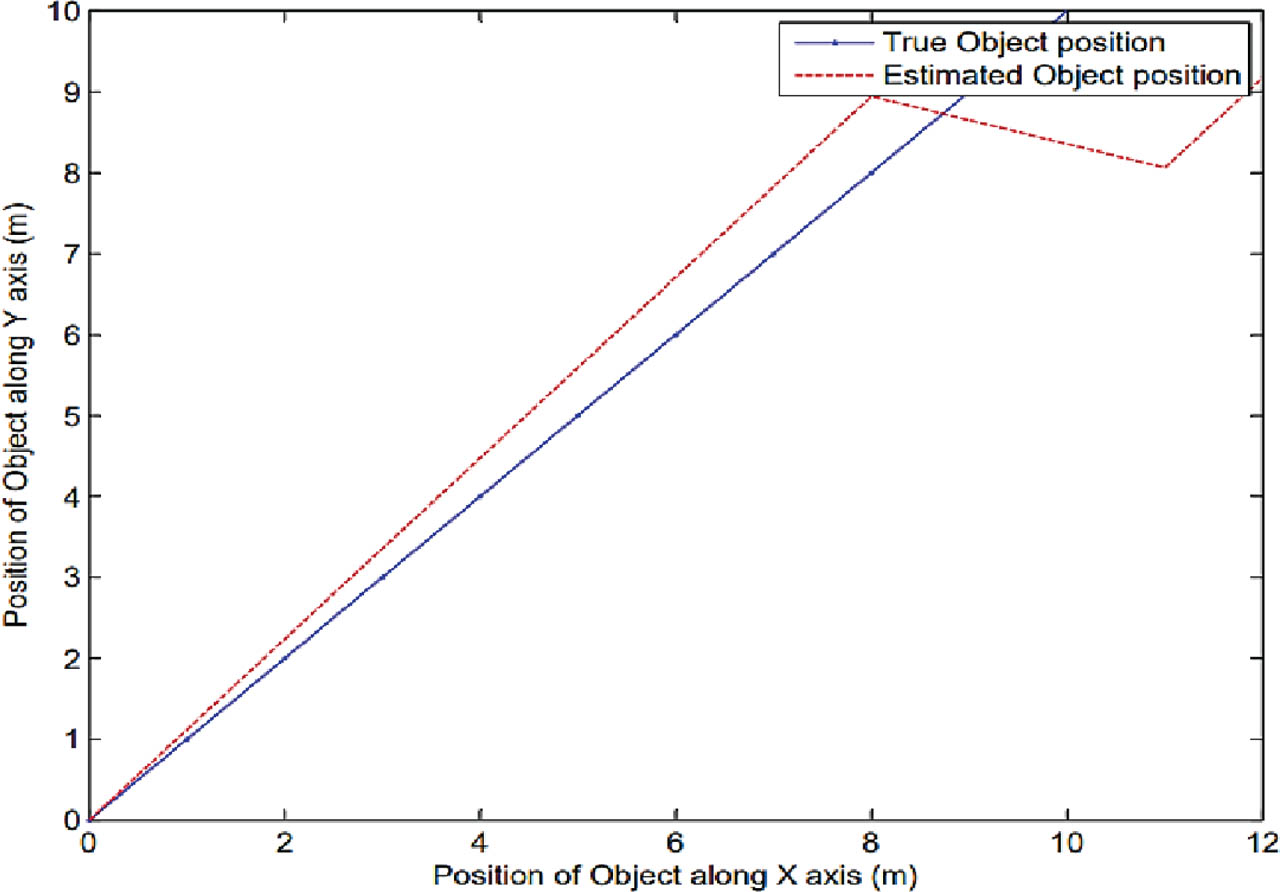
Figure 8:
True and estimated position of target for ULT using real time test 1 results. ULT, ultra-low temperature.
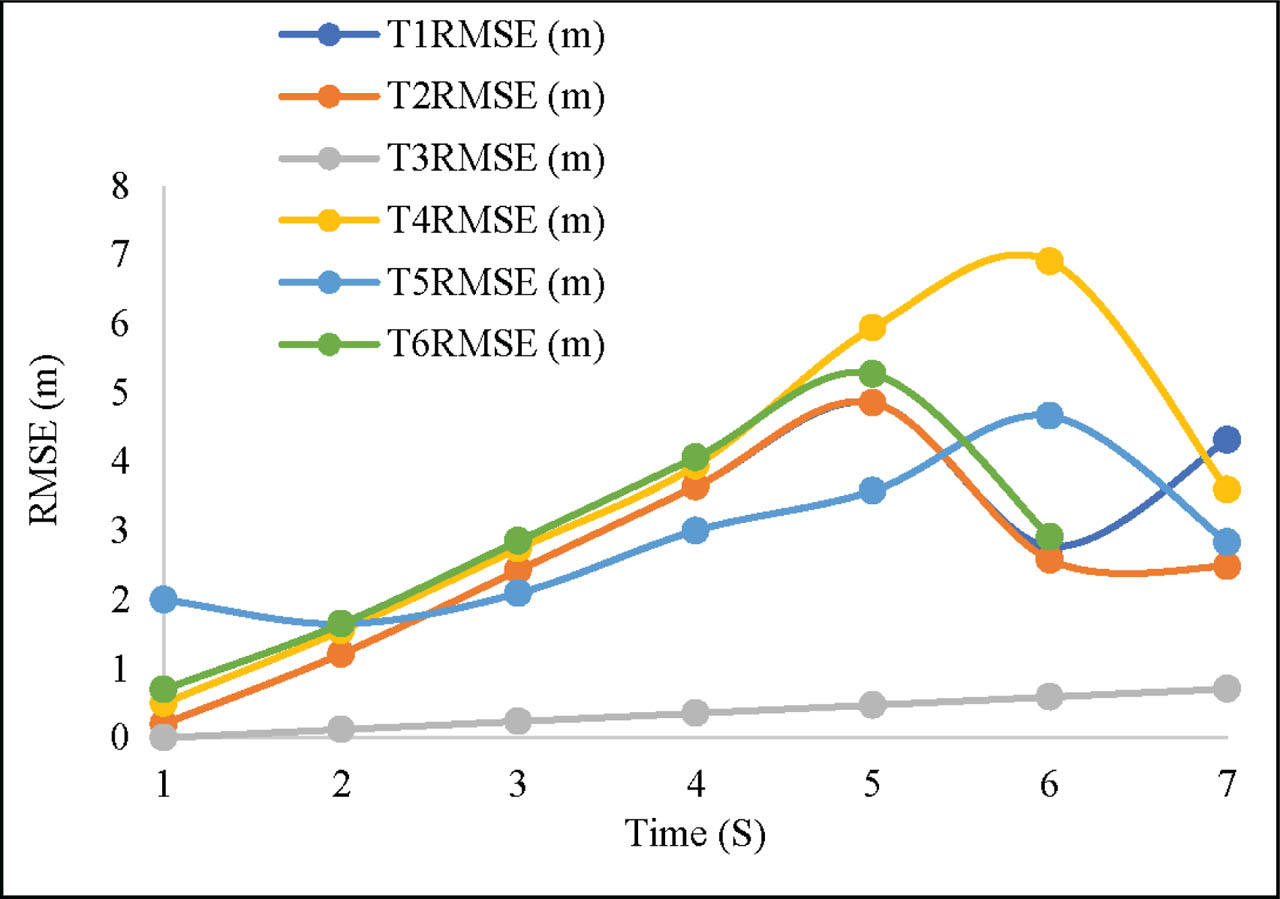
Figure 9:
RMSE between the target actual and estimated position for various tests. RMSE, root mean square error.
The proposed system relies on low-cost, off-the-shelf PIR sensors, MSP430 controllers, and HC12 wireless modules, avoiding the prohibitive infrastructure, bandwidth, and storage costs of commercial camera-based surveillance. Unlike video systems, which require constant high-bandwidth transmission and raise significant privacy and security concerns in sensitive areas, the proposed design offers a lightweight, energy-efficient, and cost-effective solution. This makes it particularly suitable for underdeveloped or secluded city zones where camera deployment is impractical.
It is important to note that the system performance observed in this study is influenced by the choice of experimental parameters. For instance, PIR sensor ranges of 5 m and 10 m were selected due to their cost-effectiveness and availability, and nodes were fixed at a height of 43 cm for practical deployment in the test area. Similarly, the 10 m × 10 m grid layout was adopted to simplify deterministic placement and ensure controlled coverage. While these choices enabled a feasible prototype, they may have also contributed to performance variations, including the 17.86% false readings observed during trials. Parameters such as node height, sensing range, grid resolution, and quantization thresholds can significantly affect detection accuracy, false positive rates, and energy consumption. A systematic sensitivity analysis of these parameters is therefore necessary to better understand their impact and to optimize the system for broader deployment in real-world environments.
c. Future scope of the smart surveillance system
The proposed smart surveillance system can be further enhanced in several directions. Integrating variable-range PIR sensors will allow dynamic sector sizing, improving localization accuracy while managing complexity. The system can be extended to track multiple targets by incorporating advanced signal processing or data fusion techniques to overcome binary sensor limitations. Energy efficiency can be improved by deploying solar-powered nodes and optimizing duty-cycling algorithms, enabling long-term, maintenance-free operation. Real-time data processing and cloud integration will facilitate centralized monitoring and intelligent alert systems for smart city applications. Moreover, expanding testing to complex environments with obstacles and varied terrains will enhance robustness and applicability. Finally, using ML for adaptive motion prediction and sensor calibration could significantly improve system performance in diverse and dynamic real-world scenarios.
V. Conclusion
The importance of technology in smart cities is examined in this SLR. Following a rigorous selection procedure, 149 articles were reviewed and categorized, accounting for the various phases of smart city technology development and its uses. It provides a comprehensive overview of the key enabling technologies driving the evolution of smart cities, highlighting their roles in enhancing urban services, infrastructure efficiency, and citizen well-being. The research identifies core technologies such as IoT, AI, BDA, AR, cloud-edge computing, and 5G, and examines their integration within complex urban ecosystems. Emphasis is placed on critical challenges including data security, system interoperability, and platform scalability.
As a practical contribution, the implementation of a smart surveillance system is presented, utilizing a deterministic directional topology with off-the-shelf hardware. The system demonstrates promising performance under ULT motion scenarios with an RMSE of 0.88, offering a viable solution for enhancing safety in remote and unmonitored urban areas.
The findings of this study are expected to assist researchers, urban planners, and policymakers in designing and implementing intelligent, secure, and sustainable urban environments. Future work may explore the integration of renewable energy sources, such as solar-powered sensor nodes, and leverage AI-driven decision-making to further optimize smart city operations with minimal human intervention.
Abbreviations
- ACM
Association for Computing Machinery
- AIML
Artificial Intelligence and Machine Learning
- ANN
Artificial Neural Network
- ARIMA
Autoregressive Integrated Moving Average
- BDA
Big Data Analytics
- CoT
Chain of Thought
- DYNAMAP
Dynamic Acoustic Mapping
- EKMC
it is manufacturing series known as Matsushita Electric
- EMS
Energy Management System
- FIWARE
Future Internet Ware
- GDP
Gross Domestic Product
- GIS
Geographic Information System
- GPS
Global Positioning System
- IT
Information Technology
- LED
Light Emitting Diode
- LiDAR
Light Detection and Ranging
- LPWAN
Low Power Wide Area Network
- LSTM
Long Short-Term Memory
- PRISMA
Preferred Reporting Items for Systematic Reviews and Meta-Analyses
- QoS
Quality of Service
- RFID
Radio Frequency Identifier
- SCADA
Supervisory Control and Data Acquisition
- UAV
Unmanned Arial Vehicle
- V2X
Vehicle to Everything
- WoS
Web of Science