
1. Introduction
Economic inequalities are an ongoing research problem in economics, sociology, and political science. The related issues of the distribution and redistribution of income, as well as its scope and manner, are among the main problems of economic policy. The attitudes to inequalities – including preferences and perceptions – are interesting from a policy point of view. Inequalities are the starting point for economic and social cohesion research, being part of the trend of research on sustainable development. They are also interesting from the point of view of research on resource efficiency or the point of view of soft development factors, including social capital (Markowska-Przybyła & Ramsey, 2019; Warzywoda-Kruszyńska, 2008).
This article deals with the spatial differentiation of income inequalities and attitudes toward them from a rural–urban perspective. The disproportionate development of rural and urban areas is a typical feature of economies, regardless of social, economic, institutional, and historical conditions (Wosiek, 2020). Earlier studies indicate that the class of household residence (Wołoszyn & Wysocki, 2020) and degree of urbanization (Muszyńska & Wędrowska, 2020) still played a significant role in shaping household income inequality both inter- and intra-group (classes of household residence). The diagnosis of the situation in this dimension is essential from the point of view of regional policy and indications for redistribution in the center–periphery system, as well as the related social policy.
The aim of the work is cognitive. The study aims to diagnose the relationship between income inequalities and attitudes toward inequality, broken down into categories of towns of various sizes in the period 1988–2019. The following research questions guide the work:
What were the changes in income inequalities and attitudes toward them from 1988 to 2019 in Poland and localities of different categories?
What differences in income have changed between different categories of locality?
How were changes in income inequalities in Poland related to changes in
a. concerns about inequality
b. preferences for redistribution and view of government policy?
Was there a relationship between the size of the locality and
a. concern for inequality
b. preferences for redistribution and view of government policy?
The work is a response to the existing empirical gap. So far, the analysis of relationships between inequalities and attitudes toward them in the system of categories of localities for Poland has not been the subject of research. Such research is also not frequent in the world. Conclusions from the study can help formulate further research hypotheses and help design changes in the state’s redistribution policy.
The structure of the article is as follows. Section 2 discusses the theoretical basis of income inequalities and attitudes toward them; Section 3 presents the source of data and method used; Section 4 discusses the research results on income inequalities and attitudes toward them in Poland in general; and Section 5 discusses individual location categories. Section 6 presents the conclusion, study limitations, and future research directions.
2. Income inequalities and attitude toward them – theoretical background
Income inequalities are not a new research issue. They are the subject of numerous studies and multidirectional research. Researchers are bothered by the very concept of inequality (Milanovic, 2006, 2013; Sen, 1973), methods of measurement (De Maio, 2007; McGregor et al., 2019), regularities, causes, mechanisms origin, and effects (Esping-Andersen, 2007; Kuznets, 1955; Piketty & Saez, 2003, 2014), or policies toward inequality (Coady & Gupta, 2012; Erikson, 2015; Israel & Latsos, 2020). The issues analyzed also include the problems of inequality preferences, perceptions and care for them, and preferences for redistribution (Haussen, 2019; Mengel & Weidenholzer, 2023; Roex et al., 2019; Sumino, 2019; Trump, 2018; Winkler, 2019). In Poland, the issue is similar – the problem of inequality is raised quite often (for a review of research in: (Malinowska, 2016)), and less frequently, the issues of attitudes toward these inequalities (Austen, 2002; Grosfeld & Senik, 2010; Kołczyńska & Merry, 2016).
According to Sztompka, inequalities do not concern individual features, but these other features are intermediate features that only make specific communities similar to each other – social groups, or only certain locations in the social structure – social positions (statuses). Otherwise, inequalities refer to situations where people are unequal not because of physical or mental characteristics, but because they belong to different groups or occupy different social positions (Sztompka, 2002). Inequality can be about many things, including economic inequality – income or wealth. Income inequality occurs when the income received by individuals, households, or social groups is not the same, i.e., some households have more income than others and can, therefore, benefit more from the goods and services produced in the economy (Domański et al., 2012). The issue of inequality is studied and described relatively widely in the literature, and less frequently, the problems of preferences, perceptions, and attitudes toward them (Kołczyńska & Merry, 2016).
The interactions between perceptions, beliefs, and preferences about inequality determine the impact of rising inequality on people’s concerns. Rising inequality can cause anxiety, but it can also cause a decrease in fear if people increase their preferred level of inequality. Views about inequality are shaped by information about earnings and income, and by what factors we attribute the causes of inequality to (factors within or outside our control). The need for income redistribution depends on views about the level of inequality, the role of government, and the type of redistributive policy. This affects preferences about the scope and type of intervention. These preferences also depend on the individual’s recognition of whether he or she will gain or lose from redistribution (Does Inequality Matter? 2021).
Research on income differentiation by location is not shared. They were conducted for China, characterized by an urban–rural segmented society, and the USA.
China has an unusually sharp rural–urban divide in income (Knight & Gunatilaka, 2010). In China, income inequality has risen since the mid-1980s. Since the mid-1990s, the speed of widening income inequality has slowed – at around 0.5 percentage points per year. The changes in urban income inequality trend were similar to that of rural income. In China, a large income gap exists between urban and rural areas, one of the highest in the world (Li, 2016). In the USA, after decades of stable or declining income inequality during the mid-twentieth century, income disparities across the whole country have increased sharply in recent decades. Beginning in the 1970s, the sustained declines in income inequality since the late 1920s were reversed, rising to near-record highs over subsequent rising to near-record highs over the subsequent years. It is important to note, however, that disparities between metropolitan and non-metropolitan counties were much more significant during the first decades of the study. Survey results suggest that the metropolitan periphery experienced distinctive demographic and socioeconomic conditions over recent decades vis-à-vis other parts of urban America and perhaps the country as a whole (Saez, 2017; Thiede et al., 2020).
Many works deal with the topic of attitudes toward inequalities (Benson et al., 2021; Bublitz et al., 2022; Clark & D’Ambrosio, 2015; Faggian et al., 2023; Langsæther & Evans, 2020; Roex et al., 2019) but none of the works known to the author deal with differences in terms of location (they address issues of the political class, age, generation, countries, and other demographic characteristics), except the work (Markowska-Przybyla & Ramsey, 2019).
The interest in income inequality in Poland was particularly lively during and immediately after the transformation period. It was associated with numerous challenges in social policy and economic growth policy. Their significance was so great that it impacted changing electoral preferences (Grosfeld & Senik, 2010). The level of income inequality in Poland and the differences between rural and urban areas are not high compared to other European countries. However, as American experience shows, these trends can be reversed. Muszyńska and Wędrowska’s research (Muszyńska & Wędrowska, 2020) shows that the degree of urbanization is a significant factor in these inequalities. Different attitudes toward inequality and policies toward them can be significant for electoral preferences, can cause political resistance to economic changes, and become an obstacle to economic growth and development (Grosfeld & Senik, 2010; Keane & Prasad, 2002), hence it is important to diagnose them, analyze the causes, and respond to them appropriately. Income inequality is also an important factor in spatial and regional policy, although in Poland, the most frequently analyzed dimension is the differences in income per capita of territorial units. The internal distribution of this income in units and preferences and their tolerance are rarely the subjects of analysis in Poland, and they are important from the point of view of the spatial cohesion of the country. It should also be remembered that the most important economic development factors currently include human and social capital. They are both the cause and effect of income inequality (Alesina & La Ferrara, 2000; Chiu, 1998; Knack & Keefer, 1997; Lee & Lee, 2018).
Previous studies indicate that changes in the tolerance of inequality do not always follow the actual changes in inequality (Austen, 2002; Grosfeld & Senik, 2010). Hence, it is advisable to conduct these analyses together. This article attempts to answer the existing empirical gap, which is important for the above reasons.
3. Data and methods
Two primary data sources were used in the work. Data on inequalities come from the Polish Household Budget Survey (PHBS). The PHBS has been Poland’s leading source of information on household incomes since 1993. The sample size since 1993 is more than 30,000 households and 100,000 persons each year. (Household Budgets for 2006; Household Budgets for 2019; Pęczkowski, 2011).
Data on attitudes toward inequality come from the Polish Panel Survey, POLPAN, conducted since 1988 in 5-year intervals of registering individual biographers of people waiting for a sample trial. The Polish Panel Survey, POLPAN, is designed to facilitate research on the socioeconomic structure, inequalities, and the individual life course under conditions of social change in Poland (Zelinska et al., 2021). Income inequalities were presented using the GINI coefficient and the differences in the average disposable income between locality categories. The Gini coefficient, a widely used measure of income inequality, has its limitations. One fundamental limitation is its sensitivity to extreme values, which can skew the results (De Maio, 2007). Additionally, the Gini coefficient may not always accurately reflect the true distribution of wealth or income, especially when dealing with inheritances or specific subsets of the population (Wolff & Gittleman, 2014). In some cases, the Gini coefficient can be affected by the sample size, leading to fluctuations in its values (Liu, 2023). The Gini coefficient also has challenges when dealing with negative incomes, which can impact its accuracy and adherence to certain principles (Manero, 2017). Moreover, the Gini coefficient may not provide a comprehensive picture of inequality when used in isolation, often necessitating its combination with other methods for a more thorough analysis (Wu et al., 2022).
Attitudes toward income inequality were measured by the share of responses from individual categories to the questions asked in the POLPAN survey (more in Section 4 and in (Zelinska et al., 2021)). The non-parametric Kruskal–Wallis (K–W) and Mann–Whitney U tests were used to assess the significance of differences in attitudes toward inequalities between location categories. The relationship between income inequality and attitudes toward it was analyzed based on the study, and trends in both phenomena were compared.
The study aimed to diagnose the situation in the most extended possible period while maintaining the aggregation of data for individual classes of the classification places (rural–urban areas, localities broken down into categories: up to 5,000, 5,000–20,000, 20,000–100,000, 100,000–200,000, 200,000–500,000, over 500,000). Data on inequalities in this system have existed since 2006, and data on the relation to inequalities since 1988. Descriptive statistics methods, as well as non-parametric tests, were mainly used in the study.
4. Income inequalities and attitudes toward them in Poland
Income inequalities in Poland from the mid-first decade of the twenty-first century to 2021 had a downward trend, while earlier, it had grown since the 1980s (Figure 1).
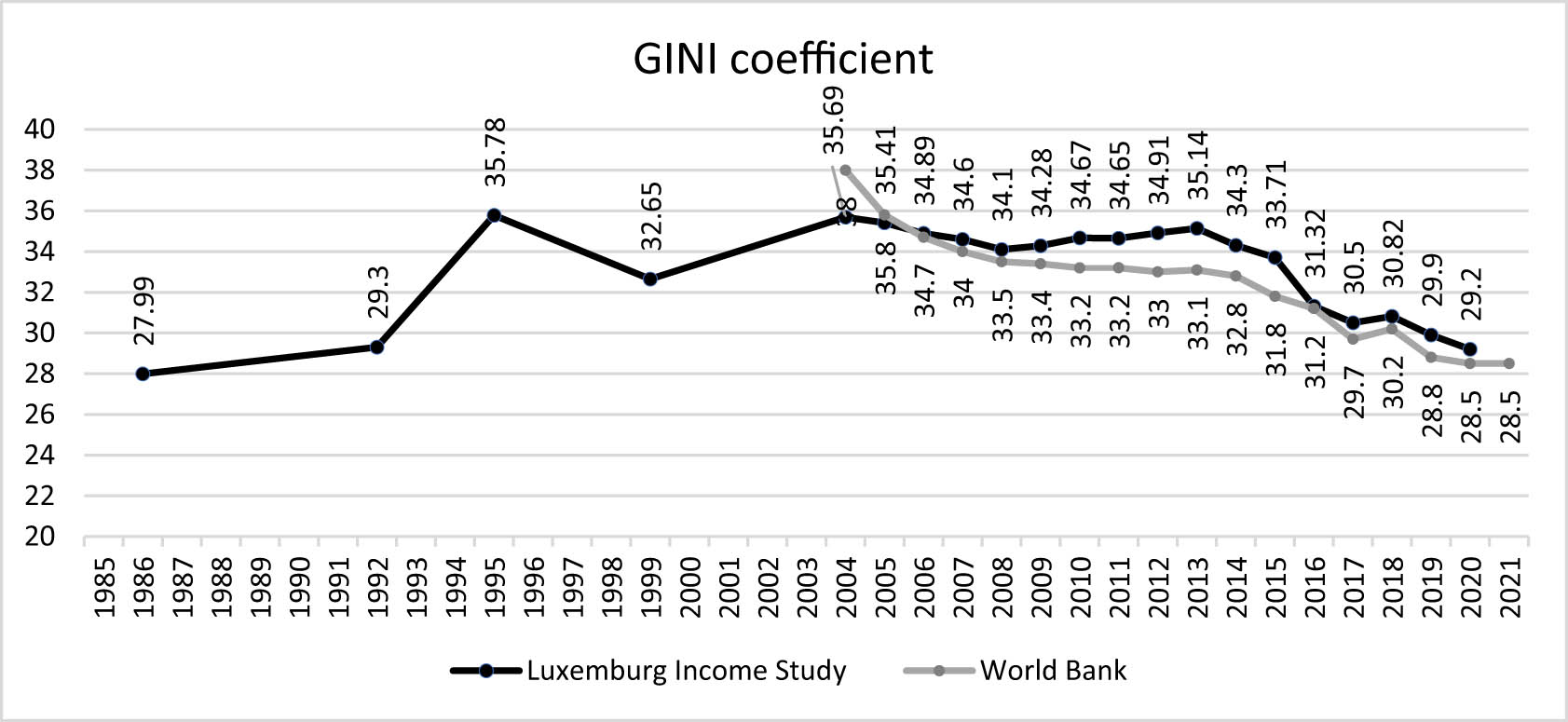
Figure 1
Gini coefficient for Poland during 1986–2021.
Source: WIID – the World Income Inequality Database, Luxembourg Income Study database, World Bank Database.
People’s preferences for redistribution are influenced by their views on the role of government and its policies and by concerns about the current level of inequality, which is shaped by perceptions and preferences about inequality (OECD). Perceptions and preferences for equality are not a subject of this article.
Five variables related to the five questions asked to the respondents were analyzed.1 Two variables are related to the concern for inequality: (1) Are the income differences in Poland too large? (2) How serious are conflicts between rich and poor? and three variables with preferences for redistribution and view of government policy, (3) Should the state reduce income inequality? (4) Is a large income gap essential for prosperity? (5) Should there be an upper income limit?
Concerns about inequality in Poland were in line with the current trends in the size of inequality.2 Concerns about inequality grew in Poland until 2003, and then this trend was reversed, as was the tendency of inequality itself. Until 2003, the percentage of people agreeing that the income differences in Poland were too large and that the conflicts between the rich and the poor were serious or very serious grew. Despite the reversed trend in 2003, it should be noted that 90% of respondents still think these inequalities are too high, and almost 54% of respondents indicate the existence of conflicts between the rich and the poor (Figures 2 and 3).
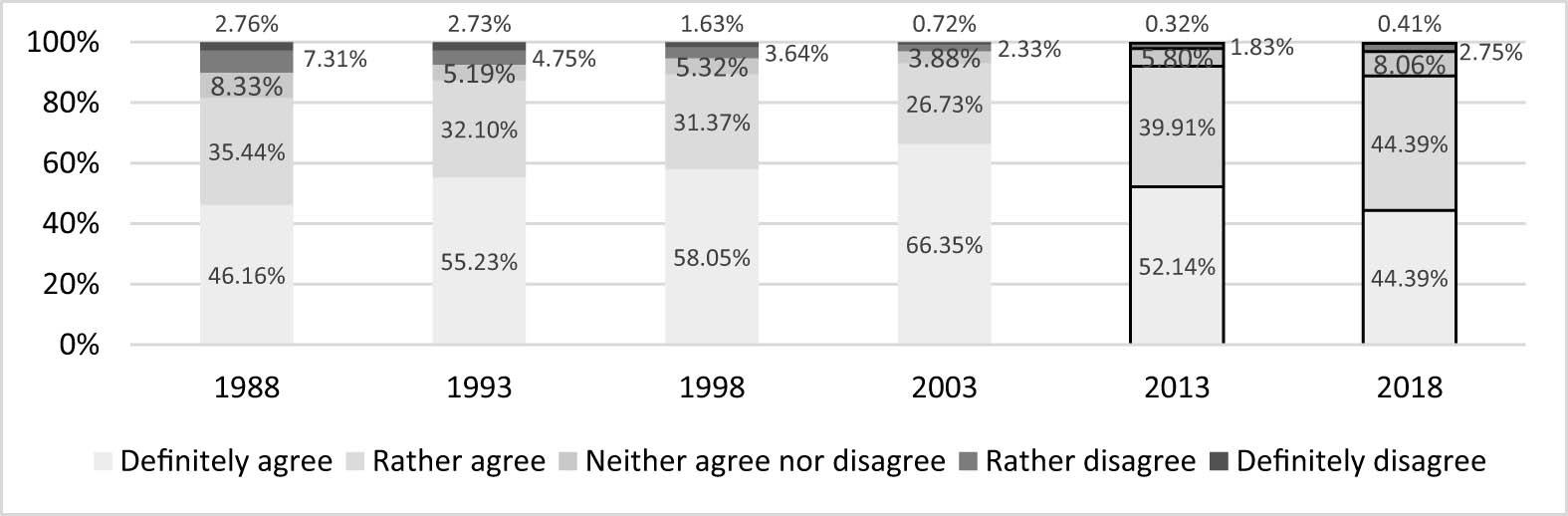
Figure 2
Differences in income in Poland are too large. Data for 1998–2018. Note: 1988–2003 – Polish Panel Survey [“Dane i dokumentacja – Polskie Badanie Panelowe POLPAN”], 2015–2018 – GUS survey (GUS, 2018).
Source: Polish Panel Survey - POLPAN; GUS.
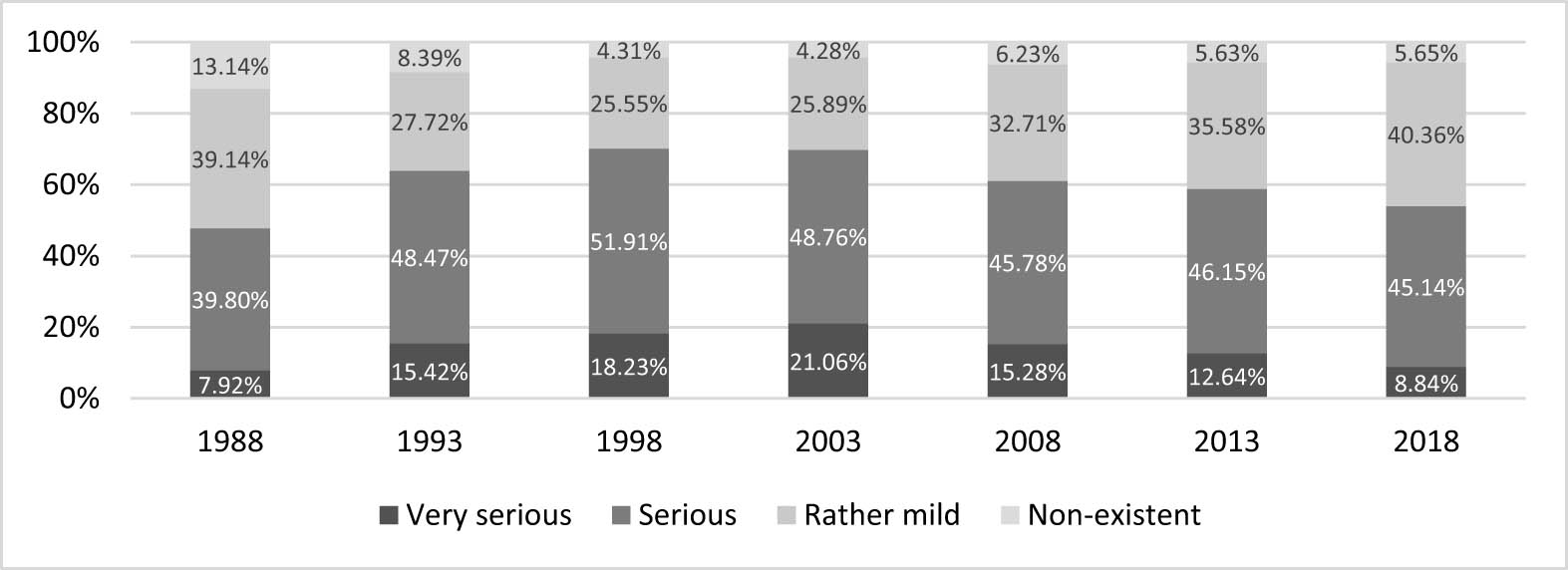
Figure 3
How serious are conflicts between rich and poor?.
Source: Polish Panel Survey – POLPAN.
The preferences regarding income redistribution developed slightly differently (Figures 4–6). During 1988–2004, the feeling that an upper limit of earnings should be established increased (Figure 6), while the percentage of people who believed that disproportions are necessary for welfare decreased (Figure 5). It is puzzling that during this period, the percentage of people who thought that the state should reduce inequalities decreased (Figure 4). As a result, until 1998, the rate of people who believed that the state should deal with equalization of disproportions among people who thought these disproportions were too large decreased (73% in 1988, 70% in 1993, 64% in 1998, and 72% in 2003%).
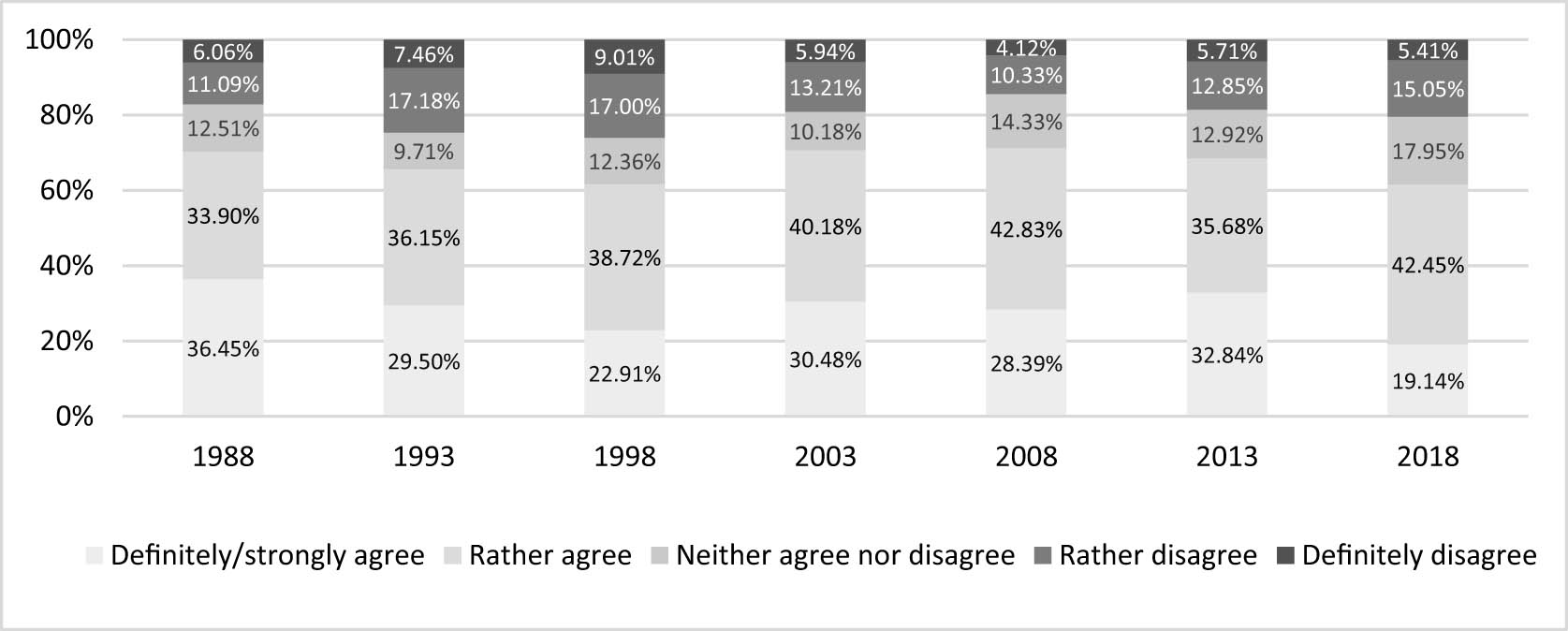
Figure 4
State should decrease inequality.
Source: Polish Panel Survey – POLPAN.
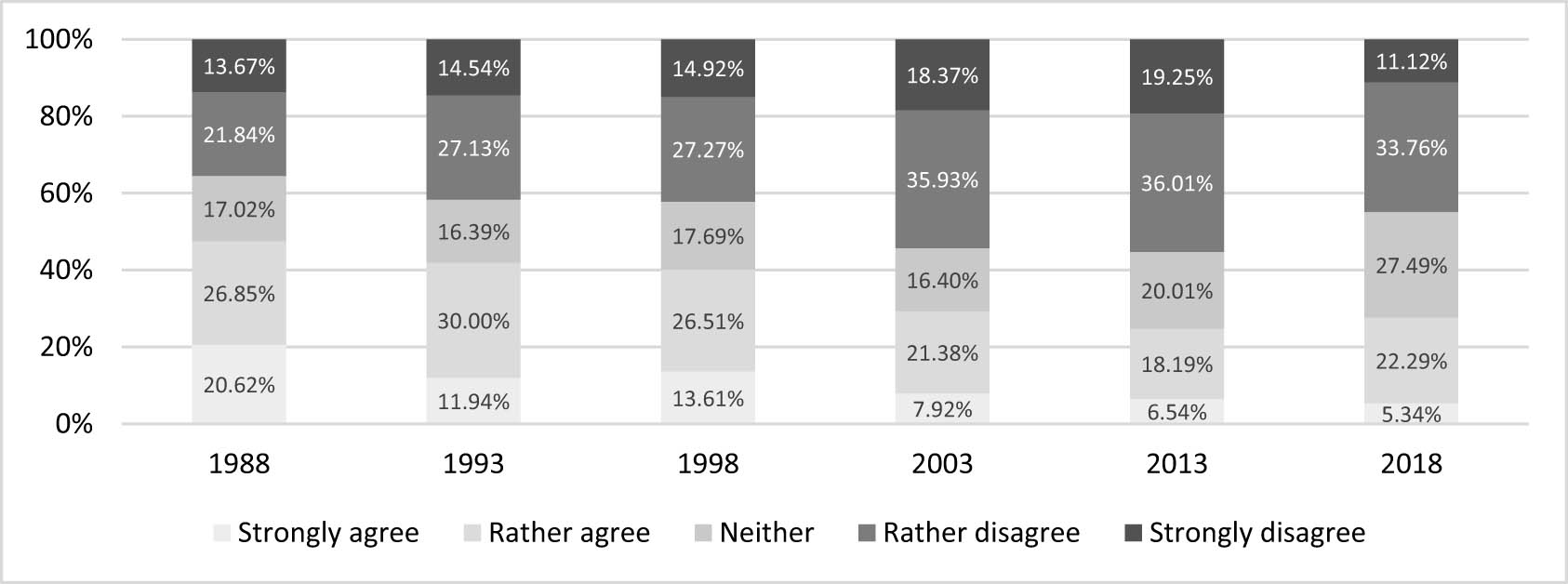
Figure 5
Is large income difference necessary for prosperity?.
Source: Polish Panel Survey – POLPAN.
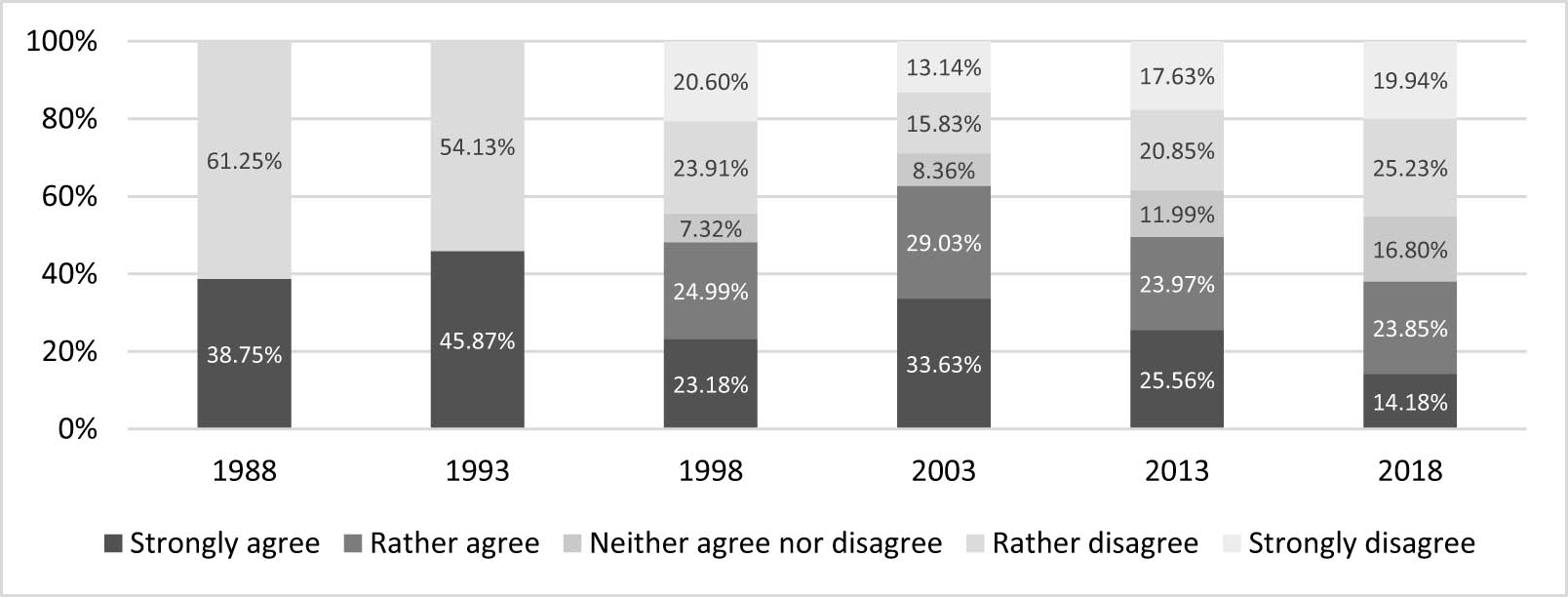
Figure 6
Distributions of respondent’s answers to the question: “Do you agree with the statement that the upper income limit should be set?”
Source: Polish Panel Survey – POLPAN.
Since 2003, we observed a decreasing trend in inequality and concerns about it, the percentage of people preferring to set the upper limit of earnings has also decreased (Figure 6) along with the emphasis on the policy of equalizing inequalities (Figure 4). Since 1988, the percentage of people who believe that disproportions are essential for development has decreased (Figure 5).
Years 2003–2004 were a breakthrough both in terms of the actual size of inequalities in terms of their subjective perception (Figure 2) and the opinion on the role of the state (Figure 4); generally, after 2003, the percentage of people agreeing that, it is the role of the state to reduce disparities, increased. It should be remembered that 2002–2004 was a challenging period for society, a period of very-high unemployment, reaching approximately 20%, and therefore higher than in the first years of transformation. Since 2003, the percentage of people who believe that an upper-income limit should be introduced has also started to decline. At the same time, the proportion of people who considered considerable disproportions necessary for welfare has constantly been decreasing since the 1980s.
The trends in Poland are consistent with those observed in the environment (Does Inequality Matter? 2021). It is indicated that in Poland, the increase in aversion to inequality in the first years of the transformation was caused, among others, by disappointment. In Poland, the initial strong consensus regarding reforms vanished in the mid-1990s (Grosfeld & Senik, 2010). Criticism of transformation’s effects, such as corruption, rising inequality, and the high price paid by part of the population, has gradually become the dominant topic of public discourse (Grosfeld & Senik, 2010; Kornai, 2006; Milanovic, 1999).
5. Inequalities and attitudes toward them in Poland by size of locality
5.1. Income inequalities by size of locality
The Gini coefficient for the whole country is only an average value and blurs the picture of differences between different groups of inhabitants in terms of socio-demographic characteristics. It is worth considering inequalities from various perspectives and cross-sections to deepen the knowledge about inequalities. The shaping of the discussed ratio in rural and urban areas is presented in Figure 7. The decrease in the ratio for Poland has been ongoing since 2004, and from 2014 to 2017, the reduction was very significant. However, these trends were different in rural and urban areas, especially from 2006 to 2014. The level of differentiation is higher in rural than in urban areas. Since 2013, we have been observing a decrease in the difference between the Gini coefficients in rural and urban areas.
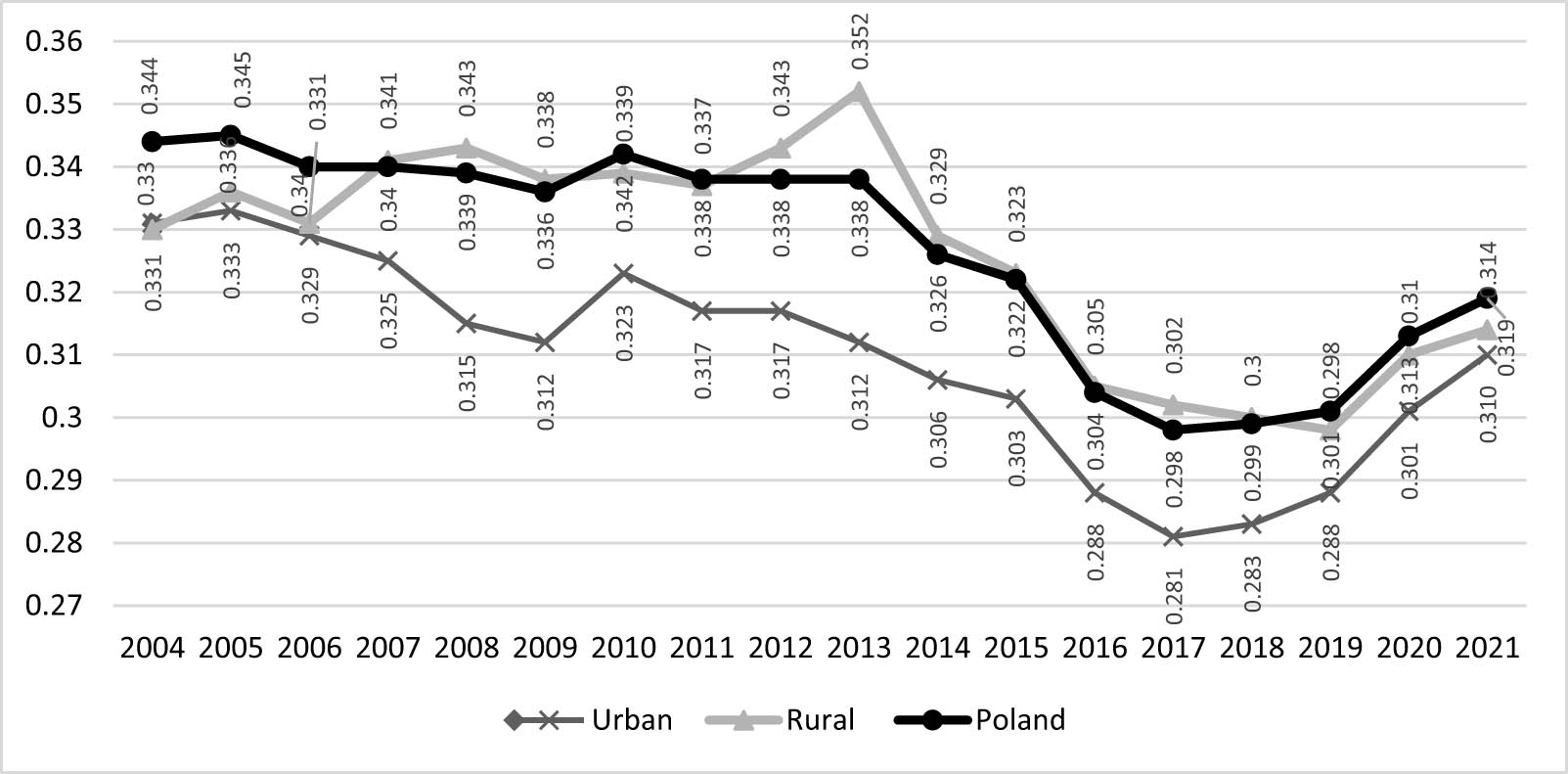
Figure 7
Income inequalities in households per capita measured by Gini coefficient in Poland by type of area during 2004–2021.
Source: The situation of households in 2021 in light of the results of the household budget survey. GUS, Warsaw 2021.
The differences in the average disposable income in Poland in 2006 and 2019 are shown to identify income inequalities in individual categories of location (Table 1).
Table 1
Average monthly disposable income per capita (in PLN) by category of locality in Poland in 2006 and 2019.
| Average monthly disposable income per capita (in PLN) | Changes during 2006–2019 (in %) | ||
|---|---|---|---|
| 2006 | 2019 | ||
| Total | 834.68 | 1819.14 | 217.94% |
| Urban total | 943.90 | 1991.08 | 210.94% |
| Urban less than 20,000 | 770.02 | 1745.91 | 226.74% |
| Urban 20,000–100,000 | 845.16 | 1836.36 | 217.28% |
| Urban 100,000–200,000 | 863.17 | 1912.26 | 221.54% |
| Urban 200,000–500,000 | 1026.84 | 2089.25 | 203.46% |
| Urban 500,000 and more | 1276.05 | 2480.88 | 194.42% |
| Rural | 659.29 | 1551.17 | 235.28% |
Source: PHBS, Household Budgets for 2006 and 2019, Central Statistical Office. Warsaw 2007 and 2020.
Source: own computation, data from: POLPAN.
Disposable income proportionally correlates with the town’s size in the analyzed period. The country average increased in the period by PLN 984, i.e., 118% in nominal terms. In 2019, incomes in the largest cities were over 136% of the average and 85% in rural areas. In 2006, it was 153% and 79%, respectively. Thus, despite the increase in absolute differences in income (by PLN 313), the relative differences decreased. Since 2006, there has been a convergence of average disposable income, the lower the disposable income per capita in 2006, the greater its growth during 2006–2019. Ultimately, it has to do with the declining Gini index for Poland.
It can be concluded that in the analyzed period, the differences in income differentiation within urban areas decreased. These differences decreased within rural areas too (this trend was evident until 2017). Since 2013, the differences in GINI values between rural and urban areas have decreased. These processes can be considered as a kind of convergence. At the same time, there is beta convergence regarding average disposable income.3 However, further research using individual data is advisable. It is also worth noting that during 2017–2018, the trend slowed down and reversed in some respects, especially in the Gini index.
5.2. Attitudes toward inequality by size locality
The size of the locality the respondent lived in is a feature that significantly differentiates the respondents’ responses to inequality and how to reduce it. During the entire period the study was conducted, the most significant differences between the inhabitants of different classes of localities were the necessity to set the upper limit of income. Since 1993, apparent differences have existed in the approaches to state intervention to reduce inequalities and in the perception of income differences. In other matters, significant differences are also visible and intensify over time – in 2018, they appeared in all analyzed variables (Table 2). Post hoc analyses were conducted to identify statistically significant differences in attitudes toward inequality between different groups. The results indicate that these differences are particularly significant between rural residents and residents of other settlement categories.
Table 2
Size of the locality as a grouping variable – K–W test for variables related to attitudes to inequality.
| Asymptotic significance, test K–W | Income differences are too large (p-value, K–W test) | Conflicts between rich and poor (p-value, K–W test) | State should decrease inequality (p-value, K–W test) | Income differences are necessary (p-value, K–W test) | The legal limit on the highest monthly income (p-value, K–W test) |
|---|---|---|---|---|---|
| 1988 | 0.968 | 0.663 | 0.861 | 0.929 | <0.001 |
| 1993 | 0.006 | 0.167 | 0.027 | 0.932 | <0.001 |
| 1998 | <0.001 | 0.971 | <0.001 | <0.001 | <0.001 |
| 2003 | 0.15 | 0.025 | <0.001 | 0.019 | <0.001 |
| 2008 | n/a | 0.615 | <0.001 | n/a | n/a |
| 2013 | n/a | <0.001 | 0.001 | 0.334 | 0.02 |
| 2018 | n/a | 0.001 | 0.005 | 0.094 | <0.001 |
Note: Kruskal–Wallis test, Grouping variable: SIZE OF LOCALITY. n/a - not available.
Source: own computation, data from POLPAN.
Aversion to inequality during 1988–2018 was generally inversely proportional to the size of the town where the respondent lived. This relationship was evident in the case of redistributive preferences and views on the state’s policy in this area. This is quite an expected dependency. Considering that in larger cities, incomes on average are higher and redistribution will affect metropolitan residents more, they relatively less frequently agree with the statement that the state should equalize incomes (Figure 8) or that an upper-income limit should be set (Figure 9). However, the inhabitants of the largest cities disagree to the greatest extent (since 2013) with the statement that disproportions are necessary for prosperity. People with higher incomes (in larger towns) agree least with the view that disproportions are good for welfare. Still, at the same time, they do not want the mitigation of these disproportions to be the state’s responsibility; it can be hypothesized that these people do not believe in the effectiveness of the state more so that redistribution affects them personally. This hypothesis requires confirmation by more profound research (Figure 10).
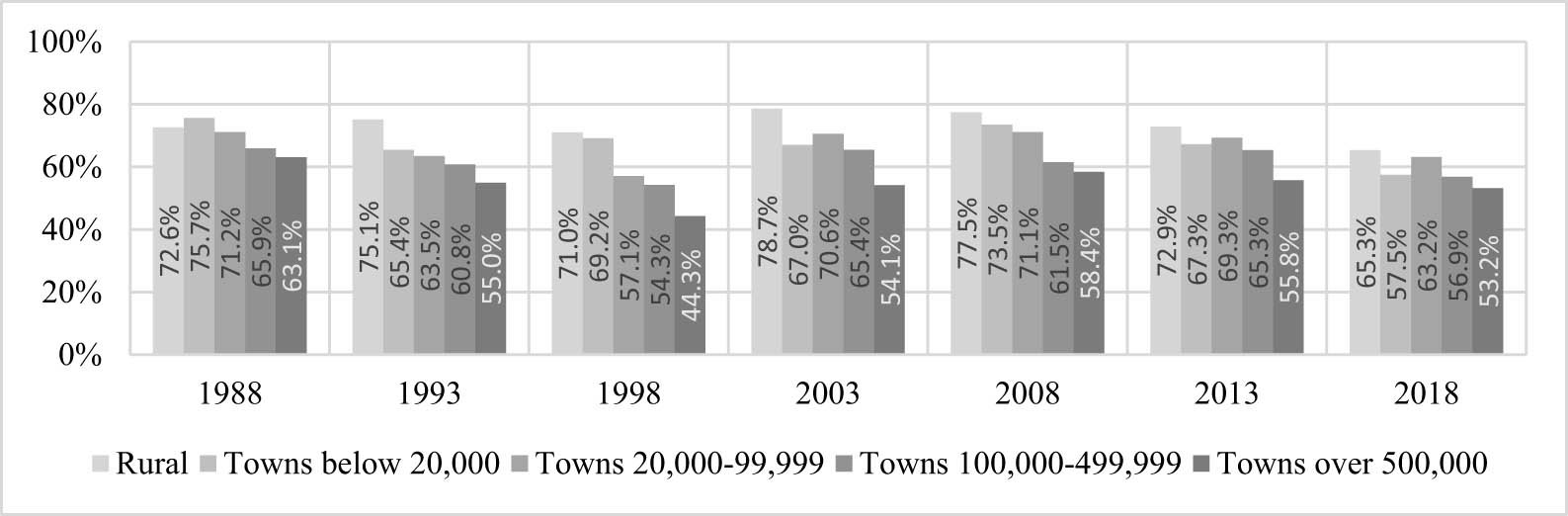
Figure 8
State should decrease income inequalities: Agree and strongly agree – by size locality during 1988–2018.
Source: POLPAN.
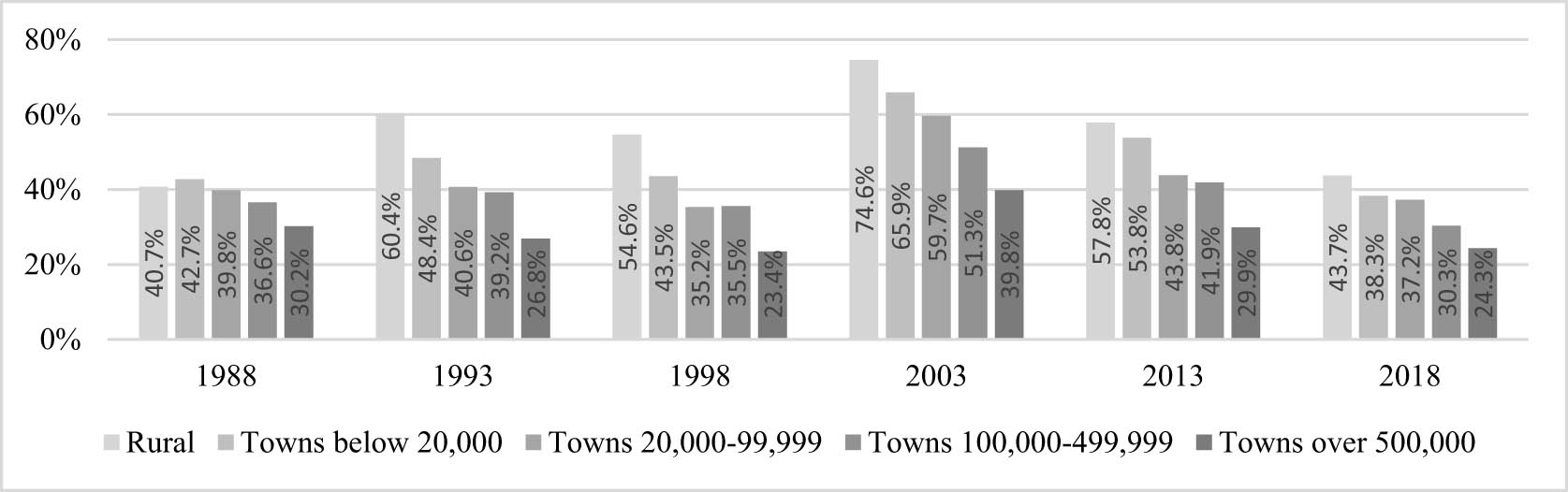
Figure 9
There should be a set upper-income limit: agree and strongly agree – by the size of locality during 1988–2018.
Source: POLPAN.
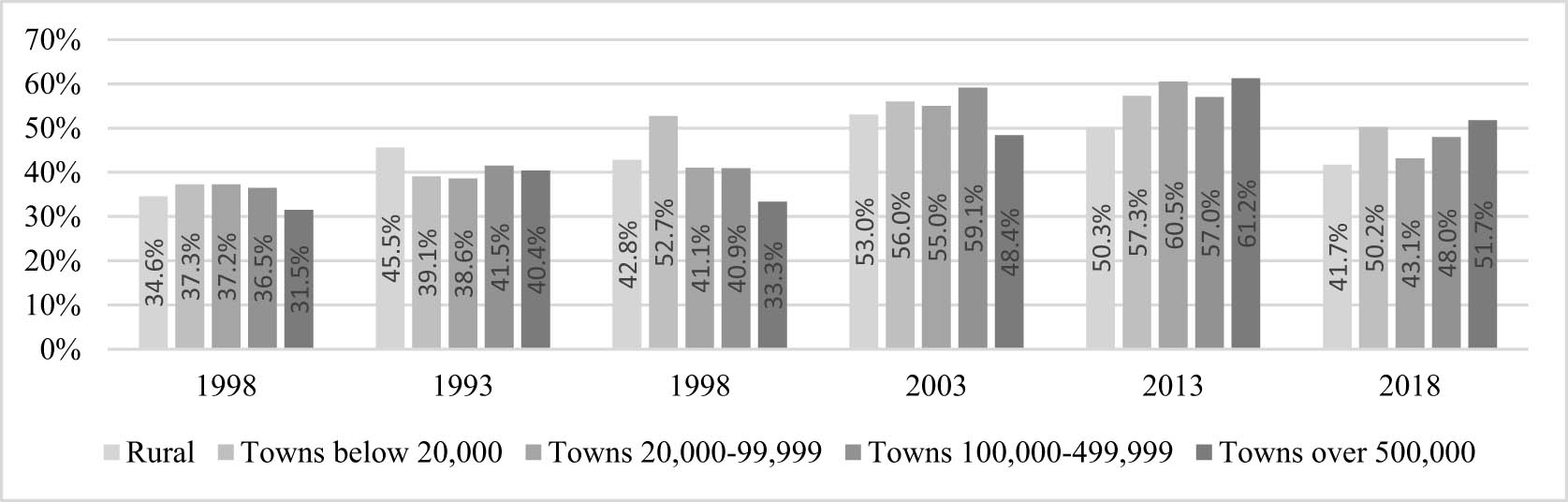
Figure 10
Large income inequalities are necessary for prosperity: disagree and strongly disagree – by the size of locality during 1988–2018.
Source: POLPAN.
As for concerns about inequality, in all the available analyzed years, along with the increase in the size of the town, it was less and less often indicated that the income disparities were too significant (Figure 11). It would be interesting to know the reasons for this – whether it is a matter of perceiving differences or preferences regarding inequality.
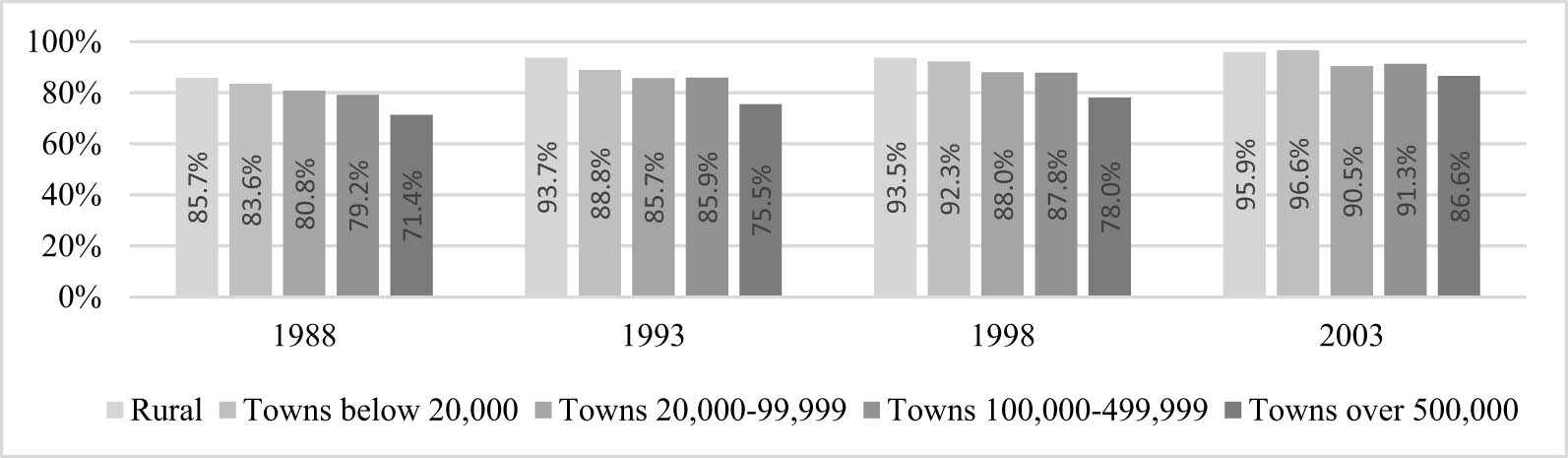
Figure 11
Income inequalities are too large: agree and strongly agree – by the size of locality during 1988–2003.
Source: POLPAN.
However, in the last 10 years, conflicts between the rich and the poor have been most observed in the largest cities (over 500,000 inhabitants) and the least observed among the inhabitants of small and medium-sized towns (Figure 12). In the previous editions of the survey, respondents’ responses from different categories of cities did not differ significantly. Perhaps it is the effect of the actual state of inequality (within individual classes of localities), which is not analyzed in this work.
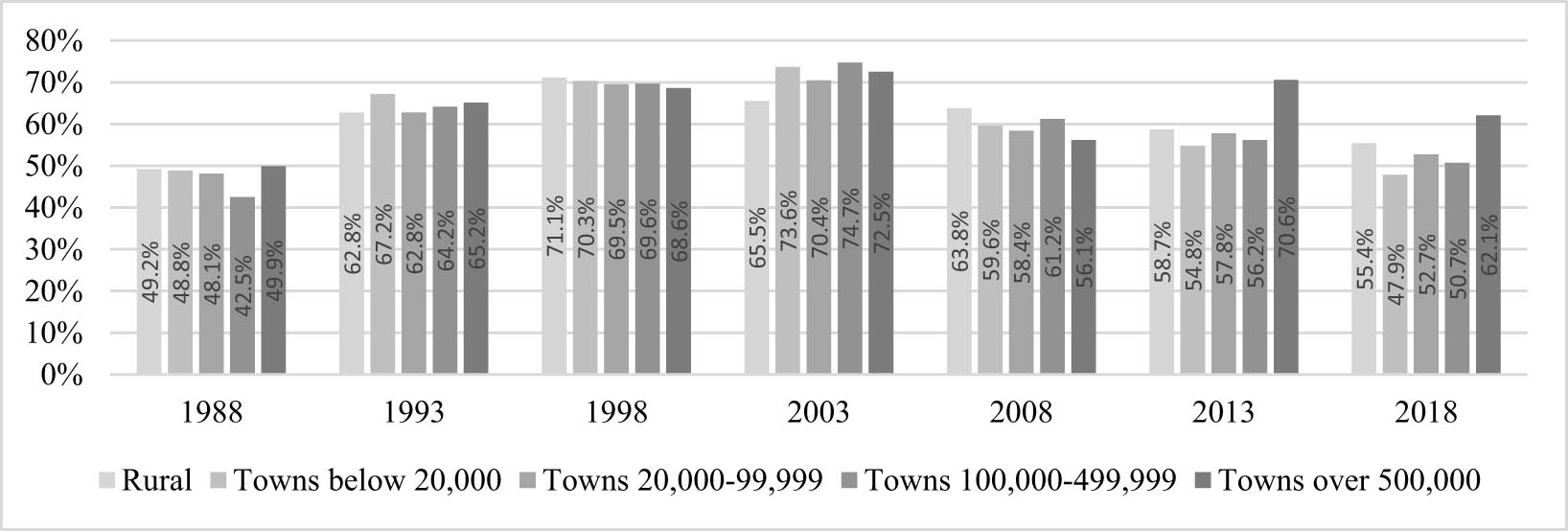
Figure 12
Conflicts between the rich and poor are serious or very serious – by the size of location during 1988–2018.
Source: POLPAN.
Concerns about inequality are a derivative of inequality itself. It is not easy to draw clear conclusions based on the analyzed data. Still, it may be puzzling that the actual disproportions have been intensely decreasing since 2013 (Gini for Poland), and the difference in the perception of conflicts between the rich and the poor increased between classes at that time and became statistically significant.
6. Conclusion and summary
Publications to date have focused either on issues of inequality or attitudes toward them. This publication combines these two aspects. The examination is a preliminary diagnosis and requires further research. In particular, analyzing individual data on inequalities is needed, but it gives some hints that are useful in constructing further research hypotheses.
The conclusions of the thesis are as follows:
2004 was a turning point in Poland – from this year onwards, the previously rising inequalities began to decline. This trend continued until 2017 and then has been reversed.
However, these trends were different in rural and urban areas, especially from 2006 to 2014. The level of differentiation is higher in rural than in urban areas. Since 2013, we have observed a decrease in the difference between rural and urban areas. From 2006 to 2019, there was a decrease in the differences in the average income of individual classes of localities.
Concerns about inequality in Poland coincide with actual trends in inequality. These relationships were different when it came to preferences regarding income redistribution. Concerns about inequalities and preferences regarding redistribution policies vary considerably across town classes and increase over time.
Aversion to inequality during 1988–2018 was generally inversely proportional to the size of the town where the respondent lived. This relationship was also revealed for redistributive preferences and state policy views.
People with higher incomes (in larger cities) agree least with the view that disproportions are good for welfare. Still, at the same time, they do not want the mitigation of these disproportions to be the state’s responsibility; it can be hypothesized that these people do not believe in the effectiveness of the state more so that redistribution affects them personally. This hypothesis requires confirmation by more profound research.
It may be puzzling that the actual disproportions have been intensely decreasing since 2013, and the difference in the perception of conflicts between the rich and the poor increased between classes at that time and became statistically significant.
The research results, especially the in-depth ones, can be used in practice, particularly those relating to support for the redistributive policy. Knowing the preferences of this policy’s directions or evaluating its effectiveness and efficiency is essential.
The continuation of research should focus on understanding the causes of concerns about inequality and the perceptions of differences and preferences in this area. Moreover, because the Gini coefficient has limitations, it would be advisable to use other inequality measures in the analyses. It should also be noted that the conducted analysis of income inequalities and attitudes toward them has its limitations regarding the analysis of dependencies. Data come from different sources, time frames, different populations, and the categories of locality do not overlap in these studies. Certain regularities and dependencies may remain hidden or distorted. In-depth research also requires the use of individual inequality data. Particular classes of localities may be internally differentiated, e.g., previous research (Wołoszyn & Wysocki, 2020) shows that rural areas are characterized by relatively sizeable internal differentiation and are responsible for a significant part of the differentiation.
Funding information
Financing from the University's statutory activities.
Author contributions
The author was solely responsible for the conceptualization, study design, literature review, data analysis, interpretation of results, and preparation of the manuscript.
Conflict of interest statement
Author states no conflict of interest.