
1. Introduction
Undoubtedly, small- and medium-sized enterprises (SMEs) are essential to the strength of the German economy. As of 2022, SME provided workplaces for almost 60% of employees, generating nearly half of the value added to the economy (European Commission, 2023). German SMEs are among the global market leaders in certain areas. Although SMEs play a vital role in the economy, mergers and acquisitions (M&A) activity within this sector remains underresearched. M&A is frequently analysed in the context of large, capital-intensive firms, but the SME sector deserves equal attention (Jensen, 2012; Ponikvar et al., 2018). The challenges associated with the economic situation in the 21st century have led to predictions that M&A transactions will become crucial in the SME sector. In particular, the post-COVID-19 recovery has left many SME needing support, making sales to external parties via M&A an increasingly common solution in Germany. It reshaped the SME landscape in ways that are still difficult to foresee.
The motives of buyers and sellers in M&A transactions can be understood in terms of various goals (Bonaime et al., 2018; García & Herrero, 2022). The purchasing motives include better use of employees’ skills, increased market share, and access to modern technology (Bonardo et al., 2010). The decision to acquire other firms is often driven by the desire to access new technologies or intellectual property that can confer a competitive advantage. Analyses of sellers’ motives reveal that succession planning has emerged as a significant challenge for SME. Socio-economic changes, such as an ageing society and the increasing mobility of young people, have exacerbated this issue. As a result, SME owners opt for exit through voluntary liquidation or selling the firm via M&A (Ponikvar et al., 2018). M&A transactions can be a win–win situation, enabling the seller to pass on their life’s work to capable managers. For buyers, M&A offers opportunities for market expansion and development, enabling cost reductions and future profit growth (Diep & Anh, 2020; Suryaningrum et al., 2023).
As M&A transactions increase in the German SME sector, understanding the key drivers behind this trend becomes essential. This study explores M&A motives in the SME sector from both seller’s and the buyer’s perspectives, also examining the companies’ current challenges as a background for M&A. By incorporating the opinions of objective respondents, i.e., M&A advisors for SME, who employed their knowledge and experience to achieve an unbiased and informed view of M&A in the German SME sector, this article provides a deeper understanding of M&A dynamics involving SME in Germany, offering insights into SMEs’ operational challenges and the motives of various parties involved in the transactions. Section 2 provides an overview of the SME sector in Germany, serving as the background for the M&A analysis. Section 3 focuses on a thorough literature review of M&A motives, in both large companies and SME. This is followed by a description of the empirical study’s methodology, including the interview structure and questionnaire design. Then, we present the findings of the empirical analyses. The final section contains a discussion and conclusions, highlighting the limitations and suggesting directions for future research.
2. The SME sector in Germany as the background for M&A analysis
The SME sector plays a significant role in the economies of all the European countries, including Germany. In line with the EU classification, a company is classified as an SME if it employs fewer than 250 people, has an annual turnover of not more than 50 mln EUR, and does not exceed 43 mln EUR in its annual balance sheet total (The Commission of European Communities, 2023). In 2022, the SME sector accounted for 99.6% of all enterprises in Germany (EU27: 99.8%), provided workplaces for 57.4% of employees (EU27: 64.4%), and generated 46.6% of the value added to the economy (EU27: 51.8%). The contribution of German SME to the total value added (at factor cost) in the Construction sector was 83%, in the Trade sector 57%, in Services 54%, and in Manufacturing 26% (Eurostat, 2023). Analysing the structure of the total value added (at factor cost) by SME in the non-financial business economy in 2020 (the latest data available), the highest contributions were made by the services sector (41%), followed by trade (22%), manufacturing (19%), and construction (14%; Table 1). Values estimated for 2022 indicate that shares of these sectors are relatively stable, with deviations of less than one p.p. for each industry.
Table 1
Shares of sectors in the total value added (at factor cost) by SME.
| Total value added by SME | Manufacturing | Construction | Trade | Services | |||||
|---|---|---|---|---|---|---|---|---|---|
| Year | mln EUR | mln EUR | % | mln EUR | % | mln EUR | % | mln EUR | % |
| 2020 | 1,312,594 | 160,356 | 19 | 116,633 | 14 | 188,757 | 22 | 346,015 | 41 |
| 2022 | 853,487 | 174,671 | 18 | 129,894 | 14 | 218,954 | 23 | 380,567 | 40 |
Source: Own elaboration based on Eurostat data for the non-financial business economy. The data for 2022 are Eurostat estimates, as actual data are unavailable.
The results presented in Table 1 led us to include sector analysis in our study. While the majority of research literature focuses on large M&A deals, M&A transactions also significantly influence the large SME sector. Many German SMEs are family-owned businesses or have similar characteristics to family businesses (Marjański et al., 2019; Matalamäki et al., 2020; Nordqvist et al., 2013). Consequently, the lack of internal succession is a significant problem, enforced by demographic issues (Campbell et al., 2015; Parry & Urwin, 2011).
3. Literature analysis on motives for M&A: Large companies vs SME
M&A transactions are multi-threaded, covering areas related to economics, finance, and law, resulting from various motives and conditions (Cumming et al., 2023; García & Herrero, 2022; McEntire & Bentley, 1996). The theory of M&A has been developed chiefly based on the study of deals by large firms, while thorough literature research shows that the motives for selling SME have not been widely investigated. While there are some common motives for M&A across company sizes, the scale and impact of deals vary significantly between SME and large companies (Arvanitis & Stucki, 2015; Gorton et al., 2009). SMEs’ resources availability, strategic goals, and market influence differ from those of giant corporations, which can influence the specific rationale and outcomes of their acquisitions (Larsson & Finkelstein, 1999; Trautwein, 1990). However, acquisition strategies related to market share, access, and position tend to be consistent across companies of different sizes. SMEs rely intensively on external growth via M&A. They are financed with equity rather than debt, which indicates that the financial pecking order theory is less relevant to SME. Drawing on the stakeholder-agency theory, SME perceptions of the likelihood of obtaining credit for business purposes are reduced.
The motives for M&A operations can be considered from the perspectives of benefits for the buyer and seller. The classification of motives from the buyer’s point of view in the M&A process includes the groups of strategic, technical and operational, market and marketing, or financial and managerial motives (Arvanitis & Stucki, 2015; Becker et al., 2016; Harada, 2007; Hirigoyen & Basly, 2019; McEntire & Bentley, 1996; Mickelson & Worley, 2003; Nisar et al., 2012; Ronstadt, 1986; Steen et al., 2014). Companies might acquire a business to prevent competitors from doing so, which can be a strategic move to protect their market position and significantly affect companies’ future competitiveness and performance (Hoberg & Phillips, 2010; Larsson & Finkelstein, 1999). For SME owners, acquiring other companies can be part of an exit strategy, building up the business attractiveness for a future company sale (Harada, 2007; Ronstadt, 1986; Wennberg et al., 2010). In this context, it is essential to note that M&A operations may be offensive or defensive.
Regarding technical and operational motives, SME and large companies may achieve economies of scale, reducing their cost per unit and increasing profitability through larger operational capacity (Arvanitis & Stucki, 2014; Gorton et al., 2009). Acquisitions enable companies in fast-moving industries to bring products or services to market more quickly than developing them internally (Bena & Li, 2014). Technological complementarities are suggested as the motives driving acquisitions by SME to enhance synergies between acquiring and acquired firms (Agarwal & Kwan, 2018; Alhenawi & Krishnaswami, 2015; Dutordoir et al., 2014).
Market and marketing motives are concerned with reducing operating costs by gaining a competitive advantage in the country of investment and selling products or services based on the market proximity (Amihud & Lev, 1981; Chang & Mais, 2000). The geographic scope, market share, and pricing strategy depend on the size and structure of the company as well as its competitors. Companies may acquire businesses in different geographic locations or industries to manage risks associated with market volatility (Bonaime et al., 2018).
The financial motives bring cost reduction and the expectation of increasing financial results (Diep & Anh, 2020; Suryaningrum et al., 2023), as well as the anticipation of achieving synergy, where the combined company is more valuable than two separate entities (Agarwal & Kwan, 2018; Dutordoir et al., 2014). M&A enables the optimisation of a company’s financials by acquiring a company with significant tax advantages or one that is integrated to streamline costs. Some SMEs may need support to reach their optimal capital structure (Ang, 1991; Chang & Mais, 2000). Financial motives include building a higher value, reducing unit costs in research and development or activities in marketing and introducing innovations. They may involve the life cycle of product and service extension, the exhaustion of economies of scale and the need to build a broader scale of impact (Larsson & Finkelstein, 1999).
M&A also has managerial motives (Chang & Mais, 2000; Kindström et al., 2022) and affects a wide range of stakeholders, including shareholders, management staff, employees, clients, and outsourcing partners. Each group may experience different M&A impacts, reflecting their roles and interests. Managers and staff may face job instability due to restructurings following the transaction. Thus, management’s resistance to takeovers seems understandable, even if such opposition may be criticised (Ang, 1991; Arvanitis & Stucki, 2015; Vlacseková & Mura, 2017; Weitzel & McCarthy, 2011). Addressing staff resistance to change should be an integral part of M&A planning (Amihud & Lev, 1981). The lack of succession in SME is an essential motive for managerial M&A. Chirico et al. analysed 5,993 user data of the SME calculator (German KMUrechner), an online tool to evaluate SME acquisitions and divestments in Germany in the context of business succession, and focusing on the characteristics and motives of the parties involved in buying and selling SME (Chirico et al., 2020). The comparison between within-family successions and external-party takeovers in family-owned manufacturing SME suggests their perception differences. External owners focus on growth and new innovative methods, while family-succeeded firms expand to maintain their previous businesses (Grundström et al., 2012). This attachment to earlier businesses and employees distinguishes the strategic motives approach of SME owners and managers from that of large companies.
We also conducted a bibliometric search of merger motives using the Web of Science database (April 2024). The filters based on study keywords (merger, acquisition, M&A, SME, and motive) from the Web of Science Core Collection gave 5,861 publications. We analysed articles published in English from 2005 to 2024. The analysis of keyword co-occurrences revealed the exaggeration of networks of essential terms used in the context of M&A and SME, within the four main clusters associated with SME: performance, innovation, growth, and strategy. The results reflect the aforementioned motives of M&A, with performance and innovation being the critical aspects, followed by the development, knowledge, and strategy. The factor of little importance in the case of SME was internationalisation. Based on the literature review, the first research question can be formulated as follows:
RQ1: What are the characteristics of SME being targeted in acquisitions?
Empirical studies from Europe and the United States underscore the relevance of buyer motives such as growth, expanding production or product portfolio, acquiring resources and customers, increasing competitiveness, and synergy effects in the SME sector (Becker et al., 2016; Hirigoyen & Basly, 2019; Mickelson & Worley, 2003; Nisar et al., 2012). The literature review on M&A motives in the SME sector reveals that the motives for buying SME have not been widely investigated. To the best of our knowledge, no research has been found showing the perspective of M&A advisors on SME transactions. The conducted literature review was enhanced by a classification analysis that categorises the motives behind M&A into strategic (S), technical and operational (T/O), market and marketing (M/M), financial (F), and managerial (MNG). The results are presented in Table 2.
Table 2
Literature review on M&A motives in the SME sector.
| Authors (year) | Country, research method of data collection, sample, year of the study | Topic | Findings (relevant to this study) |
|---|---|---|---|
| Hirigoyen and Basly (2019) | France, questionnaire survey, 69 responses, 2012 | Factors that influence family business sale decisions in the context of the 2008 crisis | Motives for exit/selling
|
| Becker et al. (2016) | Germany, 34 semi-structured interviews with owners and managers, 2012 | Various aspects of M&A transactions carried out by the German Mittelstand (including SME) | Motives for M&A
|
| Parastuty et al. (2016) | Austria, questionnaire survey among 212 entrepreneurs (41 exited their firms), 38 responses, 2009–2013 | Motives for entrepreneurial exit among young firms | Motives for exit/selling
|
| Arvanitis and Stucki (2014) | Switzerland, questionnaire survey, 405 responses, 2011 | Firm characteristics that determine the innovation and economic performance of M&A | Motives for M&A
|
| Steen et al. (2014) | Australia, five semi-structured interviews with CEOs of microcap firms with M&A experience, 2014 | M&A experience of microcap businesses: determinants of success, pitfalls and problems with integration | Motives for buying
|
| Nisar et al. (2012) | Norway, questionnaire survey among upper-level managers of multinational SME 53 responses, 2009 | Motives behind the equity modes of foreign market entry, including cross-border M&A of SME | Motives for (cross-border) M&A
|
| Harada (2007) | Japan, secondary data from the survey implemented by the Japan SME Corporation in November 2003, 1,743 observations, 2005 | Exit and post-exit behaviour of small firms and their managers | Motives for exit/selling
|
| Mickelson and Worley (2003) | The United States/Canada, 12 semi-structured interviews with key persons from both the buyer and seller sides, 1997 | Critical differences between typical M&A and those involving a family firm (the acquisition of a family business by a larger company) | Motives for buying
|
| Ronstadt (1986) | The US questionnaire survey among ex-entrepreneurs 95 responses, 1982 | Motives for the entrepreneurial exit, exit mode (e.g., selling out or liquidation), and timing | Motives for exit/selling
|
Note: M&A motives: strategic (S), technical and operational (T/O), market and marketing (M/M), financial (F), and managerial (MNG).
Source: Own elaboration.
The empirical studies mainly examine motives for “entrepreneurial exit,” but these can only be partly considered as motives for selling. In contrast, the owner’s exit usually results in the company’s closure (Harada, 2007; Parastuty et al., 2016).
M&A offers an advantage for SME owners considering an exit strategy and a chance to secure the SME’s financial future, ensuring the continuity of the company (DeTienne, 2010; Wennberg et al., 2010). It is particularly true when an internal succession solution is problematic (Mickelson & Worley, 2003) or the company is in a difficult situation (Ronstadt, 1986). As there are few empirical results on motives for sale in the German SME sector, the second research question of the current study is as follows:
RQ2: What motives for selling play an essential role in the M&A of German SME?
The literature analysis also reveals a significant need for research about motives for buying in the SME sector. Consequently, we put forward two other research questions in our study:
RQ3: Who are the potential buyers of German SME?
RQ4: What motives for buying play an essential role in the M&A of German SME?
Compared to large companies, SME usually have relatively complicated access to resources and depend heavily on their external stakeholders (Falkner & Hiebl, 2015). The viability of many SME strongly depends on the general economic situation. Empirical studies show that the financial crisis, pandemic, and the associated challenges can lead to the closure or sale of SME. Current challenges in the SME sector must also be considered when examining the motives for selling. Accordingly, the last research question of the current study is:
RQ5: What challenges are German SME currently struggling with?
4. Methodology
Our research examines the motives behind M&A in the SME sector, focusing on the German market. M&A advisors are specialists in tax, financial, or legal issues and provide valuable and reliable information on company sales, serving as a valuable source of information (Battisti & Williamson, 2015; Sales & Zanini, 2017). On both the buyer and seller sides, auditors and investment bankers also act as consultants, advisors, or intermediaries. The empirical data for the study were collected as part of an online survey among German M&A advisors in 2023. The contact details of the M&A advisors surveyed in this study were collected via various brokerage platforms for corporate transactions. First, the personal profiles of all 2150 M&A advisors working in Germany were examined, and those with experience in the SME sector were subsequently included in the contact list of 541 advisors, constituting the study population. The questionnaire was constructed based on recommendations from the dedicated literature (Rowley, 2014; Taherdoost, 2016) and consisted of closed questions: four multiple-choice questions and four matrix questions. The research concept obtained a positive opinion from the Research Ethics Committee. The online survey was conducted using the SoSci Survey (https://www.soscisurvey.de), which is a software for academic online surveys in German-speaking countries. The survey was conducted as a complete enumeration, with invitations sent to all 541 identified M&A advisors. Each M&A advisor received a personalised questionnaire link allowing for one-time participation. By the end of the survey period, 80 completed responses were collected, resulting in a response rate of 14.8%.
Data analysis methods included descriptive statistics, such as frequency tables and graphs, and nonparametric tests for differences in the location of distributions between groups of advisors, namely, the U Mann–Whitney test and the Kruskal–Wallis test.
5. Research results
Most advisors participating in the survey (65.0%) had substantial experience, having assisted in over 20 M&A in SME (3 of them assisted in five or fewer M&A transactions) (Figure 1). The majority of respondents (58.8%) supported the seller side, about one-third supported both sides roughly (32.5%), and they rarely supported the buyer side (8.8%) (Figure 2).
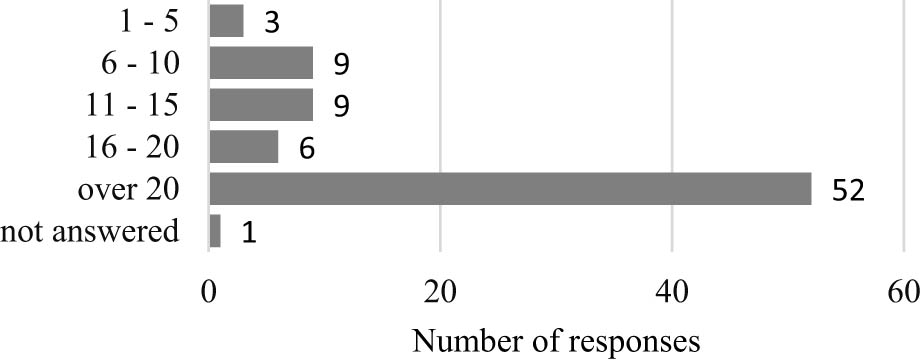
Figure 1
Number of M&A transactions involving SME supported by an advisor.
Source: Own elaboration.
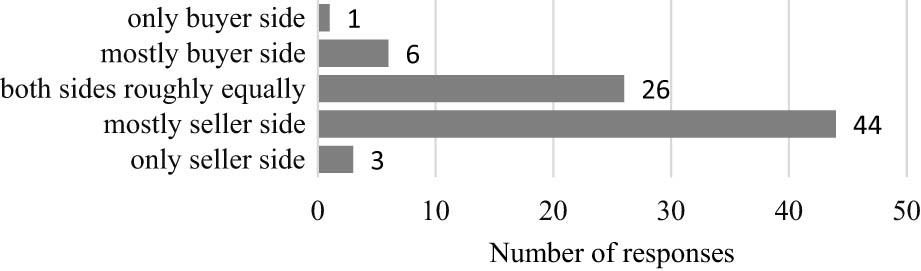
Figure 2
Side supported in M&A transactions.
Source: Own elaboration.
Target companies were quite often family businesses (Figure 3). According to 75.0% of respondents (answers: “often” or “very often”), target companies primarily operated in the production sector. A total of 56.0% of advisors often or very often supported transactions involving target companies operating in the processing sector, and 45.0% of companies provided services for other companies (B2B services sector). The advisors had little experience supporting M&A with target companies operating in the services for households, retail, hospitality, news communication, mining, water, and energy sectors.
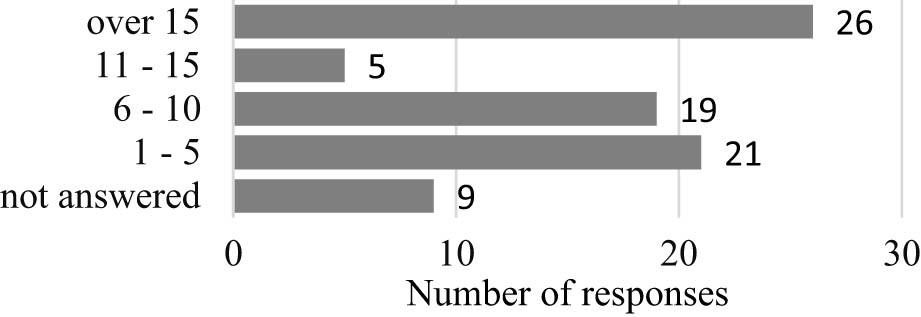
Figure 3
The number of M&A transactions where the targets were family businesses.
Source: Own elaboration.
On the basis of the literature and empirical study, we determined the prevalent motives for selling SME. We then asked advisors to rate the frequency of observed options (Figure 4). According to 93.8% of advisors, the lack of internal succession was the typical reason (65.0% of respondents indicated “very often” and 28.8% “often”). The second important reason was the reorientation of the owner, which was suggested by 37.5% of answers marked as “very often” or “often.” The other motives were internal conflicts, family problems, and the problematic financial situation of an SME. Psychological motives, including lack of motivation and reorientation of SME, were rated as rare or never-occurring motives by 48.8% of the advisors.
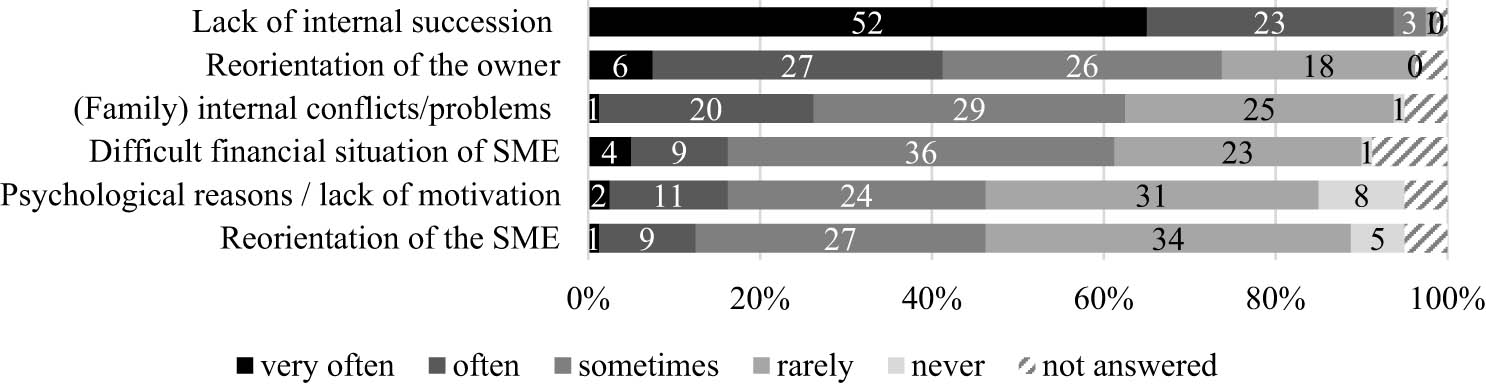
Figure 4
Motives for selling SME.
Source: Own elaboration.
To check if advisors’ perceptions of selling motives differ concerning their experience in supporting M&A in the SME sector, we applied the nonparametric U Mann–Whitney test for two groups of respondents: advisors supporting up to 20 transactions (n a1 = 27) and more than 20 transactions (n a2 = 52). All calculations were made in SPSS. However, no statistically significant differences in answers’ distributions were found for α = 0.05. Thus, perceptions of selling motives do not differ between advisors with different levels of experience.
Then, we compared responses regarding buyers’ motives between advisors less experienced in supporting M&A involving family businesses (on up to 10 such transactions, n b1 = 40) and with greater experience (more than 10 such transactions, n b2 = 31). Here, the U Mann–Whitney test also showed no statistically significant differences in the distribution of the answers at α = 0.05. Thus, perceptions of selling motives do not differ between advisors with varying levels of experience in supporting family businesses.
Similarly, we searched for differences in perceptions of selling motives among advisors in three groups, supporting: the buyer side (only or mostly), the seller side (only or mostly), and both sides roughly equally. On the basis of the Kruskal–Wallis test, we found no statistically significant differences in the perceptions of the analysed selling motives, except for the motive of reorientation of the owners (p-value = 0.018). Almost all advisors supporting the buyer side (except one respondent) indicated that reorientation of the owners is the motive that appears “often.” So, they perceived this motive as more important than advisors in other groups.
The advisors’ experiences in SME M&A negotiations displayed considerable diversity (Figure 5). A total of 38.8% of advisors reported that they either never or rarely encountered private investors as buyers. In the case of private equity firms, 56.3% of advisors often or very often met them as buyers. SMEs were buyers often or very often, as stated by 66.3% of respondents, and large enterprises acted as buyers often or very often, according to 35.0% of respondents. Notably, there was no significant correlation between these responses and the advisors’ experience. The results underscore the nature of takeovers involving SME with diverse buyer profiles, including private investors, private equity firms, SME, and large enterprises. In M&A transactions, 93.8% of respondents encountered buyers of SME from abroad (Figure 6).
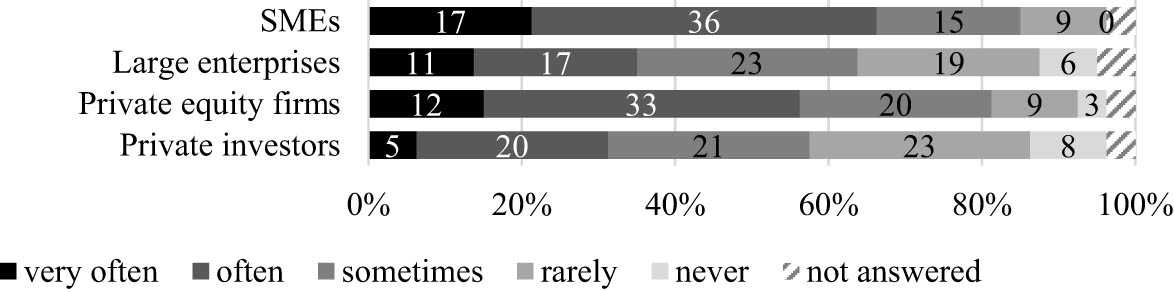
Figure 5
Entities acting as prospective buyers in the SME takeover.
Source: Own elaboration.
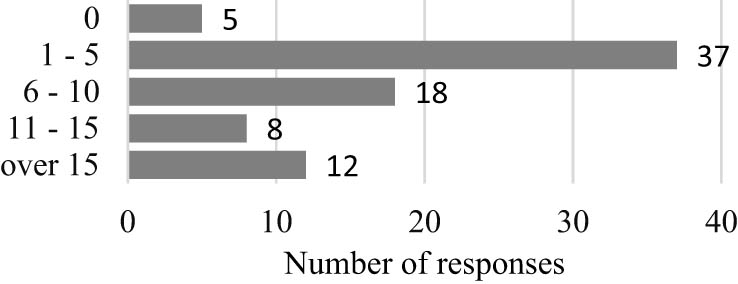
Figure 6
Number of M&A transactions with prospective buyers of SME from abroad.
Source: Own elaboration.
As stated by 86.3% of advisors, the growth motive is considered crucial for buyers, with “high” and “very high” importance (Figure 7). It suggests that the overarching goal of SME acquisitions is to achieve growth that might not be possible organically. Similarly, accessing new customers through acquisitions was rated as being of high and very high importance by 73.8% of respondents, highlighting a growth-oriented strategy that focuses on expanding market share. An increase in competitiveness was identified as one of the critical motives, with 68.8% of respondents indicating that it was of “high” and “very high” importance.
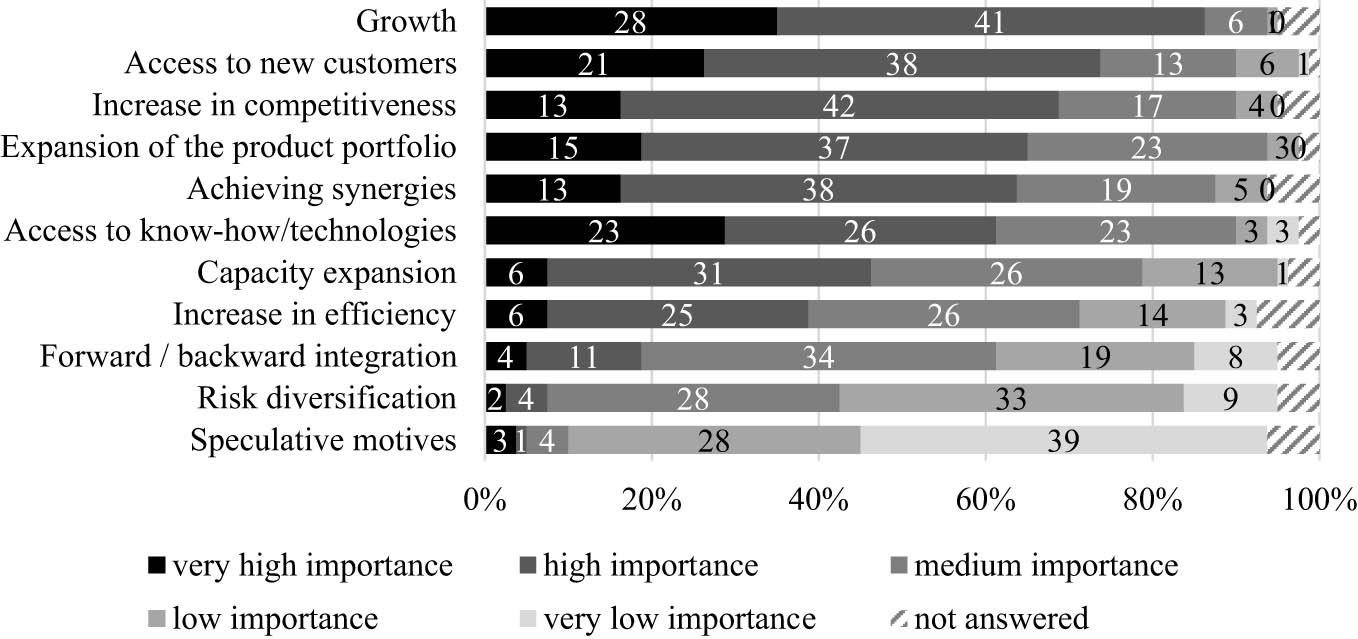
Figure 7
The role that buyer motives play in SME acquisitions.
Source: Own elaboration.
The other essential motives were expanding the product portfolio, achieving synergies, and gaining access to know-how or technology. For these motives, “very high importance” and “high importance” answers were chosen by more than 50% of respondents. Speculative motives and risk diversification were considered the least important (“low importance” and “very low importance” comprised 83.8% and 48.8% of answers, respectively).
In addition, we compared perceptions of buyers’ motives in two groups of respondents varying by their experience in supporting M&A in SME and specifically by their expertise in supporting M&A involving family businesses (the same groups as in the analysis of selling motives). The U Mann–Whitney test for α = 0.05 indicated no significant difference regarding experience in supporting SME’s M&A. Specifically, advisors with greater experience in supporting family businesses generally perceived growth as a less important buyer’s motive than those with less experience (p-value = 0.047).
Similarly, we analysed the differences in perception of buyers’ motives between advisors, who were more involved in supporting the buyers’ side, the sellers’ side, and supporting both sides roughly equally. Based on the Kruskal–Wallis test, we found no statistically significant differences in the perceptions of the analysed buyers’ motives between those groups (Table 3).
Table 3
Statistical comparison of M&A motive frequencies across advisor groups.
| Grouping variable | Statistical test | Sellers’ motives | Buyers’ motives |
|---|---|---|---|
| Experience in SME M&A (greater/lower) | U Mann–Whitney | No statistically significant differences between groups | No statistically significant differences between groups |
| Experience in supporting family firms (greater/lower) | U Mann–Whitney | No significant differences between groups | Advisors with greater experience perceived growth as a less important motive (p-value = 0.047) |
| Side supported in M&A transactions (buyer/seller/both) | Kruskal–Wallis | Advisors supporting the buyer side perceive reorientation of the owners as a more frequent motive (p-value = 0.018) | No significant differences between groups |
Source: Own elaboration.
Regarding the relevant challenges for German SME indicated by M&A advisors (“high” and “very high” relevance), the most frequently indicated was a shortage of skilled workers (88.8%; Figure 8). The company’s succession (78.8%) was the second crucial aspect.
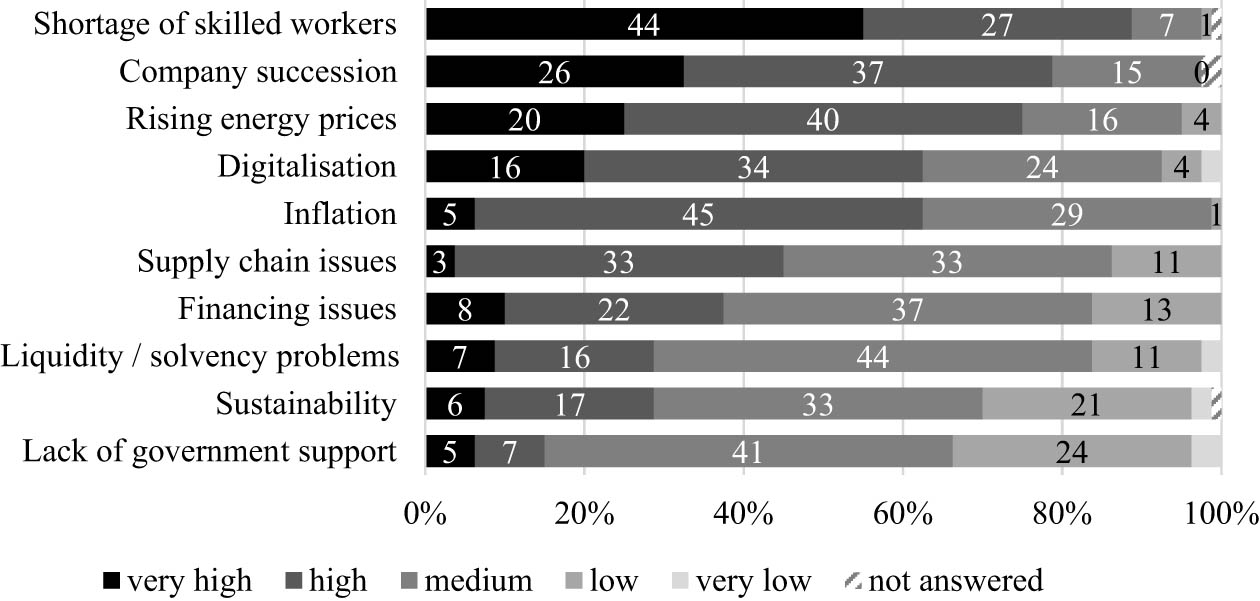
Figure 8
Relevance of the challenges in the SME sector.
Source: Own elaboration.
The other challenges were related to financial considerations, like rising energy prices (75.0%), inflation (62.5%), and digitalisation (62.5%). A “medium” relevance was the most frequently indicated answer for supply chain issues, other financing issues, liquidity/solvency problems, sustainability, and the lack of government support.
6. Discussion and conclusions
The study provides a deeper understanding of the background of M&A activity in the German SME sector and an overview of SME current challenges. By using an empirical approach, we gathered insights from experienced M&A advisors, mainly those supporting sellers or both parties. The target companies were often family owned, mainly from the production, processing, and services sectors (RQ1). The predominant reason for owners to sell their companies was a lack of internal succession, which aligns with prior studies (Chirico et al., 2020; Mickelson & Worley, 2003). This underlines the importance of internal succession planning in SME ownership and management (RQ2). Other key motives included the owner’s professional reorientation and internal company or family conflicts. A majority of the prospective buyers in M&A transactions were SME, which suggests intensified sector consolidation. Private equity firms and foreign buyers also played a significant role (RQ3).
We analysed the key buyers’ motives in German SME takeovers (RQ4). The findings indicate that buyers’ primary motives were expansion needs, including access to new consumers, increased competitiveness, or broadening the product portfolio. These results align with previous studies highlighting similar motives, including the synergy between companies (Diep & Anh, 2020; Agarwal & Kwan, 2018; Alhenawi & Krishnaswami, 2015; Dutordoir et al., 2014), market share growth (Bonardo et al., 2010), competitiveness (Hoberg & Phillips, 2010), product diversification (Arvanitis & Stucki, 2014), and know-how and technologies acquisition (Bonardo et al., 2010).
Our study revealed two additional findings. First, advisors with greater experience in family businesses placed less emphasis on growth as a primary motivation for acquisition. Second, buyer-side advisors perceived owner reorientation as a more critical selling motive than did other advisors. Perceptions of all other buyers’ and sellers’ motives for engaging in M&A remain consistent, regardless of the advisors’ experience in M&A or family business, or their role in M&A. These results highlight both specific advisory dynamics and universal patterns in the deal-making of family firms. Advisors also identified significant challenges facing German SMEs: succession issues, labour shortages, rising energy costs, digitalisation, and inflation. Over half of the respondents believe SMEs will be forced to sell soon, underlining the urgency of strategic and succession planning (RQ5).
This research extends the perspective on M&A motives in the SME sector by examining both the buyer and seller sides. It provides insight into the challenges perceived by objective professionals, such as M&A advisors, and carries several crucial implications for entrepreneurs, sellers, buyers, and advisors. Sellers can utilise this knowledge to better position their businesses and negotiate effectively, while buyers can gain insights into key target characteristics, such as family ownership and sectoral context, which can impact their M&A strategies and due diligence. Advisors can use these insights to understand sellers’ and buyers’ motivations better and provide tailored guidance and support throughout the M&A process.
The study also emphasises the role of succession planning in family-owned SME. Difficulties with internal succession may lead owners to consider selling, reinforcing the need for proactive succession planning to ensure business continuity and long-term sustainability. The literature on SME rarely addresses this topic, especially in the context of M&A, which creates valuable opportunities for further studies.
The main limitation of this study is the low response rate of M&A advisors serving SMEs, likely due to the high workload and the confidential, time-sensitive nature of their work. Reaching this dispersed and highly competitive professional group was challenging, as participation in academic research is often viewed as non-essential or strategically sensitive, even with anonymity ensured. To mitigate this, we collaborated with SME-focused organisations to increase participation. Moreover, the absence of auxiliary data limited our ability to assess non-response bias. However, despite these limitations, the study findings remain internally valid and generalisable to advisors with similar profiles, and offer an original insight by capturing the underrepresented yet objective perspective of M&A advisors in the SME context.
Future research could build on this work by integrating the perspectives of both advisors and SME owners. A deeper exploration of the relationship between SME sector challenges and selling motives may offer comprehensive M&A guidance for SME stakeholders.
Acknowledgments
The authors would like to thank the anonymous referees for their useful comments, which allowed us to increase the value of this article.
Funding information
This research was fully funded by the University of Gdansk.
Author contributions
Anna Blajer-Gołębiewska – 30%; Magdalena Markiewicz – 30%; and Heike Stolte – 40%.
Conflict of interest statement
The authors declare that the research was conducted in the absence of any commercial or financial relationships that could be construed as a potential conflict of interest.