
Table 1.
Characteristics of the studied population
| Description | Number of indications as a percentage (in %) | |
|---|---|---|
| Gender of respondents | Women | 44.0 |
| Men | 56.0 | |
| Up to 30 years old | 58.5 | |
| Age structure of the respondents | From 31 years old to 40 years old | 17.5 |
| From 41 years old to 50 years old | 13.0 | |
| From 51 years old to 60 years old | 7.0 | |
| Over 60 years old | 4.0 | |
| Workplace type* | Executive | 73.5 |
| Managerial | 28.5 | |
| The nature of the work performed* | Physical work | 54.5 |
| Mental work | 65.5 |
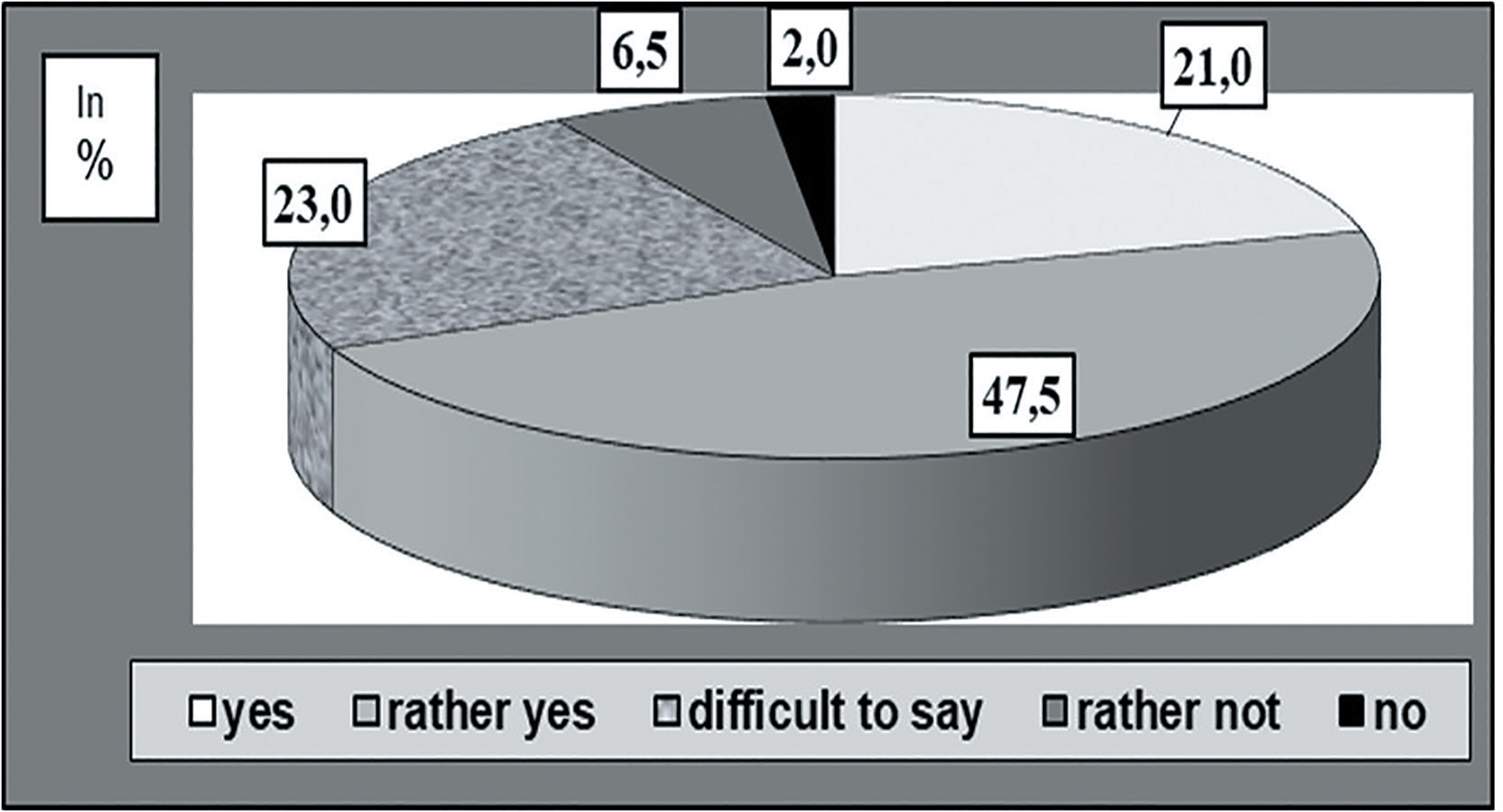
Figure 1.
Respondents’ opinions on the Penc’s paradigm element focusing on developing a business concept that is efficiently managed by the enterprise and goals achieved through distinctive capabilities.
Source: own study based on empirical research.
Table 2.
Respondents’ opinions on the element of the Penc paradigm focusing on developing a business concept that is efficiently managed by the enterprise and goals achieved with the help of distinctive capabilities – from the perspective of the type of job position in the enterprise/organization in which the respondents are employed
| Workplace type | Number of indications as a percentage (in %) | ||||
|---|---|---|---|---|---|
| Yes | Rather yes | Difficult to say | Rather not | No | |
| Executive | 19.9 | 44.5 | 27.4 | 6.1 | 2.1 |
| Managerial | 22.8 | 56.1 | 12.3 | 7.0 | 1.8 |
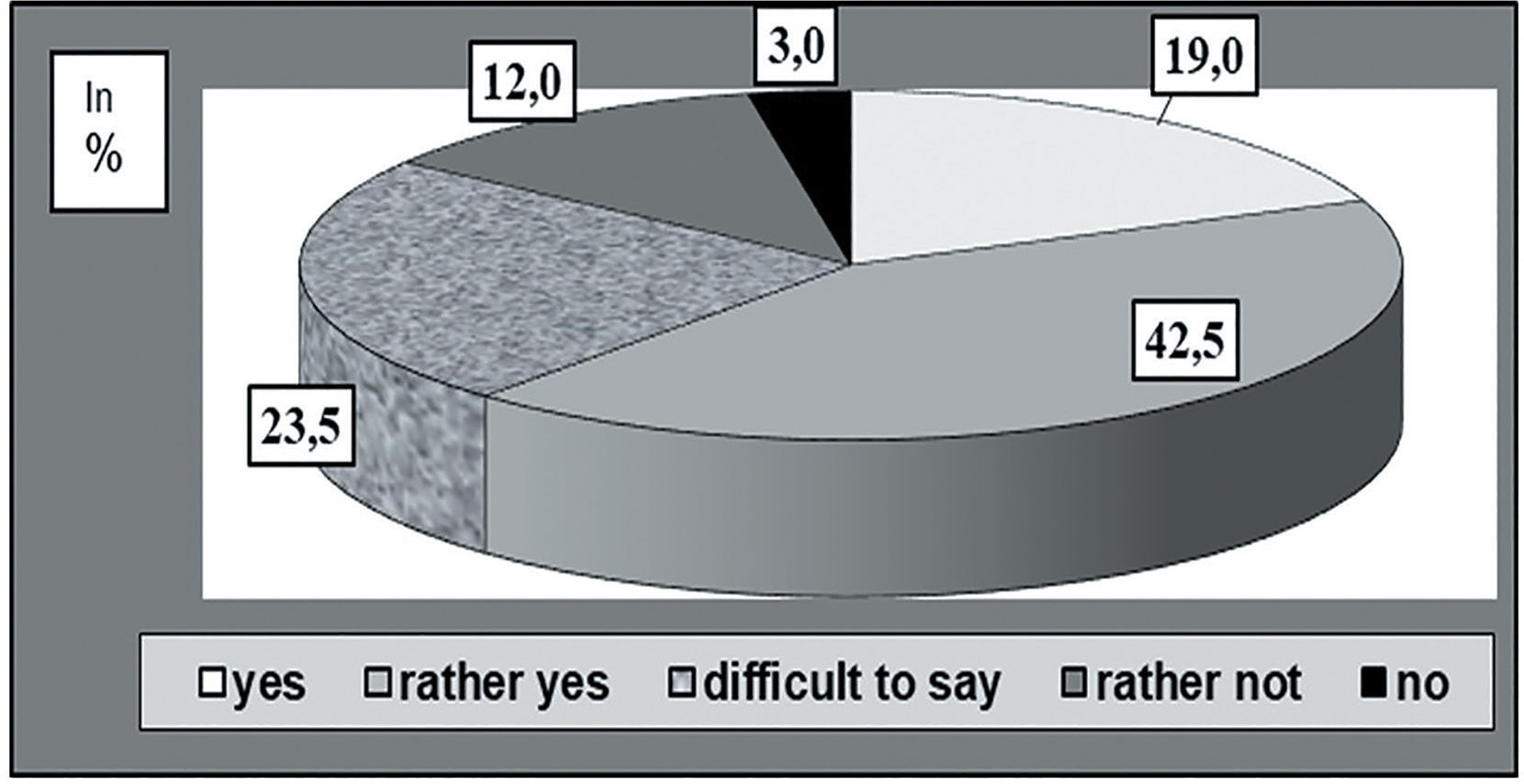
Figure 2.
Respondents’ opinions on the element of the Penc’s paradigm focusing on introducing changes and innovations.
Source: own study based on empirical research.
Table 3.
Respondents’ opinions on the element of the Penc paradigm focusing on introducing changes and innovations – from the perspective of the type of job position in the enterprise/organization in which the respondents are employed
| Workplace type | Number of indications as a percentage (in %) | ||||
|---|---|---|---|---|---|
| Yes | Rather yes | Difficult to say | Rather not | No | |
| Executive | 17.8 | 41.8 | 24.7 | 11.6 | 4.1 |
| Managerial | 21.0 | 45.6 | 21.1 | 12.3 | – |
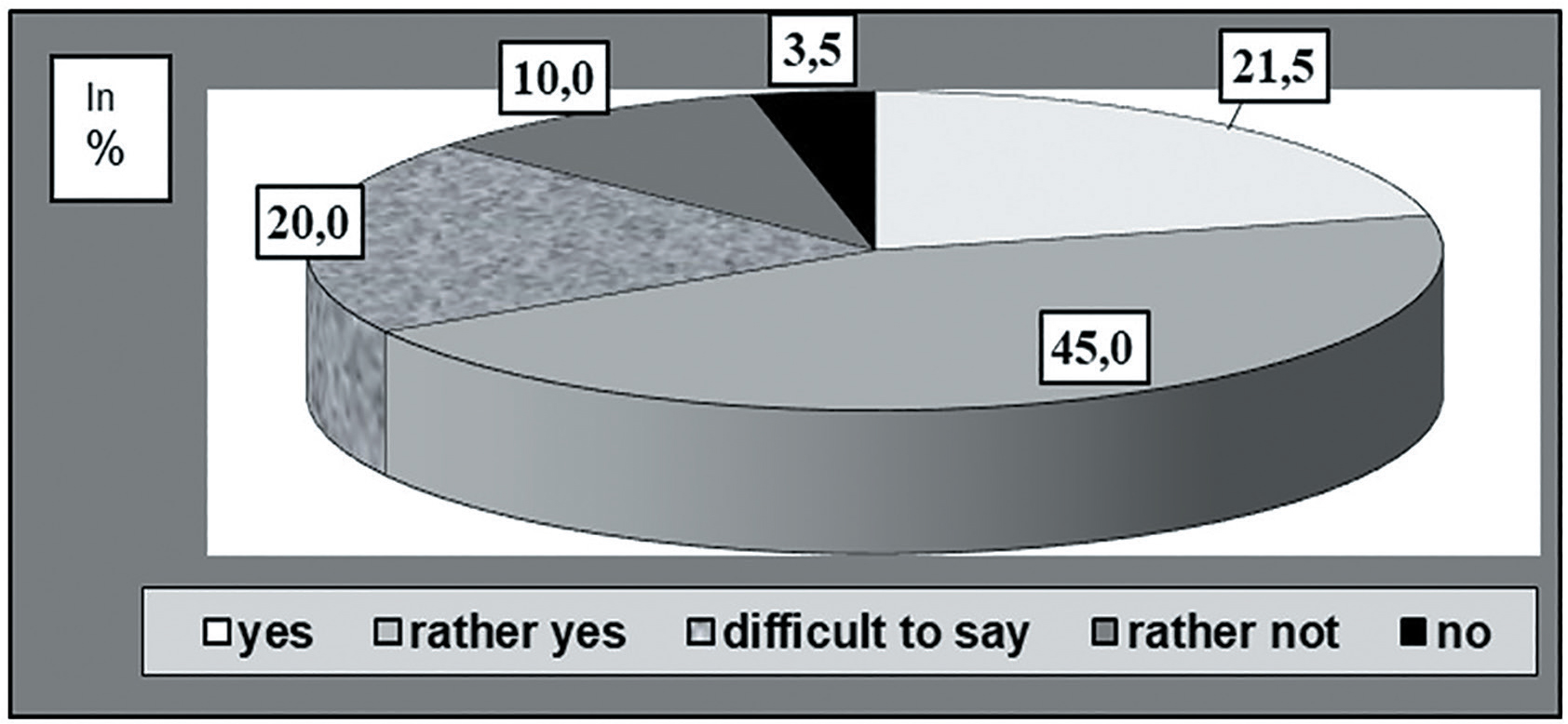
Figure 3.
Respondents’ opinions on the element of the Penc’s paradigm focused on the ability of the enterprise to adapt to the environment, among others, by using the rapid learning of the organization.
Source: own study based on empirical research.
Table 4.
Respondents’ opinions on the element of the paradigm according to Penc focused on the ability of the enterprise to adapt to the environment, among others, using the rapid learning of the organization – from the perspective of the type of job position held in the enterprise/organization
| Workplace type | Number of indications as a percentage (in %) | ||||
|---|---|---|---|---|---|
| Yes | Rather yes | Difficult to say | Rather not | No | |
| Executive | 19.9 | 45.2 | 21.2 | 11.0 | 2.7 |
| Managerial | 24.6 | 45.6 | 17.5 | 7.0 | 5.3 |
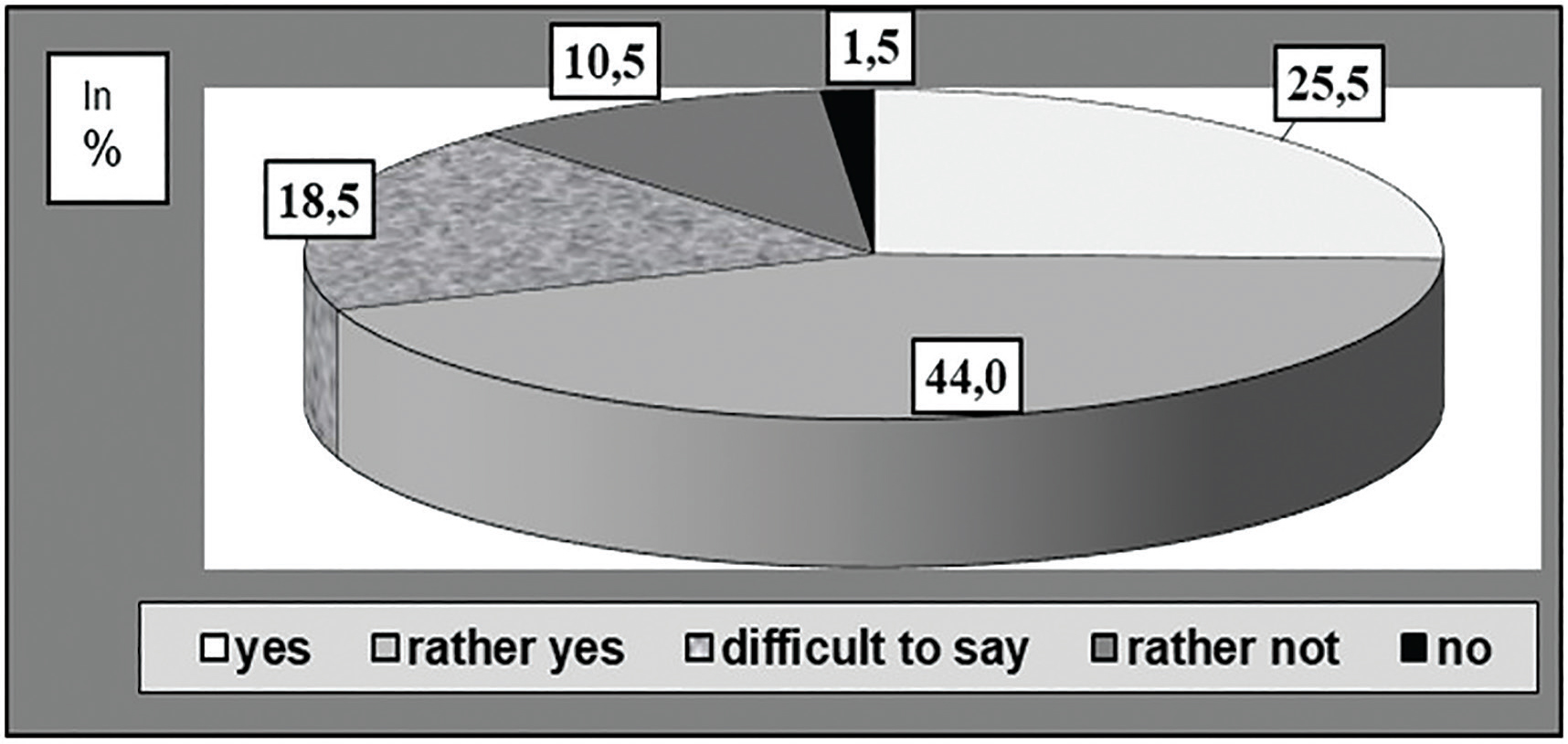
Figure 4.
Respondents’ opinions on the element of the Penc’s paradigm focused on the flexibility of thinking and acting in the enterprise.
Source: own study based on empirical research.
Table 5.
Respondents’ opinions on the element of the Penc’s paradigm focused on flexibility of thinking and acting in an enterprise – approach from the perspective of the type of job position held in the enterprise/organization
| Workplace type | Number of indications as a percentage (in %) | ||||
|---|---|---|---|---|---|
| Yes | Rather yes | Difficult to say | Rather not | No | |
| Executive | 21.9 | 45.9 | 19.9 | 10.9 | 1.4 |
| Managerial | 33.3 | 42.1 | 14.0 | 8.8 | 1.8 |
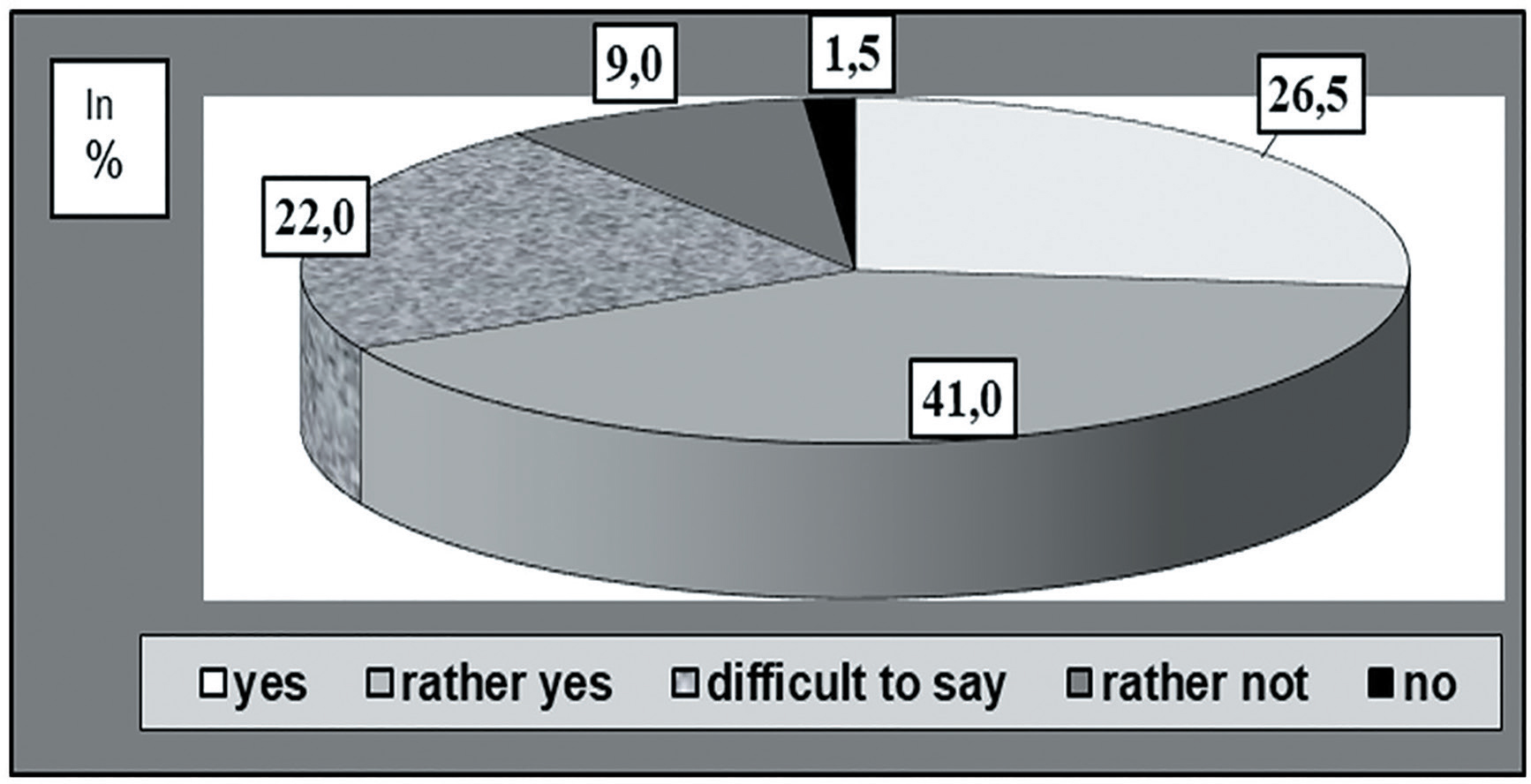
Figure 5.
Respondents’ opinions on the Penc’s paradigm element focused on employee well-being and corporate social responsibility.
Source: own study based on empirical research.
Table 6.
Respondents’ opinions on the element of the Penc’s paradigm focused on employee well-being and corporate social responsibility – from the perspective of the type of job position held in the enterprise/organization
| Workplace type | Number of indications as a percentage (in %) | ||||
|---|---|---|---|---|---|
| Yes | Rather yes | Difficult to say | Rather not | No | |
| Executive | 26.7 | 37.7 | 23.3 | 10.3 | 2.0 |
| Managerial | 24.6 | 52.6 | 17.5 | 5.3 | – |
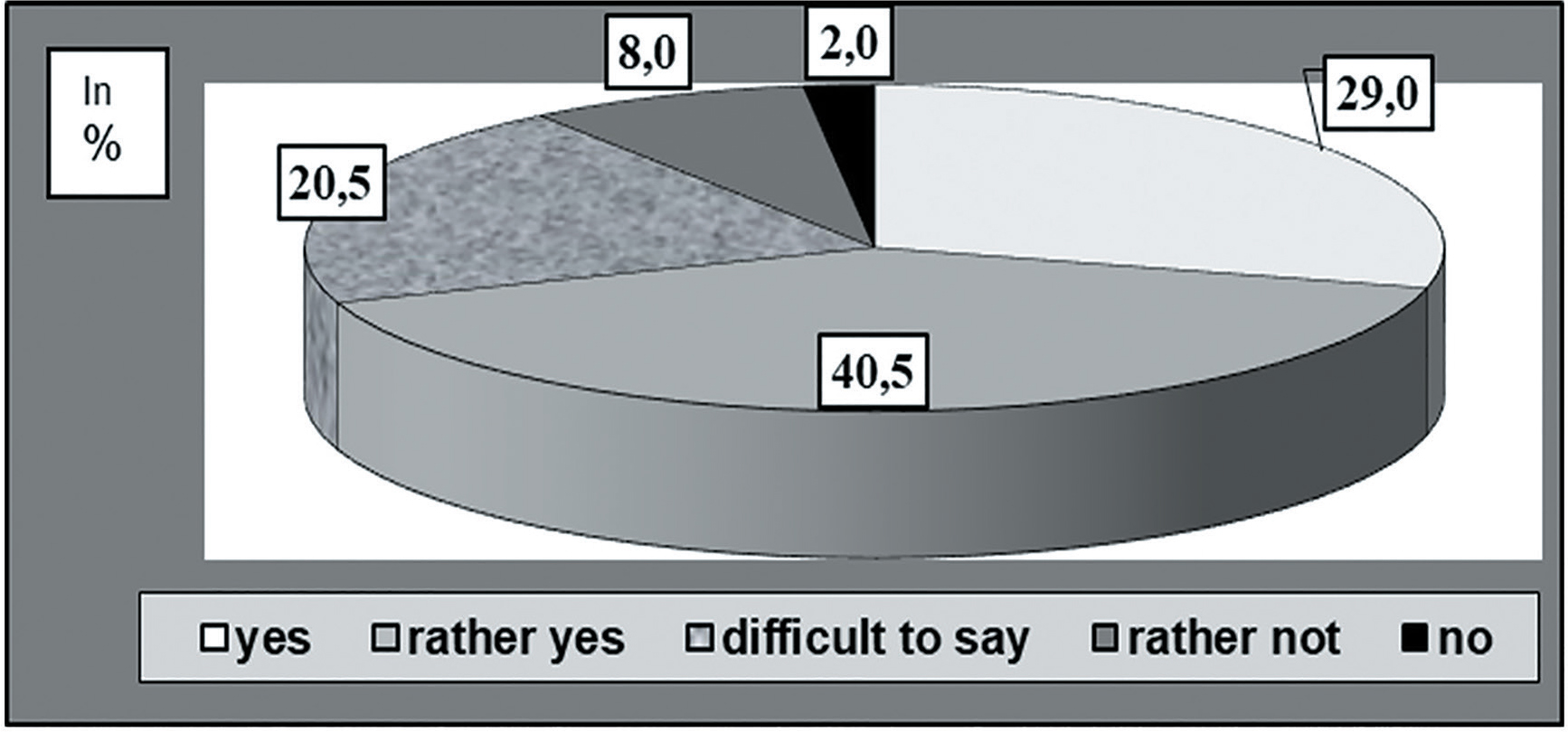
Figure 6.
Respondents’ opinion on the element of the Penc’s paradigm focused on the aspect of corporate identity in a broader context.
Source: own study based on empirical research.
Table 7.
Respondents’ opinion on the element of the paradigm proposed by Penc focused on the aspect of corporate identity in a broader context – from the perspective of the type of job position held in the enterprise/organization
| Workplace type | Number of indications as a percentage (in %) | ||||
|---|---|---|---|---|---|
| Yes | Rather yes | Difficult to say | Rather not | No | |
| Executive | 27.4 | 40.4 | 20.5 | 9.6 | 2.1 |
| Managerial | 31.6 | 43.9 | 19.3 | 3.5 | 1.7 |
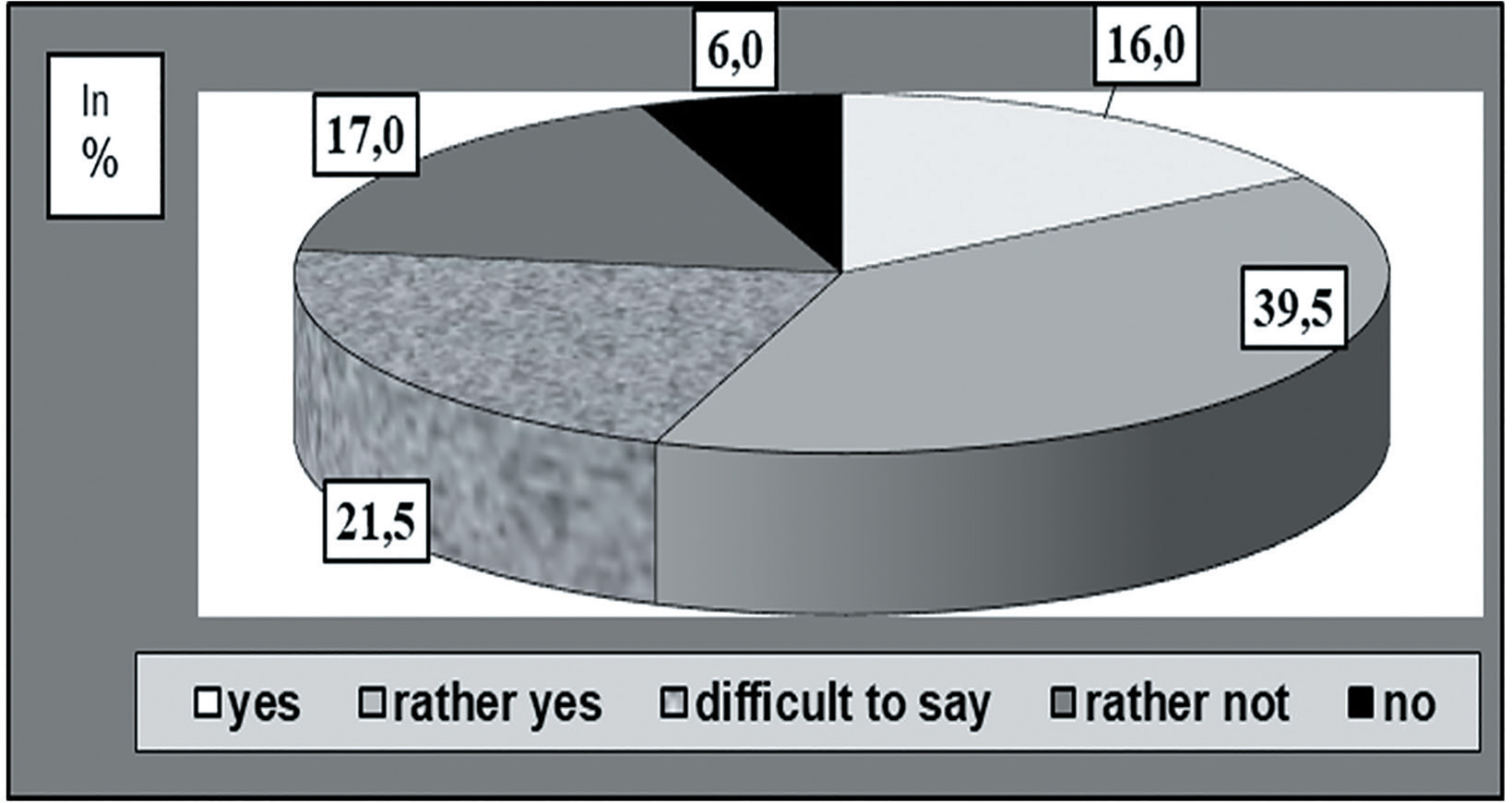
Figure 7.
Respondents’ opinions on the element of the Penc’s paradigm focused on cocreating the enterprise’s strategy with employees and their participation in decision-making.
Source: own study based on empirical research.
Table 8.
Respondents’ opinions on the element of the paradigm according to Penc focused on cocreating the enterprise’s strategy with employees and their participation in decision-making – from the perspective of the type of job position held in the enterprise/organization
| Workplace type | Number of indications as a percentage (in %) | ||||
|---|---|---|---|---|---|
| Yes | Rather yes | Difficult to say | Rather not | No | |
| Executive | 13.0 | 40.4 | 24.0 | 16.4 | 6.2 |
| Managerial | 22.8 | 36.8 | 17.6 | 17.5 | 5.3 |