
1. Introduction
It is hard to disagree with the statement that every economic decision involves risk. It should also be mentioned that risk may not only have a pejorative meaning for the organization, but it can also be an opportunity. That is why it is so important that these risks are a controlled factor. A systematic approach to opportunities and threats may be a prerequisite for maintaining business continuity in the conditions of risk materialization. Such activities are the basis for the implementation and implementation of management control.
Implementation of standards and a systemic approach to management control is one of the basic tasks for public finance sector units. Experience in this area shows that the role of management is crucial in management control for the effective functioning of the organization. Management control is the process of monitoring, evaluating, and regulating the activities of an organization in order to achieve certain goals. Management plays a vital role in all stages of this process through goal setting, planning, monitoring, assessment, anomaly identification, corrective action, communication, and continuous improvement [Kuc 2009, p. 340].
The above theses were the leitmotiv of the research carried out as part of this article. The main research objective was to analyze and assess the impact of the strategic use of management control in the management of a state university. The strategic level of management refers to the highest decision-making level in the organization. At this level, management focuses on setting a vision, developing strategic goals and planning actions to achieve these goals.
The author of this article has been directly analyzing the opportunities and threats resulting from activities undertaken as part of the management control system at the university since 2014, acting as the Dean’s Coordinator for Management Control and the Rector’s Plenipotentiary for Management Control. The author cooperates with management control coordinators at other universities across the country on an ongoing basis, also as part of the implementation of management control self-assessment. The basic conclusion from these analyzes in the context of the subject of the article is that the identification and analysis of risk factors affecting the level of management control is often not adequate to the level of management, and thus the implementation of management control tasks is not appropriate in relation to the scope of responsibility of the management.
The undertaken research problem is important for the risk in the decision-making process from several points of view. Firstly, public finance sector units, especially universities, operate in a demanding, dynamic internal and external environment, including legal advice. An efficiently managed unit of the public finance sector is expected to effectively perform statutory tasks while minimizing operating costs so as to meet the expectations of its stakeholders. Secondly, the effectiveness of management activities in conditions of limited resources forces taking actions related to risks in a conscious, that is, controlled, manner. The measure of the quality of control of the risk management process, as the results of the presented research show, is the strategic approach to the conclusions of the analyzes carried out as part of the assessment of the organization’s environment, for example, as part of the self-assessment of the management control system.
2. Literature review
2.1. University as a unit of the public finance sector in Poland
Until 1998, there was no definition of the public sector in Polish law, nor were there any general provisions uniformly regulating even the basic principles of managing public funds and public sector assets. The public finance sector was defined only in the Act of November 26, 1998, on Public Finance. Currently, the subjective scope of the public finance sector is defined in Art. 9 of the Act of August 27, 2009 on Public Finance [The Polish Act of August 27, 2009].
Article 9 of the Public Finance Act (PFA) of 2009, as well as its equivalent Art. 4 PFA of 2005, defines the concept of the public finance sector by formulating a catalog of entities forming this sector. The concept of the public finance sector has been present in Polish financial law since January 1, 1999, when the PFA of 1998 entered into force. The purpose of distinguishing this sector is primarily related to the need to subject it to separate rules with common and forms of management, planning, and balancing of public funds.
The public finance sector in Poland consists of [The Polish Act of August 27, 2009]:
(1) Public authorities, including government administration bodies, state control, and law enforcement bodies, as well as courts and tribunals;
(2) Local government units and their associations;
(3) Metropolitan associations;
(4) Budgetary units;
(5) Local government budgetary establishments;
(6) Executive agencies;
(7) Budget economy institutions;
(8) State earmarked funds;
(9) The Social Insurance Institution and the funds managed by it as well as the Agricultural Social Insurance Fund and the funds managed by the President of the Agricultural Social Insurance Fund;
(10) National Health Fund;
(11) Independent public health care facilities;
(12) Public universities;
(13) Polish Academy of Sciences and its organizational units;
(14) State and local government cultural institutions;
(15) Other state or local government legal persons established on the basis of separate acts to perform public tasks, excluding enterprises, research institutes, institutes operating within the Łukasiewicz Research Network, banks and commercial law companies;
(16) Bank Guarantee Fund.
A uniform legal regime covers the rights and obligations within the public finance sector, general principles are also common to the public sector, in particular: the principle of legality of collecting and spending public funds, non-funding, the predictive nature of income, and the directive nature of expenditure, the principle of managing public funds (collecting and revenues as well as making expenses and expenditures) and the principle of liability for violation of public finance discipline [Kulińska and Dornfeld, 2021, p. 11].
In Poland, state universities are considered units of the public finance sector. This means that they are financed from the state budget or other public sources, such as subsidies or subsidies. Universities that meet the conditions specified in ministerial acts can apply for subsidies under various programs supporting their research activities, such as the “Excellence Initiative – Research University” competition.
In the Polish legal system, universities as units of the public finance sector are subject to specific provisions and regulations concerning public finances. As such, they must comply with the PFA, which regulates, for example, principles of financial management of public finance sector units in Poland [The Polish Act of May 10, 2018].
2.2. The role of management control in university management
One of the improvement tasks set for public finance sector units is the implementation of standards and a systemic approach to management control. It is included in the new legal order, introduced by the Act of August 27, 2009 on Public Finance [Strojny, 2013, p. 115]. In Art. 9, the entities to which the Act applies have been indicated. These include public universities, the Polish Academy of Science, its organizational units, state, and local government cultural institutions. According to Art. 68 of the aforementioned Act, management control requires taking actions to ensure the implementation of objectives and tasks in a lawful, effective, economical, and timely manner [Sójkowska and Lenic, 2022, p. 3].
The fulfillment of the statutory obligation of management control is also supported by other legal regulations, in particular: the Accounting Act [The Polish Act of September 29, 1994], the Labour Code [The Polish Act of June 26, 1974], the Public Procurement Law [The Polish Act of September 11, 2019] or provisions regulating issues related to the protection of personal data [The Polish Act of May 10, 2018].
The Rector is responsible for the functioning of management control in a public higher education institution. It is not possible to entrust the responsibility for the proper functioning of management control in an entity to other persons, as the actions taken to ensure management control do not fall within the concept of financial management of a public finance sector entity.
Management control at the university consists of all activities undertaken to ensure the implementation of the goals and tasks of the university in an effective, economical, timely, and legal manner. The Rector defines the method of organization and operation of the management control system at the university in the management control regulations and may entrust the coordination of activities in the field of management control at the University to a specific person or team [The Polish Act of July 27, 2005; University of Bielsko-Biala Statute, 2019].
Responsibilities in the field of management control may be imposed on each employee of a public finance sector unit (e.g., development of a draft procedure for the circulation of accounting documents by the unit’s chief accountant), while management control understood as all activities is the sole responsibility of the unit’s manager. It is also worth emphasizing that the effective functioning of management control requires active action by the head of the unit and all employees, especially those employed in managerial positions [University of Bielsko-Biala Statute, 2019].
2.3. The role of self-assessment in the management control system
Carrying out a self-assessment constitutes the implementation of one of the management control standards (MCS). Such self-assessment is a process in which the functioning of management control is assessed by employees and management of the entity. It is a tool that can give a general picture of the functioning of management control in a relatively short time [Krajewska, 2016; Šiška, 2015]. Self-assessment may be of particular importance for those entities that do not have other management control assessment tools, for example, internal audit, or where audit resources may be considered insufficient [Strauss and Zecher, 2013, p. 234; Inamdar, 2012].
The results of the self-assessment may be one of the sources of knowledge on the functioning of management control, which is the basis for signing the statement on the status of management control. One of the methods of self-assessment is the use of surveys (questionnaires).
The management control system should be flexible and able to adapt to the changing conditions and requirements of the organization [. Continuous improvement of the system is essential to maintain its effectiveness [Simons, 1995, pp. 35–37]. Therefore, a very important element of the evaluation of the management control system is the assessment of the effectiveness of internal and external communication [Spencer Pickett, 2001, pp. 261-263]. Effective communication within the management control system is necessary to ensure understanding and involvement of all stakeholders in the management process of a public university [Merchant and Van der Stede, 2007, pp. 10–11; Humel-Maciewiczak and Kruczek, 2020].
2.4. European model of improving public sector organizations through self-assessment - the common assessment framework (CAF) model
It is also worth mentioning that in the last months of 2023, the Ministry of Finance, in accordance with the communiqué to Article 69 (3) and (4) of the PFA, plans to publish new MCS for public finance sector entities, taking into account COSO 2013 and to prepare new self-assessment guidelines management control and risk management. In the new standards, the self-assessment task will be carried out using the CAF.
Carrying out the self-assessment according to the CAF model, similar to the use of questionnaires, is the implementation of the management control standard “E.20 Self-assessment.” Contrary to the information obtained through the commonly used surveys, the information obtained through the self-assessment carried out according to the CAF model, however, is not only a subjective sum of employees’ opinions. It is the result of cooperation between the parties involved and, importantly, it is based on concrete evidence. Thanks to this, it is comprehensive and reliable, and its results can effectively contribute to the improvement of the services provided, the operation of the organization, as well as the satisfaction of employees [Prorok and Parzer, 2021, pp. 23–25].
The essence of the CAF model is the organization’s self-assessment, which enables a comprehensive review of its functioning in terms of 9 criteria (Figure 1). Criteria 1–5 (Potential criteria) refer to management practices in the organization. They define everything an organization does and how it approaches tasks to achieve the desired results. In criteria 6-9, performance in terms of citizens/customers, employees, social responsibility and key performance is measured using perception and performance measures. The structure of the CAF model defines the main aspects that should be considered in any organizational analysis. The results of the self-assessment are used for the implementation of improvement activities [Civil Service Department, 2020, pp. 2–3].
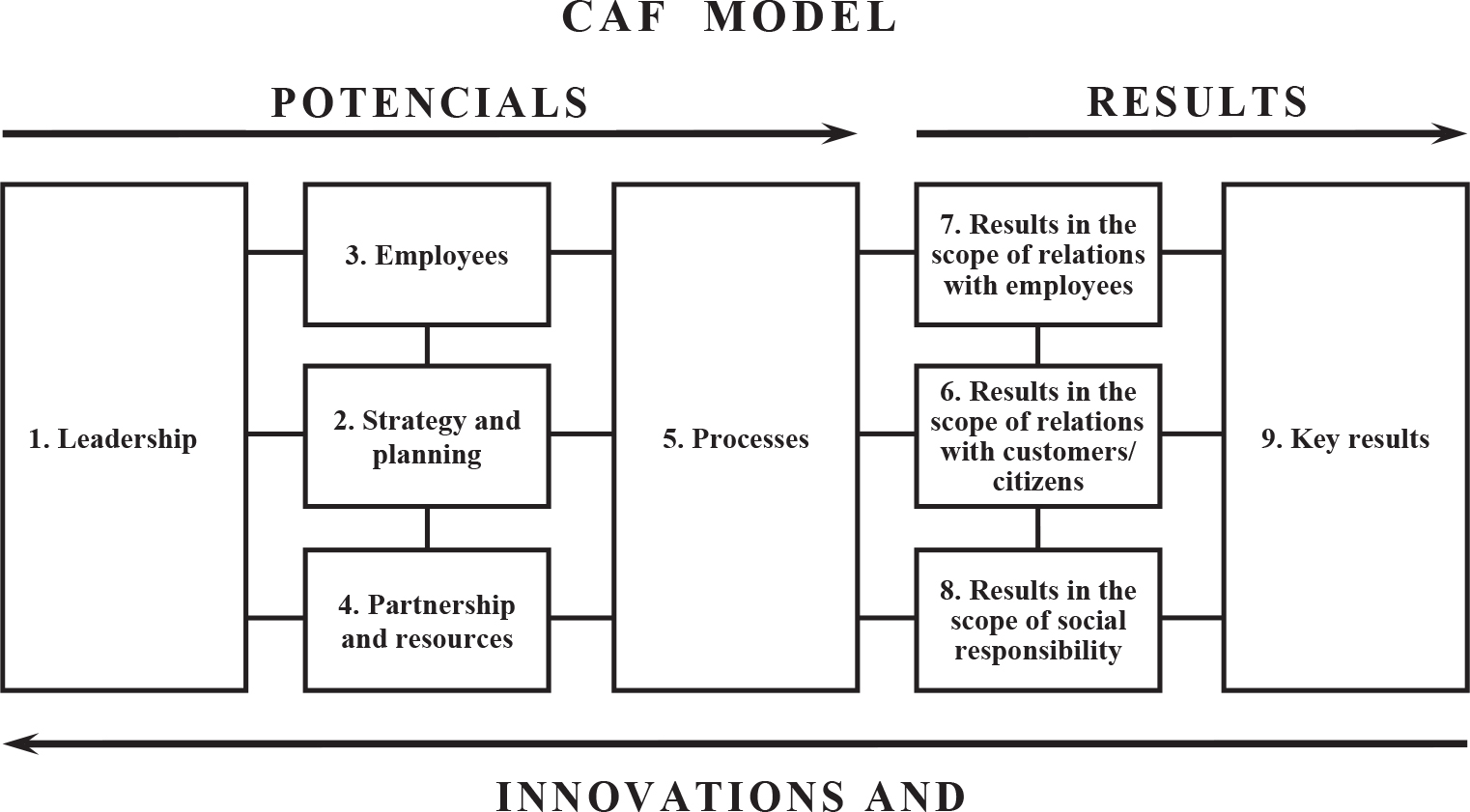
Figure 1.
CAF model structure.
Source: Civil Service Department [2020], CAF, European model for improving public sector organizations through self-assessment, Warsaw. P. 10. CAF, common assessment framework.
3. Research methodology
The research methodology was selected in terms of theses presented in the introduction to the article about the key importance of management and communication in the process of improving the management control system. The analysis of the research results was preceded by a review of the literature on the subject.
The article presents the results of research that was carried out as part of the management control system at the University of Bielsko-Biała in the years 2015–2023. The research was quantitative (questionnaire) and qualitative (interviews, participant observations, and analysis of the content of the system documentation).
First, the results of the survey carried out as part of the “Self-assessment” standard, evaluating the management control system at the university in the years 2015–2022 in selected areas, were presented. The participants of the survey were persons holding managerial functions in the University’s organizational units and divisions. The research process also used forms for monitoring the management control system in individual divisions and organizational units in terms of the implementation of strategic goals. The research was also carried out using the method of deduction and synthesis of information sets generated in reports and surveys carried out under the MCS applicable at the University of Bielsko-Biala.
The article also includes references to the results of an internal audit of selected elements of management control, which was conducted in 2024.
4. Research results
The results of the research carried out using the self-assessment forms of the management control system for the period 2015–2021 indicate that the use of the self-assessment survey has or should have an impact on management decisions and can therefore effectively implement the principles of continuous improvement of the organization. The following part of the article presents the results of the self-assessment survey in the areas that correspond to the following selected MCS:
2 – professional competence;
3 – organizational structure;
7, 8, 9 – risk identification and analysis, risk response;
10 – documenting the management control system;
17 – internal communication;
18 – external communication;
22 – obtaining assurance on the state of management control.
Such a selection of survey areas is crucial from the point of view of the theses set out in the introduction to the article, which indicated the key importance of the management’s participation in creating the framework and objectives of the management control system, as well as proper communication, as a condition for effective internal and external information. Below are the results of the survey in the areas mentioned.
The analysis of the results of the survey in the area of training shows that in the analyzed period the number of people participating in training raising qualifications necessary to perform duties resulting from the performed work increased by 20% (Figure 2).
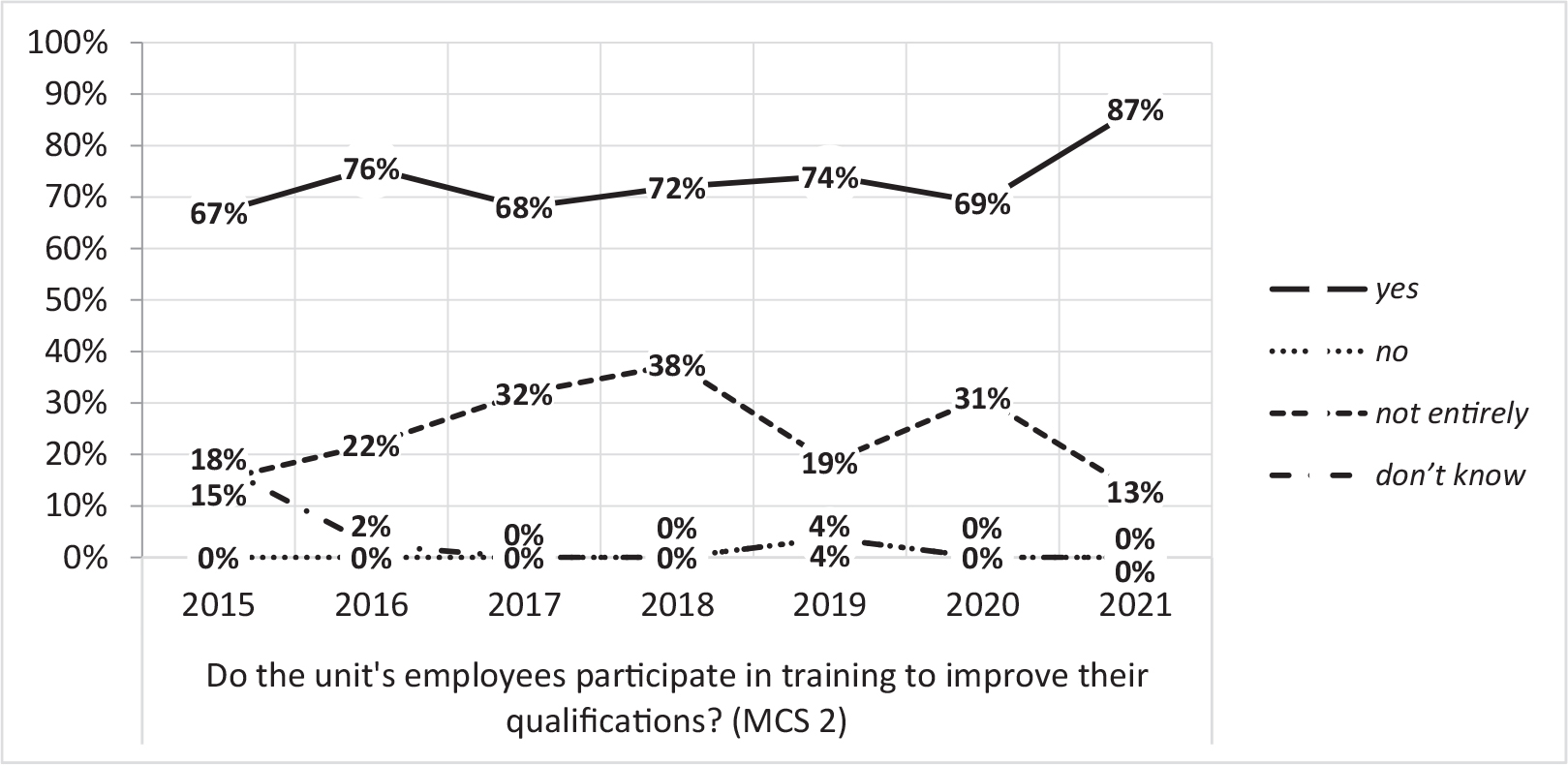
Figure 2.
Chart of answers to the question about participation in training (percentage of responses in the years 2015-2021).
Source: Own study.
The analysis of the results of the questionnaire survey in the area of effectiveness and adaptation to the implementation of the objectives of the organizational structure shows that in the analyzed period, the number of people who positively assess the adaptation of the organizational structure of the university to the implementation of the objectives and the changing environment by 13% (Figure 3).
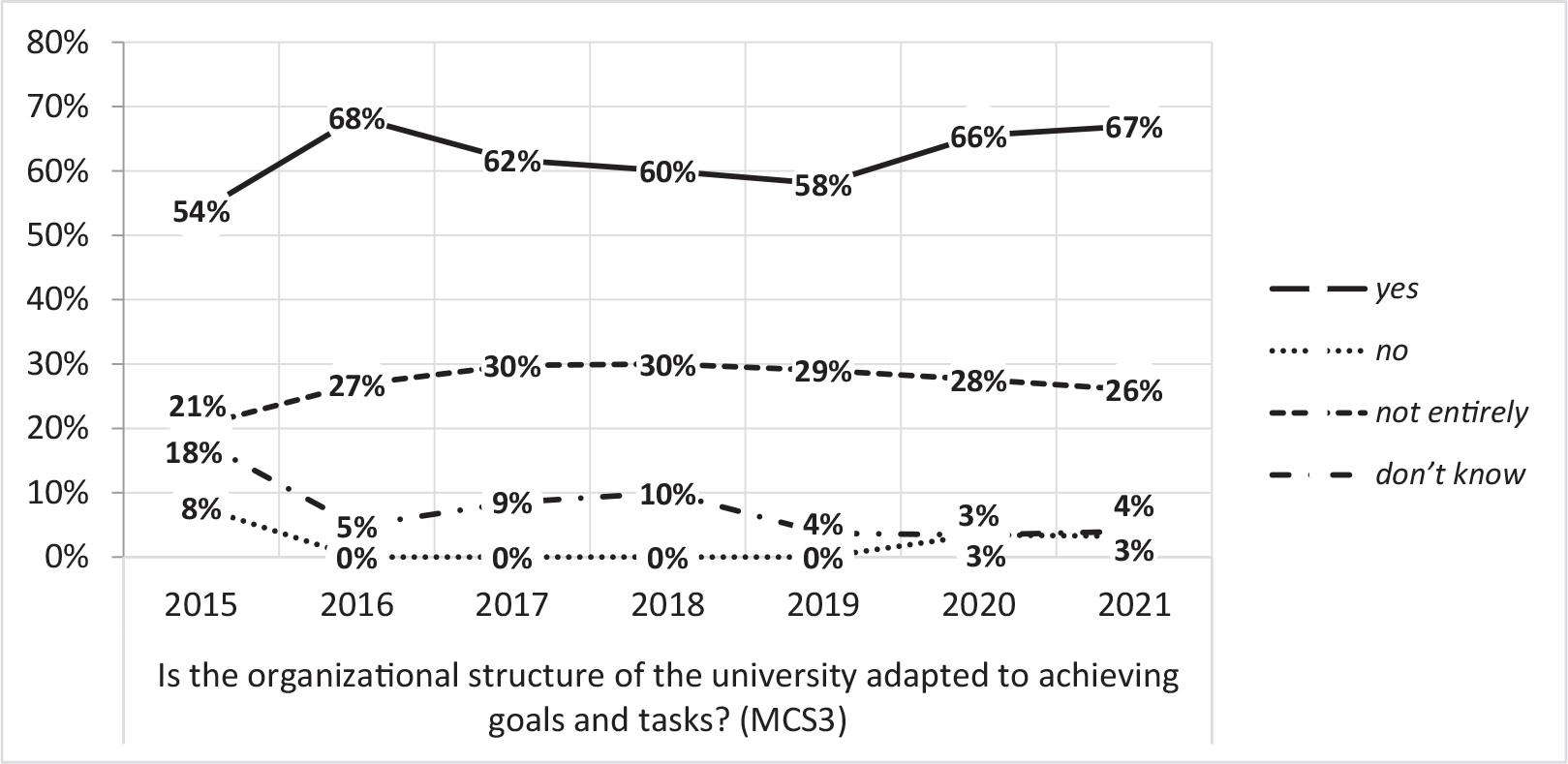
Figure 3.
Is the organizational structure of the university adapted to achieving goals and tasks (percentage of responses in the years 2015–2021).
Source: Own study.
The analysis of the results of the form survey (questionnaire) in the area of risk management in projects shows low awareness of the functioning of this type of approach to identifying threats related to this type of activities. Throughout the entire research period, only 50%–60% of the respondents showed knowledge of risk management in projects (Figure 4).
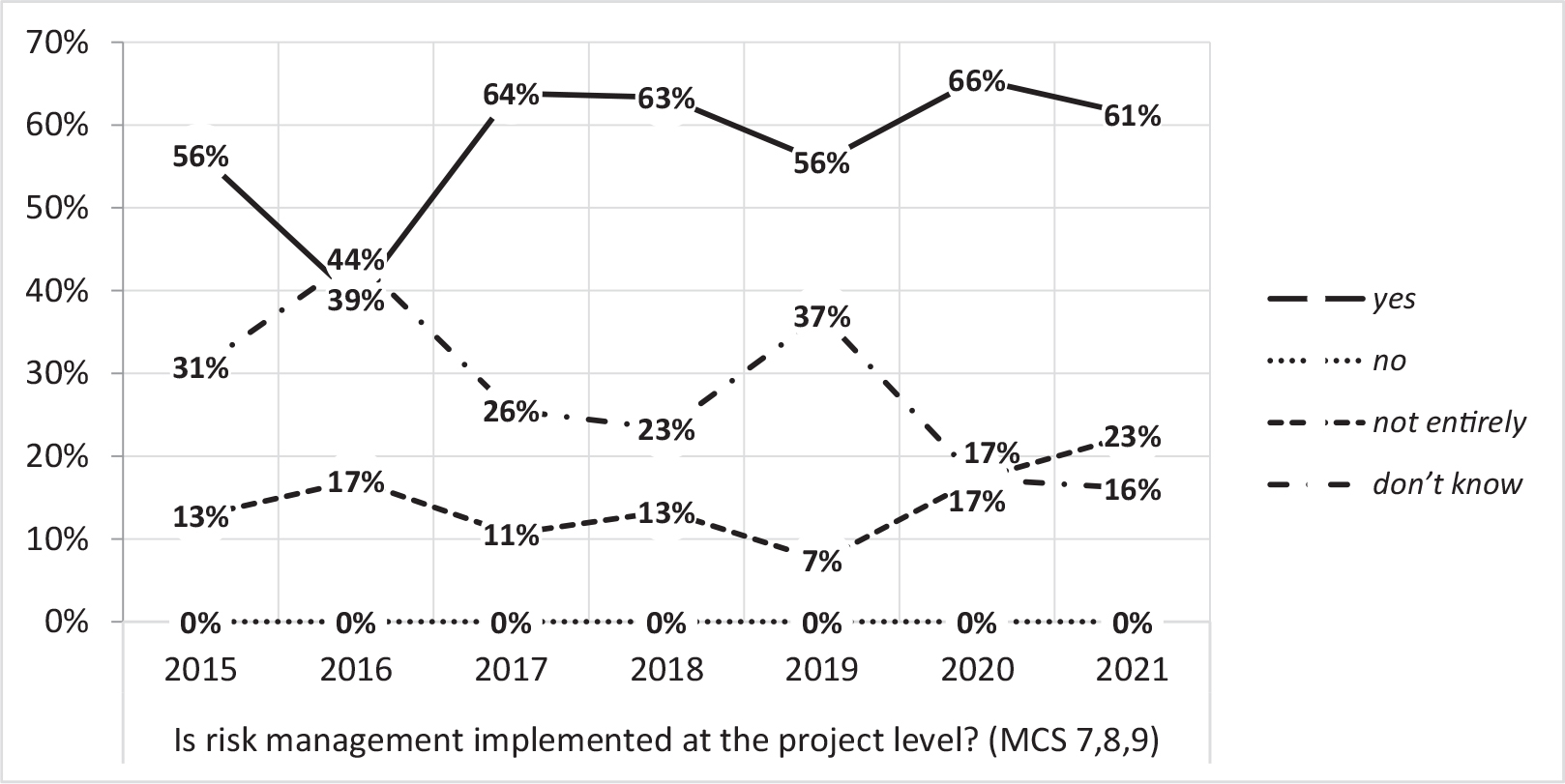
Figure 4.
Graph of answers to the question about risk management in projects (percentage of responses in the years 2015–2021).
Source: Own study.
The results of the survey in the areas related to internal and external communication show a significant decrease in the percentage of respondents indicating that communication is effective in both cases. In the case of internal communication, only in the years 2019-2021, it was a decrease (positive answers) by 15%. In the case of external communications, a decrease of 20% over the same period (Figures 5 and 6).
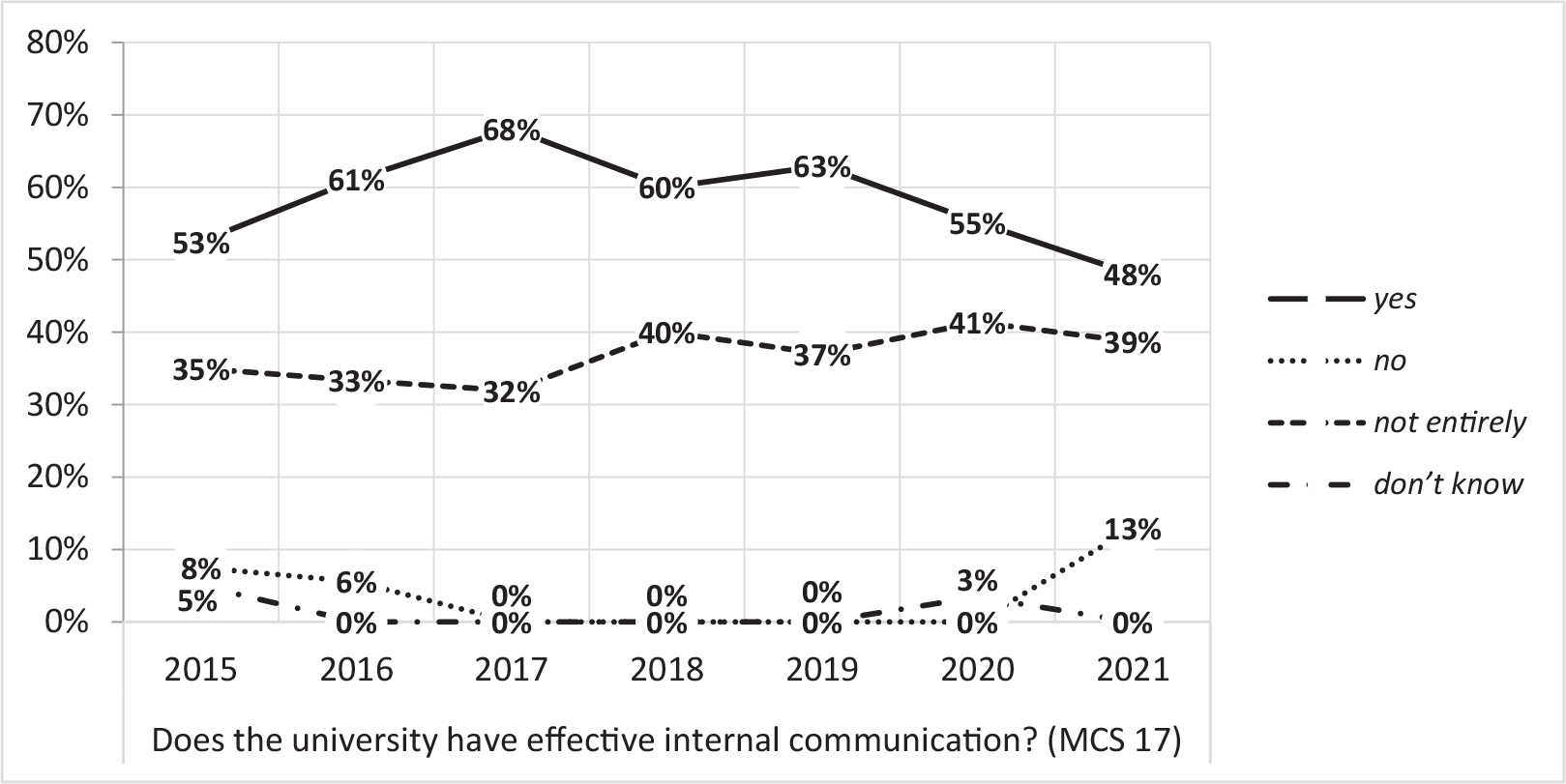
Figure 5.
Graph of answers to the question about effective internal communication (percentage of responses in the years 2015–2021).
Source: Own study.
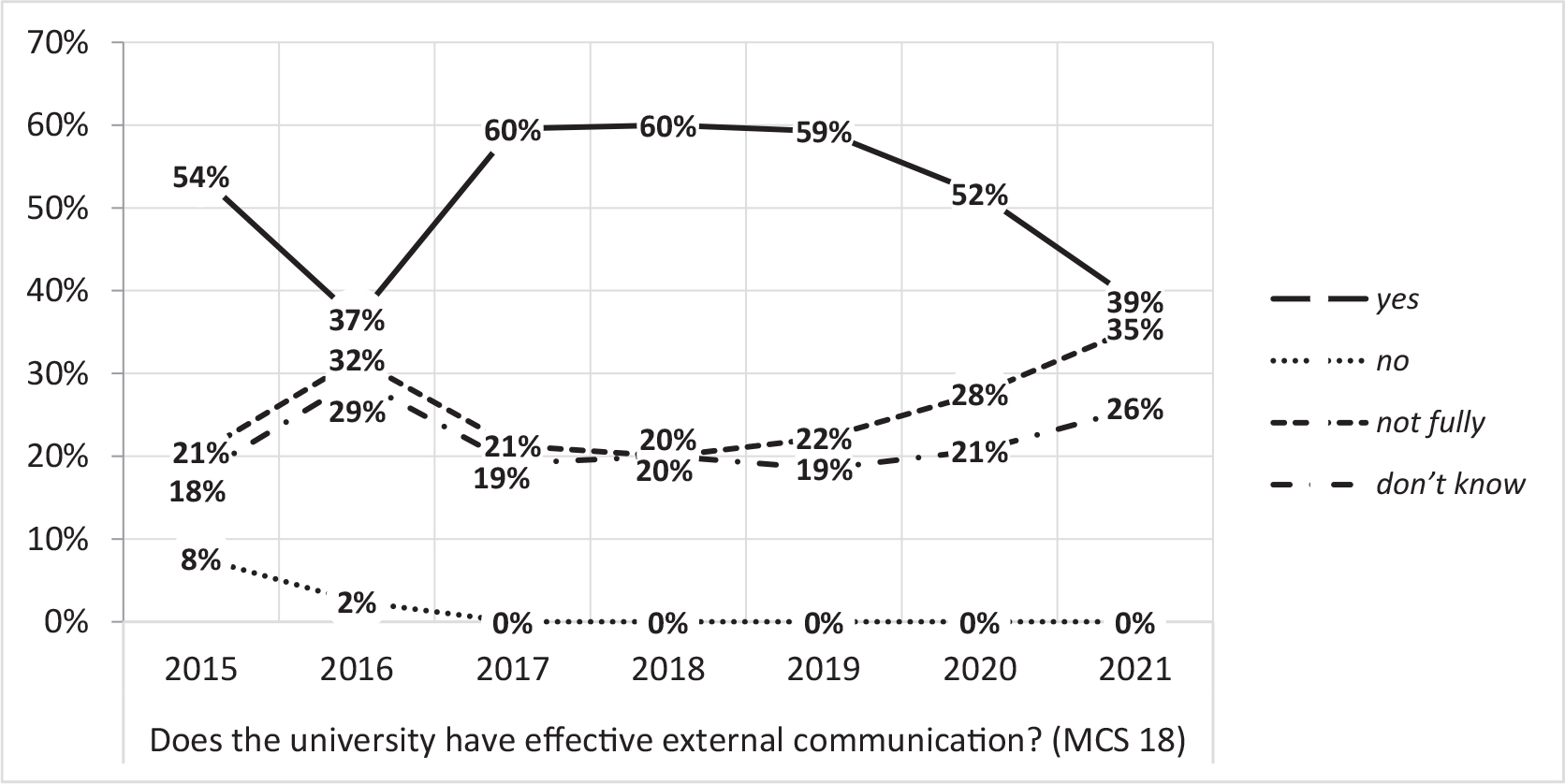
Figure 6.
Graph of answers to the question about effective external communication (percentage of responses in the years 2015-2021).
Source: Own study.
Interesting in the context of the theses presented in the introduction to the article are also the results of research showing, on the one hand, the awareness of the importance of management control and, on the other hand, the willingness to co-decide about its shape.
The results of the survey in areas related to the knowledge of rules and management control show, on the one hand, a large (35% in 2021) percentage of people admitting that they do not fully understand the principles of management control, and on the other hand, a large percentage of respondents claim that they do not see the need to shape the rules management controls that would be fully understood by them (Figures 7 and 8).
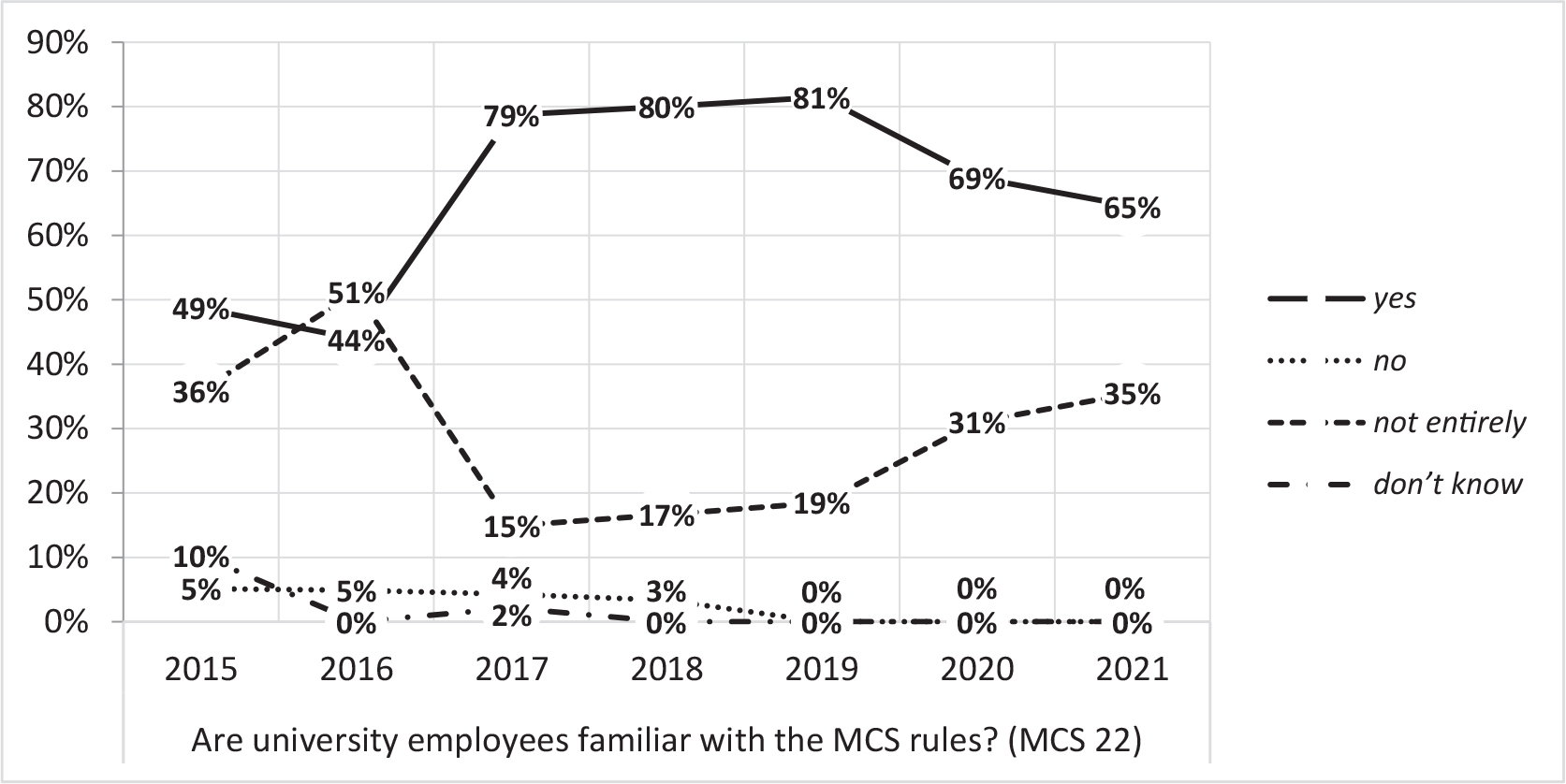
Figure 7.
Chart of answers to the question about knowledge of management control principles (percentage of responses in the years 2015–2021).
Source: Own study.
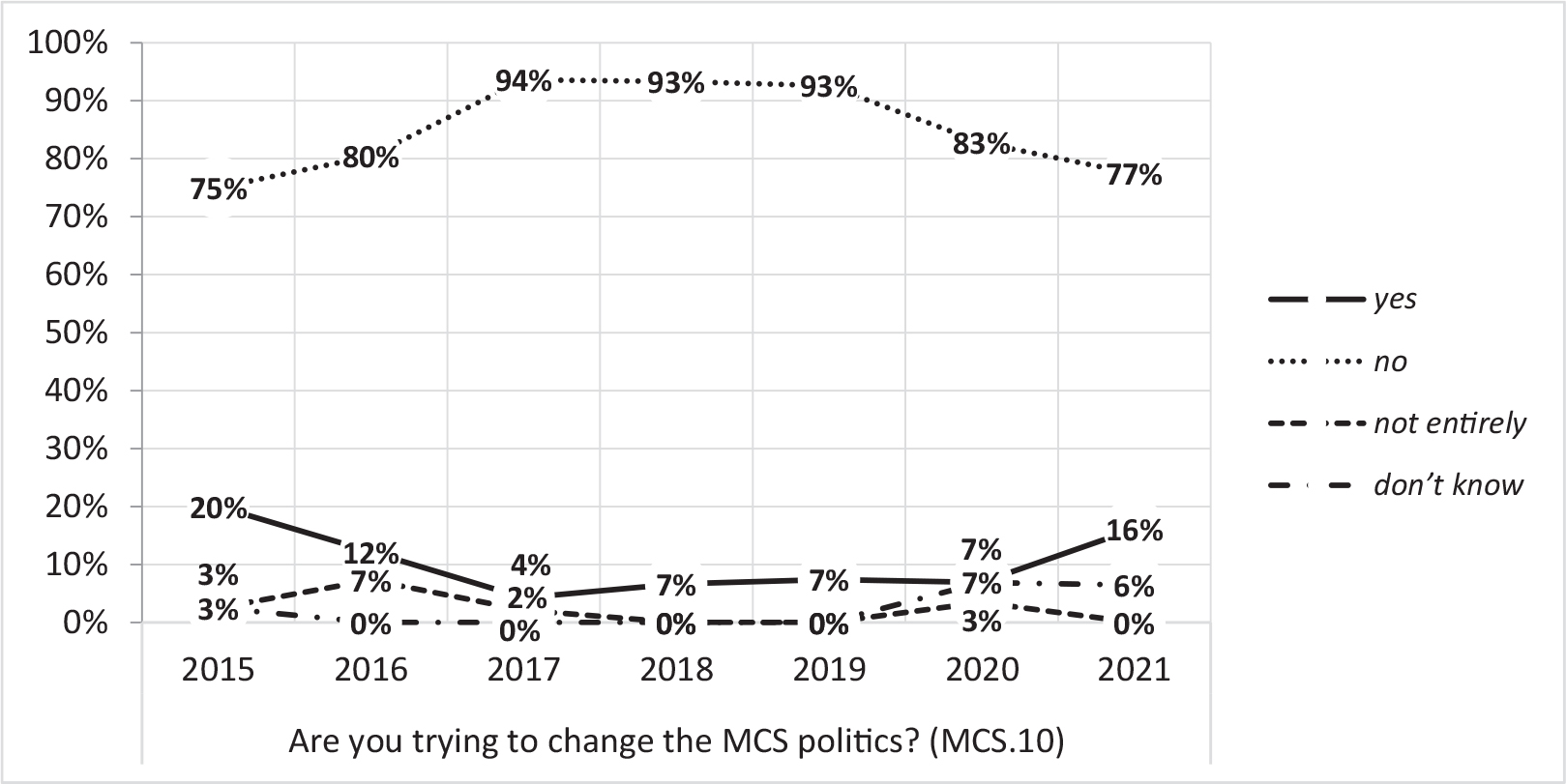
Figure 8.
Graph of answers to the question about participation in shaping the management control policy (percentage of responses in the years 2015–2021).
Source: Own study.
In the part of the research, which used collections of information collected at a similar time (2020–2023) generated in reports and surveys carried out as part of MCS applicable at the University of Technology and Humanities, analysis of documentation regarding risk management activities as part of activities related to implementation of activities of individual units shows that managers limit the number of tasks to be performed in a given year (Table 1).
Table 1.
Changes in the number of goals adopted for implementation in organizational units in the years 2020–2023
| Faculty (F)/organizational division (O) | Goals adopted for implementation in the year | Difference 2020–2023 (%) | |||
|---|---|---|---|---|---|
| 2020 | 2021 | 2022 | 2023 | ||
| F 1 | 9 | 7 | 7 | 7 | −22 |
| F 2 | 8 | 8 | 6 | 7 | −13 |
| F 3 | 13 | 13 | 13 | 15 | 15 |
| F 4 | 10 | 10 | 7 | 6 | −40 |
| F 5 | 13 | 12 | 8 | 10 | −23 |
| O 1 | 19 | 18 | 20 | 14 | −26 |
| O 2 | 6 | 5 | 9 | 7 | 17 |
| O 3 | 3 | 2 | 3 | 3 | 0 |
| Total | 81 | 75 | 73 | 69 | -15 |
5. Analysis and discussion of the research results
Contrary to the objectives of risk management within the management control system, which assume the treatment of the so-called risks also as opportunities, based on the analysis of the collected research results, it can be concluded that the management control environment is still treated not so much as a tool for improving university management processes, but rather as a system of requirements related to the need to comply with regulations. The number of tasks assumed by individual organizational units, which is decreasing year by year, and the share of tasks considered to be more easily achievable, shown in the previous part of the article, is a direct proof of the desire to limit possible responsibility for the preparation and implementation of corrective or remedial actions.
Self-assessment can effectively implement the goals of management, coordination, information, and planning in public sector entities, including universities. The results of the study show that it is necessary to use an effective decision-making loop that will use the results collected in the course of management control, including self-assessment. The abrupt increase in the number of training participants registered with the help of the research presented in the article was the result of ad hoc (not systemic) activities, whose participants were university authorities interested in improving their qualifications.
The results of the study in the part concerning internal and external communication show that activities in the conditions of the COVID-19 pandemic were a huge challenge for the information system, for which the university was not ready. It is hard to disagree with the statement that preparation for working conditions during the pandemic restrictions required changes in the style and principles of university management. It should be noted, however, that as a result of the problems that occurred, the university developed and implemented procedures for internal and external communication, which in similar conditions allow for maintaining the continuity of effective activity.
When reviewing the area of research related to management control, it can be concluded that most authors use research using simple methods that are limited to one period of system operation. In the case of management control and its effects, the perspective of several years and causality are important. Considering the importance of the research problem, it is worth looking at a more up-to-date research methodology, which would confirm the long-standing argument justifying the value of high-quality communication and management participation in creating the management control system. The latter seems to be particularly important in the case of data from longer time series.
In March and April 2024, following the period during which the self-assessment surveys that are the subject of this article were conducted, a management control audit was carried out at the University. The internal audit commissioned to assess the functioning of selected elements of the management control system revealed that the self-assessment of the management control system is a significant factor in the decision-making processes of management. The audit findings indicate that the self-assessment survey is an element that initiates corrective and preventive actions within the framework of management control and risk management.
6. Conclusions and recommendations
The analyzes carried out as part of this article and the evaluation of the research results allow to confirm the thesis put forward in the introduction about the importance of good communication in maintaining the conditions for efficient management. The research results confirm that effective management control must meet a number of criteria, among which the following also seem to be important:
The strategic dimension of management (active participation of the management in formulating the objectives and tasks of the unit).
Business continuity.
Awareness of actions built by system documentation.
The study showed that appropriate training in management control translates into better outcomes and more effective management in public institutions. As the results of the presented analyses show, a necessary condition for adequate, effective, and efficient management control is the diagnosis, which may include a self-assessment of the system.
As the results of the conducted studies show, self-assessment can help identify areas that need improvement, such as inadequate procedures, documentation gaps, or inefficient processes. The results of the self-assessment can indicate whether the management control system complies with applicable legal regulations as well as best practices and management standards.