
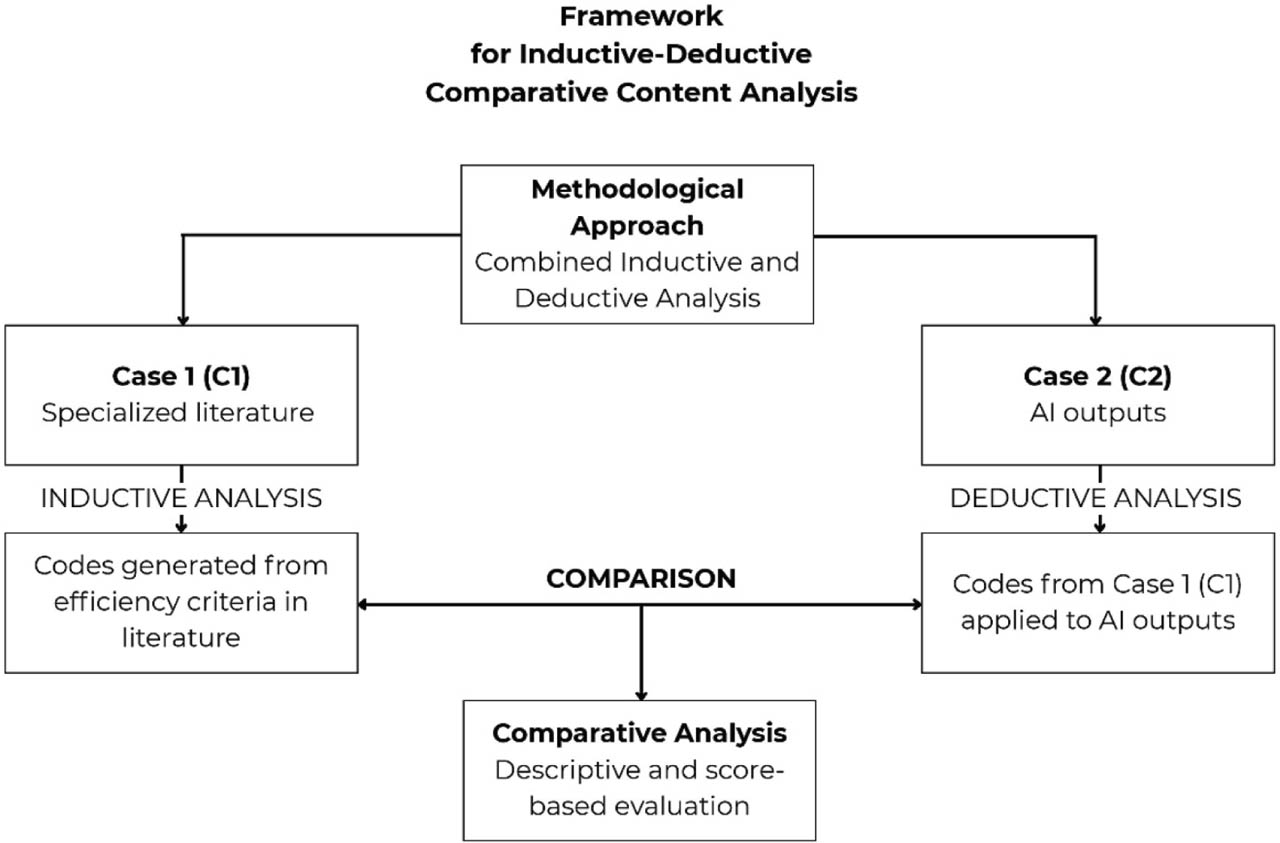
Figure 1.
Framework for inductive-deductive comparative content analysis.
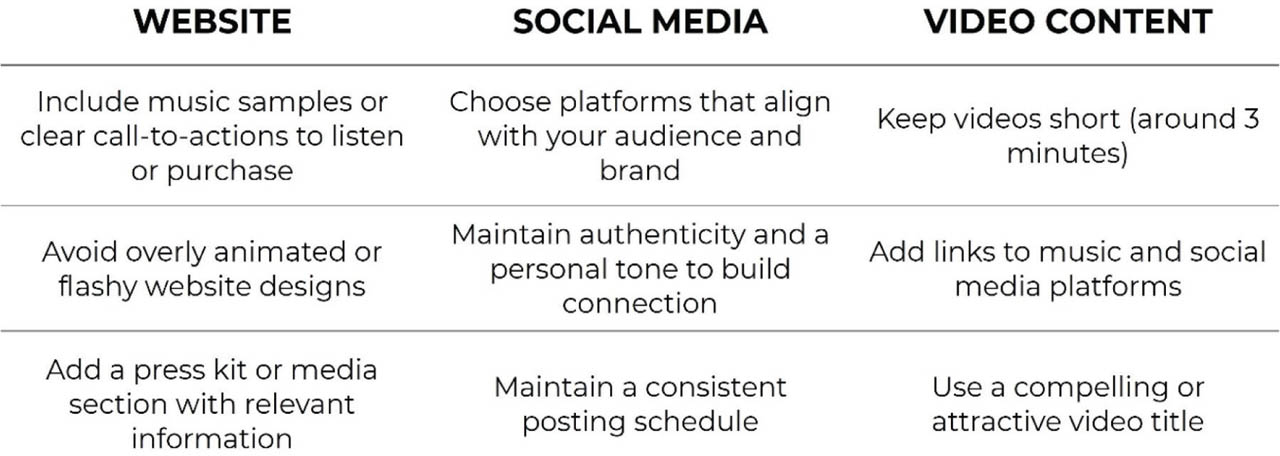
Figure 2.
Efficiency criteria (codes) for the promotional tools based on the literature.
Table 1.
Content analysis grid in the form of a score sheet.
| Efficiency criterion (c) | Number of generated texts in which the criterion appears out of the total (nGTc/nGT) | Example in the generated text (eGT1, eGT2…eGTn) |
|---|---|---|
| c1 | nGTc1/nGT | eGTn: “…” |
| c2 | nGTc2/nGT | eGTn: “…” |
| c3 | nGTc3/nGT | eGTn: “…” |
Table 2.
Website strategy analysis.
| Efficiency criterion code | Number of generated texts in which the criterion appears out of the total | Example in the generated text |
|---|---|---|
| Include music samples or clear call-to-action to listen or purchase | 2/3 | eGT2, eGT3: Make sure it’s easy for fans to access and stream your music. |
| Avoid overly animated or flashy website designs | 3/3 | eGT1, eGT2: Avoid cluttering the site with too many visuals or text |
| Add a press kit or media section with relevant information | 0/3 | eGT3: Avoid overcrowding the website with too much text or visuals |
Table 3.
Social media strategy analysis.
| Efficiency criterion code | Number of generated texts in which the criterion appears out of the total | Example in the generated text |
|---|---|---|
| Choose platforms that align with your audience and brand | 2/3 |
|
| Maintain authenticity and a personal tone to build connection | 1/3 | eGT3: Sharing behind-the-scenes moments or personal stories can help build a connection with the audience |
| Maintain a consistent posting schedule | 3/3 |
|
Table 4.
Video content strategy analysis.
| Efficiency criterion (c) | Number of generated texts in which the criterion appears out of the total (nGTc/nGT) | Example in the generated text (eGT1, eGT2…eGTn) |
|---|---|---|
| Keep videos short (around 3 min) | 3/3 |
|
| Add links to music and social media platforms | 2/3 |
|
| Use a compelling or attractive video title | 1/3 | eGT1: Craft a catchy title that reflects the content of the video and grabs the viewer’s attention |