
INTRODUCTION
Digital technologies and their implementation have been shaping the nature of jobs for decades and represent some of the most pressing concerns facing our society today. Ubiquitous and invasive, the digital world has changed forever the way we live, work and how we should educate. The rate of change shows no signs of slowing down: in fact, information communication technology (ICT) and its application in all lifestyles is progressing at even quicker rates than before. Over 220 million tertiary level students experienced disruption because of COVID-19 (2020-2022), which was offset to some extent by supports provided using online teaching and learning tools and processes. As a result, the need to improve digital services and infrastructure became clear, as did the need for ‘significant’ supports for both teachers and learners to adjust to these new modes of teaching and learning by way of guidelines, tools, training and learning materials (Schneegans et al., 2021). McKinsey and Co. (2022) found that responses to the COVID-19 pandemic brought forward the adoption of digital technologies by several years. Many of the changes may be permanent, altering everything from how we work, connect socially with one another, travel, shop, learn, and use our free time. Irish and European policy initiatives have consistently emphasised the importance of integrating technologies into the educational ecosystem by: (1) improving the use of digital technology for teaching and learning, and (2) planning for educators to develop relevant digital competencies (European Commission, 2023; Eurostat, 2022). However, evidence that new digital educational responses are effective is limited, leading us to the current study. Specifically, while digitalisation radically changed people’s lives and their learning since the pandemic, being surrounded by the digital world and digital technologies does not necessarily mean that an individual is ‘digital’ or has developed a ‘digital mindset’ (Cagney et al., 2020).
Evolving social and industry practices, standards and expectations make it clear that those teaching in education and training in general, and in further education and training (FET) in particular, must develop new and different skills and perspectives to engage in and support flexible responses with new and innovative models of education and training (Redecker and Punie, 2017). Individual teachers and trainers are under pressure to have the interdisciplinary skills, qualities and dispositions necessary to be actively engaged in the design of programmes to help students acquire the knowledge, skills and attitudes that enhance their competency and prepare them for an increasingly complex and digital world. The pace of recent digital transformation and disruption, as influenced by the pandemic (2020-2022), has meant that educators have faced in the first instance a sudden and unexpected demand to engage in digital pedagogies; followed more recently by a consistent and insistent requirement for: (1) online and hybrid teaching-learning environments and related activities; (2) the conversion of previous face-to-face pedagogy and curricula to meet the challenges confronting the education system; and (3) to find new ways to engage with and sustain the momentum of digital innovation while at the same time, finding ways to lead and manage the impact of digital disruption.
The aim of this paper is to argue for the continued implementation of digital technology change to construct peer support and resources, create opportunities for educators to adapt to the changes, and create successful digital technology practitioners. These FET leaders’ narratives shed light on how the diversity of digital technology change experiences can be integrated and enhanced to create high-quality digital teaching-learning experiences for student, educator and organisational future success.
CONTEXT AND BACKGROUND
Europe’s Digital Education Action Plan 2021-2027 (2020) set out a list of objectives and directives to support EU Member States in adapting their education and training systems to the digital era in a sustainable and effective manner. The plan incorporated two key areas: (1) improving the use of digital technology for both teaching and learning by closing the gap between the use of digital technology in everyday life and in education; and (2) planning for practitioners to develop relevant digital skills and digital competences by introducing a wide range of digital competences encompassing knowledge, attitudes, and skills (p.6). The European Framework for Educators’ Digital Competence (DigCompEdu) supports digital pedagogy and expertise in the use of digital tools for teachers in the development of educator-specific digital competencies across Europe (Redecker, 2021; European Commission, 2023).
Technology enhanced learning as a tool for pedagogical innovation is not new, nor are the arguments that a 19th century model of educational provision will not scale up to the requirements for a 21st society (Laurillard, 2008). To date technology and ICT experts have driven the approach used to upgrade our existing educational models. Laurillard and Kennedy (2020) propose that only teachers should be responsible for the nature of the pedagogic innovation needed, if the sector is to be able to adapt to its changing environment. However, over the past several years, it has become clear that education systems not only struggle under extreme pressure but also do not cope very well with the complex challenges of the 21st century.
Notably, the FET sector is challenged to adapt to new methods of education to deliver and build new skills and prepare learners for new work environments where smart technology, artificial intelligence (AI), automation, data analysis, and virtual/augmented reality are embedded in work and business practices (SOLAS, 2020). FET needs to change to meet these educational demands, or it risks becoming irrelevant. Digital transformation plays an essential role in this change and is identified as a core enabling theme for FET in Ireland (Ryan et al., 2020). Incorporating digital technology into FET teaching-learning environments represents a ‘wicked problem’, described by Rittel and Webber (1973) as problems that include many complex variables, all of which are dynamic, contextually bound and interdependent. These wicked or unbounded problems are indicative of the challenges presented by the rapid growth of digital technologies coupled with the complexity of classroom life, and the difficulties of incorporating innovative technologies into teaching and teacher education (Borko et al., 2009).
In any education sector, the role of the educator is more than a mechanism for the delivery of information. They are also a role model for learners to develop the ability to adapt to change and adopt new tools and methods to remain current and relevant including technical and pedagogical knowledge and skills (Redecker and Punie, 2017). High levels of investment in educational technology have resulted in significant increases in technology within the classroom. Within the broad debate on pedagogy in relation to technology enhanced learning vs traditional face-to-face methods, there is an emergent and important discourse on extending our understanding of the student and teacher experience of digital ‘teaching-learning environments’ (Savin-Baden and Fraser, 2023). Most studies on FET and digital competence are from Nordic countries, pointing to a lack of research on digital competence in further, adult and vocational education across the EU.
THEORETICAL FRAMEWORK
This paper uses insights from the literature on perspective transformation, mindsets and digital mindsets, ways of teaching and practicing, and employee engagement to discuss how successful change can be created through an understanding of the non-linearity and complexity of FET organisations.
Perspective transformation
Transformative learning and perspective transformation are informed by Mezirow (2012), who proposed a cognitive/rational approach to adult learning. Perspective transformation is experienced as a learning process consisting of experience, alienation, reframing and reintegration. This type of learning is more than just adding to what an individual already knows; rather it is transformative because it shapes the individual in ways that result in changes that now both they and others around them can recognise. Mezirow describes it as a mindset comprised of a set of assumptions, beliefs and values that determine how individuals understand and interact with others and relate to the world around them. Transformative learning theory proposes that a mindset is a broad predisposition used to interpret experiences that operates as “a set of assumptions, broad, generalised, orienting predispositions that act as a filter for interpreting the meaning experience” (Mezirow, 2012, p.83).
Mezirow’s study emphasised the critical role that experience and reflection play in our existing assumptions about the world, to arrive at a new worldview. Thus, perspective transformation is about change, dramatic fundamental change in the way individuals perceive themselves, and the world in which they live. Described as “a shift of consciousness that dramatically and permanently alters our way of being in the world” (O’Sullivan et al., 2002, p. xviii); it changes how we know (Kegan, 2000) and it leads to a more ‘inclusive, discriminating, permeable, and integrative perspective’ (Mezirow, 1991, p.14). When individuals are confronted with an experience that conflicts with their previous understanding of the world, they experience disjuncture and are compelled to find new knowledge or new ways of doing things (Jarvis, 2006).
Drawing on these insights, Graham Cagney (2011) proposes a transformative learning process (figure 1) that helps individuals comprehend this new worldview. Four main components shape the transformative learning process: (1) experience, (2) critical reflection, (3) reflective discourse, and (4) action plans (Taylor and Cranton, 2013). Other conditions are also necessary, but Mezirow (2012) maintains that they are rarely fully realised in practice. Graham Cagney (2011) offers insight into the stages that a learner may go through in pursuit of this transformation; beginning with stage 1 with the introduction of a disorientating dilemma and stepping through stages of; critical appraisal, perspective taking, and finally, reintegration with new perspectives (figure 1).
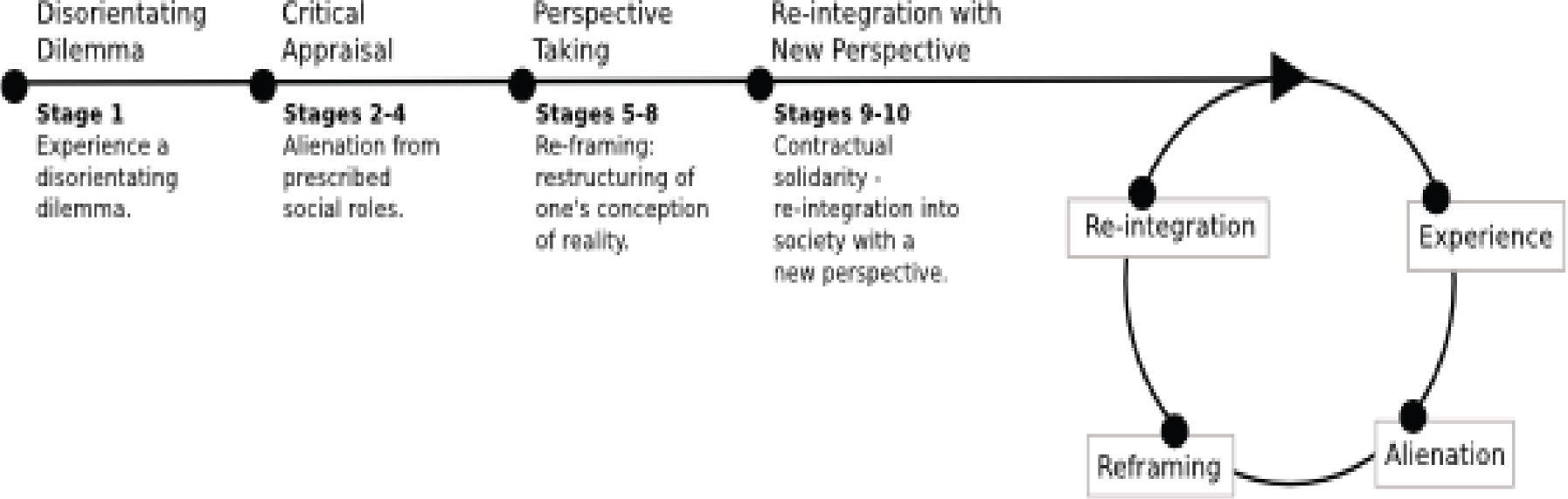
Figure 1:
Transformative Learning Process (Graham Cagney, 2011).
Figure 1 offers insight into the transformative learning process. However, to create a transformative learning space within an educational context, two further components are essential: (1) trusted relationships, and (2) support from faculty and peer groups (Graham Cagney, 2011, 2019). Transformative learning is a complex adult learning experience that leads to a changed self-perception; individuals experience changes in their thinking that lead to new worldviews, and new perspectives on their personal and professional lives. Essentially, their existing ways of thinking and practicing, and of understanding the world around them no longer support them in shaping their pathway to their future self (Graham Cagney, 2019). These significant changes may appear to be sudden and dramatic (epochal) or a slower, incremental change in points of view (meaning schemas) that is manifested by changes in sociolinguistic, psychological, epistemic, philosophical, moral-ethical and aesthetic generalized predispositions or habits of mind (Cranton, 2006; Taylor and Cranton, 2013). In summary, beliefs, attitudes or points of view, when expressed as opinions shared with others, often result in feedback that can cause a revolution of an entire perspective or habit of mind. (Wang and Cranton, 2011). These elements of perspective fall under the mantel of ‘habits of mind’ (Graham Cagney, 2011), as exhibited in figure 2.
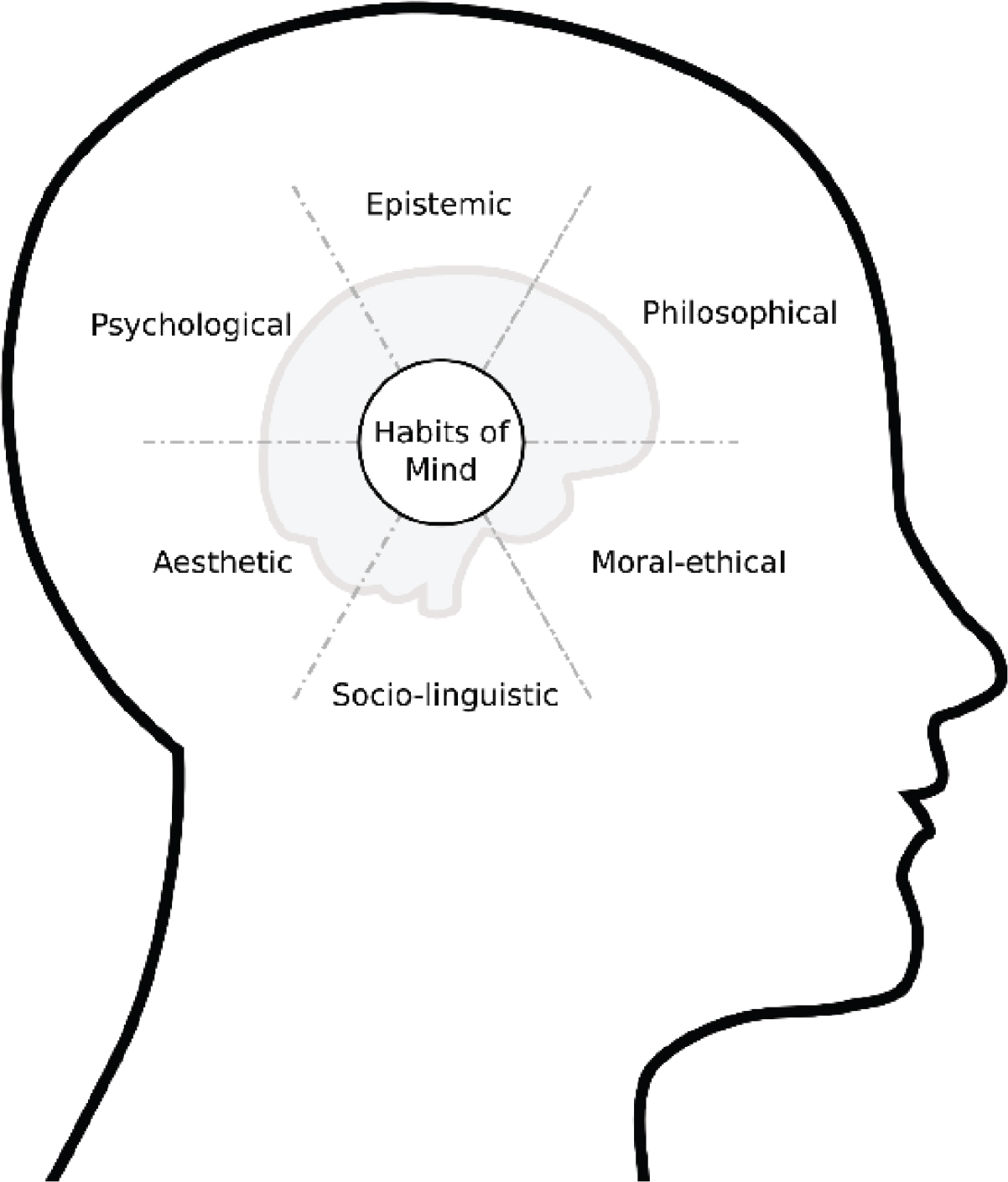
Figure 2:
Habits of Mind (Graham Cagney, 2011).
Drawing on these transformative learning processes (figure 1) and human perspectives (figures 2), we can explore mindsets and digital mindsets in a way that offers insight into the change environment faced by FETs in the 21st century.
Mindsets and digital mindsets
Mindset theory is a complex field of study that can be found across the disciplines including psychology, experimental psychology, business/management, education, and neuroscience and computer sciences. As a result, there is no singular definition of a mindset and the concept is described in various literature as a cognitive framework, mental set, mental construct, mental disposition, and a paradigm or habit of mind. Dweck’s (2006) influential work on mindsets has had academic and popular appeal because it offers a binary distinction between growth and fixed mindsets. A fixed mindset is one where intelligence is permanent and cannot be improved or developed, whereas with a growth mindset intelligence is malleable, and growth and change are possible (Dweck, 2017). Recent research has found that the potential of growth mindsets may not be as great as it first appeared: that cultural norms determine the impact of a growth mindset (Lou and Li, 2023). However, the value of Dweck’s (2017) work may be that because mindsets are adopted, they can be altered and therefore they can be changed; a mindset is a perspective, and holding that perspective is a choice, which has implications for the development of a digital mindset.
The attributes of an individual with a digital mindset are described by Benke (2013) as being flexible and adaptable, having a wide intellectual curiosity and a hunger for new knowledge, are passionate about what they do, can think outside the box and are comfortable with uncertainty. Furthermore, competencies that are fundamental to developing and supporting a digital mindset, comprise digital knowledge, digital skills and digital attitudes (Benke, 2013). Digital knowledge is described by Jansen et al. (2013) as possessing breadth of knowledge about technology (ICT, internet, media, information and digital literacy); and, having capacity to understand how that knowledge is absorbed or included into an existing life context. Digital skills include operational and technical competencies in addition to strategic ICT skills that enable the achievement of more specific professional and educational goals rather than just for personal entertainment (van Dijk, 2005; Van Deursen and van Dijk, 2010; Ilomäki et al., 2011; Ferrari, 2012). Finally, digital attitudes are assumed to be based in the affective domain and are strongly influenced by cognitive, emotional and behavioural elements (Cagney et al., 2020).
Donat et al. (2009) suggest evidence of an educator digital mindset can be found in an individual’s knowledge of digital technology, their feelings toward digital technology, and their usage of digital technology. Cagney et al. (2020) identified four characteristics of a further, adult and vocational educator (FAVE) digital mindset: (1) being curious about digital technology, (2) keeping up to date with newest innovations, (3) using digital technology for personal, educational and professional purposes, and (4) accepting the challenges presented in using digital technology. An educator digital mindset is therefore proactive rather than reactive and is characterised by specific knowledge, skills and attitudes (Lehtonen et al., 2019; Gössling and Emmler, 2019).
The development of technology and its impact on the work and home life of people has been documented (Turkle, 2017) and is the subject of the emergent field of “new literacies”. The adoption of new innovative digital pedagogies combined with existing inequalities in socio-economic status, education, age, gender, ethnicity and geography has the potential to exacerbate pre-existing inequalities. These new literacies, aided by a digital mindset, have been linked with knowledge, skills and competencies (Jansen et al., 2009). However, this stance is not universally accepted. Solberg et al. (2020) posit that a digital mindset has very little to do with digital literacy, skills or knowledge. These apparently contradictory views emerge because of differences in the definition of digital mindsets, necessitating greater insight into this emergent field of research. It is therefore valuable to seek further insight into how the ways of teaching and practicing can enable, or hinder, a more unified perspective on digital mindsets within FET.
Ways of teaching and practicing
High quality student learning occurs in the context of specific institutional and disciplinary contexts and a particular teaching-learning environment (Entwistle, 2003). The ‘inner’ teaching-learning environment operates as a conceptual organising framework comprised of four overlapping components that shape the context for the quality of student learning achieved: (1) course contexts, (2) teaching and assessing content, (3) staff-student relationships and, (4) the students and student culture within a particular programme (Entwistle et al., 2002). Additionally, the ‘inner’ teaching-learning environment conceptual map also illustrates a sophisticated network of higher-level factors that influence teachers’ beliefs and conceptions of teaching and reflective practice (Entwistle et al., 2002). These factors, identified as ‘ways of thinking and practicing’ have a direct influence on two contexts of the ‘inner’ teaching-learning environment, namely teaching and assessing content, and staff-student relationships (p. 6).
FET tutors with previous careers outside of the FET field will draw on their experiences to create teaching-learning environments that are informed by that discipline and its interactions with various related influences. This prior knowledge and experience are intrinsic to their teaching and is a significant influence in how they engage with implementing pedagogic digital innovation and change. In every discipline, field or profession, mastery of a subject requires an integration of the network of relationships amongst the constituent parts. Much of the extant literature describes this integration in thinking as akin to a portal or doorway through which the individual must pass. It is like a conceptual gateway that opens a new way of thinking about something that was previously inaccessible (Entwistle, 2003). This type of integrated understanding requires a shift in understanding of such significance that the individual changes how they “think” or “perceive”. This affects how they experience phenomena within a discipline or body of knowledge.
Digital competence is a skillset that includes the use of technology, information, multimedia and communication skills and knowledge (Esteve-Mon et al., 2020). A person with a high level of digital competence will possess the knowledge and attitudes that enable the confident, creative and critical use of technology and information systems. Digital technologies provide opportunities for a different type of learning experience; one that is focused on personalised learning, experiential, self-directed and problem-based learning (Savin-Baden and Fraser, 2023). Educators’ pedagogical strategies and existing beliefs may influence or dominate how they engage with this transformation of the learning process, which challenges existing practice and assumptions about learner-centred teaching and attitudes toward technology. Teachers who embrace constructivism may encourage greater teacher-student dialogue or urge students to collaborate in online learning (Admiraal et al., 2017; Lee et al., 2023).
When considering the conditions under which educators will engage with digital transformation, it is useful to consider the nature of the teaching-learning environments they create in their workplace in tandem with the nature and scale of the organisational changes required to achieve a successful outcome. As highly knowledgeable and skilled professionals, teachers require the confidence and skills to use technology effectively and creatively to engage and motivate their students, support learners’ acquisition of digital skills, and ensure that the digital tools and platforms used are accessible to all students (European Commission, 2023). Digital competence can help facilitate this change. However, there are significant barriers to the effective use of digital and online learning by teachers in FET. Challenges to successful digital transformation within the FET sector include the existence of structural and organisational systems that continue to create silos of disciplinary expertise with no incentives to work across subject divides, widespread casualisation of the teaching role, working conditions that create isolation, and the continued need for the provision of FET teacher technical as well as pedagogical training, competencies and/or qualifications and a lack of digital competencies. These factors were confirmed in a recent Irish FET study where organisational and individual barriers included: (1) technological (infrastructure and instructional), (2) designing content, and behaviours and attitudes toward online/digital learning, and (3) learners experience of family pressure, lack of motivation and cultural resistance (Cagney et al., 2020).
Teachers are the crucial agents in many innovations in technology and education. Admiraal et al. (2017) identified five teacher types based on their beliefs about teaching, learning and technology: (1) learner centred with technology, (2) critical of technology use, (3) uncomfortable with technology, (4) uncomfortable with learner-centred teaching, and (5) critical of a clear-cut stance. They suggest that selecting or matching the right group of individual teachers to specific projects and initiatives or organising different professional development activities for different types of teachers will be more likely to lead to the implementation of successful digital technological change.
Employee engagement
Over the past thirty years, multiple disciplinary and sub-disciplinary perspectives on employee engagement have been developed in sociology, psychology, organisation behaviour and business including human resource management. Consequently, there is no universal or agreed definition of employee engagement and for some people employee engagement also includes additional related concepts such as burnout, antithesis, work engagement, and job demands-resources. Research by Saks (2019) confirms that the main work characteristics to influence role engagement are an individual’s personal skill variety (in-role and extra-role performance) and role positionality within the organisation. While acknowledging the multiple disciplinary perspectives in the field of engagement, this study draws on Kahn’s (1990) seminal work and original definition of engagement at work as “the simultaneous employment and expression of a person’s “preferred self” in task behaviours that promote connections to work and to others, personal presence (physical, cognitive, and emotional) and active, full role performances.” (p. 700).
Personal engagement at work therefore is comprised of the psychological experiences of an employee that determine whether and to what extent they will either bring or withdraw their energies, self-expression and authentic selves (‘preferred self’) to their role. Three psychological domains shape an individual’s personal engagement at work. Kahn (1990) describes them as: (1) meaningfulness (task characteristics, role characteristics, and work); (2) safety (interpersonal relationships, group and intergroup dynamics, management style and process, and organisational norms); and (3) availability (depletion of physical energy, depletion of emotional energy, individual insecurity, and outside lives). Each domain is affected by the presence or absence of external factors (Deitmer et al., 2018; Shuck et al., 2021). These challenges determine whether individuals bring their ‘preferred self’ to their role (Kahn, 1990; May et al., 2004; Tuckey et al., 2012; Lave and Wenger, 1991).
Based on these insights, leaders need employee engagement to achieve the necessary change initiatives to increase organisational adaptability to foster long-term stability and to mitigate potential disruptions (Burke, 2024). To be effective, planned change must be responsive to external and internal forces, be human centred, and seek to improve the organisational processes, systems, and culture (Senge, 2006; Cummings and Worley, 2020; French and Bell, 2018). Oscillation is not uncommon during the implementation of organisational change; most usually occurring when resistance to the change manifests within the organisation. When this occurs, it is necessary for leaders to participate in collaboration, dialogue and communication, and engage with employees to develop mutual understanding of the organisational challenges, generate solutions and implement the changes. While not always possible, the ideal approach is to prioritise collective engagement and shared decision-making as essential drivers of organisational change (Marshak and Bushe, 2018).
Organisations can operate as open systems in tandem with being a meaning making system. ‘Openness’ in the sense of being adaptive and innovative while also engaging in effective communications internally and externally (Cameron and Quinn, 2011). It aids with ‘meaning making’ in how individuals create, embed and maintain the shared beliefs, values and purpose that underpin organisational actions and decisions (Weick, 1995). A combination of openness with meaning-making allows organisations to create a dynamic and adaptive culture that encourages innovation, fosters collaboration, and sustains long term success (Cameron and Quinn, 2011). This allows innovative ideas, and transparent communication can be created with both internal and external stakeholders. When multiple levels of change within an organisation are informed by organisation development methods such these, a framework can be created in which individuals leverage to make meaning; while at the same time each individual is allowed to adopt a new mindset to self-generate a new way to interact or be and/or behave with others (Schein and Schein, 2021).
METHOD
A study’s essential architecture is manifested in the research design. By adopting a practitioner researcher ontology, it was possible to answer research questions, allowing for a full range of variables to emerge over time. In this way, a theory of action is developed and provides insights into ways of improving practice, the understanding of practice, and an epistemology of practice (Evered and Louis, 1981; Raelin, 2007). Thus, we attempted to answer what components of the transition to digital, and hybrid teaching-learning experiences and related activities support employee engagement, perspective transformation and the adoption of digital mindsets.
Both researchers were working with FET employees in their respective organisation roles. The first was working in a university, teaching and researching educational leadership, teacher professional development and identity. The second researcher was also teaching in the university in addition to working as a professional consultant to the further education and training sector on organisation change and development. Both had direct experience of working with and supporting FET practitioners and managers. It was through both researchers’ existing relationships with senior further education and training managers that trust in the research partnership was established, and the study was made feasible.
The method used for this study was a qualitative, phenomenological approach that allowed deeply personal stories and the meanings constructed from them to be told and then analysed for meaning. Using this design, we collaborated with participants and employed the Biographic Narrative Interpretive Method (Wengraf, 2001; Moran and Caetano, 2022). The first researcher conducted all the interviews and used a Single Question aimed at Inducing Narrative (SQUIN) which is an intentionally broad-based question that empowers participants to begin, construct and end their narrative on their own terms. The following single guiding question was used: “Can you tell me what you think digital technology change and disruption is and why it is significant for your role as a leader in Further Adult and Vocational Education?”
Purposive sampling was used, based on the second researcher’s sectoral knowledge, to identify six participants who were leading their organisations during the sectoral transition to a consolidated regional structure. This transition resulted in an exceptionally busy period for all these managers. Three agreed to participate, and the remaining three declined to take part. A decision to continue with the study was informed by: (1) the phenomenological narrative methodology ontological and epistemological positionalities of the research design; and (2) consultation with the ‘signed up’ participants who were committed and engaged with the study and eager to have their narratives heard. As a result, the researchers proceeded with the study. Three senior managers took part in the biographical narrative interpretive study in 2024. Table 1 below provides an overview of the participants as shared with the researchers.
Table 1:
Overview of study participants
| Pseudonym | Current Role | Organisation Context | Programmes |
|---|---|---|---|
| Frank | CEO | Very large urban and rural | Primary, post-primary (community colleges), full-time and part-time FET (Adult & Community, Adult Literacy), and Youth Services |
| Liam | Head/Senior Executive | National | Retail Apprenticeships, Degrees, Workshops, Training and eLearning |
| Peter | Principal (FET College) and education and training board member | Large rural and urban | Post-primary (community colleges), full-time and part-time FET (Adult & Community, Adult Literacy), and Youth Services |
Biographic, narrative research encompasses different (yet interlinking) approaches to data collection, analysis and interpretation that centre on the complexity of everyday life stories and storytelling. The approach is predominantly an open narrative interview process that is intentionally broad based. Individual stories are grounded in interrelating past, present and future selves (Pinkerton and Rooney, 2014), the meanings of which are legitimised and reinterpreted through storytelling. Data collection and analysis took place in a sequence of phases used to gain insights into the field of interest and identify the parameters of the phenomenon of a transition to digital and hybrid teaching-learning experiences and related activities (Creswell and Clark, 2011). We examined the leaders’ narratives in response to the single question posed, which enabled participants to begin, construct and end their narrative on their own terms. A member checking procedure enabled participants to delete or add additional information before returning their final transcript to the researchers. Inductive analysis was conducted on the data using manual coding (Saldana, 2021) and Quirkos software.
FINDINGS
These findings examine narratives from leaders illuminating the complexity of social and organisation change contexts. Findings exhibit the tangled and involved organisational positioning required for successful digital technology change. Each leader began with the past, moving to the present, and then to the future. There was virtually no mention of past events prior to the COVID-19 pandemic, which may reflect the timing of the study (2024). All three started their narrative with a brief description of their formal organisational role. The pandemic was described as a pivotal point in their experiences of leading digital technology change and handling disruption. At the end of each narrative, each participant shared where they were ‘now’ in relation to future digital technology change. The non-linearity and complexity of FET organisations became very evident: while all their organisations are part of the wider further education and training system, each senior manager positioned their organisation differently with respect to what had been accomplished during the pandemic; what changes had been consolidated and remained in place; and the ‘future state’ of their organisation’s digital technology change.
The following sections set out the complexity of social and organisational change as explored in these interviews; (1) complexity of social and organisational change, (2) organisational positioning for successful technology digital change and, (3) evolving educator digital mindsets.
Complexity of social and organisational change
Our findings reveal that externally driven large systemic social change acted as the trigger or catalyst for organisational transformational change. All participants evoked that COVID-19 was a pivotal point in their experiences of leading digital technology change and a significant disruptive event that caused disorientation for their employees and others in their organisations. These complex experiences acted as the catalyst for everyone in a context where significant personal and professional change became not only possible, but a necessity. For most people, going through such a level of disorientation (disjuncture) resulted in an experienced alienation from their prescribed ‘normal’ social roles (Mezirow, 2012). These sentiments were echoed by all participants, who frequently referred to societal expectations of the need to keep the education sector ‘up and running’ during the pandemic. They described FET facilities closing within 24/48 hours of the announcement from Government (e.g., all schools and education facilities were mandated to close on March 12th, 2020, by the Irish government), and “classrooms” were suddenly no longer located in physical buildings. Students went from the safety and support of a structured classroom with the FET tutor/trainer by their side, to finding themselves alone and looking at and learning through a computer, laptop or other digital screen. FET tutors left the relative safety of the classroom, stocked with their teaching resources and activities, and were forced into engaging remotely with students. FET leaders and managers were left to navigate an uncertain and unknowable organisation future. Individuals responded differently to the rupture in daily life and changes in social interaction by reframing or restructuring their conception of reality thus leading them to a new or revised perspective (mindset) of the world in which they now lived. As articulated by Peter,
“Society was disrupted … it brought about an urgency within a context of fear … about health, about survival. You just have to get on with it and you mightn’t know exactly what you’re going to be doing, but it isn’t something that you back out of because there’s no reverse on this one.” (Peter)
Understanding the impact of the triggering event, the level of disjuncture caused and the resultant perspective transformation that occurred is an essential factor when considering senior leaders’ successful workplace experiences of leading the transition to digital teaching-learning experiences (Jarvis, 2006). Liam spoke of the experience as,
“Disruptive in the sense of destabilising the norm and enabling change to happen in that sense … that provided an external lever to perhaps unlock existing practices and perceptions”.
This corroborates with Mezirow's (2012) view that epochal events lead to disorienting dilemmas in which individuals must accommodate a changed view of the world resulting in perspective transformation. All participants spoke of the varied emotions and responses they dealt at work in relation to the changes that were forced on their people and organisations; anger, guilt, fear, anxiety and sadness, as many also suffered major illnesses and/or bereavement in their personal and professional lives. On probing specifically on positive emotions, participants alluded to more challenging or negative emotions than to positive ones. Frank commented on the mix of emotions and experiences, “some people … had real concerns. And there was a lot of upset … but also people welcoming the change.” Vacillation is not uncommon during the implementation of organisational change; most usually occurring when resistance to the changes manifest within the organisation. These leaders were aware that not all their employees were completely committed to the digital technological changes and drew attention to their experiences of both positive and negative employee behaviours,
“Teachers were starting to work more collaboratively together, where they could share their work… and we’re looking at things like access, etc. And while it suited a good number, there was a huge resistance from another bank of practitioners and people in the organisation… some refused to engage completely”. (Frank)
These leaders articulated concerns expressed by their employees that the adoption of new innovative digital pedagogies combined with existing social disadvantages in FET student populations would have the potential to exacerbate pre-existing inequalities, “… but I was very concerned that … we talked about this digital divide … kind of lovely words for something that’s horrific and brutal” (Frank). Peter considered whether technological innovation could be a potential barrier to FET learners, “… we have to be careful about any innovative technology … to agree that it’s useful. But then it has to be inclusive as well”.
Participants reported that they and their staff experienced conditions that support a transformative learning experience, that led to perspective transformation. These included an epochal triggering event that led to disorientating dilemmas, critical reflection (for example in relation to the ‘digital divide’), engaged discourse between peers and between peers and managers, the creation of action plans, and peer support that formed trusted relationships (Taylor, 2007; Graham Cagney, 2011, 2019). Self-regulation and the development of career adaptabilities were underpinned by changed attitudes, beliefs and competencies, enhancing digital technology and innovative pedagogies. These adaptabilities were particularly evident in participants’ descriptions of how they met and managed vocational tasks, and the organisation changes required particularly in the early stages of the crisis and a traumatic work environment.
Organisational positioning for successful digital technology change
Each leader had a different view of how past digital technology change has impacted on them and their organisation. They also had strong and differing views on the current and future impact of digital technology change on their organisations. Differing perceptions of ‘successful digital technological change’ emerged due to the unique positioning of their individual organisation and the imperatives to deliver to their stated mission. This section is divided into two parts. The collective experiences of the past have been divided into three sub-sections: organisation systems and procedures, implementation timeframes, and ‘digital at work’ and ‘working with digital’. These precede the views and experiences of each leader on the current and future state of their organisation’s digital technology change.
Given the non-linearity and complexity of differences between the three leaders’ organisations, it was surprising to find strong similarities in their narratives on their past experiences leading technological change, while in an organisation that was in survival mode. The past narratives focused predominantly on leaders’ experiences of organisational systems and procedures, and timeframes in which operational changes could be achieved. All participants evoked the period of crisis management (e.g., the pandemic) as a state of transition that was a significant change to what had previously been normal operations. Each reflected that a return to ‘normal’ operations had impacted on some of the gains made in implementing digital technology change during the crisis period. Liam noted that,
“… very serious external drivers of change made the abnormal the norm and everything was pushed onto the back burner in terms of normal procedure.”
There were also similarities in how participants experienced changes in systems and procedures. Frank commented, “because of COVID everything … did actually substantially change.” Frank offered the example of using digital technology for Teams meetings and the impact that it had on people’s behaviour,
“Just expecting people to make sure that their camera is on was amazing … [it] became a far bigger issue than I ever imagined it would be, and we spent a lot of time just trying to establish ground rules about engagement through digital devices and modes of engaging”. (Frank)
Peter highlighted the change in systems and procedures and provided examples of collaborative sharing of information, “as the lockdown progressed, there was a far greater use of things like Microsoft SharePoint where people were able to have documents on the same file.” Significantly, as time went on and the crisis management in relation to the lockdown became the ‘norm’, people and organisations settled into changed ways of working. Peter described his experience of this transitionary state as one where his rationale for how people were responding to the organisation changes as,
“…the foreboding of something more concerning than kind of HR issues or work relations issues…or are we within contract here? Are we outside contract here? You know?”
All three leaders evoked the differences they experienced regarding less difficulty and time required to implement changes during COVID-19. The following statement captures a sense of disbelief and incredulity that there was no change initiative failure, that the transition was happening in a relatively smooth and conflict-free way,
“Because in normal circumstances, if you said to a group of staff, ‘we need to get to this place with regard to using technology within our methodology and so on; and how we’re going to go about it’. Well, we need maybe six years, maybe 10 years or whatever to get that done. Or indeed maybe 6, 8 or 10 months to get that done but we didn’t have the timeframe … Not easier. But much more, I suppose, achievable within those time frames, because of the mindset of a society, a cohesive society fighting a bigger deal.” (Peter)
While the leaders were focused on keeping the organisation systems and structures operational, they were aware that there were mixed levels of employee engagement with digital technologies in the delivery of classes, and in restructuring their approach to teaching and assessment. Participants believe that employees struggled to develop behaviours and attitudes associated with digital competence, described as agile, collaborative, curious, ‘tech savvy’ and comfortable with change (Lehtonen et al., 2019). Differentiation was a struggle for some in relation to ICT, internet, media and digital knowledge, whereas integration in how digital knowledge was absorbed and included in their existing life context was handled much more effectively (Jansen et al., 2009). Digital skills were more operational, and while they took some time to develop, most people became competent with Zoom, Teams, eLearning platforms and other innovative pedagogies during the pandemic. Digital attitudes were somewhat more problematic, with several participants identifying either a reluctance to engage with the technology beyond the basics, or a lack of curiosity in relation to the newest innovations. However, most people had no choice but to engage with the technology for personal, educational and professional purposes and had a reasonable level of acceptance of the challenges presented by usage of digital technology (Donat, 2009; Cagney et al., 2020). Each leader identified that the use of digital technologies had meaningfulness for their staff during the pandemic as this was a way to get the task done and to help fulfil their professional role in work (Kahn, 1990). Peter spoke of the changes in pedagogical practice as,
“I think this; we were in the middle of it, and I think we were doing it. In other words, providing the service, the education service through technology, without realising that we were, we had made changes.” (Peter)
The impact of lockdown for Liam and his team was significant, having just started their new apprenticeship programme in 2019, which Liam felt was “bad old timing”. Within four months [he said], “We had to flip that fairly pretty much - I wouldn’t say overnight, but not far off overnight … we learned a lot from it.” Frank described the changes he initiated with his staff in curricula and pedagogical innovations as an unknown path, “We began, we walked into it with a naivety, I think, but there was no other way to do this.” The leaders’ narratives evidence that their employees were exhibiting close alignment with some of the key components of a developing digital mindset (Benke, 2013), namely being flexible and adaptable, a hunger for new knowledge, comfortable with uncertainty and a passion for what they do. However, these positive things sat alongside other evidence that there were some concerns expressed by their staff in relation to digital technology, corroborating Kahn’s (1990) psychological safety and availability findings. Many teachers (and professional support staff) were concerned about “Are we going to set precedent for doing lots of different things?” (Peter). There were some problems in interpersonal relationships within teaching teams, and with management style and processes. Frank highlighted that, “tension, I think there was concern in relation to the adaptation of technology within Further Education and Vocational Education.”
Student-staff relationships changed, and teachers realised that some categories of students were missing person-to-person interactions in a significant way. Peter described concerns raised by his staff that students (and vulnerable students in particular) would know that “somebody was still concerned about them, and technology was the way we did that, and we had to use the technology in that regard as well.” Peter explained,
“They [Youthreach students] needed the groups that they would engage with. They go for a smoke or even a drink of cider under a bridge or whatever. That those things were gone from the now.” (Peter)
Digital technology helped his team offset the outcomes from social isolation because of lockdown and helped to establish whether learning was taking place. “It was an essential job that needed to be done, and technology helped us out with that.” (Peter). Students and student cultures also shifted and changed in several ways. Frank described some of the challenges that this shift in culture created,
“There were a lot of issues from the start in terms of engagement of students, expected behaviours online and expected engagement, things like cameras, speaking, language, privacy, etc.” (Frank)
Student incidents and behaviours were close to breaching the psychological safety of teachers, particularly when they were under personal stress and strain and may also have been experiencing issues with psychological availability (Kahn, 1990). This created a need for management response to both student and teacher’ online safety needs.
Frank’s organisation operates within a very large, widely dispersed urban/rural provision of social, vocational and formal education and training. He had joined the further education and training sector just before the pandemic and had a long experience of leading and managing in social inclusion and social disadvantage domains. He was focused on implementing the changes necessary to enable his organisation to deliver success in the form of an agile, flexible provision of services that utilised new hybrid programmes, restructured disciplinary teams, and streamlined administrative control systems supported by digital systems and communications. His stated goal was, “Driving the advantage that digital technology can bring in serving rural communities”. Frank highlighted the benefits of staff engagement in pursuit of these goals,
“…some of the workforces are really excited about … it’s opening up avenues to people that wouldn’t heretofore have had the opportunity to engage in adult, community and further education because of the cost barrier to engagement.” (Frank)
However, the pilot hybrid teaching-learning experiences were attracting resistance from two key stakeholders in Frank’s view, first “the unions are really against anything to do with digitally enhanced learning”, and second, “there is a desire on the official side and civil service to make that change … politically it’s very difficult.” When contemplating these challenges, Frank spoke of,
“a lack of engagement with unions at a national level … a lack of willingness on the part of some senior officials within the department to take on these challenges”.
The focus for Frank is on achieving successful digital technological change through implementing more flexible and agile systems, organisation restructuring and consolidation, and increased student registrations and certification. However, negotiation is necessary to ensure stakeholder engagement with this strategy.
Peter’s organisation operates as a large somewhat dispersed rural/urban provision of community and social, formal and informal, education and training. He has had a long career in FET, leading and managing an FET college before being seconded to his regional education and training board. His organisation has a very strong social inclusion culture that delivers post leaving certificate1 education, Youthreach and FET programmes, but provides no literacy or adult education programmes. Since his secondment to work with his education and training board at Board level, Peter is of the view that while some of the changes introduced during the pandemic have faded, others have remained and are very much part of the stabilised new ways of working. He states,
“What did stick was the technological infrastructure and the idea of having access to Broadband to a very high level is kind of something now that if it isn’t there, it’s kind of, you know, why isn’t it there? This is really one of the bedrocks of education now.” (Peter)
Peter adds that the provision of good high quality broadband infrastructure is “of great concern to senior management”. Changes in working arrangements for administrative staff (3 days in work; 2 working from home) is now the norm, as are Teams and other online meetings, “as the staff meetings continued if it was convenient for more people to attend online but it wasn’t an exception, it was a convenience.” (Peter). However, digital innovation in pedagogical practice is relatively low, and most students are back in face-to-face classroom teaching-learning environments. Peter qualifies his remarks by adding,
“But even within that, I think that teachers are creative people. If they don’t have the cutting-edge computer, that they begin to make the adaptations as required to keep them up to speed, you know? So, it is about fairness as well as usefulness”. (Peter)
Liam’s organisation is a national business vocational education and training organisation that also offers degree and apprenticeship programmes for managers and staff in large, medium and small organisations. He has significant Irish and European experience in work-based learning and has led his organisation as a senior manager responsible for education, skills and industry-education collaborations. Liam’s experiences of digital technological change and disruption are slightly different to the previous two participants, both in terms of his organisation’s response and that of his client base. He stated,
“As a leader, you’re facing two things. You’re facing your client base and leading and helping them lead and manage a digital change, and then within your own provision of training and development and all of that within your own organisation, there’s a leading and a management aspect to that.” (Liam)
His perspective was that his organisation had to make the changes and commit to those changes. He highlighted that their customers want these changes, and their competitors are embracing the opportunities. He posed an interesting self-reflective question,
“It’s the only way forward. I suppose the trick is how to embrace it best? What’s the best way of embracing it? What’s the most effective way of sort of embracing it?” (Liam)
Importantly, Liam identified that his organisation had to improve their own internal training and education delivery and development. He describes a sea change in the sectoral response to digital technologies, and a shift in what was perceived to be important,
“… big change on the importance… retailers traditionally would have been maybe quite slow and traditional in embracing new technologies, but I see a bigger appetite amongst employers to better embrace technology”. (Liam)
Liam identified “Retail, it’s going through a bit of a digital transformation at the minute. You know, it’s been really disruptive [for] retail.” He states the retailers say,
“That you know all these new technologies coming in, it’s not really going to cost jobs … people will be freed up from those repetitive tasks. And undertake kind of more, maybe creative jobs, and require imagination, creativity, innovation. So maybe better-quality jobs.” (Liam)
He categorises his client base, with one category being big companies with dedicated IT specialists and departments with extremely competitive environments and tight margins and always looking at technology as an identified source of competitive advantage. “So, they’re investing quite a bit of time and money and resources into figuring out how best to embrace these great technologies.” (Liam). On the other hand, smaller companies don’t have dedicated information technology specialists and departments, and do not have access to the time, money or expertise available in larger companies. As articulated by Liam, smaller companies are,
“… maybe a little bit worried about this. And maybe they don’t need to embrace [technology] as much. Maybe their unique selling point is location or is convenience and maybe their target markets maybe aren’t as demanding … So, they’ll probably be that bit slower at adopting many of the larger technologies, and the AI technologies that are out there.” (Liam).
Evolving educator digital mindsets
Each leader was of the view that there has been a long-term impact, for some but not all employees, on personal engagement with digital technologies. Peter described the change as an evolution, “Yes, I think that it’s becoming like, for example, the pen in your hand, it becomes invisible. Once it’s incorporated into the common sense of your practice.” Integrating digital technologies into FET teachers’ ways of teaching and practicing may have been unconscious because the need was linked so closely to how individuals interpreted the task and their role in delivering teaching and assessment in a way that maintained the provision of the learning experience for their students during the pandemic. Frank believes about 60% of his staff are now open to digital technological innovation in their teaching practice, he explained this change as, “I suppose the implementation of a new perspective on how teaching and learning would be provided.” Peter concurred with this view, stating that,
“Teachers who would have been concerned that students had access to the materials in the early stages, some teachers were actually recording the classes for that purpose as well. It did work in the early stages for a lot of teachers, I think it has withered to nearly a total extent now.” (Peter)
Other consequences and impacts of the digital transformation included concern about the digital divide,
“Many people were left behind during COVID and since then. It is quite distressing, you know. As digital technology goes forward, the gap becomes bigger between the ‘haves’ and the ‘have nots’.” (Frank)
Benefits included the addition of digital innovative pedagogy and curricula into existing programmes. For example, Peter said,
“One of the conclusions was ‘yes’, the use of technology in education is helpful. Yes… in areas like software development … in creative media where people could do work from home and it is still being used.” (Peter)
However, the opposite has also been true, with teachers withdrawing from digital technology as explained by Peter: “Maybe it was just the kind of the pull of normality. You know, where people just wanted to get back to where things were before.”
The implications going forward for the continued implementation of digital technology change (in relation to innovative pedagogy and curricula) were considered by all participants. Peter sees a ‘lost opportunity’ in some of the practices that have fallen away,
“I still think though that it would be a source of a fairer approach when we talk about inclusion, if those approaches were continued even in the context of revision for students and stuff like that.”
DISCUSSION
Being a successful leader of digital technological change in further and vocational education organisations requires ongoing development of oneself as an adaptable, self-reliant manager on the one hand, while at the same time having a commitment to supporting and facilitating a safe and effective digital transformation for staff and students. In addition, there must be a focus on of digital knowledge and skills (hard skills), along with digital attitudes (soft skills) development. These skills are critical components to developing and supporting a digital mindset in an individual’s knowledge of digital technology, their feelings toward digital technology, and their usage of digital technology (Dweck, 2017; Lehtonen et al., 2019; Gössling and Emmler, 2019). Each organisation leader observed their people experiencing new and differing opportunities to learn and collaborate in creating digital teaching-learning environments. Their staff pursued online learning and development through formal, informal and non-formal opportunities. FET teachers and staff bring expert content knowledge in the real world, transferable skills and personal qualities to their teaching. In many cases, they learned things that they were unaware that they did not know, prior to engaging with online tools and platforms to support their own and their learners’ acquisition of digital skills. For some staff, the digital transformation learning curve was a steep and frightening one: learning to learn and continue teaching-related activities in an online environment, whilst also learning how to use the technology itself (Kegan, 2000; Jarvis, 2006; Solberg et al., 2020) proved challenging. This is an area worthy of further exploration on peer learning and digital mindset development.
Experiencing epochal change like that created by the COVID-19 pandemic is a rare event. Up to relatively recently, very few people could claim to have experienced it in relation to experiencing a dramatic fundamental change in the way in which they perceive themselves and the world in which they live. The complex problem of digital technological innovation and change, within what is often referred to as the ‘Cinderella’ of Irish education, is further compounded by the embedded and longstanding insecurities of those working in a sector perceived as ‘different’ and ‘other’. Developing an educator digital mindset requires ongoing development of oneself as an adaptable, self-reliant learner on the one hand, while at the same time having a commitment to providing a high-quality digital teaching-learning environment for further education and vocational students. Figure 3 exhibits how a trigger event like the pandemic might impact transformative learning for both educator and student, drawing each through a process of critical reflection and reflective discourse, on a journey of perspective transformation.
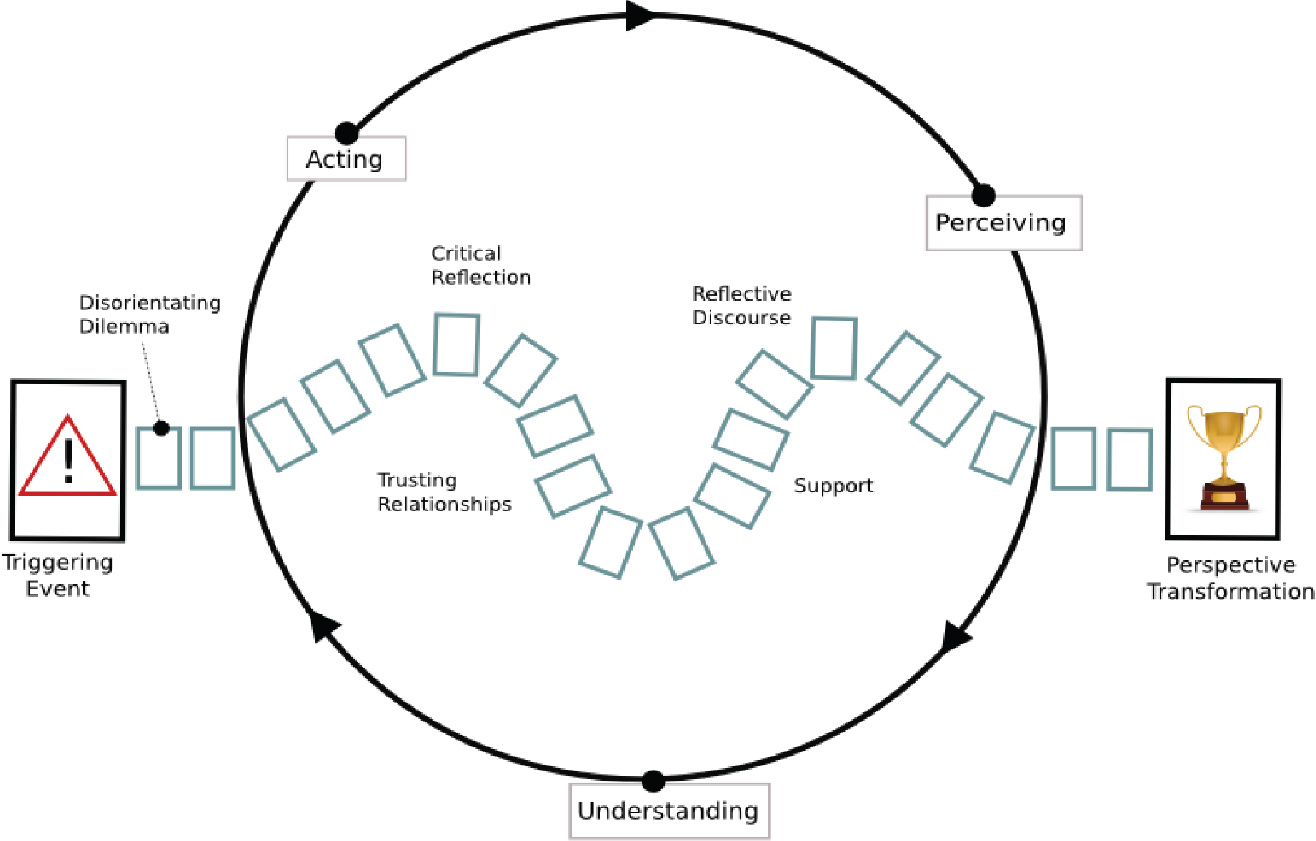
Figure 3:
Transformative Learning Space (adapted from: Graham Cagney, 2011, 2019).
Engaging with this complex and complicated transformative learning process requires recognising and experiencing a disorientating dilemma, analysis (of one’s current personal disruption) and critical appraisal of an experienced alienation from prescribed career and social roles. It requires reflexive decision making to develop oneself and restructure one’s conception of reality, and then capacity to commit to actions that will allow a re-integration into one’s life with a new perspective. When this process is considered in relation to the personal changes required of an educator to develop a digital mindset it may also involve an adjustment in relation to person-environment fit, awareness of socially embedded relational factors and a capacity to re-integrate with a new perspective (Mezirow, 1991).
Integrating digital technologies into an educational ecosystem is challenging. This research has shown a need for feelings of safety and experienced meaningfulness to be considered in relation to professional practice. Learning how to improve interactions online with one another, whether this is with the various ‘new’ digitalised organisational systems, operations and communication channels, or facilitating this with students in online learning environments, is one of the most important parts of peer interactions in an online ‘world’. While the FET leaders within this study were focused on keeping the organisation systems and structures operational, they were also aware that there were mixed levels of employee engagement with digital technologies in the delivery of classes and re-structuring their approach to teaching and assessment. Specific behaviours and attitudes are associated with digital competence and include being agile, collaborative, curious, ‘tech savvy’ and comfortable with change (Lehtonen et al., 2019). For two leaders, digital attitudes were somewhat more problematic: manifesting either in staff reluctance to engage with the technology beyond the basics, or a lack of curiosity in relation with the latest innovations. However, engaging with digital technological change is an individualised experience (Graham Cagney and Cordie, 2023), with only some reaching a perspective transformation (figure 3). Those with pre-existing or better developed digital knowledge and skills appear to have found it easier to explore new options, increase their knowledge and skills, and take chances with new tools and software when confronted with the pandemic, a disorientating dilemma (figure 3). They also tended to have more established relationships with other digitally orientated teachers and practitioners, reinforcing the value of trusting relationships and support when building a new perspective (figure 3).
CONCLUSIONS
This phenomenological study shares leaders’ experiences of managing digital technology change throughout the COVID-19 pandemic that led to the acquisition of the digital skills, qualities and dispositions necessary to support the development of an educator digital mindset for some individuals, but not for all. Recent experiences (2024-current) have shown that while the FET sector displays non-linearity and complexity within relationships with staff, colleagues and management, it is possible to enact and sustain successful digital technological change and a transformation of perspective (figure 3). Many teachers have developed new and different skills and perspectives in relation to digital technologies, leveraging the pandemic as a catalyst for heightened digital engagement. While not all the initiated changes during the pandemic have been maintained, sufficient organic and emergent change and transition has taken place to create the roadmap to enhance adoption of digital technologies. Thus, we argue that the continued transition to digital (and hybrid) teaching-learning experiences strengthens organisation performance in delivering new pedagogical responses to digitalisation.
Successful digital technology change will also help students acquire the knowledge, skills and experience necessary to prepare them for the digital world. This paper provides a guiding lens toward understanding how leaders’ experiences can enhance the implementation of digital technology change for future success. Integrating digital technologies into the FET educational ecosystem supports the sectoral need for new pedagogical responses to digitalisation as well as programmes designed to help students acquire the knowledge, skills and experience necessary to prepare them for digitalisation and the digital world. Recent experiences in creating and maintaining digital teaching-learning experiences show that teachers have developed new and different skills and perspectives. Thus, it is possible to enact and sustain successful digital technological change in FET sectors in Ireland. While not all the changes initiated during and since the pandemic have been maintained, sufficient change and transition has taken place to create the roadmap to more success in the adoption of digital technologies in the future (see figure 3).
Findings indicate that training and development for leaders and managers to support teaching staff would benefit digital mindset progress. This should aim to ensure that teaching-learning experiences support and resources are identified and allocated equitably among the teaching staff, adhering to the principles of fairness, transparency, and accountability. Structured technical as well as pedagogical training and development in a variety of formats could also establish a baseline for digital competencies and/or qualifications needs. Creating supportive digital teaching and learning environments through a comprehensive evaluation and analysis of existing structures, policies and procedures, particularly at the local level could enhance the impact of this approach. In addition, informal social network learning structures could help develop and support teacher competencies and digital mindsets through creating opportunities to meet and collaborate through communities of practice or informal learning communities.
This paper provides support for the best practices literature on how an understanding and application of transformative learning processes can assist leaders during an organisation transition to digital teaching-learning experiences. It offers insight into the process that can aid educator digital mindsets (see figure 3), resulting in a more positive learning experience for students and their successful progress. Creating these high-quality digital learning experiences for students can help mitigate the diversity of student experiences. It can enhance the digital competencies required to enable the creative and effective use of technology to encourage and motivate FET and FET students in both digital mindset development and digital use. Thus, the practice of engaging students in digital (and hybrid) teaching-learning experiences helps provide the world with better learners and leaders, no matter what the discipline, career, vocation or professional status.
Acknowledgement
We would like to acknowledge our thanks to the FET senior managers who took part in this study. Without them it would not be possible to share the insights gained and plan for a future more in-depth study within the Further, Adult and Vocational Education sector in Ireland. Go raibh míle maith agaibh go léir.