

INTRODUCTION
Background
In Switzerland, around 23% of the population suffers from musculoskeletal (MSK) disorders (Federal Statistical Office, 2023; Fivaz, 2016). These diseases can lead to pain, limited mobility, and a reduced quality of life. The care of these patients poses a challenge for the healthcare system (HCS) due to the high burden of disease and high utilisation of medical services, which can lead to high healthcare costs. In Swiss hospitals, the number of outpatient emergency consultations rose by 37% between 2012 and 2017, from 1.18 to 1.62 million persons (Gyger, 2019). Switzerland is not an isolated case, with Organisation for Economic Co-operation and Development (OECD) countries reporting an increase in patients attending EDs for health problems that do not require immediate acute medical intervention (Berchet, 2015). The reasons for the increase in admissions are manifold: the aging population, the perceived seriousness of the symptoms, or a change in the utilisation of the HCS (Federal Statistical Office, 2020; George, 2006; Hargreaves et al., 2006; Uscher-Pines et al., 2013; Vilpert, 2013). Non-urgent emergency visits in OECD countries may be related to the organisation of the HCS, in particular, access to and availability of alternative care services (Berchet, 2015). The skills shortage index shows an increase of over 20 percent in healthcare professions from 2022 to 2023 (Adecco Group Switzerland and Job Market Monitor Switzerland of the University of Zurich, 2023). A shortage of general practitioners (GPs) in Switzerland has also led to an increase in the number of emergency consultations (Vilpert, 2013). More than a third (36%) of people who presented to the ED with an undisclosed reason stated that GPs could have also treated their complaints if they had been available (Pahud, 2021). Compared to consultations with GPs, emergency consultations in hospitals generate higher costs for the HCS.
Physiotherapy (PT) in EDs can positively impact patient care and the HCS. In Australia, the United Kingdom, Canada and the USA, the benefits of PT in the ED have already been proven in studies (Abbate et al., 2023; Gagnon et al., 2021; Matifat et al., 2019; McClellan et al., 2013). However, it is difficult to transfer the findings of these studies to Switzerland, as the HCSs and contextual factors are different. As part of a pilot project at a Swiss university hospital, a new PT service in the ED for patients with MSK complaints was evaluated with positive results (Winteler et al., 2022). PT in EDs is as effective or more effective than usual medical care in terms of pain reduction, functional recovery, and health-related quality of life (Matifat et al., 2019). There is also significantly less imaging (Sutton et al., 2015), and fewer medications are used (Gagnon et al., 2021). No misdiagnoses or readmissions to the ED within 30 days were recorded in patients who received PT (Sutton et al., 2015). In their study, Ferreira et al. (2018) showed that healthcare professionals (HCPs) and patients have predominantly positive impressions of the PTs working in the ED. In the studies conducted by Taylor et al. (2011), which mainly involved patients with MSK complaints in the ED, satisfaction with PT care was comparable to or higher compared to previous medical care (Guengerich et al., 2013; McClellan, 2006; Schulz et al., 2016). According to Winteler et al. (2022), implementing the PT service in a smaller hospital would also make sense.
Patients in the ED sometimes have unfulfilled expectations about explanations of the diagnosis (Toma et al., 2009), the social competence of HCPs (emergency nurses and physicians), the total time spent in the ED (Toma et al., 2009) and pain management (Whiteley & Goodacre, 2014). Patients in the ED are worried, have to deal with pain, and wish to receive attention (Olthuis et al., 2014). Patients expect to be involved in an open dialogue about their care and to be treated as individuals (Eriksson-Liebon et al., 2021). Patients also expect HCPs in the ED to carry out a detailed and appropriate examination and treatment and to be informed about it (Gill et al., 2019). To date, research on PT services in EDs has been mainly quantitative (Barrett & Terry, 2018). No needs assessment has yet been carried out in Switzerland with patients with MSK complaints in the ED in the context of the framework conditions of a PT service in a regional acute hospital.
Objective
Following the successful introduction of a PT service in the ED of a university hospital in Switzerland, this study aimed to record the experience of patients with MSK complaints about their treatment in the ED of a smaller (regional) hospital and to explore their assessment of potential PT treatment. A further aim was to investigate the assessment of the emergency physicians and nurses as well as the PTs of the regional hospital concerning potential PT treatment of patients with MSK complaints in the ED.
METHOD
The study was conducted using a qualitative design and complies with the SRQR guidelines (Standards for Reporting Qualitative Research, O’Brien et al., 2014).
Research paradigm
A constructivist approach was chosen to investigate the different perspectives of patients and HCPs and the subjective meanings regarding the potential involvement of PT in the ED (Flick, 2009). Semi-structured individual interviews with patients with MSK complaints in the ED and a focus group interview with HCPs were selected. The triangulation of these two data collection sources enables insights at different levels (Flick, 2011).
Participants and recruitment
Patients were prospectively selected based on the following inclusion criteria:
- MSK complaints as the reason for presentation to the ED
- Adults (≥18 years)
- Cognitively able to understand and adequately answer the interview questions
- Fluent in written and spoken German
Patients were recruited in the ED of a regional acute hospital in Switzerland (extended hospital-based primary care for around 37,000 inhabitants) from November 2022 to May 2023. One person from the research team contacted the patients within two weeks of their visit to the ED. The individual interviews with the patients were scheduled to take place within one month of presentation in the ED in order to avoid recall bias (Schmier & Halpern, 2004).
The PTs were asked at a team meeting by a research member whether they wanted to take part in a focus group interview. In contrast, their superiors asked the emergency nurses and physicians directly or by email. All participants were free to decide whether or not to take part. At the time of data collection, the regional acute hospital did not have a PT service in the ED. The participants received written information in advance about the purpose of the interview and the study, including the handling of the collected data, and gave their written consent to participate. All participants had the opportunity to ask questions about the study.
Data collection
Seven semi-structured online patient interviews were planned, as at least six participants were required to identify meta-themes (Guest et al., 2006). Semi-structured interviews allow certain individual adaptations depending on the interview situation (Döring & Bortz, 2016). In the interview guidelines used, the questions and topic blocks were roughly predefined and were created according to Helfferich (2009). The literature-based guidelines for the patients (Supplement 1) were based on the framework of Kallio et al. (2016) and were further refined by the research team. Topics such as the experience of the treatment received in the ED (Guengerich et al., 2013; Schulz et al., 2016) and patients’ assessment of a future PT service in the ED were surveyed (Harding et al., 2015; Morris et al., 2015; Sheppard et al., 2010; Winteler et al., 2022).
One research team member conducted a pilot interview with a patient and transcribed it. In an iterative process, the interview guide was then slightly adapted by the research team (Kallio et al., 2016). When conducting the individual interviews, additional open questions were asked, and the interview guide was handled flexibly (Tausch & Menold, 2016).
A focus group was planned with six participants, two each of emergency nurses, PTs, and physicians working in the ED (Guest et al., 2006). The focus group aimed to analyse the diversity of attitudes toward the value of PT in the ED, with the participants actively reacting with agreement or disagreement to statements made by the others (Döring & Bortz, 2016). Based on the ongoing analysis of the patient interviews, comparable literature (e.g. Coyle & Gill, 2017; Lefmann & Sheppard, 2014; Winteler et al., 2022) and recommendations on how to conduct a focus group interview (O.Nyumba et al., 2018; Plummer-D’Amato, 2008), the research team developed and further specified the semi-structured focus group interview guide (Supplement 2) in a consensus process. Topics such as the roles and tasks of PT, the quality of patient care, and the organisation were examined. The HCPs were introduced to the topic using the results of the beta version of the patient interviews as a mind map. After a round of mutual introductions, the participants were given a brief insight into current research on the topic and the PT service which was introduced in regular operation in the ED of a Swiss university hospital. During the focus group interview, the results of the patient interviews were referred to for 8 of the 90 minutes to stimulate discussion. Field notes were taken for each interview (Nowell et al., 2017).
Data processing
The software f4transkript, version 8.2.0 (dr. dresing & pehl GmbH, Deutschhausstrasse 22a, 35037 Marburg, Germany) was used for the transcription. The interviews were transcribed in terms of content-semantic (Dresing & Pehl, 2018). The participants and locations mentioned were replaced by pseudonyms. The interview data was stored in encrypted, pseudonymised audio form on the university server until the research objective was achieved, and then deleted completely.
Data analysis
The reflexive thematic analysis was based on Braun & Clarke (2006) due to its flexibility and approach to analysing the perspectives of different study participants. The approach was inductive, i.e. data-driven, as this allowed the research team to move away from experience and not be biased (Braun & Clarke, 2006). The software f4analysis version 3.4.5 was used for the analysis due to its practicality. The analysis process was iterative, flexible, and characterised by the six steps of thematic analysis (Braun & Clarke, 2006). Transcription is the first step. In the second step, an in-depth data analysis was conducted by listening to the audio recordings again. In the third step, the first codes were created. The pilot interview was of limited informative value, so the a priori analysis was carried out until the third step. In the fourth step, the research team identified potential categories and subcategories. The codes, as well as the categories and subcategories, were continuously compared with the raw interview data. In step five, the categories and subcategories were carefully reviewed. In the process of naming the categories and subcategories, detailed descriptions were created to identify the theme names clearly (Nowell et al., 2017). In step six, the results were finalized in writing. The same steps were followed for analysing the focus group interview, except that a mind map was created on Miro (www.miro.com) from step three instead of four for a better overview and was continuously updated. During the analysis of the interviews, a reflection journal was kept continuously (Nowell et al., 2017), and mind maps were created on Miro to provide an overview of the codes and categories. Regular exchange meetings were held within the research team to ensure credibility (Perkhofer et al., 2016).
RESULTS
From December 2022 to May 2023, a total of seven patients were recruited for individual interviews. Three patients declined to participate due to lack of time, and one for health reasons. The patient data comes from a total of seven individual interviews (December 2022 to May 2023). Six of these interviews took place online via MS Teams, and one interview took place directly on-site at the patient’s request. The focus group interview with five HCPs took place in August 2023 via MS Teams. The individual interviews lasted an average of 21 minutes, and the focus group interview lasted 90 minutes. Patients were interviewed within 3 to 23 days of presenting to the ED. Table 1 shows the description of the patients.
Table 1:
Patient characteristics
| Patients (n = 7) | |
|---|---|
| Age in years, Mean (age range) | 45 (30 – 71) |
| Sex | 3 female, 4 male |
| Reason for presentation in the emergency department | 2 acute back complaints |
| 4 knee traumata | |
| 1 acute pain in the lower leg | |
| Patients with previous physiotherapy experience | 4 out of 7 |
| Patients with previous positive physiotherapy experience | 4 out of 7 |
Patients’ experiences in relation to their treatment in the ED
The thematic analysis of the individual interviews revealed the central concept of “patient perspective” with the four categories “Understanding the disease in relation to the diagnosis”, “Patient-centred treatment”, “Expertise”, and “Ideas about PT”. The thematic categories are shown in Figure 1. The two categories “Understanding the disease in relation to the diagnosis” and “Patient-centred treatment” overlap, as a diagnosis directly influences treatment. The “Ideas about PT” is based on patients’ assessments. The subcategories are shown in the text as italicised headings. Process experiences are regarded as non-thematic contextualising information. The concept and its respective categories of the patient interviews are documented with quotes from the interviews, which were translated from German into English.
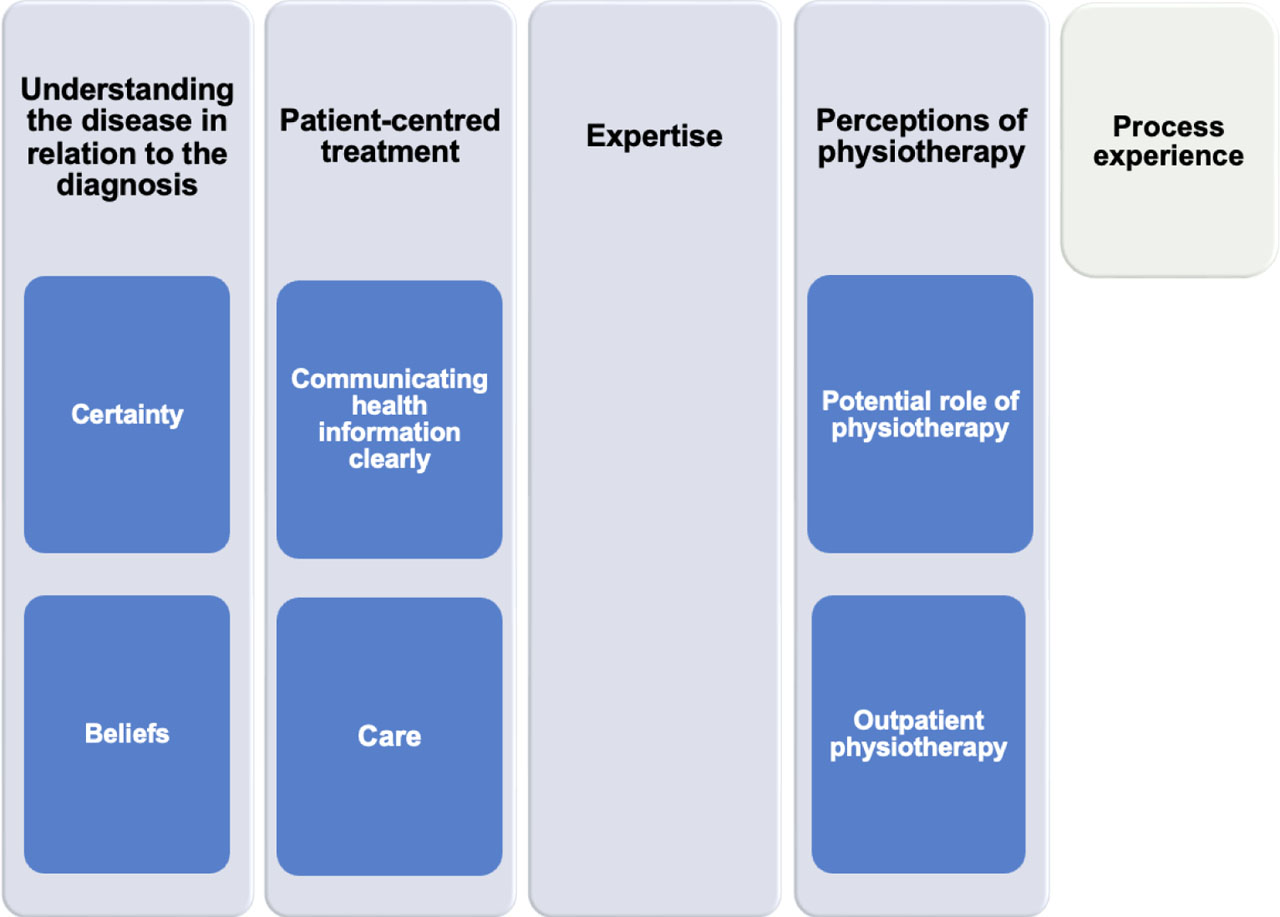
Figure 1:
Central concept “patient perspective” with 4 main thematic categories and contextualising information (process experiences).
Understanding the disease in relation to the diagnosis
The understanding of the illness was different for all patients and was characterized by uncertainty about diagnoses despite clinical tests and medical hypotheses.
Certainty
Knowing and understanding the diagnosis is important to patients. The uncertainty and the wait for the diagnosis are unsatisfactory. A suspected diagnosis would be helpful, according to one patient. Four patients received a rough structure-specific suspected diagnosis, and the three patients without previous trauma found it difficult to understand the cause of their acute pain. Three patients did not receive a diagnosis. The understanding of the illness, the associated beliefs and previous experiences with acute complaints and injuries significantly influenced how a diagnosis was perceived.
Exactly. She told me it was certainly not in the spine, nor was it a vertebra which was pushed outside and that had to be pushed back in, she could exclude that, it was more likely to be a muscular problem. (ID5, paragraph 72–73)
Patient-centred treatment
Patients expected individualised initial treatment and were given aids such as splints and forearm crutches, medication for at home, and instructions for further investigations such as imaging (usually magnetic resonance imaging) as required. Patient-centred treatment was important to the patients. In some cases, it emerged that health information, such as advice on self-management or prognosis, was inadequately communicated; for example, the lack of prognosis for the employer was mentioned several times.
Comprehensible communication of health information
The topic related to advice and explanations to instruct patients on managing their acute injury or complaint. It also included information about the planned procedure and a possible prognosis (including the timeframe for return to work).
Two patients received helpful advice on self-management. Three out of five patients were partially unsettled and overwhelmed, as five lacked self-management information. One patient also found the lack of instruction on coping strategies in the event of an acute worsening of symptoms unsettling.
The doctor said that it wasn’t too swollen and that I could put some weight on it if it didn’t hurt too much and if possible that I should not keep the knee stiff all the time, and not always wear the splint. But at home it swelled up over the weekend anyway and hurt more. I then became a bit insecure anyway. (ID3, paragraph 7)
Care
The care provided by the HCPs consisted of friendliness, a constant willingness to help and empathetic treatment of the patients. The patients felt that they were in good hands and taken seriously.
Expertise
Patients felt that the HCPs in the ED were competent. The majority emphasised professional competence without an explicitly defined focus in the interview guide. One patient perceived HCPs with more professional experience as very competent, in contrast to a newcomer to the profession. Patients appreciated knowing who was treating them and were happy to receive clear verbal information about the course of their treatment.
Patients’ assessments of potential PT treatment in the ED
Potential role of PT
The potential role of PT was described in many ways (Figure 2). Patient education was considered to be the most important.
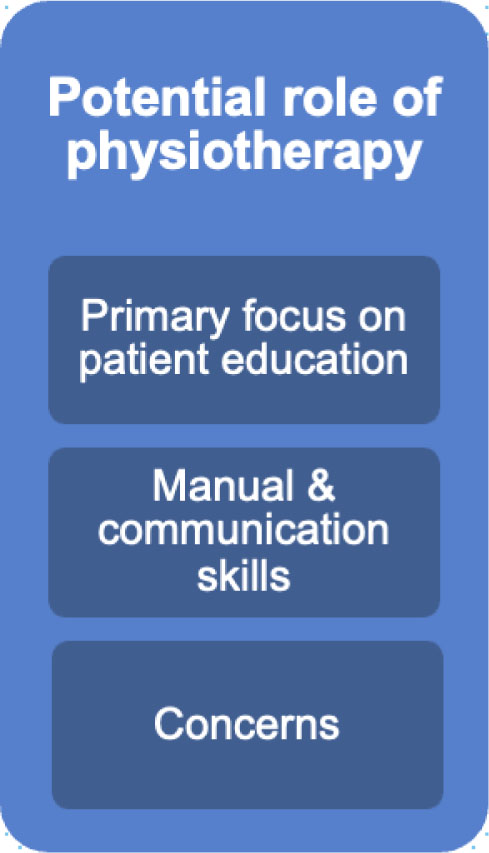
Figure 2:
Individual category “potential role of physiotherapy” from the central concept “patient perspective”.
PTs could offer information on self-management, provide explanatory information on the diagnosis, guidance on how to deal with the procedure and prognoses on the duration and severity of acute symptoms. In addition, PTs were attributed to manual skills in examination and treatment. Communication skills such as patient-centred anamnesis were also mentioned. Four patients were concerned that PTs would be able to provide successful treatment without a diagnosis from a physician, despite their positive experiences with previous PTs.
It looks as if we were trying to see which movement is possible and what we are able to do and then find out what I have or what I had done. (ID12, paragraph 39) I find it difficult because you don’t exactly know what is affected and the physiotherapist does not know either from just looking and moving it. Maybe he does know a bit about what it is? (ID3, paragraph 27)
Process experience
The patients experienced different workloads for HCPs. The workload was considered high in some cases and low in others. A calm atmosphere was appreciated. The majority of patients experienced a short waiting time.
Patients found a longer stay tedious. However, they showed understanding of this. The general role of an ED was largely understood to mean that MSK cases are not a priority. One patient would have gone to the GP if he/she had been available.
HCPs’ assessments in relation to potential PT in the ED
Table 2 shows the characteristics of the HCPs. The thematic analysis of the focus group interview resulted in four categories: “Potential tasks of PT”, “Proven expertise, new perspectives”, “Aspects of quality of care”, and “Organisational structure”. The thematic categories and subcategories from the perspective of the HCPs are shown in Figure 3. The subcategories are shown in the text as italicised headings.
Table 2:
Characteristics of the healthcare professionals.
| Healthcare professionals (n = 5) | |
|---|---|
| Professional groups | 2 physiotherapists, 2 emergency nurses and 1 senior physician, the last 3 of whom work in the emergency department |
| Professional experience in working with physiotherapy in the emergency department | 1 out of 5 healthcare professionals |
| Experience in current profession, in years | 5 to 23 |
| Experience in the emergency department, in years, n = 3 | 2 to 23 |
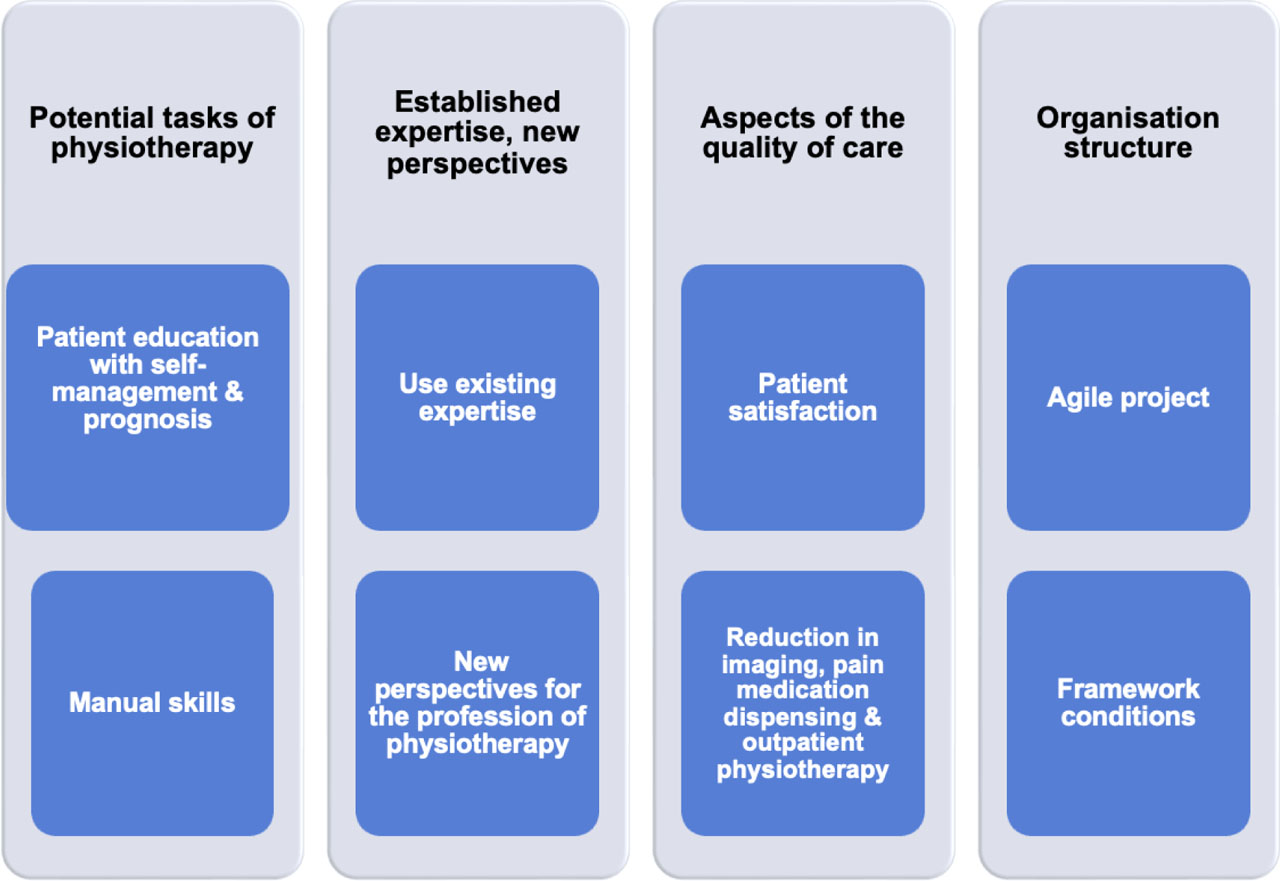
Figure 3:
Thematic main and sub-categories from the perspective of healthcare professionals.
Potential tasks of PT
All HCPs saw potential tasks for PTs in the ED (Figure 4). They saw the area of responsibility primarily following the medical assessment, i.e., the medical specialist assigning the patient to PT after the primary diagnosis. The indication for PT should be precisely defined—for example, depending on joint regions or clinical pictures. Patient education focusing on self-management and prognosis was mentioned primarily from the perspective of PTs. Beliefs, fear-avoidance behaviour, and education are crucial. Without the three points mentioned, the risk of back pain becoming chronic increases, which PT could significantly positively influence. According to the HCPs, acute back pain is the most common reason for patients with MSK complaints to present to the ED. These patients are most likely to benefit from PT.
... An acute knee is not our job. We have exclusion diagnoses. Our job is not to make a diagnosis. Self-management over the next two weeks, beliefs and prognoses... It’s not about giving an answer.
Even with an acute back, we don’t have to say it’s the joint or the disc or whatever. It’s always about treatment, which starts with information. (Focus group interview, paragraph 132)
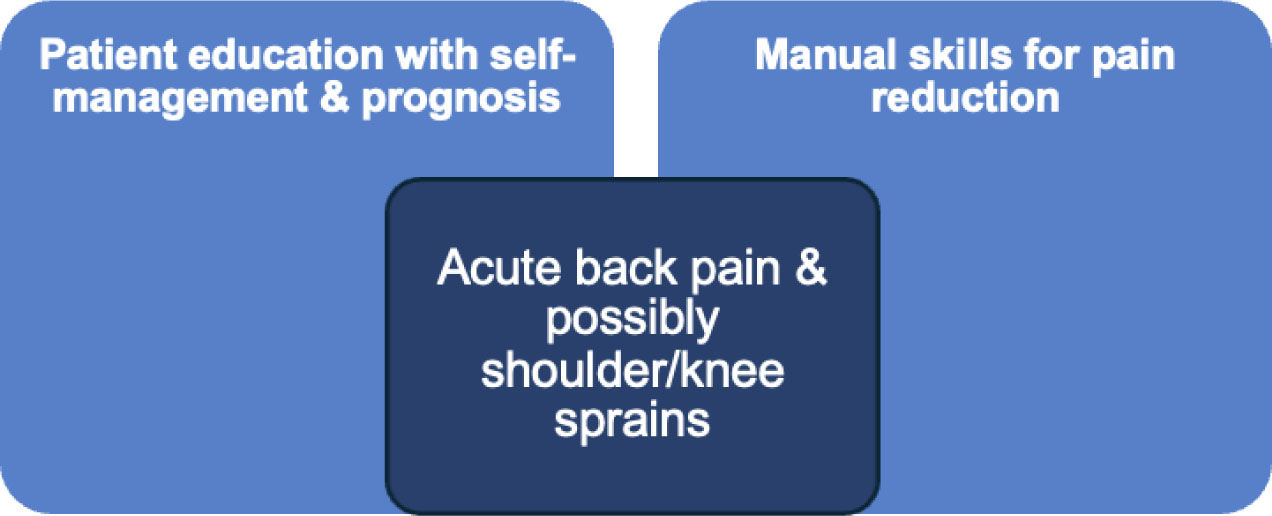
Figure 4:
Individual category “potential tasks of physiotherapy” from the perspective of healthcare professionals.
The medical specialist and the emergency nurses attributed the manual skills, mostly with the aim of reducing pain, to the PTs.
Whether it is helpful to manipulate something. Or to know where it is coming from. It makes sense to loosen something when something is stuck. (Focus group interview, paragraph 28)
Proven expertise, new perspectives
Patients with MSK complaints sometimes challenge physicians. The HCPs saw PTs as experts in the MSK field with an additional teaching function. A potentially new and attractive area of work in the ED would open up new perspectives for PTs.
Utilising existing expertise
The medical specialists and the emergency nurses saw the PTs as experts in the field of the MSK system who could take on a teaching role for the physicians. The PTs affirmed this and would be happy to contribute their expertise. The medical specialist and the emergency nurses saw collaboration with PTs in a positive light. Clearly defined roles and competencies, including responsibility for making a diagnosis, were crucial.
It’s not meant to be negative towards doctors. If I have a heart problem, I ask the cardiologist; if I have a musculoskeletal problem, I can also ask the physiotherapist for advice. ... I’ve already learnt a lot from the physiotherapist... When he examines a cervical spine, it’s different to what I learnt seven years ago... Nobody ever teaches you how to differentiate between lumbospondylogenic or radicular pain syndrome. I know that two per cent of all physicians do manual medicine training... (Focus group interview, paragraph 41)
New perspectives for the profession of PT
Following the medical assessment, treatment in the ED would require in-depth knowledge of medical conditions to be treated and red flags (recognising warning signs for referral to physicians) that can be called up at a moment’s notice.
One participant knew the definition of Advanced Physiotherapy Practitioner (APP) in Switzerland. She/he noted that a Master of Science would enable PTs to acquire more skills in various areas. According to three HCPs, the reputation of PTs would probably improve.
Aspects of the quality of care
Patient satisfaction could be increased through manual interventions, as many feel more taken seriously through physical touch. It would be possible to reduce waiting times in the ED.
According to one HCP, unnecessary imaging was performed, which may have caused uncertainty among patients as to whether they might actually have a serious injury. It could be avoided that patients are unnecessarily given painkillers. The number of outpatient PT sessions could possibly be reduced by “catching” these patients in the ED. A smaller hospital could make a positive difference, as such services are not yet widespread in Switzerland.
Organisational structure
Agile project
According to the participants, PT could start involvement with an agile approach to ensure flexibility and adapt to the available PT resources. A too rigid structure would be seen as a hindrance, especially by PT. The emergency nurses were sceptical as to whether enough patients with MSK complaints would present who would actually benefit from PT. However, the other professional groups argued that PT care in the ED could be worthwhile for certain target groups, even with a small number of patients.
Framework conditions
If the PTs have free capacity in the inpatient setting, this could be used for the ED. Emergency nurses or physicians could arrange PT by telephone. The time resources of PTs and the shortage of skilled labour were mentioned as challenges.
Patients with MSK complaints often present at off-peak times when in-house PT is not available. Information sheets about the complaints could compensate for the absence (focussing on self-management in the acute phase).
There is a high demand for outpatient PT in the acute hospital environment all year round, resulting in seasonal waiting times. Regarding the cost of potential PT in the ED, one person emphasised that convincing arguments would be needed in favour of the pilot project. Another person felt that avoiding unnecessary imaging and painkiller administration would be sufficient justification for implementation. Both people agreed that looking at the overall costs within the hospital would be a convincing argument in favour of the pilot project.
DISCUSSION
This study aimed to better understand a potential PT service for patients with MSK complaints in the ED for the first time in the context of a regional acute hospital in Switzerland. The experiences and assessments of patients and HCPs offer important perspectives when considering the involvement of PT in the ED. Both opportunities and challenges for this potential involvement can be derived from the results.
Opportunities for the potential involvement of PT in the ED
The results of this study show that PT could play a central role in patient education to counteract gaps in care. Patients with MSK complaints in the ED need clear education. Our results emphasise the importance of education about the diagnosis, similar to a cross-sectional study in which this influenced patient satisfaction (Toma et al., 2009). Previous research highlights the role of ED PT in patient education and the manual skills of ED PTs (Ferreira et al., 2018; Sheppard et al., 2010). Regarding the potential tasks of PT in the ED, the same attributions were found in our study. The assessments of the participating patients were based on their hypothetical assumptions, as they had no experience with PT in an ED at the time of the study. Nevertheless, the patients considered its involvement to be valuable. Four of them had positive experiences with outpatient PT before participating in the interview, which may have influenced their opinions. The present results confirm the importance of self-management guidance, which current literature has already described as a PT intervention in the ED (Winteler et al., 2022). Current research suggests a positive impact of self-management on patients, as evidenced by reduced utilisation of healthcare services and improved health status (Dineen-Griffin et al., 2019). PTs can offer more optimal conditions for patient-centred self-management (and patient education in general) with a longer treatment time than physicians due to the tariff. Well-informed and engaged patients can experience better outcomes (Janamian et al., 2022).
Our results emphasise an agile use of PT in the ED and the adaptation to the available resources (e.g., working hours and availability of PT). In previous research, patients received information sheets (Whiteley & Goodacre, 2014), which confirms the suitability of the solution discussed in the focus group interview for care outside of PT hours. As mentioned in the results, we consider an organisational structure useful for PT inclusion in the ED. This requires interprofessional coordination.
One interpretation of the present study is that, due to the existing shortage of specialists, the distribution of certain tasks among several professional groups in an ED offers a possible solution. The involvement of PT can potentially reduce the current workload of physicians and provide overall relief for HCPs working in the ED (Gill & Stella, 2013). The essential main function of an ED is diagnosing and treating life-threatening conditions, for which physicians working in the ED are indispensable. They are under great strain in the ED due to the numerous patients with MSK complaints. Dealing with acute emergency situations is stressful in itself, and the working conditions are suboptimal. As far as we know, the targeted use of the MSK expertise of PTs in the ED is only used in the ED of a university hospital in Switzerland. One HCP mentioned the positive experience of working with PT in the ED and its positive impact on the quality of care. The interprofessional exchange between HCPs promotes joint learning and cooperation. This creates an opportunity to improve the quality of care by integrating different expertise and perspectives.
Our results demonstrate the expertise that patients and HCPs primarily attribute to us and emphasise the need to define the competencies of PTs in the ED clearly. International studies confirm the involvement of PT as a first contact in the ED (Samsson et al., 2020) and the positive effects on the quality of care provided by APPs (Desmeules et al., 2012). The term APP covers an extended range of tasks outside the usual field of PT: assuming responsibility based on specific expertise and professional experience (Lüthi, 2020). According to these findings, involvement should initially occur within PT’s existing competencies. One interpretation of this is that the participants previously did not know the opportunities for involvement with extended PT skills. Transferring skills to PT in the ED over a period of time is one possibility (Stevenson et al., 2020). Clarification of the competencies required for an APP role in the ED is necessary in Switzerland (and internationally) (Tawiah et al., 2023). In order to do justice to all parties involved in the involvement of PT (depending on its role and competencies), a change with cross-sectoral approaches is required - both profession-specific and interprofessional, in healthcare and training institutions, among payers, in politics, and in legislation.
This study informs healthcare institutions and their HCPs about important aspects of current emergency care for patients presenting to the ED with MSK complaints. An innovative feature of this study is that the research results were collected for the first time outside the university environment in an ED in a regional acute hospital in Switzerland. Four of the five HCPs signaled their willingness to actively participate in an implementation.
Challenges of a potential involvement of PT in the ED
It is interesting to note that four patients expressed concerns about the appropriateness of PT treatment without a medical diagnosis in the ED, similar to those described previously (Gill et al., 2019). This could be due to a certain scepticism towards the independent role of PTs in terms of diagnosis and treatment. These patients may be convinced that PT should be closely linked to a doctor’s prescription. At the time of the study, the patients in this study had no experience of PT in the ED.
The HCPs in this study doubted whether enough patients with MSK complaints would present to the ED. Winteler et al. (2022) describe the patients treated by PTs in the ED with symptoms in the lumbar, thoracic, and cervical spine, as well as the lower and upper extremities. The indication for PT requires precise clarification between the HCPs in the ED.
Expanding the role of APP in the ED could relieve the current situation in the HCS. The ED has a clear purpose in which physicians and emergency nurses carry out specific interventions. Successful implementation of extended practice requires clarification of roles (competencies/tasks), the definition of project goals and steps, and supportive communication (DiCenso et al., 2010). Areas of work should be clearly delineated, and continuous clarification of roles and ongoing implementation of improvement ideas should be the norm.
Limitation
Only one physician participated in the focus group interview, although two physicians were planned to participate. Recruiting the physicians proved challenging due to the often hectic working conditions and the need for constant availability in the ED. Malterud et al. (2016) mention the term “information power” instead of data saturation. In this study, the participants’ rich explanations in the focus group interview favoured a high quality of data. This is a monocentric study. It is, therefore, not possible to generalise. Comparable acute hospitals could take these results into consideration when designing their PT programmes.
Not all target groups were included, so whether their needs were met remains unclear. Patients with no knowledge of German were not included in this study. People with a migration background may have a different perception of the need for an ED visit, which would be an interesting research question.
The patients taking part in the study presented with acute knee injuries on the one hand and acute back or lower leg pain on the other. This range of patients reflects the diversity of everyday life in the ED. This study focuses on patients with MSK complaints in the ED with no experience of PT in the ED and some with no experience of PT at all. Therefore, their views on PT in the ED should be cautiously evaluated. There were differences among the HCPs regarding the experience of working with PTs in this setting: one person had concrete experience from a previous working environment, while for the other participants, it was purely hypothetical.
CONCLUSION
This study expands the understanding of PT’s (potential) role in emergency care of patients with MSK complaints and shows the associated opportunities and challenges from different perspectives. This study’s participants considered PT’s involvement in the ED to be valuable. The patients indicate potential gaps in care that PT could counteract, primarily through patient education. Opportunities arise with agile work deployment, the use of PT expertise, and potential relief for the emergency team, as well as increased quality of care and patient satisfaction. New perspectives are opening up for PT with a potentially new area of work. Challenges such as clarifying indications and concerns about PT without a medical diagnosis from the perspective of some patients are important aspects of involvement. Implementing and evaluating a PT programme in regional acute hospitals would be desirable. The present results can serve as a basis for further research on PT in EDs.
ACKNOWLEDGMENTS
We would like to take this opportunity to thank the participants in the individual interviews and those of the focus group interview. Special thanks go to Irène Suter for proofreading and Ursula Stutz Arn for her English language editing.
Notes
[1] ETHICAL APPROVAL, REGISTRATION
According to the Ethics Committee Northwestern and Central Switzerland (EKNZ), the Swiss Human Research Act does not apply to this study (Req-2022-01384). It was conducted in accordance with the ethical principles of the Declaration of Helsinki (WMA, 2023), and all participants gave written informed consent and were informed in writing about the study’s purpose, procedure, and data protection.