
Introduction
In 2022, 1.8 billion adults were classified as physically inactive, representing an increase of 5% compared to 2010 (Strain et al., 2024). As a result, there is an increase in the risk of cardiometabolic disease development, cancer and type-2 diabetes, ultimately leading to increased health care costs for public health systems (Lee et al., 2012; Ding et al., 2016; Mikus et al., 2012). The global economic burden of sedentary lifestyles is estimated at $53.8 billion annually (Ding et al., 2016), higlighting the urgency of promoting physical activity through innovative strategies.
Virtual reality (VR) has emerged as a promising technology-based solution to increase physical activity by embedding entertainment into exercise. VR applications include exergames that gamify physical movement (Huang et al., 2017), structured virtual workouts delivered in immersive environments (Merola et al., 2025), and sport-specific simulations such as tennis, boxing, and cycling (Shepherd et al., 2018). These interventions have been shown to enhance intrinsic motivation (Liu et al., 2019), improve exercise adherence (Bird et al., 2021), elevate mood (Liu et al., 2024), and increase enjoyment while reducing perceived exertion (McClure & Schofield, 2019; Murray et al., 2016). These benefits are observed across both healthy and clinical populations, including reductions in systolic and diastolic blood pressure (Vorwerg-Gall et al., 2024).
Despite these promising outcomes, key barriers hinder the widespread adoption of VR for physical activity. In addition to cost and psychological acceptance, factors such as technological literacy, physical space constraints, and motion sickness play a substantial role in shaping user uptake. For instance, low digital literacy can prevent individuals from effectively using VR systems (Chang et al. 2023), while spatial limitations at home may restrict the feasibility of VR-based movement interventions (McGill et al., 2015). Moreover, motion sickness remains a frequently reported issue, particularly during physically active VR experiences (Rebenitsch & Owen, 2016). These multidimensional barriers highlight the complexity of VR adoption, setting the stage for a more focused examination of cost and psychological factors in this study. Nevertheless, cost is also a barrier, with commercial VR systems typically ranging from $300 to $600, depending on features such as memory and accessories (Ali & Fezari, 2025), which can limit accessibility. To address this, cost-effective alternatives have been proposed. For example, Exel et al. (2023) demonstrated that a low-cost VR setup produced positive effects on mood, enjoyment, and perceived exertion, suggesting its viability as an accessible option.
Understanding the psychological determinants of technology adoption is essential for the effective development and implementation of VR-based interventions, particularly as part of broader public health strategies to promote physical activity. To support such efforts, it is crucial to assess not only current individuals’ perceptions of VR technologies but also their intentions and willingness to adopt and engage with it in the future. In this study, anticipated acceptance is defined as a composite of individuals’ behavioral intention to use, perceived usefulness, perceived ease of use, enjoyment, attitudes toward use, and willingness to pay or build a VR setup. This approach aligns with constructs from the Technology Acceptance Model (TAM) and related frameworks (Li et al., 2019; Manis & Choi, 2019), and is designed to capture both psychological readiness and practical feasibility in the general population.
Building upon this rationale, the present study aims to investigate the anticipated acceptance of VR for physical activity, through the application of a TAM survey, to examine (1) the influence of age, past use, curiosity and price willing to pay as contributing factors, (2) perceptions about ease of use, usefulness, enjoyment and attitudes towards the utilization and purchase/build of virtual reality and (3) the probability of future utilization and future purchase/build intention of VR. Therfore, it is hypothesized that external factors (age, past use, curiosity, price willingness) and user perceptions (e.g., ease of use, enjoyment, usefulness) would predict acceptance of VR for PA.
Methods
Survey
To assess the general population’s acceptance of VR for PA, an online survey was distributed via social media platforms through an open call for voluntary participation. The survey design aligned with TAM (Davis, 1989) and followed already established procedures from prior technology acceptance research (Li et al., 2019; Manis & Choi, 2019; Mascret et al., 2022).
Participants were first presented with a brief explanatory text introducing the concept of using VR to support physical activity, including a description of a self-built, low-cost VR setup previously proposed and tested in Exel et al. (2023), as can be checked in the Supplementary Material B (pp. 17–20). This real-world example was included to present a tangible and accessible alternative to commercial VR systems and to allow respondents to evaluate their acceptance of a practical and cost-effective solution, rather than an abstract or idealized technology.
The questionnaire comprised items adapted from validated TAM-based instruments, organized according to key constructs such as perceived usefulness, perceived ease of use, enjoyment, and attitudes toward use. Each construct was assessed using multiple items answered on a five-point Likert scale (1 = strongly disagree; 5 = strongly agree). For example, perceived usefulness was evaluated through statements such as: “I believe using virtual reality would help me do more physical activity,” and “Using virtual reality would improve my life regarding physical activity.”
Additional items included open-ended responses or predefined ranges to capture contextual variables such as age, prior VR experience, curiosity, and willingness to pay. The survey was adapted from Manis and Choi (2019), with minor wording adjustments to align the items with the specific context of physical activity and the proposed low-cost VR system. The complete questionnaire is provided in the Supplementary Material B.
Technology Acceptance Model - TAM
The Technology Acceptance Model (Davis, 1989) conceptualizes technology acceptance as a causal process in which users’ beliefs about a system shape their attitudes and behavioral intention, which in turn predicts actual use. Behavioral intention is primarily determined by two key belief constructs: perceived usefulness, referring to the extent to which the technology is expected to improve task performance, and perceived ease of use, referring to the perceived effort required to use it. Additional user- or system-related characteristics may also influence acceptance, but are assumed to operate indirectly through these belief-based constructs.
In the present study, two TAM-based structural equation models were developed to examine the anticipated acceptance of VR for physical activity (PA). The first model (Figure 1) concerns commercially available VR systems (general model), whereas the second (Figure 2) refers to a self-built, low-cost VR setup (SBLCS) based on the configuration proposed by Exel et al. (2023). Both models include the same core TAM constructs: perceived usefulness, perceived ease of use, perceived enjoyment, attitudes toward use, and intention to use VR, allowing direct comparison between systems.
Three constructs differ between the models to reflect the non-commercial nature of the SBLCS:
intention to purchase VR vs. intention to build VR
attitude toward purchasing VR vs. attitude toward building VR
willingness to pay (included only in the general VR model)
The SBLCS represents a smartphone-based headset assembled using the Google Cardboard template, providing a low-cost and accessible alternative to commercial VR systems.
Both models also incorporate external variables: age, past VR use, curiosity, and (in the general model only) willingness to pay, which were hypothesized to influence acceptance indirectly via their effects on the core perceptual constructs.
The directional arrows in Figures 1 and 2 illustrate the hypothesized causal pathways among constructs. A plus sign (+) indicates an expected positive association, whereas a minus sign (−) denotes an expected negative association. These diagrams therefore provide a visual summary of how external variables and user perceptions are assumed to shape anticipated acceptance of VR for physical activity in both commercial and low-cost contexts.
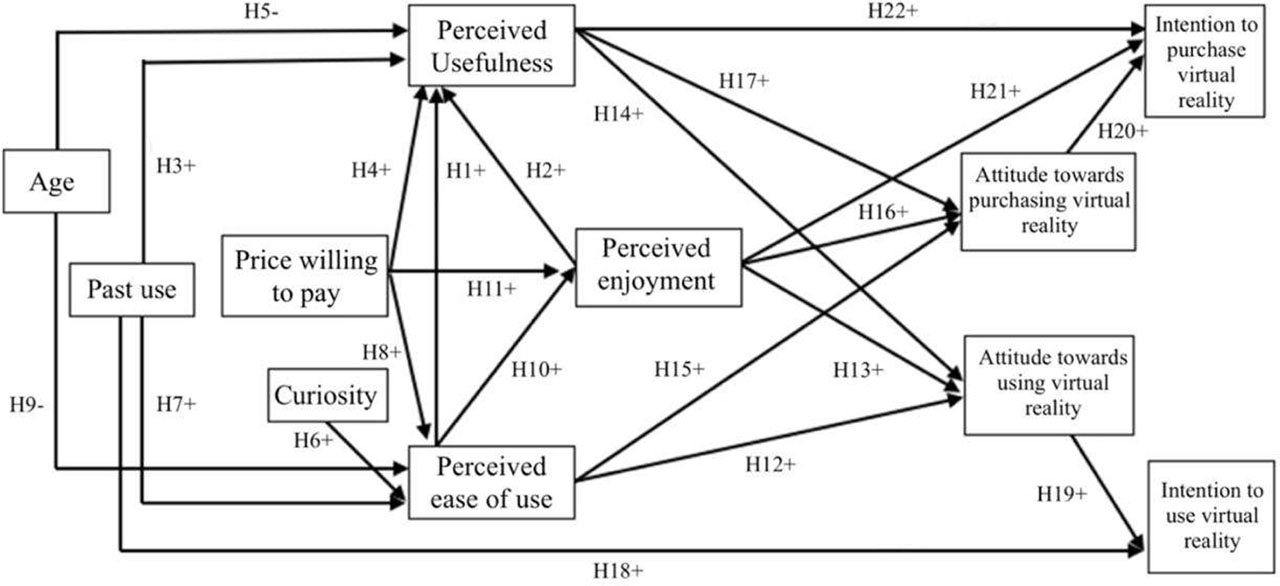
Figure 1.
Adapted Technology Acceptance Model illustrating the hypothesized relationships influencing the acceptance of commercially available virtual reality systems for physical activity. The model includes perceived usefulness, perceived ease of use, enjoyment, and attitudes toward use and purchase, as well as external variables such as age, past use, curiosity, and willingness to pay.
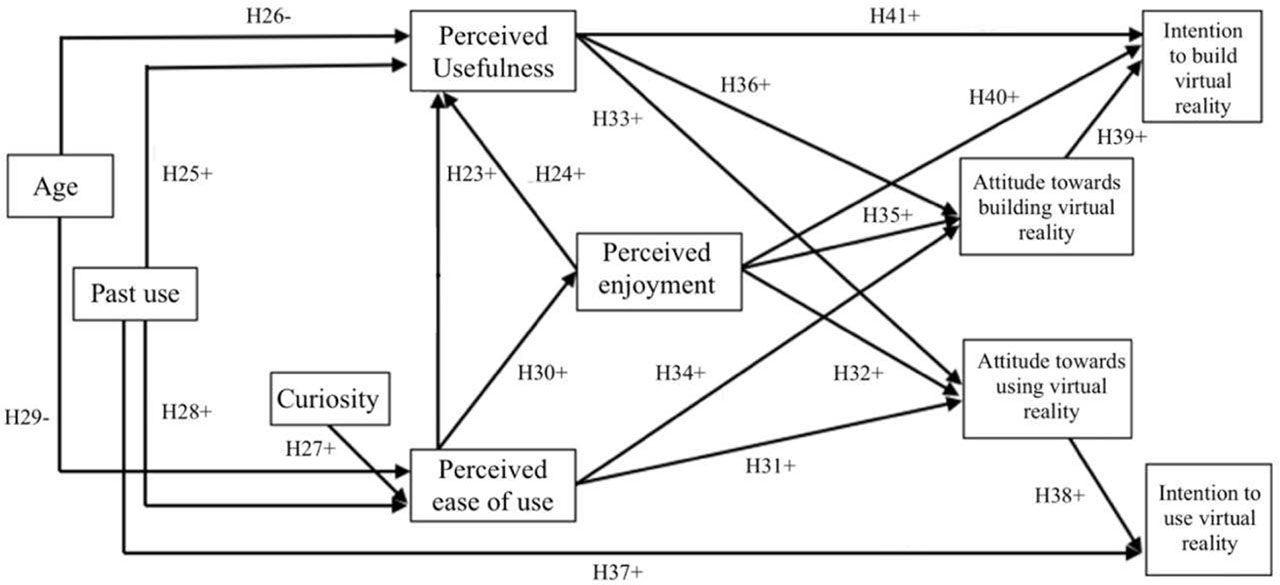
Figure 2.
Adapted Technology Acceptance Model illustrating the hypothesized relationships influencing the acceptance of a self-built, low-cost virtual reality setup for physical activity. The low-cost solution refers to a do-it-yourself configuration using the Google Cardboard template and a smartphone, as presented in Exel et al. (2023). The model includes constructs analogous to Figure 1, with purchasing-related variables replaced by “intention to build” and “attitude towards building” to reflect the non-commercial nature of the setup.
Participants
Out of 379 collected surveys, 315 were retained for analysis, resulting in a valid response rate of 83%. Data from 138 women and 177 men (age = 35.4 ± 20.6 years; height = 173.5 ± 10.1 cm; weight = 73.3 ± 17.2 kg; BMI = 24.3 ± 5.5). All participants took part voluntarily and anonymously.
No specific inclusion criteria were applied to allow for a heterogeneous sample reflective of the general population. The study was conducted in accordance with the Declaration of Helsinki and did not require approval from the Ethics Committee of the University of Vienna. Prior to beginning the survey, participants were informed about the study’s purpose, the anonymity of data collection, and their right to withdraw at any time without consequence. Informed consent was obtained through agreement before participation.
Data analysis
Data were analyzed using Microsoft Excel (Version 16.66.1, Redmond, USA) and JASP (Version 0.17.2.1, Amsterdam, Netherlands). Structural Equation Modeling was employed to test the hypothesized relationships among latent constructs in both models.
Consistent with TAM and SEM conventions, all structural paths were specified as linear relationships between latent constructs.
Model fit was assessed using the chi-square to degrees of freedom ratio (χ2/df), Tucker-Lewis Index (TLI), Comparative Fit Index (CFI), standardized Root Mean Square residual (SRMR), and Root Mean Square error of approximation (RMSEA). Acceptable model fit was defined by the following thresholds, according to Awang (2012), Hair et al. (2010) and Schumaker & Lomax (2016): χ2/df < 3, TLI ≥ 0.90, CFI ≥ 0.90, SRMR < 0.08, and RMSEA < 0.08
A confirmatory factor analysis was conducted to assess the measurement model prior to estimating the structural paths. Validation of the measurement model included assessments of internal consistency and convergent validity. Internal consistency was evaluated using Cronbach’s alpha (α ≥ 0.70) and composite reliability (CR ≥ 0.70) Convergent validity was assessed via average variance extracted (AVE ≥ 0.50) and standardized factor loadings (λ ≥ 0.50). Completely standardized path coefficients were also reported to interpret the strength and direction of the relationships between constructs. Statistical significance was set at p < 0.05. For descriptive comparisons between constructs across both models, means and standard deviations were also reported.
Results
Descriptive Statistics
Descriptive results for both the general and the SBLCS models are summarized in Table 1. Participants covered a wide age range (13–86 years; M = 35.4 ± 20.6, distribution shown in Figure 3a), with 36% reporting prior experience with VR. Regarding willingness to pay, the largest group (39%) indicated a maximum of €0–50, followed by 27% willing to pay €100–300 (Figure 3b). These results suggest a generally low investment threshold for VR technology among respondents.
Table 1.
Descriptive statistics for Technology Acceptance Model (TAM) constructs related to the general virtual reality (VR) model and the self-built low-cost setup. Values include minimum, maximum, mean, and standard deviation. Constructs labeled with “(SBLCS)” refer to the self-built low-cost setup model.
| Construct | Minimum | Maximum | Mean | Standard deviation |
|---|---|---|---|---|
| Perceived usefulness | 1 | 5 | 2.81 | 1.19 |
| Perceived ease of use | 1 | 5 | 3.33 | 1.16 |
| Perceived enjoyment | 1 | 5 | 3.46 | 1.29 |
| Intention to use | 1 | 5 | 2.23 | 1.18 |
| Intention to purchase | 1 | 5 | 1.94 | 1.18 |
| Curiosity | 1 | 5 | 3.23 | 1.31 |
| Attitude towards using virtual reality | 1 | 5 | 3.19 | 1.14 |
| Attitude towards purchasing virtual reality | 1 | 5 | 2.70 | 1.07 |
| Age (years) | 13 | 86 | 35.36 | 20.60 |
| Past Use (hours) | 0 | 210 | 4.80 | 18.07 |
| Price (€) | 0 | 1000 | 2.29 | 1.24 |
| Perceived usefulness (SBLCS) | 1 | 5 | 2.86 | 1.30 |
| Perceived ease of use (SBLCS) | 1 | 5 | 3.44 | 1.31 |
| Perceived enjoyment (SBLCS) | 1 | 5 | 3.30 | 1.36 |
| Intention to use (SBLCS) | 1 | 5 | 2.33 | 1.26 |
| Intention to build (SBLCS) | 1 | 5 | 2.11 | 1.21 |
| Attitude towards using virtual reality (SBLCS) | 1 | 5 | 3.16 | 1.26 |
| Attitude towards building virtual reality (SBLCS) | 1 | 5 | 2.83 | 1.20 |
| Past Use (SBLCS) (hours) | 0 | 12 | 0.72 | 1.68 |
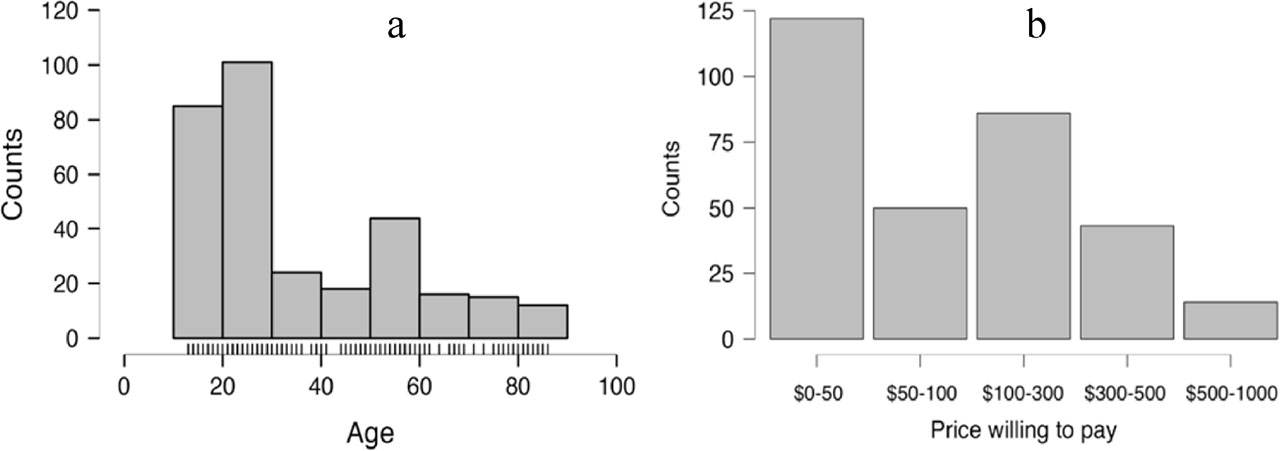
Figure 3.
(a) Age distribution of the Technology Acceptance Model survey for virtual reality and physical activity. (b) Distribution of participants’ willingness to pay (€) for a virtual reality setup intended for physical activity.
Construct-Level Analysis
Across both models, participants’ attitudes toward using VR were moderately positive (general model = 3.19±1.14; SBLCS model = 3.16±1.26), while intentions to use (general model = 2.23±1.18; SBLCS = 2.33±1.26) and intentions to purchase/build (general model = 1.94±1.18; SBLCS model = 2.11±1.21) remained below the average. This discrepancy suggests that although VR is viewed somewhat favorably, actual behavioral intentions are weak, possibly due to perceived barriers or low perceived need.
Structural Equation Model Fit
Both models demonstrated acceptable fit indices, confirming the validity of the model structure:
General model: χ2/df = 2.46, CFI = 0.91, TLI = 0.90, SRMR = 0.072, RMSEA = 0.07.
SBLCS model: χ2/df = 2.68, CFI = 0.92, TLI = 0.93, SRMR = 0.077, RMSEA = 0.07.
Model Validation
Internal consistency was excellent, with Cronbach’s α and CR values ranging from 0.85 to 0.97. Convergent validity was confirmed by AVE ≥ 0.50 and standardized loadings ≥ 0.50 (Table 2 and 3). This validates the reliability of the adapted TAM constructs used in both models. The validated structural models, including standardized path coefficients, are presented in Figure 4 (general model) and Figure 5 (SBLCS model). A full list of tested hypotheses is available in the Supplementary Material A.
Table 2.
Construct reliability and validity for the general VR model. Factor loadings, composite reliability (CR), Cronbach’s alpha (α), and average variance extracted (AVE) for each construct in the structural equation model assessing the anticipated acceptance of commercially available virtual reality for physical activity.
| Construct | Factor Loadings | |
|---|---|---|
| Perceived Usefulness | CR = 0.94; α = 0.94; AVE = 0.77 | |
| I believe using virtual reality would help me do more physical activity. | 0.862 | |
| I believe using virtual reality would help me to stick to physical activity more regularly. | 0.879 | |
| Using virtual reality would be useful in my life for physical activity. | 0.896 | |
| Using virtual reality would improve my life regarding physical activity. | 0.920 | |
| Using virtual reality would enhance my effectiveness in doing physical activity. | 0.825 | |
| Perceived ease of use | CR = 0.89; α = 0.89; AVE = 0.61 | |
| I believe using virtual reality for physical activity would be easy for me. | 0.774 | |
| I believe it would be easy to get virtual reality to do what I want it to do. | 0.754 | |
| I believe using virtual reality would be clear and understandable. | 0.769 | |
| I would find virtual reality flexible to interact with during physical activity. | 0.821 | |
| It would be easy for me to become skillful at using virtual reality for physical activity. | 0.786 | |
| Perceived enjoyment | CR = 0.94; α = 0.94; AVE = 0.79 | |
| I believe I would find using virtual reality enjoyable during physical activity. | 0.824 | |
| I believe I would have fun using virtual reality during physical activity. | 0.912 | |
| Using virtual reality would be exciting during physical activity. | 0.880 | |
| Using virtual reality would be enjoyable during physical activity. | 0.934 | |
| Intention to use | CR = 0.92; α = 0.91; AVE = 0.74 | |
| There is a high likelihood that I will use virtual reality for physical activity within the foreseeable future. | 0.858 | |
| I intend to use virtual reality for physical activity within the foreseeable future. | 0.952 | |
| I will use virtual reality for physical activity within the foreseeable future. | 0.920 | |
| Using virtual reality for physical activity in the foreseeable future is important to me. | 0.672 | |
| Intention to purchase | CR = 0.95; α = 0.95; AVE = 0.82 | |
| There is a high likelihood that I will purchase a virtual reality setup for physical activity within the foreseeable future. | 0.906 | |
| I intend to purchase a virtual reality setup for physical activity within the foreseeable future. | 0.945 | |
| I will purchase a virtual reality setup for physical activity within the foreseeable future. | 0.946 | |
| Purchasing a virtual reality setup for physical activity in the foreseeable future is important to me. | 0.811 | |
| Curiosity | CR = 0.85; α = 0.85; AVE = 0.66 | |
| I like to shop around and look at displays. | 0.867 | |
| I often read advertisements just out of curiosity. | 0.819 | |
| I like to browse through catalogs or online stores even when I don’t plan to buy anything. | 0.746 | |
| Attitude towards using virtual reality | CR = 0.92; α = 0.92; AVE = 0.73 | |
| Bad - good | 0.835 | |
| Negative - positive | 0.887 | |
| Unsatisfactory – satisfactory | 0.873 | |
| Unfavorable – favorable | 0.799 | |
| Unpleasant – pleasant | 0.769 | |
| Attitude towards purchasing virtual reality | CR = 0.92; α = 0.92; AVE = 0.71 | |
| Bad - good | 0.853 | |
| Negative - positive | 0.859 | |
| Unsatisfactory – satisfactory | 0.877 | |
| Unfavorable – favorable | 0.788 | |
| Unpleasant – pleasant | 0.833 |
Table 3.
Construct reliability and validity for the self-built low-cost VR model. Factor loadings, composite reliability (CR), Cronbach’s alpha (α), and average variance extracted (AVE) for each construct in the structural equation model assessing the anticipated acceptance of a self-built, low-cost VR setup for physical activity.
| Construct | Factor Loadings | |
|---|---|---|
| Perceived usefulness regarding the low-cost virtual reality setup | CR = 0.97; α = 0.97; AVE = 0.87 | |
| I believe using this virtual reality setup would help me do more physical activity. | 0.919 | |
| I believe using this virtual reality setup would help me to stick to physical activity more regularly. | 0.937 | |
| Using this virtual reality setup would be useful in my life for physical activity. | 0.951 | |
| Using this virtual reality setup would improve my life regarding physical activity. | 0.947 | |
| Using this virtual reality setup would enhance my effectiveness in doing physical activity. | 0.919 | |
| Perceived ease of use regarding the low-cost virtual reality setup | CR = 0.94; α = 0.95; AVE = 0.80 | |
| I believe using this virtual reality setup for physical activity would be easy for me. | 0.876 | |
| I believe it would be easy to get this virtual reality setup to do what I want it to do. | 0.908 | |
| I believe using this virtual reality setup would be clear and understandable. | 0.866 | |
| I would find this virtual reality setup flexible to interact with during physical activity. | 0.910 | |
| It would be easy for me to become skillful at using this virtual reality setup for physical activity. | 0.899 | |
| Perceived enjoyment regarding the low-cost virtual reality setup | CR = 0.95; α = 0.95; AVE = 0.84 | |
| I believe I would find using this virtual reality setup enjoyable during physical activity. | 0.918 | |
| I believe I would have fun using this virtual reality setup during physical activity. | 0.928 | |
| Using this virtual reality setup would be exciting during physical activity. | 0.914 | |
| Using this virtual reality setup would be enjoyable during physical activity. | 0.897 | |
| Intention to use regarding the low-cost virtual reality setup | CR = 0.94; α = 0.94; AVE = 081 | |
| There is a high likelihood that I will use this virtual reality setup for physical activity within the foreseeable future. | 0.920 | |
| I intend to use this virtual reality setup for physical activity within the foreseeable future. | 0.938 | |
| I will use this virtual reality setup for physical activity within the foreseeable future. | 0.947 | |
| Using this virtual reality setup for physical activity in the foreseeable future is important to me. | 0.788 | |
| Intention to build regarding the low-cost virtual reality setup | CR = 0.95; α = 0.95; AVE = 0.83 | |
| There is a high likelihood that I will build this virtual reality setup for physical activity within the foreseeable future. | 0.957 | |
| I intend to build this virtual reality setup for physical activity within the foreseeable future. | 0.918 | |
| I will build this virtual reality setup for physical activity within the foreseeable future. | 0.941 | |
| Building this virtual reality setup for physical activity in the foreseeable future is important to me. | 0.815 | |
| Attitude towards using this low-cost virtual reality setup | CR = 0.94; α = 0.94; AVE = 0.76 | |
| Bad - good | 0.875 | |
| Negative - positive | 0.905 | |
| Unsatisfactory – satisfactory | 0.898 | |
| Unfavorable – favorable | 0.817 | |
| Unpleasant – pleasant | 0.844 | |
| Attitude towards building this low-cost virtual reality setup | CR = 0.94; α = 0.94; AVE = 0.76 | |
| Bad - good | 0.875 | |
| Negative - positive | 0.893 | |
| Unsatisfactory – satisfactory | 0.874 | |
| Unfavorable – favorable | 0.872 | |
| Unpleasant – pleasant | 0.839 |
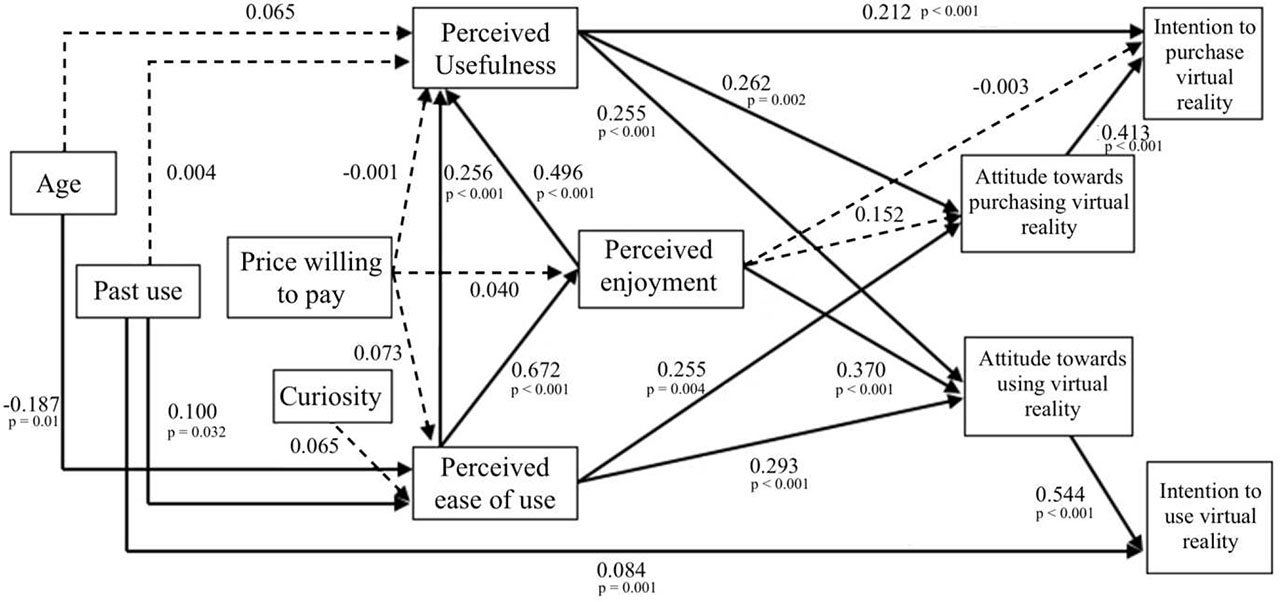
Figure 4.
Validated structural model with standardized path coefficient for the acceptance of virtual reality for physical activity. Statistically significant paths are represented with bold lines and non-significant paths are represented with dashed lines (p<0.05).
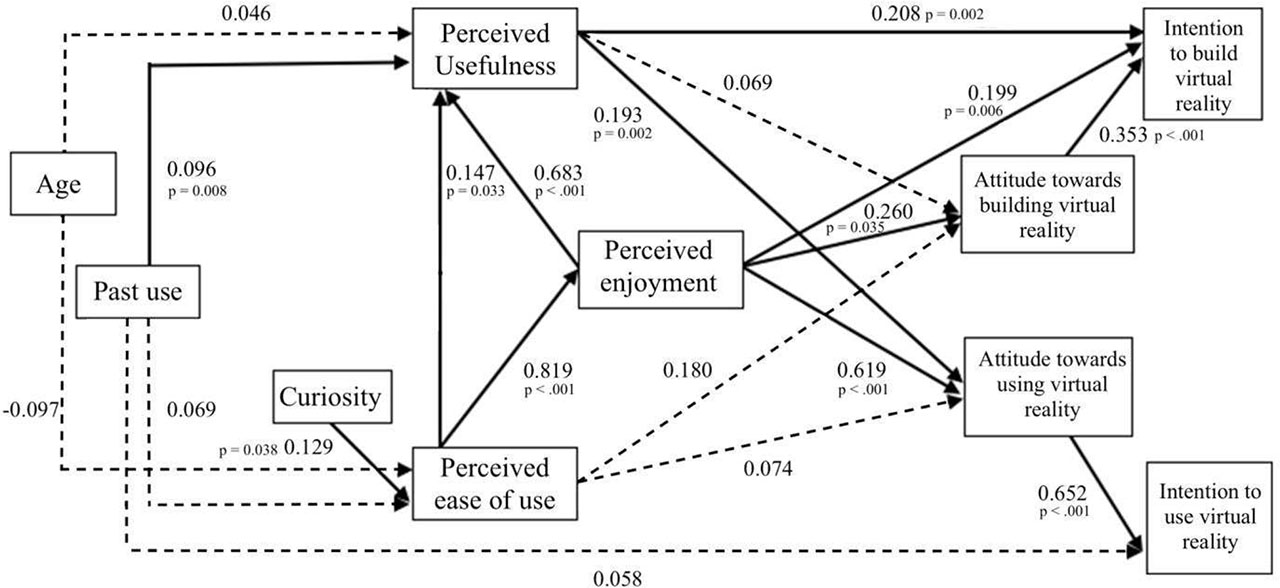
Figure 5.
Validated structural model with standardized path coefficient for the acceptance of self-built low-cost setup for physical activity. Statistically significant paths are represented with bold lines and non-significant paths are represented with dashed lines (p<0.05).
Discussion
This study examined the anticipated acceptance of VR for physical activity by comparing a commercially available system with a self-built, low-cost setup. Based on the TAM, it is hypothesized that both external factors (age, past use, curiosity, price willingness) and user perceptions (e.g., ease of use, enjoyment, usefulness) would predict acceptance. A particular focus was placed on understanding whether affordability, operationalized through the low-cost setup, would play a decisive role in shaping users’ intentions to adopt VR for physical activity, and whether VR can serve as an effective primary intervention for increasing PA.
Overall, the influence of external variables was more limited than expected. In the general VR model, only three out of nine hypothesized paths were significant, while in the SBLCS, just two of six paths reached significance. These findings suggest that internal perceptions are more important than demographic or contextual variables in determining anticipated use.
Contrary to expectations, external variables had only a marginal impact on acceptance in both models. In the commercial VR model, only age and past use significantly predicted ease of use and intention to use. These findings align with previous research emphasizing the role of prior exposure and technological familiarity in facilitating technology acceptance (Manis & Choi, 2019; Langaro et al., 2022; Chen et al., 2025; Schreiter et al., 2025). However, in the SBLCS model, age had no significant influence, and past use only weakly affected perceived usefulness, suggesting that DIY setups depend more on experiential engagement than demographic traits.
Curiosity emerged as a minor yet significant predictor in the SBLCS model, influencing perceived ease of use. This suggests that DIY systems appeal to users with a “maker” mindset—those who find satisfaction in building and experimenting. In contrast, willingness to pay did not influence acceptance in either model, questioning the assumption that cost is a primary barrier to adoption. These findings resonate with broader literature suggesting that price is often considered in conjunction with perceived value and experience quality (Abbas et al., 2024)
Together, these results highlight diverging pathways to acceptance between commercial VR and low-cost DIY systems. Commercial solutions benefit from usability and prior familiarity, while SBLCS adoption seems driven more by curiosity and hands-on engagement. Understanding these mechanisms is essential for guiding the design and implementation of VR-based interventions, particularly when envisioned as scalable tools for public health promotion. From a public health perspective, these findings have several implications. Commercial VR systems may support structured delivery, while DIY systems expand access equity. However, real adoption hinges on health impact, usability, and motivation—factors underpinned by enjoyment and experiential design (Mehrabi et al., 2022; Hosseinie et al., 2023). Commercial VR systems may support engagement in structured environments such as rehabilitation clinics, school-based programs, or aging-in-place initiatives, while low-cost or self-built VR setups could bridge digital health gaps in under-resourced settings. By lowering financial and technical barriers, SBLCS approaches may enhance equity in access to exergaming and VR-mediated physical activity interventions (Sarkar et al., 2021). However, their effectiveness in real-world deployment depends on demonstrating tangible health benefits, ensuring usability, and maintaining high levels of intrinsic motivation and enjoyment, factors repeatedly shown to mediate long-term adherence to digital health technologies (Jo & Park, 2023).
Across both models, perceived ease of use consistently led to enjoyment, which in turn predicted perceived usefulness. This three-part pathway was the strongest and most consistent in both models, especially in the SBLCS. While TAM traditionally emphasizes ease of use and usefulness (Davis, 1989), our findings reflect growing evidence from updated models like the Unified Theory of Acceptance and Use of Technology 2, which include hedonic motivation as a key predictor of behavioral intention (Venkatesh, Thong, & Xu, 2012). Empirical studies on VR exercise and rehabilitation further support this perspective, showing that enjoyment and immersion are critical for adherence and long-term engagement (Mouatt et al., 2020; Jo & Park, 2023). Taken together, these results extend TAM by highlighting the importance of intrinsic and experiential factors, which are often underrepresented in utilitarian adoption models. In practical terms, this suggests that intuitive design and positive user experiences are not just complementary but central to how individuals evaluate the potential of VR for physical activity. This interpretation aligns with broader evidence showing that simplicity enhances engagement and that enjoyment acts as a primary driver of technology use (Manis & Choi, 2019; Abbas et al., 2024).
In the DIY context, this mechanism becomes even more evident. Ease of use enables enjoyment, which then shapes perceptions of utility. This indirect pathway contrasts with earlier findings that suggested a strong direct effect from ease of use to usefulness (Gao et al., 2013; Lee et al., 2012; Schepers & Wetzels, 2007). For SBLCS in particular, enjoyment appears to mediate this relationship, underscoring its importance in user evaluation. Therefore, systems designed for low-cost use must be not only functional and accessible, but also intrinsically enjoyable. This holds especially true in the context of physical activity, where long-term engagement is necessary to achieve health benefits (Jo & Park, 2023; Chen et al., 2025).
Yet, despite the clear influence of these pathways, overall behavioral intention remained low. Participants expressed moderately positive attitudes toward both VR systems, but these attitudes did not translate into a strong willingness to use them. This intention–behavior gap is a well-documented challenge in health technology adoption (Sheeran & Webb, 2016). Factors such as doubts about effectiveness, low perceived necessity, or concerns over technical self-efficacy may help explain this reluctance (Sarkar et al., 2021).
Future research should address this attitude–intention gap through intervention and longitudinal studies that evaluate whether initial enjoyment translates into sustained engagement and measurable health outcomes. Structured onboarding, guided usage sessions, and explicit communication of VR’s health benefits may strengthen behavioral adoption in both commercial and low-cost contexts. Moreover, integrating motivational design principles informed by Self-Determination Theory—emphasizing autonomy, competence, and relatedness—could enhance the appeal of VR exergames (Ryan & Deci, 2020). These strategies will be critical for transforming VR’s potential as a health promotion tool into widespread real-world use.
Limitations
This study has several limitations. First, the age-skewed sample, predominantly younger participants, limits the generalizability of the findings. Future research should aim for more balanced age distribution and larger, more diverse samples. Second, most participants had limited prior experience with virtual reality, which may have influenced their perceptions of ease of use and usefulness. These findings should therefore be interpreted cautiously, as attitudes may change following hands-on use. Third, the online, voluntary nature of the survey introduces potential self-selection bias. Individuals with a greater interest in technology or physical activity may be overrepresented. Finally, the cross-sectional design does not allow for conclusions about how acceptance evolves over time. Longitudinal or pre-post studies are recommended to better understand how VR usage affects user attitudes and intentions.
Conclusion
This study assessed the anticipated acceptance of VR for physical activity, comparing a commercially available system with a self-built low-cost setup. For both commercial and low-cost VR, intuitive design and positive user experiences are essential. While self-built low-cost approach hold promise for expanding access, widespread adoption will depend on whether these systems can deliver engaging, user-friendly, and impactful experiences that translate into long-term health benefits. Our findings contribute to the growing body of literature on VR and exergaming by showing that perceived enjoyment, more than affordability, is central to user acceptance.
Notes
Supplementary Material A – Structural Equation Modeling Results
This section provides detailed results of the structural equation modeling (SEM) analyses, including the tested hypotheses, path coefficients, and model fit statistics for both models presented in Figure 5 and Figure 6 of the main manuscript.
1. Structural Equation Model 1 (Figure 4)
Table 1 summarizes the hypotheses (H1–H22) tested in the first SEM, which examines relationships between constructs.
For each path, the completely standardized coefficient (CS) and its significance level (p-value) are reported. Model fit was assessed using multiple indices: SRMR = 0.072, CFI = 0.911, TLI = 0.902, RMSEA = 0.068, and χ2/df = 2.459, all indicating an acceptable to good model fit.
Significant paths (p < 0.05) are marked with an asterisk (*), indicating support for the corresponding hypothesis. Non-significant paths suggest that the respective constructs did not exhibit a statistically reliable relationship in this sample.
This section provides detailed results of the structural equation modeling (SEM) analyses, including the tested hypotheses, path coefficients, and model fit statistics for both models presented in Figure 5 and Figure 6 of the main manuscript.
1. Structural Equation Model 1 (Figure 4)
Table 1 summarizes the hypotheses (H1–H22) tested in the first SEM, which examines relationships between constructs. For each path, the completely standardized coefficient (CS) and its significance level (p-value) are reported. Model fit was assessed using multiple indices: SRMR = 0.072, CFI = 0.911, TLI = 0.902, RMSEA = 0.068, and χ2/df = 2.459, all indicating an acceptable to good model fit.
Significant paths (p < 0.05) are marked with an asterisk (*), indicating support for the corresponding hypothesis. Non-significant paths suggest that the respective constructs did not exhibit a statistically reliable relationship in this sample.
Supplementary Material B
The online survey used for data collection, which was distributed via social media through an open call for voluntary participation, is presented on the following pages. The survey design adhered to established procedures commonly applied in technology acceptance research (Li et al., 2019; Manis & Choi, 2019).
The procedure consisted of a brief descriptive text, followed by a series of questions related to that text. This structure is commonly employed in studies assessing the acceptance of a technology prior to its initial deployment. Each question set, adapted from validated technology acceptance questionnaires, corresponded to a specific construct and was rated on a five-point Likert scale (1 = strongly disagree; 5 = strongly agree).
In addition, certain constructs included open-ended response fields or predefined selection ranges (e.g., age, prior usage, willingness to pay).
Only the English version of the survey is provided here.