
INTRODUCTION
In 1995, the UN’s fourth world conference in Beijing marked a milestone for global gender equality, followed two decades later by the UN’s fifth Sustainable Development Goal (SDG 5) on gender equality (UN, 2015). Corporate stakeholders have since accelerated efforts to recognize women’s leadership (WEF, 2021). In 2017, major institutional investors (Vanguard, State Street Global Advisors, BlackRock) launched significant campaigns to increase board gender diversity, leading to 2.5 times as many female directors by 2019 (Carli, 2020). Other organizations (e.g., UNICEF, World Bank) continue this push through their gender policy, action, and strategy plans. The EU remains committed to increasing female leadership representation (Griffin et al., 2021), aiming for 33–40% board diversity. By 2022, over 70 large multinational organizations disclosed sustainability reports setting specific gender diversity goals through 2030 (Kalev & Dobbin, 2022). Despite these advancements, some countries still lag (Flor et al., 2022; Klasen, 2020; Carli, 2020; UN Woman, 2020).
Overall, over the past three decades, accountability and democratization efforts for gender equality in corporate governance have spurred policy design and stimulated gender-focused research in business and management (Baker et al., 2020; Sánchez-Teba et al., 2020; Singh et al., 2008, 2021; Mumu et al., 2022; Basher et al., 2022; Vieira et al., 2022). Yet, it remains unclear whether current scholarships truly promote an informed, ethical approach to gender-inclusive governance. Recent literature reviews are limited by a narrow focus on boards of directors and gender diversity, as well as by database tools (e.g., VOSviewer, BibExcel) lacking robust multivariate capabilities to track changes over time (van Bommel et al., 2023). In addition, the field Using SciMAT for longitudinal mapping, this study uncovers thematic networks and influences in gender equality and governance, driving these research questions:
RQ1: Which themes lead corporate governance and gender research?
RQ2: How has corporate governance and gender literature evolved chronologically?
RQ3: Which themes continue, emerge, or decline in corporate governance and gender research?
RQ4: What is the dominant conceptual relationship between corporate governance and gender literature?
By applying quantitative methods to 30 years of interdisciplinary work, we cluster results to provide comprehensive insights and foster innovative research ideas. This approach helps academic researchers and stakeholders transcend current gender and governance norms, supporting SDG 5.
BACKGROUND, RESEARCH GAPS, AND METHODOLOGICAL FRAMEWORK
Synthesis of prior bibliometric studies and research gaps
Bibliometric reviews have the potential to set the stage for the theoretical evolution of a knowledge domain, identify prominent research shifts, highlight key topics of current interest, and reveal gaps in knowledge production (Hallinger & Kovacevic, 2019; Hallinger, 2013). The review of earlier studies is presented in Table 1.
Table 1.
A review of bibliometric studies mapping gender and corporate governance key parameters
| Authors | Focus | Data source | Sample | Time-period | Software | Filters | Scientific productivity | Cited papers | Cited authors | Major themes | Thematic network | Dynamics of change between time-periods | Thematic evolution |
|---|---|---|---|---|---|---|---|---|---|---|---|---|---|
| Terjesen et al., 2009 | women on corporate boards | EBSCO, ProQuest, Google Scholar, directly from authors | 180 | until 2009 | Manually | 0 | 0 | 0 | 0 | x | x | 0 | 0 |
| Kagzi and Guha, 2018 | board demographic diversity | EBSCO | na | 1989–2016 | Manually | 0 | 0 | 0 | 0 | x | 0 | 0 | 0 |
| Baker et al. 2020 | board demographic diversity | Web of Science | 579 | 1999–2019 | BibExcel, Gephi | x | x | x | x | x | x | 0 | 0 |
| Sánchez-Teba et al. 2020 | gender diversity of boards | Web of Science | 168 | 1994–2020 | VOSviewer | 0 | 0 | x | x | x | x | 0 | partially |
| Singh et al. 2021 | gender diversity of boards | Scopus | 352 | 1989–2021 | VOSviewer | x | x | x | x | x | x | 0 | partially |
| Mumu et al. 2022 | gender diversity in corporate governance | Web of Science | 393 | 1992–2020 | VOSviewer | x | x | 0 | x | x | x | 0 | 0 |
| Basher et al. 2022 | gender diversity of boards | Scopus | 1413 | 2000–2021 | VOSviewer, R Studio, META | x | x | x | 0 | x | x | 0 | 0 |
| Vieira et al. 2022 | gender diversity in corporate governance | Scopus | 402 | 2017–2021 | Scopus | x | x | x | 0 | 0 | 0 | 0 | 0 |
Reviewing previous studies (Table 1) reveals several domain limitations:
– a uniform focus on boards of directors, overlooking other corporate governance themes;
– an overemphasis on gender diversity, neglecting broader gender factors (e.g., equality, leadership, women’s participation);
– the use of software tools (e.g., VOSviewer, BibExcel) that impede robust multivariate data preparation;
– limited temporal change measurement, resulting in only partial visualization of the research field’s evolution.
We aim to address the following research gaps:
– Broaden perspectives on corporate governance and gender diversity by integrating both database creation and analysis;
– Pinpoint distinct time-periods to highlight field evolution (e.g., research priorities, themes, emergence, transformation);
– Identify popular research themes in each time period;
– Measure the strength of thematic links within and across time periods.
We intend to map the research landscape, showing the volume, trends, and distribution of studies in a domain to identify patterns, clusters, and gaps. We believe that this survey of a reach, however fragmented, domain will provide direction and structure for future systematic reviews and empirical studies.
Research design
Following PRISMA guidelines (Page et al., 2021, PRISMA 2023), we first gather bibliometric data from peer-reviewed publications (e.g., Scopus) on “gender” and “corporate governance.” In the second stage, we use SciMAT (v1.1.04) for a longitudinal scientific mapping of this dataset. Although tools like VOSviewer, CiteSpace, and Bibliometrix also facilitate bibliometric reviews, SciMAT uniquely supports longitudinal analyses, enabling the identification of research hotspots, gaps, and potential new directions (Tomaszewski, 2023; Colina Vargas et al., 2022; Cobo et al., 2011; Moral-Muñoz et al., 2020). The research design is illustrated in Fig. 1.
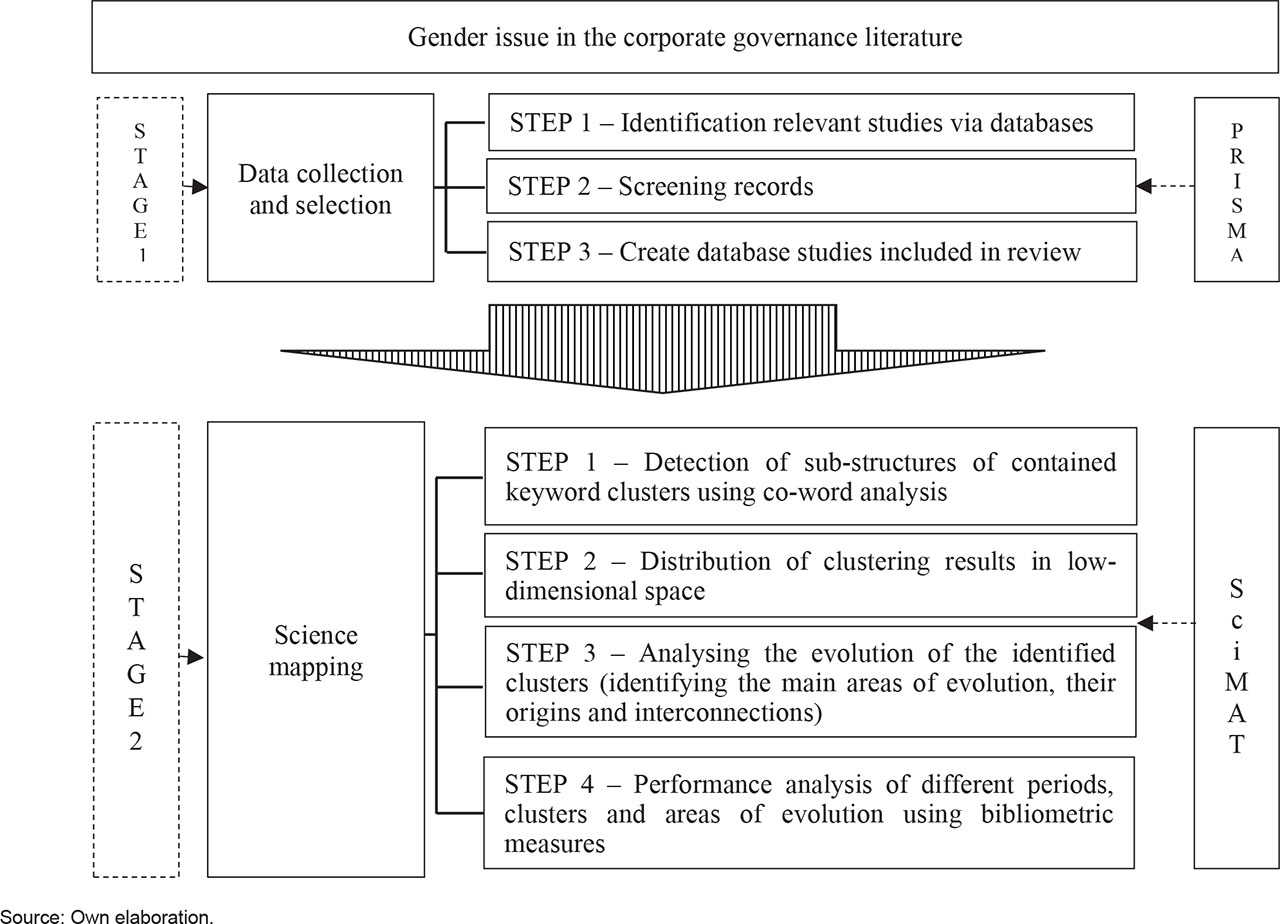
Figure 1.
Conceptual design of the research process
Based on the PRISMA statement (PRISMA 2023), we selected a scientific publications’ dataset on gender in corporate governance, indexed in Scopus. The dataset construction initiates with the bibliometric data of the Scopus database. We focus on a single database, adopting the argumentation of Harzing and Alakangas (2016). We extract the years 2022-mid 2023 in a separate time period. Besides the common approach to create a dataset covering full years, the authors also include publications indexed in the first half of 2023. The reason for this decision is the ongoing, dynamic changes in this research field. The PRISMA flow diagram in Fig. 2 further analyzes the research design of the first stage and its three steps.
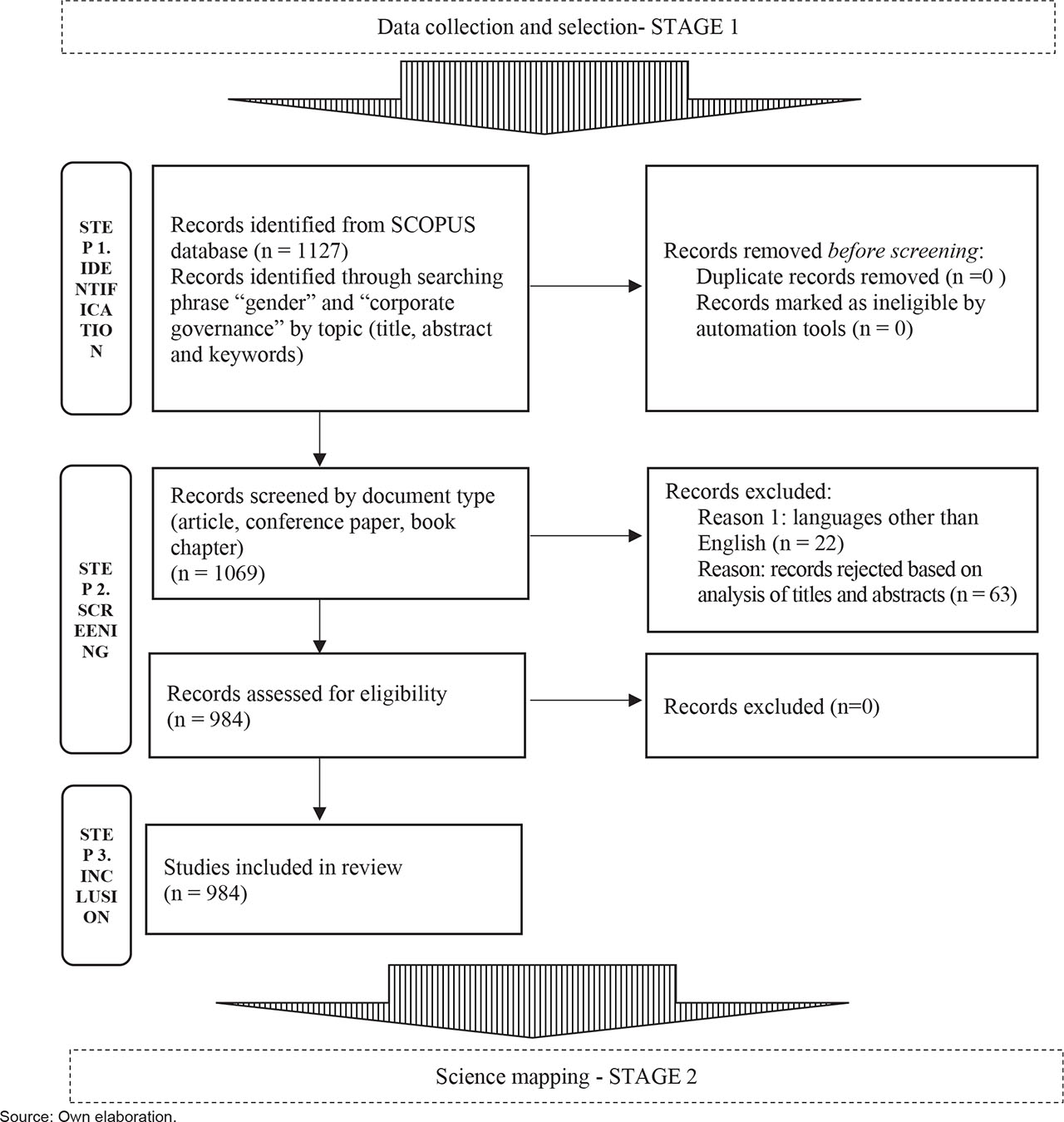
Figure 2.
Stage 1. Data collection and selection.
Stage 1: Data collection and selection
We first searched Scopus for publications containing “gender” and “corporate governance” in titles, abstracts, and keywords, yielding 1,127 items from 1995 onward. After refining for English-language journal articles, conference proceedings, and book chapters, the final dataset was 984 publications.
Stage 2: Science mapping
Hence, we proceed to the research design of the second stage, which is the science mapping (Bankar & Lihitkar, 2019) and its four steps, using SciMAT (version 1.1.04) software (see Fig. 3). SciMAT integrates most of the bibliometric data-analysis tools’ functionalities and stands out in terms of data pre-processing capabilities (Cobo et al., 2011, 2018; Moral-Muñoz et al., 2020). This allows us to check the quality and validity of both the data and the possible research combinations for the final visualisation, at each step of the analysis.
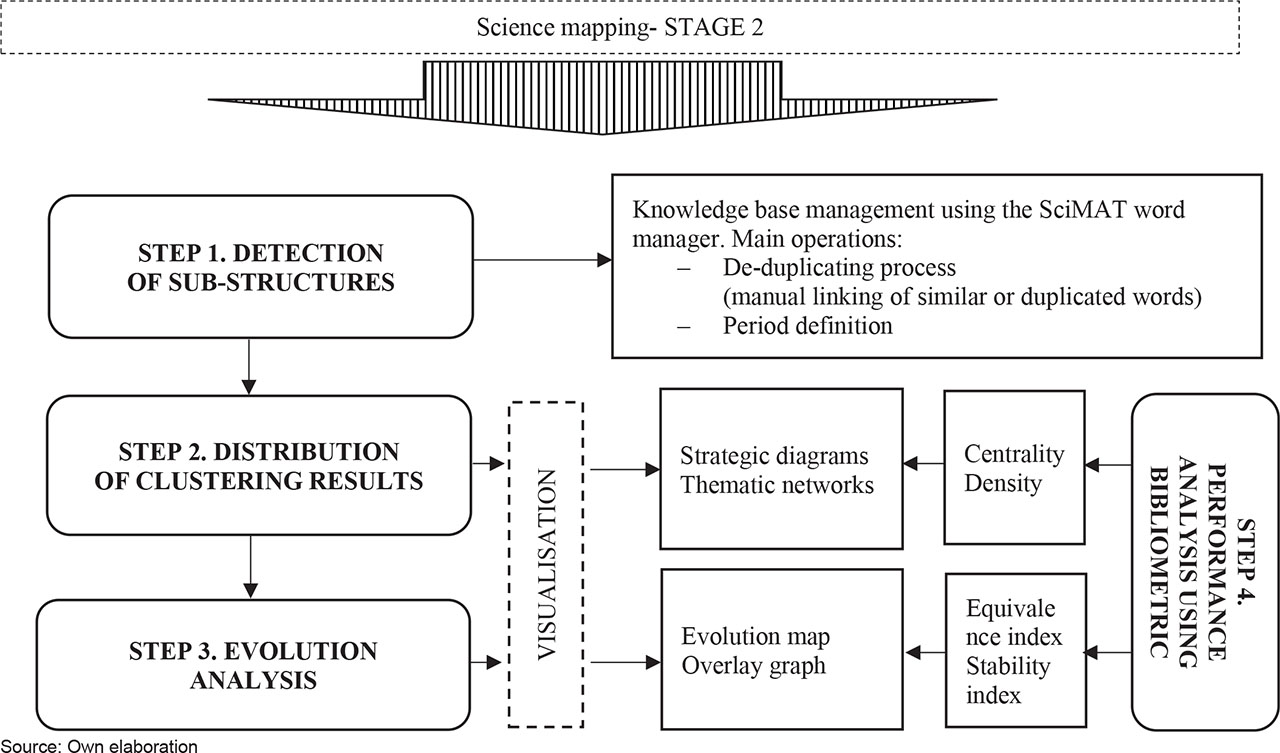
Figure 3.
Stage 2. Science mapping.
According to Cobo et al. (2018), we adopt a longitudinal mapping analysis in our research design. At this second mapping science stage, the focus is on discovering relationships among themes through a multifaceted analysis of keyword co-occurrence. This second design stage (see Fig. 3) includes the following four (4) steps:
– Step one (1) detects the keyword clusters of sub-structures, using co-word analysis.
– Step two (2) distributes clustering results into a low-dimensional space.
– Step three (3) analyses the evolution of the identified clusters by recognising the main areas of evolution, their origins, and interconnections.
– Step four (4) analyzes the performance of different periods, clusters, and areas of evolution, applying bibliometric measures.
The following is Table 2, which presents the formulas, measures, and descriptions of the symbols used to assess keyword associations with SciMAT software. The measures in concern are the following:
– Equivalence index, which measures the similarity between keywords (Callon et al., 1991).
– Centrality, which measures the degree of interaction of the employed network in relation to the other networks (Cobo et al., 2011).
– Density, which measures a network’s internal strength (Cobo et al., 2011).
– Stability index, which measures the level of stability between two consecutive periods (Cobo et al., 2011).
– Centrality range and density range, which are normalized indicators derived from centrality and density values through min–max normalization (Cobo et al., 2011).
Table 2.
Formulas of indexes used in SciMAT analysis
| Measure | Formula | Description of Symbols |
|---|---|---|
| Equivalence index | Eij - the equivalence index; | |
| i, j, …. - keywords | ||
| Ci - the number of occurrences of the keyword “i”; | ||
| Cj - the number of occurrences of the keyword “j”; | ||
| Cij - the number of co-occurrences of the keywords “i” and “j”. | ||
| Centrality | c – centrality; | |
| u - an item belonging to the cluster; | ||
| v - an item belonging to other clusters. | ||
| Centrality range | cru – centrality range; | |
| cu – the original centrality values of cluster u | ||
| cmax, cmin – the maximum and minimum values within the dataset | ||
| Density | d- density; | |
| i, j - items belonging to the cluster; | ||
| n- the number of items in the theme | ||
| Density range | dru – centrality range; | |
| du – the original density values of cluster u | ||
| dmax, dmin – the maximum and minimum values within the dataset | ||
| Stability index | Sij - the stability index; | |
| t1, t2, …. - periods | ||
| nt1 – the number of keywords related to period t1; | ||
| nt2 - the number of keywords related to period t2; | ||
| nt1t2 - the number of keywords shared by periods t1 and t2. |
[i] Source: own elaboration based on (Cobo et al. 2011, 2018) (Callon et al. 1991)
Accordingly, we visualise the results through overlay graphs and thematic evolution maps. Thematic networks represent the interrelationships among keywords as circles of different sizes, linked by lines of varying thickness. We label each thematic network with the name of the most important keyword in the related topic, which is usually identified by the most central topic keyword. The size of the circles is proportional to the number of documents corresponding to each keyword, and the thickness of the connection lines between the two circles ‘i’ and ‘j’ is proportional to the equivalence index (Cobo et al., 2011). Overlay graphs demonstrate the continuity and stability of the domain by presenting changes between consecutive chronological periods. Stability is determined by a stability index, usually measured with the Jaccard index (Cobo et al., 2011).
We continue with the chronological dataset division to develop a thematic evolution map that clearly visualises the research domain’s evolution. It includes linked bi-partite graphs with changes in the research field development (Cobo et al., 2011). Finally, the stage-by-stage research process, as exhibited in Fig. 1, formulates our final bibliometric database, which is reviewed in the following sections.
LITERATURE MAPPING
The final bibliometric dataset contains 984 items. After analysing the main characteristics of the dataset (chronological distribution of documents and citations), the analysis continues with the employment of SciMAT software. We separately examine the distribution of articles published in this field by year and by the number of citations per article. Fig. 4 shows the dataset structure for annual publications and citations. It also highlights changes in the number of scientific papers per year, which is an important trend indicator (Zou et al., 2018).
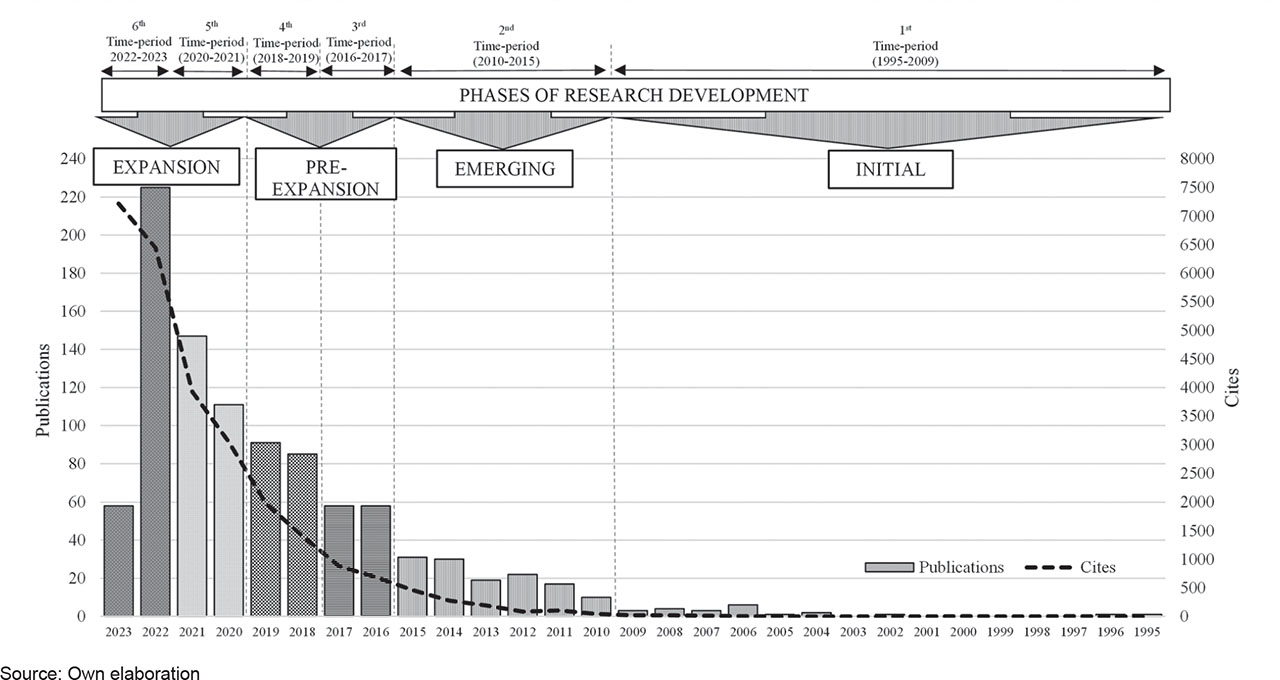
Figure 4.
Chronological distribution of documents in the dataset
From 1995 to 2009, the annual number of publications addressing gender issues in the context of corporate governance was fewer than 10, and the number of citations in this period was fewer than 20. Therefore, we refer to this period as the initial phase (Fig. 5).
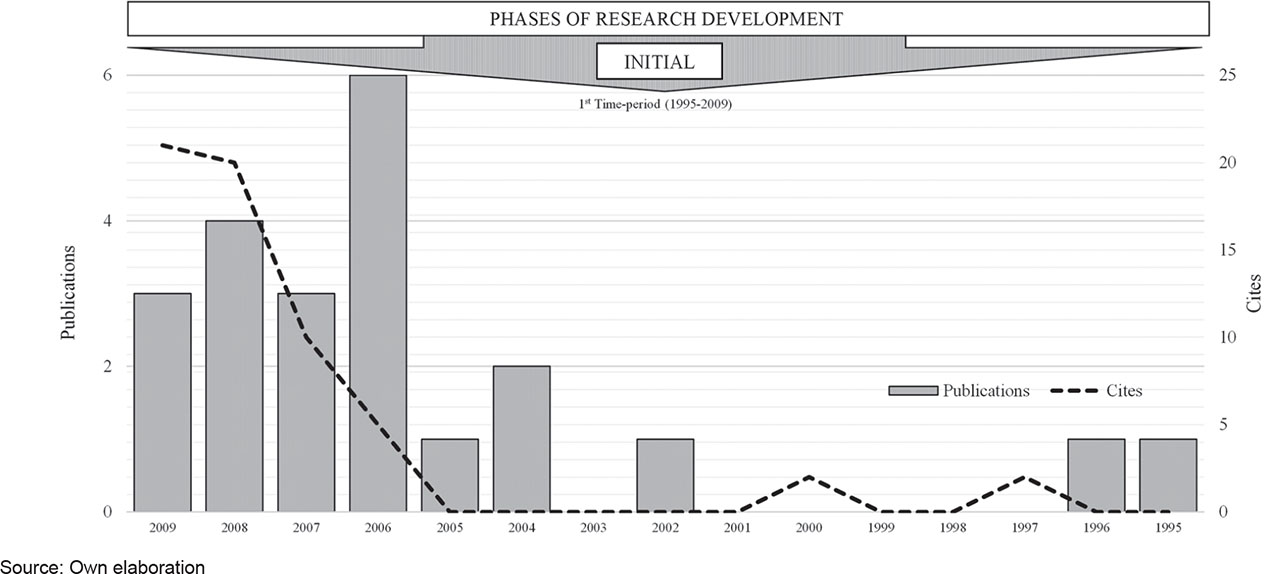
Figure 5.
The formulated research database: Initial phase.
The annual number of publications exceeded 10 in 2010, and therefore, we proceed to the next phase. In the following years, the annual number of publications increases, albeit irregularly, but it does not exceed 50 per year until 2015. In contrast, the number of citations increases noticeably, with a tenfold change, from 42 citations in 2010 to 461 citations in 2015. Hence, the 2010–2015 time period is a research emergence period of gender in the corporate governance literature (Fig. 6).
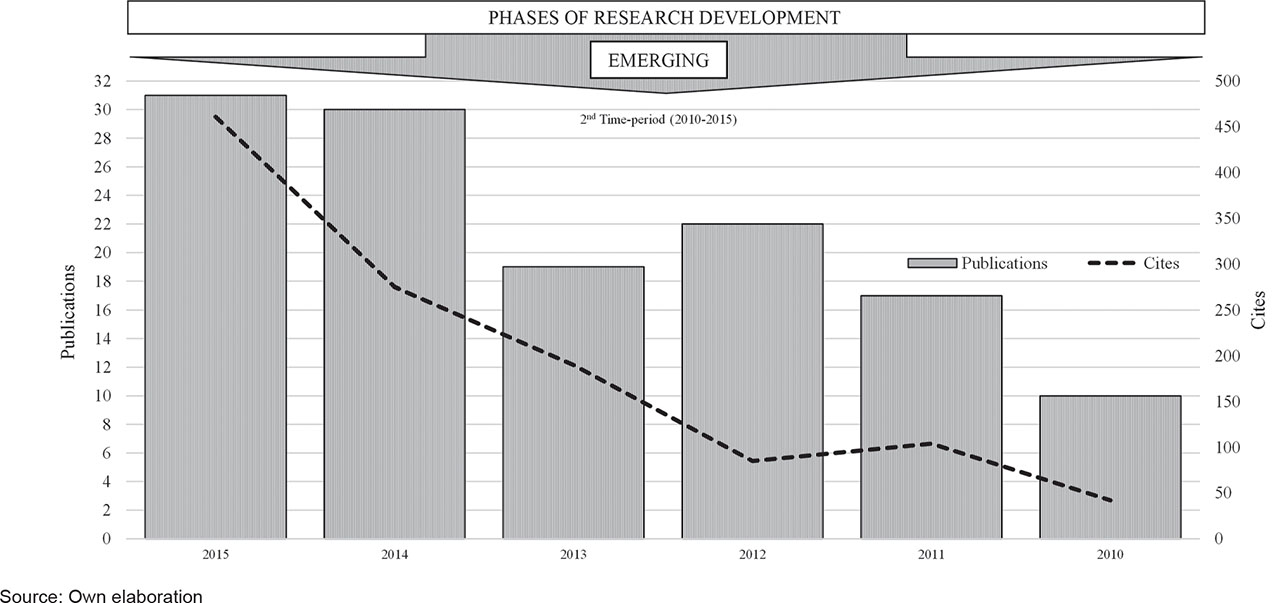
Figure 6.
The formulated research database: Emerging phase.
Continuing the chronological analysis of our database, according to Cobo et al. (2011), the number of publications successively increases, exceeding 100 publications per year in 2020. The period 2016–2019, subdivided into two-year periods (e.g., 2016–17 and 2018–19), is a pre-expansion phase, with a trifold increase in citations from 688 in 2016 to 1,982 in 2019 (Fig. 7).
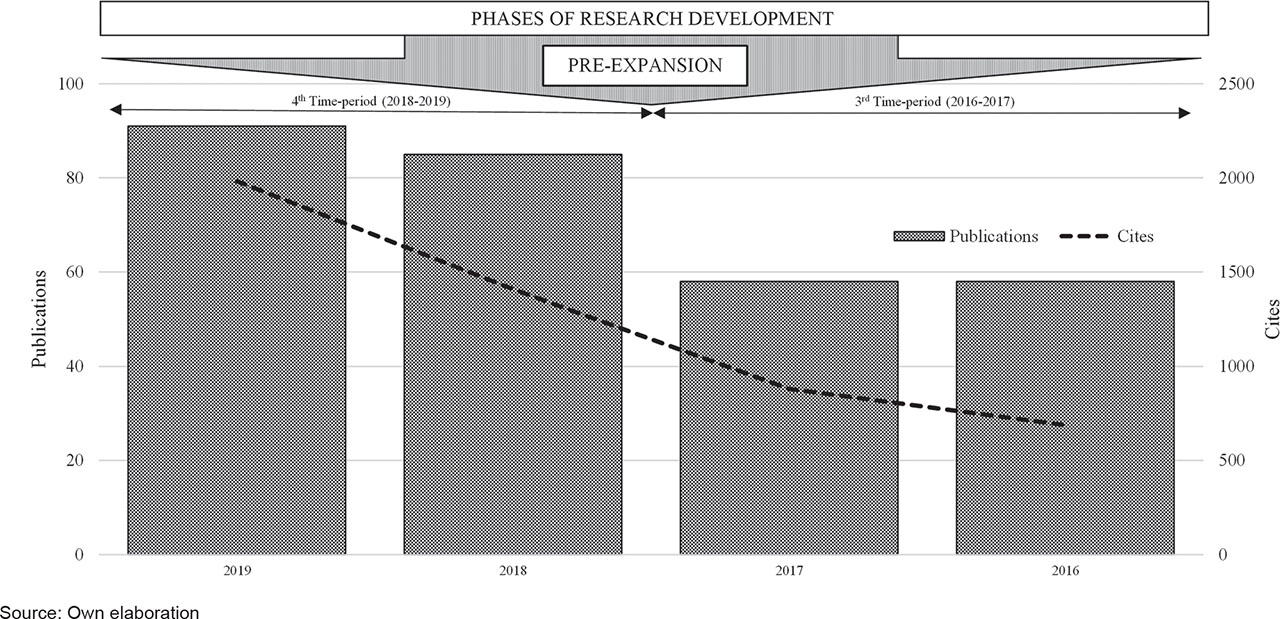
Figure 7.
The formulated research database: Pre-expansion phase.
Finally, the years 2020 – mid 2023 is a research expansion phase, also subdivided in two-year time-periods (2020–21 and 2022–23), with a twofold increase in the number of publications and citations (Fig. 8). We notice that six out of the ten highest cited studies of the gender research in corporate governance are published in the emergence phase.
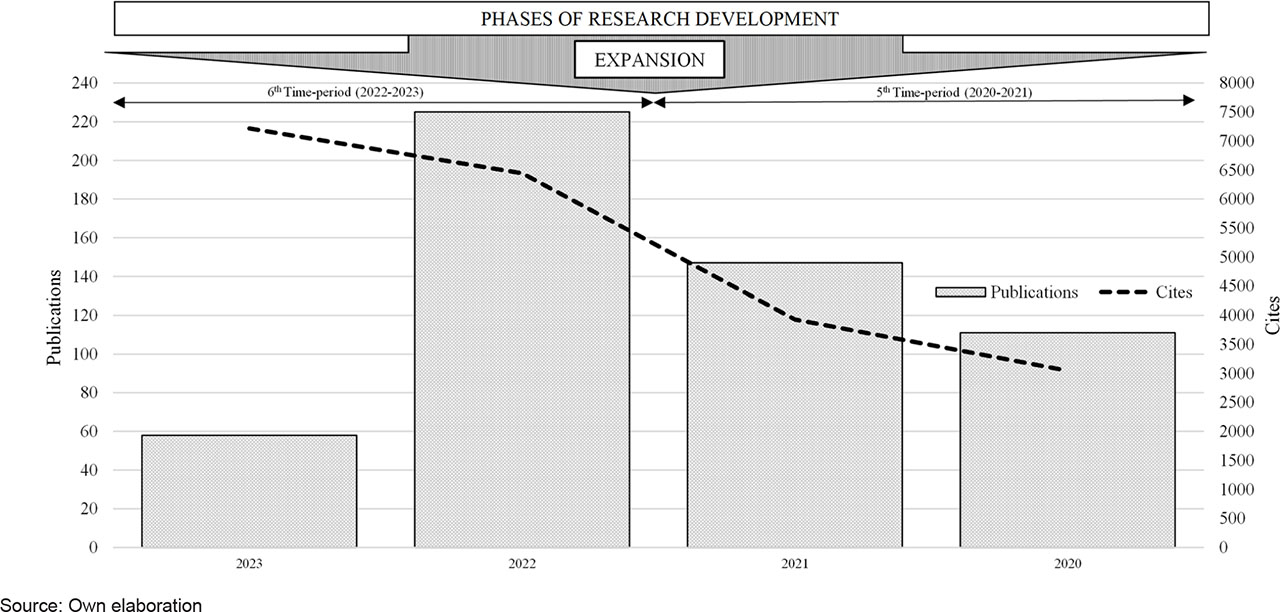
Figure 8.
The formulated research database: Expansion phase.
Following is Table 3, which exhibits the ten most frequently cited articles by total number of citations in the Scopus database (TC) and by citation per year (TCY).
Table 3.
The top ten most frequently cited papers
| Rank | TITLE OF THE PAPER | AUTHOR | JOUR. | YEAR | TC | TCY |
|---|---|---|---|---|---|---|
| 1 | The gender and ethnic diversity of US boards and board committees and firm financial performance. | Carter, D. A., D’Souza, F., Simkins, B. J., & Simpson, W. G. | CG_IR | 2010 | 933 | 71,8 |
| 2 | Women directors on corporate boards: A review and research agenda. | Terjesen, S., Sealy, R., & Singh, V. | CG_IR | 2009 | 771 | 50,1 |
| 3 | Does board gender diversity improve the informativeness of stock prices? | Gul, F. A., Srinidhi, B., & Ng, A. C. | JAE | 2011 | 718 | 59,8 |
| 4 | Gender diversity, board independence, environmental committee, and greenhouse gas disclosure. | Liao, L., Luo, L., & Tang, Q. | BAR | 2015 | 703 | 87,9 |
| 5 | The contribution of women on boards of directors: Going beyond the surface | Nielsen, S., & Huse, M | CG_IR | 2010 | 622 | 47,8 |
| 6 | The role of the board in the dissemination of integrated corporate social reporting | Frias-Aceituno, J. V., Rodríguez-Ariza, L., & García-Sánchez, I. M. | CSR_EM | 2013 | 408 | 40,8 |
| 7 | Corporate governance and board composition: Diversity and independence of Australian boards | Kang, H., Cheng, M., & Gray, S. J. | CG_IR | 2007 | 407 | 25,4 |
| 8 | Gender-related boardroom dynamics: How Scandinavian women make and can make contributions on corporate boards | Huse, M., & Grethe Solberg, A. | WMR | 2006 | 388 | 22,8 |
| 9 | Does the presence of independent and female directors impact firm performance? A multi-country study of board diversity | Terjesen, S., Couto, E. B., & Francisco, P. M. | JMG | 2016 | 370 | 52,9 |
| 10 | Executive board composition and bank risk taking. | Berger, A. N., Kick, T., & Schaeck, K. | JCF | 2014 | 333 | 37 |
[i] Abbreviations: JOUR.= Journal; TC= Total citations; TCY= Total citations per year; CG_IR= Corporate Governance: An International Review; JAE= Journal of Accounting and Economics; BAR= The British Accounting Review; CSR_EM= Corporate Social Responsibility and Environmental Management; WMR= Women in Management Review; JMG= Journal of Management & Governance; JCF= Journal of Corporate Finance
Carter et al. (2010) present a business case for appointing women and ethnic minority directors, emphasizing selection criteria beyond future financial performance. Terjesen et al. (2009) systematically review how board gender diversity affects corporate governance outcomes and, in turn, firm performance. Gul et al. (2011) show that gender-diverse boards can substitute for weak corporate governance by incorporating more firm-specific information into stock prices.
Liao et al. (2015) find a significant positive link between board gender diversity and voluntary greenhouse gas disclosure (Dobija et al., 2022). Nielsen and Huse (2010) report that a higher proportion of women directors improves strategic board control and effectiveness. Frias-Aceituno et al. (2013) identify board gender diversity as a key factor for integrated information dissemination. Kang et al. (2007) provide insights into diversity on Australian non-financial company boards. Terjesen et al. (2016) confirm that more female directors enhance firm performance, with independent outside directors adding value only when boards are gender diverse.
RESULTS AND CHRONOLOGICAL MAPPING
The “gender” and “corporate governance” themes show a dynamic, evolving trend. In Fig. 9, circles represent time periods and the number of associated keywords. Outgoing arrows indicate keywords dropped in the next period; incoming arrows mark newly introduced keywords; horizontal arrows show shared keywords across periods. The parentheses display the Stability Index (via the Jaccard index) between consecutive periods.
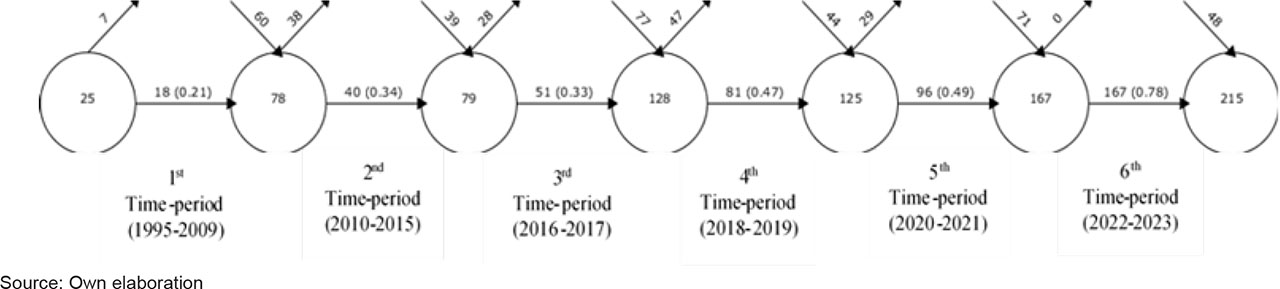
Figure 9.
Overlay graph.
Across all six identified time periods, the number of introduced keywords exceeds that of keywords that have ceased to be relevant, indicating an increasing research trend and a proliferation of new research endeavors. This research trend implies that these field studies are accumulating a growing number of ideas that further explore the correlation between gender and corporate governance. Another growing research trend, running along all time periods (1995–2023), exhibits a tenfold increase in the number of shared keywords, amalgamating a high degree of field consolidation. Accordingly, the sharp growth of the Jaccard index, indicated within parentheses in Fig. 9, underlines this substantially acknowledged research field.
Table 4 illustrates the evolution of themes across the identified time periods. The table draws from the TCCM framework (Theory, Context, Characteristics, Method) (Sharma et al., 2020; Sardana & Shukla, 2025). In this framework, themes were classified into four categories: Theory, when they were directly related to established theoretical foundations; Characteristics, when they represented constructs, variables, or specific topics of interest; Context, when they pertained to particular settings, environments, or sample populations; and Method, when they referred to research designs, data collection procedures, or analytical techniques (the evolution map which illustrates how different themes relate to each other among different time-periods is presented in the Appendix).
Table 4.
The evolution of themes across the TCCM framework.
| TCCM Element/Time-period | 1st Time-period | 2nd Time-period | 3rd Time-period | 4th Time-period | 5th Time-period | 6th Time-period |
|---|---|---|---|---|---|---|
| Theory | Corporate governance theory (emphasis on supervision and management structure) | Corporate social responsibility (CSR) Resource dependency theory | Resource dependency theory Legitimacy theory | Resource dependency theory Legitimacy theory | Stakeholder theory Resource dependency theory | Resource-dependency theory Institutional theory Stakeholder theory |
| Context | No explicit geographic context – early, conceptual phase of the field | Focus on social and ethical dimensions of governance | Developing countries Emerging markets | Emerging markets Developing countries Europe | Emerging markets Developing countries Dual-board system Mergers Family business | Emerging markets Developing countries Malaysia Banking sector Sub-national institutions |
| Characteristics | Gender diversity Firm performance Audit committee Board composition Board members Gender Market value | Gender diversity Firm performance Gender quota | Corporate-governance Human Women-directors Top-management teams Audit committee Gender Corporate donation Market value Gender equity | Corporate governance Investment Women on boards Gender equity Financial reporting Non-performing loan Board attributes Internal controls | Corporate governance Audit committee Corporates Financial performance Female Sustainable Development Goals (SDG) Bank profitability Corporate philanthropy Women on boards Executive compensation | Corporate governance Corporate governance disclosure Audit fees Corporates Sustainable Development Goals (SDGs) Institutional environment Women on board Investment Independent director Critical mass Corporate donation |
| Methodology | Mainly descriptive and correlational analyses; limited quantitative approaches | Multivariate analysis | Increasing methodological complexity; cross-country empirical analyses (implicit use of panel data) | Empirical research ((panel data models, regression-based quantitative analyses)) | Empirical research, Multivariate analysis Panel data regression models | Empirical research (quantitative studies using panel data and multivariate analysis) |
The evolution of the field appears to be driven primarily by the increasing diversity of topics and constructs under investigation. During the pre-expansion phase, the literature began to draw on several prominent theoretical foundations, initially emphasizing corporate social responsibility, then the resource-based view, legitimacy theory, stakeholder theory, and, ultimately, institutional theory. This progression reflects a notable shift in framing the issue of gender in corporate governance—from an early focus on corporate decision-making grounded in ethical considerations or resource dependency, toward a broader examination situated within the context of shared social norms. The contextual focus of research has also evolved. During the pre-expansion phase, increasing attention was directed toward contexts beyond developed economies, where women often encounter greater structural and cultural constraints (Jamali, Safieddine, & Daouk, 2007). An additional noteworthy development is the incorporation of the family-business context, which highlights the complex, family-related dynamics influencing gender roles and decision-making. Furthermore, methodological advancements in the field are marked by the emergence and sustained prominence of multivariate analytical techniques, underscoring a trend toward more rigorous and sophisticated empirical investigation.
First time-period results (1995–2009)
We outline the three leading themes in this time period (1995–2009), which are the BOARD OF DIRECTORS, the FEMALE, and the INTERNAL CONTROLS. The initial phase evolution of the field is presented in Fig. 11. In this period, scholars focus on the connections between female directors and board responsibilities to establish and monitor internal controls within the organization. This discussion of the current period analysis initiates the AUDIT-COMMITTEE theme, which is further developed in the next period, clearly relating corporate governance and gender matters.
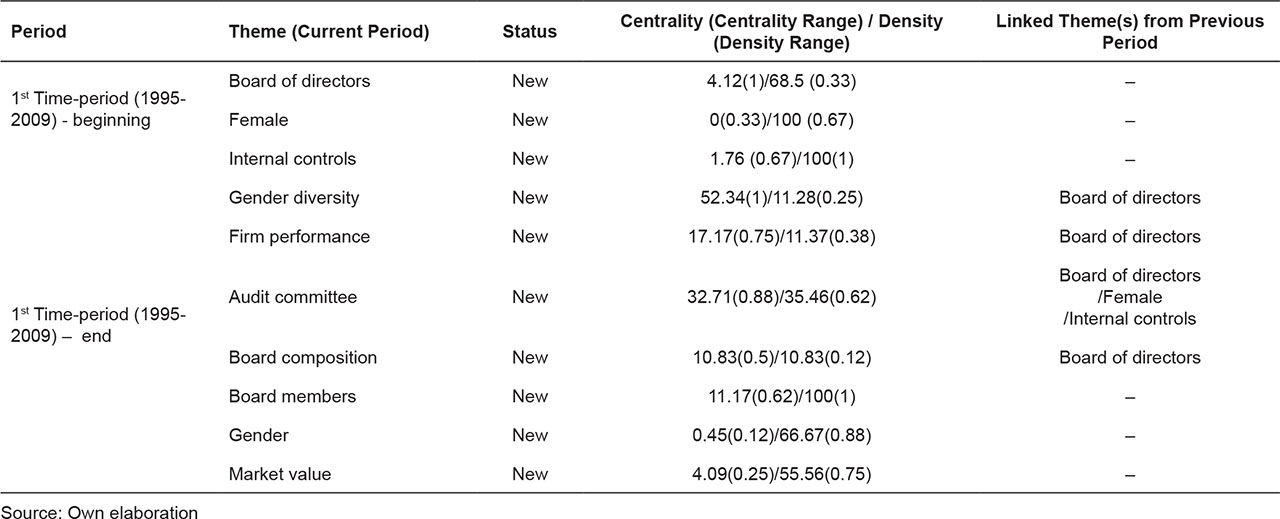
Figure 11.
Initial phase of the thematic evolution: First time-period results (1995–2009).
The three dominant themes characterizing the initial stage of the first time period (1995–2009) evolve into seven distinct topics that define the concluding phase of the initial stage of research and signal the transition to the pre-expansion phase (2010–2012). At this point, GENDER DIVERSITY emerges as the central thematic focus, evolving from the broader theme of the BOARD OF DIRECTORS, indicating that gender diversity has become a leading characteristic studied within the corporate governance literature. Consequently, the BOARD OF DIRECTORS theme serves as a foundation for the development of three closely related themes: AUDIT COMMITTEE, FIRM PERFORMANCE, and BOARD COMPOSITION. Research within the BOARD OF DIRECTORS theme primarily centres on board structure and its implications for corporate performance. We could clearly notice that gender diversity at that moment signals an important parameter of board composition. Additionally, in this second period, the four new themes of BOARD-MEMBERS, GENDER-ISSUE, MARKET-VALUE, and GENDER DIFFERENCES emerge, signifying the emergence of themes related to financial performance and behavioural aspects of gender in corporate governance.
Second time-period results (2010–2015)
At the end of the Second time-period results (2010–2015), we can observe a consolidation of the field into two characteristics: GENDER DIVERSITY and FIRM PERFORMANCE, one theoretical framework: CORPORATE SOCIAL RESPONSIBILITY, and one distinct methodology: MULTIVARIATE ANALYSIS (Marinova, Plantenga, & Remery, 2016).
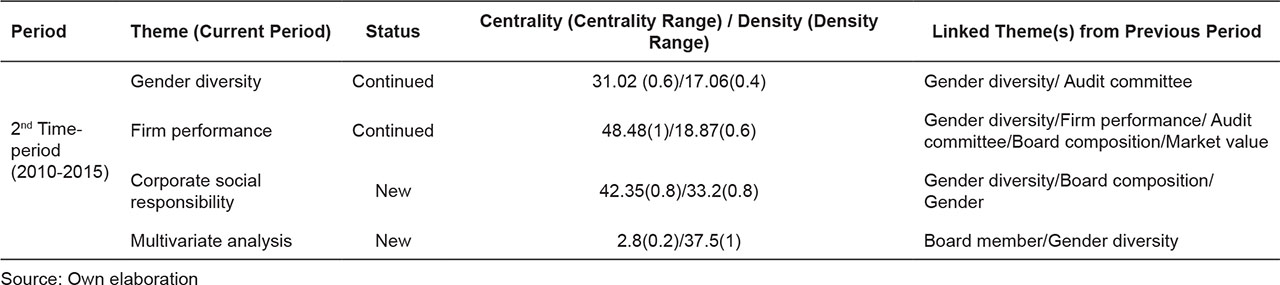
Figure 12.
Emerging phase of the thematic evolution: end of the Second time-period results (2010–2015).
Accordingly, the focus centres on decision-making dynamics and their implications for financial performance, as well as on the ethical and social foundations underpinning gender diversity in corporate governance. The emergence of the MULTIVARIATE-ANALYSIS theme highlights that in this third period, more sophisticated methods are employed. A possible interpretation of the results is that the researchers aim to gain a more comprehensive understanding of the interactions and dependencies among multiple variables to uncover complex relationships and patterns in the field of governance and gender diversity.
Third time-period results (2016–17)
During this period, the number of themes increases substantially, reflecting the field’s growing complexity and diversification (Fig. 13).
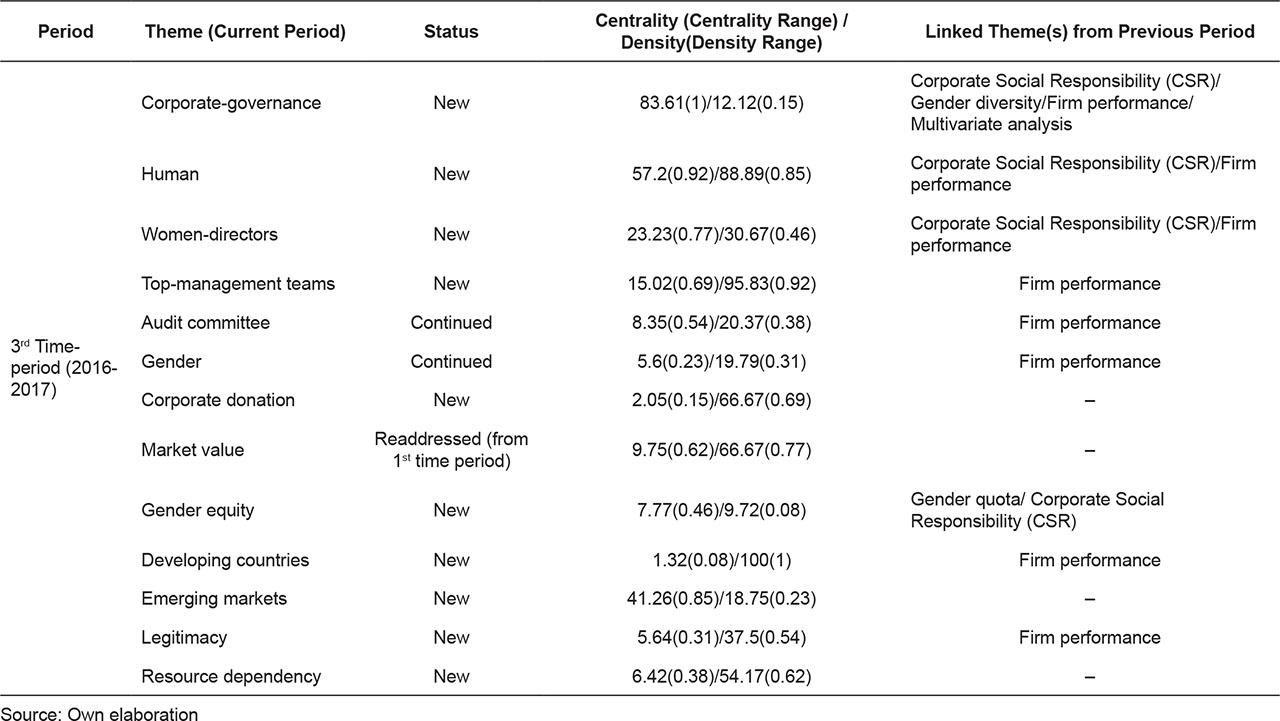
Figure 13.
First pre-expansion phase of the thematic evolution: Third time-period results (2016–17).
New thematic threads emerge, emphasizing the different roles individuals occupy within corporate governance structures, including positions in TOP MANAGEMENT, membership in AUDIT COMMITTEES, and as DIRECTORS. The construct of gender is further refined by explicitly introducing women as a distinct focus, highlighting the differentiated position of women in corporate governance relative to men, whose role is often treated as the implicit normative standard. In addition, two themes emerge that capture distinct outcomes associated with gender dynamics in corporate governance: MARKET VALUE and CORPORATE DONATIONS; however, they disappear in the fourth period. A credible explanation could be that the acknowledgement of these topics is still too narrow to formulate a novel research domain. Furthermore, DEVELOPING COUNTRIES/EMERGING MARKETS surface as a separate theme, signalling the increasing scholarly recognition of contextual factors and the growing interest in examining corporate governance dynamics beyond developed economies. The increasing number of studies draws on RESOURCE DEPENDENCY theory – focusing on a company’s internal perspective- and LEGITIMACY theory – focusing on the interplay between a company and its broader institutional environment.
Fourth time-period results (2018–2019)
In the fourth time period, five new themes emerge, while also five are discontinued from the previous time period (Fig. 14).
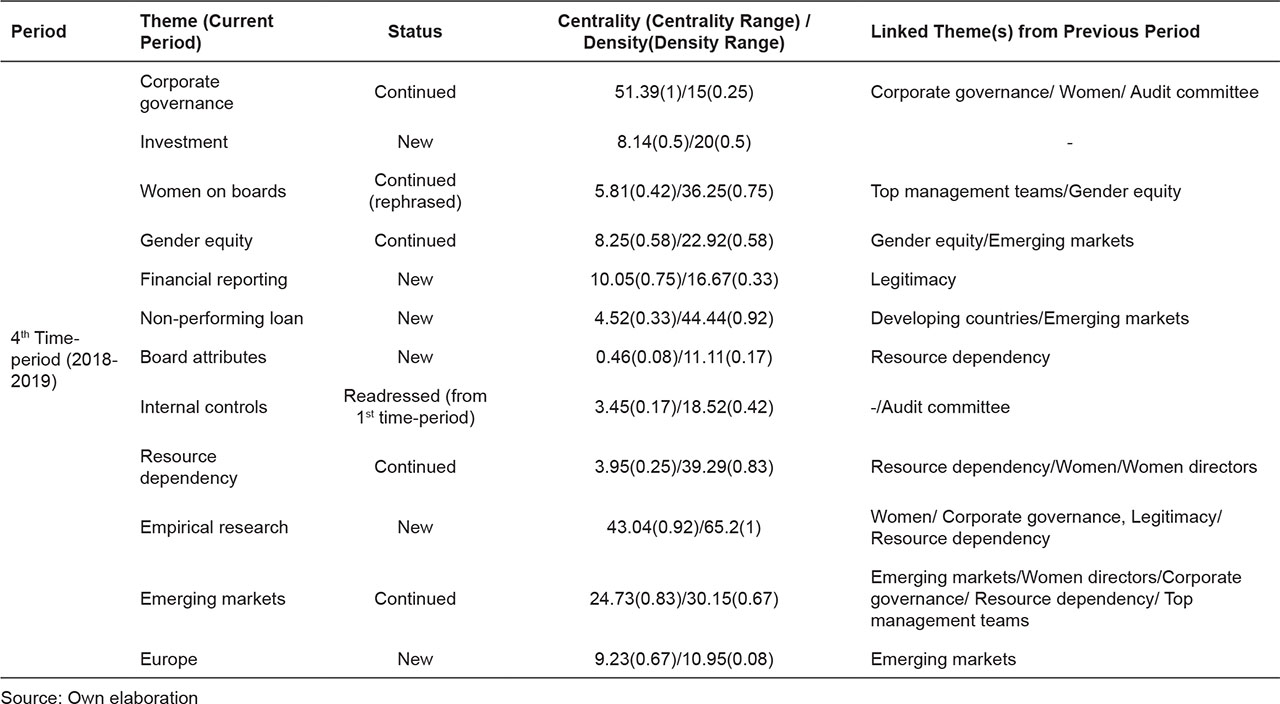
Figure 14.
Second pre-expansion phase of the thematic map: Fourth time-period results (2018–2019).
The CORPORATE GOVERNANCE theme emerges as the central thematic sphere in Fig. 15, linking to four themes from the previous pre-expansion period and reflecting a broad, overarching research perspective. The EMERGING MARKETS theme connects to five themes from the earlier period, partially replacing DEVELOPING COUNTRIES and establishing links with TOP-MANAGEMENT TEAMS, WOMEN DIRECTORS, and CORPORATE GOVERNANCE. This shift indicates that rapid economic growth, industrialization, and rising living standards have become increasingly important contexts for interdisciplinary research on gender and corporate governance. The emergence of EUROPE as a new theme highlights growing scholarly interest in institutional factors shaping corporate governance, particularly the debates surrounding quota systems at the time. The LEGITIMACY theme evolves into FINANCIAL REPORTING, signaling a shift toward managerial transparency and regulatory compliance. In this context, financial reporting regulations serve as a key legitimacy-related framework for examining the intersection of gender and corporate governance. The RESOURCE DEPENDENCIES theme expands by incorporating the HUMAN and WOMEN DIRECTORS themes, reflecting the increasing recognition of women on boards as a valuable organizational resource. As a result, the BOARD ATTRIBUTES theme is strongly shaped by RESOURCE DEPENDENCIES, emphasizing the view of boards and their members as critical assets for achieving corporate objectives. Finally, the AUDIT COMMITTEE theme reconnects with INTERNAL CONTROLS, underscoring the essential monitoring function within corporate governance structures.
Fifth time-period results (2020–2021)
In this period, twelve themes are clearly emerging, as we are in the first expansion time period (see Fig. 15).
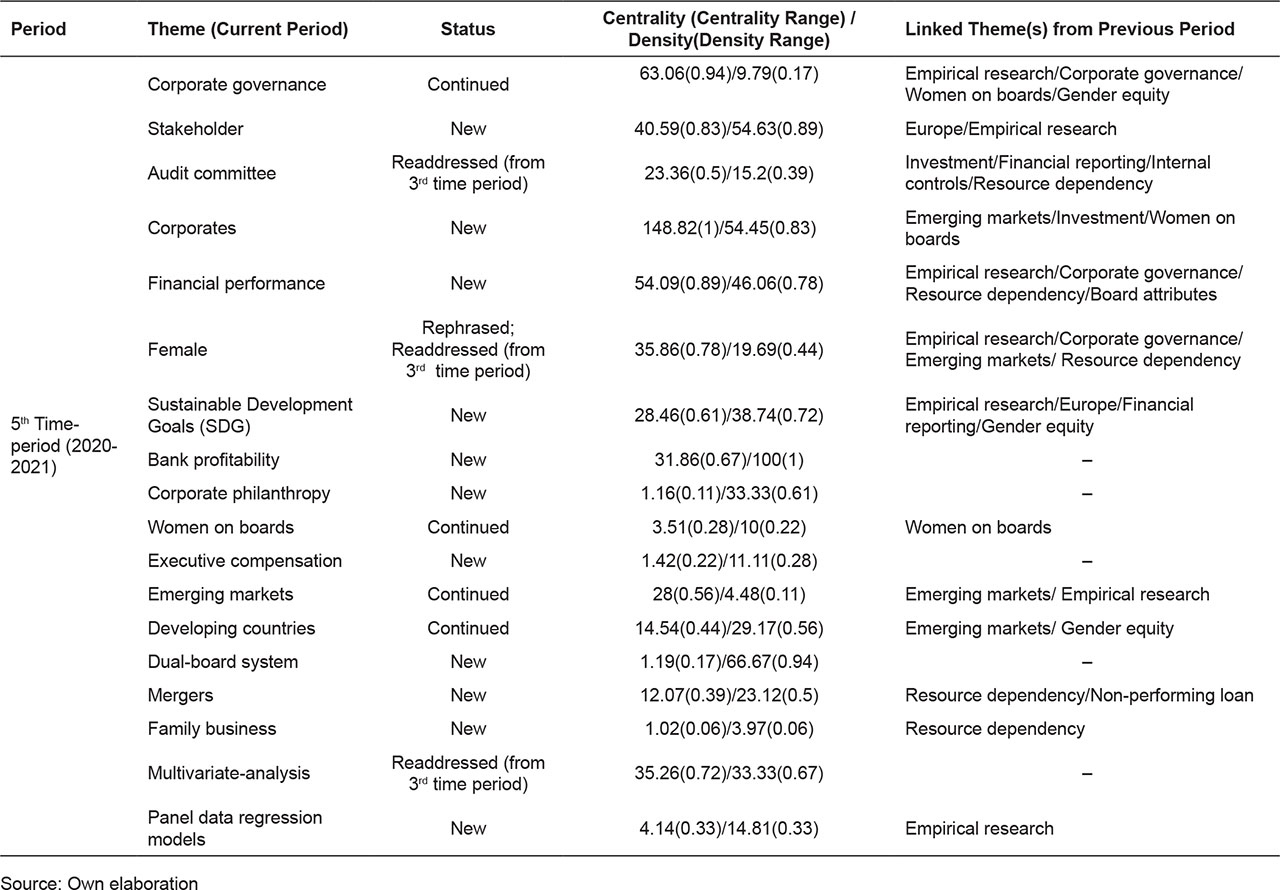
Figure 15.
First expansion phase of the thematic evolution map: Fifth time-period results (2020–2021).
Again, CORPORATE GOVERNANCE is the main thematic sphere. Novel nodes seem to cluster into four broader groups. The first comprises SUSTAINABLE-DEVELOPMENT-GOALS, STAKEHOLDER, and CORPORATE PHILANTROPY themes, which share a focus on corporate non-financial goals. The second comprises FAMILY-BUSINESS and DUAL-BOARD-SYSTEM themes, which share a focus on specific governance patterns. The third comprises BANK-PROFITABILITY and MERGERS, which are also newly articulated aspects of corporate valuation that emerge distinctively from FINANCIAL PERFORMANCE. Finally, the emergence of PANEL-DATA-REGRESSION-MODELS and MULTIVARIATE-ANALYSIS themes outlines a methodological approach of this distinct research avenue. The introduction of the EXECUTIVE-COMPENSATION theme recognises the importance of the novel subject of pay-gap comprehension. If we consider it next to the representation gap one, then we could assume that it exposes gender inequalities in corporate governance. This assumption becomes prominent with the inclusion of WOMEN ON BOARDS and FEMALE themes in this research time period. It clearly demonstrates a problematic perception of women in corporate governance.
Sixth time-period results (2022–2023)
This sixth time period is scientifically rich, as eighteen themes emerge (Fig. 16)
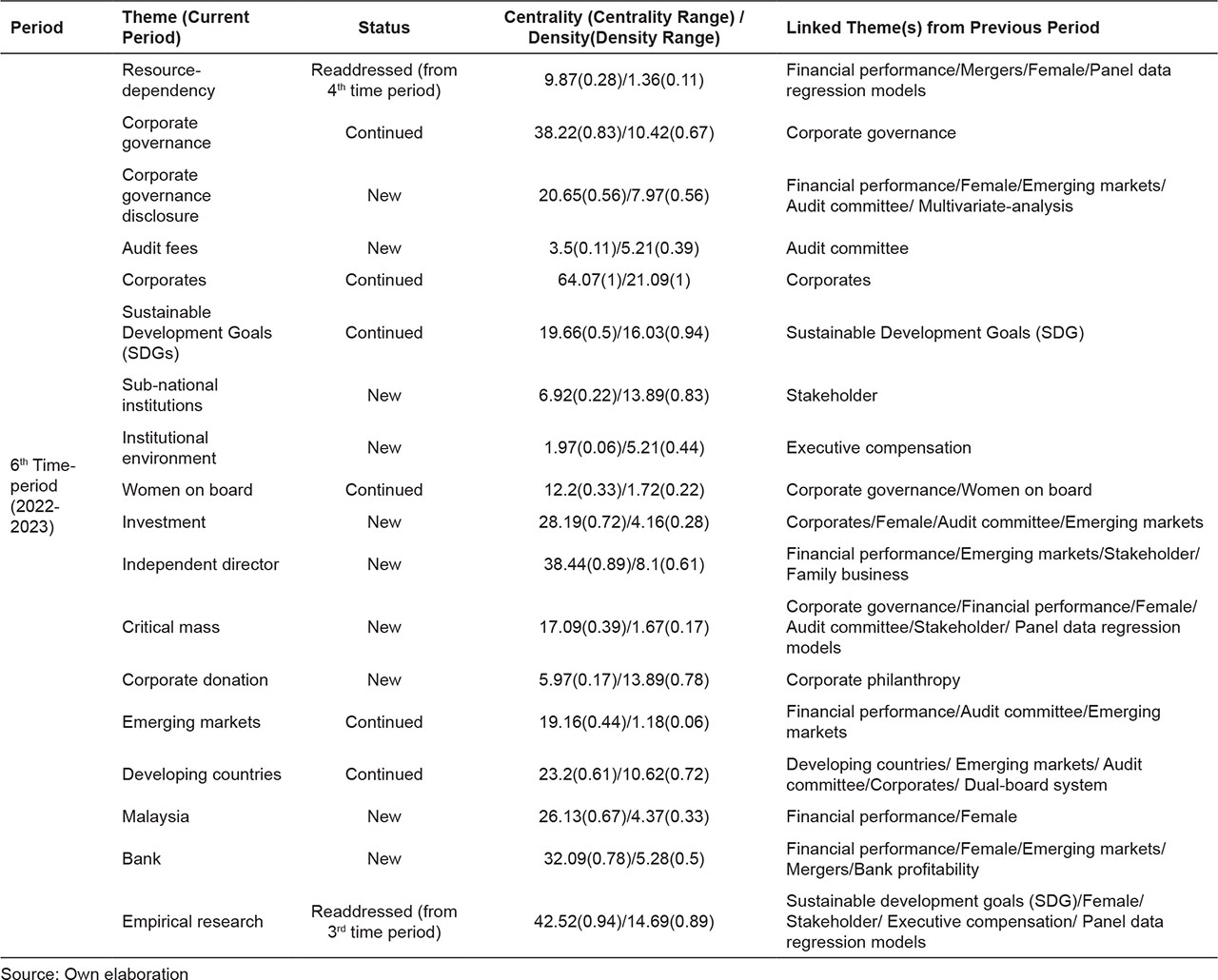
Figure 16.
Second expansion phase of the thematic evolution map: Sixth time-period results (2022–2023).
Overall, in this final time period, the CORPORATE GOVERNANCE theme remains dominant, reflecting its central position in the field. While LEGITIMACY had appeared in earlier time periods, the newly emerging INSTITUTIONAL-ENVIRONMENT and SUB-NATIONAL-INSTITUTIONS themes indicate a growing prominence of institutional theory in corporate governance research. The strong association between the INSTITUTIONAL-ENVIRONMENT theme and the EXECUTIVE COMPENSATION theme suggests an increasing scholarly focus on the institutional underpinnings of the gender pay gap at the upper echelons of corporate leadership. The newly emerging MALAYSIA theme reflects a surge of research on the Malaysian institutional and corporate environment. Similarly, the CORPORATE PHILANTHROPY theme shows strong associations with both the CORPORATE DONATION and AUDIT COMMITTEE themes, which, in turn, are connected to the AUDIT FEES theme. These interconnections suggest that scholars are increasingly examining audit and philanthropy-related measures, signaling a strong empirical focus in the field. Meanwhile, the CORPORATE, SUSTAINABLE DEVELOPMENT GOALS, WOMEN ON BOARDS, DEVELOPING COUNTRIES, and EMERGING MARKETS themes remain visible, each representing distinct subject areas. Notably, seven of these themes collectively contribute to the emergence of the CRITICAL MASS theme (Amorelli & García-Sánchez, 2020). This development suggests that scholars from diverse disciplinary backgrounds are converging on a more refined, theory-driven approach to understanding and quantifying women’s presence in corporate governance. Furthermore, five themes converge around CORPORATE GOVERNANCE DISCLOSURE, reflecting a growing scholarly interest in information asymmetry and its relationship to managerial policies and strategies, particularly in the context of gender. The emergence of the INDEPENDENT DIRECTORS theme, which connects with four themes from the previous period (2020–2021), highlights growing interest in the complex, interrelated dimensions of board structure. A noteworthy addition in this period is the BANK theme, indicating a concentrated research effort on governance dynamics within specific types of corporations, particularly financial institutions. Similarly, the emergence of the INVESTMENT theme highlights persisting attention to corporate finances examined through the lens of gendered corporate governance contingencies.
DISCUSSION
This bibliometric study provides a literature map of gender and corporate governance research in academic publishing over the last three decades. Based on PRISMA standard reporting guidelines (see Fig. 1 and Fig. 2), it scientifically reviews 984 academic papers extracted from the Scopus database, published from 1995 to mid-2023. It offers valuable disciplinary insights into the publication activity, citation trends, articles, and authors. However, findings go beyond the current research frontiers of these disciplines, formulating conceptual interdisciplinary clusters of gender and corporate governance thematic networks.
The SciMAT software-enabled methodology (see Fig. 1) of this bibliometric analysis employs a longitudinal framework to historically develop the thematic structure and correlation of knowledge advancements, referring to research paradigms and corpora. By graphically representing six unbalanced chronological research periods (see Fig. 4), the figure shows an overall increase in interdisciplinary research, signifying novel academic influences on knowledge development in the field (see Fig. 9).
Addressing RQ1, we observe a clear upward trend in publications on gender and corporate governance, with dominant themes initially emphasizing corporate financial outcomes and, over time, expanding to encompass non-financial outcomes. Our findings partially align with those of Mumu et al. (2022), showing that while financial performance constituted a central bibliographic stream up to 2016, non-financial outcomes remain comparatively under-researched within the gender and governance literature. The key identified dimensions of non-financial outcomes include disclosure practices, corporate philanthropy (including corporate donations), and sustainable development goals (SDGs) (Zampone et al., 2022). Furthermore, our analysis uncovers an additional layer of research that examines the intersection of gender dynamics with corporate governance functions related to control and monitoring. This highlights a promising avenue for future investigation into how gender composition influences governance mechanisms beyond performance outcomes.
In addition to these qualitative advancements, we also identify a substantial quantitative expansion in the field. Specifically, gender and corporate governance research has experienced a remarkable growth rate of approximately 4,500%, underscoring the increasing scholarly recognition of this topic and the need for continued interdisciplinary research, as discussed in relation to the subsequent research questions.
Addressing RQ2 and considering the chronological evolution outlined in this study, the findings challenge scholars and diverse stakeholders to broaden their understanding of the field and to explore new, diversified research avenues. Based on the initial and emerging chronological periods (1995–2015, see Fig. 10), these avenues converge on the role of competence in board appointments and board composition, while progressively intensifying their focus on the problematic salience of gender in corporate leadership. In relation to RQ3, our analysis reveals a distinct geographical divergence in the research landscape, with topics increasingly centered on emerging markets and developing countries. These topics reflect national and regional perspectives on the implementation of legislated quotas and policies aimed at achieving gender equality on boards. According to Orazalin (2020), these geographical differences in gender and work-related policies—which persist into the fourth period (2018–2019)—are influenced by factors ranging from organizational size and performance to legal and institutional frameworks, particularly in emerging markets. Additionally, during the fourth period (2018–2019), an interesting set of hypothetical-deductive approaches emerged; however, these failed to gain significant prominence within the field. Meanwhile, other promising research clusters, focusing on ethical, legal, and critical perspectives, remain less developed compared to the dominant cluster centered on women’s performance, which was particularly prominent between 2016 and 2021 (see Fig. 14).
With respect to RQ3, our findings demonstrate improvements in measurement precision and a refinement of the scope of analysis, particularly when investigating the recurring issue of women’s impact on corporate performance, both financial and non-financial (see Table 3). This literature calls for policy implications, as it primarily draws the attention of profit-oriented stakeholders to the efficiency of gender-inclusive corporate governance (Havrylyshyn et al., 2023; Colak, Saridogan, 2023). Nevertheless, the study’s sixth time-period findings of key contemporary challenges (2021–2023) appear to reveal a research design suffering from characteristics overload and a lack of ideas on identifying women’s actual inclusion in corporate governance for a cohesive understanding of women’s voice quality and agency. As a result, in RQ4, we reveal a research gap involving a common and empathetic corporate governance framework for gender equality. Therefore, addressing key research challenges should involve establishing new, quantifiable capabilities to promote gender equality within the corporate nexus of power. A promising research direction could require a better understanding of gender gaps that lead to exclusionary corporate governance structures and patterns. Thematic exploration of the “gender data gap,” alongside the “representation gap,” and the “pay gap” could bridge current research deficit (Sperber et al., 2023; Taylor et al., 2024).
Thus, according to RQ4, lack of such groundbreaking topics negatively affects the mutual conceptual relationship between gender and organizational performance (van’t Foort-Diepeveen et al., 2021; Labelle et al., 2015). As a result, ongoing quantitative research remains fragmented, providing evidence of good but conventional research practice. The institutional perspective, along with ethical, legal, and resource-based networks, appears to be a promising avenue, but it remains a peripheral theme. The theoretical underpinnings of the effects of women’s inclusion in corporate governance and leadership are rather inconsistent, as they lack solid evidence defining the exact gender role. This is a continuing research shortfall, which requires further qualitative improvements, focusing on gender stereotypes (van’t Foort-Diepeveen et al., 2021). Research themes relating to ethical aspects of gender inequality in corporate governance are falling behind the current academic narrative and thematically undermine ethically driven solutions, such as gender quotas or mentorship programs. This is particularly important given the evidence of structural gender exclusionary practices and stereotyping (Chu & Zao, 2023; van’t Foort-Diepeveen et al., 2021; Labelle et al., 2015). Additionally, the lack of an ethical climate in the workplace negatively impacts productivity (Fein et al., 2021). Consequently, gender-exclusive ethical practices challenge the performance of female leaders, further undermining their legitimacy.
CONCLUSION
This literature mapping historically recognises a seemingly rich and diverse research cluster focusing on women’s impact and on organizational triple bottom line performance. However, despite numerous efforts to address gender equality at the macro and individual levels, building women’s resilience by developing their strategies to cope with discrimination remains a challenging task (van’t Foort-Diepeveen et al., 2021). Contemporary literature traditionally separates corporate governance performance from business ethics, underestimating the value of gender-inclusive ethical practices. Contemporary mainstream research avoids a meaningful debate on the aforementioned gender thematic clusters and corporate governance issues as denoted in our RQs. While both themes are socially derived structures, their narratives and exploratory investigations appear only partially developed.
Overall, our findings uncover a set of research trends and gaps that warrant further in-depth investigation through systematic literature reviews. The most prominent areas for such reviews appear to be fourfold. First, there is a need to gain a deeper understanding of how the inclusion of women in corporate governance influences both financial and non-financial corporate performance. In particular, the relative importance of gender-related effects for these two types of performance remains under-researched, despite its critical implications for theory and practice. Second, a systematic review of the literature is required to examine gender dynamics in corporate governance, particularly their relationship to monitoring and control functions. Third, a comprehensive review should address the thematic separation between corporate governance and business ethics, with the latter historically tending to undervalue gender inclusiveness. Such an analysis could provide insights into how ethical considerations can be more effectively integrated into governance frameworks. Finally, future systematic reviews could examine the complex interplay between internal, resource-based factors and external, institutional factors that shape gender dynamics in corporate governance.
This study has some limitations. When generating the dataset from the Scopus database, we employ the two keywords of ‘gender’ and ‘corporate governance’. The authors consider them sufficiently explicit, and we do not introduce a search for their synonyms. In addition, the dataset generation limitation relates to language barriers, as publications considered are in the English language. Another limitation derives from SciMAT software’s functionalities, which allow a degree of bias in the implementation of different similarity measures and clustering algorithms. In a follow-up study, we aim to prepare a mixed research approach with thematic complementarity and maturity. Further review of thematic networks, as presented in this study, could potentially provide more accuracy regarding the revealed research innovators.
ACKNOWLEDGMENTS
The article presents the results of Project No. 087/EFI/2024/POT, financed from the subsidy granted to the Krakow University of Economics.
Appendices
APPENDIX
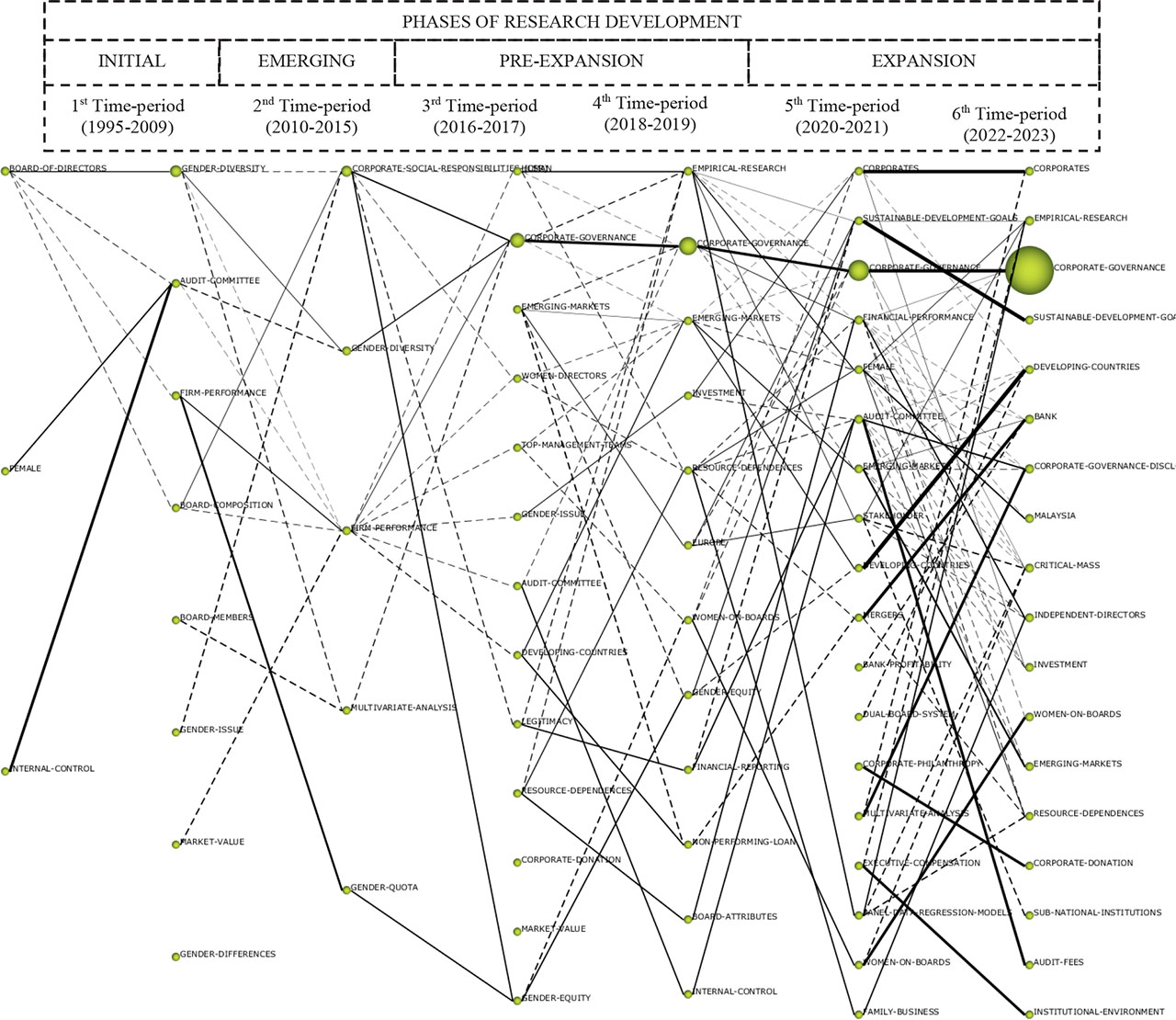
Figure A1.
The thematic evolution map