
INTRODUCTION
Despite some break caused by the COVID - 19 pandemic, overtourism, which UNWTO (2018) defines as a situation in which the impact of tourism on a tourist reception area (destination), or parts of it, negatively affects the perceived quality of life of citizens and/or visitors, is observed worldwide. This is caused primarily by the potential for short-term visits by tourists using mass modes of transportation developed in line with globalization trends, which primarily include low-cost airlines. Visiting cities is also becoming easier through the opportunities offered by booking platforms (for example, Airbnb) and the spread of sharing economy processes (Cociș & Nicula, 2022; Mermet, 2021 Parralejo & Díaz-Parra, 2021). As indicated by the literature research done by Capocchi et. al. (2019) the term “overtourism” has been used to describe both a new or recent phenomenon closely linked to the development that tourism has had over recent decades, as well as the growing impact that tourism has generated in terms of the concentration of flows on several main tourist destinations (Carić, & Mackelworth, 2014; MacNeill & Wozniak, 2018 Kizielewicz & Luković, 2015) all around the world and issues related to the governance of the tourism phenomenon (Kizielewicz, 2016).
Overtourism is mainly characteristic of large cities, which not only offer a wide range of services and opportunities to see attractions (Mihalic, 2020), but are becoming more attractive by hosting various events, and are becoming increasingly popular as locations for enjoying cultural goods, shopping and sightseeing.
Many authors point out such problems associated with overtourism as negative effects among the local community, as well as the negative perception of impressions by tourists (Pérez Guilarte & Lois González, 2018; Postma & Schmuecker, 2017; Carić, & Mackelworth, 2014; MacNeill & Wozniak, 2018; Kizielewicz & Luković, 2015).
The phenomenon is mainly analyzed on the example of many, various cities, especially those characterized by historic old towns, and increasingly resorts, and the authors rarely single out coastal cities. However, this is a very important type of tourist destination, as the phenomenon of overtourism is exacerbated by sea cruise shipping (Carić, & Mackelworth, 2014; MacNeill & Wozniak, 2018; Kizielewicz & Luković, 2015). One of the first examples of cities where the phenomena of the destructive impact of overtourism, including cruise tourism, on the environment, residents and tourists has been observed is Venice, which gave rise to the term “Venice Syndrome” (Kowalczyk-Angel, 2018; Seraphin et al., 2018). Following the huge success of the Game of Thrones movie, which was filmed partly in Dubrovnik, the city is another example as being “infected” by overtourism, particularly cruise tourism (Cappocchi et al., 2019; Żemła, 2020).
Arriving ships not only cause a surge of huge numbers of short-term tourists, but also cause negative effects on the natural and social environment. The engines of ships moored at wharves near historic city centers cause nuisance vibrations and environmental pollution. Ship passengers cause city congestion, traffic jams, litter and noise.
The aim of the article is to assess the measures introduced in the leading coastal destinations in Southern Europe in response to the growing dissatisfaction of local communities related to overtourism caused by cruise shipping companies and to propose possible solutions to this problem. The methodology used for planning the research is based on the framework developed by E. Bell, E. Brymann & B. Harley (2019) (see below).
The article was divided into several parts. The first part discusses the phenomenon of overtourism and tourism in cruise tourist destinations. The following parts of the article present the methodology of data collection and describe the results of research and analysis in relation to activities that are undertaken by local authorities in Cruise Tourist Destination for the sustainable development of tourism. The last part of the article presents the discussion and conclusions.
THEORY AND LITERATURE REVIEW - OVERTOURISM AND THE PHENOMENON OF TOURISTIFICATION IN CRUISE TOURIST DESTINATIONS
The excessive influx of tourists causes local communities to become increasingly hostile to the forms of tourism that are imposed on them and reduce their quality of life. This phenomenon is referred to as “tourism phobia” and implies a mixture of dejection, distrust and contempt towards tourists (Dodds & Butler 2019), resulting in resistance from residents and negative reactions toward tourists (Namberger et al., 2019; Postma & Schmuecker, 2017; Zemla, 2020). On the tourist side, on the other hand, the excessive influx of tourists causes a paradox, resulting in the destruction of what tourists want to see (Krippendorf, 1982), which is referred to as “overtourism dystopia” (Panayiotopoulos & Pisano, 2019).
Intense tourism in historic city centers is causing socio-spatial impacts, leading to a debate about gentrification in some central urban areas. Gentrification refers to the phenomenon of replacing residents and users of a particular urban sector with others who have greater purchasing power, through capital investment in real estate in areas that have previously lost value (Gotham, 2005; Cócola Gant, 2018). The authors distinguish between traditional (residential) gentrification and tourist gentrification, also known as tourism gentrification (Jover & Díaz-Parra, 2019; Parralejo & Díaz-Parra, 2021).
The term “touristification” can be defined broadly as the continuous transformation of urban environments by tourism and tourists (Parralejo & Díaz-Parra, 2021), and is very often associated with a negative connotation to describe the impact of tourism on a specific area and on a specific group of people, their daily activities on the one hand, and on the natural and social environment on the other (Cociș & Nicula 2022; Porfido et al., 2023). Thus, to assess the impact of passenger ships on the society of coastal cities, one can use not only the term overtourism, but also the term tourism, although the influx of sea tourists is not necessarily the direct cause of residents leaving the city center, i.e., residential gentrification.
Porfido et al. (2023) studying one of the most discussed examples, which is the Barcelona metropolitan area (MAB), emphasize the polycentric pattern of tourism in the area, which is currently undergoing two processes: the growth of tourism supply in the first ring of MAB municipalities and the distribution of tourism fluxes in coastal destinations. The authors emphasize the dynamics of the processes and the fact that tourism fluxes are almost impossible to prevent. Postma and Schmuecker (2017) showed that in Hamburg there are two key mechanisms that stimulate conflicts resulting from the influx of tourists (1) the excessive number of tourists relative to the number of residents and its distribution over time and space; (2) the behavior of visitors as measured by the norms they set for themselves and others, which deviate from the norms accepted by residents.
In response to these phenomena, the authorities of cities affected by overtourism are taking measures to deconcentrate tourist flows (Pérez Guilarte & Lois González, 2018; Postma i Schmuecker, 2017; Porfido et al., 2023).
Strategies of this type were undertaken when overtourism phenomena involved areas sensitive to valuable natural resources, particularly the coast where 3S tourism was developing. Examples of activities were the Odyssea Fim4 projects (Odyssea’s partners are the region of Corsica, Liguria, Sardinia and Tuscany) and Adristorical Lands, which are examples of excellence in cross-border cooperation and joint integration between coast and land (Bencivenga et al. 2017). The first, which is within the framework of the Italian-French Maritime program, aimed at strengthening the areas around tourist ports and creating hiking trails as a unique way to allow rural areas to benefit from the tide of tourists. The second project is based on the idea of the port as a “gateway” to the territory, a preferred route from the coast inland.
Medina-Álvarez et al. (2023), using Mindelo (São Vicente, Cape Verde) as an example, demonstrated the opposite phenomenon to the example enclaves of Macaronesia, where large cities have generated port development. The authors show the elements of the city-port relationship in Mindelo through their distinct stages of evolution: the merging of urban and port environments; urban expansion and its distancing from the port; the lack of integration of the waterfront with the city; and the recent restitution of port areas. The scale of these processes has little in common with those in other Atlantic archipelagos, despite which tentative processes of tourismization can be observed.
The relationship between cities and non-urbanized areas in the context of the influx of cruise ship tourists is noted by Postma and Schmuecker (2017), pointing to the example of Greenland, whose residents suffer from the rush of cruise ships. The authors also note the shift of the discussion to questions about where a large proportion of tourists go from and to which cities. Bartoluci et al. (2014) studying these relationships showed, using the Croatian coast as an example, that the redistribution of tourist traffic supports the development of villages located at a distance for the coast, but it must be based on a combination of individual tourist attractions in the region and the offer of large cities. This is due to the fact that cities are the ports that provide the overall flow of tourists. Transport accessibility is a pre-condition for tourism development and land-sea connections are a valuable opportunity for the entire region. Thus, the issue of tourism redistribution in port cities takes on a broader dimension. Just as Porfido et al. (2023) noted, tourism development has a “liquid” nature and touristification is a dynamic process that easily passes from one territory to another. A prerequisite for sustainability is the proper design of tourism routes that allow interaction between the coast and rural areas. Cities most affected by touristification are beginning to limit the number of cruise ships and indirectly the number of tourists (Dubrovnik, Venice), others are closing popular tourist areas indefinitely to recuperate and heal from pollution and environmental damage caused by tourism (Boracay in the Philippines, Maya Bay in Thailand) (Cociș & Nicula 2022).
Crucial to the planning and deconcentration of tourist streams is the choice of strategy that should serve to manage, control, diffuse (in space and time) visitors (Pérez Guilarte & Lois González, 2018, Mihalic, 2020). Given the issue of competition for space by different audiences, many authors emphasize the need for state regulation of these activities (Cociș & Nicula 2022; Pérez Guilarte & Lois González, 2018; Porfido et al., 2023) and the need to plan tourism flows at a higher than regional level (Medina-Álvarez et al., 2023; Niezgoda, 2023).
The starting point for determining strategies to deconcentrate tourism is the selection of the indicators needed to measure it. Among the various indicators related to tourism processes, Pérez Guilarte & Lois González, 2018 specify accessibility and mobility actions, such as: traffic regulations, signage, limits to free access or to specific activities, concentration or dispersion of tourist flows and pressures, and land use/spatial planning measures. Other tools are: economic, such as pricing, taxes and incentive schemes, or organizational, as in the cases of booking systems, information management, education, training and market control.
The authors highlight the need for cooperative tourism planning between all stakeholders involved in the development of tourism in cities with several dominant visitor groups (Niezgoda, 2023; Pérez Guilarte & Lois González 2018; Postma & Schmuecker, 2017).
To assess the results of overtourism solutions introduced in coastal tourist destinations in Southern Europe, an empirical study was conducted.
MATERIALS AND METHODOLOGY OF THE RESEARCH
The research conducted for this article is qualitative in nature. In this study, methodology refers to the qualitative, interpretivist stance and overall research design (a multiple–case study of leading coastal cruise destinations in Southern Europe), whereas procedure denotes the concrete, sequential steps taken to gather, screen, and analyze the data. The methodology used for planning the research is based on the framework developed by E. Bell, E. Brymann & B. Harley (2019) (Figure 1). The research process consisted of eight stages. At the outset, a literature review was carried out (first stage), which is included in the chapter on the literature review. On this basis, research questions were formulated, which were used to formulate research hypotheses and determine the goal of the research (second stage). In the article, two research questions were formulated, namely:1) What actions to limit the phenomenon of overtourism are undertaken by the local authorities of leading coastal tourist destinations in Southern Europe? 2) What solutions can be implemented to mitigate the effects of overtourism?
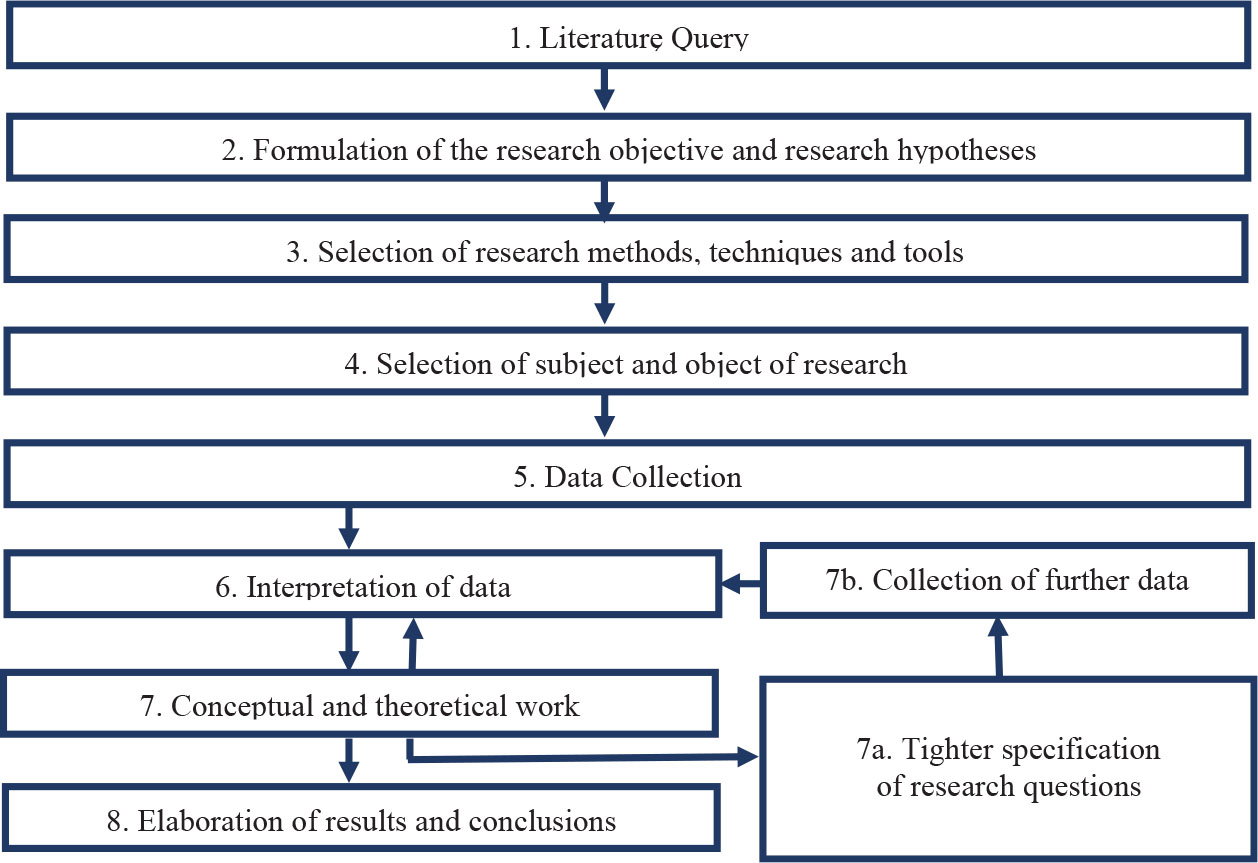
Figure 1.
Qualitative Research Process
Source: Author’s own elaboration based on: (Bell & Brymann & Harley, 2019).
To make explicit the qualitative nature of the empirical basis, our conclusions are drawn from qualitative textual materials (secondary data). Specifically, we analyzed: (1) municipal ordinances and council resolutions; (2) city and port strategic documents and policy papers; (3) official press releases and statements from port authorities and local NGOs; and (4) articles from reputable national and local news outlets. Any numerical indicators contained in these documents (e.g., passenger counts, arrival caps) were used only descriptively to contextualize the narrative evidence. The unit of analysis is the city and port policy response.
The eight-stage process in Figure 1 operationalizes a qualitative workflow: stages 3–6 are implemented through qualitative document analysis and cross-case comparison of textual sources rather than statistical testing.
The research questions were used to formulate the research hypothesis that:H1 - Local governments react well and are taking radical actions to limit the number of cruise travellers visiting of cruise tourist destinations in Southern Europe. For clarity, we interpret H1 as: Local governments in leading Southern European cruise destinations have implemented strong measures, including restrictions targeting cruise passenger volumes and related operations, to curb overtourism impacts
On this basis, the aim of the article was determined. The aim of the article is to assess the measures introduced in the leading coastal destinations in Southern Europe in response to the growing dissatisfaction of local communities related to overtourism caused by cruise shipping companies and to propose possible solutions to this problem.
In the next stage of the research process (third stage), research methods and techniques were selected (third stage) and the triangulation of methods was chosen, i.e. 1) secondary data mining, 2) desk research and 3) exploration method, and aligned with the qualitative design. We adopted qualitative document analysis of secondary textual sources combined with cross-case comparison in an exploratory multiple-case study. Triangulation was implemented as source triangulation (official policy documents, council/port records, and reputable media/NGO reports). Then (stage four) the subject and targets of research were selected. The subject of the study is the phenomenon of overtourism, and the targets of the study are the most popular cruise tourist destinations in Southern Europe. Consequently, following the research process (Figure 1), data collection (stage five) and their interpretation (stage six) were started. The results of the research analyses are included in the chapter presenting the research results.
The following activities were carried out:
Case selection i.e. leading coastal cruise destinations in Southern Europe were identified using prominence in the literature and sectoral reports.
Search and retrieval i.e. documents were collected from official municipal/port websites and reputable media databases using predefined keywords related to cruise tourism and overtourism combined with destination names.
Screening i.e. inclusion criteria required direct relevance to cruise-related crowding or policy instruments, identifiable provenance, publication within the study period, and substantive content beyond brief announcements.
Cross-case comparison and critical analysis i.e. patterns and contrasts across destinations were identified to explain policy choices and implementation pathways.
Synthesis and deduction i.e. findings were integrated into propositions for local governments and used to assess the initial hypothesis.
The data analysis process used case study analysis, comparative analysis, critical analysis and deduction method. On this basis, stage 7 of the study was carried out, where a proposal of solutions was prepared that could be used by local governments in cruise tourist destinations in the fight against the phenomenon of overtourism. The research process ended with the formulation of conclusions (eighth stage).
The results of the study may be an interesting example of how to deal with the phenomenon of overtourism for other local governments in coastal tourist destinations.
RESULTS OF RESEARCH STUDY
The most popular cruise tourist destinations in Southern Europe
Barcelona in Spain, Venice in Italy, and Dubrovnik in Croatia are considered to be the most popular tourist destinations in Southern Europe. These three destinations are also the famous cruise seaports and are tourist targets for most cruise travels in this region, and all of them are struggling with the issue of overtourism.
For several years, there has been a discussion about the environmental harm caused by the development of mass tourism, particularly in coastal tourist destinations. The blame is largely placed on cruise shipping operators, who transport hundreds of thousands of travelers to cruise seaports. The climate change caused by heavy environmental pollution and the degradation of historical cities due to mass tourism have intensified negative sentiments among local communities towards cruise line operators. Statistics show that indeed, the cruise shipping market has quickly rebounded after the downturn caused by the COVID-19 pandemic.
In all the analyzed tourist destinations, an increase in the number of cruise ships is visible after a period of stagnation caused by the COVID’19 pandemic. Demand for cruises quickly returned to pre-pandemic levels. Between 2013 and 2019, Barcelona handled 749 to 835 ships per year. (Table 1) bringing in 2019 a total of more than 3.1 million cruise travelers, and in 2024 there were 791 vessels with almost 3.7 million cruise travelers (Figure 2). The situation is slightly different when it comes to the City of Dubrovnik, because in 2013, 843 cruise ships were handled, bringing a total of over 1,1 million cruise travelers, and in 2024 there were only 625 vessels and only 633 thousand cruise travelers. Perhaps the decline in the number of ships and passengers is the result of the restrictions imposed by the local government and the port of Dubrovnik, which are discussed below. As for the City of Venezia, in 2013 as many as 548 ships called there, bringing more than 1.8 million travelers, while in 2024 there were only 400 vessels and only 597 thousand travelers (Figure 2). It seems that the actions of local authorities and protests of residents, as well as the restrictions on ship traffic, as well as the restrictions on ship traffic, have brought results, as is also discussed below.
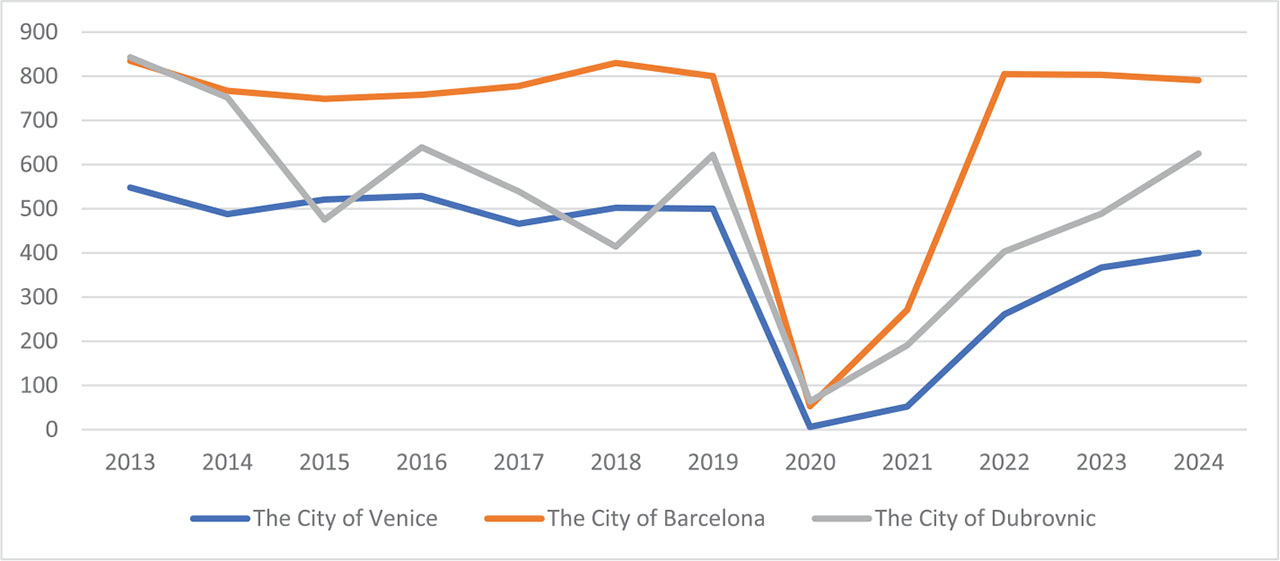
Figure 2.
Statistics of cruise ship calls to the surveyed tourist destinations in the years 2013–2024
Source: Own elaboration on the base of: (Croatian National Tourist Board, 2024; OTB, 2025; Memòria, 2014; Barcelona Tourism Statistics, 2013; MedCruise, 2023, pp. 91–111; MedCruise, 2018, pp. 64–67; City of Venice, 2021, pp. 69–72; City of Venice, 2023, pp. 83–86; City of Venice, 2018, pp.63–65; Thomas, 2019; Croatiaweek, 2019; Thomas, 2021; Thomas, 2023; Croatian National Tourist Board, 2022; Barcelona ciutat i regió, 2022, pp. 50–101; Barcelona ciutat i regió, 2021, pp. 47–88; Barcelona ciutat i regió, 2020, Barcelona ciutat i regió, 2019, pp. 30–68).
Table 1.
The cruise ship traffic in the surveyed destinations from 2013 to 2024
| Year | The City of Venice | The City of Barcelona | The City of Dubrovnik | |||
|---|---|---|---|---|---|---|
| No of cruise travelers | No of cruise ship calls | No of cruise travelers | No of cruise ship calls | No of cruise travelers | No of cruise ship calls | |
| 2013 | 1.815.823 | 548 | 2.599.232 | 835 | 1.136.503 | 843 |
| 2014 | 1 733.839 | 488 | 2.364.292 | 767 | 894.216 | 752 |
| 2015 | 1.582.481 | 521 | 2.540.302 | 749 | 830.684 | 475 |
| 2016 | 1.605.660 | 529 | 2.683.594 | 758 | 831.730 | 639 |
| 2017 | 1.427.812 | 466 | 2.712.247 | 778 | 748.918 | 539 |
| 2018 | 1 560,58 | 502 | 3 042,22 | 830 | 732,43 | 414 |
| 2019 | 1,611,341 | 500 | 3,137,918 | 800 | 804,881 | 622 |
| 2020 | 5,237 | 6 | 198,842 | 53 | 5,041 | 64 |
| 2021 | 31,685 | 52 | 520,854 | 271 | 116,975 | 191 |
| 2022 | 258,294 | 261 | 2,329,332 | 805 | 400,273 | 403 |
| 2023 | 541,341 | 367 | 3,568,901 | 803 | 549,041 | 489 |
| 2024 | 597,351 | 400 | 3,655,981 | 791 | 632,513 | 625 |
[i] Source: Own elaboration on the base of : (MedCruise, 2023, pp. 91–111; MedCruise, 2018, pp. 64–67; City of Venice, 2021, pp. 69–72; City of Venice, 2023, pp. 83–86; City of Venice, 2018, pp.63–65; Thomas, 2019; Croatiaweek, 2019; Thomas, 2021; Thomas, 2023; Croatian National Tourist Board, 2022; Barcelona ciutat i regió, 2022, pp. 50–101; Barcelona ciutat i regió, 2021, pp. 47–88; Barcelona ciutat i regió, 2020, Barcelona ciutat i regió, 2019, pp. 30–68).
Actions taken in the most popular cruise tourist destinations to reduce the phenomenon of overtourism
In all the most popular tourist destinations in Southern Europe, local authorities are forced to take radical measures to reduce tourism due to the effects caused by uncontrolled masses of tourists. In addition, Venice and Dubrovnik faced the threat of losing the status of cities of World Cultural Heritage and will be removed from the UNESCO World Heritage List (Elton, 2023). The significance of numerous protests by local communities cannot be overlooked. Their daily lives became unbearable, prompting many to leave cities and sell their properties to escape from tourist crowds, noise, littering, traffic congestion, high prices, increased crime rates, and so on. Municipal authorities, aiming to halt the depopulation of city centers and alleviate the growing frustration among local communities caused by overtourism, are undertaking various actions involving all stakeholders. These include primarily the local community, tourism organizers, cruise shipping companies, air lines, and bus carriers, as well as non-governmental organizations.Początek formularza
Certainly, the task is not easy as each stakeholder group has its own reasons and needs. Residents aspire to live in a clean, peaceful, and safe environment, while tourism organizers seek to maximize profits from tourism operations, providing employment opportunities for residents. On the other hand, port authorities are interested in accommodating as many ships as possible, also driven by economic considerations, and so forth. Meanwhile, municipal authorities are primarily concerned with ensuring balance and a high quality of life for residents, as well as creating conditions for entrepreneurial development in line with the concept of sustainable development (Kizielewicz, 2016).
Analyzing the ratio of the number of inhabitants to the number of visitors during the year (including cruise travelers) in the surveyed cruise destinations, it can be concluded that Venice has a really serious problem with the phenomenon of overtourism. The percentage share of residents in the total number of people staying in the city in 2024 was 4%, and as many as 96% were visitors, including only 5,67% cruise travelers. The situation was similarly difficult in Dubrovnik, where the ratio is 17% to 83%, and 26% - cruise travelers (Figure 3).
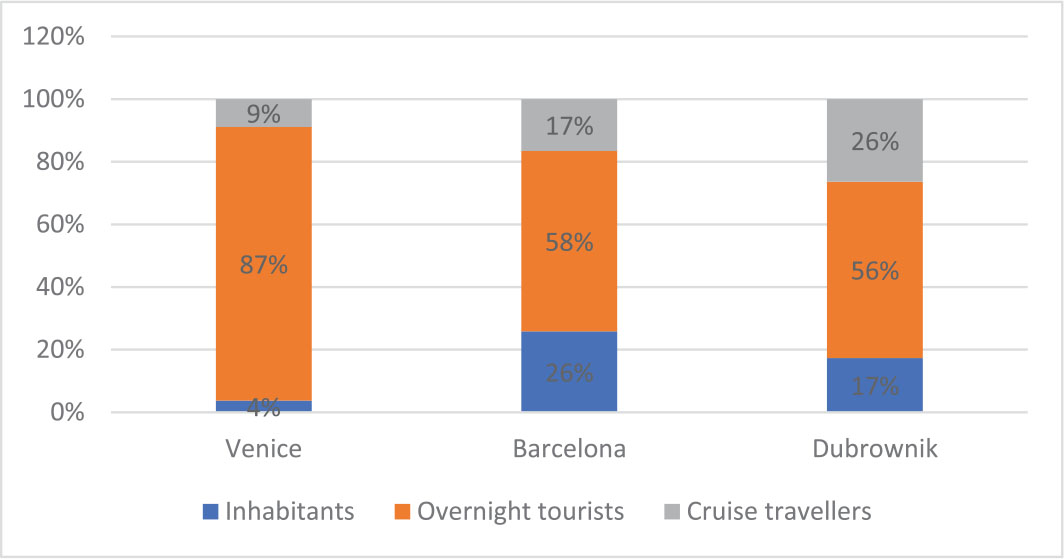
Figure 3.
Percentage share of the number of tourists visiting the surveyed destinations in relation to the number of inhabitants in 2024.
Source: Own elaboration on the base of: (Croatian National Tourist Board, 2024; OTB, 2025; Memòria, 2014; Barcelona Tourism Statistics, 2013; City of Venice, 2021, pp. 69–72; City of Venice, 2023, pp. 83–86; City of Venice, 2018, pp.63–65; Thomas, 2019; Croatiaweek, 2019; Thomas, 2021; Thomas, 2023; Croatian National Tourist Board, 2022; Barcelona ciutat i regió, 2022, pp. 50–101; Barcelona ciutat i regió, 2021, pp. 47–88; Barcelona ciutat i regió, 2020, Barcelona ciutat i regió, 2019, pp. 30–68).
The City of Venice is inhabited by 258.6 thousand residents and is visited by almost 18 times more tourists (Figure 4). In 2024, Venice was visited by over 5,8 million tourists, of which slightly over 597 thousand were cruise travelers, accounting for just 10% of all tourists coming to Venice. (Table 2). Therefore, the ongoing media debate regarding cruise travelers flooding Venice is somewhat exaggerated, as evidenced by the fact that 90% of travelers arrive in Venice using other means of transportation. Interesting research exploring potential solutions to the issue of overtourism in Venice was conducted by the team of Bertocchi et al. (2020), who presented various scenarios to alleviate tourist traffic in Venice.
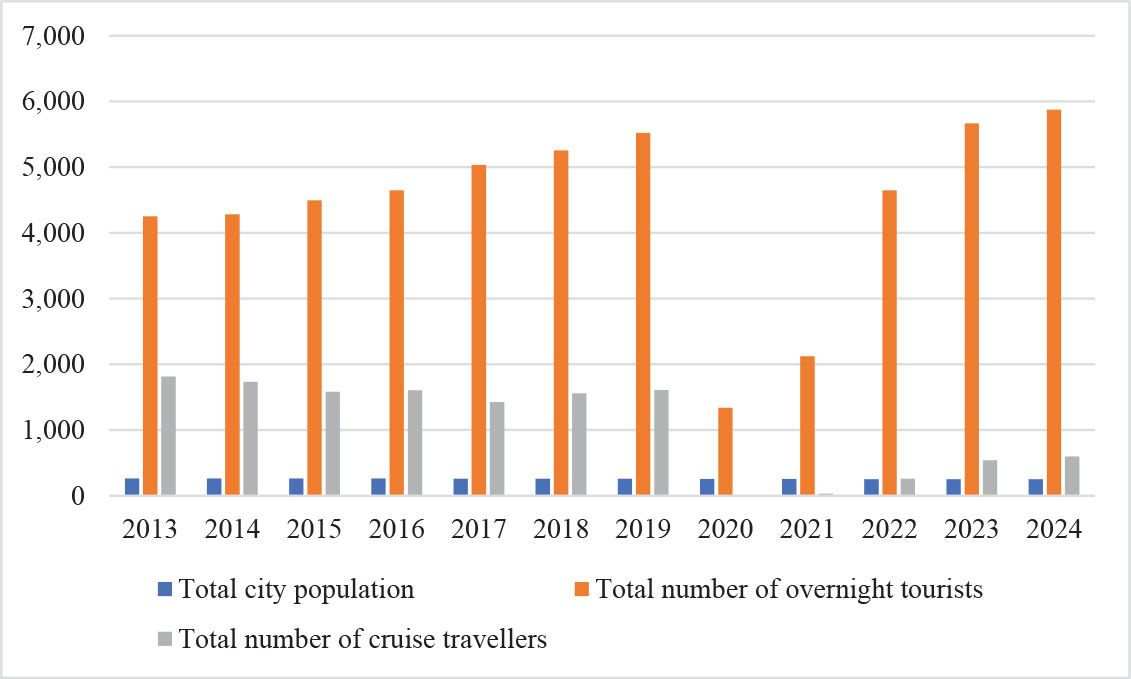
Figure 4.
Comparison of the number of residents of the city of Venice with the number of tourists and cruise travelers from 20130 to 2024.
Source: Own elaboration on the base of : (Croatian National Tourist Board, 2024; OTB, 2025; Memòria, 2014; Barcelona Tourism Statistics, 2013; MedCruise, 2023, pp. 91–111; MedCruise, 2018, pp. 64–67; City of Venice, 2021, pp. 69–72; City of Venice, 2023, pp. 83–86; City of Venice, 2018, pp.63–65; Thomas, 2019; Croatiaweek, 2019; Thomas, 2021; Thomas, 2023; Croatian National Tourist Board, 2022; Barcelona ciutat i regió, 2022, pp. 50–101; Barcelona ciutat i regió, 2021, pp. 47–88; Barcelona ciutat i regió, 2020, Barcelona ciutat i regió, 2019, pp. 30–68).
Table 2.
The percentage share of cruise travelers in total arrivals in the surveyed destinations from 2013 to 2024 (in 1,000s)**
| Year | The City of Venezia | The City of Barcelona | The City of Dubrovnik | ||||||
|---|---|---|---|---|---|---|---|---|---|
| Overnight tourists | Cruise travelers | Cruise travelers vs. Overnight tourists | Overnight tourists | Cruise travelers | Cruise travelers vs. Overnight tourists | Overnight tourists | Cruise travelers | Cruise travelers vs. Overnight tourists | |
| 2013 | 4 252 | 1.816 | 43% | 7 572 | 2 599 | 34% | 733 | 1 137 | 155% |
| 2014 | 4 281 | 1 734 | 41% | 7 800 | 2 364 | 30% | 818 | 894 | 109% |
| 2015 | 4 496 | 1.582 | 35% | 8 303 | 2 540 | 31% | 890 | 831 | 93% |
| 2016 | 4 646 | 1.606 | 35% | 9 065 | 2 684 | 30% | 987 | 832 | 84% |
| 2017 | 5 035 | 1.428 | 28% | 8 884 | 2 712 | 31% | 1 175 | 749 | 64% |
| 2018 | 5 255 | 1 561 | 30% | 9 117 | 3 042 | 33% | 1 265 | 732 | 58% |
| 2019 | 5 523 | 1,611 | 29% | 14 600 | 3 138 | 21% | 1 440 | 805 | 56% |
| 2020 | 1 338 | 5 | 0% | 3 233 | 199 | 6% | 220 | 5 | 2% |
| 2021 | 2 121 | 32 | 2% | 5 108 | 521 | 10% | 478 | 117 | 24% |
| 2022 | 4 646 | 258 | 6% | 10 704 | 2 329 | 22% | 1 029 | 400 | 39% |
| 2023 | 5 665 | 541 | 10% | 12 178 | 3 569 | 29% | 1 235 | 549 | 44% |
| 2024 | 5 877 | 597 | 10% | 12 743 | 3 656 | 29% | 1 350 | 633 | 47% |
Source: Own elaboration on the base of : (Croatian National Tourist Board, 2024; OTB, 2025; Memòria, 2014; Barcelona Tourism Statistics, 2013; City of Venice, 2021, pp. 69–72; City of Venice, 2023, pp. 83–86; City of Venice, 2018, pp.63–65; Thomas, 2019; Croatiaweek, 2019; Thomas, 2021; Thomas, 2023; Croatian National Tourist Board, 2022; Barcelona ciutat i regió, 2022, pp. 50–101; Barcelona ciutat i regió, 2021, pp. 47–88; Barcelona ciutat i regió, 2020, Barcelona ciutat i regió, 2019, pp. 30–68).
Blaming cruise lines for the phenomenon of overtourism in Venice is exaggerated, and this is primarily due to the fact that the sight of giant ships moored in the historic parts of the city is spectacularly impressive, due to their enormous size. As a result, cruise lines are blamed for the city’s congestion and traffic jams. In Venice, there are also noticeable protests by residents who feel that their quality of life has declined due to the city being overrun by tourists. Another issue is the issue of the threats that these colossi can cause to historic buildings, the ecosystem and other units, as well as environmental pollution. For this reason, on August 1, 2021, the Italian Government prohibited vessels longer than 180 meters, taller than 35 meters, or heavier than 25,000 tons from entering the Lagoon. These types of vessels must temporarily moor in a nearby industrial port until a new passenger terminal is built.
On the other hand, the City of Barcelona is inhabited by 5.7 million residents and is visited by almost twice as many tourists (Figure 5). In 2024, Barcelona was visited by more than 16.4 million tourists, including over 3,6 million cruise travelers, which is as much as 29% of all tourists (Table 2). Indeed, the situation in Barcelona differs from that in Venice. This is primarily due to the nature of the cruise port. The port in Barcelona serves as a home port from which many travelers embark on cruise ship journeys. Therefore, the number of tourists is certainly higher for this reason, but this fact also has positive aspects, because, in home ports, cruise travelers spend more time, both before embarking on their journey and after its completion, which brings greater financial benefits to the destination. Nevertheless, it’s worth noting that cruise travelers constitute over a quarter of the travelers arriving in Barcelona, which can indeed be considered a high figure. Therefore, municipal authorities took radical steps, and in October 2023, they relocated the terminal from the city’s northern docks at the World Trade Centre to the Moll d’Adossat pier south of the Catalan capital., i.e. a 30-minute shuttle bus ride from the city center. In addition, in agreement with the port authorities, the number of ships that can be handled in the port at the same time has been limited to a maximum of 7 (Symons, 2023). Of course, the effects of these actions will be visible in the future. However, it should be noted that Barcelona residents are protesting the city being overcrowded with tourists.
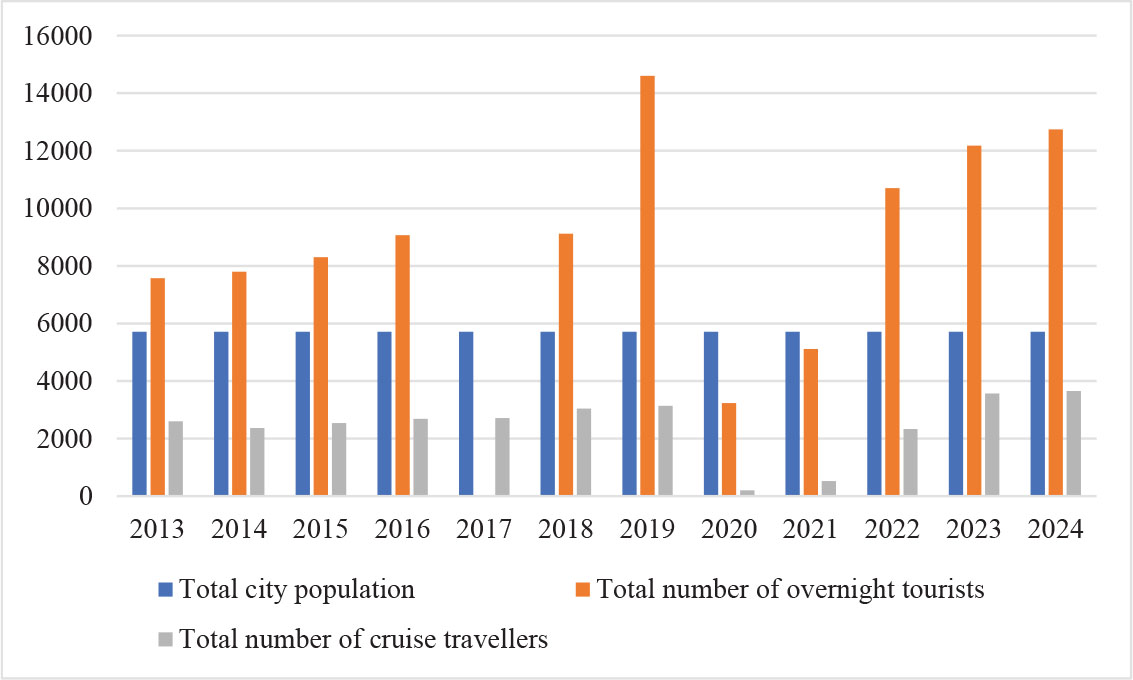
Figure 5.
Comparison of the number of residents of the city of Barcelona with the number of tourists and cruise travelers from 2010 to 2022.
Source: Own elaboration on the base of: (Croatian National Tourist Board, 2024; OTB, 2025; Memòria, 2014; Barcelona Tourism Statistics, 2013; MedCruise, 2023, pp. 91–111; MedCruise, 2018, pp. 64–67; City of Venice, 2021, pp. 69–72; City of Venice, 2023, pp. 83–86; City of Venice, 2018, pp.63–65; Thomas, 2019; Croatiaweek, 2019; Thomas, 2021; Thomas, 2023; Croatian National Tourist Board, 2022; Barcelona ciutat i regió, 2022, pp. 50–101; Barcelona ciutat i regió, 2021, pp. 47–88; Barcelona ciutat i regió, 2020, Barcelona ciutat i regió, 2019, pp. 30–68).
After all, the City of Dubrovnik is a city with a population of only 41,500 and is visited by almost 25 times as many tourists (Figure 6). In 2024, Dubrovnik was visited by over 1,9 million tourists, including just over 633 thousand cruise travelers, which is as much as 47% of all tourists (Table 2). Indeed, in this case as well, cruise travelers constitute a significant portion of tourists and can indeed contribute to the phenomenon of overtourism. It’s important to note that Dubrovnik is a typical port of call, unlike Barcelona, which serves as a home port. As a result, cruise travelers stop in the city for just a few hours to explore it. The municipal authorities of the city of Dubrovnik closely monitor the situation and undertake various actions to control tourist traffic in the city. For example, in 2018, in cooperation with the Dubrovnik Port Authority, they introduced a restriction that only two cruise ships with 5,000 passengers on board can dock in the port at any one time. In addition, in 2021, the Digital Nomads-in-Residence (DN-I-R, 2021) system was purchased to manage tourist traffic in the city, allowing for the planning of ship traffic and tourist traffic (The Port of Dubrovnik, 2024). Another solution was to introduce an obligatory reservation for tour operators to stop in the city and to monitor tourist traffic through a city camera system.
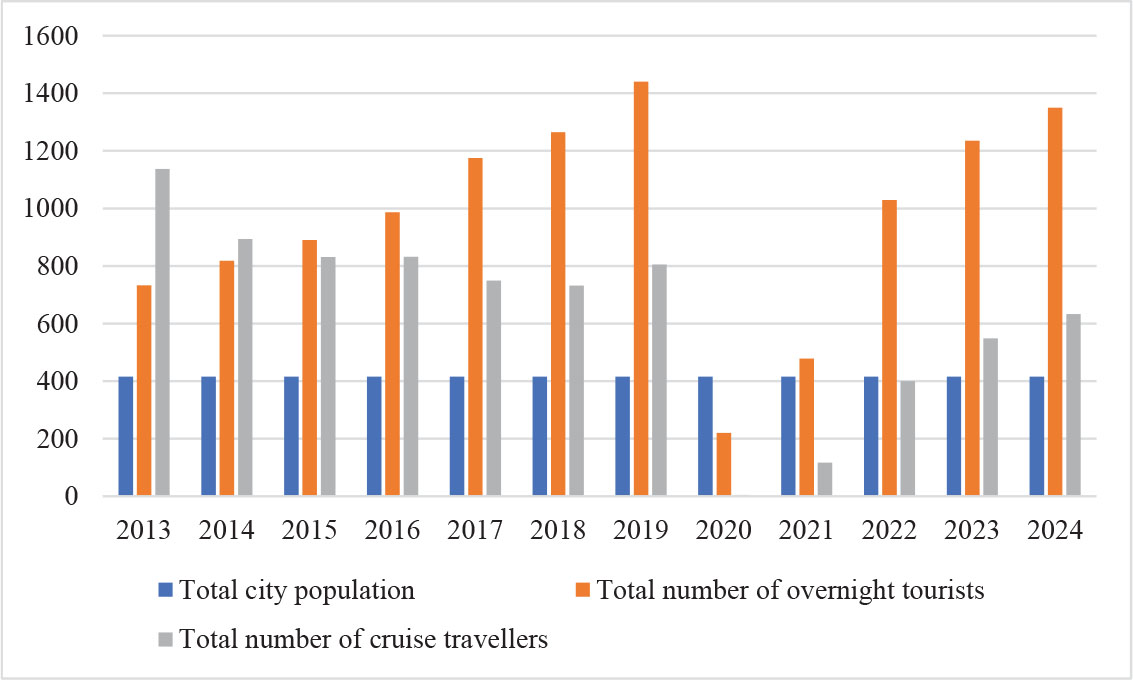
Figure 6.
Comparison of the number of residents of the city of Dubrovnik with the number of tourists and cruise travelers from 2010 to 2022.
Source: Own elaboration on the base of: (Croatian National Tourist Board, 2024; OTB, 2025; Memòria, 2014; Barcelona Tourism Statistics, 2013; MedCruise, 2023, pp. 91–111; MedCruise, 2018, pp. 64–67; City of Venice, 2021, pp. 69–72; City of Venice, 2023, pp. 83–86; City of Venice, 2018, pp.63–65; Thomas, 2019; Croatiaweek, 2019; Thomas, 2021; Thomas, 2023; Croatian National Tourist Board, 2022; Barcelona ciutat i regió, 2022, pp. 50–101; Barcelona ciutat i regió, 2021, pp. 47–88; Barcelona ciutat i regió, 2020, Barcelona ciutat i regió, 2019, pp. 30–68).
As analyses have shown of the three discussed destinations (Barcelona, Venice, Dubrovnik), it was on the initiative of the local authorities that cooperation with seaport authorities was undertaken in order to limit the number of coaches entering the city centers, monitor tourist traffic in the city (Dubrovnik), limit the number of cruise ships handled simultaneously at the seaport during the day (Barcelona, Venice, Dubrovnik). It was also in response to the protests of the residents that the local authorities contributed to the relocation of the passenger terminals and moving them out of the city (Barcelona, Venice). Of course, it must be remembered that the fight against the phenomenon of overtourism is a difficult and continuous process, requiring openness to stakeholder concessions and openness to changes, and above all, understanding the consequences to which the uncontrolled development of mass tourism may lead.
DISCUSSION
Combating the negative effects of overtourism in popular tourist destinations is not only the responsibility of tour operators (including cruise lines, travel agencies) who bring masses of tourists to popular tourist destinations, but also local authorities, seaport and airport authorities, but also non-governmental entities involved in the promotion of tourism. In order to reduce the negative consequences of overtourism for the natural environment and the local community, it is necessary to involve all entities, including, above all, local authorities, tour operators, and port authorities. It depends on their radical actions whether it will be possible to recover losses and halt the progressive degradation of the most valuable historical cities such as or Venice, Barcelona or Dubrovnik. Therefore, local authorities should:
conduct regular public consultations with all stakeholders, including residents, entrepreneurs, NGOs and others, in order to develop a tourism policy that takes into account the needs and expectations of all interest groups;
recognize the threats posed by overtourism to residents and identify the most sensitive areas in this regard
provide access to tourist information on the city’s tourist traffic and alternative sightseeing sites and routes;
conduct active promotional campaigns for conscious travel, including educating tourists – codes of good behavior in visited places implemented in cooperation with tour operators and cruise line owners;
support and promote the development of tourism infrastructure conducive to the development of sustainable tourism;
invest in the development of tourism infrastructure in other regions in order to relieve tourism in popular tourist destinations;
regulate tourist fees to discourage tourists from staying longer in popular destinations;
use drones and various mobile applications to monitor the volume of tourist traffic and track the level of pollution in the city;
engage in the organization of popular events after the season in order to extend the tourist season;
restricting the entry of coach operators into city centers;
create car-free zones in tourist cities
carry out activities for the promotion of lesser-known tourist destinations in order to relieve the volume of tourists in popular tourist destinations.
engage in the controlled management of the flow of tourists in the most frequented and popular places.
use technological innovation to monitor tourism (GPS) and tour operators to plan visits (booking platforms to track traffic) and organize tourist services.
On the other hand, in order to meet the expectations of local communities and the challenges posed by local authorities in accordance with the principles of sustainable development, cruise port authorities should:
work with local authorities to develop common strategies for sustainable development;
work with cruise lines to encourage them to call at ports during the off-peak tourist season by introducing high port charges during the tourist season.
introduce restrictions on the number of cruise ships that can dock in the port during the day to relieve the city’s congestion and traffic jams;
monitor environmental pollution, as well as noise and vibration caused by ships moored at quays;
introduce fare reductions for cruise lines that stay in port for more than one day, encouraging travelers to stay at their destinations and take advantage of the food, cultural and accommodation services offered;
invest in infrastructure that helps to minimize noise and vibration caused by ships moored at quays in port, in order to reduce nuisance to local communities.
Cruise line operators must also be involved in efforts to minimize the phenomenon of overtourism. All of the world’s leading cruise lines have developed the sustainability strategies (RCG, 2020; RCG, 2021; NCLH, 2021; CCL & Plc, 2022; CLIA, 2022) and are indeed engaged in numerous efforts to reduce the impact of their operations on the environment and local communities. Nevertheless, it should be noted that there is still too little involvement of cruise lines in cooperation with coastal areas. Cruise lines should be more committed to:
cooperate with actors in the places visited in order to develop a common strategy for sustainable development and should introduce various forms of eco-tourism into their sightseeing offers;
work on introducing a strategy to deconcentrate tourist flows in areas of the city where residents experience a lower quality of life due to the incoming tourists
ensure that cruise travelers brought to seaside destinations are made aware of the principles of sustainable behavior;
track the volume of tourist traffic in the visited tourist destinations and to plan visits to popular destinations in a sustainable mannerPoczątek formularza calling at other cruise ports;
propose sustainable tourism offers to travelers in visited locations;
encourage cruise travelers to stay longer in the places visited to provide higher incomes for local entrepreneurs.
The above-mentioned activities are just some of the ways to solve the difficult problem of overtourism. Policymakers must choose solutions based on the character and type of the coastal tourist destination and take into account the stakeholders’ interests. In this regard, it is necessary to conduct a continuous dialogue and monitor the market trends.
CONCLUSIONS
The analyses conducted show that despite many years of research on sustainable tourism development, the problem of overtourism remains. Leading coastal destinations in Southern Europe (Venice, Barcelona and Dubrovnik) continue to face problems caused by an influx of tourists on cruisers. The situation was temporarily halted by the COVID-19 pandemic, but there is a return to the adverse effects of an influx of this type of tourists. It can be expected that further development of this type of tourism may spread to other ports.
In all the cities analyzed, residents notice a decline in quality of life caused by tourists.
City authorities still need to develop deconcentration strategies that can enable not only a reduction in tourist traffic, but also an improvement in the quality of experience of those tourists who have visited a place, as well as an improvement in the quality of life of residents of overburdened cities.
The analysis showed that local authorities take the problem of overtourism seriously and undertake a number of measures to minimize the negative effects of the phenomenon of overtourism. Local authorities initiated cooperation with cruise port authorities, leading to agreements aimed at reducing the number of cruise vessels handled simultaneously. Additionally, because of residents’ protests, the local authorities were forced to move the cruise passenger terminals outside the city centers. Traffic load planning by using new technologies, along with traffic monitoring in city centers was also implemented. In addition, local authorities have introduced a number of other restrictions, namely: limiting the entry of coaches with tourists to city centers, increasing tourist taxes for tour operators, incentives for cruise lines that extend stays in visited destinations and many others. It should also be emphasized that numerous protests of local inhabitants of coastal tourist destinations also influenced the actions of decision-makers in the field of reducing the emission of harmful substances into the environment generated by giant cruise ships moored at quays. In order to reduce environmental damage, seaport authorities monitor the level of pollution emitted by ships, introduce various technological solutions to increase energy efficiency, reduce noise and vibration caused by ship power plants, and invest in renewable energy sources and onshore power supply.
Taking into account the analyses carried out, and examples of actions taken by local authorities, it should be concluded that the research hypothesis that Local governments react well and are taking radical actions to limit the number of cruise travelers visiting of cruise tourist destinations in Southern Europe has been verified positively.
Of course, the restriction of tourist traffic in coastal tourist destinations should be considered in two contexts. On the one hand, some residents are dissatisfied with the development of the cruise shipping market, as they do not benefit from this fact, and on the other hand, it should be remembered that a large number of residents derive economic benefits by providing services to cruise shipping companies and masses of visitors.
Stakeholders in coastal tourist destinations should conduct continuous market analyses, monitor the impact of the tourism market on the development of tourist destinations and adapt their activities to the needs of the new trends in line with the idea of sustainable development.
LIMITATIONS AND RECOMMENDATIONS
The presented research has some limitations. First of all, they are based on the analysis of secondary materials and reports published by municipal authorities, entities involved in the development of tourism in the studied destinations and previous scientific research. It would be worthwhile to conduct surveys or in-depth interviews with representatives of local authorities and port authorities in the surveyed destinations in order to find out their point of view on the problems related to overtourism. It would also be important to find out what is the attitude of cruise line owners, who are held responsible for environmental damage and attacked by various interest groups.
ACKNOWLEDGMENTS
The authors would like to acknowledge support by the project entitled “PROGRESS - Scientific and research development of Gdynia Maritime University in management and quality sciences” (Contract No. RID/SP/0023/2024/01) funded by the Ministry of Science under the Regional Initiative of Excellence Program. The part of the study was also funded by the Poznań University of Economics.