
INTRODUCTION
In the competitive hospitality industry, the quality of hotel services is paramount. Elevated customer expectations necessitate exceptional service to ensure satisfaction and loyalty. High service quality influences customer choices and enhances a hotel’s reputation and profitability, making it vital for business success in the modern market.
Technological advancements and the digitalization of service delivery have profoundly transformed the hospitality industry, impacting service management and quality measurement practices. These changes necessitate continual methodological advancements to capture service quality's multifaceted and evolving dimensions. In particular, the integration of digital elements presents new challenges and opportunities for research (Cheng et al., 2023). Despite extensive studies on hotel service quality, there is a lack of a comprehensive measurement tool that incorporates the nuances of digital transformation affecting customer experiences and expectations.
Today’s hotel guests possess heightened awareness and expectations due to their ability to compare offerings, facilitated by advancements in information technologies easily. This awareness influences their expectations and shapes their emotional evaluation of the tourist services they consume.
The area of hotel service quality has gained increasing interest, although the literature shows a notable lack of cohesion, with research differing wildly across various geographic and cultural contexts. The observed fragmentation indicates a failure to achieve a complete synthesis within the field, making it difficult to understand global patterns and develop universally applicable models. Hence, there is an urgent requirement for a bibliometric study that consolidates and integrates existing research from different platforms and geographies and identifies developing trends and approaches.
The primary aim of this study is to map the past and current research landscape concerning hotel service quality, particularly through the lens of recent technological advancements. The specific research questions that guide this study are presented below.
RQ.1. What are the basic bibliographic indicators, such as most relevant sources (journals), annual scientific production, most productive authors, most productive countries, and country collaboration networks in the hotel service quality literature?
RQ.2. What main research directions on hotel service quality can be found in literature? What do the thematic map and thematic clusters look like based on co-word network analysis?
RQ.3. Is it possible to observe the evolution of research topics in the analyzed literature?
RQ.4. What methodologies have researchers employed to analyze service quality in the hotel industry? Has the research design changed over an analyzed period?
This study employs a bibliometric analysis of extensive publications indexed in prestigious databases – Scopus and Web of Science (WoS) to achieve these objectives. This approach will allow for a detailed examination of research trends and methodological shifts, contributing to a more comprehensive understanding of hotel service quality in the digital age.
The study will uncover gaps in the current literature and offer directions for future research, enhancing the academic discourse on service quality measurement and management within the hospitality industry.
CONCEPTUAL BACKGROUND
The concept of service quality has evolved significantly over the years, particularly with the advent of digital technologies. Initially, service quality was predominantly measured using traditional models such as SERVQUAL, which focused on dimensions like tangibility, reliability, assurance, empathy, and responsiveness (Parasuraman et al., 1988). However, the digital transformation within the hospitality industry has introduced new dimensions that these traditional models struggle to capture.
In the current digital landscape, customer expectations are shaped by face-to-face interactions and a multitude of digital touchpoints. These include online booking systems, mobile applications, social media interactions, and AI-driven customer service tools (Bilgihan, 2016). As a result, service quality has become a multi-faceted construct that includes elements of digital user experience, such as website usability, responsiveness in digital communication, and the integration of artificial intelligence in customer service (Gretzel & Jamal, 2009).
The rise of big data analytics has further revolutionized the concept of service quality. Today, hotels are leveraging data to offer personalized experiences that cater to individual customer preferences (Kim et al., 2008). The concept of customer experience management (CXM) has emerged as a critical framework within this context. CXM focuses on creating and managing customer experiences across all touchpoints, which is particularly relevant in a digital context where customer journeys are increasingly complex and non-linear (Verhoef et al., 2009).
Personalization, enabled by data analytics, allows hotels to anticipate customer needs and deliver tailored services, thereby enhancing perceived service quality (Bolton et al., 2004). This shift towards personalized service has been driven by the recognition that modern consumers expect more than just transactional interactions; they seek meaningful and customized experiences that reflect their preferences.
Another significant development in measuring service quality is the influence of social media and online reviews. Platforms such as TripAdvisor and Yelp have empowered consumers to share their experiences and rate services, making these ratings a crucial component of a hotel's reputation (Leung et al., 2013). Research has shown that online reviews significantly impact consumer decision-making and can even influence the perceived quality of a service before it is experienced (Zhang et al., 2010).
The importance of managing online reputation has led to developing new strategies within the hospitality industry, focusing on monitoring and responding to online feedback. This proactive engagement not only helps in maintaining service quality but also in enhancing customer satisfaction and loyalty (Sparks et al., 2016).
Looking forward, the integration of emerging technologies such as artificial intelligence, virtual reality, and the Internet of Things (IoT) is expected to transform service quality in the hospitality industry further (Ivanov & Webster, 2017). AI-driven chatbots, for instance, are increasingly used to handle customer inquiries and bookings, offering a level of convenience and efficiency that traditional service models cannot match. Additionally, the use of IoT devices in hotel rooms can enhance the guest experience by allowing for greater control over room settings and providing personalized recommendations (Tuomi et al., 2021).
As these technologies continue to develop, they will likely introduce new dimensions to service quality that must be understood and measured. This evolution will require ongoing research to develop new models and frameworks that can accurately capture the quality of service in a digitalized world.
RESEARCH METHOD
A comprehensive bibliometric analysis and literature review were conducted to achieve the research goal using publications from Scopus and WoS databases. Pritchard (1969), first defined Bibliometric as the study of books and other media using statistical and mathematical methods. Bibliometrics is mostly used for performance analysis and science mapping (Donthu et al., 2021). Individual and institutional research output and publication histories are evaluated in the performance analysis. However, science mapping investigates scientific discipline organization and progress. These characteristics provide a quantitative framework for subjective literature reviews. Therefore, authors examining specific study fields must understand them. According to Zupic & Čater (2015), bibliometric approaches provide qualitative precision to literature reviews, enabling researchers to support their theoretical classifications.
The study investigated the publication trends in journals indexed in the Scopus and WoS databases. Searching for "service quality" specifically in the context of hotels yielded 859 articles from Scopus and 961 from WoS. It is crucial to note that other restrictions were placed on the search, including the requirement for papers to be in English, only final versions of publications, and exclusively journal articles. The subject areas covered in Scopus include "Social Sciences", "Business, Management, and Accounting", and "Economics, Econometrics, and Finance". In WoS, the subject areas are "Hospitality Leisure Sport Tourism", "Management", "Business", and "Economics", with a focus on the research area of "Business Economics".
The databases were merged, and duplications were removed using the R library Bibliometrix. As a result, the final analysis encompassed a set of 1361 papers.
Data pre-processing and formatting, calculations in the further study, and visualizations were prepared using the Biblimetrix library. The collected papers were also coded and analyzed with MaxQDA software, especially to analyze research methods used to measure hotel service quality.
A few bibliometric techniques were used for mapping research collaborators, co-authors, and co-words analysis. Co-word analysis represents a methodological approach within content analysis that focuses on examining words present in documents to establish linkages and lay the conceptual groundwork of the subject matter. This method operates under the premise that the recurrent appearance of certain words across various documents suggests a strong association between the concepts these words embody. As an effect, the network illustrating the connections and relationships between themes can be created as a basis on the image of the cognitive structure of a given field. This analytical instrument can be customized to analyze whole texts, abstracts, document titles, and keywords (Zupic & Čater, 2015).
This study uses the co-words analysis of abstracts to examine concepts linked to the studied articles. This approach enabled the extraction of thematic clusters, which represented the main topics of analysed publications. Finally, the most important, highly cited papers were analyzed through narrative analysis for detailed descriptions of each thematic cluster.
RESULTS
Publications by year and total citations by journals
Initially, the number of papers published about our interest between 1994 and 2024 (including the first three months of 2024) was examined. According to the findings, 65 publications on hotel service quality were published by 2008, and 78.2% of the papers were published within the last ten years. Approximately 106 articles on the quality of hotel services have been published annually since 2015 (except from 2024). 2019 was the most productive year, with 140 papers. As illustrated in Figure 1, the annual rise in publications serves as tangible evidence of the growing academic interest in hotel service quality.
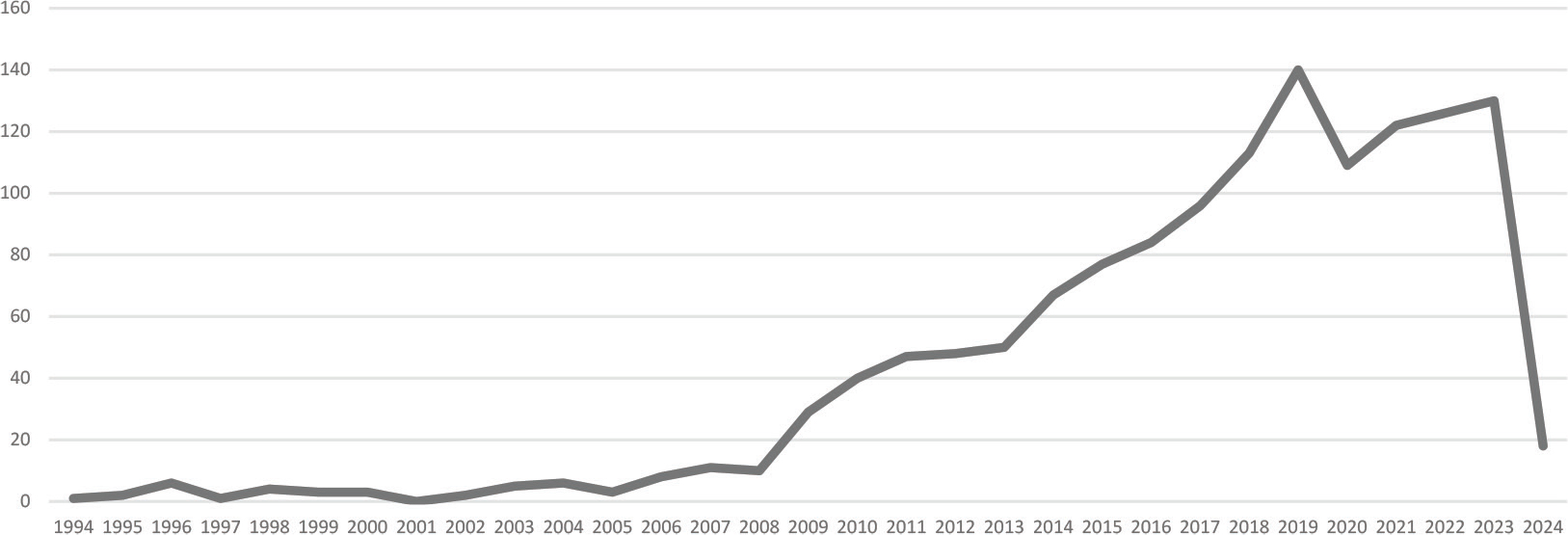
Figure 1.
Distribution of the number of publications (yearly output)
Source: own elaboration using the R ‘bibliometrix’ package.
Ten of the 377 journals found by the chosen databases published twenty or more papers each (Fig. 2). About 47% of the articles (637 articles) were published in just 5% of the journals (20 journals). The International Journal of Contemporary Hospitality Management had the greatest number of papers (10.7%). It was followed by Tourism Management with 6.2%, the Journal of Hospitality Marketing & Management with 3.8%, and the International Journal of Hospitality Management with 3.7%.
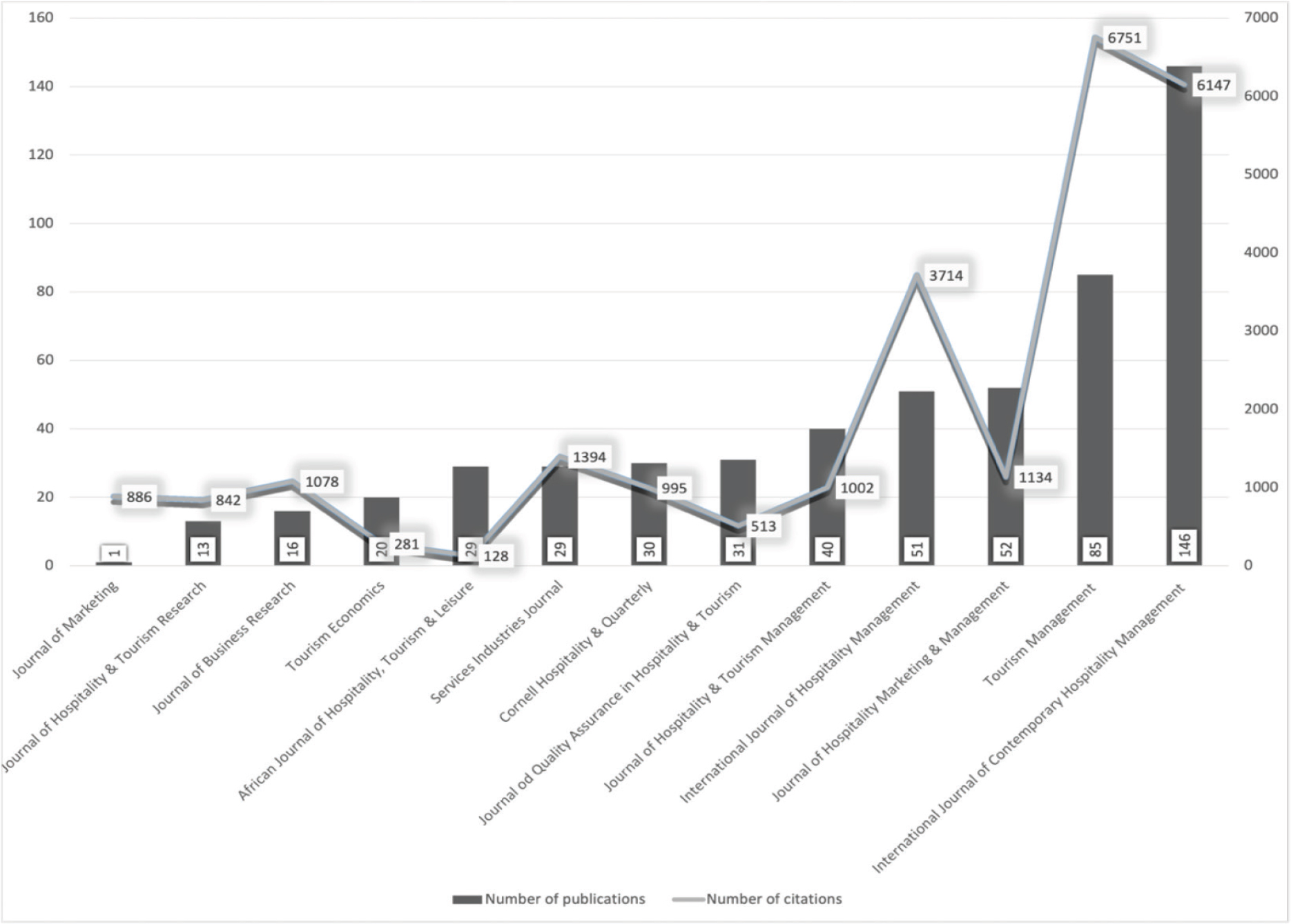
Figure 2.
Distribution of the number of publications and citations by top journals
Source: own elaboration using the R ‘bibliometrix’ package.
The citation analysis shows a slightly different ranking of the impact of the most relevant journals (Fig. 2). The most cited articles are from Tourism Management (cited 6751 times), followed by the International Journal of Contemporary Hospitality Management (6147), and the International Journal of Hospitality Management (3714).
The ten most published authors on the topic of hospitality service quality are: Chen C. (15 papers), Karatepe O. (14), Law R. (13), Gil-Saura I. (11), Han H. (11), Kim S. (11), Kim J. (10), Liu Y. (9), Shahin A. (9), Wang C. (9).
International or national collaborations of hospitality researchers from numerous networks. Considering the specific authors working together, they can be assigned to nine clusters. The most numerous collaborations are represented by three clusters (blue, red, and green) with leading authors (Figure 3).
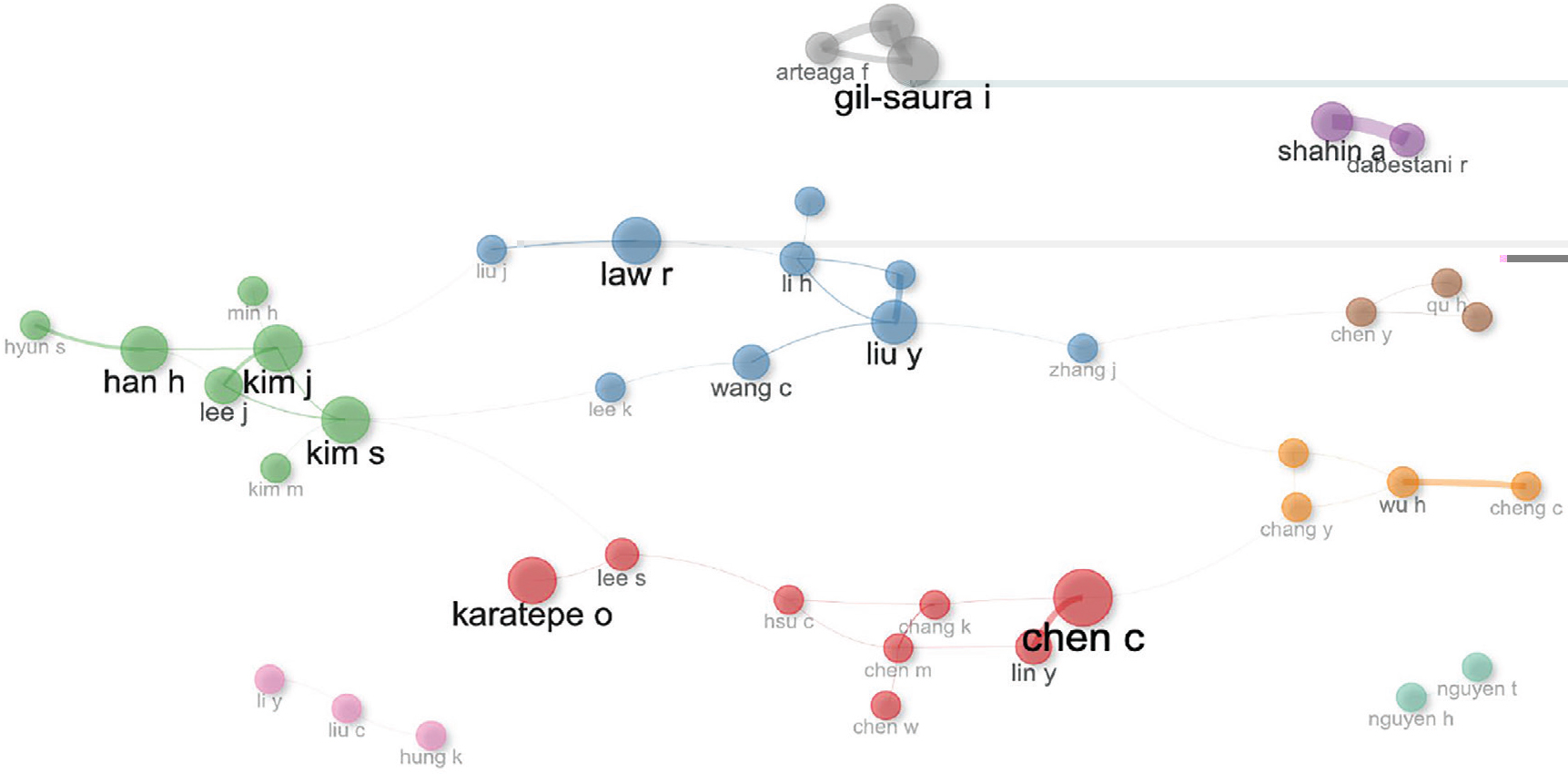
Figure 3.
Collaborative clusters of authors’
Source: own elaboration using the R ‘bibliometrix’ package.
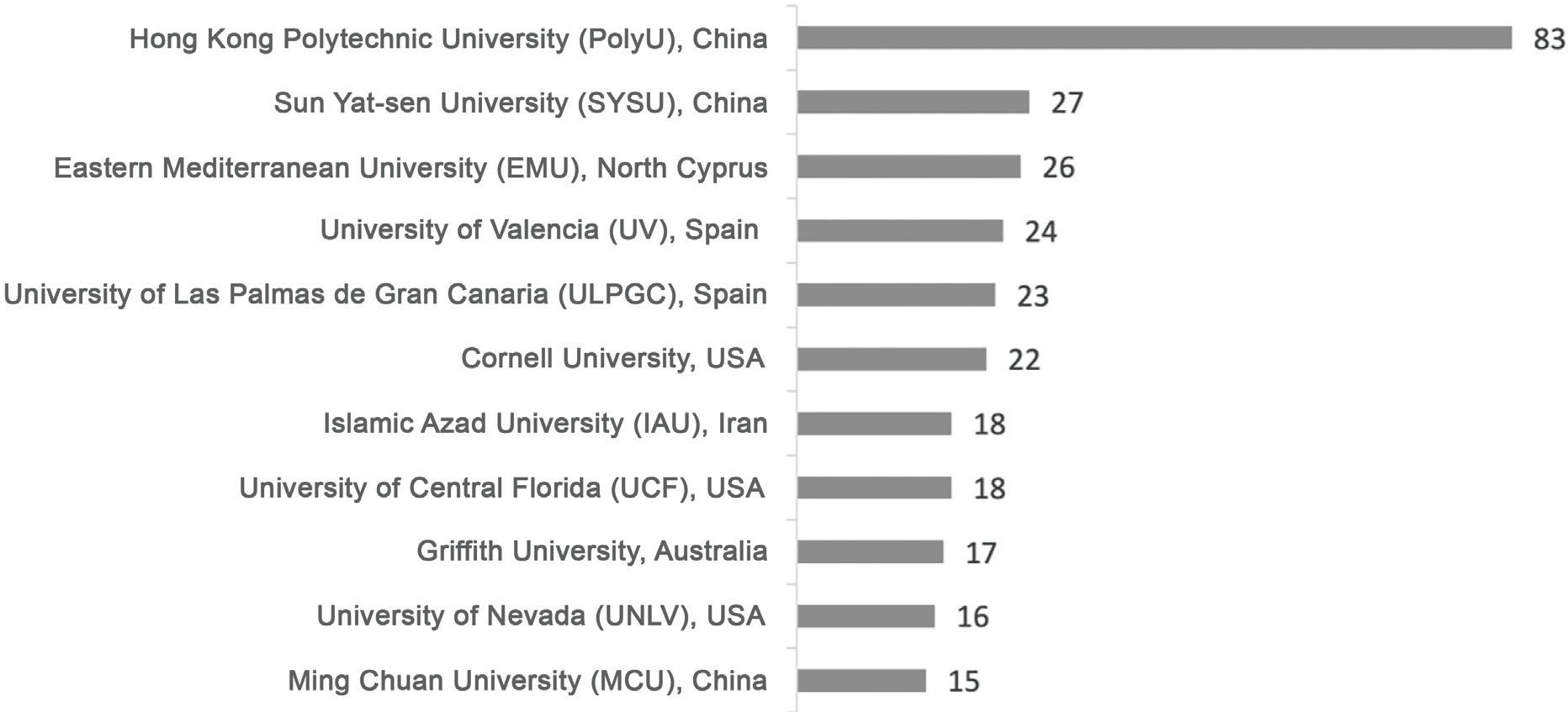
Figure 4.
Distribution of authors’ top affiliations
Source: own elaboration using the R ‘bibliometrix’ package.
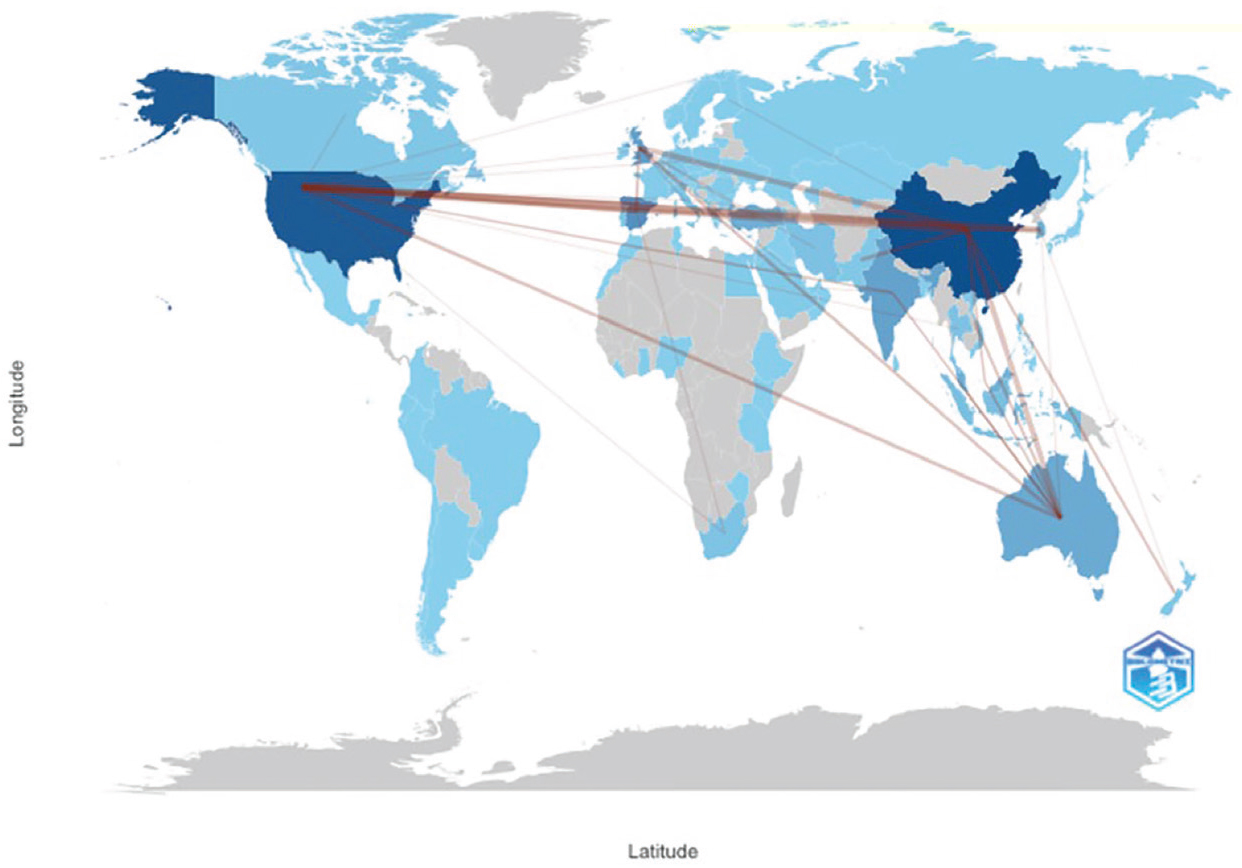
Figure 5.
Network of authors’ collaboration by country
Source: own elaboration using the R ‘bibliometrix’ package.
The diagram below shows leading research centers publishing articles on the quality of hotel services. Hong Kong Polytechnic University is the top university with which the researchers are associated.
The study of the article collection reveals multiple collaborations with writers from various affiliations, such as the authors of the main university who work with over ten other universities. The previously described network of collaboration among scholars converts into a network of collaboration by country. The analysis confirms the collaboration of authors from China, the USA, and the UK, but also Australia, India, Malaysia, Spain, and other mentioned countries. There is strong collaboration between authors from China and the US, China and Australia, China and the UK, China and Pakistan. There is also strong collaboration between researchers from the US and South Korea and the US and Australia (see Figure 6).
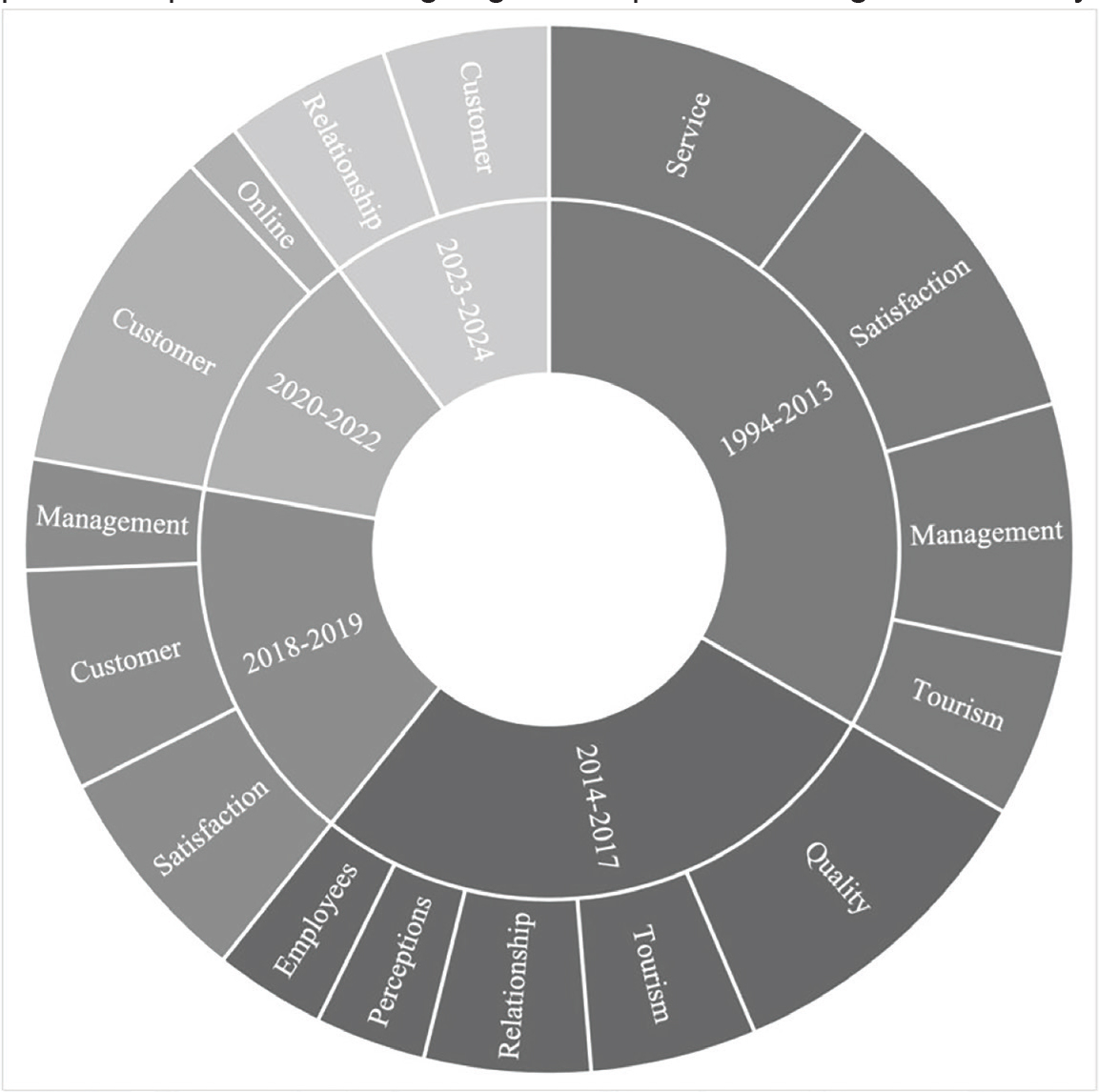
Figure 6.
Thematic evolution 1994–2024
Source: own elaboration using the R ‘bibliometrix’ package.
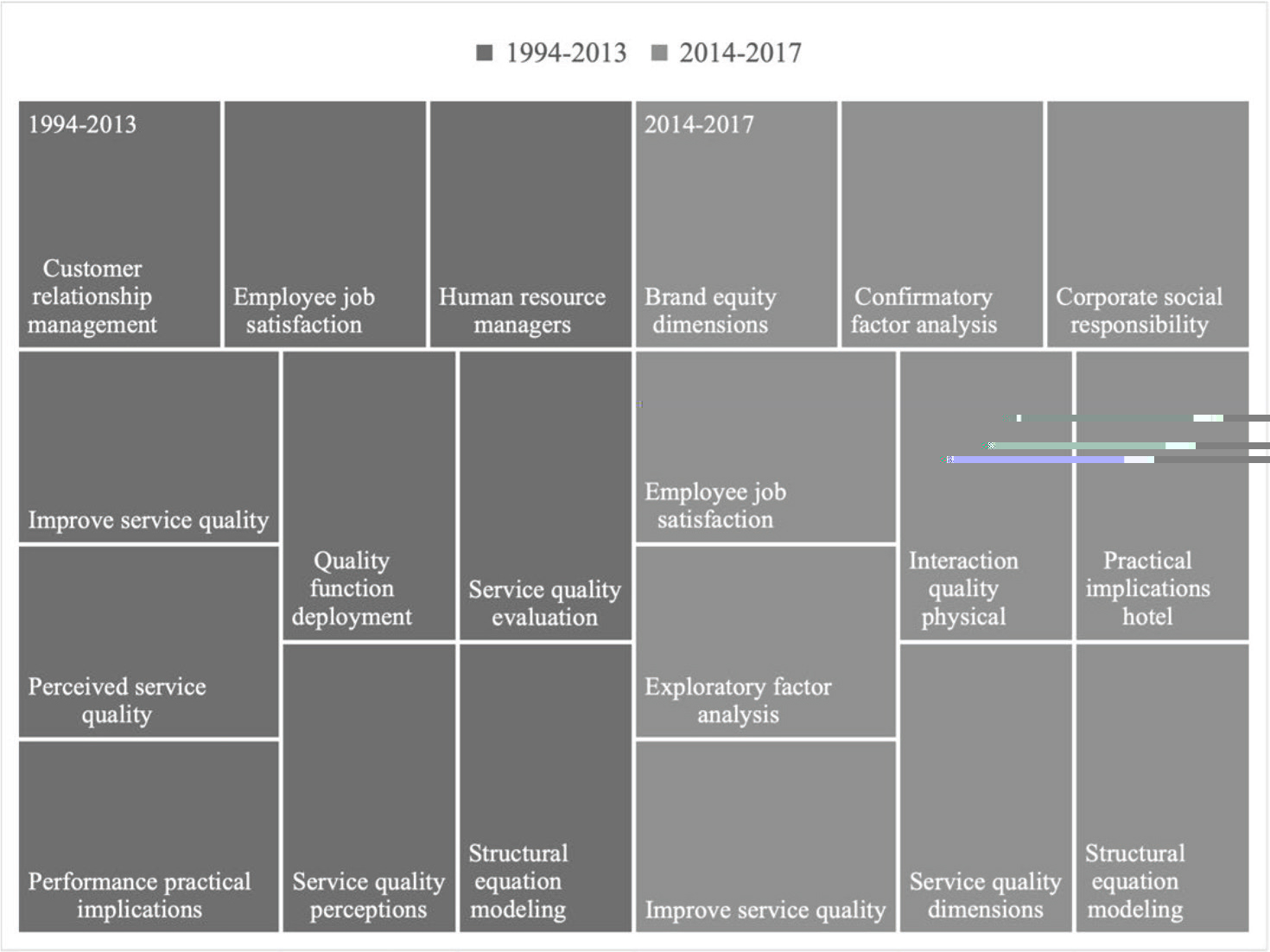
Figure 7.
Thematic evolution 1994–2017
Source: own elaboration using the R ‘bibliometrix’ package.
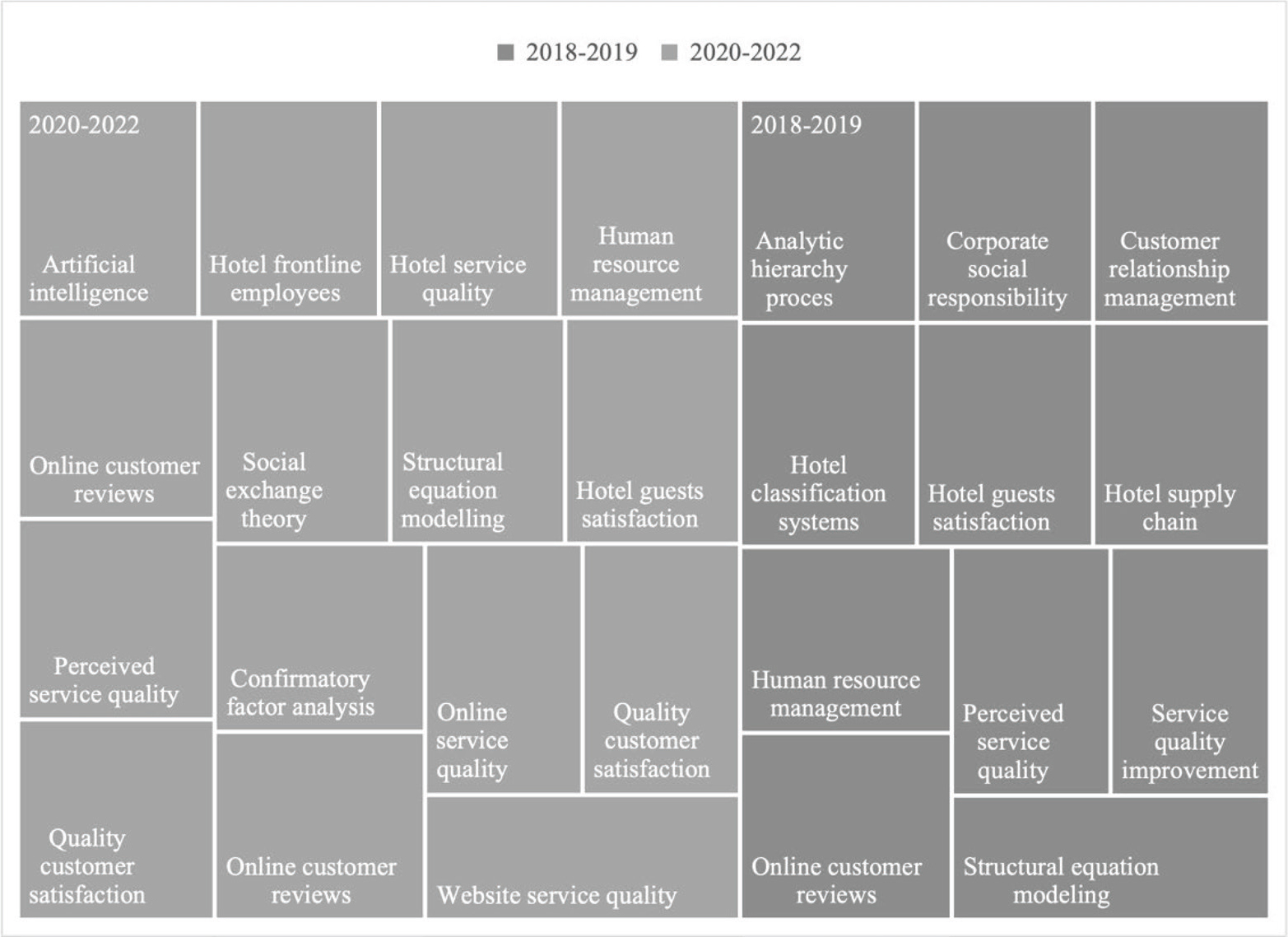
Figure 8.
Thematic evolution 2018–2022
Source: own elaboration using the R ‘bibliometrix’ package.
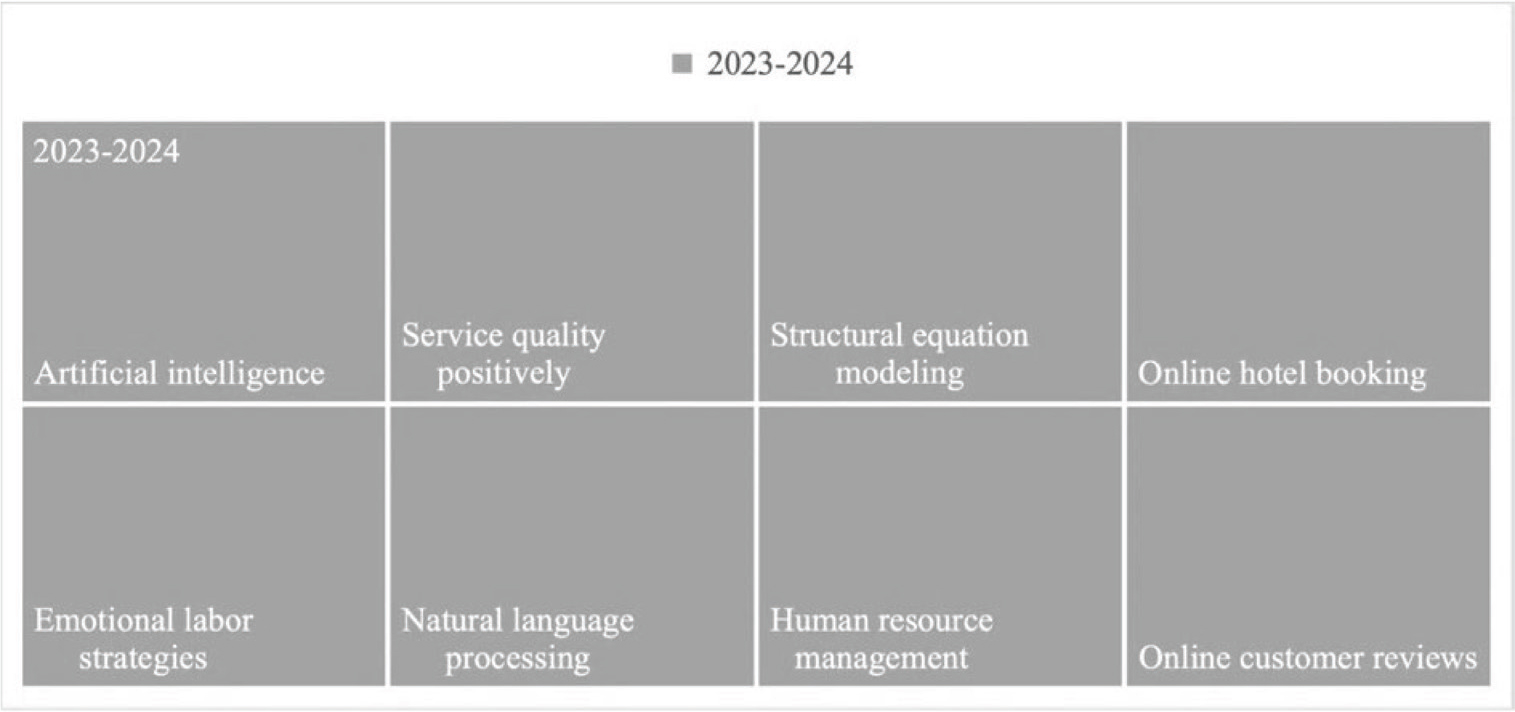
Figure 9.
Thematic evolution 2023–2024
Source: own elaboration using the R ‘bibliometrix’ package.
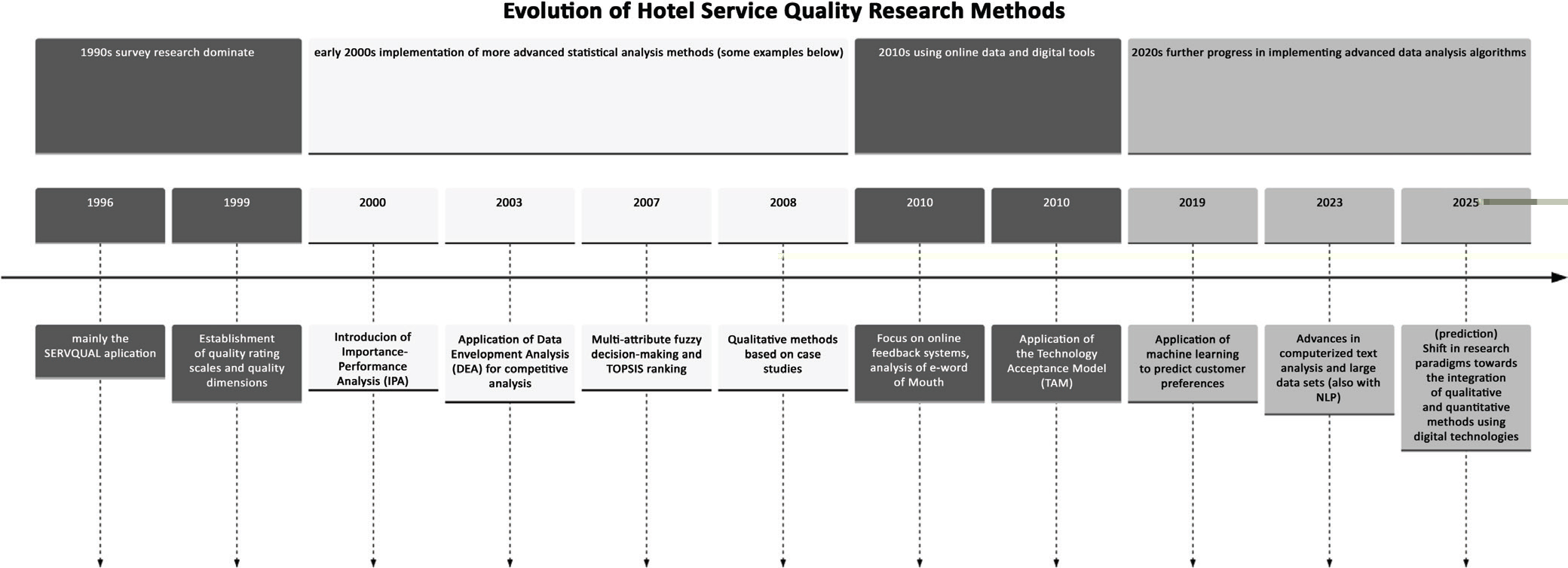
Figure 10.
Research methods evolution over time
Source: own elaboration
Thematic evolution analysis (1994–2024)
The study of abstracts of articles from the previous three decades reveals a distinct thematic progression of research on the quality of hotel services. The picture illustrates the thematic evolution of the research topic from 1994 to 2024, divided into five periods. It provides an intriguing overall picture of the growth of study areas.
In the period of 1994–2013, research focused on issues related to services, the phenomenon of buyer satisfaction, the management process, and tourism in general. In the years 2014–2017, in addition to the issues of services and tourism, topics related to shaping relationships, perception, and the role of employees appeared. Between 2018 and 2019, researchers concentrated on the consumer's perspective and the process of creating satisfaction, as well as continuing searches in management. The pandemic years (2020–2022), in turn, resulted in increased attention to activities in the online space and to the consumer himself, while in 2023–24, there was a noticeable continuation of threads with the consumer in the key role and the processes of building and strengthening relationships with him.
For the study of thematic evolution using co-word network analysis and clustering (Cobo et al., 2011), two measures were used to see how well the themes performed in each subperiod. These were Callon’s centrality (which shows how important a theme is across the whole dataset of publications) and Callon’s density (which shows how the theme has changed over time). The themes that were dense and central were called motor themes. Motor themes are developed, and important topics have strong links to other topics.
In all the above periods, the driving topic was the quality of customer service. Topics with low density and low centrality were emerging or declining themes; in 2014–2017, it was employees and relationships; in 2018–2019, management and customer perception; in 2020–2022, online dimensions and reviews and finally, in 2023–2024, relationships. The themes that did not show up very often but were very important (low density and high centrality) were classified as basic and transversal themes. These themes focused on big problems that affect many different research areas in a topic. In the years 1993–2013, it was a management process approach, and in 2014–2017 relationship management.
In turn, analyzing abstracts allowed us to isolate more detailed issues discussed in scientific works over the last three decades. From 1994 to 2013, researchers focused primarily on issues related to the concept of quality itself: perceived service quality, assessment of service quality, improvement of service quality, implementation of quality functions and efficiency, and practical implications. They were also interested in customer relationship management, work consequences, and administrator management.
In the following period (2014–2017), researchers' attention was directed to the dimensions of brand equity, dimensions and opportunities to improve the quality of services and physical interaction, and the search for practical implications in the hotel sector. Research on employee job satisfaction continued, and the need for corporate social responsibility was noticed.
In the next subperiod (2018–2019), the subject of the researchers' analysis was the perception of quality by customers and the search for opportunities to improve the quality of services. Corporate social responsibility, customer relationship management, and human resources management were examined. In addition, critical new topics include hotel classification systems, hotel guest satisfaction surveys, hotel supply chain analyses, and online customer opinions, which are becoming increasingly important in making purchase decisions. In the following years, the areas were subjected to research on hotel frontline employees, quality of hotel services, and hotel guest satisfaction. Research on human resources management, perceived service quality, and customer satisfaction continued. In the years 2020–2022, special attention was paid to online customer opinions, social exchange theory, and the quality of website operation and online services.
In the latest works on the issue of quality in the hotel industry in 2023–2024, researchers focus on human resources management, emotional work strategies, and the positive impact of service quality. Currently, attention is paid to online reservation processes and online opinions of hotel guests in works on the quality of hotel services.
The widespread use of factor analysis and structural modeling in all analyzed periods is evidence of the use of complex measurement scales covering different dimensions of service quality. The younger works also implemented data analysis methods using natural language processing.
Research methods over time evolution
Due to technological development, hotel service quality research has evolved, consumer behavior has changed, and service interaction complexity has increased. Academics and practitioners must understand these changes to improve hotel service quality measurement and management. To demonstrate the researchers' evolving approach, the dataset was evaluated over time.
The analyzed papers present qualitative, quantitative, and mixed research approaches. Most hotel service quality and customer satisfaction studies use quantitative approaches like surveys and structured interviews. Qualitative methods add context to quantitative research but are less popular. Depth interviews and focus groups explore customer impressions and employee attitudes. While rare, mixed methods design supports some important research that combines qualitative and quantitative methodologies for a deeper understanding of the topic.
Direct surveys and face-to-face interviews acquired early data. Online platforms have changed these methods, with modern studies depending on online reviews and social media analytics. In the mid-90s, the mainstream of research was based on quantitative methods, particularly SERVQUAL. This period focused on establishing baseline metrics for service quality evaluation (Camison, 1996; Gat, 1998; Stafford, 1996; Krishnamoorthy & Kapadia, 1999).
As the new millennium unfolded, there was a notable shift in quantitative projects towards more advanced statistical data analysis, including confirmatory and exploratory factor analysis and structural equation modeling. Those time Chu & Choi, (2000) for instance, proposed to use Importance-Performance Analysis (IPA) for measuring hotel selection factors. Hwang and Chang, (2003) also employed data evolvement analysis (DEA) for competitive performance analysis. Benitez et al., (2007) used a fuzzy multi-attribute decision-making approach and TOPSIS ranking for the evaluation of service quality.
At the same time, much research evaluating the effectiveness of management methods that relied on the qualitative approach employed methods such as case study (Deng, 2008; Parkan, 2005; C. C. Yang, 2006).
In the early 2010s, there was a notable surge in the use of digital feedback mechanisms. Researchers started to analyze this phenomenon, with most of the interest dedicated to exploring the impact of e-word-of-mouth on customer behavior. There were a few exploratory projects using secondary sources (Fam et al., 2004). However, authors also started incorporating online reviews and social media data into their studies (Ramanathan, 2010). This time analysis methods were more straightforward, relying on basic statistics rather than more advanced multivariate algorithms. This period is also noted by applying the Technology Acceptance Model (TAM) to understand how guests perceive and adopt technological innovations in hotel services (Karande et al., 2007). Not only TAM, but also other well-known theories or models were used by researchers in analyzed periods.
Recently, the focus has shifted towards large and big data analysis and predictive modeling. Lately published studies increasingly use sophisticated data analysis techniques, such as machine learning, to predict customer preferences and enhance perceived service personalization (Kalnaovakul & Promsivapallop, 2023; Mehnaz et al., 2023; Razavi & Israeli, 2019; Sanchez-Franco et al., 2019). Also, development is observed in providing more effective computer assisted text mining and analysis with natural language processing models (Mankad et al., 2016; Sanchez-Franco & Rey-Tienda, 2023; Zhai et al., 2024).
Below is a schematic summary diagram illustrating the evolution of research methods in hotel service quality over time.
Thematic clusters
The analysis of research themes over time illustrates the evolution of hotel service quality interpretation and explanation. To gain a deeper understanding of the authors' research focus, a re-analysis of the entire study sample was conducted. Keyword co-occurrence analysis revealed six thematic clusters (“factors”, “quality”, “relationship”, “customer”, “employee”, and “online”) (Figure 11).
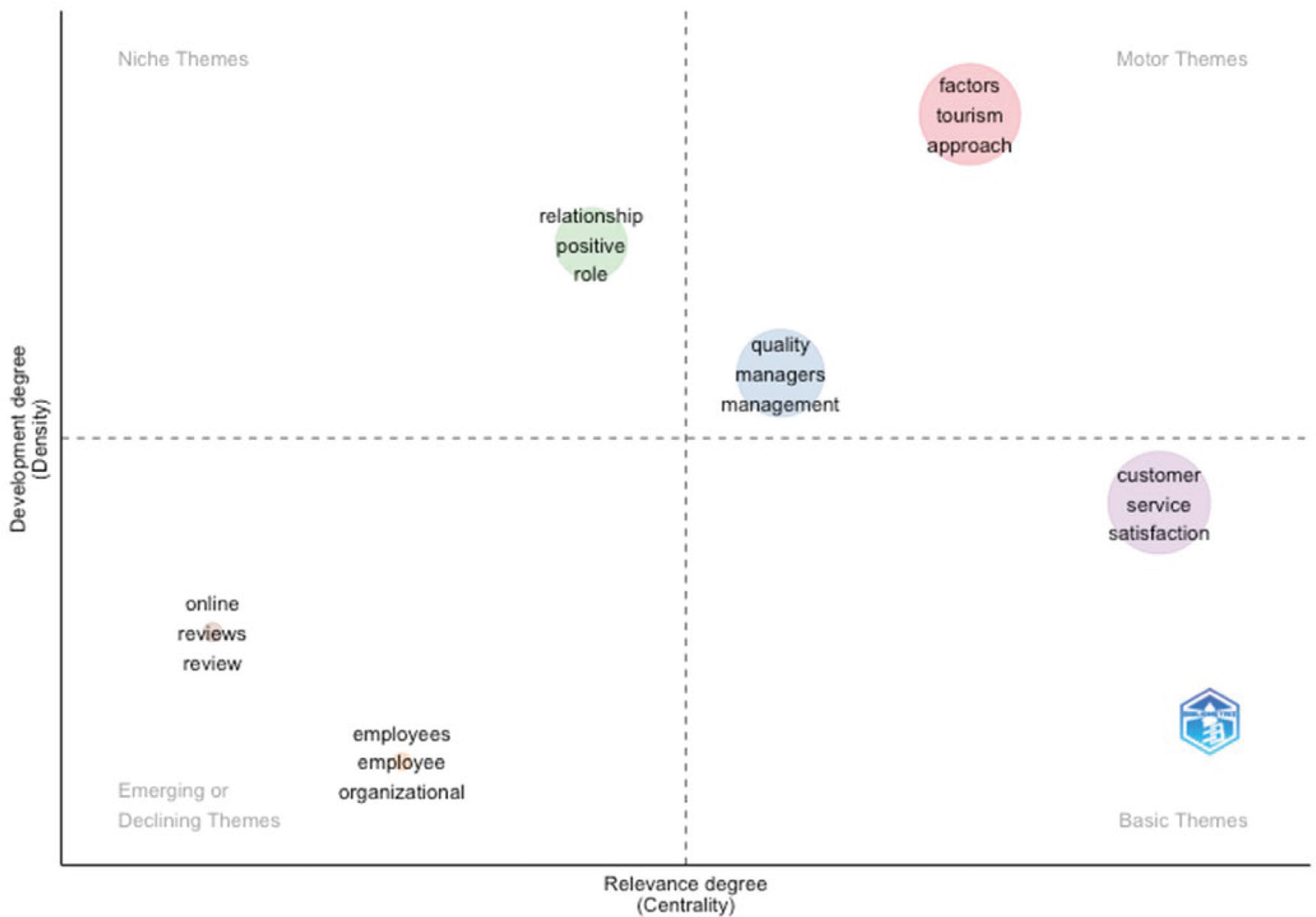
Figure 11.
Thematic clusters
Source: own elaboration using the R ‘bibliometrix’ package.
Cluster “Factors”
Among the whole dataset of analyzed papers, the strongest interest of authors was concentrated on factors affecting service quality. A thorough analysis of service quality factors encompasses a broad range of themes, reflecting the complexity and diversity of causes that impact service quality in hospitality. The authors focused on various perspectives and analyzed service quality to achieve different objectives. Looking at the papers grouped in the “Factors” cluster, one may group the fields of studies into some subgroups – the service quality dimensions (Al-Gasawneh et al., 2021; Dabestani et al., 2017; Giritlioglu et al., 2014), competitiveness factors (Emilian et al., 2009; Navickas & Malakauskaite, 2009), success factors (Avcikurt et al., 2011; Chakraborty & Tan, 2012; Politis et al., 2009; Scholz & Voracek, 2016), hotel selection factors (Chu & Choi, 2000; Liao et al., 2022; Munteanu et al., 2014), customer satisfaction factors (Bacik et al., 2019; Cox, 2017; Sanchez-Franco & Aramendia-Muneta, 2023).
Most of the authors analyzed in their research factors grouped in the quality dimensions in the SERVQUAL method which are: reliability, assurance, responsiveness, empathy, and tangibles (Bakirtzoglou et al., 2018; Grobelna & Marciszewska, 2013; Jasinskas et al., 2016) as the starting point or the core of their analysis.
In the study by Beheshtinia and Azad (2019), the three main factors of service quality attributes were categorized as basic factors, excitement factors and performance factors. The authors used the factors based partly on the SERVQUAL quality dimensions – tangible, reliability, assurance, and empathy but also added environment, technology, and entertainment. Benitez, Martin, and Roman (2007) divided the quality determinants into tangible and intangible subgroups. The authors analyzed, among others, reception desk service, room cleaning and maintenance, main restaurant service for both breakfast and dinner, cuisine quality, bar service and entertainment and safety, quietness, and other intangible elements.
Chu & Choi (2000) analyzed hotel selection factors within Hong Kong hotels. They compared the perceptions of business and leisure travelers and identified six critical factors influencing hotel selection: service quality, business facilities, value, room and front desk, food, recreation, and security.
Molina-Azorin et al. (2015) investigated the interplay between quality management and environmental management and their combined impact on hotels' competitive advantage.
They highlighted how integrating quality management practices, such as customer focus and efficient process management, alongside environmental sustainability practices can significantly enhance a hotel’s operational efficiency, market reputation, and customer loyalty. Environmental and ethical issues are becoming increasingly important to modern hotel customers.
Another perspective is presented by Zhang et al. (2011). The authors thoroughly analyze factors influencing hotel room pricing. They identify crucial quality factors such as room quality, location, cleanliness, and service as crucial determinants of room rates (on online advice websites) and prove their impact on customers’ willingness to pay.
Sufi & Shojaie (2018) discussed the importance of transparency in service classifications for customer satisfaction. Clarity and honesty in service ratings and descriptions help set accurate expectations, which directly impact guest trust and, in effect, perceived service quality (Lopez et al., 2004; Nguyen et al., 2021).
Cluster “Quality”
The considerations presented in the articles classified in a cluster named “Quality” focus on the direct or indirect impact of various management practices on the quality of hotel services. Research findings indicated that the use of various practices and tools in the field of quality management (Tari et al., 2017; J. Zhong et al., 2016), supply chain (Babu et al., 2018; J. Zhong et al., 2016), sustainable development (Babu et al., 2018), customer relationship (Alnawas & Hemsley-Brown, 2019; Pascual-Fernández et al., 2023; Tang, 2014) and human resources (Lee et al., 2015; Phan et al., 2023; Sayangbatti & Riyadi, 2021; Tsai, 2009; Valenzuela-Ortiz et al., 2024; Wang et al., 2012) is positively related to quality results in hotels.
The studies also looked at the direct or indirect causal link between hotel service quality and customer orientation, service quality and competitive orientation as well as between service quality and hotel performance (Kaliappen et al., 2017; Tari et al., 2017; J. Zhong et al., 2016). Several scholars have analyzed the effects of various innovations, including those environmentally friendly, on enhancing hotel service quality (Jacob et al., 2010; Pascual-Fernández et al., 2023; Tajeddini, 2016). Research was also carried out to identify the importance of service quality as a critical factor of a hotel's success (Yadegaridehkordi et al., 2018) and competitiveness (Idris & Naqshbandi, 2019) and an also significant predictor of the achieving sustainable development goals (Babu et al., 2018).
Cluster “Relationship”
Based on the analysis of the abstracts of the most frequently cited articles from the "Relationship" thematic cluster, its leading issues can be identified:
Publications focusing on sustainable tourism and pro-ecological approach in the hotel industry (Chan, 2013; Han & Kim, 2010; Mittal & Dhar, 2016; Rahman et al, 2015) focus on expanding theoretical models that help understand why customers choose eco-friendly hotels, what factors influence their decisions, and their reactions to greenwashing practices.
Research regarding service quality and customer satisfaction in the hotel industry by (Gracia et al., 2011; Karande et al., 2007b; Kimpakorn & Tocquer, 2010; Ladhari, 2009) focuses on identifying factors that influence service quality, customer emotional response, and how these factors influence customer behavior such as loyalty and recommendation.
Articles focusing attention on brand management and employee engagement (among others: (Kimpakorn & Tocquer, 2010; Park & Levy, 2014; Xu & Chan, 2010) include research on building a hotel brand and employee involvement. They also analyze how differences in brand equity affect employee engagement and how brand management can impact customer experience and loyalty.
The works (e.g. Gracia et al., 2011; Ladhari, 2009; K. F. Latif, 2021) focus on research on customer relationship management, building loyalty, and factors influencing repeat purchase behavior. They analyze strategies for building loyalty, the effectiveness of CRM (Customer Relationship Management) activities, factors determining repeat purchases, and recommendations.
Studies on work issues in the hotel industry, as well as negative incidents related to service and customer reactions by (Karande et al., 2007; Lam & Chen, 2012), include research related to emotional work in the hotel industry and factors influencing employee experiences and the quality of their work. The articles analyze what factors in the workplace influence employees' emotional reactions and how these reactions can affect the quality of customer service and employee turnover. In turn, the research teams of (Gracia et al., 2011) The articles focus on research related to customer reactions to negative service experiences and the effectiveness of corrective actions after such situations. They analyze how repair procedures affect customer satisfaction and what factors may moderate these relationships.
Finally, publications touching on the issue of corporate social responsibility (CSR) in the hotel industry (e.g. Ahmed et al., 2020; K. F.Latif, 2021; Park & Levy, 2014) focus on research on the role of CSR in the hotel industry and the impact of CSR activities on employee engagement and customer loyalty. The articles analyze differences between countries regarding the impact of CSR on the loyalty and effectiveness of CSR activities among various stakeholder groups.
Cluster “Customer”
The researchers specifically considered the perceptions and evaluations of customers, including individuals with disabilities, to ensure inclusivity in the study of service quality. The customer’s perspective was analyzed concerning a service failure (Kalargyrou et al., 2020) or a negative online review and the corresponding response of hotel staff. Providing an online response (as opposed to no response) reinforces the credibility of the company and the extent to which it cares for its customers (Sparks et al., 2016).
Some results of the articles included in this cluster indicate that overall customer satisfaction mediates the relations between perceived service quality and repurchase intentions and subjective well-being (Su et al., 2016a). It appears that the actual customer experience (Mohsin & Lockyer, 2010), in which hedonic value plays a key role, is crucial (e.g., Kwon et al., 2024; B. Wu & Yang, 2018). Among the many dimensions of hotel service quality (e.g., Chen et al., 2022) from a consumer perspective, importance is attached to the aesthetics and cleanliness of rooms (Y. Yang et al., 2024), communication with staff (e.g., Mattsson and den Haring 1998) and the competence of hotel staff (Dimanche and Lo 2022). Finally, dimensions perceived by consumers can influence not only motivation and intention to use hotel services but also overall customer satisfaction (Amin et al., 2013).
Predictably, some of the studies in this cluster are related to the COVID-19 pandemic (e.g., J. M. Kim et al., 2023). They focus on changes in guest expectations and perceptions of hotel services (e.g., X. A. Chen et al., 2022; Girija et al., 2023; Liang & Wu, 2022; Song et al., 2022). Among other things, studies have shown that customers are more understanding/tolerant of the authenticity of a hotel and its brand (e.g., J. M. Kim et al., 2023; Kwon et al., 2024; Sun et al., 2022).
It is also noticeable that more topics related to technology development are being discussed. Studies have evaluated the service quality of robots (Zhong et al., 2020), highlighted characteristics such as reliability and dependability (Chiang & Trimi, 2020), and the consumer’s sensory and tactile experience associated with new technologies in hospitality services that positively influence hotel guest satisfaction (S.-H. (Ava) Chen et al. 2021; Girija et al., 2023).
Cluster “Employees”
Recent publications underscore the essential role employees play in shaping and improving service experiences within the evolving field of service quality research. In the analyzed period, there were plenty of scholarly works that underscored the multifaceted contributions of employees to service excellence.
The vital nature of employee-customer interactions is an integral part of the service quality discourse. The relationship between the quality of these interactions and customer satisfaction is well-documented. Researchers illustrate how the nuances of employee behavior – empathy, communication, and responsiveness – directly influence consumer perceptions and loyalty (Akgunduz et al., 2022; Banerjee & Biswas, 2018; Bitner et al., 1994; Porras et al., 2018; M. Kim et al., 2017; Liu et al., 2017; Solnet, 2007; Tse & Ho, 2009)This shows how important frontline employees are for embodying their companies' service philosophy and affecting customers' feelings about quality and their experience with them.
Employee training and development were said to be another critical determinant of service excellence. A direct link between thorough training programs and better service delivery has been found. These programs not only teach employees necessary technical skills but also teach them to understand customer expectations, which help to create a culture of personalized and effective service solutions (Ekinci & Dawes, 2009; Hilal, 2020; Lan et al., 2022; Lin & Cheung, 2023; Luoh et al., 2014; Ramos et al., 2004).
Much research has been done on how organizational culture and leadership affect the quality of service delivery. Positive leadership and a supportive culture have been shown to make employees more committed and creative, which leads to quality improvement (e.g. Chang et al., 2021; Dimitriou & Schwepker, 2019; Hsiao et al., 2015; Kaya & Karatepe, 2020; Kloutsiniotis et al., 2023; Robina-Ramirez et al., 2023).
The introduction and use of new technologies like Artificial Intelligence (AI) create both problems and opportunities for service quality enhancement. It is observed that development necessitates changes in employee responsibilities, particularly requiring adaptability and continuous learning to utilize the benefits of technology effectively (e.g. Nguyen et al., 2022; Prentice et al., 2020; Wong et al., 2023).
Additionally, staff resilience in the face of environmental turbulence, such as economic crises and worldwide pandemics, is a critical factor for ensuring service continuity and quality. The agility and flexibility of employees throughout past years’ turbulent times confirm their crucial role in adapting service protocols to meet evolving circumstances and customer needs (Rabiul et al., 2022; Xie et al., 2023).
Cluster “Online”
The next distinct cluster, named “Online”, includes the articles considering the quality of hotel services in the context of the online environment. These papers focus their attention on several problems.
The assessment of the level of quality of hotel services based on the analysis of a large number (e.g. 9.7 million) of reviews given by customers on online booking portals (e.g. TripAdvisor, Airbnb, www.virtualtourist.com) was analyzed by e.g. (Bi et al., 2024; Gao et al., 2018; K. Kim et al., 2017).
The authors also analyzed the influence of cultural, social, psychographic, behavioral, and product (hotel attributes) factors on online hotel ratings, online review content, customers' attitudes, and motivations for generating the online content (Bi et al., 2024; Gao et al., 2018; Rhee & Yang, 2015; Wilson et al., 2012; Zhang et al., 2016).
The field of interest was also the usefulness of online hotel reviews and online review platforms and their impact on online hotel booking decisions (Lata & Rana, 2021), choice of online channels for hotel booking (Y.-W. Chang et al., 2019) and hotel selection (Dambhare & Rana, 2023). Researchers are also interested in the determinants of mentioned usability (Foris et al., 2020; Zhu et al., 2014).
Papers grouped in a cluster “online” also presented the comparison of hotel ratings in customers' perspective with hotel ratings by online travel agencies and with hotel self-ratings as well as with the category (star) given to hotels by government authorities (under so-called hotel classification schemes) (Tefera & Migiro, 2018).
FUTURE RESEARCH DIRECTIONS
The publications in the clusters analyzed in the previous section provide several suggestions for future research problems. Some of those extracted from the most cited papers are highlighted in the table below.
Table 1.
Future research suggestions identified in thematic clusters
| Cluster | Future research suggestion | Source |
|---|---|---|
| Factors | applying the IPA technique to a comparison of hotel selection criteria for different market segments defined by demographic or geographic factors | (Chu & Choi, 2000) |
| investigate the perceptions of the same customers visiting the hotel in different seasons | (Benitez, et al., 2007) | |
| how cultural factors, resources, or capabilities may moderate or mediate the relationship between quality, environmental management, and competitiveness; comparison of quality management, environmental management, performance, and competitiveness of firms with quality and environmental certifications (e.g. ISO 9001, ;jll ISO 14001) and those without | (Molina-Azorin et al., 2015) | |
| what factors should be used for to judge customers’ willingness to pay for a specific type of hotels | (Zhang, et al., 2011) | |
| to compare guests’ experience at Airbnb accommodation with that of hotels | (Priporas et al., 2017) | |
| the relationship between service quality and satisfaction and perceived value, image, cultural contact, service experience, and the type of service | (Nunkoo et al., 2020) | |
| Quality | to investigate how different strategic orientations, such as learning and entrepreneurial orientations, affect hotel performance and capabilities, such as relationship management, branding, and service innovation | (Alnawas & Hemsley-Brown, 2019) |
| to test if hotels with a higher degree of quality management achieve better performance levels. | (Tari et al., 2017) | |
| to investigate causal mechanisms of employees’ behavior in the context of service quality, achieving | (Tsai, 2009) | |
| to analyze the personality traits and other internship factors as factors that affect service performance | (C.-S. Lee et al., 2015) | |
| Relationship | considering the cultural factor, as well as variables such as: hotel rating, ecological organizational culture and ecological opportunities to achieve effective results. | (Mittal & Dhar, 2016) |
| determining the empirical impact of hidden motives on consumer behavior. exploring the potential influence of other variables, such as hotel brand, ownership type, and/or hotel class, on consumer responses to ulterior motives. | (Rahman et al., 2015) | |
| conducting employee brand research in various service industries to better knowledge of service branding. understanding why some departments do not support the brand. | (Kimpakorn & Tocquer, 2010) | |
| research on how to evaluate different green hotel marketing strategies. research on smaller hotels that encounter more obstacles and hurdles when putting these service quality strategies into practice. | (Chan, 2013) | |
| extending research by identifying potential relationships between other variables. What does the front line of the hotel and catering industry look like, employee perception of CSR in connection with work results, satisfaction, and trust? Do employees who perceive their company positively want to stay there longer and spread positive opinions about it? | (Park & Levy, 2014) | |
| to what extent do guests' hotel experiences manifest themselves in their social and psychological needs | (Xu & Chan, 2010) | |
| credibility plays a role in creating a positive customer perception of the entire value co-creation process implemented by the hotel. | (Porras et al., 2018) | |
| longitudinal data can be used in research to identify dynamic shifts in CSR, customer satisfaction, service quality, business image, reputation, and customer loyalty. Future studies could also determine the mediating function of additional factors in the relationship between CSR and loyalty, such as credibility, trust or positive word of mouth. | (Latif et al., 2020) | |
| Customer | using mixed research methods, the study examines the opinions of private and public customers (offline and online) on different dimensions of the quality of hotel services (luxury and lower category hotels) often related to other tourist services. | (Kim et al., 2010; Seric et al., 2016; Song et al., 2022; Sparks et al., 2016) |
| determine the impact of the stages of the COVID-19 pandemic on attitudes and changes in behavior of hotel customers in the context of socio-cultural conditions and other predictors related to the quality of the relationship, e.g. trust in the hotel, trust in staff observing the hygiene regime, WOM/e-WOM referrals, price sensitivity and effectiveness of crisis management strategies. | (Al-Gharaibah, 2020; Hu et al., 2021; Liang & Wu, 2022; Su et al., 2016; Yu et al., 2023) | |
| exploring the relationship between the use of service robots and AI in diverse types of hotel facilities and customers’ technology readiness | (Chiang & Trimi, 2020) | |
| research into the skills of front-line staff to attract talent in the hospitality industry, which is a key dimension of the quality of hotel services. | (Dimanche & Lo, 2022) | |
| Employees | difference in internal branding perceptions and implementations between employee and top management groups; examine how direct supervisors’ brand-oriented leadership impacts front office employees compared to top management’s indirect influence; investigate the links between types of employee commitment (affective, normative, continuance) and their impacts on behaviors and outcomes; refine methods for measuring employee brand knowledge | (Terglav et al., 2016) |
| explore how direct leadership functions in hotels during peak demand periods or emergencies and how participative leadership suits hotels where services require extensive team consultation; how managers adjust their leadership styles to specific operational challenges; the effectiveness of leading by example within transformational leadership strategy, focusing on its impact on employee motivation, cooperation, and responsiveness; whether the indirect effect of servant leadership on job outcomes such as career satisfaction and adaptive performance, through work engagement, is greater than that of authentic leadership and ethical leadership; indirect effect of servant leadership and authentic leadership on job outcomes by incorporating multiple mediators, e.g. job embeddedness, work engagement; to add the environmental dimensions to leadership research; | (Clark et al., 2009) | |
| analyze the applicability of leadership scales for lower management, such as supervisors; broaden studies to include various situational factors; explore what enhances servant leadership in the hospitality sector; assess the impact of organizational culture and individual leader traits like personal motivation on servant leadership effectiveness | (Ling et al., 2016) | |
| investigate the impact of psychological contracts on service behaviors across cultures, study the effects and remedies of contract breaches by service organizations, and analyze mediators between relational contracts and service behaviors | (Lu et al., 2016) | |
| Online | to analyze how different rating criteria affect final rating hotel scores by users of online travel agencies’ platforms | (R. Leung et al., 2018) |
| to study the harm caused by false remarks or unfavorable evaluations by hotel customers and the possibilities of their filtration. | (Rhee & Yang, 2015) | |
| to investigate the “emotional” motivations for content sharing online, user-generated content, hotel and travel corporations’ social media tactics, and customer views of what is important in social spaces. | (Wilson et al., 2012) | |
| to understand users’ reasons for using a booking website, to learn more about their evaluations of the current platform, and to acquire more ideas for improving it. | (Foris et al., 2020) |
CONCLUSIONS AND LIMITATIONS
The study reviewed hospitality literature on hotel service quality from 1994 to 2024 using Scopus and WoS databases. We identified significant themes and their evolutionary trends by employing bibliometric analysis, thematic content analysis, and qualitative systematic review to propose future research directions. This multifaceted approach revealed a long-standing and increasingly in-depth exploration of service quality, with a notable rise in research interest since 2008. Five distinct periods were identified, each characterized by specific thematic focuses that mirror the shifting landscape of hospitality business environments and their impact on service quality management.
Despite substantial advancements in the field, the research highlighted the limitations of quality measurement methods in addressing the complexities of technological advancements and global crises like COVID-10.
In response to calls from researchers (e.g., Rosenbaum & Ramirez, 2022), it is vital to discuss the future direction of change in hospitality service quality evaluation instruments, as well as the expanding importance of digital technology. SERVQUAL is the most widely used tool for measuring service quality in the hospitality industry. It is now conceivable to aspire for an evolution, such as TECHQUAL (Rosenbaum & Ramirez, 2022). It is necessary to establish a new and more relevant scale for measuring the quality of hotel services that takes into consideration the personalized needs of consumers as well as the unique characteristics of today's sector working in a digital economy.
Furthermore, the natural progression of this study has identified several interesting areas for further investigation. Investigating how to merge new technologies such as AI and the Internet of Things could drastically alter how service quality models operate, making it easier to use real-time feedback and predictive analytics. Because the hospitality sector is global, it is crucial to investigate how cultural differences influence how customers perceive hotel service quality. This will allow enterprises to adjust their approaches to diverse markets.
Hospitality researchers are monitoring advancements such as digital technology and changes in consumer behavior to identify new dimensions of service quality, with the caveat that these dimensions are not limited to digital elements. Consumers accept robots in hotels, but they continue to prefer and expect impersonal relationships with service providers.
Digital tools transform the way services are provided, which has a significant impact on hotel employees. Future studies should address changes in employee responsibilities and training requirements to ensure that employees are prepared to fulfill new operational demands. Longitudinal studies are also recommended to determine how new digital services affect customer happiness and loyalty over time, providing a better understanding of their long-term effects.
It should be noted that the study is subject to several limitations. Firstly, the analysis was conducted on research articles from two databases, with an over-representation of US journals. Consequently, the analysis does not encompass the entirety of hospitality research. The analyses focused only on scientific articles but did not include textbooks, monographs, postconference materials, doctoral theses, or unpublished working documents. Moreover, only documents published in English were examined, which means that research conducted in other languages was undervalued. Despite these criticisms, the databases used are currently the most effective way to conduct bibliometric analyses.
Furthermore, the analysis does not address the scientific quality of the selected articles, which is a consequence of the method adopted. A systematic review of the literature should be carried out in future studies.
In conclusion, while this study lays a solid foundation for understanding the necessary shift in hotel service quality measurement due to digital advancements, the outlined limitations highlight the need for continuous research. Professionals and scholars interested in hotel service quality issues can use the study as a starting point. Addressing the pointed gaps will enhance the precision of service quality recognition.
ACKNOWLEDGMENTS
Funding Manuscript commenced within inter-institutional research grant of SGH Warsaw School of Economics and Wroclaw University of Economics and Business for project “Pomiar jakości usług hotelarskich w warunkach gospodarki cyfrowej” (Eng. “Measuring the quality of hospitality services in the digital economy”) executed between 2024 and 2025.
Appendix
Table.
Thematic clusters
| Occurrences | Words | Occurrences | Words | Occurrences | Words |
|---|---|---|---|---|---|
| Cluster FACTORS | Cluster RELATIONSHIP | Cluster QUALITY | |||
| 248 | tourism | 388 | relationship | 968 | quality |
| 270 | factors | 194 | loyalty | 282 | performance |
| 147 | attributes | 127 | brand | 337 | management |
| 178 | business | 248 | perceived | 339 | managers |
| 182 | marketing | 280 | positive | 213 | importance |
| 163 | information | 277 | role | 183 | process |
| 152 | market | 225 | relationships | 170 | development |
| 203 | approach | 43 | green | 172 | level |
| 144 | strategies | 129 | behavior | 105 | practices |
| 111 | price | 117 | intention | 185 | improve |
| 180 | identify | 109 | intentions | 141 | knowledge |
| 128 | competitive | 81 | image | 67 | innovation |
| 110 | expectations | 82 | trust | 143 | increase |
| 150 | key | 137 | positively | 130 | related |
| 132 | design | 160 | modeling | 122 | environment |
| 112 | staff | 59 | engagement | 105 | levels |
| 116 | international | 57 | behavioral | 60 | environmental |
| 85 | star | 65 | emotional | 59 | internal |
| 118 | differences | 50 | recovery | 78 | chain |
| 78 | scale | 22 | csr | 110 | effective |
| 91 | strategy | 59 | behaviors | 107 | critical |
| 127 | main | 119 | taylor | 79 | firms |
| 70 | food | 54 | corporate | 106 | perspective |
| 76 | system | 118 | francis | 111 | enhance |
| 94 | models | 75 | interaction | 53 | orientation |
| 55 | efficiency | 80 | affects | 96 | time |
| 63 | accommodation | 34 | emotions | 101 | managerial |
| 99 | characteristics | 70 | influenced | 78 | activities |
| 98 | measure | 26 | equity | 84 | human |
| 86 | types | 64 | antecedents | 50 | innovative |
| 79 | product | 54 | values | 77 | training |
| 106 | terms | 68 | constructs | 64 | delivery |
| 110 | understand | 50 | attitudes | 92 | providing |
| 52 | cost | 81 | llc | 63 | success |
| 78 | evaluation | 77 | partial | 82 | achieve |
| 78 | countries | 38 | affective | 77 | developing |
| 89 | reliability | 35 | revisit | 82 | evidence |
| 90 | improvement | Cluster CUSTOMER | 53 | industries | |
| 119 | rights | 1035 | customer | 69 | contribute |
| 106 | quantitative | 1001 | service | 69 | improving |
| 119 | reserved | 470 | satisfaction | 60 | individual |
| 105 | focus | 342 | hotel | 64 | resources |
| 107 | insights | 330 | impact | 67 | concept |
| 71 | measurement | 323 | significant | 73 | result |
| 98 | analyze | 229 | dimensions | 46 | behaviour |
| 77 | companies | 303 | influence | 53 | effectiveness |
| 99 | potential | 182 | experience | Cluster EMPLOYEES | |
| 101 | specific | 185 | social | 283 | employees |
| 92 | determine | 186 | perceptions | 145 | employee |
| 86 | qualitative | 193 | context | 89 | job |
| 94 | applied | 77 | luxury | 79 | commitment |
| 87 | aspects | 173 | future | 96 | organizational |
| 46 | costs | 170 | understanding | 51 | leadership |
| 59 | processes | 139 | framework | 84 | outcomes |
| 88 | gap | 155 | proposed | 57 | frontline |
| 66 | technology | 146 | factor | 68 | organizations |
| 81 | methods | 105 | experiences | 30 | climate |
| 84 | major | 129 | variables | 36 | psychological |
| 70 | products | 143 | significantly | 214 | online |
| 88 | including | 115 | perception | 134 | reviews |
| 70 | growth | 96 | negative | 74 | ratings |
| 62 | servqual | 146 | current | 95 | review |
| 83 | assess | 121 | affect | 90 | travel |
| 70 | low | 118 | provided | 63 | website |
| 53 | destination | 132 | publishing | 54 | booking |
| 65 | facilities | 122 | total | 53 | travelers |
| 47 | systems | 113 | questionnaires | 55 | websites |
| 49 | businesses | 66 | restaurant | 74 | content |
| 62 | economic | 114 | suggest | 44 | media |
| 78 | set | 87 | five-star | 53 | rating |
| 77 | interviews | 94 | responses | 56 | features |
| 53 | competitiveness | 95 | previous | ||
| 67 | methodology | 66 | communication | ||
| 53 | financial | 94 | reveal | ||
| 47 | lodging | 90 | attention | ||
| 68 | evaluate | 91 | influences | ||
| 74 | existing | 88 | technique | ||
| 47 | implementation | 92 | specifically | ||
| 43 | prices | 44 | covid- | ||
| 72 | due | 60 | physical | ||
| 20 | airbnb | 64 | providers | ||
| 64 | objective | 81 | analyses | ||
| 66 | strategic | 81 | practitioners | ||
| 61 | elements | 41 | chinese | ||
| 63 | global | 75 | sampling | ||
| 71 | adopted | 64 | hoteliers | ||
| 58 | competition | 68 | impacts | ||
| 74 | offer | 38 | pandemic | ||
| 57 | stay | 49 | response | ||
| 35 | visitors | 42 | purchase | ||
| 60 | advantage | ||||