Have a personal or library account? Click to login
Research on Dictionary-Based Word Segmentation Algorithms Using Trie Structure Cover

Research on Dictionary-Based Word Segmentation Algorithms Using Trie Structure

By: ,   and    
Open Access
|Jun 2025

Figures & Tables

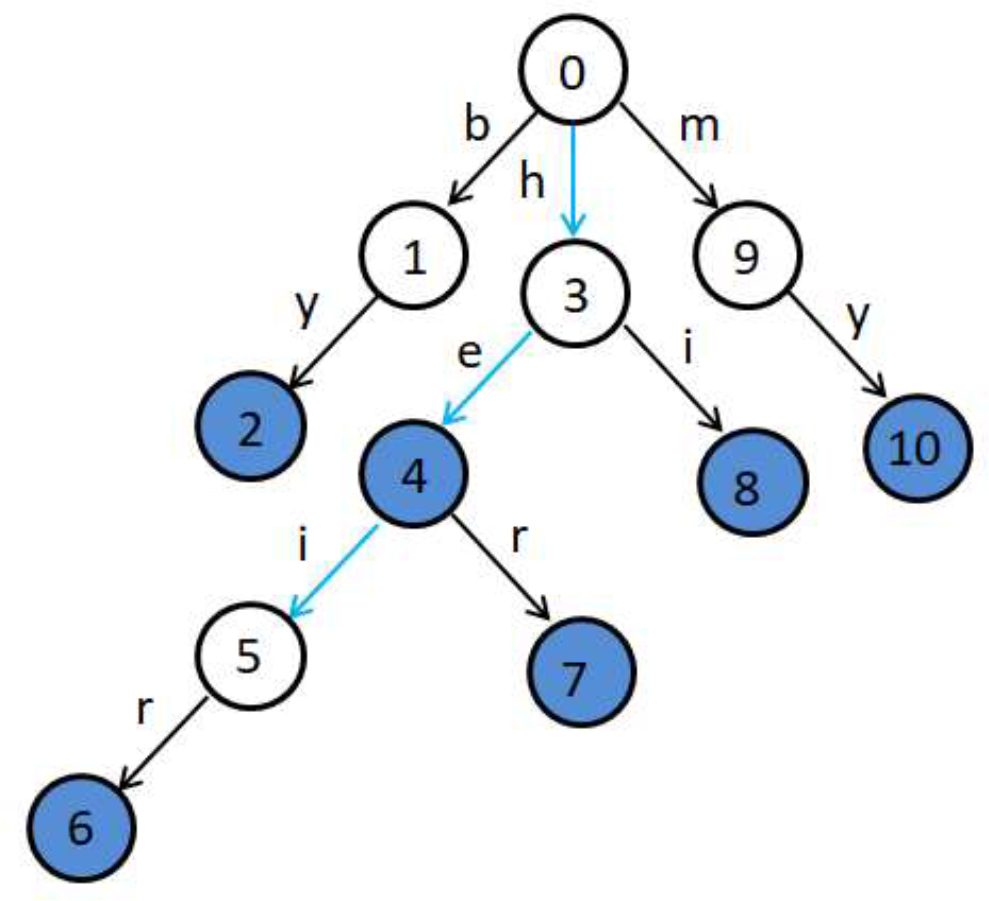
Figure 1.

Trie

TABLE I.

Path Diagram

StringPath
by0—1—2
he0—3—4
heir0—3—4—5—6
her0—3—4—7
hi0—3—8
my0—9—10
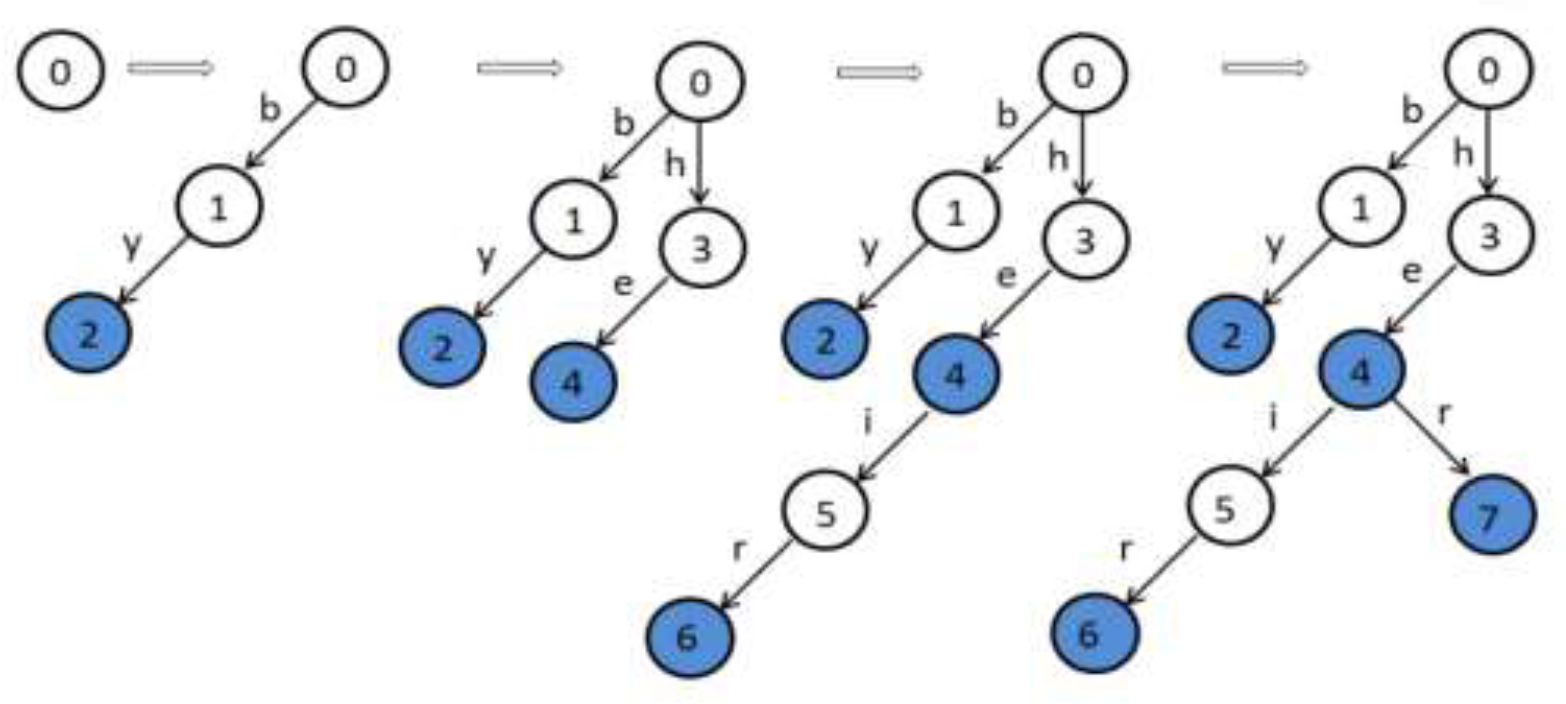
Figure 2.

The construction process of the Trie
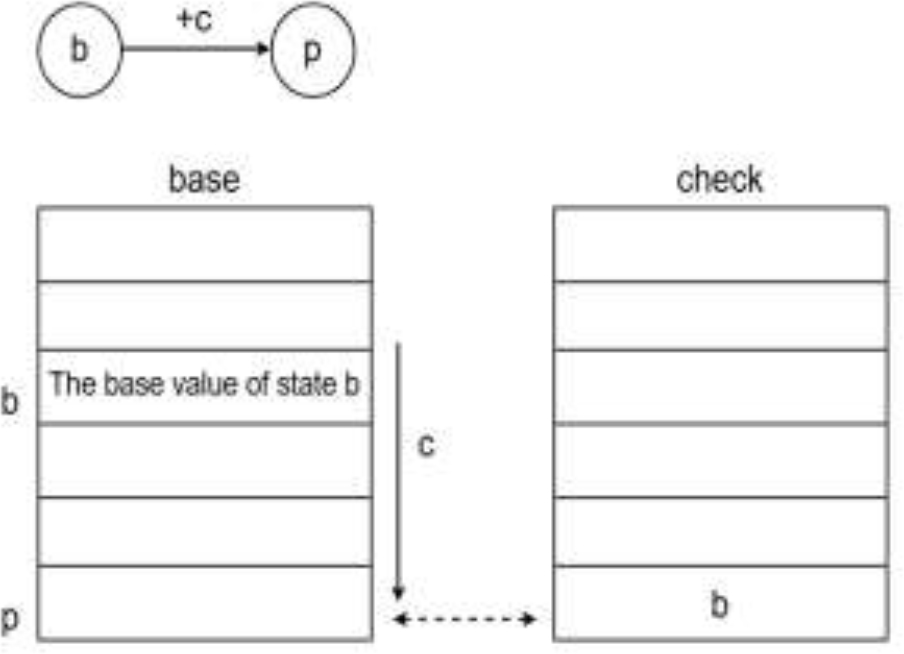
Figure 3.

The state transfer process
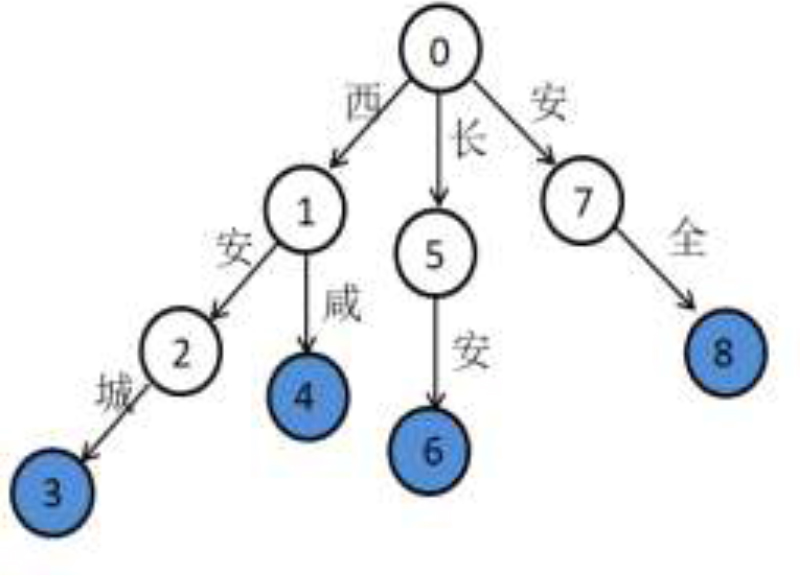
Figure 4.

Example of Trie
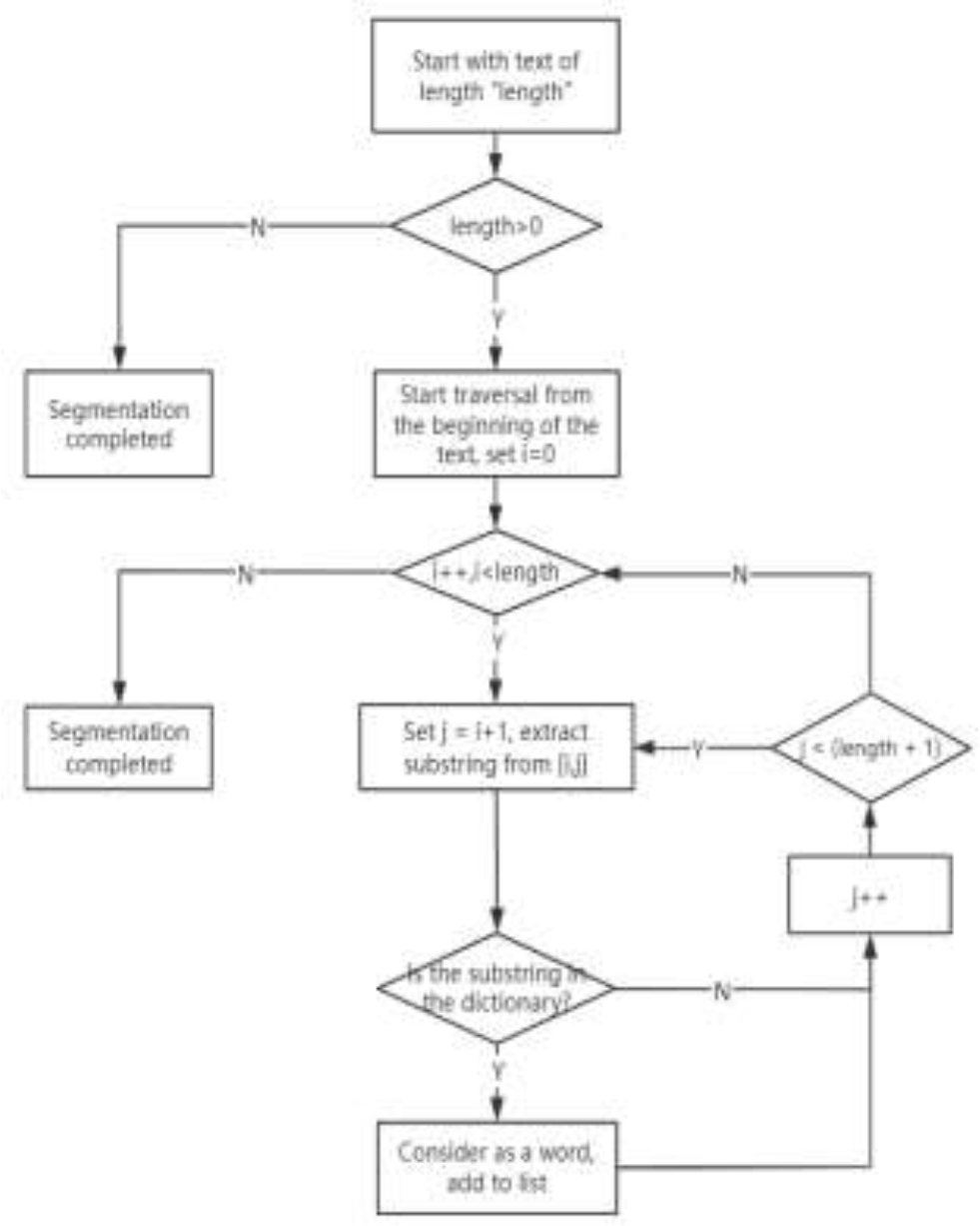
TABLE II.

Encode the characters

CharacterCode
西1
2
3
4
5
6
TABLE III.

Initialize the Arrays

Character
Serial Number012345678910
base1
check00000000000
TABLE IV.

Start Allocation

Character西
Serial Number012345678910
base1
check00110010000
TABLE V.

Continue Allocation

Character西
Serial Number012345678910
base12
check0011001000
TABLE VI.

Reallocation Process

Character西
Serial Number012345678910
base13
check0011031300
TABLE VII.

Final Result

Character西
Serial Number012345678910
base134-152-1-1-1
check00112313504
Figure 5.

Full Segmentation Algorithm Flow

Figure 6.

Test results
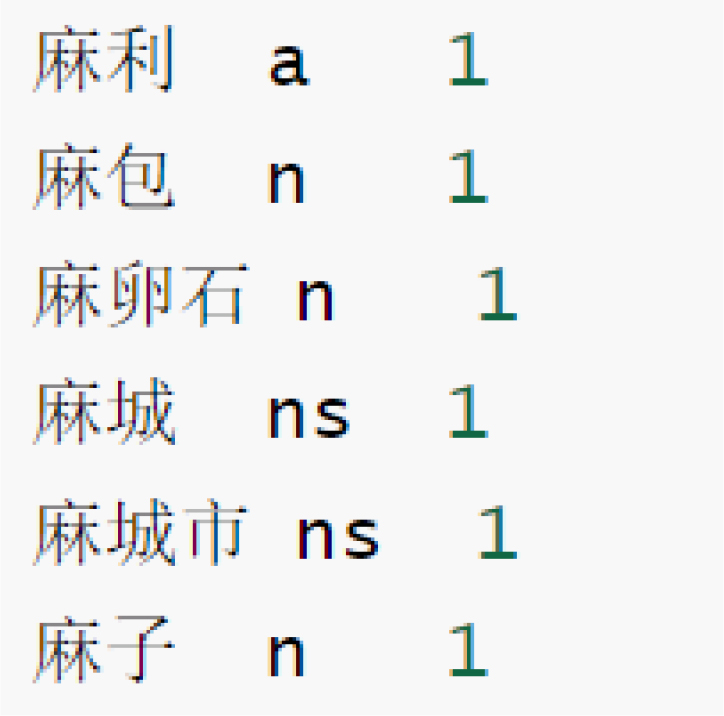
Figure 7.

The format
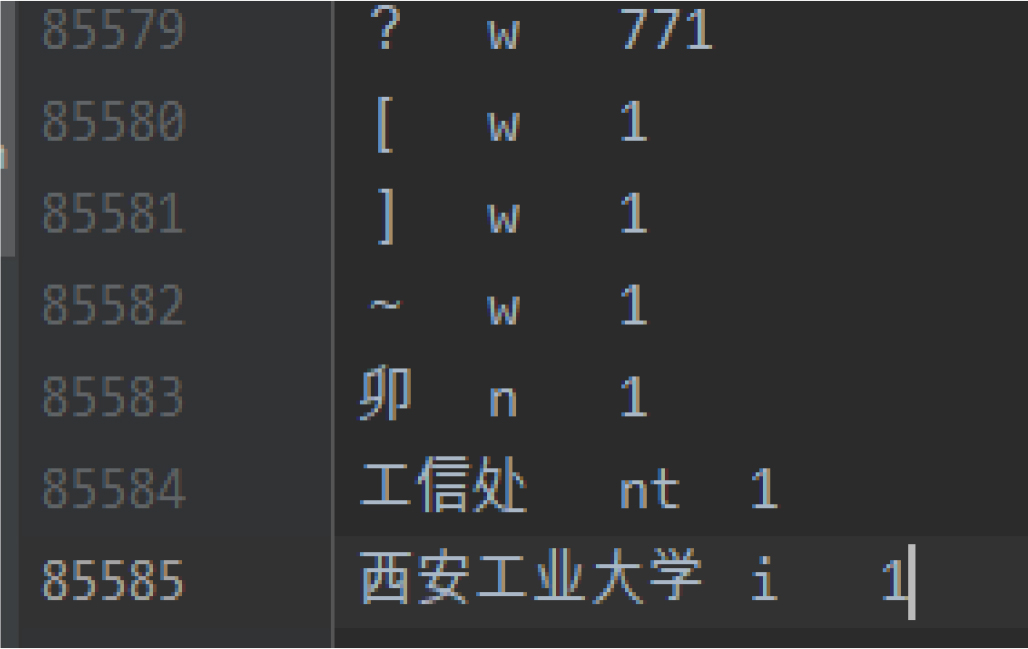
Figure 8.

added to the dictionary repository

Figure 9.

Results After Dictionary Modification
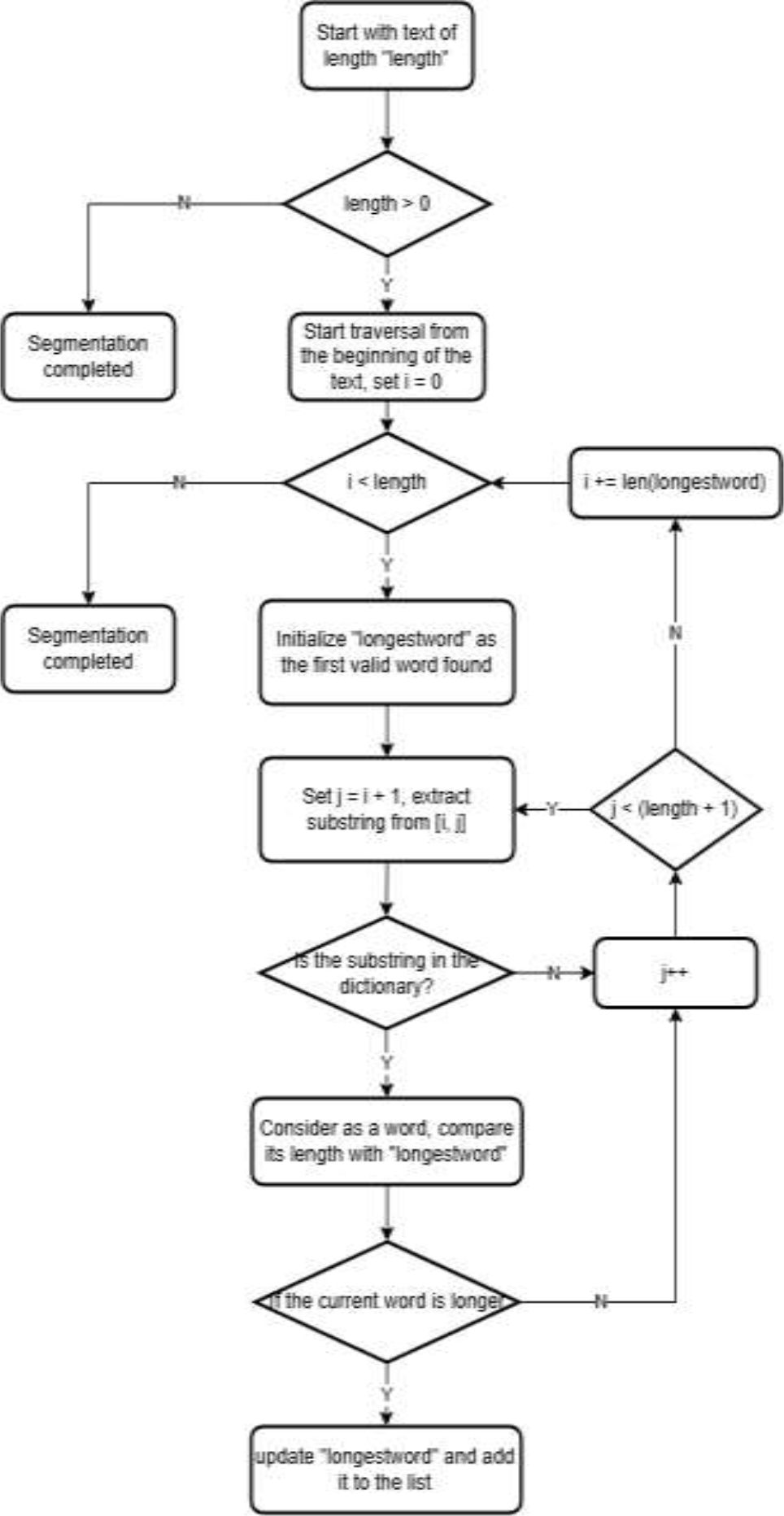
Figure 10.

FMM Concept

Figure 11.

FMM Segmentation Results
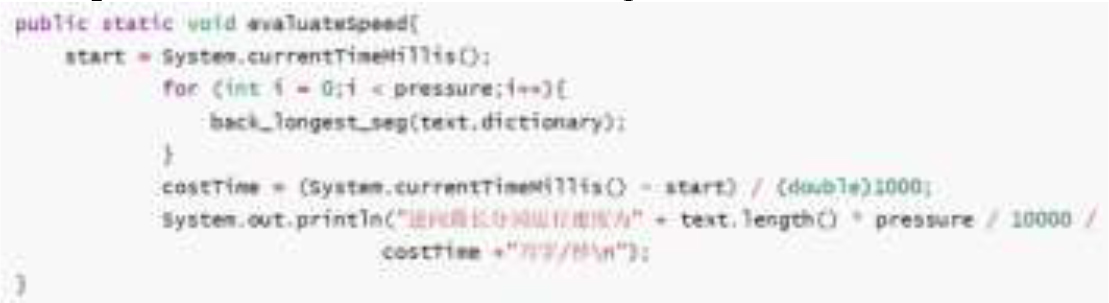
Figure 12.

Speed test method
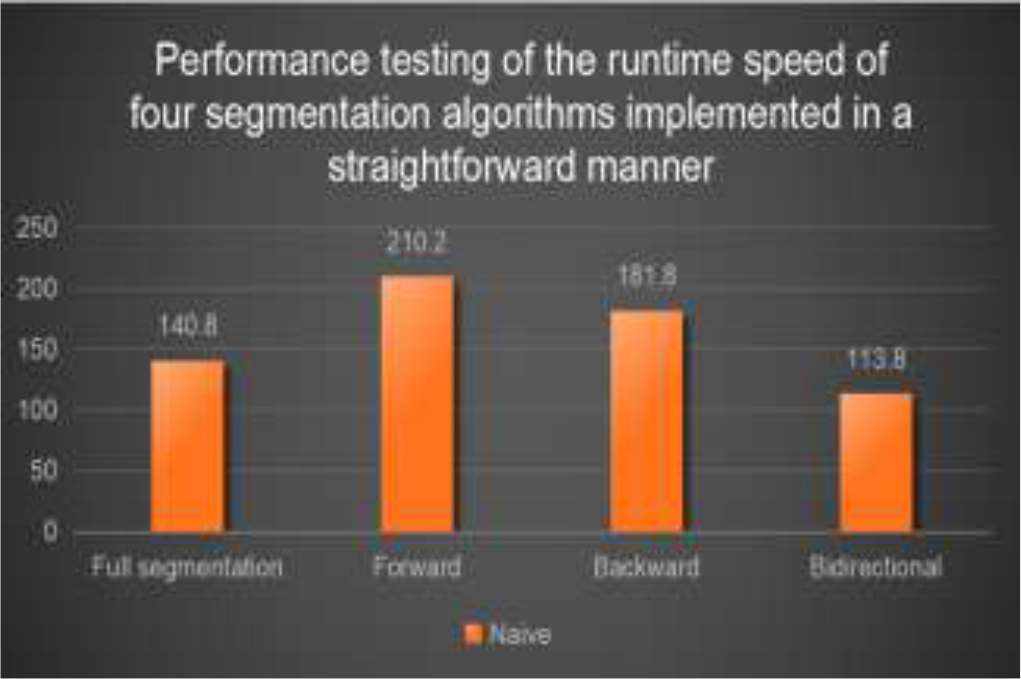
Figure 13.

Test results (Naive)
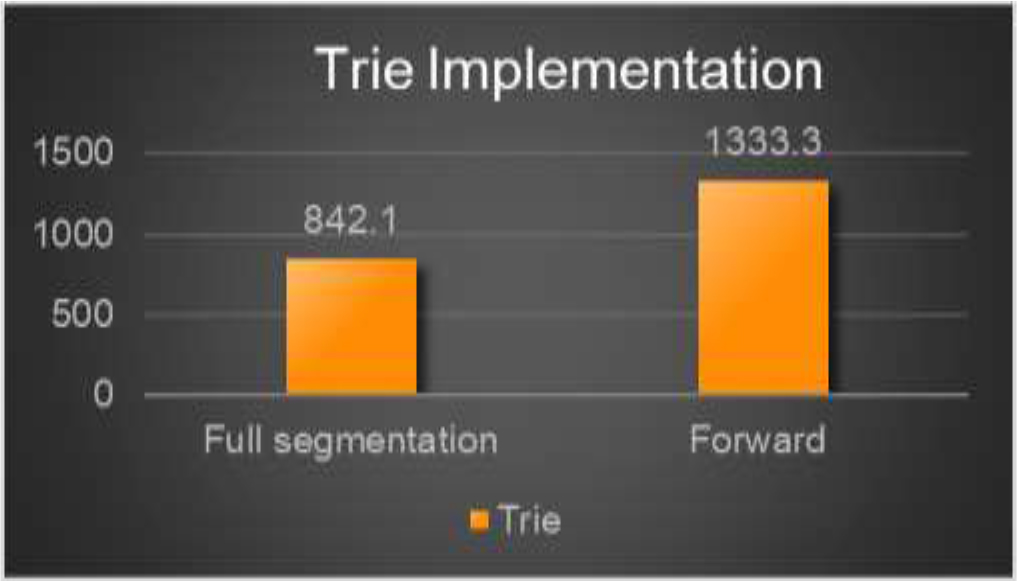
Figure 14.

Test results(Trie)
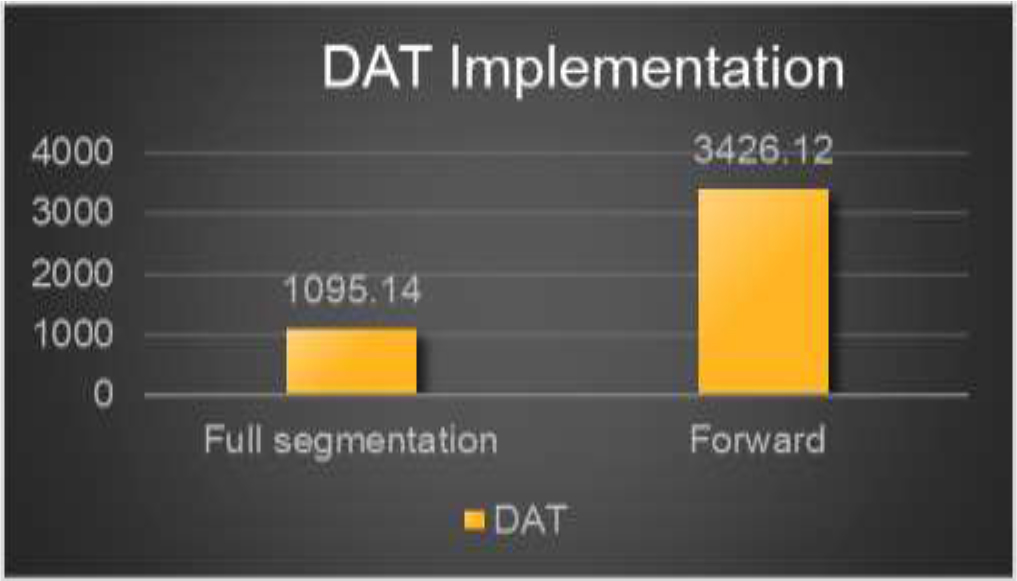
Figure 15.

Test results(DAT)
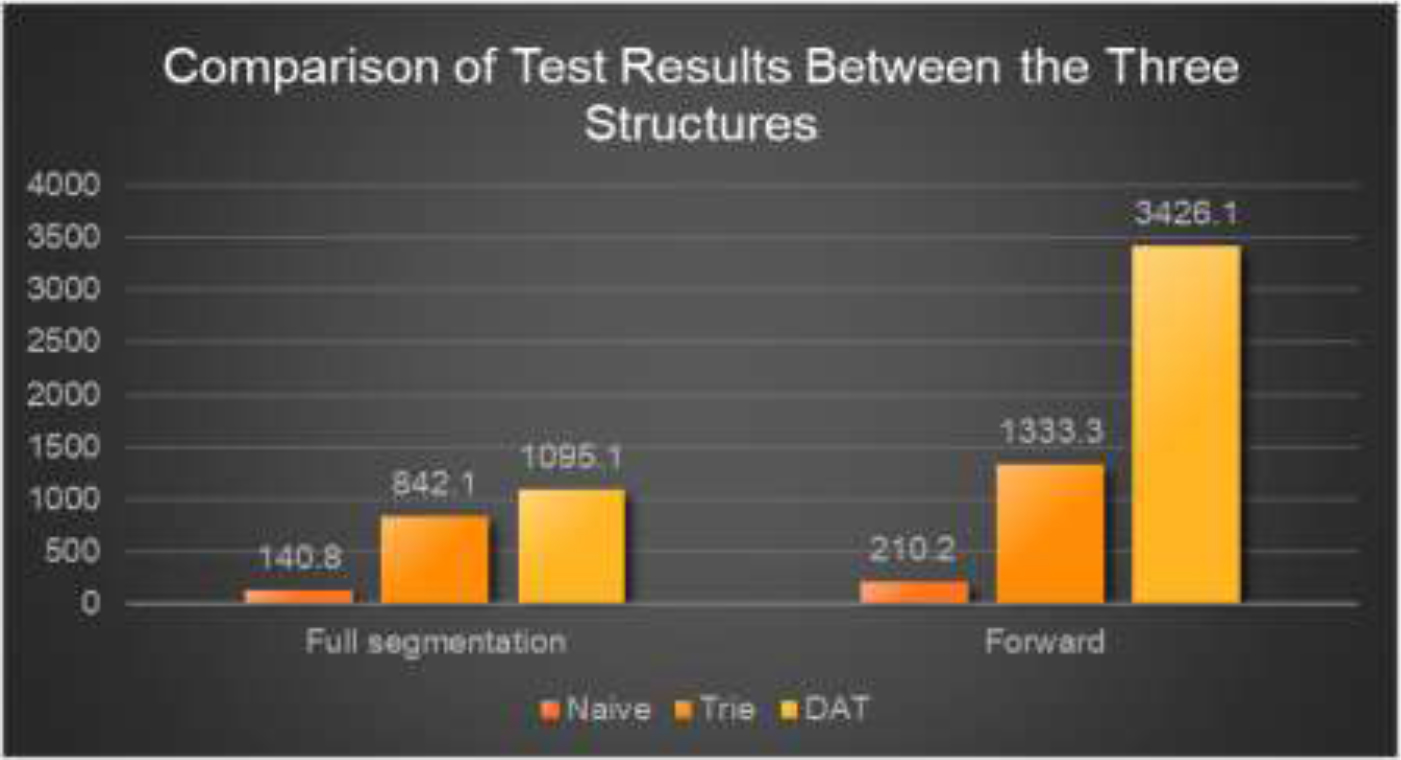
Figure 16.

Comparison of test results between the three structures

Language: English
Page range: 50 - 61
Published on: Jun 13, 2025
Published by: Xi’an Technological University
In partnership with: Paradigm Publishing Services
Publication frequency: 4 issues per year

© 2025 Boxing Zhang, Xin Jing, Qinlong Kang, published by Xi’an Technological University
This work is licensed under the Creative Commons Attribution-NonCommercial-NoDerivatives 4.0 License.